
Serving Those Who Served: Communication Strategies for Veterans Agencies
How Veterans Services Agencies Can Make Communication Central to Access, Trust, and Lasting Community Support
Veterans services in the United States do not happen primarily in Washington, D.C. They happen in county courthouses, community centers, American Legion posts, hospital waiting rooms, rural outreach events, and offices tucked into municipal buildings that many people, including many veterans, have never visited. The agencies and organizations doing this work carry a variety of names: county veterans services offices, state departments of military and veterans affairs, veteran service organizations (VSOs), nonprofit veteran support organizations, VA community-based outpatient clinics, vet centers, veterans courts, and a wide range of federally, state, and locally funded programs that serve transitioning service members, veterans, and military families.
They share a common operating reality. They are trying to connect veterans with services they have earned through military service, using a mix of federal benefits, state programs, local resources, peer support, and community partnerships, often with lean staffs, limited outreach budgets, and audiences who are navigating institutional distrust, geographic isolation, cultural stigma, or simple unawareness of what is available to them.
This communication challenge is not a minor administrative inconvenience. It is central to whether these agencies fulfill their missions.
A county veterans services office that provides benefits counseling, crisis referrals, housing support, employment navigation, and mental health connections may be well-positioned to serve its veteran population. But if veterans do not know the office exists, cannot find plain-language explanations of eligibility, cannot reach staff when they need help most, or encounter communication that feels clinical, bureaucratic, or culturally misaligned with military experience, the programs sit underused while veterans go without support.
Communication is not a public relations function layered on top of veterans services programs. It is the mechanism by which those programs reach the veterans, military families, and caregivers they were designed to serve.
The audience for veterans services communication is also more diverse than a uniform image of military service suggests. Older veterans from the Vietnam era and earlier generations may be enrolled in VA healthcare but are uncertain about newer benefit categories or state-specific programs. Post-9/11 veterans who served in Iraq and Afghanistan may have complex service-connected conditions but distrust institutional systems or avoid seeking mental health care because of stigma. Women veterans are the fastest-growing segment of the veteran population and have been historically underserved by communication and program design that assumed a male primary audience. Rural veterans face geographic barriers that compound every other obstacle. Veterans from immigrant or minority communities may face language and cultural barriers in addition to unfamiliarity with the system. National Guard and Reserve members who deployed may be eligible for veteran benefits they do not realize they qualify for. Military families and caregivers are often the entry point for a veteran seeking help, yet they are frequently overlooked in outreach.
The communication strategy that works for a veteran enrolled in VA healthcare at a major medical center looks nothing like the strategy needed to reach a Vietnam-era veteran in a rural county who has never filed a disability claim.
This content hub provides a practical framework for building stronger veterans services communication. It is organized around the real operating contexts that county veterans services offices, state veterans agencies, VSOs, and community-based veteran support organizations face: how they reach veterans who are not yet connected to services, how they explain complex benefit programs in plain language, how they build trust across generations and cultures, how they design community events and outreach that produce real access, how they coordinate across the fragmented landscape of federal, state, and local programs, and how they extend their reach through trusted community partners.
The goal is communication that works for major metro areas, mid-sized cities, rural counties, tribal communities, National Guard and Reserve populations, military families, and organizations that need to connect veterans with the support they have earned.
Who This Content Hub Is For
This content hub is designed for public agencies, quasi-governmental organizations, and community partners involved in veterans services, benefits outreach, mental health and wellness programs, employment and housing support, and public communication on behalf of veterans and military families.
That includes county veterans services offices, state departments of military and veterans affairs, VA regional offices and community-based outpatient clinics, vet centers, veterans courts, state and county veterans treatment initiatives, nonprofit veteran support organizations, VSOs including the American Legion, VFW, AMVETS, and Disabled American Veterans, community organizations serving specific veteran populations such as women veterans, LGBTQ+ veterans, veteran entrepreneurs, and veteran students, and the community partners who extend the reach of formal agencies into populations that institutional outreach often misses.
It is also relevant for the people who lead and support this work: county veterans services officers, state agency directors, outreach coordinators, benefits counselors, peer support specialists, social workers, mental health professionals embedded in veteran programs, public information officers, board members and elected officials who oversee veterans affairs, and consultants supporting public-sector veterans communication.
The common thread is that these agencies and organizations need to explain complex, life-changing programs to audiences who carry real institutional distrust, face real access barriers, and deserve communication that is clear, culturally competent, and worthy of the service they have given. A veteran asking about disability compensation needs an honest explanation of what to expect, how long the process takes, what documentation is required, and where to get help. A veteran in mental health crisis needs to know immediately where to call, that the call is confidential, that help is available now, and that seeking help is not a sign of weakness. A military family member wondering whether a spouse qualifies for VA healthcare needs a direct answer. A veteran returning from service needs to know what is available in their county, in their language, at a location they can actually reach.
Strong communication helps each audience answer the questions that matter to them without forcing them to understand the federal benefits system first.
How to Use This Veterans Services Communication Content Hub
Veterans services agencies communicate with people whose needs, experiences, eligibility, and connections to formal support systems vary widely. This content hub provides a central resource for county veterans services offices, state veterans agencies, veterans service organizations, nonprofit support organizations, vet centers, and community-based outreach programs seeking to strengthen those communication efforts.
The sections below provide a broad framework for understanding the sector. They explain who these agencies are, what programs they need to communicate about, where outreach most often breaks down, why trust and cultural competence matter, and how agencies can strengthen communication systems across benefits education, community events, digital presence, partner outreach, and mental health messaging.
Agencies can use this hub to evaluate and improve communication across benefits education, community events, digital channels, partner outreach, mental health messaging, and ongoing veteran engagement. It also connects these broader communication priorities to more focused guidance on topics such as suicide prevention, benefits claims outreach, women veterans engagement, rural outreach, veteran employment, housing and homelessness, peer support, VSO coordination, and community-based outreach.
Together, these resources can help veterans services organizations build communication systems that make information easier to understand, reach veterans who are not already connected to services, and guide more veterans and their families toward meaningful support.
Our Comprehensive Guide to Public Communications for State and Local Government Agencies
This article is part of our series on strategic communication for state and local government agencies. To learn more and to see the parent article, which links to other content just like this, click the button below.
How Veterans Services Agencies Operate Across a Fragmented Landscape
Understanding who the agencies in this space actually are matters before addressing how they should communicate. The veterans services ecosystem in the United States is fragmented across multiple levels of government, the nonprofit sector, and federally chartered VSOs. There is no single model. What follows describes the most common organizational types and their communication contexts.
County Veterans Services Offices
County veterans services offices (CVSOs) are, for many veterans, the most accessible and most trusted point of entry into the veterans services system. They exist in counties across virtually every state, though their staffing, funding, and capacity vary enormously. In some states, CVSOs are mandated and funded; in others, they operate at the discretion of county government with minimal resources.
CVSOs typically provide benefits counseling, help veterans file disability compensation claims, connect veterans with state and local programs, make referrals to VA healthcare, vet centers, and mental health services, and serve as a trusted human face for a system that can otherwise feel impersonal and overwhelming. The veterans services officer is often the person who sits across from a Vietnam veteran who has never filed a claim, helps him understand that what he has been living with for decades may be service-connected, and walks him through the first step.
Communication from CVSOs faces a persistent structural challenge: many veterans do not know the office exists. Outreach to veterans who have never been connected to services requires proactive communication through channels those veterans actually use, not only a website and a phone number.
State Departments of Military and Veterans Affairs
State departments of military and veterans affairs operate at a different scale, administering state-funded veterans programs, coordinating with the federal VA, managing state veterans homes and cemeteries, supporting National Guard and Reserve populations, and in many states providing direct grants, loans, and educational benefits that supplement federal programs.
California’s Department of Veterans Affairs (CalVet) administers a farm and home loan program, a veterans homes system, and an extensive network of claims representatives operating out of county offices. Texas’s Veterans Commission operates a claims representation program, a fund for veterans’ assistance, and statewide outreach including a Women Veterans Program. The Virginia Department of Veterans Services operates a benefits authorization service, a behavioral health and wellness program, and a business development program supporting veteran entrepreneurs. The Illinois Department of Veterans’ Affairs administers benefits counseling, veterans homes, and coordination with county offices.
State agencies communicate with both the veteran public and with the county and community organizations that serve as the on-the-ground delivery layer. Communication failures at the state level, unclear eligibility rules, outdated program information, inaccessible application processes, or inconsistent messaging to county partners, compound into failures at the point of service delivery.
Veteran Service Organizations
Federally chartered VSOs, including the American Legion, Veterans of Foreign Wars (VFW), AMVETS, Disabled American Veterans (DAV), Paralyzed Veterans of America, and others, are among the most trusted communication channels in the veterans community. They have the credibility that comes from being led by and composed of veterans themselves.
VSO posts, chapters, and departments serve as community gathering points, peer support networks, benefits assistance organizations, and advocacy voices. They are also communication intermediaries: when a county veterans services office or state agency wants to reach veterans in a specific community, VSO posts are often the most credible channel available.
VSO communication challenges are real, however. Posts vary enormously in their capacity to communicate broadly or reach veterans who are not already post members. Younger veterans from post-9/11 conflicts have lower VSO membership rates than earlier generations, and organizations designed primarily around a World War II and Korea era veteran community may not communicate in ways that resonate with veterans in their twenties and thirties.
VA Medical Centers, Vet Centers, and Community-Based Outpatient Clinics
The Department of Veterans Affairs operates the largest integrated healthcare system in the United States, with medical centers, community-based outpatient clinics (CBOCs), and vet centers spread across the country. VA facilities communicate about healthcare enrollment, mental health services, women’s health programs, suicide prevention, caregiver support, and a wide range of clinical and social services.
Vet centers are a distinctive and important part of this landscape. They are community-based counseling centers that serve combat veterans, military sexual trauma survivors, and active-duty service members. Vet centers are designed to reach veterans who may avoid VA medical centers because of institutional distrust or cultural barriers. Their communication is deliberately more informal and community-facing than a hospital or clinic.
Communication from VA facilities reaches some veterans very effectively. It often fails to reach veterans who are not yet enrolled, veterans who distrust the VA, veterans in rural areas where facilities are distant, and veterans from communities where institutional engagement is historically low.
Nonprofit Veteran Support Organizations
The nonprofit sector serving veterans in the United States is large, diverse, and highly variable in quality. Organizations such as Team Red White and Blue, the Gary Sinise Foundation, Code of Support Foundation, Student Veterans of America, Student Veterans of America, Stop Soldier Suicide, the Institute for Veterans and Military Families at Syracuse University, and hundreds of local and regional nonprofits work alongside the formal government system to fill gaps in services and reach veterans the government system misses.
Nonprofit veterans organizations often communicate more nimbly than government agencies, using social media, peer networks, digital content, and community events to reach younger veterans and veterans outside traditional VSO networks. Their communication challenge is credibility and coordination: veterans are rightly cautious about organizations that claim to serve them, and the nonprofit sector has had well-publicized problems with organizations that raised funds in veterans’ names without delivering meaningful services.
Effective nonprofit veteran communication is transparent about what an organization does, who it serves, what outcomes it produces, and how it is funded.
How Veterans Services Agencies Can Explain Programs and Benefits Clearly
One of the most consistent failures in veterans services communication is that agencies describe programs without explaining what they actually do, who actually qualifies, or what the experience of applying or enrolling actually looks like.
VA disability compensation, vocational rehabilitation and employment, VA home loan guarantees, GI Bill education benefits, state veterans preference hiring programs, veterans small business programs, veterans treatment courts, housing programs for homeless veterans, caregiver support programs, and mental health services each have distinct eligibility requirements, application processes, timelines, and likely outcomes. When agencies present them as undifferentiated items in a benefit menu, veterans cannot self-select, staff spend excessive time on inquiries that may not result in a match, and eligible veterans are left without support because the right program was never identified.
Disability Compensation and Benefits Claims
VA disability compensation is the benefit that most veterans think of first, and the one most surrounded by confusion, frustration, and discouragement. It compensates veterans for conditions that are connected to their military service, ranging from physical injuries to mental health conditions to conditions caused by toxic exposures such as Agent Orange or burn pits.
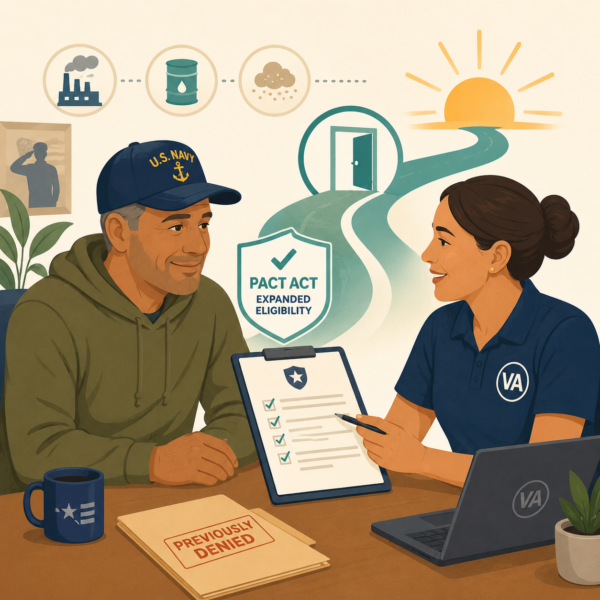
The claims process has historically been opaque, lengthy, and difficult to navigate without professional assistance. The introduction of the PACT Act in 2022, which significantly expanded eligibility for veterans exposed to toxic substances, created a major new communication challenge: hundreds of thousands of veterans who were previously ineligible, or who had given up on the claims process, became newly eligible and needed to understand that change.
Agencies that communicate proactively about disability compensation should explain who can file, what conditions are presumptively service-connected, how to gather supporting documentation, what accredited claims representatives and VSO benefits counselors do, what realistic timelines look like, what happens during a C&P examination, and what options exist if a claim is denied. Veterans who walk into an application process with accurate expectations are less likely to abandon it out of frustration.
Mental Health and Suicide Prevention Communication
Mental health communication for veterans is among the most consequential and most sensitive communication challenges in public service. Veterans die by suicide at higher rates than the general population, and the barriers to mental health care among veterans, including stigma, cultural beliefs about strength and self-reliance, distrust of clinical systems, and limited access in rural areas, are well documented.
Effective mental health communication for veterans reframes help-seeking as consistent with military values rather than contrary to them. It uses peer voice whenever possible, because veterans listen to other veterans in ways they may not listen to clinicians or government messages. It is specific about what mental health care actually involves, to reduce fear of the unknown. It is clear about confidentiality, because many veterans fear that seeking mental health care will affect their security clearance, their employment, or their firearms rights. And it is present in the places and channels veterans already use, rather than only available at the end of a referral chain.
The Veterans Crisis Line, operated by the VA, is one of the most important mental health communication tools available to veterans. It is reached by calling 988 and pressing 1, or by texting 838255. Agencies serving veterans should incorporate information about the Veterans Crisis Line into all mental health communication, treat it as a standard piece of program context rather than only a crisis-level disclosure, and make sure that every staff member, every partner, and every community touchpoint can communicate its availability clearly and without hesitation.
Housing Stability and Homelessness Programs
Veteran homelessness is a persistent national challenge despite significant federal investment in programs such as HUD-VASH (the joint Department of Housing and Urban Development and VA Supportive Housing program), the Supportive Services for Veteran Families (SSVF) program, and the VA’s Grant and Per Diem program supporting transitional housing.
Communication about housing programs for veterans must navigate real complexity. Veterans experiencing housing instability may distrust institutions, have co-occurring mental health or substance use conditions, have children or partners whose needs are not covered by veteran-specific programs, or face disqualifying conditions such as a bad discharge characterization. Effective housing communication is honest about eligibility requirements while also being clear about what alternatives may exist for veterans who do not meet standard eligibility criteria.
Employment and Entrepreneurship Programs
Veterans bring significant skills and experiences to the workforce, and programs designed to support veteran employment, such as the VA’s Vocational Rehabilitation and Employment (VR&E) program, the Transition Assistance Program (TAP), the Small Business Administration’s Boots to Business program, state veterans preference hiring programs, and the Hire Heroes USA and American Corporate Partners programs, represent real opportunities.
Employment communication for veterans should bridge the gap between military experience and civilian employer vocabulary. A veteran who served as a logistics NCO in the Army has skills in supply chain management, personnel supervision, operations under pressure, and complex coordination that are highly valuable to civilian employers, but translating that experience into a civilian resume and interview language requires communication support that many employment programs provide but fail to communicate that they provide.
How Veterans Services Agencies Can Improve On-the-Ground Communication
The gap between how veterans services agencies communicate and how veterans and military families actually need to receive information is one of the most persistent operational problems in the field. The following practical communication approaches address that gap directly.
Speed and Accessibility Are the Primary Standards Veterans Use to Evaluate Agencies
A veteran in crisis, in need of emergency housing, or trying to understand a benefit decision is not in a position to wait several days for a callback. A veteran filing a disability claim for the first time does not know that they need to gather service records, private medical records, and buddy statements before the process can move forward. A military family member calling to ask whether their spouse qualifies for VA healthcare needs a direct answer.
The speed and clarity of an agency’s response to an initial inquiry is often the most powerful signal a veteran receives about whether engaging with that agency is worth the emotional investment. For veterans who already carry skepticism about institutions, a slow or confusing response can end the relationship before it starts.
Strong inquiry response requires more than fast replies. It requires plain-language scripts for common questions, clear referral protocols so veterans are not bounced between offices without explanation, trained staff who can communicate with empathy as well as accuracy, and a website that answers the most common questions before a veteran ever makes contact.
The Outreach Visit Is an Underused Communication Tool
Many county veterans services offices and state outreach programs make in-person visits to community locations, VSO posts, faith communities, barbershops, rural events, and places veterans gather. These visits, when done well, generate two-way communication value that no digital channel can fully replicate.
For the agency, outreach visits provide real intelligence about what veterans are experiencing, what they need, what misinformation is circulating, and what barriers to access exist in specific communities. For veterans, an outreach visit signals that the agency knows they exist, values their time enough to come to them, and can provide help in a context that feels familiar rather than institutional.
A veteran who learns at a VFW post meeting that he qualifies for a benefit he never knew about will remember that agency when he needs help again, and will tell other veterans to call.
Peer Support Specialists as Communication Bridges
Peer support specialists, veterans who have navigated the system themselves and are trained to help other veterans do the same, are among the most effective communication assets available to veterans services agencies.
When a veteran hears about mental health services, housing programs, or a claims process from another veteran who has been through it, the message carries a credibility that no government spokesperson or clinical professional can match. Peer support specialists can explain what a C&P exam actually feels like. They can describe what a vet center appointment is actually like, for someone who has never been to one. They can normalize help-seeking in a way that reframes it as a veteran community value rather than a personal weakness.
Agencies should invest in peer support communication not only as a clinical program model but as an outreach and communication strategy. Peer voices in social media content, in event programming, in training for staff, and in printed communication materials make veteran messaging more credible and more effective.
Women Veterans Require Dedicated Communication Strategy
Women veterans are the fastest-growing segment of the veteran population in the United States, now numbering more than 2 million. They are also among the most underserved, in part because veterans services programs were historically designed around a male veteran experience and communication that reflected that assumption.
Women veterans face distinctive barriers including military sexual trauma, reproductive health needs that VA healthcare has historically not addressed well, and a sense of not being recognized or welcomed in veteran spaces that communicate implicitly that a veteran is a middle-aged or older man.
Effective communication for women veterans requires explicit inclusion in visual materials, program descriptions, and outreach language. It requires communication about VA women’s health programs, military sexual trauma services, and caregiver support that acknowledges women veterans’ specific experiences. It requires outreach channels that reach women veterans where they are, including women’s professional networks, maternal and child health settings, and online communities where women veterans communicate with each other.
Rural Veterans Communication Has Its Own Logic
Rural veterans face geographic barriers that compound every other obstacle to accessing services. The nearest VA medical center may be hours away. The county veterans services officer may be part-time or unavailable. Community organizations that serve as trusted communication channels in rural areas, agricultural extension offices, rural electric cooperatives, faith communities, local banks, and agricultural lenders, are unlikely to have strong connections to veteran services programs unless an explicit outreach strategy builds those connections.
Telehealth communication is increasingly important for rural veterans, but it introduces its own communication challenges: veterans who are unfamiliar with telehealth, do not have reliable broadband access, or feel that telehealth is a lesser form of care need specific communication to understand and use it effectively.
The most effective rural veteran outreach works through the institutions rural veterans already trust, routes communication through local leaders and organizations who have existing credibility, meets veterans at community events and locations rather than only at agency offices, and presents services in a way that respects the independence and self-reliance values common in rural communities.
How Veterans Services Agencies Can Align Staff, Partners, and Volunteers Before Going Public
Veterans services communication often fails because the public-facing message is written before the internal communication system is ready.
A veteran may hear about a program from a county veterans services officer, a VSO post commander, a peer support specialist, a VA social worker, a nonprofit outreach coordinator, a faith community leader, a VA benefits counselor, or a community health worker. If those partners explain the same program differently, add inaccurate eligibility conditions, or provide outdated contact information, the veteran experience becomes confusing and the veteran may disengage.
Veterans services agencies should align internal and partner communication before major external moments. That includes program launches, benefit eligibility changes, major outreach events, new mental health resources, changes in enrollment procedures, legislative changes such as PACT Act expansions, and any time a high-profile story about veterans services creates increased public attention.
A strong alignment process should include:
- A shared message framework that explains the program, event, or change in plain language, using veteran-accessible vocabulary.
- Staff talking points for benefits counselors, outreach coordinators, social workers, peer support specialists, and call center staff.
- Partner briefing materials for VSO post commanders, nonprofit partners, faith community liaisons, and county-level employees.
- A single source of truth on the agency website where veterans and family members can find current, accurate information.
- Clear referral protocols so every partner knows where to send veterans with specific needs.
- Volunteer and peer specialist briefings so community advocates are not communicating inaccurate information.
Internal alignment is not about controlling every word every partner says. It is about making sure the core message is consistent, accurate, and usable. Veterans should not receive different explanations of the same benefit depending on whom they ask.
How Veterans Services Agencies Can Build Trust, Reduce Stigma, and Maintain Public Accountability
Veterans services agencies work with a population that has earned genuine public respect, and they work with public resources funded by taxpayers who have a legitimate interest in whether those resources are being used well. This creates both a higher standard of care in communication and an accountability obligation that goes beyond the individual service relationship.
Veterans, their families, elected officials, journalists, and community advocates have legitimate interests in understanding what programs exist, who is being reached, what outcomes are being produced, and whether the most underserved veterans are being served.
Stigma Reduction Is a Communication Priority, Not a Clinical Program
The stigma around mental health care among veterans is real, persistent, and documented. It is also a communication problem with communication solutions. Veterans who have received mental health support, who have sought help during a crisis and found it helpful, who have engaged with a vet center or peer support program and found it non-threatening, are the most credible voices for reducing stigma in veteran communities.
Agencies that publish first-person accounts from veterans who sought help, that feature peer voices in social media content, that host public conversations where veterans speak openly about mental health without shame, and that consistently frame help-seeking as consistent with military values are engaging in stigma reduction communication. This is not a clinical function. It is a public communication function that should be integrated into everything an agency publishes and distributes.
Benefit Utilization Data and Accountability Reports Serve the Public Interest
When a county or state uses public funds to operate a veterans services program, residents and veterans alike have a legitimate interest in knowing how many veterans are being served, what benefits they are accessing, what gaps remain, and whether demographic groups, including women veterans, rural veterans, veterans of color, and veterans from less-served zip codes, are being reached at rates proportional to their presence in the veteran population.
Agencies that publish annual reports, program outcome summaries, or public dashboards with honest data about reach and impact are better positioned to defend their work, attract continued funding, and identify where communication and outreach strategy needs to be improved.
Contested Claims and Crisis Communication Require Preparation
Veterans services agencies will encounter public controversies: a backlogged claims process that leaves veterans waiting, a benefit denied for a condition that seems clearly service-connected, a mental health program that is underfunded relative to need, or a public story about a veteran who died by suicide while waiting for services. These moments are communication tests, and agencies that have no protocol for responding will handle them worse than those that have prepared.
Crisis communication for veterans services agencies should include clear protocols for who speaks, what can and cannot be disclosed, how to acknowledge a failure without abandoning the veterans being served, and how to channel a moment of public attention toward an honest account of what the agency is doing and what it needs to do better.
 Case Studies: How Veterans Services Agencies Communicate Reach, Trust, and Access
The following two case studies are drawn from real programs conducted by county-level veterans agencies in New Jersey. Each illustrates a specific communication challenge: rural mental health outreach and stigma reduction, and event-based access and engagement for a suburban veteran population. Each offers practical lessons that transfer to other geographies and organizational contexts.
Salem County, New Jersey: Rural Mental Health Outreach Through the Together With Veterans Program
Salem County, New Jersey is a rural county in the southwestern corner of the state, with a veteran population that faces the overlapping challenges common to rural veteran communities: geographic isolation, limited mental health provider capacity, cultural stigma around help-seeking, and the practical difficulty of reaching veterans who are not already connected to formal services.
The Together With Veterans (TWV) program in Salem County is a community-based suicide prevention initiative that adapts national best practices for local implementation. At its core, the program is driven by collaboration among the Salem County Division of Mental Health and Addiction Services, the Salem County Veterans Services Office, and the Salem County Department of Health and Human Services. Each agency contributes a specific communication function: the Division of Mental Health coordinates community-based training and public education, the Veterans Services Office serves as the trusted liaison and communication hub for veteran engagement, and the Department of Health and Human Services provides oversight and integration with broader county public health initiatives.
The program’s communication strategy is built on a recognition that the channels and messengers that work in a clinical or urban setting do not work in Salem County. Rather than relying on traditional outreach materials posted at government offices or distributed through healthcare providers, TWV distributes its messages through the places rural veterans actually encounter on a daily basis: township offices, churches, gas stations, diners, and feed stores. Announcements are made at American Legion meetings, school board gatherings, and community events. Local champions, including pastors, veteran leaders, and business owners, carry the message through sermons, speeches, and community bulletin boards.
The centerpiece of TWV’s public education strategy is Question, Persuade, Refer (QPR) training, an evidence-based suicide prevention approach that equips community members, not only mental health professionals, with the tools to recognize warning signs and connect peers to help. Question, Persuade, Refer (QPR) is communicated not as a mental health workshop but as a community skill-building opportunity, something any neighbor, family member, or community leader can use. This subtle framing shift makes a significant difference in uptake among rural residents who are hesitant to engage in traditional mental health contexts.
The Salem County Veterans Services Office functions as the relational hub of the program. Staff initiate engagement through informal phone calls, in-person meetings, and community events rather than formal intake procedures. Once contact is made, they walk veterans through a comprehensive benefits review, navigate VA healthcare and crisis intervention systems on the veteran’s behalf, and maintain consistent follow-up over time, ensuring no veteran feels abandoned after an initial contact. The emphasis on relational continuity, many veterans work with the same case manager throughout their engagement, allows trust to deepen in a way that a transactional service model cannot replicate.
The program also uses community events as communication anchors. Forums hosted at American Legion posts, town halls, and library community rooms use peer storytelling and open dialogue rather than top-down presentations. Social gatherings, such as a Veteran Wellness BBQ or Women Veterans Recognition Day, serve as access points where outreach tables, mental health screenings, and peer support introductions are offered in a non-clinical, welcoming environment. The program is intentionally designed to feel like community, not like intake.
Community feedback is built into the communication system. Quarterly stakeholder roundtables bring together veterans service organizations, health providers, and community leaders to evaluate what messaging and outreach are resonating and what barriers remain. Survey data showing low participation among post-9/11 veterans led to targeted outreach on social media and new partnerships with younger veteran organizations, a direct example of using communication data to close an access gap.
The lesson for other county veterans services agencies is not that rural outreach requires abandoning structured programs. It is that effective communication in rural veteran communities requires meeting veterans in their actual community infrastructure, using trusted local messengers, framing help-seeking in veteran-compatible language, and building the relational continuity that makes trust possible. Those elements are replicable, regardless of county size or budget.
Burlington County, New Jersey: Event-Based Veteran Engagement Through the Veterans Expo
Burlington County, New Jersey is a suburban county east of Philadelphia with a large and diverse veteran population. The Burlington County Veterans Expo, organized by the Burlington County Sheriff’s Office in collaboration with the New Jersey Department of Military and Veterans Affairs (DMAVA), was held at Rowan College at Burlington County. It was designed to address a challenge that is familiar to veterans services agencies everywhere: the fragmentation of the service delivery system means that veterans must navigate multiple offices, multiple websites, and multiple intake processes to connect with the range of programs they may need.
The Expo reversed the conventional model. Rather than asking veterans to travel from office to office or navigate complex eligibility information online, the county brought services, agencies, and organizations together under one roof and designed the experience around the veteran’s needs and dignity.
The communication architecture of the Expo was built on four explicit principles: clarity, meaning benefits and services were explained in plain language; access, meaning logistical and emotional barriers were reduced; trust, meaning the program used community institutions and personal interaction rather than bureaucratic communication to build credibility; and integration, meaning services were delivered holistically rather than in silos.
The Burlington County Sheriff’s Office issued free veteran ID cards on site to honorably discharged veterans. The practical value is clear, veteran ID cards are frequently required to access discounts and municipal services without carrying DD-214 forms. But the communication impact of having the Sheriff’s Office issue the cards in person carried equal weight. Veterans received tangible acknowledgment of their service from a recognized local authority, in a format they could carry with them. The on-site processing reduced bureaucratic barriers, and the institutional credibility of the Sheriff’s Office conveyed local respect in a way that a mailed document cannot.
Medical screenings for common conditions were available on site, provided by medical partners as a gateway to health literacy and longer-term engagement with VA healthcare. Representatives from the VA, DMAVA, and other government offices provided one-on-one benefits consultations, explaining disability compensation, housing, healthcare, and education benefits in plain-language conversations rather than through a website or a packet of forms. Over a dozen local service providers, including mental health counselors, legal aid organizations, housing support programs, job training providers, and the Burlington County Division of Military and Veterans Services, were present and coordinated with each other in real time.
The design of the event itself communicated respect. There were no white coats at the door, no intake forms required for entry, no clinical atmosphere that signals that you have a problem rather than that you have earned support. Navigation volunteers helped attendees find booths, understand options, and access mobility support. The tone was welcoming and celebratory rather than transactional.
The lasting communication impact extended beyond the event day. Feedback forms, mailing list signups, and post-event consultations converted one-time interactions into ongoing relationships with veterans who had previously not been connected to formal services. The event strengthened interagency collaboration by bringing organizations together that had limited prior contact, creating communication pathways between agencies that persisted after the event. By integrating veteran issues into a prominent community setting, the Expo also reframed veteran services as a shared civic priority rather than a specialized program operating at the margins of public attention.
The lesson for other county veterans services agencies and VSOs is not that a single event can solve the access problem. It is that event-based outreach, when designed with intentionality about communication, access, trust, and dignity, can reach veterans who would not otherwise engage with formal services, can generate real connections between veterans and programs that produce lasting impact, and can model the kind of coordinated, human-centered approach that agencies should aspire to in all of their communication.
How Veterans Services Agencies Can Build a Communication Calendar Around Veteran Community Cycles
Veterans services communication is often reactive. Agencies announce programs when they launch, publish benefit updates when deadlines approach, respond to questions when confusion rises, and issue statements about veteran welfare when a public story creates pressure.
A communication calendar helps agencies move from reaction to readiness.
Veterans services agencies have predictable communication cycles. Memorial Day and Veterans Day generate public attention and provide opportunities to communicate program availability to veterans who are paying attention. The end of a military fiscal year or the beginning of a new enrollment period creates natural outreach moments. Changes in federal law, such as PACT Act eligibility expansions, require rapid and coordinated public communication to reach newly eligible veterans before they give up and assume they cannot be helped. Mental health awareness months and suicide prevention campaigns create hooks for broader stigma reduction communication. Community events, county fairs, agricultural shows, VSO conventions, and veteran-focused community gatherings create outreach opportunities that go beyond the agency’s direct audience.
A useful veterans services communication calendar should include:
- Major federal and state benefit enrollment windows and deadlines.
- Legislative and regulatory changes affecting veteran eligibility.
- Mental health awareness campaigns, including September Suicide Prevention Month.
- Memorial Day and Veterans Day communication, including both tribute and program information.
- Community event outreach cycles by geography, veteran type, and season.
- Annual report and program outcome publication timelines.
- VSO convention and post meeting schedules where outreach staff can present.
- Partner briefing cycles for county agencies, nonprofits, healthcare providers, and faith communities.
- New staff onboarding and volunteer training windows.
- Media relations cycles aligned with major news events affecting veterans.
A communication calendar is not a scheduling tool alone. It is a way to connect communication planning to the actual operating rhythm of the veteran community the agency serves.
How Veterans Services Agencies Can Strengthen Digital Communication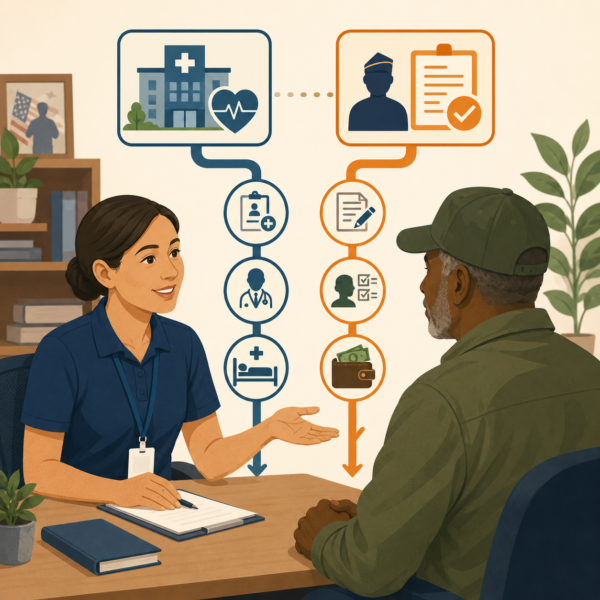
The digital presence of a veterans services agency is now the primary medium through which many veterans and military families form their first impression of the organization. A county veterans services website that is outdated, hard to navigate, or organized around internal agency structure rather than veteran questions will lose the veteran before a human connection is ever made.
A veteran who searches for help with a VA disability claim and lands on a page that has not been updated in two years will not call the phone number on that page. A veteran looking for mental health resources who finds a dense list of program names without any description of what they are or who they serve will not dig further. A military family member looking for housing assistance who cannot tell from the website whether the agency serves her situation will go elsewhere.
Websites Must Be Organized Around What Veterans Actually Need to Know
Most veterans services websites are organized around the agency’s internal structure rather than the veteran’s actual questions. Navigation that requires users to understand the difference between county, state, and federal programs before they can find the right page is navigation that fails.
The most effective veterans services websites organize information around the questions veterans actually ask:
- How do I file a disability claim?
- What benefits am I eligible for?
- Where can I get mental health support?
- Does my family qualify for VA healthcare?
- How do I find housing assistance?
- Who can help me with employment after service?
- Where is my nearest VA facility or vet center?
Each category should lead to content organized around the veteran’s decision point, not the agency’s program inventory. Plain-language eligibility explanations should appear before application forms. Contact information for a real person should be easy to find from every program page.
Social Media and Content Strategy for Veterans Services Agencies
Veterans services social media is most effective when it features real veterans and real stories rather than institutional announcements and awareness statistics. A Facebook post featuring a local veteran who used a county veterans services program, naming the specific benefit accessed and describing the outcome in the veteran’s own words, is more credible and more shareable than a post asserting that the agency is committed to serving veterans.
Peer voice content, including video testimonials, interview-based posts, and personal stories from veterans who have benefited from services, carries the authenticity that makes social media effective in veteran communities. Veterans are a well-networked population on social media, and credible content spreads through peer networks in ways that institutional content rarely does.
For the professional audiences that veterans services agencies also need to reach, including elected officials, county commissioners, nonprofit partners, and healthcare organizations, LinkedIn provides a valuable channel for communicating program outcomes, policy changes, and opportunities for cross-sector collaboration.
How Veterans Services Agencies Can Make Program Communication Accessible and Usable
Veterans services communication often depends on materials that are difficult for veterans to actually use: long PDFs, complex eligibility tables, bureaucratic application forms, and program descriptions written in regulatory language. Even when the content is accurate, it may not be accessible or usable for the veterans it is meant to serve.
Accessibility should be treated as a core communication principle, not a compliance requirement. A veteran with a traumatic brain injury using a mobile phone should be able to understand basic benefit eligibility without downloading a large PDF. A veteran who reads English as a second language should be able to find program information in their primary language. A veteran with PTSD who is in a fragile state when they make contact should encounter a website, a phone answer, and a physical office environment that reduces rather than amplifies stress.
Agencies should review accessibility across several dimensions:
- Website pages should use clear headings, plain-language summaries, and descriptive links that tell visitors what they will find before they click.
- Program eligibility information should be written in the first person from the veteran’s perspective: Do I qualify? What do I need to bring? How long will this take?
- PDFs should be used only when they serve a specific purpose, such as a printable resource guide, not as a default format for web content.
- Videos should include captions and, when possible, transcripts, both for accessibility and for veterans who encounter content in noisy or private environments.
- Language access should be planned for veteran communities with limited English proficiency, including Spanish, Vietnamese, Tagalog, Arabic, Korean, and other languages depending on the local veteran population.
- Phone and in-person alternatives should be clearly available for veterans who cannot easily complete digital processes.
- Materials about mental health and crisis resources should be formatted for rapid scanning, not extended reading, because veterans in distress are not reading carefully.
How Veterans Services Agencies Can Connect Community Engagement, Equity, and Long-Term Trust
The veteran community in the United States is not monolithic. It encompasses veterans from every racial, ethnic, religious, and cultural background, every branch of service and era of service, every geographic region and income level, and every spectrum of physical and mental health status. Veterans services communication that treats the veteran population as uniform will consistently fail to reach the veterans most in need.
Equity in Program Access Requires Communication Data, Not Just Communication Intention
The difference between a veterans services agency that says it is committed to reaching all veterans and one that actually reaches underserved populations comes down to whether the agency collects and acts on data about who is actually being served.
If a county veterans services office serves primarily older white male veterans while the county’s veteran population includes significant proportions of veterans of color, women veterans, younger veterans, and veterans from immigrant communities, the communication strategy is failing somewhere in the pipeline. The failure may be at the awareness stage, the access stage, the trust stage, or the application stage.
Agencies should track the demographic and geographic profile of veterans who contact the office, receive benefits counseling, access services, and are lost from the pipeline at each stage. They should use that data to identify where communication is failing and design targeted outreach to close the gap between equity intention and equity outcome.
Community Partners Extend Communication to Veterans the Agency Cannot Reach Directly
Veterans services agencies can’t always reach every veteran in its geographic area through its own direct outreach. The veterans who are hardest to reach, those with the deepest institutional distrust, those who have dropped out of the system after a negative experience, those who are geographically isolated, those whose cultural background makes engagement with government agencies difficult, are also the veterans who most need help.
Community partners, including faith communities, ethnic community organizations, primary care providers, social service agencies, schools, employers, and agricultural organizations in rural areas, carry communication credibility that government agencies often do not. When a veterans services agency equips its community partners with current program information, clear referral protocols, and direct contact points for program staff, those existing community relationships become an extension of the agency’s outreach capacity.
How Veterans Services Agencies Can Measure Communication Success
Veterans services communication should be measured by whether it helps veterans and military families connect with support, not only by whether content was produced or events were held.
Website traffic, social media engagement, and event attendance can be useful indicators, but they are not enough. A benefits fair can draw hundreds of attendees and still fail if veterans leave without actionable next steps. A Question, Persuade, Refer (QPR) training can reach dozens of community members and still fail if those community members do not know how to make a referral. A website can receive thousands of monthly visits and still fail if visitors cannot find the information they need.
More useful communication metrics include:
- Contact volume and inquiry quality.
- Benefit uptake rates by program, geography, and demographic category.
- Application completion rates and abandonment points.
- Response time from first contact to substantive follow-up.
- Partner referral volume from VSOs, nonprofits, healthcare providers, faith communities, and community organizations.
- Event follow-through rates: the percentage of veterans who take a next step after an outreach event.
- Demographic reach analysis: whether underserved populations are being reached at rates proportional to their presence in the veteran population.
- Staff and volunteer communication consistency: whether the same program is being described accurately across different points of contact.
- Media accuracy in coverage of veterans programs and benefit decisions.
- Reduction in repeated questions after program materials are improved.
Measurement should also include after-action review. After a major outreach event, a program launch, a benefit change communication, or a public controversy, agencies should ask what worked, what confused people, what questions repeated, which partners needed better materials, and where the website or process did not support the message.
How Veterans Services Communication Compares With Other Public Agency Types
Veterans services agencies have a distinct mission, but many of the communication strategies they use are shared across human services, public health, behavioral health, disability services, emergency response, workforce development, and benefits administration. Across these fields, communication is not simply about promoting programs. It helps people understand complicated systems, make important decisions, complete required steps, and connect with services that may affect their health, housing, income, employment, or safety.
Veterans services agencies also face many of the same challenges as other public agencies. They serve diverse populations with different needs, experiences, and levels of trust in government. They must explain complicated programs and eligibility requirements, coordinate information across multiple organizations, reach people who may not actively seek help, and respond to strong expectations from residents, families, elected officials, advocacy groups, and community partners.
The principles that support effective communication across government are therefore equally important in veterans services. Clear language, consistent information, accessible materials, timely updates, audience-specific outreach, empathy, transparency, and meaningful follow-through are essential in nearly every public service setting.
Shared Core Principles
Effective communication begins with strategic planning, regardless of the agency type. A veterans services agency promoting a benefits enrollment program, a public health department encouraging preventive care, or a human services department launching rental assistance must answer the same basic questions. What should the communication accomplish? Who needs the information? What does that audience need to understand or do? Which channels will reach them? How will the agency know whether the effort worked?
Audience segmentation is equally important across sectors. Veterans are not a single audience, just as residents served by public health or human services agencies are not a single audience. Younger veterans, older veterans, women veterans, rural veterans, veterans with disabilities, military caregivers, National Guard members, and veterans experiencing homelessness may respond to different messages and communication channels. The same principle applies when other agencies tailor information by age, language, location, income, disability, or level of familiarity with government services.
Public agencies must also communicate through multiple channels. Websites and social media may reach some audiences, but others depend on printed materials, community organizations, direct mail, phone calls, local events, healthcare providers, employers, or trusted personal contacts. Veterans services agencies often rely on veteran service organizations, peer networks, county offices, community groups, and healthcare partners in the same way that public health and human services agencies rely on clinics, schools, nonprofits, libraries, and neighborhood organizations.
Plain language and accessibility are also universal requirements. Government programs are often built around laws, regulations, administrative processes, and eligibility rules that are difficult for the public to interpret. Whether an agency is explaining a veterans benefit, a disability service, a housing program, or a public health resource, the information must be translated into language that helps people determine whether the program applies to them and what they should do next.
High-Stakes Communication and At-Risk Populations
Veterans services communication shares important similarities with public health, behavioral health, emergency management, and human services communication because the people seeking assistance may be experiencing serious or urgent circumstances. A veteran may contact an agency while facing homelessness, unemployment, a mental health crisis, a disability claim denial, family instability, or the loss of healthcare or income.
In these situations, communication errors can have consequences beyond inconvenience. Unclear eligibility information may discourage someone from applying for a benefit. A missed referral may leave a veteran without housing or healthcare. Poorly framed mental health messaging may reinforce stigma or discourage someone from seeking help. Communication must therefore be accurate, calm, respectful, actionable, and connected to an actual service response.
This is similar to the communication demands placed on crisis hotlines, behavioral health agencies, child and family services, public health departments, and emergency response organizations. All must be prepared to communicate with people who may be distressed, distrustful, overwhelmed, or unable to navigate a complicated process without assistance.
Veterans services agencies face an additional layer of complexity because military culture and past experiences with government institutions may shape how messages are received. Veterans may be concerned about confidentiality, employment, firearms, security clearances, disability status, or whether asking for help will be viewed as weakness. Communication must acknowledge these concerns directly rather than assuming that general public health or human services language will be effective.
Stakeholder Expectations and Public Accountability
Like regulatory, benefits, and human services agencies, veterans services organizations operate under significant stakeholder pressure. Veterans and their families expect respectful treatment, timely assistance, and clear explanations. Elected officials and taxpayers expect public resources to be used responsibly. Advocacy groups and community partners expect agencies to identify gaps and address barriers. Federal, state, and local organizations expect accurate coordination across systems.
These expectations are especially strong because veterans benefits and services are understood as part of the public commitment made to people who served. When a veteran cannot access an earned benefit, stakeholders may see the issue not simply as an administrative problem but as a failure to honor that commitment.
Veterans services agencies must therefore communicate clearly about what they can control, what depends on another agency, how long a process may take, and what support remains available while a claim or application is pending. This is similar to the transparency required of benefits administrators and regulatory agencies, but the emotional and symbolic importance of military service often raises the level of public attention and concern.
Trust, Transparency, and Follow-Through
Trust is central to communication across every public agency type. Residents are more likely to act on government information when they believe the agency is honest, capable, and responsive. This is true whether the message concerns a public health recommendation, an emergency alert, a utility outage, or a veterans benefit.
For veterans services agencies, trust often depends as much on follow-through as on the message itself. An outreach campaign may successfully encourage veterans to make contact, but trust can quickly be lost if phone calls are not returned, referrals lead nowhere, or different agencies provide conflicting information.
Human services, public health, and emergency response agencies face the same challenge. Communication creates expectations that operations must be prepared to meet. Agencies should not promote resources without confirming capacity, publish contact information that is not monitored, or promise assistance that depends on systems they cannot influence. Credibility is built when communication accurately reflects what the agency can deliver.
Crisis and Emergency Communication
Veterans services agencies may not function as traditional emergency response organizations, but they must still be prepared for crisis communication. A sudden benefits change, federal policy announcement, healthcare disruption, data breach, natural disaster, or community tragedy may require rapid outreach to veterans and their families.
The same crisis communication principles used across government apply. Agencies should communicate quickly, confirm information before sharing it, explain what is known and unknown, provide clear instructions, update information as conditions change, and coordinate messages with partner organizations.
Coordination is especially important in veterans services because local agencies may depend on federal departments, state offices, healthcare systems, nonprofit providers, and veteran service organizations. Conflicting instructions can create confusion at the exact moment veterans need a clear path forward.
Engagement and Two-Way Communication
Like transportation, planning, public health, and parks agencies, veterans services organizations benefit from treating communication as a two-way process. Veterans and their families can help agencies identify where program descriptions are confusing, which outreach channels are effective, why eligible people do not apply, and where referrals or service handoffs break down.
Advisory councils, focus groups, community events, surveys, listening sessions, peer networks, and partner meetings can all provide useful feedback. The goal is not only to ask whether people are satisfied. It is to understand how they experience the service system and what communication barriers prevent them from receiving help.
This participatory approach is especially valuable because agency staff may not recognize problems that are obvious to veterans navigating the process. A form may appear clear internally but still be difficult for applicants. A website may contain complete information but organize it around agency departments rather than the questions veterans actually have.
Measuring Impact and Continuous Improvement
Communication measurement is important across all public agencies. Veterans services agencies should look beyond website visits, social media engagement, or the number of materials distributed. These measures show whether information was seen, but not whether it helped someone understand or access a service.
More meaningful measures may include completed applications, benefit uptake, appointment attendance, successful referrals, reduced call abandonment, fewer incomplete forms, increased participation among underserved groups, and improved understanding of available services.
These measures are similar to those used in public health, human services, and workforce development, where the ultimate goal is often a change in behavior, access, or outcomes. Agencies should use data and public feedback to identify communication gaps, test different approaches, and improve future outreach.
Cross-Agency Learning Opportunities
Veterans services communicators can learn from other public sectors, and other agencies can learn from veterans services. Public health agencies offer lessons in stigma reduction, behavior change, and communication with at-risk populations. Human services agencies provide models for benefits navigation, case coordination, and trauma-informed communication. Emergency management agencies demonstrate how to communicate clearly under pressure. Disability services agencies offer guidance on accessibility and inclusive design. Workforce and economic development agencies provide strategies for employer partnerships and community outreach.
Veterans services agencies bring their own strengths to this shared field. Their use of peer messengers, identity-based outreach, trusted community networks, and service-centered communication can inform other agencies working with populations that may distrust institutions or feel disconnected from government programs.
For readers who want to go deeper on how to design and deliver these kinds of communication efforts, A Comprehensive Guide to Public Communications for State and Local Government Agencies provides a practical, detailed look at many of the same principles that support effective veterans services outreach. Veterans services agencies face familiar challenges that appear across government. They must build trust among people who may be skeptical of institutions, explain complex benefits and eligibility requirements in plain language, reach diverse audiences with accessible and culturally competent content, and choose communication channels that reflect how veterans and their families actually receive information and seek assistance.
The Role of External Communication Support in Veterans Services
Most county veterans services offices and smaller state veterans programs operate with minimal dedicated communications capacity. A county veterans services officer may manage benefits counseling, outreach visits, partner coordination, public records, and communications responsibilities simultaneously with a single staff member or as a solo operation.
This capacity gap is real. Communication work gets deferred when case volume rises, outreach materials become outdated, websites go without updates, and event promotion happens through word of mouth rather than coordinated strategy. The veterans most likely to be missed by under-resourced communication are the same veterans most likely to need help the most.
External communication support, from consultants with veterans services experience, communications firms specializing in public-sector and nonprofit audiences, content agencies that understand benefit communication, and digital strategy partners, can help agencies build and maintain communication infrastructure they could not sustain internally.
That support can include plain-language benefit descriptions organized around veteran questions, website content strategies organized around user needs rather than agency structure, event planning and outreach design for community access events, media relations support during major program launches or public controversies, partner communication toolkits that equip VSOs, nonprofits, healthcare providers, and faith communities with accurate and current program information, and social media content strategies that center peer voice and veteran stories.
Agencies evaluating external communication partners for veterans services work should prioritize partners who understand the cultural context of military service, the complexity of the federal benefits system, the specific communication barriers facing underserved veteran populations, and the trust dynamics that make peer voice and community-based outreach essential. A communications firm that has never worked in a veterans services context will spend the first months of an engagement learning why the VA is not the same as a healthcare provider, why a veteran who distrust institutions is not the same as a customer who needs to be persuaded, and why a QPR training is not the same as a general mental health awareness campaign.
The most durable external communication partnerships in veterans services are structured as ongoing relationships rather than project-by-project engagements because the institutional context, the community relationships, and the communication history that an external partner accumulates over time are strategic assets.
How Veterans Services Agencies Can Treat Communication as Infrastructure
Veterans services communication is not a side function. It is part of how benefits reach veterans, how mental health support becomes accessible, how veterans in crisis find help, and how communities build lasting capacity to serve those who served.
A veteran who cannot understand how to file a disability claim may give up and live with an uncompensated service-connected condition for years. A veteran in mental health crisis who cannot find a clear path to help in the moment they are ready to reach out may not reach out again. A military family member who cannot navigate the benefit system may not access the caregiver support that prevents her own burnout and collapse.
Communication is the connective tissue between veterans services programs, community partners, and the veterans who need them. The strategies in this content hub are interconnected. Plain-language benefit descriptions support accurate inquiries. Staff training supports consistent explanations across county offices, VSOs, and community partners. Partner toolkits extend outreach to faith communities, ethnic organizations, and rural networks. Digital portals connect veterans to program information before a human conversation is needed. Event design turns outreach into access. Stigma reduction communication makes it possible for a veteran to say yes to help. Internal alignment prevents conflicting messages across the fragmented landscape of federal, state, and local programs.
For veterans services agency leaders, the key shift is to treat communication as infrastructure. It should be planned, staffed, funded, tested, measured, and improved alongside the benefits programs, counseling services, and community outreach the agency delivers. It should be integrated into program design from the beginning, not attached at the end.
When a new benefit program, outreach initiative, or community partnership is being developed, the communication question should be asked early: What will veterans need to understand, believe, and do? What will partners need to explain? What will family members need to navigate? What will happen if eligibility criteria or application steps are unclear?
A mature veterans services communication strategy also recognizes the stakes involved for the veterans and families it is trying to reach. A veteran filing a disability claim for a service-connected condition may have been living with that condition for years without compensation or appropriate care. A veteran in a mental health crisis is making a decision in a moment of extreme vulnerability about whether to reach out or not. A military family struggling with housing instability after a service member’s deployment may have no other option. A Vietnam-era veteran who has never filed a claim may have only one window of opportunity to connect with a benefits counselor before his health deteriorates further.
Agencies can meet these realities with communication that is clear, specific, honest, and worthy of the trust that service members, veterans, and their families are being asked to extend.
The future of veterans services communication will involve more digital tools, more telehealth engagement, more data transparency, more integration across federal, state, and local program layers, and more pressure to demonstrate that programs are reaching the veterans who most need them. These developments can help agencies reach more veterans, connect more people with benefits they have earned, and demonstrate more clearly that public investment in veterans services is producing real outcomes.
But those benefits will only materialize if agencies remain focused on clarity, trust, accessibility, and genuine service to every veteran, not only the ones who are easiest to reach. Technology should make veterans programs easier to find and use. It should not become another barrier between a veteran and the support they deserve.
Ultimately, the strongest veterans services communication systems help veterans, military families, and community partners answer four questions: What programs and resources are available for me? Do I qualify and how do I get started? How long will this take and what happens next? Where do I get help if I am stuck?
If an agency can answer those questions consistently across its website, program materials, partner communications, outreach events, social media presence, and public accountability reporting, it will be better positioned to serve veterans across every era, geography, and background, and to maintain the public confidence that makes continued investment in veterans services possible.
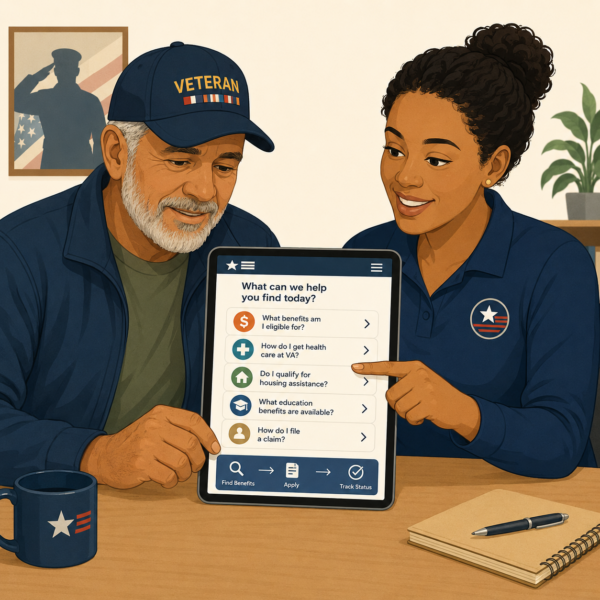 Strategic Communication Support for Veterans Services Agencies
Managing public communication for county veterans services offices, state departments of military and veterans affairs, VSOs, nonprofit veteran support organizations, vet centers, and community-based veteran outreach programs requires more than good writing.
It requires understanding the culture of military service, the complexity of the federal benefits system, the specific barriers facing underserved veteran populations, the mental health communication dynamics that make stigma reduction possible, the trust dynamics that make peer voice and community partnership essential, and the accountability obligations that come with using public resources to serve a population that has earned significant public respect.
Many agencies have strong internal teams with deep program knowledge and genuine commitment to veteran welfare. Those internal teams are essential. At the same time, they are often stretched across urgent benefit counseling, crisis referrals, partner coordination, outreach events, website maintenance, social media, and public records requests simultaneously.
Agencies often choose to work with an external communication partner when internal capacity is limited; when a major program launch, benefit change, or legislative development such as PACT Act implementation creates surge communication demand; when a community outreach event requires more strategic planning and execution than internal staff can absorb alongside daily case management; when a public controversy, a critical news story, or an oversight inquiry puts the agency under heightened scrutiny; or when an outside perspective can help translate complex benefit programs, eligibility rules, and service systems into clearer messages for the veterans, families, partners, and elected officials the agency needs to reach.
Stegmeier Consulting Group (SCG) supports public agencies and veterans service organizations by helping them build communication systems that are clear, coordinated, and centered on the veterans and families they serve. For county and state veterans services agencies, VSOs, and community-based veteran support programs, this can include communication audits, message frameworks, veteran and family journey mapping, benefit program description and website review, community outreach event planning and design, partner toolkits for VSOs, nonprofits, healthcare providers, and faith communities, staff talking points for benefits counselors, outreach staff, and peer support specialists, crisis communication protocols for benefit controversies and media inquiries, mental health messaging that reduces stigma and centers peer voice, and implementation support across the full communication lifecycle.
The value of this support is not simply producing more materials. The value is helping agencies connect the materials to the larger operating environment. A benefit program description should align with the website, the intake process, the partner briefing, the social post, and the script used when a peer support specialist talks to a veteran at a community event. A major benefit change should align with what the agency communicates to veterans, what VSO partners communicate to their members, what county staff communicate over the phone, and what appears on the website. A mental health messaging strategy should align with how staff describe mental health services at every point of contact, including outreach events, community forums, and individual appointments.
External support can also help agencies step back from internal assumptions. Staff who work inside a veterans services agency every day know what QPR training is, how to navigate a disability claim, what a C&P exam involves, and which program is the right fit for a specific veteran’s situation. Veterans who have never engaged with formal services do not. SCG’s role is to help translate agency expertise into communication that meets veterans where they are, while honoring the complexity of the benefit system, the cultural context of military service, and the trust that must be built before a veteran will reach out for help.
For agencies preparing for major transitions, whether a new outreach initiative, a benefit expansion communication, a community access event, a website redesign, a stigma reduction campaign, or a new effort to reach underserved veteran populations, a structured communication approach can reduce confusion, strengthen partner relationships, and produce better outcomes for both the agency and the veterans and families it serves.
The earlier communication strategy is integrated into the program, the more effective it becomes.
Ready to Strengthen Communication for Your Veterans Services Agency?
At Stegmeier Consulting Group, we help county veterans services offices, state departments of military and veterans affairs, VSOs, nonprofit veteran support organizations, vet centers, and community-based veteran outreach programs develop clear, effective communication strategies that support veterans, military families, community partners, and the public trust that makes this work possible.
Our work is grounded in the idea that communication should make veterans services programs easier to find, understand, and use, especially for veterans and families who are navigating a complex system during difficult moments in their lives.
We can help your agency:
- Build veteran-centered communication playbooks for program launches, benefit changes, community outreach events, mental health campaigns, and routine program updates.
- Clarify message architecture across programs such as VA disability compensation, GI Bill education benefits, VA home loans, vocational rehabilitation and employment, housing and homelessness programs, caregiver support, mental health services, and state-specific veteran benefit programs.
- Develop plain-language benefit descriptions, eligibility guides, FAQs, website copy, event materials, fact sheets, partner briefing materials, email templates, and social media content that centers veteran voice and peer experience.
- Create partner toolkits that help VSOs, nonprofits, healthcare providers, faith communities, ethnic community organizations, agricultural extension offices, and rural community institutions share accurate program information with the veterans they are already in relationship with.
- Train benefits counselors, outreach coordinators, peer support specialists, and spokespersons to communicate consistently, accurately, and with cultural competence across the full range of veteran populations your agency serves.
- Plan community outreach events and access initiatives that produce genuine veteran engagement rather than institutional presence.
- Improve website architecture and digital content so veterans and family members can find the right program or resource quickly without needing to understand the agency’s internal organizational structure.
- Develop mental health and suicide prevention communication strategies that center peer voice, reduce stigma, and make the Veterans Crisis Line and other resources consistently visible and accessible.
- Prepare crisis communication protocols for benefit controversies, media inquiries, public records requests, and situations that put the agency under heightened scrutiny.
- Design community engagement processes that reach underserved veteran populations, including women veterans, veterans of color, rural veterans, National Guard and Reserve members, and veterans from immigrant communities, at rates proportional to their presence in the community.
- Measure communication effectiveness and refine strategies based on benefit uptake data, demographic reach analysis, partner feedback, event follow-through rates, and after-action learning from major campaigns and outreach initiatives.
Whether your agency is preparing for a major outreach campaign, trying to reduce the gap between available services and the veterans who could use them, strengthening your digital presence for a diverse veteran population, building equity into your outreach strategy, or developing a long-term communication system that supports both veteran access and public accountability, SCG can help you create messages, tools, and workflows that work for the veterans, families, and communities your agency serves.
Use the form below to connect with Stegmeier Consulting Group and explore how we can help strengthen clarity, trust, and access across your veterans services programs.
Board Agenda and Deal Approval Communication for Development Finance Authorities: What Elected Officials and Residents Need to Understand Before the Vote
The period before a development finance authority board approves a financing deal is among the most consequential and most poorly managed communication moments in public finance. Everything that determines whether the approval process builds or erodes public trust...
Conduit Bond Program Communication for Industrial Development Authorities: Explaining the Tool to First-Time Borrowers and the Public
Conduit bond financing occupies an unusual space in the public finance landscape. It is a tool that industrial development authorities use regularly, that sophisticated borrowers in the nonprofit and private sectors have learned to navigate, and that the public almost...
How State Infrastructure Banks Can Explain Financing Programs to Local Governments That Have Never Used Them Before
There is a quiet and persistent gap at the center of public infrastructure finance. State infrastructure banks across the country have developed financing programs that are, by any reasonable measure, well-structured, competitively priced, and designed to serve the...
Public Agency Revenue Bond Communication for State Infrastructure Banks and State Finance Authorities
Revenue bond financing sits at the heart of public infrastructure investment in the United States. For state infrastructure banks, state finance authorities, and the local governments and utilities they serve, revenue bonds are often the most important and most...
One Message Across the State: How State Economic Development Organizations Can Align Incentives, Sites, Financing, and Regional Partners
State economic development organizations operate at a fundamental tension. Their job is statewide, but most of the work that actually attracts, retains, and grows business investment happens locally. A state agency may develop the incentive programs, maintain the site...
Business Attraction Campaign Communication for State Economic Development Organizations: Building a Sector Story That Local Partners Can Actually Use
State economic development organizations invest enormous resources in business attraction. They fund marketing campaigns, develop sector strategies, attend trade shows, commission research, and build relationships with site selectors and corporate real estate...
Terminal Expansion Communication for Port Authorities: Explaining Redevelopment, Debt, and Community Impact Together
Port authorities occupy a distinctive position in public life. They manage infrastructure that most residents rarely think about until it changes. A terminal expansion, a cargo facility upgrade, or a waterfront redevelopment project can reshape the physical and...
Investor Relations Communication for Port Authorities: How to Explain Bond-Financed Infrastructure to Both Markets and the Public
A port authority occupies an unusual position among public agencies. It borrows money the way a corporation might, issuing revenue bonds to finance terminals, cranes, rail connections, and berth deepening projects that can cost hundreds of millions of dollars. At the...
Measuring Communication Success for Economic Development and Public Finance Agencies: Which Metrics Actually Matter
Economic development and public finance agencies invest significant resources in communication: websites, program materials, press releases, social media, community events, partner toolkits, annual reports, and a continuous stream of content intended to attract...
Public Meeting and Community Engagement Communication for City Economic Development Agencies
A public meeting about a proposed economic development project or neighborhood investment plan is one of the most revealing tests of an agency’s actual commitment to community engagement, because the difference between genuine engagement and procedural...
Digital Content Strategy for Economic Development Agencies: How to Turn Program Pages Into Qualified Inquiries
Most economic development agency websites contain a meaningful quantity of program information that does almost nothing to generate the qualified inquiries the agency needs to fill its pipeline with viable projects. The information exists. The programs are described....
Board and Elected Official Communication for Development Finance Authorities: Preparing Leaders to Explain Deals Clearly
Development finance authorities operate at the intersection of technical complexity and political accountability in a way that creates a recurring communication challenge unique to their institutional structure. They administer financing tools, conduit bonds, tax...
Development Project Controversy Communication for Economic Development Agencies: What to Say When Incentive Deals Face Backlash
Every economic development agency that operates at sufficient scale will eventually face a moment that tests everything its communication practices have built. A major incentive deal announced with fanfare becomes the subject of organized community opposition. A...
One Message Across Many Partners: How Economic Development Agencies Can Align Counties, Cities, Chambers, CDFIs, and Utilities
A business owner or developer trying to understand what economic development support is available in a region is navigating a landscape of organizations that simultaneously claim to be working toward the same goals and routinely give inconsistent answers to the same...
New Markets Tax Credit Communication for Economic Development and Public Finance Agencies: Making a Complex Tool Understandable
The New Markets Tax Credit program occupies a distinctive and often underappreciated position in the community development finance landscape. It is one of the most powerful federal financing tools available for projects in low-income communities, capable of generating...
Opportunity Zone Communication for Economic Development Agencies: Explaining the Tool Through Real Projects, Not Tax Jargon
When Congress created the Opportunity Zone program in 2017, it established a tax incentive that was genuinely novel in federal economic development policy and that created an almost immediate communication crisis for the state and local economic development agencies...
Workforce Incentive Communication for Economic Development Agencies: Helping Businesses Understand Training Support and Talent Programs
When a business owner thinks about what keeps them up at night, the inability to find, train, and keep qualified workers is among the most consistent answers across regions, sectors, and business sizes. Workforce challenges, whether manifesting as difficulty...
Business Attraction Campaigns for Regional Economic Development Organizations: Building a Sector Brand That Holds Up Under Scrutiny
Regional economic development organizations face a branding challenge that is structurally unlike almost any other in public communications: they must persuade sophisticated, skeptical decision-makers that a specific geographic area possesses genuine advantages for a...
Equity in Program Access for Economic Development Agencies: Using Communication Data to Find Who Is Being Missed
Equity commitments in economic development agencies have proliferated in recent years, appearing in strategic plans, annual reports, mission statements, and board resolutions with an increasing frequency that reflects genuine organizational intention in many cases and...
Rural Economic Development Communication Strategies: How Local Agencies Can Work Through Trusted Community Institutions
The geography of rural economic development communication is not simply a scaled-down version of urban economic development communication. It is a fundamentally different landscape with different organizational infrastructure, different information pathways, different...
Language Access for Economic Development Agencies: Reaching Immigrant and Ethnic Business Communities More Effectively
Across the United States, immigrant entrepreneurs and ethnic business communities contribute disproportionately to local economic vitality, often anchoring neighborhood commercial corridors, sustaining employment in industries that native-born businesses have...
CDFI Partner Toolkits for Economic Development Agencies: Expanding Reach Through Trusted Business Finance Intermediaries
Community development financial institutions occupy a position in the small business capital ecosystem that no government economic development agency can replicate from the outside: they have earned trust through direct relationship, often over years, with exactly the...
Corridor-Level Stakeholder Mapping for City Economic Development Agencies: Reaching Small Businesses Beyond Downtown
City economic development agencies face a geography problem that rarely appears on organizational charts but shapes everything about how their programs actually reach the businesses that need them most. Downtown corridors attract disproportionate attention: they have...
Inquiry Response and Process Mapping for Economic Development Organizations: From First Contact to Qualified Project
The first contact between a business, developer, or site selector and an economic development organization is a moment that the organization almost always underestimates. In the internal accounting of economic development work, it is a small event: an email received,...
Inquiry Response and Process Mapping for Economic Development Organizations: From First Contact to Qualified Project
The first contact between a business, developer, or site selector and an economic development organization is a moment that the organization almost always underestimates. In the internal accounting of economic development work, it is a small event: an email received,...