Learning Together: Communication Strategies for K-12 School Districts and Public Education Agencies

K-12 education communication does not happen only through superintendent announcements, district newsletters, school board meetings, or messages posted on a website. It happens every time a family tries to enroll a child, understand an attendance notice, find a bus route, access special education services, select courses, apply for a school program, respond to a safety alert, or determine whom to contact when something goes wrong. It also happens when a student learns about a tutoring program from a counselor, when a teacher is asked to explain a district decision, when a principal addresses concerns after an incident, or when a school board considers a change that will affect neighborhoods, staffing, transportation, or student opportunities.
These daily interactions make communication part of the education system itself. A district may offer strong academic programs, mental health services, meal assistance, transportation support, career pathways, multilingual education, advanced coursework, extracurricular activities, counseling, tutoring, and family resource services. Those programs cannot fully serve students when families do not know they exist, cannot understand the eligibility requirements, receive inconsistent explanations, or abandon the process because the next step is unclear. In that sense, communication is not simply how a school system promotes its work. It is one of the primary ways students and families gain access to that work.
The public education environment also contains a broader and more varied set of audiences than the phrase “school communication” might suggest. Families need clear information about enrollment, attendance, transportation, student services, academic expectations, safety, and decision-making. Students need communication designed specifically for them, especially when the issue involves course selection, graduation requirements, career preparation, mental health, behavior, safety, or participation in school programs. Teachers, school secretaries, counselors, bus drivers, coaches, and other employees need enough information to respond accurately when students and families ask questions. Principals need materials that are consistent with district decisions but flexible enough to work within the culture and needs of an individual school community.
School boards, elected officials, journalists, community organizations, employee groups, and residents without children in the school system also need different types of information. Board members may need to explain the financial and educational implications of a recommendation. Community partners may need to understand how to refer families to a service. Journalists may need to distinguish between a proposal, a staff recommendation, and a final board action. Residents may want to know how a bond, levy, school closure, boundary change, or construction project will affect taxes, neighborhoods, transportation, or public resources.
The communication strategy that works for a state education agency introducing a new accountability framework will not necessarily work for a rural district consolidating bus routes. A large urban district announcing a curriculum change will face different concerns than a county office helping smaller districts implement a regional equity initiative. A charter network recruiting new families communicates in a different environment than a public vocational school explaining technical programs and career pathways to students and families. Strong education communication recognizes these differences while maintaining a consistent commitment to clarity, accessibility, accuracy, transparency, and trust.
This content hub provides a practical framework for strengthening communication across K-12 school districts, state and regional education agencies, individual schools, charter systems, and related public education agencies. It examines how public education agencies can explain complex programs, support meaningful family and student engagement, prepare employees before major announcements, improve websites and digital platforms, reach multilingual communities, communicate during emergencies, build trust around difficult decisions, and measure whether communication is helping people understand and act.
The goal is not simply to distribute more information. It is to create communication systems that make public education easier to navigate, make programs easier to access, and make institutional decisions easier to understand. When communication is treated as part of educational infrastructure, rather than as a final step added after a decision is made, it can improve student participation, family trust, employee readiness, and the overall effectiveness of the school system.
Who This Public Education Communication Content Hub Is For
This content hub is designed for K-12 school systems, public education agencies, and community partners that are responsible for communicating with students, families, employees, board members, elected officials, and the public. That includes state departments of education, county offices of education, regional service agencies, public school districts, individual elementary and secondary schools, public charter schools and networks, charter authorizers, career and technical education systems, public vocational schools, adult basic education and high school equivalency programs, public virtual schools and district online learning programs, early childhood agencies, and school boards.
It is also relevant to the people who carry communication responsibilities within those organizations. Superintendents, assistant superintendents, communications directors, public information officers, principals, family engagement coordinators, teachers, counselors, registrars, special education staff, transportation leaders, school nutrition teams, human resources departments, school safety personnel, technology staff, board members, and community liaisons all contribute to the communication experience of students and families.
These professionals may not all think of themselves as communicators, but their work often depends on their ability to explain information clearly. A registrar explains enrollment requirements. A counselor explains graduation pathways. A transportation employee explains route eligibility. A teacher explains a new instructional program. A principal explains how the school is responding to an incident. A board member explains why a difficult decision is being considered. A community partner explains how a family can connect with district services.
The common challenge is that public education agencies must explain complex information to people who have different levels of familiarity with the system. A parent may need to understand what to do when a student is absent because of illness. A newly arrived family may need to enroll a child without having every document the system usually requests. A student may need to determine whether a career pathway will affect graduation requirements. A family of a student with disabilities may need to understand evaluation timelines and service options. A resident may need to understand why a district is considering a school closure even though that resident does not have a child currently enrolled.
Strong communication helps people answer their practical questions without forcing them to understand the district’s internal structure first. Families should not need to know which central-office department manages a program before they can find it. Students should not need to interpret administrative terminology to understand what is expected of them. Community members should not need to read a lengthy board packet to learn what decision is being considered and how it may affect them.
How to Use This Courts Communication Content Hub
Courts communicate with people whose familiarity with the judicial system, access needs, and reasons for interacting with the institution vary widely. This content hub provides a central resource for state and local courts, court administrators, public information officers, and judicial branch communication teams seeking to improve public understanding, access to justice, and confidence in court operations while preserving impartiality.
The sections below provide a broad framework for understanding court communication. They explain how courts can clarify their roles, make procedural information understandable, coordinate public-facing guidance, and help people locate assistance. Court leaders and staff can use this hub to evaluate and improve communication across jury service, self-help resources, case processing delays, operational changes, media relationships, and community outreach. It also addresses connected priorities including language access, physical and digital accessibility, employee coordination, emergency communication, technology modernization, and communication measurement.
Our Comprehensive Guide to Public Communications for State and Local Government Agencies
This article is part of our series on strategic communication for state and local government agencies. To learn more and to see the parent article, which links to other content just like this, click the button below.
How K-12 Education Operates Across a Layered and Decentralized System
Public education communication is complicated in part because authority is distributed across several levels of government and administration. Federal law may establish requirements that states must implement. State agencies may create regulations, guidance, accountability systems, or funding conditions. County or regional organizations may support implementation. Local school boards may adopt policy. District administrators may design procedures. Principals and school employees may then be responsible for explaining the result to students and families.
Families generally experience education through an individual school, but many of the decisions affecting that school originate elsewhere. A principal may communicate a policy created by the district. The district may be implementing a state requirement. The state may be responding to federal law or a legislative mandate. The family receiving the message may not know who made the decision, whether the school has discretion, or where questions and concerns should be directed.
This creates a recurring communication gap. Public education agencies often explain the source of a requirement without explaining what it means for the person affected. A message may state that a change is required by state law, but fail to explain when it takes effect, what students must do, how families will receive support, or whether local options remain. Strong communication should acknowledge the governance context while remaining centered on the practical questions students, families, and employees need answered.
State Departments of Education
State education agencies (SEAs), including state departments of education, administer major parts of the public education system. Their responsibilities may include academic standards, statewide assessments, educator licensing, accountability, federal program oversight, school improvement, special education monitoring, data reporting, grants, and technical support to local districts.
Their communication must work for audiences with very different needs. District administrators may require detailed technical guidance that supports compliance. Principals may need implementation summaries that translate a state requirement into school-level action. Teachers may need practical explanations of how the change affects instruction or student support. Families may need plain-language information about rights, expectations, timelines, and available assistance. Policymakers and the public may need broader explanations of statewide performance, funding, or educational priorities.
A state agency can publish technically accurate guidance and still leave local districts unprepared to communicate. A long policy document may explain the legal basis of a change without helping a principal answer the questions families will ask. This is why technical guidance and public communication should be developed as related but separate products.
The strongest state communication systems create several layers of information around major initiatives. Technical staff receive the detail needed for implementation. School leaders receive concise operational guidance. Educators receive materials that explain classroom implications. Families receive clear summaries in accessible formats and appropriate languages. Students receive direct communication when the issue affects testing, course requirements, graduation, safety, or participation.
State agencies can also reduce inconsistency by providing adaptable tools to local districts. A common set of messages, frequently asked questions, presentation materials, family notices, and implementation updates can prevent hundreds of local agencies from independently interpreting the same policy. These tools should be updated as new questions appear so that districts continue working from a reliable source.
County Offices, Regional Agencies, and Educational Service Centers
Many states have county offices of education, regional service agencies, intermediate units, educational service centers, or similar organizations that support multiple districts. These entities may provide special education services, professional development, data analysis, technology assistance, school improvement, alternative education, transportation coordination, fiscal oversight, and support for small or rural systems.
Their communication role is often less visible than the role of a district or state agency, but it can be equally important. Regional organizations frequently translate state requirements, develop shared materials, coordinate programs across jurisdictions, and help local districts access expertise they could not maintain internally.
A regional agency may strengthen communication by creating multilingual templates, shared message frameworks, staff training, crisis protocols, family guides, and implementation resources that several districts can use. This approach is especially valuable for smaller systems that may not have a dedicated communications department or sufficient staff capacity to develop major communication materials independently.
Regional organizations can also create consistency when a program serves students across several districts. Families should not receive different explanations of the same regional special education service, alternative learning program, career pathway, or student support initiative depending on which local office they contact.
A regional education organization can use communication to support both strategy development and sustained implementation of an equity initiative. Community listening and student perspectives can help identify priorities, while professional development, practical resources, and partnerships can help districts translate those priorities into action. Ongoing communication can clarify expectations, share lessons across districts, and help educators adapt their work as community needs evolve.
Local K-12 School Districts
Local school districts are the central operating units of public education communication. They manage the systems that families encounter most frequently, including enrollment, transportation, calendars, attendance, academic programs, special education, school meals, student services, facilities, employment, extracurricular activities, and emergency notifications.
Communication within a district moves in several directions at once. Central-office leaders communicate with principals and departments. Schools communicate with families. Teachers communicate with students and caregivers. Board members communicate with constituents. Community partners communicate with families. Students communicate through peer networks and social platforms that often move faster than official district channels.
The district’s challenge is therefore not simply to produce messages. It is to coordinate an active communication network in which many people are already sharing information. A central-office announcement may be accurate but ineffective if principals receive it only minutes before families. A teacher may answer questions based on incomplete information. A school may create its own explanation because district materials are too general. A board member may provide a different timeline than the district website.
Effective district communication requires clear roles, planned sequencing, and recognition that school-level employees are among the district’s most influential communicators. When a major decision is announced, families may contact a teacher, school secretary, principal, coach, or counselor before they contact the district office. Those employees need enough context to respond accurately or route the question to the right person.
Individual K-12 Schools and School Leaders
Families often place greater trust in the people they know at their child’s school than in the district as an institution. A principal, teacher, counselor, coach, school secretary, or family liaison may have built a relationship with a family over several years. That relationship gives school-level communication significant influence.
It also creates risk when schools are not adequately prepared. If a principal receives incomplete information, the school may interpret a district decision differently. Families can then receive one explanation from the central office, another from the school, and a third from an employee trying to help.
District communication should give principals both consistency and flexibility. School leaders need accurate core messages, clear timelines, anticipated questions, contact information, and guidance about which parts of the message can be adapted. They also need time to understand the issue before they are expected to explain it.
A principal should not be forced to copy a formal statement that does not address the concerns of the school community. At the same time, the principal should not need to reconstruct the district’s rationale, process, and timeline independently. The strongest model provides a shared factual foundation and allows the school leader to communicate in a voice that feels credible within that community.
Public Charter Schools, Networks, and Authorizers
Public charter schools operate within a different accountability and enrollment structure than traditional districts, but they face many of the same communication challenges. Charter schools must explain their educational model, enrollment process, transportation availability, academic expectations, discipline policies, student services, and governance structure.
Charter networks also need to balance consistency across campuses with the reality that each school serves a distinct community. A network may establish common enrollment, curriculum, and family engagement systems, but school leaders still need to communicate in ways that reflect local relationships and concerns.
Charter authorizers face a different responsibility. They must explain oversight decisions, renewal standards, performance concerns, corrective action, expansion requests, and possible closure. These decisions can have immediate consequences for students, families, and employees.
Because charter enrollment is often choice-based, promotional communication and public accountability can become closely connected. Families need more than persuasive recruitment language. They need enough information to understand the school’s academic approach, services, transportation, expectations, and performance. Authorizers need to explain accountability decisions in language families can understand, particularly when a school may not be renewed or may close.
Public Vocational Schools, Career and Technical Education, and Adult Basic Education
Public vocational schools, career and technical education programs, and adult basic education programs serve secondary students preparing for employment and adult learners balancing education with employment, caregiving, transportation, housing, and financial pressures. These students often need communication that is direct, practical, and connected to immediate decisions.
Prospective students need to understand what a program leads to, how long it takes, what it costs, when classes are offered, whether financial assistance is available, and how the credential connects to employment or further education. Current students need timely information about registration, advising, academic standing, program completion, work-based learning, high school equivalency testing, and support services.
A program may have strong labor-market value and still struggle with enrollment when prospective students cannot see the pathway clearly. A technical description of the curriculum may not answer whether the student can attend classes while working, whether prior experience counts, whether the credential is recognized by employers, or whether transportation and childcare will make participation possible.
Communication should therefore connect program details to real student circumstances. It should help prospective students understand not only what the institution offers, but also what completing the program will require and what support is available along the way.
How Public Education agencies Can Explain Programs and Decisions Clearly
education agencies routinely communicate topics that are administratively complex and personally important. Enrollment rules, attendance policies, special education, curriculum changes, student discipline, budget decisions, and school closures all involve detailed procedures and significant consequences.
The challenge is not simply to make the wording shorter. It is to organize the information around the questions students and families are trying to answer. A clear message should help people understand what is happening, why it matters, what they need to do, what support is available, and what will happen next.
Enrollment and Registration
Enrollment is often a family’s first direct experience with a school system. A confusing or unwelcoming process can create immediate distrust, particularly for families who are new to the community, have limited English proficiency, lack stable housing, are navigating a custody issue, or are enrolling a student with disabilities or health needs.
Enrollment communication should explain which school the student is eligible to attend, which documents are required, and what families should do when a document is unavailable. It should distinguish between documents required by law and documents that may simply make the process easier. Families should not abandon enrollment because they incorrectly believe a missing lease, utility bill, birth certificate, immunization record, or custody document makes attendance impossible.
The process should also explain transfer options, school choice, transportation eligibility, health requirements, language services, and support for students with disabilities. Families should know how long enrollment normally takes, what happens after the application is submitted, and who can resolve a problem when the process stalls.
Districts should review the actual experience of enrolling, not only the accuracy of the instructions. They should examine where families abandon online forms, which documents cause repeated confusion, which questions generate phone calls, and how long it takes to receive help. These patterns can reveal communication barriers that are not visible in the written policy.
Attendance and Chronic Absenteeism
Attendance communication often becomes punitive before it becomes useful. Families may receive a formal letter stating the number of absences without receiving a clear explanation of why the pattern matters, what support is available, or how to correct an error.
Students miss school for many reasons. Illness, transportation problems, housing instability, caregiving responsibilities, anxiety, bullying, academic difficulty, school avoidance, family work schedules, and a lack of connection to school can all contribute. A message that assumes indifference or irresponsibility may discourage the family from explaining the real barrier.
Effective communication should begin before the student reaches a serious attendance threshold. Districtwide messages can explain the academic, social, and emotional importance of regular attendance. Early individual notices can help families recognize a pattern while there is still time to respond.
Outreach should invite a conversation. The school should ask what is contributing to the absences and connect the family with appropriate support when possible. That may involve transportation, healthcare, counseling, tutoring, housing assistance, or a plan for helping the student reconnect with school.
Attendance policies and legal requirements still need to be explained clearly. The difference is that accountability should be paired with assistance. Families are more likely to work with the school when the first message communicates concern, curiosity, and a willingness to help rather than accusation.
Communication should also recognize progress. Families should not hear from the district only when attendance worsens. Acknowledging improvement can reinforce the partnership and show that the school is paying attention to more than compliance.
Academic Programs, Curriculum, and Instructional Change
Curriculum communication often begins too late. Districts may spend months reviewing standards, instructional materials, assessment results, teacher feedback, and program options. Families may first hear about the change through a board agenda, a social media debate, or an announcement issued shortly before implementation.
This timing can make a legitimate process appear secretive. Families may assume the district avoided public discussion, even when educators and administrators have been studying the issue for a long time.
Communication should explain what is changing, what is not changing, and why the district is considering the change. It should describe the student needs, evidence, standards, or implementation concerns that informed the proposal. Families should also understand how teachers will be trained, how students will be supported, and how materials can be reviewed.
The district should clearly distinguish between exploration, recommendation, approval, and implementation. Families need to know whether the issue is still open for input or whether a formal decision has already been made. Inviting feedback after the practical decision is complete can create more frustration than offering no engagement at all.
Educators should receive information before the public rollout. Teachers should not learn about a major instructional change through the same family email they will be expected to explain the next morning. Internal preparation gives employees time to understand the rationale, ask questions, and identify issues the central office may not have considered.
Special Education and Student Support Services
Special education communication involves legal requirements, procedural timelines, professional terminology, and significant family emotion. Families may encounter unfamiliar concepts related to referrals, evaluations, eligibility, individualized education programs, accommodations, placement, services, progress monitoring, procedural safeguards, and dispute resolution.
Providing legally required documents does not necessarily mean families understand the process. A family may receive a packet of accurate information and still be unsure what stage the student is in, what decision will occur next, or what the family is expected to contribute.
Strong communication should help families understand the sequence of the process. It should explain who participates, which timelines apply, what information may be useful, and how decisions will be made. Families should know how services will appear during the school day, how progress will be measured, and whom to contact when they disagree or need clarification.
Transitions require particular attention. Moving between grades, schools, programs, or postsecondary settings may affect staffing, scheduling, transportation, service delivery, and legal protections. Families need early communication so they can prepare and raise concerns before the transition occurs.
Communication should be accessible to families with disabilities and available in languages they understand. Meetings should not be structured as though parents are expected to arrive with the same technical knowledge as educators and service providers. The school’s responsibility is not only to follow the process, but also to make the process understandable.
School Meals, Health, Wellness, and Student Services
Schools provide many services beyond classroom instruction. These may include breakfast and lunch, health screenings, counseling, mental health support, physical activity, nutrition education, family resource referrals, and partnerships with healthcare or social service organizations.
Families may not understand which services are available to all students, which require an application, which require consent, and which involve outside partners. They may also avoid services because the communication is overly clinical, stigmatizing, or disconnected from the problem the family is trying to solve.
Communication should connect each service to a recognizable need. Instead of listing “student wellness supports,” a district can explain that students may receive help when they are experiencing anxiety, grief, peer conflict, school avoidance, or difficulty concentrating. Instead of describing a meal program only through eligibility language, the district can explain how students access meals, what information families must provide, and whether assistance is available when circumstances change.
The District of Columbia Public Schools CHARM School Program demonstrates how health communication can become more effective when it is embedded in participation. Students did not simply receive information about nutrition and physical activity. They participated in cooking, fitness, mentorship, and life-skills activities that made the message practical and personally relevant.
This approach offers a larger lesson for public education agencies. Communication about health and wellness is more likely to influence behavior when students can practice skills, ask questions, see themselves reflected in the program, and help shape how the initiative is delivered.
Discipline, Behavior, and School Climate
Discipline communication can quickly damage trust when families believe expectations are unclear, consequences are inconsistent, or policies are explained only after an incident. Students and families should understand behavior expectations before a problem occurs, not only when the school is imposing a consequence.
Clear communication should explain the rules, the range of possible responses, the difference between disciplinary and supportive interventions, and the process for raising concerns. Families should understand how the district evaluates whether policies are applied consistently across schools and student groups.
School climate is broader than discipline. It includes students’ experiences of safety, belonging, relationships, respect, support, and trust. Publishing a code of conduct does not communicate the full approach to school climate.
Students and families need clear ways to report bullying, harassment, discrimination, threats, or other concerns. They should know what happens after a report, which information may remain confidential, and how the school follows up. A reporting system that collects concerns without explaining the next step may discourage future reporting.
When districts conduct climate surveys, they should share the findings and explain what actions will follow. Asking students and families about their experiences without reporting back can weaken trust. Communication should show how feedback is connected to improvement.
Budgets, Bonds, Levies, and Resource Decisions
School finance communication is often organized around accounting categories rather than public questions. Budget documents may be accurate and comprehensive while remaining difficult for residents to interpret.
Families and community members usually want to know what services are being added, reduced, or protected. They want to understand whether classroom positions are affected, why costs are increasing, how enrollment changes influence staffing, and whether a proposed bond or levy will change taxes.
They may also need an explanation of restricted funds. A district can appear to have available money while still being unable to use those funds for salaries or operating costs. Without explanation, residents may assume the district is choosing not to address a problem.
Districts should provide plain-language summaries that explain the major choices, alternatives, constraints, and expected effects. Visual explanations can help residents understand revenue sources, staffing costs, capital spending, reserves, and debt.
Board members, administrators, principals, and communication staff should work from consistent information. Residents should not receive different explanations depending on whom they contact.
School Boundaries, Consolidations, and Closures
Few education decisions generate more concern than attendance boundary changes, school consolidation, program relocation, or closure. These decisions affect transportation, friendships, neighborhood identity, family routines, employee assignments, housing decisions, and school traditions.
Communication must begin before the district presents a preferred final outcome. The public needs time to understand why change is being considered, what criteria will guide the decision, and which options remain available.
Enrollment trends, building conditions, transportation implications, staffing effects, program needs, and financial realities should be explained in clear language. The district should identify what community feedback can influence and what constraints are unlikely to change.
Families should also understand the transition process. A decision may involve changes in school assignment, transportation, special education services, extracurricular participation, staffing, or student support. These practical effects often matter more to families than the administrative rationale.
A public meeting held after the district has effectively selected the outcome is not meaningful engagement. It is an announcement followed by questions. Credible communication begins early enough for public understanding and participation to affect the process.
How School Districts Can Improve Everyday Family Communication
Families usually judge school communication through ordinary experiences, not through a formal communication plan. They notice whether the calendar is easy to find, whether transportation updates arrive on time, whether messages are available in their language, and whether someone responds when they ask for help.
These routine experiences create the foundation for trust. A district that communicates reliably during ordinary situations is more likely to be trusted during a crisis or controversial decision. A district that repeatedly provides late, unclear, or conflicting information may struggle to regain confidence when the stakes are higher.
Communication Should Begin With the Family’s Question
School systems often organize information around their departments. Families organize information around the problem they are trying to solve.
A family may want to know how to enroll a student, report an absence, request an evaluation, find transportation information, access meals, report bullying, or contact someone after a problem has not been resolved. The family does not necessarily know whether the answer is located under operations, student services, exceptional education, teaching and learning, or community relations.
Websites, call routing, family guides, and help content should reflect common questions and tasks. A family should not need to understand the district’s organizational structure before it can find the right information.
Content should also identify a clear next step. A page that provides general background without explaining what the user should do may create the appearance of transparency without actually helping.
Families Need Fewer Channels With Clearer Purposes
Many districts use email, text messages, automated calls, mobile applications, parent portals, websites, classroom platforms, social media, and printed notices at the same time. More channels do not automatically create better communication.
Families may receive the same low-priority announcement through several systems while missing an important message posted only inside a portal they rarely use. Employees may also select channels inconsistently, making it difficult for families to know where authoritative information will appear.
Districts should define the purpose of each channel. Emergency systems should be reserved for urgent safety and operational information. Text messages can support short reminders and time-sensitive actions. Email can provide more detail. Parent portals should focus on student-specific records and transactions. Websites should serve as the durable source of truth.
Social media can support storytelling, reminders, and redirection to official information. Printed communication remains important for families who cannot reliably access digital systems. Classroom platforms should focus primarily on course-level information rather than becoming another districtwide announcement channel.
A clear framework helps employees choose the right tool and helps families know where to look.
Teachers and School Employees Are Frontline Communicators
Teachers, school secretaries, bus drivers, counselors, coaches, and other employees receive questions about district decisions every day. They should not be expected to improvise answers without context.
Before a major announcement, employees should receive a summary of the issue, the reason for the decision, the timeline, and the questions families are likely to ask. They should also know which questions they can answer, which should be referred elsewhere, and where updated information will be maintained.
Internal communication does not require sharing confidential information prematurely. It requires preparing employees for the conversations their roles will predictably create.
Employees should also have a way to report emerging questions. When the same point of confusion appears across several schools, the district should update its public materials rather than leaving each employee to develop an answer independently.
Positive Communication Builds Capacity for Difficult Communication
Families should not hear from the school only when a student is absent, struggling, missing work, or involved in a disciplinary issue. When every message signals a problem, families may begin to avoid school communication.
Regular positive contact builds relational capacity. A teacher introduction, recognition of student effort, a classroom update, or a follow-up after a family raises a concern can strengthen trust before a more difficult conversation becomes necessary.
Positive communication does not need to be elaborate. It should be specific, genuine, and consistent enough that families do not associate every school message with bad news.
This foundation matters during conflict. A family that has experienced respectful and useful communication is more likely to believe the school is acting in good faith, even when the family disagrees with a decision.
How K-12 Schools and Districts Can Communicate Directly With Students
Students are frequently discussed in education communication without being addressed directly. Districts send families messages about attendance, mental health, course selection, safety, college planning, career pathways, and behavior. Students may receive the information only after an adult interprets it.
This approach is especially ineffective for older students who make daily decisions about participation, attendance, coursework, activities, and help-seeking. Student communication should be direct, age-appropriate, respectful, and connected to real choices.
A student-facing message should explain what the information means, what the student needs to do, when action is required, and where help is available. It should also clarify whether the issue affects the student’s schedule, grades, graduation, activities, or future options.
Students recognize when communication is condescending or performative. Messages should not read like adult notices with simpler vocabulary. They should acknowledge student priorities, concerns, and the practical realities of school life.
Students can also help districts design stronger communication. Advisory groups, surveys, listening sessions, peer ambassadors, and youth-led communication projects can reveal which channels students use, which terms are confusing, and why students avoid certain services.
Students may also identify which adults they trust, how rumors spread, what makes mental health messaging credible, and what prevents students from reporting safety concerns. These insights help adults understand communication conditions they may not see.
The goal is not to transfer responsibility to students. It is to recognize that students possess essential knowledge about their own communication environment.
 How School Districts Can Align Staff, Boards, Schools, and Partners Before Going Public
Education communication often fails because the external message is developed before internal alignment occurs. A family may hear about the same issue from a superintendent, principal, teacher, board member, student, community organization, employee group, or local journalist.
When those sources provide conflicting explanations, uncertainty grows quickly. Families may not know which information is current, which decision has been made, or which office can provide help.
Major communication moments should begin with a shared factual foundation. This is particularly important for curriculum adoption, boundary changes, closures, budget reductions, attendance policies, transportation changes, special education services, safety procedures, leadership transitions, calendar changes, and technology incidents.
Superintendents and board members may need high-level briefing materials. Principals need tools they can use with families and employees. Teachers and frontline staff need concise explanations and routing instructions. Students may need their own materials. Community organizations may need referral guidance and current program information.
The district website should provide a reliable source of truth, and materials should be updated as questions emerge. Employees and partners should know where to find the latest information.
Alignment does not require every person to use identical language. A superintendent, principal, counselor, and community partner will naturally communicate differently. The goal is to ensure that they are working from the same facts, timeline, and expectations.
How School Boards Can Strengthen Public Communication
School boards sit at the intersection of governance, public participation, educational policy, employee relations, and community politics. Board communication shapes whether residents understand what is being considered, why it matters, and how the public can participate.
Board Agendas Should Help the Public Understand the Decision
An agenda item titled “Approval of Resolution 2026-14” may satisfy procedural requirements while providing little public understanding. Residents need to know what the board is being asked to approve, why the issue is before the board, and whether the item is for discussion, preliminary review, or final action.
Agenda materials should also explain which schools, students, employees, or communities may be affected. When prior engagement has occurred, the materials should summarize what the district heard and link to relevant documents.
Meeting accessibility begins before the meeting starts. Residents should not need to open several attachments and interpret administrative terminology to understand the central question.
Board Members Need Consistent Information Without Losing Their Independent Role
Board members may disagree with a recommendation and should not be expected to speak as though they support a decision they oppose. They should, however, receive consistent factual information about the process, timeline, financial context, legal requirements, and implementation effects.
Briefing materials can help board members communicate accurately while preserving their independent judgment. This is particularly important when residents contact individual members before or after a meeting.
When board members work from different factual assumptions, public confusion increases. Consistency in information does not require consistency in opinion.
Public Participation Requires Clear Expectations
Residents need understandable information about how to submit comments, whether registration is required, how much time each speaker receives, and whether virtual participation is available. They should also know whether the board responds during public comment, how written comments become part of the record, and how interpretation or disability accommodations can be requested.
Some concerns may be better handled through an administrative process rather than public comment. The district should explain those alternatives without discouraging participation.
Clear expectations reduce frustration and help residents choose the most effective way to raise a concern.
How Public Education Agencies Can Build Trust Around Difficult Decisions
Education decisions affect children, family identity, neighborhood relationships, employment, property values, taxes, and beliefs about fairness. Disagreement is unavoidable.
Trust does not require everyone to support the final decision. It requires a process people can understand and communication that is honest about what is happening.
Distinguish Between Exploration, Recommendation, and Decision
Districts create confusion when they describe a proposal as exploratory even though internal planning has advanced significantly. Families may believe they are being asked to influence the outcome when the practical choices have already narrowed.
Communication should identify whether an issue is being studied, developed into options, presented as a staff recommendation, scheduled for board action, approved, or implemented. These stages should not be treated as interchangeable.
The district should also explain what remains open for input and what constraints are fixed. Honest boundaries around participation are more credible than broad invitations that do not affect the decision.
Explain Constraints, Not Only Preferences
A district may want to maintain a program but lack sustainable enrollment. It may want to preserve staffing but face a funding reduction. It may prefer to maintain transportation service but lack enough qualified drivers. It may want to delay a building decision but face urgent facility conditions.
The public does not need communication that hides these constraints. It needs an explanation of the available options, consequences, and tradeoffs.
The district should distinguish among legal requirements, financial limitations, operational constraints, and leadership preferences. Presenting each of these as though it were unavoidable can undermine trust.
Correct Misinformation Without Amplifying Every Rumor
School communities are highly connected. Information can spread through parent groups, student messages, neighborhood pages, employee networks, and local organizations before official communication is issued.
Districts should establish a threshold for public correction. A rumor may require a visible response when it is widespread, materially inaccurate, likely to affect safety or participation, or capable of undermining a public process.
The response should lead with the correct information. Repeating the inaccurate claim prominently can spread it further.
Not every criticism requires an official response. The goal is to correct information that could materially affect decisions, safety, participation, or trust.
How School Districts Can Build a Communication Calendar Around the School Year
Education communication follows a predictable annual cycle, even though emergencies and controversies can arise without warning. A communication calendar helps districts prepare for recurring needs instead of rebuilding the same materials under deadline pressure.
The calendar may include registration, kindergarten enrollment, school choice deadlines, back-to-school communication, transportation registration, meal benefits, attendance campaigns, conferences, assessment windows, course selection, financial aid, graduation, summer programs, budgeting, board elections, weather preparedness, student health requirements, and annual reporting.
Each major period should identify the audience, responsible staff, source information, required languages, and communication channels. This prevents tasks from being treated as isolated announcements.
The calendar should include preparation dates, not only publication dates. Transportation information released in August may require contact verification in spring, route planning in early summer, multilingual materials, technology testing, school office preparation, and delay messages before the first day of school.
Communication readiness begins well before a message is sent. Unplanned events are also easier to manage when the district already has clear roles, reusable templates, and trusted channels.
Case Studies: How Education Agencies Use Communication to Advance Health and Equity
The following case studies demonstrate two different ways communication can support public education goals. The first shows how a school-based initiative used participation, mentorship, and practical learning to support student health. The second shows how a county education office used listening, partnerships, and implementation resources to advance educational equity.
District of Columbia Public Schools: Making Student Health Communication Practical and Participatory
The District of Columbia Public Schools CHARM School Program was developed to address childhood obesity and promote healthier behavior among adolescents. The program incorporated nutrition education, physical activity, mentorship, life skills, and career-readiness components.
Its communication strategy was integrated into the student experience. Students participated in cooking demonstrations, meal preparation, dance, yoga, fitness activities, mentorship, and professional development exercises. These activities transformed health communication from a general message into something students could practice.
Students were not simply told to make healthier choices. They developed skills, interacted with professionals, and connected health with confidence, leadership, and future success. This made the program more personally relevant than a traditional awareness campaign.
The program also relied on partnerships among schools, healthcare professionals, community organizations, nutrition specialists, and fitness experts. These relationships expanded both the program’s capacity and its communication reach.
Participant feedback helped organizers adjust activities and improve relevance. Communication therefore moved in both directions. Program leaders shared information, while students helped shape how the program was delivered.
The broader lesson is that student communication becomes more effective when it is embedded in participation. A message about nutrition may have limited influence when it appears only in a flyer. It becomes more meaningful when students prepare food, discuss access and cost, develop practical skills, and see adults respond to their experiences.
The CHARM School example also shows the value of connecting a targeted health initiative to broader student development. Health was presented alongside mentorship, confidence, professional skills, and personal growth rather than as an isolated problem students were expected to solve independently.
Read the full case study on how District of Columbia Public Schools used strategic communication within the CHARM School Program.
San Diego County Office of Education: Communication as Infrastructure for Educational Equity
The San Diego County Office of Education’s Equity Blueprint for Action offers a different model. The initiative was designed to help school districts identify and address educational inequities through asset-based systems, culturally and linguistically responsive instruction, family and community engagement, and student agency.
Communication played a role from the beginning. The county office used community listening to inform the framework rather than waiting until after it was complete. World Café-style conversations engaged African American, American Indian, and Latinx community members. Student panels brought youth perspectives into discussions about school climate, representation, belonging, and barriers to success.
This approach treated communication as part of strategy development. Community members were not simply asked to respond to a finished product. Their experiences helped shape the direction of the work.
The county office also used communication to build implementation capacity. Professional development, workshops, webinars, newsletters, staff briefings, and practical resources helped district and school leaders translate broad equity principles into action.
A public-facing resource hub extended the work beyond a single launch. Frameworks, facilitation guides, implementation tools, stories, and updates gave educators and community members an ongoing place to engage with the initiative.
Community organizations helped amplify and validate the work. These partnerships extended the initiative’s reach and helped ensure that materials reflected the communities the Blueprint was intended to serve.
The lesson for state, county, and regional education agencies is that major frameworks require communication systems, not only reports. A strategic plan, equity framework, or school improvement model is unlikely to change practice when the primary deliverable is a document.
Implementation requires repeated explanation, professional learning, opportunities for feedback, leadership alignment, public accountability, and examples showing what the work looks like in real settings.
Read the full case study on how the San Diego County Office of Education used equity-centered communication and community engagement.
How K-12 Schools and Districts Can Strengthen Digital Communication
The digital presence of a school district or education agency is often the first place families go when they need information. It may also be the place they abandon when content is outdated, difficult to search, inconsistent across schools, or organized around administrative departments.
Education Websites Should Be Organized Around User Tasks
A family should not need to know that transportation is part of operations or that special education is located within student services. High-priority navigation should reflect the actions users are trying to complete.
Families may need to enroll a student, find a school, view the calendar, check transportation, report an absence, locate student services, review board decisions, or ask for help. Each pathway should lead to current information with an identifiable owner.
A useful page should explain what the information means, what action is required, when it was last updated, and whom to contact when the normal process does not resolve the problem.
School-Level and District-Level Information Must Connect
Families often encounter separate district and school websites with different navigation, outdated documents, conflicting dates, and duplicated announcements. Districts should define which information belongs at each level.
The district website should generally serve as the authoritative source for systemwide policies, calendars, enrollment, transportation, board activity, district programs, and emergency updates. School websites should provide school-specific schedules, contacts, events, leadership messages, and family resources.
School pages should link to the district source when information is managed centrally. This reduces duplication and limits the chance that an outdated school page remains online after district information changes.
Parent Portals Should Not Become Information Storage Rooms
Portals are useful for student-specific records, grades, attendance, forms, registration, and transactions. They are less effective when districts use them as the only place to announce information families may not know to look for.
A family cannot act on a message hidden inside a portal it did not realize had been updated. High-priority information should be accompanied by a notification through a channel families routinely monitor.
Districts should also examine how many separate accounts families are expected to maintain. A technically functional system can still create a poor experience when families must switch between several platforms to complete ordinary tasks.
Social Media Should Direct Users Toward Reliable Information
Social media is useful for student stories, program visibility, event promotion, reminders, leadership communication, and rapid acknowledgment of developing issues. It should not become the only official record of a district decision or emergency update.
Messages involving safety, schedules, policy, or required action should point to a durable source that can be updated without creating several conflicting versions.
Public comments can also provide useful feedback. Repeated questions may signal that a notice, website page, family guide, or employee script needs improvement.
Digital Communication Must Work on Mobile Devices
Many families access district information primarily through a phone. A technically accurate page can remain unusable when it requires downloading a large PDF, zooming into a desktop table, printing a form, creating several accounts, or reading long paragraphs before finding the required action.
Mobile usability is part of education access. Districts should test enrollment, absence reporting, transportation lookup, meal applications, event registration, board information, and requests for assistance from the perspective of a family using a mobile device.
How Public Education Agencies Can Make Communication Accessible and Multilingual
Education communication must be usable by families with different language, disability, literacy, technology, and access needs. Language access is not satisfied by translating only general information or promotional materials.
Families need understandable communication about enrollment, academic programs, special education, discipline, safety, closures, conferences, transportation, health requirements, student rights, and complaints. High-stakes information should be available in the languages families understand.
A mature language-access system begins with accurate information about the languages used within the community. The district should have clear processes for translation and interpretation, qualified providers for important meetings, translated core materials, and communication explaining that assistance is available.
Employees should know how to access language support. Families should not be expected to bring children, relatives, or untrained acquaintances to interpret important education conversations.
Automated translation can support speed and basic access, but high-stakes communication should receive additional review. Accuracy, tone, terminology, and cultural meaning all matter.
Accessibility for people with disabilities should also be integrated into routine communication. Websites should use proper headings, descriptive links, readable tables, and sufficient contrast. PDFs should be searchable and properly tagged. Videos should include captions and transcripts when appropriate. Forms should work with assistive technology.
Meeting materials should be available in accessible formats, and families should be able to request accommodations without navigating a complicated process. Accessibility should be addressed before publication rather than added only after a family reports a problem.
How School Districts Can Reach Families Who Are Not Connected to District Channels
District communication systems often work best for families who are already connected. These families have current contact information, use the parent portal, attend school events, understand district processes, and feel comfortable contacting employees.
The families most in need of information may be the least likely to receive it through standard channels. This may include families experiencing homelessness, newly arrived immigrant and refugee families, families without reliable internet service, and families whose work schedules prevent participation during standard hours.
Students living with grandparents, relatives, foster caregivers, or other guardians may also be missed when systems rely on outdated assumptions about family structure. Rural families may face transportation and connectivity barriers. Families who have had negative experiences with schools may ignore district communication because they no longer trust the source.
Reaching these families requires more than repeating the same message through the same channels. Districts may need to work through libraries, housing organizations, faith communities, cultural associations, tribal organizations, healthcare providers, youth programs, family resource centers, local employers, and immigrant service organizations.
Partners should receive current information, clear referral processes, direct staff contacts, and guidance about what they can help families complete. The goal is not to transfer district responsibility to outside organizations. It is to build communication pathways through institutions that already have trusted relationships.
How School Districts Can Prepare for Emergency and Crisis Communication
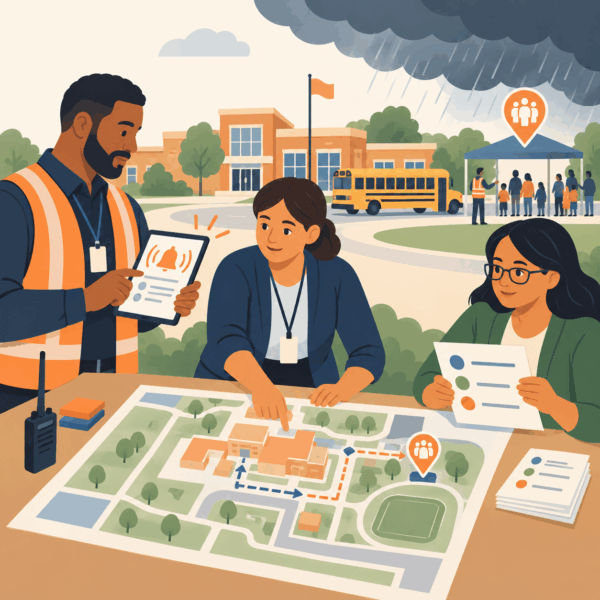
School emergencies create exceptional communication pressure. Families expect immediate information, employees need operational direction, and students may be sharing information in real time.
Law enforcement or emergency responders may control parts of the response. Journalists and community members may seek confirmation. Inaccurate information can spread before the district verifies basic facts.
Emergency communication must be prepared before an incident occurs. Situations may include severe weather, threats, lockdowns, violence, transportation accidents, utility failures, public health incidents, cybersecurity events, evacuations, missing students, deaths, and major technology outages.
Emergency Messages Should Prioritize Action
The first message should help recipients understand what action they should take, which school or population is affected, and whether families should come to the school. When reunification is necessary, families should know where it will occur and what procedures will be required.
A district should not delay a holding message because every detail is not yet known. It can state what has been confirmed, what remains under investigation, and when another update will follow.
Families should also know which channel will carry official information. This reduces the need to monitor several sources while the situation develops.
Employees Need Role-Specific Instructions
A districtwide message alone is not enough. Principals, teachers, transportation staff, reception employees, communications teams, technology staff, and senior leaders may each require different instructions.
Emergency planning should identify who authorizes messages, who drafts and distributes them, who coordinates with responders, and who communicates with employees. It should also assign responsibility for website updates, social media, multilingual communication, media response, misinformation monitoring, reunification, and documentation.
These responsibilities should be practiced. A plan that exists only in a binder may not function effectively during a real emergency.
Privacy and Transparency Must Be Balanced
Families understandably want details following an incident. Student privacy, employee privacy, law enforcement activity, and an active investigation may limit what the district can disclose.
The district should explain these limits rather than relying only on a general statement that it cannot comment. It can often communicate the type of incident, when and where it occurred, which actions the school took, whether emergency personnel responded, whether normal operations resumed, and what support is available.
Even when specific details cannot be shared, the district can explain what it is doing and when additional information may become available.
How Public Education Agencies Can Connect Communication, Equity, and Community Engagement
Public education agencies cannot communicate effectively without understanding how different groups experience the school system. A districtwide message may reach thousands of people and still fail to reach the families most affected by the issue.
Equitable communication requires agencies to look beyond distribution. They should consider who received the message, who understood it, who trusted the source, and who had the time and ability to respond.
They should also examine whose experience was reflected in the message, who was missing from the conversation, and which groups face the greatest consequences when communication fails.
Engagement Should Occur Before the Final Message Is Written
Families and students can help agencies identify questions, terminology, cultural considerations, scheduling barriers, unintended consequences, and trusted communication channels. They can explain why people may not use a program, attend a meeting, or trust a district explanation.
Engagement improves both the decision and the communication surrounding it. A district that tests a family notice with the people expected to use it may discover that the message answers administrative questions but not practical ones.
A student listening session may reveal that a mental health message uses language students associate with punishment or loss of privacy. A community partner may identify a translation that is technically accurate but culturally unclear.
These insights are most valuable before the message and process are finalized.
Participation Methods Should Reflect Community Reality
A public meeting at the district office at 6:00 p.m. may be accessible to some residents and impossible for others. Meaningful engagement may require school-based meetings, community locations, virtual options, childcare, interpretation, multiple meeting times, surveys, student sessions, and facilitated conversations.
Districts should consider transportation, disability access, work schedules, caregiving responsibilities, technology access, and trust. They should not measure engagement only by attendance at one meeting.
A small listening session with people directly affected by a decision may provide more useful insight than a large meeting dominated by regular participants.
Public Education Agencies Should Close the Feedback Loop
Communities become less willing to participate when they repeatedly provide feedback without learning what happened next. After engagement, the agency should explain what it heard, which themes appeared, and what changes were made.
It should also explain which suggestions could not be adopted and why. Legal, financial, transportation, staffing, or facility constraints may limit the available options.
Explaining those constraints demonstrates respect for participants, even when their preferred outcome is not selected. Closing the loop shows that engagement was connected to governance rather than treated as a symbolic exercise.
How Public Education Agencies Can Measure Communication Success
Education communication should be measured by whether people received, understood, trusted, and acted on information. Publication metrics alone cannot answer those questions.
Email open rates, website traffic, social engagement, and text delivery rates can be useful indicators. They should be connected to operating outcomes.
For enrollment communication, a district may examine application completion, missing documents, abandonment points, and family calls for assistance. For attendance communication, it may review whether early outreach resulted in contact, support referrals, or improved attendance.
For academic and student programs, the district can examine whether participation changed after communication was revised. It can also compare awareness and participation by school, language, geography, grade, or student group.
Other useful measures include repeated questions, poor website search results, employee understanding before announcements, consistency across departments, use of interpretation services, emergency notification delivery, and family satisfaction with the usefulness of information.
Measurement should also include after-action review. After a major announcement, emergency, engagement process, enrollment period, boundary decision, curriculum rollout, or technology launch, the agency should examine what questions repeated, which audiences were missed, and where conflicting information appeared.
The purpose is not to prove that every communication effort succeeded. It is to identify how the system can improve.
How Public Education Communication Differs From Other Public Agency Communication
Education communication shares many characteristics with local government, public health, and human services communication. It also has a distinctive operating environment.
Compared with general local government, school districts communicate through a more decentralized network. A city may have one communications office and several departments. A school district may have dozens or hundreds of schools, each with its own leaders, employees, families, traditions, and communication habits.
Compared with public health agencies, education systems communicate with a more stable daily population. Students and employees return to the same institutions repeatedly. This creates opportunities for sustained relationships, but it also means communication failures accumulate over time.
Compared with human services agencies, schools communicate not only with the person receiving a service. They communicate with students, parents, guardians, caregivers, employees, board members, taxpayers, and residents who may not have children in the system.
Compared with public safety agencies, schools face fewer incidents requiring minute-by-minute communication, but the emergencies they do face involve children, intense family concern, privacy restrictions, and extraordinary scrutiny.
The distinctive challenge is that nearly every education message serves several purposes at once. A bus delay message provides practical information, but it also signals whether the district recognizes the disruption. An attendance letter explains a policy, but it also signals whether the school sees the family as a partner.
A curriculum announcement explains an academic decision, but it also shows whether educators and families were prepared and consulted. A safety update provides facts, but it also signals whether the district is organized, transparent, and capable of protecting students.
The Role of External Communication Support in Public Education
Many public education agencies operate with limited communication capacity relative to the size and complexity of their audiences. A small district may have no dedicated communications employee. A mid-sized district may have one person responsible for media relations, websites, social media, family notices, board communication, emergencies, newsletters, and event promotion.
A large district may have a communications department but still struggle to coordinate messages across numerous schools, departments, languages, and platforms. County and regional agencies may have strong program expertise but limited capacity to develop public-facing content for every initiative they support.
External communication support can help agencies build systems and materials that internal teams do not have the time or specialized capacity to create. This may include communication audits, family and student journey mapping, message frameworks, website strategy, crisis protocols, community engagement, staff training, surveys, focus groups, and campaign development.
External partners should not replace the relationships and institutional knowledge held by educators, school leaders, students, families, and employees. Their role is to help translate that knowledge into clearer systems, stronger processes, and more consistent implementation.
Public education agencies should prioritize partners who understand that school communication is not equivalent to commercial marketing. The work involves public accountability, student rights, accessibility, family trust, employee dynamics, board governance, operational constraints, and decisions that directly affect children.
How Public Education Agencies Can Treat Communication as Infrastructure
Education communication is not a collection of newsletters, social posts, automated calls, and press releases. It is the connective system between educational policy, school operations, classroom practice, student services, employees, families, students, boards, and communities.
Enrollment depends on communication. Attendance strategies depend on communication. Curriculum changes, safety plans, special education processes, mental health initiatives, boundary decisions, and bond proposals all depend on communication.
These efforts become less effective when communication is attached at the end. Education leaders should integrate communication into program and policy design from the beginning.
When a new initiative is developed, leaders should consider what students need to understand, what families need to know and do, and what employees will be expected to explain. They should identify what principals need before implementation, which languages and accessible formats are required, and which partners should be involved.
They should also consider what could be misunderstood, what questions the board may receive, and what evidence will show that communication is working.
A mature communication system is planned, staffed, governed, tested, measured, and improved. It includes clear ownership, accurate contact information, coordinated platforms, accessible content, internal sequencing, escalation protocols, reusable tools, and regular evaluation.
Technology can support that system by improving translation, personalizing information, automating reminders, identifying failed deliveries, and analyzing questions. It can also make communication more fragmented when every school, department, and teacher uses a different platform.
The goal should not be maximum communication volume. It should be a coherent experience that helps students and families understand what is available, what they need to do, what happens next, and where they can receive help.
 Strategic Communication Support for K-12 School Districts and Public Education Agencies
Managing communication for a school district, state department of education, county education office, regional agency, charter network, or related organization requires more than strong writing. It requires an understanding of school operations, student and family experiences, employee communication, public governance, accessibility, educational equity, emergency response, and the realities of implementing policy across multiple schools.
Many education agencies have experienced leaders and strong internal teams. Those teams hold essential relationships and institutional knowledge. They are also frequently balancing urgent family questions, media requests, board deadlines, employee communication, school support, websites, emergency alerts, translation, social media, and program launches at the same time.
Agencies often seek external support when internal capacity is limited, when a major initiative creates temporary demand, or when a difficult decision requires structured engagement and message planning. External support can also be useful when families receive inconsistent information, when a website no longer supports user needs, or when a crisis exposes weaknesses in coordination.
Stegmeier Consulting Group supports public education agencies by helping them assess communication conditions, develop stronger systems, and implement practical improvements. The value is not simply producing more materials. The value is connecting each material to the larger operating environment.
An attendance message should align with school procedures, family supports, employee scripts, portal information, and the district’s attendance strategy. A curriculum announcement should align with board materials, educator preparation, family FAQs, public engagement, and implementation timelines.
A school boundary process should align data explanations, community meetings, transportation information, transition planning, and school-level follow-up. An emergency protocol should align leadership, principals, employees, transportation, technology, responders, family notification, media response, multilingual communication, and reunification.
External support can also help agencies identify assumptions that have become invisible internally. District employees know which department owns enrollment, what an acronym means, why a timeline exists, and whom to contact when the standard process fails. Families and students do not.
SCG’s role is to help translate internal knowledge into communication that is understandable, coordinated, accessible, and grounded in the experience of the people the education system serves.
Ready to Strengthen Communication Across Your Education System?
At Stegmeier Consulting Group, we help school districts, state education agencies, county offices of education, regional education agencies, charter systems, public vocational schools, adult basic education programs, and public virtual schools, and related public-sector partners develop communication strategies that support students, families, employees, boards, and public trust.
We can help your organization:
- Assess communication across central offices, schools, employees, students, families, boards, and community partners.
- Identify gaps, duplication, conflicting messages, accessibility barriers, and processes that create unnecessary burdens.
- Develop communication playbooks for enrollment, attendance, school safety, leadership transitions, curriculum changes, boundary decisions, closures, budgets, and major initiatives.
- Create family guides, FAQs, website content, principal toolkits, employee talking points, student materials, board summaries, email templates, text messages, and partner resources.
- Strengthen multilingual, accessible, digital, internal, crisis, and community engagement communication.
- Measure communication effectiveness through family action, student awareness, program participation, employee readiness, language access, and repeated points of confusion.
Whether your organization is launching a major initiative, rebuilding family trust, improving employee communication, preparing for a difficult decision, or developing a long-term communication system across multiple schools and departments, SCG can help create the research, strategy, tools, and implementation support needed to move the work forward.
Use the form below to connect with Stegmeier Consulting Group and explore how we can help strengthen clarity, coordination, access, and trust across your public education communication.
How Courts Can Communicate With People Who Have Been Arrested or Accused of a Crime About What the Process Involves and What Their Options Are
People who have been arrested or accused of a crime often enter the court system at one of the most stressful and confusing moments of their lives. They may be trying to understand what happens after arrest, when they will see a judge, whether they can go home, what...
How Courts Can Communicate With People Navigating Traffic Court, Civil Infractions, and Minor Violation Proceedings
Traffic court, civil infraction proceedings, and other minor violation processes may appear relatively straightforward from inside the judicial system because they often involve high-volume calendars, standardized notices, recurring forms, routine payment systems, and...
How Courts Can Communicate About Judicial Branch Technology Modernization to Litigants, Bar Associations, and the Public
Courts are modernizing their technology at a time when the people who use them have little patience for delay and little tolerance for confusion, and the communication challenges that follow reflect the unusual position courts occupy. A court replacing its case...
How Courts Can Communicate During High-Profile Cases Without Compromising Due Process or Judicial Independence
Courts are designed to resolve disputes out of the public spotlight in the sense that decisions are supposed to rest on evidence and law rather than on popular sentiment, and high-profile cases test that design more severely than any other circumstance. When a case...
How Courts Can Communicate With Jurors Before, During, and After Jury Duty to Improve Participation and Reduce Hardship
Jury service is the most direct form of civic participation that most people will ever be asked to perform, the one moment when the machinery of the justice system reaches into ordinary life and asks a private citizen to exercise real governmental authority over the...
How Courts Can Build Websites and Digital Tools That Serve Court Users Rather Than Court Administrators
Court websites and digital tools often reflect the internal structure of the institution more clearly than the needs of the people trying to use them. Navigation may be organized around divisions, departments, docket types, administrative offices, or technical system...
How Courts Can Communicate With Crime Victims and Witnesses Who Need Information About Case Status and Court Processes
Courts communicate with crime victims and witnesses in circumstances that are unlike those of any other court audience, and the challenges of that communication reflect the weight of what these people have experienced. A victim of violent crime may be trying to...
How Courts Can Communicate With Underserved and Marginalized Communities That Have Historical Reasons to Distrust the Judicial System
Courts communicate with the public in a setting where trust is not evenly distributed, and the communication challenges that follow reflect histories that courts did not create alone but in which they took part. For some communities, the judicial system has been...
How Courts Can Use Annual Reports and Performance Data to Build Public Confidence and Legislative Support
Courts occupy a distinctive position among public institutions when it comes to accountability communication. They are simultaneously among the most powerful institutions in democratic governance, exercising authority over liberty, property, and family that no other...
How Courts Can Communicate Demographic and Case Outcome Data in Ways That Support Accountability Without Inviting Misinterpretation
Courts that publish demographic and case outcome data face a communication challenge that has no clean resolution: the data that most directly supports accountability for how justice is administered is also the data most likely to be misread, selectively cited, and...
How Courts Can Build Community Outreach Programs That Explain the Judicial System Without Compromising Impartiality
Courts have a legitimate interest in helping the public understand how the judicial system works. Many people encounter courts only when they are summoned for jury service, receive a notice, become involved in a case, seek records, or need information about filing,...
How Specialty Courts Can Communicate Their Value and Outcomes to Skeptical Audiences Including Prosecutors, Defense Bar, and the Legislature
Specialty courts operate in a unique institutional position within the justice system: they are simultaneously dependent on the cooperation of actors who may be skeptical of their premises, accountable to legislators who may question their cost-effectiveness, and...
How Family Courts and Juvenile Courts Can Communicate Sensitive Program Information While Protecting Participant Privacy
Family courts and juvenile courts handle some of the most personal information that any part of the justice system encounters, and their communication challenges reflect that sensitivity. A single case may involve a child’s mental health history, a...
How Mental Health Courts Can Communicate With Participants, Mental Health Providers, and Community Stakeholders
Mental health courts operate at the intersection of the criminal justice system, the behavioral health treatment system, and the community that surrounds both, in ways that no other court model does, and their communication challenges reflect that complexity. A mental...
How Veterans Treatment Courts Can Communicate Their Mission and Outcomes to Veterans, VSOs, and Community Partners
Veterans treatment courts operate in a distinctive space within state and local judicial systems. They combine judicial supervision with coordinated access to treatment, recovery support, veteran-specific services, and community resources for eligible participants....
How Drug Courts Can Communicate Program Requirements, Expectations, and Outcomes to Participants, Partners, and the Public
Drug courts operate at the intersection of judicial supervision, treatment, accountability, public safety, and recovery support. That combination creates a communication challenge that is different from the challenge facing a conventional court docket. Participants...
How Courts Can Communicate With Litigants During Case Processing Delays, Continuances, and Backlog Conditions
Case processing delays can be among the most frustrating aspects of the court experience for litigants. A continuance, postponed hearing, rescheduled trial, delayed order, or growing case backlog may affect employment, childcare, transportation, housing, family...
How Courts Can Design Physical and Digital Environments That Communicate Accessibility and Welcome to All Court Users
Courts communicate before anyone speaks with a clerk, enters a courtroom, or reads a formal notice. The design of the courthouse entrance, the clarity of directional signs, the accessibility of a website, the structure of a digital filing system, and the way public...
How Courts Can Communicate About Legal Aid, Self-Help Centers, and Access to Justice Programs to the Litigants Who Need Them Most
For many litigants, the greatest barrier to using the court system is not the complete absence of help. It is not knowing what help exists, where to find it, whether they are eligible, or which resource can actually address the problem they are facing. Legal aid...
How Courts Can Build Multilingual Communication Programs That Reach Litigants With Limited English Proficiency
For litigants with limited English proficiency, the difficulty of navigating court is not simply a matter of translating words. Court communication is built around procedures, deadlines, roles, forms, hearings, notices, and legal terminology that can be difficult even...
How Courts Can Communicate Procedural Requirements to Self-Represented Litigants Who Do Not Have Legal Training
Self-represented litigants often enter court at the point where legal procedure becomes consequential but remains unfamiliar. They may be responsible for filing documents, meeting deadlines, serving another party, appearing at a hearing, responding to an order, or...
How Courts Can Communicate Their Budget Needs and Resource Requirements to Legislatures and the Public Without Appearing to Advocate for Outcomes
Courts cannot function independently of the resources required to operate them. Courthouse staffing, courtroom technology, security, interpreters, jury administration, case management systems, records access, self-help services, facilities, and judicial support all...
How Courts Can Communicate Emergency Closures, Procedural Changes, and Operational Disruptions Quickly and Clearly
Court operations depend on predictability. People need to know when a courthouse is open, whether a hearing will proceed, where to appear, how to file documents, and what changes apply when normal operations are disrupted. When those expectations change suddenly...
How Courts Can Build Productive Media Relationships While Protecting the Integrity of Ongoing Cases
Courts depend on public understanding, yet much of what the public learns about the judiciary comes through journalists covering cases, rulings, hearings, trials, administrative changes, and institutional controversies. That makes the relationship between courts and...
How Courts Can Build Public Confidence in Judicial Fairness Without Commenting on Pending Cases
Courts face a communication challenge that is unusually constrained. Public confidence depends in part on whether people understand that judicial decisions are made through established procedures, evidentiary standards, legal reasoning, and neutral application of the...