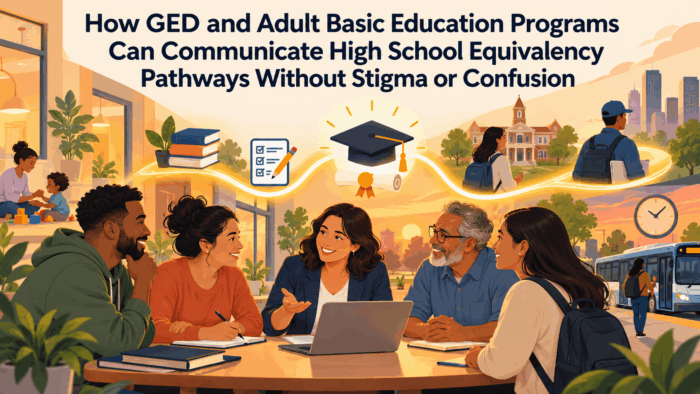
How GED and Adult Basic Education Programs Can Communicate High School Equivalency Pathways Without Stigma or Confusion
Millions of adults in the United States do not have a high school diploma or its equivalent, and many more have a diploma but want to strengthen their reading, writing, mathematics, or English skills. Public adult education programs serve these learners through adult basic education, adult secondary education, high school equivalency preparation, English language instruction, and integrated education and training. These programs are operated by school districts, community colleges, libraries, correctional education systems, community organizations, and workforce agencies, often with a mix of federal, state, and local funding. For the adults who enroll, earning a high school equivalency credential can open doors to better jobs, college and training programs, military service, promotions, and the personal satisfaction of finishing something that was left incomplete. For their children, a parent’s return to learning can become a powerful example of perseverance and the value of education.
Yet adults considering a return to education often face significant barriers before they ever reach a classroom. Many carry painful memories of school, such as struggling with reading, being labeled or held back, feeling invisible, or leaving because of family responsibilities, pregnancy, work, illness, housing instability, or circumstances beyond their control. Some feel embarrassed to admit they did not finish high school, even to close friends. Others are unsure what options exist, whether they are eligible, how long it will take, what it will cost, or whether they can fit classes around work and family. The language used to describe adult education can deepen these feelings. Words such as dropout, remedial, low-level, and deficient, along with confusing acronyms and test names, can make adults feel judged or lost before they take the first step.
Clear, respectful communication can make the difference between an adult who calls a program and one who never does. Programs that explain options in plain language, describe the process honestly, emphasize flexibility and support, and speak to adults as capable people with goals rather than as people with deficits are far more likely to attract and keep learners. This article explores how GED and adult basic education programs can communicate high school equivalency pathways without stigma or confusion, from the first outreach message through intake, assessment, instruction, testing, and the next steps that follow. It considers how programs can reach adults who are not looking for them, how they can explain complex options simply, and how they can measure whether communication helps adults enroll, persist, and succeed.
Why Communication Matters for Adult Education
 Adult learners are volunteers in the fullest sense. No one requires them to attend, and they balance education against jobs, children, caregiving, transportation, health, and finances. Every interaction with a program influences whether an adult decides that returning to education is worth the effort and whether they believe they can succeed. A friendly phone call, a clear explanation of next steps, and a welcoming orientation can build momentum. A confusing website, an unanswered message, or an intimidating intake process can end that momentum before it begins. Because adults often approach programs tentatively, sometimes after years of thinking about it, the first communication they receive carries enormous weight.
Communication also matters because adult education is often invisible to the people who need it most. Many adults do not know that free or low-cost programs exist in their community, that classes are offered in the evening or online, or that there may be more than one way to earn a high school equivalency credential. Others have heard about the GED test but believe it is extremely difficult, very expensive, or only for young people. Programs that rely on passive outreach, such as a website that adults must find on their own, will miss many potential learners. Effective programs communicate actively through the places adults already go and the people they already trust, and they make the message simple: you can do this, it is not too late, and we will help you.
Programs should also think about the timing of communication. Adults often consider returning to education at particular moments, such as the start of a new year, after a job loss, when a child starts school, when a promotion requires a credential, or when they see a friend graduate. Outreach that coincides with these moments, such as messages through children’s schools in the fall, employer partnerships during hiring seasons, or workforce center referrals after layoffs, can reach adults when they are most ready to act. Programs can also maintain contact with adults who inquired but did not enroll, sending occasional, friendly reminders that classes are available whenever they are ready. An adult who was not able to start in September may be ready in January, and a brief message at the right moment can make that start possible.
Understanding Adult Learners’ Lives
Effective communication starts with an understanding of adult learners’ lives. Adult learners range from young adults who left high school a year ago to grandparents who have wanted a credential for decades. Some work full time or hold multiple part-time jobs with unpredictable schedules. Many are parents or caregivers. Some are recent immigrants who completed schooling in another country and need English instruction or recognition of their prior education. Some have learning disabilities that were never identified when they were in school. Some are returning from incarceration, recovering from difficult life circumstances, or working to rebuild stability for their families. Their goals vary as well, from qualifying for a specific job or training program to helping their children with homework, passing a driver’s license exam, or simply proving to themselves that they can finish.
Communication should reflect this diversity and avoid assumptions. Messages that assume adults have reliable internet access, flexible daytime schedules, childcare, or strong reading skills will exclude many learners. Programs can design communication for adults with limited time and attention by keeping messages short, specific, and action-oriented, offering multiple ways to respond, and providing information in formats that do not require strong reading skills, such as short videos, phone conversations, and in-person information sessions. Text messaging is often especially effective, since many adults have phones but may not check email regularly.
Programs should also recognize that adults make decisions in the context of their families and communities. A spouse, parent, child, employer, case manager, or pastor may encourage or discourage an adult’s return to education. Communication that reaches these influencers, such as information for employers about supporting employees in adult education or materials for case managers to share with clients, can help adults feel supported in their decision.
Removing Stigma From the First Message
Stigma is one of the most powerful barriers in adult education, and communication can either reinforce it or dismantle it. Programs should review their language carefully, replacing terms that label adults by what they lack with language that emphasizes goals and strengths. Instead of describing programs as serving dropouts or low-skilled adults, programs can describe them as serving adults who want to earn a high school equivalency credential, strengthen their skills, learn English, or prepare for college and careers. Instead of describing classes as remedial, programs can describe them as building skills for the next step. These changes may seem small, but adults notice them, and they shape whether a program feels like a place for people like them.
Stories of adult learners, shared with their permission, are among the most effective ways to reduce stigma. When adults see someone like themselves, a parent, a worker, a grandparent, a person who left school for reasons they understand, describe returning to education and earning a credential, they begin to believe it is possible for them too. Stories should be authentic and varied, showing different paths, timelines, and challenges, and they should avoid suggesting that success comes easily or quickly for everyone. A story about a learner who took two years, passed some tests on the second attempt, and persisted through family challenges may be more encouraging than one that implies instant success.
Programs should also normalize the experience of returning to education. Messages can emphasize that many adults return to learning at every age, that it is common to feel nervous, that instructors are experienced in working with adults, and that classes are respectful and supportive. Explaining that learners work at their own pace, that there are no grades in the traditional sense, and that no one will be embarrassed for what they do not yet know can ease anxiety. Every staff member who answers phones, responds to messages, or greets visitors should understand the importance of a warm, nonjudgmental welcome.
Learning Together: Communication Strategies for K-12 School Districts and Public Education Agencies
This article is part of our series on strategic communication for K-12 School Districts and Public Education Agencies. To learn more and to see the parent article, which links to other content just like this, click the button below.
Explaining High School Equivalency Pathways
One of the most confusing aspects of adult education is the variety of pathways to a high school credential. Depending on the state, adults may be able to earn a high school equivalency credential by passing the GED test, another state-approved equivalency test, or both, and some states offer additional options such as adult high school diploma programs, competency-based diplomas, or credit recovery through district adult schools. Names, requirements, costs, and policies vary by state and sometimes by program. Adults who hear about these options from friends, social media, or advertisements may receive inaccurate or outdated information, and some may encounter scam websites that promise online diplomas for a fee. Clear, accurate communication about legitimate pathways protects adults and helps them choose the option that fits them best.
Programs should explain the pathways available in their state simply and consistently. A short comparison, presented in plain language and visual form, can show each option, what it involves, how long it typically takes, what it costs, and who it may suit. This comparison should be accompanied by an invitation to talk with a staff member who can help each adult decide. Adults should not be expected to sort through complex policy documents on their own.
Equivalency Tests and What They Involve
Many adults pursue a high school equivalency credential by passing a series of subject tests. Programs should explain in plain language how many tests there are, which subjects they cover, what kinds of questions appear, whether tests are taken on a computer, whether they can be taken one at a time, where and when they are offered, whether online testing is available, and what scores are required to pass. Adults should know that they do not have to take all tests at once and that they can focus on one subject, pass it, and move on to the next. This incremental approach makes the goal feel achievable and allows adults to build confidence through early success.
Programs should also explain how preparation works. Many adults benefit from instruction before testing, while others may be ready to test in some subjects quickly. Practice tests can help adults and instructors judge readiness, and programs should explain how practice tests are used, what scores suggest readiness, and how instruction will focus on the skills adults need. Being honest about the effort required is important. Adults who expect the tests to be easy may become discouraged, while adults who believe the tests are impossible may never begin. A balanced message acknowledges that the tests are challenging, explains that thousands of adults pass them every year, and emphasizes that the program will help each learner prepare step by step.
Testing logistics deserve clear explanation. Adults may need to create online accounts, verify identification, pay fees, schedule appointments, and meet requirements for online proctored testing, such as a quiet room and a working webcam. These steps can be confusing, particularly for adults with limited digital experience. Programs can provide step-by-step guides, hands-on help creating accounts, and support for scheduling. They should also explain accommodations for adults with disabilities, how to request them, and how long approval may take, since adults with learning disabilities, attention challenges, or other needs may be eligible for extended time or other supports.
Alternative Pathways to a High School Credential
In states that offer alternatives to equivalency tests, programs should explain these options clearly so adults can choose the path that fits their strengths and circumstances. Adult high school diploma programs may allow adults to complete remaining credits, building on coursework they finished before leaving school. Competency-based programs may allow adults to demonstrate skills through projects, portfolios, or assessments rather than standardized tests. Some programs combine credit completion with prior learning assessment, recognizing skills adults have gained through work, military service, or life experience. Adults who were close to graduating, or who struggle with timed standardized tests, may find these pathways especially appealing.
Programs should help adults understand the differences among pathways in practical terms. How long does each typically take? How flexible is the schedule? Does the adult need transcripts from previous schools, and how can they obtain them? Is the resulting credential a diploma or an equivalency certificate, and does that matter for the adult’s goals? Most employers, colleges, and the military accept state-recognized equivalency credentials, but some adults have specific goals that make one pathway more suitable than another. Staff should be prepared to discuss these questions honestly and to help adults verify requirements for their particular goals.
Programs should also warn adults clearly about fraudulent diploma offers. Some websites sell diplomas or certificates that are not recognized by employers, colleges, or the military, often advertising that adults can earn a diploma online in days with no real coursework. Adults who purchase these documents may lose money and later discover that their credential is worthless. Programs can protect adults by explaining how to recognize legitimate pathways, listing official state-approved options, and encouraging adults to contact the program or state adult education office with questions.
Explaining Enrollment, Assessment, and Placement
For many adults, the enrollment process is the moment when anxiety peaks. They may worry about filling out forms, showing identification, taking placement tests, and revealing what they do not know. Some fear that they will be told they are not ready or that they will be placed in classes that feel embarrassing. Programs that explain enrollment clearly, keep it simple, and frame it as the beginning of a supportive relationship can reduce this anxiety significantly. Programs that present enrollment as a series of bureaucratic hurdles may lose adults who were ready to begin.
Clear communication about enrollment includes explaining what will happen, how long it will take, what adults need to bring, and how the information they provide will be used. It also includes explaining why certain steps exist. Many programs are required to collect specific information and administer standardized assessments as a condition of public funding. Explaining this in a matter-of-fact way, while emphasizing that assessments help instructors plan instruction rather than judge learners, helps adults understand the process.
Intake Without Intimidation
Programs should describe the intake process step by step before adults arrive. A simple explanation might note that intake takes about two to three hours, that adults will complete a short registration form, meet with a staff member to discuss their goals, take a skills assessment in reading and mathematics, and learn about class schedules. A list of what to bring, such as identification and any previous school records if available, helps adults prepare. Programs should make clear what happens if adults do not have certain documents and avoid creating unnecessary barriers. If identification requirements apply only to testing rather than enrollment, for example, programs should say so.
The intake conversation is an opportunity to build trust. Staff should ask about adults’ goals, schedules, and needs with genuine interest and without judgment. Adults should be encouraged to share any challenges that might affect their participation, such as work schedules, childcare, transportation, or learning difficulties, so the program can help. Staff should also explain the program’s expectations, such as attendance, communication, and participation, in a supportive way, emphasizing that the program will work with adults when life gets complicated.
Programs should consider offering intake at multiple times and locations, including evenings and weekends, and should provide interpretation for adults who speak languages other than English. Some programs offer intake in partnership with community organizations, libraries, or workforce centers, meeting adults where they already are. Follow-up after intake is critical. A phone call or text message within a day or two, confirming the class schedule and welcoming the adult, can make the difference between an adult who attends the first class and one who never returns.
Placement Testing and Learning Plans
Placement assessments are a common source of anxiety. Adults may fear that a test will confirm their worst beliefs about themselves. Programs can reduce this fear by explaining that the assessment is not a pass or fail test, that it simply helps instructors understand where to start, and that many adults find they know more than they expected. Explaining what the assessment covers, how long it takes, and how results will be shared helps adults prepare. Allowing adults to take breaks, offering practice items, and ensuring a quiet, comfortable environment can improve both the experience and the accuracy of results.
Results should be shared in a respectful, encouraging way. Rather than presenting scores as grade levels or labels, staff can explain what skills the adult already has, what skills they will build next, and how long it may take to reach their goals. A personalized learning plan, developed with the adult, can outline goals, steps, estimated timelines, and supports. This plan becomes a communication tool throughout the adult’s time in the program, helping them see progress and stay motivated.
Programs should also explain how progress will be measured over time. Adults are often required to take follow-up assessments after a certain number of instructional hours, and they should know why these assessments occur and how results help them. Celebrating gains, such as moving to a new instructional level, passing a practice test, or passing an official subject test, reinforces progress and helps adults persist through difficult periods.
Instructors play a central role in communication once adults enroll. Adults often judge a program by the first class, and an instructor who learns names quickly, explains how class will work, acknowledges that returning to learning takes courage, and highlights an early success can transform a nervous learner into a committed one. Instructors should communicate regularly with learners about progress, share specific feedback, and help learners connect classroom work to their goals. Programs can support instructors with training on adult learning, trauma-informed practices, and respectful communication, as well as simple tools for tracking and celebrating learner progress. When instructors and support staff communicate consistently, adults experience the program as a single, caring community rather than a set of disconnected offices.
Explaining Schedules, Costs, and Support Services
 Practical questions about schedules, costs, and support often determine whether adults can participate. Adults need to know when and where classes meet, whether online or hybrid options exist, how many hours per week are expected, whether they can start at any time, what costs are involved, and what help is available for childcare, transportation, technology, and other needs. Programs that answer these questions clearly and early help adults plan realistically. Programs that leave these questions unanswered may lose adults who assume they cannot participate.
Flexibility is one of adult education’s greatest strengths, and programs should communicate it prominently. Many programs offer morning, afternoon, evening, and weekend classes, online and hybrid options, and open enrollment that allows adults to start throughout the year. Adults who believe they must commit to a rigid schedule may not realize that options exist to fit their lives.
Flexible Learning Options
Programs should describe each learning option clearly. For in-person classes, adults need to know locations, schedules, parking or public transit options, and whether childcare is available. For online classes, adults need to know what technology is required, whether devices or internet access can be borrowed, how much time is expected each week, whether there are live sessions, and how they will get help from instructors. For hybrid options, adults need to understand how in-person and online components fit together.
Programs should be honest about the demands of each option. Online learning offers flexibility but requires self-discipline, reliable technology, and digital skills. Some adults thrive online, while others struggle without the structure and community of in-person classes. Helping adults choose the option that fits them, and allowing them to switch if needed, supports persistence. Programs can offer digital skills orientation for adults new to online learning, teaching them how to log in, navigate learning platforms, and communicate with instructors.
Open enrollment and managed enrollment models should be explained clearly. Some programs allow adults to join at any time, while others start new cohorts on specific dates to build community and structure. Adults should know when they can start and what to expect when they join. If there is a waiting list, programs should explain how long it may be and offer interim resources, such as online practice materials or study groups, to keep adults engaged while they wait.
Costs, Test Fees, and Support
Cost is a major concern for many adults, and uncertainty about cost can prevent them from inquiring. Programs should state clearly whether classes are free, what fees exist for materials or testing, and what assistance is available to cover costs. Many publicly funded programs offer free instruction, and some states or programs cover testing fees or offer vouchers. Adults should know about these options without having to ask. A simple statement such as classes are free and help is available to cover test fees can encourage adults who assumed they could not afford to participate.
Support services can determine whether adults persist. Programs should describe the support available, such as childcare during class, transportation assistance, technology lending, career counseling, referrals to community services for housing, food, and health needs, and accommodations for learning disabilities. Many programs partner with workforce agencies, community organizations, and social service agencies to provide these supports. Explaining how to access support, without requiring adults to disclose more than necessary, helps adults use services that keep them in class.
Programs should also communicate regularly with enrolled learners about attendance, progress, and support. When adults miss classes, a friendly check-in message, asking whether everything is okay and whether the program can help, often brings them back. Adults frequently stop attending because of temporary challenges, such as a schedule change at work or a sick child, and they may feel embarrassed to return. A message that welcomes them back without judgment and offers flexible options can help them resume learning.
Connecting Equivalency to Next Steps
A high school equivalency credential is an important achievement, but for most adults it is also a step toward something more, such as a better job, a training program, college, military service, or a promotion. Programs that communicate about next steps from the beginning help adults stay motivated and plan for life after earning their credential. Programs that treat the credential as the final goal may leave adults uncertain about how to use it.
Connecting the credential to next steps also helps adults understand why the effort is worthwhile. When an adult knows that earning a credential will qualify them for a specific certificate program, apprenticeship, or job opportunity, the work of preparing for tests becomes more meaningful. Programs can help adults define these goals early and revisit them throughout their time in the program.
College, Training, and Integrated Education
Many adult education programs offer integrated education and training, in which adults prepare for a high school equivalency credential while simultaneously earning an industry credential in fields such as health care, manufacturing, transportation, or information technology. Others offer bridge programs that prepare adults for college coursework or partner with community colleges to provide transition support. Programs should explain these options clearly, including what credentials adults can earn, how long programs take, what jobs they lead to, and what costs or financial aid are involved.
Adults considering college may need help understanding admissions, placement, financial aid, and support services. Programs can explain how a high school equivalency credential qualifies adults for college admission and federal financial aid, how to complete financial aid applications, and how college placement works. Partnerships with community colleges, such as campus visits, transition advisors, and co-enrollment options, help adults see college as a realistic next step. Sharing stories of adult learners who moved from equivalency programs into college programs can inspire others.
Programs should also explain how skills learned in adult education connect to training and college success. Reading, writing, mathematics, and digital skills developed in adult education classes form the foundation for further learning. Helping adults understand this connection encourages them to continue building skills even after they earn a credential. Instructors can make this connection explicit by using reading passages, mathematics problems, and writing tasks drawn from the fields adults hope to enter, such as health care forms, workplace measurements, or college course materials. When adults see their lessons reflected in their goals, the purpose of each class becomes clear and motivation grows.
Employment and Family Goals
For many adults, employment is the primary reason for returning to education. Programs should explain how a high school equivalency credential can affect job opportunities, eligibility for promotions, and access to training programs. Partnerships with workforce agencies and employers can provide career counseling, job search assistance, and connections to employers who value adult learners. Employers that support employees in adult education, through flexible schedules, onsite classes, or tuition assistance, can be highlighted as partners.
Family goals are also powerful motivators. Many adults return to education to set an example for their children, help with homework, or communicate more effectively with their children’s schools. Family literacy programs, which combine adult education with activities for children and parents together, can support these goals. Programs can communicate how adult education benefits families and invite adults to involve their families in celebrating progress.
Graduation celebrations are an important communication moment. Ceremonies that honor adults’ achievements, attended by families, friends, instructors, and community leaders, affirm the significance of earning a credential. Sharing these celebrations publicly, with learners’ permission, helps change community perceptions of adult education and encourages other adults to enroll. Programs can invite local media, elected officials, and employer partners to these events, and they can share photos and brief learner reflections, with permission, in newsletters and social media. Each public celebration sends a message to adults who are still considering a return: people in your community are doing this, and you can too.
Reaching Adults and Measuring Results
Many adults who could benefit from adult education are not actively searching for programs. They may not know programs exist, may feel too embarrassed to inquire, or may believe it is too late. Reaching these adults requires outreach through trusted messengers and community settings, using clear, respectful, and encouraging messages. It also requires communication that reaches adults in their languages and at their reading levels.
Programs should measure whether their communication is effective at each stage, from first contact to enrollment, persistence, credential attainment, and next steps. Understanding where adults drop off helps programs improve communication and support. Measurement should be practical and respectful, focused on improving the learner’s experience rather than adding paperwork, and its results should be shared with staff so that everyone sees how their part of the process affects learners.
Outreach Through Trusted Partners and Plain Language
Trusted partners are essential for reaching adults. Libraries, community health centers, faith communities, food banks, housing agencies, workforce centers, employers, and children’s schools all interact with adults who may benefit from adult education. Programs can provide these partners with simple materials, such as flyers, cards, and short scripts, that explain options and make referrals easy. Schools can include adult education information in family communication, reaching parents who may want to earn a credential. Employers can share information with employees during onboarding or through human resources.
Outreach messages should be short, warm, and specific. A flyer that says it is never too late to earn your high school equivalency, classes are free, day, evening, and online options are available, and you can call or text a specific number to get started is more effective than a dense description of program services. Messages should be translated into the languages common in the community and tested with adults to ensure they are clear. Visual materials, videos, and radio announcements can reach adults with limited reading skills.
Programs should make it easy to respond. A single phone number or text line, answered promptly by friendly staff, allows adults to take the first step with minimal effort. Online inquiry forms should be short and accessible on mobile devices. Every inquiry should receive a prompt response, ideally within one business day, since adults who reach out may lose courage if they wait too long.
Measuring Progress and Persistence
Programs can track communication effectiveness at each stage. How many adults inquire, and through which channels? How many inquiries lead to intake? How many adults who complete intake attend their first class? How many persist through follow-up assessments? How many pass equivalency tests and earn credentials? How many move on to training, college, or new jobs? Identifying stages where many adults drop off can reveal communication gaps, such as slow responses to inquiries, confusing intake processes, or insufficient follow-up after absences.
Learner feedback provides essential insight. Programs can ask learners what nearly kept them from enrolling, what helped them decide to start, what was confusing, and what would help them persist. Exit conversations with learners who stop attending can reveal barriers that communication or support could address. Feedback from partners can also show whether referral materials are working.
Programs should share outcomes with funders, partners, and the community in clear, accessible ways. Reporting how many adults earned credentials, entered training or college, or found new jobs demonstrates the value of adult education and builds support for continued investment. Sharing learner stories alongside data helps audiences understand the human impact of adult education.
How Adult Education Communication Compares With Other Agency Types
K-12 schools communicate primarily with families about children who are required to attend school, and their communication often assumes an established relationship and regular contact. Adult education programs communicate directly with learners who choose to attend and who may have mixed or painful histories with schools. This difference shapes every aspect of communication. Where K-12 schools can rely on attendance requirements and routine family contact, adult education programs must earn participation through welcoming, motivating communication that addresses fear and stigma directly. Adult education programs also communicate with a wider range of partners, including employers, workforce agencies, social service agencies, and correctional facilities, each of which may refer learners or support their participation.
Community colleges and workforce agencies offer closer comparisons. Community colleges communicate with adult learners about admissions, placement, financial aid, and support services, and many have developed strategies for reaching adults returning to education after years away. Workforce agencies communicate about job training, eligibility, and support services, often with adults facing economic hardship. The most effective of these organizations use plain language, navigators, and proactive outreach to help adults access services. Adult education programs can learn from these practices and partner with these organizations to create seamless pathways. Yet adult education programs often serve adults at an earlier and more vulnerable point in their educational journey, when confidence may be lowest and stigma strongest. This makes respectful, encouraging communication especially important, and it means adult education programs often serve as the first bridge back into learning for adults who will later enroll in college or workforce programs.
Tying It All Together
Adult education communication is not a side function. It determines whether adults who could benefit from earning a high school equivalency credential know that programs exist, whether they feel welcome enough to take the first step, whether they understand the pathways and processes involved, and whether they persist long enough to reach their goals. For programs that serve adults who choose to return to learning, often after years away and often while carrying painful memories of school, communication shapes every stage of the learner’s journey.
Effective programs understand adult learners’ lives, designing communication for adults with limited time, varied schedules, family responsibilities, and different levels of reading and digital skills. They remove stigma from the first message, using language that emphasizes goals and strengths rather than deficits, sharing authentic stories of adult learners, and normalizing the experience of returning to education at any age.
They explain high school equivalency pathways clearly, comparing equivalency tests and alternative diploma options in plain language, describing what tests involve and how preparation works, explaining testing logistics and accommodations, and warning adults about fraudulent diploma offers. They help each adult choose the pathway that fits their goals and strengths.
They make enrollment welcoming rather than intimidating, explaining intake step by step, framing placement assessments as tools for planning rather than judgment, and developing personalized learning plans that help adults see progress. They communicate flexible learning options, costs, and support services clearly, and they reach out with care when adults miss classes.
They connect equivalency to next steps, explaining integrated education and training, college transitions, employment opportunities, and family goals, and they celebrate learners’ achievements publicly. They reach adults through trusted partners with short, warm, translated messages, respond to inquiries promptly, and measure communication effectiveness from first contact through credential attainment and beyond.
Taken together, these practices create a communication system that helps adults believe that returning to education is possible, understand exactly how to begin, and persist through the challenges along the way. The result is more adults earning credentials, more adults moving into training, college, and better jobs, and more families and communities benefiting from the confidence and opportunity that education brings.
Strategic Communication Support for Adult Education Communication
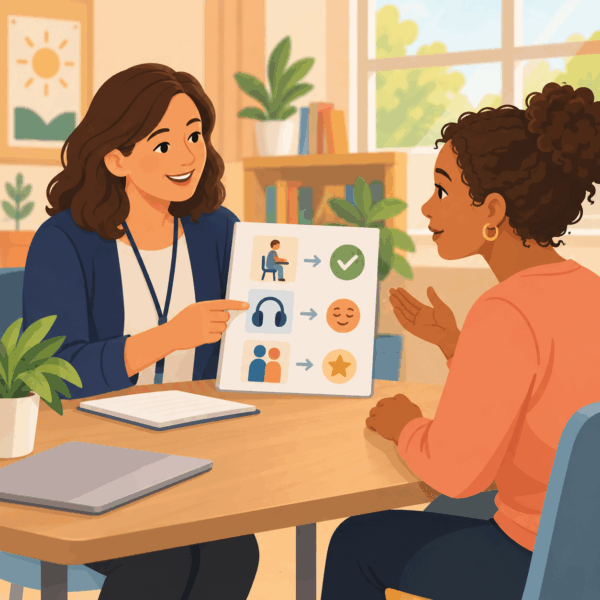 Adult education communication determines whether adults who want to earn a high school equivalency credential know that programs exist, feel welcome enough to take the first step, and understand how to move from enrollment to a credential and beyond. When communication relies on stigmatizing language, confusing pathway explanations, or intimidating intake processes, adults who are ready to return to learning may never enroll. Because effective adult education communication requires coordination across program administrators, instructors, intake staff, counselors, community partners, employers, workforce agencies, and colleges, adult education programs often partner with Stegmeier Consulting Group (SCG) to build a more welcoming approach. SCG helps programs communicate with adults as capable learners with goals worth pursuing.
SCG supports adult education programs in assessing how prospective learners experience communication from first contact through the first weeks of instruction. This can include reviewing outreach materials, websites, inquiry response times, intake procedures, placement assessment explanations, and orientation, along with gathering feedback from current learners about what nearly kept them from enrolling. These findings help programs identify barriers and language that discourages adults. Respectful messaging, plain language pathway comparisons, and step-by-step intake guides then help adults begin with confidence.
Sustained progress depends on every person who interacts with adult learners. Front desk staff, intake coordinators, instructors, and counselors shape whether adults feel welcomed and supported. SCG helps programs develop staff training on respectful communication, scripts for common conversations, and follow-up practices that bring learners back after absences. Outreach toolkits for libraries, workforce centers, health clinics, schools, and employers help trusted partners refer adults with accurate, encouraging information.
Declining enrollment, new pathways, expanded online options, integrated education and training programs, and changes in state equivalency policies can make this work especially urgent. SCG helps programs plan communication for these moments, develop learner story campaigns, and build multilingual outreach strategies. By preparing clear, encouraging communication, programs can reach more adults at the moments they are most ready to return.
SCG also helps adult education programs evaluate whether communication is helping adults enroll, persist, and succeed. Inquiry and intake data, first-class attendance, persistence rates, credential attainment, learner feedback, and partner referral patterns can reveal where adults drop off and why. By incorporating these findings into program planning, adult education programs can make respectful, clear communication an ongoing practice that helps more adults reach their goals.
Future Trends
Online and hybrid learning options continue to expand in adult education, along with online proctored equivalency testing. These options increase flexibility but require clear communication about technology requirements, digital skills support, and how adults can get help when they need it. Programs that pair online options with real human support, such as instructor office hours, phone help lines, and in-person technology assistance, will help more adults succeed in flexible formats.
Integrated education and training programs are growing, allowing adults to earn high school equivalency credentials and industry credentials simultaneously. Programs will need to explain these combined pathways clearly, including credential value and career outcomes. Clear explanations of schedules, workload, and support will be essential, since combined programs ask more of adults at once, and adults need to understand what they are committing to before they begin.
Text messaging and mobile-friendly communication are becoming central to adult education outreach and persistence support. Programs that use text reminders, check-ins, and two-way messaging thoughtfully can maintain connection with learners who juggle many responsibilities. These tools work best when messages feel personal rather than automated, when adults can reply and reach a real person, and when programs respect adults’ preferences about how often they are contacted.
More states are exploring alternative pathways to high school credentials, including competency-based diplomas and recognition of prior learning. Programs will need to communicate these options accurately as policies evolve. Because policies may change from one year to the next, staff should check official state guidance regularly and update websites, flyers, and intake scripts promptly, so adults never make decisions based on outdated information.
Finally, partnerships between adult education, workforce systems, community colleges, and K-12 schools are deepening, creating opportunities for coordinated communication that helps adults move smoothly from one step to the next. When an adult can move from an equivalency class to a training program or college course without repeating paperwork or explaining their story again, the system itself communicates that their progress is valued.
Conclusion
Adults who return to education show remarkable courage, and the communication they receive can either support that courage or undermine it. Programs that communicate clearly and respectfully help adults take the first step and keep moving forward.
By understanding adult learners’ lives, removing stigma, explaining pathways and processes in plain language, describing flexible options and support, connecting credentials to next steps, and reaching adults through trusted partners, adult education programs can help more adults earn high school equivalency credentials and build better futures for themselves and their families.
When communication welcomes adults as capable learners with goals worth pursuing, adult education becomes not a reminder of what was missed but a path toward what is still possible.
Stegmeier Consulting Group’s Strategic Approach to Communication Systems
Welcome every adult back to learning with clarity and respect.
Stegmeier Consulting Group helps GED and adult basic education programs communicate high school equivalency pathways without stigma or confusion. We begin by reviewing how prospective learners experience your communication today, from outreach messages and websites to intake, assessment, orientation, and follow-up.
Our team works alongside program leaders, instructors, and partners to develop respectful language, plain language pathway comparisons, welcoming intake materials, outreach toolkits for community partners, learner story campaigns, and persistence communication systems that help adults stay connected.
We treat adult education communication as a system that builds confidence. That means designing every message around the adult’s goals, removing barriers at each stage, and measuring whether communication helps adults enroll, persist, and succeed.
Use the form below to connect with our team and explore how strategic adult education communication can help your program reach more adults, remove stigma from the first message, and support learners on a clear path from enrollment to a high school equivalency credential and beyond.