
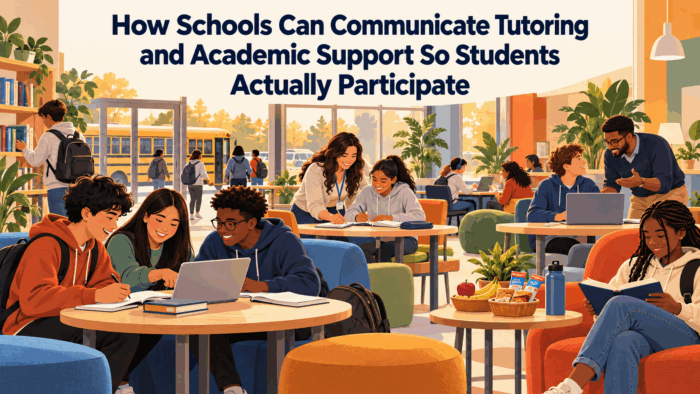
How Schools Can Communicate Tutoring and Academic Support So Students Actually Participate
In recent years, schools and districts have invested more in tutoring and academic support than at almost any time in recent memory. High-dosage tutoring programs, after-school homework centers, Saturday academies, summer learning programs, online tutoring platforms, peer tutoring, intervention blocks during the school day, and partnerships with community organizations and universities have all expanded as schools work to help students recover and accelerate learning. Research on well-designed tutoring is encouraging: frequent sessions with a consistent tutor, aligned to classroom instruction, can produce meaningful gains in reading and mathematics, particularly for students who are behind. Districts have spent substantial federal, state, and local funds on these programs with the reasonable expectation that they would reach the students who need them most and help close gaps that widened during periods of disrupted learning.
Yet many tutoring programs struggle with a problem that has nothing to do with instructional design: students do not show up. Optional after-school tutoring may draw a fraction of the students it was designed for. Online tutoring platforms purchased for every student may be used by only a small percentage. Students who are invited to tutoring may attend once and never return. Families may not know the program exists, may not understand how it differs from what their child already receives in class, or may assume that tutoring is only for students who are failing. Students may see tutoring as a punishment, an embarrassment, or simply one more obligation in an already busy day. When participation is low, even excellent programs produce little impact, and districts are left wondering why investments did not deliver expected results.
Communication sits at the heart of the participation problem. How tutoring is described, who is invited and how, when and where information reaches students and families, how tutoring is framed relative to classroom learning, how families are engaged, and how students experience the first few sessions all shape whether students participate consistently. Programs that are communicated as valuable, normal, convenient, and personal tend to attract and retain students. Programs that are communicated as remedial, optional, generic, or difficult to access tend to struggle, regardless of their quality. Because the benefits of tutoring depend heavily on consistent attendance over time, communication must not only persuade students to begin but also keep them engaged week after week.
This article examines how schools can communicate tutoring and academic support so that students actually participate. It looks at why participation in academic support is often low, how to frame tutoring as valuable and normal rather than remedial, how to invite students personally rather than relying on general announcements, and how to make logistics clear and convenient. It covers how to engage families as partners in participation, how to communicate directly with students in ways that resonate, how to sustain attendance through ongoing communication, and how to coordinate communication across the many forms of support a school may offer. Finally, it explores how to measure whether communication is increasing participation and how to use what is learned to improve. The goal is tutoring communication that turns available support into support students actually use.
Why Participation in Academic Support Is Often Low
 Low participation in tutoring and academic support is common across many kinds of schools and communities, and it rarely reflects a lack of need. More often, it reflects a set of barriers that communication either creates or fails to address. Some barriers are informational: students and families do not know what is available, how it works, or whether it applies to them. Some are perceptual: tutoring is seen as remedial, stigmatizing, or unnecessary. Some are practical: tutoring conflicts with transportation, work, sports, family responsibilities, or other activities. Some are relational: students do not know the tutors or feel uncomfortable in the setting. Understanding which barriers are most significant in a particular school allows communication to be designed to address them directly rather than repeating general announcements that have already proven ineffective.
Opt-In Programs and the Students They Miss
Many tutoring programs are designed as opt-in services: students or families must learn about the program, decide to participate, register, and then show up on their own. This structure tends to attract students who are already motivated, organized, and supported at home, while missing students who would benefit most. Students who are struggling academically often face other challenges as well, such as unstable schedules, transportation barriers, family responsibilities, or discouragement about school, that make it less likely they will seek out optional support. Families who are less connected to school communication may never learn the program exists. The result is a familiar pattern in which voluntary programs serve students who need them less while missing those who need them more.
Communication can partially counteract this pattern, but it works best when combined with program design changes. Schools that embed tutoring in the school day, automatically assign students to tutoring based on need, or make tutoring the default rather than an extra option typically see much higher participation. Where tutoring remains optional, communication must work harder, reaching students and families personally, removing barriers, and making participation as easy as possible. Understanding the limits of communication within an opt-in structure is important, since no announcement can fully overcome a design that requires struggling students to take multiple independent steps. For this reason, communication staff and program designers should work together from the start, so that decisions about schedules, locations, registration, and assignment are informed by what is known about how students and families actually respond.
Stigma and the Language of Remediation
The way tutoring is described can make students reluctant to participate. When tutoring is presented as help for students who are failing, behind, or struggling, students may fear being labeled by peers or may feel that participation confirms they are not capable. Adolescents in particular are highly sensitive to how they are perceived, and many would rather fall further behind than be seen walking into a room associated with remediation. Families may share this concern or may feel embarrassed that their child needs extra help. Even well-intended communication, such as letters notifying families that their child has been selected for intervention because of low test scores, can reinforce these feelings.
Shifting the language and framing of tutoring can make a substantial difference. Describing tutoring as a way to get ahead, to master challenging material, to prepare for exams, or to get personalized attention from a skilled tutor presents it as a resource rather than a remedy. Inviting a broad range of students, including high achievers, to participate in some forms of support normalizes it. Naming programs in positive or neutral ways, such as study labs, learning studios, or academic coaching, rather than labels like remedial or intervention, can change how students perceive them. These shifts do not deny that some students need more help; they simply remove the stigma that keeps those students away. Schools can test new names and descriptions with small groups of students before adopting them, since students are the best judges of which language feels appealing and which still carries a stigma.
Logistics That Quietly Exclude
Practical barriers are often the most decisive factor in participation, and they are frequently invisible to program designers. After-school tutoring may be impossible for students who ride a bus that leaves at dismissal, who work afternoon jobs, who care for younger siblings, or who participate in sports. Saturday programs may conflict with family obligations or religious observances. Online tutoring requires reliable devices and internet access, as well as a quiet place to work. Programs held at a single central site may be inaccessible without transportation. When communication about tutoring does not address these logistics, families simply conclude that the program is not for them.
Effective communication makes logistics explicit and offers solutions. It explains exactly when and where tutoring occurs, whether transportation is provided, whether snacks or meals are available, how students can participate if they have conflicts, and what options exist for online or in-school sessions. It invites families to share barriers so the school can help address them. Often, simply stating that a late bus is available or that tutoring can be scheduled during lunch or an advisory period is enough to change a family’s decision. Schools that do not yet offer these supports should consider whether modest investments, such as an activity bus two days a week or a grab-and-go snack, might significantly increase participation among students who face the greatest barriers.
Learning Together: Communication Strategies for K-12 School Districts and Public Education Agencies
This article is part of our series on strategic communication for K-12 School Districts and Public Education Agencies. To learn more and to see the parent article, which links to other content just like this, click the button below.
Framing Tutoring as Valuable and Normal
How tutoring is framed influences whether students see it as something they want or something they must endure. Framing involves the names programs are given, the language used to describe them, the images that accompany them, the messengers who promote them, and the way they are connected to students’ goals. Effective framing presents tutoring as a normal and valuable part of learning, comparable to the practice an athlete or musician puts in to improve, rather than as a sign of deficiency. It connects tutoring to outcomes students care about, such as grades, confidence, exams, and future opportunities, and it emphasizes the personal attention and relationships that tutoring offers.
Connecting Tutoring to Student Goals
Students are more likely to participate in tutoring when they see how it helps them achieve something they care about. For a student aiming to pass a required course, tutoring can be framed as the most direct path to earning the credit. For a student preparing for a college admission exam or an Advanced Placement test, tutoring can be framed as preparation that gives them an edge. For a student who wants to play sports and must maintain eligibility, tutoring can be framed as a way to stay on the field. For younger students, tutoring can be framed as a chance to become a stronger reader or to feel more confident in math class. Communication that starts from the student’s perspective, rather than from the school’s concern about test scores, is far more motivating.
Teachers and counselors can help by talking with students about their goals and connecting tutoring directly to those goals in conversation. Messages to families can similarly emphasize how tutoring supports their child’s progress toward specific goals, such as passing a course, preparing for high school, or building reading confidence. When tutoring is presented as an investment in the student’s own aspirations, participation becomes a choice students and families want to make. Tying tutoring to near-term milestones, such as an upcoming unit test, a course final, or a state assessment, can also create a sense of urgency and relevance, helping students see immediate benefits rather than abstract long-term ones.
Emphasizing Personal Attention and Relationships
One of the most valuable aspects of tutoring is the personal attention students receive. In a crowded classroom, students may hesitate to ask questions or may not receive individual feedback. Tutoring offers the chance to work closely with a caring adult or skilled peer who knows the student and can tailor help to their needs. Communication should highlight this benefit, describing tutors, explaining how sessions work, and emphasizing that students can ask anything without embarrassment. Introducing tutors by name and photo, sharing brief profiles, or arranging an initial meeting before sessions begin can make tutoring feel personal and welcoming.
Consistency of the tutor relationship is also important both for effectiveness and for participation. Students are more likely to attend regularly when they know they will see the same tutor who knows their name, remembers what they worked on last time, and notices when they are absent. Communication that emphasizes this relationship, and programs designed to maintain it, help transform tutoring from an anonymous service into a meaningful connection. Students often describe their tutor as the reason they kept coming back, citing the tutor’s encouragement, patience, and willingness to explain things in a new way. Programs that minimize tutor turnover, schedule students with the same tutor each week, and give tutors time to build rapport are investing in participation as much as in instruction.
Normalizing Participation
Normalizing tutoring means presenting it as something many students do, not a special service for a few. Schools can normalize participation by offering tutoring broadly, by encouraging students at all levels to use support, by featuring students from varied backgrounds and achievement levels in materials, and by having respected peers, athletes, and student leaders speak about their own use of tutoring. Sharing participation numbers, such as noting that hundreds of students attend tutoring each week, can also signal that tutoring is common and accepted.
Teachers can contribute by speaking positively about tutoring in class, recommending it to many students rather than singling out a few publicly, and connecting class content to tutoring sessions. When tutoring is woven into the normal rhythm of school life, students are less likely to see participation as a mark of difference. Some schools have found that making tutoring available to entire classes or grade levels, rather than to selected students, dramatically reduces stigma and increases participation among students who need help most.
Inviting Students Personally
General announcements about tutoring, such as flyers, newsletter items, and website postings, are important for awareness but rarely sufficient to drive participation among the students who need support most. Personal invitations are far more effective. A teacher who tells a student that they would benefit from tutoring and that the teacher will be checking in on their progress, a counselor who helps a student sign up, or a tutor who reaches out to introduce themselves can make the difference between a student attending and a student ignoring an announcement. Personal invitations also allow adults to address the specific concerns and barriers that individual students face.
Who Should Invite and How
The most effective invitations usually come from adults the student already knows and trusts, especially classroom teachers. Teachers know which students are struggling with specific concepts and can explain how tutoring would help with exactly those concepts. A brief, private conversation, followed by a note to the family, can be powerful. Counselors, coaches, advisors, and family liaisons can also invite students, particularly when they have strong relationships. For students who are invited by data systems based on assessment results, a personal follow-up from a trusted adult helps transform an automated referral into a meaningful invitation.
Invitations should be specific and positive. Rather than saying a student needs tutoring because they are behind, an invitation might say that the student has shown real effort, that tutoring will help them master a particular skill, and that the teacher believes they can make strong progress with extra practice. Invitations should include clear next steps, such as when the first session is, where to go, and who to meet, and should offer to answer questions. When possible, the adult who invites should follow up after the first session to ask how it went. That follow-up matters more than it might seem. A student who knows that a teacher will ask about tutoring is more likely to attend, and a student who had an awkward first session is more likely to return if a trusted adult helps them work through their hesitation.
Reaching Families With Invitations
Families should receive invitations as well, in their preferred language and through channels they use. A family invitation should explain why the student was invited, what tutoring involves, when and where it occurs, what the family can do to support participation, and who to contact with questions. It should emphasize the benefits and the school’s confidence in the student, avoiding language that implies failure. Personal phone calls from teachers, tutors, or family liaisons can be especially effective for families who do not respond to written messages.
Families can be powerful allies in encouraging participation, but only if they understand the program and believe in its value. Inviting families to an orientation or a brief meeting with the tutor can build that understanding and give families a personal connection to the program. When families have met the tutor, even briefly, they are more likely to trust the program, encourage their child to attend, and contact the tutor with questions or concerns. Families who know the tutor personally also become more effective partners, sharing information about what is happening at home, reinforcing the tutor’s encouragement, and helping the student see tutoring as something the whole family supports.
Making Logistics Clear and Convenient
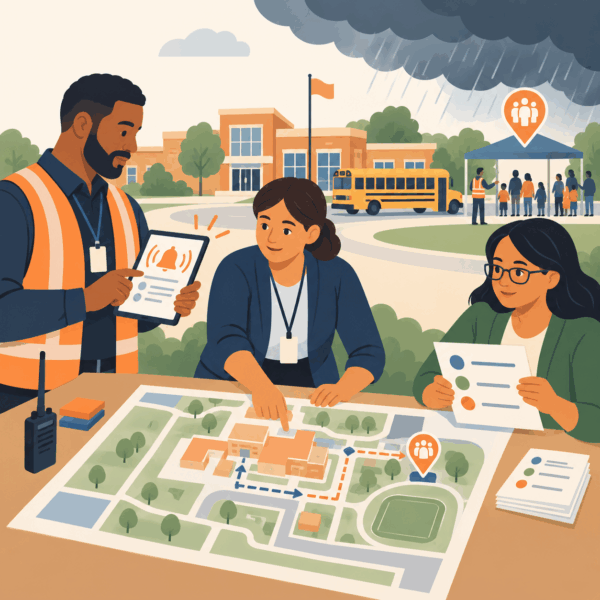 Even motivated students and families will not participate if logistics are unclear or inconvenient. Communication must provide complete, accurate, and practical information about when, where, and how tutoring occurs, and it should be paired with program design choices that make participation as easy as possible. Logistics communication should anticipate common questions and barriers and answer them before families have to ask. Every unanswered question is a potential reason for a family to delay or decline, so completeness and clarity in logistics communication directly affect participation.
Answering Practical Questions
Every tutoring communication should answer a set of basic questions: What days and times does tutoring occur? Where exactly should the student go? How long are sessions? Is registration required, and how does it work? Is there a cost? Is transportation available, and how does it work? Will food or snacks be provided? What should the student bring? What happens if the student must miss a session? Who should families contact with questions? Answering these questions clearly, in a consistent format across programs, reduces uncertainty and makes it easier for families to say yes.
For online tutoring, communication should also explain how to log in, what device and internet connection are needed, whether devices or hotspots are available, how sessions are scheduled, how privacy is protected, and what to do if technical problems arise. Step-by-step guides with screenshots, available in multiple languages, can help families who are less familiar with technology. A brief practice session during the school day, in which students log in and meet their online tutor with staff support, can resolve many technical problems before they become reasons for students to give up. Families should also know who to contact when technical issues occur during a session, and schools should make sure that contact can respond quickly, since a student who cannot connect for two or three sessions in a row may simply stop trying.
Designing Around Real Lives
Communication about logistics is most effective when programs are designed around students’ real lives. Offering tutoring during the school day, during lunch, during advisory or intervention periods, or immediately after school with transportation home removes many common barriers. Offering multiple time slots and formats allows students to choose what works. Schools can survey students and families about scheduling preferences and barriers before finalizing programs. Even a short survey with a few multiple-choice questions about preferred times, transportation needs, and conflicting responsibilities can reveal patterns that change program design, such as a strong preference for lunch sessions among high school students who work after school.
When barriers cannot be removed, communication should acknowledge them and invite families to discuss solutions. A message that says “If the schedule does not work for your family, please let us know so we can find another option” signals flexibility and care and often uncovers solutions that program staff had not considered. Families might suggest a different day, a combined session with a sibling, or a location closer to home, and even modest adjustments can make the difference between a student participating and a student missing out entirely.
Engaging Families as Partners in Participation
Families influence whether students attend tutoring, particularly for younger students and for students who need encouragement to persist. Engaging families as partners means helping them understand the value of tutoring, keeping them informed about their child’s participation and progress, and giving them practical ways to support attendance. When families see tutoring as an important part of their child’s education, they are more likely to make it a priority. Families also play a practical role, such as arranging pickup after late sessions, reminding students to log in for online tutoring, or adjusting family schedules to accommodate tutoring, which they can only do if they are well informed.
Keeping Families Informed About Progress
Families are more likely to support tutoring when they see that it is working. Regular updates on attendance and progress, such as a brief message after each week or month summarizing what the student worked on and how they are improving, help families see the value of continued participation. Updates can also include suggestions for how families can reinforce learning at home, such as practicing a skill together or asking the student to explain what they learned. Updates should be brief and specific, highlighting concrete progress such as a skill the student has mastered or an improved quiz score, since specific evidence of progress is far more motivating for families and students than general reassurance that things are going well. Sending updates in the family’s preferred language and channel, often a short text message, makes it far more likely they will be read.
When students miss sessions, families should be notified promptly, along with an invitation to discuss any barriers. Absence notifications should be supportive rather than punitive, emphasizing the school’s desire to help the student benefit from tutoring rather than enforcing rules. A message that says the tutor missed the student today and looks forward to seeing them next session, with an invitation to share anything that is making attendance difficult, keeps the relationship warm and opens the door to solving problems.
Inviting Families Into the Program
Family orientation sessions, open houses, and opportunities to observe tutoring sessions can help families understand how tutoring works and build trust in the tutors. Some programs invite families to occasional sessions or family learning nights where families and students work together. These experiences give families a sense of ownership and connection to the program. Communication about these opportunities should be accessible, with interpretation, flexible timing, and virtual options. Families who cannot attend in person can still be engaged through short videos that show what a typical session looks like, introduce the tutors, and explain how families can help at home. These videos, translated or subtitled in families’ languages, give every family a window into the program and reinforce that tutoring is a welcoming, structured experience.
Communicating Directly With Students and Sustaining Attendance
Ultimately, students decide whether to attend tutoring, especially in middle and high school. Communication directed at students should be engaging, respectful, and aligned with how students communicate. Sustaining attendance over time requires ongoing communication that reinforces the value of tutoring, celebrates progress, and responds quickly when students begin to drift away. The first few weeks are especially important, because students who attend the first several sessions and experience early success are far more likely to continue, while students who miss early sessions often never establish the habit.
Student-Friendly Messaging
Messages to students should be short, direct, and relevant, delivered through channels students use, such as school messaging apps, learning management systems, announcements, and in-person reminders. Student ambassadors who participate in tutoring can promote it to peers through presentations, social media, and conversations. Messages should emphasize benefits students value, such as better grades, less stress before tests, and more confidence, and should avoid jargon or lecturing. Messages that sound like adults scolding students about grades are easily ignored. Messages that sound like an invitation from someone who wants to help, or a recommendation from a peer who found tutoring useful, are far more likely to be heard. Schools can also make use of moments when students are already paying attention, such as the days after report cards are released or the week before major exams, to remind them that tutoring is available and explain exactly how to join. Timely messages connected to something students are already thinking about are far more effective than generic reminders sent on an arbitrary schedule.
Reminders, Recognition, and Re-engagement
Simple reminders before sessions, such as a text message the morning of tutoring, can significantly improve attendance. Recognizing consistent attendance and progress, through certificates, shout-outs, small incentives, or messages to families, reinforces participation. When students miss sessions, quick, personal follow-up from the tutor or a trusted adult can bring them back before they drop out of the program entirely. Asking students what would make tutoring more useful or convenient, and acting on their feedback, helps sustain engagement. Students who feel that their opinions shape the program, for example by choosing which topics to review or suggesting better session times, develop a sense of ownership that makes them more likely to attend. Short, informal check-ins, such as asking students at the end of a session what helped most, provide useful feedback while reinforcing that the program exists for them.
Coordinating and Measuring Academic Support Communication
Schools often offer many forms of academic support, including teacher office hours, peer tutoring, homework centers, online platforms, intervention classes, and community programs. When each is communicated separately, families and students may be confused about what is available and which option is right for them. Coordinating communication across programs and measuring participation helps schools make support easier to understand and more effective. Students who are offered three different programs by three different adults may choose none of them, simply because the choice feels confusing. A coordinated approach, in which every adult points students to the same clear set of options and the same contact person, removes that confusion and makes it far more likely that students connect with the support that fits them.
A Single Guide to Academic Support
A single guide that lists every form of academic support, organized by subject, grade, and format, with consistent information about logistics and how to access each, helps students and families navigate options. The guide should be available online, in print, and in multiple languages, and shared at the start of each semester and before exam periods. Teachers and counselors can use the guide to recommend specific options to students. A coordinated guide also helps schools see gaps and overlaps in their own offerings, such as several programs serving the same students while other subjects or grade levels have little support. Once the guide exists, schools can refer to it consistently in every communication about academic help, from report card messages to conference conversations, so that students and families come to see it as the go-to resource whenever they need support.
Measuring Participation and Impact
Schools should track invitation acceptance rates, first-session attendance, ongoing attendance, and participation by student group, as well as academic outcomes for participants. Comparing participation before and after communication changes, such as personal invitations or new program names, can show which strategies work. Surveys and conversations with students and families who did not participate can reveal barriers. Sharing results with staff and families supports continuous improvement. Schools should also look at participation by student group to ensure that tutoring is reaching the students it was designed for, and adjust outreach if certain groups remain underrepresented.
How Tutoring Communication Compares With Other Agency Types
Many public agencies offer voluntary services that are underused by the people who could benefit most. Public health agencies offer preventive care, workforce agencies offer training programs, and libraries offer learning resources. These agencies have learned that personal outreach, removal of logistical barriers, positive framing, reminders, and trusted messengers can significantly increase participation. Health systems, for example, have found that appointment reminders and personal calls substantially reduce missed appointments, and workforce programs have found that case managers who build relationships with participants improve retention. Schools can apply these lessons to tutoring. Libraries offer another instructive example: many have increased use of homework help and learning programs by partnering with schools to promote services directly to classes, by hosting sessions at times that match family schedules, and by making staff visible and welcoming, all strategies that translate directly to school tutoring.
Schools have important advantages. They see students daily, have established relationships with families, and can integrate tutoring into the school day. At the same time, schools face distinctive challenges, including adolescent sensitivity to stigma and the competing demands on students’ time. These factors make thoughtful communication particularly important in turning tutoring investments into meaningful participation. Schools also compete with many other demands on students’ attention, from extracurricular activities to jobs and social media, which means tutoring communication must be compelling and convenient enough to win a place in students’ busy lives. Unlike most agency services, tutoring also depends on repeated participation over many weeks, so schools must sustain engagement rather than simply securing a single visit, which places a premium on relationships, reminders, and visible progress.
Tying It All Together
Tutoring communication is not a side function. It determines whether investments in academic support reach the students who need them and whether those students attend consistently enough to benefit. Without effective communication, even excellent programs remain underused. Because the benefits of tutoring depend heavily on frequency and consistency, communication must do more than announce programs; it must help students begin, return, and build a lasting habit of using support.
Effective schools understand why participation is often low, recognizing the limits of opt-in programs, the stigma created by remedial language, and the logistical barriers that quietly exclude students. They address these barriers through both communication and program design. They recognize that communication alone cannot overcome a program that is held at an inaccessible time or place, and they use what they learn from families to improve the program itself as well as how it is described.
They frame tutoring as valuable and normal, connecting it to student goals, emphasizing personal attention and relationships, and normalizing participation across a broad range of students. They choose program names and descriptions deliberately, review materials for stigmatizing language, and enlist respected students and teachers to speak positively about tutoring.
They invite students personally through trusted adults, reach families with clear and positive invitations, and make logistics clear and convenient by designing programs around students’ real lives. They answer practical questions before families have to ask, offer multiple times and formats, provide transportation and food where possible, and invite families to share barriers so that solutions can be found together.
They engage families as partners by keeping them informed about progress and inviting them into the program. They communicate directly with students in engaging ways and sustain attendance through reminders, recognition, and quick re-engagement. They treat each missed session as a signal worth responding to, rather than waiting for a pattern of absences to become a reason to drop the student from the program.
Finally, they coordinate communication across academic support programs and measure participation and impact. Taken together, these practices turn available support into support students actually use. The difference is visible not only in attendance numbers but in the students who walk into tutoring sessions with confidence instead of embarrassment, and in families who see academic support as a partnership rather than a sign that something has gone wrong.
Strategic Communication Support for Tutoring Participation
 Tutoring programs can provide valuable academic support, but their impact depends on whether students understand the opportunity, feel encouraged to participate, and can navigate the practical arrangements involved. Even well-funded programs may struggle with attendance when invitations are unclear, tutoring is perceived as a consequence of poor performance, or families are uncertain about schedules, transportation, and expectations. Because improving participation requires attention to both messaging and the student experience, schools often partner with Strategic Communication Support (SCG) to identify barriers that program operations alone may not reveal. SCG helps schools position tutoring as a meaningful learning opportunity and develop communication that makes participation easier for students and families.
SCG supports schools in reviewing tutoring announcements, invitation procedures, program descriptions, and family-facing logistics to determine where students may lose interest or encounter obstacles. This may include replacing deficit-focused language with messaging that emphasizes skill development, additional practice, and progress toward personal academic goals. SCG also helps schools create clear explanations of who can participate, what sessions involve, how schedules work, and what students should expect at their first meeting. When these details are easy to find, families can make informed decisions and prepare for participation.
Personal invitations can be especially important in helping students take the first step. A general announcement may inform families that tutoring exists, but a direct conversation from a trusted teacher or counselor can explain why the opportunity may be useful for a particular student. SCG helps schools develop invitation scripts, student-friendly messages, and staff guidance that encourage participation without creating stigma or making students feel singled out. Coordinated communication with families can reinforce the invitation by explaining the potential benefits and addressing concerns before they become reasons not to attend.
When schools launch new tutoring initiatives, expand high-dosage programs, introduce online platforms, or address low participation in existing services, communication must also account for practical barriers. SCG helps align outreach with program schedules, enrollment procedures, technology requirements, and other participation details so that students know how to get started. Reviewing the experience from invitation through the first session can help schools distinguish between a lack of interest and obstacles such as confusing instructions, inconvenient arrangements, or uncertainty about expectations.
SCG also helps schools evaluate which communication approaches are translating into actual participation. Invitation response rates, first-session attendance, continued attendance, student and family feedback, and participation patterns across student groups can reveal where outreach is working and where adjustments are needed. By examining these findings alongside relevant academic progress indicators, schools can refine their messaging, improve the participation experience, and make better use of tutoring resources over successive semesters.
Future Trends
High-dosage tutoring embedded in the school day is becoming more common, reducing reliance on opt-in participation. Communication will shift toward explaining these programs to families and building students’ relationships with tutors. Because embedded tutoring changes the school day itself, families will want to understand how it fits with core instruction, why their child was assigned, and how progress will be shared, and clear explanations will help build support. Students, too, will need to understand why they are spending part of their day with a tutor, and framing that time as personalized coaching rather than a removal from regular class will shape how they experience it.
Online and hybrid tutoring platforms are expanding access, particularly in rural and under-resourced areas. Communication will need to address technology access, privacy, and how to make virtual tutoring feel personal. Programs that pair online sessions with in-person check-ins, assign consistent tutors, and help students and families troubleshoot technology tend to see stronger and more sustained participation than programs that simply provide a login. Districts that purchase online tutoring licenses for every student should be especially careful about communication, since universal access without personal invitation, orientation, and follow-up often results in very low use. A platform that only a small fraction of students ever open represents a missed opportunity, and the gap between licenses purchased and sessions completed is usually a communication gap.
Data systems are increasingly used to identify students who would benefit from tutoring. Communication will need to transform data-driven referrals into personal invitations that students and families respond to. An automated notice that a student qualifies for intervention based on test scores is easy to ignore, while a conversation with a trusted teacher who explains why tutoring will help is far more likely to lead to participation.
Funding for tutoring may become less certain as temporary resources expire. Demonstrating participation and impact through clear communication and measurement will be important for sustaining programs. Boards and funders will increasingly ask which students participated, how often, and with what results, and programs that can answer clearly will be in a far stronger position to secure continued support. Communities will also want to know whether tutoring made a difference, and sharing clear, honest results, including what worked and what the district is changing, builds public confidence in academic support investments.
Finally, peer tutoring and near-peer models are growing, offering opportunities for students to support one another and further normalizing academic support. Peer models can also build leadership skills among tutors, but they require clear communication with families about tutor training, supervision, and the role peer tutors play alongside teachers. Families of students being tutored will want reassurance about quality, and families of peer tutors will want to understand the time commitment and benefits, so communication must address both groups thoughtfully.
Conclusion
Tutoring can make a real difference in students’ learning, but only if students participate consistently. Communication shapes whether students know about tutoring, see it as valuable, can fit it into their lives, and keep coming back. Each of these steps is a point where students can be lost, and each can be strengthened through thoughtful, personal, and practical communication.
Schools that frame tutoring positively, invite students personally, make logistics clear, engage families, communicate directly with students, sustain attendance, and measure participation can turn tutoring investments into meaningful results. None of these practices is complicated, but together they require deliberate planning, coordination among staff, and a willingness to rethink familiar ways of announcing programs.
When students see tutoring as a resource that helps them reach their own goals, and when attending is easy and welcoming, participation follows, and learning grows. That outcome is well within reach for schools willing to look at tutoring through the eyes of the students and families they hope to serve.
Stegmeier Consulting Group’s Strategic Approach to Communication Systems
Turn your tutoring investments into support students actually use.
Stegmeier Consulting Group helps schools and districts communicate tutoring and academic support so that students participate consistently. We begin by examining how students and families currently learn about support, what barriers keep them away, and how program names, invitations, and logistics communication shape participation.
Our team works alongside program leaders, teachers, counselors, and tutoring providers to reframe programs positively, design personal invitation processes, develop clear logistics communication, and create student-friendly and family-friendly materials. We help schools engage families as partners and sustain attendance through reminders, recognition, and follow-up.
We treat academic support communication as a system that spans awareness, invitation, onboarding, attendance, and measurement. That means coordinating messages across programs, aligning with program design, and tracking participation by student group.
Use the form below to connect with our team and explore how strategic tutoring and academic support communication can help your schools turn support investments into meaningful participation, reach the students who need help most, and show families that support is a resource rather than a label.