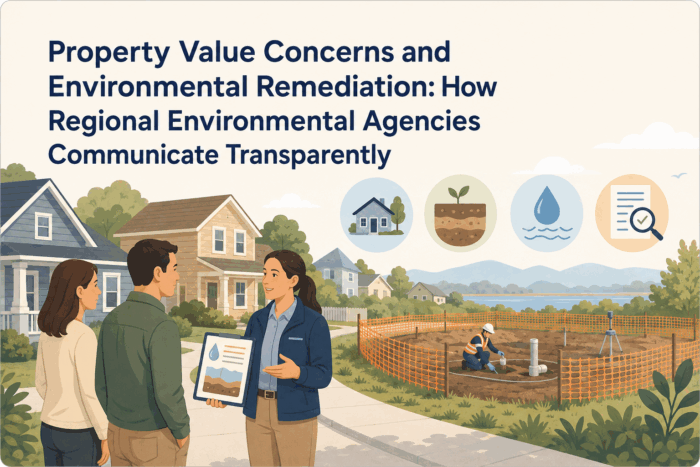
Property Value Concerns and Environmental Remediation: How Regional Environmental Agencies Communicate Transparently
Environmental remediation can change how a community understands a property long before it changes the physical condition of the site. Once contamination, investigation, cleanup activity, or regulatory oversight becomes publicly associated with a location, nearby residents and property owners may begin considering implications that extend beyond environmental conditions themselves. Questions can emerge about neighborhood reputation, future land use, the ability to sell or refinance property, the effect of prolonged remediation activity, and whether the presence of a contaminated site will influence how prospective buyers, businesses, or investors perceive the surrounding area.
For regional environmental agencies, these concerns create a particularly sensitive communication responsibility. Property value is economically important to residents, but it is not usually something an environmental agency can predict or guarantee. Market outcomes may be influenced by numerous factors beyond the agency’s authority, including property characteristics, local supply and demand, broader economic conditions, neighborhood investment, redevelopment activity, buyer perceptions, financing considerations, and the specific circumstances surrounding the contaminated site. Even when remediation ultimately improves environmental conditions, an agency should not assume that it can translate that progress into a specific change in property value.
That limitation does not make property value concerns irrelevant to environmental communication. Residents who raise them are often expressing a broader concern about what contamination and remediation may mean for the stability of their community. A homeowner may be trying to understand whether a cleanup project will remain visible for years. A nearby business owner may be concerned about customer perceptions or construction disruption. A resident preparing to sell may want to know what information about the site will remain publicly available. Others may worry that the stigma associated with contamination will persist even after substantial remediation work has occurred.
If regional environmental agencies respond only by stating that they do not determine property values, they may be technically accurate while still failing to address the communication problem. Communities need a clearer distinction between what the agency can establish and what it cannot. The agency can explain environmental findings, regulatory status, investigation progress, cleanup decisions, anticipated project milestones, and the meaning of completed remediation activities. It can also clarify when important uncertainties remain. What it should not do is convert environmental progress into assurances about individual property prices or future market behavior.
Transparent communication therefore requires two forms of discipline at the same time. Agencies need to acknowledge why property value concerns are legitimate to the people raising them, while maintaining clear boundaries around claims that the environmental record cannot support. This balance is essential because both dismissal and overreassurance can damage trust. A response that minimizes residents’ economic concerns may appear disconnected from the consequences they are trying to evaluate, while statements suggesting that cleanup will restore, protect, or increase property values can create expectations that lie outside the agency’s expertise and control.
The stronger approach is to make environmental information sufficiently clear that residents can understand the condition and trajectory of the site without asking the agency to predict a market outcome. That means explaining what has been found, what is being done, what remains unresolved, how progress will be measured, and what future environmental milestones will mean. When the agency communicates those elements consistently, property owners gain a more reliable factual basis for understanding the project even when questions about future property value cannot be answered definitively.
Property Value Concerns Often Reflect Broader Uncertainty About the Site
 Property value concerns should not be treated as a separate economic topic disconnected from remediation communication. In many communities, they are one expression of uncertainty about the environmental condition, duration, visibility, and future implications of the site. Residents may use the language of property value because it provides a tangible way to describe a broader fear that contamination will change how others perceive their neighborhood or that an unresolved cleanup will create a lasting disadvantage for properties nearby.
Regional environmental agencies can respond more effectively when they understand this underlying connection. A resident asking whether a cleanup will affect home value may also be seeking information about the extent of contamination, whether it has migrated beyond the original site, how long remediation will continue, whether nearby properties are involved, or what future restrictions may remain. Answering only the market-value portion of the concern can therefore leave the more immediate environmental questions unresolved.
Communication should begin with the environmental facts the agency is responsible for establishing. If investigation has identified the boundaries of a contaminated area, the agency should explain what has been established and what remains under evaluation. If remediation is underway, residents should understand the current phase, the purpose of the work, and the conditions that will determine whether the project advances to the next milestone. If monitoring or other continuing obligations are expected after major cleanup work, those requirements should be explained without implying that the continued oversight means remediation has failed.
This distinction is important because communities can interpret environmental uncertainty as economic uncertainty. A site described vaguely as “under investigation” for an extended period may create more concern than a site whose investigation status, scope, and next decision point are clearly explained. Similarly, visible remediation activity can generate speculation if residents do not know whether the work reflects a previously planned cleanup stage or a newly discovered problem. The clearer the environmental narrative, the less space exists for incomplete information to become the basis for assumptions about neighborhood conditions.
Regional agencies should also recognize that perceptions may differ depending on proximity and personal circumstances. Residents immediately adjacent to a remediation site may be focused on potential effects to their own property, while people farther away may be more concerned about neighborhood reputation or future development. Business owners may evaluate the project in relation to customer access or public perception, while local officials may be concerned about broader community confidence. Transparent communication should maintain a consistent factual foundation while acknowledging that the implications residents are trying to understand may differ.
The objective is not to persuade the community that property value concerns are misplaced. It is to ensure that those concerns are not intensified by preventable ambiguity about the environmental project itself. Agencies can contribute most effectively by maintaining a clear record of environmental findings, responsibilities, milestones, and uncertainties so that residents are not forced to interpret fragmented technical information or informal speculation when considering what the site means for their community.
Separate Environmental Findings From Market Predictions
The most important boundary in property-value communication is the distinction between environmental findings the agency can support and market predictions it generally cannot. Regional environmental agencies may possess detailed information about contamination, investigation boundaries, cleanup requirements, monitoring results, or regulatory status. That expertise does not automatically provide a reliable basis for predicting how individual properties will be valued by buyers, lenders, appraisers, insurers, or other market participants.
Public communication should make this distinction clear without sounding dismissive. Rather than simply stating that property values are outside the agency’s jurisdiction, staff can explain what information the agency can provide that may be relevant to residents’ understanding of the site. This can include the current environmental status, the scope of remediation, completed milestones, remaining work, and the agency’s role in overseeing or evaluating the environmental response. Providing meaningful information alongside the limitation is more useful than presenting the limitation alone.
Agencies should also avoid broad assurances that remediation will remove any effect the site may have on property perceptions. Environmental cleanup can address environmental conditions, but community perception and real estate behavior may respond differently and on different timelines. Even after substantial remediation, people may continue to ask about the site’s history, future use, or remaining controls. Conversely, some communities may view visible cleanup progress or productive reuse as evidence of improvement. These outcomes should not be predicted as though they follow automatically from the environmental process.
The same caution applies to statements suggesting that contamination will necessarily reduce surrounding property values. Unless the agency has reliable, relevant information that supports such a conclusion and is authorized to interpret it in that context, broad claims about market impacts can overstate what the environmental record establishes. The agency’s communication should remain focused on site conditions and regulatory progress rather than attempting to characterize real estate outcomes as environmental facts.
Maintaining this boundary protects credibility because it prevents the agency from becoming responsible for predictions that depend on factors beyond its control. It also allows environmental staff to remain responsive to residents without moving outside their professional role. Communities receive a clearer explanation of what the agency knows, what it does not know, and where the limits of environmental information begin.
How Environmental Protection Agencies Can Make Communication Central to Regulatory Effectiveness, Public Trust, and Community Health
This article is part of our series on strategic communication for Environmental Protection Agencies, Environmental Compliance Agencies, and state and local environmental departments. To learn more and to see the parent article, which links to other content just like this, click the button below.
Transparency Requires More Than Releasing Technical Documents
Regional environmental agencies often possess substantial technical information about remediation projects, including investigation results, sampling data, technical reports, cleanup plans, regulatory correspondence, and monitoring information. Making those materials publicly available can support transparency, but document access alone does not ensure that residents understand what the information means for the current condition or future direction of the site.
This limitation becomes especially important when property value concerns are present. Residents may search technical documents for information they believe will help them determine whether their property is affected, whether contamination is moving, or whether the neighborhood will remain associated with the site. Without sufficient context, they may encounter terminology, historical findings, preliminary assumptions, or superseded information that is difficult to interpret accurately. The result can be more uncertainty rather than greater understanding.
Transparent communication should therefore connect technical disclosure with public explanation. Agencies should identify the findings that materially change the understanding of the site, distinguish historical information from current conditions, and explain how new results affect the remediation process. When an investigation reaches a meaningful conclusion, residents should understand what that conclusion establishes and what questions remain open. When a cleanup milestone is completed, the agency should explain its significance without suggesting that it resolves issues beyond the scope of the environmental work.
Consistency is equally important. A project webpage, public meeting, community notice, and response to resident inquiries should reflect the same current understanding of the site. If older documents remain publicly accessible, current materials should provide enough orientation that residents can distinguish earlier assumptions from later findings. This reduces the risk that outdated or preliminary information continues shaping perceptions after the project has advanced.
Transparency also requires candor when information is incomplete. If the agency does not yet know whether a particular area is affected, it should not provide premature reassurance simply because residents are concerned about possible property implications. It should explain what is being evaluated, what work is underway to resolve the uncertainty, and when additional information is expected. This demonstrates that uncertainty is being actively addressed rather than avoided.
The quality of property-value communication ultimately depends on whether the agency can provide a stable environmental narrative while resisting pressure to predict outcomes that fall outside that narrative. Residents may continue to have questions about real estate markets, individual transactions, financing, or future neighborhood perception. Regional environmental agencies cannot answer all of those questions through environmental regulation. They can, however, ensure that uncertainty about property value is not compounded by uncertainty about what the agency has found, what remediation is occurring, and what environmental progress actually means.
Explain What Environmental Progress Does and Does Not Establish
Property value concerns become more difficult to manage when residents interpret every environmental milestone as evidence of a likely economic outcome. Completion of an investigation, approval of a cleanup plan, visible remediation activity, or movement into long-term monitoring may all be meaningful developments, but none of them automatically determines how the real estate market will respond. Regional environmental agencies should therefore explain environmental progress in terms of what it establishes about the site rather than implying that each milestone translates directly into changes in property value.
This distinction is especially important because remediation can improve the agency’s understanding of site conditions long before the public perceives a visible change. Additional sampling may define the extent of contamination more clearly. A cleanup decision may establish the approach that will be used to address those conditions. Field work may reduce or contain identified environmental concerns, while monitoring may be required afterward to evaluate whether the remedy continues to perform as intended. Each of these stages can represent meaningful environmental progress without supporting a prediction about individual property transactions or neighborhood-wide market behavior.
Agencies should communicate the significance of each milestone with enough specificity that residents can understand what has changed. If investigation confirms that contamination is confined to a particular area, the public explanation should focus on the environmental meaning of that finding. If cleanup expands because new information is discovered, the agency should explain how the new information changes the remediation process. If a major construction phase is complete but monitoring continues, residents should understand why oversight remains necessary and what that continuing activity does, and does not, indicate about the site’s status.
This approach also helps prevent residents from treating the absence of a final regulatory endpoint as evidence that the site remains unchanged. Environmental remediation can involve several stages of improvement before a project reaches closure or another final program milestone. Communication should make those stages visible so that the community can distinguish between unresolved contamination, active cleanup, post-remediation monitoring, and other project-specific conditions.
At the same time, agencies should avoid allowing positive environmental progress to become a substitute for careful communication about remaining uncertainty. A completed milestone may reduce one area of uncertainty while leaving others unresolved. The most credible communication acknowledges both elements. Residents should be able to see where the project has advanced and where additional work or evaluation is still required.
Address Property-Related Questions Without Moving Beyond Agency Expertise
Regional environmental agencies may receive questions that are framed in highly practical terms. Residents may ask whether they should sell, whether buyers will be concerned, whether lenders will treat the area differently, whether a disclosure will be required in a future transaction, or whether remediation will restore the neighborhood’s reputation. These questions are understandable because they reflect real decisions property owners may need to make, but they often move beyond what the environmental agency is positioned to answer.
The agency’s communication should remain useful without crossing into individualized financial, legal, appraisal, or real estate advice. Staff can explain the environmental record, the agency’s regulatory role, the current remediation status, the expected next milestone, and the information that is publicly available about the site. Where residents need guidance on transaction-specific requirements, financing, appraisal, or other matters outside the agency’s role, the department can identify the appropriate type of professional or authority without attempting to resolve those issues itself.
This boundary should be communicated consistently across staff and channels. If one agency representative says that property values are unaffected while another says that the agency cannot make that determination, the inconsistency can create more concern than either response alone. A clear internal framework for handling property-related questions can help staff remain responsive while avoiding unsupported assurances or speculation.
The tone of those responses matters as well. Residents who are worried about the value of their homes or businesses are unlikely to find a purely jurisdictional response satisfying. Telling someone only that the agency does not regulate property values may sound dismissive even when it is accurate. A stronger response begins by acknowledging the relevance of the concern, then explains what the agency can reliably provide. This keeps the conversation grounded in factual environmental information while recognizing why the resident is asking.
Departments should also be careful not to imply that questions outside their authority are unimportant to the broader project. Property value concerns may influence public trust, participation, media attention, and community perceptions of the remediation effort. The agency does not need to become an expert in real estate economics to recognize that these concerns are part of the communication environment. It does need a disciplined strategy for addressing them without overstating what environmental data can establish.
Prevent Technical Uncertainty From Becoming Community Speculation
When an environmental agency has not yet reached a definitive conclusion about site conditions, property-related speculation can intensify quickly. Residents may draw conclusions from sampling locations, construction activity, property access requests, temporary fencing, monitoring equipment, or statements made during early stages of investigation. If the agency does not explain why those activities are occurring, people may interpret them as evidence that contamination is broader, more severe, or more persistent than the current record supports.
Regional environmental agencies should therefore explain technical uncertainty in terms of the work being performed to resolve it. If the agency is conducting additional sampling, residents should understand whether the purpose is to confirm boundaries, evaluate a possible pathway, assess conditions over time, or answer another specific environmental question. This does not require the agency to predict the outcome of the investigation. It requires the agency to explain the purpose of the uncertainty-reducing work.
This distinction is especially important when nearby properties are involved in sampling or access activities. Residents may assume that any request to sample a property means contamination has already been confirmed there. Communication should clarify the difference between investigating a possibility and establishing a finding. The same principle applies when new sampling locations are added or when monitoring continues beyond the period residents originally expected.
Agencies should also be prepared to explain how they will communicate new findings if the understanding of the site changes. Residents are more likely to tolerate uncertainty when they know how additional information will be shared and what kinds of developments would trigger broader notification. A clear communication pathway reduces the likelihood that informal speculation becomes the primary source of information while technical work is still underway.
The timing of updates is important. Long periods of silence during active investigation can create the impression that the agency is withholding information, particularly when visible work continues at or near the site. Even when no major conclusion has been reached, periodic updates can explain what work has been completed, what is still being evaluated, and when the next meaningful result or decision is expected.
This communication should remain carefully calibrated. Agencies should neither minimize uncertainty nor amplify it unnecessarily. The goal is to help residents understand the difference between what is currently known, what is being tested, and what remains unresolved. That structure allows the public to follow the investigation without treating every preliminary activity as evidence of a final environmental or economic outcome.
Keep the Public Record Current as the Understanding of the Site Changes
Environmental remediation projects can produce a large and evolving public record. Early sampling results, preliminary site boundaries, initial cleanup concepts, revised technical reports, regulatory decisions, monitoring data, and project updates may all remain accessible over time. This history can support transparency, but it can also create confusion when residents encounter older information without understanding whether it still reflects the agency’s current assessment.
Regional environmental agencies should maintain a public-facing record that clearly distinguishes current information from superseded or historical material. When the understanding of the site changes, the agency should explain what changed and why. If a previous investigation boundary is revised, the public should be able to understand whether the change reflects new sampling, better data, a refined technical interpretation, or another project-specific development.
This becomes especially important when property concerns are involved because residents may search older materials for any reference to their neighborhood, street, or parcel. A preliminary map or early technical assumption can continue shaping perceptions long after it has been refined. Agencies should not remove historical information simply to avoid confusion, but current materials should provide enough context that residents can determine which findings remain valid and which have been replaced by later information.
A well-maintained public record also reduces the risk that isolated technical statements are interpreted outside their original context. A historical report may have been written before subsequent investigation narrowed or expanded the understanding of the site. A public-facing summary can explain that evolution without requiring residents to reconstruct the technical history on their own.
Consistency across channels matters just as much as the accuracy of individual documents. Project webpages, public notices, meeting presentations, email updates, and staff responses should reflect the same current understanding. When one source uses an outdated boundary or earlier project status while another reflects newer information, residents may interpret the discrepancy as evidence that the agency itself is uncertain or inconsistent.
Maintaining a current public record is therefore more than an administrative task. It is an important part of transparent expectation management. Residents may not receive definitive answers about future property values, but they should be able to rely on the environmental agency for an accurate and current account of what is known about the site, how that understanding has changed, and what the agency is doing next.
Build Communication Around What Residents Need to Understand, Not What They Hope the Agency Can Predict
Regional environmental agencies can strengthen public trust by structuring property-value communication around the information residents actually need to understand about the remediation process. Property owners may ask for a definitive answer about whether a site will affect the value of a home or business, but the more reliable public information often lies elsewhere. Residents need to understand the environmental condition of the site, the scope of the investigation, the current remediation status, the meaning of recent findings, the next major milestone, and any continuing obligations that may remain after active cleanup work is complete.
This requires agencies to resist the pressure to answer every property-related concern in market terms. A technically responsible response may not provide the certainty residents want, but it can still provide meaningful context. If the agency clearly explains what has changed environmentally, why a particular remediation step is being taken, and what remains unresolved, residents are better positioned to interpret the project without relying entirely on speculation. That information can become especially important when the public is trying to distinguish between a site that is still being characterized, one where active remediation is underway, and one where the major cleanup phase has been completed but monitoring or other requirements continue.
The communication strategy should also recognize that residents may interpret technical language through an economic lens. Terms such as contamination plume, institutional control, monitoring, additional investigation, or remedial action may prompt assumptions about long-term property impacts even when the agency is using those terms in a specific regulatory or technical context. Agencies should therefore explain not only the definition of key terms, but their practical significance within the project. This helps reduce the likelihood that unfamiliar language becomes a source of unnecessary alarm.
The same principle applies to changes in project status. If a site moves from investigation into remediation, the agency should explain what that transition means rather than simply announcing it. If long-term monitoring begins, residents should understand whether that phase reflects continuing oversight, verification of remedy performance, or another project-specific purpose. The clearer the environmental meaning of these transitions becomes, the less likely residents are to interpret each new phase as an unexplained signal about future market conditions.
Prepare Staff to Respond Consistently to Property Value Concerns
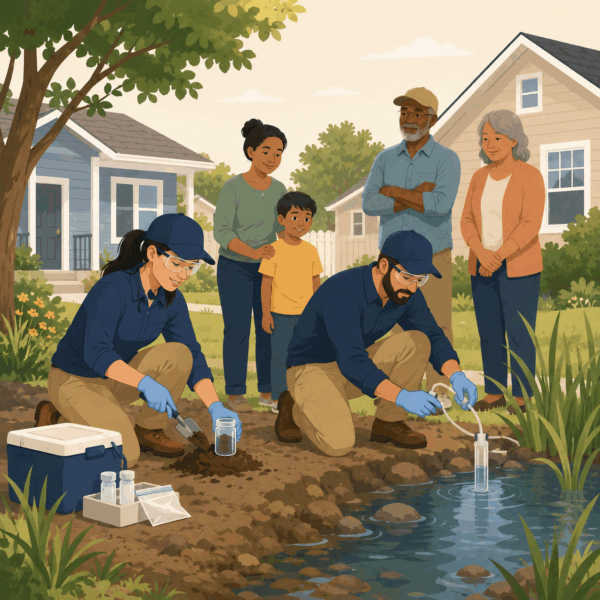 Property value questions often arise through multiple channels. Residents may ask them at public meetings, submit them by email, call project staff directly, raise them with elected officials, or bring them to community organizations. If different staff members respond with different levels of certainty or different interpretations of the agency’s role, the inconsistency can undermine trust even when the underlying environmental information is accurate.
Regional environmental agencies should therefore establish an internal communication framework for handling recurring property-value concerns. Staff should understand which information can be stated confidently, which issues require technical review, and which questions fall outside the agency’s expertise or authority. This does not require scripted responses to every inquiry, but it does require a common understanding of the boundaries between environmental findings and market predictions.
Consistency also depends on giving staff enough context to explain those boundaries naturally. A response that simply states that the agency cannot comment on property values may be accurate but incomplete. Staff should be able to connect that limitation to the information the agency can provide, such as current site conditions, remediation progress, known boundaries, project milestones, or the status of ongoing investigation. This makes the response more useful while preserving the appropriate professional boundary.
Training and internal coordination can be especially valuable when a project receives heightened public or media attention. In those moments, property-value questions may be posed in more direct or emotionally charged ways, and staff may feel pressure to provide quick reassurance. A shared communication framework helps reduce the risk of unsupported statements and keeps the agency focused on verified environmental information.
The same framework can support local government partners or other organizations that receive questions about the project. Regional agencies may not control how every external party communicates, but they can provide concise, current information that helps others avoid overstating what is known. This is particularly important when elected officials or municipal staff are fielding constituent concerns and need a clear explanation of the environmental status without being placed in the position of interpreting technical documents themselves.
Address Community Perception Without Treating Perception as an Environmental Finding
Community perception can influence how residents experience a remediation project, but agencies should avoid treating perception as though it were equivalent to technical evidence. A neighborhood may become associated with contamination in public discussion even when the affected area is limited. Conversely, residents may assume that the absence of visible cleanup activity means there is no continuing environmental issue. Both situations demonstrate why perception matters to communication while remaining distinct from the environmental findings themselves.
Regional environmental agencies can address this by consistently separating what is known from what is being assumed or discussed informally. If contamination has been confirmed only in a defined area, the agency should communicate that boundary clearly. If the investigation is still determining the extent of the issue, that uncertainty should be stated without implying either a broader or narrower impact than the evidence supports. This helps prevent community narratives from moving ahead of the technical record.
Agencies should also be careful when discussing stigma or reputation. These concerns may be real to residents, but they are difficult to measure and may evolve independently of the remediation process. The agency can acknowledge that residents may be concerned about how the site is perceived while keeping its own communication anchored to the environmental facts. This allows staff to recognize the concern without validating unsupported conclusions about how buyers, businesses, or the broader market will respond.
The distinction becomes particularly important when remediation progress is used to address community concern. Agencies should not suggest that a completed environmental milestone will automatically eliminate stigma or restore confidence. They can, however, explain how the milestone changes the environmental status of the site and ensure that the public record reflects that progress accurately. Over time, clear and current information can support more informed perceptions even if the agency cannot control how the market or community ultimately interprets the site.
This approach strengthens credibility because it avoids treating communication as a tool for managing perception through reassurance. Instead, communication becomes a tool for improving the quality of the information on which perceptions are formed. That is a more defensible and sustainable role for a regional environmental agency.
Make Public Engagement a Source of Communication Intelligence
Community engagement can help agencies understand which aspects of the remediation process are driving property-related concern. Residents may frame their questions in terms of value, but the underlying issue may involve uncertainty about contamination boundaries, duration of cleanup, future land use, visible construction, monitoring, or whether the project is moving toward a clear endpoint. Listening carefully to these patterns can help the agency improve later communication.
The purpose of engagement is not to turn every property-value question into a formal policy issue. It is to identify where the agency’s existing information may be leaving important gaps. If residents repeatedly ask whether their properties are affected, the public materials may need a clearer explanation of the investigation area. If concerns focus on how long the site will remain under oversight, the agency may need to better explain the difference between active cleanup and long-term monitoring. If residents are confused about whether environmental progress means the site is ready for redevelopment, the relationship between those processes may need clarification.
Agencies should use recurring questions to improve broader communication rather than responding only at the individual level. Project webpages, public meeting materials, community updates, and frequently requested information can be adjusted to address the misunderstandings that appear most often. This creates a feedback loop in which public engagement improves the quality of the communication system over time.
The same information can also help agencies prepare for future projects. Property-value concerns are likely to recur whenever contamination becomes publicly associated with homes, businesses, or neighborhoods. By documenting the questions that arise most often and identifying which explanations are most useful, regional environmental agencies can build stronger institutional practices for handling these concerns consistently.
This does not mean every remediation project should use identical messages. Site conditions, community context, and regulatory processes will vary. The value lies in developing a repeatable communication approach that emphasizes environmental facts, calibrated uncertainty, clear role boundaries, and responsiveness to the concerns residents are actually expressing.
When engagement is used in this way, it contributes to more than public outreach. It becomes a source of communication intelligence that helps the agency see where environmental information is being misunderstood, where expectations are drifting beyond the evidence, and where clearer explanation can reduce avoidable uncertainty. That insight can strengthen both the current remediation effort and the agency’s broader capacity to communicate transparently about property-related concerns.
Integrate Property-Related Communication Into Remediation Operations
Property value concerns are easier to address consistently when communication is integrated into the operational structure of the remediation project. Regional environmental agencies may have technical staff focused on investigation and cleanup, communication staff focused on public information, legal or regulatory personnel focused on compliance, and local government partners fielding questions from residents. If these groups are working from different interpretations of the project’s current status, property-related communication can become inconsistent even when the underlying technical work is sound.
A stronger approach is to establish communication checkpoints alongside major remediation milestones. When investigation boundaries change, a cleanup plan is approved, field work begins, a monitoring phase starts, or another consequential development occurs, staff should consider how the change may affect public understanding of the site and whether existing property-related concerns are likely to intensify. This does not mean every technical development requires a new public announcement. It means the agency should routinely assess whether the significance of the change has been explained clearly enough for residents to understand what it does and does not establish.
Internal coordination is especially important when new information could be misinterpreted as evidence of a broader property impact. A revised sampling area, for example, may reflect a technical need to gather more information rather than confirmation that contamination has expanded. If communication staff do not understand that distinction, a public update may unintentionally reinforce speculation. Conversely, if technical staff assume that the significance of a finding is self-evident, residents may be left to draw their own conclusions from incomplete information.
Regional agencies can reduce these risks by maintaining a shared internal description of the site’s current environmental status, major uncertainties, completed milestones, next anticipated actions, and communication boundaries. This gives project staff and public-facing staff a common reference point when responding to questions. It also helps local government partners receive consistent information when residents contact them instead of the regional agency directly.
The practical value of this approach is continuity. Property-related concerns may persist through multiple phases of the project, and staff should not have to rebuild the communication framework each time a new question emerges. A coordinated internal system allows the agency to remain responsive while keeping every explanation anchored to the same verified environmental record.
Prepare for High-Attention Moments That Can Intensify Property Concerns
Property value concerns often become more visible at specific moments in a remediation project. The release of new sampling results, expansion of an investigation area, beginning of excavation, installation of monitoring equipment, public discussion of redevelopment, or a major project delay can all draw renewed attention to the site. These moments can influence how residents interpret the environmental condition of the area, particularly when they occur after a period of limited public communication.
Regional environmental agencies should prepare for these high-attention moments before they occur whenever possible. If field work will become more visible, residents should understand what they are likely to see and why the work is being performed. If new findings are expected to change the project’s scope, the agency should be prepared to explain the environmental significance of the change without speculating about market effects. If a redevelopment announcement is likely to increase interest in the site, the agency should clarify the current remediation status so that environmental progress is not confused with a guarantee of future property outcomes.
Advance preparation is also important for agency staff and partner organizations. Questions about property values may be directed to elected officials, local government staff, public information officers, project managers, or technical personnel. Providing a consistent set of current facts and clear communication boundaries helps reduce the risk that one representative offers reassurance that another later has to qualify or correct.
High-attention moments should also be used to reinforce the distinction between environmental evidence and public interpretation. If a new report generates concern, the agency can explain what the report confirms, what it does not confirm, and what actions will follow. If visible remediation activity creates speculation, the agency can connect that activity to the approved project sequence. This keeps the public discussion grounded in the environmental record even when broader concerns about property and neighborhood perception are receiving greater attention.
Preparation does not require predicting every question. It requires identifying which developments are likely to change public interpretation of the site and ensuring that the agency has accurate, accessible information ready when attention increases. That readiness can prevent a routine project milestone from becoming a larger trust problem simply because the communication arrived too late or lacked sufficient context.
Maintain Clear Communication Through Long-Term Monitoring and Project Transition
Property-related concerns may not disappear when major remediation construction ends. In some projects, monitoring, maintenance, institutional controls, land-use restrictions, or other continuing requirements may remain after visible cleanup activity has decreased. Residents who do not understand these later phases may interpret continued agency involvement as evidence that the remediation was incomplete or that environmental conditions remain unchanged.
Regional environmental agencies should therefore communicate project transitions as carefully as active cleanup milestones. When the project moves from investigation to remediation, from remediation to monitoring, or from one form of oversight to another, the agency should explain what has changed and why the next phase remains necessary. The communication should avoid both extremes of suggesting that all environmental concerns have disappeared and implying that ongoing oversight means the project has failed to make progress.
This distinction is particularly important for property owners who may continue encountering information about the site long after visible activity has ended. A monitoring well, recorded control, recurring inspection, or periodic agency update may raise questions about what remains unresolved. Clear explanation can help residents understand the purpose of continuing measures and how they relate to the environmental status of the site.
The public record should reflect these transitions accurately as well. Project webpages and other current materials should not continue presenting the site as though active remediation is underway if the project has moved into a different phase. At the same time, agencies should avoid describing the project as complete if meaningful environmental obligations remain. Accurate status language helps residents understand the difference between major cleanup completion and continued regulatory oversight.
Maintaining clarity during long-term phases also reduces the likelihood that property-related concerns resurface because of outdated information. Residents, prospective property owners, local officials, and others may encounter the site years after the most visible remediation activity occurred. A current, understandable project record gives them a reliable way to determine what has happened, what requirements remain, and how the agency currently characterizes the site’s environmental status.
Evaluate Communication by Whether It Reduces Avoidable Uncertainty
The effectiveness of property-related communication should not be measured only by how many notices, meetings, webpages, or fact sheets an agency produces. Those outputs show that information was distributed, but they do not necessarily show whether residents understand the environmental status well enough to separate verified findings from assumptions about property value.
Regional environmental agencies can evaluate communication by examining the questions and misunderstandings that continue to recur. If residents repeatedly ask whether contamination has reached their property, the agency may need to explain investigation boundaries more clearly. If people continue interpreting monitoring as evidence that cleanup has failed, the transition between remediation and long-term oversight may need better explanation. If residents assume that a completed environmental milestone guarantees redevelopment or increased property value, the agency may need to reinforce the limits of what environmental progress establishes.
These patterns can be identified through public inquiries, community meetings, local government feedback, stakeholder conversations, media questions, and staff observations. Formal research may be appropriate for some projects, but many agencies can learn a great deal by systematically tracking recurring areas of confusion and adjusting public information accordingly.
Evaluation should also consider whether information remains consistent over time. A project may begin with clear communication but become harder to follow as staff change, technical findings accumulate, and older materials remain available online. Periodic review of the public record can help ensure that the agency’s current explanation still matches the project’s actual status and that residents are not being directed toward outdated assumptions.
The broader objective is to reduce uncertainty that arises from communication gaps rather than uncertainty that is inherent to the environmental process. Regional agencies cannot promise how the real estate market will behave, nor can they eliminate every concern associated with a contaminated site. They can, however, make sure that residents have a reliable understanding of what the agency knows, what remains under evaluation, what progress has occurred, and what happens next.
Over time, this creates a more durable form of transparency. Residents may still have unanswered questions about individual property values, but those questions are less likely to be compounded by confusion about the environmental project itself. That distinction allows the agency to remain within its proper role while still providing the clarity, consistency, and context communities need during a complex remediation process.
Strategic Communication Support for Property Value Concerns and Environmental Remediation
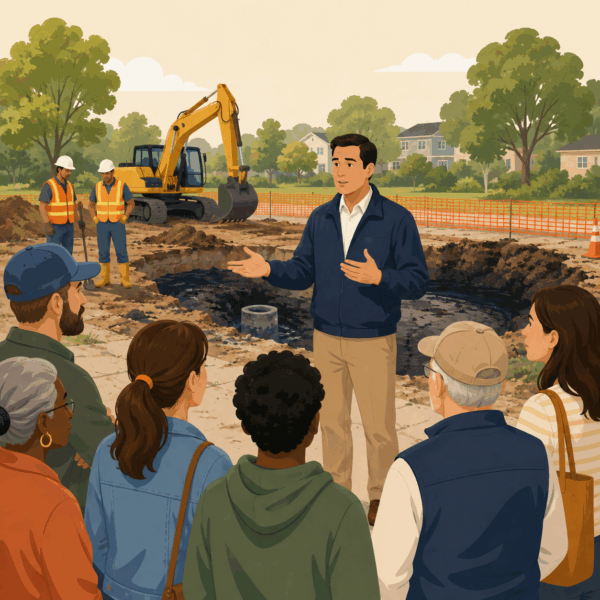 Property value concerns can place regional environmental agencies in a difficult communication position because residents often want certainty about economic outcomes that the agency is not equipped or authorized to predict. At the same time, a purely jurisdictional response can leave important concerns unaddressed if residents still do not understand the site’s environmental status, remediation progress, remaining uncertainties, or the meaning of long-term oversight. External strategic communication support can help agencies assess these communication gaps, organize complex environmental information, establish consistent boundaries around property-related questions, and develop public-facing explanations that remain responsive without moving into appraisal, legal, financial, or real estate advice.
Stegmeier Consulting Group (SCG) can support regional environmental agencies by developing communication frameworks that distinguish verified environmental findings from market speculation, organizing milestone-based project information, strengthening project webpages and community updates, preparing staff messaging for recurring property-value questions, and coordinating communication with local governments and other relevant partners. SCG can also help agencies identify where outdated materials, inconsistent explanations, technical terminology, or recurring public misunderstandings are contributing to unnecessary uncertainty. This support strengthens how the responsible agency communicates its environmental work without implying that SCG determines property values, conducts remediation, or makes regulatory decisions.
A structured external perspective can be particularly valuable during high-attention moments, changing investigation boundaries, major remediation milestones, and transitions into long-term monitoring, when residents may be especially likely to draw conclusions about property impacts from incomplete information. By improving consistency, accessibility, and the connection between technical findings and public explanation, SCG can help agencies maintain a credible environmental narrative while respecting the limits of what the evidence can support. Connect with SCG to explore strategic communication support for complex remediation projects involving property and community concerns.
Future Trends
Regional environmental agencies are likely to face increasing expectations for accessible, current, and easily interpretable information about contaminated sites. Residents can increasingly encounter environmental records through agency websites, local government portals, mapping systems, community discussion channels, property research, and other digital sources. Greater access can improve transparency, but it can also make older findings, preliminary maps, and superseded project information easier to encounter without the context needed to understand whether they still represent current conditions.
This environment will place greater importance on maintaining a coherent public record. Agencies will need to distinguish current findings from historical information, explain significant changes in the understanding of a site, and ensure that project summaries remain aligned with the latest verified environmental status. This is particularly important when property concerns are involved because residents may search across years of technical materials while trying to understand whether a particular property, street, or neighborhood has been affected.
Public expectations for speed are also likely to increase. Visible field work, new sampling locations, project announcements, or newly posted technical documents can prompt community discussion before an agency has issued a comprehensive explanation. Regional environmental agencies will need communication systems that allow them to acknowledge meaningful developments promptly while preserving the technical review necessary for accurate public information. Clear internal escalation procedures, current project summaries, and established communication frameworks can help agencies respond without relying on premature conclusions.
Another important trend will be the growing expectation that agencies explain environmental information rather than simply publish it. Technical reports and data remain essential components of the public record, but residents concerned about their properties may need clearer explanations of what new information changes, what remains uncertain, and what the next environmental milestone means. Transparency will increasingly depend on the agency’s ability to connect disclosure with interpretation while remaining careful not to extend that interpretation into unsupported market predictions.
Agencies may also become more systematic in learning from recurring property-related concerns across remediation projects. Questions about contamination boundaries, cleanup completion, monitoring, neighborhood perception, and future property implications can reveal recurring communication challenges. Capturing these patterns can help regional agencies develop stronger staff guidance, public-facing templates, project communication protocols, and internal coordination practices before similar concerns emerge at future sites.
Conclusion
Property value concerns create a distinctive communication challenge because they connect environmental remediation to one of the most consequential financial interests many residents have. Regional environmental agencies cannot reliably predict how individual properties or local real estate markets will respond to contamination, remediation, changing perceptions, or future redevelopment. They can, however, ensure that residents are not forced to interpret those economic concerns through incomplete or confusing environmental information.
Transparent communication begins by maintaining a clear boundary between environmental findings and market predictions. Agencies should explain what has been established about the site, what remediation is occurring, what major milestones mean, what uncertainties remain, and what continuing oversight may be required. They should be equally clear about what those environmental facts do not establish, particularly when residents seek assurances about property prices, future transactions, financing, or market behavior.
That distinction becomes more credible when it is supported by a consistent communication system. Current project information, coordinated staff responses, clear explanations of technical uncertainty, timely updates during high-attention moments, and careful transitions into long-term monitoring all help residents understand the remediation process on its own terms. Community feedback can then be used to identify where misunderstandings persist and where additional explanation is needed.
Effective communication does not require regional environmental agencies to resolve every concern associated with property value. It requires them to provide an environmental record that is accurate, current, understandable, and appropriately bounded. When residents can distinguish what is known from what is still being evaluated and what environmental progress means without interpreting it as a market guarantee, agencies are better positioned to maintain trust throughout the remediation process.
Stegmeier Consulting Group’s Strategic Approach to Communication Systems
Ground property-related communication in verified environmental facts, clear boundaries, and consistent project information.
Regional environmental agencies need communication systems that acknowledge property concerns while clearly separating environmental findings from market predictions and keeping residents informed as remediation conditions evolve. Stegmeier Consulting Group (SCG) helps agencies strengthen public-facing information, staff messaging, stakeholder communication, and project communication frameworks so that technical progress, uncertainty, and continuing oversight are explained consistently without overstating what the agency can determine about property values.
Use the form below to connect with our team and explore how strategic communication support can strengthen transparency and public understanding throughout environmental remediation.