
Making Desert Landscaping Irresistible: How Southern Nevada Water Authority’s Rebate Program Transformed Behavior Through Service Design
As Lake Mead’s water levels dropped to historic lows, threatening the water supply for more than 2 million residents in the Las Vegas Valley, the Southern Nevada Water Authority faced a fundamental challenge: outdoor water use, primarily for maintaining grass lawns in a desert climate, accounted for approximately 60% of residential water consumption. Traditional conservation messaging had limited impact. Residents understood the problem but faced significant barriers to change, from financial costs to uncertainty about alternatives to concerns about property values and aesthetic appeal.
Rather than simply urging conservation, Southern Nevada Water Authority reframed outdoor water use as a solvable behavior and service-design challenge. The Water Smart Landscapes Rebate Program made turf removal financially compelling through generous per-square-foot rebates, then systematically eliminated friction through clear guidance on eligibility, design standards, approved plants, installation processes, and inspection requirements. The program reinforced the behavioral shift through demonstration gardens showcasing vibrant desert landscapes, before-and-after stories from participating homeowners, and strategic partnerships with contractors and nurseries that made xeriscaping, the use of water-efficient landscaping suited to an arid climate, feel attainable and attractive.
The results demonstrate the power of combining financial incentives with service design excellence. The program has converted more than 250 million square feet of turf to desert landscaping, saving an estimated 12 to 15 billion gallons of water annually. Participating households reduced their water consumption by approximately 19 to 21 percent. This case study examines how Southern Nevada Water Authority’s approach (financial incentives to overcome cost barriers, service design to reduce friction, demonstration and education to shift perceptions, partnership ecosystems to build capacity, and sustained program evolution) created lasting behavior change at community scale.
Communication and Service Design Strategy
 Southern Nevada Water Authority’s approach combined communication strategy with practical service design to make landscape conversion easier to understand, pursue, and complete. Rather than relying on conservation messaging alone, the program addressed the full resident decision-making journey, from recognizing the need for change to understanding the financial implications, selecting appropriate landscaping options, completing the application process, and maintaining the converted property over time.
A central strength of the program was its recognition that awareness does not automatically lead to action. Residents may understand the importance of water conservation and still hesitate to remove turf because of cost, uncertainty, aesthetic concerns, unfamiliarity with xeriscaping, or difficulty finding qualified contractors and appropriate plants. Southern Nevada Water Authority therefore paired its conservation message with tools, incentives, demonstrations, and partnerships designed to reduce each of these barriers. The result was a program that made water-efficient landscaping feel not only environmentally responsible, but also financially practical, visually appealing, and achievable for ordinary homeowners.
This communication and service design strategy worked across multiple points of the resident experience. Financial incentives helped overcome the initial cost barrier. Clear program guidance reduced confusion and administrative friction. Demonstration gardens and homeowner stories helped residents visualize attractive alternatives to traditional grass lawns. Contractor and nursery partnerships increased access to the expertise and materials needed to complete projects successfully. Together, these elements created an environment in which residents were not simply being asked to conserve water. They were being given a clear and supported pathway for changing their landscaping behavior.
Financial Incentives as Behavior Change Foundation
Southern Nevada Water Authority’s program strategy began with a fundamental insight: cost represents the primary barrier to turf removal. Converting grass lawns to desert landscaping requires upfront investment in materials, plants, irrigation systems, and often professional installation. Without financial assistance, most homeowners delay or avoid the transition despite understanding water scarcity concerns.
The rebate structure addressed this barrier directly through per-square-foot payments that substantially offset conversion costs:
-
Generous Payment Levels: The program offered rebates of $3 per square foot of turf removed (rates have varied over time based on water conditions and program funding). This payment level typically covered a significant portion of conversion costs, making the financial decision favorable for most homeowners.
-
Simple Calculation: The per-square-foot structure made costs easy to estimate. Homeowners could quickly calculate potential rebates and compare against conversion quotes, facilitating decision-making.
-
Broad Eligibility: The program covered residential properties, businesses, and homeowner associations, maximizing participation potential across the community.
-
Minimum Requirements: Properties needed to remove at least 100 square feet of turf to qualify, setting a threshold that encouraged meaningful water savings while remaining accessible to smaller properties.
The rebate structure communicated several strategic messages:
-
Water Value: The generous rebate signaled that water conservation held significant value for the community, justifying the upfront investment in landscape conversion.
-
Shared Responsibility: By providing financial support rather than mandates, Southern Nevada Water Authority positioned conservation as a partnership between the utility and residents rather than a top-down requirement.
-
Long-term Commitment: Sustained program funding over years demonstrated organizational commitment to conservation beyond short-term crisis response, building confidence among homeowners considering the investment.
Why It Worked
Financial incentives transformed turf removal from a cost burden into an opportunity. The rebate structure aligned immediate financial self-interest with long-term conservation goals, creating powerful motivation for behavior change. Homeowners who might have delayed conversion indefinitely acted when rebates made the decision financially favorable. The per-square-foot calculation provided transparency and predictability, reducing uncertainty that often stalls household decisions. By addressing the cost barrier directly and generously, Southern Nevada Water Authority removed the primary objection to landscape conversion, enabling other program elements to focus on information, aesthetics, and implementation support.
From Scarcity to Sustainability: Effective Communication Strategies for Water Conservation Agencies
This article is part of our series on strategic communication for Water conservation agencies. To learn more and to see the parent article, which links to other content just like this, click the button below.
Service Design Excellence and Friction Reduction
While financial incentives created motivation, service design excellence enabled action. Southern Nevada Water Authority recognized that complexity, uncertainty, and administrative burden create friction that prevents behavior change even when financial incentives exist. The program systematically reduced every friction point in the turf removal journey.
Clear Process Documentation:
-
Step-by-Step Guidance: Program materials outlined the conversion process in clear sequential steps, from initial eligibility verification through final inspection and rebate payment. This roadmap reduced uncertainty about what homeowners needed to do.
-
Eligibility Criteria: Clear documentation specified which properties qualified, what types of turf removal counted toward rebates, and what landscape features met program standards. This transparency prevented wasted effort on projects that would not qualify.
-
Design Standards: The program provided specific requirements for replacement landscaping, including approved plant lists, mulch specifications, irrigation system standards, and coverage requirements. These standards ensured water savings while giving homeowners clear parameters for design decisions.
-
Timeline Expectations: Documentation clarified processing times for applications, inspection scheduling, and rebate payments, helping homeowners plan projects with realistic expectations.
Application Process Design:
-
Online Application: Digital submission reduced barriers compared to paper forms requiring printing, completion, and mailing. The online system provided immediate confirmation and status tracking.
-
Pre-Installation Verification: The program required pre-project photos and approval before work began, preventing situations where homeowners completed conversions that did not meet program requirements and could not receive rebates.
-
Post-Installation Inspection: Field verification ensured projects met standards while providing a clear completion milestone for homeowners. The inspection process also allowed program staff to provide guidance and ensure long-term success.
-
Prompt Payment: Rebates processed within clearly defined timeframes after successful inspection, providing timely financial benefit that reinforced the decision to participate.
Resource Libraries:
-
Approved Plant Lists: Comprehensive lists of water-efficient plants suitable for Southern Nevada’s climate gave homeowners confidence in plant selection. Lists organized by characteristics (height, color, bloom season) helped with design planning.
-
Design Templates: Sample landscape designs provided inspiration and demonstrated how desert landscaping could achieve diverse aesthetic goals, from formal to naturalistic styles.
-
Installation Guides: Technical resources explained proper installation techniques for irrigation systems, mulch application, and plant establishment, supporting homeowners who chose DIY approaches.
-
Maintenance Information: Post-conversion care guides helped ensure landscape success and long-term water savings, addressing concerns about ongoing maintenance requirements.
Why It Worked
Service design excellence transformed a potentially complex, uncertain process into a manageable journey. Clear guidance at every step reduced the cognitive load on homeowners, making the decision to participate less overwhelming. The pre-approval process prevented costly mistakes. Resource libraries reduced the research burden and uncertainty about plant selection. Online systems made participation convenient. By systematically eliminating friction points, Southern Nevada Water Authority ensured that motivated homeowners could easily act on their intentions. The program became known not just for generous rebates but for excellent customer experience, building positive word-of-mouth that encouraged additional participation.
Demonstration Gardens and Perception Transformation
Financial incentives and clear processes addressed practical barriers, but psychological and aesthetic concerns remained significant obstacles. Many homeowners worried that desert landscaping would look barren, reduce property values, or require excessive maintenance. Southern Nevada Water Authority addressed these perception barriers through strategic demonstration and education initiatives.
Demonstration Garden Strategy:
-
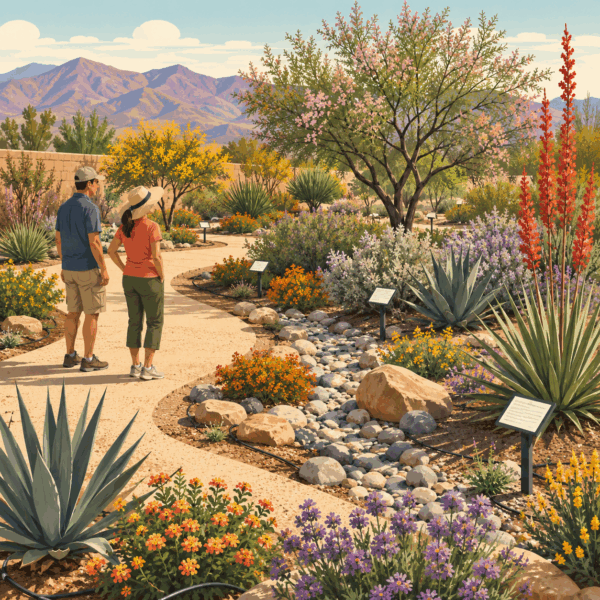
Physical Showcases: Southern Nevada Water Authority developed demonstration gardens at public locations throughout Southern Nevada, allowing residents to see mature, thriving desert landscapes in person. These gardens demonstrated that water-efficient landscaping could be lush, colorful, and diverse.
-
Design Diversity: Demonstration gardens showcased multiple aesthetic approaches, from formal structured designs to naturalistic desert gardens to contemporary minimalist styles. This diversity communicated that desert landscaping offered design flexibility rather than a single prescribed look.
-
Seasonal Interest: Gardens included plants with different bloom seasons, demonstrating year-round visual appeal and countering concerns about barren winter landscapes.
-
Plant Identification: Labels and interpretive signage in demonstration gardens helped visitors learn plant names and characteristics, supporting their own design planning and plant selection.
-
Community Access: Gardens located in high-traffic public areas ensured broad visibility and normalized desert landscaping as a community standard rather than an unusual choice.
Before-and-After Storytelling:
-
Visual Documentation: Program communications featured photographs of participating properties showing grass lawns before conversion and completed desert landscapes after, providing concrete evidence of aesthetic improvement.
-
Homeowner Testimonials: First-person accounts from program participants addressed common concerns through peer voices. Homeowners shared experiences with installation processes, ongoing maintenance, neighbor reactions, and satisfaction with results.
-
Water Savings Data: Individual household water use reductions provided tangible evidence of conservation impact, reinforcing both environmental and financial benefits.
-
Property Value Evidence: Communications addressed property value concerns through data and professional assessments showing that well-designed desert landscaping maintained or enhanced home values.
Educational Programming:
-
Workshops and Classes: Southern Nevada Water Authority offered educational programs on desert landscape design, plant selection, irrigation system management, and maintenance techniques, building homeowner confidence and capability.
-
Design Consultations: Program resources included access to design guidance, helping homeowners develop plans that met both program requirements and their aesthetic goals.
-
Media Coverage: Strategic media relations generated news stories about program success, attractive desert landscapes, and participating homeowners, normalizing the practice through regular visibility.
Why It Worked
Seeing is believing. Demonstration gardens and before-and-after stories provided concrete evidence that desert landscaping could be beautiful, challenging preconceptions that it meant barren rock yards. The diversity of design examples gave homeowners permission to create landscapes reflecting their personal aesthetics rather than feeling forced into a prescribed look. Peer testimonials built credibility that utility communications alone could not achieve. Homeowners trusted other homeowners more than institutional messaging. The combination of visual demonstration and social proof transformed desert landscaping from an unfamiliar alternative into an attractive, increasingly normalized choice. As more households converted, visible examples throughout neighborhoods created momentum and social acceptance.
Partnership Ecosystem and Capacity Building
Southern Nevada Water Authority recognized that program success required not just homeowner motivation but also market capacity to deliver conversions at scale. The authority strategically built a partnership ecosystem that made desert landscaping accessible and convenient.
Contractor Network Development:
-
Professional Training: Southern Nevada Water Authority provided training and certification programs for landscape contractors, ensuring adequate local capacity to deliver program-compliant installations. Training covered design standards, plant selection, irrigation systems, and installation techniques specific to desert landscaping.
-
Contractor Lists: The program maintained lists of trained contractors, giving homeowners easy access to qualified professionals and reducing the research burden of finding reliable installers.
-
Quality Standards: Contractor certification ensured consistent quality across installations, protecting homeowners and maintaining program credibility through successful projects.
-
Business Opportunity: For contractors, program participation represented significant business opportunity as thousands of properties pursued conversions, creating strong incentive for professional engagement.
Nursery Partnerships:
-
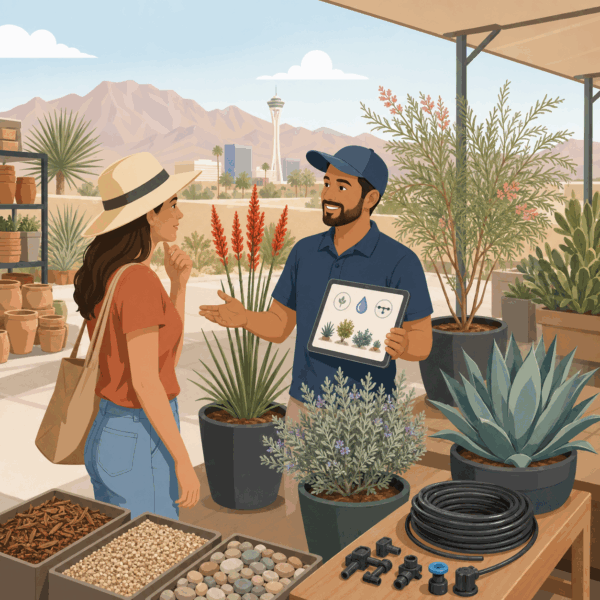
Plant Availability: Southern Nevada Water Authority worked with local nurseries to ensure adequate inventory of approved water-efficient plants. Options such as Red Yucca, Desert Willow, and Texas Sage demonstrate how homeowners can incorporate low-water plants with different sizes, forms, colors, and functions into their landscapes. Partnership efforts addressed supply chain challenges that could have frustrated homeowners seeking to purchase program-compliant plants.
-
Staff Education: Nursery staff received training on program requirements and water-efficient plant characteristics, enabling them to provide informed guidance to customers planning xeriscaping projects and other water-efficient landscape conversions.
-
Marketing Support: Program materials and signage in nurseries identified approved plants and promoted the rebate program, reaching homeowners at the point of purchase and reinforcing program awareness.
-
Market Development: Nursery partnerships helped shift industry inventory toward water-efficient species, creating long-term market transformation beyond individual program participants.
Homeowner Association Engagement:
-
Common Area Conversions: The program included provisions for HOA common areas, enabling large-scale turf removal in parks, medians, and community spaces with significant water savings potential.
-
Covenant Modifications: Southern Nevada Water Authority provided resources and advocacy supporting HOA covenant changes to allow or encourage desert landscaping, removing regulatory barriers within planned communities.
-
Community Leadership: HOA board education initiatives helped community leaders understand program benefits and champion participation among residents.
Why It Worked
Partnership strategies transformed market capacity to match homeowner demand. Trained contractor networks ensured that motivated homeowners could find qualified professionals to complete conversions, preventing bottlenecks that could have slowed program momentum. Nursery partnerships addressed supply chain challenges and created knowledgeable retail staff who reinforced program messaging. HOA engagement removed institutional barriers in planned communities where covenants might have prevented participation. The ecosystem approach recognized that behavior change programs require supportive infrastructure, not just individual motivation. By building market capacity, Southern Nevada Water Authority ensured program sustainability and created lasting change in local landscaping practices.
Program Evolution and Sustained Impact
The Water Smart Landscapes program succeeded not through a single campaign but through sustained commitment and continuous improvement over years. Southern Nevada Water Authority evolved program elements based on experience, changing water conditions, and participant feedback.
Adaptive Management:
-
Rebate Adjustments: Program rebate levels adjusted over time based on water supply conditions, available funding, and participation rates, ensuring program sustainability while maintaining effectiveness.
-
Process Improvements: Application procedures, documentation requirements, and inspection protocols evolved based on operational experience and participant feedback, continuously reducing friction.
-
Expanded Eligibility: Program scope expanded over time to include additional property types and conversion scenarios, broadening impact potential.
-
Enhanced Resources: Educational materials, plant lists, and design resources received regular updates incorporating new knowledge and responding to participant questions and needs.
Long-term Engagement:
-
Ongoing Communication: Southern Nevada Water Authority maintained program visibility through sustained marketing, media relations, and community engagement rather than intermittent campaigns, keeping desert landscaping visible and normalized.
-
Post-Conversion Support: Program resources included maintenance guidance and troubleshooting support, helping ensure long-term landscape success and water savings persistence.
-
Community Recognition: Southern Nevada Water Authority celebrated program milestones and recognized participating homeowners, reinforcing positive social norms around desert landscaping.
Why It Worked
Sustained commitment over years allowed the program to achieve population-scale impact. Early adopters created visible examples that encouraged neighbors to participate. Continuous improvement based on experience enhanced program effectiveness over time. Long-term funding stability gave homeowners confidence to invest in conversions. The program became embedded in community consciousness as a standard practice rather than a temporary initiative. This sustained presence transformed not just individual properties but community norms around appropriate landscaping for desert environments.
Impact and Measurable Results
The Water Smart Landscapes Rebate Program achieved remarkable measurable impact across multiple dimensions:
Scale of Participation: The program converted more than 250 million square feet of turf to water-efficient landscaping across residential properties, businesses, and common areas. This represents thousands of individual properties and substantial landscape transformation across the Las Vegas Valley.
Water Savings: Turf conversions save an estimated 12 to 15 billion gallons of water annually. These savings persist year after year, creating cumulative long-term impact on regional water supply and Lake Mead levels.
Household Conservation: Participating households reduced their water consumption by approximately 19 to 21 percent, demonstrating that landscape conversion produces significant individual impact while contributing to community-wide goals.
Financial Investment: Southern Nevada Water Authority invested substantial funding in rebate payments, program administration, education, and partnership development. This investment produced water savings at costs favorable compared to developing new water supply sources.
Market Transformation: The program catalyzed broader changes in local landscaping practices. Nurseries expanded water-efficient plant inventory, contractors developed desert landscaping expertise, and desert landscapes became increasingly accepted and valued in the community.
Social Norm Change: Grass lawns shifted from default expectation to increasingly questioned choice in desert environments. Desert landscaping moved from alternative practice to an increasingly mainstream option, fundamentally changing community standards.
Sustained Impact: Unlike temporary conservation measures that fade when conditions improve, landscape conversions create permanent water savings. Converted properties continue reducing consumption year after year without ongoing program costs.
Regional Leadership: The program established Southern Nevada Water Authority as a national leader in water conservation, with other arid-region utilities studying and adapting the model for their communities.
Replication Strategies for Other Water Utilities
Southern Nevada Water Authority’s success offers transferable lessons for water utilities and municipalities seeking to drive landscape transformation:
-
Address Cost Barriers Directly: Financial incentives must be generous enough to meaningfully offset conversion costs. Insufficient rebates create awareness without action. Calculate incentive levels that make the financial decision favorable for typical homeowners.
-
Design for Simplicity: Every friction point in the participation process reduces conversion rates. Invest in service design that makes participation straightforward, with clear guidance, online systems, and minimal administrative burden.
-
Demonstrate Aesthetic Possibilities: Address perception barriers through visible demonstrations of attractive alternatives. Showing how xeriscaping can incorporate thriving, colorful, and diverse plantings helps transform attitudes more effectively than messaging alone.
-
Build Market Capacity: Ensure adequate contractor expertise and material availability to meet demand. Programs fail when motivated homeowners cannot find qualified professionals or purchase appropriate plants.
-
Leverage Peer Influence: Feature before-and-after stories and testimonials from participating homeowners. Peer voices build credibility that institutional messaging cannot match.
-
Commit Long-term: Sustained funding and program continuity over years enables population-scale participation. Short-term programs reach early adopters but do not transform community norms.
-
Continuously Improve: Collect participant feedback and operational data to identify friction points and improvement opportunities. Programs should evolve based on experience rather than remaining static.
-
Remove Institutional Barriers: Work with homeowner associations, city codes, and other regulatory bodies to eliminate rules that prevent or discourage participation.
-
Measure and Communicate Impact: Track water savings, participation levels, and other outcomes. Share results to maintain organizational support, justify continued funding, and encourage additional participation.
-
Adapt to Local Context: While Southern Nevada Water Authority’s model provides a framework, successful replication requires adaptation to local climate, water conditions, landscaping traditions, financial capacity, and regulatory environment.
Communication and Behavior Change Lessons
 The Water Smart Landscapes program offers several transferable insights for utilities and public agencies seeking behavior change:
First, incentives must match barriers. Financial incentives work when cost represents the primary obstacle. Southern Nevada Water Authority’s generous rebates succeeded because they addressed the actual barrier preventing action. Programs fail when incentive levels are too small to overcome real costs.
Second, service design is a behavior change strategy. Reducing friction through clear processes, online systems, and excellent customer experience enables motivated individuals to act on intentions. Complex, burdensome processes defeat even strong motivation.
Third, demonstration transforms perceptions. Concerns about aesthetics, property values, and social acceptance create psychological barriers that facts alone cannot overcome. Seeing attractive examples provides evidence that changes preconceptions.
Fourth, peer influence drives adoption. Homeowners trust other homeowners more than institutional messaging. Before-and-after stories and testimonials build credibility and provide social permission for change.
Fifth, market capacity enables scale. Individual motivation means little without market capacity to deliver. Strategic partnerships with contractors, nurseries, and other providers ensure that demand can be met with quality supply.
Sixth, sustained commitment creates transformation. Short-term programs reach early adopters but do not change community norms. Long-term commitment allows programs to move beyond innovators to mainstream adoption, creating lasting cultural change.
Finally, systems thinking produces results. Southern Nevada Water Authority succeeded by addressing multiple barriers simultaneously (financial, informational, perceptual, market capacity, institutional) rather than focusing on a single intervention. Comprehensive strategies produce greater impact than isolated tactics.
Conclusion
The Southern Nevada Water Authority’s Water Smart Landscapes Rebate Program demonstrates that large-scale behavior change is achievable when programs combine financial incentives, service design excellence, perception transformation, market capacity building, and sustained commitment. By reframing outdoor water use as a solvable challenge rather than an intractable problem, Southern Nevada Water Authority created a program that aligned individual household interests with community water conservation goals.
The program’s success stems from a comprehensive strategy addressing multiple barriers simultaneously. Financial rebates removed cost obstacles. Clear processes and excellent service design eliminated administrative friction. Demonstration gardens and peer stories transformed perceptions about desert landscaping aesthetics. Contractor training and nursery partnerships built market capacity to meet demand. Sustained funding over years enabled population-scale participation and community norm change.
The results speak to the power of well-designed behavior change programs. More than 250 million square feet of turf converted to water-efficient landscaping. Annual water savings of 12 to 15 billion gallons helping stabilize Lake Mead levels. Participating households reducing consumption by approximately 19 to 21 percent. These outcomes represent not just individual actions but fundamental transformation in community practices and norms around appropriate landscaping in desert environments.
For water utilities and municipalities facing similar challenges in arid regions, Southern Nevada Water Authority’s model provides a proven framework. The program demonstrates that even deeply embedded practices like grass lawns can change when programs address practical barriers, shift perceptions, build market capacity, and maintain commitment over time. The key lesson is that behavior change requires more than awareness or even motivation; it requires systematic reduction of barriers and creation of enabling conditions.
As climate change intensifies water scarcity in arid regions worldwide, programs like Water Smart Landscapes offer essential tools for managing limited resources while maintaining community quality of life. Southern Nevada Water Authority proves that conservation need not mean sacrifice when programs are designed with attention to human behavior, market dynamics, and long-term commitment. The transformed landscapes across Southern Nevada stand as visible evidence that sustainable practices can become not just accepted but preferred when programs make them financially attractive, practically achievable, and aesthetically compelling.
SCG’s Strategic Approach to Water Conservation Communication
Align your agency’s conservation programs with communication that makes behavior change easier
SCG helps water utilities, municipalities, and public agencies develop strategic communication approaches that turn conservation goals into clear, achievable actions for residents and businesses. Effective behavior-change communication goes beyond explaining why conservation matters. It helps audiences understand what to do, removes uncertainty about how to participate, demonstrates the benefits of change, and connects people with the resources they need to act.
Whether your agency is promoting landscape conversion, launching a rebate or incentive program, communicating water-use requirements, building community partnerships, or encouraging long-term conservation behaviors, a strategic communication framework can help make participation easier, strengthen public understanding, and support lasting behavior change.
Use the form below to connect with our team and explore how a strategic communication framework can elevate your agency’s impact.