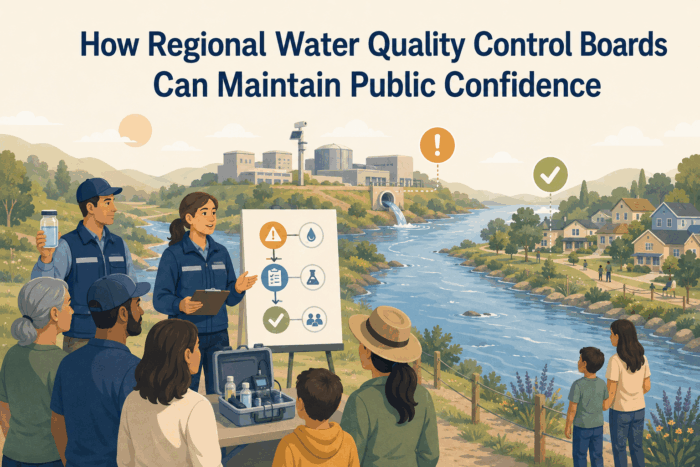
Communicating Repeat Violations and Ongoing Enforcement: How Regional Water Quality Control Boards Can Maintain Public Confidence
Repeat violations create a different communication challenge than a single enforcement action. When a regional water quality control board has already cited, ordered, fined, or otherwise addressed a regulated entity and similar problems continue, the public may begin to question whether enforcement is working. Residents, local governments, advocacy organizations, downstream communities, and other stakeholders may see recurring violations as evidence that the agency lacks sufficient authority, is not using its authority effectively, or is allowing a regulated entity too much time to return to compliance.
For the board, the communication problem is more complex than explaining that enforcement is still underway. Ongoing cases often involve multiple procedural stages, corrective requirements, monitoring obligations, compliance schedules, negotiations, technical work, and additional enforcement options that may depend on what happens next. Public audiences usually do not see those layers. They see the recurrence of a familiar problem and reasonably want to know why it is happening again, what the board has already required, what remains incomplete, and what additional consequences may follow.
This gap between regulatory process and public perception can become particularly significant in water quality enforcement because environmental conditions may be visible, recurring, or connected to places people depend on directly. Repeated discharges, permit exceedances, monitoring failures, wastewater problems, stormwater violations, or other compliance issues can affect public confidence even when technical conditions vary from one incident to another. If the board communicates only when a new penalty is issued, communities may interpret the periods between actions as inactivity.
Regional water quality control boards therefore need a communication approach that makes continuity visible. The public should be able to understand that enforcement is not a single event but a sequence of regulatory actions designed to achieve and maintain compliance. Communication should show what the board required previously, whether those requirements were met, what new or continuing problems have been identified, and how the current response relates to the earlier case.
This does not mean every recurring violation should be framed as proof that prior enforcement failed. A regulated entity may have completed some corrective actions while another issue remains unresolved. A compliance schedule may still be active. New facts may emerge after an earlier action. A subsequent violation may involve a different permit condition or operational problem. Public communication should preserve these distinctions rather than presenting every new enforcement development as identical to the last.
At the same time, boards should avoid language that makes recurrence appear routine or inconsequential. When violations continue, communities need evidence that the agency recognizes the pattern and is evaluating it appropriately. Simply repeating the same explanation used for the first violation can weaken credibility because it does not address the question now driving public concern: why is this still happening?
Maintaining public confidence therefore requires more than announcing additional penalties. Regional water quality control boards need to communicate the enforcement trajectory. That means explaining what has changed, what has not, what obligations remain, what the board is monitoring, and what the next regulatory steps may be within the bounds of its authority. When this trajectory is visible, the public is better able to understand ongoing enforcement as a structured process rather than a series of disconnected reactions.
Explain the Difference Between a Repeat Violation and a Continuing Enforcement Matter
 Public communication should begin by clarifying what has actually repeated. A new violation may represent the recurrence of the same prohibited condition, a failure to complete an earlier corrective requirement, a different violation identified during continuing oversight, or an additional problem discovered while an existing enforcement matter remains open. These situations can look similar from outside the agency but may have different regulatory implications.
Regional water quality control boards should describe the relationship between the current issue and previous enforcement clearly. If the same requirement has been violated again, that recurrence should be stated accurately. If the board is continuing to enforce an earlier order because required work remains incomplete, the communication should explain that the matter is still active rather than presenting the next action as an entirely new case. If a separate violation has emerged, the public should understand that distinction as well.
This precision matters because the phrase “repeat violation” carries strong implications. Communities may interpret it as evidence that the regulated entity ignored the agency or that previous penalties had no effect. In some cases, that interpretation may be supported by the record. In others, the facts may show partial compliance, continuing corrective work, or a new issue arising within a broader compliance problem. Communication should allow the public to understand the actual regulatory pattern.
The board should also make clear whether earlier obligations remain in effect. A new enforcement action does not necessarily replace a previous order, compliance schedule, monitoring requirement, or corrective obligation. If several requirements are operating simultaneously, public materials should explain that structure in understandable terms.
This helps reduce one of the most common sources of confusion in ongoing enforcement. Residents may see multiple notices, orders, hearings, penalties, or staff reports and assume that the agency is repeatedly restarting the process. In reality, those actions may represent different stages of a continuing case. Showing that progression makes the board’s regulatory response easier to understand.
How Environmental Protection Agencies Can Make Communication Central to Regulatory Effectiveness, Public Trust, and Community Health
This article is part of our series on strategic communication for Environmental Protection Agencies, Environmental Compliance Agencies, and state and local environmental departments. To learn more and to see the parent article, which links to other content just like this, click the button below.
Make the Enforcement Timeline Visible
When violations recur over months or years, the public often loses track of what the agency has already done. Individual enforcement announcements may be accurate on their own, but they can leave audiences without a coherent view of the overall case. Regional water quality control boards can maintain confidence by communicating the timeline of significant enforcement and compliance milestones.
A useful timeline should focus on the moments that materially affect public understanding. These may include the initial finding, issuance of an order, establishment of a corrective schedule, significant monitoring results, subsequent violations, penalties, amendments to requirements, completion of major corrective actions, or other formal developments. The goal is not to reproduce every administrative event but to make the trajectory understandable.
This timeline should distinguish between agency actions and regulated-party obligations. The public should be able to see what the board required and whether the regulated entity completed, partially completed, missed, or remains subject to those requirements. That distinction helps communities evaluate ongoing enforcement based on more than the number of penalties issued.
Timelines are particularly useful when corrective work takes substantial time. Infrastructure improvements, treatment modifications, technical studies, monitoring programs, or other compliance measures may involve multiple stages. If the board explains only the final deadline, the public may interpret the period before completion as inactivity. Identifying meaningful interim obligations and agency review points can provide a more accurate picture of progress.
At the same time, the board should avoid presenting projected milestones as guaranteed outcomes. Corrective schedules can change through formal processes, technical conditions may evolve, and new information may affect implementation. Communication should clearly distinguish established deadlines from anticipated activities or unresolved future steps.
The value of a timeline is not simply chronological clarity. It demonstrates that the agency is tracking the matter over time and allows the public to understand where the current enforcement action fits within a longer regulatory response.
Explain What Previous Enforcement Was Intended to Accomplish
When violations continue after earlier enforcement, the public may assume that previous actions were ineffective. Regional water quality control boards should explain what those earlier actions were designed to accomplish and whether those objectives have been achieved.
An earlier order may have required specific corrective measures, monitoring, reporting, operational changes, or a compliance schedule. A penalty may have addressed past noncompliance while separate requirements focused on preventing recurrence. A settlement may have resolved certain violations while leaving continuing obligations in place. These distinctions are important because the effectiveness of an enforcement action cannot always be judged solely by whether another violation later occurs.
Boards should communicate whether the regulated entity completed the earlier requirements and whether the current issue involves those same obligations. If corrective work was completed but another compliance problem emerged, the public should understand that difference. If an entity failed to complete required actions and the violation continued, that failure should also be stated clearly when supported by the record.
This explanation can help communities understand why enforcement may escalate. Additional penalties, amended orders, stronger corrective requirements, or other actions may reflect the board’s assessment that previous measures did not produce sufficient compliance. When escalation occurs, communication should connect the new action to the documented history rather than presenting it as an isolated decision.
The board should also avoid suggesting that monetary penalties alone are expected to resolve ongoing water quality problems. Penalties serve important enforcement purposes, but lasting compliance may depend on corrective work, operational changes, monitoring, infrastructure, management systems, or other case-specific requirements. Public communication should make those mechanisms visible.
This broader explanation allows the public to evaluate enforcement according to what the board is actually requiring and whether those requirements are producing progress.
Distinguish Progress Toward Compliance From Full Compliance
One of the most important distinctions in ongoing enforcement is the difference between progress and completion. A regulated entity may be meeting interim milestones, improving performance, or completing portions of corrective work while still remaining out of compliance with one or more requirements.
Regional water quality control boards should communicate this status carefully. Describing partial progress as though the problem has been resolved can damage credibility if violations continue. Conversely, ignoring meaningful progress can make the agency appear unwilling to acknowledge changes in the regulated entity’s performance.
A more precise approach identifies what has been completed and what remains outstanding. If monitoring has improved but permit exceedances continue, both facts can be stated. If a corrective project has reached an interim milestone but final compliance is not yet achieved, the communication should preserve that distinction.
This balanced description supports public confidence because it demonstrates that the board is evaluating the case based on evidence rather than using communication to either defend or criticize the regulated entity. It also helps residents understand why ongoing enforcement may continue even when some improvements have occurred.
Communicate Escalation Without Creating the Impression of Arbitrary Punishment
Repeat violations often lead to questions about whether enforcement should become more severe. Communities may ask why the board has not imposed a larger penalty, suspended a permit, or taken another significant action. Regulated entities may argue that additional enforcement is disproportionate when they are already working under existing requirements. Regional water quality control boards need communication that explains escalation as part of a regulatory process rather than as a response to public pressure.
When the board takes a stronger action, public communication should identify the factual and procedural basis for that decision within the limits of what can appropriately be disclosed. Continued noncompliance, failure to meet required milestones, additional violations, or other documented developments may justify a different response than the one taken earlier. The communication should connect the escalation to those developments.
Boards should avoid language suggesting that escalating enforcement is intended primarily to demonstrate toughness. The purpose is to achieve compliance and protect water quality within the authority provided by the applicable regulatory framework. Penalties and other consequences should be explained in that context.
The same principle applies when the board does not escalate as much as some members of the public expect. There may be procedural, evidentiary, technical, or legal reasons why a particular enforcement option is not appropriate at that stage. The agency should explain what it can about its current action without speculating about future decisions or disclosing protected deliberations.
Consistency is essential. If the board communicates escalation as a predictable response to documented compliance history and case-specific facts, communities and regulated entities are more likely to see the enforcement program as structured rather than reactive.
Show That Ongoing Enforcement Includes Ongoing Oversight
Public confidence can weaken when enforcement is visible only through formal actions separated by long periods of silence. Regional water quality control boards should explain, where appropriate, what continuing oversight occurs between major enforcement milestones.
Ongoing oversight may include review of monitoring results, required reports, compliance documentation, inspections, technical submittals, corrective progress, or other activities within the board’s authority. Not every case will involve all of these functions, and communication should describe only those that actually apply.
Making oversight visible does not mean publishing every staff action. The objective is to help the public understand that the board’s involvement continues after an order or penalty is issued. A concise explanation of what the regulated entity must submit and what the board continues to review can provide important context during periods when no new enforcement announcement is necessary.
This is particularly useful when compliance schedules extend over time. Residents may reasonably ask why the agency has not taken another public action while a problem remains unresolved. Explaining that the board is monitoring required milestones or evaluating continuing performance can help distinguish regulatory oversight from inaction.
Boards should also communicate when new information changes the enforcement trajectory. If monitoring shows improvement, that development can be acknowledged without declaring full compliance prematurely. If performance worsens or required obligations are missed, the public should understand how that affects the board’s response.
Ongoing enforcement communication works best when it gives communities a realistic view of regulatory oversight. The agency does not need to create constant publicity around the case, but it should provide enough continuity that the public can understand how the board is tracking compliance and responding when conditions change.
Maintain Credibility by Avoiding Both Defensive and Alarmist Communication
Repeat violations create pressure from opposite directions. Agencies may become defensive when communities question whether enforcement is effective, or they may use increasingly strong language to demonstrate that they recognize the seriousness of the problem. Both reactions can weaken communication if they move beyond the established facts.
Regional water quality control boards should remain focused on the enforcement record. Communication should explain what has occurred, what the board previously required, what has been completed, what remains unresolved, and what the current action does. It should not attempt to prove institutional competence through rhetoric.
Defensive communication can make legitimate public questions appear unwelcome. Residents asking why violations continue are often seeking evidence that the agency understands the pattern and has a plan for addressing it. A factual explanation of the enforcement trajectory is more effective than emphasizing how much work staff have performed without connecting that work to outcomes.
Alarmist language creates a different risk. If every repeat violation is described in the strongest possible terms, the agency may imply environmental or public health consequences that the evidence does not establish. Stronger language should be reserved for circumstances supported by the technical and regulatory record.
Public confidence depends on the board’s ability to communicate both persistence and proportion. The agency should demonstrate that recurring noncompliance matters while remaining precise about what is known, what is being required, and what remains under review.
When regional water quality control boards communicate ongoing enforcement as a visible sequence of requirements, oversight, progress, deficiencies, and regulatory responses, the public gains a more realistic basis for evaluating whether the compliance process is moving forward. That clarity is essential when the underlying problem cannot be resolved through a single order or penalty and the credibility of the enforcement program depends on what the agency does over time.
Explain Why Ongoing Enforcement Can Take Time Without Making Delay Sound Acceptable
Repeat violations often create frustration because the public may see continuing problems while the regulatory process appears to move slowly. Regional water quality control boards need to explain why enforcement can extend over time without suggesting that delay is routine, harmless, or beyond agency concern. The communication challenge is to distinguish between a structured compliance process and a lack of progress.
Some enforcement matters require technical evaluations, corrective planning, infrastructure changes, monitoring, hearings, negotiations, or other formal steps before full compliance can be achieved. These processes can legitimately take time, particularly when the underlying issue cannot be corrected immediately. Public communication should explain the sequence of required actions and the role each step plays in the enforcement process.
At the same time, boards should avoid using complexity as a blanket explanation for prolonged noncompliance. Communities may reasonably question why a problem continues after multiple actions have already occurred. If deadlines have been extended, milestones missed, or corrective work delayed, the agency should explain those developments directly when the record allows it. General statements about regulatory complexity are unlikely to maintain confidence if the public can see that specific commitments have not been met.
The most useful communication identifies what is happening now. Residents should be able to understand whether the regulated entity is completing required work, whether the board is reviewing submittals, whether additional enforcement is under consideration, or whether a formal compliance schedule remains active. This gives the public a more concrete basis for evaluating the pace of the case.
Boards should also distinguish between time needed to achieve a technical solution and time required to reach a regulatory decision. These may be separate issues. A corrective project may take months or years to complete, while the board may still be able to establish interim requirements, monitoring, reporting, or other enforceable obligations during that period.
When the agency communicates these distinctions clearly, it can acknowledge the public’s concern about delay while showing that the matter remains subject to active oversight.
Keep the Public Focused on Compliance Outcomes, Not Enforcement Frequency
A recurring violation can create pressure for increasingly visible enforcement actions. Communities may equate more penalties, more hearings, or more public announcements with stronger regulatory performance. Regional water quality control boards should communicate that the ultimate measure of enforcement is whether compliance improves and water quality requirements are met, not simply how often the agency issues new actions.
This distinction matters because frequent enforcement activity can coexist with limited progress if the underlying compliance problem remains unresolved. Conversely, a period with fewer public actions may still involve substantial technical oversight, monitoring, corrective work, or implementation of an existing order. Public communication should help residents understand what outcomes the agency is seeking and how current actions contribute to those outcomes.
Boards should therefore connect each significant enforcement development to the compliance objective it is intended to advance. If a new penalty responds to missed requirements, the communication should explain that relationship. If an amended order establishes additional corrective milestones, the public should understand what those milestones are intended to accomplish. If the agency is continuing oversight under an existing action, that continuity should be visible.
This outcome-oriented framing also helps prevent enforcement communication from becoming performative. The board does not need to demonstrate seriousness through a constant stream of announcements if the regulatory process is already producing measurable progress. What matters is whether the regulated entity is moving toward sustained compliance and whether the agency is responding appropriately when that progress stalls.
The same principle applies when public frustration remains high despite technical improvement. Agencies should not assume that increased communication volume will resolve distrust if the public does not understand what has actually changed. Clear explanations of completed corrective actions, improved performance, remaining deficiencies, and unresolved obligations can provide a more credible picture than repeatedly restating that enforcement continues.
Public confidence is strengthened when the board demonstrates that enforcement activity is tied to specific regulatory outcomes rather than visibility alone.
Explain Interim Milestones as Part of Accountability
Long compliance schedules can be difficult for the public to evaluate because final compliance may be far in the future. Regional water quality control boards can make these cases more understandable by communicating meaningful interim milestones.
These milestones may involve completion of technical studies, installation or improvement of controls, submission of required plans, changes in operations, monitoring performance, or other steps established through the applicable regulatory process. The specific milestones should come from the case record and should not be created solely for communication purposes.
Public information should explain why these interim steps matter. A milestone is more than an administrative deadline when it represents measurable progress toward correcting the underlying problem. When the board identifies these points clearly, residents gain a way to assess whether the compliance process is moving forward before the final outcome is reached.
Agencies should also communicate missed milestones when they materially affect the enforcement trajectory. If a required step is not completed on time, the public should understand whether the board has responded and what the delay means for subsequent obligations.
Interim accountability can reduce the all-or-nothing perception that nothing has happened until full compliance is achieved. It gives communities a more accurate view of progress while preserving the distinction between partial completion and final resolution.
Communicate New Violations in the Context of the Existing Compliance History
When another violation occurs during an active enforcement matter, the public is likely to view it through the history of the case. Regional water quality control boards should acknowledge that history rather than communicating the new issue as though it occurred in isolation.
The public should be able to understand whether the new violation is related to the same regulatory requirement, whether it occurred while corrective obligations were underway, and whether it changes the board’s assessment of compliance. This does not mean every new incident should be described as evidence that the entire enforcement strategy has failed. It means the relationship between the new event and the existing record should be clear.
Context is particularly important when several violations differ in nature. A monitoring failure, permit exceedance, reporting deficiency, or discharge violation may all occur within the same broader case but carry different significance. Combining them into one generalized description of repeated noncompliance can obscure the regulatory distinctions that matter.
Boards should also avoid allowing the cumulative history to turn every new action into rhetorical escalation. If the case record supports stronger enforcement, the communication can explain that. If the latest issue is narrower or materially different, the agency should preserve that distinction even if public frustration is already high.
A clear compliance history can help the public see how the board’s response evolves over time. Earlier actions establish the baseline, subsequent violations show where compliance has not been maintained, and new requirements or penalties demonstrate how the agency is responding to the updated record.
This cumulative explanation is more useful than presenting each action as a standalone event because it allows communities to understand the logic of ongoing enforcement.
Explain What the Board Is Monitoring Between Major Public Actions
One of the most important ways to maintain confidence during ongoing enforcement is to make invisible oversight more understandable. Regional water quality control boards may be reviewing monitoring data, technical reports, compliance certifications, corrective schedules, sampling results, or other required information between major enforcement actions. The public may not know this work is occurring unless the agency explains it.
Boards should identify the types of information that are central to determining whether compliance is improving. This does not require publication of every technical submission or staff review. It requires enough explanation that residents understand what the board is watching and why those indicators matter.
For example, if compliance depends on meeting discharge limits, public communication can explain that ongoing monitoring is used to evaluate performance. If an order requires specific corrective work, the board can identify the major milestones associated with that work. If progress depends on technical studies or plans, the agency can explain where those submittals fit within the broader process.
This visibility is especially useful during periods when no new penalty has been issued. Communities may interpret silence as inactivity if they do not know that existing requirements remain in force and are being reviewed. A concise status update can clarify that oversight continues even when another formal action is not immediately necessary.
Boards should also be careful not to overstate what monitoring proves. Improved performance during one period may be encouraging without demonstrating sustained compliance. Similarly, a single adverse result may not by itself define the entire enforcement status. Communication should explain trends and regulatory significance only to the extent supported by the record.
Ongoing oversight becomes more credible when the public knows what the board is evaluating and how that information influences future decisions.
Prepare for Community Frustration When Enforcement Has Been Ongoing for Years
Long-running enforcement matters can create a distinct form of public fatigue. Communities may have heard repeated explanations, attended meetings, reviewed updates, and watched deadlines shift while the underlying concern remains unresolved. In these situations, simply restating the enforcement process may no longer be enough to maintain confidence.
Regional water quality control boards should recognize when a case has entered this stage and adjust communication accordingly. Residents may need a clearer account of what has happened since the last major update, what has materially improved, what remains unresolved, and why the current strategy is expected to produce a different or continued result.
The agency should avoid repeating generic assurances that the matter is being taken seriously. Long-running cases require evidence of movement. This may include completed milestones, changed permit conditions, additional enforcement actions, improved monitoring results, ongoing deficiencies, or other documented developments.
Boards should also acknowledge uncertainty where appropriate. Some corrective strategies may depend on future technical performance or implementation that cannot be guaranteed. Communicating that uncertainty honestly can be more credible than projecting confidence that the record does not support.
Community frustration can also increase when residents perceive that agencies provide more detailed information to the regulated entity than to the public. While certain technical, legal, or confidential communications may appropriately remain outside public materials, boards can still provide a clear public summary of the major enforcement trajectory and current status.
The goal is not to persuade frustrated communities that the process is satisfactory. It is to give them enough accurate information to understand what the board has done, what remains to be done, and how the agency is evaluating whether the current approach is working.
Keep Regulated Entities and Public Audiences Grounded in the Same Enforcement Record
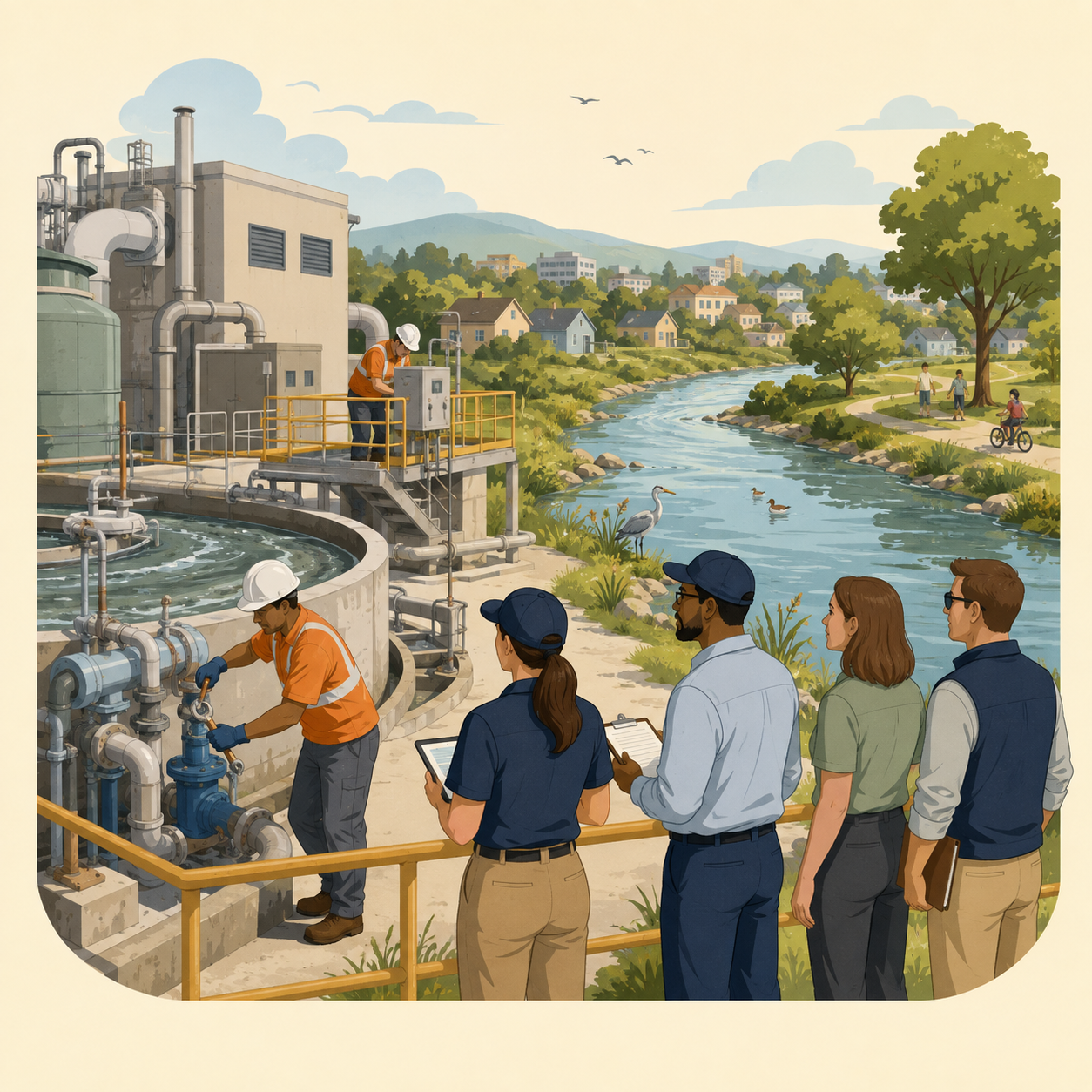 Repeat violations can create competing narratives. Regulated entities may emphasize investments, corrective work, or operational improvements. Community members may emphasize continuing violations, delayed deadlines, or unresolved environmental concerns. Regional water quality control boards should avoid becoming an advocate for either narrative and instead anchor communication in the established enforcement record.
This means acknowledging documented progress without allowing progress to substitute for compliance. It also means acknowledging continuing violations without implying conclusions beyond what the record supports. The board’s role is to explain the regulatory status accurately.
Consistency across audiences is important. Businesses should not receive one description of the enforcement status while communities hear a materially different one. The level of technical detail may vary, but the core facts about obligations, deadlines, compliance status, and ongoing oversight should remain compatible.
This shared factual foundation can reduce conflict even when stakeholders continue to disagree about whether enforcement is sufficient. The regulated entity can see that agency communication acknowledges documented corrective work. The public can see that the agency is not treating partial progress as full resolution.
The board should also maintain clear boundaries when external parties make broader claims about the case. Businesses, advocacy organizations, local officials, or community groups may characterize the enforcement history in ways that support their own positions. The board does not need to rebut every public statement, but it should maintain authoritative information that allows audiences to compare those claims with the actual regulatory record.
Over time, this disciplined approach helps preserve the board’s institutional role. Regional water quality control boards maintain confidence not by eliminating disagreement around difficult enforcement matters, but by ensuring that the agency itself remains a reliable source for understanding what has occurred, what is required, and where compliance stands.
Communicate the Difference Between Persistent Noncompliance and Recurring Incidents
Repeat violations are not always the result of one continuous compliance failure. In some cases, the same type of violation may occur intermittently after periods of improved performance. In others, the underlying condition may never have been fully corrected. Regional water quality control boards should distinguish these patterns because they affect how the public interprets both the seriousness of the problem and the effectiveness of previous enforcement.
Persistent noncompliance suggests that the regulated entity has not achieved the required standard over an extended period. Recurring incidents may involve separate events that arise after partial or temporary improvement. From a community perspective, both can appear to be the same problem happening again. From a regulatory perspective, however, the history may be materially different.
Communication should therefore explain whether the board is addressing an unresolved condition, a new occurrence of a previously addressed problem, or a pattern that has re-emerged after an interval of compliance. This context can help residents understand why the agency may use different enforcement approaches at different points in the case.
The distinction also matters when discussing previous corrective actions. A regulated entity may have completed required work that addressed one cause of noncompliance without eliminating every potential pathway for future violations. If another incident occurs, the board should explain whether the earlier corrective action failed, whether a different condition contributed to the new problem, or whether additional analysis is still underway.
Avoiding this distinction can create two communication risks. The agency may unintentionally minimize a persistent problem by describing every event as new, or it may imply that previous enforcement achieved nothing when the record shows that some corrective measures were effective. Neither approach gives the public an accurate view of the compliance history.
Regional water quality control boards maintain credibility when they explain patterns precisely enough that communities can see how the current situation differs from, or continues, what came before.
Show How Escalating Enforcement Relates to Compliance History
When violations continue, public expectations often shift from asking whether the agency is acting to asking whether the agency is acting strongly enough. Regional water quality control boards should be prepared to explain how enforcement decisions evolve as the compliance record develops.
Escalation may involve additional penalties, amended orders, stronger corrective requirements, shorter deadlines, increased monitoring, or other actions available within the applicable regulatory framework. Communication should connect these developments to the documented compliance history rather than presenting them as reactions to public pressure.
If a regulated entity has missed required milestones, failed to sustain compliance, or committed additional violations, the public should be able to understand how those developments affected the board’s response. Similarly, if the board maintains an existing enforcement structure rather than issuing a new action, communication should explain what obligations remain active and why the current approach continues to be relevant.
This context is important because communities may see escalation primarily through monetary penalties. A higher fine can appear to be the most significant response, even when an amended order or new corrective requirement has a greater effect on future compliance. Boards should explain the full enforcement package rather than allowing the penalty amount to define the seriousness of the response.
Regional boards should also avoid implying that escalation follows an automatic formula unless the applicable regulatory structure actually operates that way. Enforcement decisions may depend on case-specific facts, procedural requirements, the nature of the violation, compliance history, corrective efforts, and other considerations. Public communication should make clear that repeat violations matter without reducing complex enforcement decisions to a simple sequence of increasingly severe punishments.
A well-explained enforcement progression helps communities see that the board is learning from the compliance history and adjusting its response when warranted.
Explain What Continued Oversight Is Intended to Detect
Ongoing enforcement often depends on monitoring whether corrective actions are working over time. Regional water quality control boards should explain this oversight function because communities may otherwise expect every period of improved performance to result in immediate closure of the case.
A regulated entity may be required to demonstrate sustained compliance across multiple reporting periods, complete specified corrective measures, maintain particular operational practices, or submit additional technical information before the board determines that the enforcement matter has reached an appropriate endpoint. Public communication can help explain why continued observation is necessary even after initial improvement.
This is especially important when water quality performance varies over time. A short period without violations may represent genuine progress, but it may not establish that the underlying problem has been fully corrected. The board should distinguish between encouraging results and sustained compliance.
The same principle applies to corrective projects. Installation or completion of a technical improvement may be a significant milestone, but the agency may still need to evaluate whether the change produces the required performance. Public communication should explain the difference between completing the corrective action and demonstrating that it has achieved the intended compliance outcome.
Making this oversight logic visible can reduce the perception that the board is unnecessarily prolonging a case. It also prevents the opposite problem, where communities interpret an early sign of improvement as evidence that the matter is completely resolved.
Boards should remain careful not to predict future compliance based on limited information. The most credible communication states what has been observed, what remains subject to monitoring, and what standards or milestones still need to be met.
Communicate Technical Progress Without Losing the Public in Technical Detail
Repeat water quality violations often involve technical information that is essential to regulatory decision-making but difficult for general audiences to interpret. Monitoring results, permit limits, treatment performance, sampling data, corrective engineering, or operational adjustments may determine whether compliance is improving. Regional water quality control boards need to explain this progress without converting public updates into technical reports.
The public does not necessarily need every measurement to understand whether the situation is improving. Communication should identify the indicators that matter and explain what they show in relation to the applicable requirement. If performance has improved but remains outside compliance limits, both facts should be stated. If results vary significantly, the agency should avoid presenting a selective period as though it represents a stable trend.
Technical explanations should also preserve important uncertainty. Staff may still be evaluating whether a corrective measure is responsible for observed improvement, whether performance will remain stable, or whether additional work is required. Public communication should distinguish established findings from preliminary interpretations.
Regional boards can also help audiences understand why certain technical milestones matter. Completion of a study, installation of treatment equipment, modification of operations, or submission of monitoring data may not appear significant to the public unless the agency explains how that action fits into the compliance process.
The goal is not to eliminate technical complexity. It is to make the regulatory meaning of that complexity understandable. A community should be able to determine whether the regulated entity is improving, whether violations continue, and what the board is still evaluating without needing specialized expertise.
When technical communication is structured around those questions, it can support public confidence rather than overwhelm it.
Maintain Public Confidence When Additional Violations Occur During Corrective Work
One of the most difficult moments in an ongoing enforcement case occurs when another violation happens while the regulated entity is already completing corrective actions. Communities may reasonably conclude that the corrective strategy is not working, while the regulated entity may argue that the project has not yet been fully implemented.
Regional water quality control boards should address this tension directly. Communication should explain where the corrective work stands, what the new violation indicates, and whether the event changes the board’s assessment of the existing compliance strategy.
A new violation during implementation does not automatically prove that the entire corrective approach is ineffective. The action may not yet be complete, or the violation may involve a condition not addressed by the current work. At the same time, the agency should not treat continuing violations as unremarkable simply because corrective work is underway.
The public should understand whether the board considers the incident consistent with an unresolved condition already being addressed or whether it reveals a new problem requiring additional action. This distinction is particularly important when implementation schedules are long and communities have already experienced repeated incidents.
Boards should also explain whether the new violation affects existing deadlines or obligations. If additional enforcement is initiated, that relationship should be made clear. If the board determines that the current corrective framework remains appropriate, communication should explain what evidence or procedural context supports that decision without becoming defensive.
This balanced approach allows the agency to acknowledge the seriousness of recurrence while preserving the technical and procedural distinctions necessary for fair regulatory decision-making.
Build a Reliable Public Status Structure for Long-Running Cases
Long-running enforcement matters can become difficult for the public to follow because information accumulates across notices, orders, meeting materials, enforcement databases, technical reports, and older public updates. Regional water quality control boards can strengthen confidence by creating a clear public status structure for significant cases that continue over extended periods.
A useful status summary should answer several basic questions. What requirement or condition is involved? What has the board already required? What corrective work has been completed? What remains outstanding? What violations or deficiencies are continuing? What milestones come next? What is the board currently reviewing?
This information does not need to replace formal records. It should function as a navigational layer that helps the public understand the current position of the case and locate authoritative documents when greater detail is needed.
Status information should be updated when significant developments occur. A new penalty, missed milestone, completed corrective action, amended schedule, changed compliance status, or final resolution may all warrant revision. Leaving an old summary unchanged while the formal record moves forward can create confusion and undermine the value of the public resource.
Boards should also preserve historical transparency. Updating the current status should not erase the earlier enforcement history. Communities may need to understand how the matter reached its present stage. A clear chronology can provide that context while ensuring that the latest information is not buried beneath older materials.
This structure is especially useful when leadership, staff, or community participants change over the life of the case. New audiences should not need to reconstruct years of enforcement history from scattered records before understanding what is happening now.
Use Consistent Communication to Reduce the Perception of Unequal Enforcement
Repeat violation cases often invite comparison with other regulated entities. Communities may ask why one discharger appears to receive repeated opportunities to correct problems while another faces faster or more severe consequences. Regulated entities may make the opposite argument, claiming that their case is receiving unusually aggressive treatment.
Regional water quality control boards should not attempt to resolve these concerns through simplistic comparisons. Different cases can involve different permits, legal authorities, environmental conditions, compliance histories, corrective actions, procedural stages, and technical circumstances. Public communication should acknowledge that enforcement decisions are case-specific while demonstrating that the board uses consistent principles in explaining them.
Consistency can be shown through communication structure. Significant cases should generally explain the requirement involved, the compliance history, corrective obligations, current status, and continuing oversight. Using comparable categories of information across cases allows the public to understand differences without assuming that those differences reflect arbitrary treatment.
Boards should also avoid making public comparisons that imply two cases are equivalent when the regulatory record does not support that conclusion. If asked why enforcement outcomes differ, the agency can explain that each action depends on the applicable facts and authority and direct audiences to the public record where appropriate.
The communication objective is not to prove that every case receives the same outcome. Environmental enforcement is not credible when consistency is defined as identical penalties or schedules regardless of circumstances. The objective is to demonstrate that the board’s decisions are grounded in regulatory factors rather than the prominence of the regulated entity or the intensity of public attention.
Over time, predictable and disciplined communication can help reinforce that distinction. Communities may still disagree with particular enforcement outcomes, but they have a clearer basis for understanding how the board describes compliance history, escalation, corrective progress, and ongoing oversight.
Maintaining public confidence during repeat violations ultimately depends on showing that enforcement is cumulative, evidence-based, and connected to sustained compliance. Regional water quality control boards do not need to promise that another violation will never occur. They need to demonstrate that each significant development is incorporated into the regulatory record, evaluated in relation to what came before, and communicated clearly enough that the public can understand how the agency’s response is evolving.
Integrate Ongoing Enforcement Communication Into Case Management
Long-running enforcement matters are easier to communicate when public information is connected directly to the way the case is managed internally. Regional water quality control boards may have enforcement staff, technical specialists, legal counsel, permitting personnel, inspectors, leadership, and communications staff interacting with the same matter at different stages. If public communication is developed separately from those operational processes, important changes in compliance status, corrective milestones, deadlines, or enforcement posture may not be reflected promptly.
Boards should establish communication checkpoints at significant moments in the life of an ongoing case. These can include new violations, missed milestones, completed corrective actions, modified orders, revised compliance schedules, significant monitoring results, additional penalties, or other developments that materially change what the public should understand. The objective is not to issue a public announcement every time staff review a document. It is to ensure that meaningful changes in the regulatory record trigger consideration of whether public information also needs to change.
This integration becomes particularly important when cases extend across months or years. Staff may become deeply familiar with the enforcement history and assume that prior public explanations remain understood. Community members may instead encounter the case intermittently and remember only the most visible incident or penalty. A current public summary helps close that gap.
Internal coordination should also clarify who is responsible for maintaining public-facing status information. Without clear ownership, updates can fall between program, legal, technical, and communications functions. One team may assume another has revised the webpage or prepared a community update, while outdated information continues circulating.
A coordinated process allows the board to maintain continuity without overcommunicating. Public updates can be tied to developments that materially affect compliance, risk, corrective progress, or enforcement status rather than issued on an arbitrary schedule disconnected from the case.
Develop a Consistent Framework for Long-Running Enforcement Updates
Repeat violation cases often generate multiple public communications over time. If each update is structured differently, communities may struggle to determine what actually changed. Regional water quality control boards can improve clarity by using a consistent framework that allows audiences to compare one update with the next.
A useful structure should identify the current compliance status, significant developments since the previous update, corrective actions completed, obligations still outstanding, recent violations or deficiencies, and the next meaningful regulatory milestone. This framework should remain flexible enough to reflect the facts of each case, but consistent enough that audiences know where to look for the information they need.
The board should also distinguish clearly between historical context and new information. Long updates that repeat the entire case history every time can make it difficult to identify the current development. A concise summary of the background followed by a clear explanation of what has changed can provide stronger continuity.
Consistency also helps the agency avoid unintentionally changing the tone of the case over time. One update should not describe the same compliance condition as a serious continuing problem while another characterizes it as routine progress unless the underlying circumstances have actually changed. Shared terminology and review processes can help preserve that continuity.
Public communication should also identify whether a deadline, milestone, or obligation has changed formally. If a compliance schedule is amended, the current date should not simply replace the earlier one without context. Communities may reasonably want to know that the original milestone changed and what the new requirement is.
This does not require the board to provide detailed explanations of confidential deliberations or negotiations. It requires enough transparency that the public can follow the evolution of the case without reconstructing it from scattered records.
Coordinate Technical, Legal, and Public Communication Before High-Visibility Updates
Repeat violations can become increasingly sensitive as public frustration grows. A new exceedance, missed corrective milestone, amended order, or additional penalty may attract greater attention than a similar development earlier in the case. Regional water quality control boards should prepare significant updates through coordinated technical, legal, and communication review.
Technical staff can confirm what the available data show and what conclusions remain premature. Enforcement and legal staff can identify the procedural status, applicable obligations, and boundaries around what the board can say. Communications staff can organize that information so the public understands the significance without losing important distinctions.
This coordination is especially important when the case involves technical progress that is difficult to summarize. Improved treatment performance, changing monitoring results, partial completion of infrastructure, or revised operational controls may all affect the compliance picture. Public materials should explain the regulatory meaning of those developments rather than presenting isolated technical facts.
Legal precision matters as well. A new violation may be alleged rather than finally determined. A proposed penalty may still be subject to a formal process. A compliance schedule may be under consideration but not yet modified. Public communication should preserve those distinctions to avoid presenting anticipated outcomes as established decisions.
The same review should consider likely community questions. Residents may want to know whether the new development means water quality has worsened, whether the board believes previous corrective measures failed, or whether additional enforcement will occur. Agencies should prepare clear responses based on what the record supports and identify where the answer remains unresolved.
Coordinated review allows the board to respond with confidence without oversimplifying the case. It also reduces the likelihood that technical, legal, and public-facing descriptions diverge during periods of heightened attention.
Prepare Communication for Missed Milestones and Revised Compliance Schedules
Missed deadlines are among the most difficult developments to communicate in long-running enforcement matters. Communities may interpret a revised compliance schedule as evidence that the regulated entity is receiving repeated extensions, while the regulated entity may argue that technical realities require additional time. Regional water quality control boards should communicate these changes carefully because they can strongly influence perceptions of whether enforcement remains credible.
When a required milestone is missed, public communication should identify what was due, what occurred, and what the board has done or is evaluating in response. If the deadline is formally revised, the new schedule should be distinguished from the original requirement rather than presented as though it had always been the applicable date.
Boards should avoid describing schedule changes as routine administrative adjustments when they materially affect the path to compliance. Communities need to understand whether the change results from technical conditions, formal regulatory proceedings, changed corrective strategies, or another case-specific development that can appropriately be disclosed.
At the same time, communication should avoid implying that every schedule modification represents weakened enforcement. Some corrective actions genuinely require technical sequencing, permitting, construction, testing, or other steps that can change as implementation progresses. The relevant question is whether the revised schedule remains part of an enforceable and credible path toward compliance.
Boards should explain what accountability remains during the extended period. Interim monitoring, reporting, operational limits, temporary controls, or other requirements may continue while long-term corrective work proceeds. Making those obligations visible helps prevent the revised final date from appearing to be the only meaningful measure of agency action.
Repeated extensions require particular care. If a case has experienced several schedule changes, a new update should acknowledge that history and explain what is different about the current path. Simply publishing another date without addressing the pattern can further weaken public confidence.
Communicate Closure Criteria Before the Case Is Ready to Close
Long-running enforcement matters can also become difficult at the point when the agency begins considering whether sufficient compliance has been achieved to end heightened oversight or close a particular enforcement action. Communities that have watched years of recurring violations may be skeptical of closure, especially if they continue to associate the regulated entity with earlier problems.
Regional water quality control boards can reduce this tension by explaining, before closure occurs, what conditions or evidence are relevant to determining that the enforcement matter has reached its endpoint. These may include completion of corrective obligations, sustained compliance, required monitoring results, submission and approval of specified documentation, or other case-specific criteria established through the regulatory process.
The board should avoid suggesting that closure means the regulated entity is no longer subject to environmental requirements. Ending a particular enforcement action is different from ending ongoing permit, monitoring, reporting, or regulatory obligations. That distinction should be explicit.
Similarly, closure should not erase the enforcement history. The public record should continue to show what violations occurred, what actions the board took, and how the matter was resolved. Transparency is strongest when current compliance and historical accountability can coexist.
If some obligations continue after formal closure of one component of the case, the public should understand what remains. A corrective project may be complete while routine monitoring continues under a permit. A penalty may be resolved while operational requirements remain in place. These distinctions help communities see closure as a regulatory milestone rather than a declaration that no future problem can occur.
Clear closure criteria can also help regulated entities understand how sustained compliance will be recognized. This supports fairness by demonstrating that the board’s oversight has an identifiable objective and does not continue indefinitely without a regulatory basis.
Maintain Institutional Memory When Enforcement Cases Outlast Staff and Leadership Changes
Repeat violation cases can span enough time that agency personnel, board members, local officials, regulated-entity representatives, and community participants change before the matter is resolved. This creates a communication risk because institutional knowledge can become fragmented while the public continues to judge the agency based on the full history.
Regional water quality control boards should maintain a concise and reliable record of the enforcement trajectory that can support continuity across personnel changes. New staff should be able to understand the major violations, previous actions, corrective requirements, significant milestones, unresolved issues, and public concerns without relying solely on informal institutional memory.
Public-facing information benefits from the same continuity. Communities should not experience a complete reset in messaging when leadership changes. The agency’s explanation of the case should remain grounded in the same regulatory history even as new staff assume responsibility.
Institutional continuity also helps prevent inconsistent promises. A new representative may unintentionally characterize a deadline, corrective action, or compliance expectation differently if earlier commitments are difficult to locate. Clear internal documentation and shared communication materials reduce this risk.
Boards should also preserve context around why earlier decisions were made to the extent appropriate and supported by the public record. This can be particularly useful when later audiences question why a certain corrective pathway, schedule, or enforcement approach was chosen. A coherent record allows staff to explain how the current strategy developed without relying on personal recollection.
Long-running enforcement communication becomes more credible when it belongs to the institution rather than to individual staff members. The public should be able to depend on the board’s record even as the people responsible for administering the case change.
Use Long-Term Case Review to Strengthen Future Enforcement Communication
Repeat violation cases provide valuable lessons about how enforcement communication performs under sustained pressure. Regional water quality control boards should review significant long-running matters after major milestones or resolutions to identify where public understanding was strong and where communication repeatedly broke down.
The review can examine whether communities understood the difference between ongoing enforcement and regulatory inaction, whether corrective milestones were visible enough, whether schedule changes were communicated clearly, and whether the public could locate the current status without reconstructing years of documents. Staff can also identify where repeated media or community questions revealed gaps in the agency’s explanation.
The objective should not be to redesign communication based solely on criticism of a particular enforcement decision. Public disagreement may remain even when information is clear. The more useful focus is on recurring confusion that could have been reduced through better structure, timing, terminology, or coordination.
Boards can use these lessons to improve standard practices for future cases. This may include developing status-page templates, timeline structures, internal review protocols, escalation talking points, milestone updates, or closure communication practices that can be adapted to different enforcement matters.
Long-term review can also reveal where communication should begin earlier. A case that eventually becomes controversial may have shown signs of prolonged compliance difficulty months or years before public attention intensified. Establishing a stronger public status structure earlier can make later escalation easier to understand.
Regional water quality control boards maintain public confidence most effectively when ongoing enforcement is visible as a disciplined regulatory process rather than a sequence of isolated penalties and explanations. Integrating communication with case management, maintaining current status information, preparing carefully for missed milestones, and preserving institutional continuity allow the public to see how each new development fits within the larger compliance trajectory. That continuity becomes especially important when repeat violations test confidence in whether the regulatory system can ultimately produce sustained compliance.
Strategic Communication Support for Repeat Violations and Ongoing Enforcement
 Repeat violations place regional water quality control boards under sustained communication pressure because the agency must explain not only a new enforcement action, but also how that action fits within a longer compliance history. Internal teams may already be managing technical review, legal procedures, corrective schedules, monitoring, hearings, public inquiries, and coordination with regulated entities. External strategic communication support can help boards organize that complexity into a clearer public narrative that shows what has happened, what remains unresolved, what the board continues to monitor, and how new developments affect the enforcement trajectory.
Stegmeier Consulting Group (SCG) can support regional water quality control boards by developing long-running case communication frameworks, enforcement timelines, public status summaries, community updates, staff talking points, frequently asked questions, and milestone-based messaging that make ongoing enforcement easier to follow. SCG can also help agencies distinguish repeat violations from continuing enforcement matters, clarify the difference between progress and full compliance, explain revised schedules and missed milestones, and coordinate communication across technical, legal, enforcement, and public-facing teams. This work supports the board’s communication responsibilities without assuming any regulatory, legal, enforcement, technical, permitting, or water quality decision-making authority.
External support can be especially valuable when a case has continued for years, public frustration has increased, or multiple enforcement actions have created a fragmented public record. By strengthening continuity, message structure, case-status communication, and internal alignment, SCG can help boards communicate persistence and accountability without overstating progress or minimizing ongoing noncompliance. Connect with SCG to explore strategic communication support for repeat violations, ongoing enforcement, and long-term public confidence.
Future Trends
Public expectations around long-running environmental enforcement are likely to continue increasing as digital records, searchable enforcement databases, public meeting archives, social media, and local news make years of regulatory history easier to access. Communities will increasingly compare current agency statements with earlier promises, deadlines, penalties, and corrective schedules. Regional water quality control boards will therefore need more disciplined ways to maintain an accurate and current public record across the life of a case.
This will increase the importance of case-status communication. Rather than relying on scattered orders, meeting packets, technical reports, and enforcement notices, boards may need clearer public-facing summaries that identify current compliance status, major milestones, outstanding obligations, and recent developments. These summaries can help communities understand where the case stands without replacing formal regulatory documents.
Another emerging expectation will be greater visibility into corrective progress between enforcement actions. Communities may become less willing to accept long periods of silence when compliance schedules extend over several years. Boards will need to determine which milestones are significant enough to communicate publicly and how to explain them without creating unrealistic expectations or turning every technical development into a major announcement.
Digital transparency may also increase pressure for historical consistency. Earlier enforcement statements can remain accessible long after circumstances change. Boards will need stronger practices for updating current information while preserving historical records so that the public can distinguish what was true at an earlier stage from what is true now.
Public scrutiny of schedule extensions may also become more intense. When a compliance deadline changes, communities may expect a clear explanation of why the schedule was revised, what accountability remains during the extension, and whether the new timeline changes the board’s enforcement posture. Agencies that treat these changes as routine administrative updates may face greater skepticism.
Data may also play a larger role in communication. Monitoring trends, milestone completion, permit performance, and other measurable indicators may help boards explain progress more clearly. The challenge will be translating technical information into meaningful public context without oversimplifying or overstating what the data demonstrate.
Over time, regional water quality control boards are likely to benefit from treating long-running enforcement communication as an ongoing public information system rather than a sequence of individual announcements. Consistent status updates, clear timelines, current enforcement summaries, and disciplined communication around milestones can help preserve confidence even when full compliance takes substantial time.
Conclusion
Repeat violations test public confidence because they force communities to evaluate whether earlier enforcement actions produced meaningful change. Regional water quality control boards cannot maintain credibility by simply issuing another penalty or repeating that enforcement remains ongoing. They need to show how each new development fits within the broader compliance history and what the agency is doing to move the regulated entity toward sustained compliance.
This requires precision. Boards should distinguish between persistent noncompliance, recurring incidents, new violations, incomplete corrective work, and active enforcement under existing orders. They should explain what previous actions were intended to accomplish, what has been completed, what remains outstanding, and whether the current response represents continuation, escalation, or a change in strategy.
Long-running cases also require visible milestones. Communities need ways to understand whether the process is moving forward before final compliance is achieved. Interim requirements, monitoring results, corrective work, revised schedules, and continuing oversight can provide that context when communicated accurately.
At the same time, boards should avoid overstating progress. Partial completion is not the same as full compliance, and temporary improvement does not necessarily demonstrate sustained performance. Public confidence is strengthened when agencies acknowledge both documented progress and continuing deficiencies.
The most credible communication also remains anchored in the enforcement record rather than public pressure. Communities and regulated entities may disagree about whether the board is acting quickly or aggressively enough, but the agency should remain a reliable source for understanding what has happened, what is required, and what comes next.
Regional water quality control boards maintain confidence when they make enforcement continuity visible. The public does not need every technical or legal detail, but it does need a clear account of the compliance trajectory. When that trajectory is understandable, ongoing enforcement is more likely to be seen as a structured process of accountability rather than an endless cycle of violations and penalties.
Stegmeier Consulting Group’s Strategic Approach to Communication Systems
Make long-running enforcement easier to understand through clear timelines, visible milestones, and consistent compliance status communication.
Regional water quality control boards need communication systems that show how repeat violations, corrective requirements, monitoring, enforcement actions, and compliance milestones fit together over time. Stegmeier Consulting Group (SCG) helps agencies strengthen enforcement timelines, public status updates, staff messaging, community communication, and cross-functional coordination so that residents can understand what has changed, what remains unresolved, and how the board continues to pursue sustained compliance.
Use the form below to connect with our team and explore how strategic communication support can strengthen ongoing enforcement communication and public confidence.