
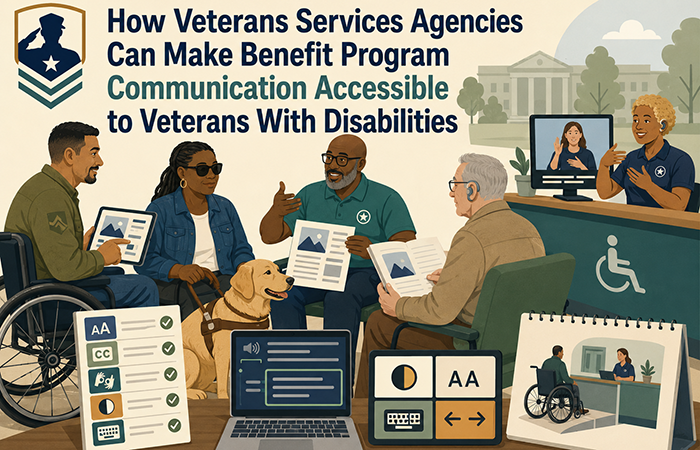
How Veterans Services Agencies Can Make Benefit Program Communication Accessible to Veterans With Disabilities
There is a particular cruelty embedded in the accessibility failures of veterans benefit program communication. The veterans most likely to encounter these failures are often the veterans with the most significant service-connected conditions, the veterans whose disability ratings reflect the most severe consequences of military service, the veterans for whom the financial, healthcare, and support resources available through veterans benefit programs are the most urgently needed. A veteran with severe traumatic brain injury who cannot navigate a PDF-formatted benefit guide because the document is not screen-reader compatible, a veteran with significant PTSD who cannot process a dense eligibility explanation because the cognitive load of the text exceeds their current processing capacity, and a veteran with a visual impairment who cannot read a printed outreach brochure because the font is too small and the contrast insufficient, are all veterans whose access to programs designed specifically for their needs is being blocked by communication that was not designed to reach them.
The accessibility failures in veterans benefit program communication are not primarily the result of indifference to the needs of veterans with disabilities. They are primarily the result of a design process that does not systematically account for the full range of the veteran population’s accessibility needs. Communications are produced by staff who can read them, on devices that can display them, in formats that work for the average user without any accessibility considerations, and the communications are then distributed to a population that includes a significant proportion of veterans whose visual, cognitive, auditory, motor, and psychological characteristics require something different from the average. The mismatch between what is produced and what the full range of the population needs is not a moral failure. It is a systems failure, one that is correctable through the deliberate integration of accessibility standards into the communication design and production process.
The veteran population is, by the nature of military service and its consequences, a population with elevated rates of disability relative to the general population. Service-connected disabilities affect veterans across a wide range of conditions and severity levels, and many of the most prevalent service-connected conditions have direct implications for how veterans receive and process communication. Traumatic brain injury affects cognitive processing, memory, attention, and reading fluency in ways that require specific communication accommodations. Post-traumatic stress disorder affects concentration, emotional regulation, and the ability to process certain kinds of content in certain kinds of contexts in ways that create specific communication barriers. Visual impairments, including those caused by blast injuries and other combat-related causes, require communication in accessible digital formats and in print with appropriate size and contrast specifications. Hearing impairments, the most prevalent service-connected disability in the veteran population, require captioned audio and video content and visual rather than auditory communication in live settings. Physical and motor disabilities may require communication interfaces that are navigable without fine motor precision.
This article provides a comprehensive framework for making veterans benefit program communication accessible across the full range of disability types most prevalent in the veteran population. It covers the specific accessibility requirements that each major disability category creates for different communication formats, the practical standards for website accessibility that serve veterans with visual, cognitive, and motor disabilities, the PDF and digital document standards that ensure downloaded benefit guides are accessible to screen readers and other assistive technologies, the form design standards that make application processes navigable for veterans with cognitive and motor disabilities, the print communication standards that serve veterans with visual impairments, and the in-person communication accommodations that make face-to-face agency interactions accessible to veterans with a range of disabilities. Throughout, the framework is grounded in the recognition that accessibility is not an accommodation for an exceptional minority but a communication quality standard that serves the full range of the veteran population the agency exists to serve.
The legal and ethical dimensions of accessibility in veteran benefit communication are also important contexts for this discussion. Federal law, including Section 508 of the Rehabilitation Act and the Americans with Disabilities Act, establishes legal requirements for accessibility in federal and federally supported communications. State laws create additional requirements in many jurisdictions. Veterans services agencies that produce communications that do not meet these legal standards are not only failing to serve veterans with disabilities but are potentially operating in violation of applicable law. Beyond the legal dimension, the ethical obligation to serve all veterans equitably requires that agencies address accessibility as a communication design priority rather than as a compliance checkbox, because compliance-level accessibility is often insufficient to produce genuine access for veterans whose disabilities present communication challenges that minimum standards do not fully address.
Understanding the Disability Landscape in the Veteran Population
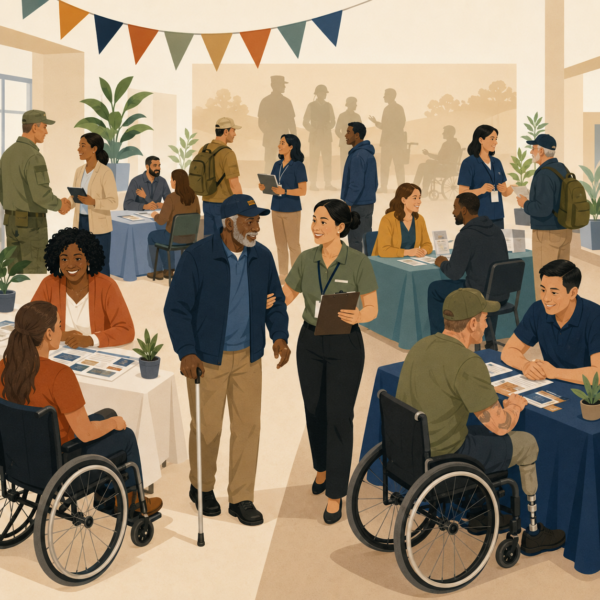 Designing accessible communications for veterans requires a specific understanding of the disability landscape in the veteran population rather than a generic understanding of disability accessibility. The veteran population’s disability profile is shaped by the specific demands and hazards of military service in ways that produce a distinctive constellation of prevalent conditions. Communication accessibility standards that are designed for the general population with disability may not be fully calibrated to the specific characteristics of the most prevalent veteran disabilities, and agencies that rely on generic accessibility guidance without adaptation to the veteran context may produce communications that meet general accessibility standards while still failing the veterans whose specific conditions are most common.
Traumatic brain injury is among the most prevalent and most consequential service-connected conditions affecting veteran communication access. TBI ranges from mild concussion with transient effects to severe brain injury with permanent significant cognitive, behavioral, and physical consequences. The communication implications of TBI vary with severity but consistently include some combination of reading and processing speed reduction, working memory impairment that affects the ability to hold multiple pieces of information in mind simultaneously, attention difficulties that limit sustained engagement with complex text, word retrieval difficulties that may affect how veterans express their needs in conversations with agency staff, and executive function impairments that affect the ability to organize information, follow multi-step processes, and maintain goal-directed behavior across the extended period required to navigate a benefits application.
Post-traumatic stress disorder creates communication accessibility needs that are distinct from other disability types and that are less frequently addressed in standard accessibility frameworks. PTSD does not primarily affect the veteran’s ability to read text or navigate digital interfaces. It affects the psychological and emotional conditions under which communication can be effectively received and acted upon. Veterans with PTSD may find certain types of content, including descriptions of combat, injury, trauma, or crisis, difficult or impossible to engage with in certain contexts or at certain times. They may have difficulty concentrating in environments with significant ambient stimulation, making in-person communications in busy or crowded settings less effective than quieter or more private alternatives. They may experience hypervigilance responses in agency settings that affect their ability to process and retain information provided during interactions. And they may have sleep disturbances, emotional regulation difficulties, and avoidance behaviors that affect when and how they can most effectively engage with benefit communication.
Visual impairments in the veteran population include conditions caused directly by service, including blast-related ocular injuries, shrapnel injuries affecting vision, and exposure-related ophthalmic conditions, as well as conditions not caused by service that may coexist with service-connected disabilities. Veterans with total blindness require communication that is entirely non-visual, including screen-reader compatible digital content and audio alternatives to printed materials. Veterans with partial vision may be able to access visual communication that meets specific size, contrast, and simplicity standards but cannot access standard printed materials. Veterans with color vision deficits, which are prevalent in the general population and therefore in the veteran population, are affected by communication design that relies on color alone to convey meaning.
Hearing impairments are the most prevalent service-connected disability category in the veteran population, reflecting the widespread noise exposure that characterizes military service across occupational specialties. Veterans with hearing impairments require captioned versions of audio and video content, visual rather than auditory alerts and notifications in digital interfaces, and communication accommodations in in-person settings that account for the possibility that veterans may not be hearing what is spoken clearly. In-person communication with veterans who have significant hearing impairments may require written alternatives, assistive listening devices, or American Sign Language interpretation depending on the nature and severity of the impairment.
Cognitive Accessibility as the Most Broadly Relevant Standard
Among all the disability-specific accessibility standards relevant to veterans benefit communication, cognitive accessibility standards are the most broadly applicable because they serve not only veterans with diagnosed cognitive disabilities including TBI, but also veterans whose cognitive processing is temporarily affected by PTSD symptoms, veterans whose reading comprehension is affected by educational backgrounds that did not produce strong literacy skills, veterans who are processing benefit information in a second language, veterans who are experiencing stress, grief, or emotional distress that affects concentration, and veterans who are simply trying to absorb complex information under time pressure and cognitive load.
Cognitive accessibility in communication design means making content as simple, organized, and predictable as possible without sacrificing accuracy, so that the cognitive effort required to extract and use the information is minimized. The specific cognitive accessibility standards that are most relevant for veterans benefit communication include limiting sentence length and complexity to reduce processing demands, using active voice rather than passive voice to make the subject of each sentence immediately clear, avoiding technical jargon and unexplained acronyms that require specialized knowledge to decode, organizing content in logical and predictable sequences that do not require the reader to hold information from one section in mind while processing another, using visual organization elements including headers, bullet points, and white space to chunk information into digestible units, and providing summaries and next steps at the end of sections that allow readers to extract the most important information without sustained engagement with the full text.
Plain language, which has been discussed throughout this series as a general communication quality standard, is also the foundational cognitive accessibility standard. The relationship between plain language and cognitive accessibility is not coincidental: plain language principles were developed in recognition that complex language creates cognitive barriers for a broad range of readers including those with cognitive disabilities, those reading in a second language, those with limited formal education, and those who are processing information under stress. For veterans benefit communication, meeting plain language standards is simultaneously meeting cognitive accessibility standards, and investments in plain language communication quality are investments in accessibility for the full range of cognitive accessibility needs in the veteran population.
Serving Those Who Served: Communication Strategies for Veterans Agencies
This article is part of our series on strategic communication for Veterans Services Agencies, County Veterans Services Offices, State Departments of Veterans Affairs, and community-based veteran support organizations. To learn more and to see the parent article, which links to other content just like this, click the button below.
Website Accessibility Standards for Veterans Services Agencies
Website accessibility for veterans services agencies is governed by the Web Content Accessibility Guidelines, known as WCAG, which provide the internationally recognized standard for digital accessibility. WCAG is organized around four principles: perceivability, ensuring that all content can be perceived by users regardless of sensory disability; operability, ensuring that all interactive elements can be used regardless of motor disability; understandability, ensuring that content is organized and written in ways that can be understood by users with cognitive disabilities; and robustness, ensuring that content can be reliably interpreted by assistive technologies including screen readers, magnification software, and alternative input devices.
For veterans services agencies, WCAG compliance is both a legal requirement under Section 508 of the Rehabilitation Act and a moral obligation to the veterans with disabilities who depend on the agency’s digital presence for access to program information. Section 508 requires that federal agencies and programs receiving federal funding produce electronic and information technology that is accessible to people with disabilities. While the specific compliance requirements depend on the funding structure of a particular agency, the operational standard for veterans services agencies should be full WCAG 2.1 Level AA compliance, which represents the current standard for government website accessibility and addresses the most prevalent digital accessibility barriers.
WCAG Level AA compliance requires a range of specific technical and content practices that are beyond the scope of this article to detail comprehensively, but the most important practices for veterans services website accessibility include providing text alternatives for all non-text content including images, graphics, and icons; ensuring that all video content has accurate captions and audio descriptions; designing color contrast at a minimum ratio of 4.5:1 between text and background; ensuring that all interactive elements are keyboard navigable without requiring mouse or touchscreen interaction; providing skip navigation links that allow screen reader users to bypass repeated navigation elements and reach main content directly; ensuring that form elements including input fields, labels, and error messages are properly marked up for screen reader accessibility; and designing consistent and predictable navigation that allows users with cognitive disabilities to orient themselves within the site.
Beyond technical WCAG compliance, veterans services website accessibility requires specific attention to the cognitive and psychological accessibility dimensions that WCAG addresses less comprehensively. A website that is technically WCAG compliant but that is organized in ways that are confusing and cognitively demanding, that uses technical language that creates processing barriers for veterans with TBI, and that does not offer alternative navigation pathways for veterans who cannot use the standard navigation architecture, is technically accessible but functionally inaccessible for a significant portion of the veteran population. Meeting cognitive accessibility standards on the website requires the plain language content design described in the website article in this series, combined with navigation organization that is based on the veteran’s question logic rather than the agency’s organizational structure, and with reading level calibration that serves veterans across the full range of literacy and cognitive processing capacity represented in the veteran population.
Screen Reader Compatibility as a Foundational Requirement
Screen reader compatibility is the most important single technical accessibility standard for veterans with visual impairments and is also the standard with the broadest range of compliance failures on government websites. A screen reader is software that converts digital text and interface elements into speech or braille output, allowing users who cannot see the screen to navigate and use digital content through auditory or tactile channels. Screen reader users depend on specific technical characteristics of the web content they are accessing: they need text alternatives for images, properly structured heading hierarchies that allow them to navigate by heading level, descriptive link text that tells them where a link leads rather than generic text like click here, properly labeled form elements that the screen reader can identify and describe, and logical reading order that corresponds to the visual layout of the page.
Testing for screen reader compatibility requires using actual screen reader software, including the most widely used options such as JAWS, NVDA, and VoiceOver, to navigate the agency’s website and identify elements that are inaccessible or confusing when experienced through a screen reader rather than through visual browsing. Web accessibility automated testing tools can identify many technical accessibility failures, but they cannot fully substitute for screen reader testing because they cannot assess whether the content is functionally useful when experienced auditorially rather than visually. Agencies should conduct both automated and manual screen reader testing as part of any website accessibility review, and should include users with visual impairments in usability testing wherever possible to ensure that the accessibility of the screen reader experience is assessed by people who depend on it rather than only by sighted testers using screen readers as a simulation exercise.
Heading structure is the navigation system through which screen reader users orient themselves within a page and navigate to the content most relevant to their needs. A page with a proper heading hierarchy, in which the page title is a Heading 1, major section titles are Heading 2 elements, and subsection titles are Heading 3 elements, allows a screen reader user to quickly scan the page’s structure by heading, identify the section most relevant to their needs, and navigate directly to that section without having to listen to all preceding content. A page with no heading structure, or with headings applied based on visual appearance rather than logical document structure, requires a screen reader user to listen to all content linearly to find what they need, which is both time-consuming and cognitively demanding in ways that effectively exclude screen reader users from efficient use of the site.
Mobile Accessibility for Veterans With Motor Disabilities
Veterans with motor disabilities including limb amputations, spinal cord injuries, and neurological conditions affecting fine motor control may have difficulty with the precision touch interactions that standard mobile interfaces require. Small touch targets that require precise finger placement, swipe gestures that require sustained motor control across a specific path, and multi-finger gestures that require simultaneous precise placement of multiple fingers, are all interaction patterns that create barriers for veterans with motor disabilities.
Mobile accessibility for veterans with motor disabilities requires minimum touch target sizes of at least 44 pixels by 44 pixels for all interactive elements, which provides sufficient touch area for veterans with reduced motor precision. Interactive elements should be spaced sufficiently to prevent accidental activation of adjacent elements. Single-tap actions should be used wherever possible in preference to multi-step or gesture-based interactions. And alternative interaction modes, including switch access and voice control, should be supported through proper technical implementation of mobile accessibility standards.
Voice control technology, which allows users to navigate digital interfaces through spoken commands rather than through physical interaction, is an important assistive technology for veterans with significant motor disabilities. Websites and applications that are built with proper semantic markup and that use standard interface elements rather than custom interactive components are generally compatible with voice control technology without additional development effort. Websites and applications that rely on custom interactive elements, non-standard form controls, or interface behaviors that do not correspond to standard patterns may be incompatible with voice control navigation and may require specific remediation to serve veterans who depend on voice control for digital access.
PDF and Digital Document Accessibility
PDF documents are the most common format for distributing veterans benefit guides, program summaries, eligibility explanations, and application instructions through both digital and print channels. They are also among the most frequently inaccessible document formats encountered by users who depend on assistive technology, because PDF accessibility requires specific production practices that are not standard in most document creation workflows and that result in inaccessible PDFs being produced and distributed regularly by organizations that are entirely unaware that their documents are not accessible.
An accessible PDF is a PDF that has been produced or remediated to include specific technical features that allow assistive technology to interpret the document’s content and structure accurately. These features include document tagging, which provides the structural information about headings, paragraphs, lists, and tables that assistive technology needs to render the document meaningfully; reading order specification, which tells assistive technology the correct sequence in which to read the document’s content; alternative text for all images and graphics within the document; proper table structure markup that allows screen readers to present tabular data meaningfully; and document language specification that tells assistive technology which language rules to apply when rendering the text. PDFs that lack these features are not readable by screen readers in any meaningful way, and veterans who depend on screen readers encounter them as essentially empty documents that contain no usable information.
The most reliable approach to producing accessible PDFs is to create the source document in a fully accessible format using accessibility-aware authoring software, and then to export the document to PDF in a way that preserves the accessibility features of the source document. Microsoft Word documents that have been produced with proper heading styles, proper list formatting, alternative text for images, and proper table structure can be exported to accessible PDF format through the Save As function with the Document Structure Tags for Accessibility option selected. Adobe InDesign documents similarly can be exported to accessible PDF when the source document has been produced with proper structure and when the export settings include accessibility options. The alternative approach of producing a PDF without accessibility features and then remediating it using PDF accessibility software is significantly more labor-intensive and produces less reliably accessible results than building accessibility into the source document production process.
Veterans benefit guides and program summaries that are currently distributed as inaccessible PDFs should be prioritized for remediation or replacement with accessible versions. The prioritization should be based on the importance of the document for veteran access, with eligibility guides, application instructions, and benefit summaries receiving the highest priority because they are the documents that veterans with disabilities most urgently need to access. An inaccessible PDF of a program eligibility guide that a veteran with a visual impairment cannot read with their screen reader is a communication that has completely failed its purpose for that veteran, regardless of the quality of its content. Remediation or replacement of these high-priority inaccessible documents should be treated as an urgent accessibility obligation rather than a deferred maintenance task.
HTML as an Alternative to PDF for Benefit Information
For benefit program information that is currently distributed primarily through PDF documents, HTML web content provides a more naturally accessible alternative that better serves veterans who depend on assistive technology. HTML content, when produced with proper semantic markup and plain language writing, is inherently more accessible than PDF for several reasons: it is naturally reflowable to different screen sizes and zoom levels without the layout disruption that occurs when PDFs are magnified, it is more reliably interpreted by screen readers, it can be more easily updated when program information changes without requiring specialized software, and it can be styled through CSS to meet visual accessibility requirements including contrast and font size without affecting the document’s content.
The transition from PDF-centric to HTML-centric benefit information distribution represents a significant accessibility improvement for veterans who depend on assistive technology, and it also represents an improvement for veterans who access information on mobile devices, veterans with limited data plans who benefit from the smaller file sizes of HTML content relative to PDFs, and veterans who find web-based content easier to navigate and search than downloaded documents. Agencies that are planning benefit communication redesigns should evaluate whether HTML is a more appropriate primary format than PDF for their program information content, while maintaining PDF as an option for veterans who specifically need a downloadable, printable document.
Form Accessibility for Veterans With Cognitive and Motor Disabilities
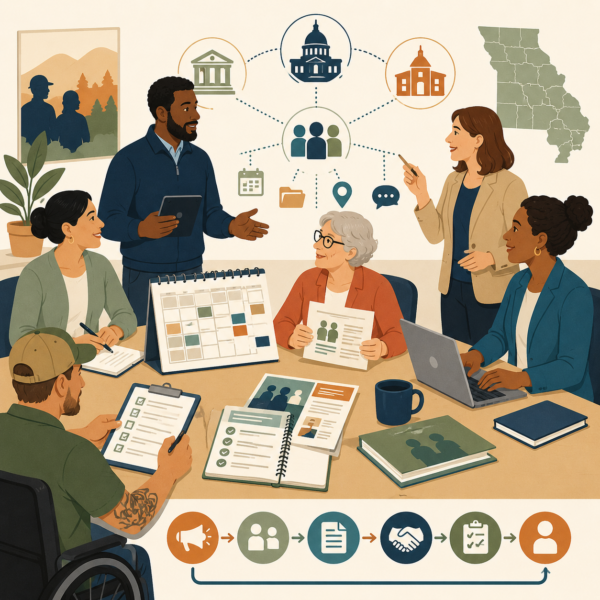 Forms are among the most accessibility-critical elements of veterans benefit communication because they are the interface through which veterans initiate and complete the process of accessing benefits. A benefit guide that is inaccessible is a significant access barrier. An application form that is inaccessible is a definitive access barrier, because without the ability to complete the form, the veteran cannot initiate the benefit access process regardless of how well they understand the available programs and regardless of how strong their eligibility is.
Form accessibility for veterans with cognitive disabilities requires specific design attention to the cognitive load that form completion imposes. Long forms that require sustained concentration and working memory across many questions simultaneously are particularly challenging for veterans with TBI-related cognitive difficulties. Form design that reduces cognitive load includes grouping related questions in clearly labeled sections so that veterans can process one category of information at a time rather than tracking across unrelated topics simultaneously, providing explicit instructions for each question in plain language that does not assume specialized knowledge of VA or government terminology, indicating clearly which fields are required and which are optional so that veterans can focus their effort on the essential elements, providing error messages that are specific and helpful rather than generic and confusing, and offering the ability to save progress and return to the form in multiple sessions so that veterans who cannot complete a long form in a single sitting due to fatigue or cognitive difficulty are not required to start over.
Form accessibility for veterans with motor disabilities requires design features that accommodate reduced motor precision and alternative input methods. Form fields should be large enough to be easily targeted with imprecise motor interaction, including both touchscreen interaction and mouse interaction for veterans with tremor or reduced precision. Dropdown menus, which require users to click on a small target and then maintain the menu open while navigating to the desired option, are particularly challenging for veterans with motor difficulties and should be supplemented with accessible alternatives such as radio buttons or text input with autocomplete for question types where dropdown is not essential. The form should be completable through keyboard navigation alone for veterans who cannot use a mouse or touchscreen, and all form elements should be compatible with alternative input devices including switch access and voice control.
Veterans with PTSD may have specific form accessibility needs related to the content of the questions rather than the format of the interface. Benefit application forms that include detailed questions about traumatic events, mental health symptoms, or military sexual trauma are asking veterans with PTSD to engage with content that may trigger symptom activation in the context of completing an administrative task. Form design that acknowledges the potential difficulty of these questions, provides brief validation that the questions are necessary and that the information will be handled confidentially, and that offers the option to complete particularly sensitive sections with CVSO assistance rather than independently, reduces the psychological barrier to form completion for veterans with PTSD.
Digital Form Versus Assisted Completion
Not all veterans with disabilities will be able to complete digital benefit forms independently, regardless of how well those forms are designed for accessibility. Veterans with severe cognitive disabilities may need assisted completion support in which a CVSO representative or other trained assistant completes the form in consultation with the veteran. Veterans with severe visual impairments may prefer assisted completion over screen reader navigation even when the form is screen reader accessible. Veterans with PTSD may prefer to have a familiar, trusted person present during form completion to provide emotional support and to take over the completion task if the veteran becomes too activated to continue.
CVSO offices that provide assisted completion support as a standard service offering, rather than as a special accommodation that veterans must specifically request, make benefit access significantly more equitable for veterans whose disabilities make independent form completion difficult. Communication about the availability of assisted completion support should appear prominently in all benefit guide materials, on the agency’s website, and in outreach communications, so that veterans who need this support know it is available and feel comfortable requesting it without concern about stigma or inconvenience to agency staff.
Print Communication Accessibility Standards
Printed benefit guides, outreach brochures, event fliers, and other printed communications remain important access channels for veterans who do not have reliable digital access, who prefer print formats, or who are served through community settings where printed materials are the primary available format. The accessibility of printed veterans benefit communications is determined primarily by typographic choices that affect readability for veterans with visual impairments, and by content design choices that affect cognitive accessibility for veterans with reading and cognitive difficulties.
Font size is the most immediately important typographic accessibility factor for veterans with visual impairments. Standard body text size for printed consumer materials is typically 10 to 12 points, which is insufficient for many veterans with visual impairments and difficult for many older veterans whose vision acuity has decreased. A minimum of 12 point body text is recommended for veterans benefit communications, with 14 points preferred for documents that will be read by veterans with significant visual impairments. Sidebar text, footnotes, and supplementary information that typically appears in smaller type should meet the same minimum size standards as body text in veterans benefit communications, or should be eliminated if the content is genuinely supplementary rather than essential.
Font selection for printed veterans benefit communications should prioritize readability for readers with visual impairments and cognitive processing difficulties. Sans-serif fonts including Arial, Helvetica, and Calibri are generally more accessible for readers with these characteristics than serif fonts because the absence of the small decorative strokes at the ends of letterforms reduces visual complexity and makes individual letters more distinctly identifiable. Font weights should be used intentionally, with bold used sparingly for genuine emphasis rather than decoratively, because excessive bolding creates a cluttered visual environment that is more difficult to navigate for readers with visual impairments and cognitive difficulties.
Color contrast in printed materials follows the same general principles as web color contrast but requires calibration for the specific characteristics of printed reproduction. Text on a white or light background should have sufficient contrast to be readable by readers with moderately reduced contrast sensitivity, which requires a higher contrast ratio than is necessary for readers with fully intact color vision. Black text on white background provides maximum contrast and is the gold standard for accessibility. When color is used to convey information, such as when red is used to indicate required fields on a form or when green is used to indicate approved items, the same information must also be conveyed through a text label or symbol that is accessible to readers with color vision deficits, which affect a significant proportion of the population.
Layout and white space in printed veterans benefit communications that affect cognitive accessibility by determining how much information a reader must process at once and how easy it is to identify the structure and hierarchy of the content. Dense text without adequate white space, small margins, and multiple column formats that require eye tracking across columns are all layout choices that increase cognitive load and reduce accessibility for veterans with TBI, PTSD, or other conditions affecting reading and cognitive processing. Generous margins, single-column text, clear paragraph breaks, and ample white space between sections reduce the visual density of printed materials in ways that make them significantly more accessible to veterans with cognitive and visual processing difficulties.
Large Print and Alternative Format Options
Veterans with significant visual impairments may require large print versions of benefit materials that exceed the standard minimum font size, or alternative formats including audio versions and braille that do not depend on visual access at all. Making these alternative formats available is a legal and ethical accessibility obligation for agencies that serve veterans with significant visual impairments.
Large print materials, typically produced at 18 point or larger, are appropriate for veterans who can access visual content at increased magnification but who cannot read standard print sizes. These materials should be available on request from the agency and should be listed as an available format in all standard print materials and on the agency’s website. The logistics of large print production are relatively modest: most standard word processing and desktop publishing software can produce documents at larger font sizes, and print-on-demand capabilities mean that large print versions can be produced as needed rather than requiring large print inventory to be maintained.
Audio versions of key benefit materials, produced as recordings of the material’s content in clear spoken language, serve veterans with total blindness and veterans with TBI or cognitive disabilities who process information more effectively through listening than through reading. Audio recordings of benefit guides, eligibility summaries, and application instructions can be made available through the agency’s website as downloadable audio files or streaming audio content, and can be provided on physical media for veterans who cannot access digital audio content. The production of audio materials is more resource-intensive than large print but is accessible through partnership with local radio stations, veteran volunteer programs, and accessibility service providers who have recording capabilities.
In-Person Communication Accessibility
In-person interactions between veterans and agency staff are the most relationship-intensive and often the most consequential communication encounters in the benefit access process, and they create specific accessibility challenges for veterans with disabilities that require specific staff training and accommodation practices to address effectively. The in-person communication environment is controlled by the agency in ways that digital and print formats are not, and the agency’s responsibility for the accessibility of in-person communication is correspondingly direct and immediate.
Veterans with hearing impairments who are interacting with CVSO staff in office settings may not be able to hear what staff are saying clearly, particularly in open office environments with ambient noise, in settings where staff are behind glass partitions, or when staff are not facing the veteran directly during speech. Agency staff who are aware of the possibility of veteran hearing impairment should adopt communication practices that accommodate this possibility as a routine standard: facing the veteran directly during speech, speaking clearly without exaggerated articulation that distorts lip patterns, checking whether the veteran is hearing and understanding rather than assuming comprehension, and being prepared to communicate in writing when verbal communication is not effective.
Veterans with TBI who are navigating CVSO appointments may have difficulty processing information quickly, holding information in memory across a long appointment, and organizing the information they receive into an actionable plan. Staff who are working with veterans who have TBI-related cognitive difficulties should adapt their communication in specific ways: speaking more slowly and clearly, providing information in smaller pieces rather than as extended explanations, checking comprehension after each significant piece of information before proceeding, providing written summaries of the most important points from the appointment, and allowing more time for the appointment than a standard intake appointment provides.
Veterans with PTSD who are attending appointments at agency offices may be in an environment that triggers hypervigilance, avoidance, or emotional activation that affects their ability to participate productively in the appointment. Physical environments that are calm, private, and predictable reduce these triggers relative to open office environments with ambient noise, unexpected people, and lack of privacy. Staff training in trauma-informed communication, which emphasizes safety, trustworthiness, transparency, peer support, collaboration, and empowerment in every interaction, produces an in-person communication environment that is more accessible to veterans with PTSD and to veterans who have experienced institutional trauma in prior VA encounters.
Appointment pacing and agenda clarity are specific in-person communication accessibility accommodations that benefit veterans with multiple disability types. Veterans who know what to expect from an appointment, who receive a brief agenda at the start of the appointment, and who are given adequate time to process and respond to each question and topic before the next one is introduced, have a significantly more accessible appointment experience than veterans who are moved through an appointment at a pace determined by staff efficiency rather than by veteran processing needs. Building flexibility into appointment scheduling and duration to accommodate the pacing needs of veterans with cognitive and psychological disabilities is an accessibility accommodation that requires organizational commitment to veteran needs over operational throughput.
Interpreter and Communication Support Services
Veterans who are deaf or hard of hearing and who communicate primarily through American Sign Language require ASL interpretation services for in-person agency interactions. Agencies are legally required to provide effective communication access to individuals who are deaf or hard of hearing, which in practice means providing qualified ASL interpreters for veterans who request them rather than expecting those veterans to rely on lip reading, written notes, or family member interpretation for consequential agency interactions about benefit eligibility and application processes.
Communication support services extend beyond ASL interpretation to include CART captioning services that provide real-time text captioning of spoken content for deaf and hard of hearing individuals who prefer text to sign language, and assistive listening systems including hearing loops and FM systems that amplify sound for veterans with partial hearing loss who use hearing aids or cochlear implants. Agencies that serve significant numbers of veterans with hearing impairments should evaluate which communication support services are most needed in their specific veteran population and should have processes for providing these services promptly when they are requested.
Training Agency Staff for Disability-Inclusive Communication
The accessibility standards described throughout this article are implemented through the decisions of agency staff: the communications staff who produce websites, PDFs, and printed materials; the CVSO representatives who conduct appointments with veterans; the outreach staff who design events and community interactions; and the leadership who set organizational priorities and allocate resources. Without staff training that equips these individuals to understand and apply accessibility standards in their specific roles, the organizational commitment to accessible communication will remain an aspiration that is not reliably realized in practice.
Staff training for disability-inclusive communication should cover both the specific accessibility standards relevant to each role and the broader attitudinal and cultural dimensions of disability-inclusive practice. Technical training on WCAG standards for web content staff, on accessible document production for communications staff, on accessible form design for program staff who develop application materials, and on trauma-informed and disability-aware in-person communication for CVSO staff, provides the role-specific knowledge that makes accessibility practice possible. Attitudinal training that addresses the implicit assumptions about disability that can undermine even technically informed accessibility practice, including the tendency to think of disability accommodations as exceptional requests for special treatment rather than as the default standard for communication design, produces the cultural shift that makes accessibility practice sustainable.
Training on the specific communication needs associated with the most prevalent veteran disabilities, including TBI, PTSD, visual impairment, and hearing impairment, should be specific enough to equip staff with practical communication adjustments they can apply in real interactions rather than general enough to leave staff without specific guidance for the situations they actually encounter. Role-playing exercises that simulate specific disability communication scenarios, including interactions with veterans who have TBI-related cognitive difficulties, veterans with PTSD who are becoming activated during an appointment, and veterans with visual impairments who need the content of a printed form explained verbally, produce practical skill development that didactic training alone cannot provide.
Regular refresher training that updates staff on accessibility standards as they evolve and that reinforces disability-inclusive communication practices that may drift over time, maintains the accessibility commitment as an active organizational practice rather than a one-time training event. The frequency of refresher training should be calibrated to the rate of change in accessibility standards and to the staff turnover rate that affects the proportion of staff who are operating primarily on prior training rather than on recently acquired knowledge.
Accessibility Auditing and Continuous Improvement
Building accessibility into veterans benefit program communication as a sustained organizational standard requires periodic auditing that assesses whether accessibility standards are being met across the full range of the agency’s communication outputs, identifies specific failures and gaps, and drives the improvement actions that bring non-compliant communications into compliance. Without periodic auditing, accessibility compliance tends to degrade over time as new communications are produced by staff who may not apply accessibility standards consistently, as programs and websites are updated without consistent application of accessibility practices, and as accessible materials produced at one point in time become outdated while inaccessible replacements are produced.
Website accessibility audits, conducted at least annually and supplemented by ongoing automated monitoring, assess the agency’s website against WCAG 2.1 Level AA standards and identify specific failures that require remediation. Automated accessibility testing tools can identify many technical accessibility failures quickly and at low cost, but they cannot identify all accessibility barriers, and manual testing including screen reader testing and usability testing with users who have disabilities is necessary to produce a complete accessibility picture. The audit should produce a prioritized list of accessibility failures organized by severity and impact, with the most significant barriers to veteran access receiving the highest remediation priority.
Document accessibility audits, applied to the PDFs and other digital documents that the agency produces and distributes, identify specific documents that are inaccessible to screen reader users and other assistive technology users. These audits should be conducted whenever significant new documents are produced and periodically for the full document library to identify older documents that may not have been produced to current accessibility standards. The audit results should drive a remediation schedule that prioritizes the most accessed and most access-critical documents for early remediation.
In-person communication accessibility assessment, conducted through observation of agency appointments and outreach events, identifies specific practices and environmental conditions that create accessibility barriers for veterans with specific disabilities. This assessment is less systematizable than technical accessibility auditing but is equally important for ensuring that the in-person communication environment is as accessible as the agency’s digital and print communications. Observations should be conducted by assessors who have specific knowledge of disability-inclusive communication practices, and they should produce specific feedback for staff and leadership about practices that require change and environmental conditions that require accommodation.
Strategic Communication Support for Veterans Services Agencies
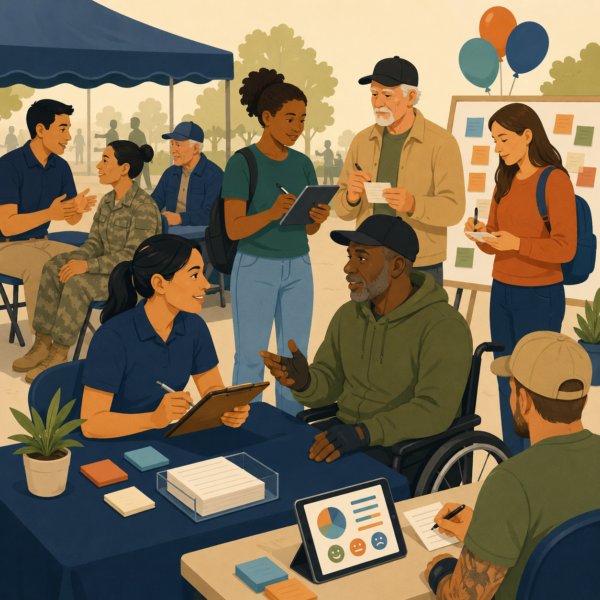 Creating accessible communication for veterans with disabilities requires more than meeting technical compliance requirements. Effective accessibility ensures that veterans with diverse physical, sensory, cognitive, and communication needs can independently find, understand, and use information about the benefits and services available to them. Building this level of accessibility requires communication systems that incorporate inclusive design throughout the entire content development process rather than treating accessibility as a final review step.
Successful accessible communication systems are built through inclusive design practices, accessibility standards, plain-language writing, accessible digital and print content, staff training, and ongoing evaluation. Veterans access information through a variety of formats and technologies, and communication barriers can occur at every stage of the user experience. Addressing these barriers requires communication strategies that integrate accessibility into websites, printed materials, videos, social media, forms, presentations, and every other channel agencies use to communicate with veterans.
Developing this type of communication system requires specialized expertise in accessibility standards, inclusive communication, plain-language writing, content governance, staff training, and communication evaluation. Many veterans services agencies choose to partner with external communication specialists such as Stegmeier Consulting Group (SCG) because these capabilities complement the agency’s expertise in veterans services while providing the strategic communication knowledge needed to build sustainable accessibility practices that improve information access across all communication channels.
Working alongside veterans services agencies, SCG develops communication strategies that embed accessibility into everyday communication operations. Support may include assessing existing communication materials for accessibility, establishing organization-wide accessibility standards, developing accessible content workflows for digital and print communications, creating staff training programs that build practical accessibility skills, implementing quality assurance and auditing processes, and establishing measurement systems that evaluate accessibility performance and support continuous improvement over time.
As communication technologies, accessibility standards, and veteran needs continue to evolve, accessibility must remain an ongoing organizational commitment rather than a one-time initiative. SCG helps agencies establish repeatable communication processes, governance practices, and performance measurement frameworks that enable accessible communication to remain consistent, sustainable, and responsive across programs, departments, and communication channels.
The objective is to create a communication environment in which veterans with disabilities can independently access, understand, and act on information about the benefits and services available to them. By strengthening accessible communication systems, agencies are better positioned to reduce barriers, improve equitable access, and ensure more veterans receive the support and services they have earned.
Future Trends in Accessible Communication for Veterans
Accessible communication technology is evolving rapidly in ways that are both expanding the range of accessibility solutions available and creating new accessibility challenges as novel communication formats and interfaces are introduced. Artificial intelligence tools for automatic captioning, image description generation, and content simplification are producing accessibility features that were previously available only through labor-intensive manual production, reducing the cost and effort required to produce accessible content in multiple formats simultaneously. These tools are not yet sufficiently accurate to substitute for human review and quality assurance, but they represent a significant productivity improvement for agencies that are trying to produce accessible versions of large volumes of content.
Voice-first interfaces, including smart speakers and voice-controlled digital assistants, are emerging as potentially valuable access channels for veterans with visual impairments and motor disabilities who find voice interaction more accessible than screen-based interfaces. Veterans benefit information that is designed for voice interaction, with concise and directly answerable content rather than dense text designed for visual reading, could significantly improve access for veterans who communicate most effectively through voice. Agencies that are developing long-term digital strategy should evaluate voice interface accessibility as a component of that strategy.
The Universal Design for Learning framework, which has been developed in educational contexts and which provides a comprehensive approach to designing learning environments and materials to be accessible from the outset for the full range of learner characteristics rather than retrofitting accessibility for specific needs after the fact, offers a conceptual model that is directly applicable to veterans benefit communication design. Agencies that adopt Universal Design principles in their communication design processes produce communications that are accessible to a broader range of veterans without requiring specific accommodation requests, and that are more efficient to produce than communications that require accessibility retrofitting after the fact.
Conclusion
The veteran with a traumatic brain injury who cannot read a dense eligibility guide, the veteran with PTSD who cannot concentrate in a crowded outreach event, the veteran with a visual impairment who cannot read a small-font brochure, and the veteran with a hearing impairment who cannot follow a verbal explanation of appeal rights, all have something in common: they have service-connected conditions that resulted from their military service, and their access to the benefits those conditions entitle them to is being blocked by communication that was not designed with their needs in mind. This is an access failure that the agency has the power to correct.
Accessible communication is not a special accommodation for an exceptional population. It is the standard of communication quality that serves the full range of the veteran population the agency exists to serve, including the veterans whose disabilities most urgently require the programs those communications describe. Building that standard into every production process, every staff training, and every communication audit is the work that makes the agency’s accessibility commitment real rather than aspirational. Use the form below to connect with our team.
SCG’s Strategic Approach to Communication Systems
Stegmeier Consulting Group’s accessibility communication work with veterans services agencies reflects the conviction that accessible communication is not a compliance exercise but a mission imperative. The veterans who are most likely to encounter accessibility barriers in benefit program communication are often the veterans whose service-connected conditions most urgently require the benefits those communications describe. Building accessibility into the design of every communication, at every stage of the production process, and sustaining that accessibility through continuous monitoring and improvement, is the most direct available investment in equitable access for the full range of the veteran population. SCG brings the technical accessibility expertise, the disability-specific communication knowledge, and the organizational change management experience needed to make this investment operational and durable for the agencies that partner with us in this work.
Use the form below to connect with our team and explore how strategic accessible communication can help your agency improve information access, reduce communication barriers, and better serve veterans with disabilities.