
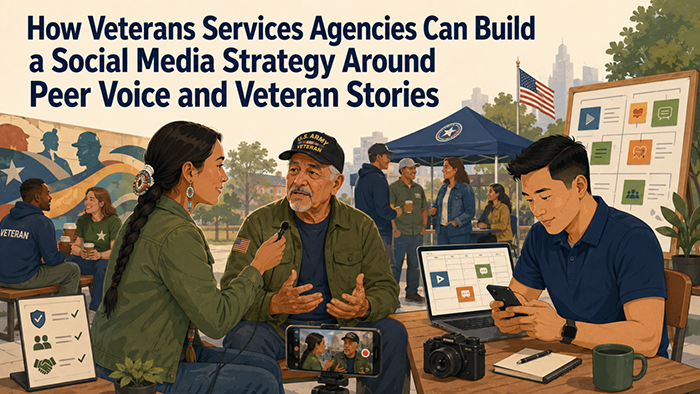
How Veterans Services Agencies Can Build a Social Media Strategy Around Peer Voice and Veteran Stories
The social media presence of most veterans services agencies follows a predictable and underperforming pattern. The content calendar is dominated by institutional announcements: event dates, application deadlines, links to press releases, and program eligibility summaries presented in the agency’s formal voice. The engagement data consistently disappoints: posts accumulate modest reach, minimal comments, and little evidence of meaningful impact on veteran awareness or behavior. When agency staff review the analytics, the numbers are often accepted as evidence that veterans do not engage with social media, rather than as evidence that the kind of content the agency is producing does not generate engagement from veteran audiences.
The reality is more specific and more correctable. Veterans do engage with social media content, including content about veterans services and veteran experience. They engage with peer voice content in which fellow veterans describe their own experiences, share their own stories, and speak in the direct and unpolished language of genuine personal authority. They engage with storytelling content that is organized around a veteran’s specific journey through a challenge and toward a resolution, content that makes the emotional and practical dimensions of the veteran experience visible and recognizable. They engage with content that is specific, honest, and human rather than general, promotional, and institutional. The problem is not that veteran audiences are passive on social media. The problem is that most veterans services social media does not produce the kind of content that veteran audiences engage with.
Building a social media strategy around peer voice and veteran stories is the most direct available remedy for this engagement deficit, and it is a remedy that is available to agencies of any size and any resource level because the raw material it requires, authentic veteran voices and authentic veteran stories, does not require a production budget. It requires relationships with veterans who are willing to share their experiences, organizational processes for developing those relationships and those stories responsibly and sustainably, editorial frameworks for producing content from veteran stories that is accurate and appropriate while remaining genuine, and distribution strategies for getting that content in front of the veteran audiences that would be most affected by it.
This article provides a comprehensive framework for building a social media strategy around peer voice and veteran stories. It covers the foundational analysis of platform selection and audience targeting, the content planning framework that ensures peer voice content is produced consistently and strategically rather than episodically and reactively, the peer voice recruitment and development process that builds a sustainable pool of veteran content contributors, the storytelling formats that perform best in social media environments with veteran audiences, the editorial practices that maintain authenticity while ensuring accuracy and appropriateness, and the measurement approaches that assess whether the strategy is producing the engagement and awareness outcomes it is designed to produce.
The investment required to build a peer voice social media strategy is primarily an investment of organizational time and relationship building rather than financial resources. Agencies that make this investment produce social media content that reaches and engages veteran audiences in ways that institutional content cannot, that builds the trust and credibility that makes all other agency communication more effective, and that demonstrates through the authenticity of the stories it amplifies that the agency genuinely values veteran voice rather than simply communicating about veterans.
Understanding Why Institutional Social Media Underperforms With Veteran Audiences
 The underperformance of institutional social media content with veteran audiences is not accidental or inevitable. It is the predictable result of a specific mismatch between what institutional social media produces and what veteran audiences value and engage with in social media environments. Understanding this mismatch with precision is the starting point for designing a social media strategy that overcomes it.
Social media platforms are fundamentally social environments in which content is shared, commented on, and engaged with based on its emotional resonance, its perceived authenticity, and its relevance to the lived experience of the people who encounter it. Content that feels institutional, that carries the voice of an organization rather than a person, that presents information rather than stories, and that reads as generated for broadcast rather than for conversation, is experienced in social media environments as out of place regardless of its informational quality. Veterans who are scrolling through a social media feed populated by content from their friends, their communities, and the accounts they actively follow because they find them engaging and relevant, will pass by institutional content from a government agency at the same rate they pass by advertisements. The institutional voice is a marker of low-priority content in a social media context.
The specific dimensions of institutional content that perform worst with veteran audiences include the promotional tone that positions the agency rather than helping veterans, the formal language that signals official communication rather than peer connection, the focus on program features and eligibility criteria rather than on veteran experiences and outcomes, the absence of personal voice or human perspective, and the assumption that veterans will engage with content about agency services because the agency has announced their availability. None of these content characteristics are inherent to social media content about veterans benefits. They are characteristics of institutional communication that have been adapted for social media formats without being redesigned for social media audiences.
Peer voice content performs differently on every dimension that institutional content performs poorly. It carries the voice of a person rather than an organization. It presents stories rather than information. It resonates emotionally because it reflects recognizable veteran experiences. It is perceived as authentic because it comes from someone with genuine personal knowledge of the topic. It invites engagement because it positions the audience as a peer rather than as a recipient of information. And it demonstrates through its existence that the agency has relationships with veterans rather than only relationships with veterans as a conceptual demographic category. These performance advantages are not a matter of production quality or budget. They are a matter of whose voice the content carries, and shifting the content strategy toward peer voice is a shift that is available to any agency willing to build the relationships and processes it requires.
What Veteran Audiences Actually Engage With on Social Media
Evidence from social media platforms that serve veteran communities provides specific guidance about what types of content veteran audiences engage with most consistently. Personal narrative content, in which a veteran describes their own experience of a specific challenge and how they navigated it, consistently generates the highest engagement rates in veteran social media communities, measured across likes, comments, shares, and saves. The engagement is driven by recognition: veterans who read a peer’s account of navigating the disability compensation process, of struggling with the transition to civilian life, or of finally accessing a benefit they did not know they qualified for, recognize their own experience in the narrative and respond with the engagement that recognition produces.
Informational content performs better in veteran social media when it is contextualized within a personal story than when it is presented in a standalone informational format. A post that says ‘VA healthcare enrollment does not require a disability rating’ is informational but not engaging. A post that says ‘I spent three years thinking I did not qualify for VA healthcare because I assumed you needed a disability rating. I found out at a community event that I was wrong and enrolled that week. If you are making the same assumption, check this out’ is informational and engaging, because the personal context makes the information feel relevant and because the story of the mistake and correction is recognizable and emotionally resonant.
Community-building content that asks veteran audiences questions, invites them to share their own experiences, or acknowledges shared veteran experiences and challenges generates engagement because it treats the audience as community members rather than as information recipients. A post that asks ‘What was the most confusing thing about navigating your VA benefits?’ and that genuinely engages with the responses it receives produces more sustained community engagement than a post that announces an upcoming enrollment deadline, because it positions the agency’s social media presence as a community forum rather than a broadcast channel.
Humor and cultural references that are specific to military experience, deployed appropriately and not at the expense of the veteran community’s dignity or the seriousness of veterans’ needs, engage veteran audiences with a recognition and belonging signal that generic content cannot produce. Military culture has a rich tradition of specific humor, reference points, and shared language that identify insiders to each other and that carry cultural meaning beyond their literal content. Content that reflects genuine familiarity with this cultural landscape, rather than generic acknowledgment of military service, reaches veteran audiences as communication from someone who understands their community rather than from someone who is communicating about it from the outside.
Serving Those Who Served: Communication Strategies for Veterans Agencies
This article is part of our series on strategic communication for Veterans Services Agencies, County Veterans Services Offices, State Departments of Veterans Affairs, and community-based veteran support organizations. To learn more and to see the parent article, which links to other content just like this, click the button below.
Platform Selection and Audience Analysis
Not all social media platforms serve veteran audiences equally, and not all platform environments are equally suited to the peer voice and storytelling content that is most effective with veteran audiences. Platform selection for a veterans services social media strategy should be based on analysis of where the specific veteran populations the agency serves are most active and most receptive to the types of content the agency intends to produce, rather than on assumptions about which platforms are most generally popular or most commonly used by government agencies.
Facebook remains the most broadly used platform among the overall veteran population, including older veterans who may not be active on platforms that skew toward younger demographics. Facebook’s community group functionality is particularly relevant for veterans services, because veteran community groups on Facebook have self-organized into communities of significant size and high engagement around specific veteran identities, service experiences, and needs. These groups are not agency-controlled spaces, but they are spaces where peer voice content about veterans services can be shared organically by veterans who find it relevant, producing distribution through trusted community networks that direct agency content cannot achieve.
Instagram serves a younger and more digitally engaged veteran population and is particularly effective for visual storytelling content, including short video formats that allow veterans to tell their stories in their own voice and their own visual environment without requiring professional production. Instagram’s Reels format has emerged as a high-reach content format that extends content beyond the agency’s existing follower base to broader audiences, including veterans who are not already following the agency’s account. Instagram content that performs well with veteran audiences typically features genuine human subjects rather than graphic design elements, natural and unscripted speech rather than professional narration, and specific personal stories rather than general program descriptions.
YouTube serves as a platform for longer-form video content that does not perform well in the short-scroll social media environment but that is highly effective for veterans who have been referred to a specific video for a specific purpose. A ten-minute video of a veteran describing their experience navigating the disability claims process, organized around the specific moments of challenge and resolution that other veterans would find most useful, is the kind of content that veterans share with specific people they know who are going through the same process, producing targeted peer-to-peer distribution that is more valuable than broad undifferentiated reach.
LinkedIn, while not primarily a veterans social media platform, serves a specific and valuable function for reaching veteran audiences who are in career transition contexts. Post-9/11 veterans who are employed, seeking employment, or building civilian professional networks are active on LinkedIn in ways that create outreach opportunities for employment-related veterans benefit communications, including employment preference programs, vocational rehabilitation, and education benefit information relevant to professional development.
Building an Audience Before Broadcasting to One
A common mistake in government agency social media strategy is treating follower acquisition as a precondition for content investment rather than as a consequence of it. Agencies that invest heavily in content quality before their follower counts are large enough to generate significant organic reach often see modest immediate results and conclude that the investment is not worth continuing. The correct interpretation of those results is usually that the investment needs to be sustained rather than abandoned, because organic audience building on social media is a slow process that compounds over time as high-quality content is shared within existing communities and gradually builds the reputation that attracts new followers.
Audience building for veterans services social media should proceed in parallel with content development rather than as a precondition for it. Strategies for building a veteran audience on agency social media accounts include following and engaging with established veteran community accounts, participating in veteran hashtag communities, tagging community partners and VSO posts in relevant content to extend reach into their follower networks, and cross-promoting the agency’s social media content through email newsletters, website mentions, and outreach event materials. Each of these tactics extends the content’s reach into existing veteran social media communities without requiring the agency’s own follower base to be large.
Paid social media promotion, which allows agency content to be shown to targeted audiences who do not currently follow the agency’s account, provides the most direct mechanism for reaching veterans outside the existing follower base. Targeted promotion of specific peer voice content to veteran audiences in the agency’s geographic area can significantly accelerate audience building by exposing high-quality content to the audience most likely to engage with it and to follow the account as a result. Paid promotion budgets for government agency social media are often modest, but even small promotion investments for specific high-quality content pieces can produce meaningful audience growth when the content is well-matched to the target audience.
Content Planning for Consistent Peer Voice Production
Consistent peer voice social media content production requires content planning infrastructure that ensures a steady flow of veteran story content rather than depending on the ad hoc availability of veterans willing to share their stories when the agency needs content. The absence of content planning is the most common reason that agencies that commit to peer voice social media strategies fail to sustain them: when the supply of peer voice content depends on irregular and unprompted contributions from veteran volunteers, the content calendar will have gaps that are filled with the institutional content that the strategy was designed to replace.
A content calendar for peer voice social media should plan content by category and by cadence rather than by specific story before the stories are in hand. A weekly cadence that plans for one veteran story piece per week, combined with two or three shorter pieces of informational or community content, is a realistic and sustainable production target for most agencies. The specific veteran story for each week does not need to be identified months in advance, but the slot for it should exist in the content calendar as a commitment that creates the pull for story development rather than waiting for stories to volunteer themselves.
Content category planning helps ensure that the peer voice content produced covers the range of topics and programs the agency wants to communicate about rather than clustering around the stories that are easiest to obtain. If the agency’s communication priorities include reaching Guard and Reserve members about benefits eligibility, reaching rural veterans about telehealth access, and reaching women veterans about MST services, the content calendar should have planned story slots for each of these topics rather than defaulting to the stories of veterans who are most readily available and most comfortable with public sharing, who may not be representative of the priority audiences the agency most needs to reach.
A content production lead time of four to six weeks allows adequate time for the story development process, including veteran recruitment, interview or written statement collection, editorial review, and production, to be completed before the planned publication date. Content that is planned with insufficient lead time will either not be published on schedule or will be published without adequate quality review, both of which undermine the consistency and quality standards that make a peer voice strategy effective over time. Building lead time into the content planning process is an organizational discipline that protects content quality and publication consistency simultaneously.
Balancing Peer Voice With Informational Content
A social media strategy built entirely around peer voice and veteran stories, without any informational or community content, will eventually exhaust the story capacity of the available veteran contributor pool and will not serve the communication needs of veterans who arrive at the agency’s social media seeking specific program information rather than narrative content. Effective social media strategy for veterans services agencies uses peer voice as the primary engagement driver while incorporating informational and community content that serves veterans who are at different stages of the awareness and decision-making process.
The ratio of peer voice and story content to informational and community content should be calibrated to the engagement data from the agency’s specific audience rather than to a generic formula, but a starting point of approximately sixty percent peer voice and story content, twenty percent informational content, and twenty percent community-building content provides a balance that serves multiple audience needs without abandoning the peer voice priority that produces the highest engagement. This ratio should be treated as a starting hypothesis to be adjusted based on performance data rather than as a fixed prescription.
Informational content on a peer voice-oriented social media account performs better when it adopts the conversational and specific voice of the peer voice content rather than reverting to the institutional voice of traditional program announcements. An informational post about PACT Act eligibility that is written as if speaking directly to a veteran who may be affected, using the second person and specific language about the veteran’s situation, will perform better than the same information presented in the third person as a program description. The voice consistency across content types is what maintains the audience relationship and prevents informational content from feeling like an interruption of the peer voice social media environment the agency has built.
Peer Voice Recruitment and Story Development
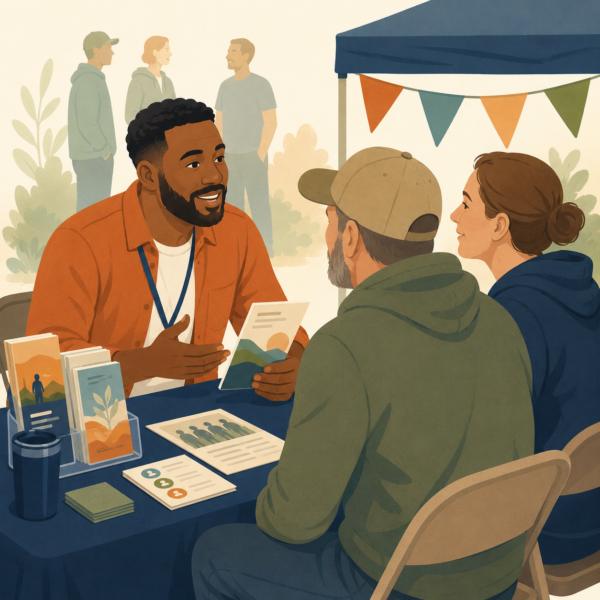 Building a sustainable pool of veteran content contributors for a peer voice social media strategy requires a deliberate recruitment and relationship development process rather than waiting for veterans to volunteer their stories. Veterans who would be effective social media storytellers are not typically presenting themselves to the agency as ready to share their experiences publicly. They need to be identified through the relationships the agency has with the veteran community, approached with a clear and respectful explanation of what participation involves, supported through a story development process that helps them share their experience effectively, and recognized for their contribution in ways that reflect genuine appreciation for the vulnerability and effort their participation represents.
Recruitment for veteran story contributors should begin with the veterans the agency already has relationships with: veterans who have been through the CVSO process and who have had positive access experiences that are relevant to the stories the agency needs to tell, veterans who are peer support specialists and who are accustomed to sharing their experiences in service of helping other veterans, veterans who are active in VSO post and community organizations and who have expressed willingness to help the agency with community outreach, and veterans who have previously participated in agency events or programs in ways that suggest openness to continued engagement. These existing-relationship recruits are more likely to say yes, more likely to follow through, and more likely to produce content that is authentic and appropriate than cold recruits who have not had prior direct engagement with the agency.
The initial recruitment conversation with a prospective veteran story contributor should be honest about what participation involves: what the story will be about, what format it will take, what the review process is before publication, who will see it and where, and what control the veteran has over the final content. Veterans who agree to participate based on an accurate understanding of the process are more likely to remain comfortable with their participation through to publication than veterans who agreed based on an incomplete or idealized description. This honesty is both ethically required and practically important for maintaining a sustainable contributor pool.
Story development support is the process of helping a veteran contributor shape their experience into a social media story that is authentic, organized, and appropriate for the intended platform and audience. This support can take several forms depending on the veteran’s preference and the agency’s capacity: a structured interview in which agency staff ask guiding questions and take notes from which the story content is drafted; a written template that the veteran completes in their own words; a recorded video conversation from which clips are selected for social media use; or a combination of these approaches. The story development format should be matched to the veteran’s communication preferences rather than to the agency’s production convenience.
Editorial Review That Preserves Authenticity
Editorial review of veteran story content is necessary for accuracy and appropriateness but must be conducted in ways that do not strip the content of the authenticity that makes it valuable. The editorial challenge is to correct factual errors, remove sensitive information that the veteran included without fully understanding its implications, and ensure that the content is appropriate for the platform and audience, while preserving the veteran’s voice, the specific details that make the story recognizable and resonant, and the emotional honesty that distinguishes peer voice content from institutional content.
Editorial review processes that are too aggressive in standardizing language, removing emotional content, or converting the veteran’s natural speech into formal prose, produce content that has lost the peer voice quality that motivated its production. The test for editorial review decisions should be: does this change serve the veteran contributor’s interests and the audience’s access to authentic content, or does it serve the agency’s institutional communication preferences? Changes that serve the first purpose are appropriate. Changes that serve only the second purpose should not be made.
Veteran review and approval of all content before publication is non-negotiable. Veterans who contribute their stories have a right to see the final version of the content before it is published and to withdraw their contribution or request additional revisions if the published version does not accurately or appropriately represent their experience. This approval process is not only ethically required but is practically important for maintaining the contributor relationship that makes sustainable peer voice production possible. Veterans who have contributed and who are satisfied with how their contribution was handled will be more likely to contribute again and to recommend the program to fellow veterans. Those who feel their story was changed in ways that did not reflect their intentions will not.
Storytelling Formats That Perform in Social Media Environments
The specific storytelling formats that perform best in social media environments with veteran audiences reflect the platform norms of each specific platform as well as the general characteristics of content that veteran audiences engage with. Understanding these format-specific requirements is essential for producing content that performs well in the specific environment where it will be encountered rather than for a generic social media audience.
Short-form video, running thirty seconds to two minutes in length, is the highest-performing content format on most social media platforms for peer voice content. The video format allows the veteran’s voice, demeanor, and personal presence to come through in ways that text cannot replicate, and the visual medium creates an immediacy and authenticity that written content cannot achieve. Short-form video production does not require professional equipment or professional production: the most authentically performing veteran video content is often shot on a smartphone in a natural environment, with the veteran speaking directly to the camera in their own words about their own experience. Production values that are too polished can actually undermine the authenticity signal that makes peer voice content valuable.
Captioned short-form video is not optional for any social media platform. A significant proportion of social media video is viewed without sound, either because the viewer is in a context where audio is not appropriate or because they have audio off by habit. Video content without captions is inaccessible to this segment of the audience and to veterans with hearing impairments who may be a significant portion of the target audience given the high rates of hearing loss in the veteran population. Captions should be accurate, readable, and timed to match the spoken content rather than delayed or out of sync.
Written narrative posts, organized as first-person accounts of specific veteran experiences, perform well on Facebook and LinkedIn where longer-form text content is more common than on Instagram or TikTok. An effective written narrative post has a specific structure: an opening line that immediately captures attention by naming a specific experience or feeling that veterans will recognize, a narrative middle section that describes the veteran’s journey through a specific challenge, and a closing section that connects the veteran’s personal story to the specific resource or program information the agency wants to communicate. The structure ensures that the post functions as both a compelling story and an effective access communication.
Image-and-quote posts, in which a veteran’s photograph is paired with a brief, powerful quote from their story, serve as engagement drivers that introduce the full story and the veteran’s identity to audiences who would not engage with a longer text post. These posts perform best when the quote is specific and emotionally resonant rather than generic and inspirational, and when the photograph is genuine and specific to the veteran rather than a stock photo that could represent anyone. The image-and-quote format is also effective as a teaser for longer video or written content, driving audiences to engage with the full story through a brief excerpt that captures their interest.
Community Voice Content Beyond Individual Stories
Peer voice social media content extends beyond individual veteran stories to include content that invites community voice from the agency’s full audience rather than featuring a single designated contributor. Question-based posts that ask veteran audiences to share their own experiences with a specific topic, response posts that acknowledge and engage with comments and questions from the audience, and community recognition posts that feature veterans from the community without a structured story format, are all forms of community voice content that build the social media environment as a genuine community space rather than a broadcast channel for selected veteran stories.
Question-based posts, when they ask questions that veterans have genuine things to say in response, can generate significant engagement that brings new perspectives into the agency’s social media environment and that provides community feedback about the topics veterans are most thinking and talking about. Questions that are too general or too promotional, asking veterans to share their favorite thing about the VA, for example, will not generate authentic engagement. Questions that are specific, honest, and that acknowledge the complexity of veteran experience, asking veterans what was most confusing about navigating their disability claim or what resource they wish they had known about sooner, invite responses that are meaningful and that provide the agency with genuine community intelligence alongside the engagement metrics.
The agency’s response to comments and questions on its social media content is a critical component of the community voice strategy that is often underinvested. An agency that publishes peer voice content but does not engage with comments is broadcasting rather than conversing, and the absence of agency response signals to the audience that the social media presence is managed for output rather than for genuine community engagement. Timely, genuine responses to comments, particularly responses that acknowledge specific points made by commenters and that extend the conversation rather than simply thanking commenters for engaging, build the community relationship that makes the social media presence valuable over time.
Measuring Social Media Strategy Effectiveness
Measuring the effectiveness of a peer voice social media strategy requires metrics that capture the specific outcomes the strategy is designed to produce rather than only the general engagement metrics that social media platforms report by default. Reach and impressions measure how many people saw the content. Engagement rate measures the proportion of people who saw the content and interacted with it. These standard metrics are useful for assessing content performance relative to other content but do not directly measure whether the content is producing the awareness and behavioral outcomes the strategy is designed to produce.
Awareness metrics, measured through periodic surveys of veteran community members about their awareness of specific programs and their perception of the agency’s social media content, provide evidence about whether the social media strategy is producing awareness improvements in the target population. An agency that tracks veteran awareness of specific programs before and after a sustained peer voice social media campaign about those programs has direct evidence of whether the campaign produced the awareness change it was designed to produce. These surveys can be brief and low-cost when conducted through existing community touchpoints such as CVSO intake appointments, VSO post meetings, and community events.
Referral attribution for social media, tracking the proportion of veterans who contact the CVSO or initiate benefit applications and who indicate that they were motivated to do so by the agency’s social media content, provides evidence about whether social media awareness is translating into access behavior. This tracking requires that intake processes ask veterans how they learned about the agency’s services and that social media is a tracked response category. Over time, the proportion of contacts attributed to social media provides a specific metric of social media strategy effectiveness at the behavior change level.
Content performance comparisons between peer voice content and institutional content, tracking engagement rates, reach, and referral attribution for each content type, provide the most direct evidence that peer voice content is outperforming institutional content in ways that justify the additional investment required to produce it. These comparisons should be conducted regularly and should be presented to agency leadership as part of the communication strategy performance reporting that justifies continued investment in the peer voice approach.
Strategic Communication Support for Veterans Services Agencies
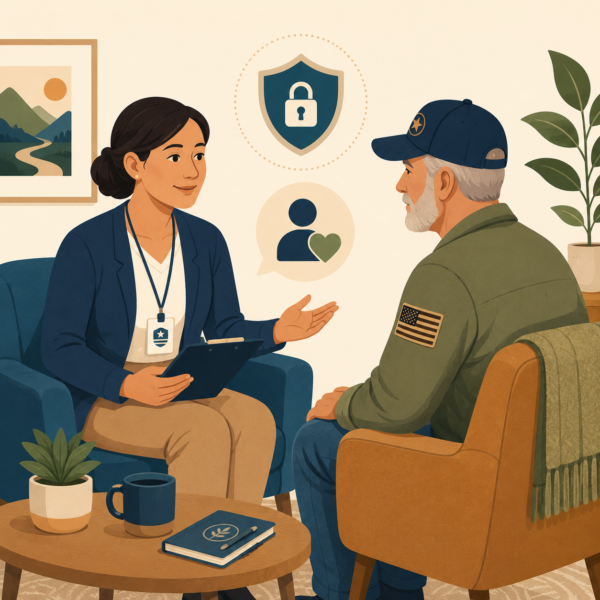 Creating meaningful engagement on social media requires more than regularly posting agency announcements and event updates. Veterans are more likely to engage with content that feels authentic, relatable, and personally relevant, making peer voices and veteran stories some of the most effective communication assets available to veterans services agencies. Building a social media strategy around these voices helps agencies strengthen trust, increase engagement, and encourage more veterans to explore available benefits and services.
Successful peer voice social media strategies are built through audience research, editorial planning, authentic storytelling, trusted contributor relationships, platform-specific content design, and ongoing performance evaluation. Veterans engage with social media for different reasons and across different platforms, and content that resonates with one audience may not be effective for another. Developing a sustainable strategy requires balancing agency information with authentic veteran experiences while maintaining editorial standards, privacy considerations, and consistent messaging.
Developing this type of communication system requires specialized expertise in audience analysis, communication strategy, content planning, editorial governance, digital engagement, and communication evaluation. Many veterans services agencies choose to partner with external communication specialists such as Stegmeier Consulting Group (SCG) because these capabilities complement the agency’s expertise in veterans services while providing the strategic communication knowledge needed to build social media systems that foster genuine engagement, strengthen trust, and improve awareness of available programs and services.
Working alongside veterans services agencies, SCG develops peer voice social media strategies that transform social platforms into meaningful communication channels. Support may include identifying opportunities for veteran storytelling, developing contributor recruitment and relationship frameworks, creating editorial calendars and content standards, designing platform-specific communication strategies, establishing review and governance processes, and implementing measurement systems that evaluate engagement quality, audience growth, and the contribution of social media to broader communication objectives.
As social media platforms, audience behaviors, and communication trends continue to evolve, successful strategies require ongoing refinement rather than one-time planning. SCG helps agencies establish repeatable content development processes, governance practices, and performance measurement frameworks that enable peer voice communication to remain authentic, consistent, and responsive while supporting long-term engagement across social media channels.
The objective is to create a social media presence that veterans recognize as trustworthy, relevant, and reflective of the real experiences of the veteran community. By strengthening peer voice communication systems, agencies are better positioned to build stronger relationships with veterans, increase engagement, and connect more individuals with the benefits and services they have earned.
Future Trends in Veterans Services Social Media
The social media landscape is evolving rapidly in ways that will continue to shape the content formats, platform dynamics, and audience expectations that veterans services agencies must navigate in their digital communication. Several trends deserve specific attention from agencies building long-term social media strategies.
Short-form video continues to grow as the dominant content format on virtually all major social media platforms, driven by the success of TikTok and the adoption of similar short-video formats by Instagram Reels, YouTube Shorts, and Facebook Reels. This format dominance has specific implications for veterans services social media: it increases the importance of video production capacity for agencies that want to compete for audience attention, it creates distribution opportunities for authentic peer voice video content that would not have existed in a text-heavy social media environment, and it places a premium on the first few seconds of content in which viewer attention must be captured before the scroll reflex dismisses the content.
Social media algorithms are increasingly deprioritizing content from institutional and business accounts in favor of content from personal accounts and from accounts with high recent engagement, a trend that makes the organic reach of institutional social media more difficult and that increases the relative advantage of peer voice content that generates genuine community engagement. Agencies that build their social media strategy around peer voice are building in alignment with the algorithmic direction of the major platforms rather than against it, positioning their content for the organic reach advantages that high-engagement content receives while their institutional-content competitors face declining organic reach.
The integration of social media with digital advertising platforms is creating increasingly sophisticated options for reaching specific veteran populations with targeted content at costs that are accessible to agencies with modest digital marketing budgets. Targeting options that allow content to be shown specifically to veterans who are in specific age ranges, who have indicated military service, who live in specific geographic areas, and who have engaged with related content in the past, enable precise audience reach that was not previously possible with the broad targeting of traditional media. Agencies that develop the capacity to use these targeting options for peer voice and story content will be able to reach specific underserved veteran populations with relevant content in ways that represent a significant digital equity advance.
Conclusion
The veteran who scrolls past an agency announcement about an application deadline and pauses on a thirty-second video of a fellow veteran describing how filing for disability compensation changed their family’s financial situation, who watches the video to the end and shares it with a veteran they know who has been putting off filing for the same reason, is demonstrating exactly the communication dynamic that peer voice social media is designed to produce. The program information is the same in both pieces of content. The voice is different, and the voice is what determines whether the content produces engagement, sharing, and behavior change or whether it disappears into the scroll.
Building a social media strategy around peer voice and veteran stories is an investment in accessing the communication dynamic that social media makes possible but that institutional content consistently fails to produce. It is an investment in the relationships with veteran contributors who make the content possible, in the content planning discipline that produces consistent output, in the editorial practices that maintain authenticity while ensuring quality, and in the measurement infrastructure that demonstrates the strategy’s effectiveness in terms that justify continued organizational investment. Agencies that make this investment build a social media presence that actually reaches veterans, engages them in ways that institutional content never will, and connects them to the services and benefits they have earned through the most credible communication channel available: the voice of another veteran who has been there.
SCG’s Strategic Approach to Communication Systems
Stegmeier Consulting Group’s social media communication work with veterans services agencies is grounded in the recognition that peer voice is not a social media tactic but a communication philosophy that reflects a fundamental truth about how veteran audiences receive and act on information. The agencies that produce the most effective veterans services social media are not necessarily those with the largest budgets or the most sophisticated production capabilities. They are the agencies that have built genuine relationships with veteran contributors, that have invested in the editorial processes that allow authentic stories to reach audiences accurately and appropriately, and that have sustained the content planning discipline required to produce peer voice content consistently rather than episodically. SCG helps agencies build these capabilities in ways that are appropriate to their specific resources and their specific community context, producing social media strategies that serve their veteran communities rather than serving their institutional communication preferences.
Use the form below to connect with our team and explore how strategic peer voice social media communication can help your agency strengthen engagement, build trust, and connect more veterans with available benefits and services.