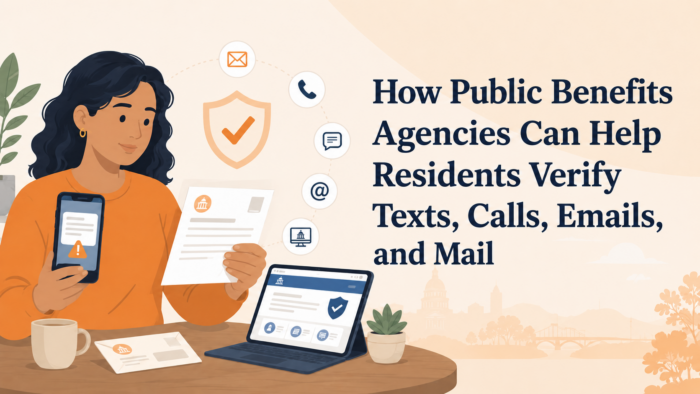
Official or Scam: How Public Benefits Agencies Can Help Residents Verify Texts, Calls, Emails, and Mail
Residents who rely on public benefits are often asked to respond quickly to official communication. A human services agency may send a renewal notice, a text reminder, an email about missing documents, a phone call about an interview, a portal alert, or a mailed letter about SNAP, Medicaid, cash assistance, child care assistance, housing support, energy assistance, or another essential program. At the same time, residents may also receive scam messages that imitate government language, reference benefits, request personal information, or create urgency around account access, eligibility, payments, cards, or documents. The result is a difficult communication environment where residents must decide which messages are legitimate and which messages could put their personal information, benefits, or household stability at risk.
For human services agencies, public benefits agencies, county social services departments, and state benefits offices, this is not only a fraud prevention issue. It is also a trust, access, and service delivery issue. If residents cannot tell whether a text, call, email, or letter is official, they may ignore legitimate notices, miss deadlines, avoid answering agency calls, fail to upload required documents, or delay responding to renewal requests. Others may respond to fraudulent messages because they appear urgent, use familiar program names, or threaten benefit loss. In both cases, confusion about official communication can lead to harm. Residents may lose access, expose sensitive information, or become less willing to engage with the agency in the future.
The challenge has become more serious because public benefits communication now happens across many channels. Agencies may use mailed notices, call centers, text alerts, email reminders, online portals, automated calls, mobile apps, local office communication, community partner outreach, and statewide system messages. Each channel may be legitimate in some situations. But when agencies do not clearly explain how they communicate, residents are left to make judgments on their own. A text message may look suspicious because the resident did not expect a text from the agency. A legitimate phone call may go unanswered because the number is unfamiliar. A mailed notice may be doubted because the resident recently received a scam letter. A real portal link may be ignored because residents have been warned not to click unknown links.
This is why verification guidance should be treated as part of the agency’s core communication system. Residents need a clear way to confirm whether a message is official before they share personal information, click a link, call a number, attend an appointment, submit documents, or take action that affects benefits. Agencies should not assume that residents know which numbers, domains, letter formats, sender names, or portal pathways are legitimate. They should teach residents what official communication looks like, what the agency will never ask for, where to verify current case information, and what to do when a message feels suspicious.
Strong scam and verification communication does not require agencies to create fear around every message. The goal is not to make residents distrust all digital contact or avoid agency communication entirely. The goal is to help residents pause, verify, and respond through safe channels. That distinction matters because public benefits agencies still need residents to act when legitimate action is required. A renewal notice, document request, interview reminder, or card-related alert may be real and time-sensitive. Verification guidance should help residents distinguish urgency from manipulation, not train them to ignore everything.
A resident-centered approach should also acknowledge that many people are managing complex life circumstances while trying to interpret official communication. A resident may be working irregular hours, sharing a phone, using prepaid service, changing addresses, relying on family members to interpret mail, using a public computer, speaking a language other than English, or helping an older relative manage benefits. Scam prevention messages that assume ideal digital literacy or stable access may not reach the people most at risk. Public benefits agencies need guidance that is practical, plain, repeated, and easy to use at the moment a suspicious message arrives.
Why Scam Confusion Creates Public Benefits Risk
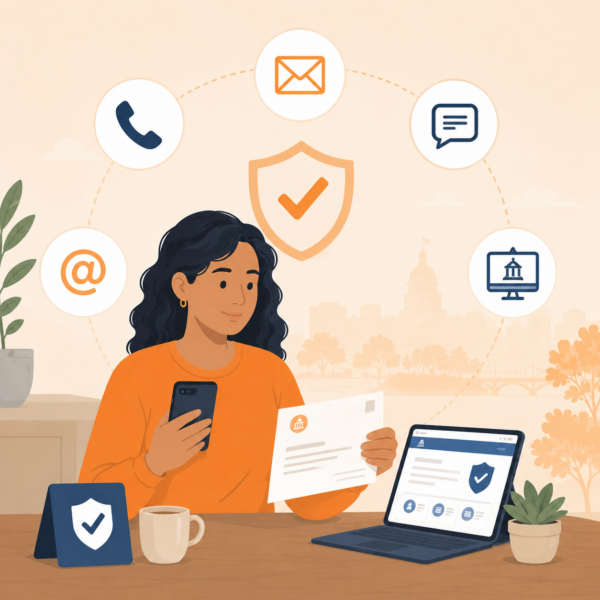 Scam confusion creates public benefits risk because residents are often asked to act under time pressure. They may receive messages about renewals, missing verification, eligibility reviews, benefit cards, appointments, recertification, case closure, benefit changes, or account access. A scammer can exploit that pressure by sending a message that sounds official, uses a familiar program name, and suggests that benefits will stop unless the resident acts immediately. Even residents who are careful may respond if the message appears connected to a real case event or recent agency interaction.
The risk also works in the opposite direction. Residents who are aware of scams may become cautious in ways that affect legitimate communication. They may avoid calls from unknown numbers, decline to click links in text reminders, ignore emails from unfamiliar addresses, or distrust mailed notices that ask for action. This caution is understandable, but it can create access problems when the message is real. A household may miss a document deadline, fail to complete an interview, or delay renewal because the resident could not confidently verify the agency communication.
For public benefits agencies, this creates a communication tension. Agencies need to warn residents about scams while still encouraging timely response to legitimate notices. If the warning is too vague, residents may not know how to protect themselves. If the warning is too broad, residents may become afraid to engage. A stronger strategy teaches residents how to verify. It gives them a safe process to follow instead of leaving them with only general advice to be careful.
This issue can also affect workload. When residents are unsure whether a message is official, they may call the agency for confirmation, contact several staff members, visit the office, ask community partners for help, or submit duplicate information through another channel. Some of those contacts are necessary, especially when a message is suspicious. But agencies can reduce avoidable confusion by making official communication patterns clearer and giving residents a reliable source of truth. Verification guidance helps residents protect themselves while also reducing unnecessary uncertainty across the benefits system.
Agencies Need to Explain How They Actually Communicate
Residents cannot verify official communication if agencies have not explained what official communication looks like. Public benefits agencies may assume that residents recognize an agency name, phone number, mailing address, portal, email domain, or notice format. Many residents do not. They may receive communication from state systems, county offices, managed care plans, EBT vendors, eligibility portals, contractors, call centers, community partners, and program-specific units. A message may be legitimate even if it does not look like the local office the resident knows. A message may also be fraudulent even if it uses the correct program name. Without clear guidance, residents are left comparing unfamiliar messages against incomplete memory.
Agencies can reduce this uncertainty by publishing and repeating a plain-language explanation of official channels. This guidance should identify the main ways the agency contacts residents, including mail, phone, text, email, portal alerts, and in-person notices when applicable. It should explain what kinds of messages residents may receive through each channel and where they should go to confirm current case status. It should also explain that residents should use known official numbers, websites, or portals rather than relying only on links or numbers inside suspicious messages. The key is to give residents a verification habit that is easy to remember.
This guidance should be specific enough to be useful. A general warning that “scams exist” does not help residents decide whether a message is official. More useful guidance might explain that the agency will send renewal notices by mail and may also send text reminders, but residents should log into the official portal or call the published agency number to confirm case details. It might explain that the agency will not ask for EBT PINs, full passwords, or payment by gift card. It might tell residents that if a message threatens immediate loss unless they click a link, they should verify through the official source before acting.
Human services agencies should also keep this information visible year-round, not only after a scam report. Verification guidance belongs on the agency website, source-of-truth pages, renewal notices, lobby signs, call center scripts, text message enrollment materials, partner toolkits, and program webpages. Residents need to see the guidance before a suspicious message arrives. Repetition builds familiarity, and familiarity helps residents make safer decisions under pressure.
More Than Just Applications: Human Services and Public Benefits Communication Strategies for State and Local Agencies
This article is part of our series on strategic communication for Human Services Agencies, Public Benefits Agencies, and Health and Human Services departments. To learn more and to see the parent article, which links to other content just like this, click the button below.
Verification Guidance Should Be Actionable, Not Just Cautionary
Many scam warnings tell residents to be careful, avoid suspicious links, and protect personal information. That advice is important, but it may not be enough for public benefits communication. Residents need to know what to do next when they are uncertain. A message that only says “watch out for scams” may increase anxiety without giving the resident a safe path to action. A better message gives residents a simple verification process: stop before sharing information, compare the message to known agency channels, confirm through the official portal or published phone number, and report suspicious messages through the proper channel when available.
Actionable guidance is especially important because residents may still need to respond quickly to real agency requests. If a renewal deadline is approaching, a resident cannot simply ignore every message that feels unfamiliar. They need a safe way to confirm whether action is required. The guidance should therefore connect scam prevention to official verification. It should tell residents how to check the current status of their benefits, how to confirm whether documents are needed, how to verify an appointment, and how to contact the agency without using suspicious links or numbers.
The language should be calm and practical. Public benefits agencies should avoid messages that make residents feel foolish for being uncertain or imply that scam recognition is always obvious. Many scam messages are designed to look urgent and official. Residents may also have legitimate reasons to be unsure because agencies use multiple channels and sometimes send automated messages that look different from traditional notices. A respectful tone helps residents feel comfortable asking for confirmation before sharing information.
Actionable verification guidance also helps staff and partners. When residents call or visit with a suspicious message, staff should have a clear process for explaining how to verify communication safely. Community partners should be able to reinforce the same advice without improvising. The agency’s message should be consistent: residents should not share sensitive information through unverified contacts, but they should verify through official channels and complete required actions when they are confirmed.
Trust Depends on Predictable Official Communication
Residents are more likely to recognize official communication when agencies communicate predictably. Predictability does not mean every message looks identical or comes through only one channel. It means residents know where official information lives, how the agency usually contacts them, what kinds of information the agency will request, and what the agency will not ask for. When official communication is inconsistent, residents have a harder time identifying what is legitimate. A real message may feel suspicious because it uses unfamiliar wording, arrives from an unknown sender, or points to a different website than residents expected.
A predictable communication system gives residents reference points. Mailed notices should use consistent language and clearly identify the program, action, deadline, and verification path. Text messages should be short, clear, and connected to official sources rather than packed with unexplained links. Emails should use recognizable sender information and avoid asking residents to provide sensitive information directly in reply. Phone scripts should explain who is calling, why they are calling, and how residents can verify the call through an official number. Portal alerts should match the language used in notices and reminders. These patterns help residents recognize the agency’s voice.
Predictability also reduces the space scammers can exploit. If residents know that the agency will never ask for an EBT PIN by text, never require payment by gift card, never demand immediate personal information through an unverified link, and never ask for a full password by phone, suspicious messages become easier to identify. If residents know where to verify their case status, they are less dependent on the message itself. The more consistent the agency is, the easier it becomes for residents to separate official communication from manipulation.
For agencies, predictable communication should be intentional. It requires alignment across notices, texts, emails, calls, websites, portals, local offices, contractors, and partners. If one channel uses language that contradicts another, trust weakens. If staff give different verification advice, residents may not know what to believe. A consistent official communication pattern helps residents protect themselves without disengaging from the benefits process.
Verification Guidance Should Name the Safe Path, Not Just the Risk
Public benefits agencies often warn residents about scams by telling them not to click suspicious links, not to share personal information, and not to respond to messages that seem unusual. Those warnings are useful, but they are incomplete if they do not tell residents what to do instead. A resident who receives a message about SNAP, Medicaid, cash assistance, child care assistance, or another benefit may still need to know whether action is required. If the only guidance is cautionary, the resident may ignore a real message or delay responding to a legitimate deadline. Stronger verification communication gives residents a safe path: confirm the message through the official portal, call the published agency number, review the most recent mailed notice, or contact the local office through a known channel.
The safe path should be repeated across agency materials so residents do not have to search for it when they are already worried. A website page, renewal notice, text reminder, lobby sign, call center script, and partner handout should all reinforce the same basic instruction: when in doubt, verify through an official agency source before sharing information or taking action through an unfamiliar message. This helps residents protect themselves without disengaging from the benefits process. The goal is to make verification a normal step, not an emergency reaction.
Give Residents a Simple Verification Routine
Residents need a routine they can remember when a message feels urgent or unfamiliar. A clear routine might tell them to pause before responding, check whether the message matches known agency communication, avoid using links or numbers from the suspicious message, and verify through the official portal or published phone number. This kind of sequence helps people act safely without needing to understand every possible scam tactic.
The routine should be written in plain language and adapted for different channels. For text messages, residents may need guidance on whether to click links. For phone calls, they may need to know how to hang up and call the agency back through an official number. For emails, they may need to know how to confirm the sender and avoid sending sensitive documents through an unverified address. For mail, they may need to compare the letter with official agency contact information before responding.
Explain What the Agency Will Never Ask For
One of the most useful ways to help residents identify scams is to clearly state what the agency will not ask for through text, email, phone, or mail. Residents should know if the agency will never ask for an EBT PIN, full account password, payment by gift card, cash transfer, bank login, or full Social Security number through an unverified message. These examples are practical because they help residents recognize red flags quickly.
This language should be specific enough to guide behavior but careful enough not to conflict with legitimate agency requirements. Agencies may need certain personal information to process benefits, but they should explain the safe ways that information may be requested and submitted. The message should not be “never provide information.” It should be “provide information only through verified agency channels when required.”
Text Messages Need Special Clarity
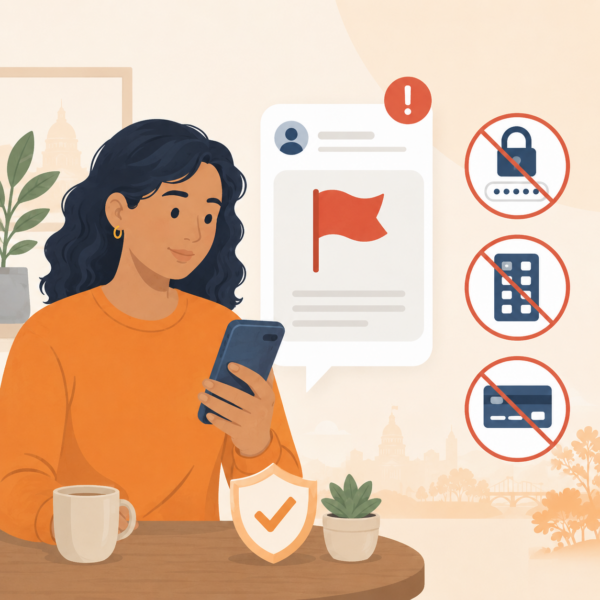 Text messages can be helpful for reminders, but they can also be difficult for residents to verify. A legitimate agency text may arrive from a short code, automated number, or sender the resident does not recognize. A scam text may use similar urgency, familiar program names, or language about benefits stopping. Because text messages are short and immediate, residents may feel pressured to click before they have time to think. Agencies that use text reminders should therefore be very clear about what official texts look like and what residents should do if they are unsure.
A strong text strategy avoids asking residents to provide sensitive information directly by text and points them to official verification channels. Texts should use consistent wording, avoid unnecessary links when possible, and clearly identify the agency or program. If links are used, residents should also be told that they can avoid the link and instead visit the official website or portal directly. This gives residents a safer option and reduces reliance on the message itself as the only proof of legitimacy.
Phone Calls Should Include a Verification Option
Phone calls are another channel where residents may struggle to distinguish official communication from fraud. A legitimate call may come from a caseworker, eligibility worker, call center, appointment scheduler, contractor, or automated system. Residents may not recognize the number and may be hesitant to answer, especially if they have received scam calls before. At the same time, missing a legitimate call can delay an interview, document request, renewal review, or case resolution. Agencies need to help residents understand how to verify calls without losing access to important communication.
Official phone scripts should include a clear verification option. Staff can identify the agency, explain the reason for the call in general terms, and tell residents how to confirm the call through a published agency number if they are uncomfortable continuing. Automated messages should be written carefully so they do not sound like threats or demand sensitive information before verification. Residents should be reassured that it is appropriate to protect their information and confirm the source of the call. This builds trust because the agency is not asking residents to choose between safety and compliance.
Email and Portal Communication Should Reinforce the Source of Truth
Email can be useful for reminders and updates, but it also creates verification challenges. Residents may receive messages from unfamiliar addresses, statewide systems, contractors, or program-specific accounts. If email messages include links, attachments, or requests for documents, residents may not know whether the message is safe. Public benefits agencies should therefore treat email as a channel that points residents back to a verified source of truth rather than as a place where sensitive action should happen without confirmation.
Portal communication can help solve this problem when it is clear and consistent. An email can tell residents that a new notice or action is available in the official portal without asking them to send sensitive information in reply. The portal should then display the same action language residents see in mailed notices, text reminders, and staff scripts. If residents are trained to verify through the portal or official website, they have a safer way to respond when emails or texts feel uncertain.
Mailed Notices Still Need Anti-Scam Clarity
Mailed notices may feel more official than digital messages, but residents can still be uncertain about them. Scammers can imitate letter formats, use official-sounding language, or include phone numbers and payment instructions that appear urgent. Residents may also receive multiple legitimate letters from different programs, vendors, managed care plans, or agencies, making it harder to know which mail is connected to their benefits. Agencies should not assume that a printed letter is automatically trusted.
Official mailed notices can help residents verify legitimacy by using consistent formatting, clear agency identification, recognizable contact information, and plain-language verification guidance. A notice can remind residents to use the official phone number or website listed on the agency’s public materials if they are unsure. It can also explain that residents should not provide sensitive information or payment through suspicious contacts. Mail remains an important channel for many households, but it should still be connected to the same source-of-truth system used across text, phone, email, portals, and in-person service.
Residents Need to Know How to Verify Without Losing Time
Verification guidance is most useful when it helps residents protect themselves without delaying legitimate action. Public benefits communication often involves real deadlines, including renewal dates, document due dates, interview appointments, appeal deadlines, and benefit card issues. If residents are told only to be cautious, they may wait too long to respond. If they are told only to act quickly, they may be more vulnerable to scam messages that create false urgency. Human services agencies need to give residents a balanced message: take the message seriously, but verify through an official source before sharing sensitive information or using an unfamiliar link, number, or payment instruction.
This balance should be built into routine communication, not saved for fraud alerts after a problem has already spread. A renewal notice can remind residents how to confirm whether action is required. A text enrollment message can explain how official texts will appear. A website page can list safe ways to verify case status. A call center script can tell residents that it is appropriate to hang up and call back through the published agency number if they are unsure. These small, repeated cues help residents build a habit of verification while still responding to real agency requests on time.
Scam Warnings Should Be Connected to Real Benefit Scenarios
Residents are more likely to use scam guidance when it reflects the kinds of messages they actually receive. General warnings about fraud may be too abstract if they are not tied to real public benefits situations. A resident may not recognize a scam risk until the message references an EBT card, Medicaid renewal, SNAP recertification, child care authorization, cash assistance payment, missing document, or online account problem. Scam prevention communication should therefore connect red flags to the benefit scenarios residents know.
For example, agencies can explain that a suspicious message may claim benefits will stop unless the resident clicks a link immediately, asks for an EBT PIN, requests payment to restore benefits, asks for a full password, or tells the resident to provide personal information through an unfamiliar channel. The guidance should also explain what legitimate agency communication may look like, so residents do not reject every message that mentions benefits. This distinction is important. The agency is not only warning residents about what is unsafe. It is helping them recognize the safe path for confirming what is real.
Source-of-Truth Pages Can Reduce Channel Confusion
A source-of-truth page can give residents one stable place to verify official communication practices. This page does not need to include private case information. Its purpose is to explain how the agency communicates, what official channels residents should use, what the agency will never ask for through unverified contact, and what residents should do when a message seems suspicious. For public benefit agencies that communicate across mail, text, phone, email, portals, and partner networks, this kind of page can reduce uncertainty by giving residents a reference point outside the suspicious message itself.
The page should be written in practical language and updated when communication practices change. If the agency begins using a new text message short code, online portal, email sender, appointment reminder system, or benefits card vendor, residents should be able to verify that change through the official website or another trusted channel. The page should also be easy for staff and community partners to reference. When a resident asks whether a message is official, everyone should be able to point to the same guidance rather than relying on memory or informal explanations.
Partner Organizations Need the Same Verification Guidance
Community partners often hear about suspicious messages before agencies do. Clinics, food banks, schools, libraries, legal aid organizations, housing providers, child care resource organizations, workforce programs, senior service providers, and other community-based groups may help residents interpret benefits communication. If those partners do not have clear verification guidance, they may have to make judgment calls based on incomplete information. That can create inconsistent advice, even when partners are trying to protect residents.
Human services agencies can strengthen scam prevention by giving partners simple, repeatable guidance. Partner materials should explain official communication channels, common scam red flags, safe verification steps, and where to report suspicious messages when appropriate. They should also include plain-language reminders that partners can share with residents, such as using the official agency website or published phone number instead of relying on a link inside an unexpected message. When partner guidance matches agency guidance, residents are more likely to receive consistent advice from the people they already trust.
Staff Scripts Should Normalize Verification
Residents may feel awkward questioning whether a call, text, email, or letter is official. They may worry that asking for verification will delay their case, offend staff, or make them seem uncooperative. Staff scripts can help normalize verification by making it clear that protecting personal information is expected. A call center representative or caseworker can say that residents should use official channels when they are unsure, and that calling back through the published number is a safe option. This message reassures residents that verification is not resistance. It is responsible participation in the process.
Scripts should also help staff avoid accidentally creating scam-like interactions. Staff should be careful when asking for sensitive information before a resident has had a chance to verify the call. Automated messages should avoid vague threats, unexplained urgency, or instructions that push residents toward unfamiliar links without a safer alternative. If staff and systems communicate in ways that resemble scam tactics, residents will have a harder time distinguishing official contact from fraud. Consistent, calm, and transparent scripts help protect both the resident and the agency’s credibility.
Scam Communication Should Be Tested Before Residents Need It
Scam prevention guidance should be tested before a major fraud alert, benefit card issue, renewal surge, or suspicious-message campaign creates urgency. Agencies may believe their warnings are clear because staff understand the difference between official and fraudulent contact. Residents do not always have that same context. They may be comparing an unexpected text to a mailed notice, an unfamiliar call to a real deadline, or a suspicious email to a recent portal alert. Testing helps agencies determine whether residents can actually use the guidance when they are unsure.
Useful testing should focus on practical decisions. Residents, frontline staff, call center teams, community partners, and navigators can review sample messages and explain what they would do next. They should be able to identify the safe verification path, recognize common red flags, understand what the agency will not ask for, and know how to confirm whether action is required. If the guidance only teaches people to be afraid of scams but does not teach them how to verify official communication, it needs to be strengthened.
Agencies Should Track Where Verification Confusion Appears
Verification confusion often leaves a trail across the agency’s communication channels. Residents may call to ask whether a text is real, bring letters to a local office for confirmation, ask community partners to interpret suspicious messages, report scams after clicking a link, or miss legitimate deadlines because they were uncertain. These patterns can show where official communication is not predictable enough. They can also reveal whether residents know where to verify messages before taking action.
Human services agencies can use this information to improve communication over time. If many residents question official texts, the agency may need clearer text enrollment language or a website page showing how official reminders work. If residents ignore legitimate calls, staff scripts and callback instructions may need to be more visible. If scam reports cluster around EBT card issues, renewal deadlines, or document requests, agencies can create targeted guidance tied to those scenarios. The goal is not only to respond after scams occur. It is to learn where residents need stronger verification support before confusion causes harm.
Official Messages Should Avoid Scam-Like Design
Agencies can make verification harder when official messages resemble the tactics used by scammers. Messages that rely on vague urgency, unexplained threats, unfamiliar links, unclear sender information, or requests for sensitive information without context may cause residents to doubt legitimate communication. Even when the message is real, it may look unsafe. This can weaken response rates, increase calls, and make residents more hesitant to engage with the agency in the future.
Official public benefits communication should be designed to look and sound trustworthy. Texts and emails should identify the agency clearly, use consistent wording, avoid unnecessary pressure, and point residents to known official channels. Phone calls should allow residents to verify through a published number. Mailed notices should use consistent formatting and recognizable contact information. Portal alerts should match the language used in notices and reminders. When official communication avoids scam-like patterns, residents are better able to recognize the agency’s voice and safer verification habits become easier to follow.
Verification Guidance Should Be Multilingual and Accessible
Scam prevention communication must be accessible to the residents most likely to face barriers when judging whether a message is official. Residents with limited English proficiency, disabilities, lower literacy, limited technology access, unstable housing, shared phones, or reliance on family members and community partners may face greater risk when communication is unclear. A scam warning that appears only in dense English text on a website may not reach residents who need practical guidance in a more accessible format.
Human services agencies should provide verification guidance in the languages and formats residents use. That may include translated website content, plain-language inserts in notices, lobby posters, call center scripts, partner handouts, audio or video explainers, and accessible digital formats. The guidance should not rely only on abstract warnings. It should use concrete examples that residents can recognize, such as requests for EBT PINs, suspicious renewal links, fake benefit payment messages, or calls demanding personal information. Accessible scam communication helps residents protect themselves without creating another barrier to legitimate benefits action.
Scam Response Should Reinforce Trust, Not Shame Residents
Residents who respond to a scam may already feel embarrassed, worried, or afraid that they will be blamed. If agency communication sounds judgmental, residents may delay reporting the problem or avoid contacting the agency at all. That delay can make harm worse, especially when benefits cards, personal information, account access, or deadlines are involved. Agencies should frame scam responses in a way that encourages early reporting and practical next steps.
A stronger message acknowledges that scam messages can look official and that residents should contact the agency through verified channels when they are unsure. If a resident clicked a link, shared information, or received a suspicious message, the agency should explain what to do next in clear, calm language. This may include reporting the message, securing an account, replacing a card, checking case status, or contacting a published agency number. The tone should make clear that the agency’s priority is helping residents protect their benefits and information, not shaming them for being targeted.
Clear Verification Guidance Supports Both Security and Access
Scam prevention and benefits access should not be treated as competing goals. Residents need to protect their personal information, but they also need to respond to legitimate agency communication on time. If scam warnings make residents afraid of every text, call, email, or letter, access can suffer. If official communication pushes residents to act quickly without verification, security can suffer. Public benefits agencies need a communication approach that supports both.
The strongest verification guidance gives residents a reliable way to move from uncertainty to safe action. It explains official channels, names red flags, identifies what the agency will never ask for, and points people back to a source of truth. It prepares staff and partners to reinforce the same message. It also makes official communication more predictable, so residents can recognize it more easily. When agencies approach scam prevention this way, they protect residents from fraud while preserving the timely communication needed to maintain benefits.
Strategic Communication Support for Human Services and Public Benefits Agencies
 Scam verification communication is not only a fraud prevention message. It is part of how human services agencies protect access, maintain trust, and help residents respond safely to legitimate benefits communication. For public benefits agencies, county social services departments, and state benefits offices, residents may receive texts, calls, emails, portal alerts, and mailed notices about SNAP, Medicaid, cash assistance, child care assistance, housing-related support, energy assistance, EBT cards, renewals, document requests, and case status. When residents cannot tell whether a message is official, they may either ignore legitimate communication or respond to a scam. Both outcomes can harm residents and create additional pressure for agencies.
Because scam prevention sits at the intersection of resident behavior, digital communication, program operations, fraud risk, access, and public trust, many agencies benefit from outside communication support when improving verification guidance. Internal teams may know which channels are official, which vendors are used, which notices are legitimate, and which program messages are automated. Residents do not always have that same context. An external partner can help agencies translate internal communication practices into plain-language guidance residents can actually use when they receive an unexpected text, call, email, or letter.
Stegmeier Consulting Group (SCG) helps human services and public benefits agencies build communication systems that help residents verify official information without missing legitimate action. That support may include source-of-truth page development, scam warning language, official channel guidance, resident-facing FAQs, text and email message review, call center scripts, partner toolkits, notice inserts, and communication alignment across portals, mailed notices, websites, offices, and community outreach. The goal is not to make residents afraid of every message. The goal is to give them a safe, repeatable way to confirm what is real and act through trusted channels.
This support is especially useful when agencies are expanding digital reminders, dealing with scam reports, updating EBT-related communication, launching new portals, coordinating with vendors, or trying to reduce resident confusion around official messages. Strong verification guidance helps residents protect personal information while still completing renewals, responding to document requests, attending interviews, and maintaining benefits when action is required.
Future Trends in Scam Verification Communication
Public benefits agencies are likely to place greater emphasis on official-channel education as residents receive more communication through text, email, portals, automated calls, mobile tools, and vendor-supported systems. As communication becomes more digital and more distributed, agencies will need to be clearer about which channels are official, what residents should expect from each channel, and how to verify messages that feel unfamiliar. Scam prevention will increasingly become part of routine benefits communication rather than a separate warning issued only after fraud activity is reported.
Another likely trend is stronger use of source-of-truth pages and verification hubs. Agencies may maintain public pages that explain official phone numbers, websites, portal links, text message practices, email practices, common scam red flags, and safe next steps. These pages can support residents, staff, partners, and media when suspicious messages circulate. They can also help agencies avoid repeated one-off explanations by giving everyone a consistent reference point.
Agencies may also align official communication more carefully so legitimate messages do not resemble scam tactics. Short, urgent, unexplained messages with unfamiliar links can undermine trust even when they are real. More agencies will likely review their texts, emails, automated calls, and portal alerts for clarity, sender identification, safe verification options, and consistency with mailed notices. This will help residents recognize official communication while reducing the risk that agency messages accidentally train residents to click quickly or share information through unverified channels.
Finally, scam verification communication will likely become more connected to equity and access. Residents with limited English proficiency, disabilities, lower literacy, unstable housing, shared phone access, limited digital access, or limited familiarity with agency systems may face greater difficulty distinguishing official communication from fraud. Agencies that provide multilingual, accessible, plain-language verification guidance will be better positioned to protect residents from scams while preserving access to legitimate benefits communication.
Conclusion
Residents should not have to guess whether a message about their benefits is official or fraudulent. Public benefits communication increasingly moves across texts, calls, emails, mailed notices, portals, vendors, and community partners. Without clear verification guidance, residents may ignore legitimate messages, respond to fraudulent ones, miss deadlines, expose personal information, or lose confidence in the agency’s communication.
Human services agencies can reduce this risk by explaining how official communication works, naming common scam red flags, identifying what the agency will never ask for through unverified contact, and giving residents a safe path to confirm current case information. The strongest guidance does not rely on fear alone. It gives residents practical steps for verifying messages while still responding to real benefit requirements on time.
In the end, scam prevention and benefits access belong together. Residents need to protect their information, but they also need to complete renewals, provide documents, attend interviews, and respond to official notices when action is required. Clear verification communication helps agencies support both goals. It strengthens trust, reduces confusion, protects residents from fraud, and makes official public benefits communication easier to recognize.
SCG’s Strategic Approach to Communication Systems
Align your agency’s messaging, processes, and public engagement strategies.
Human services and public benefits agencies need communication systems that help residents verify official messages without missing legitimate action or exposing sensitive information. Whether your agency is improving scam prevention guidance, aligning text and email reminders, strengthening source-of-truth pages, updating call center scripts, or creating clearer verification materials for residents and community partners, SCG can help you build a communication framework that supports clarity, access, security, and trust. Use the form below to connect with our team and explore how a strategic communication system can strengthen official-message verification and improve the resident experience.