
How Wastewater Agencies Can Communicate Infrastructure Projects and System Upgrades to the Public
Wastewater infrastructure sits at a particular disadvantage in the competition for public understanding. The pipes, pump stations, treatment processes, and collection systems that handle every gallon of wastewater generated in a community are almost entirely invisible in daily life, operated continuously and successfully until the moment they are not, and funded through rate increases that arrive with little public appreciation for what those rates sustain. A water main break is visible in the street. A wastewater collection system failure produces a sewage overflow that is unmistakably present. But the pump station that operates reliably for forty years and the collection main that conveys wastewater without incident for three decades leave no observable evidence of their function. The infrastructure that most warrants sustained investment produces no visible reminder of its value.
This invisibility creates a communication challenge that wastewater agencies have not historically addressed with the urgency it deserves. Capital programs representing hundreds of millions of dollars can proceed for years with minimal public comprehension of why the investment is necessary, what it costs, or how it connects to the service that every household in the community uses every day without thinking about it. The ratepayer who opens a bill that has increased to fund a treatment plant upgrade may understand in the abstract that wastewater treatment is important, but they are unlikely to understand specifically why this upgrade is necessary now, what it will accomplish, or why it costs what it costs. That gap between what the agency knows and what the ratepayer understands is the communication failure that wastewater infrastructure investment programs most consistently produce.
Capital investment communication for wastewater is also shaped by a peculiar public attention dynamic. The only moments when wastewater infrastructure captures public attention are when it fails, and the nature of wastewater system failures, sewage overflows, service disruptions, treatment plant upsets, is such that the attention they generate is overwhelmingly negative. An agency that communicates about its infrastructure primarily in response to failures is communicating in the worst possible context for building the understanding that capital investment requires. The public that encounters the agency primarily through crisis communication will struggle to receive capital investment communication as anything other than a further demand on ratepayers who have already experienced inadequate service.
This article examines how wastewater agencies can build the public understanding of infrastructure necessity before capital programs are launched, communicate the scope and rationale of major projects in terms that ratepayers can follow and evaluate, manage community communication during the construction and disruption phases that major projects inevitably create, connect project milestones and completions to the service improvements they produce, and build the long-term public understanding of aging infrastructure that sustained capital investment requires.
Building the Infrastructure Narrative Before the Capital Program
 The infrastructure narrative that makes capital investment communication credible is not built in a rate case announcement. It is built through the years of consistent, specific, and honest communication about infrastructure condition, system performance, and the relationship between aging assets and the service reliability that ratepayers depend on. Wastewater agencies that have invested in this narrative find that their capital program announcements land in a community that already understands the urgency, already has a framework for evaluating the investment, and already regards the agency as an institution that communicates honestly about the condition of the systems it manages. Agencies that have not built this narrative find that the same announcement generates skepticism, opposition, and the exhausting work of establishing basic infrastructure context under the pressure of an active rate case.
Condition assessment reporting is the foundation of the infrastructure narrative. When a wastewater agency communicates regularly about the findings of its infrastructure condition assessments, including the age distribution of its collection system, the condition grades of its major capital assets, and the relationship between infrastructure condition and system performance, it is building the evidentiary record that capital investment requires. The community that has seen three years of condition assessment reporting knows that the pump stations being proposed for replacement are genuinely beyond their design life. The community encountering that information for the first time in a project announcement must take it on faith.
Service performance data that connects infrastructure condition to ratepayer experience is the most compelling element of the infrastructure narrative. A wastewater agency that communicates the number of sanitary sewer overflows that occurred during the previous year, the portions of the collection system with the highest overflow frequency, and the infrastructure conditions that produce those overflows, is making the capital investment case with evidence that ratepayers can evaluate from their own knowledge of community conditions. The neighborhood that has experienced repeated basement backups, the waterway where overflow events have affected recreational access, the street that has been repaved twice because of collection main failures, are all evidence of infrastructure conditions that the capital program is designed to address.
Long-term system planning communication, which shares the agency’s multi-year capital investment priorities with the public before specific projects are funded or designed, is an infrastructure narrative investment that most agencies make inadequately. A community that understands that the agency has a twenty-year capital plan, that has seen the first five years of that plan executed as described, and that has received regular updates on the plan’s progress and any adjustments to its priorities, is a community that receives a new capital investment announcement as the next chapter of a story it has been following, not as an unexpected financial demand from an institution it does not understand.
From Fragmentation to Coordination: Communication Strategies for Councils of Governments, Metropolitan Planning Organizations, and Regional Planning Agencies
This case study is part of SCG’s series on communication for councils of governments, metropolitan planning organizations, and regional planning agencies. To learn more and to see the parent article, which links to other content just like this, click the button below.
Communicating Project Rationale and Scope
Translating Technical Necessity Into Public Language
Wastewater infrastructure projects are designed by engineers for regulatory and operational purposes, and the documentation that supports them, condition assessments, hydraulic models, regulatory compliance schedules, capital improvement program analyses, reflects those technical and regulatory purposes. Translating that documentation into communication that a ratepayer can understand and evaluate without engineering background is the core communication challenge of wastewater infrastructure project announcement. The translation must preserve the essential facts while making them accessible, which is more demanding than either reproducing the technical record or simplifying it into generalities that lack the specificity needed for genuine public evaluation.
Project rationale communication should answer the questions that ratepayers actually have about a proposed infrastructure investment: What is wrong with the current infrastructure. Why can the problem not be deferred. What will happen if the investment is not made. How much will it cost. How long will it take. What will the community experience differently when it is done. These questions do not require technical expertise to answer, but they do require honest, specific engagement with the technical record that produced the project proposal. Agencies that answer them specifically, with the infrastructure condition data and performance analysis that support the answers, build the public understanding that makes capital investment more governable.
Regulatory drivers for wastewater infrastructure investment deserve explicit communication because they shape the agency’s choices in ways that ratepayers may not recognize. A treatment plant upgrade that is driven by a new effluent quality standard set by a state or federal regulator is a different communication situation than one driven entirely by the agency’s own assessment of infrastructure condition. In the regulatory case, communicating the regulatory driver, what standard is being required, why the regulator has set it, and what the consequences of non-compliance would be, provides the external accountability context that helps ratepayers understand why the investment is not a discretionary choice. Without that context, the regulatory driver is invisible and the investment appears to be an agency initiative whose necessity the ratepayer cannot independently evaluate.
Making the Cost Case
Capital cost estimates for wastewater infrastructure projects carry a specific communication burden: they are the figures that ratepayers will most closely scrutinize, remember most clearly, and return to most critically if actual costs deviate from the estimate. The communication of capital cost estimates must therefore be both honest about the estimate’s basis and clear about the uncertainty that any estimate of a complex infrastructure project involves. An estimate presented as a precise commitment will be evaluated as such when project costs evolve, while an estimate presented as a best-current projection with explicit acknowledgment of the factors that could affect it is received in a more appropriate evaluative context.
Cost-per-household translation is among the most useful communication tools for wastewater infrastructure projects because it converts an abstract capital figure into a concrete household financial reality. The ratepayer who is told that a fifty-million-dollar treatment plant upgrade will be funded through a rate structure that increases the average monthly bill by a specific dollar amount has the information they need to evaluate the investment against their own household finances. The same ratepayer told only that the project costs fifty million dollars has a number without a context for evaluating its personal implications. The translation from project cost to household impact should reflect realistic usage profiles and should acknowledge the range of impacts across different usage levels and rate structures.
Cost comparison with deferred investment is one of the most compelling arguments available to wastewater agencies communicating capital project necessity, and it is one of the least used. A treatment plant that has reached the end of its design life will require either planned replacement, which can be managed on an engineered schedule with cost certainty, or emergency repair and eventual replacement when components fail, which is more expensive, less manageable, and more disruptive to service. Communicating this comparison with specific historical data, showing what emergency repairs of specific infrastructure types have cost relative to planned replacement of the same infrastructure, provides the ratepayer with a concrete financial argument for proactive investment rather than an abstract argument about the importance of maintenance.
Community Communication During Active Construction
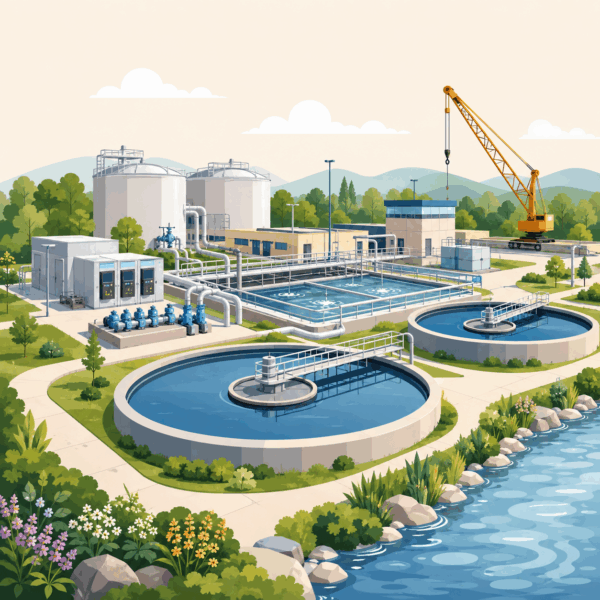 Wastewater infrastructure construction that occurs in or near residential areas creates a community communication obligation that extends well beyond project announcement and milestone updates. Residents and businesses that experience the direct impacts of active construction, including noise, dust, traffic disruption, restricted parking, reduced road access, and the occasional odor event associated with work on live sewer systems, are experiencing the project as a daily reality rather than as a distant capital commitment. Communication that does not address these immediate, practical impacts of construction fails to serve the people most directly affected by the project.
Pre-construction notification for residents and businesses within the direct impact area of a construction project should be specific enough to allow them to plan around the work. The general project description, the construction timeline, the specific streets and areas affected, the hours of operation, the parking and access impacts, the points of contact for questions and complaints, and the timeline for specific phases of work that will have the most significant impacts should all be communicated before construction begins. A resident who receives this information two weeks before construction starts is in a different position to manage the disruption than one who discovers the work underway from equipment noise and temporary traffic control signs.
Daily or weekly construction updates for residents and businesses in active impact areas, providing information about what work occurred, what is planned for the coming period, and any changes to the construction schedule that affect community access or activity, maintain the communication relationship through the construction period rather than allowing the pre-construction notification to stand as the only substantive community communication until the project concludes. These updates can be brief and practical, focusing on the information that residents and businesses need to manage their own routines around the construction, rather than comprehensive project management reports that contain more technical detail than most recipients want.
Odor events associated with work on live sewer systems or with treatment processes that are temporarily disrupted by construction warrant specific and immediate communication because they are directly experienced by nearby residents and because their association with wastewater creates public health concern that vague or delayed communication amplifies. A brief, specific communication that acknowledges an odor event, identifies its source and the construction activity that caused it, and commits to a timeline for the odor to dissipate as construction activities are completed or adjusted, is more effective at managing community concern than silence that allows odor to persist without explanation.
Communicating Project Milestones and Completion
Infrastructure project milestones are communication opportunities that most wastewater agencies underutilize. The completion of a major project phase, the connection of a new treatment process, the elimination of a known overflow point, or the rehabilitation of a collection main that has caused repeated failures, are all events that deserve public communication that connects the construction activity to the service improvement it produces. Agencies that announce construction starts but not construction completions, that communicate project costs but not project outcomes, are managing the most adversarial communication moment, the rate increase that funds the project, without managing the most favorable moment, the project completion that validates the investment.
Project completion communication should directly and specifically connect what was built to the service improvement that ratepayers will experience. A treatment plant upgrade that allows the agency to meet a new nutrient effluent standard should be communicated in terms of what the standard requires and why meeting it matters for the receiving water body. A pump station replacement that eliminates a chronic overflow location should be communicated with reference to the overflow history that made the replacement necessary. A collection system rehabilitation that addresses a high-failure segment should be communicated with data on how the failure rate is expected to change as a result of the rehabilitation. The specific connection between the investment and the outcome is what transforms a project completion announcement from administrative closure into accountability communication.
Before-and-after performance data for completed infrastructure investments is the most credible form of outcome communication available because it provides the empirical evidence of program value that forward-looking projections cannot. An agency that commits at project announcement to reporting before-and-after performance data for a capital investment, and that delivers on that commitment after construction is complete, is demonstrating the accountability that distinguishes a utility that regards its capital investment communication as a genuine public responsibility from one that communicates about investment when it needs community support and goes silent when the investment has been made.
Long-Term Infrastructure Understanding as a Communication Investment
The public understanding of wastewater infrastructure that makes sustained capital investment possible is not built through a single project announcement or even through a sustained campaign surrounding a single capital program. It is built through the accumulated effect of consistent, honest, and accessible communication about what the system does, why it requires continuous investment, what the consequences of inadequate investment are, and how the agency is managing the long-term stewardship responsibility that ratepayer-funded infrastructure creates. This understanding develops slowly and requires sustained communication investment that most agencies are not staffed or resourced to provide without deliberate programmatic commitment.
Annual infrastructure investment reports that summarize the capital work completed in the preceding year, the assets replaced or rehabilitated, the service improvements achieved, and the capital work planned for the coming year, provide the regular accounting of infrastructure stewardship that long-term public understanding requires. These reports should be written for a ratepayer audience, not for a technical or regulatory audience, and should connect the financial and engineering information they contain to the service outcomes and community benefits that ratepayers care about. A report that tells ratepayers how many feet of collection main were rehabilitated, what the cost was, and what the expected service life extension is, is more useful for building infrastructure understanding than one that presents the same information in the asset management terminology that internal staff use.
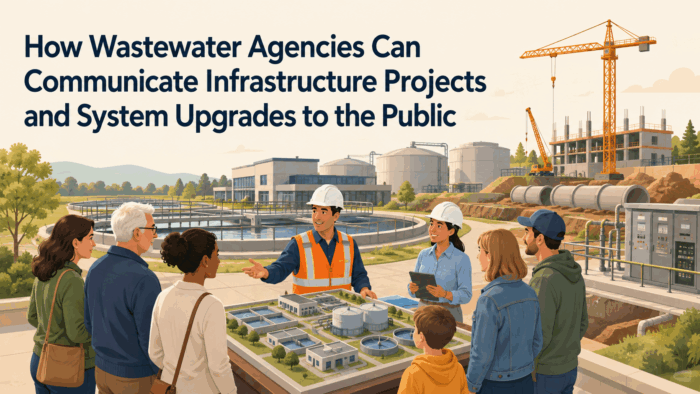
Community facility tours and educational events at treatment plants and major infrastructure facilities provide the visceral understanding of infrastructure scale and complexity that written communication cannot convey. A ratepayer who has seen a treatment plant at full operation, who has walked the headworks and biological treatment processes, and who has spoken with the operators who manage the facility around the clock, has a fundamentally different understanding of what wastewater treatment involves and why it costs what it costs than one who has only read about it. Agencies that make these educational opportunities regularly available, to community groups, school classes, elected officials, and interested members of the public, are building the base of informed community understanding that capital investment communication draws on.
Making the Cost Case
Capital cost estimates for wastewater infrastructure projects carry a specific communication burden: they are the figures that ratepayers will most closely scrutinize, remember most clearly, and return to most critically if actual costs deviate from the estimate. The communication of capital cost estimates must therefore be both honest about the estimate’s basis and clear about the uncertainty that any estimate of a complex infrastructure project involves. An estimate presented as a precise commitment will be evaluated as such when project costs evolve, while an estimate presented as a best-current projection with explicit acknowledgment of the factors that could affect it is received in a more appropriate evaluative context.
Cost-per-household translation is among the most useful communication tools for wastewater infrastructure projects because it converts an abstract capital figure into a concrete household financial reality. The ratepayer who is told that a fifty-million-dollar treatment plant upgrade will be funded through a rate structure that increases the average monthly bill by a specific dollar amount has the information they need to evaluate the investment against their own household finances. The same ratepayer told only that the project costs fifty million dollars has a number without a context for evaluating its personal implications. The translation from project cost to household impact should reflect realistic usage profiles and should acknowledge the range of impacts across different usage levels and rate structures.
Cost comparison with deferred investment is one of the most compelling arguments available to wastewater agencies communicating capital project necessity, and it is one of the least used. A treatment plant that has reached the end of its design life will require either planned replacement, which can be managed on an engineered schedule with cost certainty, or emergency repair and eventual replacement when components fail, which is more expensive, less manageable, and more disruptive to service. Communicating this comparison with specific historical data, showing what emergency repairs of specific infrastructure types have cost relative to planned replacement of the same infrastructure, provides the ratepayer with a concrete financial argument for proactive investment rather than an abstract argument about the importance of maintenance.
Community Communication During Active Construction
Wastewater infrastructure construction that occurs in or near residential areas creates a community communication obligation that extends well beyond project announcement and milestone updates. Residents and businesses that experience the direct impacts of active construction, including noise, dust, traffic disruption, restricted parking, reduced road access, and the occasional odor event associated with work on live sewer systems, are experiencing the project as a daily reality rather than as a distant capital commitment. Communication that does not address these immediate, practical impacts of construction fails to serve the people most directly affected by the project.
Pre-construction notification for residents and businesses within the direct impact area of a construction project should be specific enough to allow them to plan around the work. The general project description, the construction timeline, the specific streets and areas affected, the hours of operation, the parking and access impacts, the points of contact for questions and complaints, and the timeline for specific phases of work that will have the most significant impacts should all be communicated before construction begins. A resident who receives this information two weeks before construction starts is in a different position to manage the disruption than one who discovers the work underway from equipment noise and temporary traffic control signs.
Daily or weekly construction updates for residents and businesses in active impact areas, providing information about what work occurred, what is planned for the coming period, and any changes to the construction schedule that affect community access or activity, maintain the communication relationship through the construction period rather than allowing the pre-construction notification to stand as the only substantive community communication until the project concludes. These updates can be brief and practical, focusing on the information that residents and businesses need to manage their own routines around the construction, rather than comprehensive project management reports that contain more technical detail than most recipients want.
Odor events associated with work on live sewer systems or with treatment processes that are temporarily disrupted by construction warrant specific and immediate communication because they are directly experienced by nearby residents and because their association with wastewater creates public health concern that vague or delayed communication amplifies. A brief, specific communication that acknowledges an odor event, identifies its source and the construction activity that caused it, and commits to a timeline for the odor to dissipate as construction activities are completed or adjusted, is more effective at managing community concern than silence that allows odor to persist without explanation.
Communicating Project Milestones and Completion
Infrastructure project milestones are communication opportunities that most wastewater agencies underutilize. The completion of a major project phase, the connection of a new treatment process, the elimination of a known overflow point, or the rehabilitation of a collection main that has caused repeated failures, are all events that deserve public communication that connects the construction activity to the service improvement it produces. Agencies that announce construction starts but not construction completions, that communicate project costs but not project outcomes, are managing the most adversarial communication moment, the rate increase that funds the project, without managing the most favorable moment, the project completion that validates the investment.
Project completion communication should directly and specifically connect what was built to the service improvement that ratepayers will experience. A treatment plant upgrade that allows the agency to meet a new nutrient effluent standard should be communicated in terms of what the standard requires and why meeting it matters for the receiving water body. A pump station replacement that eliminates a chronic overflow location should be communicated with reference to the overflow history that made the replacement necessary. A collection system rehabilitation that addresses a high-failure segment should be communicated with data on how the failure rate is expected to change as a result of the rehabilitation. The specific connection between the investment and the outcome is what transforms a project completion announcement from administrative closure into accountability communication.
Before-and-after performance data for completed infrastructure investments is the most credible form of outcome communication available because it provides the empirical evidence of program value that forward-looking projections cannot. An agency that commits at project announcement to reporting before-and-after performance data for a capital investment, and that delivers on that commitment after construction is complete, is demonstrating the accountability that distinguishes a utility that regards its capital investment communication as a genuine public responsibility from one that communicates about investment when it needs community support and goes silent when the investment has been made.
Long-Term Infrastructure Understanding as a Communication Investment
The public understanding of wastewater infrastructure that makes sustained capital investment possible is not built through a single project announcement or even through a sustained campaign surrounding a single capital program. It is built through the accumulated effect of consistent, honest, and accessible communication about what the system does, why it requires continuous investment, what the consequences of inadequate investment are, and how the agency is managing the long-term stewardship responsibility that ratepayer-funded infrastructure creates. This understanding develops slowly and requires sustained communication investment that most agencies are not staffed or resourced to provide without deliberate programmatic commitment.
Annual infrastructure investment reports that summarize the capital work completed in the preceding year, the assets replaced or rehabilitated, the service improvements achieved, and the capital work planned for the coming year, provide the regular accounting of infrastructure stewardship that long-term public understanding requires. These reports should be written for a ratepayer audience, not for a technical or regulatory audience, and should connect the financial and engineering information they contain to the service outcomes and community benefits that ratepayers care about. A report that tells ratepayers how many feet of collection main were rehabilitated, what the cost was, and what the expected service life extension is, is more useful for building infrastructure understanding than one that presents the same information in the asset management terminology that internal staff use.
Community facility tours and educational events at treatment plants and major infrastructure facilities provide the visceral understanding of infrastructure scale and complexity that written communication cannot convey. A ratepayer who has seen a treatment plant at full operation, who has walked the headworks and biological treatment processes, and who has spoken with the operators who manage the facility around the clock, has a fundamentally different understanding of what wastewater treatment involves and why it costs what it costs than one who has only read about it. Agencies that make these educational opportunities regularly available, to community groups, school classes, elected officials, and interested members of the public, are building the base of informed community understanding that capital investment communication draws on.
How Wastewater Infrastructure Communication Compares With Other Capital Program Communication
Wastewater infrastructure communication shares many characteristics with other large public capital program communication, including the challenge of building public understanding before projects are proposed, the need to translate technical necessity into accessible public language, and the importance of connecting construction activity to service outcomes. What distinguishes wastewater infrastructure communication is the specific challenge of making invisible infrastructure visible, of building public understanding of and concern for infrastructure that provides no sensory evidence of its function when it is working correctly.
The comparison with transportation infrastructure communication is instructive. Roads and bridges are visible infrastructure that residents use directly, whose condition deteriorates in ways that drivers experience, and whose repair generates observable improvement that drivers can recognize. Wastewater collection systems and treatment plants are invisible infrastructure whose condition is not directly experienced by ratepayers until it fails, and whose successful operation produces no observable benefit beyond the absence of the failure that would otherwise occur. This fundamental difference in visibility means that wastewater infrastructure communication must do the work of making condition, necessity, and improvement visible through communication, a task that transportation infrastructure communication can partially delegate to ratepayers’ direct experience.
Communicating Aging Infrastructure to a Non-Technical Public
The concept of infrastructure aging is intuitive to anyone who has watched a house, a car, or a consumer appliance deteriorate over time. But the specific way that wastewater infrastructure ages, the mechanisms by which pipes corrode, joints separate, pump components wear, and biological treatment processes become less reliable as equipment reaches the end of its design life, is not intuitive to most ratepayers. And unlike the visible deterioration of a house or a car, the deterioration of wastewater infrastructure is invisible until it produces a system failure that is visible in the worst possible way.
Communication about infrastructure aging should translate the technical concept into terms that connect to everyday experience. A collection main installed in the 1950s has been in continuous service for more than seventy years, handling a corrosive waste stream through seasonal temperature cycles that stress the pipe material with every freeze-thaw event. The joints that connect pipe sections have been subjected to decades of soil movement, traffic loading, and the differential settlement that occurs as soils consolidate over time. The grease and debris that accumulate in collection mains despite routine maintenance operations have been building up progressively. None of this is visible from the surface, but every element of it contributes to the failure risk that condition assessment is designed to document.
Infrastructure condition grades, which translate technical assessment findings into categorical ratings such as excellent, good, fair, poor, or critical, provide a communication shorthand that most ratepayers can understand without technical explanation. A wastewater agency that reports regularly on the distribution of its infrastructure by condition grade, and that explains what each grade means for service reliability and maintenance requirements, is communicating infrastructure condition in terms that non-specialists can evaluate and track over time. A condition profile that shows the proportion of critical and poor condition assets increasing over successive assessment cycles is communicating infrastructure urgency in terms that do not require technical background to interpret.
Visual documentation of infrastructure condition, including photographs and video from CCTV pipe inspections that show the internal condition of collection mains, is among the most powerful communication tools available for making invisible infrastructure visible. An image showing significant corrosion, root intrusion, joint separation, or structural deterioration in a collection main that serves a residential neighborhood communicates infrastructure urgency in a way that no verbal description can fully replicate. Agencies that include visual documentation in their public-facing infrastructure condition communication are providing ratepayers with the direct evidence of necessity that makes capital investment more comprehensible and more supportable.
Coordinating Capital Communication With Rate Case Filings
Wastewater infrastructure capital programs that require rate increases to fund them create a communication timeline that connects the infrastructure narrative to the rate case announcement in ways that most agencies do not plan deliberately. The rate case is typically filed when the capital program is far enough advanced to support a specific financial analysis. But the infrastructure narrative that makes the rate case comprehensible needs to have been building for months or years before the rate case is filed. The agency that begins its rate case communication on the day it files the rate application is working against the momentum of public skepticism rather than with the momentum of established public understanding.
The optimal communication timeline for a capital-driven wastewater rate increase begins with infrastructure condition communication at least two to three years before a rate case is anticipated. This communication establishes the baseline of public understanding about system condition that the rate case rationale will draw on. In the year before the rate case is filed, the communication should become more specific about the capital investment priorities that the rate case will fund, explaining what projects are being planned, why they are necessary, and what the alternatives to investing in them are. The rate case announcement itself should arrive in a community that already understands the infrastructure conditions driving it, has been following the capital program’s development, and has seen enough of the agency’s communication track record to evaluate the rate case rationale as credible.
Post-rate case communication should close the loop between the capital investment funded by the rate increase and the service improvements those investments produce. A rate case that funds a collection system rehabilitation program should be followed by regular reporting on the program’s progress, the footage rehabilitated, the condition improvements achieved, and the service reliability changes observed in the rehabilitated areas. That reporting connects the rate increase ratepayers accepted to the investment outcomes the rate case promised, building the credibility that the next capital investment discussion will depend on.
Treatment Plant Communication
Wastewater treatment plants are the most complex and most consequential infrastructure in the wastewater system, and they are also among the least understood by the ratepayers who fund their operation. A treatment plant that processes millions of gallons of wastewater per day through a series of physical, biological, and chemical processes before discharging treated effluent to a receiving water body is performing a function that most residents understand only in the vague terms of water being cleaned before it goes back to the environment. The specific processes, their operational requirements, their performance metrics, and the investment required to maintain them at regulatory compliance standards, are largely unknown outside the engineering and regulatory community.
Treatment plant communication should demystify the facility without oversimplifying the processes. A series of plain-language explanations of the major treatment processes, connected to the specific pollutants they remove and the receiving water quality standards they are designed to meet, gives ratepayers the conceptual framework for understanding why treatment plant upgrades are necessary and what they accomplish. A description that explains that biological nutrient removal processes require regular equipment maintenance, that the aeration systems that sustain the biological processes consume significant energy and have defined service lives, and that the disinfection systems that kill pathogens before discharge require ongoing chemical and equipment investment, is communication that translates operational requirements into the investment justification that capital project announcements draw on.
Permit limit communication, which explains the effluent quality standards that the treatment plant must meet and how current plant performance compares with those standards, provides the regulatory accountability context that treatment plant upgrade justification requires. A plant that is currently meeting all of its permit limits and that needs upgrade to continue meeting them as its equipment ages, or to meet more stringent limits that a permit renewal will require, has a different communication situation than one that is already struggling to meet current limits. In both cases, the communication should be honest about the plant’s current performance relative to its regulatory obligations and about what the proposed upgrade will accomplish.
Green Infrastructure and Nature-Based Solution Communication
Green infrastructure components of wastewater capital programs, including constructed wetlands for polishing treatment effluent, riparian buffer restoration for receiving water quality improvement, and urban green infrastructure for combined sewer overflow reduction, present communication opportunities that conventional gray infrastructure projects do not. These nature-based components are visible in the landscape, improve community aesthetics alongside their functional performance, and provide co-benefits including urban heat island reduction, wildlife habitat, and recreational amenity that gray infrastructure does not produce. Communication that highlights these co-benefits alongside the primary wastewater management function positions green infrastructure investment as a community improvement initiative as well as a wastewater program capital expenditure.
Combined sewer overflow reduction programs, which often include green infrastructure components designed to reduce the volume of stormwater that enters combined sewer systems during rainfall events, provide particularly visible evidence of wastewater program investment in community quality of life. A rain garden installed in a residential neighborhood reduces the probability of basement backups and combined sewer overflows while adding aesthetic value and biodiversity to the streetscape. Communication that connects these installations to the community experiences that residents actually care about, cleaner waterways for swimming and recreation, reduced basement flooding risk, improved neighborhood aesthetics, is communication that transcends the utility management frame and speaks to the community improvement outcomes that wastewater investment can produce.
Communicating With Elected Officials About Wastewater Capital Programs
Elected officials who must vote on rate increases, bond authorizations, and capital program approvals for wastewater infrastructure have both governance obligations and political accountability that make their information needs specific and their communication relationship with the utility consequential. An elected official who does not understand the infrastructure conditions driving a proposed capital program cannot effectively explain it to constituents, cannot credibly defend a rate increase that funds it, and cannot provide the governance accountability that the investment requires. Wastewater agencies that do not invest in elected official communication before they need elected official support are consistently surprised by opposition that better communication would have prevented.
Elected official briefings for wastewater capital programs should be substantive and specific, covering the infrastructure conditions driving the investment, the regulatory requirements that constrain the agency’s choices, the capital program’s scope and cost, the rate implications for different household types in the official’s district, the service reliability improvements the program will produce, and the consequences of deferral. Officials who receive this level of briefing before a rate case is filed are equipped to respond to constituent questions accurately, to participate constructively in public hearings, and to vote on the rate case with the understanding that responsible governance of public infrastructure requires.
Governing board education for wastewater utilities that have elected or appointed governing boards follows the same principles that apply to elected official briefings for any public utility, but with the additional governance accountability dimension that board members who approve capital programs and rate increases bear direct accountability for those decisions. Board members who have developed genuine understanding of the wastewater system’s infrastructure condition, the technical and regulatory drivers of the capital program, and the long-term financial sustainability implications of different investment levels, are governing boards that can exercise their accountability function with the competence that responsible infrastructure governance requires.
Communicating During Wastewater Infrastructure Failures
Wastewater infrastructure failures that produce service disruptions, overflows, or treatment plant upsets are the communication moments that most directly test the relationship between a wastewater agency and its ratepayers. These failures occur when the infrastructure that the agency manages reaches a condition where it can no longer perform its intended function, whether because of acute failure, gradual deterioration, extreme weather, or operational incident. The communication that accompanies those failures must simultaneously manage the immediate public health and service implications of the event and contribute to the longer-term narrative of infrastructure condition and investment necessity that makes capital program communication more credible.
Service disruption communication for wastewater events follows the same rapid, multi-channel, honest principles that apply to sewer disruption communication more broadly, but with the additional context of the infrastructure investment narrative that a well-managed wastewater agency has been building over time. A collection main failure that causes a localized service disruption in a neighborhood that has received regular communication about the aging distribution of that collection system is a different communication event than the same failure occurring in the context of no prior infrastructure condition communication. In the first case, the failure is a confirming event in a narrative that residents have been following. In the second, it is an unexplained institutional failure with no prior context for evaluation.
Treatment plant operational incidents that temporarily compromise effluent quality or treatment capacity require immediate notification to environmental regulators and timely communication to the communities and water bodies downstream of the facility. The communication should distinguish clearly between an incident that has been controlled and corrected and one that remains active, provide specific information about the operational parameters affected and the timeline for their restoration, and identify the environmental monitoring that is being conducted to assess and document the incident’s impacts. Agencies that have established the monitoring and reporting protocols for treatment plant incidents before incidents occur will communicate them more accurately and more quickly than those that must establish those protocols under operational pressure.
Post-failure analysis communication, which reviews significant infrastructure failures for their causes, their consequences, and the operational and capital responses that will prevent or reduce recurrence, is the accountability communication that connects individual failure events to the ongoing infrastructure investment program. A collection main failure that is traced to corrosion in a section of pipe that was identified in a prior condition assessment as requiring rehabilitation is a communication opportunity to connect the failure to the capital program that would have prevented it, and to advocate for the program’s continued funding with the specific evidence of deferred investment consequences that the failure provides. This connection between failure evidence and investment advocacy is the most compelling form of infrastructure capital communication available to wastewater agencies.
Multi-Agency Coordination in Wastewater Capital Communication
Major wastewater infrastructure projects often intersect with the responsibilities and communication programs of multiple other public agencies. Treatment plant upgrades that require Environmental Protection Agency or state environmental agency permit modifications must coordinate their public communication with the regulatory agency’s own public notice and comment processes. Collection system rehabilitation projects that involve street reconstruction must coordinate with public works departments on construction communication and traffic management. Combined sewer overflow control programs must coordinate with stormwater agencies on the green infrastructure components that reduce combined system wet weather flows.
Each of these coordination requirements creates both communication obligations and communication opportunities. The obligation is to ensure that the public receives consistent information about the project regardless of which agency’s communication they encounter. The opportunity is to combine the communication resources and community relationships of multiple agencies to reach a broader and more diverse audience than any single agency can reach alone. A treatment plant upgrade that is communicated jointly by the wastewater agency and the state environmental agency, connecting the project to the permit requirements and receiving water quality goals that drive it, is communication that carries both agencies’ credibility and reaches both agencies’ audiences.
Coordination protocols that establish which agency is responsible for which aspects of public communication, how information will be shared between agencies before it is released publicly, and how inconsistencies between agencies’ communications will be identified and resolved, are the pre-project coordination investment that prevents the confusion that uncoordinated multi-agency communication produces. These protocols do not require every communication to be jointly produced. They require agreement on the underlying facts, timeline, and key messages that each agency will convey through its own channels, so that the public encounters a coherent story about the project regardless of which agency’s communication it accesses.
Tying It All Together
Wastewater infrastructure communication is ultimately the communication of invisible public service: of the work that must be done continuously and well for communities to function without thinking about it, and the investment that must be made proactively to prevent the visible failures that occur when that work is inadequately supported. The agencies that communicate this most effectively are those that treat the invisibility of their infrastructure as a communication challenge to be systematically addressed rather than as a natural feature of the service that excuses limited public engagement.
The infrastructure narrative that enables effective wastewater capital investment communication is built through condition assessment reporting, service performance data, long-term system planning communication, and the consistent, honest, and accessible communication about the relationship between infrastructure investment and the service reliability that every household depends on. When that narrative is established, capital project announcements, construction communication, and project completion reporting are chapters in a continuing accountability story rather than isolated institutional communications that arrive without context.
Ratepayers who understand what wastewater infrastructure does, why it ages, what the consequences of inadequate maintenance are, and how the agency is managing its long-term stewardship responsibility, are ratepayers who can receive capital investment communication as the next step in a story they have been following rather than as an unexplained demand on their household budgets. Building that understanding is the most important and the most sustained communication investment that a wastewater agency can make, and it is the investment that makes every other aspect of capital program communication more effective.
Strategic Communication Support for Wastewater Infrastructure Programs
 Developing the infrastructure narrative, the project communication frameworks, the construction community outreach programs, and the long-term capital investment communication systems that effective wastewater infrastructure communication requires is work that most wastewater agency communication teams cannot accomplish alongside their routine operational communication responsibilities. The combination of technical translation, long-term narrative development, active construction community engagement, and sustained public education investment makes external communication expertise a practical necessity for agencies seeking to systematically improve their infrastructure investment communication.
Stegmeier Consulting Group (SCG) works with wastewater agencies to develop infrastructure investment communication programs that are built around the specific infrastructure conditions, capital programs, and community contexts of each agency. This includes developing the infrastructure condition communication that builds the narrative before capital programs are launched, designing project rationale and cost communication that translates technical necessity into accessible public language, creating construction community outreach frameworks that serve residents and businesses during active work, and building the project completion and outcome reporting systems that close the accountability loop on capital investments. The objective is a communication program that gives ratepayers the understanding they need to evaluate infrastructure investment as the responsible stewardship decision it represents.
Future Trends in Wastewater Infrastructure Communication
The communication environment for wastewater infrastructure projects is evolving in ways that both raise the bar for transparency and provide new tools for meeting it. Digital infrastructure mapping that allows ratepayers to visualize the age and condition of collection system components in their neighborhood, the location of planned rehabilitation projects, and the history of system performance in specific areas, is becoming technically feasible and is increasingly expected by communities that have access to similar mapping tools for other public infrastructure. Agencies that invest in these digital transparency tools are providing ratepayers with the ability to evaluate infrastructure investment priorities for themselves rather than relying entirely on agency characterizations of system condition.
Climate change is also reshaping wastewater infrastructure communication in ways that agencies need to anticipate. Increased precipitation intensity, sea level rise, and the associated challenges of inflow and infiltration management, combined sewer overflow frequency, and treatment plant resilience, are creating a new generation of wastewater infrastructure investment drivers that community members increasingly encounter through their own experience of climate-related flooding and overflow events. Agencies that build climate resilience explicitly into their infrastructure investment communication are connecting capital programs to community experiences that are becoming more frequent and more visceral, providing motivation for infrastructure investment that purely technical condition assessment cannot always generate.
Green infrastructure, including permeable pavement, bioswales, urban tree canopy, and other landscape-based approaches to stormwater management, is becoming an increasingly prominent component of wastewater agency capital programs, and its communication presents distinct opportunities from those of conventional gray infrastructure. Green infrastructure is visible, it improves neighborhood aesthetics alongside its functional performance, and it provides the kind of community-scale observable benefit that buried pipes and enclosed treatment plants do not. Agencies that communicate explicitly about the green infrastructure components of their capital programs are building a connection between wastewater investment and community quality of life improvements that gray infrastructure communication cannot achieve on its own.
Conclusion
Wastewater infrastructure is the public investment that communities most take for granted and most regret taking for granted when it fails. The sewage that overflows into a waterway, the collection main that backs up into a residential basement, the treatment plant that cannot meet its permit limits during a wet weather event, are all evidence of investment that was deferred too long or communicated too poorly for the community to understand and support. The communication that prevents those outcomes is not dramatic, and it does not produce the visible results that more visible public investments generate. But it produces something equally important: the public understanding that makes proactive infrastructure investment possible.
Agencies that build genuine public understanding of their wastewater infrastructure, that communicate honestly about infrastructure condition and investment necessity before problems become crises, and that connect the investments they make to the service improvements those investments produce, are agencies that can pursue the sustained capital programs that aging wastewater infrastructure requires. The communication investment required is substantial but well-defined, and the return on it is measured in the rate cases that generate informed rather than uninformed opposition, the capital programs that proceed because the community understands their necessity, and the service reliability that sustained investment produces for the ratepayers who fund it.
Stegmeier Consulting Group’s Strategic Approach to Communication Systems
Build wastewater infrastructure communication around the investment narrative, the technical-to-public translation, and the long-term accountability that ratepayer-funded capital programs require.
Wastewater agencies that communicate infrastructure investment with consistency, honesty, and genuine regard for ratepayer understanding build the public confidence that capital programs depend on. Stegmeier Consulting Group (SCG) helps agencies develop the infrastructure condition narratives, project communication frameworks, construction outreach programs, and capital investment accountability systems that transform wastewater infrastructure communication from an administrative function into a public trust investment.
Use the form below to connect with our team and explore how strategic communication support can strengthen your agency’s infrastructure investment communication.