How Waste Management Departments Can Communicate Environmental Compliance and Landfill Operations Transparently
Landfills and transfer stations occupy a particular position in community life: they are essential infrastructure whose presence is a permanent source of concern for the neighborhoods that host them, whose operations generate ongoing questions about odor, traffic, groundwater, and long-term environmental impact, and whose managing agencies typically communicate only when a specific complaint or regulatory requirement forces them to. This reactive communication posture, in which the agency says nothing until something goes wrong and then responds defensively, is among the most common and most damaging communication failures in solid waste management. By the time reactive communication begins, community concern has had months or years to compound without any factual foundation to work against, and the agency is defending operations that the community has already concluded are inadequately managed.
Landfill neighbor relationships are among the most difficult in public agency management because they combine the permanence of a physical facility that the neighborhood did not choose to host with ongoing environmental and quality-of-life impacts that are directly experienced by the residents closest to the facility. These residents have a legitimate grievance in the sense that their neighborhood bears concentrated impacts from a facility that serves the entire region, and they have a legitimate expectation of transparency about how that facility is operated, monitored, and regulated. An agency that fails to acknowledge this asymmetry, that treats landfill neighbors as simply another segment of the public rather than as a specific community with specific grievances and specific information rights, will consistently fail to build the neighborhood relationship that sustainable landfill operations require.
Environmental compliance communication for landfills requires a different communication discipline than most public agency communication because the subject matter involves technical monitoring data, regulatory requirements, and environmental conditions that are both directly relevant to community health concerns and genuinely difficult to interpret without technical background. The communication challenge is not simply to provide the data but to explain what it means, what the regulatory standards require, how current conditions compare with those standards, and what the agency is doing when conditions approach or exceed regulatory thresholds. This technical translation is the communication work that most waste management agencies invest inadequately in, with the result that monitoring data that is technically public is practically inaccessible to the residents most directly affected by what it describes.
This article examines how waste management departments can communicate landfill operations, monitoring results, and compliance status proactively, address community concerns about odor and environmental impact honestly, communicate closure timelines and post-closure monitoring plans, and build the neighborhood relationships that make ongoing landfill operations sustainable in communities that did not choose to host them.
The Case for Proactive Landfill Communication
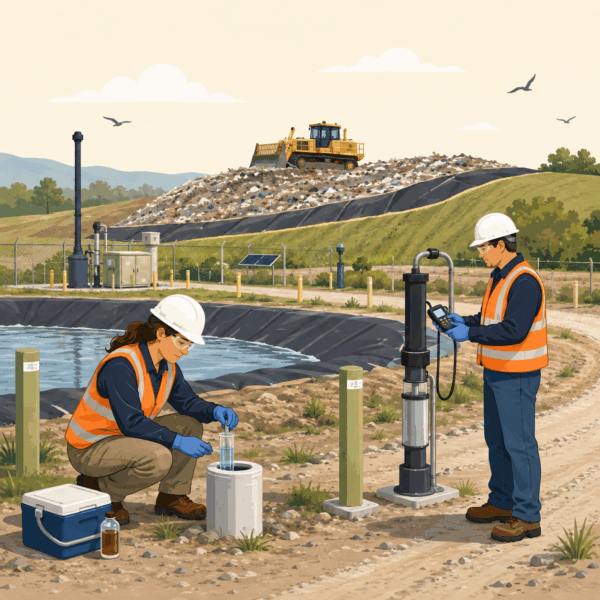 Proactive landfill communication is justified by both the ethical obligations of operating environmental infrastructure in a residential community and the practical reality that reactive communication consistently produces worse outcomes than proactive communication for the relationship between a landfill operator and its host community. Agencies that communicate about landfill operations, monitoring results, and compliance status before concerns arise have the opportunity to frame the information within a context of operational transparency and regulatory compliance. Agencies that communicate only when concerns force them to are always explaining themselves from a position of apparent concealment, regardless of whether the information they were not proactively sharing was actually problematic.
The practical case for proactive communication is compelling on its own terms. Communities that receive regular, substantive information about landfill operations, monitoring results, and compliance status develop a baseline understanding of what normal operations look like that allows them to evaluate specific events in context. A community that has received monthly odor monitoring reports for three years understands that occasional elevated odor readings during certain wind conditions are a normal operational variation rather than evidence of a management failure. A community that receives its first odor communication only when a complaint investigation is underway has no context for evaluating whether the situation is unusual or routine, and will almost certainly conclude that it is unusual regardless of the facts.
Regulatory compliance information that is publicly accessible in regulatory databases but not actively communicated to host communities is not, in any practical sense, transparent. Residents who would need to navigate complex regulatory filing systems to access monitoring data that directly affects their neighborhood’s environmental quality have not been given meaningful access to that information. Proactive communication that provides monitoring results, compliance status, and any regulatory actions in accessible formats through channels that reach community members without requiring them to seek out information from regulatory databases is the communication standard that genuine transparency requires.
The timing dimension of proactive communication matters as much as its existence. Agencies that share monitoring results within a few weeks of receiving them are communicating in a timeframe that residents can connect to the current state of facility operations. Agencies that share results months after they were generated, in annual reports that aggregate data over the full year, are providing information that is technically accurate but temporally distant from the conditions it describes. For monitoring programs that track parameters with direct community health relevance, the gap between when data is generated and when it is communicated to the community is itself a transparency measure.
From Fragmentation to Coordination: Communication Strategies for Councils of Governments, Metropolitan Planning Organizations, and Regional Planning Agencies
This case study is part of SCG’s series on communication for councils of governments, metropolitan planning organizations, and regional planning agencies. To learn more and to see the parent article, which links to other content just like this, click the button below.
Communicating Monitoring Results and Compliance Status
Making Technical Data Accessible
Landfill monitoring programs generate technical data across multiple environmental parameters including groundwater quality, leachate management, landfill gas generation and control, surface water quality, and ambient air quality near the facility. Each of these monitoring programs produces data that is reported to regulatory agencies and that is technically available to the public through regulatory filings. Making that data accessible to community members who are not environmental scientists requires the same plain-language translation discipline that financial data translation requires: preserving accuracy while prioritizing comprehension over technical precision.
A monitoring result summary that tells community members what was measured, what the regulatory standard is, what the current measurement shows relative to that standard, and what the measurement means for environmental and health conditions near the facility, is accessible to community members without environmental science background. A summary that presents the raw monitoring data alongside regulatory code citations and technical methodology descriptions is technically complete and practically incomprehensible to the audience that most needs it. The translation between these two versions of the same information is the communication work that converts technical transparency into genuine public access.
Historical trend data for landfill monitoring parameters provides the context that single-period measurements cannot. A groundwater monitoring result that shows a specific parameter at sixty percent of the regulatory action level has different significance when it is stable at that level over five years than when it has been rising from twenty percent five years ago. Community members who receive historical trend data alongside current measurements can evaluate the direction of environmental conditions rather than only their current status, which is substantially more informative for community health and safety assessment than point-in-time reporting.
When monitoring results show elevated readings that approach or exceed regulatory thresholds, the communication obligation is to disclose proactively with the specificity and context that allow community members to understand what the elevated reading means and what the agency is doing about it. A communication that acknowledges an elevated groundwater monitoring result, explains the parameter measured and the regulatory standard it relates to, describes the investigation being conducted to determine its significance, identifies the interim protective measures being implemented if any, and commits to a specific timeline for the next update, is communication that treats community members as capable of evaluating specific environmental information rather than as audiences to be managed.
Regulatory Actions and Compliance History
Regulatory actions against landfill operators, including notices of violation, compliance schedules, enforcement orders, and permit conditions, are public records whose content is directly relevant to host community concerns about landfill management. Agencies that do not communicate proactively about regulatory actions are allowing community members to discover that information through regulatory databases or media coverage, in a context that frames it as evidence of concealment rather than transparency. Proactive communication about regulatory actions, including an honest account of what the violation was, why it occurred, and what the agency is doing to correct it, is more credible than the same information revealed through other channels even when the underlying facts are the same.
Compliance history communication should cover both the violations and the corrections. An agency that communicates only about the compliance achievements in its regulatory history, without acknowledging the violations that prompted some of those achievements, is presenting a selective picture that community members who have access to regulatory databases will eventually recognize as incomplete. A compliance history that honestly acknowledges the violations that have occurred, explains the circumstances and root causes of each, and documents the corrective measures taken, builds the credibility that selective positive reporting cannot. The willingness to communicate honestly about compliance failures is itself an accountability signal that sustains trust more durably than a record of only favorable outcomes.
Addressing Community Concerns About Odor and Environmental Impact
 Odor is the most frequent and most personally experienced landfill impact for host community members, and it is the concern that most commonly drives community opposition to landfill operations. Odor communication requires a combination of technical accuracy, honest acknowledgment of impact, and practical information about what residents can expect and what they should do when odor events occur. Agencies that dismiss community odor concerns as subjective or exaggerated, or that consistently attribute odor to sources other than the landfill without credible investigation, damage the trust that odor communication requires far more than honest acknowledgment of the impact would.
Odor monitoring programs that provide community members with regular reports on odor monitoring results, including the frequency and intensity of monitored events and the meteorological conditions associated with elevated odor, give community members the factual foundation for evaluating their own odor experiences. A resident who knows that the landfill’s odor monitoring program consistently detects elevated odor under specific wind conditions, and who understands that the agency is managing landfill gas collection to reduce those events, has substantially more information for evaluating their odor experience than one who has received only the agency’s general assurance that the landfill is properly managed.
Community odor reporting systems, which allow residents to log specific odor events with time, location, and intensity information, create a community-sourced odor monitoring dataset that complements the agency’s formal monitoring program and demonstrates that the agency is actively tracking community experience of landfill impacts. Agencies that operate resident odor reporting systems, that respond to specific reports with investigation and follow-up, and that report community odor data alongside their formal monitoring results, are treating resident odor experience as legitimate environmental data rather than as complaint management.
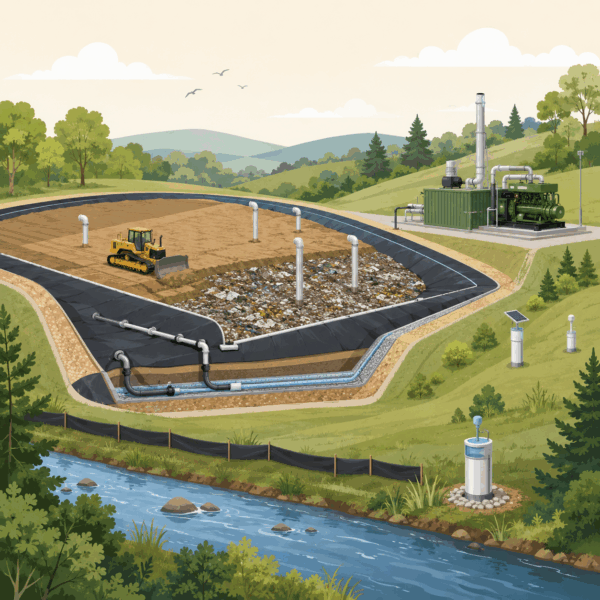
Landfill gas management and its relationship to odor deserves specific communication attention because it is the primary operational mechanism through which odor is controlled and because the performance of the gas collection system is directly visible in odor outcome data. Proactive communication about gas collection system performance, including the share of landfill gas being captured, the locations and timing of any surface emissions that have been identified, and the operational and capital investments being made to improve collection efficiency, connects the operational management of the facility to the community experience of odor in a way that builds both understanding and credibility.
Communicating Closure Timelines and Post-Closure Monitoring
Every operating landfill will eventually reach its permitted capacity and cease accepting waste, and the communication about that closure timeline is among the most important long-term relationship communication that a landfill operator engages in with its host community. Communities that have been living with a landfill as a neighbor want to understand when the facility will close, what the closure process involves, what the site will look like after closure, and how long post-closure monitoring will continue. These are legitimate questions about the long-term environmental and quality-of-life trajectory of the neighborhood, and they deserve specific, honest answers.
Closure timeline communication should be specific about the projected remaining life of the facility based on current waste acceptance rates and remaining permitted capacity, and honest about the uncertainties in that projection. Permitted capacity extensions, changes in waste acceptance rates, and regulatory changes can all affect the closure timeline, and communities that are told the facility will close in fifteen years and then find the timeline extended have experienced a communication failure whether or not the extension was foreseeable at the time of the original communication. Honest closure timeline communication acknowledges the factors that could affect the timeline and commits to updating the projection as those factors change.
Post-closure monitoring communication is a long-term accountability commitment that agencies rarely invest adequately in. The regulatory requirement for post-closure monitoring typically extends for thirty years after facility closure, and the environmental conditions at a closed landfill site can affect neighboring communities for decades after waste acceptance ceases. Communication about the scope and results of post-closure monitoring, provided at regular intervals through channels that reach the community members most directly affected by the facility, is the accountability communication that the host community’s long-term stake in the site’s environmental performance requires.
The future use of a closed landfill site is a community planning question that host communities have a legitimate interest in participating in, and the communication about closure planning and post-closure land use should engage the host community as a genuine stakeholder in that planning rather than simply informing them of decisions made. Agencies that involve host communities in discussions about the potential future uses of closed landfill sites, that communicate honestly about the constraints that closed landfill conditions place on future uses, and that pursue community input before finalizing closure plans, demonstrate the community relationship investment that sustainable landfill operations require across the full operational and post-operational lifecycle.
Building Neighborhood Relationships for Sustainable Operations
The neighborhood relationships that make ongoing landfill operations sustainable in host communities are built through consistent, honest, and genuinely responsive communication maintained over years, not through periodic public relations campaigns activated when operations generate community opposition. Agencies whose landfill operations are embedded in communities that have developed a genuine working relationship with the facility, where community members know who to contact with concerns, where those concerns are taken seriously and investigated specifically, and where monitoring results and compliance information are regularly and accessibly communicated, face a fundamentally different operating environment than those whose operations are contested primarily because the community has never been adequately engaged.
Landfill neighborhood liaison programs, which designate specific agency staff members as primary contacts for host community concerns, provide the relational infrastructure that community-level landfill communication requires. A liaison who attends community meetings in the host neighborhood, who is reachable directly by community members with concerns about specific odor events or facility operations, who investigates those concerns specifically and follows up with individual community members, and who maintains relationships with neighborhood associations and community organizations in the host area, is providing a communication service that institutional channels alone cannot replicate.
Community advisory committees for landfill operations, which provide host community members with a formal role in reviewing monitoring data, providing input on operational decisions that affect community quality of life, and engaging with agency technical staff about environmental performance, create the most durable form of community partnership that landfill operations can sustain. These committees require significant investment in community engagement, technical education for committee members, and genuine responsiveness to committee input in operational decision-making. Agencies that create advisory committees without genuine commitment to responsive engagement with committee input will find that the committees become sources of community frustration rather than genuine partnership.
Recognizing and communicating the host community’s disproportionate burden from landfill operations, and identifying specific measures the agency is taking to acknowledge and address that burden, is a community relationship communication that most landfill operators avoid but that the communities hosting landfill infrastructure increasingly expect. A community that hosts a regional landfill bears concentrated impacts, including odor, traffic, and potential environmental risk, from a facility that serves the entire region. Communication that acknowledges this asymmetry, that explains what the agency is doing to minimize impacts on the host community, and that identifies any benefit-sharing or community investment programs that partially compensate for the hosting burden, treats the host community’s legitimate grievance with the respect it deserves.
Transfer Station Communication
Transfer stations present a specific variant of the landfill communication challenge: they are facilities that handle significant volumes of solid waste within or near residential areas, generating traffic, odor, and noise impacts that affect neighboring communities, and that are regulated under environmental permit requirements that produce monitoring and compliance information the host community has an interest in accessing. Unlike landfills, which are typically located on the urban fringe, transfer stations are often sited in urban or inner-suburban neighborhoods where their impacts on residents are more concentrated and their community relationships more complex.
Transfer station communication should be proactive about the operational impacts that neighbors experience most directly. Hours of operation, peak traffic periods, odor control measures, noise management practices, and the waste types accepted at the station are all operational details that affect neighboring quality of life and that neighbors have a legitimate interest in understanding. An agency that proactively communicates about these operational dimensions, that notifies neighbors of changes to operating hours or waste acceptance practices before those changes take effect, and that maintains a direct communication channel for neighbor concerns, is demonstrating the operational sensitivity that urban transfer station operations require.
Permit renewals and permit modifications for transfer stations are regulatory events that provide formal opportunities for community participation in the oversight of the facility. A permit renewal that is noticed only in the regulatory newspaper of record satisfies the legal notification requirement without providing the specific, accessible communication that allows community members to understand that a significant regulatory decision is being made and that they have an opportunity to participate in it. Proactive community notification of permit renewal proceedings, with plain-language explanation of what the renewal covers, what conditions are being proposed, and how community members can provide formal comment, is the community engagement standard that host community relationships require.
Environmental Justice and Landfill Communication
The siting of solid waste infrastructure in specific communities reflects historical decisions that have disproportionately placed these facilities in communities with lower political power, lower income levels, and higher proportions of people of color. This pattern is well documented in environmental justice research and is increasingly acknowledged in regulatory frameworks that require environmental justice analysis in permitting and siting decisions. Waste management departments that operate facilities in communities that bear a disproportionate environmental burden have communication obligations that go beyond routine operational transparency.
Acknowledging the environmental justice context of landfill and transfer station operations is not an admission of wrongdoing. It is an acknowledgment of historical conditions that shaped current infrastructure geography and that create specific communication obligations for agencies operating in affected communities. Communication that acknowledges the disproportionate environmental burden the host community bears, that explains what the agency is doing to minimize that burden and to provide equitable benefits to the host community, and that treats the community’s concerns about environmental health as legitimate rather than as public relations challenges, meets the host community on honest terms.
Environmental justice communication should be connected to specific operational commitments: what specific measures the agency is implementing to reduce facility impacts on the host community, what investment the agency is making in the host community beyond what the facility generates in tipping fees or tax revenue, and what the agency is doing to ensure that future siting decisions do not continue the historical pattern of concentrated facility impacts in lower-income communities. These commitments should be communicated specifically and tracked against implementation, with regular public reporting that allows the host community to evaluate whether the commitments are being honored.
How Landfill Communication Compares With Other Environmental Facility Communication
Landfill communication occupies a specific position in the landscape of environmental agency communication because it involves a facility with a permanent physical presence in a specific community, creating a long-term stakeholder relationship that most environmental compliance communication does not require. Environmental agencies that communicate about permits, violations, and compliance for facilities that do not have the same physical permanence in host communities can manage their public communication episodically, responding to specific regulatory events without maintaining a sustained community relationship. Landfill operators cannot; the facility’s permanent presence and its ongoing community impacts make sustained, relationship-based communication a non-optional operational requirement.
Comparison with other environmental facility communication, including communication by water treatment plants and wastewater treatment plants, reveals shared characteristics and important differences. All of these facilities generate community concerns about odor, traffic, and environmental impact, and all benefit from proactive communication about monitoring results and compliance status. Landfills are distinctive in that their impacts are permanent, extending well beyond operational life into the post-closure monitoring period, and in that the regulatory and environmental complexity of landfill management is greater than most other environmental facilities. The communication investment required to translate that complexity into accessible public communication is correspondingly greater.
Landfill Gas Communication
Landfill gas, primarily methane generated by the decomposition of organic waste in landfill cells, is a significant greenhouse gas and a potential community safety concern if not properly collected and managed. Landfill gas collection systems that capture methane for energy generation or beneficial use are increasingly common, and they represent both a significant operational investment and a significant environmental benefit that proactive communication can use to demonstrate the agency’s environmental stewardship commitment. Communication about landfill gas collection systems that explains what the system does, how much gas it captures, what the gas is used for, and what the community benefit is in terms of greenhouse gas reduction, turns an operational facility component into an environmental accountability story.
When landfill gas collection systems malfunction or when gas management practices are insufficient to prevent surface emissions, the communication obligation is to disclose the malfunction or deficiency proactively, explain its cause and duration, describe the corrective measures being implemented, and provide honest information about any health or environmental implications for the host community. An agency that discovers a landfill gas surface emission problem and communicates about it proactively to the host community before an odor complaint forces the disclosure is demonstrating the operational transparency that builds trust even when the news is negative. The same information disclosed after complaints rather than before produces a very different community response because it arrives in a context of apparent concealment rather than voluntary disclosure.
The connection between landfill gas management and climate outcomes is a communication opportunity that many waste management departments have not fully developed. Landfills are among the largest sources of methane emissions from human activities, and effective landfill gas collection programs significantly reduce those emissions. Communication that connects the agency’s landfill gas management program to climate outcomes, that quantifies the greenhouse gas reduction achieved through gas collection and beneficial use, and that integrates this environmental performance reporting into the agency’s broader sustainability communication, positions the facility’s gas management as a climate action contribution rather than only as a regulatory compliance requirement.
Surface emissions monitoring, which identifies areas of the landfill where gas collection is not fully controlling surface emissions, is a technical monitoring function with significant community communication implications. A landfill that regularly conducts surface emissions surveys and communicates the results to the host community, including the locations where elevated emissions were detected and the corrective measures being taken, is providing a level of gas management transparency that builds host community confidence in the agency’s operational commitment to minimizing odor and greenhouse gas impacts. Agencies that conduct surface emissions monitoring but do not communicate the results are missing the accountability communication opportunity that the monitoring creates.
Groundwater Protection Communication
Groundwater monitoring is the environmental monitoring program that most directly addresses the host community’s long-term health concerns about landfill proximity, and it deserves the most specific and most accessible communication of any of the facility’s environmental monitoring programs. Residents who live near a landfill and who use groundwater wells for drinking water have a direct stake in understanding what the groundwater monitoring program shows, what regulatory standards govern the parameters being monitored, and what the agency does when monitoring results indicate that landfill leachate may be affecting groundwater quality.
Groundwater monitoring network communication should explain not only the results of each monitoring period but the design of the monitoring network itself: where the monitoring wells are located, what parameters are monitored, how frequently sampling occurs, and how the monitoring network was designed to detect leachate migration before it reaches sensitive receptors. A host community that understands the monitoring network’s design can evaluate whether the network is adequate for the protection it is intended to provide, and can ask informed questions about monitoring adequacy when the agency proposes modifications to the monitoring program.
When groundwater monitoring results show elevated concentrations of parameters associated with landfill leachate, the communication challenge is to be specific about the finding without creating disproportionate alarm about its implications. A monitoring result that shows a specific parameter at a level above its background concentration but well below regulatory action thresholds is a finding that warrants acknowledgment, explanation, and investigation, but not the alarm that results closer to or above regulatory thresholds would justify. Communication that contextualizes the finding within the regulatory framework and the monitoring trend gives residents the information they need to evaluate its significance rather than defaulting to the worst-case interpretation in the absence of specific information.
Leachate management communication, which explains how the landfill’s leachate collection and treatment system works to prevent leachate from reaching groundwater, connects the facility’s engineering controls to the groundwater protection outcomes that monitoring is designed to verify. An agency that explains how much leachate is being collected, where it is being treated or disposed of, and how the collection system performance is monitored, is communicating the full picture of groundwater protection rather than only the monitoring results that document the outcome of those protections. This complete picture is more reassuring and more credible than monitoring results alone, because it shows residents that the protection system is active and managed rather than simply that the monitoring has not yet detected a problem.
Communicating About Facility Expansions and Permit Modifications
Landfill and transfer station expansions, permit modifications, and new permit applications are regulatory events that provide formal opportunities for public comment and community participation in decisions that will materially affect the host community’s long-term relationship with the facility. These proceedings are often the moments of highest community concern about landfill operations, because they represent decisions about the facility’s future scope and duration that directly affect how long the host community will continue to bear the facility’s impacts.
Communication about facility expansion proposals should begin well before the formal permit application is filed, engaging the host community in a discussion about the proposed expansion’s scope, rationale, and expected impacts before the regulatory process has reached the stage where community input is most formally collected. Host communities that learn about expansion proposals primarily through regulatory hearing notices, rather than through direct engagement from the agency before the proposal is finalized, experience the expansion process as something being done to them rather than something they have had a genuine opportunity to participate in. The difference between genuine pre-application community engagement and formal notification of a completed proposal is the difference between a community that feels heard and one that feels managed.
Permit modification communication should explain what is changing in the permit conditions, why the modification is being sought, what the modification means for the community’s expectations about facility operations, and what opportunities exist for public comment on the proposed modification. Minor permit modifications that do not materially affect the facility’s community impacts may not require extensive community outreach beyond formal notice. Major modifications that change accepted waste types, increase permitted capacity, alter operational hours, or modify environmental protection requirements deserve the same level of proactive community communication that a new permit application would receive.
The regulatory public comment process for landfill and transfer station permits is a formal accountability mechanism that most host community members do not know how to navigate. Communication that explains the public comment process, including how to submit formal comments, what comments are most useful to the regulatory decision-making process, how the agency will respond to substantive comments, and when the permit decision is expected, empowers community members to participate effectively in the regulatory process rather than simply attending public hearings without a clear understanding of how their participation affects the outcome.
Emergency Communication for Landfill Incidents
Landfill incidents, including fires, significant leachate releases, landfill gas explosions, embankment failures, and other events that create immediate safety or environmental risks to neighboring communities, require the same rapid, accurate, and multi-channel communication that other public safety emergencies require. Agencies whose landfill communication programs focus on routine operational transparency but have not developed emergency communication protocols and pre-approved message frameworks for specific incident scenarios are not prepared for the communication demands that a significant landfill incident creates.
Landfill fire communication is among the most challenging incident communication scenarios because landfill fires can smolder beneath the surface for extended periods, because the smoke from burning waste may contain hazardous materials, and because the boundary between a manageable operational fire and a public safety emergency is not always immediately clear. Pre-approved communication frameworks for landfill fires, developed in coordination with local fire departments and emergency management agencies, provide guidance on when to issue public notifications, what air quality and health guidance to include, and how to communicate with media about the scope and management of a fire event. These frameworks allow the agency to respond rapidly and accurately rather than improvising under operational pressure.
Post-incident communication is as important as immediate incident notification for maintaining community trust through a landfill incident. The community that experienced a significant odor event, a landfill gas release, or an environmental exceedance deserves a comprehensive account of what happened, what the agency found in its investigation, what the environmental and health implications were, and what the agency is doing to prevent recurrence. This post-incident accountability communication should be specific and honest, including acknowledgment of any operational failures that contributed to the incident, rather than limited to the factual account of what occurred without the operational context that allows the community to evaluate whether the incident reflects a management problem that requires corrective action.
Coordination with local emergency management agencies for landfill incident communication follows the same protocols that apply to other environmental incidents, and establishing those coordination relationships before incidents occur is as important for landfill communication as for any other emergency communication program. A waste management agency that has established working relationships with local emergency management, that has provided those agencies with basic information about the landfill’s operations and the most likely incident scenarios, and that has agreed on roles and communication protocols for different incident types, is prepared to coordinate effectively when an incident occurs. One that encounters emergency management for the first time during an active incident is managing coordination and communication simultaneously in conditions that favor neither.
Neighboring Business and Agricultural Community Communication
Landfills and transfer stations affect commercial neighbors as well as residential ones. Agricultural operations in proximity to landfills may face concerns about leachate migration, wildlife conflicts from landfill bird populations, and groundwater quality that affect their operations and their regulatory compliance as food producers. These commercial neighbors have legitimate concerns and legitimate information interests that residential-focused landfill communication programs often do not address.
Commercial neighbor communication should identify the specific concerns that different commercial neighbors face and provide the specific information that addresses those concerns. An agricultural neighbor concerned about leachate migration needs specific information about the landfill’s leachate containment system, the groundwater monitoring results from the monitoring points nearest their property, and the regulatory thresholds that govern those results. A commercial business concerned about odor impacts on its customer relationships needs specific information about the odor monitoring program, the frequency of elevated odor events, and the operational measures the agency is taking to minimize odor at the facility’s perimeter.
Business liaison programs that designate specific agency contacts for commercial neighbor concerns, similar to the resident liaison programs that effective landfill community engagement requires, provide the relational infrastructure that commercial neighbor communication needs. Commercial neighbors who have a direct contact at the agency, who can reach that contact quickly when specific concerns arise, and who receive timely and specific responses to their inquiries, develop a working relationship with the agency that is qualitatively different from those whose only interaction with the agency occurs through formal complaint channels. The commercial neighbor relationship is also a stakeholder relationship that the agency needs when permit renewals, facility expansions, or operational modifications require regulatory approval in which neighboring landowners may have standing to participate.
Tying It All Together
Landfill communication transparency is not a communication strategy. It is a community obligation that agencies accept when they operate essential waste management infrastructure in residential communities. Communities that host landfills without adequate communication about how those facilities are operated, monitored, and regulated have not been treated as genuine partners in environmental stewardship. They have been asked to accept a burden without being given the information that would allow them to evaluate whether that burden is being managed responsibly.
Agencies that build the proactive, technically accessible, and genuinely responsive landfill communication programs that host communities deserve will find that those programs produce a different kind of community relationship than reactive or minimal communication produces. They will still face community concerns about odor, traffic, and environmental impact, because those concerns are grounded in real experiences that communication cannot eliminate. But they will face those concerns in a community that has the information to evaluate them in context, the trust in the agency to believe that concerns will be investigated seriously, and the communication relationship to raise issues directly rather than through the escalation channels that emerge when direct communication has failed.
The agency that treats landfill transparency as a continuous operational commitment rather than an episodic compliance function builds the one thing that makes long-term landfill operations politically sustainable: the confidence of the host community that the people managing the facility are being honest about its impacts and accountable to the community that lives with those impacts every day.
Strategic Communication Support for Landfill Operations Communication
 Developing proactive landfill communication programs that provide technically accurate, plain-language monitoring summaries, build genuine community liaison relationships, and sustain the neighborhood engagement that host communities require is work that most waste management agency communication teams find difficult to accomplish alongside their operational and regulatory responsibilities. The technical translation capability required for monitoring result communication and the sustained community relationship investment required for genuine transparency both make external communication expertise a practical investment.
Stegmeier Consulting Group (SCG) works with waste management departments to develop landfill operations communication programs that are built around proactive disclosure, plain-language monitoring summaries, community-responsive engagement, and the sustained neighborhood relationships that sustainable landfill operations require. This includes designing monitoring result communication templates that translate technical data into accessible community information, developing community liaison program structures and protocols, creating advisory committee engagement frameworks, building the neighborhood communication calendars that maintain the proactive communication rhythm that host community relationships require, and establishing protocols for communicating regulatory actions and compliance events proactively.
SCG also supports waste management agencies in assessing the current state of their landfill community relationships and identifying the specific communication gaps that are most affecting community trust. The objective is a communication program that gives host communities the transparent, specific, and sustained information they need to evaluate the management of facilities that they did not choose to host but that they are entitled to understand and hold accountable.
Future Trends in Landfill Operations Communication
Digital infrastructure is creating new expectations for landfill transparency that agencies need to anticipate. Real-time monitoring dashboards that provide host communities with continuous access to air quality, odor monitoring, and groundwater data are becoming technically feasible and are beginning to appear at the most transparency-committed landfill operations. Communities that have access to real-time monitoring data can evaluate the facility’s environmental performance continuously rather than waiting for periodic report releases, and they can connect specific odor events or observed conditions to the monitoring data that documents or contradicts their experience.
Community-facing digital platforms that host monitoring data, compliance records, permit documents, community meeting materials, and facility operational information in a single, searchable, and current location are becoming the expected digital infrastructure for transparent environmental facility operations. An agency that maintains such a platform, that updates it promptly when new monitoring results are available, and that ensures that its technical documents are accompanied by plain-language summaries, is providing the digital transparency that communities are increasingly expecting from environmental facility operators.
Climate communication is also reshaping landfill communication in ways that agencies need to incorporate. Landfills are among the largest sources of methane emissions from human activities, and effective landfill gas collection programs significantly reduce those emissions. Communication that connects the agency’s landfill gas management program to climate outcomes, that quantifies the greenhouse gas reduction achieved through gas collection and beneficial use, and that integrates this environmental performance reporting into the agency’s broader sustainability communication, positions the facility’s gas management as a climate action contribution rather than only as a regulatory compliance requirement.
Conclusion
Landfill and transfer station communication transparency is among the most demanding forms of public agency environmental communication because it requires sustained, honest engagement with a host community that has legitimate grievances about the facility’s presence and legitimate expectations about the agency’s transparency regarding its impacts. Agencies that meet this challenge through proactive monitoring disclosure, genuine community engagement, honest acknowledgment of the host community’s disproportionate burden, and responsive communication about specific concerns, build the community relationships that make ongoing operations sustainable.
The communication investment required to build genuine landfill transparency is sustained and requires both technical translation capability and genuine community relationship investment. Technical translation capability is needed to make monitoring data, compliance information, and environmental performance reporting accessible to community members without environmental science background. Community relationship investment is needed to build the trust and responsiveness that distinguishes genuine transparency from the selective disclosure that most agencies call transparency. Both are necessary, and neither is sufficient without the other.
Communities that host essential environmental infrastructure deserve more than passive access to regulatory filings that require technical expertise to interpret. They deserve agencies that take seriously the responsibility of being honest about the environmental and quality-of-life impacts of the facilities they manage, that communicate about those impacts proactively and accessibly, and that regard the host community’s trust as the most important operational asset they manage. Building that trust through sustained communication transparency is the obligation that comes with operating essential infrastructure in someone else’s neighborhood.
Stegmeier Consulting Group’s Strategic Approach to Communication Systems
Build landfill operations communication around proactive monitoring disclosure, genuine community engagement, and the sustained transparency that host community relationships require.
Waste management departments that communicate landfill and transfer station operations with proactive honesty, technical accessibility, and genuine responsiveness to host community concerns build the neighborhood relationships that make long-term facility operations sustainable. Stegmeier Consulting Group (SCG) helps agencies develop the monitoring communication systems, community liaison programs, advisory committee frameworks, and neighborhood engagement calendars that transform landfill transparency from a regulatory compliance function into a genuine community accountability practice.
Use the form below to connect with our team and explore how strategic communication support can strengthen your facility’s community transparency program.