
How State Agencies Can Reach Consumers Most Vulnerable to Financial Fraud
Financial fraud is not distributed equally. It concentrates where vulnerability concentrates: among the populations who face the greatest financial need, the least familiarity with the regulatory system, the most limited access to trusted professional advice, and the social circumstances that fraud operators learn to exploit systematically. Older adults face impersonation schemes that exploit loneliness and authority deference. Low-income households face predatory financial products that exploit urgent needs. Recent immigrants face exploitation from within and outside their communities that exploits unfamiliarity with domestic financial norms and reluctance to engage government agencies. People with disabilities face caregiver exploitation that exploits dependency relationships. Rural residents face limited access to legitimate financial services that makes them more dependent on less regulated alternatives.
Standard consumer protection communication reaches none of these populations effectively. The website posting, the press release, the social media campaign, the news media coverage, these channels reach the consumers who are most connected to mainstream information channels and often among the least vulnerable to the specific fraud types that disproportionately target vulnerable populations. An agency that limits its consumer fraud protection communication to standard channels is delivering full protection to the consumers who need it least and partial protection at best to the consumers who need it most.
Reaching consumers most vulnerable to financial fraud requires a fundamentally different communication approach: one built around the specific characteristics and circumstances of each target population, delivered through the organizations and relationships those populations trust, designed in formats those populations can access, integrated into the service delivery contexts where those populations are already receiving assistance, and measured by whether it actually reaches the intended populations rather than by how many pieces of communication the agency produced.
This article addresses how state agencies can develop and execute communication strategies that genuinely reach the consumers most vulnerable to financial fraud. It covers the specific vulnerability profiles of the populations at highest risk, how to identify and engage the trusted organizations through which those populations can be reached, how to design accessible and culturally appropriate materials, how to integrate fraud protection information into existing service delivery contexts, how to measure whether outreach is reaching the intended populations, and how to sustain and improve the outreach program over time. Throughout, the organizing question is not how many communications the agency produced but whether the agency’s consumer protection information reached the people who are most at risk before they were harmed.
Vulnerability Profiles of High-Risk Populations
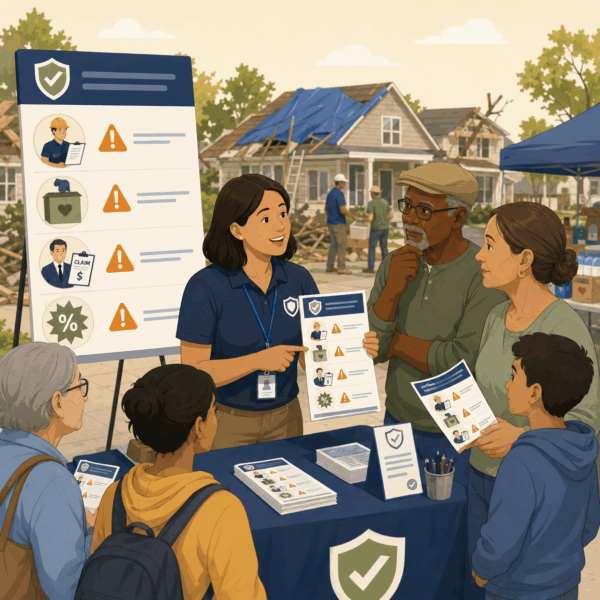 Understanding why specific populations are at elevated risk from specific types of financial fraud requires more than demographic categorization. It requires understanding the specific circumstances, behavioral patterns, social networks, information access limitations, and fraud targeting practices that create elevated risk for each population. That understanding is the foundation for communication strategies that are genuinely tailored to each population’s situation rather than just demographically labeled versions of standard communication.
Older Adults
Older adults represent a population that fraud operators specifically target for reasons that are well understood and consistently exploited. They are more likely to have accumulated financial assets that make them attractive targets. They are more likely to be home during the day and available to receive unsolicited phone, mail, and door-to-door contacts. They may have accumulated a lifetime of experience dealing with authority figures and legitimate institutions in good faith, making them more susceptible to impersonation schemes that exploit the deference that appropriate institutional relationships have taught them. Social isolation, which increases with age and is accelerated by the loss of spouses, friends, and colleagues, creates both a vulnerability to the social connection that fraud operators cultivate and a reduction in the trusted social network that protects against fraud by providing reality checks.
The fraud types that most commonly target older adults reflect these specific vulnerabilities. Medicare and Social Security impersonation calls exploit familiarity with government benefit programs and concern about losing those benefits. Grandparent scams exploit emotional attachment to grandchildren and the desire to help family in emergencies without taking time that might not be available. Investment fraud exploits the need to make accumulated savings last through an uncertain retirement period. Romance scams exploit loneliness and the desire for connection. Home improvement fraud exploits the challenges of home maintenance for people with reduced mobility or physical capacity. Each of these fraud types is specifically calibrated to the circumstances and vulnerabilities of older adults.
Effective outreach to older adults must be delivered through the specific organizations and settings where older adults gather and receive services: senior centers, Medicare counseling programs, continuing care retirement communities, faith communities with significant older adult memberships, medical practices that serve older patients, pharmacies, and home care service providers. These settings provide both access to the population and the trusted relationship context that makes consumer fraud protection information credible and memorable. An agency spokesperson presenting at a senior center carries the authority of a government representative combined with the trust that the senior center itself has built with its members, creating a reception environment that a website posting cannot replicate.
The communication format for older adult outreach should reflect the information access preferences and capacities of the population. Large print materials, audio formats, in-person presentations with opportunity for questions, and telephone-based information delivery all serve older adult populations more effectively than dense digital content. The vocabulary and examples used should reflect the specific fraud scenarios that older adults encounter rather than generic fraud awareness that may not connect to their specific experience. A detailed scenario describing exactly how a Medicare impersonation call works, including the specific language callers use, the specific actions they request, and the specific warning signs that distinguish a scam call from a legitimate Medicare contact, is more protective than a general statement that consumers should be careful about Medicare fraud.
Low-Income Households
Low-income households face a specific vulnerability landscape shaped by the intersection of financial urgency and limited access to mainstream financial services. The urgency of meeting immediate financial needs, including covering rent, keeping utilities on, and feeding children, creates conditions in which a financial product or service that offers immediate relief may be attractive even when its terms are harmful. The limited access to mainstream banking relationships, good credit, and affordable credit products means that low-income households must often meet urgent financial needs through high-cost alternatives: payday loans, title loans, rent-to-own arrangements, high-fee money transmission services, and prepaid card products with opaque fee structures.
Many of these high-cost financial products are legal even when they are harmful, which means that consumer fraud protection in this context involves not only protecting against clearly fraudulent schemes but helping consumers understand the full cost of legal-but-predatory products and identify the less harmful alternatives that may be available. Effective outreach to low-income households must therefore encompass both fraud awareness and financial product literacy, addressing the full spectrum of financial harm that includes illegal fraud, legal-but-predatory products, and the information asymmetries that allow harmful products to flourish in markets where consumers lack alternatives.
The organizations that serve low-income households are among the most effective outreach channels available because they have existing trusted relationships with the population and because financial stability is directly relevant to the services they provide. Food banks and food pantries serve households in acute financial distress and have regular, frequent contact with a population that faces significant fraud risk. Housing counseling agencies serve households navigating the complex and fraud-prone mortgage and rental markets. Credit counseling agencies serve households managing debt situations that make them targets for debt relief fraud. Workforce development programs serve households in transition between jobs, a period of financial vulnerability that makes them targets for employment fraud. Each of these organizations is a natural partner for consumer fraud protection outreach because the outreach is directly relevant to the populations they serve and to the financial stability goals that motivate those populations to engage with the organization’s services.
Financial service integration, in which credit unions, community development financial institutions, and mission-driven banks that serve low-income communities incorporate consumer fraud protection information into their customer service interactions, is another outreach channel that reaches this population in a financial service context where fraud protection information is directly relevant. A credit union teller who notices a pattern consistent with potential wire transfer fraud and who takes a moment to provide the customer with information about scam warning signs is performing a fraud protection function that no mass communication campaign can replicate in specificity and timeliness. Training financial institution staff who serve low-income communities to recognize potential fraud situations and to respond with consumer protection information is an outreach investment that reaches consumers at the moment of greatest vulnerability.
Recent Immigrants and Non-English Speakers
Recent immigrants and consumers who are not fluent in English face fraud vulnerabilities that arise from the intersection of unfamiliarity with domestic financial and regulatory systems, language barriers that limit access to consumer protection information, and the specific fraud schemes that are designed to exploit these circumstances. Fraud operators who target immigrant communities have sophisticated knowledge of the specific fears, needs, and social dynamics of those communities: the fear of immigration enforcement that makes any government contact anxiety-producing, the urgency of sending remittances to families abroad, the difficulty of establishing bank accounts without specific documentation, and the reliance on community networks that may include bad actors who exploit community trust.
Effective outreach to immigrant and non-English-speaking communities requires both language translation and cultural adaptation that goes beyond translation. A consumer fraud warning that is translated word-for-word from English may use the right words but may not reflect the specific fraud scenarios that those communities encounter, may use examples that are not culturally resonant, or may have a tone that is inappropriate for the specific community’s relationship with government communication. Effective translation and cultural adaptation requires input from community members who understand both the regulatory purpose of the communication and the cultural context in which it will be received.
Trusted messengers within immigrant and non-English-speaking communities are essential for effective outreach, because government agency communications may not be trusted or even received by communities whose experiences with government have been predominantly negative. A consumer fraud warning delivered by a respected community organization, a faith leader, an ethnic media outlet, or a peer educator from within the community, carries a credibility and receptivity that the same information delivered directly by a government agency cannot achieve. Identifying and building genuine partnerships with these trusted messengers, providing them with accurate and relevant information, and supporting their ability to deliver consumer fraud protection messages through their natural community roles, is the outreach strategy that reaches immigrant and non-English-speaking communities most effectively.
Specific fraud types that disproportionately target immigrant communities deserve specific outreach addressing those types: immigration fraud that exploits the desire for legal status, remittance fraud that intercepts or misdirects money sent to families abroad, notario fraud in which non-attorneys pose as immigration lawyers and provide incompetent or fraudulent legal assistance, tax preparer fraud that exploits confusion about domestic tax obligations, and employment fraud that targets workers seeking jobs in unfamiliar labor markets. Each of these fraud types has specific characteristics that outreach materials should describe specifically rather than addressing fraud in the generic terms that are meaningless without connection to the specific schemes that affect this community.
Protecting the Public Interest: Communication Strategies for Financial Regulation, Insurance, and Consumer Protection Agencies
This article is part of our series on strategic communication for Financial Regulatory Agencies, State Insurance Departments, and Consumer Protection Agencies. To learn more and to see the parent article, which links to other content just like this, click the button below.
Building and Sustaining Community Outreach Partnerships
The community organizations that are most effective as outreach partners for vulnerable population fraud protection share several characteristics: they have genuine, trusted relationships with the target population rather than formal service relationships that the population tolerates rather than values; they have regular, ongoing contact with the population rather than episodic or crisis-driven contact; they have the communication capacity and organizational stability to carry ongoing outreach responsibilities rather than being overwhelmed by the addition of new responsibilities; and they see consumer fraud protection as aligned with their own organizational mission rather than as a government agency’s request for cooperation with its agenda.
Partnership development requires genuine investment in understanding the partner organization’s context before asking for their cooperation. An agency that contacts a food pantry with a request to distribute fraud prevention flyers without understanding the food pantry’s client population, service model, staffing capacity, and existing educational programming is asking for a service without providing a genuine partnership. An agency that takes the time to understand the food pantry’s situation, to align its outreach request with the food pantry’s existing programming, to offer to provide training for pantry staff rather than simply materials, and to ask what the pantry needs from the agency to make the partnership work for its clients, is building a genuine partnership rather than a distribution relationship.
Ongoing support for partner organizations is essential for sustaining effective outreach over time. Partners who receive training and materials when the relationship is established, and who are then expected to maintain outreach independently without ongoing support, will find that the outreach gradually fades as the initial energy dissipates and as their other organizational priorities compete for attention. Sustaining outreach through partner organizations requires regular communication with partner contacts, refreshed materials as fraud tactics evolve, updates on enforcement actions and new fraud threats that are relevant to the partner’s clients, recognition of the partner’s contribution to the agency’s consumer protection mission, and a clear point of contact at the agency who partner staff can reach when they have questions or when their clients need direct agency assistance.
Measuring the effectiveness of partner organization outreach is challenging but important for identifying which partnerships are producing genuine consumer reach and which are nominal partnerships that consume resources without producing proportionate outreach impact. Simple reporting mechanisms, such as asking partner organizations to report monthly on the number of client contacts they made in which fraud protection information was discussed, the number of clients they referred to the agency’s consumer assistance resources, and any emerging fraud patterns they observed among their clients, provide basic evidence of outreach reach and quality without creating a reporting burden that discourages partner cooperation. Supplementing this reporting with periodic site visits where agency staff observe partner outreach activities in action gives a qualitative picture of outreach quality that reporting numbers alone cannot provide.
Partner organization capacity building, in which the agency invests in helping partner organizations develop their own fraud protection outreach capabilities rather than simply asking them to distribute the agency’s materials, produces more sustainable and more effective outreach than a materials distribution model. A food pantry whose staff are genuinely trained in consumer fraud protection, who understand why specific fraud types affect their clients, and who can have real conversations with clients about fraud risks and protective actions, is a more effective outreach channel than one that simply puts the agency’s brochures in the lobby. This capacity building investment requires more time and expertise from the agency, but it produces a partner that is genuinely integrated into the consumer protection ecosystem rather than a passive distribution point.
Designing Accessible Materials for Vulnerable Populations
Consumer fraud protection materials for vulnerable populations must reflect the specific circumstances, literacy levels, language preferences, and information access patterns of those populations. Accessible materials are not generic consumer education materials simplified slightly. They are materials that were designed from the outset with the specific target population in mind, using vocabulary, examples, format, and communication channels that reflect what that population can access and what will connect with their specific experience.
Reading level is the first accessibility dimension to address for populations with limited literacy or limited formal education. Materials written at a high reading level may be accurately translated into multiple languages but will still not be accessible to readers whose formal education was limited. Plain language writing at a sixth-grade reading level or lower, using short sentences, common vocabulary, and concrete examples rather than abstract principles, is accessible to the full range of literacy levels within a target population. Reading level testing, using readability formulas that are available in standard word processing software, provides a quick quality control check before materials are finalized for distribution.
Visual formats, including infographics, illustrated guides, and short video materials, serve populations who engage more readily with visual information than with text. The visual format is particularly valuable for populations with limited print literacy in any language, for older adults who find small-print text difficult to read, and for non-English speakers who may find visual information easier to process than even translated text. Visual materials require more production investment than text materials, but they often achieve significantly higher engagement and information retention among target populations who are not well served by text-heavy formats. The investment in visual format materials is justified by the populations they can reach that text-format materials cannot serve effectively.
Testing materials with members of the target population before wide distribution is an essential step that agencies frequently skip in the interest of time. A material that seems clear and appropriate to agency staff who designed it may be confusing, culturally inappropriate, or irrelevant to the population it is designed to serve, because the agency staff do not share the population’s specific circumstances, cultural context, or information access norms. A testing session with five to ten representative community members, in which participants describe in their own words what they understand the material to be saying and identify what is confusing or unhelpful, produces specific, actionable feedback that significantly improves material effectiveness. The time investment in pre-distribution testing pays dividends in materials that actually communicate rather than materials that satisfy an internal review process without serving the target population.
Format diversity across a single outreach campaign maximizes the likelihood that the information reaches each individual in the target population through at least one channel they can access. A campaign that delivers the same core message through a printed flyer, a social media graphic, a brief video, a radio spot in the target language, and a presentation script for partner organizations that deliver in-person programs, reaches different segments of the target population through different access points. No single format reaches all segments of any target population. The budget for producing materials in multiple formats is a worthwhile investment in the reach that no single format can achieve.
Integrating Fraud Protection Into Service Delivery Contexts
The most efficient approach to reaching vulnerable populations with consumer fraud protection information is to integrate that information into service delivery contexts that already reach those populations rather than creating separate outreach events or campaigns that must compete for the population’s attention. Integration into existing service delivery is more efficient than standalone outreach, more effective because the information is delivered in a context where the recipient is already engaged and where the information is directly relevant to their current circumstances, and more sustainable because it does not depend on the agency’s ability to consistently fund and organize separate outreach events.
Integration into health care settings is one of the most underutilized outreach opportunities for older adult consumer protection. Medical practices that serve large elderly patient populations have regular, trusted contact with the very population most targeted by financial fraud. Physicians, nurses, pharmacists, and medical social workers who have ongoing relationships with older adult patients are positioned to raise consumer fraud protection topics in the context of conversations about their patients’ overall wellbeing. Medical staff training that adds consumer fraud protection to the topics they are comfortable discussing with older adult patients, and that provides them with the basic information and referral resources they need to do so, creates outreach capacity within an existing service delivery system that reaches the target population with a regularity and intimacy that no standalone outreach program can match.
Financial service settings, particularly credit union branches, community bank offices, and check cashing and remittance service locations that serve vulnerable populations, are natural integration points for consumer fraud protection information because their clients are actively engaged in financial transactions at the moment of contact. Staff training that helps financial service workers recognize the patterns of specific fraud types, such as the unusual urgency and wire transfer destination patterns associated with impersonation scams or the characteristics of predatory loan products that the agency is warning about, and that gives those workers the language and the referral resources to raise the issue with clients, creates a consumer protection integration into financial service delivery that reaches consumers at exactly the moment when the information is most relevant.
Social service settings, including food pantries, housing assistance offices, benefits counseling programs, and social work agencies, reach populations in financial distress who are simultaneously among the most vulnerable to financial fraud and the most difficult to reach through standard communication channels. Social workers and case managers who have ongoing relationships with these clients are positioned to address consumer fraud protection as part of the comprehensive support they provide. Training social service staff to recognize fraud risk situations, to ask their clients about recent financial contacts that may be concerning, and to connect clients who have been targeted or victimized with the agency’s consumer assistance resources, creates an outreach and referral network that extends the agency’s reach to the most isolated and most vulnerable members of its consumer population.
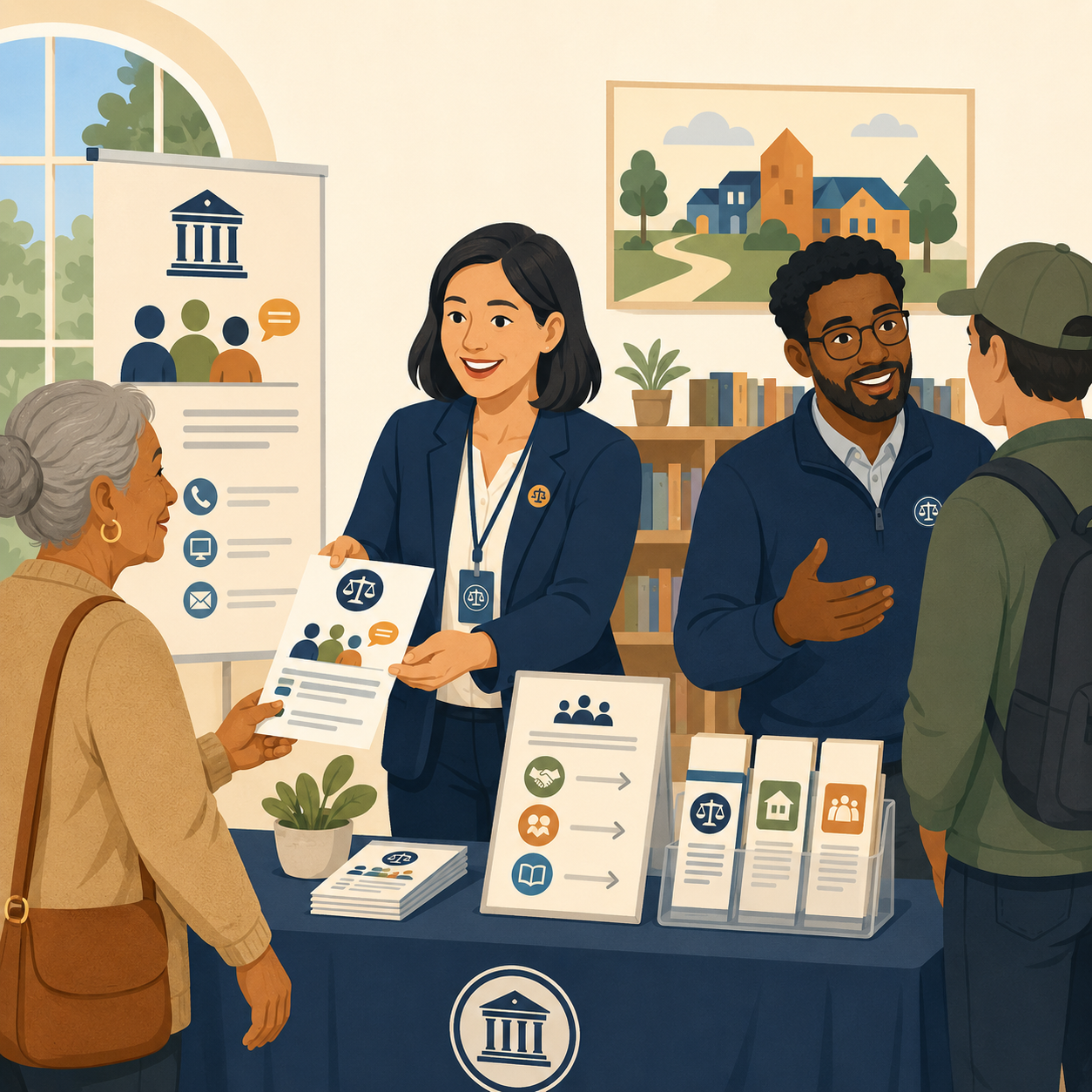
Community gathering settings, including faith communities, ethnic community organizations, library programs, and neighborhood associations, reach populations through trusted community relationships that give consumer fraud protection information a credibility and receptivity that official government communications rarely achieve. Presentations at community gatherings, participation in community events with a consumer protection information table, partnerships with faith leaders who can address consumer fraud risks from the pulpit or in congregation communications, all extend the agency’s reach into communities through the social structures those communities trust. These settings are particularly valuable for reaching populations that have limited engagement with mainstream information channels or that have reasons to be skeptical of government agency communications.
Measuring Outreach Reach and Impact
Measuring whether outreach to vulnerable populations is actually reaching the intended populations requires different metrics than measuring general public communication effectiveness. The populations most at risk from financial fraud are often the least likely to appear in website traffic data, social media engagement metrics, or media coverage reach estimates. Measuring effective reach to these populations requires data collection strategies that go into the communities and organizations where these populations receive services, not just analysis of the communications the agency produced and distributed.
Partner organization reporting on outreach activities provides the most direct evidence of reach to vulnerable populations. When partner organizations report monthly on the number of clients with whom they discussed consumer fraud protection, the specific topics covered, the questions clients raised, and any fraud situations clients disclosed in those conversations, the agency has direct evidence of outreach reach that reflects actual consumer contact rather than materials distribution. This reporting requires a simple, low-burden mechanism that partner organizations can complete without significant administrative investment, such as a monthly email with three to five standard questions, and a commitment from the agency to use the data to improve the partnership rather than to evaluate the partner.
Consumer surveys conducted in the communities that are the focus of outreach efforts provide direct evidence of whether outreach is producing knowledge outcomes in the target populations. A brief survey that asks about awareness of specific fraud types, knowledge of the agency’s consumer assistance resources, and any fraud contacts or experiences in the past year, administered periodically in communities where outreach is active, gives the agency evidence about whether the outreach is changing what the target populations know and how they protect themselves. Comparing survey results over time, and between communities with active outreach and similar communities without it, gives the agency the evidence it needs to assess the outreach program’s effectiveness and to improve it based on what the data shows.
Complaint and report volumes from the target communities, analyzed by the characteristics of the complainant and the nature of the complaint, can provide evidence of whether outreach is reaching communities with high fraud risk and is motivating reporting behavior. An increase in reports from a specific community following a targeted outreach effort may indicate that community members who received the outreach are now more likely to report fraud contacts, which is both evidence of successful outreach and an increase in the enforcement intelligence the agency receives from that community. Connecting outreach activity data to subsequent complaint and report data, with appropriate lag time to allow the outreach to produce effects, provides an evidence chain that is more compelling than either data source alone.
Fraud victimization data from communities with active outreach compared to similar communities without it provides the most direct evidence of whether outreach is reducing actual fraud harm. This comparison requires longitudinal data collection and appropriate controls for the many other factors that affect fraud victimization rates, which makes it methodologically demanding. But even imperfect evidence of fraud harm reduction in communities with active outreach, compared to communities without it, is more compelling evidence of outreach effectiveness than process measures alone. Agencies that invest in this level of outcome measurement, potentially in partnership with academic researchers who have the methodological expertise to design and analyze the comparison, are building an evidence base for their outreach programs that is substantively stronger than the process and reach data that most agencies currently collect.
Sustaining Vulnerable Population Outreach Programs
 Vulnerable population outreach programs that are funded through one-time grants, staffed through temporary positions, and organized around specific campaigns with defined end dates, are programs that will not sustain the consistent presence in vulnerable communities that genuine consumer fraud protection requires. Fraud operators do not stop after a campaign ends. The populations at risk do not stop being at risk because an outreach budget cycle concluded. Sustaining genuine consumer protection for vulnerable populations requires institutional commitment to ongoing outreach programs that are embedded in the agency’s regular budget, staffed by dedicated personnel who develop expertise and community relationships over time, and evaluated and improved based on ongoing evidence about what is working.
Staffing models for vulnerable population outreach should include dedicated outreach staff who are assigned to specific community relationships and who develop the cultural competency, language capacity, and community knowledge that make those relationships genuinely effective over time. A single outreach staff member who spends five years building relationships with the organizations that serve older adults in a specific community, who knows the staff of those organizations personally, who has presented to their clients multiple times, and who is known within the community as a trusted resource for consumer protection information, is a more effective outreach capacity than a generalist staff member who handles all the agency’s outreach responsibilities as a portion of a broader communication role.
Budget sustainability for vulnerable population outreach requires making the case to leadership and legislative oversight bodies that the investment in reaching vulnerable populations is as central to the consumer protection mission as enforcement and complaint handling. An agency that can demonstrate through outcome data that outreach to vulnerable populations prevents fraud that would otherwise produce measurable consumer financial harm, and that can show the relationship between the outreach investment and the harm prevented, is making the most compelling possible case for sustained outreach funding. Building this evidence base over time, and using it consistently in budget and legislative communication, is the strategy that sustains vulnerable population outreach through the budget pressures that periodically challenge every agency’s programs.
Program evolution over time, in which the outreach program is systematically updated to reflect changes in the fraud landscape, changes in the demographic composition of vulnerable populations, changes in the communication channels those populations use, and changes in the organizations that serve them, is essential for maintaining outreach effectiveness over the years that a sustained program requires. A vulnerable population outreach program that was designed ten years ago and has not been substantively revised since then may still be following the community partnership structure, using the communication formats, and addressing the fraud types that were relevant a decade ago, while the actual vulnerable population landscape has shifted significantly. Annual program reviews that assess whether the program’s design still matches the current environment, and that make specific updates based on what the review identifies, sustain outreach effectiveness over time rather than allowing it to gradually diverge from the populations and threats it is intended to address.
Leadership succession planning for vulnerable population outreach is a specific operational challenge that agencies that have developed effective outreach programs must address proactively. When an outreach staff member who has built extensive community relationships over multiple years leaves the agency, those relationships do not automatically transfer to a successor. If the agency has not invested in documenting the community relationship network, in building organizational rather than individual relationships with partner organizations, and in mentoring and training a successor, the departure of a key outreach staff member can significantly disrupt the outreach program’s effectiveness. Planning for staff transitions within the outreach function, with the same attention to continuity and knowledge transfer that the agency would apply to any critical operational function, protects the investment that has gone into building effective vulnerable population outreach relationships.
People With Disabilities and Financial Fraud Risk
People with cognitive, physical, or psychiatric disabilities face financial fraud vulnerabilities that standard consumer protection outreach rarely addresses and that require specific, tailored communication strategies to reach. Individuals with cognitive disabilities, including intellectual disabilities, traumatic brain injuries, dementia, and psychiatric conditions that affect judgment, may be more susceptible to the social engineering and pressure tactics that fraud operators use, may have difficulty evaluating offers that require complex reasoning about probability and value, and may be more easily persuaded by authority presentations and urgency appeals that more intact executive functioning would resist. The fraud risk for this population is heightened by the reality that the people who often have financial management authority over individuals with disabilities, including guardians, conservators, and caregivers, are themselves sometimes the source of financial exploitation.
Caregiver and guardian fraud, in which a trusted individual who has been given financial management authority over a person with a disability exploits that authority to divert funds, is among the most difficult categories of financial fraud to address because it occurs within relationships that are usually protective and that have legal authorization for the financial management that becomes exploitative. Outreach to people with disabilities and to the organizations that serve them must address this risk directly: how to identify warning signs of financial exploitation by a trusted person, what legal protections exist for individuals who are subject to guardianship or conservatorship, what reporting options are available, and what adult protective services resources can be accessed. The communication challenge is delivering this information in a way that does not undermine the legitimate protective relationships that most guardians and caregivers provide while still making vulnerable individuals and their networks aware that exploitation occurs.
Outreach to people with disabilities should be delivered through the disability services network: Independent Living Centers, developmental disability regional centers, supported employment programs, psychiatric rehabilitation programs, healthcare providers who serve patients with significant disability diagnoses, and disability advocacy organizations. These organizations have the trusted relationships with the target population, the staff expertise in communication modalities appropriate for different disability types, and the standing service delivery context into which fraud protection information can be integrated. The agency’s outreach partnership investment in this network should include not just materials provision but staff training that equips disability service workers to discuss financial fraud risks with the specific populations they serve in ways that are appropriate to those populations’ communication needs and cognitive capacities.
Accessible format requirements for materials designed for people with disabilities go beyond standard plain language to encompass the specific communication formats that different disability types require. Large print and high-contrast formatting for people with visual impairments, screen-reader-compatible digital formats, captioned video for people with hearing impairments, picture-based communication supplements for people with limited text literacy, and simplified language at the most accessible reading levels for people with cognitive disabilities, are all accessibility requirements that may apply to different segments of this population. No single format serves all people with disabilities, but a commitment to producing materials in multiple accessible formats, and to making those formats available through the distribution channels that disability service organizations use, ensures that the information is accessible across the range of the target population.
Rural and Geographically Isolated Consumers
Consumers in rural and geographically isolated areas face financial fraud vulnerabilities that arise specifically from their geographic circumstances. The absence of nearby bank branches and financial service offices means that rural consumers are more likely to conduct financial business remotely, through phone and mail channels that are more susceptible to fraud than in-person transactions. The limited local media coverage of regulatory agency activities means that scam warnings and fraud alerts issued through metropolitan media channels frequently do not reach rural consumers. The smaller, more tightly knit social networks that characterize many rural communities can accelerate the spread of fraud through word-of-mouth once a scheme establishes a foothold, while also providing the trusted community relationships through which fraud protection information can be effectively distributed.
Rural outreach strategies should leverage the community institutions that are present and trusted in rural areas rather than trying to replicate urban outreach approaches in a context where the supporting infrastructure does not exist. Rural churches and faith communities often function as broad-based community institutions that reach a large proportion of the rural population through regular contact and trusted relationships. County extension services, which have long-standing educational relationships with rural communities and which have established networks of local contacts, are underutilized partners for rural financial fraud protection outreach. Rural libraries, which often serve as community information hubs in areas without other community gathering spaces, are effective outreach partners whose clientele includes many of the isolated individuals most at risk from fraud. Agricultural cooperatives and farm service agencies that have regular contact with farming families can carry consumer fraud protection information to a population that faces specific agricultural fraud risks alongside general consumer fraud risks.
Communication formats for rural outreach should include the channels that rural populations actually use rather than those that are most convenient for the agency. Local radio programming, which maintains strong audiences in many rural areas where commuting times make drive-time radio particularly relevant, provides a broadcast channel that reaches rural households effectively. Direct mail to rural addresses reaches a population that may have limited broadband access but that collects mail regularly and may have more time to read it than urban consumers with more competing information sources. Community newsletters and bulletin boards in rural gathering places, such as feed stores, farm supply retailers, and rural hardware stores, distribute information through trusted community spaces that rural consumers visit regularly.
Phone-based fraud is particularly prevalent in rural areas because phone contact, both mobile and landline, is a communication channel that rural consumers use extensively for conducting business that urban consumers would handle in person. Consumer fraud protection outreach to rural populations should specifically address the warning signs of phone fraud, including the impersonation schemes that claim government agency identity, the prize and lottery fraud that promises winnings that require fees to collect, and the technical support fraud that claims computer problems and requests remote access. Detailed, specific descriptions of how these calls work, what the callers say, and what warning signs identify a fraudulent call, are more protective for a population that regularly receives such calls than general fraud awareness advice.
People in Financial Distress
Financial distress, including significant debt burden, recent job loss, housing instability, or medical financial crisis, creates specific vulnerability to fraud schemes that are deliberately designed to exploit urgent financial need. The debt settlement and consolidation scams that promise to resolve debt for less than what is owed, the advance fee loan fraud that promises credit access in exchange for upfront fees, the mortgage modification fraud that promises to prevent foreclosure in exchange for fees paid before services are provided, and the employment fraud that promises income in exchange for application fees or training investments, all target people who are in financial distress and who may make decisions they would otherwise avoid because their need for immediate financial relief is acute.
The organizations that serve people in financial distress are the most direct outreach channels to this population: bankruptcy attorneys and trustees who work with people at the point of debt resolution, credit counseling agencies that serve households managing debt crises, housing counseling agencies that work with homeowners and renters facing housing instability, unemployment assistance programs that serve workers in income transition, and emergency financial assistance programs that serve households in acute financial crisis. Integrating consumer fraud protection into the services these organizations already provide is more efficient and more effective than creating separate outreach events that must compete with the practical urgency of the financial crisis for the target population’s attention.
The messaging for people in financial distress must be carefully calibrated to the emotional and practical reality of their situation. Fraud protection messaging that implies that only the financially unsophisticated fall for these schemes discourages engagement from a population that may already feel ashamed of their financial circumstances and may interpret any implication of gullibility as an additional judgment they do not need. Messaging that describes the specific, deliberate ways in which fraud operators target people in financial distress, that normalizes the difficulty of recognizing these schemes under conditions of urgency and stress, and that provides specific, practical protective information, is more likely to be received and acted on. The message should be clear that the population is being targeted because they are in a difficult situation, not because they made poor judgments, and that the specific information being provided is designed to help them protect themselves against deliberately sophisticated predation.
Follow-up communication with people who were referred to the agency’s consumer assistance resources from financial distress service providers is essential for maintaining the connection between the outreach and the consumer protection it is designed to provide. A person in financial distress who is told by their credit counselor about a specific fraud warning and who subsequently contacts the agency’s consumer assistance line should receive a response that acknowledges the referral context, that is specifically helpful for their situation, and that maintains the connection to the referring organization so that the whole support network is coordinated rather than siloed. Building this case management coordination between financial distress service providers and the agency’s consumer assistance function is the operational investment that makes outreach to this population more than a one-way information distribution.
Reaching Survivors of Financial Abuse
Survivors of intimate partner violence and domestic abuse frequently experience financial abuse as part of the broader pattern of abuse they face, and the financial circumstances they emerge into after leaving an abusive relationship create specific vulnerabilities to financial fraud. Damaged credit from accounts opened and abused in their name, debt incurred by their abuser that they are legally responsible for, depleted savings, limited employment history if the abuser controlled their employment, and unfamiliarity with managing finances independently all characterize the financial situation of many domestic violence survivors. These circumstances make survivors vulnerable to the same categories of fraud that target other people in financial distress, with the additional complication that the emotional trauma of the abusive relationship may affect their judgment and their trust in others in ways that create additional fraud vulnerability.
Effective outreach to domestic violence survivors reaches them through the domestic violence services network: shelters, legal aid organizations that serve survivors, survivor support groups, transitional housing programs, and the social service agencies that provide comprehensive support during the transition out of abusive situations. Financial empowerment programming is a component of the services many of these organizations provide to survivors, recognizing that economic independence is central to long-term safety from abuse. Integrating consumer fraud protection into this financial empowerment programming reaches survivors at a moment when they are actively working to rebuild their financial lives and are motivated to learn protective skills. The connection between fraud protection and economic independence is intuitive for this population: fraud victimization can set back a survivor’s economic recovery just as severely as the financial abuse they experienced during the relationship.
Specific fraud types that target domestic violence survivors deserve specific attention in outreach to this population. Moving assistance fraud that preys on survivors who need help finding new housing quickly, employment fraud that targets survivors who are re-entering the workforce after a period of financial dependency, credit repair fraud that targets survivors with damaged credit histories, and government benefit scams that target survivors applying for assistance programs, are all categories that deserve specific outreach communication addressing how to recognize and avoid these schemes in the specific circumstances of a survivor’s post-separation situation.
The communication tone for outreach to domestic violence survivors must be carefully calibrated to the emotional context. Survivors of financial abuse have already experienced exploitation by someone they trusted, which may make them more skeptical of new information sources or more susceptible to the trust-building tactics that some fraud operators use, depending on how their specific experience has affected their judgment about new relationships and sources of information. Outreach communication that is non-judgmental, that explicitly acknowledges the difficulty of the survivor’s situation without dwelling on it, that provides clear and practical protective information, and that is delivered by messengers who are trusted within the survivor community because they have demonstrated commitment to survivor wellbeing over time, is most likely to be received and used effectively.
Legal resource integration is particularly important for domestic violence survivors navigating the financial aftermath of an abusive relationship. Many survivors face specific legal questions about marital debt that their abuser incurred in their name, about property and account access in separation and divorce proceedings, and about the process for correcting credit records that were damaged by their abuser’s financial misconduct. These legal questions are distinct from consumer fraud protection questions but are closely related, and the organizations that serve survivors often struggle to provide adequate legal guidance. Partnerships with legal aid organizations that specialize in survivor financial issues, and referral relationships that connect survivors who encounter potential fraud in their financial recovery process with both the agency’s consumer protection resources and legal aid resources, provide a more comprehensive support network than consumer fraud protection alone.
Technology-facilitated financial abuse, in which an abuser controls a survivor’s access to banking, monitoring their accounts and transactions through digital access that the survivor cannot escape without significant effort, creates a specific context for financial fraud vulnerability in the post-separation period. A survivor who is rebuilding financial independence after leaving an abusive relationship may encounter fraud that exploits the transitional period when they are establishing new accounts, rebuilding credit, and learning to manage finances independently. Outreach to this population should specifically address the steps survivors can take to establish independent, secure financial accounts and to protect those accounts from monitoring by their former abuser, alongside the consumer fraud protection information that addresses the fraud types they are most likely to encounter during the recovery period.
Strategic Communication Support for Financial and Insurance Regulators
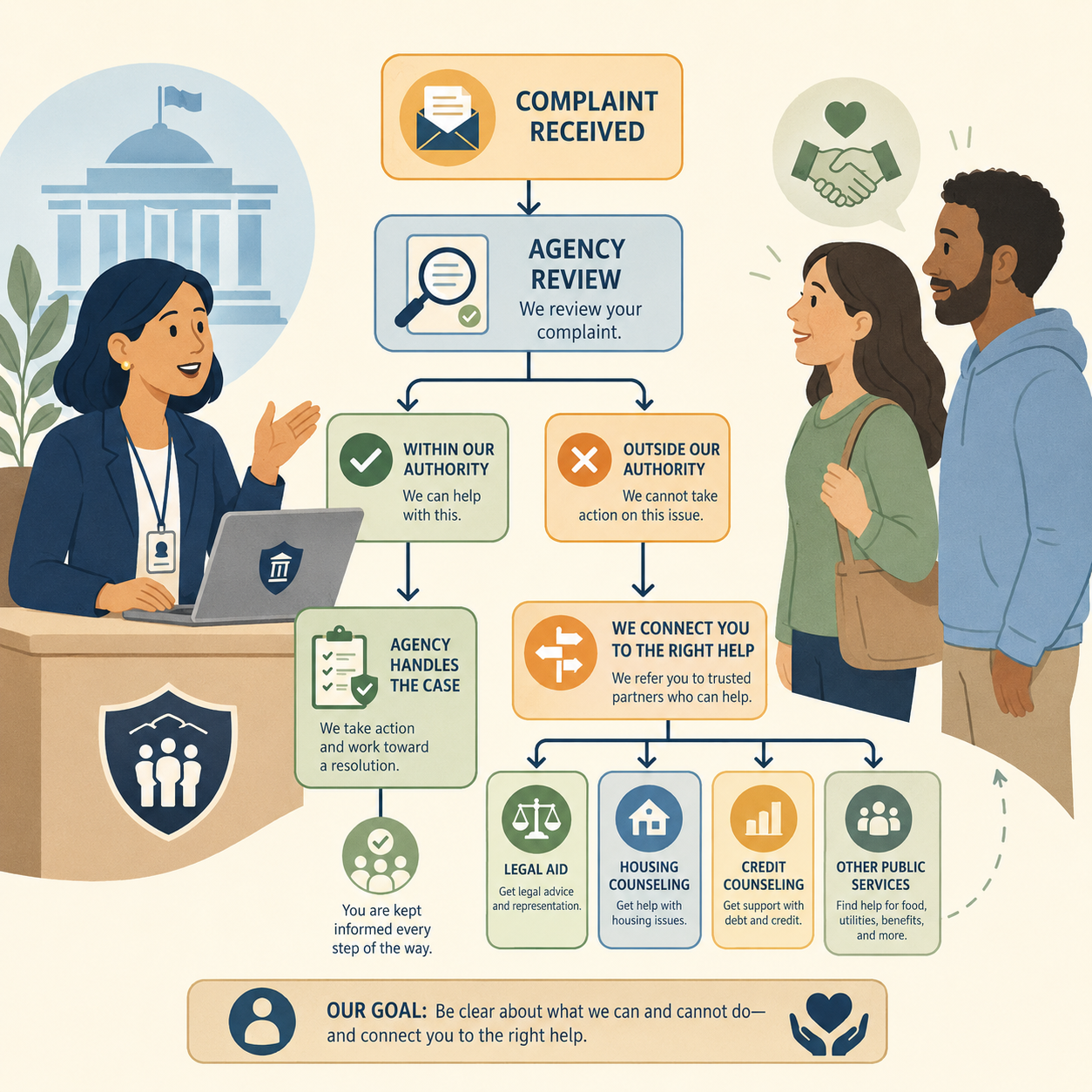 Reaching consumers who face heightened vulnerability to financial fraud requires more than expanding general public awareness campaigns. Older adults, low-income households, recent immigrants, people with disabilities, rural residents, and other populations may encounter different barriers to receiving, understanding, and acting on consumer protection information. Effective outreach begins by recognizing these differences and developing communication strategies around the specific circumstances, trusted information sources, and access needs of each population.
Successful vulnerable population outreach combines audience research, community partnerships, trusted messengers, accessible and culturally responsive content, targeted channel strategies, service integration, and ongoing evaluation. Consumers who are difficult to reach through traditional government channels may be more likely to encounter information through community organizations, healthcare providers, libraries, social service networks, financial counselors, faith-based organizations, or other trusted institutions. Building those relationships can extend the agency’s reach into communities that conventional communication strategies may consistently miss.
Developing this type of communication system requires specialized expertise in audience research, community engagement, culturally responsive communication, language access, partnership development, channel strategy, and communication evaluation. Many financial and insurance regulators choose to partner with external communication specialists such as Stegmeier Consulting Group (SCG) because these capabilities complement the agency’s consumer protection expertise while providing the strategic communication knowledge needed to reach populations that require different approaches, trusted messengers, and more tailored communication environments.
Working alongside financial and insurance regulatory agencies, SCG develops outreach strategies designed around the specific populations each agency needs to reach. Support may include conducting community communication assessments, identifying trusted organizations and messengers, developing culturally and linguistically appropriate materials, designing accessible communication resources, establishing partnerships with community and service organizations, integrating fraud prevention communication into existing service delivery systems, and implementing measurement frameworks that assess actual reach, engagement, and protective outcomes.
Reaching vulnerable consumers also requires sustained relationship development rather than isolated campaigns. SCG helps agencies establish repeatable partnership processes, communication workflows, governance practices, and performance measurement frameworks that allow outreach strategies to improve over time. This creates an ongoing communication presence within communities rather than relying on occasional outreach efforts that disappear once a campaign ends.
The objective is to create a communication environment in which consumers who face greater exposure to financial fraud can access information through channels they trust, in formats they can use, and at moments when the information can influence their decisions. By strengthening vulnerable population outreach, financial and insurance regulators can make consumer protection more equitable, extend preventive resources to underserved communities, and reduce the communication gaps that fraud operators are able to exploit.
Future Trends in Vulnerable Population Outreach
The vulnerable population landscape is evolving as demographic changes, economic shifts, and technological developments create new vulnerability profiles and new outreach challenges. The rapid aging of the population in many states means that older adult fraud vulnerability is growing as a proportion of the overall consumer protection challenge. Economic inequality trends that are increasing the financial fragility of low-income households are simultaneously increasing the fraud vulnerability of those households and the urgency of reaching them with consumer fraud protection. The increasing sophistication of technology-facilitated fraud, including AI-enabled impersonation and algorithm-targeted advertising of fraudulent financial products, is creating new vulnerability dimensions that outreach communication has not yet fully addressed.
Technology-facilitated outreach to vulnerable populations, including text message campaigns targeted to high-risk geographic areas, video content designed for the social media platforms used by specific communities, and digital tools that allow community organizations to quickly share agency-produced consumer fraud protection information with their clients, offers new opportunities for reaching populations that have been difficult to reach through traditional outreach methods. These technology-facilitated channels must be used alongside rather than instead of in-person community outreach, because the populations most vulnerable to financial fraud are also often those with the most limited digital access and the most need for the trusted human relationships that in-person outreach provides.
Conclusion
The consumers most vulnerable to financial fraud are often the same consumers least likely to benefit from broad, one-size-fits-all public communication. Older adults, low-income households, recent immigrants, people with disabilities, rural residents, and others facing particular economic, social, geographic, or access barriers may require different messengers, different channels, and different forms of information to recognize a threat and take protective action. Reaching them effectively is therefore not simply a matter of increasing communication volume. It requires agencies to understand how these communities receive information and to invest in the relationships and communication structures that make that information trustworthy and usable.
That investment is central to an equitable consumer protection mission. When agencies build meaningful community partnerships, provide culturally and linguistically appropriate information, address accessibility barriers, and measure whether outreach actually reaches the people it was designed for, they extend consumer protection beyond the populations that are easiest to reach. The result is a regulatory communication system that is better positioned to prevent fraud where the consequences can be most damaging and to ensure that public protection is available to the full range of consumers the agency exists to serve.
Stegmeier Consulting Group’s Strategic Approach to Communication Systems
Align your outreach with the populations who face the greatest risk and the least access to standard consumer protection information.
State agencies need vulnerable population outreach strategies that identify who is most at risk and why, engage trusted community organizations as genuine partners rather than distribution channels, design accessible and culturally appropriate materials that work for each target population, integrate fraud protection information into the service delivery contexts where those populations already receive assistance, and measure actual reach to vulnerable populations rather than just output volumes. SCG helps agencies develop the outreach approaches that make consumer financial protection genuinely equitable.
Use the form below to connect with our team and explore how more effective vulnerable population outreach can extend your agency’s consumer financial protection mission to the communities that face the greatest risk.