
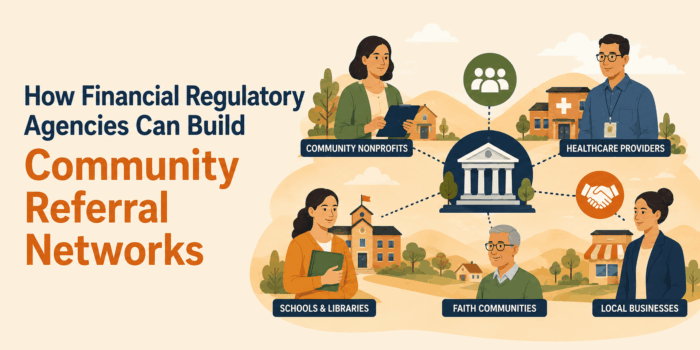
How Financial Regulatory Agencies Can Build Community Referral Networks
A consumer who needs the help of a financial regulatory agency but who cannot find it on their own has been failed by the system, not just by the company that harmed them. The gap between a consumer who knows their rights and knows where to turn and one who does not is often not a gap in legal protections. Both consumers may have the same statutory rights. The difference is information access, and information access in consumer financial protection is heavily mediated by community organizations. A food pantry client who mentions a debt collection problem to a caseworker, a credit union member who asks a teller about a suspicious investment offer, a patient at a community health center who discloses to a social worker that their insurance claim was denied, each of these is a consumer with a regulatory need who is already in contact with a trusted organization that could connect them to the agency’s services. Whether that connection gets made depends on whether the agency has built the referral relationships that allow it to happen.
Community referral networks extend a financial regulatory agency’s reach beyond the consumers who independently find and use its services to the much larger population of consumers who would use those services if they knew they existed. The consumers who independently find regulatory agencies are typically those who are most educated, most resourceful, most digitally connected, and most comfortable interacting with government institutions. They are often among the least vulnerable to financial fraud and the most capable of navigating financial disputes on their own. The consumers who are most likely to benefit from the agency’s services but least likely to find them independently are those who are least connected to mainstream information channels and most likely to be experiencing the financial harm that the agency’s services are designed to address.
Building a community referral network is not a one-time project. It is a sustained institutional commitment to developing and maintaining relationships with the organizations that serve the populations the agency exists to protect. Those relationships require ongoing attention, genuine partnership investment, and the operational systems that make referrals easy to make and easy to receive. This article addresses how financial regulatory agencies can build, sustain, and continuously improve the community referral networks that extend their consumer protection reach to the populations who most need it.
The agencies that have built the most effective referral networks share several characteristics. They treat partner organizations as genuine collaborators in a shared consumer protection mission rather than as distribution channels for agency materials. They invest in understanding the context of each partner organization’s work rather than assuming that what the agency provides is automatically relevant and useful to the partner’s clients. They maintain the relationships through regular communication, fresh information, and responsive support rather than establishing them once and assuming they will sustain themselves. And they measure whether referrals are actually reaching consumers who need the agency’s services rather than only whether partner organizations exist on a list.
Understanding the Community Organization Landscape
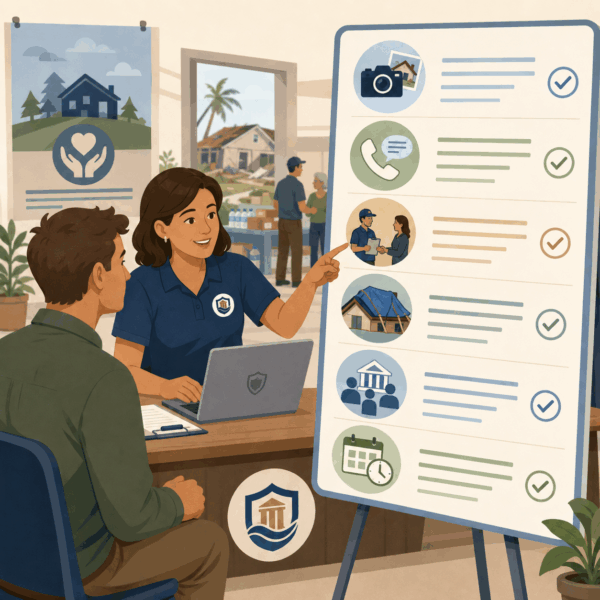 Building an effective referral network begins with understanding the landscape of community organizations that serve the populations the agency is trying to reach, including which organizations have genuine trusted relationships with those populations, which have the capacity to carry a referral function, and which see consumer financial protection as relevant to their core mission. Not every organization that serves a relevant population is a good referral partner. An organization that has a transactional rather than relational connection with its clients, that is already operating at capacity without room for additional responsibilities, or that does not understand the connection between its mission and consumer financial protection will not be an effective referral partner even if it nominally participates in the network.
Mapping the community organization landscape requires engagement with the organizations themselves rather than desktop research. A list of social service agencies in the agency’s jurisdiction is a starting point, not an endpoint. Understanding which organizations have the trusted client relationships that make referrals credible, which have the staff time and organizational capacity to take on a referral function, and which are interested in the consumer financial protection connection requires direct conversation with organizational leadership and frontline staff. This engagement is investment-intensive but produces the specific, current knowledge of the organizational landscape that effective referral network design requires.
The organizations most likely to be effective referral partners share several characteristics beyond geographic proximity to the target population. They have repeated, trusted contact with their clients over time rather than episodic or crisis-only contact. They have staff whose role includes addressing clients’ broader circumstances and needs, not just the specific service the organization provides. They have organizational stability that allows them to maintain partnership commitments over time. And they have leadership that understands and is committed to the connection between their organization’s mission and consumer financial protection. Organizations that meet all of these criteria are prime referral partners. Those that meet fewer require more support and produce less reliable referral outcomes.
The diversity of the referral network matters as much as its size. A referral network composed entirely of social service agencies serving low-income populations will not reach the older adult population that is disproportionately targeted by investment fraud. A network composed primarily of English-language organizations will not effectively reach immigrant communities. A network of urban organizations will not reach rural residents. Building a network that covers the full diversity of vulnerable populations requires deliberate outreach to the types of organizations that serve each specific population, and it requires maintaining that diversity over time as the network evolves.
Protecting the Public Interest: Communication Strategies for Financial Regulation, Insurance, and Consumer Protection Agencies
This article is part of our series on strategic communication for Financial Regulatory Agencies, State Insurance Departments, and Consumer Protection Agencies. To learn more and to see the parent article, which links to other content just like this, click the button below.
Identifying the Right Partner Organizations
The most effective referral partners for financial regulatory agencies are organizations that serve populations with elevated financial fraud and dispute risk and that have the specific characteristics that make referrals work. Working through the most effective channels means identifying not just the organizations that reach relevant populations but the organizations where a referral from a staff member to the regulatory agency is something a client will act on rather than ignore.
Legal aid organizations are among the most consistently effective referral partners because they serve clients who are actively experiencing financial legal problems, have staff with enough legal literacy to recognize situations that fall within the regulatory agency’s jurisdiction, and have established relationships with clients who trust their guidance. A legal aid attorney or paralegal who tells a client that their situation should be reported to the state financial regulatory agency is providing a referral that the client is highly likely to follow, because the source is trusted and the advice is legally informed. Establishing clear, efficient referral protocols with legal aid organizations in the agency’s jurisdiction should be an early priority in referral network development.
Faith communities are effective referral partners for many of the most vulnerable populations because they have deep, long-standing trusted relationships with their members that give their referrals significant credibility. A pastor, priest, rabbi, or imam who mentions the financial regulatory agency’s consumer assistance line to congregation members who are dealing with financial disputes is extending the agency’s reach through a relationship of trust that no government institution can replicate on its own. Building relationships with faith community leaders requires understanding the financial protection issues that are most relevant to each faith community’s membership and connecting those issues to the community’s own values and mission.
Health care settings are underutilized referral partners for consumer financial protection. Patients who are managing medical debt disputes, insurance coverage denials, or predatory medical financing arrangements are patients who have a regulatory need that a medical social worker or financial counselor in the health care setting could address through referral. Health care organizations that have financial counselors, social workers, or patient navigators are organizations that have staff with both the time and the relationship context to make effective regulatory referrals. Building connections with these health care financial support roles, rather than with physicians who have no time for non-clinical conversations, is the effective entry point into the health care referral channel.
Housing organizations, including public housing authorities, housing counseling agencies, community land trusts, and tenant advocacy organizations, are effective referral partners for the financial regulatory issues most relevant to housing: mortgage disputes, predatory lending, insurance coverage for housing, and the financial fraud schemes that target people who are seeking housing assistance. These organizations have clients who are making significant housing decisions or who are in housing disputes, and those clients often face concurrent financial regulatory issues that the housing organization’s staff can recognize and refer to the appropriate regulatory agency.
Developing Partnership Agreements and Protocols
Referral relationships that are established through informal conversations and that operate without clear protocols are relationships that deteriorate over time as the initial personal connections that created them move on and as the mutual understanding of how referrals should work fades. Formalizing referral relationships through written partnership agreements, clear referral protocols, and documented expectations for both the partner organization and the agency, creates institutional memory that sustains the relationship beyond the specific individuals who established it.
Partnership agreements do not need to be complex legal documents. A simple memorandum of understanding that describes the nature of the partnership, the types of referrals the agency expects to receive, the types of information the partner organization will provide clients about the agency’s services, the agency’s commitments to the partner in terms of training, materials, and responsive support, and the mechanism for evaluating and renewing the partnership, is sufficient to create the documented framework that gives the relationship institutional stability.
Referral protocols should be simple enough for partner organization frontline staff to use without extensive training or reference to documentation. A staff member at a community organization who encounters a client with a financial regulatory issue should be able to make an effective referral with the information they can hold in their head or find on a single laminated card: what the agency handles, how to refer the client (phone number, website, or walk-in option), what the client should bring when they contact the agency, and what the follow-up process looks like. Referral protocols that require more than this will not be reliably used.
Agency commitments to partner organizations should be specific and realistic, because commitments that are made but not met erode the partnership more than commitments that were never made. If the agency commits to providing training to partner organization staff twice a year, it should plan and execute that training. If it commits to a dedicated phone line for partner organization referrals, it should staff that line and maintain it. If it commits to providing updated materials when fraud tactics change, it should have the internal process to actually produce and distribute those updates. Specific, realistic commitments that are consistently met build the trust that makes referral partners enthusiastic advocates for the agency’s services with their clients.
Training Partner Organization Staff
The quality of referrals from partner organizations depends entirely on the knowledge and judgment of the frontline staff who make them. A staff member who does not know what types of situations the regulatory agency handles will not recognize when a client’s situation warrants a referral. A staff member who has been told the agency handles financial complaints but who does not have specific enough information to recognize which types of financial complaints fall within the agency’s jurisdiction will make unreliable referrals: some that send clients to the wrong agency and some that miss clients who should be referred.
Initial training for partner organization staff should focus on the specific types of situations that warrant referral, using examples and scenarios drawn from the types of situations the organization’s clients most commonly face. A training for food pantry staff should focus on the debt collection, payday lending, and public benefit financial issues that food pantry clients encounter, not on investment fraud that is less relevant to that client population. A training for housing counselors should focus on mortgage servicing issues, predatory lending, and housing-related insurance disputes. Tailored training that speaks directly to the situations each partner organization’s staff encounters is more effective than generic training that covers the full range of the agency’s jurisdiction.
Training delivery should accommodate the reality of frontline nonprofit staff, who are typically overextended and who cannot attend lengthy training sessions or read dense manuals. Short, focused trainings of thirty to sixty minutes, delivered at the partner organization’s location or via video, that address a specific set of referral situations with clear, practical guidance, are more effective than comprehensive training that covers everything the agency does. Supplementing these short trainings with brief reference cards or single-page referral guides that staff can use at their desk gives them a resource that reinforces the training at the moment they need it.
Ongoing training, refreshed as fraud tactics evolve and as the agency’s jurisdiction or procedures change, maintains the currency of partner staff knowledge. A partner organization whose staff received training two years ago and has not been updated since may be providing clients with outdated information about the agency’s services or may be unaware of new fraud schemes that their clients are encountering. Regular refresher communication, which can be as simple as a quarterly email update with the two or three most important current topics, keeps partner organization staff knowledge current without requiring repeated in-person training.
Peer learning among partner organization staff, facilitated by the agency through occasional network gatherings where partner organizations share experiences with specific referral situations, builds a community of practice among referral partners that reinforces the individual organization training. Partner organization staff who have successfully navigated specific referral situations with clients can share those experiences with peers from other organizations, building a collective knowledge base that helps all partner organizations recognize and respond more effectively to financial regulatory referral situations.
Supporting Partners With Materials and Information
Partner organizations that are asked to make referrals to the regulatory agency need materials that support those referrals: information about what the agency does, how to contact it, what clients should expect, and what types of situations the agency handles. These materials need to be accurate, current, accessible to the partner organization’s client population, and practical to use in the context of the partner organization’s service delivery.
Referral cards, which provide the essential referral information in a format that fits in a client folder or on a desk, are among the most practically useful materials the agency can provide to partner organizations. A referral card should include the agency’s consumer assistance line phone number, the web address for online complaint submission, a brief description of the types of problems the agency handles, and any specific preparation the client should bring to their contact with the agency. These cards should be available in the languages spoken by the client populations of each specific partner organization, not just in English.
Brochures and client handouts for specific types of financial situations, such as insurance claim disputes, debt collection rights, or investment fraud warnings, allow partner organization staff to provide clients with substantive information rather than just a referral. A client who leaves a food pantry appointment with a brochure explaining their rights when dealing with debt collectors, along with the agency’s contact information, has received both information and a referral in a format they can review at their own pace and share with family members.
Digital resources that partner organization staff can easily share with clients, including links to the agency’s complaint submission portal and to consumer education materials, extend the reach of referral support into the digital interactions that many partner organizations now have with their clients. Email follow-ups from social workers, text messages from case managers, and digital newsletters from community organizations are all channels through which a link to the regulatory agency’s consumer services page can reach clients who would benefit from the agency’s assistance.
Maintaining the currency and accuracy of materials provided to partner organizations is an ongoing operational responsibility that agencies often underestimate. Materials that describe agency services, contact information, or referral procedures need to be updated when any of those elements change, and partner organizations need to be notified of the update and provided with the revised materials. Outdated materials in circulation through the referral network send clients to the wrong number, describe services that have changed, or create confusion that undermines the partner organization’s credibility with its clients. Building an update notification and material replacement process into the network management is essential for maintaining the quality of partner organization referrals over time.
Making the Referral Receiving Process Work
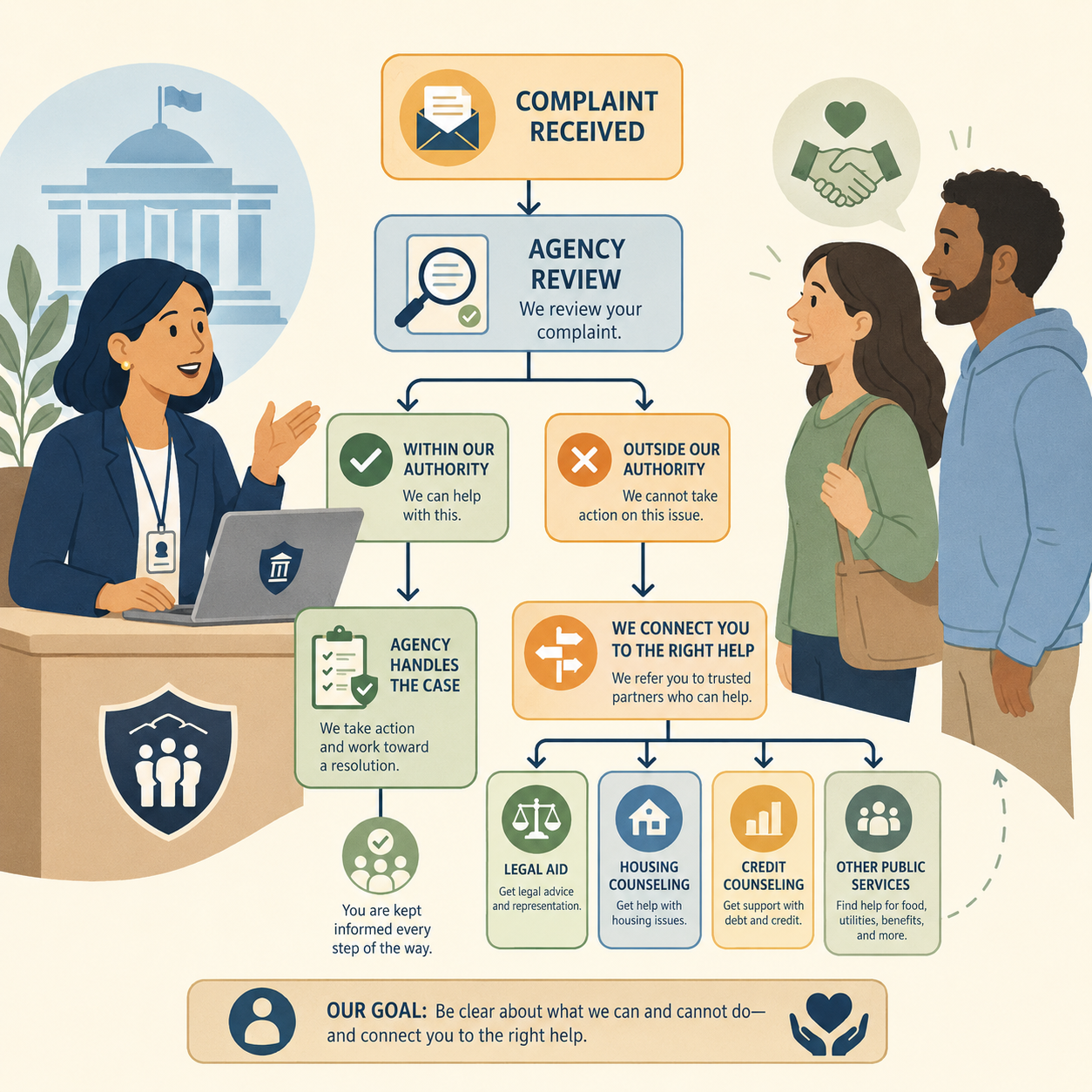
A referral network is only as effective as the experience that referred consumers have when they contact the agency. A consumer who is referred to the agency by a trusted community organization and who then reaches an unhelpful automated phone system, cannot find the complaint submission process on the agency’s website, or receives a letter weeks later that does not address their specific situation, has had an experience that makes the referring organization less willing to make future referrals and that fails the specific consumer in question. The agency’s consumer-facing processes must be designed to receive and respond to referred consumers in a way that validates the referral and delivers genuine help.
A dedicated intake channel for referred consumers, or at minimum a clear intake protocol that acknowledges the referral and provides tailored follow-up, demonstrates that the agency takes partner referrals seriously. When a client arrives through a referral from a trusted community organization, knowing that the partner organization is named in the intake information and that the intake process is designed to address the types of situations that organization’s clients encounter, the consumer assistance experience is more relevant and more effective than a generic intake that treats all referrals identically.
Response time for referred consumers should meet the expectations that the referring organization communicated to the client. If a social worker tells a client that the agency will respond within two weeks, the agency should meet that timeline or contact the referring organization if the timeline cannot be met for a specific case. Referral partners who make commitments to their clients on the agency’s behalf need the agency to honor those commitments, because the referring organization’s credibility with its client depends on the accuracy of the information it provided.
Feedback to partner organizations on the outcome of referrals they made, within the privacy constraints that apply to individual complaint information, is both a transparency practice and a referral quality improvement tool. A community organization that hears back from the agency that a specific type of referral it has been making is or is not within the agency’s jurisdiction can adjust its referral practice accordingly. An organization that receives periodic aggregate information about what happened to the referrals it made, such as the proportion that resulted in complaint filing, the proportion that were outside the agency’s jurisdiction and were redirected, and the types of issues most commonly raised by referred clients, can evaluate and improve its own referral practice over time.
Measuring Referral Network Effectiveness
A referral network that exists on paper but that does not produce referrals that reach consumers who need the agency’s services is not an effective referral network regardless of how many partner organizations are on the list. Measuring referral network effectiveness requires tracking not just the inputs, such as the number of partner organizations, training sessions delivered, and materials distributed, but the outputs: the number and quality of referrals received from partner organizations, the characteristics of the consumers who arrive through the referral network, and the outcomes for those consumers compared to consumers who find the agency through other channels.
Referral tracking should capture the referring organization for each consumer who contacts the agency through the referral network, so that the agency can assess which partner organizations are producing referrals and which are not. Partner organizations that have received training and materials but that produce few or no referrals are either not encountering clients with relevant situations, are not implementing the referral practice in their client interactions, or are making referrals that consumers are not following through on. Identifying these patterns allows the agency to provide targeted support to the organizations that are underperforming on referrals and to concentrate resources on the organizations that are producing genuine referrals.
Consumer characteristics for referred consumers compared to consumers who find the agency through other channels reveals whether the referral network is actually reaching the populations most in need of the agency’s services. If referred consumers look demographically identical to consumers who find the agency through its website and social media, the referral network is not meaningfully expanding the agency’s reach. If referred consumers are more likely to be non-English speakers, lower income, older, or from rural areas, the referral network is doing what it is designed to do: reaching populations that the agency’s standard channels do not effectively serve.
Outcomes for referred consumers provide the strongest evidence of referral network effectiveness. Referred consumers who successfully file complaints, who receive responses and outcomes from the agency’s complaint process, and who report satisfaction with both the referral and the agency’s handling of their situation are evidence that the referral network is producing genuine consumer protection benefit. Tracking these outcomes systematically, and connecting them to specific partner organizations, builds the evidence base for demonstrating the value of the referral network investment and for identifying which partnership relationships are producing the most consumer protection impact.
Sustaining the Network Over Time
Referral networks that are built through a period of intensive effort and then left to sustain themselves typically do not sustain themselves. The personal relationships that drive referral activity change as staff turn over at partner organizations. The specific fraud patterns and consumer protection issues that make referrals relevant change as the regulatory environment evolves. The partner organizations themselves change as their missions, resources, and client populations shift over time. Sustaining an effective referral network requires ongoing management attention, not just initial investment.
A designated staff member or team within the agency with explicit responsibility for referral network management is the organizational foundation of network sustainability. This is not a role that can be effectively handled as a sideline responsibility of communication staff who are primarily focused on other functions. Managing a referral network of meaningful size requires dedicated attention: keeping track of which partnerships are active, which partner organizations need refresher training, which materials need updating, which geographic or population gaps in the network need to be addressed, and which partnership relationships are producing referrals and which are not.
Annual review of the referral network, assessing which partnerships are active and productive, which need reinvestment, and which should be replaced with more effective alternatives, maintains the network’s quality over time. This review should include direct conversation with partner organization contacts about the state of the relationship, what is working, what is not, and what the agency could do differently to support the organization’s referral practice. This feedback from partner organizations is the most valuable information available for improving the referral network, because partner organizations know their clients and their own capacity better than the agency does.
Expanding the referral network over time, as the agency develops greater understanding of which types of organizations are most effective for specific populations and as new community organizations develop that serve populations not currently reached by the network, is an ongoing development process rather than a one-time build. The referral network is never complete. There are always populations whose access to the agency’s services is more limited than it should be, and there are always organizations in the community that serve those populations and that could be effective referral partners if the agency invested in the relationship. Treating referral network expansion as a standing organizational priority rather than a completed project maintains the network’s growth trajectory over time.
Geographic Considerations in Referral Network Building
 Financial regulatory agencies serve entire states, and their referral networks must cover the full geographic range of their jurisdiction rather than concentrating on metropolitan areas where community organizations are most numerous and most accessible. Rural consumers who face financial fraud and regulatory disputes are among the hardest to reach through standard agency channels and are often served by fewer community organizations than urban consumers. Building referral capacity in rural areas requires identifying the specific organizations that exist and are trusted in rural communities, which may include agricultural extension offices, rural electric cooperatives, rural health clinics, and county-level social service offices, and investing in those partnerships even when they are more difficult to reach and maintain than urban partnerships.
Regional variation in the types of financial products and fraud schemes that affect consumers creates geographic variation in the referral needs of the network. An agricultural region may have significant issues with farm financing fraud and crop insurance disputes that a metropolitan region does not. A coastal region may have significant hurricane insurance disputes. A border region may have significant issues with cross-border financial fraud and remittance fraud. The referral network should be designed to address the specific regulatory issues most prevalent in each geographic area rather than applying a uniform approach across the entire jurisdiction.
Regional partner organizations, including regional community action agencies, regional food banks, and regional nonprofit associations, can serve as connectors to local organizations within their service areas, extending the reach of the referral network without requiring the agency to establish individual relationships with every local organization. A regional community action agency that works with dozens of local community organizations can become a force multiplier for the referral network if the agency invests in the regional relationship and supports the regional organization in sharing referral information and training with its local members.
Integrating Referrals Into Partner Organization Service Delivery
Referrals from community organizations to regulatory agencies are most effective when they are integrated into the natural flow of the partner organization’s service delivery rather than treated as an add-on activity that staff must remember to perform. A social worker who completes a housing stability assessment that includes a standard question about debt collection contacts, a food pantry volunteer who includes a brief mention of the agency’s consumer assistance resources in every client interaction during a period of known fraud activity in the community, and a faith community leader who incorporates a mention of consumer financial protection resources into a monthly financial wellbeing communication, are all integrating referral into existing service delivery patterns rather than creating a separate referral activity.
Service delivery integration requires that the referral question or mention be genuinely incorporated into the partner organization’s workflow, not appended as an external task. This integration is most effective when partner organization leadership supports it as part of the organization’s mission and when frontline staff understand why it matters for their clients. A food pantry that incorporates consumer financial protection referral into its intake process because leadership has communicated that financial stability is part of the food security mission, and that has trained its intake staff specifically on the financial protection referrals most relevant to food pantry clients, is delivering referrals that flow naturally from the organization’s own service rather than feeling like an external requirement imposed by the agency.
Service documentation systems at partner organizations can support referral integration by including prompts for consumer financial protection topics in the forms and checklists that staff complete for each client interaction. A case management software form that includes a field for notes on financial disputes, debt problems, or insurance issues encountered by the client, and that prompts the staff member to refer to the agency when those situations arise, creates a workflow support for referral that reduces the reliance on staff memory alone. Agencies that work with partner organizations on integrating referral prompts into their documentation systems are making an investment in referral systematization that produces more consistent referral behavior than training alone can achieve.
Scale of integration matters for the agency’s referral volume. A single social worker at a community health center who personally recognizes referral opportunities and acts on them is valuable but limited in the number of consumers they can reach. A community health center that has integrated financial protection screening into its patient intake process, that trains all front desk staff to ask a single screening question about financial disputes, and that has a referral card in every exam room, is producing referrals at a scale that individual staff initiative cannot match. Working with partner organization leadership to achieve systematic integration rather than relying on individual staff champions produces referral volume that is proportionate to the partner organization’s client volume.
Referral Network Communication and Coordination
A referral network of even modest size requires communication and coordination infrastructure that keeps partner organizations informed, connected to each other, and connected to the agency. Without deliberate communication infrastructure, individual partnership relationships may be active and productive while the network as a whole lacks the cohesion and shared learning that make it more than the sum of its parts. Building the communication practices that keep the network alive and growing is a distinct investment from building the individual partner relationships that constitute the network.
Regular communication to all partner organizations in the network, through a dedicated communication channel such as an email list or a partner portal, keeps the network informed of developments that affect their referral practice. New fraud schemes that the agency is seeing in specific communities, changes in the agency’s jurisdiction or processes, updates to referral materials, and announcements of training opportunities should all be communicated proactively to the full partner network rather than waiting for individual partner organizations to ask. This regular communication also reinforces the sense among partner organizations that they are part of an active, supported network rather than isolated participants in a relationship with the agency that has gone quiet.
Network gatherings, whether in-person or virtual, that bring partner organization representatives together to share experiences, ask questions, and hear updates from the agency, build the lateral relationships among partner organizations that make the network a genuine community rather than a hub-and-spoke structure. Partner organization representatives who know each other, who can share referral experiences informally, and who collectively develop a sense of the consumer financial protection needs they are encountering in their communities, are more effective referral practitioners than those who interact only bilaterally with the agency. These gatherings require logistical investment but produce network cohesion that bilateral communication alone cannot achieve.
Recognition of partner organization contributions to the referral network, through acknowledgment in the agency’s annual reports, public recognition at network gatherings, and direct communication to partner organization leadership about the value of the referrals the organization has made, reinforces the partner organization’s commitment to the partnership and demonstrates that the agency values the relationship as a genuine contribution rather than a service it is extracting from community organizations. Organizations that feel valued as partners are more likely to sustain and expand their referral activity than those that feel they are providing a service to the agency without recognition or reciprocation.
Specialized Referral Relationships for Specific Populations
Some populations face financial regulatory issues that are so specific to their circumstances that generic referral network approaches are insufficient. For these populations, specialized referral relationships with organizations that have deep expertise in both the population’s circumstances and the specific financial regulatory issues they face can be more effective than inclusion in a general referral network. These specialized relationships require more intensive development but produce higher-quality referrals for the specific populations they serve.
Older adult financial fraud is sufficiently prevalent and sufficiently distinct from other consumer financial protection issues that it warrants a specialized referral network component focused specifically on the organizations that serve older adults: senior centers, Medicare counseling programs, area agencies on aging, adult day programs, and legal services programs that specialize in elder law. These organizations have the client relationships and the contextual knowledge to recognize elder financial fraud situations that generic community organizations might miss. A training specifically designed for elder-serving organizations, addressing the specific fraud schemes that target older adults and the specific regulatory resources available for elder fraud victims, produces more effective referrals than incorporating elder fraud into a generic community organization training.
Immigrant communities facing financial exploitation from within and outside their communities benefit from referral relationships with organizations that have deep community trust and that understand the specific circumstances of immigrant financial vulnerability. Immigrant legal services organizations, ethnic community organizations, and faith communities that serve specific immigrant populations are referral partners for whom a generic outreach approach will not work. Building referral relationships with these organizations requires cultural competency, language capacity, and genuine understanding of the specific fraud schemes and regulatory issues most relevant to each community. The investment in these culturally specific referral relationships is significantly higher than for general referral partnerships but produces access to populations that general referral networks cannot effectively reach.
Small business owners who face consumer financial regulatory issues, including predatory lending, payment processing fraud, and insurance disputes, are a distinct population whose referral needs are not well served by consumer-facing community organizations. Small business development centers, chambers of commerce, and business association networks that serve small business owners are the appropriate referral partners for this population, and the agency’s outreach to those partners should focus on the specific financial regulatory issues that most commonly affect small businesses in the regulated categories within the agency’s jurisdiction.
Data and Privacy Considerations in Referral Networks
Community referral networks involve the transmission of consumer information between partner organizations and the regulatory agency, and they require clear policies about what information is shared, how it is protected, and what the privacy rights of referred consumers are. A consumer who is referred to the regulatory agency by a community organization has not necessarily consented to the community organization disclosing their name, contact information, or the details of their situation to the agency. The referral process must be designed in a way that respects consumer privacy while providing the agency with enough information to follow up effectively.
The simplest privacy-protective referral model is one in which the partner organization provides the consumer with the agency’s contact information and encourages the consumer to contact the agency directly, rather than providing the consumer’s information to the agency on their behalf. This model preserves consumer control over whether and how they engage with the agency, but it produces lower referral conversion rates because consumers who have received information about the agency must then take the initiative to contact it, which many will not do. Understanding the conversion rate implications of different referral models and designing for the model that best balances privacy protection with referral effectiveness is part of the referral network design process.
Where partner organizations do share consumer identifying information with the agency as part of a warm referral, clear data sharing agreements must specify what information is shared, for what purpose, how it is stored and protected, how long it is retained, and what the consumer’s rights are with respect to that information. These agreements are important both for protecting consumer privacy and for protecting the partner organization from liability for unauthorized disclosure. The agency should not ask partner organizations to share consumer information without having established the legal and procedural framework that protects all parties.
Consumer consent for referral information sharing should be obtained by the partner organization when possible, both because it respects consumer autonomy and because consumers who have actively consented to the referral are more likely to follow through with contacting the agency than those for whom the referral was made without their explicit participation. A community organization that tells a client about the regulatory agency, explains what the agency could help with, asks whether the client is willing to have the organization share their contact information with the agency, and then makes a warm referral to an agency representative who reaches out to the client directly, is running a consent-based referral process that both protects consumer privacy and maximizes referral conversion.
Building Referral Capacity in Underserved Areas
The areas of a state where community organizations are most numerous and most resourced are usually not the areas where residents face the greatest barriers to accessing regulatory agency services. Rural areas, low-income urban neighborhoods, and communities with large immigrant or limited-English-speaking populations often have fewer community organizations, and those that exist are often operating with more limited capacity than their counterparts in more affluent or urban areas. Building referral capacity in these underserved areas requires more investment per referral than building it in areas with robust community organization infrastructure.
Identifying the organizations that do serve underserved areas, even if they are smaller, less resourced, or less professionalized than organizations in other areas, is the starting point for building referral capacity in areas that most need it. A rural area that has a volunteer-run community assistance program, a small rural hospital with a community health worker, and a county extension office is an area where referral capacity can be built even if none of those organizations has professional staff dedicated to consumer financial protection. What is required is identifying the individuals in those organizations who have the relationships and the inclination to make referrals, and providing them with the information, materials, and support they need to do so.
Capacity building support for smaller organizations in underserved areas, which may include helping them develop the organizational infrastructure to make referrals systematically rather than relying on individual initiative, providing them with funding or in-kind support that enables them to take on the referral function, and connecting them with larger organizations that can provide mentorship and technical assistance, is an investment that is justified by the consumer protection benefit of reaching populations that the agency’s other channels cannot serve. This capacity building is longer-term and more complex than training existing capacity, but it produces referral infrastructure in areas that would otherwise remain underserved.
The Role of Libraries in Financial Protection Referral Networks
Public libraries occupy a unique position in the community organization landscape that makes them particularly valuable partners for financial regulatory agency referral networks. They serve every demographic group, are present in rural as well as urban communities, have trusted relationships with community members across income levels and backgrounds, and already function as information hubs where members of the public come with questions they cannot answer elsewhere. A library patron who comes to the reference desk with questions about a suspicious investment offer, a denied insurance claim, or a debt collection dispute is exhibiting exactly the behavior that a financial regulatory agency referral should capture.
Library staff, particularly reference librarians, are trained to connect people with information resources rather than to provide substantive expert advice. That training makes them natural referral partners: they understand referral as a professional function, they are skilled at directing people to appropriate resources, and they have the relationship with patrons that gives their referrals credibility. Training reference librarians on the specific situations that warrant referral to the financial regulatory agency, and providing them with clear referral information that fits their existing reference function, is an investment that leverages a professional competency that library staff already have.
Libraries also provide physical space where financial fraud warning materials, consumer rights guides, and regulatory agency contact information can be displayed to self-selecting patrons who are looking for information about their financial situations. A rack of agency brochures at the reference desk, a poster about scam warning signs in the financial section of the periodicals room, and a laminated referral card at each public computer station where patrons might be doing research about a financial dispute are all low-cost, self-service referral tools that the library’s physical presence makes possible. These materials reach patrons who have not yet identified their situation as one that warrants a referral, giving them the information that allows them to make that identification themselves.
Library technology resources, including public internet access, printing services, and digital literacy programs, support the consumer actions that follow a referral. A patron who is referred to the agency’s online complaint submission system but who does not have home internet access can complete the submission using library resources. A patron who needs to print documentation to include with a complaint can do so at the library. Framing the library as not just a referral source but as a support resource for consumers who are navigating the complaint process after a referral makes the library’s role in the consumer financial protection ecosystem more comprehensive and more valuable.
Building a library referral component into the agency’s community referral network requires engaging with both individual library systems and, where they exist, the state library system that provides coordination and support to local libraries across the state. A single training and materials package delivered through the state library system can reach reference staff at libraries throughout the jurisdiction, including rural libraries that the agency might not reach through individual outreach. This scale efficiency makes the library network a particularly cost-effective component of the referral infrastructure.
Strategic Communication Support for Financial and Insurance Regulators
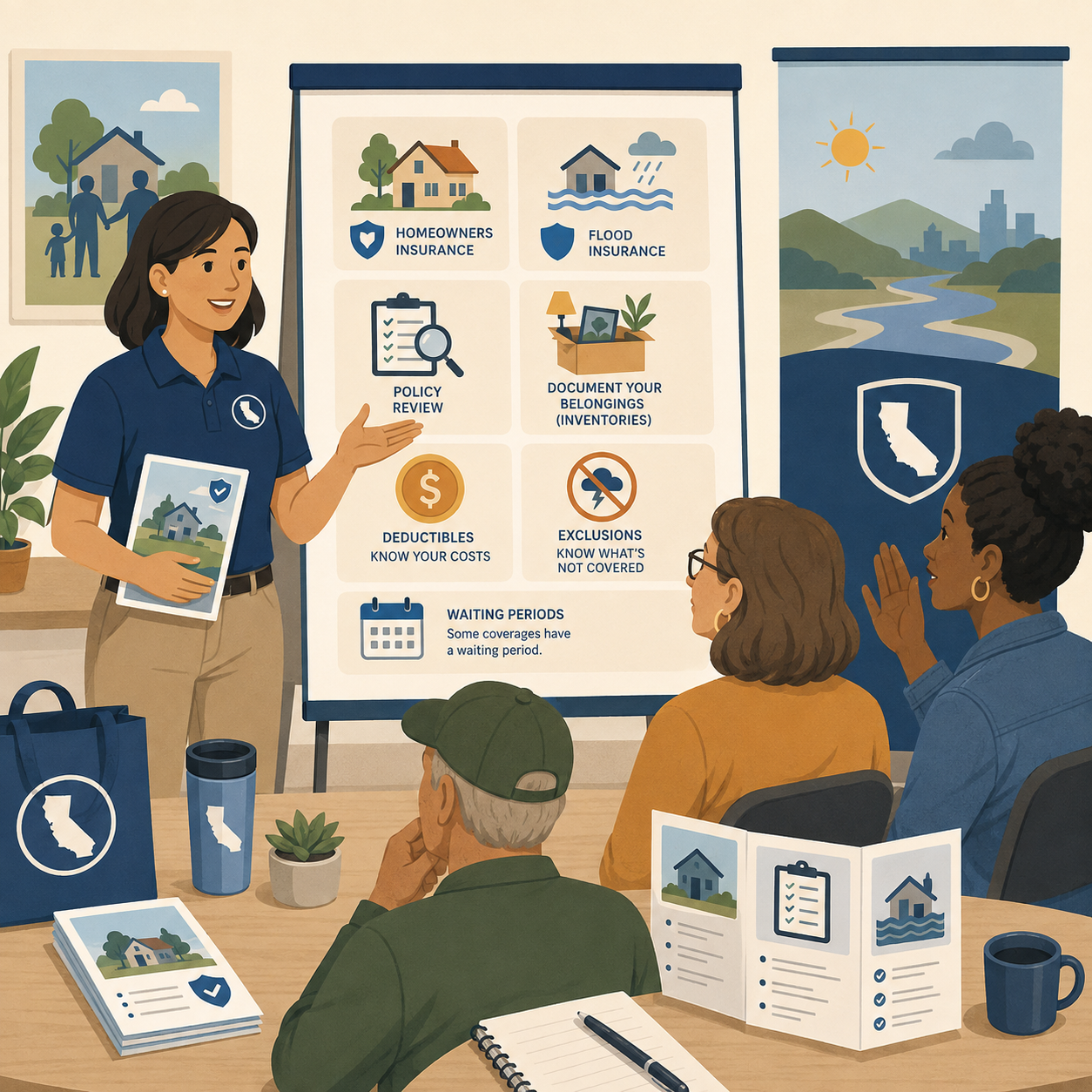 Community referral networks can extend a financial regulatory agency’s consumer protection reach far beyond the audiences that engage directly with government channels. Community organizations often interact with consumers who may never visit an agency website, attend a public education event, or contact a regulatory office on their own. When those organizations understand what the agency offers and know when and how to refer consumers, they become trusted extensions of the agency’s communication network.
Effective referral networks depend on more than collecting partner contact information. They require organizations that understand the agency’s services, practical referral guidance, current educational materials, clear communication protocols, and ongoing relationship management. The strongest networks also reflect the communities they are intended to reach, connecting agencies with organizations that serve older adults, low-income households, immigrants, people with disabilities, rural residents, and other populations that may face barriers to accessing traditional government communication channels.
Developing this type of communication system requires specialized expertise in community engagement, partnership strategy, stakeholder communication, training design, referral workflows, and communication evaluation. Many financial and insurance regulators choose to partner with external communication specialists such as Stegmeier Consulting Group (SCG) because these capabilities complement the agency’s consumer protection expertise while providing the strategic communication knowledge needed to build and manage community relationships that expand reach without requiring the agency to rely solely on direct outreach.
Working alongside financial and insurance regulatory agencies, SCG develops community referral strategies that turn individual partnerships into coordinated consumer communication networks. Support may include identifying high-value community partners, developing partner outreach and engagement frameworks, creating referral training materials, establishing referral protocols, equipping organizations with current consumer education resources, developing communication schedules for partner updates, and implementing measurement systems that track referrals, consumer reach, and engagement outcomes.
Referral networks also require ongoing attention to remain useful. Partner organizations change staff, community needs evolve, and regulatory programs or consumer resources may be updated. SCG helps agencies establish repeatable partner management processes, briefing and update practices, governance standards, and performance measurement frameworks that keep referral networks active and informed rather than allowing relationships to become inactive contact lists.
The objective is to create a communication environment in which trusted community organizations can confidently connect consumers with reliable regulatory information and assistance. By strengthening community referral networks, financial and insurance regulators can extend their consumer protection reach, improve access among harder-to-reach populations, and create additional pathways through which consumers can find help before financial problems become more difficult to resolve.
Future Trends in Community Referral
Digital referral mechanisms, including QR codes that community organization staff can share with clients to direct them to the agency’s complaint submission portal, texted links that social workers can send to clients following appointments, and shared digital resource libraries that community organizations can access and share with their clients, are extending the referral relationship into digital channels in ways that increase the efficiency and reach of referrals without requiring the consumer to navigate to the agency’s resources independently. Agencies that invest in making their consumer services easily shareable through digital referral mechanisms are expanding the practical reach of their referral network without requiring additional partner organization staff time.
Two-way data sharing between agencies and partner organizations, within the constraints that privacy laws allow, is emerging as a more sophisticated approach to referral network management that allows partner organizations to know whether the referrals they make are reaching the agency and producing outcomes for their clients. Aggregate, anonymized reporting that tells a partner organization what proportion of its referrals resulted in complaint filing, what types of outcomes those complaints produced, and what the overall picture of regulatory need among its referred clients looks like, gives partner organizations the evidence they need to advocate internally for sustaining the referral function as part of their organizational mission.
Conclusion
Community referral networks are how financial regulatory agencies close the gap between the consumer protection resources they have and the consumers who most need those resources. The consumers who independently find and use regulatory agency services are not the consumers who most need them. Reaching the consumers who are most vulnerable to financial fraud and most in need of regulatory assistance requires the trusted community relationships that partner organizations have built over years of serving those populations. Building genuine partnerships with those organizations, supporting them with training, materials, and responsive backing, and sustaining those partnerships through ongoing management, is the consumer protection investment that reaches the populations that standard communication channels cannot.
The measure of a referral network is not the number of partner organizations enrolled or the training sessions delivered. It is the number of consumers who received the agency’s services because a trusted community organization connected them, and who would not have accessed those services independently. Every referred consumer who successfully files a complaint, receives a useful response, or is redirected to appropriate help is evidence of the network’s real value that no input metric can replicate.
Building referral networks is patient work. The organizations that become the most reliable and productive referral partners are not those that agreed immediately to a quick training. They are the organizations the agency invested in over time, that came to see consumer financial protection as genuinely relevant to their mission, and that built referral into their culture rather than treating it as an external obligation. That organizational trust and cultural integration is what produces referral networks that sustain themselves and grow, rather than declining as the initial energy of establishment fades.
Stegmeier Consulting Group’s Strategic Approach to Communication Systems
Align your referral network with the community relationships that extend your consumer protection reach.
Financial regulatory agencies need community referral networks built on genuine partnerships with organizations that have trusted relationships with vulnerable populations, supported by tailored training and practical materials, receiving referrals through consumer-facing processes designed to serve referred clients effectively, and measured for actual consumer reach and outcome. SCG helps agencies develop the referral networks that extend consumer protection to the populations who most need it.
Use the form below to connect with our team and explore how a stronger community referral network can extend your agency’s consumer financial protection mission to the communities that face the greatest risk.