How Sewer and Stormwater Agencies Can Build Environmental Stewardship Communication Into Routine Outreach
Environmental stewardship communication is most effective when it does not announce itself as a campaign. The resident who opens a bill insert and reads about the connection between their household’s stormwater runoff and the health of the local creek is receiving stewardship communication at a moment when they were already engaged with their utility relationship and when the communication arrives through a channel they have come to expect. The same resident who receives a mailer from an agency they rarely think about, announcing a stewardship initiative with no connection to any immediate communication context, encounters the stewardship message as a stranger. The difference between these two communication situations is not primarily a matter of message quality. It is a matter of whether the stewardship communication is integrated into a relationship that already exists or inserted into a relationship that has not been built.
Sewer and stormwater agencies occupy a distinctive position in the landscape of environmental communication because the work they do, managing the water that flows from communities into rivers, lakes, and bays, is among the most environmentally consequential work that local government performs, and because the environmental story of that work is largely untold. The treatment plant that removes nutrients from wastewater before discharging it to a sensitive estuary is performing an environmental service of genuine significance. The stormwater program that reduces the volume of polluted runoff entering local waterways through green infrastructure and behavioral outreach is producing measurable environmental improvement. But the ratepayers who fund these programs receive almost no communication about the environmental outcomes their investment is producing, and as a result, they have almost no understanding of the environmental value of the services they fund.
Building environmental stewardship communication into routine agency outreach is not simply an add-on to existing communication programs. It is a reorientation of the purpose and framing of those programs: from administrative notification to environmental accountability, from compliance documentation to environmental storytelling, from institutional obligation to community partnership in the ongoing management of the waterways and ecosystems that connect every household’s daily activities to the natural environment around them. This reorientation requires communication investment, but it is investment that pays returns in ratepayer engagement, community support for capital programs, and the institutional credibility that environmental accountability produces.
This article examines how sewer and stormwater agencies can embed stewardship messaging into the routine touchpoints they already have with residents, use monitoring data and program outcomes to tell an ongoing environmental story, build relationships with schools and community organizations that extend stewardship communication into populations that routine outreach does not reach, and communicate the connection between local infrastructure investment and visible improvements in water quality and community environmental health.
Embedding Stewardship Into Routine Communication Touchpoints
Bill Inserts as Stewardship Communication
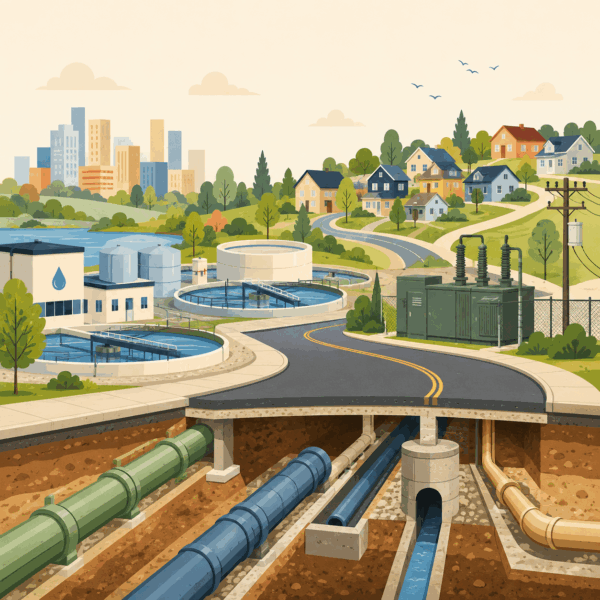 The utility bill is the most regular and most universal communication channel that sewer and stormwater agencies have with their ratepayers. Every ratepayer who pays a utility bill receives a bill, and the bill insert that accompanies that bill represents a communication opportunity that most agencies use for operational notifications and program announcements but rarely for the environmental storytelling that would build ratepayer understanding of the environmental value they are funding. A bill insert that reports a water quality improvement in the local waterway that the stormwater program serves, connects that improvement to the rate-funded programs that produced it, and invites residents to participate in the behavior changes that would extend that improvement, is communicating environmental stewardship through the channel that has the highest guaranteed reach in the agency’s communication portfolio.
The design challenge for stewardship bill inserts is the same as for all bill insert communication: the space is limited, the reader’s attention is brief, and the competing information in the bill itself is more immediately relevant to the reader’s immediate financial situation. Effective stewardship bill inserts make a single, specific, compelling environmental point rather than attempting to convey comprehensive program information in limited space. A single striking data point, such as the reduction in phosphorus loading to a local lake since the treatment plant upgrade was completed, accompanied by a brief explanation of why that reduction matters for lake health and a call to action for residents who want to contribute to continued improvement, is more effective than a comprehensive program overview that no reader will absorb fully.
Seasonal stewardship communication through bill inserts, timed to connect stewardship messages with the environmental conditions and community activities that are most relevant in each season, extends the environmental story throughout the year rather than concentrating it in a single annual communication event. A spring bill insert about the connection between lawn fertilizer applications and the stormwater runoff that produces nutrient pollution in local waterways arrives at the moment when residents are making lawn care decisions that the stewardship message can influence. A summer bill insert about water quality monitoring results in local swimming areas connects the stormwater program to a recreational experience that ratepayers care about directly.
Service Notifications as Stewardship Moments
Service notifications, including construction project announcements, maintenance schedule updates, and system upgrade communications, are routine agency communications that most agencies write exclusively in operational terms without recognizing their potential as environmental stewardship communication moments. A construction notification about a collection main rehabilitation project can include a sentence explaining that the rehabilitation reduces the probability of sewer overflows that affect the creek downstream of the project area. A green infrastructure installation notification can explain the stormwater runoff reduction that the installation will produce and the water quality improvement that the reduction contributes to. These brief stewardship additions to operational notifications do not transform them into environmental education documents, but they do build the cumulative connection between agency operations and environmental outcomes that stewardship communication is designed to produce.
Combined sewer overflow notifications, which inform residents of overflow events that have discharged to waterways, are among the most significant stewardship communication opportunities available to agencies that manage combined sewer systems. These notifications serve a regulatory and public health function, but they can also serve a stewardship education function by explaining the systemic conditions that produce combined sewer overflows, the capital investments the agency is making to reduce overflow frequency, and the connection between individual household water conservation and the inflow reduction that helps keep combined sewer flows below overflow thresholds during rainfall events. A notification that transforms a negative event report into a connection between the event, its systemic causes, and the community’s role in addressing those causes is stewardship communication at the moment when the resident is most attentive to the issue it addresses.
From Fragmentation to Coordination: Communication Strategies for Councils of Governments, Metropolitan Planning Organizations, and Regional Planning Agencies
This case study is part of SCG’s series on communication for councils of governments, metropolitan planning organizations, and regional planning agencies. To learn more and to see the parent article, which links to other content just like this, click the button below.
Using Monitoring Data to Tell an Environmental Story
 Environmental monitoring data is among the most powerful and least used communication resource available to sewer and stormwater agencies. The water quality monitoring that these agencies conduct as part of their regulatory compliance programs, including effluent quality monitoring at treatment plants, receiving water quality monitoring at ambient stations in local waterways, and stormwater runoff quality monitoring at strategic points in the storm sewer system, generates a continuous record of environmental performance that ratepayers have funded but almost never receive any communication about.
Communicating monitoring data for a general audience requires the same technical-to-public translation discipline that makes all technical environmental communication accessible. The monitoring result that shows a ten percent reduction in phosphorus concentration at a lake monitoring station following the completion of a nutrient removal upgrade at the treatment plant is a technical finding with a specific environmental meaning. Communicating that meaning, explaining what phosphorus does to lake water quality at elevated concentrations, what the regulatory standard for the monitoring station is, and how the observed concentration compares with both the standard and the pre-upgrade baseline, transforms the technical data point into an environmental accountability story that ratepayers can understand and evaluate.
Multi-year trend data for receiving water quality parameters provides the narrative arc that point-in-time monitoring results cannot. A waterway that has shown consistent improvement in dissolved oxygen levels, turbidity, or bacterial concentrations over a five-year period is demonstrating the cumulative environmental benefit of the capital investments and behavioral outreach programs that the sewer and stormwater agency has been implementing over that period. Presenting this trend data visually, with clear explanation of what the trend means for the environmental health of the waterway and what program activities contributed to the improvement, is environmental accountability communication at its most compelling.
Macroinvertebrate monitoring results, which assess the health of aquatic communities as an integrated measure of long-term water quality conditions, translate technical monitoring data into the most vivid form of environmental outcome communication available to water quality managers. The presence of pollution-sensitive species such as stoneflies, mayflies, and caddisflies in a previously impaired waterway is evidence of genuine environmental recovery that the most enthusiastic ratepayer will recognize as significant. Communicating about macroinvertebrate monitoring results, including what specific species were found, what their presence indicates about water quality improvement, and what the agency’s programs have contributed to the conditions that allowed their recovery, is environmental storytelling that reaches beyond the technical audience for monitoring data to the community members who care about the ecological health of the waterways that run through their neighborhoods.
School and Community Organization Engagement
Schools provide the most structured and most sustained opportunity for environmental stewardship communication that connects to the community’s future relationship with its waterways. Students who learn about the watershed that their community occupies, the stormwater pathways that connect their schoolyard to the local creek, the sewer system that handles the wastewater from their homes, and the role that both residents and agencies play in protecting the water quality of their local waterways, are developing the environmental understanding that will shape their household behaviors and their civic engagement for decades. Agencies that invest in school engagement programs are building the long-term community environmental literacy that their programs depend on for sustained support.
Watershed education programs that connect classroom learning to direct experience of local waterways, including field trips to monitoring stations, stream assessments that students conduct as part of citizen science programs, and visits to treatment facilities that make the wastewater management process tangible, build environmental understanding that textbook learning cannot replicate. A student who has conducted a benthic macroinvertebrate survey in the local creek, who has observed the difference between the species communities found upstream and downstream of a stormwater discharge point, and who has discussed the water quality implications of what they found with an agency scientist, has a level of environmental engagement with their local waterway that will outlast any classroom curriculum.
Community organization partnerships for stewardship communication extend the agency’s environmental storytelling into community contexts where it reaches adults who have not been systematically engaged through the agency’s own outreach channels. Neighborhood associations that receive regular updates from the local stormwater agency about water quality improvements in their neighborhood’s waterways are community organizations that can extend that information through their own newsletters and meeting communications. Environmental groups that partner with sewer agencies on stream cleanup events are building the relationship between organized environmental advocacy and wastewater program management that sustains community support for capital investment. Faith communities that incorporate environmental stewardship into their programming are reaching communities whose engagement with the local natural environment may be primarily spiritual rather than scientific, but whose behavioral choices about lawn care, car washing, and household chemical disposal affect water quality as directly as those of any other resident.
Connecting Infrastructure Investment to Environmental Outcomes
The connection between infrastructure investment and environmental outcomes is the accountability communication that transforms capital program reporting from an administrative function into a stewardship story. A treatment plant upgrade that achieves a new effluent quality standard produces a specific, measurable reduction in the pollutant loading to the receiving water body that the upgrade addressed. A combined sewer overflow reduction program that eliminates a chronic overflow point removes a source of bacterial contamination that has been affecting a recreational waterway. A stormwater green infrastructure installation that captures a defined volume of runoff from each storm event reduces the nutrient and sediment loading that stormwater from the surrounding area contributes to the local stream.
These specific, measurable environmental outcome statements are the stewardship accountability communication that capital program announcements and project completion communications rarely include. Most project completion communications report what was built and how much it cost. The most effective stewardship communication additionally reports what the construction produced in environmental terms, connecting the infrastructure investment to the environmental outcome in language that residents who care about the waterways near them can understand and value. The treatment plant upgrade that cost twenty million dollars is an institutional financial fact. The same upgrade that eliminated the phosphorus loading that was causing algal blooms in the downstream lake every summer is an environmental achievement that residents who use that lake can recognize as directly relevant to their experience.
Long-term environmental outcome tracking that connects a series of capital investments to progressive environmental improvement in a specific waterway or watershed provides the cumulative accountability story that individual project outcome statements cannot. An agency that can demonstrate through monitoring data that a specific waterway has improved measurably over a ten-year period during which a series of related capital investments were made, and that can attribute the improvement specifically to those investments through before-and-after monitoring comparison, is making the most compelling environmental stewardship case available. This longitudinal accountability story is rarely told because most agencies do not design their monitoring programs to support it and do not invest in the communication that would present it to ratepayers. The agencies that do make this investment discover that the environmental outcome story is the most persuasive capital investment communication they can produce.
How Stewardship Communication Compares With Other Agency Outreach
Environmental stewardship communication differs from most other forms of utility agency communication in its primary orientation: most utility communication is about the service relationship between the agency and the individual ratepayer, while stewardship communication is about the agency’s and the community’s shared relationship with the natural environment. Rate change communication explains what the ratepayer must pay. Service disruption communication tells the ratepayer what has changed in their service. Stewardship communication invites the ratepayer into a relationship with the waterways and ecosystems that their service fees are protecting.
This relational orientation makes stewardship communication more demanding than most other utility communication because it requires the agency to communicate not just about what it is doing but about why that work matters in environmental terms that go beyond regulatory compliance and service delivery. An agency that communicates only about regulatory compliance and service metrics is communicating the minimum that the regulatory and service relationship requires. An agency that communicates about the environmental outcomes its programs are producing is building a community relationship that extends beyond the utility relationship to include the shared environmental values that motivate people to care about waterway quality and ecological health.
Annual Environmental Report as a Stewardship Communication Tool
Annual environmental reports, which document the environmental performance of sewer and stormwater programs over the preceding year, are accountability communication instruments that most agencies produce for regulatory compliance but fail to use as genuine stewardship communication. A report that is organized around regulatory compliance categories and addressed to a technical regulatory audience is a very different document from one that is organized around the environmental outcomes ratepayers care about and written for a community audience. The former meets the regulatory reporting requirement. The latter builds the environmental understanding that makes program support durable.
A ratepayer-facing annual environmental report for a sewer and stormwater agency should cover the year’s most significant environmental outcomes, including the water quality trends in receiving waterways, the volume of pollutants removed through wastewater treatment, the stormwater runoff reduction achieved through green infrastructure and behavioral outreach programs, the improvement in aquatic communities as a result of ongoing water quality improvement, and the capital investments completed during the year and their expected environmental contribution. These outcomes should be presented with specific data, connected to the program activities that produced them, and framed in terms of the environmental values that community members share.
Visual communication in annual environmental reports, including maps of water quality monitoring stations with trend indicators, photographs of green infrastructure installations and the aquatic habitat they support, charts of long-term water quality trends in specific receiving water bodies, and images of community stewardship events and the participants who attended them, makes the environmental story accessible to readers who will not engage with a text-heavy report. The combination of specific data and compelling visual communication produces an annual environmental report that functions as genuine stewardship communication rather than as a compliance document that happens to be publicly available.
Annual environmental report distribution should reach the full range of stakeholders who have an interest in the environmental performance of the sewer and stormwater programs. Governing board members, elected officials, environmental advocacy organizations, school districts, community organizations, media contacts, and the general ratepayer public through digital distribution and library copies, are all audiences that the annual environmental report can reach and that will engage with it differently based on their relationship to the program. A single report that serves all of these audiences must be designed with enough depth for the technically sophisticated readers and enough accessibility for the general ratepayer reader, which requires the layered communication design that good environmental reporting applies.
Social Media Stewardship Communication
Social media platforms provide sewer and stormwater agencies with the opportunity to communicate about environmental stewardship at the pace and in the formats that digital audiences expect, which is fundamentally different from the pace and format of traditional agency communication. A water quality monitoring result that is shared on social media within hours of the laboratory analysis being completed reaches a different and younger audience than the same result published in the annual environmental report six months later. A photograph of the first macroinvertebrate survey of the season, showing the pollution-sensitive species found in a recently improved stream segment, reaches an audience that will share it with networks that the agency cannot directly access.
Effective social media stewardship communication requires a different content discipline than traditional agency communication. The visual impact of the content, the specificity of the environmental story it tells, and the authenticity of the community engagement it reflects are all more important than the comprehensiveness and formal accuracy that traditional agency communication prioritizes. A social media post that features a striking photograph of aquatic life recovering in a previously impaired stream, accompanied by two sentences explaining what the photograph shows and why it matters, is more effective stewardship communication than a detailed technical summary of the monitoring data that documents the same recovery.
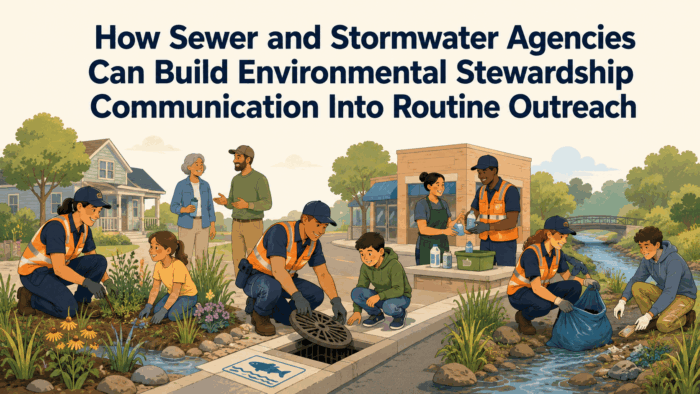
Citizen science and community monitoring content that features community members participating in environmental data collection, including stream cleanups, macroinvertebrate surveys, water quality monitoring events, and green infrastructure planting days, is among the most engaging and most authentic stewardship content available to sewer and stormwater agencies. Content that features real community members doing real environmental work communicates the agency’s community engagement more credibly than any amount of institutional promotional communication, and it recognizes and celebrates the contribution of community members to the environmental outcomes that the programs are designed to achieve.
Social media stewardship communication should not be limited to positive environmental outcomes. Honest communication about environmental challenges, including waterway quality impairment events, overflow impacts, and the persistent pollution sources that the program is working to address, demonstrates the transparency that stewardship credibility requires. A social media post that acknowledges a combined sewer overflow event, explains its cause, describes its environmental impact, and connects it to the capital investment program that will reduce overflow frequency, is stewardship communication that is more honest and ultimately more credible than one that presents only positive environmental outcomes.
Community Events as Stewardship Communication
Community events that engage residents directly in environmental stewardship activities, including stream cleanups, tree planting, rain garden installations, and water quality monitoring days, are the most intensive and most impactful form of stewardship communication available to sewer and stormwater agencies. The resident who spends a morning removing trash from a stream corridor, who speaks with an agency scientist about the water quality conditions they are observing, and who plants a native species that will filter stormwater runoff from the adjacent neighborhood, has developed an environmental understanding and a relationship with the agency’s mission that no written communication can replicate.
Event communication before community stewardship events should provide specific, compelling information about the environmental work being done, the difference that participant contributions will make, and the connection between the event and the broader environmental improvement program that the agency’s capital investments and regulatory programs are pursuing. A volunteer who comes to a stream cleanup knowing that the specific stream segment they are cleaning has shown measurable improvement in fish communities following a recent sewer system rehabilitation, and who understands that the trash they remove will prevent pollutants from reaching the downstream lake that the community uses for swimming, is more motivated and more informed than one who comes knowing only that cleanup is happening at a specific location and time.
Post-event communication that reports on what was accomplished, what the environmental significance of the accomplishment was, and how the participants’ contributions fit into the broader environmental program, closes the stewardship loop for participants who invested their time and extends the reach of the event’s environmental story to the community members who could not attend. A post-event report that tells participants how many pounds of trash were removed, what species were observed in the stream during the monitoring component of the cleanup, and how the event’s outcomes will be incorporated into the agency’s ongoing environmental monitoring record, treats participants as genuine environmental stewards rather than as volunteer labor for a cleanup task.
Integrating Stewardship Into Capital Project Communication
Capital project communication that includes the environmental stewardship dimension of infrastructure investment alongside the operational and financial information that project announcements typically lead with, produces a richer and more engaging narrative than purely operational project communication. A collection main rehabilitation project whose primary rationale is overflow reduction can be communicated not only in terms of the infrastructure being replaced and the construction timeline, but in terms of the overflow reduction that will result, the bacterial contamination in the downstream waterway that will be eliminated, and the recreational access that will be restored to a waterway that has been periodically closed following overflow events.
Green infrastructure project communication has a particularly natural stewardship dimension because green infrastructure installations are visible, attractive, and directly connected to the environmental outcomes they produce. A rain garden installed in a residential neighborhood is a visible reminder of the agency’s environmental mission in a location where community members encounter it daily. Communication that explains what the rain garden does, what volume of runoff it captures in a typical rain event, what pollutants it filters before they reach the local waterway, and how residents can incorporate similar practices on their own properties, extends the stewardship story from the specific installation to the broader community behavior change that the program is designed to motivate.
Post-construction environmental monitoring reports that document the water quality improvement attributable to completed capital investments are the most compelling form of infrastructure outcome communication available to sewer and stormwater agencies. An agency that commits at project announcement to post-construction monitoring and that delivers specific environmental outcome data one year and three years after project completion is making an accountability commitment that distinguishes its capital investment communication from the forward-looking promise that most project announcements make without the evidentiary follow-through that makes those promises credible over time. The environmental monitoring data that documents water quality improvement attributable to a specific capital investment is the accountability communication that transforms an infrastructure project into an environmental achievement.
Multi-Agency Stewardship Communication
Watershed-scale environmental improvement is the product of coordinated action across multiple agencies and jurisdictions, and stewardship communication that acknowledges this coordination, that explains the respective roles of different agencies in achieving shared watershed health goals, and that presents the environmental story as a collective achievement rather than the product of any single agency’s program, builds the community understanding of environmental governance complexity that sustained watershed improvement requires.
Joint environmental reporting with partner agencies, including the wastewater agency, the stormwater utility, the environmental regulatory agency, and local conservation organizations, presents a unified picture of watershed environmental health that individual agency reports cannot provide. A joint annual watershed report that synthesizes the monitoring data, program activities, and environmental outcomes from all the agencies and organizations managing the watershed provides a comprehensive environmental account that ratepayers, elected officials, and community members can use to evaluate the collective investment in watershed health and its environmental return.
Regulatory partner communication, which explains the relationship between the agency’s programs and the regulatory framework that sets the water quality standards and permit requirements that drive program activities, helps community members understand why environmental stewardship programs are organized as they are and what external accountability mechanisms ensure that the agency is pursuing genuine environmental improvement rather than simply meeting permit compliance metrics. An agency that communicates transparently about its regulatory relationship, including the specific permit requirements it must meet, the regulatory consequences of not meeting them, and the monitoring that regulators use to verify compliance, demonstrates the institutional accountability that the regulatory framework is designed to ensure.
Measuring the Return on Stewardship Communication Investment
Environmental stewardship communication programs that are not measured against outcomes will not demonstrate their value and will not improve systematically over time. The challenge of measuring stewardship communication return is that the most important outcomes, changes in community environmental understanding, shifts in household and business behaviors that affect waterway quality, and the building of the community support that sustains long-term program investment, are inherently difficult to attribute to specific communication investments and inherently slow to materialize relative to the annual budget cycles on which communication program funding decisions are made.
Proxy measures for stewardship communication return include the growth in community participation in stewardship events and citizen science programs, the improvement in stormwater behavior change metrics in areas where targeted stewardship outreach has been most intensive, the increase in positive media coverage of the agency’s environmental programs, and the expansion of the community stakeholder coalition that supports the agency’s capital investment and regulatory compliance programs. None of these proxy measures is a perfect indicator of stewardship communication impact, but together they provide the evidence base for evaluating whether the investment is producing the community engagement and understanding that stewardship communication is designed to generate.
Longitudinal surveys that measure community awareness and understanding of the agency’s environmental programs, the connection between household behavior and waterway quality, and the value that community members place on environmental improvement in their local waterways, provide the most direct measurement of stewardship communication impact over time. A community that shows significantly higher understanding of stormwater pathways and significantly stronger support for stormwater program investment five years into a sustained stewardship communication program than at its inception has demonstrated the cumulative communication return that justifies the investment. Building the survey baseline at program inception, conducting follow-up surveys at defined intervals, and using the results to assess and improve the communication program, is the evaluation discipline that transforms stewardship communication from an intuitive investment into a measurable program.
Emergency Stewardship Communication
Environmental emergencies, including combined sewer overflow events, significant stormwater pollution incidents, and waterway contamination events from any source, are stewardship communication moments that test the agency’s environmental accountability commitments most directly. The agency that has built its community relationships through sustained, honest stewardship communication faces these emergencies with a reservoir of institutional credibility that allows it to communicate honestly about the environmental event without the additional burden of overcoming a credibility deficit created by inadequate ordinary-time communication. The agency that has communicated poorly or minimally in ordinary times must build that credibility from scratch in the emergency context, which is the communication environment least conducive to its construction.
Post-event environmental recovery communication that documents the waterway’s return to baseline conditions following an overflow or contamination event closes the stewardship loop in a way that emergency response communication alone cannot. A waterway that has been closed to recreational use following an overflow event reopens on the basis of monitoring results that the agency should communicate specifically and promptly. A stream segment that experienced significant sediment deposition from a construction site stormwater event recovers over time in ways that post-event monitoring can document and that the agency should report to the community members who care about that stream’s health. This recovery communication transforms the emergency from a purely negative narrative into a demonstration of the agency’s environmental monitoring capability and its commitment to community environmental accountability.
Drought and low-flow communication, which connects the seasonal vulnerability of waterways to the stormwater and wastewater inputs that affect them most significantly when flows are lowest, provides a stewardship communication opportunity that most agencies do not use deliberately. The connection between low-flow conditions, increased pollutant concentration in receiving water bodies, and the heightened importance of residential and commercial stormwater pollution prevention practices during drought conditions, provides a seasonally relevant stewardship message that connects environmental conditions to community behaviors in a way that generic stewardship messaging does not.
Measuring Stewardship Communication Reach and Engagement
Environmental stewardship communication programs that do not measure reach and engagement cannot systematically improve their ability to connect with the community members who most need to be reached. The most valuable stewardship communication is not necessarily the communication that reaches the most people but the communication that reaches the right people, specifically the residents and businesses whose behaviors most significantly affect the environmental outcomes the program is trying to improve. Measuring both reach and engagement, distinguishing between the community members who receive stewardship communication and those who engage with it substantively enough to modify their behavior, is the measurement discipline that stewardship communication programs require to improve their environmental effectiveness.
Channel performance measurement for stewardship communication should track not only the audience size of each communication channel but the behavior change outcomes attributable to each channel’s reach. A social media post that reaches ten thousand followers but produces no measurable behavior change is a less effective stewardship investment than a community event that reaches two hundred participants who subsequently modify their lawn care practices. Tracking these differential outcomes across channels requires both the monitoring capacity to measure behavior change in the areas and among the populations reached by specific channels, and the analytical capacity to attribute observed behavior changes to specific communication interventions rather than to other factors.
Community feedback mechanisms that allow residents to report on their experience of stewardship communication, including what information they have received, what changes they have made in response to that information, and what additional information they need to make further changes, provide the qualitative dimension of stewardship communication measurement that quantitative reach and behavior change metrics cannot capture. A resident survey that asks specifically what stormwater behavior changes the respondent has made in the past year, what communication prompted those changes, and what information would motivate further changes, gives the stewardship program the community-level intelligence that informs specific communication improvements.
Long-term audience development tracking, which measures the growth in the community of residents and organizations that are actively engaged with the agency’s environmental stewardship programs, provides an indicator of stewardship communication effectiveness that precedes the behavior change outcomes it is designed to produce. A community in which more residents participate in citizen science programs, more community organizations partner with the agency on stewardship events, and more residents follow the agency’s environmental communication channels than five years ago, is a community where the stewardship communication program has been building the engaged audience that environmental behavior change requires.
Connecting Stewardship to Local Waterway Identity
Many communities have a deep cultural and emotional relationship with a specific local waterway, whether a river that historically defined the community’s geography and economy, a lake that has been central to community recreation for generations, or a creek that flows through a neighborhood park where community members regularly walk and gather. These locally significant waterways are stewardship communication assets whose cultural resonance can motivate environmental engagement that generic water quality messaging cannot produce. Communication that names the specific waterway, that acknowledges its significance to the community, and that connects the agency’s programs to its protection and restoration, is stewardship communication that speaks to locally specific environmental values rather than to abstract environmental principles.
Local waterway history communication, which traces the environmental trajectory of a specific community waterway from its historical condition through the degradation that accompanied development and industrialization to the current state of improvement or continued impairment, provides the environmental narrative context that makes current improvement efforts meaningful. A community that understands that the creek flowing through its neighborhood was once a thriving fishery, that it was degraded by decades of combined sewer overflows and stormwater pollution, and that it is now supporting the return of sensitive species as a result of capital investments and behavioral changes that the community has funded, has an environmental story that is both specific and motivating in ways that generic water quality messaging cannot match.
Community-named environmental indicators, including colloquial names for specific monitoring stations, traditional fishing spots, or swimming holes that community members already use to orient themselves in the local environment, make monitoring data communication more locally grounded and more personally relevant than communication that relies on technical monitoring station identifiers and geographic coordinates. An agency that reports water quality results at the swimming hole below the park dam, rather than at monitoring station SW-047, is communicating in the geographic language that community members already use to orient themselves in their landscape, which is both more accessible and more emotionally resonant than technical geographic identifiers that most community members do not recognize.
Waterway recovery celebration events, which mark significant improvements in waterway health through community gatherings at the improved sites, connect the environmental achievement to the community experience in the most direct way available. A community gathering at a creek site where the macroinvertebrate community has recovered to pre-impairment levels, where residents wade in the water for the first time in decades without health advisories, or where fish species absent for a generation have returned, is a stewardship communication event that no report, newsletter, or social media post can replicate. These events are both accountability communications and community celebrations, and they demonstrate the environmental achievement that program investment has produced in the most visceral and most memorable form available.
Tying It All Together
Environmental stewardship communication built into routine agency outreach is not a public relations strategy. It is the honest, sustained communication of what sewer and stormwater agencies are actually doing with ratepayer resources: managing the water that flows from communities into the natural environment in ways that protect ecological health, support recreational use of local waterways, and demonstrate the connection between individual household behavior and community-scale environmental outcomes. When that communication is integrated into the routine touchpoints of the agency-ratepayer relationship, it transforms those touchpoints from administrative obligations into environmental accountability moments that build the cumulative understanding of environmental value that sustained program support requires.
The agencies that build stewardship communication most effectively into their routine outreach are those that regard environmental accountability as a continuous communication obligation rather than a periodic campaign. They report monitoring data when it is available, not only when it is favorable. They connect project completions to environmental outcomes as a standard element of completion communication, not as an occasional addition to the operational announcement. They engage schools, community organizations, and faith communities as ongoing partners in environmental storytelling, not as audiences for periodic program announcements. And they track the environmental outcomes of their programs over the long term, presenting that tracking as the accountability evidence that sustained ratepayer support deserves.
Strategic Communication Support for Stewardship Communication
 Building environmental stewardship communication into routine agency outreach requires communication expertise in environmental storytelling, monitoring data translation, school and community engagement, and the long-term outcome tracking that makes stewardship accountability credible. Stegmeier Consulting Group (SCG) works with sewer and stormwater agencies to develop integrated stewardship communication programs that are grounded in the agency’s specific monitoring data, capital program investments, and community context. This includes developing the monitoring data communication frameworks that translate technical results into accessible environmental stories, designing the school and community organization engagement programs that extend stewardship communication into community contexts beyond the standard agency outreach reach, and creating the capital investment outcome reporting systems that connect infrastructure spending to environmental improvement in terms that ratepayers can evaluate and value.
Future Trends in Environmental Stewardship Communication
The environmental stewardship communication landscape for sewer and stormwater agencies is being reshaped by citizen science programs that engage residents directly in the monitoring of their local waterways. Programs that train community members to conduct water quality assessments, macroinvertebrate surveys, and stormwater runoff observations generate both monitoring data and community engagement simultaneously, and they communicate the environmental importance of water quality management through the most compelling channel available: direct personal experience of the waterways that the agency’s programs are designed to protect.
Social media’s capacity to make environmental monitoring visible in real time is also creating new stewardship communication opportunities. An agency that shares real-time water quality monitoring data through social media, that posts photographs of wildlife recovery at previously impaired stream sites, or that documents the construction progress of green infrastructure installations as they take shape in community landscapes, is telling the environmental story of its programs in formats and through channels that reach community members who do not follow traditional agency communication.
The increasing salience of climate change as a community concern is creating new resonance for water quality and watershed health communication that connects local waterway conditions to the climate-driven changes that residents are beginning to experience directly. Flooding that reflects the stormwater system’s inability to manage increasing precipitation intensity, algal blooms that reflect the temperature-driven acceleration of nutrient-driven water quality impairment, and habitat loss that reflects the combined stressors of development and climate change, are all environmental conditions whose communication connects the agency’s work to the climate concerns that communities are increasingly motivated to address.
Conclusion
Sewer and stormwater agencies that communicate environmental stewardship honestly and consistently through their routine outreach are doing more than building ratepayer support for their programs. They are contributing to the community’s understanding of its own environmental situation, its connection to the waterways and ecosystems that define the character of the landscape it occupies, and the specific role that household behavior, infrastructure investment, and environmental program funding play in the ongoing health of those systems.
That contribution is more valuable than any single communication product the agency could produce, because it builds the cumulative environmental understanding that sustains the community’s commitment to water quality protection across the decades of investment and behavioral change that genuine environmental improvement requires. The waterways that flow through communities are the environmental record of what those communities have chosen to prioritize and fund. Agencies that help their communities understand that record, and their role in shaping it, are demonstrating the most important form of environmental accountability that public water quality programs can provide.
Stegmeier Consulting Group’s Strategic Approach to Communication Systems
Build environmental stewardship communication into the routine touchpoints that agencies already have, using monitoring data and program outcomes to tell an ongoing environmental accountability story.
Sewer and stormwater agencies that communicate the environmental outcomes of their programs consistently, through routine billing communications, service notifications, and community engagement, build the ratepayer understanding of environmental value that program support requires. Stegmeier Consulting Group (SCG) helps agencies develop integrated stewardship communication programs, monitoring data storytelling frameworks, school and community engagement systems, and long-term outcome reporting that transform routine outreach into a continuous environmental accountability narrative.
Use the form below to connect with our team and explore how strategic communication support can strengthen your agency’s environmental stewardship communication program.