
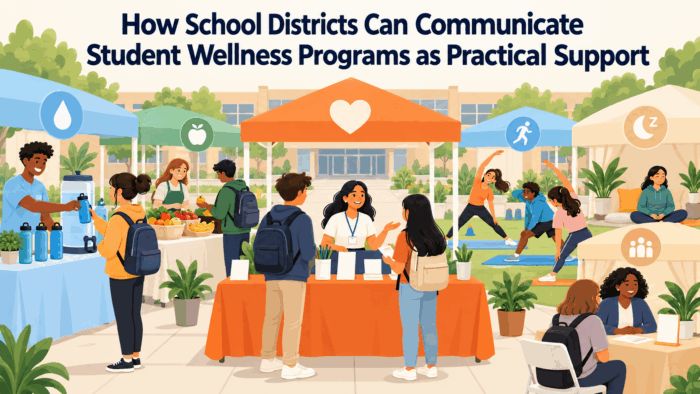
How School Districts Can Communicate Student Wellness Programs as Practical Support
School districts operate a remarkably wide range of programs designed to support student wellness. Free and reduced-price meals, breakfast in the classroom, summer meal sites, and weekend food backpacks help students arrive at school fed and ready to learn. School nurses, school-based health centers, vision, hearing, and dental screenings, immunization clinics, and partnerships with community health providers bring care directly to students. Physical education, recess, intramural sports, and safe routes to school programs support physical activity. Social-emotional learning, counseling, and mental health services support emotional well-being. Food pantries, clothing closets, hygiene supplies, school supply drives, health insurance enrollment help, and family resource centers help families meet basic needs. Many districts also maintain formal local wellness policies required under federal nutrition programs, with committees responsible for setting goals and reporting progress. Taken together, these programs represent one of the most substantial investments schools make in children outside of classroom instruction.
Despite this investment, many wellness programs are significantly underused. Families do not know some programs exist, do not understand how they work, assume they are only for certain students, or see them as abstract health messaging rather than concrete help. A parent who would gladly use free dental care at school may never realize it is available. A family that qualifies for meal benefits may not apply because they assume they earn too much or because they are embarrassed. A student who needs a winter coat may never ask because they do not know the school keeps a supply. Wellness communication often arrives as policy language, general health advice, or awareness campaigns that feel disconnected from the everyday pressures families face, and it is frequently scattered across many offices that do not coordinate their messages.
The opportunity for districts is to communicate wellness programs as what they actually are: practical support that saves families time and money, helps students feel better and learn more, and connects families to resources they need. When families recognize a program as genuinely useful for their own lives, participation rises, and the program achieves the outcomes it was designed to produce. When families experience wellness messages as another set of rules, recommendations, or forms, those messages tend to fade into the background of an already crowded stream of school communication. The difference often lies less in the program itself than in how it is described, where information appears, how easy it is to act on, and whether families feel respected rather than judged when they read it.
This article examines how school districts can communicate student wellness programs as practical support. It looks at why wellness programs are often underused, how to reframe wellness around family needs, and how to create a single front door to wellness support that replaces fragmented messages. It covers communication for meal and nutrition programs, school-based health services, basic needs support, and physical activity programs, along with ways to engage families in wellness policy and coordinate communication across departments. Finally, it explores how districts can measure whether wellness communication is increasing participation and impact. The goal throughout is wellness communication that families experience as genuinely helpful, clearly explained, and easy to act on.
Why Wellness Programs Are Often Underused
 Wellness programs face communication challenges that most other school programs do not. They span many departments, including nutrition services, health services, counseling, physical education, family engagement, and community partnerships, each with its own staff, systems, timelines, and habits. They involve sensitive topics such as household income, health conditions, and basic needs, which many families are reluctant to discuss. They are frequently governed by federal and state rules that produce technical, regulatory language. As a result, families tend to receive wellness information in fragments, from different offices, at different times, and in different formats, without a clear picture of how the pieces fit together or why they should care. Understanding the specific reasons programs are underused allows districts to design communication that addresses real barriers rather than simply sending the same messages more often and more loudly.
Wellness Framed as Advice Rather Than Help
A large share of school wellness communication takes the form of advice. Families are encouraged to serve more vegetables, ensure children get enough sleep, limit screen time, pack healthy snacks, and keep children active. This advice is well intended and often grounded in good evidence, but families frequently experience it as one more set of expectations they are being asked to meet. Parents who are juggling multiple jobs, irregular shifts, caregiving for relatives, long commutes, and tight budgets may feel judged by messages that seem to assume they have time, money, and energy they simply do not have. Over time, families learn to skim past wellness messages because they rarely offer anything that makes daily life easier, and important information about actual programs gets lost among the advice.
Practical support is fundamentally different, and families respond to it differently. A message that says “Every student can eat breakfast at school for free every morning, starting at 7:30” offers something concrete that saves money and time on busy mornings. A message that says “Your child can see a dentist at school without missing a day of class or paying anything” removes a real barrier families face. Shifting the balance of wellness communication from advice toward practical support makes wellness messages more relevant and more likely to be read and acted on. Advice can still have a place, but it is far more welcome when it comes alongside tangible help and when it is offered in realistic, affordable, achievable terms that respect the constraints families actually live with.
Fragmentation Across Departments
In many districts, each wellness program communicates independently. Nutrition services sends meal applications and menu updates. Health services sends screening notices and immunization reminders. Counseling sends newsletters about social-emotional learning. Physical education sends information about fitness assessments and sports. Family engagement staff share information about food pantries and community resources, and community partners distribute their own flyers. Each message may be well designed on its own, but families encounter them as a disconnected stream, often mixed in with dozens of other school communications. No single message explains the full range of wellness support available, how programs relate to one another, or where to start if a family needs help.
Fragmentation has real consequences for participation. Families who learn about one program may never discover a related program that would also help them, such as a family applying for meal benefits who does not realize the same form may qualify them for fee waivers or reduced-cost internet. Families who need help may not know which office to contact, and they may be passed from person to person before finding the right resource. Staff, meanwhile, may not know what programs other departments offer, which limits their ability to connect families. Fragmentation also makes it difficult for districts to see the overall picture of wellness communication, identify gaps, and coordinate timing so that families are not overwhelmed during busy periods such as the start of the school year.
Stigma and Uncertainty About Eligibility
Programs associated with household income, such as meal benefits, food pantries, clothing closets, and fee waivers, can carry significant stigma. Families may worry about being seen as unable to provide for their children, and students, particularly older ones, may avoid programs that mark them as different from their peers. Some families have had experiences with public assistance systems that felt intrusive or humiliating and are wary of anything that resembles them. Others simply assume they do not qualify because they are employed, own a car, or have never applied for assistance before. Immigrant families may worry that using school programs could affect their immigration status, even when that concern is unfounded. Each of these factors keeps eligible families from participating.
Uncertainty about eligibility compounds the problem. Many families do not understand that some programs, such as universal free meals at certain schools, school-based health services, and many family resource center offerings, are available to all students regardless of income. Others do not know that eligibility rules have changed or that a temporary change in circumstances, such as a job loss, may make them eligible midyear. When communication is vague about who can use a program, families tend to assume it is not for them. Clear, specific, and welcoming eligibility communication, combined with explicit reassurance about confidentiality and respect, is one of the most effective ways to increase participation among families who need support but hesitate to ask for it.
Learning Together: Communication Strategies for K-12 School Districts and Public Education Agencies
This article is part of our series on strategic communication for K-12 School Districts and Public Education Agencies. To learn more and to see the parent article, which links to other content just like this, click the button below.
Reframing Wellness Around Family Needs
Effective wellness communication begins with what families need rather than with what programs are called or how departments are organized. Families care about saving money, saving time, keeping their children healthy, helping them do well in school, and getting help when things are hard. They are far less interested in program names, funding sources, or regulatory frameworks. Framing wellness programs in terms of the everyday problems they solve makes them immediately relevant and helps families quickly recognize which programs apply to them. This reframing also changes the tone of communication, shifting it from instruction and compliance toward partnership and service. Districts that adopt this approach often find that the same programs, described differently, attract substantially more participation without any change in the programs themselves.
Leading With Practical Benefits
Every wellness message should answer the question families are silently asking: how does this help my child and my family? Instead of announcing that a school “participates in the Community Eligibility Provision,” a message might say “All students at our school can eat breakfast and lunch for free every day. No application is needed.” Instead of describing a “school-based health center offering primary and preventive care services,” a message might say “Your child can see a doctor or nurse at school for checkups, sick visits, sports physicals, and vaccines, so you do not have to take time off work.” Instead of describing a “family resource center,” a message might explain that families can get help with food, clothing, school supplies, health insurance enrollment, and connections to community services in one place.
Leading with benefits does not mean omitting important details. It means presenting the most important practical value first, in plain language, and then providing the information families need to act, such as hours, locations, eligibility, consent requirements, and contacts. This structure respects families’ time and allows them to decide quickly whether a program is relevant. It also helps staff who share information with families, because they can describe programs in the same clear, benefit-focused terms. Districts can test messages by asking a few parents to read them and explain what the program offers and how to use it. If the answer is unclear after a quick read, the message needs to lead more directly with the benefit.
Connecting Wellness to Learning
Families care deeply about their children’s academic success, and communication that connects wellness to learning helps families see why wellness programs matter. Students who eat breakfast concentrate better during morning lessons. Students who can see the board clearly read and participate more fully, which is why vision screening and follow-up glasses matter. Students who are not distracted by tooth pain, untreated asthma, or hunger can focus on learning. Students who get enough sleep and physical activity have more energy, better mood, and stronger attention. Framing wellness programs as part of how the school helps students learn integrates them into what families already value about school and positions them as part of the core mission rather than as optional extras.
This connection can be made concretely in everyday communication. A message about breakfast might note that students who eat breakfast at school tend to arrive in class ready to learn. A message about vision screening might explain that many students with vision problems do not realize they cannot see well, and that glasses can make reading easier. Teachers can reinforce these connections in conferences and classroom updates, mentioning wellness resources when they notice a student is tired, hungry, or struggling to see. When families hear consistent messages linking wellness and learning from multiple trusted sources, they are more likely to see participation as a practical choice that supports their child’s success rather than as an optional program for other families.
Avoiding Judgment and Respecting Constraints
Wellness messages should never imply that families are failing. Messages about nutrition, sleep, physical activity, or screen time can easily come across as criticism, particularly when they are delivered as lists of things families should be doing. Families who are already stretched thin may respond with guilt, frustration, or disengagement. Messages that acknowledge real constraints and offer practical, achievable suggestions are far more effective. A message suggesting quick, affordable breakfast ideas for busy mornings, simple ways to build activity into a family’s existing routine, or easy strategies for winding down before bed is more useful than a message listing recommended hours of sleep and minutes of exercise without acknowledging how hard those targets can be to meet.
Respecting constraints also means recognizing differences in family structures, cultures, and food traditions. Nutrition messages that feature only certain types of foods can alienate families whose cuisines are rich in healthy options but look different from what appears in standard guidance. Physical activity messages that assume access to safe parks, organized sports, or flexible schedules may not resonate with families in neighborhoods without those resources. Involving families from diverse backgrounds in developing wellness messages, and using images and examples that reflect the community, helps ensure that communication feels inclusive and relevant. When families feel respected rather than judged, they are far more likely to engage with wellness programs and to reach out when they need help.
Building a Single Front Door to Wellness Support
One of the most effective ways to address fragmentation is to create a single, family-friendly front door to all wellness support available through the district. This front door might take the form of a printed guide, a web page, a section of the parent portal, or ideally all three, presenting every wellness program in one place with consistent formatting and clear instructions. It becomes a reference that families can return to whenever they need help and that staff can point families to with confidence. A single front door also gives the district a tool for coordinating wellness communication across departments, because every program must be described in a consistent way and kept up to date. Districts that build this resource often discover programs they had overlooked, overlaps between offices, and gaps in services that families need.
Organizing Around What Families Need
A wellness support guide should be organized around family needs rather than district departments. Categories such as food and meals, health care and screenings, emotional well-being and counseling, physical activity and recreation, basic needs such as clothing, hygiene, and school supplies, and help connecting to community resources make it easy for families to find what they are looking for. Each program should be described briefly with the same set of information: what it offers, who can use it, what it costs, how to access it, when and where it is available, whether consent or an application is needed, and who to contact with questions. Consistent formatting allows families to scan quickly and compare options, and it ensures that no program is described in a way that obscures important details.
The guide should be short enough to be useful at a glance, with links or contact information for more detail. A two-page printed version and a mobile-friendly web page work well for most districts. It should be available in the languages families speak, translated by qualified professionals and reviewed by community members for clarity and tone. Images and examples should reflect the diversity of the community. Including a short statement at the top, such as “These programs are here for every family in our schools. If you need help, please reach out,” sets a welcoming tone and signals that using support is normal. A clear contact for families who are unsure where to start, such as a family resource center or a designated staff member, ensures that no one is left navigating the system alone.
Distribution, Staff Connectors, and Upkeep
The guide is only useful if families encounter it at the right moments. It should be shared at enrollment, included in back-to-school materials, posted prominently on the district and school websites, available in school offices, nurse offices, and family resource centers, and distributed through community partners such as clinics, libraries, faith communities, and social service agencies. Sharing it again at moments when families are likely to need support, such as before winter break, at midyear, and before summer, keeps it fresh. Teachers, counselors, nurses, coaches, and front office staff should all know about the guide and be encouraged to share it whenever a family mentions a concern, so that the guide becomes a natural part of everyday conversations rather than a document that sits on a website.
Wellness programs change as funding, partnerships, staffing, and regulations shift, and an outdated guide quickly erodes trust. Districts should assign clear ownership for the guide, often within the family engagement or communication office, and establish a simple process for program staff to report changes. Reviewing the guide each semester, verifying contact information and hours, and updating the web version immediately when changes occur keeps it accurate. When a program changes significantly, such as a school moving to universal free meals or a health center changing its hours, families should be told directly rather than discovering the change on their own. Tracking how often the guide is viewed and which sections are most used can also help the district understand what families are looking for and where communication could be strengthened.
Communicating Meal and Nutrition Programs
School meal programs are among the most widely used and most important wellness programs, reaching millions of students every school day. They also involve some of the most complex wellness communication, because eligibility rules, application processes, and program models vary across schools and can change from year to year. Families moving between schools or districts often encounter different rules, and many are unsure whether they need to apply, whether their child is eligible, or what meals cost. Clear, consistent communication about meals can increase participation significantly, reduce unpaid meal debt, and ensure that eligible families receive the benefits they are entitled to. It can also help districts increase participation in breakfast, summer meals, and after-school snacks, which are often underused relative to lunch.
Explaining Universal and Application-Based Programs
Some schools provide free meals to all students through universal programs, while others require households to apply for free or reduced-price meals. Families often do not know which model applies at their child’s school, particularly when a district operates both models across different campuses. Communication should state clearly, for each school, whether meals are free for every student or whether an application is needed. When meals are universally free, messages should say plainly that no application is required for meals, while explaining any reasons the district may still ask families to complete a household information form, such as determining eligibility for fee waivers, reduced-cost internet programs, or other benefits. Without that explanation, families may skip the form and miss benefits they need.
Where applications are required, the process should be as simple as possible and communicated early. Online applications should work on phones and be available in multiple languages, and paper applications should be easy to find in school offices and community locations. Communication should explain who may qualify in concrete terms, for example by sharing income guidelines in a simple table, and should emphasize that families can apply at any time during the year if their circumstances change. Messages should state clearly that information is confidential and that participation does not affect immigration status. Reminders before key deadlines, such as the end of carryover eligibility from the previous year, help prevent families from losing benefits unexpectedly and facing charges they did not anticipate.
Promoting Participation Without Stigma
Participation in school meals can be affected by stigma, particularly among middle and high school students who may associate school meals with need. Communication can help by emphasizing that school meals are for everyone, highlighting meal quality, variety, and freshness, and involving students in menu feedback and taste tests. Sharing menus in advance, featuring student favorites, and introducing new items through fun promotions can increase interest. Programs such as breakfast after the bell, grab-and-go breakfast carts, and second-chance breakfast make participation easy and normal rather than something students must make a special effort to do. Point-of-sale systems that do not visibly distinguish between paying and nonpaying students also reduce stigma, and communication can reassure families and students that no one will know who receives free meals.
Families also appreciate information about summer meal sites, weekend food programs, and community food resources, particularly before long breaks when food insecurity often increases. Communication about these programs should be specific, including locations, times, and whether registration is required, and should reach families through channels they actually use, such as text messages and community partners, not only through the website. Districts can also share practical, budget-friendly meal ideas that reflect the cultural diversity of the community, presented as helpful suggestions rather than instructions. When meal communication combines clear eligibility information, a welcoming tone, and attention to stigma, more students eat school meals, families save money, and students arrive in class better prepared to learn.
Promoting School-Based Health Services
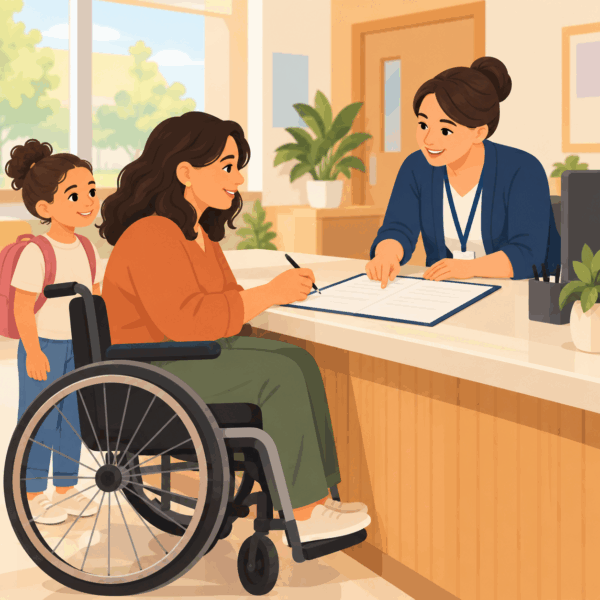 School nurses, school-based health centers, screening programs, immunization clinics, and partnerships with dental, vision, and medical providers bring care directly to students. These services can reduce absences by addressing health issues on site, catch problems early before they affect learning, and save families significant time and money by eliminating trips to outside appointments. Yet many families are unaware of what services are available at their child’s school, unsure how to use them, or uncertain about consent and privacy. Some families assume school health services are only for emergencies, while others do not realize that a school-based health center can provide comprehensive care. Clear, practical communication can substantially increase the use of these services and the benefits they provide to students and families.
Explaining Services, Consent, and Privacy
Families need straightforward descriptions of what school health services are available: what the school nurse does day to day, what a school-based health center offers, which screenings take place and when, what partner services such as dental sealants, vision exams, or immunizations are offered, and how to access each one. Each description should explain whether there is any cost, whether insurance is billed, what happens if a family is uninsured, and whether consent is required. Many families do not realize that school-based health centers can often serve students regardless of insurance status, and saying so explicitly can encourage families who have avoided care because of cost. Simple, friendly profiles of the nurse and health center staff help families feel comfortable reaching out.
Consent and privacy deserve particular attention. Consent forms should be written in plain language, translated, and accompanied by a short explanation of what services are covered, how information is protected, and how families will be informed about visits and results. Families should understand that they can ask questions before signing and can change their consent later. For services that older students may be able to access confidentially under state law, communication should explain these rules sensitively to both families and students. Districts should also make clear how school health records are kept and that they are separate from academic records where that is the case. Transparent communication about consent and privacy builds the trust families need to enroll their children in services and use them confidently.
Following Up on Screenings and Health Needs
Screening results are only valuable if families act on them, and follow-up is where many screening programs fall short. A notice that a child did not pass a vision screening often goes unaddressed if the family does not know where to get an eye exam, cannot take time off work for an appointment, or cannot afford glasses. Effective follow-up communication explains the result in plain language, describes what it might mean without causing alarm, and offers practical next steps, such as information about free or low-cost providers, help with insurance enrollment, on-site follow-up services, or school programs that provide glasses at no cost. Including a direct contact for questions and help scheduling appointments makes it far more likely that families take the next step.
Personal follow-up significantly increases the number of students who receive care. A phone call from the school nurse, in the family’s language when possible, can answer questions, address concerns about cost or time, and help families make appointments. Nurses can also coordinate with teachers to ensure that students who receive glasses actually wear them in class, or that students with newly identified hearing concerns are seated appropriately. For students with chronic conditions such as asthma, diabetes, or severe allergies, clear communication between families and the school nurse about health plans, medications, and emergency procedures is essential to keeping students safe and in school. Treating follow-up as a core part of health services communication ensures that screenings lead to real improvements in student health.
Reducing Stigma Around Basic Needs Support
Many districts offer support for basic needs, including food pantries, clothing closets, hygiene supplies, school supplies, laundry access, and connections to housing, utility, and emergency assistance. These programs can make an enormous difference for families experiencing financial hardship, job loss, housing instability, or unexpected crises. Yet stigma and discomfort often keep families from using them, and students may go without warm clothing, hygiene products, or supplies rather than ask for help. Communication plays a central role in reducing that stigma. When basic needs support is presented as a normal resource available to any family, accessed discreetly and respectfully, more families use it and more students receive what they need to participate fully in school.
Normalizing Support as Community Care
Communication can normalize basic needs support by presenting it as a resource available to any family that needs it, at any time, for any reason, without requiring families to explain or justify their circumstances. Messages that emphasize community, such as “Our school community takes care of each other” or “Everyone needs a little help sometimes,” frame support as mutual care rather than charity. Describing the many reasons families use support, such as an unexpected expense, a growth spurt that requires new shoes, a move, or a temporary job change, helps families see that using support is ordinary. Sharing information about these programs widely and repeatedly, rather than only with families identified as being in need, reinforces the message that support is for everyone.
Schools can strengthen this message by involving the broader community in basic needs programs. Donation drives, volunteer opportunities, and partnerships with local businesses and faith communities create a sense that the whole community contributes to and benefits from these resources. Students can be involved in organizing drives and promoting programs, which helps normalize support among peers. At the same time, communication about these community efforts should never single out recipients or share identifying stories without consent. The goal is a culture in which giving and receiving support are both seen as normal parts of belonging to a school community, so that families who need help feel welcome rather than ashamed.
Making Access Discreet and Easy
Families and students are far more likely to use basic needs support when access is discreet and simple. Options such as private online or paper request forms, pickup times outside busy periods, delivery of items in backpacks or bags that look like any other, and the ability to request help through a trusted staff member reduce visibility and embarrassment. Communication should explain these options clearly, so families know they can seek help without being noticed by other parents or students. Requests should require as little documentation as possible, and families should not be asked to prove need for routine items such as school supplies or hygiene products. Clear hours, locations, and contacts make it easy for families to act when they need help.
Trusted staff are often the most effective connectors to basic needs support. Teachers, counselors, nurses, coaches, and family liaisons frequently notice when a student may need a coat, shoes, or supplies, or when a family seems to be going through a difficult period. Training these staff to offer resources sensitively, for example by saying “We have extra supplies that many families use. Would it help if I sent some home?” rather than asking about the family’s finances, helps families accept support with dignity. Providing staff with simple materials to share, such as the wellness support guide or a discreet request card, ensures that every staff member can connect families to help. These personal connections often reach families who would never respond to a flyer or newsletter.
Communicating Physical Activity and Healthy Habits Programs
Physical education, recess, after-school sports, intramural programs, clubs, active transportation initiatives, and health education all contribute to student wellness. Communication about these programs often focuses on requirements, schedules, and forms, such as physical education uniforms, fitness assessments, and sports physicals. That information is necessary, but it rarely helps families see the value of physical activity programs or understand the full range of opportunities available. Many families do not know about free intramural programs, open gym times, walking school bus initiatives, or partnerships with local recreation departments. Communicating these programs as accessible opportunities, and offering practical ideas for healthy habits at home, can increase participation and help students build lifelong patterns of activity.
Highlighting Opportunities for Every Student
Families benefit from a clear overview of physical activity opportunities available through the school and community, including intramural sports, clubs, dance and fitness programs, open gym times, safe routes to school initiatives, and seasonal activities. Communication should explain costs, transportation, equipment needs, and how to sign up, and should emphasize that many programs are open to students of all skill levels, not only to those trying out for competitive teams. Students who do not see themselves as athletes may be drawn to activities such as walking clubs, yoga, dance, or outdoor programs. Fee waivers, equipment loans, and transportation assistance should be communicated clearly, since cost and logistics are common barriers to participation.
Messages about physical activity should reflect the diversity of students and families, with images and examples that show students of different abilities, body types, genders, and backgrounds participating. Students with disabilities should be able to see how programs include them and how adaptations are provided. Communicating participation opportunities through multiple channels, including announcements, student portals, family newsletters, and community partners, helps reach students and families who might not otherwise learn about them. Inviting current participants to share their experiences, through short videos or student-led presentations, can make programs feel more welcoming and relatable to students who are hesitant to try something new.
Supporting Healthy Habits at Home
Families appreciate practical, low-cost ideas for staying active and healthy at home and in the community, particularly when those ideas fit into busy schedules and limited budgets. Short tips, such as quick activities families can do together after dinner, ways to turn errands into walks, or free community resources such as parks, recreation centers, libraries, and trails, make healthy habits accessible. Seasonal family activity challenges, shared through newsletters or text messages, can encourage participation in a fun, low-pressure way. Information about sleep routines, screen time, and stress management can also be shared, framed as helpful strategies rather than rules, and with acknowledgment that every family’s situation is different.
Health education taught in school can be reinforced through family communication that explains what students are learning and suggests simple ways families can support it. When families understand that their child is learning about nutrition labels, the benefits of physical activity, or strategies for managing stress, they can reinforce those lessons at home. Communication should be respectful of cultural and family values and should avoid presenting one way of eating, exercising, or living as the only healthy option. Families who feel included and respected in health messaging are more likely to engage with it, and their engagement extends the impact of school wellness programs well beyond the school day.
Engaging Families in Wellness Policy and Coordinating Communication
Districts participating in federal school meal programs are required to maintain local wellness policies and to involve families and the public in developing, implementing, and reviewing them. In practice, many wellness committees struggle to attract family members, and many families have never heard of their district’s wellness policy. Meaningful family engagement in wellness policy can make programs more responsive to community needs and increase families’ sense of ownership over school wellness efforts. At the same time, coordinating wellness communication across departments is essential to ensuring that families receive clear, consistent, and well-timed information. Both efforts depend on deliberate planning and on treating wellness communication as a shared responsibility rather than the separate business of each program.
Inviting Families Into Wellness Decisions
Families are more likely to participate in wellness policy work when they understand what the policy covers and how it affects their children. Communication should explain in plain language what the wellness policy addresses, such as school meals, snacks, physical activity, health education, and staff wellness, and how families can share input. Wellness committee meetings should be scheduled at times families can attend, offer interpretation and virtual options, and be promoted through multiple channels and personal invitations. Districts can also gather input through short surveys, conversations at school events, and focus groups with families from diverse backgrounds, which often reach far more families than committee meetings alone.
Reporting back is essential. Districts are required to assess and report on wellness policy implementation, and these reports can be written and shared in ways that families can understand, highlighting progress, challenges, and changes made in response to family input. When families see that their suggestions led to changes, such as new menu items, more recess time, or expanded access to water stations, they are more likely to stay engaged. Wellness policy engagement also offers an opportunity to learn which wellness programs families value most and which barriers keep them from participating, information that can directly improve communication and program design.
Coordinating Across Departments
Coordinating wellness communication across departments begins with a shared calendar that shows when each program plans to communicate with families, so that messages can be spaced out and aligned rather than arriving all at once. A wellness communication working group, including representatives from nutrition services, health services, counseling, physical education, family engagement, and the communication office, can meet periodically to review upcoming messages, identify opportunities to combine information, and ensure consistent language and tone. This group can also maintain the wellness support guide and coordinate responses to common family questions. Even a modest level of coordination can significantly reduce duplication and confusion for families.
Coordination also means making sure staff across departments know about one another’s programs. A nutrition services staff member who knows about the school-based health center, or a nurse who knows about the clothing closet, can connect families to support they might not otherwise find. Short cross-training sessions, a shared internal resource list, and regular updates help staff act as connectors across the full range of wellness programs. When families experience the district’s wellness programs as a coherent system rather than a collection of unrelated offices, they are more likely to use multiple programs and to see the district as a reliable source of practical support.
Measuring Participation and Impact
Wellness communication should be evaluated by whether it increases participation in programs and whether that participation improves student well-being. Many wellness programs already collect participation data, such as meal counts, health center visits, screening follow-up rates, and food pantry use, but this data is not always connected to communication efforts. By tracking participation before and after communication changes, and by gathering direct feedback from families, districts can identify which messages and channels are most effective and where barriers remain. Measurement also supports required wellness policy assessments and provides evidence for continued investment in programs and communication.
Participation and Outcome Indicators
Useful indicators include participation rates in school breakfast and lunch, the share of eligible families who complete meal applications where applications are required, use of school-based health centers, follow-up rates after vision, hearing, and dental screenings, use of food pantries and clothing closets, and participation in physical activity programs. These indicators should be reviewed by school, grade, language, and student group to identify where participation is lower than expected. Comparing participation before and after specific communication changes, such as a new benefit-focused message about breakfast or a redesigned screening follow-up letter, can show which approaches are effective.
Where possible, participation data can be connected to broader outcomes such as attendance, nurse visits, and student and family well-being surveys, while protecting student privacy. For example, a district might examine whether increased breakfast participation at a school coincides with fewer morning nurse visits or improved attendance, or whether improved screening follow-up leads to more students receiving glasses. These connections help demonstrate the value of wellness programs and the communication that supports them, making a stronger case for continued investment.
Learning From Families
Families can explain why they do or do not use wellness programs in ways that participation data cannot. Short surveys, offered in multiple languages and formats, can ask families which programs they know about, which they use, what has made programs helpful, and what barriers have kept them from participating. Focus groups and conversations with families who are eligible but not participating, organized through community partners and family liaisons, can reveal concerns about stigma, confusing instructions, scheduling conflicts, or lack of awareness. Feedback from staff, particularly those who connect families to resources, can also identify common questions and gaps.
What districts learn should be shared with families along with a clear description of planned changes. If families report that the meal application is confusing, the district can explain how it will be simplified. If families say they did not know about the health center, the district can describe new outreach efforts. Closing the loop demonstrates that family input matters and reinforces the message that wellness programs exist to serve families. Over time, a cycle of measurement, feedback, and improvement helps wellness communication become steadily more effective, more inclusive, and more closely aligned with what families actually need.
How Wellness Communication Compares With Other Agency Types
Public health departments, human services agencies, community health centers, and food assistance programs all communicate about wellness programs and benefits, and they have developed approaches that school districts can adapt. Human services agencies have invested in simplifying benefit applications and plain language eligibility communication. Public health departments have used community health workers and trusted messengers to reach underserved communities. Food banks and community organizations have developed discreet, dignified models for distributing food and basic needs. Health systems have refined follow-up communication to ensure that screening results lead to care. Schools can borrow these practices, adapting them to the school setting, rather than developing every approach from scratch.
School districts also have distinctive advantages and responsibilities. They have daily access to students and regular contact with families, allowing wellness support to be delivered directly, during the school day, in a setting families already know and often trust. Schools serve every child in the community regardless of income or circumstance, which allows wellness communication to frame many programs as universal supports rather than targeted services, reducing stigma. Wellness in schools is directly tied to learning, giving schools a powerful message that few other agencies can make as directly. At the same time, school wellness programs span many departments and involve both federal requirements and local priorities, making coordination a particular challenge. Districts that recognize both these advantages and challenges can design wellness communication that makes the most of their unique position in children’s lives.
Tying It All Together
Wellness communication is not a side function. It determines whether families know about, understand, and use the programs districts provide to keep students healthy, fed, supported, and ready to learn. Without effective communication, valuable programs remain underused, and the students who would benefit most often miss out entirely.
Effective districts understand why wellness programs are underused: messages framed as advice rather than help, fragmentation across departments, and stigma and uncertainty about eligibility. They design communication that addresses each of these barriers directly.
They reframe wellness around family needs, leading with practical benefits, connecting wellness to learning, and avoiding judgment while respecting the real constraints families face. They build a single front door to wellness support, organized around what families need and distributed widely through staff and partners.
They communicate meal programs clearly, explaining universal and application-based models and promoting participation without stigma. They promote school-based health services with clear explanations of services, consent, and privacy, and they treat follow-up after screenings as an essential part of care.
They normalize basic needs support as community care and make access discreet and easy. They present physical activity programs as opportunities for every student and offer practical ideas for healthy habits at home. They engage families in wellness policy and coordinate communication across departments.
Finally, they measure participation and impact and learn from families. Taken together, these practices help families experience wellness programs as practical support that makes life easier and helps their children thrive.
Strategic Communication Support for School Wellness Communication
 School wellness programs are most effective when families understand the resources available to them and how those resources support students’ everyday needs. Nutrition assistance, school-based health services, counseling, physical activity, and other wellness initiatives often operate through separate departments, each with its own procedures and communication practices. Without a coordinated approach, families may receive overlapping announcements while remaining unaware of services that could benefit their children. Because connecting these programs requires a districtwide perspective that individual departments may not have the capacity to develop, districts often work with Strategic Communication Support (SCG) to align wellness messaging around the needs of students and families. SCG helps districts present wellness resources as connected forms of support rather than isolated programs.
SCG supports districts in reviewing how wellness information is currently distributed, identifying inconsistencies, and determining which essential details families may be missing. This work can include developing a centralized wellness guide that explains available services, eligibility requirements, access procedures, and relevant contacts in one accessible resource. SCG also helps departments translate technical or policy-driven information into plain language, making it easier for families to understand what each program offers and how to take advantage of it.
The way wellness services are described can influence whether families feel comfortable using them. Communication about meal assistance, health care, and other basic needs must explain practical benefits without creating unnecessary embarrassment or suggesting that support is intended only for certain types of families. SCG helps districts develop respectful, benefit-focused messaging and consistent templates that departments can adapt to their programs. This approach can make information more welcoming while maintaining accuracy around eligibility, participation, and service requirements.
When districts introduce universal meal programs, expand school-based health services, launch community schools initiatives, or revise wellness policies, communication must keep pace with changes in service delivery. SCG helps coordinate announcements, prepare family-facing explanations, and align outreach across schools and community partners. By connecting program information with the questions families are likely to ask, districts can make new resources easier to discover and understand.
SCG also helps districts evaluate whether wellness communication is reaching the families it is intended to serve. Participation patterns, family feedback, questions about eligibility, and input from community partners can reveal where information remains unclear or where additional outreach may be needed. Engaging families in wellness planning and using these findings to refine communication allows districts to improve access, strengthen program participation, and sustain a more coordinated approach to student well-being.
Future Trends
Universal school meal programs are expanding in many places, changing how districts communicate about meals. As applications become unnecessary for meal benefits in more schools, districts will need to explain clearly why household information may still be requested for other benefits, and they will have new opportunities to promote meals as a universal part of the school day.
Community schools models, which integrate health, social, and family services into schools, are growing across the country. Communication will need to present these integrated supports as a coherent system, helping families understand the full range of help available and how to access it through a single point of contact.
School-based health services, including telehealth, are expanding access to care for students in many communities. Communication will need to address how these services work, how consent and privacy are handled, and how families can use them for both routine and urgent needs.
Attention to student well-being is increasingly linked with attendance, engagement, and academic outcomes. Wellness communication will be integrated more closely with these broader strategies, positioning wellness programs as essential supports for learning rather than separate initiatives.
Finally, families increasingly expect personalized, mobile-friendly communication. Wellness messages will become more targeted, delivered through text and app notifications, and designed so families can act on them in a few taps rather than navigating multiple forms and websites.
Conclusion
Student wellness programs represent a significant investment in children’s health, well-being, and learning. Communication determines whether that investment actually reaches families. Programs that are well designed but poorly communicated remain underused, while programs that are clearly explained, easy to access, and presented respectfully attract the families who need them most.
Districts that present wellness as practical support, explain programs clearly, reduce stigma, build a single front door to help, and coordinate across departments can substantially increase participation and impact. The work requires attention to language, tone, timing, and coordination, but it rarely requires new programs. It requires helping families see and use the support that already exists.
When families recognize school wellness programs as help they can count on, students arrive healthier, better fed, and more ready to learn. That outcome benefits students, families, schools, and communities alike.
Stegmeier Consulting Group’s Strategic Approach to Communication Systems
Turn your wellness programs into support families recognize and use.
Stegmeier Consulting Group helps school districts communicate wellness programs as practical support that families recognize, trust, and use. We begin by mapping every wellness program across departments and examining how families currently learn about each one, where communication is fragmented or confusing, and where stigma, eligibility uncertainty, or logistical barriers are limiting participation.
Our team works alongside nutrition services, health services, student support, family engagement, and community partners to reframe messages around family needs, develop a single wellness support guide, and design communication that reduces stigma and simplifies access. We help districts rewrite meal and health service communication in plain language, strengthen screening follow-up, and prepare staff to connect families with support discreetly and respectfully.
We treat wellness communication as a system that can be coordinated, measured, and improved. That includes building shared communication calendars across departments, engaging families in wellness policy, tracking participation, gathering feedback from families who are eligible but not participating, and translating findings into practical changes.
Use the form below to connect with our team and explore how strategic wellness communication can help your district present wellness programs as the practical support they are, increase participation, and connect more students and families with the help available to them.