
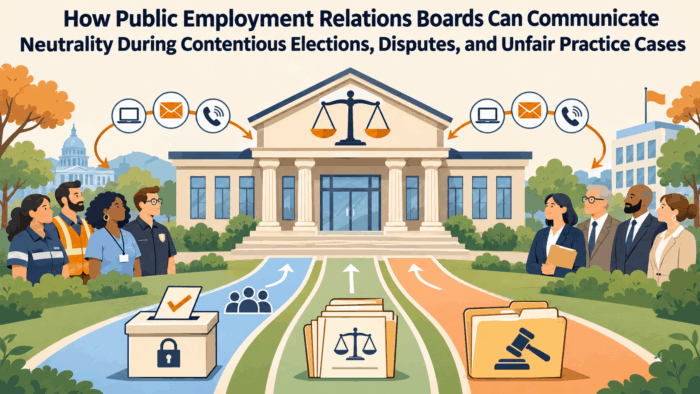
How Public Employment Relations Boards Can Communicate Neutrality During Contentious Elections, Disputes, and Unfair Practice Cases
Public employment relations boards operate in environments where nearly every important decision can be interpreted through the competing interests of employees, unions, public employers, bargaining representatives, and other parties with strongly held positions. Representation elections, bargaining disputes, unfair practice allegations, unit determinations, and procedural rulings can attract intense attention because the outcome may affect workplace representation, bargaining relationships, employee rights, and the authority of public institutions. In that environment, communication neutrality is not simply a matter of choosing careful words. It is part of how the board demonstrates the legitimacy of its process.
Neutrality can become especially difficult to communicate when the parties themselves are using highly adversarial language. A union may characterize an employer’s actions as interference or retaliation, while the employer may describe the same dispute as a disagreement over management authority or legal obligations. Employees may receive sharply different explanations from each side and then look to the board for confirmation of which narrative is correct before the formal process has reached that conclusion. The board must provide useful information without adopting the framing of either party.
The challenge extends beyond case decisions. Website descriptions, hearing notices, election instructions, press responses, social media posts, staff conversations, and public explanations of procedure can all influence perceptions of neutrality. Even technically accurate communication can appear biased if one party’s terminology is repeated without context, if preliminary allegations are described as established facts, or if procedural actions are communicated in ways that seem to favor one side’s interpretation of the dispute.
A strong communication strategy therefore makes neutrality visible through consistent language, procedural transparency, equal access to information, and clear distinctions between allegations, staff actions, board findings, and final outcomes. Public employment relations boards do not need to avoid difficult subjects or communicate vaguely in order to remain neutral. They need a disciplined system that explains what the board is doing, what has and has not been decided, and how every party can participate in the process under the same established rules.
Define Neutrality as Fair Process Rather Than Absence of Communication
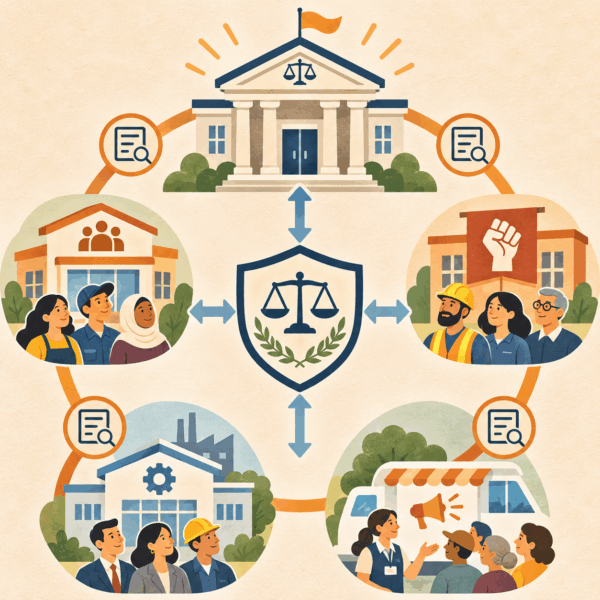 Public employment relations boards may become overly cautious about communication because they fear that explaining a contentious matter will make the agency appear to favor one side. Silence, however, does not necessarily communicate neutrality, particularly when employees, unions, employers, and media organizations are already receiving detailed narratives from the parties. When the board provides little authoritative information, audiences may fill the gap with claims that do not accurately describe the board’s process or procedural status.
Neutral communication should therefore be understood as accurate explanation of the board’s role, procedures, and decisions rather than avoidance of public communication. The board can explain when a petition was filed, what stage a representation proceeding has reached, how an election process works, or what an unfair practice allegation means without expressing a view about which party should prevail. Providing reliable procedural information can actually strengthen perceptions of neutrality because every audience has access to the same authoritative explanation.
The distinction is particularly important when public attention is high. Parties may interpret silence as confirmation that the board has accepted the opposing side’s narrative, while employees may be uncertain about whether they should rely on campaign communications, employer notices, union materials, or informal workplace conversations. A neutral board communication can establish a common procedural baseline without entering the underlying dispute.
Boards should therefore develop a clear internal understanding of what neutrality requires in communication. Neutrality should prevent advocacy, prejudgment, selective disclosure, and unequal treatment, but it should not prevent the agency from explaining its authority and processes. A board that communicates clearly about procedure can remain impartial while still helping the public understand what is happening.
Separate Allegations From Findings at Every Stage of a Case
Unfair practice cases and other contentious proceedings often begin with allegations that one party has violated applicable labor relations requirements, and those allegations may be described publicly long before the board has evaluated the evidence. Board communication should make the procedural status unmistakable so an allegation is not interpreted as an agency finding simply because it appears in an official document or case description. The language used at the beginning of a case can shape perceptions throughout the entire proceeding.
Terms such as complaint, charge, petition, allegation, preliminary determination, administrative decision, and final board order should be used consistently and explained when necessary. If a party alleges interference, retaliation, refusal to bargain, or another unfair practice, the board should attribute the claim appropriately rather than restating it as an established fact. This allows the board to describe the dispute without appearing to adopt one party’s characterization.
The same discipline is necessary when staff have taken an intermediate procedural action. Issuing a complaint, directing a hearing, scheduling an election, or making another preliminary determination may have legal significance, but it may not represent the final disposition of the matter. Communication should explain what the action means and what procedural steps remain rather than allowing audiences to infer finality.
When a final decision is eventually issued, the board can use more definitive language that reflects what was actually determined. Maintaining clear distinctions throughout the case demonstrates that the board’s communication evolves with the evidence and procedural record rather than beginning with a conclusion and working backward.
Use Consistent Terminology for Unions, Employers, Employees, and Other Parties
The labels used to describe parties can unintentionally communicate favoritism, particularly when one side’s preferred terminology carries assumptions about legitimacy, motive, or legal status. Public employment relations boards should use consistent and procedurally appropriate terms for unions, employee organizations, bargaining representatives, public employers, employees, petitioners, respondents, intervenors, and other participants. Terminological consistency helps keep agency communication grounded in the formal process rather than the rhetoric of the dispute.
Board staff should be cautious about adopting labels used in campaign materials, press statements, or advocacy communications unless those terms are also accurate within the proceeding. For example, a party may characterize another organization as an outside group, incumbent union, anti-union employer, dissident faction, or hostile management team, but those descriptions may carry evaluative meaning that the board does not need to endorse. Procedural terminology is usually more appropriate.
Consistency should extend across written decisions, website summaries, election notices, staff scripts, hearing information, and media responses. If the board describes one organization using its formal role while using more emotionally charged language for another, audiences may interpret the difference as institutional bias even when none was intended. Controlled terminology reduces that risk.
A shared language framework can also improve internal communication. Staff who interact with parties should have approved terminology for common roles and procedural stages so they do not need to improvise descriptions during contentious conversations. This supports neutrality not only in formal publications but also in the everyday interactions through which parties experience the board.
Build a Controlled Language Guide for Contentious Proceedings
A controlled language guide can identify preferred terms for parties, procedural stages, election activities, allegations, rulings, and case outcomes, along with examples of wording that should be avoided because it implies conclusions the board has not reached. The guide can also explain when a party’s preferred terminology should be attributed rather than adopted as the board’s own language.
Staff should use the guide as a consistency tool rather than as a rigid script that prevents clear explanation. Different proceedings may require different levels of detail, but the underlying terminology should remain stable enough that similar parties and actions are described in comparable ways.
The guide should be reviewed when procedures, statutes, regulations, or board practices change. Maintaining neutral terminology is an ongoing governance responsibility, particularly because contentious cases can expose ambiguities that are less visible during routine proceedings.
Explain Representation Election Procedures Before Campaign Conflict Intensifies
Representation elections can generate strong advocacy from unions, competing organizations, employers, and employees, making early procedural communication especially important. The board should provide authoritative information about the election process before the campaign environment becomes dominated by competing interpretations. Employees need to understand what the board controls, what the parties control, and how the election will be conducted.
Communication can explain eligibility, voting procedures, important dates, ballot handling, challenged ballots, observers, objections, and certification processes at a general level appropriate to the proceeding. The board should also explain where employees can obtain official information and how changes to the schedule or process will be communicated. Providing this foundation reduces dependence on campaign materials for basic procedural facts.
The board should avoid communication that appears to encourage a particular election outcome or evaluates the arguments being made by the parties. Its role is to explain how employees can participate and how the board administers the process fairly. Neutral procedural education can be detailed without becoming advocacy.
Consistency becomes particularly important when competing parties challenge one another’s descriptions of the election. The board should refer employees back to official procedures rather than publicly debating campaign claims unless a formal ruling or corrective communication is necessary. The more clearly the process is explained in advance, the less pressure the board faces to respond reactively during the campaign.
Communicate Equal Access to Election and Case Information
Perceptions of neutrality can be damaged when one party believes another has better access to board staff, procedural information, scheduling details, or case updates. Public employment relations boards should establish clear practices for providing information consistently and documenting communications where appropriate. Equal access is both an operational principle and a communication message.
Routine procedural information should be available through channels that all parties can use, including case portals, official notices, webpages, published calendars, or standardized staff responses. When material case information is communicated directly to one party, the board should follow applicable procedures for ensuring that other parties receive the information as required. Consistency reduces suspicion that informal relationships are influencing the process.
Boards should also explain the distinction between providing procedural assistance and giving strategic advice. Staff may be able to explain how to file a document, where to locate a rule, or when a hearing is scheduled without advising a party how to present its case. Clear boundaries allow staff to remain helpful while preserving impartiality.
Equal access should extend to employees and members of the public when appropriate. People affected by a representation election or public labor dispute may not be formal parties, but they may still need basic information about the board’s role and process. Making authoritative procedural resources easy to find reduces the advantage held by audiences with greater familiarity with labor relations systems.
Explain Procedural Rulings Without Making Them Sound Like Endorsements
During contentious proceedings, boards may issue procedural rulings that benefit one party at a particular stage, such as granting a motion, setting an election, allowing intervention, accepting an amended filing, or directing a matter to hearing. These decisions can easily be interpreted publicly as evidence that the board agrees with the benefiting party’s broader position. Communication should explain the limited meaning of the ruling.
The board should state what procedural question was decided and what happens next, while avoiding language that suggests the ruling resolves issues that remain open. A decision to hold a hearing, for example, does not necessarily mean the allegations have been proven, just as scheduling an election does not necessarily validate every claim made by the petitioning organization.
Where procedural standards are useful to understanding the ruling, the board can explain them in plain language. This provides context for why the action was taken and helps audiences understand that the board is applying an established process rather than choosing a preferred party. Transparency about procedure can reduce speculation about motive.
This discipline should continue even when a ruling receives substantial media attention. Headlines may portray procedural developments as victories or defeats, but the board’s own communication should remain tied to what was actually decided. Neutral explanation provides an authoritative counterweight to adversarial framing without criticizing the parties or media.
Maintain Neutrality When Parties Publicly Attack the Board or Its Process
Contentious labor disputes can produce public accusations that the board is biased, delaying the process, favoring a union, protecting an employer, or applying rules inconsistently. Agencies should prepare for this possibility rather than responding defensively when criticism first appears. Institutional credibility is strengthened when the board relies on transparent process explanations rather than entering a public argument with the parties.
When criticism concerns a procedural fact, the board may be able to correct the record by explaining the applicable process, current case status, or timeline. The response should focus on what the board can verify rather than characterizing the motives or accuracy of the party making the criticism. This keeps the agency in its institutional role.
Some criticism may not warrant a response at all, particularly when it consists primarily of advocacy or disagreement with a ruling. Boards should distinguish between misinformation that materially affects understanding of the process and ordinary criticism that parties are entitled to express. Attempting to rebut every negative statement can make the board appear defensive and overly involved in the dispute.
Senior leaders and board members should follow the same discipline. Public statements should emphasize the board’s responsibility to apply established procedures fairly and decide matters based on the record. Personalized responses to criticism can create unnecessary questions about impartiality, particularly when the underlying case remains active.
Explain Unfair Practice Procedures Without Prejudging the Merits
Unfair practice cases can be especially difficult for employees and members of the public to understand because the process may include charges, responses, investigations, complaints, hearings, recommended decisions, board review, and appeals. A party may describe the filing of a charge as proof of wrongdoing, while the opposing party may dismiss the matter before the board has evaluated it. The agency should provide a neutral procedural framework that helps audiences interpret each stage correctly.
Public guidance can explain what happens after a charge is filed, how the board determines whether additional proceedings are warranted, and what opportunities the parties have to provide information or challenge decisions. The explanation should be detailed enough to show that the case develops through established stages rather than through immediate acceptance or rejection of one party’s claims.
The board should also distinguish between procedural thresholds and final merits determinations. A decision that a matter should proceed may simply mean that further evaluation is appropriate, not that the charging party has already proven the case. Similarly, dismissal at an early stage should be described according to the actual basis rather than broadly characterized as vindication of the responding party.
Clear process communication can reduce pressure on case staff to repeatedly explain the same distinctions during contentious disputes. When parties, employees, media, and the public have access to a reliable explanation of the unfair practice process, they are better equipped to understand developments without interpreting every procedural action as evidence of bias.
Make Neutrality Visible Through Consistent Communication Practices
Public employment relations boards cannot rely solely on statements that they are neutral. Parties evaluate neutrality through what the board does, including how quickly information is released, which terminology staff use, how questions are answered, whether similar cases are described consistently, and whether procedural developments are explained with comparable detail. Communication practices therefore become evidence of institutional neutrality.
Boards should establish common standards for case summaries, election notices, media responses, website updates, staff interactions, and explanations of decisions. Similar procedural events should receive similar treatment unless a clear case-specific reason justifies a difference. Consistency reduces the space for parties to interpret routine variation as favoritism.
The agency should also periodically review communication from the perspective of competing parties. A description that sounds neutral internally may appear different to an employer, union, employee group, or bargaining representative deeply involved in the dispute. Reviewing language for attribution, procedural status, tone, and balance can reveal problems before publication.
Over time, predictable communication strengthens confidence in the institution even when parties strongly disagree with particular outcomes. Neutrality is most credible when it is visible in repeated patterns of fair process, precise language, equal access, and disciplined explanation. A board that communicates consistently gives parties fewer reasons to believe that the communication system itself is influencing the result.
Build Separate Communication Paths for Parties, Employees, and the Public
Public employment relations boards often serve several audiences at once, but those audiences do not need the same level of information or the same type of explanation. Parties to a case may need detailed procedural notices and filing instructions, employees may need clear election or representation information, and media or members of the public may need a concise explanation of the board’s role and current case status. Trying to serve all of those audiences through one communication can create unnecessary confusion.
Boards should therefore establish separate but coordinated communication paths that reflect each audience’s needs while preserving one consistent factual record. Formal parties should receive complete procedural information through the channels required by the board’s rules, while broader audiences can receive plain-language explanations that do not disclose information beyond what is appropriate. The underlying message should remain consistent even when the level of detail differs.
This separation is especially useful during representation elections or high-profile unfair practice proceedings, when employees may be receiving strong advocacy messages from unions, employers, or other organizations. A board resource designed specifically for employees can explain voting procedures, timelines, and the board’s role without requiring them to interpret formal litigation documents. Public-facing information can likewise explain procedural developments without duplicating every filing in the case.
Coordinated audience communication helps prevent a common neutrality problem in which one group receives clear explanations while another receives only technical notices. When boards intentionally design communication for the people affected by the process, they can increase understanding without giving one party an informational advantage or implying support for a particular position.
Explain Election Eligibility and Voting Procedures Without Appearing to Campaign
Representation elections can become contentious quickly when parties disagree over who should be eligible to vote, how the bargaining unit should be defined, or what procedural rules govern the election. Boards should communicate the official election process in a way that makes participation understandable without appearing to encourage employees toward one outcome or another. The focus should remain on access, procedure, and accuracy.
Election notices should clearly explain who may be eligible, when and how voting will occur, how employees can obtain official information, and what happens if eligibility is challenged. Where eligibility depends on formal determinations or disputed facts, the board should explain that process rather than reducing the issue to an oversimplified statement. Employees should understand when a question remains unresolved.
Communication should also distinguish between official board information and campaign material distributed by the parties. Employees may receive emails, flyers, meetings, or workplace messages containing claims about the election process, and the board should make it easy to identify which information comes directly from the agency. Clear branding, consistent terminology, and centralized election information can help establish that distinction.
The board should avoid language that can be interpreted as encouraging participation for the benefit of one party, even while explaining the importance of following official voting procedures. Neutrality is best demonstrated by making the process accessible to every eligible employee and allowing the election outcome to reflect the choices made through that process.
Prepare for Disputes Over Board Notices, Ballots, and Election Information
During contentious elections, even routine communication materials can become disputed. A party may argue that a notice is misleading, that a ballot description favors one option, or that information provided to employees gives an advantage to another party. Boards should anticipate these concerns by using standardized formats and a clear review process before election materials are released.
Election notices, ballot language, procedural instructions, and explanatory materials should be reviewed for consistency, attribution, terminology, and balance. The board should avoid incorporating advocacy language from any party unless it is necessary to describe a formal position and is clearly attributed. The same standards should be applied regardless of which side raises the issue.
If a correction becomes necessary, the board should communicate it promptly and explain what changed without suggesting that the correction reflects a preference about the election outcome. A straightforward correction can preserve trust more effectively than allowing inaccurate information to remain because staff fear that acknowledging an error will attract criticism.
Boards should also maintain a clear record of the official versions distributed to employees and parties. When disputes later arise about what information was provided, version control allows the agency to demonstrate what was communicated and when. Operational discipline can become an important part of demonstrating neutrality.
Use Standard Election Materials to Reduce Avoidable Perceptions of Bias
Standard templates for election notices, voting instructions, procedural updates, and certification information can reduce the amount of discretionary language staff must create during a contentious campaign. Similar proceedings should use similar structures unless the facts require a different approach.
Templates should still allow enough flexibility to explain unusual issues clearly. Standardization should support neutrality, not force a complicated election into language that no longer reflects the actual process.
Boards should periodically review templates using feedback from prior elections and disputes. If certain phrases repeatedly create confusion or accusations of favoritism, those materials should be revised before the next election rather than defended simply because they have been used historically.
Communicate Scheduling and Delay Without Suggesting Favoritism
Delays can become politically and emotionally charged during representation disputes and unfair practice cases because each party may believe timing benefits the other side. A delayed election, hearing, decision, or certification can be characterized as intentional interference even when the cause is procedural complexity, scheduling limitations, additional filings, or the need to resolve a disputed issue. Boards should communicate timing carefully.
Public and party-facing information should explain the current stage, what procedural steps remain, and what factors are affecting the schedule where that information can appropriately be shared. The board should avoid promising exact completion dates unless it can reliably meet them, because missed deadlines can reinforce claims that the process is being manipulated.
The same standards should be applied to requests from all parties. If one side receives an explanation for a scheduling decision, the board should ensure that material procedural information is communicated through the appropriate channels to the others as well. Uneven access to timing information can create avoidable suspicion.
When delays become significant, the board may need to provide more context than a generic statement that a matter remains pending. Explaining the process without discussing confidential deliberations can help employees and the public understand that additional time may reflect procedural requirements rather than bias toward a particular outcome.
Explain Unfair Practice Charges and Complaints as Different Procedural Events
Members of the public may not understand the distinction between a party filing an unfair practice charge and the board or its staff taking a later procedural action on that charge. If communication uses the terms interchangeably, audiences may assume that the agency endorsed the allegations at the moment they were filed. Boards should make these stages distinct.
A charge should be described as a filing by a party alleging that a violation occurred. If the agency later issues a complaint or directs the matter to further proceedings, the board should explain what that action means within its process and what questions remain unresolved. The communication should not imply that moving the case forward is the same as issuing a final finding.
This distinction becomes particularly important when parties publicize their own filings before the board has taken any action. Media coverage may repeat the allegations as though they represent an official agency position. The board can provide procedural clarification without entering into a public debate over the merits.
Clear terminology also helps employees understand why a case may continue for an extended period after a filing becomes public. The board can explain that different stages involve investigation, hearing, review, or decision-making, and that the meaning of the case evolves as those stages are completed.
Communicate During Collective Bargaining Disputes Without Becoming Part of the Negotiation
Public employment relations boards may become involved in disputes arising during bargaining, impasse procedures, mediation-related processes, or unfair practice allegations connected to negotiations. These matters can attract intense public attention because bargaining disagreements may affect public services, employee compensation, staffing, or workplace conditions. The board should explain its role without becoming another participant in the bargaining narrative.
Communication should distinguish between the positions taken by the employer and employee organization and the procedural question before the board. If one party alleges bad-faith bargaining or another violation, the board should describe that as an allegation until the appropriate process produces a finding. Public disagreement between the parties should not be translated into agency conclusions.
Boards should also avoid commenting on the substantive merits of bargaining proposals unless that issue is directly part of a formal determination within the board’s authority. Statements about whether an offer is generous, reasonable, affordable, or fair can easily be interpreted as taking sides in negotiations. The board’s communication should remain focused on process and jurisdiction.
Where mediation, fact-finding, impasse procedures, or other processes are involved, the board can explain what each process is designed to accomplish without predicting whether the parties will reach agreement. Neutral procedural education can help the public understand the board’s involvement while leaving bargaining decisions with the parties themselves.
Prepare Staff for Difficult Conversations With Parties Who Question Neutrality
Parties involved in contentious proceedings may directly accuse staff of favoritism, unequal treatment, delay, or hostility, particularly when a procedural ruling does not go their way. Board employees should be prepared to respond professionally without becoming defensive or attempting to convince the party that its perception is unreasonable. Staff behavior during these interactions can strongly influence perceptions of institutional neutrality.
Training should help staff separate procedural explanation from argument. An employee can explain what rule applies, what filing is required, why a matter has moved to a particular stage, or where a party can seek review without defending the board’s broader reputation. The goal is to provide useful information while keeping the interaction anchored in established process.
Staff should also know when to end a repetitive or escalating conversation and refer the matter through an appropriate formal pathway. A party that disagrees with a ruling should be directed toward review, appeal, or other available procedures rather than encouraged to continue debating the decision with administrative staff. Clear escalation pathways protect both staff and the parties.
Consistency across employees is essential because parties may contact several people within the agency searching for a different answer. Shared scripts, controlled terminology, and internal guidance can reduce variation while still allowing staff to communicate naturally. Neutrality is easier to demonstrate when the institution speaks consistently.
Coordinate Media Communication Without Allowing Coverage to Drive the Process
High-profile representation elections, strikes, bargaining disputes, and unfair practice cases may generate sustained media attention, and reporters may seek explanations before the board is ready to issue a substantive decision. Boards should have media procedures that provide accurate procedural information without allowing external attention to influence case timing or public language.
Communications staff should be able to explain the board’s role, current procedural stage, publicly available filings, and next steps while remaining clear about what cannot yet be discussed. They should not speculate about likely outcomes or interpret the strength of either party’s case. The same basic standards should apply whether coverage is favorable, critical, or highly polarized.
Board members and senior staff should also coordinate public statements carefully. A comment intended to explain the agency’s mission can be interpreted as signaling how a pending case may be decided if it refers too closely to disputed facts. Leadership should maintain enough distance from active controversies to preserve confidence in impartial decision-making.
Media interest should not determine which cases receive more detailed procedural attention from the agency. When significant public misunderstanding exists, clarification may be appropriate, but the board should avoid communicating more aggressively simply because a case has become prominent. Neutrality requires institutional discipline when public pressure is strongest.
Use Consistency Across Cases to Strengthen Long-Term Confidence in Neutrality
 Individual parties may disagree sharply with particular board outcomes, and no communication strategy can eliminate those disagreements. The stronger measure of neutrality is whether the agency demonstrates consistent procedures, terminology, access, timing explanations, and communication standards across many cases. Patterns matter more than a single statement that the board is impartial.
Boards should periodically review how similar election disputes, unfair practice cases, and bargaining matters are communicated. Differences may be appropriate because cases vary, but those differences should be explainable through procedural or factual distinctions rather than staff preference or the political visibility of the parties. Cross-case review can reveal inconsistencies that are difficult to see one proceeding at a time.
The agency can also use complaints, media questions, party feedback, and staff experience to identify recurring neutrality concerns. If parties repeatedly misunderstand what a complaint means or believe that certain procedural rulings represent final findings, the board may need stronger explanatory materials rather than relying on case-by-case clarification.
Over time, consistent communication can become part of the institution’s credibility even when individual decisions remain controversial. Parties may continue to disagree with outcomes, but they are more likely to recognize the legitimacy of a process that provides equal access, precise terminology, transparent procedures, and disciplined communication across contentious cases.
Communicate During Strikes, Job Actions, and Service Disruptions Without Adopting Either Side’s Narrative
Strikes, work stoppages, sickouts, picketing, and other job actions can place public employment relations boards under intense scrutiny because the dispute may affect schools, transit systems, public safety functions, utilities, administrative services, or other visible public operations. Employers, unions, employees, elected officials, and members of the public may all characterize the disruption differently, and those competing narratives can quickly shape expectations about what the board should do. The board’s communication should remain focused on its legal role, the procedural posture of any matter before it, and the actions it is actually authorized to take.
If a dispute is formally before the board, public information should identify the type of proceeding and explain what questions the board is considering without adopting claims made by either side. A union may describe a job action as protected concerted activity, while an employer may characterize it as unlawful or disruptive, but the board should not repeat either conclusion as its own until the process supports that determination. Procedural attribution is especially important when media coverage is moving faster than the formal case.
The board should also distinguish between the labor relations process and the broader operational consequences of the dispute. Service interruptions may be highly significant to the public, but the board may not be responsible for managing staffing, contingency planning, emergency response, or bargaining strategy. Clear explanation of jurisdiction helps prevent the agency from being treated as the decision-maker for issues that belong to the employer, employee organization, court, mediator, or another public authority.
Communication during a disruption should remain steady even when public pressure increases. Frequent requests for intervention can create a temptation to speak more forcefully than the record allows, but the board’s credibility depends on maintaining the same standards it would use in a less visible dispute. Neutrality is strengthened when the agency continues to communicate through facts, process, and authority rather than through the urgency of the surrounding controversy.
Explain Emergency or Expedited Proceedings Without Signaling the Outcome
Some labor disputes require accelerated review because timing may affect an election, bargaining process, work stoppage, or another significant event. Expedited treatment can itself become controversial if one party believes the board is giving the opposing side preferential access or unusually rapid consideration. Agencies should explain why an expedited process is available without suggesting that faster handling reflects a view about the merits.
Communication should identify the procedural basis for expedited review and explain how the process differs from ordinary case handling. If established criteria govern whether a matter qualifies for accelerated consideration, those criteria should be publicly accessible and described consistently. Parties are more likely to view the process as neutral when they can understand the framework that led to the decision.
The board should also distinguish between faster processing and a predetermined result. An expedited hearing or ruling may simply reflect the need to resolve a procedural question before an upcoming event, not a judgment that one party’s legal position is stronger. That distinction should be visible in notices, case updates, and media responses.
If expedited treatment is denied, the explanation should remain equally disciplined. The board can identify the procedural reason without suggesting that the underlying claim lacks merit unless that question was actually decided. Neutral communication should make clear that case-management decisions and substantive findings are different forms of agency action.
Communicate Multi-Party and Intervenor Cases With Clear Role Distinctions
Public employment relations cases may involve more than a single employer and employee organization. Competing unions, intervenors, individual employees, bargaining units, associations, or multiple public entities may participate in the same proceeding, making it difficult for outside audiences to understand who is asking for what. Boards should describe these roles precisely so that participation itself is not mistaken for support or opposition.
Case summaries should identify each party according to its formal procedural role and explain the issue before the board without collapsing several positions into two opposing camps. This is particularly important in representation matters involving competing organizations or unit questions where employees and organizations may have different interests. Clear role descriptions allow the public to understand the structure of the case before evaluating the arguments being made within it.
The board should also avoid implying that intervention gives a party the same rights or procedural position as an original petitioner or respondent when that is not the case. If participation is limited to particular issues, the communication should reflect that distinction. Similar care should be taken when individual employees participate separately from an organization representing a larger group.
Role clarity improves neutrality because it prevents the board’s own communication from simplifying the dispute in ways that favor one narrative. Complex proceedings may require more explanation, but the additional clarity helps audiences understand that the board is administering a process involving several legitimate procedural positions rather than choosing between two political sides.
Use Structured Case Summaries When Several Parties Are Involved
A structured case summary can identify the petitioner, respondent, intervenors, affected bargaining unit, and major procedural issue without requiring readers to reconstruct those relationships from formal filings. Tables or clearly separated descriptions can be especially helpful when several organizations have similar names or overlapping roles.
The summary should remain procedural rather than argumentative. It should explain who the parties are and what stage the matter has reached without summarizing disputed claims in language that makes one position appear more credible than another.
Boards should update structured summaries when party status changes. If an organization withdraws, an intervention is granted or denied, or the scope of the proceeding changes, the public-facing explanation should reflect the current case rather than preserve an outdated structure.
Explain Recusal, Conflict, and Participation Decisions Transparently
Questions about neutrality can intensify when a board member, hearing officer, administrative law judge, or staff participant has a prior professional connection, institutional relationship, or other circumstance that prompts a recusal request. Even when the applicable ethical or procedural rules are clear, parties may interpret participation decisions through the broader conflict surrounding the case. Boards should explain these matters carefully without discussing confidential deliberations.
Where a recusal or conflict decision is publicly available, the board can explain the governing process and the effect of the decision on the proceeding. The communication should focus on the applicable standard and the procedural result rather than speculating about motives or attempting to defend the personal integrity of an individual official. Institutional explanation is more appropriate than personalized advocacy.
If a board member recuses, the agency should explain how the case will proceed, including whether another member participates or whether quorum requirements are affected where appropriate. This practical information can reduce speculation that the recusal itself signals something about the merits of the dispute.
Boards should also avoid implying that a request for recusal is evidence of actual bias. Parties may raise conflict concerns as part of their procedural rights, and the board should describe the request and disposition accurately. Neutrality is better protected when the agency treats conflict questions as part of the formal process rather than as personal attacks.
Handle Cases Involving Elected Officials or Politically Prominent Employers With Additional Discipline
Public labor disputes involving governors, mayors, school boards, county executives, legislative bodies, or other politically prominent employers can generate intense attention because the employment issue becomes entangled with broader political debate. Public employment relations boards should maintain the same communication standards used in less visible cases while recognizing that every statement may receive greater scrutiny. Political prominence should not change the board’s terminology or evidentiary thresholds.
Communication should identify the public employer and relevant officials according to their formal roles without repeating campaign language, partisan descriptions, or political characterizations that are not necessary to explain the proceeding. If elected officials make public claims about the case, those statements should remain attributed to them rather than incorporated into the board’s own explanation.
The board should also be cautious when responding to statements from elected officials who criticize its process or demand a particular result. Correcting a procedural misunderstanding may be appropriate, but engaging in a public argument can create the appearance that the board has become part of the political dispute. Institutional restraint is especially important when the case remains active.
Consistency across politically visible and routine matters provides some of the strongest evidence of neutrality. When the same procedural terms, disclosure practices, and communication standards apply regardless of the prominence of the parties, the board demonstrates that public attention does not alter how the institution conducts its work.
Communicate Dismissals and Adverse Outcomes Without Sounding Dismissive of the Losing Party
When a charge, petition, objection, or other filing is dismissed, the prevailing party may publicly characterize the result as complete vindication while the losing party may argue that the board ignored important facts or applied the law incorrectly. The board’s communication should explain the disposition accurately without adopting either interpretation. A dismissal resolves the issue before the board according to the applicable process, but it does not require the agency to criticize the party that brought the matter.
The explanation should identify the basis for the decision at an appropriate level and distinguish procedural dismissals from decisions reached after substantive review. If a filing was untimely, outside the board’s jurisdiction, insufficient under the applicable standard, or rejected after a full merits determination, those differences matter to public understanding. Treating every dismissal as equivalent can distort what actually occurred.
The tone should also recognize that unsuccessful parties may still have raised concerns they believed were legitimate. Neutral communication does not require validating those concerns, but it should avoid language that ridicules, trivializes, or questions the motives of the party that filed. The board’s role is to explain the decision, not to celebrate a winner.
Where review or appeal remains available, that information should be clear. The board should avoid describing an outcome as conclusively final when additional procedures remain. Accurate explanations of adverse outcomes help both sides understand that neutrality includes disciplined communication after the decision as well as before it.
Explain Settlements Without Creating the Impression That the Board Endorsed One Side’s Position
Many contentious labor disputes are resolved through settlement before a final board decision, and public audiences may struggle to understand what that means. A settlement may include changed practices, withdrawal of allegations, agreements about future conduct, reinstatement, bargaining commitments, or other terms, but it does not necessarily establish that every allegation was proven. Boards should communicate the distinction carefully.
If the settlement is public and the board has a role in approving, recognizing, or closing the case, communication should explain that procedural role without overstating the agency’s endorsement of the underlying claims. The parties may have agreed to terms for practical reasons that do not amount to a complete acceptance of either side’s legal position.
The board should also avoid describing a settlement as a victory for one party unless the formal record supports that characterization and such language is necessary, which will often not be the case. Neutral language can identify what was resolved and what obligations follow while leaving advocacy interpretations to the parties themselves.
Settlement communication can also explain why negotiated resolution is a normal part of the labor relations process. Parties may resolve disputes to restore working relationships, reduce uncertainty, or avoid continued litigation. Providing that context helps the public understand that settlement is a procedural outcome, not evidence that the board secretly favored one side.
Communicate Remands, Reconsideration, and Reversed Decisions Without Undermining Institutional Credibility
Labor relations decisions may be reconsidered, remanded, modified, or reversed through internal review or judicial proceedings. These developments can create difficult communication challenges because parties may portray the change as evidence that the board made a serious error or acted improperly. The agency should update the public record accurately without becoming defensive.
Communication should explain what changed, which body made the later decision, and what procedural steps follow. If only part of an earlier decision was modified, that distinction should be clear so audiences do not assume that the entire matter was overturned. Precise explanations can prevent later developments from being reduced to misleading winner-and-loser narratives.
Boards should also update earlier web summaries or case pages where practical so people who encounter the original decision can see that the matter subsequently changed. Leaving an outdated outcome prominently available without visible context can create confusion and weaken trust in the completeness of the board’s information.
Institutional credibility does not depend on pretending that every initial decision remains unchanged. A transparent system that accurately reports review, correction, and reversal can strengthen confidence because it demonstrates that the board respects the procedural safeguards built into the labor relations system.
Monitor Communication Patterns for Signs of Unequal Treatment
A board may communicate neutrally within each individual case while still creating an uneven pattern across its overall portfolio. Some cases may receive detailed public explanations while others receive little information, some parties may be identified more prominently than others, or certain types of disputes may attract more active media communication. Periodic review can help the agency determine whether those differences are justified.
Boards should compare communication practices across representation elections, unfair practice cases, bargaining disputes, unit determinations, and other proceedings. Differences may be appropriate because the public significance and procedural needs vary, but leadership should be able to explain why similar cases received different levels of communication. Unexplained inconsistency can become a neutrality concern even when no individual decision was intentionally biased.
Review should include tone as well as volume. The agency can examine whether particular categories of parties are more often described using negative terminology, whether allegations involving employers and unions receive equivalent attribution, and whether favorable and unfavorable outcomes are explained with comparable clarity. These patterns can reveal subtle communication differences that are difficult to notice case by case.
Regular monitoring turns neutrality into a measurable institutional practice rather than a general aspiration. By reviewing how the board communicates across many disputes, leadership can identify drift, update guidance, and demonstrate that neutrality is being protected through systems as well as individual judgment.
Build a Formal Communication Governance Structure for Neutrality
Public employment relations boards should treat neutrality in communication as an institutional responsibility that requires defined roles, review standards, and decision pathways. When case summaries, media responses, election notices, staff explanations, and leadership statements are developed independently, small differences in tone or terminology can create the appearance that similar parties are being treated differently. A formal governance structure helps prevent those differences from accumulating across contentious matters.
The governance model should identify which offices are responsible for procedural communication, legal review, media coordination, election information, website updates, and public explanations of significant decisions. Case staff may understand the procedural record most fully, while communications staff can help translate that information into clear public language. Leadership should become involved when a matter carries broader institutional significance without turning routine case communication into a political or executive function.
Boards should also define when additional review is required. A standard election notice may follow an established template, while a high-profile unfair practice case involving major public services or politically prominent parties may require broader review for procedural accuracy, attribution, and tone. Clear thresholds allow the agency to increase scrutiny when necessary without slowing every communication decision.
Governance should be reviewed periodically because neutrality risks evolve as communication channels, case types, public expectations, and media practices change. A process that worked when most communication occurred through formal notices may be insufficient when case updates are also shared through websites, email alerts, social platforms, and rapid-response media channels. Institutional neutrality depends on maintaining the communication system as conditions change.
Create One Authoritative Framework for Procedural Language
Boards should maintain a single authoritative framework for describing allegations, filings, complaints, hearings, rulings, elections, settlements, dismissals, appeals, and final decisions. Without a common language system, different divisions may use the same terms differently or describe comparable procedural events with varying degrees of certainty. Those inconsistencies can become neutrality concerns when parties compare how their cases were communicated.
The framework should define preferred terms, explain when attribution is necessary, and identify language that may improperly imply a conclusion. It should also distinguish between internal legal terminology and the plain-language explanation provided to employees or the public. The goal is not to eliminate technical precision, but to make sure technical precision is translated consistently.
Boards can also include examples showing how wording changes as a case progresses. A charge may initially contain allegations, a later complaint may move the matter forward, a hearing may develop the record, and a final order may establish findings. Showing staff how language should evolve with procedural status can reduce accidental prejudgment.
The framework should apply across formal notices, web summaries, talking points, staff responses, media statements, and social communication. If the board uses careful language in a decision but stronger or less precise language elsewhere, audiences may interpret the more accessible version as the agency’s real position. Consistency across channels is therefore essential.
Establish Review Standards for Election and Case Communication
Public employment relations boards should establish review standards that help staff evaluate whether communication remains neutral before it is released. A short quality-control process can examine attribution, procedural status, terminology, audience access, and whether the message gives any party an unnecessary rhetorical advantage. The objective is to identify subtle problems before they become part of the public record.
Review should ask whether allegations are clearly identified as allegations, whether procedural rulings are described within their actual scope, and whether party names and roles are presented consistently. It should also consider whether one side’s arguments have been summarized more fully than another’s or whether a headline implies a broader conclusion than the underlying action supports.
Boards should use additional review when communication involves especially contentious elections, widespread service disruptions, politically prominent parties, or allegations already receiving substantial media attention. These situations create greater risk that a few words will be interpreted as evidence of favoritism. Additional scrutiny can protect the institution without changing the underlying communication standard.
The review process should remain efficient enough that it does not prevent timely communication. Standard checklists, approved terminology, and clearly designated reviewers can help staff move quickly while maintaining discipline. Neutrality should be built into routine workflow rather than treated as an emergency concern only after criticism appears.
Standardize Communication During Representation Elections
Representation elections should be supported by standardized communication practices that apply consistently across bargaining units, employers, unions, and competing organizations. Election notices, voting instructions, eligibility explanations, challenged ballot information, and certification messages should follow common structures whenever the procedural circumstances are comparable. Standardization reduces the opportunity for parties to interpret differences in format or tone as evidence of unequal treatment.
The board should maintain approved templates for recurring election milestones while allowing limited case-specific adaptation where necessary. Templates can establish the order in which information is presented, the terminology used for parties, and the way procedural uncertainty is explained. This makes it easier to compare similar elections and identify when a variation requires justification.
Boards should also establish rules for updating election information when schedules, eligibility questions, or procedural rulings change. Employees should not have to determine which of several notices is current, particularly in an environment where campaign communications may already be competing for attention. Version control and clear update notices help preserve confidence in official information.
Standardization should not make election communication rigid or inaccessible. The goal is to provide predictable, neutral information while allowing enough explanation for unusual circumstances. A common framework strengthens legitimacy because employees and parties can see that the board applies the same communication discipline regardless of who is involved.
Use Election Communication Checkpoints Before Major Milestones
Boards can create checkpoints before ballot distribution, voting, challenged ballot review, certification, and other major election stages to verify that public information remains accurate and neutral. Each checkpoint can confirm dates, procedural status, party terminology, and the official information employees should rely on.
These reviews are particularly valuable when the election has generated objections, litigation, or competing public claims. The board can ensure that later communication reflects changes without carrying forward outdated assumptions from earlier materials.
Checkpoint reviews also create institutional memory. Staff can document which issues required clarification and use those lessons to improve future election templates and guidance.
Build a Clear Protocol for Media and High-Profile Case Communication
Boards should have a formal protocol for communicating with media during contentious proceedings so reporters receive reliable procedural information without case staff improvising under pressure. The protocol should identify who may speak publicly, what information can be confirmed, how requests are routed, and when legal or executive review is necessary. This allows the agency to respond consistently even when coverage becomes intense.
Media guidance should emphasize the difference between explaining the process and evaluating the parties’ positions. Spokespeople can clarify filing dates, hearing schedules, procedural stages, publicly issued rulings, and the board’s jurisdiction while avoiding speculation about likely outcomes. This boundary should remain the same whether the coverage is supportive or critical of the agency.
The protocol should also address situations in which a party releases information before the board does. The agency may need to confirm what is public, correct a factual misunderstanding, or explain what has not yet been decided without allowing the party’s framing to determine the board’s message. Prepared response structures can help maintain that distinction.
High-profile communication should be evaluated after the matter concludes. The board can examine whether media responses remained consistent, whether procedural explanations were understood, and whether any statements created unnecessary controversy. These lessons can improve future protocols and staff training.
Train Staff for Neutrality Across Every Public Interaction
Neutrality is experienced not only through formal decisions but also through phone calls, emails, filing assistance, hearing logistics, election questions, and informal conversations with staff. Employees who interact with parties should understand how seemingly routine wording can be interpreted in a contentious case. Training should therefore extend beyond attorneys and communications personnel.
Staff should learn how to explain process without providing strategic advice, how to distinguish established facts from party claims, and how to respond when someone presses for an opinion about the likely outcome. They should also know how to handle accusations of bias or requests to discuss matters outside their role. Practical scenarios can make these boundaries easier to apply.
Training should include consistency in tone as well as content. A staff member who becomes visibly defensive with one party or unusually accommodating with another can undermine confidence even if the substantive information provided is correct. Professional neutrality requires patience, consistency, and the ability to redirect contentious conversations toward procedure.
Boards should refresh this training periodically and use real communication challenges as examples where appropriate. New employees, temporary election staff, and employees reassigned to public-facing roles should receive the same core guidance. Neutrality is more reliable when it is a shared institutional competency rather than an expectation placed only on senior staff.
Audit Communication Across Cases for Consistency and Balance
Boards should periodically audit how they communicate across representation elections, unfair practice proceedings, bargaining disputes, dismissals, settlements, and other matters. Individual messages may appear neutral in isolation while broader patterns reveal differences in terminology, visibility, tone, or detail. A portfolio-level review helps leadership identify those patterns before they become systemic.
The audit can compare how employers, unions, employees, and other organizations are described across cases and whether allegations involving different parties receive equivalent attribution. It can also examine how often particular types of cases receive press attention, detailed web summaries, or leadership statements. These comparisons should be evaluated in relation to legitimate differences in public interest and procedural significance.
Boards should review timing as well as language. If one category of parties regularly receives faster public updates or more detailed explanations than another, the reason should be identifiable and defensible. Uneven communication timing can create perceptions of favoritism even when the substantive process remains fair.
Audit findings should lead to concrete improvements in templates, training, review procedures, or governance. The objective is not to make every case communication identical, but to ensure that differences reflect the actual needs of the proceeding rather than habit, staff preference, political visibility, or external pressure.
Create a Formal Process for Correcting and Updating Public Information
Contentious cases evolve, and the board’s public information should evolve with them. Election schedules can change, rulings can be reconsidered, settlements can alter disputes, and appellate decisions can modify earlier outcomes. Boards should have a formal process for determining when public-facing information must be corrected, supplemented, or clearly marked as outdated.
Corrections should be visible enough that employees, parties, media, and members of the public can understand what changed. Quietly replacing an earlier document without explanation can create uncertainty about what information was available at different stages. A short update notice can preserve the historical record while directing audiences toward the current status.
Boards should apply the same correction discipline regardless of which party benefits from the change. If an earlier communication created an impression favorable to an employer, union, or employee organization that later proves incomplete, the board should update it based on the record rather than the political consequences. Fairness includes correcting information in both directions.
A reliable update process also reduces the burden on staff who otherwise must repeatedly explain outdated material. When public case pages and election resources reflect the current procedural status, employees and parties can obtain accurate information without depending entirely on individual staff contacts.
Make Communication Neutrality Part of Institutional Performance Management
Public employment relations boards should treat communication neutrality as something that can be reviewed, improved, and managed rather than as an abstract institutional value. Leadership can establish expectations for procedural accuracy, terminology, equal access, response consistency, and correction practices, then evaluate whether those standards are being applied across programs. This turns neutrality into an operational responsibility.
Performance measures do not need to reduce neutrality to a simplistic score. Boards can track recurring complaints about communication, review the frequency of corrections, examine whether staff follow approved terminology, and assess whether parties understand procedural stages. Qualitative review can be as important as numerical measures in identifying where communication practices need attention.
The agency should also distinguish between criticism that results from an unpopular outcome and criticism that reveals a communication problem. Parties may accuse the board of bias simply because they lost, but repeated confusion about the same procedural term or repeated complaints about unequal access may indicate a legitimate weakness. Effective management requires separating those issues rather than dismissing all criticism as advocacy.
When communication neutrality becomes part of performance management, boards can improve the systems that support institutional legitimacy over time. Clear governance, consistent language, trained staff, balanced communication, and regular review help ensure that the board’s public presence reinforces the same fairness it is expected to apply in its formal proceedings.
Strategic Communication Support for Neutrality in Employment Relations Proceedings
 Public employment relations boards need communication systems that make neutrality visible across elections, unfair practice cases, bargaining disputes, settlements, dismissals, and other contested proceedings. Neutrality is strengthened when parties understand the board’s role, receive equivalent access to procedural information, see consistent terminology across cases, and can distinguish clearly between allegations, preliminary actions, and final decisions. A strong communication framework helps the institution explain difficult proceedings without becoming another advocate within the dispute.
Stegmeier Consulting Group (SCG) can support public employment relations boards by developing communication governance frameworks, procedural language standards, election communication templates, case-summary protocols, staff talking points, media response procedures, neutrality review checklists, correction protocols, and communication measurement approaches. SCG can also help boards examine whether different programs or case types are using inconsistent terminology, uneven levels of detail, or communication practices that may unintentionally create perceptions of favoritism.
Strategic communication support can be particularly valuable when the board is operating in an environment where parties actively challenge its impartiality. Representation elections, politically visible bargaining disputes, job actions, or unfair practice cases may generate public pressure for immediate explanations or stronger statements. A disciplined communication framework allows the board to respond with useful information while protecting the distinction between explaining the process and prejudging the result.
SCG’s role remains focused on communication strategy, public information systems, message development, internal alignment, stakeholder communication, media protocols, staff preparation, and communication measurement. SCG does not decide representation questions, determine unfair practice liability, rule on bargaining disputes, conduct hearings, adjudicate cases, interpret statutory authority, or provide legal advice. Strategic communication support helps boards explain authorized processes and decisions clearly while preserving the responsibilities of board members, hearing officers, administrative law judges, counsel, investigators, and other authorized officials.
Future Trends
Public employment relations boards are likely to place greater emphasis on digital case communication that allows parties, employees, and the public to understand procedural status without relying solely on formal orders or direct staff contact. Searchable case pages, standardized status labels, election timelines, plain-language case summaries, and visible update histories can make complex proceedings easier to follow while reducing the risk that advocacy materials become the primary source of procedural information.
Boards may also use more structured communication frameworks for representation elections. Standardized election pages, official information portals, clear distinctions between board materials and campaign communications, and consistent notices can help employees identify authoritative information during highly contested campaigns. These systems can strengthen neutrality by making official information easier to recognize and access regardless of which parties are competing for support.
Data analysis may become more important in evaluating whether communication practices are consistent across cases. Boards can review differences in media attention, case summaries, response timing, terminology, correction patterns, and public updates across employers, unions, bargaining units, and case types. This kind of portfolio-level review can help institutions identify subtle communication disparities that may not be visible within a single proceeding.
Neutrality communication is also likely to become more closely connected to institutional trust measurement. Boards may increasingly examine whether parties understand procedural stages, whether employees can identify official election information, whether staff provide consistent explanations, and whether public criticism stems from substantive disagreement or genuine communication problems. The strongest systems will treat neutrality as something demonstrated through repeated institutional behavior rather than simply asserted in policy statements.
Conclusion
Public employment relations boards operate in disputes where neutrality is frequently tested, challenged, and interpreted through the language of competing parties. Representation elections, unfair practice cases, bargaining conflicts, strikes, settlements, and procedural rulings can all create pressure for the agency to communicate quickly and forcefully. The board’s challenge is to provide enough information to make the process understandable without allowing communication itself to influence the dispute.
That requires consistent distinctions between allegations and findings, clear explanations of procedural rulings, balanced descriptions of parties, equal access to information, and disciplined responses to criticism. Boards should also ensure that communication changes appropriately as cases evolve. A preliminary filing, hearing decision, settlement, appeal, or final board order should not be described as though each carries the same procedural meaning.
Neutrality is also strengthened through institutional consistency. Standard election materials, controlled terminology, staff training, media protocols, case update procedures, and cross-case audits can help ensure that similar matters receive comparable communication treatment. These systems reduce the likelihood that individual choices about tone, timing, or detail create unnecessary perceptions of bias.
A mature communication strategy does not attempt to eliminate disagreement with the board. Parties may strongly oppose particular rulings while still recognizing that the institution applied a consistent and understandable process. When neutrality is reinforced through clear procedures, precise language, equal access, and predictable communication practices, the board strengthens confidence in the legitimacy of its role even during the most contentious disputes.
Stegmeier Consulting Group’s Strategic Approach to Communication Systems
Public employment relations boards need communication systems that connect election information, case status, procedural terminology, staff guidance, media response, corrections, accessibility, and performance review into one coherent institutional framework. These elements should reinforce the same principles of neutrality regardless of whether the agency is communicating with unions, public employers, employees, elected officials, media organizations, or members of the public.
SCG helps agencies examine how information moves from case teams and decision-makers to parties, employees, staff, media, and public audiences. This can include developing controlled language frameworks, election communication standards, case-summary structures, media protocols, review checkpoints, neutrality audits, and methods for determining whether communication practices are being applied consistently across programs.
The broader objective is to create a communication system that allows boards to explain difficult proceedings clearly while maintaining enough institutional distance from the underlying conflict. Neutrality becomes more credible when parties can see that the board uses the same standards of attribution, access, procedural explanation, and correction regardless of which side benefits from a particular action.
Build a neutrality communication framework that remains consistent when disputes become politically or publicly contentious.
A strong framework should define how the board describes parties, allegations, procedural actions, election stages, settlements, dismissals, appeals, and final decisions. It should also establish when additional review is required and how staff should respond when parties challenge the board’s impartiality or attempt to draw the agency into public advocacy.
The framework should connect public communication with internal operations. Election notices, staff scripts, case pages, media responses, decision summaries, and correction procedures should all rely on the same terminology and procedural understanding. This reduces the chance that neutrality is preserved in formal decisions but weakened through inconsistent communication elsewhere.
Over time, boards should review how communication varies across parties, case types, and high-profile disputes to determine whether the framework remains balanced. Regular audits, staff feedback, party questions, and review of recurring misunderstandings can help the agency refine its approach while preserving the institutional discipline necessary for credible neutrality.
Use the form below to connect with our team and explore how strategic communication support can strengthen neutrality, election communication, case transparency, media response, and public understanding across employment relations proceedings.