How Career Centers Can Reach Jobseekers Who Do Not Know the Public Workforce System Exists
Every career center keeps careful records of the people it serves. It knows how many residents visited last quarter, how many enrolled in training, how many found jobs, and how much they earned afterward. What no career center’s data system records is the much larger group of people who needed help, lived within reach of the center, and never came because they did not know it existed. They leave no intake form, no case note, and no exit record. They do not appear in performance reports or monitoring reviews. They search for work on their own, take the first job available, pay for training they could have received free, or give up, and the system that was built to help them never learns their names.
This absence is easy to overlook precisely because it is invisible. A career center with full appointment calendars and a busy resource room can reasonably believe it is reaching the community. Yet busy centers often serve a relatively narrow slice of the people who could benefit: residents referred by unemployment insurance, residents already connected to human services, and residents whose networks include someone who has used the system before. Outside that slice are workers in low-wage jobs who want something better, people in gig and contract work with no employer to point them toward help, mid-career professionals who assume public employment services are not for them, rural residents far from a center, immigrants and residents with limited English proficiency, and people who have learned to avoid government offices. For these residents, the public workforce system is not a resource they have rejected. It is a resource they have never heard of.
Reaching them is a distinct communication challenge. It differs from promoting a program to people who already know the career center, and it differs from improving the experience of people who already walk through the door. It requires the career center to look beyond its own data, understand who is missing and why, correct the misconceptions that keep people away, and place accurate information in the places those residents already go. It also requires honesty about the center’s capacity, because outreach that succeeds in generating demand the center cannot meet creates a new problem in place of the old one.
This article examines how career centers can reach jobseekers who do not know the public workforce system exists. Its central argument is that awareness among unreached residents is built not through broad advertising but through deliberate presence in the channels, institutions, and moments those residents already encounter, carried by messages designed to overcome the specific misconceptions that keep them away. It addresses how to identify the unseen, which channels reach them, how to speak to their assumptions, how to conduct outreach ethically, and how to sustain and measure the work over time.
The Problem of the Unseen Jobseeker
 Career centers make decisions using the information they have, and the information they have describes the people they already serve. Participant data shows who enrolls, which services they use, and what outcomes they achieve. Customer satisfaction surveys reflect the views of people who came through the door. Staff observations are drawn from conversations with visitors. All of this information is valuable, but it shares a structural blind spot: it cannot describe the people who never arrived. A career center that relies only on its own records will tend to conclude that its current reach reflects community need, when in fact it reflects the boundaries of community awareness.
This blind spot has practical consequences. Outreach is often directed toward the populations already well represented among participants, because those are the groups staff know how to reach. Materials are written in language that resonates with current participants, which may not resonate with others. Partnerships are built with organizations that already refer residents, while organizations serving unreached communities remain unconnected. Over time, the center’s reach becomes self-reinforcing: it serves the people it knows how to find, and it finds the people it already serves.
Breaking this cycle begins with deliberately estimating who is missing. Labor market and demographic data can help. Comparing the characteristics of participants with the characteristics of the local population, particularly unemployed and underemployed residents, can reveal groups that are underrepresented relative to their likely need. If the local area has a substantial population of workers in low-wage service occupations but few participants from those occupations, or a significant immigrant community but few participants with limited English proficiency, or rural counties with high unemployment but few participants from those counties, the gaps point to where awareness is likely weakest. These comparisons are imprecise, because need is difficult to measure directly, but they provide a starting point that the center’s own data cannot.
Conversations with organizations outside the workforce system add depth. Community organizations, faith communities, libraries, health clinics, schools, and employers interact with residents the career center never sees. Asking them whether the people they serve know about the career center, what those people believe about it, and what keeps them from using it often reveals patterns that no data set captures. These conversations also begin the relationships through which outreach will eventually travel.
Residents themselves are the most direct source. Brief surveys or conversations in community settings, asking where people would go for help finding work or paying for training, reveal how many residents have no awareness of the public system and what alternatives they rely on instead. Interviewing recent participants about how they found the center, and whether they knew about it before they needed it, shows how narrow the paths into the system can be. Interviewing people who inquired but did not enroll shows where interest fails to become engagement.
The purpose of this inquiry is not to produce a perfect estimate of unmet need, which is unattainable, but to make the unseen visible enough to plan around. A career center that can name the groups it is likely missing, describe what those groups believe about it, and identify the places they already go has the foundation for outreach that reaches beyond its existing boundaries. A center that skips this step will continue to invest in reaching people who would have found it anyway.
Skilled & Connected: Communication Strategies for Workforce Development Agencies, Career Centers, and Local Employment Services
This article is part of our series on strategic communication for Workforce Development Agencies, Career Centers, and Local Employment Services. To learn more and to see the parent article, which links to other content just like this, click the button below.
Who Does Not Know the Public Workforce System Exists
The residents least aware of the public workforce system are not a single group. They differ in circumstances, assumptions, and the channels through which they could be reached. Understanding these differences allows a career center to design outreach for each rather than relying on a single message that reaches none of them well. The groups described below are common in many local areas, though their relative size and characteristics vary.
Workers Who Are Employed but Struggling
Many residents who would benefit from career services are working, often in low-wage jobs with irregular hours, limited benefits, and few paths to advancement. Because they are employed, they do not think of themselves as jobseekers and are unlikely to associate a career center with their situation. They may assume that public employment services are only for people who are unemployed. Yet many of them want better jobs, more stable hours, or training that could lead to higher pay, and some may qualify for training funds. Their schedules make it difficult to visit a center during business hours, and they have little time to research options. Reaching them requires channels that fit into working lives and messages that speak to advancement rather than unemployment.
Independent and Gig Workers
Residents who earn their living through contract, freelance, app-based, or other independent work lack the employer relationships through which many workers learn about services. They may not have access to unemployment insurance in the same way as traditional employees, which removes one of the main pathways into the career center. They may not see themselves as fitting the system’s categories. For some, independent work is a choice; for others, it is a substitute for stable employment they could not find. Both groups may benefit from career services and training, but neither is likely to hear about them through conventional channels.
Mid-Career and Professional Workers
Experienced professionals who lose their jobs often assume that public career services are designed for entry-level workers and will not help them. They tend to rely on professional networks, recruiters, and online platforms. Some will encounter the career center only through unemployment insurance requirements, and their first impression may be shaped by that obligation. Yet many could benefit from training, career transition support, labor market information, and connections to employers, particularly when their industry is changing. Reaching them requires messages that demonstrate relevance to their level of experience.
Rural Residents
Residents of rural areas may live far from the nearest comprehensive career center and may have limited broadband access. They may never encounter the center’s physical presence and may not search online for services they do not know exist. Local institutions, such as libraries, schools, extension offices, county offices, and faith communities, are often the primary channels through which information reaches them.
Immigrants and Residents With Limited English Proficiency
Immigrants and residents with limited English proficiency may not know that public employment services exist, may not know they are eligible for some of them, and may be uncertain whether using public services could affect their situation or that of family members. Information in English, distributed through mainstream channels, rarely reaches them. Community organizations, ethnic media, faith communities, and trusted individuals within their communities are typically far more effective channels.
Residents Who Avoid Government
Some residents know vaguely that government employment services exist but avoid them because of prior negative experiences with public agencies, distrust rooted in community history, or concerns about surveillance, scrutiny, or stigma. For these residents, the barrier is not only awareness but trust, and outreach must address both. Messengers they already trust, and honest information about what using the center involves, are essential.
Recognizing these groups helps a career center see that unawareness has different causes for different people. A single awareness campaign will reach some of them partially and others not at all. Effective outreach is designed group by group, with channels and messages chosen for each.
Misconceptions as Barriers to Awareness
Unawareness is rarely a blank slate. Many residents who have never used a career center hold beliefs about it, often vague and often inaccurate, that shape whether they would consider it even if they heard its name. These misconceptions function as filters. A resident who hears that the career center offers free training may dismiss the information if she believes the center is only for people on public assistance, or only for people who are unemployed, or only for low-wage jobs. Effective outreach must therefore do more than announce that the system exists. It must anticipate and correct the specific beliefs that keep people from engaging.
The most common misconception is that the career center is the unemployment office. For many residents, especially those who remember in-person unemployment offices, the career center is associated with filing claims, verifying job searches, and meeting benefit requirements. This association leads employed residents to assume the center is irrelevant to them, and it leads unemployed residents to see it as a place of obligation rather than opportunity. Outreach that explains the career center as a place for career help and training, distinct from claims processing, addresses this belief directly.
A second misconception is that services are only for people with very low incomes or people receiving public assistance. Some programs do prioritize low-income residents, and eligibility for training funds can depend on income and other factors. But basic career services through Wagner-Peyser employment services are available to any jobseeker, and dislocated worker programs serve people who lost their jobs regardless of their previous income. Residents who believe they are not poor enough to qualify may never inquire. Outreach that explains that many services are available to anyone, while being honest that some depend on eligibility, removes an unnecessary barrier.
A third misconception is that the career center only helps with low-wage or entry-level jobs. Mid-career professionals and skilled workers often assume the center has nothing to offer them. Messages and examples that reflect a range of occupations and career stages, including training for skilled trades, healthcare, technology, and other fields with strong demand, help counter this belief, provided they are accurate about what the local system actually supports.
A fourth misconception is that services cost money or come with hidden obligations. Residents accustomed to private training providers, staffing agencies, and career coaches that charge fees may assume public services do the same, or may suspect that free services come with strings attached. Clear statements that services are free and publicly funded, and honest explanations of any commitments involved in programs such as training, address this concern.
A fifth set of beliefs concerns risk. Some residents worry that visiting a career center will affect their benefits, expose information to other agencies, or draw attention to their immigration circumstances or those of family members. These concerns are serious, and outreach must address them honestly. Overstating confidentiality would be unethical and would damage trust when the truth emerged. The appropriate approach is to explain accurately what information is collected, how it is used, and what choices residents have, preferably through trusted messengers who can answer follow-up questions.
Identifying which misconceptions are most prevalent locally requires listening. The conversations with community organizations and residents described earlier often reveal them quickly. Once identified, misconceptions can be addressed directly in messages, with each outreach effort designed to correct the beliefs most likely held by its intended audience. A message to employed service workers might emphasize that the center helps working people find better jobs. A message to professionals might emphasize career transition support and training in high-demand fields. A message to immigrant communities might emphasize that services are free and explain what information is collected. Tailoring messages to misconceptions is one of the most effective ways to turn awareness into consideration.
Meeting People Where They Already Are
The residents a career center most needs to reach are, by definition, not looking for it. They will not visit its website, follow its social media accounts, or attend its events unless something brings the center into their path first. Outreach to unaware residents therefore depends on placing accurate information in the places, institutions, and moments those residents already encounter in their daily lives. This principle, simple to state, has significant implications for how career centers allocate their outreach effort.
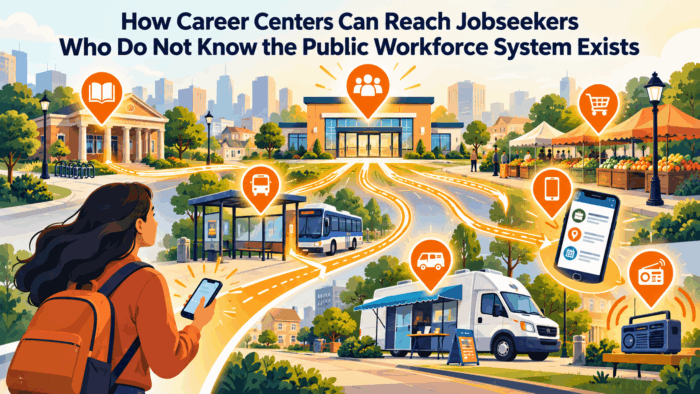
The first implication is that outreach should be organized around residents’ routines rather than the center’s channels. A working parent’s week might include a workplace, a child’s school, a grocery store, a pharmacy, a place of worship, a laundromat, a bus route, and a smartphone. A rural resident’s week might include a post office, a county office, a feed store, a library, and a church. A recent immigrant’s week might include a community organization, an English class, an ethnic grocery, a religious institution, and a messaging app used by family and friends. Each of these touchpoints is a potential channel for awareness, and the most effective outreach places consistent, simple information in several of them, so that residents encounter the center repeatedly in familiar settings.
The second implication is that outreach works best through institutions that already hold residents’ trust. A flyer from an unknown government office posted on a community board is easy to ignore. The same information, mentioned by a librarian, a pastor, a community organization’s staff member, a child’s school counselor, or a coworker, carries the credibility of the person who shares it. Career centers that build relationships with these trusted institutions, equipping them with accurate information and encouraging them to mention the center when it is relevant, extend their reach into networks that no advertising could penetrate.
The third implication is that timing matters. Residents are most receptive to information about career services at moments of change: a layoff, a reduction in hours, a new job that does not pay enough, a child entering school and freeing time for training, a move to a new community, the end of a seasonal job, the completion of an education program, or a release from incarceration. Outreach that connects to these moments, through the institutions involved in them, reaches residents when the information is most relevant. Schools can share information at the end of the school year, community colleges at graduation, reentry programs before release, and employers when they reduce hours or eliminate positions.
The fourth implication is repetition across settings. A single encounter with information about the career center rarely produces action. Residents need to hear about the center several times, in different contexts, before it becomes part of their mental map of available resources. Consistent messages across multiple trusted channels create the cumulative familiarity that allows a resident, at the moment of need, to remember that the center exists and to feel confident going there.
The final implication concerns the career center’s own presence in community settings. Rather than waiting for residents to come to the center, staff can bring services and information to places residents already visit. Regular office hours at libraries, community organizations, and community colleges, participation in community events, and mobile services in rural areas all make the center visible in residents’ everyday environments. These activities serve dual purposes: they deliver services directly, and they build awareness among residents who see the center’s presence even if they do not use it that day. The sections that follow examine specific channels in more detail, beginning with the digital channels through which many residents first search for help.
Search, Maps, and the Digital Front Door
When residents begin to look for help, many start with a search engine or a map application on their phones. The searches they run reveal what they believe they need, and the results they see determine where they go. For residents who do not know the public workforce system exists, search is often the only point at which the system has a chance to appear in their consideration before they choose another option. A career center that does not appear in these results is effectively absent from the decision.
Matching the Words Residents Use
Residents rarely search for terms like workforce development, one-stop center, or the name of a local workforce board. They search for what they want: free job training, how to get a better paying job, help finding a job near me, resume help, career change at forty, CNA classes free, CDL training paid for, what to do after getting laid off, or jobs that do not require a degree. Each of these searches represents a resident who might benefit from the career center and who will instead find staffing agencies, private schools, national job boards, and advertisements if the career center’s online presence does not address the question.
Career centers can improve their visibility by building website content around these questions. A page explaining how residents can get help paying for training in specific high-demand fields, a page describing what to do after a layoff, a page on getting help with resumes and interviews, and a page explaining career services for people who are working but want something better each address a common search with useful, accurate information. These pages should be written in plain language, use the words residents use, and lead clearly to a first step. Over time, content of this kind helps the center appear in search results for the questions unaware residents are actually asking.
Map Listings and Local Search
Map applications have become a primary way residents find nearby services, and listings on these platforms often appear above other search results for local queries. A career center with an accurate, complete listing, including its name, address, hours, phone number, website, a clear description, and photographs, is far more likely to be found than one with an outdated or missing listing. Listings should use names and categories residents will recognize, and each center location, including satellite sites, should have its own accurate listing. Because listings can be created or edited by others, the center should claim and maintain its listings and check them periodically for accuracy.
The First Click
Once a resident reaches the career center’s website through search, the page they land on must make the center’s value clear immediately. For an unaware resident, the first impression must answer basic questions: what this place is, whether it is free, whether it can help someone in her situation, and how to start. Pages that open with program names, eligibility rules, or organizational history lose these visitors quickly. Pages that open with a plain statement of what the center offers, followed by a clear and easy first step, such as a phone number, a short inquiry form, or an option to schedule a conversation, convert curiosity into contact.
Mobile design is essential, since many residents searching for help do so on phones. Pages that load slowly, display poorly on small screens, or require downloading documents create friction that discourages action. Accessibility matters as well, both because the Department of Justice’s 2024 rule established technical standards for state and local government web content and mobile applications and because accessible design benefits all users.
Paid search advertising can supplement these efforts where budgets allow, by placing the career center at the top of results for selected searches. Advertising should be used carefully, with accurate messages and landing pages that deliver on the advertisement’s promise, and it should complement rather than replace the content that builds lasting search visibility. For most career centers, accurate listings and helpful content are the most cost-effective foundation of the digital front door.
Employers and Workplaces as Awareness Channels
For employed residents who are struggling or seeking advancement, the workplace is where they spend most of their waking hours, and employers are among the institutions with the most regular access to them. Yet career centers usually approach employers as customers seeking candidates, not as channels for reaching workers. Recognizing employers as awareness partners opens a significant pathway to residents who would never otherwise encounter the public workforce system.
Employers have several reasons to help. Many struggle with turnover and want to retain and develop their workers. Incumbent worker training and on-the-job training, where available, can help them build skills within their workforce, and employers who use these services become natural messengers about the career center’s value to workers. Employers also benefit when workers can access supportive services, such as help with transportation or childcare, that improve attendance and stability. And employers that are reducing staff, whether through layoffs, closures, or reduced hours, generally want to support affected workers and protect their reputation in the community.
The most direct channel is the employer’s internal communication. Human resources staff can include information about the career center in onboarding materials, employee newsletters, break room postings, and benefits information. Supervisors can mention career services when workers ask about advancement or training. Employers offering tuition assistance or training programs can mention the career center as an additional resource. These communications reach workers in a setting where they are already receptive to information about their jobs and careers.
Layoffs and closures are a particularly important moment. Rapid Response activities bring career center and state staff into workplaces facing layoffs to inform workers about available services before they lose their jobs. Not every layoff triggers formal notice under the federal Worker Adjustment and Retraining Notification Act, which applies to larger employers and larger layoffs, and many smaller reductions occur without any formal process. Career centers that build relationships with employers of all sizes, and that encourage employers to inform them of reductions even when no formal notice is required, can reach workers who would otherwise leave without knowing that help exists. Even a simple information sheet included with separation paperwork can make the difference.
Reductions in hours deserve attention as well. Workers whose hours are cut may not be eligible for unemployment benefits or may receive partial benefits, and they may not think of themselves as candidates for career services. Employers reducing hours can share information about the career center as a resource for finding additional or better work.
Industry associations, chambers of commerce, and labor organizations extend this channel. Associations can share information with member businesses, which can pass it along to workers. Labor organizations can inform members about training opportunities, apprenticeships, and services available during layoffs. These intermediaries reach many workplaces at once and carry credibility with both employers and workers.
Employer channels require care. Workers may be reluctant to use services they believe their employer will learn about, particularly if they are seeking jobs elsewhere. Career centers should make clear in employer-distributed materials that services are confidential to the extent the law allows and that employers will not be informed of a worker’s use of career services without the worker’s consent. Messages distributed through employers should present the career center as a resource for workers’ own goals rather than as an employer program, which preserves workers’ trust.
Business services staff are well positioned to develop these relationships, since they already work with employers. Integrating awareness partnerships into business services conversations, by asking employers whether they would share information with their workers, extends the value of existing relationships without requiring a separate outreach effort.
Unemployment Insurance and Public Benefit Touchpoints
Some of the most reliable opportunities to reach unaware residents occur through public programs they already interact with. Unemployment insurance claimants, residents applying for or renewing public assistance, and participants in other public programs all encounter government communications at moments when career services could help them. These touchpoints are underused in many local areas, and improving them can reach large numbers of residents with relatively little additional effort.
Unemployment insurance is the most significant. Every person who files a claim is, by definition, a jobseeker at a moment of need, and the unemployment insurance program communicates with each of them through claim confirmations, determination notices, payment notices, online portals, and work search requirements. In many states, claimants must register with the state’s job matching system, and some are selected for Reemployment Services and Eligibility Assessment programs, which require meetings with career center staff. These touchpoints already connect some claimants with the career center, but the way they communicate often shapes claimants’ perception of the center as an extension of benefit enforcement rather than a resource.
Improving these touchpoints involves both content and framing. Claimant communications can include clear, plain-language descriptions of what the career center offers, including training, career planning, and help finding work, presented as an opportunity rather than only as a requirement. Where claimants must participate in reemployment activities, communications can explain the purpose and value of those activities while being honest that participation affects benefit eligibility. Online claim portals can include easy links to career center information and scheduling. Because these communications are usually controlled by state agencies, local career centers need to work with their state partners to improve them, sharing what they hear from claimants about their perceptions and confusion.
Public assistance programs offer similar touchpoints. Residents applying for or renewing food assistance, cash assistance, or health coverage interact with human services caseworkers and receive notices and communications from those programs. Many of these residents are working, looking for work, or interested in training. Some are subject to work requirements, which, following federal legislation enacted in 2025, have broadened for SNAP and are being introduced for certain Medicaid enrollees, with implementation phased in by states. Caseworkers who understand the career center and can describe it accurately, notices that include information about career services, and referral processes that connect interested residents with the center can reach many residents who would not otherwise learn about it.
Here, too, framing matters. Residents who encounter the career center only as a place they are required to go to keep their benefits may approach it with resentment, and they may miss the services that could genuinely help them. Communications should distinguish between what is required and what is available, describing the career center as a resource for residents’ own goals even when participation is connected to program requirements. Honesty about requirements, combined with emphasis on genuine opportunity, respects residents and increases the chance that they will engage beyond the minimum.
Other public programs can serve as touchpoints as well. Public housing agencies, child support programs, reentry and probation services, veterans’ services, and student financial aid offices all interact with residents who may benefit from career services. Each represents an opportunity to share accurate information through a channel residents already encounter.
Working with these programs requires attention to privacy and to each program’s rules about sharing information. Awareness information can generally be shared broadly, but referrals that involve sharing residents’ personal information require consent and compliance with applicable confidentiality requirements. Career centers should coordinate with program partners to ensure that awareness efforts respect these boundaries.
Community Institutions as Trusted Messengers
For many unaware residents, the most credible source of information is not a government agency but a community institution they already know: a library, a school, a community college, a place of worship, a community health center, a neighborhood organization, or a community-based organization serving a particular population. These institutions see residents regularly, understand their circumstances, and hold their trust. When they share information about the career center, that information carries a credibility the center cannot generate on its own. Building strong relationships with these institutions is one of the most effective ways to reach residents who do not know the public workforce system exists.
Libraries
Public libraries are natural partners. They serve residents of every background, provide free internet access and computers used by many jobseekers, and often offer job search help, digital skills classes, and community programs. Library staff frequently assist patrons with job applications and online forms, putting them in direct contact with residents who could benefit from career services. Career centers can train library staff to recognize when a referral might help, provide materials for library displays, offer regular office hours or workshops at library branches, and co-host events. In rural areas, libraries may be the most important public institution through which residents can be reached.
Schools and Community Colleges
Schools reach families, and parents who are struggling with employment may learn about career services through school communications, family resource centers, or school counselors. Community colleges reach students who may need help paying for training, adults returning to education, and graduates entering the job market. College advisors, financial aid staff, and workforce divisions can inform students about training funding and career services, and career centers can coordinate with them so that students receive consistent information.
Faith Communities
Faith communities are central institutions in many neighborhoods and cultural communities, and their leaders are often among the most trusted people residents know. Many faith communities already help members facing job loss or financial hardship. Career centers can offer information sessions, provide materials for bulletins and announcements, and build relationships with leaders who can encourage members to seek help. These relationships should respect the faith community’s role and avoid treating it simply as a distribution channel.
Community-Based Organizations
Community organizations serving immigrants, young adults, people with disabilities, people returning from incarceration, veterans, and specific neighborhoods are often the most effective bridges to residents who distrust government. These organizations understand their communities’ concerns and speak their languages, literally and culturally. Partnerships with them work best when they are reciprocal: the career center offers services, training, and accurate information, while the community organization offers knowledge, relationships, and feedback. Some local areas formalize these partnerships through agreements or funding for outreach and navigation, which recognizes the real work involved.
Health and Social Service Providers
Community health centers, clinics, and social service providers see residents whose employment situations affect their health and stability. Some health systems now screen patients for social needs, including employment, and refer them to community resources. Connecting with these referral networks can place career services within the resources health and social service providers recommend.
Making Partnerships Work
Across all of these institutions, a few practices make partnerships effective. Partners need accurate, current, simple information they can share, in formats they can use. They need a contact at the career center who can answer questions and accept referrals. They need assurance that residents they refer will be treated well, because their own credibility is at stake. And they need feedback, both about whether referrals succeeded and about how the career center is responding to concerns they raise. Career centers that invest in these practices build networks of trusted messengers that extend their reach far beyond their own walls.
Messages That Overcome Misconceptions
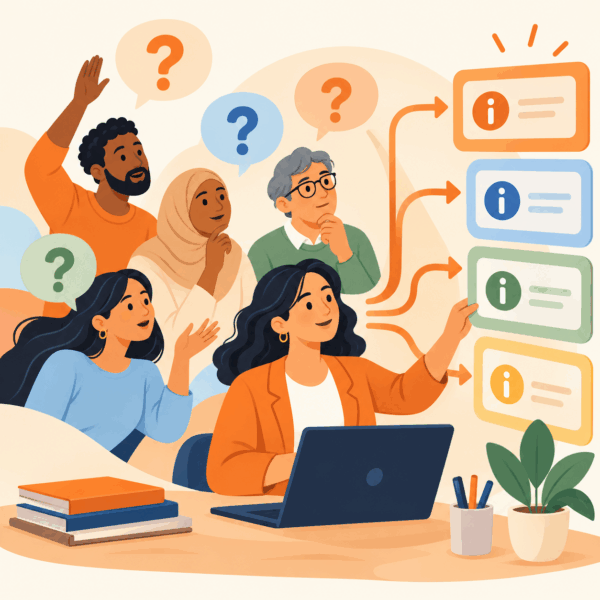 Reaching unaware residents requires not only the right channels but the right messages. A message that works for someone already familiar with the career center may fail entirely with someone who has never heard of it or holds misconceptions about it. Messages for unaware audiences must accomplish several things quickly: establish what the career center is, make it relevant to the reader’s situation, correct the misconception most likely to keep the reader away, and offer a simple first step. They must do all of this in a few words, because unaware residents give unfamiliar information only a moment of attention.
The first principle is to lead with the resident’s goal rather than the center’s identity. A message that begins with the center’s name and program offerings asks the resident to care about something unfamiliar. A message that begins with something the resident already wants, such as a better-paying job, training without the cost, help after a layoff, or a career change, captures attention because it speaks to an existing concern. Once the resident’s interest is engaged, the message can introduce the center as the way to reach that goal.
The second principle is to address the most likely misconception directly. For employed workers, a message might state plainly that the center helps people who are working find better jobs. For professionals, it might mention career transition support and training in fields with strong demand. For residents who assume services cost money, it might state clearly that services are free and publicly funded. For residents who associate the center with unemployment claims, it might explain that the center is a place for career help and training. A single message cannot address every misconception, which is why messages should be tailored to the audience each channel reaches.
The third principle is concreteness. Abstract descriptions such as career services, workforce solutions, or employment and training opportunities convey little to someone unfamiliar with the system. Concrete descriptions, such as help paying for training to become a medical assistant, an electrician’s apprentice, or a commercial truck driver, or one-on-one help with a resume and job search, allow residents to picture what they would receive. Concrete examples should reflect the occupations and training programs the local system actually supports, so that they do not create false expectations.
The fourth principle is a simple first step. Unaware residents are unlikely to complete a complex process on the strength of a single message. The first step offered should be easy and low-risk: a phone number to call with a question, a short online form to request information, a scan code leading to a mobile-friendly page, or an invitation to drop in at a community location. Messages that require residents to attend an orientation, gather documents, or create an online account before learning anything more are likely to lose them.
The fifth principle is honesty about limits. Messages for unaware audiences face a temptation to emphasize the most appealing possibilities, such as free training for a new career, without mentioning that funding depends on eligibility and availability. Residents who respond to such messages and then discover limits they were not told about feel misled, and they share that impression with others. Messages can be both appealing and honest by using phrases such as help paying for training for those who qualify, or free career services for anyone and training funds for eligible residents. These qualifications reduce the risk of disappointment without significantly reducing interest.
Finally, messages should be tested with the audiences they are meant to reach. What seems clear and compelling to career center staff may be confusing or unappealing to residents who know nothing about the system. Brief testing with members of the intended audience, often arranged through community partners, reveals whether a message is understood, whether it addresses real concerns, and whether it motivates action. Messages refined through testing are far more likely to succeed than those written on assumptions alone.
Ethical Outreach
Outreach to residents who do not know the career center exists raises ethical questions that outreach to existing participants does not. Unaware residents have not chosen to engage with the system, and the center must take care that its efforts to reach them respect their privacy, autonomy, and dignity. Outreach that feels intrusive, misleading, or stigmatizing can damage trust not only with the individuals it reaches but with the communities they belong to.
Privacy is the first concern. Career centers may have access to contact information for residents through partner programs, unemployment insurance records, or prior inquiries. Using that information for outreach requires attention to the rules governing it and to residents’ reasonable expectations. Unemployment insurance data, for example, is subject to federal confidentiality requirements that limit how it may be used and shared, and states establish their own procedures. Information collected by partner programs for one purpose may not be available for outreach by another. Career centers should work with their legal counsel and state partners to understand what is permitted and should avoid outreach that residents would experience as an unexpected use of their information. Purchasing contact lists from commercial sources raises additional concerns and should be approached cautiously, if at all.
Direct messaging deserves particular care. Text messages and phone calls to residents who have not opted in can feel intrusive and may be subject to federal and state rules on consent. Messages sent to shared phones or email accounts may reveal information a resident did not intend to share with family members. Outreach messages should avoid disclosing sensitive information, such as that a resident is unemployed or receiving benefits, in ways others might see. Broad awareness efforts through public channels and trusted partners generally raise fewer privacy concerns than targeted direct outreach.
Honesty is the second concern. Outreach messages should accurately represent what the career center offers, who is eligible, and what residents can realistically expect. Messages that imply guaranteed training funding, guaranteed jobs, or outcomes that typical participants do not achieve may increase short-term response but will damage trust when residents discover the reality. Success stories used in outreach should be shared with genuine consent and presented with honest context about the range of experiences.
Dignity is the third concern. Outreach to particular populations, such as low-income residents, people returning from incarceration, or immigrants, should avoid framing that stigmatizes them or defines them by their difficulties. Messages that speak to residents as capable people with goals are more respectful and more effective than messages that emphasize deficits or need. Imagery should reflect the community accurately and avoid stereotypes.
Fairness is the fourth concern. Outreach resources are limited, and decisions about whom to reach shape who benefits from the system. Directing outreach toward residents who face the greatest barriers to awareness, rather than toward those easiest to reach, aligns outreach with the system’s public purpose. At the same time, career centers should be transparent about their priorities and should ensure that outreach to some groups does not create the impression that services are unavailable to others.
Capacity is the final concern, and it is often overlooked. Outreach that succeeds in generating demand the career center cannot meet creates real harm. Residents who respond to outreach, only to face long waits, exhausted funds, or overwhelmed staff, may conclude that the system cannot help them and may never return. Career centers should align outreach with their capacity to serve, coordinate outreach timing with funding cycles and staffing, and communicate honestly about waiting periods or limits when they exist. Ethical outreach is outreach the center is prepared to follow through on.
Language Access and Cultural Relevance
Residents with limited English proficiency are among those least likely to know the public workforce system exists, and reaching them requires more than translating existing materials. It requires understanding how information travels within their communities, which concerns shape their willingness to engage, and how the career center’s services can be described in terms that make sense within their cultural and practical context.
The obligation is clear. Federal civil rights requirements call for recipients of federal financial assistance to take reasonable steps to provide meaningful access to people with limited English proficiency, and WIOA’s nondiscrimination provisions reinforce that obligation for workforce programs. Meaningful access includes awareness. A career center whose outreach reaches only English speakers effectively excludes residents who could benefit from its services, regardless of whether interpretation is available once they arrive.
Identifying which languages to prioritize begins with data. Census data on language spoken at home and English proficiency, school district data on languages spoken by students’ families, and records of interpretation requests at the career center and partner agencies indicate which language communities are present locally. Conversations with community organizations add detail about how large these communities are, where they are concentrated, and how they receive information.
Translation should be done carefully. Materials translated word for word often carry over jargon and concepts that make little sense in another language, and they may use terms that are technically correct but unfamiliar to community members. Professional translation, followed by review by members of the intended community, produces materials that read naturally and use familiar language. Some concepts, such as the distinction between unemployment insurance and career services, or the meaning of eligibility for training funds, may need explanation rather than direct translation.
Channels matter as much as content. Information in other languages posted on the career center’s website will reach few residents who are not already looking for it. Ethnic and in-language media, including radio, newspapers, television, and social media pages, often reach communities more effectively than mainstream outlets. Messaging apps widely used within particular communities can carry information through family and social networks, although career centers should be careful about privacy and accuracy when using them. Community organizations, religious institutions, ethnic businesses, and English language programs are trusted channels that can share information and answer questions.
Cultural relevance goes beyond language. Communities differ in their experiences with government, their expectations about work and training, their family and gender norms, and the occupations and industries in which they are concentrated. Messages that reflect these realities, such as recognizing credentials and experience earned abroad, addressing concerns about how participation might affect family members, or highlighting training in fields where community members already work, resonate more than generic messages. Developing culturally relevant outreach requires partnership with community members who can advise on what will resonate and what may cause concern.
Trusted messengers from within communities are especially valuable. Bilingual staff, community health workers, navigators employed by community organizations, and residents who have used the career center and are willing to share their experiences can explain the system in ways outsiders cannot. Some local areas fund community organizations to employ navigators who help residents connect with workforce services, recognizing the expertise and trust these organizations hold.
Finally, outreach in other languages must be backed by services in those languages. A resident who responds to an in-language message and then encounters a career center that cannot communicate with her will conclude that the outreach was misleading. Coordinating outreach with the availability of bilingual staff and interpretation ensures that the experience matches the invitation.
Making Outreach a Sustained Function
Many career centers conduct outreach in bursts: a campaign when a new grant requires recruitment, a push when enrollment falls short of targets, a series of events when a large layoff occurs. These bursts can produce short-term results, but they do not build the lasting awareness that reaches residents before their moment of need. Awareness among unaware residents grows through sustained presence over time, which requires treating outreach as an ongoing function with clear ownership, defined activities, and dedicated time.
The first requirement is ownership. Outreach often belongs to everyone and therefore to no one. Program staff recruit for their own programs, business services staff engage employers, and board staff handle communications, but no one is responsible for building awareness among the residents the system is missing. Assigning that responsibility, whether to a dedicated outreach coordinator, a defined portion of a staff member’s role, or a team that includes staff from several partners, ensures that someone is accountable for the work. In smaller local areas, this may be a fraction of one position, but the fraction should be explicit and protected.
The second requirement is a plan. An outreach plan identifies the unreached groups the center will prioritize, the channels and partners through which each will be reached, the messages tailored to each, the activities planned over the year, and the measures that will indicate progress. The plan should be realistic about capacity, focusing on a few priority groups and channels rather than attempting to reach everyone at once. It should be reviewed and adjusted periodically as the center learns what works.
The third requirement is a steady rhythm. Sustained outreach consists of regular, recurring activities rather than occasional campaigns: monthly office hours at libraries and community organizations, regular updates to partners, quarterly briefings for faith and community leaders, consistent maintenance of online listings and website content, and recurring participation in community events. This rhythm builds the familiarity that bursts cannot.
The fourth requirement is coordination with service capacity. Outreach should be planned alongside staffing, appointment availability, and funding cycles, so that the center can serve the residents outreach brings in. If training funds are typically committed early in the program year, outreach emphasizing training should be timed accordingly, while outreach later in the year can emphasize services that remain available. When demand exceeds capacity, outreach should be adjusted rather than continued unchanged.
The fifth requirement is partner involvement. One-stop partners, community organizations, and employers all contribute to outreach, and coordinating their efforts multiplies the center’s reach. A shared outreach calendar, shared materials, and regular coordination among partners ensure that efforts reinforce one another rather than duplicating or contradicting each other. Partners who serve particular populations can lead outreach to those communities, with the career center providing information and support.
The sixth requirement is internal readiness. Outreach brings in residents who may be unfamiliar with the system, skeptical, or uncertain about whether they belong there. Front desk staff, phone staff, and career advisors should know about current outreach efforts, understand the misconceptions those efforts address, and be prepared to welcome new residents in ways that confirm the outreach message. A resident who responds to a message promising help for working people and is then told that services are only for the unemployed will not return, and neither will the people she tells.
Finally, sustained outreach needs leadership support. Outreach to unaware residents produces results gradually, and its value may not appear immediately in performance measures. Boards and leaders who understand this, and who protect outreach time and resources even when short-term pressures compete for them, make it possible for the work to accumulate into lasting awareness.
An Awareness Initiative in Practice
The principles described so far can be illustrated through a hypothetical example. The scenario below does not describe any actual local area, but it reflects conditions many career centers face and shows how the elements of awareness outreach fit together.
Imagine a mid-sized local workforce area with one comprehensive career center in its largest city and two smaller affiliate sites. The center’s participants are drawn mainly from unemployment insurance claimants and human services referrals. When staff compare participant data with local labor market and census data, they notice several gaps. The area has a large number of workers in food service, retail, and warehouse jobs, many working part-time, but few participants are employed workers seeking advancement. A growing community of immigrants from several countries is concentrated in two neighborhoods, but few participants have limited English proficiency. And a rural county on the area’s edge has high unemployment but very few participants.
Before designing outreach, staff hold conversations with organizations connected to each group. A community organization serving immigrant families reports that most members have never heard of the career center, and that those who have believe it is only for people receiving unemployment benefits. A union representing some warehouse workers says members want training for better jobs but assume public programs are for the unemployed. The library director in the rural county reports that residents often ask for help with job applications, but library staff do not know much about the career center and rarely refer anyone.
The center designs a modest plan focused on these three groups. For employed workers, it develops a short message emphasizing that the center helps working people find better jobs and get help paying for training in local high-demand fields, for those who qualify. It works with business services staff to ask employers already engaged with the center to share the message with their workers, emphasizing confidentiality. It partners with the union to hold evening information sessions. It creates a web page addressing searches such as how to get a better paying job and free training while working, and it updates its map listings.
For the immigrant community, the center works with the community organization to develop materials in the two most common languages, reviewed by community members. The organization hosts monthly sessions at which a career center staff member, with interpretation, explains services and answers questions about what information is collected and how it is used. The center coordinates with an in-language radio program to discuss career services, and ensures that interpretation is available when residents call or visit.
For the rural county, the center trains library staff to describe career services and make referrals, establishes twice-monthly office hours at the library, and provides materials for the library, the county office, and several churches. It also ensures that phone and virtual appointments are available for residents who cannot travel.
Before launching, the center briefs front desk and career advisor staff on the outreach messages, particularly the message that services are available to working people. It reviews appointment availability to make sure evening and virtual options exist. And it plans to track how new participants heard about the center, along with inquiries from each group.
Over the following year, the center reviews results quarterly. It finds that the union sessions and library office hours generate steady inquiries, that employer-shared messages reach some workers but less than expected, and that the immigrant community sessions build trust slowly but steadily. It adjusts the plan accordingly, shifting effort toward the channels that work and revising messages based on what residents say.
None of these activities is unusual or expensive. What distinguishes the initiative is that it begins with an honest look at who is missing, listens before acting, tailors channels and messages to specific groups, prepares staff to deliver on the outreach message, and treats outreach as a sustained, evaluated function rather than a one-time campaign.
Measuring Awareness and Reach
Outreach to unaware residents is difficult to measure because its target, people who do not know about the system, is by nature hard to observe. Yet measurement is essential, both to learn which efforts work and to demonstrate the value of outreach to leaders who must protect its resources. Useful measurement combines indicators of awareness in the community, indicators of reach through outreach channels, and indicators of who actually arrives at the center.
Community awareness can be estimated through periodic surveys asking residents where they would go for help finding a job or paying for training, whether they have heard of the career center, and what they believe it offers. Surveys distributed through community partners, libraries, and community events can reach residents who would never respond to a survey from the career center itself. Repeating these surveys over time, with consistent questions, shows whether awareness is growing among priority groups. Surveys should include questions about common misconceptions, which allows the center to see whether messages designed to correct them are working.
Channel and partner indicators show how outreach is performing. These include the number of partners actively sharing information, the frequency of outreach activities, attendance at information sessions, inquiries from each channel, website visits to pages built for unaware audiences, search visibility for priority queries, and calls or inquiries attributed to specific campaigns or partners. These indicators help identify which channels are worth expanding and which are not producing results.
The most important indicator is who arrives. Asking every new visitor how they heard about the career center, and recording the answer consistently, reveals which channels are bringing residents in. Comparing the characteristics of new participants over time with the characteristics of the local population shows whether the center is reaching groups that were previously underrepresented. If outreach to employed workers is succeeding, the share of new participants who are working should increase. If outreach to rural residents is succeeding, the share from rural areas should grow.
Some questions that a career center can track consistently include:
-
How did new participants first hear about the career center, and did they know about it before they needed it?
-
What share of new participants come from each priority group compared with the previous year?
-
How many inquiries came through each outreach channel and partner, and how many became enrollments?
-
Which misconceptions do new participants report having held before they arrived?
-
How do residents in community surveys describe the career center, and is that description becoming more accurate?
Measurement should also capture what happens after arrival. Residents brought in through outreach may need different support than those who arrive through traditional channels, and tracking whether they stay engaged and complete services reveals whether the center’s experience matches the outreach message. If residents from a particular channel frequently drop out after the first visit, the outreach message may be setting expectations the center cannot meet, or the center may need to adjust how it welcomes those residents.
Finally, measurement should be interpreted with patience. Awareness builds gradually, and the effects of sustained presence may take months or years to appear in participant data. Short-term indicators, such as inquiries and session attendance, can show whether activities are reaching people, while longer-term indicators, such as changes in participant composition and community awareness, show whether the center is genuinely extending its reach. Sharing these results with partners and leaders, including what has not worked, builds support for continued investment and allows the outreach plan to improve over time.
How Workforce Awareness Outreach Compares With Other Agency Types
Many public services face the challenge of reaching people who are eligible but unaware. Comparing workforce outreach with these other efforts highlights what is shared and what is distinctive about the career center’s task.
Public benefit programs have long dealt with the problem of eligible people who do not enroll. Outreach for programs such as food assistance, tax credits for working families, and health coverage has demonstrated the value of trusted community partners, simplified messages, and presence at the moments when people are most likely to be receptive, such as tax season or school enrollment. These efforts show that awareness alone is often insufficient, and that addressing misconceptions and practical barriers is equally important. Career centers can learn directly from these lessons. The key difference is that benefit programs offer a concrete, immediate resource, while career services offer a process whose value depends on the resident’s participation over time, which makes the message harder to convey.
Public health outreach offers another parallel. Health departments seeking to reach people who are unaware of screening, vaccination, or prevention services have developed approaches built on community health workers, trusted messengers, and culturally tailored communication. These approaches have shown that people are more likely to act on information from someone who shares their background and understands their concerns. Workforce outreach through community navigators and trusted organizations draws on the same insight.
Community colleges recruit students who may not see themselves as college-bound, particularly adults returning to education. Their outreach emphasizes concrete outcomes, affordability, and flexible scheduling, and it often relies on employer partnerships and community events. Career centers share many target audiences with community colleges, and coordinated outreach can benefit both by presenting a clearer picture of available pathways.
Private companies, particularly staffing agencies, online job platforms, and for-profit training schools, compete for the attention of the same jobseekers. They invest heavily in search advertising, social media, and recognizable brands. Their presence shapes what unaware residents find when they look for help. Career centers cannot match their budgets, but they can compete on accuracy, free services, and the trust of community partners, provided their online presence and messages are clear enough to be found and understood.
What distinguishes workforce outreach is the breadth of its potential audience and the variety of misconceptions it must overcome. A career center’s services are relevant to the unemployed and the employed, to low-wage workers and professionals, to young adults and older workers, and to residents of every background. Each group holds different beliefs about the center and is reached through different channels. This breadth makes a single campaign ineffective and requires the segmented, partner-driven, sustained approach described throughout this article.
Tying It All Together
Awareness outreach is not a side function of operating a career center. It determines who the public workforce system actually serves. A center that reaches only the residents who already know it exists will serve a narrow slice of the people it was built to help, and its own data will never reveal the gap. Reaching the unseen requires deliberate effort to look beyond the center’s records, understand who is missing, and build pathways to them.
That effort begins with identifying unreached groups through labor market and demographic comparisons, conversations with community institutions, and direct inquiry with residents. Employed workers who are struggling, independent and gig workers, mid-career professionals, rural residents, immigrants and residents with limited English proficiency, and residents who avoid government each face different barriers and require different approaches.
Misconceptions are often as important as unawareness. Beliefs that the career center is the unemployment office, that it serves only the very poor, that it offers only entry-level jobs, that it charges fees, or that using it carries risk all keep residents away. Effective outreach anticipates these beliefs and addresses them directly, with messages tailored to each audience.
The channels that reach unaware residents are the places they already go: search results and map listings, workplaces and employer communications, unemployment insurance and public benefit touchpoints, and trusted community institutions such as libraries, schools, community colleges, faith communities, community organizations, and health providers. Consistent presence across several of these channels, sustained over time, builds the familiarity that allows residents to remember the center when they need it.
Messages for unaware audiences lead with residents’ goals, correct likely misconceptions, use concrete examples, offer simple first steps, and remain honest about limits. Outreach must be ethical, respecting privacy, avoiding misleading claims, preserving dignity, directing effort fairly, and staying within the center’s capacity to serve. Language access and cultural relevance are essential, and they depend on partnership with the communities being reached.
Finally, outreach succeeds when it is treated as a sustained function with clear ownership, a realistic plan, a steady rhythm, coordination with service capacity and partners, staff prepared to welcome new residents, and measurement that tracks who actually arrives. A career center that builds this function gradually extends its reach to residents who would otherwise never know that help was available.
Strategic Communication Support
 Reaching residents who do not know the public workforce system exists requires research into populations the center does not see, message development tailored to specific misconceptions, partnerships with institutions outside the workforce system, and a sustained outreach function that most career centers have never had the capacity to build. External support can help centers start this work on a sound foundation and establish practices their staff can carry forward.
Stegmeier Consulting Group (SCG) helps public agencies reach audiences that conventional communication misses. For career centers, that work can begin with research to identify unreached groups: comparing participant data with labor market and demographic data, interviewing community organizations, libraries, faith leaders, employers, and labor organizations, and conducting surveys and focus groups with residents who have never used the center. This research reveals who is missing, what they believe about the career center, and which channels and messengers they trust.
From that research, SCG can help develop an outreach plan that prioritizes specific groups, matches channels and partners to each, and aligns outreach with the center’s service capacity. SCG can develop and test messages designed to correct the misconceptions most common in each audience, using plain language and concrete examples and remaining honest about eligibility and limits. Planning support can include outreach calendars that coordinate efforts across one-stop partners and community organizations.
Implementation support can include website content built around the questions unaware residents actually search for, review of map listings and online presence, materials developed for libraries, employers, community organizations, and benefit program touchpoints, and translated and culturally adapted materials developed with community input. SCG can help design partner orientations that equip trusted messengers to describe the career center accurately, and staff training that prepares front desk and career advisor staff to welcome residents brought in by outreach.
Evaluation support helps career centers track how new participants hear about the center, whether participant composition is shifting toward priority groups, whether community awareness and accuracy of perception are improving, and which channels and partners are producing results. The aim is an outreach function that grows more effective over time and extends the career center’s reach to residents the system was built to serve.
Future Trends
Several established changes are reshaping how unaware residents might discover the public workforce system. The growth of independent and platform-based work continues to separate many workers from traditional employers, which have historically been one of the main channels through which workers learn about services during layoffs and transitions. As a larger share of workers earn income outside conventional employment relationships, career centers will need channels that reach them directly, through the platforms, communities, and institutions they use, rather than relying on employer pathways.
The way residents search for information is also changing. Map-based search on mobile devices is now a primary way people find local services, and online reviews visible in those results shape first impressions. In addition, a growing number of people are beginning to use artificial intelligence assistants and AI-generated search summaries to answer questions such as where to find free job training or what to do after a layoff. How these tools present public workforce services is outside the career center’s direct control, and the practices that best ensure accurate representation are still developing. What is clear is that accurate, well-structured, plain-language information on official websites, and consistent listings across directories, give these tools and conventional search engines the best chance of describing the career center correctly. Career centers should monitor how they appear in these new channels and correct inaccuracies where possible.
Changes in public assistance policy will create new touchpoints. Federal legislation enacted in 2025 broadened work requirements for SNAP and introduced community engagement requirements for certain Medicaid enrollees, with implementation phased in by states. These changes may bring large numbers of residents into contact with workforce services for the first time, many of whom would not otherwise have known the system existed. This is an opportunity to reach residents who were previously unaware, but it also carries risk, because residents who first encounter the career center through a requirement may view it as an enforcement mechanism. Career centers that coordinate closely with human services agencies, communicate clearly about what is required versus what is available, and welcome referred residents as people with their own goals will be better positioned to turn required contact into genuine engagement. State implementation details remain in development, so outreach approaches should be revisited as guidance becomes clearer.
Digital accessibility requirements have become more specific with the Department of Justice’s 2024 rule establishing technical standards for state and local government web content and mobile applications. Because digital channels are central to reaching unaware residents, ensuring that websites, online forms, and digital materials meet these standards is both a legal obligation and a way to extend reach to residents with disabilities.
Finally, the structure and funding of the workforce system may change. Federal budget proposals in recent cycles have contemplated consolidating workforce funding streams, and the outcome is uncertain. Changes in funding would affect the capacity available for outreach and services, and any significant restructuring would require explaining the system anew to the public. Career centers that build awareness around residents’ goals and community relationships, rather than around program names, will be more resilient to such changes.
Conclusion
The residents a career center never sees are not a footnote to its work. In many communities, they outnumber the residents it serves. They are working people who want better jobs, independent workers without an employer to point the way, professionals who assume public help is not for them, rural families far from any center, immigrants who have never been told the system exists, and people who learned long ago to avoid government offices. Their absence is invisible in performance data, which is exactly why it must be made visible through deliberate inquiry and sustained outreach.
For workforce leaders, the implication is that reach is a strategic choice rather than a natural outcome. Boards and center leaders decide, explicitly or by default, whether outreach will focus on the residents already easy to find or extend to those the system is missing. Choosing the latter requires assigning responsibility, protecting time, building partnerships beyond the workforce system, and accepting that results will accumulate gradually. It also requires aligning outreach with capacity and with an experience that confirms what outreach promises, so that residents who respond find the help they were told about.
Career centers that make this choice will serve communities more fully, earn trust in places where the public workforce system has had no presence, and demonstrate the system’s value to residents who would otherwise have navigated their working lives without it. That is the public purpose the system was created to fulfill.
Stegmeier Consulting Group’s Strategic Approach to Communication Systems
SCG approaches awareness outreach as a communication system designed around the people an organization is not yet reaching. That approach begins by making the unseen visible, through research that compares who is served with who could be, and through conversations with the community institutions and residents outside the system’s usual reach. It continues by identifying the misconceptions that filter out the career center’s messages, designing messages that address them honestly, and placing those messages in the channels and with the messengers unreached residents already trust.
For career centers, this means outreach organized around residents’ routines and moments of change, partnerships with employers, benefit programs, libraries, schools, faith communities, and community organizations, and digital content that appears when residents search in their own words. It means respecting privacy, dignity, and language access, aligning outreach with capacity, and preparing staff so the experience confirms the invitation. And it means treating outreach as a sustained, measured function, so that reach grows steadily and the system’s services find the residents who need them.
Use the form below to connect with our team and explore how strategic communication support can help your career center reach jobseekers who do not yet know the public workforce system exists.