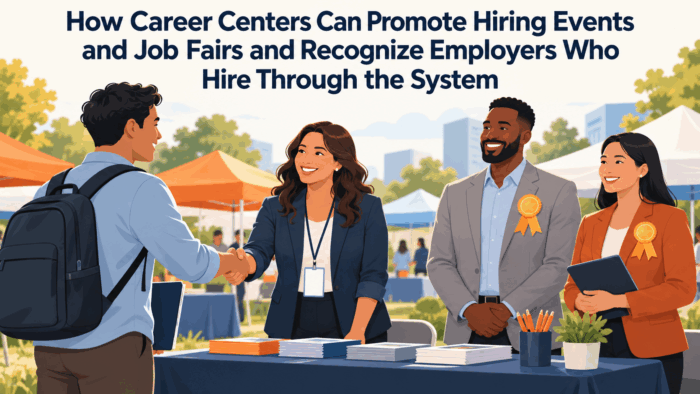
How Career Centers Can Promote Hiring Events and Job Fairs and Recognize Employers Who Hire Through the System
Hiring events and job fairs are among the most visible ways career centers connect jobseekers with employers, but their value depends on much more than putting a date on a calendar and publishing a promotional flyer. A strong event communication strategy has to attract the right jobseekers, give employers confidence that participation is worth their time, help people prepare before they arrive, and make the connection between the event and the broader public workforce system clear. When those elements are missing, even a well-organized hiring event can struggle with low attendance, mismatched applicants, unclear expectations, or limited follow-through after the event ends.
Career centers also have an opportunity to use hiring events as evidence that the public workforce system produces practical connections between local employers and residents looking for work. Employer participation can demonstrate that the career center is not simply a place where jobseekers receive information. It can function as a local talent connector that helps businesses recruit, helps residents discover opportunities, and coordinates services that support hiring and retention. Communicating that role effectively can strengthen the visibility of the entire workforce system.
Employer recognition is an important part of that communication strategy, but it requires thoughtful positioning. Career centers can appropriately acknowledge employers that participate in hiring events, work with career center staff, interview candidates, hire through the system, or contribute to workforce initiatives. Recognition should not become an endorsement of a particular company, a guarantee about the quality of an employer, or a promotional arrangement that gives one business inappropriate preference over another. The goal is to show how employers participate in the workforce system and to demonstrate the outcomes that partnerships can produce.
A coordinated approach connects event promotion, jobseeker preparation, employer communication, post-event follow-up, and employer recognition into one continuous communication cycle. Rather than treating each job fair as a standalone activity, career centers can use these events to build stronger awareness of career center services, establish recurring relationships with employers, and show residents that the public workforce system is actively connected to hiring opportunities in their community.
Promote the Opportunity, Not Just the Event
 A job fair announcement should tell people more than where and when an event is occurring. Jobseekers need to understand why attending is worth their time, what types of employers will be present, what kinds of positions may be available, whether employers are actively interviewing, and how they should prepare. Event promotion becomes more effective when the message focuses on what a participant can accomplish rather than simply announcing that an event exists.
Career centers can frame hiring events around the practical opportunities available. Communications might explain that participating employers are recruiting for specific industries, occupations, experience levels, shifts, or geographic locations when that information is known. If employers are hiring for entry-level positions, skilled occupations, supervisory roles, seasonal work, or positions with particular credentials, those details can help jobseekers determine whether the event aligns with their goals.
Promotional materials should also explain what attendees should bring and what they can expect when they arrive. Jobseekers may benefit from knowing whether printed résumés are recommended, whether interviews may occur onsite, whether applications will be completed electronically, and whether career center staff will be available to assist with preparation. Providing this information before the event helps attendees arrive more ready to engage with employers.
This approach shifts event promotion away from generic language about networking and opportunity. The communication instead gives people enough information to understand how the event can contribute to an actual job search and what they should do to take advantage of it.
Skilled & Connected: Communication Strategies for Workforce Development Agencies, Career Centers, and Local Employment Services
This article is part of our series on strategic communication for Workforce Development Agencies, Career Centers, and Local Employment Services. To learn more and to see the parent article, which links to other content just like this, click the button below.
Identify the Jobseekers the Hiring Event Is Intended to Reach
Not every hiring event needs to be promoted to every jobseeker in the same way. A targeted manufacturing recruitment event may require a different audience strategy from a broad community job fair, a youth hiring event, a healthcare recruitment day, or an event focused on workers affected by a recent closure or layoff. Career centers should define the intended audience before selecting promotional channels and messages.
Audience definition can include occupation, skill level, career stage, geographic area, availability, or other relevant characteristics connected to the participating employers’ needs. This does not mean excluding other jobseekers unnecessarily. It means communicating enough about the event that people can determine whether the available opportunities are likely to be relevant.
Career centers can then use their existing communication networks more strategically. Registered jobseekers, training program participants, partner organizations, schools, community colleges, libraries, local government channels, workforce partners, and community organizations may each help reach different audiences. Messages should be adapted to the communication environment rather than copied identically across every channel.
Targeting also helps employers. When participating businesses understand that the career center is actively recruiting jobseekers whose interests and qualifications align with available positions, the event becomes a more credible workforce service rather than simply an open invitation with uncertain results.
Give Jobseekers Enough Information to Decide Whether to Attend
Jobseekers often encounter event promotions that provide little beyond a title such as “Job Fair” or “Hiring Event.” That may create awareness, but it does not provide enough information for someone to decide whether attending is worthwhile. Career centers should communicate the details that are most likely to influence participation.
Whenever possible, event information should identify participating employers or at least the industries represented. It can also describe known job categories, expected experience levels, full-time or part-time opportunities, shifts, work locations, and other relevant information provided by employers. If details are still developing, the career center can indicate that employer information will be updated rather than leaving the event description permanently vague.
Transportation, accessibility, interpretation, parking, registration, childcare resources if offered, and virtual participation information should also be communicated clearly. These practical considerations can determine whether someone is able to attend even when the employment opportunities are attractive.
Providing meaningful event detail respects the jobseeker’s time. It allows people to make informed decisions about attendance and increases the likelihood that those who participate arrive because the opportunities genuinely interest them.
Separate Confirmed Information From Anticipated Opportunities
Career centers should be careful about promoting positions or employers that have not yet been confirmed. Event communications sometimes use broad claims about the number of jobs available or employers expected to attend even when participation remains fluid.
Confirmed employers, confirmed job categories, and verified event services should be distinguished from tentative information. If participating employers change, digital event pages should be updated promptly rather than allowing outdated promotional graphics to continue circulating without correction.
This discipline protects credibility. Jobseekers are more likely to trust future career center events when the information promoted in advance accurately reflects what they encounter when they arrive.
Use Multiple Communication Channels Without Creating Conflicting Event Information
Career centers may promote hiring events through websites, email, social media, text messages, flyers, partner organizations, local government channels, digital job boards, and direct outreach from staff. Using multiple channels can significantly increase reach, but it also creates the risk that different versions of the event information begin circulating.
The career center should maintain one authoritative event page or information source whenever possible. Promotional posts and partner messages can then direct audiences to that source for current employer lists, registration details, schedule changes, accessibility information, and other updates. This reduces the need to revise every individual flyer or social post when details change.
The same principle applies internally. Career center staff answering telephone calls or speaking with jobseekers should have access to the same current information that appears online. If employers are added, schedules change, or registration reaches capacity, those updates should be communicated across the team.
A coordinated multi-channel strategy expands visibility without sacrificing accuracy. Repetition across channels can strengthen awareness, but the underlying information should remain consistent regardless of where a jobseeker first encounters the event.
Prepare Jobseekers Before They Meet Employers
Event promotion should not end once someone decides to attend. Career centers can use the period before the event to help jobseekers prepare for more productive conversations with employers. This preparation strengthens the value of the event for both sides.
Pre-event communication can encourage participants to update their résumés, review participating employers, identify positions of interest, prepare brief introductions, gather required documents, and think about questions they may want to ask. Career centers can also promote résumé assistance, interview preparation, workshops, computer access, or individual coaching available before the event.
The communication should remain supportive rather than implying that jobseekers must already be polished applicants before they are welcome. Some participants may be returning to work after a long absence, changing industries, entering the workforce for the first time, or dealing with barriers that make traditional job-search preparation more difficult. Career center services should be positioned as resources that help them prepare rather than as prerequisites for participation.
Better preparation can improve the quality of employer interactions and help jobseekers leave the event with clearer next steps. It also demonstrates the broader value of the career center beyond simply hosting employers in a room.
Communicate Clearly With Employers Before the Event
Employers need their own communication pathway. A business considering participation should understand the event audience, anticipated attendance, available space, registration process, event schedule, logistical requirements, and what support career center staff will provide.
Career centers should also ask employers to provide meaningful information about the opportunities they plan to promote. Job titles, basic qualifications, shifts, locations, application requirements, and hiring timelines can all improve event promotion and help staff direct appropriate jobseekers toward the event.
Expectations about employer participation should be clear as well. If the event is intended for active recruitment, participating businesses should understand that jobseekers may reasonably expect representatives to be prepared to discuss current opportunities. Events can lose credibility when employers attend primarily for general visibility while attendees expect immediate hiring activity.
Consistent employer communication creates a more organized event and helps businesses see the career center as a workforce partner. The center is not simply providing a table. It is helping employers connect with potential candidates through an organized recruitment process.
Make the Career Center’s Role Visible During the Hiring Event
Hiring events can unintentionally make the career center disappear behind the employers participating in them. Jobseekers may attend, speak with businesses, and leave without understanding that the career center provides continuing services that can support their search after the event.
Career center staff should be visible and prepared to explain available services. Participants who do not find an immediate match may still benefit from résumé assistance, occupational training, job-search support, career counseling, workshops, referrals, or information about future events. The communication environment should make those next steps easy to find.
The same principle applies to employers. Businesses attending a job fair should understand that the relationship does not need to end when the tables are packed up. Career centers may be able to support future recruitment, candidate referrals, workforce information, training connections, or other employer services available through the local system.
Making the career center visible reinforces the larger purpose of the event. The job fair becomes one point of connection within an ongoing workforce network rather than a single transaction between employers and attendees.
Follow Up With Jobseekers After the Event
Post-event communication is frequently underused. Once a hiring event ends, participants may be waiting for employer responses, wondering whether they should follow up, or trying to determine what to do if none of the opportunities were a good fit. Career centers can help maintain momentum by communicating clear next steps.
Follow-up messages can remind participants how to access career center services, promote upcoming workshops or hiring events, provide general guidance about professional employer follow-up, and direct jobseekers toward additional openings or career resources. The goal is not to intervene in individual employer hiring decisions but to keep participants connected to the broader workforce system.
Career centers can also invite feedback about the event experience. Jobseekers may identify problems with registration, employer information, accessibility, wait times, or the types of opportunities represented. Recurring feedback can help staff improve future events.
Post-event communication demonstrates that the career center’s interest does not end when attendance has been counted. The event is one stage in an ongoing employment-service relationship.
Recognize Employers for Participation Without Turning Recognition Into Endorsement
Employers that invest time in career center hiring events contribute to the local workforce system and can appropriately be recognized for that participation. Career centers may highlight participating employers in event materials, thank them after an event, or acknowledge businesses that repeatedly recruit through the system.
Recognition should describe what the employer actually did. A business can be identified as a participating employer, workforce partner, hiring event participant, or company that recruited candidates through the career center. Specific factual recognition is more credible than broad praise that suggests the government entity is evaluating the employer’s overall quality.
Career centers should also establish fair criteria for recognition. If some businesses receive prominent social media features, awards, or other acknowledgment while comparable partners do not, the system should be able to explain why. Transparent standards reduce perceptions that public resources are being used to promote preferred companies.
Appropriately structured recognition can encourage continued employer participation while preserving the career center’s neutral role. It celebrates engagement with the workforce system without turning that engagement into a government endorsement.
Connect Hiring Events to the Broader Workforce System
A hiring event should not be communicated as though it exists separately from the career center’s other services. Events are strongest when they connect jobseekers to preparation, employers to recruitment assistance, and both audiences to longer-term workforce resources.
Career centers can use event communication to explain that job fairs are one way the public workforce system helps residents and businesses connect. Jobseekers who are not hired immediately can continue working with career center staff, and employers that still have vacancies can continue receiving appropriate workforce assistance after the event.
This broader framing also helps local leaders, partners, and community organizations understand the role of career centers. The visible event becomes an example of the ongoing coordination happening among jobseekers, employers, education providers, workforce boards, community partners, and other parts of the local employment system.
When hiring events are connected to that larger story, their communication value extends beyond attendance. They demonstrate an active workforce network that helps people move toward employment and helps employers connect with the talent they need.
Build Event Promotion Around Clear Employer Demand
Hiring events are more credible when career centers can communicate that participating employers have actual workforce needs rather than simply general interest in community visibility. Jobseekers are more likely to invest time in attending when they understand that employers are actively recruiting and that the event is connected to identifiable openings, occupations, or workforce needs.
Career centers should therefore gather useful information from employers before promoting the event. This can include the positions being recruited for, minimum qualifications, preferred experience, shift schedules, work locations, hiring timelines, and whether interviews or conditional offers may occur during or shortly after the event. The goal is not to reproduce every job posting in promotional materials. It is to give jobseekers enough information to determine whether the opportunities are relevant.
Employer demand should also shape the audience strategy. If several participating businesses are recruiting for the same occupational area, the career center may be able to target jobseekers who have related experience, completed relevant training, or expressed interest in that sector. Broader promotion can still continue, but targeted outreach can improve the match between employers and attendees.
Communicating real demand strengthens the event’s value for both audiences. Employers see that the career center understands their hiring needs, while jobseekers receive a clearer reason to attend.
Segment Event Messaging for Different Jobseeker Audiences
A single event may attract jobseekers with very different needs. Some may be unemployed and looking for immediate work, while others are underemployed, changing careers, reentering the workforce, recently laid off, completing training, or seeking their first job. Career centers should recognize those differences when developing outreach.
The core facts of the event should remain consistent, but supporting messages can emphasize different benefits for different audiences. A recently dislocated worker may respond to information about employers hiring people with transferable skills. A young adult may need clearer guidance about entry-level opportunities and what to bring. A worker considering a career change may be especially interested in employers willing to discuss training pathways or related occupations.
Career centers can use their own program data and partner networks to identify audiences that may benefit from targeted communication. Training providers, schools, workforce programs, community organizations, veterans’ services, libraries, and local government partners may all reach people who would not respond to a general social media post.
Audience segmentation makes promotion more relevant without fragmenting the event’s identity. Each group receives information that helps them understand why the event may matter to them while still being directed toward the same authoritative event information.
Promote Employer Participation Before the Event
Featuring participating employers before a hiring event can significantly increase jobseeker interest. People are more likely to attend when they recognize companies, understand what industries will be represented, and can research potential employers in advance.
Career centers can introduce employers through event pages, social media posts, email updates, short profiles, or employer lists. These communications should focus on factual information relevant to recruitment, such as the industry, general types of positions being recruited for, work locations, or other information supplied and verified by the employer.
Employer promotion should remain balanced. A career center should avoid language that suggests one company is a better employer than another or that the center guarantees the quality of wages, workplace culture, advancement opportunities, or employment conditions unless it has a defined basis and authority for making such claims.
Featuring employers works best when it helps jobseekers prepare. Rather than simply displaying company logos, the communication can encourage attendees to review participating organizations, identify several businesses they want to speak with, and arrive with questions relevant to those opportunities.
Use Employer Spotlights to Inform Rather Than Advertise
An employer spotlight can provide useful context without becoming a commercial advertisement. The content can explain what the organization does, the types of roles it is recruiting for, where those jobs are located, and what applicants should know before speaking with representatives.
Career centers should use a consistent format across employer spotlights so participating businesses receive comparable treatment. This helps maintain fairness and makes the information easier for jobseekers to compare.
The spotlight should also make clear that employer participation in a publicly supported hiring event does not constitute an endorsement by the career center or workforce system.
Use Event Registration to Improve Communication Before the Job Fair
Registration can do more than provide an attendance estimate. It can create a communication channel that helps the career center prepare participants and send important updates before the event.
Registration forms can collect only the information necessary for event administration and appropriate follow-up. Career centers can then use confirmation messages to explain the event format, participating employers, preparation recommendations, accessibility information, transportation details, and any changes that occur before the event.
Reminder communication can be especially valuable. A message several days before the event can encourage participants to review the employer list and update their résumés, while a final reminder can reinforce the time, location, parking instructions, and what to bring.
Registration should not create an unnecessary barrier. If walk-in attendance is allowed, the event communication should say so clearly. Career centers should also consider whether an online-only registration system could exclude people with limited digital access and provide an alternative where needed.
Treat the Event Page as the Authoritative Source
Hiring events can generate dozens of promotional materials, especially when workforce boards, municipalities, employers, libraries, schools, and other partners share the information. The more widely an event is promoted, the more important it becomes to maintain a central source containing the current details.
The event page should contain the date, time, location, registration information, participating employers, general opportunity information, accessibility details, transportation or parking guidance, and any major updates. Promotional graphics should direct people back to this page rather than trying to contain every detail.
This structure becomes particularly valuable when employers are added or removed, weather affects the schedule, the event reaches capacity, or another logistical detail changes. Career center staff can update the central page even when older flyers or social posts continue circulating.
A clear authoritative source also helps community partners. They can promote the event confidently without having to independently maintain every changing detail.
Coordinate Promotion With Community Partners
Career centers often have access to communication networks that extend well beyond their own website or social media audience. Community organizations, libraries, schools, municipalities, economic development organizations, social service providers, and other workforce partners can help reach people who may not already be connected to the career center.
Partner outreach should make promotion easy. Career centers can provide approved event descriptions, graphics, short social media copy, printable materials, and the authoritative event link so partners do not have to create their own version of the message.
Career centers should also consider which partners are best positioned to reach specific populations. A community college may help reach recent graduates and workers completing technical programs, while a library may reach residents conducting independent job searches. Community-based organizations may help connect with people facing transportation, language, digital access, or other barriers.
Partner promotion becomes more effective when it is strategic rather than simply broad. The objective is not to send the flyer to as many organizations as possible. It is to use trusted community channels to connect the right audiences with relevant opportunities.
Build Accessibility Into Hiring Event Promotion
An event cannot be considered accessible simply because the physical location meets basic requirements. Jobseekers need to understand in advance whether accommodations, language assistance, accessible transportation information, or other supports are available.
Promotional materials should provide a clear pathway for requesting reasonable accommodations and obtaining language assistance where available. If the venue has specific accessible entrances, parking areas, or transit options, those details should be easy to find.
Digital event information should also be accessible. Registration forms, employer lists, event pages, and downloadable materials should be usable with assistive technologies and designed for mobile access. Important information should not exist only inside an image or graphic that may be difficult for some users to interpret.
Accessibility communication helps people determine whether they can participate successfully. It also signals that the event is designed for the full range of jobseekers served by the workforce system.
Prepare Employers to Communicate Effectively With Jobseekers
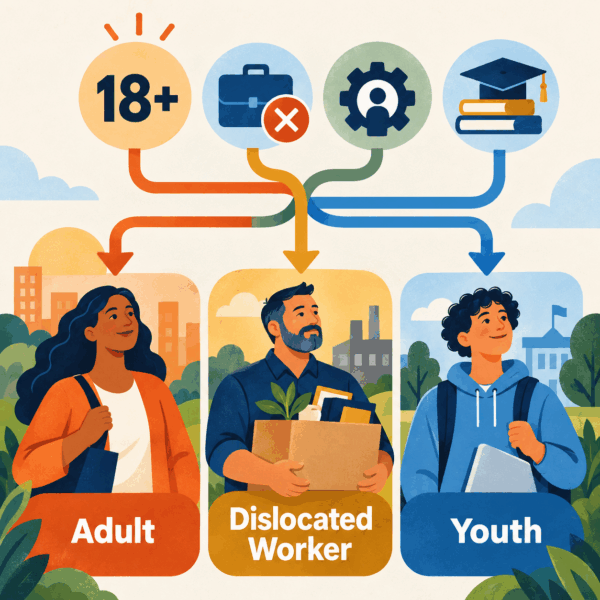 Employers arrive at hiring events with different levels of experience. Some may have dedicated recruitment teams, while others may send an operational manager or small-business owner who rarely attends job fairs. Career centers can improve the event by giving employers clear guidance before they arrive.
Employer preparation can cover event logistics, anticipated audience, booth setup, accessibility expectations, available career center support, and recommendations for communicating current opportunities clearly. Employers should know whether they are expected to accept résumés, discuss specific openings, conduct interviews, or direct applicants to an online application system.
Career centers can also encourage employers to avoid presenting an event as immediate hiring if the actual process still involves several later stages. Jobseekers should leave with a realistic understanding of what happens after they speak with the employer.
Better employer preparation improves the quality of interactions and supports the career center’s reputation as an organized recruitment partner.
Capture Employer and Jobseeker Follow-Up Information
The value of a hiring event is difficult to understand if all measurement stops with attendance. Career centers should establish appropriate follow-up methods that help determine what happened after the event.
Employers can be asked to report outcomes such as interviews, follow-up contacts, applications, referrals, or hires where the workforce system is authorized and able to collect that information. Jobseekers can also be invited to report whether they advanced in the hiring process or need additional career center support.
Follow-up should be practical and proportionate. Employers may be less likely to respond if reporting is burdensome, while jobseekers may not know their final outcome immediately after the event. A simple, consistent process is often more useful than an overly complex survey.
Outcome information gives career centers a stronger foundation for improving future events and communicating their value. It shifts the conversation from how many people entered the room to what connections the event helped create.
Recognize Employers Based on Meaningful Workforce Engagement
Employer recognition becomes more valuable when it reflects meaningful participation rather than simply event attendance. Career centers can recognize businesses that repeatedly recruit through the system, hire referred jobseekers, participate in career center events, support training partnerships, or otherwise demonstrate sustained workforce engagement.
Recognition criteria should be defined in advance where possible. A structured approach helps ensure that recognition is fair across employers and that public acknowledgment is based on documented participation rather than informal relationships.
Career centers can use different levels of recognition depending on the activity. A simple social media thank-you may be appropriate for employers participating in a single event, while a more substantial feature may be reserved for organizations demonstrating continued engagement or measurable hiring outcomes through the system.
The strongest recognition tells a workforce story. It shows other employers how businesses can use career center services and demonstrates to residents that employers are actively recruiting through the public workforce system.
Tell Employer Success Stories Through the Workforce System
When an employer successfully hires through a career center, the story can become a useful communication tool for both employer outreach and public awareness. Instead of simply stating that a partnership was successful, the career center can explain how the connection occurred and what role the workforce system played.
A success story might describe an employer that participated in a hiring event, connected with qualified candidates, conducted follow-up interviews, and ultimately hired one or more people through the process. Where appropriate and permitted, the story may also include the employer’s perspective on why the career center relationship was useful.
Career centers should obtain appropriate permission before using company names, employee stories, photographs, quotes, or hiring information publicly. Individual jobseeker information should be handled with particular care, and recognition should never depend on someone agreeing to share a personal story.
Well-developed employer stories do more than celebrate a single hire. They demonstrate to other businesses that the workforce system can be a practical recruitment resource and show jobseekers that career center events can lead to real employment connections.
Use Hiring Events to Strengthen Employer Relationships Over Time
A hiring event should not be treated as the beginning and end of an employer relationship. Career centers can use each event as an opportunity to understand an employer’s broader workforce needs, identify recurring recruitment challenges, and establish a longer-term connection that continues after the immediate hiring push is over. When event communication is designed with that broader purpose in mind, employers are more likely to see the career center as a workforce partner rather than simply as an event organizer.
Post-event communication can help sustain that relationship. Career center staff may follow up to learn whether the employer connected with viable candidates, whether additional recruitment support is needed, and whether future hiring events or targeted outreach would be useful. These conversations can also reveal where employers are struggling with candidate pipelines, occupational shortages, retention, or awareness of available workforce services.
Over time, repeated engagement can create stronger employer participation across the workforce system. Businesses that first encounter the career center through a job fair may later participate in training partnerships, sector initiatives, recruitment campaigns, work-based learning, or other programs. The hiring event becomes a point of entry into a broader relationship.
This long-term view also improves event quality. Career centers that understand employer needs over time can recruit more appropriate jobseekers, design better targeted events, and communicate opportunities with greater specificity.
Use Hiring Outcomes to Improve Future Event Strategy
Career centers should analyze what happens after hiring events so future promotion and event design are based on more than attendance counts. A large event may generate substantial foot traffic but relatively few meaningful employer connections, while a smaller targeted event may produce stronger interviews and hires.
Outcome analysis can include employer follow-up, jobseeker feedback, application activity, interviews, referrals, hires, and continued engagement with the career center. The purpose is not to reduce every event to a single success metric. It is to understand which formats, audiences, employers, and communication strategies are producing the strongest results.
Career centers can also compare different event types. Broad community job fairs may serve an important visibility function, while industry-specific hiring events may produce stronger candidate matching. Youth-focused events, rapid response events, or events tied to occupational training may require different expectations and measures.
Using outcome information to shape future strategy helps career centers improve over time. It also gives staff a stronger basis for explaining why certain event formats are being expanded, changed, or targeted differently.
Distinguish Event Participation From Confirmed Hiring Results
Employer participation should be recognized accurately. An employer attending a job fair is not the same as an employer hiring someone through the workforce system, and career center communication should preserve that distinction.
Public materials can identify employers as participants, recruiters, partners, or hiring event attendees based on what actually occurred. Separate recognition can be used when an employer confirms that a hire resulted from the event, referral, or broader career center relationship.
This distinction protects the credibility of the workforce system. Inflated language can make a career center appear to claim outcomes it cannot verify, while precise language demonstrates that the center takes measurement seriously.
Accurate recognition also gives successful employers a stronger story. When the career center can legitimately say that an organization hired through the system, that statement carries more value because it is based on a documented outcome rather than routine participation.
Define What Counts as a Hire Through the System
Career centers should establish a consistent internal definition of what it means for an employer to have hired through the workforce system. A hire might result from a direct referral, hiring event, career center recruitment campaign, training program, or another recognized pathway.
Whatever definition is used, staff should apply it consistently when measuring outcomes and developing public recognition. The center should avoid attributing a hire to its services when the connection cannot reasonably be demonstrated.
Clear definitions improve both reporting and communication. They make employer recognition more credible and help staff distinguish between general employer engagement and measurable hiring outcomes.
Build Employer Recognition Into an Annual Communication Strategy
Recognition is most effective when it is planned rather than improvised. Career centers can establish an annual approach that identifies when and how participating employers, repeat recruiters, hiring partners, and other workforce collaborators will be acknowledged.
Recognition may occur throughout the year through social media, newsletters, event recaps, employer spotlights, workforce board communications, annual reports, or partner meetings. Different formats can recognize different levels of engagement without turning every employer interaction into a major promotional feature.
An annual strategy can also help ensure fairness. Staff can apply consistent criteria and maintain a broader view of which industries, business sizes, and communities are being represented. This reduces the likelihood that recognition becomes concentrated among the most visible or well-known employers.
Planned recognition creates a steady narrative about employer engagement. Instead of occasional isolated thank-you posts, the career center can consistently show how businesses are participating in the local workforce system and connecting with jobseekers.
Recognize Small and Mid-Sized Employers Alongside Major Companies
Large employers often receive the most attention because their names are recognizable and their hiring numbers may be significant. Career centers should also make space to recognize small and mid-sized businesses that use workforce services and create local employment opportunities.
For a smaller employer, hiring even a few people through the career center may represent a meaningful workforce outcome. These businesses may also benefit substantially from recruitment support because they have fewer internal human resources or marketing resources than larger organizations.
Highlighting a range of employers can make the workforce system feel more representative of the local economy. Jobseekers also gain awareness of opportunities beyond the largest companies in the region.
Balanced recognition strengthens the message that career center services are available to employers of different sizes and sectors. It also prevents public communication from unintentionally suggesting that workforce partnerships are primarily for major corporations.
Connect Employer Recognition to Specific Workforce Contributions
Recognition is more meaningful when it explains what an employer contributed. Rather than relying only on broad labels such as “valued partner,” career centers can identify the specific activity that earned recognition.
An employer might be acknowledged for participating in multiple hiring events, hiring candidates referred by the career center, supporting a training initiative, providing work-based learning opportunities, collaborating on occupational outreach, or helping expand access to employment in a particular sector.
Specificity makes recognition more credible and informative. Other employers can see what participation looks like and understand how they might engage with the system themselves.
This approach also keeps recognition focused on workforce activity rather than general corporate reputation. The career center is acknowledging an employer’s documented contribution to the workforce system, not making a broader judgment about every aspect of the company.
Use Employee Success Stories Carefully and Respectfully
A successful hire can become a compelling story about the value of the workforce system, but individual jobseekers should not be treated as promotional assets. Career centers should obtain clear permission before using names, photographs, quotes, employment details, or personal histories.
The strongest stories focus on the employment connection without requiring unnecessary disclosure. A participant may be willing to describe how a career center event helped them meet an employer without wanting to share information about prior unemployment, financial hardship, disability, family circumstances, or other personal details.
Career centers should also avoid presenting one person’s experience as though it represents every participant. A success story can illustrate what the system can accomplish without implying that every jobseeker who attends an event will receive the same result.
Respectful storytelling strengthens credibility. It allows the workforce system to demonstrate impact while maintaining the dignity and privacy of the people it serves.
Use Event Recaps to Show What Happened, Not Just That the Event Occurred
Post-event communication often consists of photographs and a brief statement thanking participants. Career centers can make event recaps more useful by explaining what the event actually accomplished.
A recap may include the number or types of employers represented, the industries involved, the services offered onsite, or other verified information that helps the community understand the event’s purpose. Where outcomes are known later, follow-up communication can highlight interviews, hires, or continued recruitment activity.
Event recaps can also reinforce future engagement. Jobseekers who missed the event can be directed toward career center services or upcoming opportunities, while employers can be invited to participate in future recruitment activities.
This approach turns the recap into part of an ongoing communication cycle. The story is not merely that a job fair happened. It is that the career center continues connecting employers and jobseekers through a broader workforce strategy.
Use Recognition to Encourage Other Employers to Engage
Employer recognition can serve as an indirect recruitment tool for the career center itself. When businesses see peer organizations being recognized for participating in hiring events and successfully hiring through the system, they gain a clearer understanding of what career center engagement can look like.
Recognition stories can explain the pathway from employer need to workforce support. A company may have contacted the career center with open positions, participated in a targeted event, met candidates, and later hired through the process. That sequence demonstrates the practical value of workforce services more effectively than a generic statement that employers can receive recruitment assistance.
Career centers should keep this communication grounded in actual experience. The objective is not to oversell services or promise similar results to every business. It is to show credible examples of how employers have used the system.
Over time, this can create a reinforcing cycle. Strong employer participation generates better stories, those stories increase awareness, and increased awareness brings more employers into the workforce network.
Make Hiring Event Communication Part of the Career Center’s Brand
Hiring events are highly visible public activities and can shape how residents and employers perceive the career center as a whole. Consistent event communication should therefore reinforce the center’s broader identity and role in the community.
Promotional materials, employer communication, event signage, follow-up messages, and recognition content should use consistent terminology and explain the career center’s role clearly. Residents should understand that the center offers ongoing employment and career support, while employers should understand that recruitment assistance is part of a broader set of workforce services.
This consistency can help build recognition over time. Someone who first encounters the career center through a job fair may later remember the organization when seeking training, career guidance, or employer assistance.
When hiring events are integrated into the career center’s overall communication strategy, each event contributes to a larger public understanding of the workforce system rather than functioning as an isolated promotional activity.
Evaluate Recognition by Whether It Strengthens Workforce Engagement
Employer recognition should ultimately support the mission of the workforce system. Career centers should consider whether recognition encourages continued employer participation, increases awareness of services, strengthens relationships, or helps other businesses understand how to engage.
The success of recognition should not be judged only by social media reactions or publicity. A widely viewed employer spotlight may have limited strategic value if it does not communicate anything about the workforce relationship, while a modest story shared with the right business audience may generate new employer engagement.
Career centers can review which recognition formats produce meaningful follow-up, whether featured employers continue participating, and whether other businesses mention recognition stories when contacting the center.
This evaluation keeps employer recognition connected to workforce strategy. The objective is not simply to celebrate employers. It is to strengthen the network of businesses, jobseekers, and public workforce services that hiring events are designed to support.
Build Hiring Event Promotion Into the Career Center’s Operating Calendar
Career centers can improve hiring event communication by planning promotion as part of the operating calendar rather than treating every event as a last-minute outreach effort. A consistent planning cycle gives staff enough time to confirm employers, develop audience-specific messaging, prepare promotional materials, coordinate with partners, and help jobseekers get ready before the event occurs. It also reduces the risk that event promotion becomes rushed, incomplete, or inconsistent across channels.
The planning calendar should account for the full communication cycle. Employer recruitment may need to begin well before public promotion, followed by development of the event page, partner outreach, jobseeker promotion, reminder communication, day-of messaging, and post-event follow-up. Each stage serves a different purpose and should have a clear owner.
Career centers should also build in checkpoints for updating information. Employer rosters may change, job openings may shift, venue details may be revised, or registration may reach capacity. A planned update schedule helps ensure that promotional materials remain accurate instead of allowing early information to circulate unchanged.
An operating-calendar approach makes hiring event communication more reliable and scalable. Staff can reuse proven timelines, templates, and workflows while still adapting the content to the needs of each event.
Establish Clear Roles for Event Communication
Hiring events often involve business services staff, career advisors, communications personnel, workforce board staff, facility managers, partner organizations, and participating employers. Without clearly assigned responsibilities, important communication tasks can be duplicated or missed.
Career centers should define who owns employer communication, public promotion, event-page updates, partner outreach, registration messaging, accessibility coordination, social media, media inquiries, and post-event follow-up. These roles can be shared, but responsibility for the final output should be identifiable.
Employer information should also have a clear verification process. If one team collects job openings and another team publishes them, staff need a reliable handoff so that the public is not seeing outdated or incomplete information. The same applies to changes in schedules, locations, or event capacity.
Clear ownership improves speed and consistency. It allows staff to respond to changing event conditions without waiting for several teams to determine who is responsible for communicating the update.
Create Reusable Promotion Templates Without Making Every Event Look the Same
Career centers can save time by developing reusable templates for job fair announcements, employer spotlights, reminder messages, partner toolkits, event recaps, and employer recognition. Templates create consistency and reduce the need to build every communication from scratch.
The template should provide a structure rather than fixed copy. Each event still needs specific information about the audience, participating employers, types of opportunities, registration process, and preparation expectations. A manufacturing event should not sound identical to a youth hiring fair or a healthcare recruitment event simply because the same promotional format is being used.
Templates can also establish minimum communication requirements. Staff can verify that every event announcement includes the date, time, location, registration information, accessibility contact, employer or industry information, and authoritative event link before publication.
This approach combines efficiency with relevance. The career center maintains a recognizable communication system while ensuring that each event gives jobseekers a meaningful reason to participate.
Create a Standard Event Information Checklist
A standard checklist can help staff verify the facts before promotion begins. The checklist may cover venue details, employer confirmations, job categories, registration, accessibility, parking or transit information, contact information, and any preparation expectations for attendees.
The same checklist can be used again immediately before the event to identify what has changed. This reduces the likelihood that an early draft remains online after important logistical details are updated.
A simple verification process can prevent many of the communication problems that otherwise emerge during event week.
Develop an Employer Communication Toolkit
Employers should receive clear, standardized information about how the event works and what the career center needs from them. A reusable employer toolkit can make that communication easier while creating more consistent participation.
The toolkit can explain registration deadlines, setup expectations, arrival times, event format, anticipated audience, accessibility requirements, available equipment, contact information, and the information employers should provide about current openings. It can also explain how the career center will promote participating businesses.
Employers should know how and when their organization may be featured publicly. If the career center uses company names, logos, job descriptions, photographs, or quotes, the process for supplying and approving those materials should be clear.
A structured toolkit presents the career center as an organized workforce partner. It reduces repetitive questions and gives employers a clearer understanding of how to prepare for productive recruitment conversations.
Create Standards for Employer Recognition
Employer recognition should be guided by consistent criteria rather than by whichever partnerships are most visible to staff. Career centers should define the types of participation that may qualify for different forms of acknowledgment.
Recognition criteria may distinguish among event participation, recurring recruitment, verified hiring through the system, work-based learning, training partnerships, sector collaboration, or other meaningful engagement. Different contributions can then receive different forms of recognition appropriate to the activity.
Career centers should also determine who approves recognition and how documented outcomes are verified. If a business is identified publicly as having hired through the workforce system, the center should have a reasonable basis for that statement.
Standards strengthen fairness and credibility. Employers are more likely to view recognition as meaningful when it reflects transparent workforce engagement rather than informal preference.
Maintain an Employer Engagement Record
Career centers benefit from maintaining a reliable record of how employers interact with the workforce system over time. That record can help staff understand whether a business attended one event, participated repeatedly, hired referred candidates, or engaged in several workforce initiatives.
A consistent engagement record supports communication planning because staff can identify employers with strong stories to tell and distinguish long-term workforce partnerships from one-time participation. It can also help prevent repeated requests for the same information from employers who regularly work with the center.
The record does not need to function as a marketing database separate from existing workforce systems. The important point is that staff responsible for communication should have access to verified information about employer participation when appropriate.
Better records lead to more accurate recognition. They allow career centers to tell specific stories about how employers engage with the system rather than relying on general statements about partnership.
Coordinate Recognition With Employers Before Publication
Even positive employer recognition should be coordinated carefully. Career centers should confirm names, job titles, hiring information, quotes, photographs, and other details before publication where appropriate.
Employers may have their own communication policies or approval requirements, particularly for logos, employee stories, or public statements about hiring outcomes. A simple review process can prevent factual errors and make the recognition more useful to both organizations.
Coordination should not allow employers to transform public workforce communication into unrestricted advertising. The career center should retain responsibility for the tone, purpose, and accuracy of the recognition while allowing the employer to verify factual details.
This balance protects the integrity of the public workforce system while supporting positive employer relationships.
Coordinate Jobseeker and Employer Privacy in Success Stories
Success stories can involve information from both the hiring employer and the individual who obtained employment. Career centers should establish a clear process for obtaining permission and deciding what information is appropriate to publish.
Jobseekers should understand that participation in workforce services does not require them to appear in promotional materials. Consent for a story, photograph, or quote should be voluntary and separate from access to services.
Career centers should also avoid unnecessary personal detail. The fact that a person connected with an employer through a hiring event may be enough to demonstrate the value of the system without describing private circumstances that preceded the job search.
Clear privacy standards make success stories more respectful and sustainable. They allow the career center to communicate outcomes without treating personal employment experiences as public property.
Build a Post-Event Communication Workflow
Hiring events should trigger a defined set of follow-up activities rather than ending when the venue closes. A post-event workflow can help the career center collect outcomes, thank participants, continue employer relationships, reconnect jobseekers with services, and capture lessons for future events.
Employer follow-up can ask whether the business identified candidates, scheduled interviews, made offers, or needs additional recruitment support. Jobseeker follow-up can provide information about career center services, future events, and next steps for people who were not immediately connected to an opportunity.
Communications staff can then determine what public recap is appropriate. Immediate recaps may focus on participation and event activity, while later stories can communicate verified hiring outcomes after employers have completed their recruitment processes.
A structured follow-up workflow prevents the center from losing valuable information once the event ends. It also strengthens the continuity between individual hiring events and the broader workforce system.
Use Communication Data to Improve Event Outreach
Career centers should examine which communication channels actually drive awareness and participation. Email engagement, event-page traffic, registration sources, partner referrals, social engagement, text-message response, and direct staff outreach can all provide insight into how jobseekers are learning about events.
The objective is not simply to maximize digital engagement. A social media post may generate substantial visibility but relatively few qualified attendees, while a targeted message to a smaller group may produce stronger participation from jobseekers who match employer needs.
Career centers can compare communication performance with event outcomes to identify which outreach methods work best for different types of hiring events. Broad community fairs may need a different promotional mix than specialized recruitment events.
Using communication data allows the center to invest staff time and promotional resources more strategically. Event outreach becomes an evidence-informed process rather than a routine repetition of the same tactics.
Create a Continuous Improvement Process for Hiring Events
Career centers should review each event with both communication and workforce outcomes in mind. Staff can examine whether the right audiences attended, whether employers were prepared, whether promotional information matched the actual event, and whether participants understood what to do next.
Employer and jobseeker feedback can be combined with staff observations and outcome information. If attendees repeatedly ask for information that was supposedly included in promotional materials, the problem may be message clarity rather than participant attention. If employers report that candidates were poorly matched, the audience targeting may need adjustment.
Lessons should be documented and applied to future events. Promotion timelines, employer forms, registration questions, reminder messages, signage, partner outreach, and recognition procedures can all be improved incrementally.
A continuous improvement process prevents hiring events from becoming repetitive activities that are simply recreated year after year. Each event becomes an opportunity to strengthen how the career center connects jobseekers, employers, and the broader workforce system.
Preserve Institutional Knowledge About Employer and Event Communication
Successful hiring event communication often depends on staff members who know which partners respond quickly, which employers provide useful job information, which channels reach particular jobseekers, and which logistical problems tend to emerge. Career centers should document that knowledge so it is not lost when employees change roles or leave the organization.
Institutional resources can include promotional calendars, event checklists, employer toolkits, partner contact strategies, recognition criteria, consent procedures, event recap templates, and records of lessons learned from previous events.
Career centers should also document why particular communication practices were adopted. Future staff may otherwise remove an important step, such as employer verification or centralized event updates, without realizing that it was created in response to recurring public confusion.
Preserving this knowledge allows the career center to build stronger events over time. Communication quality becomes an organizational capability rather than something dependent on the experience of a few individual staff members.
Strategic Communication Support for Hiring Events, Job Fairs, and Employer Recognition
 Hiring events and job fairs are highly visible workforce activities, but their success depends on more than logistics. Career centers need communication systems that attract relevant jobseekers, prepare employers, coordinate partner promotion, explain available services, capture follow-up outcomes, and recognize employers accurately. When these functions are disconnected, events may generate attendance without producing strong matches, or employer recognition may become inconsistent and difficult to connect to actual workforce outcomes.
Stegmeier Consulting Group (SCG) can support career centers, workforce boards, and local employment systems by strengthening the communication strategy around employer recruitment and hiring events. This can include event promotion frameworks, audience segmentation, employer communication toolkits, jobseeker preparation materials, partner outreach templates, event-page content, reminder campaigns, post-event communication, employer recognition standards, success-story development, and communication measurement. SCG can also help workforce organizations align event communication with broader career center branding so each hiring event reinforces the center’s ongoing role as a connection point between jobseekers and employers.
External strategic communication support can be particularly useful when a career center is expanding employer engagement, increasing the frequency of hiring events, trying to reach new jobseeker audiences, or developing a more systematic approach to employer recognition. SCG’s role remains focused on communication strategy, messaging, public engagement, information organization, and measurement. SCG does not make hiring decisions for employers, guarantee employment outcomes, determine eligibility for workforce programs, or endorse individual businesses as better employers than others.
Future Trends
Hiring events are likely to become more targeted and more closely connected to specific employer demand. Broad community job fairs will continue to have value, but career centers may increasingly organize smaller events around industries, occupations, geographic areas, major hiring initiatives, or groups of employers facing similar workforce shortages. Communication strategies will need to explain clearly who each event is designed to serve and why particular jobseekers should participate.
Digital communication will also continue changing how hiring events are promoted and experienced. Career centers may increasingly use mobile registration, text reminders, digital employer directories, virtual information sessions, QR-based event navigation, and follow-up communication that connects attendees directly to additional career center services. These tools can improve participation, but they should support rather than replace accessible alternatives for jobseekers with limited digital access.
Employer recognition is also likely to become more outcome-focused. Rather than acknowledging businesses only for attending events, workforce organizations will have stronger opportunities to highlight sustained recruitment partnerships, verified hires, training collaborations, work-based learning, and other forms of documented engagement. This can make recognition more meaningful while giving other employers clearer examples of how they can use the public workforce system.
Measurement will continue moving beyond attendance. Career centers will increasingly need to understand how promotional channels affect registration, which audiences attend, how many meaningful employer connections occur, and what happens after the event. Strong communication measurement can help workforce organizations distinguish between events that generate visibility and those that produce measurable recruitment and employment outcomes.
Conclusion
Hiring events and job fairs can be among the most effective public expressions of a career center’s role in the local workforce system. They bring jobseekers and employers together in a visible setting, create opportunities for direct recruitment, and give career centers an opportunity to demonstrate how public workforce services support both residents and businesses.
The strongest events begin with clear communication well before the doors open. Jobseekers need to understand which employers are participating, what opportunities may be available, how to prepare, and what they can expect. Employers need to understand the audience, event format, recruitment expectations, and available career center support. Community partners need consistent materials they can share without creating conflicting versions of event information.
Communication should continue after the event. Career centers can follow up with jobseekers, maintain employer relationships, document outcomes, improve future promotion, and recognize employers whose participation produces meaningful workforce results. This turns a single event into part of an ongoing system of workforce engagement rather than an isolated activity.
Employer recognition is most credible when it is specific, fair, and tied to documented participation. Career centers can acknowledge businesses for recruiting through the system, hiring referred candidates, participating repeatedly, or contributing to broader workforce initiatives without turning public communication into commercial endorsement. When recognition is connected to real workforce activity, it can strengthen existing employer relationships while encouraging new businesses to engage.
Stegmeier Consulting Group’s Strategic Approach to Communication Systems
Build hiring event and employer recognition communication that strengthens recruitment, jobseeker participation, and long-term workforce engagement.
Career centers and workforce boards need communication systems that help jobseekers understand where real opportunities exist, help employers see the value of participating in the public workforce system, and make hiring outcomes visible without overstating results. Stegmeier Consulting Group (SCG) helps workforce organizations develop event promotion strategies, employer communication frameworks, partner outreach, jobseeker messaging, recognition standards, success stories, and measurement systems that strengthen both immediate recruitment activity and long-term employer engagement.
Use the form below to connect with our team and explore how strategic communication support can strengthen hiring events, job fairs, employer recognition, and the broader workforce system.