Early Voting Campaigns That Actually Move People: Lessons for Election Offices and Voter Services Departments
Early voting outreach works best when it helps people act before they have a chance to procrastinate, not when it simply reminds them that early voting exists. For many voters, the real barrier is not opposition to voting early. It is timing, routine, uncertainty about locations or hours, and the fact that “I’ll do it later” feels easier than making a plan today. That is why effective early voting communication has to do more than announce dates. It has to reduce friction and make the next step feel immediate, manageable, and worth doing now. Official election guidance reflects this practical orientation. The U.S. Election Assistance Commission’s editable voter education content tells election offices to explain when early voting is available, where to find early voting locations, and what voters need to bring, while its social media toolkit includes sample early-voting messages built around convenience, timing, and acting before Election Day.
This is also why early voting campaigns should be treated as behavior campaigns, not just awareness campaigns. A voter may already know that early voting exists and still fail to use it because the message never helped answer the practical questions that actually drive action. When is it open? Where should I go? Can I fit this into my schedule? What should I bring? Election offices that focus only on awareness often end up repeating “vote early” without making the path to early voting easier to follow. By contrast, election offices that connect dates, locations, hours, voter requirements, and planning cues in one clear message are much more likely to move people from intention to action. Federal resources aimed at election officials consistently push this kind of usable voter guidance, and Can I Vote, the nonpartisan site created by state election officials, likewise directs voters to state-specific early voting information rather than generic encouragement alone.
Election offices and voter services departments should also remember that early voting communication is not only about convenience. It is also about confidence. A voter who knows exactly where to go, what window is available, and how to verify official information is more likely to vote early because the process feels organized and low risk. That matters even more in busy households, among first-time voters, and in communities where people are balancing work schedules, caregiving, transportation limits, or uncertainty about rules. The Election Assistance Commission’s 2024 voter education report found that election offices use a mix of social media, websites, media outreach, and community partnerships in their voter education work, and that local officials increasingly view voter education as a significant part of their responsibilities.
This article provides an evergreen communication framework for early voting campaigns that actually move people. It focuses on how election offices can frame early voting as a planning advantage, organize messages around real voter decisions, use official channels more effectively, and build campaigns that convert attention into turnout.
Early Voting Campaigns Fail When They Announce, but Do Not Convert
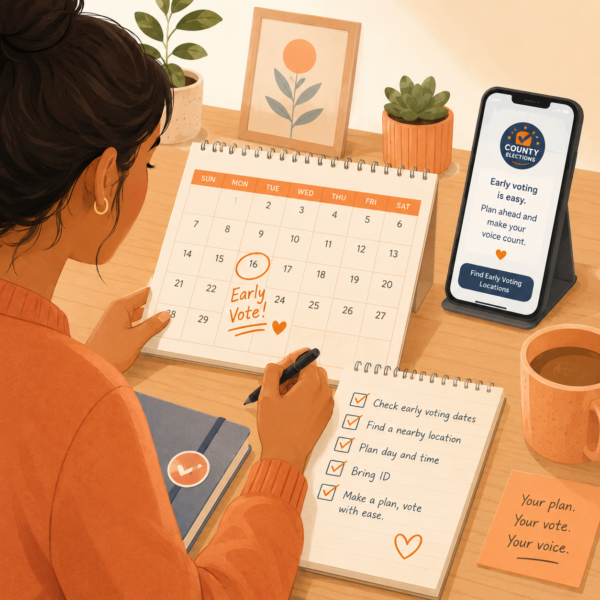 Many early voting campaigns underperform because they treat the message as complete once the office has posted dates and locations. Technically, that may satisfy a notice requirement. Practically, it often leaves too much work for the voter. A voter still has to decide when to go, determine whether the site is convenient, check whether the hours fit a real schedule, and figure out what to bring. If the campaign does not help with those decisions, then the office has informed the public without really helping the public act. The EAC’s voter education content is useful here because it does not stop at “early voting is available.” It prompts election offices to provide dates, location lookup information, hours, and what voters need to bring for in-person voting.
This is where many offices confuse message frequency with message effectiveness. Repeating “vote early” across multiple channels may increase visibility, but visibility alone does not always produce action. The EAC’s social media toolkit shows a more action-oriented model. Its early voting templates pair encouragement with specific behavioral cues such as “Beat the crowds,” “Find your early voting locations,” “Early voting starts today,” and “Today is your last chance to vote early.” Those examples matter because they show how official election messaging can connect the benefit, the timing, and the next step in a single short message.
A stronger campaign therefore treats the voter’s plan as the real objective. The campaign should help the voter answer a short chain of practical questions in order. Is early voting available to me? When does it start and end? Where is the best place for me to go? What time should I go? What do I need to bring? What is my backup plan if my week gets busy. When offices build messages around this planning sequence, early voting stops feeling like an abstract option and starts feeling like a concrete appointment the voter can imagine completing.
Beyond the Ballot: Election Office Communication Strategies for County Clerks, Secretaries of State, and Boards of Election
This article is part of our series on strategic communication for Election Offices, Election Administration Agencies, and Boards of Elections. To learn more and to see the parent article, which links to other content just like this, click the button below.
Define Early Voting Communication as Planning Support, Friction Reduction, and Source-of-Truth Guidance
Election offices communicate more effectively about early voting when they define the job in three parts. First, the message should provide planning support. Second, it should reduce friction. Third, it should direct voters back to a clear source of truth. Those three functions matter more than volume alone because they align communication with the real reasons people do or do not vote early.
Planning support means helping voters decide when and where they will vote before daily life interrupts them. This is one reason official election resources emphasize clear early voting dates, locations, and contact information. The EAC’s editable voter education content presents early voting as part of a broader “how to choose when and where to vote” framework, not as an isolated announcement. That structure is useful because it reflects how voters actually make decisions. They are not only choosing a method. They are choosing a day, a location, a time window, and a level of effort they can realistically manage.
Friction reduction means removing the small points of uncertainty that cause delay. A voter who is missing one detail often postpones the task entirely. That is why election offices should make it easy to find exact hours, location lookup tools, parking or transit information where relevant, and voter ID or document guidance if those rules apply in that jurisdiction. The same principle appears in Can I Vote and NASS’s early voting guidance, which direct voters to state-specific early and absentee voting rules because those rules vary substantially and generic encouragement is not enough.
Source-of-truth guidance matters because early voting campaigns often spread across many channels at once. Voters may see a text alert, a social post, a flyer, a community organization reminder, a radio mention, or a local news story. If those messages do not point back to one official place where dates, hours, locations, and rules can be verified, confusion grows quickly. The Election Assistance Commission’s voter education report found that election offices rely heavily on websites, social media, media outreach, and partnerships with community organizations, which makes source-of-truth discipline especially important. The campaign may appear in many places, but the official answer still needs one clear home.
A campaign built on planning support, friction reduction, and source-of-truth guidance is much more likely to move people because it treats early voting as a practical decision, not just a civic slogan. It helps voters picture themselves completing the task, trust the information they are seeing, and act before Election Day pressure becomes the default.
Frame Early Voting as a Practical Advantage, Not a Generic Reminder
Early voting campaigns are more persuasive when they explain why voting early makes life easier in practical terms, rather than relying on broad civic encouragement alone. Official election resources already point in this direction. The U.S. Election Assistance Commission’s voter education content prompts offices to explain when early voting is available, where voters can find locations, and what they need to bring, while its social media toolkit uses short messages built around convenience, timing, and acting before Election Day pressure takes over.
That means election offices should think carefully about the benefit they are emphasizing. “Vote early” is not always enough by itself. A voter is more likely to respond to a message that connects early voting to a recognizable advantage, such as having more schedule flexibility, avoiding Election Day lines, handling voting before work travel or family obligations interfere, or giving oneself time to solve a problem if a question comes up. This kind of framing stays nonpartisan while still being behavior-oriented. It treats early voting as a planning benefit, not just as an available method.
The strongest framing also matches the moment in the calendar. Before early voting begins, messages should help voters make a plan. On the first day, messages should convert that planning into action. In the middle of the early voting period, messages should reinforce convenience and remind voters that time is still available. Near the end, the message should become more time-specific so procrastination no longer feels safe. The EAC’s social media toolkit reflects this kind of sequencing with sample posts tied to opening day, convenience, and the last chance to vote early.
Election offices should also avoid making early voting sound interchangeable with every other voting message. If every post uses the same general language about civic participation, the public may not understand why early voting deserves immediate attention. A better approach is to distinguish the message clearly. Election Day communication is about being ready for one fixed day. Early voting communication is about taking advantage of a wider window while the voter still has flexibility. That distinction helps the campaign feel timely instead of generic.
Use Immediate Time Cues That Help Voters Act Now
Behavior changes when the message gives people a concrete time cue. “Early voting starts Monday,” “Early voting is open this week,” and “Today is the last day to vote early” all create a stronger sense of action than a standing reminder that early voting exists. The EAC’s social media toolkit uses exactly this kind of timing language, which suggests that official election messaging is most effective when it gives the voter a reason to act in the current window rather than sometime later.
These time cues work best when they are paired with one practical next step. That next step might be checking the site locator, confirming hours, or deciding which day the voter plans to go. A message that gives both a time signal and a simple action is more useful than one that creates urgency without telling the voter what to do next. That aligns with Can I Vote and the NASS early voting page, both of which direct voters to state-specific early voting information because timing, locations, and procedures vary significantly by state.
Emphasize Ease Without Sounding Promotional
Election offices should be careful not to make early voting sound like advertising. The tone should remain public-service oriented, but it can still be encouraging. The message can say, in effect, here is the easier window, here is how to use it, and here is where to verify the details. That kind of language feels practical and credible because it helps the voter make a decision rather than trying to sell the voter on a slogan. Federal voter education guidance from the EAC repeatedly emphasizes practical, plain-language information over broad rhetorical appeals.
Segment the Campaign Around Real Voter Situations
Early voting campaigns become stronger when election offices recognize that not every voter needs the same message. Some voters need a simple reminder because they already know the process. Others need more help because they are first-time voters, recently moved, are balancing long work hours, or are trying to vote around caregiving and transportation constraints. The EAC’s communication resources for election officials specifically advise offices to consider audience needs when developing voter communications, and its voter education report notes that local officials use multiple channels and partnerships to reach different groups of voters.
This does not mean building a separate campaign for every demographic. It means identifying the main decision situations that affect whether someone votes early. One voter may need reassurance that early voting is simple and official. Another may need exact hours and location details. Another may need a message centered on avoiding Election Day scheduling stress. A campaign that acknowledges these different situations is more likely to move people because it feels relevant to real life rather than abstractly informative.
Community partnerships can also make segmentation more effective. The EAC’s voter education report found that election officials work with media, government partners, and community organizations as part of their voter education efforts. That matters because trusted messengers often reach voters who would never seek out the election office website on their own. When those partners share consistent, source-linked early voting information, the campaign gains reach without losing accuracy.
The key is to keep the core message stable even when the framing shifts. Dates, hours, locations, and voter requirements should remain identical across every version. What changes is the entry point. A parent may respond to scheduling convenience. A first-time voter may respond to clear preparation steps. A commuter may respond to location and hour flexibility. The public facts stay the same, but the reason to act can be tailored to the situation. That is fully consistent with the EAC’s guidance to think about audience needs while preserving accurate official information.
Build Messages Around Common Planning Obstacles
Election offices do not need detailed behavioral data to know the obstacles that often delay early voting. People put voting off because they are busy, unsure where to go, uncertain about hours, worried they will forget what to bring, or convinced they will “get to it later.” The EAC’s voter education framework directly addresses several of these obstacles by prompting offices to explain dates, site locations, hours, and required materials.
A practical campaign should therefore address those barriers directly. Instead of only saying that early voting is open, the office can say when the site opens, where to find the nearest location, and what to bring. Instead of only reminding voters that the period ends soon, the office can help them plan a visit around the remaining days and hours. These are small shifts in wording, but they matter because they turn the message into a planning tool rather than a general reminder.
Keep Every Segment Tied to the Official Source of Truth
Segmentation is helpful only if it still routes voters back to one official answer. The more campaign messages circulate through social media, partner organizations, text reminders, and local media, the more important it becomes to give every audience a clear path back to verified information. Can I Vote was created by state election officials specifically to help eligible voters figure out how and where to vote by linking them to trusted state election resources, and the NASS early voting page likewise tells voters to rely on election officials because state laws vary greatly.
That means even highly tailored early voting messages should still point back to the same official page or locator tool. A campaign can vary the framing, but it should not create different factual versions of the rules. The office’s authority comes from making the final answer easy to verify. When every segment of the campaign still strengthens that source-of-truth habit, early voting outreach becomes both more effective and more trustworthy.
Sequence the Campaign So the Message Changes as the Voting Window Changes
 Early voting campaigns perform better when the message evolves with the calendar instead of repeating the same reminder from start to finish. Official election guidance and toolkits already point toward this kind of sequencing. The U.S. Election Assistance Commission’s social media toolkit includes early-voting sample posts tied to the opening of early voting, reminders to find locations, and last-chance messages near the end of the period, while its voter education materials emphasize clear communication of dates, locations, and what voters need to bring.
Before early voting opens, the campaign should focus on planning. This is the moment to help voters decide when they want to go, where they should vote, and what details they need to confirm ahead of time. A useful pre-opening message does not simply say that early voting is coming soon. It helps voters build a concrete plan before daily life crowds the task out. That kind of message is especially important because official voter education resources consistently frame voting information around practical voter decisions rather than abstract awareness alone.
When early voting begins, the campaign should shift from planning language to action language. Opening-day messages work best when they make the opportunity feel immediate and easy to use. The EAC’s toolkit reflects this by pairing timing cues with action-oriented language such as early voting starts today and prompts to find locations. That change in tone matters because once the window is open, the office no longer needs to convince voters that the option exists. It needs to help them act before they slip back into postponement.
Mid-period messaging should focus on reinforcement rather than repetition for its own sake. At this stage, many voters still intend to participate, but they are at risk of delay. The most helpful communication reminds them that time is still available while also narrowing the decision. This is where messages about available days, current hours, and convenient site lookup become especially useful. The EAC’s voter education materials and Can I Vote both emphasize giving voters direct access to location and timing information that reflects their actual jurisdiction, which is what keeps a reminder from feeling generic.
Near the end of the early voting period, the campaign should become more deadline-driven without sounding alarmist. The point is not to create panic. It is to remove the illusion that there is still endless time. Official election social media examples use this approach by highlighting the last day or final opportunity to vote early. That language works because it turns a broad option into a closing window, which is often the cue procrastinating voters need.
This kind of sequencing also helps offices avoid audience fatigue. A campaign that says the same thing every day becomes background noise, even when the information is important. A campaign that changes with the stage of the voting period feels more relevant because the voter can see why the message matters now rather than last week. That is one reason the EAC’s communication resources encourage election officials to consider audience needs and use practical, timely information formats in voter outreach.
Connect Digital Outreach to Real Voter Services on the Ground
An early voting campaign does not succeed when the post performs well online but the voter still arrives confused, uncertain, or unprepared. The communication system has to connect digital outreach with the actual voter service experience. Federal election resources reflect this reality by emphasizing that voters need practical information on locations, hours, and what to bring, and by documenting that election offices rely on websites, social media, media outreach, and partnerships as part of a broader voter education system rather than as isolated channels.
That means every digital push should reinforce the same facts voters will encounter at the voting site. If the social campaign tells people to vote early this week, the website should make it easy to verify the exact hours. If the website emphasizes site lookup, the location details should be accurate and easy to use on mobile. If a reminder tells voters to bring identification or other materials, that guidance should match the actual in-person requirement in that jurisdiction. The EAC’s voter education content is explicit about giving voters the practical information they need, and Can I Vote is structured around directing voters to the official state-specific rules and options that apply to them.
This is also where voter services departments and frontline staff become part of the campaign. A voter who calls with a question, visits the website, or talks to staff at an early voting site should hear the same basic message architecture that appeared in the digital campaign. The office does not need every channel to sound identical, but it does need them to reinforce the same timing, location, preparation, and source-of-truth guidance. The EAC’s voter education report notes that local election officials use a mix of channels and partnerships in their outreach, which makes cross-channel consistency especially important.
Another important connection point is physical experience. Digital messages may convince someone to go vote early, but poor on-the-ground clarity can still undo that progress. If hours are unclear, signs are weak, or staff explanations do not match the website, the campaign loses force. That is why election offices should think of early voting outreach and voter services as one system. Outreach gets the voter moving. Voter services confirm that the effort was worthwhile and manageable. The same logic appears in official voter education design guidance, which encourages materials that are clear, usable, and easy to understand across formats.
Community partners matter here as well. The EAC’s voter education report found that election offices work with media, government partners, and community organizations in their voter education efforts. Those partners can expand the reach of an early voting campaign, but only if they are reinforcing the office’s official facts rather than creating their own simplified versions of locations, deadlines, or requirements. That is why every partner-facing message should still point back to the office’s source of truth.
The most effective early voting campaigns therefore behave less like short-term promotions and more like coordinated service systems. They help the voter decide, remind the voter at the right moment, direct the voter to official details, and make sure the real-world experience matches the promise of the message. When those pieces align, early voting communication is much more likely to produce action instead of just attention.
Promoting Long-Term Election and Voter Confidence Through Effective Early Voting Communication
Clear early voting communication does more than increase awareness during one election cycle. It helps voters develop a more reliable understanding of how and when they can participate, which makes future turnout behavior easier to sustain. The U.S. Election Assistance Commission’s voter education report found that election officials increasingly treat voter education as a significant part of their responsibilities and use websites, social media, media outreach, and partnerships to inform voters and build trust.
That long-term effect matters because many early voting barriers are recurring rather than one-time. Voters forget dates, rely on outdated assumptions, confuse early voting with absentee voting, or simply postpone the decision until Election Day pressure takes over. When election offices repeat a stable, practical message cycle around early voting windows, locations, hours, and preparation steps, they reduce the chance that each election feels like a new learning process. The EAC’s editable voter education content is built around exactly these kinds of practical details, prompting offices to explain when early voting is available, where to find locations, and what voters need to bring.
Operationally, stronger early voting communication also reduces preventable strain on election offices. When voters can quickly find official location information, understand the voting window, and prepare correctly before leaving home, offices tend to face fewer repetitive inquiries and fewer last-minute confusion points. This is one reason official election resources repeatedly direct voters back to trusted state and local election information rather than generic reminders alone. Can I Vote, created by state election officials, is specifically designed to help eligible voters figure out how and where to vote by linking them to official state election resources.
Effective early voting campaigns also strengthen confidence because they make the process feel organized and navigable. A voter who sees the same dates, hours, and source-of-truth guidance across the website, social posts, partner outreach, and voter service channels is less likely to wonder whether the information is current or whether the office is improvising. The EAC’s communications resources for new election officials emphasize considering audience needs and using prepared communication materials, which supports this kind of stable, repeatable public information system.
There is also a longer-term equity benefit. When early voting information is structured in plain language, easy to scan, and tied to official location and timing tools, it becomes more usable for voters who are balancing work, caregiving, transportation limits, or lower familiarity with election procedures. That is one reason official voter education guidance emphasizes practical usability rather than broad encouragement alone. The clearer the path looks, the more likely the voter is to act before barriers harden into nonparticipation.
Over time, this kind of campaign discipline helps election offices build a more durable turnout pattern. Instead of treating early voting as a side option that must be reintroduced from scratch every cycle, the office can make it a familiar, well-understood part of the local voting culture. That is especially valuable because state rules and procedures vary, and official guidance consistently pushes voters back to jurisdiction-specific election information rather than generic national assumptions.
Strategic Communication Support for Election Offices and Voter Services Departments
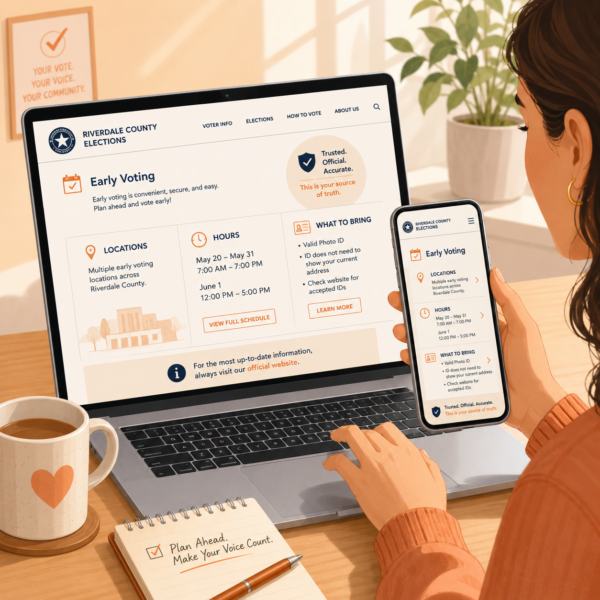 Election offices often have accurate early voting information, but they do not always have a campaign structure that turns that information into action. A page may list dates and locations correctly while still leaving voters unsure when to go, what to bring, or how to fit early voting into a real schedule. A social campaign may generate visibility while failing to connect that visibility to a concrete plan. The communication challenge is not just publishing the facts. It is sequencing and organizing them so voters can act on them easily.
That is why agencies often choose to partner with an external resource like Stegmeier Consulting Group (SCG) to strengthen communication systems. Stegmeier Consulting Group supports election offices, boards of elections, clerks, and voter services departments by helping them build practical campaign frameworks for early voting timelines, location messaging, source-of-truth content, social media sequencing, partner-facing materials, and voter service coordination. Those needs align closely with official election communication guidance that emphasizes audience-focused communication, usable voter education materials, and prepared, multi-channel public information.
SCG can also help offices identify where voters are most likely to hesitate, structure reminder campaigns that move from awareness to planning to action, and connect digital outreach with the on-the-ground early voting experience so the public encounters one coherent system. These practices help reduce confusion, lower unnecessary staff burden, and improve the likelihood that voters use the early voting window while they still have time and flexibility.
Conclusion
Early voting campaigns move people when they do more than announce availability. They work when election offices help voters make a plan, reduce small points of uncertainty, and connect every reminder back to one clear official source of truth. Federal voter education resources from the U.S. Election Assistance Commission consistently emphasizes practical voter guidance on dates, locations, hours, and what to bring, while official tools like Can I Vote reinforce the importance of directing voters to jurisdiction-specific information rather than relying on generic encouragement.
Clear early voting communication matters at every stage of the window. Before voting begins, voters need planning support. Once the period opens, they need action-oriented reminders that make the opportunity feel immediate and manageable. As the window narrows, they need stronger time cues that remove the temptation to delay. The Election Assistance Commission’s social media toolkit reflects this kind of sequencing with early voting messages tied to opening-day reminders, convenience, location lookup, and last-chance urgency.
The goal is not simply to tell people that early voting exists. The goal is to help them use it while they still have time, flexibility, and confidence in the process. Election offices and voter services departments that communicate with that level of discipline reduce confusion, lower avoidable staff burden, and make early voting feel like a practical and trustworthy option rather than just another election message. The EAC’s voter education report supports this broader view by showing that local election officials increasingly use coordinated, multi-channel voter education to inform voters and build trust.
SCG’s Strategic Approach to Communication Systems
Align your agency’s messaging, processes, and public engagement strategies
Election offices build confidence when every public touchpoint reinforces the same early voting timeline, the same preparation steps, and the same source of truth. Stegmeier Consulting Group (SCG) helps voter-facing organizations create coordinated communication systems by developing early voting campaign frameworks, location and hour messaging, reminder sequencing, partner-facing content, source-of-truth pages, and voter service language that stay aligned from initial outreach through arrival at the voting site.
SCG also supports governance and operational coordination so websites, social posts, community partner materials, staff scripts, FAQs, and voter assistance channels work together as one coherent public information system. Use the form below to connect with our team and explore how a strategic communication framework can elevate your agency’s impact.