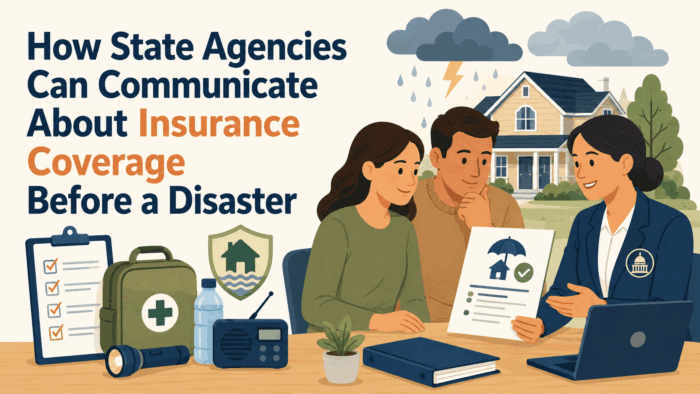
How State Agencies Can Communicate About Insurance Coverage Before a Disaster
The moment a hurricane makes landfall, a wildfire breaches a neighborhood boundary, or floodwaters begin to rise is the worst possible time for a policyholder to discover that their insurance coverage does not protect them the way they assumed. That discovery, made under the pressure of immediate loss and physical displacement, is not just financially devastating. It is often the result of a preventable communication failure: the state agency that regulates insurance in that jurisdiction did not reach the policyholder before the disaster with the specific information they needed to make informed choices about their coverage.
Pre-disaster insurance education is among the most protective and least practiced forms of consumer communication available to state insurance departments. It is protective because it reaches consumers at a moment when they can still act, before any loss has occurred and while policy choices can still be made or changed. It is underpracticed because the urgency of pre-disaster communication is invisible until after a disaster reveals the coverage gaps that better preparation might have prevented. Departments that cannot point to a specific storm season’s damage and say our policyholders were better prepared because of what we communicated before that season have difficulty justifying the investment in pre-disaster education against the immediate demands of post-disaster response.
This article addresses how state agencies can communicate about insurance coverage before a disaster in ways that actually change what policyholders understand and what they do about it. It covers the key topics that pre-disaster insurance education must address, including homeowners insurance scope and exclusions, flood coverage as a separate requirement, the distinctions between replacement cost and actual cash value, how deductibles work and what hurricane or wind deductibles specifically mean, the importance of maintaining a current home inventory, waiting periods that prevent last-minute coverage purchases, and how to conduct a policy review before disaster season begins. Throughout, the emphasis is on reaching policyholders while they can still act.
Why Pre-Disaster Communication Is Different From General Insurance Education
 Pre-disaster insurance communication has a specific urgency and a specific audience that distinguishes it from general consumer insurance education. The urgency is geographic and seasonal: homeowners in hurricane-prone coastal areas face a defined storm season during which their coverage gaps are most likely to matter. Homeowners in wildfire-prone regions face a defined fire season. Homeowners in flood plains face seasonal and weather-driven flood risk. The timing of pre-disaster communication should reflect these seasonal and geographic realities, reaching policyholders before the season of greatest risk rather than continuously throughout the year without seasonal emphasis.
The specific audience for pre-disaster communication is homeowners in risk-prone areas, and the communication should reflect that specificity. A general consumer insurance guide that describes how homeowners insurance works is useful in many contexts but may not address the specific coverage questions most relevant to a homeowner who faces a specific peril in their specific geographic area. Pre-disaster communication that is tailored to the specific risks a geographic area faces, and that addresses the specific coverage questions that arise most commonly in the aftermath of those specific perils, is more useful to the targeted audience than general insurance education.
The actionability requirement of pre-disaster communication is also different from that of general insurance education. General insurance education can build awareness and understanding over time. Pre-disaster communication must motivate specific actions: reviewing current policies, calling agents to discuss coverage adequacy, purchasing additional coverage where needed, and conducting home inventories. Communication that builds awareness without motivating action does not serve the pre-disaster preparation goal. Every element of pre-disaster insurance communication should be designed to move policyholders toward a specific protective action.
Protecting the Public Interest: Communication Strategies for Financial Regulation, Insurance, and Consumer Protection Agencies
This article is part of our series on strategic communication for Financial Regulatory Agencies, State Insurance Departments, and Consumer Protection Agencies. To learn more and to see the parent article, which links to other content just like this, click the button below.
Homeowners Insurance Scope and Key Exclusions
Most homeowners have significant gaps between what they believe their homeowners insurance covers and what it actually covers. These gaps are rarely the result of deceptive selling. They are the result of the inherent complexity of insurance policies, the tendency of policyholders to assume that a comprehensive-sounding product name means comprehensive coverage, and the failure of insurers, agents, and regulators to communicate proactively about the limits of coverage before a claim reveals those limits.
Pre-disaster communication about homeowners insurance scope should begin with the coverage that is included in a standard policy: fire and smoke damage, wind damage in most regions, theft and vandalism, liability for injuries on the property, and additional living expenses while the home is uninhabitable due to a covered loss. That baseline establishes what homeowners insurance does cover before the communication addresses what it does not.
The exclusions that matter most for disaster preparedness should be addressed specifically and prominently. Flood damage is not covered by standard homeowners insurance under any circumstances. Sewer or drain backup may be excluded or may require an endorsement. Earthquake damage is typically excluded in standard policies and requires separate coverage. Wind damage exclusions or limitations may apply to certain types of structures or in certain coastal areas depending on the policy form and the jurisdiction. Each of these exclusions has the potential to leave a disaster-affected homeowner with a major uninsured loss, and pre-disaster communication should name them clearly rather than leaving policyholders to discover them in the aftermath of a loss.
The language of exclusions in insurance policies is often technical and counterintuitive. A policy that says it covers direct physical loss but then lists a series of exclusions may not clearly communicate to the average policyholder that flood damage, even when it follows directly from a hurricane that the policy does cover, is not a covered loss if the flood itself is the proximate cause. Pre-disaster communication should translate these technical coverage structures into plain language that policyholders can understand before they face the consequences of the exclusions: your homeowners policy pays for wind damage to your roof and the resulting water intrusion, but it does not pay for flooding from storm surge or rising water, regardless of whether that flooding was caused by the same storm.
Flood Coverage as a Separate Requirement
Flood insurance is perhaps the most consequential coverage gap that pre-disaster insurance education needs to address, because flooding is the most common and most costly type of disaster damage in the United States, and because homeowners in flood-prone areas disproportionately believe, incorrectly, that their homeowners insurance covers flood damage. The failure to communicate this distinction clearly before flood events occur consistently results in policyholders discovering their uncovered exposure after their homes have already been damaged or destroyed.
Pre-disaster communication about flood coverage should explain clearly that standard homeowners insurance does not cover flood damage under any circumstances, that separate flood insurance must be purchased through the National Flood Insurance Program or through private flood insurance carriers, and that flood insurance has a thirty-day waiting period between purchase and the effective date of coverage for most new policies, which means that it cannot be purchased once a storm or flood event is already developing.
The thirty-day waiting period deserves specific emphasis in pre-disaster communication because it is both one of the most important practical facts about flood insurance and one of the most poorly understood. A homeowner who sees a storm developing and calls to buy flood insurance is learning too late. The coverage they buy will not be in effect when the storm arrives. Pre-disaster communication that explains this waiting period clearly, and that emphasizes that flood insurance must be in place well before storm season begins in order to protect against that season’s storms, motivates the kind of advance action that protects homeowners.
The National Flood Insurance Program’s coverage limits and what they do and do not cover are also important elements of pre-disaster flood insurance education. The program covers direct physical loss to the structure and its contents up to specific limits. It does not cover additional living expenses while the home is uninhabitable. It does not cover landscaping, decks, patios, or other exterior improvements. Homeowners in areas of high flood risk who have significant equity in their homes may find that the program’s coverage limits are insufficient to cover their full exposure, and pre-disaster communication should address the option of excess flood coverage through private markets for those situations.
Replacement Cost Versus Actual Cash Value
The distinction between replacement cost coverage and actual cash value coverage is one of the most consequential and least understood distinctions in homeowners insurance. A policyholder who believes they have enough coverage to rebuild their home but who actually has actual cash value coverage rather than replacement cost coverage may discover after a total loss that their coverage pays for their home’s depreciated value, not the current cost to rebuild it, which in many markets is substantially higher.
Pre-disaster communication should explain this distinction in plain language with a concrete example. If your ten-year-old roof is destroyed in a storm, replacement cost coverage pays what it costs to put a new roof on your house today. Actual cash value coverage pays that amount minus the depreciation that has accumulated over ten years, which might be forty or fifty percent of the replacement cost. For homeowners whose policies include actual cash value coverage rather than replacement cost coverage, the gap between what they think their insurance will pay and what it actually pays can be substantial.
Extended replacement cost and guaranteed replacement cost endorsements, which provide additional coverage above the policy limit if rebuild costs exceed the limit at the time of loss, are important coverage options that pre-disaster communication should describe for homeowners whose rebuild costs may have increased significantly since they last reviewed their coverage limits. Construction costs fluctuate, and a homeowner who purchased coverage several years ago based on the then-current rebuild cost estimate may find their coverage inadequate if rebuild costs have risen substantially since that time.
Coverage adequacy review is a specific action that pre-disaster communication should motivate, particularly for homeowners who have not updated their coverage in several years or who have made significant improvements to their home since their last policy review. A homeowner who renovated their kitchen and added a bathroom but did not update their insurance coverage limits is underinsured. Pre-disaster communication that specifically recommends an annual coverage adequacy review, with guidance on how to discuss rebuild cost estimates with an insurance agent, motivates a specific protective action with a clear benefit.
Deductibles and Disaster-Specific Deductibles
Standard homeowners insurance deductibles are familiar to most policyholders: the amount they must pay out of pocket before their insurance pays. But disaster-specific deductibles, particularly hurricane deductibles and wind or hail deductibles that are common in many coastal and storm-prone states, are significantly less well understood and can result in policyholders facing much larger out-of-pocket costs after a storm than they anticipated when they purchased their policy.
Hurricane and windstorm deductibles are typically expressed as a percentage of the insured value of the home rather than as a fixed dollar amount. A two percent wind deductible on a home insured for four hundred thousand dollars means the policyholder pays the first eight thousand dollars of any wind damage claim before their insurance pays anything. A five percent hurricane deductible on that same home means the policyholder pays the first twenty thousand dollars out of pocket. These amounts are dramatically different from the typical fixed dollar deductibles that policyholders associate with the term deductible, and policyholders who are not aware of how percentage deductibles work may be financially unprepared for the out-of-pocket portion of a significant storm loss.
Pre-disaster communication should explain how percentage deductibles work, how to calculate what a specific deductible percentage means in dollar terms for a specific home value, and what triggers the hurricane or wind deductible rather than the standard deductible. In some states, the hurricane deductible is triggered by any storm that is officially designated as a hurricane at the time of the loss. In others, the trigger is a named storm. In others, it applies to any wind damage above a certain wind speed. These trigger conditions determine whether the larger deductible applies to a specific storm, and policyholders should understand what triggers their specific policy’s wind or hurricane deductible.
The Home Inventory as a Pre-Disaster Protective Step
A home inventory is a documented record of a household’s personal property, including descriptions of items, their estimated value, and photographic or video evidence of their existence and condition. A current home inventory is one of the most practical protective steps a homeowner can take before a disaster, because it provides the documentation needed to support a personal property insurance claim after a loss and reduces the likelihood that valuable items will be overlooked or undervalued in the claims process.
Pre-disaster communication about home inventories should explain why they matter, what they should include, how to create one efficiently, and where to store it so that it is accessible after a disaster even if the home itself is damaged or destroyed. The explanation of why a home inventory matters should be specific: after a disaster, you will need to document what you lost to support your insurance claim. Doing that documentation from memory, after the stress of a major loss, in the middle of the claims process, is significantly harder than doing it in advance and refers to a record you prepared when you had time to be thorough.
The digital tools available for creating home inventories, including smartphone apps that can photograph items, record descriptions, and store the resulting inventory in cloud storage, have made the process significantly easier than the manual paper inventory process that made home inventories seem burdensome to many policyholders. Pre-disaster communication that mentions these tools by category, without endorsing specific commercial products, and that explains how cloud storage makes the inventory accessible even if the home is destroyed, removes a practical barrier that may have discouraged policyholders from completing an inventory in the past.
The content of a home inventory should include room-by-room documentation of furniture, electronics, appliances, clothing, collectibles, artwork, jewelry, and any other items of significant value, with photographs or video of each item and, for high-value items, receipts or appraisals that support the claimed value. Pre-disaster communication should guide policyholders through what to document and should specifically note that floaters or scheduled personal property endorsements may be needed for items like jewelry, artwork, or collectibles that exceed the standard policy limits for those categories.
Waiting Periods and the Timing of Coverage Purchases
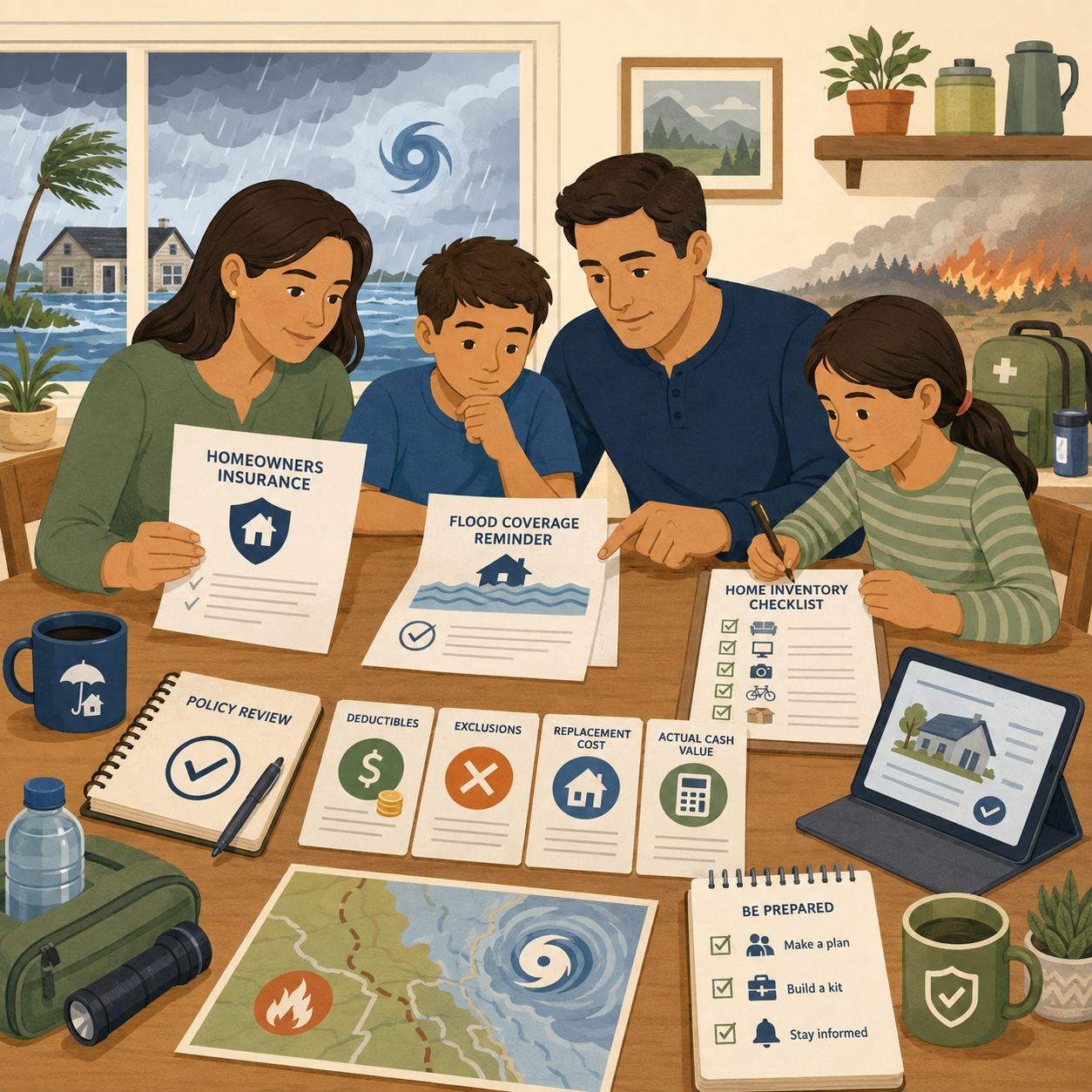 The timing constraints on insurance coverage purchases are among the most practically important pieces of pre-disaster insurance information, and they are consistently communicated too late to be useful to the policyholders who most need them. The thirty-day waiting period for new flood insurance policies, similar waiting periods that some states impose on certain property coverages before storm season, and the general principle that coverage cannot be purchased after a loss has occurred or a storm is already imminent are facts that must reach policyholders well before storm season to serve any protective purpose.
Pre-disaster communication about waiting periods should be explicit about the specific waiting periods that apply in the jurisdiction and to the specific coverage types most relevant to the disaster risks in the region. For jurisdictions where flood insurance waiting periods apply, the communication should state clearly how many days before coverage becomes effective, what that means for policyholders who have not yet purchased flood coverage as the season approaches, and what options if any are available for policyholders who are closing on a home purchase during a period of elevated flood risk.
The general principle that insurance must be purchased before a loss rather than in response to one should be communicated as a foundational concept of disaster preparedness insurance education. Policyholders who do not understand this principle may believe that they can purchase additional coverage when they see a storm developing, and discovering the waiting period limitation when they try to do so is both financially harmful and damaging to their trust in the insurance system. Pre-disaster communication that explains the waiting period principle early gives policyholders the conceptual framework they need to understand why advance preparation matters.
Conducting a Policy Review Before Disaster Season
The most actionable element of pre-disaster insurance communication is a recommendation to conduct a specific policy review before the relevant disaster season begins. This recommendation should be specific about what the review should cover, how to conduct it, and who to involve. A vague recommendation to review your coverage is less motivating and less useful than a specific guided review process that walks policyholders through the questions they should be asking about their current coverage.
A pre-disaster policy review should cover: whether the current dwelling coverage limit is sufficient to rebuild the home at current construction costs; whether the personal property coverage limit reflects the current value of the household’s contents; whether flood insurance is in place for homeowners in any area with flood risk; whether the deductible amounts are understood and financially manageable; whether there are coverage gaps for specific risks such as sewer backup or equipment breakdown that are not covered under the standard policy; and whether high-value items such as jewelry, artwork, or collectibles need separate scheduling.
The recommendation to conduct this review with a licensed insurance agent gives the review a professional context that many policyholders need. A homeowner who does not feel qualified to evaluate their own coverage needs benefits from the assurance that their agent, who is subject to regulatory oversight and professional standards, can help them identify and address coverage gaps. The pre-disaster communication should be clear that agents are required to be licensed, that policyholders can verify their agent’s license through the insurance department’s website, and that the conversation about coverage adequacy is a normal and appropriate part of the agent-policyholder relationship.
Reaching Policyholders Before the Season
The communication channels for pre-disaster insurance education must be activated before the disaster season, not during it. The effectiveness of pre-disaster insurance communication is entirely dependent on reaching policyholders while they still have time to act. A policyholder who receives information about flood insurance waiting periods the week before a major hurricane makes landfall has received useful information too late to act on it. A policyholder who receives that same information in March, before hurricane season begins in June, can take meaningful protective action.
The timing of pre-disaster insurance communication should be calibrated to the specific disaster seasons relevant to the jurisdiction. For hurricane-prone states, the communication campaign should be activated in late winter or early spring, before the June start of the official hurricane season, to give policyholders maximum time to purchase flood insurance, update coverage limits, and complete home inventories. For wildfire-prone states, the communication should be activated before the dry season that creates fire risk. For states with significant flood risk from spring snowmelt or rainfall, the communication should precede those seasonal events.
Distribution channels for pre-disaster insurance communication should reach homeowners through multiple pathways. The insurance department’s own channels, including its website, social media, and direct email, reach policyholders who are actively engaged with the department. Partner channels, including insurance agents and agencies who can distribute pre-disaster checklists to their policyholders, community organizations in risk-prone areas, local emergency management agencies that are already communicating about disaster preparedness, and local media that covers storm season preparation, extend the reach to homeowners who are not actively engaged with the department’s own channels.
Special Coverage Topics for Specific Disaster Types
Different disaster types generate different coverage questions, and pre-disaster insurance education is most effective when it addresses the specific coverage issues relevant to the disasters the jurisdiction faces. For hurricane-prone states, key topics include windstorm and hurricane deductibles and how they are triggered, the distinction between wind damage and flood damage coverage for storm surge events, mandatory evacuation expense coverage, and the availability and adequacy of flood insurance. A homeowner who understands before hurricane season that their wind deductible applies to any storm designated as a hurricane, and not just catastrophic storms, is better prepared to manage the financial impact of a storm loss than one who discovers this distinction after filing a claim.
For wildfire-prone states, the specific coverage topics that pre-disaster communication should address include whether the policy covers smoke damage as well as direct fire damage, what the policy pays for additional living expenses during evacuation periods when the home has not been directly damaged, how defensible space requirements affect coverage eligibility or premiums, and how the rebuild process works for total losses where local government reconstruction requirements may drive rebuild costs above the original coverage estimate. Policyholders in wildfire-risk areas who do not know that evacuation expenses may be covered, or that smoke damage is covered separately from fire damage, may not file claims for losses they are entitled to recover.
For flood-prone states, pre-disaster communication should address the specific coverage limits and exclusions in the National Flood Insurance Program compared to private flood insurance, the coverage status of finished basements and their contents, and the absence of additional living expense coverage in most flood insurance policies that leaves displaced homeowners needing to fund temporary housing from other sources. These specifics are the ones that most commonly surprise flood-affected policyholders who assumed their flood insurance was more comprehensive than it is.
Communicating About the Claims Process Before a Claim Is Needed
Pre-disaster insurance education should include communication about what the claims process looks like and what policyholders should do in the immediate aftermath of a loss. Homeowners who know what steps to take before they are in the emotional and practical chaos of the post-disaster period are significantly better positioned to navigate the claims process effectively than those who encounter the process for the first time while simultaneously managing a major personal crisis.
Pre-disaster claims process communication should cover who to contact first after a loss, what documentation to prepare while waiting for the adjuster, how to protect the property from further damage without waiving coverage for the original loss, how to document the damage photographically before any cleanup or repair begins, what to do if displaced and needing immediate funds for temporary housing, and how to understand and respond to the adjuster’s estimate once it is provided. Each of these steps is significantly easier to learn and remember before a loss than to navigate for the first time during one.
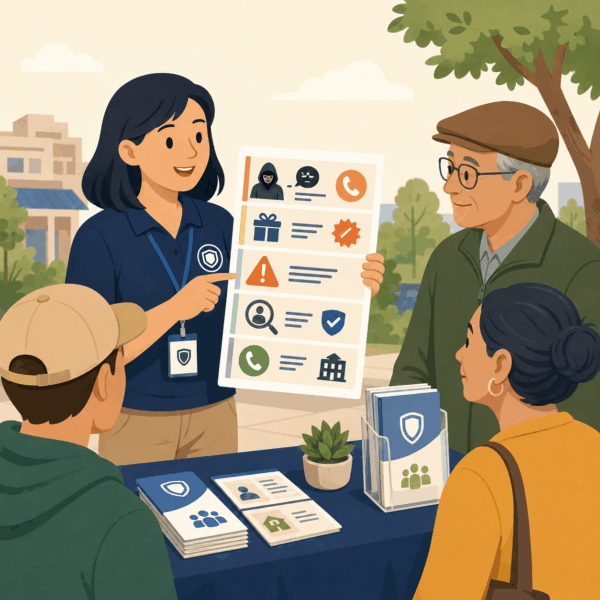
Pre-disaster communication about the claims process should also address the warning signs of claims-related fraud that targets disaster victims: contractors who solicit business immediately after a storm with unusually low bids and pressure to sign immediately, assignment of benefits agreements that transfer the policyholder’s rights to the contractor, and unlicensed public adjusters who promise to maximize claims in exchange for a percentage of the settlement. These predatory actors specifically target the post-disaster period when policyholders are most vulnerable and least equipped to evaluate the legitimacy of the offers they receive. Pre-disaster consumer protection communication and pre-disaster insurance education are natural partners that should be delivered together as part of a comprehensive disaster preparedness program.
Measuring Pre-Disaster Communication Effectiveness
The effectiveness of pre-disaster insurance communication is most meaningfully measured by outcomes that reflect actual policyholder behavior: flood insurance purchase rates in flood-risk areas, the frequency with which policyholders report having conducted a coverage review with their agent before storm season, the proportion of disaster-affected policyholders who have a home inventory at the time of their claim, and the rate at which policyholders who experienced a disaster report having understood their coverage before the event. These behavioral measures are more meaningful than measures of awareness alone, because awareness that does not produce protective action does not reduce coverage gaps.
Post-disaster consumer surveys, conducted in partnership with claims departments and consumer assistance staff who interact with policyholders after a major event, can identify the specific coverage gaps that were most prevalent and the specific pre-disaster information that would have been most useful. These surveys are an important quality control mechanism for pre-disaster communication programs, because they ground the program’s content in the actual experience of policyholders who faced the disasters the program is designed to prepare for. An agency that learns from each disaster season which communication investments most improved policyholder preparedness and which gaps remain is an agency that continuously improves its pre-disaster communication over time.
The measurement framework for pre-disaster communication effectiveness should distinguish between communication reach, how many policyholders received the message, and communication impact, how many took protective action as a result. High reach with low impact suggests that the message content or motivation was inadequate. Low reach with high impact among those reached suggests that the distribution channels need to be expanded. Both dimensions should be measured and acted on, because reach without impact and impact without reach both represent incomplete communication investments.
Strategic Communication Support for Financial and Insurance Regulators
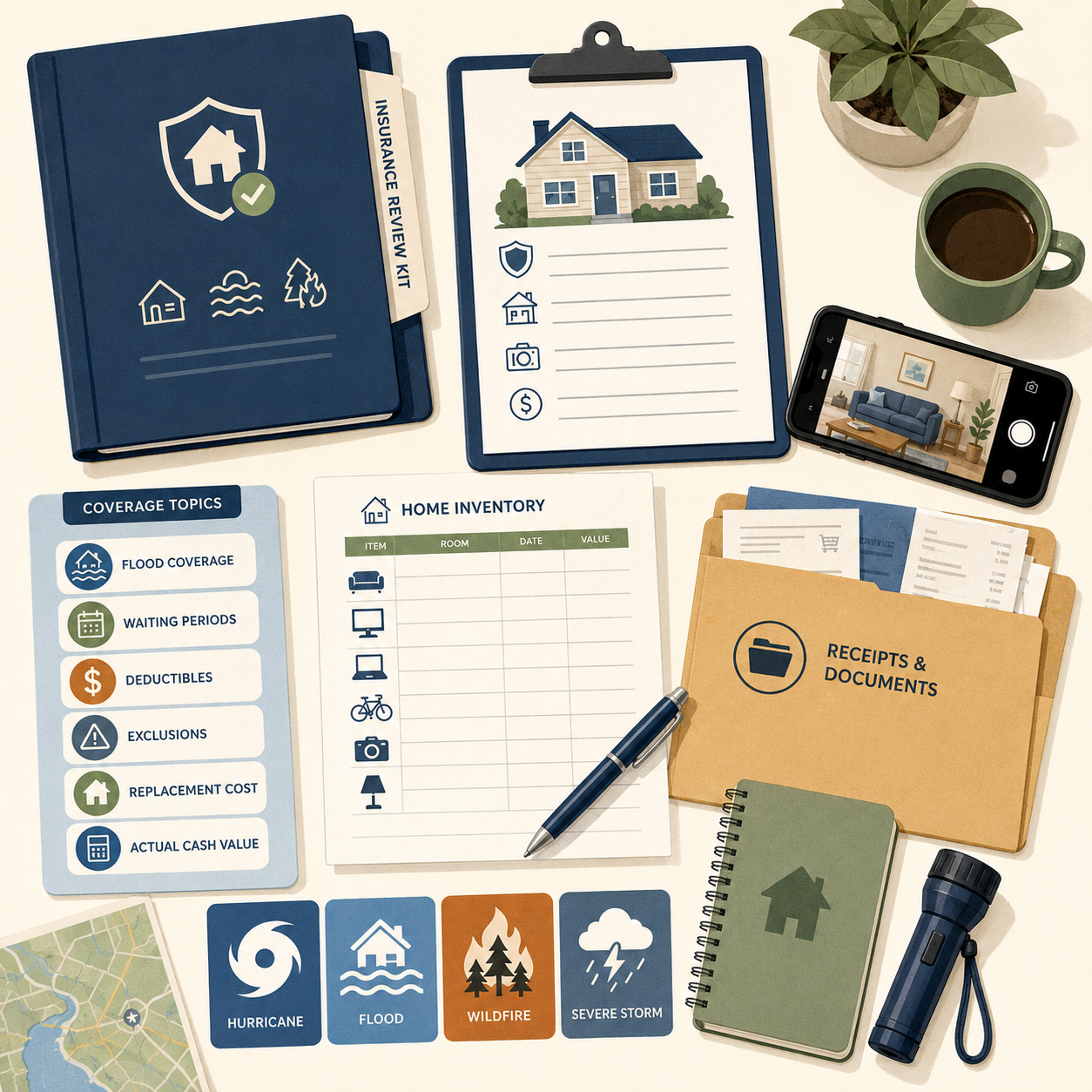 Preparing policyholders before disaster season requires communication that does more than remind consumers to review their insurance. Effective pre-disaster education helps people understand the coverage decisions, documentation, and preparations that can affect their ability to recover after a loss. Because many important insurance decisions must be made before a disaster occurs, communication timing and clarity are critical to helping policyholders act while they still have an opportunity to protect themselves.
Successful pre-disaster insurance communication combines seasonal planning, audience segmentation, plain-language education, trusted partner networks, timely reminders, and ongoing evaluation. Different policyholders face different risks and may need different information, whether they are considering flood coverage, reviewing deductibles and coverage limits, documenting their property, or preparing to communicate with their insurer after a loss. Reaching consumers repeatedly through trusted channels also helps build insurance literacy over time rather than relying on a single campaign immediately before a disaster.
Developing this type of communication system requires specialized expertise in campaign strategy, audience research, seasonal communication planning, plain-language content development, channel selection, partner engagement, and communication evaluation. Many financial and insurance regulators choose to partner with external communication specialists such as Stegmeier Consulting Group (SCG) because these capabilities complement the agency’s insurance expertise while providing the strategic communication knowledge needed to turn complex coverage considerations into timely, actionable information for policyholders.
Working alongside state insurance departments, SCG develops pre-disaster insurance communication strategies tailored to the risks, audiences, and seasonal conditions facing each jurisdiction. Support may include developing campaign themes and timing strategies, creating plain-language educational materials, identifying priority policyholder segments, activating communication through insurance professionals and community partners, developing seasonal content calendars, and establishing measurement frameworks that assess whether communication is reaching consumers and encouraging protective actions.
Because effective preparation develops over time, SCG helps agencies build communication processes that extend beyond a single disaster season. Repeatable campaign workflows, content planning practices, partner communication protocols, and performance measurement enable insurance departments to refine messaging based on what consumers understand, where communication gaps remain, and which outreach channels produce meaningful engagement. This creates a more durable foundation for improving insurance literacy from one season to the next.
The objective is to create a communication environment in which policyholders have the information they need before a disaster forces them to rely on their coverage. By making insurance education timely, understandable, and actionable, state insurance departments can help consumers make informed coverage decisions, prepare for potential losses, and reduce preventable gaps between what policyholders expect their insurance to cover and what their policies actually provide.
Future Trends in Pre-Disaster Insurance Communication
The risk landscape for homeowners is shifting in ways that make pre-disaster insurance education more important and more complex than it has historically been. Climate change is producing more frequent and more severe weather events in regions that were previously considered lower-risk. Insurance markets are responding to increasing loss experience with coverage changes, premium increases, non-renewals, and market exits that change the coverage landscape for policyholders in affected areas. State agencies that communicate proactively about these market changes, alongside the coverage education that has always been part of pre-disaster preparation, are serving policyholders in a more complete and more honest way than those that focus only on stable market conditions.
Digital tools for policyholders are expanding the options for engaging homeowners in pre-disaster insurance preparation. Interactive coverage adequacy calculators, mobile apps that guide homeowners through the home inventory process, and digital platforms that allow policyholders to compare their current coverage against the specific risks in their geographic area are all tools that state agencies can promote as part of their pre-disaster insurance education. The agency’s role in this environment is to be a trusted source of guidance about what tools are available and what coverage decisions they should support.
Conclusion
Pre-disaster insurance communication is one of the clearest opportunities for a state insurance department to prevent consumer harm before it occurs. A policyholder who understands coverage limits, deductibles, exclusions, flood risk, documentation requirements, and the importance of reviewing a policy before disaster season is in a stronger position to make informed decisions when those decisions can still affect their ability to recover.
The value of this communication is ultimately measured not by the number of campaign materials distributed, but by the preparation it enables. When agencies provide consumers with relevant information through trusted channels and at the moments when they are most able to act, general insurance awareness can become meaningful preparation. That preparation strengthens consumer resilience and supports the broader consumer protection mission of state insurance departments.
Stegmeier Consulting Group’s Strategic Approach to Communication Systems
Align your pre-disaster insurance communication with the specific coverage decisions policyholders need to make before storm season begins.
State insurance departments need pre-disaster communication that reaches policyholders before the relevant disaster season, explains the specific coverage gaps and options most relevant to their geographic risk, motivates specific protective actions like flood insurance purchase and coverage review, and uses the distribution channels that actually reach homeowners in risk-prone areas. SCG helps departments develop pre-disaster insurance education that changes what policyholders understand and what they do before disaster strikes.
Use the form below to connect with our team and explore how a more effective pre-disaster insurance communication program can reduce coverage gaps and improve policyholder outcomes in the aftermath of the disasters your state faces.