
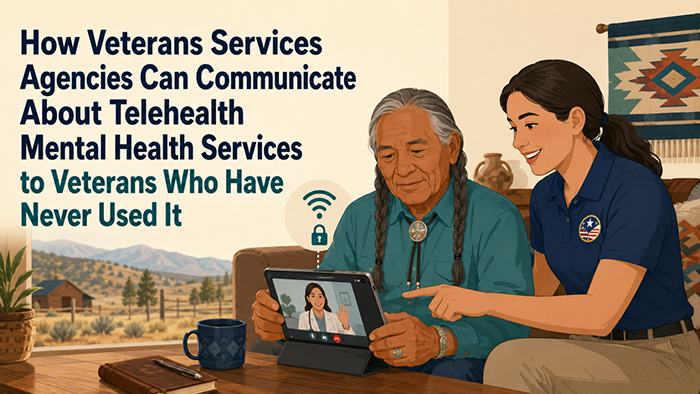
How Veterans Services Agencies Can Communicate About Telehealth Mental Health Services to Veterans Who Have Never Used It
The expansion of telehealth as a mental health service delivery modality has fundamentally altered the access equation for veteran mental health care, and it has done so faster than communication about that alteration has reached the veterans who stand to benefit most from it. VA telehealth mental health services now encompass individual therapy, group therapy, psychiatric medication management, peer support, and crisis support, all accessible through video or telephone platforms without requiring a veteran to travel to a VA medical center or wait for an available appointment at a geographically distant clinical facility. For veterans in rural areas, for veterans with transportation limitations, for veterans whose service-connected conditions make travel to medical facilities physically or psychologically difficult, and for veterans who would engage with mental health services if the access barrier were lower but who will not go to the lengths required by traditional in-person care, telehealth represents a transformation in what is possible.
Yet the population of veterans who have never used telehealth mental health services is large and demographically diverse, and its members have not avoided the service because they have assessed it and found it wanting. Many of them have not engaged because they do not know the service exists, or because they hold misconceptions about what it involves, or because they have specific concerns about privacy, technology, or the quality of care that accurate information could address, or because they face genuine practical barriers including inadequate broadband access that require more than communication to resolve. Each of these different reasons for non-engagement requires a different communication approach, and treating the entire non-engaged population as if they share a single barrier produces communication that is effective for some veterans and irrelevant to others.
This is the central communication challenge that veterans services agencies face in promoting telehealth mental health services: the population of non-engaged veterans is not homogeneous, and effective communication requires understanding the specific barriers that characterize different segments of that population and designing communication that addresses those specific barriers rather than the abstract barrier of never-use. A veteran who has not engaged because they do not know telehealth is available needs awareness communication. A veteran who knows telehealth is available but believes it is inferior to in-person care needs evidence-based communication that addresses the quality concern. A veteran who has concerns about clearance implications of telehealth mental health records needs accurate policy communication. A veteran who lacks reliable broadband access needs information about telephone-based alternatives and community access points. These are four different communication tasks requiring four different communication designs.
Veterans services agencies that develop the analytical capability to identify which barriers are prevalent in their specific veteran communities, and that design targeted communication for each prevalent barrier, will be substantially more effective at expanding telehealth mental health engagement than agencies that produce generic telehealth awareness communications without barrier-specific differentiation. This article provides the analytical framework and the communication design guidance needed to develop that capability, covering the full landscape of barriers that prevent never-users from engaging, the communication principles that work across all of them, the specific message designs that address each barrier type, the channels that reach non-engaged veterans most effectively, and the organizational practices that sustain effective telehealth mental health communication over time.
The goal of this communication investment is ultimately not higher telehealth utilization rates as an institutional metric. Veteran lives are improved through access to mental health support that can meaningfully reduce suffering, support recovery, and in some cases prevent crisis. Telehealth makes that support accessible to veterans who would not access it any other way, and communication that connects those veterans to it is, at its most consequential, a life-saving function that every veterans services agency has both the opportunity and the obligation to perform.
The Landscape of Barriers to Telehealth Mental Health Engagement
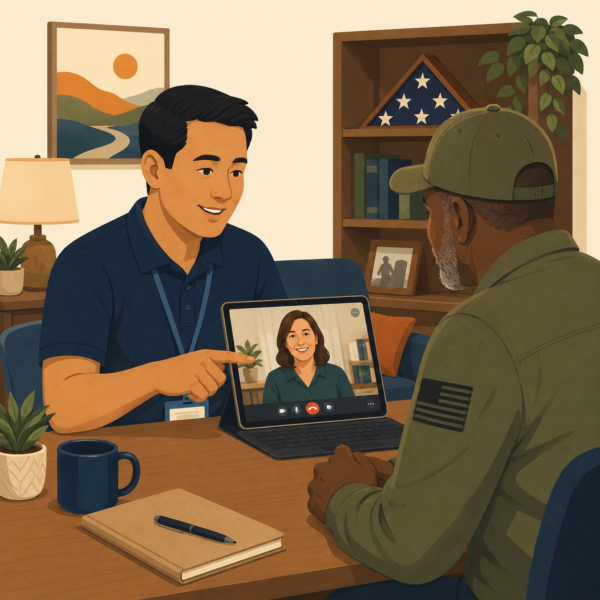 Understanding why veterans who have never used telehealth mental health services have not engaged is the prerequisite for designing communication that will change that status. The barriers are real and varied, and no single communication approach addresses all of them. A systematic barrier analysis, drawing on what is known about the non-engaged veteran population in the agency’s service area, is the starting point for an effective telehealth mental health communication strategy.
The most fundamental barrier is simple lack of awareness. Veterans who do not know that VA telehealth mental health services are available, that those services are included in VA healthcare enrollment, that they can be accessed through a standard smartphone or computer, and that they encompass a range of service types from medication management to individual therapy to peer support, have no basis for considering telehealth as a care option regardless of their openness to mental health support or their clinical need. Awareness gaps are particularly pronounced among veterans who have limited engagement with the VA system, older veterans who formed their understanding of VA services before the current telehealth expansion, and veterans who are not connected to social networks through which telehealth information might circulate.
The second category of barrier is active misconception. Veterans who know telehealth mental health services exist but have specific false beliefs about what they involve form a distinct non-engaged population that awareness communication alone will not reach. The most common and consequential misconceptions include the belief that telehealth is inferior to in-person care and therefore not worth pursuing, the belief that telehealth requires technical sophistication or specialized equipment beyond what the veteran has, the belief that the therapeutic relationship possible through a screen is fundamentally compromised relative to in-person therapy, and the belief that telehealth mental health services are available only to veterans with the most severe conditions rather than to any enrolled veteran who would benefit from them.
The third barrier category involves specific concerns about consequences, including the clearance and firearms concerns addressed in the previous article in this series, as well as concerns specific to telehealth that go beyond the general mental health disclosure concerns. Veterans may wonder whether telehealth sessions are recorded without their knowledge, who has access to records of their telehealth participation, whether telehealth records are more or less protected than in-person records, and whether the digital nature of telehealth creates any specific vulnerability in their privacy situation. These concerns are not irrational, and communication that dismisses them rather than addressing them accurately will not succeed in reaching the veterans who hold them.
The fourth barrier category is practical access limitation, with inadequate broadband being the most significant and most commonly cited practical barrier among veterans who are interested in telehealth but face genuine infrastructure challenges. This barrier is particularly concentrated in rural veteran communities but is not exclusively a rural phenomenon: urban veterans in high-poverty communities may also face unreliable or unaffordable broadband access. For this population, communication about telephone-based telehealth alternatives and community-based access points is more relevant than communication about the benefits of video telehealth, because the video format is not currently accessible to them regardless of how compelling the communication about its benefits is.
The fifth barrier category is cultural and identity-based hesitation, distinct from the broader clinical language distrust discussed in the previous article in that it is specifically about the telehealth modality rather than about mental health services generally. Some veterans have specific cultural resistance to the idea of receiving mental health support through a screen, either because they believe face-to-face interaction is essential for genuine therapeutic connection or because the digital mediation of the therapeutic relationship feels impersonal in ways that contradict their expectations for what a helping relationship should be like. This form of hesitation is not addressed by evidence about clinical equivalence of outcomes. It requires peer testimony from veterans who had similar reservations and who discovered through experience that the reservations were not borne out.
Barrier Prevalence Across Veteran Population Segments
The distribution of these barrier categories across different segments of the veteran population is not uniform, and agencies that develop communication strategies without attending to this differential distribution will produce communication that is well targeted to some veteran segments and poorly targeted to others. The most important segmentation dimensions for telehealth mental health communication are age and service era, geographic location, prior VA engagement history, and specific circumstances including combat exposure and service-connected disability status.
Older veterans, particularly those from the Vietnam era and earlier, are disproportionately concentrated in the awareness gap and technology hesitancy barrier categories. Many have not been reached by information about the current scope of VA telehealth services because they formed their understanding of VA services in an earlier period and have not updated it. Those who are aware of telehealth often hold the technology hesitancy concerned that the access process will be beyond their technical capability. For this segment, awareness communication combined with explicit technical simplicity, reassurance and peer testimony from similarly aged veterans who have made the transition to telehealth is the most effective approach.
Rural veterans are disproportionately concentrated in the practical access barrier category, and for this segment, the most immediate communication need is information about telephone-based alternatives and community access points rather than promotion of video telehealth that may not be practically accessible to them. Communication for rural veterans should lead with the full range of available formats rather than presenting video telehealth as the standard and telephone as an inferior option, since for rural veterans the telephone format is often the practically superior choice and should be presented as a legitimate and fully functional option rather than a compromise.
Veterans who have had negative experiences with VA mental health services in the past are concentrated in the consequences concern category and in a sixth barrier category not yet named: justified institutional skepticism. These veterans are not avoiding telehealth because of misconceptions. They are avoiding it because their actual experience with VA mental health services has given them reason for caution. Communication for this segment must acknowledge the institutional history honestly rather than pretending it does not exist, must distinguish telehealth from the specific aspects of in-person VA mental health services that were problematic, and must include honest information about what has changed rather than simply promoting telehealth as an improvement without engaging with the history that makes veterans skeptical of that claim.
Serving Those Who Served: Communication Strategies for Veterans Agencies
This article is part of our series on strategic communication for Veterans Services Agencies, County Veterans Services Offices, State Departments of Veterans Affairs, and community-based veteran support organizations. To learn more and to see the parent article, which links to other content just like this, click the button below.
Communication Principles for Telehealth Mental Health Outreach
The communication principles that are most effective for expanding telehealth mental health engagement among never-users share a common foundation: they are organized around the veteran’s experience and concerns rather than around the agency’s program description, they provide specific rather than general information, they acknowledge barriers honestly rather than dismissing them, and they use the most credible available messengers rather than defaulting to institutional voice. These principles apply across all the barrier categories described above, though their specific application varies by barrier type.
The principle of leading with the veteran’s concern rather than the program’s features is the most important organizing principle for telehealth mental health communication to never-users. Veterans who are considering telehealth mental health services for the first time are not primarily asking ‘what does this program offer?’ They are asking ‘is this right for me?’ and ‘what would this actually be like?’ Communication that leads with the program’s features, its clinical evidence base, its range of service types, and its availability, is communicating in the agency’s frame rather than the veteran’s frame. Communication that leads with the veteran’s concerns, acknowledging directly that many veterans wonder whether telehealth can be as good as in-person care, or whether it is complicated to set up, or whether their privacy is protected, is meeting the veteran where their decision-making process actually begins.
The principle of specificity is particularly important in telehealth mental health communication because the barriers that prevent engagement are often maintained by vague negative impressions rather than specific informed assessments. A veteran who thinks telehealth is probably too complicated has not assessed the actual process and found it too complicated. They have formed a general impression that has not been challenged by specific information. Communication that provides the specific information, that describes the actual steps required to schedule and connect to a telehealth appointment, that names the specific device requirements, that provides a specific phone number to call for technical support, and that describes what the first five minutes of a telehealth session are actually like, gives the veteran the specific information that can replace the vague negative impression with a realistic and accurate assessment.
The principle of honest acknowledgment of limitations is essential for building the kind of trust that makes communication about telehealth effective rather than promotional. Veterans who are sophisticated consumers of institutional communication will discount communication that presents telehealth as having no limitations and no legitimate concerns. Acknowledging that video telehealth requires a reliable internet connection and that veterans with limited broadband may prefer telephone options, acknowledging that some veterans find the first telehealth session awkward and that this is normal, acknowledging that telehealth is not appropriate for every clinical situation and that some veterans may be referred to in-person care for specific needs, builds credibility by demonstrating that the communication is honest rather than promotional.
The principle of peer voice primacy applies to telehealth mental health communication for exactly the same reasons it applies to all veteran mental health communication. The veteran who is considering telehealth for the first time and who hears from a peer who has been through the experience, who describes what it is actually like, who names the specific doubts they had before they tried it and what they found after, is receiving the most credible possible information about what they are considering. No institutional description of telehealth’s benefits can replicate the persuasive power of authentic peer testimony from a veteran whose doubts and background are recognizably similar to the listener’s own.
The Convenience Value Proposition
Among the specific substantive messages available for telehealth mental health communication, the convenience value proposition is the most immediately compelling for the largest portion of the never-user population. Veterans who are not seeking mental health services at all, whether because of access barriers, stigma, or simple life demands that crowd out time for healthcare, respond more strongly to a communication that addresses the practical obstacle of access than to a communication that addresses the clinical quality of the service, because the clinical quality is not the immediate obstacle.
The convenience value proposition should be delivered with maximum specificity rather than in the abstract terms of ‘care from home’ or ‘no travel required.’ The most compelling version of this proposition is one that describes a specific scenario in concrete terms: the ability to attend a therapy appointment from a parked car during a lunch break, the ability to connect with a medication management provider without taking a day off work to travel to the nearest VA medical center, the ability to maintain a therapeutic relationship through a phone call while managing a busy schedule with children at home. These concrete scenarios make the convenience benefit immediately imaginable in the context of the veteran’s own life, which is the condition under which the benefit becomes motivating rather than merely interesting.
Specificity about the scheduling process is an important component of the convenience value proposition. Many veterans who have had frustrating experiences with VA scheduling, including long waits for initial appointments and difficulty reaching appointment schedulers, extend those past experiences to telehealth without knowing whether the telehealth scheduling process differs. Communication that is specific about how to schedule a first telehealth appointment, how long the process typically takes, and what options exist for veterans who have had past scheduling difficulties, addresses a specific concern that a general convenience message does not reach.
Addressing Quality Concerns With Evidence and Peer Voice
The concern that telehealth mental health services are inferior to in-person care is one of the most prevalent barriers among veterans who are aware of telehealth but have not engaged with it, and it is a barrier that has a strong evidence-based response that agencies should be delivering consistently. The research literature on telehealth mental health outcomes is extensive and consistent: telehealth mental health services produce clinical outcomes that are comparable to in-person services across a broad range of conditions, including PTSD and depression, which are among the most prevalent mental health conditions in the veteran population.
Communication that conveys this evidence accurately and accessibly, without requiring the veteran to engage with clinical research literature, makes the quality concern addressable. A simple and direct statement that research consistently shows that telehealth therapy works as well as in-person therapy for the conditions most common among veterans, followed by a reference to specific supporting sources for veterans who want to verify the claim, provides the evidential basis for a different assessment of telehealth quality without requiring the veteran to take the agency’s word for it without any basis.
Evidence alone, however, is unlikely to overcome the quality concern for veterans who hold it on the basis of an intuitive conviction about face-to-face interaction that does not respond to research citation. For these veterans, peer testimony from veterans who held the same concern and who discovered through experience that it was not borne out is the communication tool that is most likely to move the needle. A veteran who says ‘I was sure that talking to someone on a screen would feel fake, and I almost didn’t try it, but after the first couple of sessions I forgot I wasn’t in the same room’ is providing a specific first-person account of discovering that the intuitive concern was not accurate. That account is more persuasive than any research summary for the veteran audience that holds the quality concern as an intuition rather than as an assessed belief.
Broadband Access as a Real Barrier With Real Solutions
For veterans who face genuine broadband access limitations, telehealth mental health communication that focuses on video-based services is not only ineffective but can be actively counterproductive, reinforcing the perception that telehealth is not available to them and that the gap between their circumstances and the VA’s service delivery approach cannot be bridged. Effective communication for this population begins by acknowledging the broadband limitation honestly and immediately pivoting to the solutions that actually exist for veterans in their situation.
The most important information for veterans with broadband access limitations is that VA telehealth mental health services are available by telephone as well as by video. Telephone-based mental health services, including individual therapy, medication management, and peer support, provide access to the same clinical services through a channel that does not require broadband and that is accessible to virtually any veteran with a basic mobile phone. This is not a compromise option or a lesser form of the service. It is a legitimate access pathway that the VA has specifically designed to serve veterans for whom video access is not available or practical, and communication about telehealth mental health services should present the telephone option with equal prominence to the video option rather than as a footnote to the primary video format.
Beyond telephone-based access, there are community infrastructure options that some veterans with limited home broadband can use to access video telehealth. VA medical facilities and community-based outpatient clinics often have telehealth rooms or kiosks available for veterans who prefer in-person connection to a remote provider rather than home-based video. Libraries, community centers, and some VSO facilities have reliable broadband and private spaces that could accommodate a telehealth session. Agencies that identify and communicate these local options to veterans who lack home broadband are removing a practical barrier rather than simply acknowledging it.
Federal and state broadband expansion initiatives represent a longer-term dimension of the rural access barrier that agencies cannot immediately resolve through communication but can usefully communicate about. Programs expanding broadband infrastructure in rural areas, including specific initiatives targeting underserved communities, are creating broadband access for veteran households that currently lack it. Communication that provides veterans with information about how to determine whether they qualify for subsidized broadband programs, or about timelines for broadband infrastructure expansion in their area, gives veterans a realistic sense of the trajectory of access improvement and encourages them to revisit telehealth as an option when their access situation changes.
Veteran-Owned Technology Hesitancy
Technology hesitancy, distinct from the practical broadband access barrier, is a barrier rooted in veterans’ self-assessment of their technical capability rather than in an objective absence of the required technology or connectivity. Veterans who have smartphones and adequate internet connectivity but who do not believe themselves capable of successfully navigating the technology required to connect to a telehealth session represent a significant and addressable segment of the never-user population. The technology hesitancy barrier is addressable through communication because it is based on a self-assessment that specific information can revise.
Communication that directly addresses technology hesitancy must be specific about what the technology actually requires rather than providing general assurances that telehealth is ‘easy to use.’ For a veteran who is genuinely uncertain about their technical capability, a general assurance of ease is not informative, because ease is subjective and the veteran’s baseline assumption is that the technology will be difficult for them specifically. Specific information, such as that the process requires clicking a link or downloading a single application, that no special equipment beyond a standard smartphone is required, that a support line is available before the first session for veterans who encounter technical difficulty, and that a technical failure during a session does not mean the session is lost and there is a simple process for reconnecting, addresses the hesitancy concern at the specific level where it actually lives.
Peer testimony is particularly effective for addressing technology hesitancy among older veterans because it provides social proof from the most relevant reference group: veterans of similar age and background who also considered themselves not particularly technologically confident and who found the telehealth connection process manageable. A veteran who says ‘I am not good with technology at all, and I managed to get it set up on my first try with a little help from the person who set up my appointment’ is providing a more persuasive and more credible account for technology-hesitant veterans than any institutional assertion of simplicity.
Technical support that is proactively offered before the first telehealth session, rather than reactive support offered only when veterans encounter difficulties, addresses the technology hesitancy barrier at the point where it most often prevents first engagement. A scheduling process that includes a scheduled technology orientation call before the first session, where a staff member walks the veteran through the connection process in advance, removes the uncertainty that makes technology hesitancy an engagement barrier. Veterans who have successfully connected in a practice context before their first actual session arrive at that first session with confirmed knowledge of their own capability rather than residual anxiety about whether the technology will work.
Privacy and Data Security Communication
 Privacy and data security concerns about telehealth mental health services are prevalent across veteran age groups and technology comfort levels, and they deserve communication that is both accurate and specific rather than generically reassuring. Veterans who are cautious about mental health disclosure in any form are particularly attentive to the privacy implications of telehealth, and communication that provides specific rather than general information about how telehealth records are protected, who has access to them, and what distinguishes telehealth record protection from in-person record protection, is more effective for this audience than assurances that ‘your privacy is our priority.’
The specific privacy questions that veterans most frequently have about telehealth mental health services include whether sessions are recorded, who has access to records of telehealth sessions, whether telehealth records are specifically less secure than in-person records due to their digital nature, and whether participation in telehealth creates any records that are visible to employers, clearance investigators, or law enforcement in ways that in-person participation would not. Each of these questions has a specific and accurate answer that communication can provide.
The recording question is the most immediately addressable. VA telehealth mental health sessions are not routinely recorded without the patient’s knowledge and explicit consent. This is the standard of clinical practice, and it is consistent with federal privacy regulations governing mental health services. A direct and simple statement that sessions are not recorded without your consent addresses the recording concern specifically and accurately without requiring the veteran to trust a vague privacy assurance.
The records access question requires more nuanced communication that covers both the robust protections that exist for mental health records under HIPAA and, for substance use treatment records, 42 CFR Part 2, and the specific circumstances where those protections have exceptions. The accurate account is that mental health records, including telehealth mental health records, are among the most stringently protected categories of health information, and that their disclosure without patient consent is limited to specific and narrow circumstances involving imminent danger, mandatory reporting requirements, and certain judicial proceedings. Employers do not have routine access to mental health records. Clearance investigators do not receive mental health records through automatic reporting mechanisms. Law enforcement does not have general access to mental health records. These specific statements address the specific concerns that veterans have rather than providing the general privacy assurance that does not resolve them.
The question of whether telehealth records are less secure than in-person records because of their digital nature is also addressable specifically. VA telehealth platforms are built on secure infrastructure that meets federal cybersecurity standards for healthcare data. The digital transmission of telehealth session data is encrypted. The record protection standards that apply to telehealth records are the same standards that apply to in-person treatment records maintained electronically, which is the vast majority of VA healthcare records regardless of the care modality. The digital nature of telehealth does not create additional vulnerability relative to in-person care in the VA’s secure digital infrastructure environment.
Channels for Reaching Veterans Who Have Never Used Telehealth
The selection of channels for telehealth mental health communication is as strategically important as the design of the messages themselves, because channel selection determines which segments of the non-engaged veteran population the communication can actually reach. The non-engaged population, by definition, is not actively seeking information about telehealth mental health services, and channels that depend on active information-seeking will reach only the small proportion of the non-engaged population that is already on the verge of engagement. Reaching the larger portion of the non-engaged population requires channels that deliver information in contexts where the veteran is present for other reasons.
Healthcare settings are among the most powerful channels for telehealth mental health communication for the same reason they are powerful channels for any preventive health communication: they deliver information within a trusted clinical relationship and in a context where health is already the topic. A primary care provider who mentions telehealth mental health services to a veteran patient during a routine appointment is delivering a recommendation through the most credible channel available for health-related information. The recommendation is brief, personal, and specific, and it occurs in a context where the veteran has come specifically to attend to their health, making them more receptive to health information than they would be in a community or social context.
Equipping primary care providers and other community healthcare providers who serve veteran patients with accurate, brief information about how to refer veterans to telehealth mental health services is a high-leverage communication investment. The training does not need to be extensive. A brief orientation to available telehealth options, a simple referral process, and a specific contact for veterans to reach out to when they are ready to learn more, gives providers the tools to make the telehealth recommendation credibly and confidently within the flow of routine clinical encounters.
The agency’s own digital presence, including website, email communications, and social media, reaches veterans who are already in some relationship with the agency or who are actively seeking information about veterans services. For the never-user population that is least engaged, these channels reach the portion that is most reachable through agency communications while missing the portion that has no active relationship with any veterans services channel. Ensuring that the agency’s digital presence provides clear, specific, and barrier-addressing information about telehealth mental health services is necessary but not sufficient for reaching the full non-engaged population.
VSO posts, as discussed throughout this series, provide community-based outreach channels that reach veterans in community contexts rather than institutional contexts. Brief mentions of telehealth mental health services at VSO post meetings, combined with specific information about how to access services and peer testimony from members who have used them, reach veterans in a trusted community context that is often more receptive than formal agency communications. Post commanders who are themselves informed about telehealth options and who can speak to them naturally in the course of post business are community-level communication assets that the agency should invest in equipping.
Employer communications channels, reaching veterans in the workplace through human resources communications, employee wellness programs, and management briefings, extend telehealth mental health communication into the work setting where many veterans spend the majority of their waking hours. Veterans who learn about telehealth mental health services through their employer may be more receptive than they would be through other channels, because the employer context normalizes the idea that employee mental health is a matter of organizational concern and because the workplace setting provides natural opportunities for follow-up conversations with colleagues who have used the services.
Peer Voice in Telehealth Communication
The role of peer voice in telehealth mental health communication deserves specific attention in addition to the general peer voice communication principles that apply across all veteran mental health communication. Telehealth-specific peer testimony is distinct from general mental health peer testimony in that it addresses not only the decision to seek mental health support but the specific experience of seeking it through a telehealth format, including the specific concerns about therapeutic connection, technical complexity, and format authenticity that characterize the telehealth-specific barrier population.
Peer testimonials for telehealth mental health promotion should therefore be specifically about the telehealth experience rather than only about the value of mental health support generally. A testimonial that addresses how the veteran felt before their first telehealth session, what their specific concerns were about the format, what the experience was actually like, and how the telehealth format compared to their expectations, is more useful for addressing telehealth-specific barriers than a testimonial that focuses on the value of getting help without addressing the telehealth format specifically.
Matching peer testimony to specific barrier populations maximizes the relevance and credibility of the peer voice communication. A peer testimonial from a veteran who had significant technology hesitancy before their first telehealth session is most relevant for the technology hesitancy barrier population. A testimonial from a veteran who lives in a rural area and who has used telephone-based telehealth because of limited broadband is most relevant for the rural access barrier population. A testimonial from an older veteran who was skeptical about screen-mediated therapeutic connection is most relevant for the quality concern population among older veterans. Developing a library of telehealth peer testimonials that covers the major barrier categories and demographic segments, and deploying specific testimonials in contexts where the matching barrier population is most likely to be reached, is a more effective strategy than deploying a single general telehealth testimonial across all audiences.
Addressing the First Session Barrier
The first telehealth session is a disproportionately high-friction point in the engagement pathway for never-users, and reducing the friction at this specific point has outsized impact on engagement rates relative to the effort required. Veterans who have successfully scheduled a first telehealth appointment have already overcome several significant barriers, including awareness, quality concerns, and technology hesitancy sufficient to make the scheduling decision. But the period between scheduling and actually connecting for the first session is one where significant dropout occurs, as anticipatory anxiety about the unknown increases and the veteran’s prior concerns resurface in more immediate form.
Communication specifically designed to address the first session barrier should be delivered in the interval between scheduling and the first appointment. This communication should normalize anticipatory anxiety as a common first session experience rather than a sign that something is wrong. It should provide specific information about what the first session will be like, what the veteran should prepare, and what to do if they encounter technical difficulties. It should give the veteran a specific person or number to contact if they have questions before the session. And it should explicitly communicate that the value of the first session is not dependent on it going perfectly, that first sessions are often partly about establishing the relationship and the format, and that a session that feels awkward is not predictive of subsequent sessions.
A pre-session orientation call, offered routinely to veterans who have scheduled their first telehealth appointment, provides the kind of human contact in advance of the first session that reduces the isolation of the anticipatory anxiety period and gives the veteran the opportunity to ask the questions that are generating their hesitation before the session itself is at stake. This orientation call is a modest investment of staff time that prevents the no-show and cancellation rates that are particularly high for first telehealth appointments and that, when they occur, often result in extended re-engagement delays or permanent disengagement.
For veterans who cancel or do not show for a scheduled first telehealth appointment, outreach in the 24 to 48 hours following the missed appointment that is warm, non-judgmental, and specifically oriented to understanding and addressing the barrier to rescheduling is more effective than a generic reminder. The outreach should acknowledge that first sessions can feel daunting, offer to answer specific questions or concerns, and make the rescheduling process as simple as possible by offering to handle it during the outreach call rather than requiring the veteran to navigate the scheduling process again independently.
The cumulative effect of specific communication across the full pathway from first awareness to first session, addressing the specific barriers at each stage of the pathway rather than only the barriers that are visible at the beginning, is a substantially higher rate of successful first engagement than communication that focuses only on the front end of the pathway and leaves veterans to navigate the later stages without support. Agencies that think about telehealth mental health communication as a pathway management challenge rather than a one-time outreach challenge build communication systems that produce engagement outcomes rather than awareness outcomes that do not convert to actual service utilization.
Targeted Communication for Specific Veteran Populations
The general communication principles and strategies described throughout this article apply broadly across the never-user population, but their specific application should be calibrated to the characteristics of the population segments that the communication is designed to reach. Several veteran population segments have specific characteristics that shape their telehealth access barriers and the communication approaches most likely to address those barriers effectively.
Rural veterans represent the segment for whom telehealth represents the largest potential access improvement relative to the current in-person alternative, and consequently the segment for whom effective telehealth communication has the greatest potential impact. The communication strategy for rural veterans should lead with the access elimination value proposition, presented in concrete and specific terms that are relevant to the actual geographic circumstances of rural veteran life. The three-hour round trip to the nearest VA mental health clinic is not a hypothetical barrier for many rural veterans. It is the actual alternative to telehealth, and communication that makes this comparison explicitly converts the abstract convenience benefit of telehealth into a concrete and immediate relief from a real burden.
Women veterans represent a population segment for whom the telehealth format offers specific benefits beyond general convenience, including privacy, schedule flexibility for veteran parents who are the primary caregiver in their household, and the ability to access specific services like military sexual trauma counseling without requiring travel to facilities where they may encounter discomfort or social barriers. Communication for women veterans should acknowledge these specific benefits explicitly rather than relying on generic convenience messaging, because generic messaging does not demonstrate awareness of the specific circumstances that make telehealth particularly valuable for this population segment.
Veterans who have had negative prior experiences with VA mental health services require communication that acknowledges the institutional history directly and that specifically addresses how telehealth differs from the aspects of in-person VA mental health services that were problematic. Reduced wait times for telehealth appointments relative to in-person appointments in many VA markets, the ability to see a provider from a different geographic area if local providers are not a good fit, and the ease of changing providers in a telehealth system relative to the friction of changing in-person providers are all specific improvements that distinguish telehealth from the prior experience that may have generated justified institutional skepticism. Communication that names these specific improvements, rather than simply asserting that things are better, gives veterans with prior negative experiences the specific information that allows them to assess whether the current situation warrants a different response than the prior experience did.
Veterans with service-connected conditions that make travel to medical facilities physically or psychologically difficult, including mobility limitations, PTSD-related avoidance of public settings, and traumatic brain injury that affects tolerance for complex navigation tasks, represent a population for whom telehealth is not simply a convenient alternative but may be the only practical access pathway for mental health support. Communication for this population should be delivered through the healthcare providers who are most aware of these specific limitations, and should specifically address how telehealth accommodates the needs of veterans whose service-connected conditions create specific barriers to in-person care.
Strategic Communication Support for Veterans Services Agencies
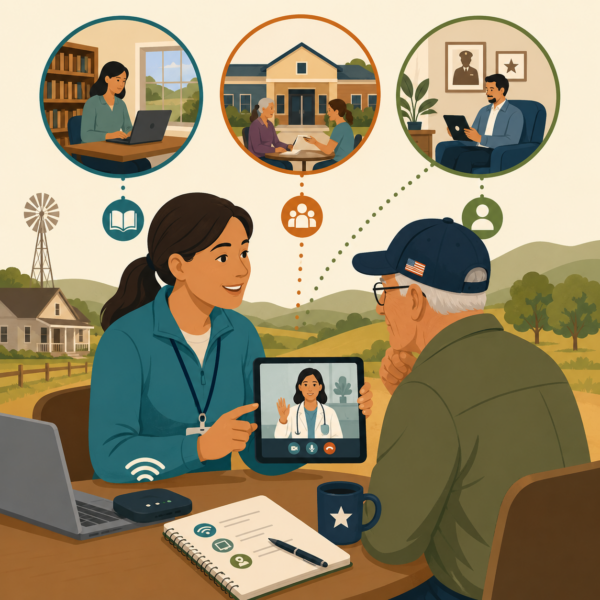 Making telehealth mental health services available is only one part of expanding access for veterans. The greater challenge is helping veterans who have never used telehealth understand how it fits their circumstances, overcome the concerns that prevent first-time use, and remain engaged once services begin. Achieving those outcomes requires communication that supports veterans throughout their decision-making journey rather than relying on a single awareness campaign or informational resource.
Successful telehealth communication programs are built on a combination of audience insight, message segmentation, trusted communication channels, authentic peer voices, and ongoing evaluation. Different veterans encounter different barriers, whether they involve technology, privacy, effectiveness, personal preference, or uncertainty about what to expect during a virtual appointment. Addressing those concerns effectively requires communication strategies that recognize these differences and guide veterans from initial awareness to sustained participation.
Developing this type of communication system calls for specialized expertise in communication research, behavioral messaging, audience segmentation, channel strategy, and communication evaluation. Many veterans services agencies choose to partner with external communication specialists such as Stegmeier Consulting Group (SCG) because these capabilities complement the agency’s expertise in behavioral health and veterans services while providing the strategic communication knowledge needed to design systems that improve long-term engagement rather than simply increase awareness.
Working alongside veterans services agencies, SCG develops telehealth communication strategies that address the full range of barriers affecting veteran participation. Support may include analyzing communication barriers within the agency’s veteran population, developing segmented messaging for different audience needs, identifying communication channels that effectively reach veterans who are not currently engaged, designing peer voice initiatives that reinforce trust in telehealth, creating communication pathways that support veterans from first awareness through continued participation, and establishing evaluation frameworks that measure communication effectiveness throughout the engagement journey.
As telehealth services continue to evolve, communication systems must evolve with them. SCG helps agencies establish repeatable communication processes, governance practices, and performance measurement frameworks that enable telehealth outreach to remain responsive to changing technologies, veteran expectations, and patterns of service utilization while maintaining consistent messaging across programs and communication channels.
The objective is to create a communication environment in which veterans understand the value of telehealth, feel confident using it, and receive the support they need to remain engaged in care. By strengthening communication at every stage of the engagement journey, agencies are better positioned to convert telehealth availability into meaningful access for the veterans who can benefit from these services.
Future Trends in Telehealth Mental Health Communication
The telehealth mental health landscape is evolving rapidly, driven by technological improvement, expanding VA telehealth infrastructure, growing evidence about telehealth effectiveness, and demographic changes in the veteran population that are shifting the distribution of barriers and opportunities in the never-user population. Agencies that plan their telehealth mental health communication strategies with awareness of these evolving trends will be better positioned to maintain communication effectiveness over time than agencies that design strategies for the current landscape without anticipating how that landscape will change.
The technological dimension of telehealth access is improving in ways that are progressively reducing the technology hesitancy and broadband access barriers. Telehealth platforms are becoming simpler to access, with fewer steps between intent and connection and with more robust support infrastructure for users who encounter difficulty. Broadband access is expanding in rural areas through infrastructure programs, reducing the population of veterans for whom broadband access is a practical barrier. As these improvements continue, communication strategies will need to shift their emphasis from technology access and quality assurance toward the remaining barriers that are less responsive to technological improvement, including cultural hesitancy, specific privacy concerns, and the consequences concerns related to clearance and firearms that this series has addressed separately.
New telehealth modalities are emerging that will require corresponding communication evolution. Digital therapeutic applications that provide mental health support through smartphone-based programs, asynchronous text-based support that allows veterans to communicate with providers outside of scheduled appointment windows, and hybrid models that combine in-person and telehealth care in flexible configurations, are expanding the range of what telehealth mental health means and require communication that helps veterans understand the expanding option set. Communication strategies that continue to describe telehealth solely in terms of the video appointment model will become progressively less complete as the modality landscape diversifies.
The demographic evolution of the veteran population toward younger post-9/11 veterans who have higher digital fluency and greater baseline comfort with technology-mediated communication will gradually shift the primary communication challenge for telehealth mental health promotion. As technology hesitancy declines as a barrier, and as awareness of telehealth increases with each cohort of veterans that separates from service with contemporary knowledge of available VA services, the communication challenge will shift toward the barriers that remain prevalent among digitally comfortable, service-aware veterans: quality concerns about specific clinical conditions, consequences concerns about clearance and firearms, and the specific forms of cultural hesitancy that characterize younger veteran cohorts. Communication strategies that are designed for today’s dominant barriers need built-in adaptation mechanisms that allow them to evolve as the barrier landscape changes.
Artificial intelligence tools are beginning to enter the telehealth mental health landscape in forms that will have communication implications that require thoughtful management. AI-based preliminary support applications, AI-assisted provider tools, and AI-powered scheduling and triage systems are raising questions from veterans about what role AI plays in their care and how it affects the human relationship that is central to mental health support. Honest, accurate communication about the specific roles AI tools play and the human oversight that governs their use in the telehealth mental health context will be increasingly important as these tools become more prevalent, and agencies that develop the communication frameworks for these conversations in advance of being asked them will be better positioned to address them credibly when they arise.
Conclusion
Every veteran who is experiencing mental health challenges and who would access telehealth mental health services if they knew what those services involve, how to access them, and what to expect from the experience, represents a person that the current communication environment is failing. Not failing by providing inadequate services. Not failing through lack of clinical capacity. Failing specifically through inadequate communication about what is available, how it works, and why the specific concerns that are preventing engagement are either addressable through accurate information or can be accommodated through alternative formats that meet the veteran where their practical situation allows.
Closing the communication gap between telehealth mental health availability and telehealth mental health utilization requires communication that is specific rather than generic, honest rather than promotional, peer-voiced rather than institutional, barrier-addressed rather than benefit-proclaimed, and sustained across the full engagement pathway rather than concentrated at the awareness stage. That is the communication investment that produces the outcome this work exists to produce: veterans who are suffering less, functioning better, and accessing the support they have earned.
SCG’s Strategic Approach to Communication Systems
Stegmeier Consulting Group’s approach to telehealth mental health communication for veterans services agencies reflects the foundational principle that guides all of SCG’s communication work: communication is most effective when it is designed from the outside in, starting from the specific circumstances, concerns, and barriers of the audience it is trying to reach rather than from the features of the program it is trying to promote. For telehealth mental health communication, this means building strategies that start with barrier analysis of the specific never-user population the agency serves, move through targeted message design for each barrier type, and conclude with the channel strategy, peer voice program, pathway management systems, and measurement infrastructure that produce genuine engagement changes rather than awareness statistics.
SCG’s structured process for telehealth mental health communication development produces communication systems that serve veterans with the specificity their circumstances require, that demonstrate their effectiveness in terms of engagement outcomes rather than communication activity, and that are designed for sustained effectiveness over time as the telehealth landscape evolves and the veteran population’s characteristics and circumstances change. Agencies that partner with SCG on telehealth mental health communication strategy build the communication infrastructure that converts program availability into program access, which is the only measure of communication effectiveness that ultimately matters for the veterans these programs exist to serve.
Use the form below to connect with our team and explore how strategic telehealth communication can help your agency increase mental health engagement, reduce barriers to care, and connect more veterans with available services.