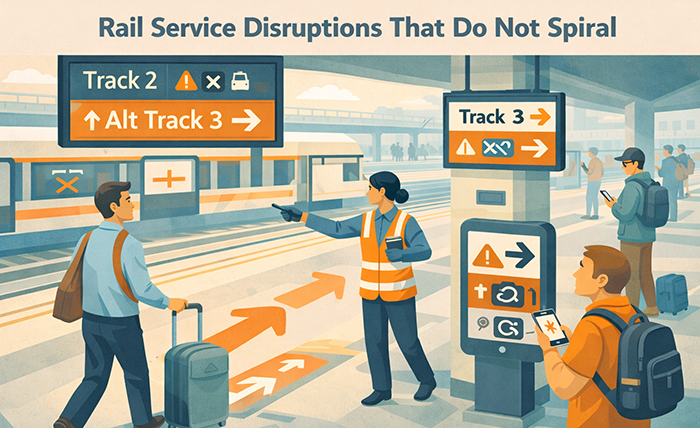
Rail Service Disruptions That Do Not Spiral: A Communications Playbook for Delays and Cancellations
Rail disruptions create a unique kind of pressure. Delays and cancellations can cascade quickly because trains run on fixed corridors, platforms have limited space, and transfers are tightly timed. When information is unclear, passengers crowd the wrong platforms, miss reroutes, and flood staff with the same questions. The disruption then becomes more than an operational problem. It becomes a public confidence problem.
A communications playbook prevents spirals by making updates consistent, actionable, and predictable. Riders do not need constant messaging. They need the right message at the right time, delivered in the same structure across channels. They also need a clear source of truth and a stable set of labels for platforms, lines, and alternate routes. When those elements are in place, passengers make safer choices, staff can focus on operations, and misinformation has less space to grow.
Rail environments also amplify small communication errors. A vague announcement can send hundreds of people to the wrong track. An outdated screen can trigger a platform surge. A poorly worded cancellation notice can cause passengers to wait for a train that will never arrive. Precision and update discipline are therefore core safety and throughput tools.
This article provides an evergreen communications playbook for rail delays and cancellations. It focuses on message spines, update cadence, station and platform coordination, alternate routing guidance, internal alignment, and tactics that reduce crowd stress and rumor cycles during fast-changing events.
Why Rail Disruptions Spiral So Fast
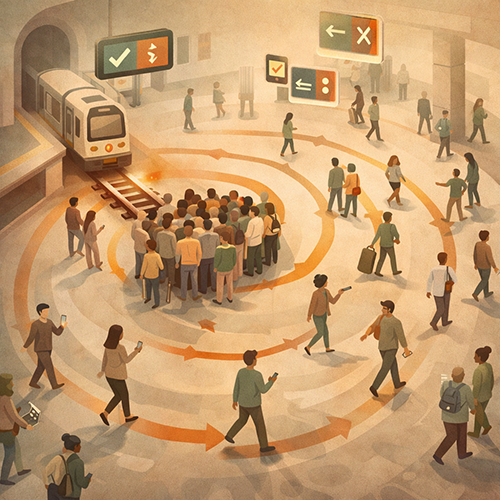 Rail service is constrained by infrastructure. If a corridor is blocked, alternatives are limited. If a train is canceled, headways widen and platform crowding increases. Passengers also have fewer exit options once they are inside a station, especially in underground or constrained environments. These factors make rail disruptions highly sensitive to communication quality.
Spirals often begin with uncertainty. Passengers are willing to tolerate delays when they understand what is happening, what they should do now, and when the next update will occur. They become anxious and reactive when updates are vague, inconsistent, or absent. Anxiety drives crowd behavior, and crowd behavior can slow operations further.
Spirals also begin when different channels contradict. A screen says one thing, an app says another, and staff say a third. Passengers then stop trusting official information and rely on rumors. Rumor spreads quickly in stations and on social platforms, especially when passengers share photos of packed platforms.
Another trigger is unclear cancellation language. Passengers often interpret “delayed” as “still coming.” If a train is canceled, passengers need that stated plainly and repeated. They also need a clear alternate plan, or they will wait indefinitely and crowd platforms.
Finally, spirals are intensified by poor routing instructions. A disruption is manageable when passengers can be distributed across alternate services, stations, or corridors. If routing guidance is vague, passengers move randomly, creating new bottlenecks and safety risks.
Uncertainty Creates Crowd Surges and Operational Drag
Crowds surge when passengers believe something is about to happen, such as an imminent train arrival, a sudden platform switch, or a partial reopening. If information is unclear, passengers cluster near stairways, platform edges, and gate lines. This reduces circulation and increases safety risk.
Clear messaging stabilizes behavior. Passengers spread out, choose exits earlier, and follow alternate routes more predictably when they know the plan. Even a short update that states “no change, next update by” can reduce anxiety and prevent rumor-driven surges.
Stabilizing crowd behavior also protects staff. Staff interactions become calmer when passengers feel informed. This reduces escalation and improves compliance with safety instructions.
Vague Language Turns Cancellations Into Endless Waiting
Passengers interpret language literally. “Delayed” suggests the train will eventually arrive. “Canceled” means it will not. If messages blur these terms or use euphemisms, passengers wait and keep checking, which drives repeated questions and platform crowding.
Clear cancellation language should be paired with the next step. Passengers need to know which train to take instead, which platform to use, or whether to exit and use a different mode. Without a next step, cancellation messaging becomes a dead end that fuels anger.
Cancellation clarity is also a fairness practice. Passengers with tight constraints need to make choices quickly. Ambiguity harms those passengers most.
From Detours to Understanding: Effective Communication Strategies for Transportation Agencies to Improve Safety and Drive Behavioral Change
This article is part of our series on strategic communication for Transportation Agencies, Transit Authorities, and Public Works departments. To learn more and to see the parent article, which links to other content just like this, click the button below.
Define the Playbook. Decision Support, Routing Support, and Update Discipline
A rail disruption playbook is a repeatable communication system. It supports three goals. Decision support, routing support, and update discipline. Decision support means passengers understand what to do now. Routing support means passengers are guided to safe, workable alternatives. Update discipline means information stays consistent and current across channels.
The playbook should be built around a shared message spine. It should also define a single source of truth and a label set for lines, platforms, and stations. It should include templates for common scenarios such as delays, cancellations, single-tracking, platform changes, partial service restoration, and bus bridging.
The playbook should also define the update rhythm. During a fast-moving disruption, passengers need frequent confirmation. During stabilization, they need predictable intervals. “Next update by” commitments reduce rumor cycles and help passengers plan.
Finally, the playbook must include internal alignment. Staff scripts, control center updates, and public messaging must be synchronized. Staff should not be surprised by what passengers are seeing on screens. Alignment prevents contradictory instructions and reduces escalation.
Use a Rail Disruption Message Spine That Works in Fragments
Rail disruption messages are often received in fragments. Passengers glance at a screen, hear half an announcement, or see a screenshot in a group chat. The message spine must therefore deliver the core meaning fast, with labels that passengers can match to the station environment.
A practical spine includes seven elements. Impact, scope, time stamp, action step, alternate route, verification path, and next update timing. The first line should state the passenger action. The next line can state the reason briefly when it helps compliance. The remaining lines provide routing and expectations.
Impact should be specific. State whether trains are delayed, suspended, or canceled for a named segment. Scope should include line name, direction, and affected stations using the exact labels seen on signs and maps. The time stamp should be visible. The action step should be concrete, such as using a specific platform, boarding the next train to a named terminal, or exiting to use bus bridging. The alternate route should be clear and feasible. The verification path should direct passengers to the source of truth. The next update timing should be stated, even when assessment continues.
This spine should be used across app alerts, platform screens, station announcements, and staff scripts. Consistency reduces contradictions and reduces rumor cycles. It also helps passengers interpret updates as purposeful changes rather than chaotic reversals.
State Delay Versus Cancellation in One Clear Line
Passengers need to know whether to keep waiting or to take a different path. Delay messages should include an estimated range when available, but they should avoid false precision. Cancellation messages should state that a specific train will not operate and should direct passengers to the next available option.
For example, a cancellation message should not imply that a train may still arrive. It should state that the trip is canceled and identify the next departure or the alternate route. If the next departure is unknown, the message should direct passengers to an alternate path and state when the next update will be posted.
Clear delay versus cancellation language reduces platform crowding and reduces repeated questions. It also supports fairness because passengers with tight timelines can act quickly.
Consistency in wording is important. The same terms should be used across screens, apps, and announcements so passengers do not interpret contradictions.
Use Line, Direction, and Station Labels That Match the Environment
Label drift creates confusion. If a message uses an internal corridor name while the sign uses a line color and a terminal direction, passengers hesitate. Messages should use the same line names, terminal directions, and station labels that appear on maps and signs.
Platform labels should also be consistent. If a platform is labeled “Track 2” on a sign, the message should use “Track 2.” If a station uses northbound and southbound labels, the message should use those labels.
Consistency also improves accessibility and translation. Stable labels are easier to communicate through announcements and staff scripts.
Label alignment should be treated as part of the playbook. It should be defined in advance, not invented during disruption.
Update Rhythm That Prevents Panic and Rumor Cycles
Passengers interpret silence as concealment and interpret rapid unstructured updates as panic. A predictable update rhythm stabilizes expectations. The rhythm should be paired with “next update by” commitments so passengers know when to check again.
During the acute phase, short updates may be needed frequently. The key is that each update should be clear about what changed. If nothing changed, the update should say so. A short “no change” message can reduce anxiety and prevent passengers from relying on rumors.
During stabilization, updates can become less frequent, but they should remain predictable. For long disruptions, a short change log can help passengers who arrive mid-event understand what has happened.
Update rhythm should be coordinated across channels. Platform screens, announcements, and apps should refresh in sync. If one channel lags, passengers will perceive contradictions and lose trust.
Finally, the update rhythm should be linked to operational triggers. When a segment reopens, when bus bridging changes, or when platform assignments shift, the update should be immediate and consistent across channels.
Use “Next Update By” Commitments and Meet Them
A “next update by” time reduces constant refreshing and reduces rumor behavior. Passengers can plan when to check again. This is especially important during corridor suspensions and single-tracking events.
The commitment should be realistic. Missing it reduces trust. If the airport or rail authority expects a new update sooner due to changes, it can publish earlier, but it should still maintain the regular cadence.
This practice also supports internal coordination. Teams align checks and messaging around the cadence, reducing uncoordinated posts.
Over time, passengers learn that the system communicates reliably during disruption, which improves long-term trust.
Use “What Changed” Lines to Keep Updates Scannable
Passengers stop reading when messages repeat without new information. A “what changed” line keeps updates scannable. It can state that a station reopened, that a platform assignment changed, that cancellations expanded to a new time window, or that bus bridging moved pickup locations.
The change line should be near the top, after the time stamp. It should be short and consistent in placement so passengers learn where to look.
This practice also reduces misinformation. Older screenshots are easier to identify as outdated when new updates clearly state what changed and when.
Staff benefit as well. They can answer questions more consistently by referencing the same change cues passengers see.
Station and Platform Communication, Prevent the Wrong-Platform Crowd
Rail disruptions often become station problems. When passengers are unsure, they gather at the most obvious place, usually the platform they used last time. If a platform assignment changes or if a train will bypass a station, the wrong-platform crowd forms quickly and becomes hard to unwind.
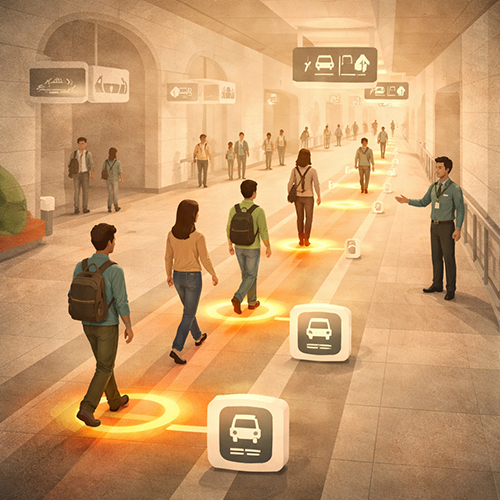
The playbook should treat station and platform communication as a coordinated wayfinding system. Screens, announcements, signs, and staff direction should all reinforce the same platform instruction using the exact platform labels visible in the station. The goal is to move passengers toward the correct waiting locations early, before crowds form.
Platform communication should also include confirmation cues. After passengers move toward the correct platform, they should see signs and screens that confirm they are in the right place. Confirmation reduces backtracking and corridor congestion.
When platforms are constrained, messaging should also include safety language that is calm and specific. It should direct passengers to distribute along the platform and keep clear of stairways and doors. Vague safety reminders are less effective than specific, actionable guidance.
Finally, station messaging must keep pace with change. If a platform assignment shifts, updates must appear on screens, in announcements, and through staff scripts at the same time. Lag creates contradictions, and contradictions create crowd stress.
Use Decision-Point Placement and Repeat the Platform Instruction
Passengers make platform decisions at gates, concourse junctions, stairways, and escalators. Guidance must appear before these points. If passengers only learn about a platform change after they are already on the wrong platform, they will backtrack in high-flow corridors.
Platform instructions should be repeated consistently. The same phrasing should appear on screens and in announcements. Repetition is not redundant in disruption. It is a stability signal. Passengers feel calmer when they hear the same instruction multiple times.
Repeat placement also reduces staff burden. When platform instructions are visible and repeated, fewer passengers need personal direction.
Consistency across the station also reduces misinformation because passengers share the same instruction rather than conflicting fragments.
Use Confirmation Cues to Reduce Backtracking and Corridor Clumping
After a passenger turns toward a platform, they need confirmation. A confirmation cue can be a screen that repeats the platform instruction, a sign that uses the same label, or a staff ambassador positioned at a corridor junction.
Confirmation cues reduce hesitation. Hesitation creates clumping, and clumping slows movement. Confirmation cues also reduce conflict, because passengers are less likely to argue with staff when signage reinforces the same message.
Confirmation matters for accessibility as well. Riders using elevators and accessible routes need assurance that they are moving toward the correct platform without last-minute reroutes.
A confirmation strategy is a key part of preventing spirals. It stabilizes movement and supports throughput.
Alternate Routing That Works Under Stress, Be Specific and Feasible
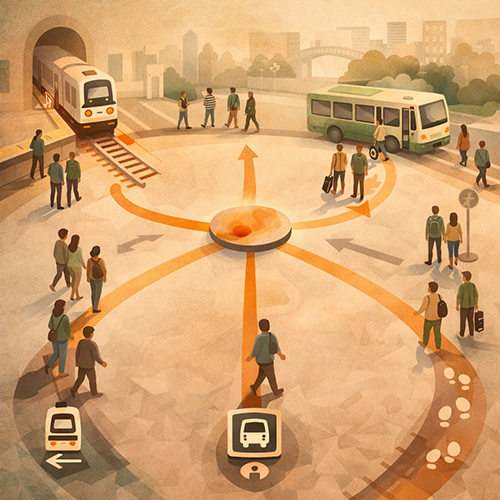 When rail service is disrupted, passengers need alternatives. Alternatives can include other rail lines, bus bridging, walking transfers, or temporary shuttles. However, generic advice to use an alternate route is not enough. The playbook must provide specific, feasible instructions tied to visible labels and real operational capacity.
Alternate routing messages should describe the best available options. They should also state constraints. If bus bridging is limited, the message should set expectations about wait time and boarding location. If a parallel rail line is available, the message should explain where to transfer and what direction to take. If walking transfers are recommended, the message should describe the route clearly and include accessibility notes.
Alternate routing should also prioritize preventing new bottlenecks. If the alternate path will overload a station, messaging should distribute passengers across multiple options when possible. This requires coordination between operations and communications.
Alternate routing messages should be aligned across channels. The app, screens, announcements, and staff scripts should all describe the same options. If one channel suggests a transfer that another channel does not, passengers will lose trust and may move randomly.
Finally, alternate routing guidance should be updated when conditions change. If bus bridging pickup locations move, the message must be time-stamped and corrected quickly. Outdated routing is a major driver of frustration and crowd behavior.
Write Alternate Routes as Step Sequences With Clear Labels
Passengers under stress follow steps more easily than paragraphs. Alternate routes should be presented as short step sequences. They should include station names, platform labels, and line names exactly as shown on signs.
A step sequence might include where to exit the platform, where to board a shuttle, and where the shuttle drops passengers. It should also state whether fares are honored and whether additional validation is needed.
Step sequences reduce misinterpretation and reduce repeated questions. They also support staff because staff can repeat the same steps consistently.
Step sequences should avoid unnecessary detail. They should focus on the actions passengers must take to reach the next decision point.
Set Realistic Expectations for Bus Bridging and Temporary Shuttles
Bus bridging is often necessary, but it can become chaotic if expectations are not set. Messages should state where to board, how to find the pickup location, and what to expect in terms of frequency and travel time.
Pickup locations should use stable labels and visible cues. If the pickup is at a specific street corner, that should be stated plainly. If the pickup is at a signed zone, that zone label should match on-site signage.
Messages should also include accessibility guidance. Passengers who need accessible boarding should have clear instructions and a help route.
Setting expectations reduces anger. Passengers are more accepting of delays when they feel informed and when they can see a workable plan.
Internal Alignment and Staff Scripts, Keep the System Voice Coherent
Rail disruptions become communication crises when staff and channels are not aligned. Passengers will ask operators, station agents, ambassadors, and customer service for guidance. If staff answers differ from screens and apps, passengers lose trust immediately and the station environment becomes harder to manage.
The playbook should include a rapid internal briefing workflow. Operations confirms the scope and routing changes. Communications updates the public source of truth using the message spine. Staff scripts are updated with the same time stamp and “what changed” line. Then stations and channels are updated in parallel. This workflow can be fast, but it must be consistent.
Scripts should be short and action-oriented. Staff should be able to deliver the platform instruction and the alternate route in one or two sentences. Scripts should also include calm de-escalation language, especially for cancellations and long delays. The goal is to acknowledge frustration without entering debate and to route passengers to the correct next step.
Decision rights should be clear. Staff should know what they can confirm and what they should not speculate about. Speculation becomes misinformation quickly. A script that separates what is known, what is being assessed, and what passengers should do now protects credibility.
Finally, staff should have a clear help escalation route for passengers who need additional assistance. That includes accessibility support, language support, and special handling for travelers with tight constraints. Clear escalation reduces conflict and improves safety.
Use a Message Pack That Mirrors Public Updates Exactly
A disruption message pack should include the public-facing short message, the station announcement script, and the alternate routing steps. It should also include the time stamp and a short “what changed” line.
The pack should use the same labels as signs and screens. It should not introduce new terms. Consistency reduces passenger confusion and makes staff more confident.
The pack should be updated whenever conditions change meaningfully. If a segment reopens, if a platform assignment shifts, or if bus bridging moves, staff should receive the updated pack immediately.
A message pack also supports customer service. Representatives can use the same content and route passengers to the same source of truth, reducing repeat contacts.
Train for the First 30 Seconds and the Boundary Moment
The first 30 seconds of a passenger interaction often determines whether the interaction escalates. Staff should practice leading with the action step, using calm tone, and confirming the next update timing.
The boundary moment occurs when passengers push for certainty the staff cannot provide. Scripts should include a respectful way to state what is known and what is being assessed, without sounding evasive. A clear “next update by” time helps staff avoid endless negotiation.
Practice builds consistency. Short scenario drills can reinforce label use, routing steps, and de-escalation language.
Consistency protects staff and passengers. It reduces argument loops and stabilizes station behavior.
Prevent Digital and On-Site Contradictions With Version Control
Contradictions are the fuel of disruption spirals. A passenger who sees one instruction on an app and another on a screen stops trusting both. Version control reduces this by ensuring that updates are time-stamped, synchronized, and clearly identified as new when changes occur.
Version control starts with a single source of truth. All public updates should originate from that source and then be pushed to apps, screens, announcements, and social channels. When the source updates, channels should refresh on a defined schedule or immediately when the change affects passenger decisions.
A “what changed” line helps passengers interpret updates. It also helps staff keep pace. If the line states that platform assignments changed or that cancellations expanded to new trips, passengers understand the difference without assuming prior guidance was false.
Version control also requires cleanup. Outdated signage, old social posts, and stale app banners can linger and cause confusion. The playbook should include a process for removing or clearly closing old messages when conditions stabilize.
Finally, version control should include audits during prolonged disruptions. A quick channel check can confirm that the same platform instruction and alternate route are showing everywhere. This prevents small drift from becoming a major credibility problem.
Run Quick Channel Audits During Prolonged Events
A channel audit is a short checklist process. It verifies that the platform instruction is consistent across screens, announcements, staff scripts, and the app. It also verifies that the alternate route steps match on-site signage and that pickup locations are correct.
Audits should be run on a regular rhythm during prolonged disruptions. They should also be run immediately after major changes, such as reopenings or new cancellations.
Audits reduce contradiction risk. They also reduce staff stress because staff can trust that what passengers see aligns with what staff say.
This practice also supports partner coordination, especially when bus bridging involves external operators.
Close the Loop When the Event Ends to Prevent Lingering Confusion
When service stabilizes, passengers need a clear closure message. Closure should state that normal service has resumed and that temporary instructions no longer apply. It should be time-stamped and posted through the same channels that carried the disruption updates.
Closure should also include cleanup. Temporary signs should be removed. App banners should be cleared. Old posts should be replaced with a final update that routes passengers to normal sources.
Closure protects trust. Passengers remember whether the system returned to clarity after disruption. Clear closure makes the next disruption easier to manage because passengers continue to trust official updates.
Promoting Long-Term Transportation Outcomes Through Communication
Rail disruption communication strengthens long-term outcomes when it stabilizes passenger decisions and reduces rumor-driven behavior. A consistent message spine, precise scope labels, and actionable routing guidance help passengers move predictably through stations and platforms during delays and cancellations. Predictable update rhythm, time stamps, and “what changed” lines improve trust because passengers can verify what is current and understand why guidance evolved.
Operational outcomes improve when platforms do not become the default waiting room for uncertainty. Decision-point messaging and confirmation cues reduce backtracking and corridor clumping. Clear alternate route sequences reduce random passenger movement and protect throughput. Internal alignment and staff scripts reduce contradictions that often trigger escalations and repeat questions. Version control practices also limit the spread of outdated screenshots that can quickly become misinformation narratives.
Equity outcomes improve when playbooks include clear accessible routing, consistent help routes, and calm de-escalation language. Passengers who rely on accessible paths or who have limited flexibility are harmed most by ambiguity. A disciplined communication system reduces that harm by making decisions clearer, earlier, and more consistent across touchpoints.
Strategic Communication Support for Your Transportation Agency
 Rail disruptions often become public confidence problems when the communication system is fragmented. If apps, screens, announcements, signage, and staff language drift out of alignment, passengers lose trust and crowd behavior becomes harder to manage. A playbook approach prevents spirals by turning disruption communication into a repeatable system with consistent labels, predictable update rhythm, and clear alternate routing steps that work under stress.
That is why agencies often choose to partner with an external resource like Stegmeier Consulting Group (SCG) to strengthen communication systems. SCG supports transportation agencies by building disruption communications playbooks that include message spines for delays and cancellations, time-stamped update templates with clear change cues, label standards for lines and platforms, and route-based alternate path scripts for transfers and bus bridging. SCG also helps agencies design station and platform communication plans that use decision-point placement and confirmation cues to reduce wrong-platform crowding and backtracking.
SCG can also support internal alignment workflows so staff scripts and public channels remain synchronized during rapid change. That includes message packs for control centers and field teams, quick channel audit checklists for prolonged events, and closure protocols that remove temporary messaging when service stabilizes. These practices reduce repeat contacts, strengthen passenger confidence, and protect operations during high-pressure disruptions.
Conclusion
Rail disruptions do not spiral when passengers receive clear decision support, reliable routing guidance, and predictable updates. A shared message spine, stable labels that match the station environment, and clear distinction between delays and cancellations reduce uncertainty. Update discipline, including time stamps, “what changed” lines, and “next update by” commitments, prevents rumor cycles and stabilizes behavior during rapid change.
Station and platform coordination is essential. Decision-point placement, repeated platform instructions, and confirmation cues reduce wrong-platform crowding and corridor clumping. Alternate route guidance works best when it is written as step sequences with realistic expectations for bus bridging and temporary shuttles. Internal message packs and staff scripts prevent contradictory guidance, while version control and channel audits keep digital and on-site information aligned. Clear closure messaging and cleanup preserve trust after the event ends.
SCG’s Strategic Approach to Communication Systems
Align your agency’s messaging, processes, and public engagement strategies
Rail disruption communication works best when it is treated as a system, not as a series of reactive posts. SCG helps transportation agencies create playbook-based communication systems with consistent message spines, stable label standards, time-stamped updates with clear change cues, and route-based alternate path instructions that passengers can follow under stress.
SCG also strengthens the operational backbone behind disruption messaging through internal alignment workflows, staff-ready message packs, channel audit routines, and closure protocols that keep apps, screens, announcements, and station signage synchronized. Use the form below to connect with our team and explore how a strategic communication framework can elevate your agency’s impact.