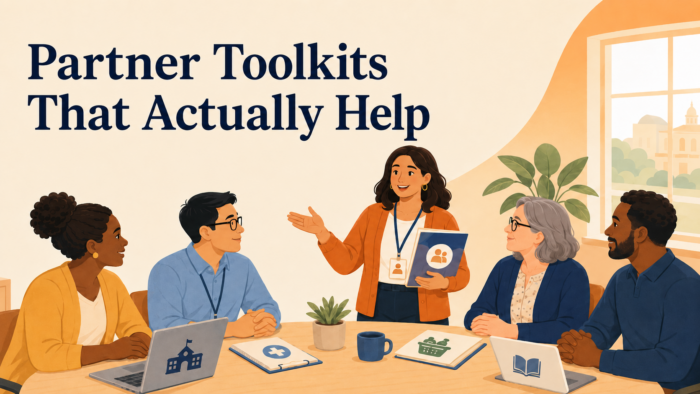
Partner Toolkits That Actually Help: How Human Services Agencies Can Equip Schools, Clinics, Food Banks, and Libraries to Share Accurate Public Benefits Information
Community partners often become the places residents turn when public benefits information feels confusing, urgent, or hard to verify. A parent may ask a school about child care assistance. A patient may ask a clinic about Medicaid renewal. A family may ask a food bank about SNAP, EBT, or missing benefits. A resident may ask a library staff member for help using a benefits portal, uploading documents, printing notices, or understanding where to go next. These partners may not administer the programs, but they often become part of the practical support network residents rely on when agency communication is difficult to navigate.
For human services agencies, public benefits agencies, county social services departments, and state benefits offices, this creates both an opportunity and a risk. Partners can extend the reach of accurate information, reinforce deadlines, help residents find official channels, and reduce avoidable confusion. But if partners are not equipped with current, plain-language, bounded guidance, they may unintentionally share outdated information, overstate what a resident can expect, use terminology that does not match the agency’s notices, or provide advice that belongs with the agency rather than a community organization. The problem is rarely a lack of goodwill. It usually lacks a usable communication system.
A partner toolkit should not be a folder of dense PDFs, old flyers, program brochures, and links copied from agency pages. A toolkit that actually helps gives partners practical language they can use safely. It explains common resident tasks, identifies official sources of truth, clarifies what partners can say, defines what must be referred back to the agency, and gives organizations ready-to-share materials that do not require rewriting. The toolkit should make it easier for partners to support residents while preserving accuracy, privacy, and program integrity.
This is especially important because schools, clinics, food banks, libraries, housing providers, legal aid organizations, faith-based groups, child care resource organizations, immigrant-serving organizations, and other community partners often meet residents in moments when benefits affect daily life. The resident may not be asking for a policy explanation. They may need help understanding a notice, checking whether a renewal is due, finding out how to submit documents, knowing whether a text alert is legitimate, reporting an EBT issue, or identifying where to get language assistance. A strong toolkit gives partners enough structure to guide residents toward the correct next step without requiring the partner to become an eligibility specialist.
Partner communication also affects trust. Residents may trust a school, clinic, food pantry, or library more readily than an agency they associate with delays, confusing notices, or prior frustration. When those trusted organizations share accurate agency-aligned guidance, residents may be more willing to act, verify status, respond to a notice, or ask for official help. When partner information conflicts with agency information, even unintentionally, residents may lose confidence in both. A toolkit that is clear, current, and easy to use helps protect that trust.
The larger goal is not to outsource agency communication to community partners. The agency remains responsible for official guidance, case-specific decisions, and program administration. The goal is to equip partners to reinforce the agency’s communication system in the places where residents already seek help. When partner toolkits are designed well, they reduce misinformation, support resident action, protect partners from overstepping, and help agencies communicate more consistently across the full resident journey.
Partner Toolkits Should Begin With Resident Tasks, Not Agency Programs
 Many partner materials are organized around agency programs. They explain SNAP, Medicaid, cash assistance, child care assistance, EBT, or related benefits as separate service categories. Program information matters, but it is not always the way residents ask for help. A resident may arrive at a school with a child care notice, a clinic with a health coverage question, a food bank with an EBT concern, or a library with a document upload problem. The partner needs to understand the resident’s task before the partner can direct the person to the right source.
A stronger toolkit organizes core guidance around common resident actions. These may include applying for benefits, renewing benefits, sending documents, reporting changes, checking case status, understanding a notice, replacing an EBT card, requesting language assistance, using a portal, or contacting the agency for case-specific help. Each task should explain what the resident is trying to accomplish, what general information may be useful, where the official instructions live, and when the partner should refer the resident back to the agency.
This task-based structure makes the toolkit more usable for partners who serve residents across several programs. A library staff member helping with document upload may not need a full program explanation before helping the resident find the official upload instructions. A clinic navigator may need to know how to direct someone to Medicaid renewal guidance, but also how to explain that case-specific eligibility questions must be handled through the agency. A food bank may need plain-language information about SNAP renewal reminders, EBT theft guidance, and document requests without being asked to interpret a resident’s case.
Organizing by task also reduces the risk of overgeneralization. Partners can see that some guidance applies broadly across programs, while other steps require program-specific or case-specific review. A resident may need to submit income proof for one benefit and a work schedule for another. A renewal may apply to one program but not every benefit in the household. A toolkit that begins with tasks helps partners guide residents toward action without accidentally suggesting that one step resolves everything.
More Than Just Applications: Human Services and Public Benefits Communication Strategies for State and Local Agencies
This article is part of our series on strategic communication for Human Services Agencies, Public Benefits Agencies, and Health and Human Services departments. To learn more and to see the parent article, which links to other content just like this, click the button below.
The Best Toolkits Make Boundaries Clear
A partner toolkit should be helpful, but it should not blur the line between general guidance and official case determination. Community partners can help residents understand a notice, find a phone number, locate a source-of-truth page, gather documents, access a portal, or identify the next agency contact. They should not be placed in the position of deciding eligibility, promising benefit outcomes, interpreting complex case status, confirming whether a document will be accepted, or advising residents about formal appeal strategy unless that role is specifically part of their professional function.
Clear boundaries protect everyone involved. They protect residents from relying on information that may not apply to their case. They protect partners from being asked to answer questions they are not authorized or trained to answer. They protect agencies from inconsistent community guidance that later conflicts with official decisions. A useful toolkit gives partners language for where their support begins and where the resident needs to return to the agency or another appropriate formal channel.
This boundary-setting should not sound like a limitation on partnership. It should sound like a shared commitment to accuracy. The toolkit can explain that partners may help residents find official guidance, understand general steps, prepare questions, gather documents, and connect to agency channels. It can also explain that the agency must handle case-specific decisions, benefit calculations, document acceptance, appeals processing, and privacy-protected case details. When partners understand this distinction, they can support residents more confidently.
The toolkit should also include language partners can use when residents ask for answers the partner cannot responsibly provide. A partner should be able to say that the agency will need to review the case, that the resident should check the official notice or portal, that a specific phone line can provide case information, or that the partner can help the resident prepare for the call but cannot determine the outcome. This practical language helps partners remain useful without overpromising.
Partner Materials Need Source-of-Truth Discipline
Partner toolkits can become outdated quickly if they are built as static collections of files. Benefit processes change, portal names change, document upload instructions change, renewal timelines shift, EBT guidance evolves, office hours change, and agency contact pathways are updated. If partners continue using old flyers, saved PDFs, screenshots, or email attachments, residents may receive guidance that no longer matches the agency’s current process.
A strong partner toolkit should be anchored to maintained source-of-truth pages. Instead of relying only on standalone handouts, the toolkit should point partners to official pages that are actively updated. Those pages should explain common tasks in plain language and include visible update information when appropriate. Partner-facing materials can summarize key messages, but they should direct partners back to the current agency source for details that may change.
This approach also helps partners share information safely. A school, clinic, food bank, or library may want to include public benefits guidance in newsletters, printed resource lists, waiting room handouts, social media posts, or one-on-one conversations. If the agency provides short, approved language with links to maintained pages, partners can share accurate information without rewriting it. The less partners have to interpret or repackage agency guidance on their own, the more consistent the resident experience becomes.
Source-of-truth discipline also supports staff. When residents arrive with partner materials, agency staff should recognize the language and guidance. The partner message should not create expectations that staff then have to correct. A well-maintained toolkit creates alignment among the agency website, notices, call center scripts, lobby guidance, text alerts, and partner outreach. The resident hears the same basic message from every trusted channel.
Toolkits Should Give Partners Language They Can Use in Real Conversations
A partner toolkit is only useful if it works in the way partners actually communicate. Community organizations often do not have time to read long policy documents while helping a resident. A school staff member may have a short conversation with a parent. A clinic navigator may need to explain a renewal during an appointment. A food bank volunteer may need a simple referral phrase. A library staff member may need to guide someone toward the official portal without interpreting the case. The toolkit should support these real interactions.
This means partner materials should include short explanations, plain-language talking points, quick referral language, simple decision guides, and links to current official pages. The language should be accurate but not overly technical. It should help partners identify the resident’s task, direct them to the right agency channel, and avoid making promises. It should also anticipate common resident concerns, such as missing documents, confusing text alerts, delayed status, portal problems, language assistance, and questions about whether benefits are at risk.
The tone of partner materials matters as well. Partners should be able to communicate in a way that is calm, respectful, and action-oriented. A toolkit that uses blame-oriented or bureaucratic language may carry that tone into community settings. A stronger toolkit gives partners language that preserves resident dignity while still explaining the importance of deadlines, documents, and official review. This helps residents feel guided rather than judged.
Real conversation language also makes toolkits easier to train. Agencies can use the same language in partner briefings, webinars, email updates, printed guides, and resource pages. Partners hear the message, see the message, and use the message in a consistent way. Over time, the toolkit becomes more than a document set. It becomes a shared communication framework between the agency and the community organizations residents already trust.
Partner Toolkits Should Reflect Different Partner Roles
A partner toolkit becomes more useful when it recognizes that schools, clinics, food banks, libraries, legal aid organizations, housing providers, and community-based groups do not all interact with residents in the same way. A school may be helping a parent understand child care assistance or a student’s household situation. A clinic may be helping someone respond to a Medicaid notice. A food bank may be asked about SNAP, EBT cards, stolen benefits, or emergency food needs. A library may be supporting portal access, printing, scanning, or document upload. Each partner type may need the same core message, but not the same level of detail or the same format.
Human services agencies should design toolkits with these practical differences in mind. A single master guide may be useful for agency reference, but partners often need shorter, role-specific materials that match their actual resident interactions. A library staff member may need a quick guide on official websites, portal use, document upload boundaries, and where to refer case-specific questions. A clinic navigator may need stronger language around Medicaid renewal, notices, language access, and urgent health coverage questions. A food bank may need plain-language SNAP and EBT guidance that helps residents verify official information without relying on rumor.
This does not mean creating a completely separate toolkit for every partner organization. It means building a modular toolkit that can be adapted by role. The agency can maintain one source of truth and then provide partner-specific versions, quick reference sheets, talking points, and referral cards. Partners should see themselves in the material. If the toolkit feels built for their actual interactions, they are more likely to use it accurately and consistently.
Schools Need Family-Facing Guidance That Connects Benefits to Daily Stability
Schools often hear about public benefits through the practical needs of families. A parent may need child care support to keep working, food assistance to stabilize the household, Medicaid coverage for a child, or help understanding a notice that affects the family’s ability to meet basic needs. School staff may not be benefit experts, but they are often trusted messengers who can help families find the right official pathway.
A school-oriented toolkit should give staff simple language for identifying common benefit questions and referring families to accurate sources. It should avoid asking school staff to interpret eligibility, but it can help them explain where to apply, where to renew, where to ask for language assistance, and where to get help understanding a notice. The toolkit should respect the school’s role while giving families a clearer bridge to the agency.
Clinics Need Guidance That Recognizes Health Coverage Urgency
Clinics often encounter residents when benefits issues affect medical care. A patient may need help understanding Medicaid renewal, coverage status, managed care information, documentation requests, or a notice that appears to threaten coverage. These questions can feel urgent because residents may be trying to schedule appointments, fill prescriptions, maintain treatment, or avoid gaps in care.
A clinic-oriented toolkit should help staff explain official renewal and status pathways without making coverage promises. It should identify where patients can verify current case status, how to respond to notices, how to request language assistance, and when case-specific questions must return to the agency. The guidance should be clear enough for patient navigators and front-desk staff to use without requiring them to interpret program rules beyond their role.
Toolkits Should Include Ready-to-Use Message Blocks
Partners are more likely to share accurate public benefits information when agencies give them language that is ready to use. If partners have to rewrite agency content, shorten long notices, simplify formal guidance, or create their own social posts from dense program pages, the message may drift. The partner may choose a phrase that sounds helpful but creates false expectations. They may accidentally omit a deadline, overstate eligibility, or use terms that do not match the agency’s notice. Ready-to-use message blocks reduce that risk.
A strong toolkit should include short message blocks for common uses: newsletter blurbs, website copy, flyer language, referral scripts, front-desk talking points, text-friendly reminders, social media captions, and staff conversation prompts. These message blocks should use the same terminology as the agency’s notices, portals, call center scripts, and source-of-truth pages. The language should be concise enough for partners to use, but specific enough to guide residents toward official action.
The message blocks should also include clear instructions about when and how to use them. A renewal reminder block should explain that residents should follow their official notice for case-specific deadlines. A document upload block should explain that submitting a document is not the same as final approval. An EBT theft block should direct residents to official reporting and current agency guidance. The toolkit should not simply hand partners copy. It should help them understand the purpose and limits of that copy.
Short Referral Language Prevents Overexplaining
Partners often need a short sentence that moves a resident to the correct agency channel. Without that sentence, they may try to explain more than they should. A simple referral statement can be more useful than a long program description when the resident needs case-specific help.
For example, partner language can state that the organization can help the resident find the official page or prepare questions, but the agency must review the case and provide case-specific answers. This kind of language keeps partners helpful without placing them in the role of eligibility decision-maker.
Shareable Content Should Point Back to the Official Source
Every shareable message should point residents back to the agency’s current source of truth. A partner newsletter, flyer, website post, or social media caption should not become the permanent home of detailed benefits guidance because it may become outdated. The partner message should create awareness and direct residents to the official page or channel.
This is especially important when the topic can change, such as renewal guidance, portal instructions, EBT theft reporting, office hours, document submission methods, or backlog updates. The partner’s role is to amplify the current official pathway, not preserve an old version of agency guidance in circulation.
Toolkits Should Explain What Partners Should Not Say
A helpful partner toolkit should include boundaries in plain language. Partners often want to reassure residents, but reassurance can become risky when it sounds like a promise. A resident may ask whether benefits will continue, whether a document will be accepted, whether a case will be approved, whether a deadline can be extended, or whether a closure can be reversed. In most cases, those answers require agency review, program rules, case details, and protected information that the partner should not be expected to assess.
Agencies should therefore include a clear “do not promise” section in partner toolkits. This section should not sound defensive or legalistic. It should help partners protect residents by avoiding statements that may later prove inaccurate. Partners can say where to apply, where to renew, where to upload documents, how to contact the agency, where to find language assistance, and where to verify official status. They should not promise eligibility, benefit amounts, approval, replacement, expedited processing, or case outcomes unless the agency has specifically authorized that communication for a defined situation.
This boundary language is most effective when paired with alternatives. Instead of simply telling partners what not to say, the toolkit should give them safer language to use. Partners should be able to respond with confidence when residents ask difficult questions. A useful response can acknowledge the concern, explain that the agency must review the case, and direct the resident to the correct official pathway. This preserves trust while keeping the partner within an appropriate role.
Boundaries Protect Residents From False Expectations
False expectations can create real harm. A resident who believes a partner has confirmed approval may delay follow-up. A resident who believes a document will be accepted may stop checking for additional notices. A resident who believes benefits will be replaced or restored may make household decisions based on information that has not been confirmed by the agency.
Clear boundaries help prevent those situations. They ensure that residents understand when guidance is general and when a case-specific answer must come from the agency. This protects the resident’s ability to act based on accurate information.
Boundaries Also Protect Partner Trust
Partners can lose credibility when they share information that later turns out to be incomplete or wrong. This is especially damaging because many residents turn to partners precisely because they trust them. A toolkit that helps partners avoid overpromising protects that relationship.
When partners can say, “I can help you find the official next step, but the agency has to review your case,” they remain useful without creating inaccurate expectations. That kind of clarity helps partners continue serving as trusted bridges between residents and the agency.
Partner Toolkits Should Include Scenario Guidance
Partner toolkits should not only explain programs and tasks in general terms. They should also prepare partners for the real situations they are likely to encounter. Residents rarely approach partners with neatly framed questions. They may say that benefits stopped, a card is not working, a notice is confusing, a document was already sent, the portal will not open, a text message looks suspicious, or a renewal deadline may have passed. Partners need guidance that helps them recognize the type of issue and direct the resident toward the correct official path.
Scenario guidance makes the toolkit more practical. It can present common resident statements and explain how partners should respond. The response should identify the general issue, provide safe language, and point to the correct agency source. For example, a scenario about a resident who says they already submitted documents can guide the partner to recommend checking official case status rather than submitting the same information repeatedly. A scenario about a confusing text alert can direct the resident to verify the message through official agency channels rather than clicking suspicious links.
This type of guidance also helps partners avoid improvisation. Without scenarios, partners may try to solve the problem using their own understanding of the benefits system. With scenarios, they have a stable framework for responding to common issues. The toolkit becomes more than a reference document. It becomes a practical support tool for everyday resident conversations.
Scenarios Should Reflect High-Volume Questions
Agencies should build scenarios from real call center themes, lobby questions, partner feedback, website search terms, and resident complaints. If residents frequently ask whether documents were received, the toolkit should include that scenario. If residents often ask about renewal notices, EBT concerns, portal access, language assistance, or delayed cases, those topics should be included.
High-volume scenarios help partners answer the questions they are most likely to hear. They also help agencies reduce repeated confusion by giving partners aligned language before misinformation spreads through community networks.
Scenarios Should Show Safe Next-Step Language
A scenario is most useful when it gives partners language they can actually say. The response should be short, respectful, and grounded in official guidance. It should not ask partners to diagnose eligibility or interpret case details.
Safe next-step language helps partners stay in their role while still being helpful. It gives residents a path forward and reduces the risk that a well-intentioned partner will provide an answer that belongs with the agency.
Training and Updates Make the Toolkit Useful Over Time
 A partner toolkit should not be released once and forgotten. Public benefits processes change, partner staff turnover, agency terminology evolves, portal instructions shift, and residents raise new questions. A toolkit that is not supported through training and updates will gradually lose usefulness. Partners may continue using old materials because they do not know something has changed, or they may stop using the toolkit because it feels too static to reflect real resident needs.
Agencies should provide lightweight partner training that explains how to use the toolkit, where the source of truth lives, what partners can share, what they should refer back to, and how updates will be communicated. This training does not need to be long or burdensome. A short webinar, recorded walkthrough, briefing sheet, or periodic partner meeting can help organizations understand the toolkit’s structure and boundaries. The goal is to make the toolkit easy to use correctly.
Updates should be predictable. Partners should know how they will be notified when content changes, what materials should be replaced, and where to find the current version. The agency should also invite partner feedback on what residents are asking and where guidance is still unclear. A toolkit that evolves through agency updates and partner feedback becomes part of an ongoing communication relationship, not a static packet of materials.
Version Control Prevents Old Guidance From Circulating
Partner materials should include dates, version labels, or links to current guidance where appropriate. This helps partners know whether they are using the latest material. It also helps agencies retire outdated flyers, screenshots, and handouts before they create confusion.
Version control is especially important for topics that change quickly or carry high consequences. Renewal processes, backlog updates, EBT guidance, portal instructions, and document submission pathways should not circulate indefinitely without review.
Partner Feedback Should Improve the Toolkit
Partners often hear resident confusion before it appears in formal agency data. They can identify which phrases residents do not understand, which notices generate questions, which links are hard to use, and which topics need clearer explanation. Agencies should create a simple feedback loop so partners can share those observations.
That feedback can strengthen the toolkit over time. It can lead to clearer language, better scenarios, more useful referral guidance, and improved source-of-truth pages. Partners become not only distributors of information, but informed contributors to a stronger communication system.
Toolkits Should Make the Source of Truth Easy to Find
A partner toolkit is only as useful as the official guidance behind it. Schools, clinics, food banks, libraries, legal aid organizations, housing providers, and community-based groups may want to help residents quickly, but they should not have to decide which agency page, form, notice, flyer, or portal instruction is the current version. If the toolkit does not make the source of truth obvious, partners may rely on old links, saved PDFs, screenshots, or informal explanations that no longer reflect the agency’s process.
Human services agencies should clearly identify the official source for each major topic in the toolkit. There should be a maintained place for applying, renewing, submitting documents, checking case status, reporting changes, requesting language assistance, using digital tools, understanding notices, and responding to urgent issues such as EBT concerns or delayed benefits. The toolkit should point partners to those official sources instead of asking them to preserve detailed instructions in static materials that can become outdated.
This approach also helps residents. When a partner gives a resident a link, printed handout, or verbal referral, the resident should be directed toward the same guidance they would receive from the agency website, call center, lobby desk, or official notice. The partner becomes a bridge to the agency’s communication system, not a separate source of interpretation. That consistency helps reduce confusion and strengthens trust in the official process.
Partner Toolkits Should Be Easy to Use During Brief Resident Interactions
Many partner conversations are short. A parent may ask a school staff member about a notice during drop-off. A patient may ask a clinic navigator about Medicaid renewal before an appointment. A resident may ask a library staff member for help accessing a portal. A household may ask a food bank volunteer why SNAP benefits changed. In these moments, partners need materials they can use quickly, not a long program manual that requires careful study before every conversation.
A useful toolkit should include short, practical resources that match real partner interactions. Quick-reference sheets, one-page task guides, short talking points, printable referral cards, and direct links to official pages can help partners respond accurately without slowing down service. The toolkit should also make clear which topics require case-specific agency review, so partners do not feel pressured to answer questions beyond their role.
The design of the toolkit should reflect the working conditions of the partner organizations. A library may need desk-friendly instructions for portal support. A clinic may need a workflow for helping patients identify Medicaid renewal actions. A food bank may need brief SNAP and EBT referral language. A school may need family-facing language that can be included in newsletters or shared by support staff. The more the toolkit fits the partner’s environment, the more likely it is to be used correctly.
Materials Should Be Written for Sharing, Not Just Reading
Partner toolkits often fail when the materials are accurate but not shareable. A dense agency explanation may be useful for internal review but difficult for a partner to place in a newsletter, read aloud to a resident, post on a resource board, or include in a community email. If partners have to rewrite everything themselves, the agency loses control of tone, terminology, and accuracy. A toolkit that actually helps gives partners content that is already designed for reuse.
Shareable materials should be plain, concise, and anchored to official sources. They should explain the resident action, identify the correct agency pathway, and avoid details that may become outdated quickly. For example, a partner-facing renewal message can tell residents to check their official notice, use the agency’s renewal page, and contact the agency for case-specific questions. It does not need to restate every rule or deadline in a way that may become inaccurate.
This kind of content also supports consistency across partner networks. If several schools, clinics, food banks, and libraries are sharing the same agency-approved language, residents are more likely to hear one coherent message. That matters because residents may receive information from more than one community source. A shared message reduces the risk that one partner says a renewal is optional, another says documents must be uploaded only through a portal, and another says the resident should call a number that is no longer current.
Toolkits Should Support Language Access and Accessibility
Partner organizations often serve residents who face language, literacy, disability, technology, transportation, or trust barriers. A toolkit that only provides English-language program summaries may not help the residents who most need support. Human services agencies should consider how partner materials can support multilingual communication, plain-language explanation, accessible formats, and clear pathways to interpretation or other assistance.
Language access should be built into the toolkit structure. Partners should know where to direct residents who need help in another language, how to find translated materials, and how to avoid relying on informal interpretation for sensitive case-specific issues. If the agency has multilingual source-of-truth pages, those links should be easy for partners to find and share. If residents need to call or visit the agency for interpretation, the toolkit should explain that pathway clearly.
Accessibility also matters. Materials should be readable, scannable, mobile-friendly, and usable in different settings. A partner should be able to print a guide, share a link, read a short message aloud, or direct someone to a page that is not overly dense. Accessible partner materials do not replace agency obligations, but they help community organizations connect residents to official guidance in a way that is easier to understand and act on.
Toolkits Should Help Partners Handle Misinformation and Rumors
Public benefits information often moves through informal channels. Residents may hear that renewals are paused, documents are no longer needed, EBT benefits can always be replaced, a portal is broken for everyone, or a certain deadline does not apply. Some of these claims may begin from real confusion, partial truth, old guidance, or another resident’s experience. Partners may be asked to confirm or deny these statements, especially when they are trusted community organizations.
A partner toolkit should help organizations respond to misinformation without becoming defensive or overstepping. The toolkit can provide simple language for redirecting residents to the official source of truth. It can explain how to verify current guidance, how to avoid repeating unconfirmed claims, and how to tell residents that case-specific answers must come from the agency. This helps partners remain calm and useful when residents arrive with information that may be incomplete or outdated.
Agencies should also consider giving partners timely updates during high-volume or high-risk communication moments. Renewal periods, EBT theft concerns, portal changes, backlog announcements, office closures, language access updates, and document submission changes can all generate rumors quickly. A toolkit that includes an update process helps partners reinforce current guidance before misinformation becomes harder to correct.
Partner Toolkits Should Strengthen the Agency’s Communication System
The strongest partner toolkits do more than distribute information. They strengthen the entire communication system around public benefits. They connect residents to official guidance, help partners answer common questions safely, reduce avoidable confusion, and create consistency across channels that residents already use. In that sense, a toolkit is not just an outreach product. It is part of how the agency manages trust, access, and operational clarity.
This requires discipline. The toolkit should use the same language as the agency’s notices, website, portal, call center scripts, text alerts, lobby materials, and source-of-truth pages. If the agency tells residents to “send documents” in one channel and partners say “submit verification” in another, confusion can grow. If the agency tells residents to check case status online but partners do not know where the official status pathway is, residents may be sent in circles. Alignment matters because partners often become part of the resident journey whether the agency plans for it or not.
When designed well, partner toolkits reduce the burden on both residents and agencies. Residents receive clearer direction from organizations they already trust. Partners feel more confident sharing information without overstepping. Staff spend less time correcting inaccurate community guidance. Agencies gain a broader, more consistent communication network that supports accurate resident action across schools, clinics, food banks, libraries, and other trusted local spaces.
Partner Toolkits Should Be Maintained as Living Resources
A partner toolkit should not be treated as a one-time outreach package. Public benefits programs, portal instructions, office processes, phone numbers, document submission methods, renewal guidance, EBT procedures, and backlog information can all change. Partner staff also change. A toolkit that was accurate when it was first shared can become less useful if no one owns updates, retires old materials, or tells partners when guidance has changed. When outdated information remains in circulation, residents may follow instructions that no longer match the agency’s current process.
Human services agencies should manage partner toolkits with the same discipline they apply to public notices, websites, and staff scripts. Each toolkit should have a clear owner, a review schedule, a version date, and a process for communicating updates. Materials that are likely to change should link back to maintained source-of-truth pages rather than attempting to include every detail in a static file. Partners should know where to find the current version and how to confirm whether a handout, script, or message block is still valid.
This maintenance work is not just administrative hygiene. It is central to trust. When partners share accurate and current guidance, residents are more likely to act correctly and less likely to receive conflicting instructions. When partners discover that agency materials are outdated or hard to verify, they may stop using them or begin creating their own informal explanations. A living toolkit helps preserve the agency’s role as the authoritative source while still allowing partners to be effective messengers.
Toolkits Should Prepare Partners for High-Volume Communication Moments
Certain moments create predictable spikes in resident questions. Renewal periods, document deadlines, benefit delays, EBT theft concerns, portal changes, office closures, service model shifts, emergency benefits changes, and major notice updates can all generate confusion across the community. Schools, clinics, food banks, libraries, and other partners may begin hearing questions before residents contact the agency directly. If partners do not have current guidance during these moments, informal explanations can spread quickly.
Agencies should prepare partner toolkit add-ons for high-volume communication moments. These updates should explain what is happening, who may be affected, what residents should do, where official guidance lives, and what partners should avoid promising. The language should be short enough to share in newsletters, waiting room handouts, resource tables, school communications, clinic outreach, and community conversations. It should also make clear when a resident needs case-specific agency review.
This kind of preparation helps partners support the agency’s communication strategy instead of reacting separately. A food bank can reinforce current SNAP or EBT guidance. A clinic can point patients to official Medicaid renewal information. A school can help families understand child care assistance reminders. A library can direct residents to the correct portal or upload instructions. When partners receive timely, role-appropriate guidance, residents hear the same core message across the places they already trust.
Partner Briefings Should Focus on Use, Not Just Awareness
Agencies sometimes distribute toolkits by email and assume partners will know how to use them. That assumption can limit impact. Partners may be willing to help, but they need orientation to the toolkit’s structure, boundaries, update process, and intended uses. A short briefing can make the difference between a toolkit that sits unused in an inbox and one that becomes part of regular resident support.
Partner briefings should be practical. They should show partners where to find the source of truth, how to use ready-to-share message blocks, how to respond to common resident questions, when to refer residents back to the agency, and how to avoid overpromising. The briefing should also explain which materials are appropriate for public sharing and which are intended for partner reference only. Partners should leave knowing not only what the toolkit contains, but how to use it responsibly.
Briefings also create an opportunity for dialogue. Partners can tell the agency which questions they are hearing, which materials residents find confusing, which languages or formats are needed, and which referral pathways are not working. This feedback can help the agency refine the toolkit before confusion becomes more widespread. Partner training should not feel like a one-way information dump. It should function as a communication alignment process.
Toolkits Should Help Partners Support Digital Benefits Navigation Safely
Many partner questions now involve digital benefits tools. Residents may ask for help creating an account, resetting a password, uploading documents, checking case status, reading a portal notice, printing a form, scanning paperwork, or understanding a text alert. Libraries, clinics, schools, and community organizations often become practical access points for residents who lack reliable internet, printers, scanners, devices, or digital confidence. Agencies should anticipate this role and give partners clear guidance for digital support.
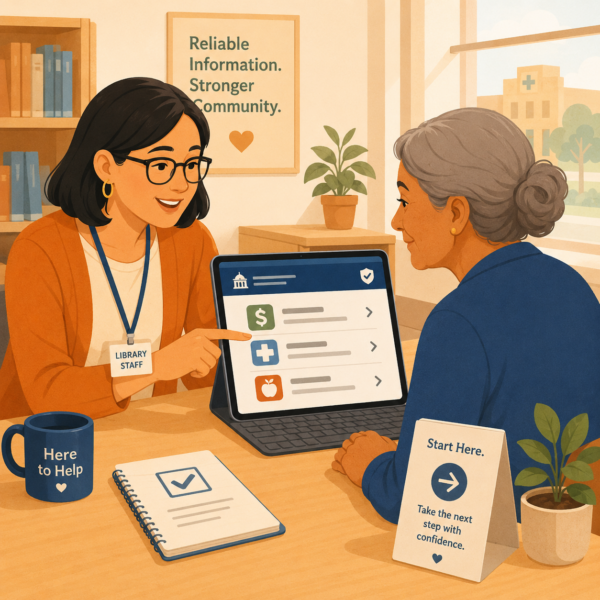
A partner toolkit should explain what partners can safely help with and what must remain with the resident or the agency. Partners may be able to help residents find the official website, understand general portal steps, print materials, scan documents, or identify where document upload instructions are located. They should be careful with passwords, private case information, personally identifiable details, and actions that could be interpreted as case decisions. The toolkit should provide privacy-aware guidance so partners can help without creating risk.
Digital support guidance should also align with agency terminology. If a notice says “send documents,” the toolkit should explain where that action appears in the portal. If the portal uses a formal term, the partner guide should connect it to the plain-language task. If residents receive text alerts, partners should know how to direct them to official verification channels rather than encouraging unsafe link-clicking or informal interpretation. Safe digital navigation support can reduce barriers while protecting resident privacy and agency credibility.
Partner Toolkits Should Include Feedback Loops That Agencies Actually Use
Partner toolkits become stronger when agencies listen to how partners are using them. Community organizations often see patterns that do not immediately appear in agency dashboards. They may notice that residents misunderstand a phrase, avoid a portal step, bring in the same confusing notice, ask repeated questions about a document deadline, or rely on outdated community information. Those observations are valuable because they reveal how agency communication is functioning outside agency-controlled channels.
Agencies should create simple feedback loops for partners. This may include a dedicated email address, a periodic partner meeting, a short feedback form, a quarterly check-in, or a standing agenda item during coalition calls. The process should make it easy for partners to flag confusion, request updated language, identify missing translations, report broken links, or suggest new scenarios for the toolkit. The agency should also communicate back when partner feedback leads to a change, so partners know their observations are being used.
This feedback loop supports continuous improvement. If several partners report confusion about renewal notices, the agency may need to revise the toolkit and the notice language itself. If partners report that residents are submitting duplicate documents, the agency may need clearer status language. If libraries report frequent portal access issues, the agency may need better digital navigation guidance. A toolkit should not only distribute information outward. It should help bring resident experience back into the agency.
Partner Toolkits Should Strengthen Trust Without Shifting Responsibility
Community partners can extend the reach of public benefits communication, but they should not become a substitute for agency responsibility. Residents deserve official guidance that is clear, current, accessible, and easy to verify. Partners can help amplify that guidance, explain general steps, and connect residents to the right channels, but the agency remains responsible for case-specific decisions, privacy-protected information, eligibility determinations, notices, appeals, and program administration.
A strong toolkit reinforces this balance. It gives partners enough information to be helpful, but not so much responsibility that they are expected to interpret complex rules without authority. It equips them to answer common questions, but also gives them referral language for issues that must go back to the agency. It builds on community trust while protecting the accuracy and integrity of the benefits process.
This balance is essential for sustainable partnership. Partners are more likely to participate when the agency respects their role, keeps materials current, provides clear boundaries, and listens to their feedback. Residents benefit when trusted organizations can point them toward accurate information without becoming another source of conflicting advice. Agencies benefit when partner communication strengthens the official message rather than fragmenting it. A well-designed toolkit turns partnership into a disciplined extension of the communication system.
Strategic Communication Support for Human Services and Public Benefits Agencies
 Partner toolkits are not simply outreach materials. They are part of how human services and public benefits agencies extend accurate communication into the places residents already turn for help. Schools, clinics, food banks, libraries, legal aid organizations, housing providers, child care organizations, faith-based groups, immigrant-serving organizations, and other community partners often hear resident questions before the agency does. They are asked to explain notices, identify official resources, support portal access, help with documents, and direct residents toward the right next step.
Because partner communication sits at the intersection of resident trust, agency accuracy, privacy boundaries, language access, digital navigation, and community outreach, many agencies benefit from structured communication support. Internal teams may know the programs and rules deeply, but that does not automatically produce materials that partners can use safely in real conversations. A dense program brochure, outdated flyer, or long list of links may technically contain information, but it may not help a school secretary, clinic navigator, food bank volunteer, or library staff member guide a resident toward the correct official pathway.
Stegmeier Consulting Group (SCG) helps human services and public benefits agencies create partner communication systems that are clear, practical, and aligned with official guidance. That support may include partner toolkit design, message blocks, referral scripts, scenario guidance, source-of-truth page development, partner briefing materials, multilingual communication support, digital navigation guidance, and alignment across notices, websites, portals, call center scripts, lobby materials, and community outreach. The goal is not to shift agency responsibility onto partners. The goal is to equip trusted community organizations with accurate, bounded, easy-to-use information that helps residents act with greater confidence.
This type of support is especially valuable when agencies are managing renewals, document requests, EBT concerns, portal changes, benefit delays, language access needs, or high-volume resident confusion. A strong partner toolkit helps residents receive consistent information in the places they already seek help. It also helps partners avoid overpromising, protects agency credibility, and reduces the spread of outdated or unofficial guidance.
Future Trends in Partner Toolkits for Public Benefits Communication
Human services agencies are likely to place greater emphasis on partner toolkits as public benefits communication becomes more multi-channel and community-based. Residents do not rely only on mailed notices, websites, portals, or call centers. They also ask schools, clinics, food banks, libraries, legal aid providers, and other trusted organizations for help interpreting what the agency is asking them to do. Agencies that equip those partners with clear and current materials will be better positioned to reduce confusion and improve access.
Another likely trend is more task-based partner communication. Instead of providing partners only with program descriptions, agencies will increasingly need toolkits organized around resident actions such as applying, renewing, sending documents, checking case status, reporting changes, requesting language assistance, using a portal, or responding to an urgent notice. This structure is more useful because it reflects how residents actually ask for help.
Agencies may also invest more in partner update systems. A toolkit that is accurate today may become outdated when a portal changes, a process shifts, office hours change, backlog guidance is revised, or new resident questions emerge. Partner communication will need version control, maintained source-of-truth links, briefing materials, and feedback loops so agencies can keep community guidance aligned with current operations.
Finally, partner toolkits will likely become more closely tied to trust and equity strategies. Residents facing language barriers, digital access challenges, transportation limits, disability-related barriers, or prior frustration with public systems may turn first to a trusted local organization. When those organizations have accurate and respectful guidance, they can help residents connect to official pathways earlier and more confidently. Strong partner toolkits make community trust part of the agency’s communication infrastructure without replacing the agency’s formal responsibilities.
Conclusion
Partner toolkits are most effective when they help community organizations share accurate public benefits information without asking them to become eligibility decision-makers. Schools, clinics, food banks, libraries, and other partners can help residents understand general steps, find official resources, prepare questions, access digital tools, and connect to agency channels. They should not be left to interpret case-specific rules, promise outcomes, or rely on outdated materials.
A strong toolkit gives partners ready-to-use language, task-based guidance, clear boundaries, source-of-truth links, scenario support, accessible materials, and a reliable update process. It helps partners answer common questions safely while directing residents back to the agency for official case decisions. It also protects residents from conflicting information and protects partners from being placed in roles they are not authorized or equipped to fill.
In the end, partner toolkits work best when they are treated as part of a broader communication system. The agency remains the official source of truth, but trusted community partners can help residents find and use that truth. When agencies equip partners well, they strengthen access, reduce misinformation, support frontline service, and help residents navigate public benefits with greater clarity and confidence.
SCG’s Strategic Approach to Communication Systems
Align your agency’s messaging, processes, and public engagement strategies.
Human services and public benefits agencies need communication systems that help residents receive accurate guidance across the places they already seek help. Partner toolkits should connect schools, clinics, food banks, libraries, and community organizations to the same source-of-truth guidance used in notices, websites, portals, call center scripts, lobby materials, and staff communication.
SCG helps agencies create communication frameworks that make partner outreach clearer, safer, and more effective. Whether your agency is developing partner toolkits, preparing ready-to-share message blocks, building referral scripts, aligning source-of-truth pages, training community partners, or strengthening multilingual outreach materials, SCG can help build a communication system that supports clarity, access, consistency, and trust. Use the form below to connect with our team and explore how a strategic communication system can help your agency equip partners to share accurate public benefits information.