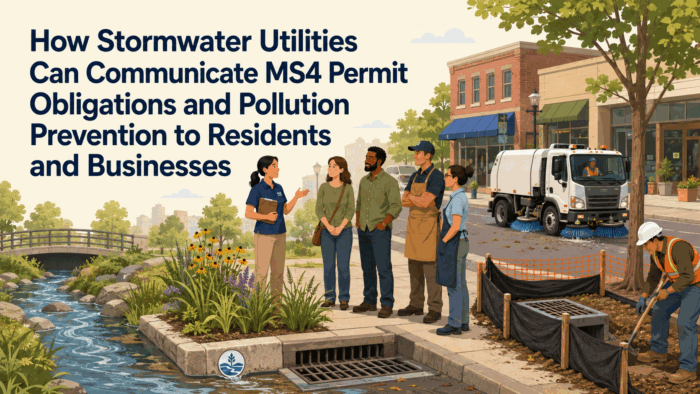
How Stormwater Utilities Can Communicate MS4 Permit Obligations and Pollution Prevention to Residents and Businesses
Stormwater pollution prevention depends almost entirely on the behavior of thousands of individual residents and businesses who do not know that what they put in a storm drain affects water quality in local waterways. The fundamental challenge of municipal separate storm sewer system communication is not technical complexity, though the regulatory framework is genuinely complex. It is behavioral distance. The resident who applies fertilizer to their lawn, the business that washes its parking lot, the driver who changes their oil and disposes of it improperly, the contractor who allows sediment-laden runoff from a construction site to enter a storm drain, none of these individuals is thinking about their community’s waterways when they take those actions. The connection between what they are doing and its downstream consequence is not visible to them in any way that ordinary experience makes apparent.
MS4 permit programs address this behavioral distance through a regulatory framework that places communication and education obligations on municipal permittees as mechanisms for achieving the water quality outcomes that the permit requires. The minimum control measures of the MS4 permit framework, including public education, public participation, illicit discharge detection and elimination, construction site runoff control, post-construction stormwater management, and pollution prevention for municipal operations, all have communication dimensions that determine their effectiveness. A stormwater program that manages all six minimum control measures operationally but communicates inadequately about the behaviors it is trying to change will not achieve the water quality improvement that the permit is designed to produce.
The communication challenge is compounded by the low visibility of stormwater as a utility category in most communities. Water utilities are visible through billing, service connections, and the daily experience of using water. Sewer utilities are visible through billing and the occasional, memorable experience of a backup or overflow. Stormwater utilities are often invisible: they collect fees that many residents do not clearly associate with a specific service they receive, they manage infrastructure that operates underground and entirely out of sight, and they produce outcomes, cleaner waterways, reduced flooding, improved habitat, that are diffuse and difficult to attribute to the stormwater program specifically. Building public support for stormwater fees and compliance with stormwater pollution prevention requirements requires communicating about a service whose value is less immediately apparent than that of any other utility category.
This article examines how stormwater utilities can communicate MS4 permit obligations to the public in terms that translate regulatory requirements into actionable behavior, design outreach programs around the specific pollution sources most common in their service area, reach commercial and industrial operators who are both regulated and potentially significant pollution sources, and measure program effectiveness through monitoring data rather than outreach volume alone.
Translating Regulatory Requirements Into Behavioral Guidance
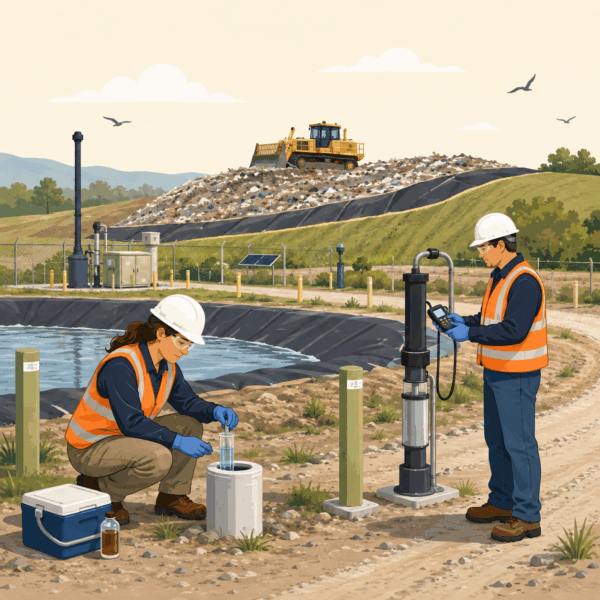 The MS4 permit framework is a regulatory instrument designed to achieve environmental outcomes through a combination of operational controls and public behavior change. The regulatory language of the permit, which refers to best management practices, illicit discharge elimination, runoff reduction, and similar technical concepts, is not communication language. It describes regulatory obligations in terms that regulatory professionals understand and that the general public does not. The communication challenge is to translate the regulatory requirement into the specific behavioral guidance that produces the water quality outcome the regulation is designed to achieve.
The translation from regulatory to behavioral language is not always straightforward, because the connection between specific behaviors and water quality outcomes is not always visible. The regulatory requirement to reduce nutrients in stormwater runoff translates into behavioral guidance about fertilizer application timing, quantity, and type. The requirement to eliminate illicit discharges translates into guidance about what residents and businesses should not put in storm drains, including motor oil, paint, yard waste, pet waste, and cleaning chemicals. The requirement to control construction site runoff translates into specific requirements for erosion and sediment control that contractors must understand and implement. Each of these translations requires both technical knowledge of the relationship between behavior and water quality outcome and communication skill in presenting that relationship in terms that the target audience can understand and act on.
Plain language is not sufficient for effective stormwater behavior change communication on its own. The behavior being asked of residents and businesses is specific, context-dependent, and often counterintuitive to people who have not been taught to think about stormwater pathways. A resident who understands in the abstract that storm drains connect to waterways may still not understand that the fertilizer runoff from their lawn affects water quality in the local creek, because that connection requires them to mentally trace the stormwater pathway from their yard, through the storm drain, and into the receiving water in a way that their daily experience does not prompt. Behavioral stormwater communication that makes this pathway visible, through maps, photographs, watershed diagrams, or the direct connection of the specific storm drain to the specific waterway, is more effective at motivating behavior change than communication that describes the connection in words without making it spatially concrete.
From Fragmentation to Coordination: Communication Strategies for Councils of Governments, Metropolitan Planning Organizations, and Regional Planning Agencies
This case study is part of SCG’s series on communication for councils of governments, metropolitan planning organizations, and regional planning agencies. To learn more and to see the parent article, which links to other content just like this, click the button below.
Designing Outreach Around Specific Pollution Sources
Source Identification as Communication Planning
Effective stormwater outreach programs are designed around the specific pollution sources that are most significant in each jurisdiction’s specific watershed context, not around the generic list of stormwater pollutants that the MS4 permit framework identifies as areas of concern. A coastal community whose primary water quality challenge is bacterial contamination from pet waste and failing septic systems has different outreach priorities than an industrial city whose primary challenge is heavy metal runoff from impervious surfaces. A bedroom suburb with large residential lots and high fertilizer use has different outreach priorities than a dense urban area where the dominant stormwater challenge is litter and trash entering waterways through storm drains.
The monitoring data from the stormwater program itself provides the most direct evidence of which pollution sources are most significant in each jurisdiction. Water quality monitoring at strategic points in the storm sewer system can identify the land uses and activities that contribute most significantly to the pollutant loads being discharged. Illicit discharge inspections and complaint tracking can identify the geographic areas and business categories where illegal discharges are most common. Receiving water quality data can identify the pollutants most responsible for water quality standard violations in the local waterways that the stormwater program is designed to protect.
Designing outreach around this monitoring data, rather than around the categories of concern in the permit framework, produces communication that is both more specific and more evidentially grounded than generic stormwater education. A program that can tell residents that the creek they recreate in fails its bacterial quality standard because of pet waste and that identifies the specific storm drain corridors where pet waste is contributing most significantly to the problem is communicating with a specificity and a waterway connection that generic stormwater education cannot provide. That specificity is the foundation of the behavioral motivation that the outreach is designed to produce.
Residential Behavior Change Priorities
Residential stormwater behavior change programs should prioritize the behaviors that produce the most significant water quality improvement relative to the effort required to change them. In most jurisdictions, the highest-priority residential stormwater behaviors include fertilizer and pesticide management, pet waste pickup and disposal, car washing practices, and proper disposal of household chemicals and materials that should not enter storm drains. Each of these behaviors has a direct connection to specific water quality outcomes that the communication program can make explicit.
Fertilizer management communication requires specific guidance about the application rates, timing, and product selection that minimize nutrient runoff into storm drains and waterways. The resident who applies fertilizer according to a general product label recommendation without understanding the connection between over-application and waterway eutrophication is not making an informed choice about their environmental impact. Communication that explains the specific connection between fertilizer application and nutrient pollution in local waterways, that provides specific guidance about soil testing to determine actual fertilizer needs, and that identifies the specific fertilizer application practices that most significantly reduce runoff, is providing the behavioral specification that general environmental messaging cannot.
Pet waste pickup communication is among the most straightforward residential stormwater behavior changes because the required behavior, picking up pet waste, is simple and widely understood, and the enforcement mechanisms available through leash laws and pet waste ordinances provide a regulatory complement to voluntary behavior change communication. The communication challenge is connecting pet waste on the ground to water quality impairment in specific local waterways in terms that motivate consistent pickup behavior from residents who understand in the abstract that pet waste is a problem but who have not internalized the specific waterway connection that makes it a stormwater pollution issue rather than simply a courtesy and aesthetics issue.
Reaching Commercial and Industrial Operators
 Commercial and industrial operators represent some of the most significant potential sources of stormwater pollution and some of the most inadequately reached audiences in most municipal stormwater communication programs. The business that washes its vehicles or equipment and directs that wash water toward a storm drain, the auto repair shop that improperly stores oil and other fluids where runoff can reach the storm sewer, the food service establishment that allows grease to accumulate in areas where rain events can carry it to storm drains, and the landscaping contractor who allows yard waste and fertilizer bags to be exposed to runoff, are all contributing to stormwater quality problems that their operators may not recognize as their responsibility.
Commercial operator communication requires a different approach than residential communication because the behavior being addressed is connected to business operations rather than household habits, and the audience is more likely to respond to regulatory compliance framing than to environmental values framing. A restaurant owner who does not know that discharging wash water to a storm drain rather than the sanitary sewer is a permit violation under the MS4 program needs to know about the regulatory obligation before the environmental motivation is relevant. Communication that leads with the regulatory requirement, explains what it means for specific business practices, and provides clear guidance about compliant alternatives, is more effective for business audiences than communication that leads with water quality outcomes and assumes the business owner will connect them to their own practices.
Sector-specific commercial stormwater communication, which identifies the specific stormwater pollution risks associated with specific business types and provides the specific best management practices that address those risks, is significantly more effective than generic commercial stormwater guidance. An auto repair shop generates specific stormwater risks from used oil, fluids, and vehicle washing that are different from those of a landscaping contractor, whose risks from fertilizer, pesticide, and organic waste are different from those of a food service establishment, whose risks from grease and food waste are different from those of a construction site, whose risks from sediment, concrete washout, and paint are different again. Communication tailored to each sector’s specific risks and management practices reaches business operators in the context of their actual operations rather than as a generic regulated entity category.
Business sector partnerships with trade associations, chambers of commerce, and business organizations are the most effective channels for reaching commercial operators at scale, for the same reasons that these partnerships are effective in the solid waste context: they reach business owners through existing trusted relationships and institutional channels that the municipality cannot replicate through direct outreach alone. A stormwater program that partners with the local restaurant association to distribute grease management guidance, with the automotive dealers association to distribute vehicle washing and fluid management guidance, or with the homebuilders association to distribute construction site runoff control guidance, is reaching its highest-priority commercial audiences through channels with established credibility.
Illicit Discharge Communication and Public Reporting
Illicit discharge detection and elimination is one of the six minimum control measures of the MS4 permit framework, and effective illicit discharge programs depend heavily on public reporting as a detection mechanism. The stormwater utility cannot inspect every section of its storm sewer system on a schedule that would detect most illicit discharges before they cause significant water quality impacts. Public reports from residents who observe discharges, unusual flows, or suspicious materials in storm drains and waterways supplement the utility’s own monitoring and inspection program in ways that extend detection capacity well beyond what the utility can achieve through its own operations.
Public reporting program communication should make reporting as easy as possible and should clearly identify what residents should report and what they should not. A reporting hotline or online form that asks residents to report any unusual discharge to a storm drain or waterway, that explains what types of discharges are illicit versus normal and expected, and that commits to a specific response timeline for reported discharges, creates the community surveillance capacity that effective illicit discharge detection requires. Communication that makes reporting too complex or too uncertain, by describing reporting criteria in technical language or by failing to provide clear guidance about what happens after a report is made, will generate fewer reports than the actual frequency of illicit discharges in the service area would justify.
Feedback communication to residents who make illicit discharge reports, telling them what the investigation found and what action was taken, is a communication investment that most stormwater programs make inadequately despite its value for sustaining public engagement. A resident who reports a suspicious discharge, receives a generic acknowledgment, and never hears whether their report was investigated or what the outcome was, has no information about whether their reporting was useful and no motivation to report future observations. A resident who receives a response within a defined timeframe, is told whether the report identified an actual illicit discharge, and learns what action was taken to address it, has received the information that makes continued engagement worthwhile and that demonstrates the program’s responsiveness to community participation.
MS4 Permit Public Education Requirements
The public education minimum control measure of the MS4 permit framework requires permittees to implement a public education program that distributes educational materials and performs outreach activities to educate citizens about the impacts of stormwater discharges on water bodies and the steps that the public can take to reduce stormwater pollution. This requirement creates a compliance obligation for stormwater outreach but does not specify what educational approaches produce actual water quality improvement, leaving each permittee to make its own choices about how to allocate the public education investment.
The gap between MS4 permit public education compliance and actual behavior change effectiveness is one of the most significant issues in stormwater program management. A program that distributes brochures to satisfy a distribution quantity requirement without measuring whether the brochures reach their intended audience, whether they are understood, or whether they produce behavior change, has met its permit compliance obligation without achieving the water quality outcome the permit is designed to produce. Stormwater programs that measure the behavioral outcomes of their public education investment, rather than only the outreach activity metrics that permit compliance requires, are making a different and more valuable kind of investment in program effectiveness.
Annual report communication for MS4 permits, which documents the public education activities conducted during the permit year, is a compliance document that most programs use only for regulatory reporting rather than as a communication accountability tool. A program that publishes a plain-language summary of its annual report, explaining what education activities it conducted, what it learned about their effectiveness, and how it is adjusting its approach based on that learning, is treating the annual reporting process as a public accountability opportunity rather than only as a regulatory compliance requirement. This public-facing accountability is particularly important for stormwater programs whose ratepayers fund fees without a clear understanding of what those fees accomplish.
Measuring Effectiveness Through Monitoring Data
The most meaningful measure of stormwater program communication effectiveness is not the volume of outreach activity but the water quality improvement in the receiving waters that the program is designed to protect. A stormwater outreach program that distributes thousands of brochures, conducts dozens of community presentations, and maintains a high-quality website but produces no measurable improvement in the water quality parameters most influenced by the behaviors it is trying to change, has achieved communication activity without communication impact. Conversely, a targeted program that reaches a smaller number of high-priority behavior change targets and produces measurable reduction in the specific pollutants associated with those behaviors, has achieved the environmental outcome that the permit is ultimately designed to deliver.
Connecting outreach program activities to monitoring outcomes requires the geographic and temporal specificity that aggregate program-level monitoring cannot provide. A monitoring program that tracks water quality at the same points in the same receiving waterways regardless of where outreach activities are concentrated cannot reliably attribute changes in water quality to specific outreach interventions. Monitoring programs designed to support outreach program evaluation should sample at points that reflect the geographic areas and land uses targeted by specific outreach interventions, at times that allow changes to be observed following outreach implementation, and for the specific pollutants that the targeted behaviors most significantly affect.
Behavioral surveys that directly measure changes in the practices that stormwater outreach programs are trying to influence provide a bridge between outreach activity and water quality outcome that monitoring data alone cannot supply. A survey that measures fertilizer application practices in a neighborhood targeted by a fertilizer reduction campaign, conducted before and after the campaign, provides direct evidence of whether the campaign changed behavior in the intended direction. That behavioral change measurement, combined with monitoring data that tracks the nutrient loading changes in the receiving waterway served by the targeted neighborhood, creates the evidence chain that connects outreach investment to environmental outcome in terms that permit regulators, program funders, and community members can all evaluate.
Stormwater Utility Fee Communication
Stormwater utilities that charge dedicated fees for stormwater management face a communication challenge that is both similar to and more difficult than the general wastewater utility communication challenge. Both wastewater and stormwater fees fund infrastructure that is largely invisible and services that are taken for granted until they fail. But stormwater fees are newer, less widely understood as a utility category, and more frequently contested by property owners who do not understand why they are paying for stormwater management separately from the drainage services they believe are included in general property taxes or other fees.
Stormwater fee communication must answer the questions that fee payers most frequently ask: What does the fee pay for. Why is it separate from other fees I already pay. How is my fee calculated. What would happen if the program did not exist. What is the program accomplishing. These questions have specific answers that can be communicated clearly, but most stormwater utilities have not invested in the plain-language fee communication that would make those answers accessible to the full range of fee payers.
Credit and incentive programs for fee payers who reduce their impervious surface or implement on-site stormwater management features create communication opportunities that connect fee structure to individual property management decisions. A stormwater credit program that reduces fees for properties with green roofs, rain gardens, permeable pavement, or other features that reduce runoff, is communicating that the fee is not simply a tax for the privilege of having impervious surface but a charge that reflects the actual stormwater management burden each property creates. Communication about these credit programs, which reaches property owners at the moment when they are making capital decisions about their properties, can motivate the on-site stormwater management investment that reduces both individual fee burden and community-wide runoff volume.
How MS4 Communication Compares With Other Utility Communication
Stormwater MS4 communication occupies a distinctive position in the public utility communication landscape because its primary communication goal is not to explain a service that ratepayers receive but to change the behavior of ratepayers who are themselves a source of the environmental problem the utility is designed to address. Water utility communication explains what water service provides and why it costs what it costs. Stormwater MS4 communication asks residents and businesses to change specific practices that they may not currently recognize as connected to the water quality problems the program is trying to solve. This makes stormwater communication more similar to environmental behavior change campaigns than to utility service communication.
The comparison with solid waste recycling education reveals shared behavioral change communication challenges and some important differences. Both require translating environmental outcomes into specific household and business behaviors that produce those outcomes. Both face the challenge of reaching populations with varying levels of environmental motivation and varying baseline knowledge of the connection between their behavior and the environmental outcome. The primary difference is that recycling participation is an additive behavior, adding sorting steps to an existing routine, while stormwater pollution prevention often requires eliminating or modifying existing practices rather than adding new ones. Elimination and modification are behaviorally more difficult than addition, which means that stormwater behavior change communication must address the specific barriers to change more directly than recycling communication typically needs to.
Residential Stormwater Education in Depth
Residential stormwater behavior change requires communication that works at the household scale, connecting the specific practices of individual homeowners and renters to the specific water quality outcomes those practices produce in their community’s waterways. The effectiveness of residential stormwater education depends on making this connection viscerally real for an audience that has no direct sensory experience of the pathway between their actions and the environmental outcome those actions influence.
Lawn care practices are the residential behavior with the most significant aggregate impact on stormwater quality in most residential communities. The timing, quantity, type, and application method of fertilizer and pesticide applications determine the nutrient and chemical loading that residential runoff contributes to local waterways. Communication that addresses each of these dimensions specifically, including the seasonal timing that minimizes runoff risk, the soil testing results that determine actual fertilizer needs, the product formulations that reduce solubility and runoff potential, and the buffer zones around storm drains and waterways where no application should occur, is providing the behavioral specification that residents need to make meaningful changes in their lawn care practices.
Car washing is a stormwater behavior that many residents do not know is regulated or environmentally significant. The wash water from a typical home car washing session, which contains detergents, oil residues, and road grime, flows across impervious surfaces into storm drains and directly to receiving waterways without treatment. Communication that explains this pathway specifically, that identifies the self-serve car wash and commercial car wash alternatives whose drainage flows to the sanitary sewer and receives treatment, and that explains the specific stormwater pollution consequences of home car washing in plain terms, reaches residents at a behavioral decision point they engage with regularly and provides the specific alternative guidance that makes behavior change actionable.
Rain barrel and rain garden adoption programs that provide residents with the physical infrastructure for on-site stormwater management, alongside the behavioral guidance for using that infrastructure effectively, are among the most directly impactful residential stormwater programs because they change the physical relationship between impervious surface and stormwater runoff rather than relying entirely on behavioral modification of existing practices. Communication about these programs should explain not only the installation and operation of rain barrels and rain gardens but the specific volume of runoff they are expected to capture from each property and the specific reduction in storm drain loading that the adoption of these practices produces at the neighborhood scale.
Illicit Discharge Investigation and Communication
Illicit discharge investigation is both an operational function and a communication function. When field staff investigate a reported illicit discharge, they are gathering technical information about the source, composition, and volume of the discharge that the department needs to address it and to report it to regulatory agencies if required. But they are also gathering information that the community members who reported the discharge, and those who are affected by it, deserve to receive in terms that explain what was found, whether it was addressed, and what implications it has for the waterway or neighborhood that experienced it.
The investigation process communication should be transparent about what the investigation involves and what its limitations are. Some illicit discharges are easily traced to their source; others involve intermittent discharges or complex drainage connections that require extended investigation before the source is identified. Telling the community member who reported the discharge what the investigation found, even if that finding is that the source could not be definitively identified, is more respectful of their engagement than silence or a form acknowledgment that their report was received. A finding that the discharge has been addressed, accompanied by a description of the corrective action taken, closes the loop between reporting and resolution in a way that sustains the reporting behavior that effective illicit discharge detection depends on.
Systemic illicit discharge problems, where multiple connected discharges in a drainage area suggest a systematic rather than isolated pattern of improper disposal or illegal connection, require community-level communication that addresses the broader pattern rather than only the individual events. A sewer department that identifies a cluster of illicit discharges in a specific industrial area, connected by a pattern of business type and drainage characteristics, is encountering a communication situation that requires engagement with the relevant business community through the compliance assistance communication channels that reach commercial operators most effectively. Communication that identifies the pattern, explains the regulatory requirements that apply to the businesses involved, and provides clear guidance about the compliant alternative practices, addresses the systemic problem rather than only the individual discharge events.
Stormwater Fee Justification and Community Benefit Communication
Stormwater fees are among the most commonly challenged local government charges because the service they fund is less immediately tangible than the services funded by other utility fees. A water bill pays for water that arrives at the tap. A sewer bill pays for wastewater treatment that the household uses every day. A stormwater fee pays for infrastructure and programs that manage runoff from a much larger area than the individual property, that produce benefits that are diffuse and difficult to attribute to the specific program, and that prevent environmental harm that most fee payers have never directly experienced. Justifying this fee to ratepayers who question its necessity requires communication that makes both the service and its benefits concrete.
Infrastructure benefit communication for stormwater fees should identify the specific infrastructure that the fee funds and the specific community functions that infrastructure performs. Storm drain cleaning that prevents flooding in low-lying areas during significant rain events is a service that affected residents recognize as valuable when flooding is prevented and resent as absent when flooding occurs. Catch basin maintenance that prevents sediment and debris from entering waterways is a service whose value is demonstrated in the improved water clarity and reduced pollution in the waterways that flow through the community. Making these connections explicit in stormwater fee communication gives fee payers the specific service narrative that generic infrastructure investment communication cannot provide.
Comparison with the cost of stormwater management in the absence of a dedicated fee program, including the emergency repair costs associated with failed storm drainage infrastructure, the flood damage costs that preventive maintenance avoids, and the regulatory enforcement costs that an inadequate stormwater program generates, provides the financial justification for stormwater fee investment in terms that residents who question the fee’s necessity can evaluate. A fee program that can demonstrate through specific historical data that it has prevented flooding events, avoided regulatory enforcement actions, and maintained infrastructure that would cost significantly more to repair reactively than to maintain preventively, has a financial case for its continuation that goes beyond the general importance of stormwater management.
Annual fee accountability reporting that documents what the stormwater fee was used for during the preceding year, including specific infrastructure maintenance activities, capital improvements, public education programs, and monitoring and compliance work, provides the transparency that fee payers deserve and the accountability documentation that the program’s credibility requires. This reporting should be accessible to the general public rather than buried in regulatory compliance filings, should be written in plain language that connects each budget category to the specific community benefit it produces, and should be published at a time that allows fee payers to evaluate the program’s performance before the next fee setting cycle.
Watershed Partnerships and Regional Stormwater Communication
Stormwater management is inherently a watershed function, and the water quality outcomes that MS4 programs are designed to achieve depend on actions across the full watershed, not only within the municipal jurisdiction of the permittee. A municipality that achieves significant reduction in its own stormwater pollutant loadings may still fail to meet receiving water quality standards if other jurisdictions in the same watershed are not making equivalent progress. This watershed dependency creates communication opportunities and communication obligations that extend beyond the individual municipality’s public education program.
Watershed partnership programs, which coordinate stormwater management across multiple jurisdictions within a shared watershed, provide communication channels and communication credibility that individual municipalities cannot achieve on their own. A watershed-scale public education campaign that reaches residents across multiple municipalities with a consistent message about the specific waterway they share, the specific pollutants that are most significantly affecting its quality, and the specific behavioral changes that would produce the most meaningful improvement, is more impactful than parallel municipal campaigns that address similar issues without the unifying watershed connection.
Regional water quality monitoring that documents the condition of shared waterways, reported at the watershed scale rather than only at the level of individual municipal permit compliance, provides the accountability communication that motivates and sustains watershed partnership investment. A receiving waterway that is improving in quality as a result of coordinated watershed management across multiple municipalities demonstrates program value in a way that individual permit compliance metrics cannot. Communication that reports on watershed-scale water quality trends, attributing specific improvements to the collective stormwater management investments of watershed partners, builds public support for the sustained effort that meaningful watershed restoration requires.
Watershed councils and citizen monitoring programs that engage residents in the ongoing assessment of watershed health are both a communication resource and a community engagement mechanism that extends stormwater program reach into the populations most directly connected to the watershed. Residents who participate in water quality monitoring, who contribute to the ongoing documentation of waterway conditions, and who see the connection between their own actions and the monitoring data they are collecting, develop a level of watershed engagement that no amount of public education communication can achieve on its own. Programs that support and communicate about citizen monitoring activity are building the community engagement infrastructure that sustains long-term watershed stewardship beyond any single stormwater permit cycle.
Construction Site Stormwater Communication
Construction site stormwater management is one of the most significant and most regulated sources of stormwater pollution in most jurisdictions, and communication with the construction sector is one of the most important and most frequently inadequate components of municipal stormwater programs. Construction sites that disturb soil expose the high-erosion potential of raw earth to rainfall events, generating sediment-laden runoff that carries nutrients, metals, and construction chemicals into storm drains and waterways. The regulatory requirements for construction site erosion and sediment control exist because the water quality consequences of inadequately managed construction runoff are significant and well documented.
Contractor education programs for construction site stormwater management should be sector-specific in the same way that other commercial stormwater outreach programs should be sector-specific. A homebuilder responsible for the erosion and sediment control on a residential construction project needs different information than a commercial developer managing a large impervious surface development, and both need different information than a public works contractor installing utilities in a right-of-way. Communication that addresses the specific stormwater management requirements applicable to each contractor type, in the context of the specific construction activities that contractor performs, reaches the construction sector in a way that generic stormwater education does not.
Pre-construction stormwater management plan review, where the municipality reviews construction stormwater management plans before permits are issued, is a regulatory function whose communication implications deserve explicit attention. Contractors who receive clear, specific feedback on the adequacy of their stormwater management plans before construction begins are better positioned to implement effective controls than those who receive permits without substantive plan review and discover deficiencies only when inspectors identify violations during construction. Communication about the plan review process, including what plans must include, what the most common deficiencies are, and what the consequences of inadequate stormwater management during construction are, provides the pre-construction guidance that effective construction site runoff control requires.
Tying It All Together
Stormwater MS4 communication is the utility communication discipline most directly connected to environmental outcome, in the sense that the permit is ultimately designed to improve water quality in specific receiving water bodies, and the primary mechanism for achieving that improvement is changing the behavior of the thousands of residents and businesses whose land management and operational practices determine what enters the storm sewer system. The communication program is not a public relations function or a compliance documentation exercise. It is an environmental management tool whose effectiveness is properly measured in water quality improvement rather than in outreach volume.
Programs that adopt this outcome-oriented communication framework, that design their outreach around the specific behaviors that monitoring data identifies as most significant in their specific watershed context, that measure their effectiveness through behavioral change and water quality data rather than through activity metrics, and that reach commercial operators as regulated parties alongside residents as voluntary behavior change targets, are making the communication investment that the MS4 permit framework is designed to motivate. Those that use the permit’s public education compliance requirements as an outreach volume target rather than as a behavioral change objective are fulfilling the letter of their permit obligation while falling short of its environmental purpose.
The communities that benefit most from effective stormwater MS4 communication are those whose waterways recover measurable water quality improvement from the behavioral changes that the communication produces. That recovery is the environmental return on the communication investment, and it is the accountability measure that the most serious stormwater programs apply to their outreach programs as rigorously as they apply to their infrastructure management and regulatory compliance functions.
Strategic Communication Support for Stormwater MS4 Programs
 Designing behavior change communication programs that produce measurable water quality improvement requires expertise in environmental behavior change, audience segmentation, monitoring-based program evaluation, and regulatory compliance communication that most stormwater utility communication teams do not maintain as standing competencies. The combination of technical translation, source-specific behavioral guidance, commercial sector outreach, and outcome measurement makes external communication support a productive investment for stormwater programs seeking to improve the environmental effectiveness of their public education efforts.
Stegmeier Consulting Group (SCG) works with stormwater utilities to develop MS4 communication programs that are designed around the specific pollution sources, behavioral priorities, and watershed contexts of each jurisdiction. This includes developing source-specific behavior change communication for the residential and commercial audiences most responsible for priority pollutants, designing commercial sector outreach programs through trade association and business organization partnerships, building public reporting programs that extend illicit discharge detection capacity through community engagement, and establishing monitoring-based program evaluation frameworks that measure water quality outcomes rather than only outreach activity. The objective is a stormwater communication program whose effectiveness is demonstrated in the environmental data rather than only in the permit compliance record.
Future Trends in Stormwater MS4 Communication
The stormwater communication landscape is being reshaped by several converging trends that utilities need to anticipate. Nutrient pollution in receiving waters, driven primarily by nitrogen and phosphorus from residential and agricultural land applications, is the most widespread and most significant water quality impairment in many watersheds, and the communication programs required to address it are becoming more sophisticated as utilities develop the monitoring capacity to identify the specific sources and pathways that contribute most significantly to nutrient loading. Communication that connects specific residential fertilizer practices to specific nutrient loading data in specific waterways is becoming possible in ways that generic fertilizer reduction messaging has never been.
Green infrastructure is creating new communication opportunities and new communication challenges for stormwater utilities. The installation of bioswales, rain gardens, permeable pavement, and urban tree canopy as stormwater management infrastructure is increasingly visible in the communities where it is implemented, creating tangible evidence of stormwater investment that traditional gray infrastructure cannot provide. Communication that connects specific green infrastructure installations to the stormwater management benefits they provide, in terms of runoff volume reduction, pollutant removal, and waterway quality improvement, is communication that makes stormwater program value visible in the landscape in ways that underground pipes and treatment systems cannot.
Climate change is intensifying the stormwater management challenges that MS4 programs address, through increased precipitation intensity, more frequent extreme weather events, and the associated increases in combined sewer overflow frequency, urban flooding severity, and pollutant loading spikes that follow intense rainfall. Stormwater communication programs that incorporate climate resilience into their messaging, connecting stormwater management investment to community resilience against the flooding and water quality consequences of intensifying rainfall, are addressing a community concern that is becoming more salient and more personally experienced in communities across the country.
Conclusion
Stormwater pollution prevention is the environmental outcome that MS4 permit programs are designed to achieve, and public communication is the primary mechanism through which those programs achieve it. The permit compliance framework provides the structure within which stormwater programs operate, but it does not guarantee that the communication investments made within that framework will produce the behavioral changes and water quality improvements that justify the program’s existence and its costs to ratepayers. That guarantee depends on the quality of the communication design, the specificity of the behavioral guidance, the effectiveness of the channel selection, and the rigor of the outcome measurement.
Stormwater utilities that treat their MS4 public education obligation as a behavior change investment, rather than as a compliance documentation requirement, produce programs that demonstrate measurable environmental value. That environmental value is the most compelling accountability communication available to stormwater programs seeking to justify their fees, sustain their permit compliance records, and maintain the community support that sustained stormwater management investment requires. The waterways that improve under effective stormwater programs are the program’s most powerful communication, and the monitoring data that documents that improvement is the accountability evidence that the most credible stormwater utilities make visible to the communities that fund them.
Stegmeier Consulting Group’s Strategic Approach to Communication Systems
Build stormwater MS4 communication around specific behavioral guidance, source-based outreach design, and water quality outcome measurement that demonstrates program environmental value.
Stormwater utilities that design their MS4 public education programs around the specific behavioral changes that monitoring data identifies as most significant produce communication investments that demonstrate environmental value rather than only compliance documentation. Stegmeier Consulting Group (SCG) helps utilities develop source-specific behavior change programs, commercial sector outreach strategies, public reporting systems, and monitoring-based evaluation frameworks that transform stormwater communication from a permit compliance function into a measurable environmental management tool. Use the form below to connect with our team and explore how strategic communication support can strengthen your stormwater program’s environmental effectiveness.