

How Law Enforcement Agencies Can Build Effective Media Relations Strategies
Law enforcement agencies operate in an environment where public understanding can be shaped within minutes by breaking news, social media posts, video footage, witness accounts, elected officials, community organizations, and reporters seeking immediate answers. Agencies that communicate only when a major incident occurs may find themselves trying to establish credibility at the same moment they are managing incomplete information, operational pressure, and intense public scrutiny. Effective media relations therefore requires more than responding to interview requests. It requires an ongoing system for building professional relationships, preparing staff, organizing information, and communicating consistently before, during, and after high-interest events.
The challenge is especially significant because law enforcement agencies often possess information they cannot immediately release. Active investigations, privacy protections, evidentiary concerns, juvenile information, victim considerations, officer safety, personnel matters, court restrictions, and coordination with prosecutors or partner agencies can all limit what can be said publicly. When those limitations are poorly explained, however, a necessary delay can be interpreted as secrecy, avoidance, or inconsistency. A strong media relations strategy helps agencies communicate what is known, what remains uncertain, what cannot yet be released, and when additional information may become available.
Media relations also affects more than crisis response. Reporters routinely cover crime trends, traffic enforcement, recruitment, community programs, major investigations, public records, officer conduct, technology, budgets, and policy changes. Agencies that maintain professional relationships only during controversial events lose opportunities to build familiarity with reporters, explain complex law enforcement processes, and establish reliable communication channels during lower-pressure periods. Consistent engagement creates a stronger foundation when difficult stories eventually arise.
An effective strategy should therefore connect leadership, public information officers, command staff, investigators, dispatch, records personnel, legal counsel, partner agencies, and frontline supervisors around shared communication expectations. The goal is not to control coverage or prevent criticism. It is to ensure that accurate information reaches journalists in a timely, understandable, and professionally managed way while protecting investigations, individual rights, and the agency’s operational responsibilities.
Treat Media Relations as an Ongoing Operational Function
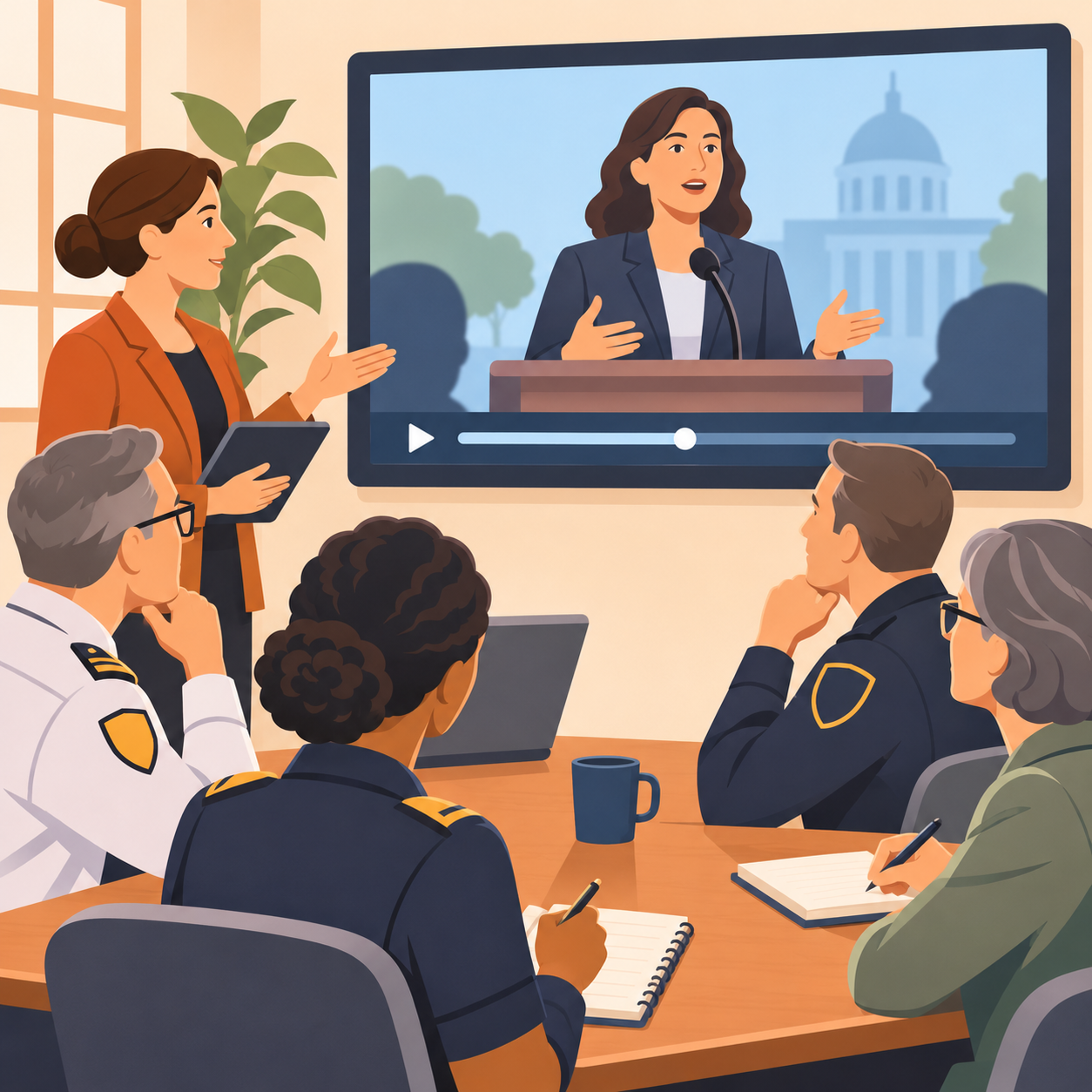 Law enforcement media relations should not begin when reporters arrive at a scene or when a controversial incident starts attracting public attention. Agencies need a standing communication function with defined responsibilities, procedures, and relationships that operate throughout the year. Treating media relations as an ongoing operational responsibility makes the agency more prepared when information demand increases suddenly.
The strategy should identify who monitors media inquiries, who has authority to release information, who coordinates with command staff, and who can serve as a spokesperson when the primary public information officer is unavailable. Smaller departments may assign these functions to command staff or other personnel rather than maintaining a dedicated communications office, but the responsibilities should still be clearly defined.
Ongoing media relations also includes routine communication about agency activities that may interest the public. Crime prevention efforts, public safety campaigns, major arrests, recruitment initiatives, traffic changes, community events, policy updates, and public education opportunities can all provide appropriate occasions for regular engagement with journalists.
Managing media relations as a permanent function reduces dependence on improvisation. Staff know who should respond, reporters know where to direct questions, and leadership has an established process for determining what information can be released. That structure becomes especially valuable during fast-moving incidents.
Build Professional Relationships With Reporters Before a Crisis
Reporters are more likely to understand an agency’s processes and communication limitations when they have interacted with agency representatives before a major event. Law enforcement agencies should establish professional relationships with local journalists, editors, assignment desks, public safety reporters, television producers, radio outlets, and relevant digital news organizations during routine periods rather than waiting until a crisis creates the first interaction.
Relationship building does not require agencies to favor particular journalists or provide privileged access to selected outlets. It involves making communication channels clear, responding consistently, understanding common newsroom needs, and giving reporters opportunities to learn how the agency handles public information. Professional familiarity can reduce confusion when deadlines are tight.
Agencies can also provide background briefings on topics that reporters frequently cover, such as the difference between an arrest and a conviction, how investigations move through different stages, when cases shift to prosecutors, how public records processes work, or why certain information may temporarily be withheld. These briefings should provide general education rather than confidential information about active cases.
Strong relationships do not guarantee favorable coverage, nor should that be the objective. They create a professional environment in which reporters know whom to contact, understand how the agency works, and have a clearer basis for evaluating information when high-profile events occur.
From Sirens to Social Media: Effective Communication Strategies for Law Enforcement & Public Safety Agencies
This article is part of our series on strategic communication for law enforcement and public safety agencies. To learn more and to see the parent article, which links to other content just like this, click the button below.
Establish Clear Rules for Who Speaks for the Agency
Conflicting statements from different law enforcement personnel can quickly undermine credibility, particularly during breaking news. Agencies should establish clear rules identifying who is authorized to provide official information to the media and under what circumstances. Those rules should be understood by command staff, investigators, patrol personnel, dispatchers, records staff, and anyone else who may receive media inquiries.
The designated spokesperson may be a public information officer, chief or sheriff, command officer, investigator, or another authorized representative depending on the subject and the size of the organization. The important factor is that responsibility is intentional rather than determined by whichever employee happens to answer the phone or encounter a reporter.
Agencies should also explain what employees should do when approached directly by the media. Frontline personnel need a simple referral process that allows them to remain courteous and helpful without providing information they are not authorized to release. A reporter should be directed quickly to the appropriate contact rather than passed among several offices.
Clear spokesperson rules also help protect internal coordination. When one office controls official updates, the agency can verify facts, confirm release authority, coordinate with investigative personnel, and maintain consistent terminology before information becomes public.
Develop a Media Inquiry Protocol That Works Under Deadline Pressure
Newsrooms operate under tight deadlines, and delays that appear minor inside an agency can significantly affect how a story develops. Law enforcement agencies should create a media inquiry protocol that allows staff to acknowledge requests quickly, determine what information is available, and provide realistic expectations about when a response may be possible. Reporters should not have to repeatedly contact different employees to determine whether anyone has received their request.
The protocol should identify how inquiries arrive, who logs them, who determines their urgency, and who gathers the necessary information. It should also distinguish routine requests from breaking incidents, complex investigations, records requests, and inquiries that require legal or command review. Different categories may require different response paths.
Even when the agency cannot immediately answer a question, acknowledging the request can be useful. A brief response confirming that the inquiry is being reviewed and identifying when another update may be available is more informative than silence. Agencies should avoid promising information by a specific time unless they have a reasonable basis for doing so.
A structured inquiry process also improves internal accountability. Leadership can see which issues are generating attention, whether inquiries remain unanswered, and where recurring delays occur. Over time, those patterns can help the agency improve staffing, templates, approval procedures, and media response capacity.
Distinguish a Media Inquiry From a Public Records Request
Reporters may ask questions that can be answered through ordinary public information procedures while also requesting documents, video, reports, recordings, or other records that must move through a formal disclosure process. Agencies should explain this distinction clearly so reporters understand why different parts of the same request may be handled on different timelines.
The media relations function can provide available factual information without attempting to bypass the agency’s records procedures. At the same time, records personnel should understand when an inquiry has significant public interest so communication staff can prepare for questions that may arise when materials are released.
Clear coordination prevents reporters from receiving conflicting instructions and helps the agency maintain consistent expectations. A media inquiry and a records request may relate to the same incident, but they should not be treated as though they are administratively identical.
Create a Reliable Process for Verifying Information Before Release
Speed matters in media relations, but releasing inaccurate information can create greater problems than responding more slowly. Law enforcement agencies should establish a verification process that allows public information staff to confirm critical facts before making them public. The process should be fast enough for breaking news while still protecting against avoidable errors.
Verification should distinguish confirmed facts from preliminary information. Early in an incident, details about identities, injuries, suspect descriptions, weapons, sequence of events, or investigative conclusions may change as additional evidence becomes available. Agencies should communicate that uncertainty rather than presenting preliminary information as final.
Public information staff should know which operational units can confirm different types of information. Dispatch may verify call times, investigators may confirm case status, command staff may authorize release of sensitive details, and partner agencies may control information when jurisdiction is shared. A defined verification chain reduces unnecessary back-and-forth.
If the agency later discovers that released information was incorrect, the correction should be made promptly and visibly. Attempting to quietly replace inaccurate information can create additional distrust. A transparent correction demonstrates that the agency values accuracy even when mistakes occur.
Explain Information Limits Instead of Simply Saying “No Comment”
Law enforcement agencies often have legitimate reasons for withholding information, but a repeated “no comment” response can leave reporters and the public without any understanding of why information cannot be released. Whenever possible, agencies should explain the type of restriction involved without disclosing the protected information itself.
An agency might explain that certain details cannot yet be released because they could compromise an active investigation, identify a protected victim, interfere with notification of family members, reveal sensitive evidence, or fall under another applicable restriction. The exact reason will depend on the circumstances and governing requirements.
This approach does not mean the agency must debate every decision about disclosure. It provides enough context for reporters to understand that the limitation is connected to a specific operational or legal concern rather than a general unwillingness to answer questions.
Agencies should also explain when the restriction may change. If additional information can be released after notification, charging decisions, investigative milestones, or another event, reporters should be told that an update may follow. Even when the timing remains uncertain, describing the process is more useful than leaving the information gap unexplained.
Prepare for Breaking News Before the Next Major Incident
High-profile incidents create immediate demands for information at the same time law enforcement personnel are managing operational response, scene security, evidence, victim needs, and investigative coordination. Agencies should prepare communication procedures in advance so the media response does not have to be invented while the incident is unfolding.
Preparation can include notification protocols, spokesperson assignments, media staging procedures, holding statement templates, approval chains, press briefing procedures, social media coordination, and contact lists for partner agencies. These tools should be flexible enough to fit different incidents rather than assuming every event will follow the same pattern.
Agencies should also decide how communication responsibilities will be divided when several organizations are involved. A major incident may involve municipal police, county sheriffs, state agencies, fire and emergency medical services, prosecutors, schools, transportation agencies, or federal partners. Without advance coordination, multiple organizations may issue overlapping or inconsistent information.
Prepared systems allow the agency to communicate sooner while still preserving accuracy. The first message may contain limited information, but it can confirm that the agency is responding, identify any immediate public safety instructions, and explain when additional updates are expected.
Use Holding Statements to Acknowledge Events Without Speculating
A holding statement allows a law enforcement agency to acknowledge a developing incident before enough verified information is available for a detailed release. Used correctly, it can reduce the information vacuum that develops when news of an event spreads through social media or witnesses before the agency is prepared to discuss the facts.
The statement should confirm only what the agency knows and can responsibly release. It may identify the general nature and location of the incident, explain that personnel are responding, provide immediate safety instructions where necessary, and state that additional information will be released when verified.
Holding statements should avoid speculation about motive, responsibility, identities, or outcomes. Early assumptions can become difficult to correct once they circulate widely. The purpose of the statement is to establish an authoritative source of information, not to provide a complete account before the investigation supports one.
Agencies can prepare adaptable holding statement frameworks in advance, but they should never publish a generic template without checking whether it accurately fits the event. Prepared language is valuable because it reduces drafting time, while case-specific review preserves accuracy.
Coordinate Media Relations With Agency Social Media Without Treating Them as the Same Channel
News media and agency social media serve overlapping audiences, but they perform different functions and should not be treated as interchangeable. Law enforcement agencies should coordinate the information released through both channels while recognizing that reporters often need additional context, clarification, interview access, and procedural information that cannot be conveyed through a short public post.
Social media can distribute urgent information quickly and provide a public record of agency updates. Reporters will often use those posts as a starting point, particularly during breaking events. The media relations strategy should therefore ensure that social posts and direct statements to journalists do not contradict one another.
At the same time, agencies should avoid directing every reporter to social media instead of responding to legitimate questions. A posted statement may answer the basic facts but leave unresolved questions about investigative status, jurisdiction, next steps, or the meaning of technical terminology. Media relations requires additional interaction when appropriate.
Coordination also means deciding which channel should release information first. In some situations, simultaneous distribution may support fairness and consistency, while other circumstances may require direct notification to affected parties before broader publication. The agency should make those decisions through established policy rather than improvisation.
Define What Effective Media Relations Actually Means
Law enforcement agencies should evaluate media relations based on communication performance rather than whether coverage is positive. Independent journalists may publish criticism, question agency decisions, or highlight viewpoints that differ from the agency’s position. Effective media relations does not eliminate those outcomes and should not be measured by whether reporters adopt the agency’s preferred narrative.
More useful measures include response time, factual accuracy, consistency across spokespersons, correction speed, accessibility of public information, reporter understanding of agency processes, and the agency’s ability to provide timely updates during major incidents. These indicators focus on responsibilities the agency can actually control.
Agencies can also review recurring reporter questions to identify information that should be explained proactively. If journalists repeatedly misunderstand a process, classification, policy, or investigative stage, the agency may need stronger background materials or more consistent terminology. Media inquiries can therefore become a source of communication intelligence.
A mature media relations strategy builds credibility through predictable behavior over time. Reporters may not always agree with the agency, but they should know that inquiries will be handled professionally, information will be verified before release, legitimate limitations will be explained, and corrections will be made when necessary. That consistency establishes the foundation for effective communication when public attention is at its highest.
Build a Reporter Contact System That Supports Fast, Consistent Communication
Law enforcement agencies should maintain a current media contact system that identifies local reporters, editors, assignment desks, producers, radio outlets, digital publications, and other organizations that regularly cover public safety. This information should be organized so public information staff can quickly distribute updates, confirm who received them, and identify which outlets may need direct follow-up during major incidents. A contact system should be treated as an operational resource rather than a static list that is updated only when someone notices that an email address no longer works.
The agency should also distinguish between general newsroom contacts and reporters who regularly cover law enforcement, courts, local government, schools, transportation, or emergency response. Different stories may require different outreach, and a reporter who understands a particular beat may need less background explanation than someone covering the issue for the first time. Maintaining this context can make communication more efficient without giving preferred treatment to selected journalists.
Media contact information should be updated regularly because newsroom staffing changes frequently. Public information staff can confirm whether journalists remain in the same role, whether assignment desks use new communication channels, and whether outlets have changed how they receive urgent information. The agency should also maintain redundancy so communication does not depend on one individual reporter being available.
A reliable contact system helps the agency reach the media quickly while reducing inconsistent distribution. It also supports fairness by giving established outlets access to the same core information at approximately the same time rather than relying on informal personal relationships to determine who hears first.
Create a Predictable Rhythm for Routine Media Communication
Agencies that communicate only during emergencies may appear inaccessible during normal periods and reactive when a major incident occurs. Law enforcement agencies should establish a predictable rhythm of routine media communication that helps reporters understand what kinds of information the agency provides, how frequently updates may be available, and where to find authoritative material. Regular communication creates familiarity before public attention intensifies.
This rhythm can include routine news releases, crime trend updates, public safety campaigns, recruitment information, community event notices, policy announcements, traffic enforcement initiatives, seasonal safety guidance, and other appropriate material. The objective is not to generate constant publicity but to ensure that meaningful agency information is distributed in a consistent way.
Routine communication also gives the agency an opportunity to explain topics that are difficult to introduce during breaking news. Reporters may benefit from background information about investigative procedures, evidence handling, use-of-force review, body-worn camera release processes, public records procedures, or other recurring subjects. Providing this context during lower-pressure periods can improve understanding later.
A predictable communication rhythm also creates internal discipline. Agency staff become accustomed to identifying information that may need public explanation, routing it through the appropriate review process, and coordinating with public information personnel before confusion develops.
Prepare Background Materials for Issues Reporters Cover Repeatedly
Reporters often return to the same law enforcement topics across multiple stories, yet agencies may answer the same foundational questions from the beginning each time. Law enforcement agencies can improve efficiency by developing background materials that explain recurring processes, terminology, and responsibilities in a way that can be shared whenever those issues arise. These materials should provide context without commenting on facts that remain specific to an active case.
Background resources may explain how arrests differ from charges and convictions, how cases move from investigators to prosecutors, how officer-involved incidents are reviewed, how public records requests are processed, or what different units within the agency do. The exact topics should reflect the issues that reporters most frequently ask about in that jurisdiction.
The agency should review these materials carefully so they do not oversimplify procedures that vary by case. A background guide can explain the usual process while noting where decisions depend on investigative facts, prosecutor involvement, court orders, or other factors. This prevents a general educational resource from being treated as a promise about a specific case.
Well-designed background materials allow reporters to spend less time trying to understand basic structures and more time asking substantive questions. They also support consistency because agency staff can rely on an approved explanation instead of recreating one under deadline pressure.
Create a Media Background Library for Recurring Law Enforcement Topics
A media background library can organize general explanations, terminology guides, organizational charts, frequently asked questions, policy summaries, public records guidance, and other resources in one location. Reporters should be able to locate basic information without contacting the agency for every routine question.
The library should be reviewed periodically to ensure that policies, unit names, procedures, and contact information remain current. Outdated explanatory material can create confusion and may be cited long after internal practices have changed.
A well-maintained background library also helps agency staff. Public information officers, commanders, and other authorized spokespersons can draw from the same approved material, reducing the likelihood that different representatives explain the same process in substantially different ways.
Develop Standards for News Releases That Reporters Can Use Quickly
Law enforcement news releases should provide reporters with the essential facts in a structure that can be understood quickly. Releases that begin with ceremonial language, internal terminology, or unnecessary detail may make it harder for journalists to identify what actually happened. Agencies should organize information around the questions a reporter is most likely to need answered first.
The opening should generally identify the event, location, approximate time, agency involvement, and current status when those details can be released. Additional paragraphs can provide relevant context, investigative status, public safety information, and next steps. The release should distinguish confirmed information from details that remain under investigation.
Names, ages, addresses, charges, injuries, or other personal information should be included only when the agency is authorized to release them. The desire to make a release complete should never override privacy, investigative, or legal restrictions. At the same time, information that can be released should not be buried beneath generic language.
Consistent news release structure benefits both reporters and agency staff. Journalists know where to locate critical facts, while public information personnel have a repeatable framework that supports faster drafting and review during high-pressure situations.
Use Press Briefings When the Story Requires More Than a Written Statement
A written release may be sufficient for a routine incident, but complex or high-interest events can generate questions that are difficult to address effectively through written updates alone. Law enforcement agencies should establish criteria for when a press briefing or media availability is appropriate. The decision should reflect public information needs rather than simply the number of reporters calling.
Press briefings can be useful when an incident has significant public safety implications, involves multiple agencies, is producing widespread misinformation, or requires explanation of a complicated investigative process. They can also provide a controlled setting in which the agency can present verified facts and clarify what remains unknown.
The agency should determine in advance who will speak, what information has been approved, which topics cannot yet be discussed, and who will handle follow-up questions. A spokesperson should not learn sensitive limitations for the first time while standing in front of cameras. Preparation supports both accuracy and confidence.
Briefings should also have a clear purpose. Holding frequent press conferences with little new information can reduce their value, while avoiding them entirely during a major event may increase speculation. Agencies should use them when direct explanation materially improves public understanding.
Prepare Spokespersons for Questions Beyond the Written Statement
Reporters often ask questions that go beyond the facts included in a prepared release, and authorized spokespersons need enough preparation to respond without speculating or contradicting the agency’s official position. Law enforcement agencies should train spokespeople to understand both the substance of the issue and the boundaries of what can be discussed.
Preparation should include likely questions, difficult questions, terminology that requires explanation, known information gaps, and topics that must be referred elsewhere. A spokesperson should be able to explain why certain information is unavailable rather than simply repeating a scripted answer. This makes the response more informative without expanding the scope of disclosure.
Spokespersons should also be comfortable acknowledging uncertainty. Saying that investigators are still confirming a detail can be more credible than offering an answer that later proves inaccurate. The pressure to respond immediately should not override the need to distinguish verified facts from assumptions.
Training should include practice interviews and scenario exercises, especially for personnel who may speak during critical incidents. Rehearsing difficult exchanges helps staff maintain a calm, professional tone when questions become repetitive, skeptical, or emotionally charged.
Create a Process for Coordinating Multi-Agency Media Messages
 Major law enforcement incidents often involve several organizations, and inconsistent communication between them can create confusion quickly. A municipal police department, sheriff’s office, state agency, prosecutor, fire department, school district, emergency management office, or federal partner may each hold different pieces of information. Agencies should establish a process for coordinating messages before several organizations begin issuing separate updates.
The first step is identifying which organization has primary communication responsibility for the incident or for particular aspects of it. One agency may lead the investigation while another manages traffic, emergency response, victim services, or prosecution. Media communication should reflect those distinctions rather than implying that every agency can speak for the entire event.
Partner agencies should also agree on basic facts, terminology, timing, and referral procedures before public release whenever operational circumstances allow. If reporters ask one organization about an issue controlled by another, staff should know where to direct the question rather than offering an incomplete answer.
Coordination does not require every organization to use identical language, but the core facts should align. Consistent multi-agency communication strengthens credibility and reduces the likelihood that differences in wording will be interpreted as evidence that agencies disagree about what occurred.
Respond to Inaccurate Reporting Through a Defined Correction Process
Media coverage may occasionally contain factual errors, incomplete information, or descriptions the agency believes are misleading. Law enforcement agencies should establish a professional process for addressing inaccuracies rather than responding impulsively through social media or personal exchanges with reporters. The goal should be factual correction, not retaliation for unfavorable coverage.
The agency should first determine whether the issue is a genuine factual error or a disagreement about interpretation. A misspelled name, incorrect incident location, inaccurate quote, or wrong case status may justify a correction request. A reporter’s critical analysis or inclusion of opposing viewpoints is different and should not automatically be treated as inaccurate reporting.
Correction requests should identify the specific information believed to be wrong and provide the supporting facts available to the agency. Public information personnel should communicate directly with the reporter or editor when possible rather than escalating immediately through public channels. This allows the newsroom an opportunity to review and correct the information.
If the issue has significant public safety implications or misinformation continues to spread, the agency may need to issue its own clarification publicly. That response should remain factual and focused on correcting the record rather than criticizing individual journalists. A professional correction process protects credibility more effectively than public confrontation.
Manage Exclusive Requests Without Undermining Fair Access
Reporters may request individual interviews, early access to information, ride-alongs, background conversations, or other forms of access that are not available to every outlet at the same time. Law enforcement agencies should establish clear standards for handling these requests so decisions are based on legitimate communication considerations rather than personal relationships or favorable coverage.
Some individualized access can serve a valid public education purpose. A reporter may be developing an in-depth story about recruitment, forensic work, community policing, or another subject that requires more extensive access than a routine news release can provide. The agency can accommodate such requests where appropriate while maintaining consistent eligibility standards.
Breaking news and official enforcement information, however, generally require a more equitable distribution approach. Agencies should avoid routinely giving one outlet essential public information before others without a clear operational reason. Doing so can damage relationships and create perceptions that access depends on how positively an outlet covers the agency.
Written guidelines can help staff distinguish between routine public information, individualized feature access, embargoed information where appropriate, and communication that should be distributed broadly. Transparent standards support both media fairness and internal decision-making.
Build Media Relations Around Credibility Rather Than Message Control
Law enforcement agencies sometimes approach media relations as an effort to control how stories are framed, but independent journalism does not operate as an extension of agency communication. Attempts to pressure reporters toward favorable coverage can damage long-term relationships and make legitimate agency information appear less credible. The stronger objective is to become a reliable source of accurate, timely, and understandable information.
Credibility develops when the agency provides verified facts, explains uncertainty, corrects errors, responds consistently, and maintains communication even when a story is difficult. Reporters may still publish critical coverage or highlight perspectives that challenge agency decisions. Those outcomes do not necessarily indicate that the media relations strategy failed.
Agencies should instead evaluate whether reporters had access to accurate information and whether the agency explained its role clearly. If an article contains criticism but accurately reflects the agency’s position and the known facts, the communication process may have worked as intended.
A credibility-centered approach also helps staff maintain professional boundaries. Public information personnel can advocate for factual accuracy and context without attempting to determine the final narrative. Over time, that consistency can strengthen both reporter relationships and public confidence in the agency’s communication.
Communicate During Officer-Involved and Other High-Scrutiny Incidents Without Getting Ahead of the Facts
Officer-involved shootings, deaths in custody, major uses of force, pursuits, and other high-scrutiny incidents can generate immediate media attention before investigators have established a complete factual record. Law enforcement agencies need a communication approach that acknowledges the seriousness of the event while clearly separating confirmed information from preliminary observations. The pressure to provide a full account quickly should not lead the agency to release conclusions that later change.
Initial communication should focus on facts that can be verified, immediate public safety information, the investigative structure, and the next steps in the review process. Agencies should explain which organization is leading the investigation, whether an outside agency is involved, and when additional information may become available. This procedural context can be especially important when the agency itself is involved in the incident under review.
Agencies should avoid characterizing the conduct of officers, victims, witnesses, or other involved individuals before the relevant investigation supports those conclusions. Early descriptions can shape public interpretation long before evidence has been fully evaluated. Even language intended to provide reassurance can create credibility problems if later findings differ from the agency’s first account.
Media relations during these incidents should therefore emphasize disciplined updates rather than premature completeness. Reporters may continue asking questions the agency cannot yet answer, but a consistent explanation of what is known, what remains under investigation, and who is responsible for the next stage can provide useful information without compromising the integrity of the review.
Explain Video and Audio Evidence Before Public Release Becomes the Entire Story
Body-worn camera footage, dashboard video, surveillance recordings, dispatch audio, and other digital evidence can become central to media coverage of law enforcement incidents. Agencies should prepare reporters to understand that these materials may show only part of an event and that the process for reviewing or releasing them may involve investigative, privacy, legal, or technical considerations. Communication should begin before the release itself becomes the only point of public attention.
When footage is expected to be released, agencies should explain what the material represents and what it does not necessarily establish. A single camera angle may not capture everything an officer, witness, or other participant could see or hear, and timestamps, missing portions, redactions, or technical limitations may require explanation. Providing this context should not become an attempt to instruct reporters on how to interpret the evidence.
The agency should also explain the release process in advance where possible. Reporters should understand whether footage requires legal review, redaction, notification, coordination with prosecutors, or another step before public disclosure. If the timeline varies by case, the agency should say so rather than creating a universal expectation it cannot consistently meet.
Once material is released, public information staff should be prepared for detailed questions about what appears in the recording. The response should distinguish between what the agency can confirm from the evidence and what remains part of an investigative or adjudicative process. Careful explanation can support transparency without turning a media briefing into a substitute for formal fact-finding.
Communicate Crime Data and Trends Without Creating Misleading Narratives
Reporters frequently ask whether crime is increasing, decreasing, or shifting within a community, and law enforcement agencies should be prepared to provide context that goes beyond isolated incidents. Crime data can support more accurate coverage, but statistics can also be misunderstood when reporting periods, offense categories, population changes, reporting practices, or geographic boundaries are not explained. Agencies should therefore treat crime data communication as a distinct media relations responsibility.
When releasing statistics, the agency should clearly identify the period being measured, the categories included, and the basis for comparison. A short-term increase in one offense category may not indicate a broader trend, while a decline in reported incidents may not explain changes in calls for service, enforcement activity, or reporting behavior. Reporters need enough methodological context to interpret the numbers responsibly.
Agencies should also avoid selectively presenting only the statistics that support a preferred message. Credibility is stronger when the agency explains both improvements and areas of concern, including uncertainty or limitations in the available data. If reporting systems or classification practices changed, that information should accompany the comparison.
Media relations staff can help reporters distinguish between a notable incident and a sustained pattern. Providing periodic data summaries, definitions, and historical context can reduce the likelihood that one event is treated as evidence of a communitywide trend without supporting information.
Build a Crime Data Explanation Guide for Reporters
A concise crime data guide can explain commonly used categories, reporting periods, geographic boundaries, and the differences among calls for service, reported offenses, arrests, clearances, and other measures. Reporters can then refer to the same definitions when interpreting agency statistics.
The guide should also identify major limitations that routinely affect comparison. Changes in reporting systems, offense definitions, data completeness, or other methodological factors should be explained where relevant so journalists do not compare numbers that are not directly equivalent.
Providing this background does not prevent disagreement about what the data means. It gives reporters a clearer factual foundation for analyzing the information and reduces avoidable errors caused by unfamiliarity with law enforcement reporting systems.
Explain Arrests, Charges, and Case Statuses Without Implying Guilt
Media coverage often moves quickly from an arrest to assumptions about responsibility, and law enforcement agencies should communicate case status carefully. An arrest, citation, booking, referral, charging decision, prosecution, and conviction are different stages, and the agency’s language should preserve those distinctions. Reporters should not have to infer the legal status of a case from vague terminology.
News releases and spokespersons should identify what action the agency actually took and avoid language that treats an allegation as an established fact. When charges are filed by a prosecutor or another authority, the agency should distinguish that decision from its own investigative work. The same care applies when charges change, are dismissed, or are never filed.
Agencies should also explain what happens after the law enforcement portion of a case ends. Reporters may continue contacting the agency about court proceedings, plea negotiations, sentencing, or prosecution decisions that are controlled by another office. Clear referral guidance helps prevent the police department or sheriff’s office from appearing evasive when it simply does not control the next stage.
Accurate case-status language protects both credibility and individual rights. It also gives reporters a more precise framework for covering developments over time rather than collapsing the entire criminal justice process into the moment of arrest.
Prepare for Media Questions About Officer Conduct and Internal Review
Allegations involving officer misconduct, discipline, policy violations, or internal investigations create a difficult communication environment because public interest may be high while personnel or investigative restrictions limit disclosure. Law enforcement agencies should establish a consistent approach for explaining the process without speculating about outcomes or discussing protected information.
The agency should clarify whether a matter is under administrative review, criminal investigation, external investigation, or another process when that information can be released. Reporters should understand that different reviews may have different standards, timelines, and decision-makers. Using one generic phrase such as “under investigation” can obscure these distinctions.
Agencies should also explain what information can be shared when a review reaches a formal milestone. A final disciplinary action, prosecutorial decision, policy change, or completed external investigation may allow additional communication, but the scope of disclosure will depend on applicable requirements. The agency should avoid promising that every internal detail will eventually become public.
Consistency is particularly important in these cases because reporters may compare how the agency communicates about different employees or incidents. A defined media relations framework helps the agency apply the same communication principles across cases while accounting for legitimate differences in law, procedure, and investigative status.
Manage Media Relations During Searches for Suspects, Missing Persons, and Public Safety Emergencies
Some law enforcement situations require media communication not merely to explain what happened but to help achieve an operational objective. Searches for dangerous suspects, missing persons, abducted children, vulnerable adults, or other urgent cases may depend on rapid public awareness. Agencies should have procedures for deciding what information the media can safely amplify and how updates will be managed as circumstances change.
The initial message should clearly distinguish information the public needs to act on from details that are primarily investigative. Descriptions, locations, vehicle information, safety instructions, photographs, or contact numbers may be essential, but agencies should verify those details before widespread release. Incorrect information can send the public in the wrong direction or create unnecessary fear.
As the incident develops, agencies should update reporters when the public safety need changes. A person may be located, a suspect may be taken into custody, a search area may shift, or a shelter-in-place instruction may end. Outdated emergency information can continue circulating long after the situation has changed if the agency does not clearly close or revise the message.
Media relations staff should also coordinate emergency information with agency social media, alert systems, emergency management partners, schools, transportation agencies, or other organizations where appropriate. Consistent messaging across channels can help the public understand what action is needed and when the emergency has been resolved.
Prepare for Misinformation That Spreads Faster Than Verified Information
Major incidents can produce rumors, altered video, false identities, incorrect suspect information, fabricated quotes, and misleading accounts before the agency has completed even an initial investigation. Law enforcement agencies should prepare a media response strategy for situations in which misinformation begins shaping public understanding faster than verified facts can be released.
The agency should first determine which false claims materially affect public safety, investigative integrity, or understanding of the incident. Not every inaccurate social media post requires an official response. Attempting to correct every rumor can overwhelm staff and unintentionally amplify claims that had little reach.
When correction is necessary, the agency should identify the specific inaccurate information and replace it with the verified fact available at that time. Broad statements that “social media reports are false” may create additional questions if the agency does not explain what information is actually incorrect. Clear correction is more useful than generalized frustration with online speculation.
Reporters can become important partners in limiting misinformation when the agency provides timely, verifiable updates. Professional relationships established before the incident make it easier for journalists to confirm questionable claims before publishing them, reinforcing the value of year-round media engagement.
Develop a Media Strategy for Cases With Significant Community Tension
Some incidents occur in an environment where public concern extends beyond the immediate facts of the case. Questions about race, use of force, immigration, protest activity, neighborhood safety, youth interactions, or historical distrust may shape how the incident is understood. Law enforcement agencies should recognize that media communication in these situations requires more than repeating the basic event chronology.
The agency should explain its role, the investigative process, and the information available without dismissing the broader concerns that reporters are raising. A spokesperson does not need to resolve every community issue during a press briefing, but appearing unaware of those concerns can make technically accurate communication feel disconnected from the context in which the story is developing.
Coordination with community engagement personnel, agency leadership, legal staff, and relevant partner organizations can help ensure that public statements address both operational facts and legitimate public questions. The agency should still avoid making commitments or conclusions before the underlying process supports them.
Media strategy should remain grounded in consistency and evidence. Agencies should not change factual standards because an issue is controversial, but they may need to provide more frequent updates, clearer explanations, and greater procedural context when community attention is especially intense.
Coordinate Protest and Demonstration Coverage Without Treating Journalists as Participants
Protests and demonstrations can create difficult conditions for both law enforcement personnel and reporters, particularly when crowd movement, arrests, restricted areas, or rapidly changing safety conditions affect media access. Agencies should establish clear procedures for communicating with journalists before and during these events so reporters understand operational boundaries without being treated simply as part of the general crowd.
Public information staff should explain staging areas, safety instructions, access limitations, and points of contact when those arrangements are available. Officers working the event should also receive internal guidance about the presence of credentialed and nontraditional media so field decisions are not based on inconsistent assumptions about who qualifies as a journalist.
Agencies should remain careful about promising unrestricted access. Operational conditions may require temporary restrictions or movement controls, and applicable law or policy may define what access must be provided. The communication should explain those limits as precisely as possible rather than relying on vague statements about security.
After the event, the agency should be prepared to address questions about arrests, use of force, injuries, property damage, or media access based on verified information. Clear pre-event procedures and post-event communication can reduce avoidable disputes while preserving the agency’s responsibility to manage public safety.
Evaluate Media Relations During Major Incidents Through After-Action Review
High-interest incidents provide valuable information about whether the agency’s media relations system actually works under pressure. Law enforcement agencies should include communication in after-action reviews rather than evaluating only operational response. Response time, message approval, spokesperson performance, reporter access, rumor management, social media coordination, and interagency communication should all be examined.
The review should identify where information stalled and why. Delays may result from unclear approval authority, difficulty verifying facts, inadequate staffing, poor coordination with investigators, or uncertainty about legal restrictions. Understanding the cause matters more than simply concluding that the agency should communicate faster next time.
Agencies should also examine whether media questions revealed gaps in existing background materials or staff preparation. If reporters repeatedly misunderstood a procedure, challenged inconsistent terminology, or received different answers from multiple spokespersons, the agency may need new guidance or training rather than a case-specific fix.
After-action findings should lead to measurable changes. Updated protocols, revised templates, expanded contact lists, additional spokesperson training, or clearer multi-agency procedures can strengthen the next response. Media relations becomes more effective when major incidents are treated as opportunities to improve the communication system rather than isolated communication challenges.
Build a Formal Media Relations Governance Structure
Law enforcement agencies should manage media relations through a formal governance structure that defines who develops communication policy, who approves high-risk messages, who serves as spokesperson, and who coordinates information across operational units. Without clear governance, media response can become dependent on individual judgment, institutional hierarchy, or informal habits that vary from one incident to another. A structured system gives staff a consistent framework for routine inquiries and high-pressure events alike.
The governance model should identify responsibilities for the public information officer, agency leadership, command staff, investigators, records personnel, legal counsel, and other employees who may contribute to public communication. Each role should have defined authority and escalation points so staff know when they can answer directly and when additional review is required. This prevents unnecessary delays while preserving oversight for sensitive matters.
Agencies should also establish different communication pathways for different levels of risk. A routine traffic advisory should not require the same approval process as an officer-involved shooting or major criminal investigation. Tiered procedures allow the agency to move quickly on ordinary matters while applying stronger review to issues with significant legal, operational, or reputational implications.
Governance should be reviewed periodically rather than left unchanged for years. Staffing, technology, newsroom expectations, public records practices, and investigative procedures evolve, and the media relations structure should evolve with them. Regular review helps ensure that the system remains practical rather than becoming a policy that staff work around.
Create One Authoritative Media Relations Policy
A written media relations policy should provide the foundation for consistent communication across the agency. It should explain who may speak officially, how media inquiries are routed, how information is verified, how breaking news is handled, how records requests intersect with media relations, and what happens when multiple agencies are involved. The policy should be detailed enough to guide decisions without becoming so rigid that staff cannot adapt to changing circumstances.
The policy should also address recurring situations such as arrests, fatalities, officer conduct, missing persons, major emergencies, protests, and high-profile investigations. Rather than prescribing exact language for every scenario, it should establish principles for verification, release authority, privacy, procedural fairness, and coordination. This gives staff a consistent basis for judgment even when the facts differ.
Agencies should make sure employees understand the policy, not merely that it exists. Frontline officers, supervisors, dispatch staff, records personnel, investigators, and command staff may all interact with reporters or contribute information to the public information process. Each group should know its responsibilities and limits.
An authoritative policy also supports accountability. When a communication decision is questioned after an incident, leadership can evaluate whether staff followed the established process rather than relying on hindsight or personal preference. That makes improvement more objective and reduces inconsistent expectations.
Standardize Media Response Procedures Across Shifts and Units
Media inquiries do not arrive only during normal business hours, yet many agencies build communication systems around the assumption that the primary public information officer will always be available. Law enforcement agencies should establish procedures that work during nights, weekends, holidays, and major incidents so reporters receive a consistent response regardless of when a story develops.
The agency should identify backup spokespersons and after-hours communication contacts. Those individuals should have access to current procedures, relevant systems, approved templates, leadership contacts, and the information needed to determine what can be released. Backup responsibility should be operationally realistic rather than assigned only on paper.
Different units should also follow the same core media response rules. Patrol, investigations, traffic, corrections, specialized units, and administrative divisions may encounter different types of stories, but reporters should not experience completely different communication standards depending on which unit happens to be involved.
Consistency across shifts and units strengthens institutional credibility. Reporters should be able to expect that requests will be acknowledged, facts will be verified, restrictions will be explained, and official updates will come through recognizable channels even when different personnel are working.
Build an After-Hours Media Response Protocol
An after-hours protocol should identify who is contacted first, how the on-call spokesperson obtains verified information, and when agency leadership must be notified. It should also distinguish between routine overnight inquiries and incidents that require immediate public communication.
The protocol should include clear backup arrangements in case the primary contact cannot respond. Relying on one person creates unnecessary risk, particularly during extended incidents or emergencies involving several simultaneous demands.
Agencies should test the protocol periodically. A procedure that has never been used may contain outdated phone numbers, unclear authority, or unrealistic expectations that become obvious only during a real incident.
Develop a Formal Message Approval Process for High-Risk Incidents
High-risk incidents often require several people to contribute to one public message, but unclear approval procedures can slow communication dramatically. Law enforcement agencies should create a defined review process for statements involving fatalities, officer conduct, major criminal investigations, significant public safety threats, or other matters with elevated legal and public interest.
The process should identify who verifies facts, who reviews investigative sensitivity, who addresses legal concerns, and who gives final release approval. Each participant should understand the scope of their role. Legal review, for example, should not automatically become a general rewrite of operational communication unless legal concerns actually require changes.
Agencies should also establish escalation thresholds. Not every media response needs approval from the chief, sheriff, legal counsel, and multiple commanders. A tiered approach can prevent high-level review from becoming a bottleneck for routine communication while still protecting sensitive cases.
Time expectations should be built into the process. High-risk review should be careful, but it should not become open-ended. Staff should know who can make a decision when a reviewer is unavailable and what interim communication can be released while final approval is pending.
Train Agency Leaders and Command Staff for Media Interviews
Agency leaders are often expected to speak during the most difficult and visible moments, yet leadership position alone does not guarantee strong media performance. Chiefs, sheriffs, commanders, and other senior officials should receive structured media training that prepares them to communicate clearly under pressure without sounding defensive, evasive, or overly rehearsed.
Training should address message discipline, interview structure, difficult questions, factual uncertainty, correction techniques, bridging from questions to relevant facts, and the appropriate use of plain language. Leaders should also practice explaining procedural limitations so they can say why information cannot yet be released without defaulting to vague language.
Scenario-based exercises are especially useful because real interviews rarely follow a predictable script. Leaders can practice responding to questions about officer conduct, delayed information, conflicting witness accounts, body-worn camera footage, crime trends, or community criticism while maintaining accuracy and composure.
Media training should be refreshed periodically. Communication expectations change, leaders may become less practiced between major incidents, and new issues emerge over time. Repeated preparation makes strong performance more reliable when public attention is intense.
Train Frontline Employees to Handle Media Contact Appropriately
Even when only designated spokespersons provide official statements, frontline personnel can still influence media relations through their interactions with reporters. Officers at scenes, dispatchers, front-desk staff, records employees, and supervisors should know how to respond professionally when approached by journalists. Poor handling at the first point of contact can create unnecessary conflict before the public information officer becomes involved.
Employees should be taught how to direct reporters to the appropriate spokesperson without appearing hostile or dismissive. A simple explanation such as identifying the media contact or stating that information will be provided through the public information office is generally more effective than refusing to engage entirely.
Training should also cover scene access, safety boundaries, and the difference between maintaining operational control and obstructing legitimate news gathering. Staff should understand the agency’s policies and applicable legal requirements so field decisions are not based on personal attitudes toward the media.
Frontline preparation reinforces the idea that media relations is an agencywide responsibility even when formal speaking authority is limited. Every interaction contributes to how journalists experience the organization.
Build Internal Information Flow Before Improving External Communication
Media relations can fail even when the public information officer is skilled if accurate information does not reach that person quickly. Law enforcement agencies should examine the internal flow of information from dispatch, patrol, investigations, command staff, specialty units, and partner agencies to the communication function. External delays often begin with internal fragmentation.
The agency should identify which operational events require notification of the public information function and who is responsible for making that notification. Major arrests, fatalities, officer-involved incidents, road closures, significant searches, emergency operations, and high-profile investigations may all trigger different levels of communication response.
Information flow should also include updates when circumstances change. An initial notification is not enough if the public information officer is not told that a suspect was arrested, a road reopened, a missing person was found, or an investigative lead changed the public safety message.
Improving internal communication can substantially reduce the time between operational developments and accurate public updates. The media relations function becomes more effective when it is connected to the agency’s information systems rather than waiting for reporters to reveal that a story is already developing.
Establish Quality Control for News Releases and Public Statements
Law enforcement agencies should review media materials for accuracy, clarity, consistency, and unnecessary ambiguity before release. Quality control should examine whether the statement clearly distinguishes allegations from established facts, identifies the correct agency role, uses understandable terminology, and avoids language that could unintentionally imply conclusions not supported by the investigation.
Reviewers should also check names, locations, dates, charges, case status, and other factual details that can create credibility problems if wrong. Errors that appear minor internally can become significant when copied across multiple media outlets and social platforms.
The process should also evaluate whether the communication includes enough context. A technically accurate statement may still be misleading if it omits a procedural distinction that reporters need to understand the event. Quality control should therefore focus on meaning as well as factual correctness.
Agencies can use checklists and approved templates to make this review efficient. Routine communication should not require extensive editing, while sensitive releases can receive more detailed review. The objective is to catch avoidable problems before they become public corrections.
Audit Media Relations for Consistency and Accessibility
Law enforcement agencies should periodically audit how reporters experience the media relations process. The review can examine response times, contact accessibility, consistency among spokespersons, quality of background information, handling of corrections, after-hours availability, and the clarity of information restrictions. An agency may believe its process is straightforward while reporters experience it as difficult to navigate.
The audit should also examine whether different outlets receive materially different levels of access without a legitimate reason. Broadcast, print, radio, digital, neighborhood, and nontraditional media may use different workflows, but the agency should maintain consistent standards for core public information.
Agencies can review inquiry logs, unanswered requests, correction histories, recurring questions, and after-action reports to identify patterns. Reporter feedback may also be useful when collected professionally and focused on process rather than whether journalists liked the agency’s answers.
Audit findings should produce specific improvements. Updated contact procedures, revised templates, additional spokesperson training, clearer records coordination, or stronger after-hours coverage can all address recurring weaknesses. Regular review keeps the media relations system from becoming outdated.
Measure Media Relations by Communication Performance
Law enforcement agencies should develop performance measures that reflect what effective media relations can realistically achieve. Positive coverage is not an appropriate primary metric because journalists remain independent and may produce critical stories even when the agency communicates well. Measurement should focus instead on the quality and reliability of the agency’s own communication.
Useful indicators can include average acknowledgment time for inquiries, percentage of major incidents receiving timely initial statements, correction frequency, turnaround time for approved releases, number of unresolved media requests, and consistency of messaging across channels. Agencies can also track whether reporters repeatedly ask the same basic procedural questions.
Qualitative measures are equally important. After-action reviews can assess whether spokespersons communicated clearly, whether information limits were explained, whether partner agencies coordinated effectively, and whether the agency corrected misinformation promptly. These measures capture aspects of performance that simple response-time statistics cannot show.
Measurement should lead to improvement rather than becoming a reporting exercise. If data shows that after-hours inquiries receive slower responses or that multi-agency incidents consistently create contradictory messages, leadership should address the underlying process. Media relations becomes stronger when performance information is used to improve the system continuously.
Strategic Communication Support for Law Enforcement Media Relations
 Law enforcement agencies need media relations systems that can function during both routine periods and high-pressure incidents, with enough structure to support timely communication without sacrificing accuracy, investigative integrity, privacy, or procedural fairness. Reporters should be able to identify the appropriate contact, understand what information the agency can release, receive verified updates, and distinguish between confirmed facts, preliminary information, and details that remain restricted. A strong media relations system gives the agency a consistent way to meet those needs without attempting to control independent reporting.
Stegmeier Consulting Group (SCG) can support law enforcement agencies by developing media relations strategies, spokesperson protocols, media inquiry workflows, message approval processes, press briefing frameworks, background materials, reporter resource libraries, crisis communication procedures, staff talking points, training materials, media monitoring approaches, and after-action review tools. SCG can also help agencies identify where internal information flow, approval delays, inconsistent terminology, or unclear spokesperson responsibilities are weakening external communication.
Strategic communication support can be particularly valuable when agencies are preparing for high-scrutiny events such as officer-involved incidents, major investigations, protests, emergency searches, allegations of misconduct, or situations involving extensive video evidence and public records requests. In those environments, communication must move quickly while still preserving factual discipline. A structured media relations system helps leadership determine what can be said, who should say it, how updates should be coordinated, and how reporters will be informed when additional information becomes available.
SCG’s role remains focused on communication strategy, media relations systems, message development, staff preparation, internal coordination, public information, and communication measurement. SCG does not direct investigations, determine criminal liability, decide whether records must be released, make charging decisions, adjudicate misconduct, establish evidentiary conclusions, or provide legal advice. Strategic communication support helps agencies explain authorized information clearly while preserving the responsibilities of law enforcement leadership, investigators, legal counsel, prosecutors, records officials, and other authorized decision-makers.
Future Trends
Law enforcement media relations will increasingly operate in an environment where reporters and members of the public receive information simultaneously through agency social media, livestreams, digital news alerts, public records portals, witness video, and other online channels. Agencies will need communication systems that can verify information and provide context quickly without assuming that traditional press releases will remain the primary source through which a story develops.
Media relations is also likely to become more integrated with digital evidence communication. Body-worn camera footage, surveillance video, dispatch recordings, photographs, and other materials can shape public understanding before a complete investigative record exists. Agencies will need stronger procedures for explaining what evidence shows, what it does not establish, how redactions or release decisions are made, and how the material relates to ongoing investigative or administrative processes.
Reporter access to agency information may also become increasingly self-service. Online media centers, searchable background libraries, public dashboards, automated notification systems, and centralized case updates can reduce routine inquiries while allowing public information staff to focus on complex questions. These systems will be most effective when agencies maintain clear ownership and version control so reporters are not relying on outdated policies or explanatory materials.
Measurement will likely become more sophisticated as agencies examine response times, recurring media questions, corrections, misinformation patterns, after-hours performance, and communication gaps across major incidents. The strongest systems will use those findings to improve staffing, policies, training, and internal information flow rather than evaluating media relations primarily through the tone of resulting news coverage.
Conclusion
Effective law enforcement media relations is built through credibility, consistency, and preparation rather than through efforts to control how journalists frame a story. Agencies should provide verified information as quickly as circumstances reasonably allow, explain legitimate limitations on disclosure, distinguish preliminary facts from final conclusions, and maintain professional relationships with reporters even when coverage is critical. Those practices create a stronger foundation for communication when public attention is highest.
The most reliable strategies are developed before the next major incident. Clear spokesperson authority, media inquiry protocols, after-hours procedures, message approval processes, background materials, reporter contact systems, crisis templates, and multi-agency coordination plans reduce the amount of improvisation required during fast-moving events. Staff can spend more time verifying information and responding to legitimate questions because the communication structure is already in place.
Law enforcement agencies should also recognize that media relations depends heavily on internal communication. Public information officers cannot provide timely and accurate updates if dispatch, investigators, commanders, records personnel, or partner agencies do not share verified information through established channels. External credibility therefore depends in part on whether the agency has built a reliable internal system for moving information from operations to communication staff.
A mature media relations strategy accepts that reporters will sometimes challenge agency decisions, publish criticism, and pursue questions the agency cannot immediately answer. Success means that the agency responds professionally, provides what it can, explains what it cannot, corrects mistakes, and remains available as the story develops. Over time, that predictable behavior can strengthen both media relationships and public confidence in the agency’s communication.
Stegmeier Consulting Group’s Strategic Approach to Communication Systems
Law enforcement agencies need communication systems that connect media inquiries, news releases, press briefings, social media updates, public records coordination, investigative information, spokesperson preparation, crisis response, reporter relationships, and after-action review into one coherent framework. Each component should support the others so reporters receive consistent explanations regardless of which unit or staff member is involved.
SCG helps agencies examine how information moves from operational personnel to public information staff and then to reporters and the broader public. This can include developing communication architecture, media protocols, spokesperson standards, approval workflows, message templates, reporter resources, background materials, internal notification procedures, and metrics for evaluating how the system performs during both routine and high-pressure situations.
The broader objective is to create a media relations system that can respond quickly without sacrificing accuracy, remain transparent without compromising legitimate restrictions, and maintain professional relationships without attempting to influence independent journalism. Reporters should know where to obtain official information, how the agency handles uncertainty, and what they can reasonably expect when facts are still developing.
Build a media relations framework that remains credible before, during, and after high-interest incidents.
A strong framework should connect routine reporter engagement, inquiry handling, verification, spokesperson authority, breaking-news response, records coordination, crisis messaging, social media, corrections, and post-incident review. It should also define how communication changes when an incident involves multiple agencies, officer conduct, major public safety concerns, or unusually intense community attention.
The framework should connect external media relations with internal staff practice. Public information officers, command staff, investigators, dispatchers, records personnel, legal staff, and frontline employees should understand how their roles contribute to the agency’s communication. Consistent internal procedures reduce the likelihood that reporters receive contradictory information or that critical updates remain trapped within operational units.
Over time, agencies should use reporter inquiries, correction requests, response-time data, misinformation patterns, after-action reviews, and staff feedback to refine the framework. Continuous improvement allows the media relations system to adapt as news practices, communication technology, public expectations, and law enforcement operations continue to change.
Use the form below to connect with our team and explore how strategic communication support can strengthen media relations strategy, spokesperson preparation, crisis communication, reporter engagement, internal coordination, and public information systems for law enforcement agencies.