How Labor Standards Agencies Can Redesign Wage Claim and Complaint Intake So Workers Do Not Give Up Before They Finish
A wage claim or labor standards complaint may be one of the first direct interactions a worker has with a labor agency. By the time that worker reaches an intake form, they may already be frustrated, uncertain about what happened, worried about retaliation, or unsure whether the agency can help. If the intake process feels confusing, overly legalistic, repetitive, or difficult to complete, the worker may leave before the agency ever receives enough information to evaluate the concern.
For labor standards agencies, abandonment is not simply a website usability problem. It can become an access problem when workers who may have valid concerns are unable or unwilling to finish the process required to reach the agency. Long forms, unclear instructions, excessive documentation demands, unfamiliar terminology, poor mobile design, language barriers, and uncertainty about what happens after submission can all increase friction at exactly the point when the worker is deciding whether seeking help is worth the effort.
The strongest intake systems balance two legitimate needs. Agencies need enough information to determine jurisdiction, understand the allegation, route the matter appropriately, and begin whatever review the applicable process requires. Workers, however, need a pathway that allows them to explain what happened without first understanding legal classifications, program structure, evidentiary standards, or administrative terminology.
Redesigning intake therefore requires more than shortening a form. Agencies should examine the entire journey from the moment a worker decides to seek help through submission, confirmation, follow-up, and referral. A better intake system reduces unnecessary cognitive burden, collects information in a logical sequence, supports workers who do not have every document available, and makes clear what the agency will do with the information once it is submitted.
Treat Intake Abandonment as a Service Access Problem
 When workers abandon a wage claim or complaint form, agencies may never know why they left. Some may discover that the agency does not handle the issue, while others may become confused by terminology, lose information they already entered, encounter a technical problem, or decide that the process requires more documentation than they can provide. Without examining abandonment directly, agencies can mistake a difficult intake system for low demand.
Leadership should therefore treat incomplete intake as a meaningful service indicator. If large numbers of users begin a complaint but fail to submit it, that pattern deserves the same attention as long call wait times or repeated misrouting. The agency should ask where users stop, what information is being requested at that point, and whether the step is truly necessary before submission.
This perspective changes the goal of redesign. The objective is not simply to make a form shorter or more attractive. It is to reduce avoidable barriers while preserving the information needed for fair and effective administration.
Organize Intake Around What the Worker Knows
Workers usually arrive with a story rather than a legal theory. They may know when they worked, what they were paid, whether hours were missing, whether deductions appeared, or what a supervisor told them. They may not know whether the issue should be classified as unpaid overtime, minimum wage, off-the-clock work, unlawful deductions, misclassification, or another formal category.
Intake should therefore begin with questions workers can answer from their own experience. Asking what happened, when it happened, who was involved, how the worker was paid, and what records exist can generate useful information without requiring the worker to diagnose the violation. More technical classifications can be introduced later or handled internally.
This worker-centered sequence also improves accuracy. When users are forced to select a legal category they do not understand, they may choose the closest-sounding option and unintentionally misroute their own claim. A system that collects facts first allows agency staff to apply the appropriate program structure after the worker has described the situation.
Reduce the Amount of Interpretation Required Before Submission
Complex intake often places interpretive work on the person least equipped to perform it. A worker may be asked to distinguish among employee classifications, wage categories, statutory concepts, exemptions, or different complaint programs before the agency has reviewed any facts. Each unfamiliar term increases the chance that the worker will hesitate, guess, or leave.
Agencies should examine every field and ask whether the worker truly needs to understand that concept at intake. If a question exists primarily for internal routing, the agency may be able to infer the answer from simpler factual questions or allow staff to make the determination later. Definitions, examples, and help text can support the terms that genuinely must remain.
The goal is not to remove necessary information but to change who carries the interpretive burden. Workers should provide the facts they know, while the agency applies its own expertise to determine how those facts fit within the relevant labor standards framework. This division of responsibility makes the process more accessible without weakening review quality.
Separate Essential Intake Information From Information That Can Be Collected Later
One of the most important redesign decisions is determining what the agency truly needs at the moment of submission. Some information may be essential to identify the worker, employer, location, issue, and relevant time period, while other details can be gathered during follow-up. Forms become unnecessarily difficult when every possible investigative question is treated as a prerequisite for filing.
Agencies should review fields based on operational necessity rather than historical habit. A question may have been included for years because it is useful eventually, but that does not mean it needs to block submission. Moving secondary information to a later stage can make initial intake more manageable while preserving the agency’s ability to gather detail.
This distinction is especially important for workers who do not have all records immediately available. A worker may know that wages are missing but not have every pay stub, schedule, or employer document at the moment they start the form. Intake should make clear which information is required now, which information is helpful, and which information may be provided later.
Design Documentation Requests So They Help Rather Than Discourage Workers
Workers may assume that they cannot file a claim unless they possess extensive documentation. If an intake form asks for pay records, schedules, messages, timecards, contracts, or other evidence without explanation, a worker who lacks those materials may stop before submitting anything. The agency should distinguish between documentation that is useful and documentation that is mandatory under the applicable process.
Instructions should explain what kinds of records may help the agency understand the claim and whether workers can continue if they do not have them. This is particularly important in wage cases because the worker may not control employer records or may have lost access to systems after leaving the job. The form should not unintentionally suggest that missing records make the concern invalid.
Agencies can also allow workers to save documents for later submission where operationally appropriate. A worker may be able to complete the basic claim today and gather additional information afterward. Separating reporting from evidence development can reduce the perception that the worker must build a complete case before the agency will listen.
Make the Process Easy to Complete on a Phone
Many workers will begin a complaint on a mobile device, sometimes during a break, after a shift, or from a location where a desktop computer is not available. A form designed primarily for large screens can become significantly more difficult when users must scroll through long pages, upload documents, read dense instructions, or enter repeated information on a phone. Mobile usability should therefore be treated as a core access requirement.
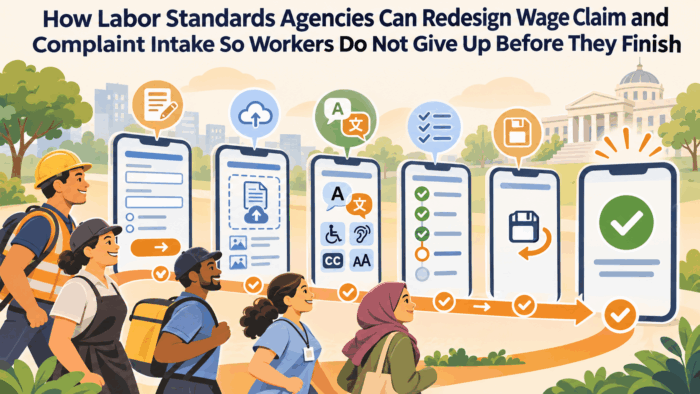
Forms should use manageable question groups, clear buttons, readable text, simple upload functions, and progress indicators that work well on smaller screens. Workers should be able to move backward without losing information and should not be forced to restart because of an accidental navigation error. Long blocks of explanatory text should be broken into concise guidance positioned near the relevant question.
Mobile design should also account for interruptions. Workers may not be able to finish the process in one sitting, especially if they need to check records or speak with someone else. Save-and-return functionality or another practical continuation option can make the difference between a delayed submission and a permanently abandoned one.
Explain What Happens After the Worker Submits
Uncertainty about the next step can discourage workers before they finish. A person may wonder whether an employer will immediately be contacted, whether the agency will call them, whether they need to provide additional records, or how long it may take before they hear anything. Intake should provide enough process information that submission does not feel like sending sensitive information into an unknown system.
Before the final submission step, agencies can summarize what generally happens next. This may include confirmation that the complaint was received, an explanation of whether staff will review it for jurisdiction or completeness, and guidance about how additional information may be requested. Any timelines should be presented carefully and should reflect the actual program rather than creating unrealistic expectations.
The confirmation experience matters as well. Workers should receive a clear record that submission occurred, instructions for preserving any reference number or confirmation, and information about where to direct follow-up questions. A strong intake process continues through confirmation rather than ending when the worker presses the submit button.
Build Language Access Into the Intake Experience
A translated landing page is not enough if the complaint form itself becomes difficult to navigate once the worker begins. Language access should extend across instructions, questions, examples, error messages, upload guidance, confirmation screens, and follow-up information. Workers should not have to switch back to English at the most consequential stage of the process.
Agencies should also review translated terminology for usability rather than relying only on literal accuracy. Concepts related to wages, hours, deductions, employment status, retaliation, or documentation may require plain-language explanation in addition to translation. Community input and user testing can help identify where technically accurate wording remains difficult to understand.
The same principle applies when workers need assistance outside the digital form. Intake should make it clear how interpretation, telephone assistance, or other language support can be requested. A multilingual system is strongest when workers can move between digital and human assistance without losing continuity.
Give Workers a Clear Path When They Are Unsure They Have the Right Complaint
Some workers abandon intake because they are uncertain whether the issue belongs with the agency at all. They may be deciding between wage enforcement, workplace safety, discrimination, unemployment, workers’ compensation, or another employment-related system. A rigid complaint form can make this uncertainty worse by forcing the worker to choose a pathway before enough information has been gathered.
Agencies should provide simple navigation before formal intake begins. A short set of issue-based questions can help workers identify whether the wage claim process appears relevant or whether another program may be a better starting point. The system should also provide a general assistance option for situations that do not fit neatly into one category.
This approach reduces both abandonment and misrouting. Workers receive guidance before spending significant time on the wrong form, while the agency receives claims that are more likely to belong within its jurisdiction. Clear pre-intake navigation makes the system more efficient for both the public and staff.
Use Worker Behavior to Identify Where Intake Needs Improvement
Agencies should analyze how workers actually use the complaint process rather than relying solely on staff assumptions about what is confusing. Digital systems can reveal where users abandon forms, how long certain steps take, which questions generate errors, and whether workers repeatedly move backward before submission. Call center staff and community partners can provide additional insight into the points where workers ask for help.
These patterns should be reviewed alongside submitted claims. If workers frequently leave at a documentation upload step, for example, the agency should examine whether the requirement is necessary or poorly explained. If users repeatedly call about one legal term, that terminology may need to be rewritten or repositioned.
Worker feedback can also support redesign. Brief usability testing, post-intake surveys, partner discussions, or observation of how users complete the form can uncover barriers that internal teams overlook. Continuous review helps intake evolve based on real behavior rather than one-time assumptions.
Redesign Intake as the Beginning of the Agency Relationship
A wage claim form is not merely an administrative gateway. It is the point where a worker decides whether the labor standards system feels accessible, understandable, and worth continuing to engage with. The experience can shape trust in the agency before an investigator or program specialist ever reviews the case.
A well-designed intake process respects the worker’s time while still collecting the information necessary for agency operations. It explains what is needed, distinguishes required information from helpful information, accommodates uncertainty, supports language access, and provides a clear next step after submission. These features make the system easier to use without predetermining whether the claim has merit.
Redesigning intake in this way also benefits agency staff. Better organized information, fewer incomplete submissions, clearer issue descriptions, and improved routing can reduce administrative rework. When intake is treated as both a communication system and an operational system, agencies can improve worker access while strengthening the quality of the information entering the enforcement process.
Use Progressive Intake Instead of Asking Everything at Once
Workers are more likely to complete intake when the process unfolds in manageable stages. A single long form that presents every question, instruction, and documentation request at once can make the process feel more complicated than it actually is. Progressive intake allows agencies to begin with the most essential information and introduce additional questions only when they become relevant.
This structure can also improve routing. Early questions about the worker, employer, location, type of pay issue, and general time period can help determine which later questions are necessary. A worker describing unpaid overtime may not need to see the same follow-up questions as someone reporting deductions, minimum wage concerns, or another type of wage issue.
Progressive intake should still make the overall process transparent. Workers should know approximately what information they will be asked to provide and whether additional steps may follow. The goal is to reduce cognitive overload without making the process feel unpredictable.
Use Conditional Questions to Reduce Unnecessary Work
Many complaint forms become long because they include every possible question for every possible claimant. Conditional logic can reduce that burden by showing workers only the questions that apply to their situation. This can make the form shorter without removing information the agency needs.
For example, a worker who indicates that they were paid hourly may receive different follow-up questions from someone who was paid by salary, piece rate, commission, or another method. A worker who reports that employment has ended may need different questions from someone still working for the employer. These distinctions allow intake to gather relevant detail without forcing every user through the same sequence.
Conditional design should remain understandable. Workers should not feel that answers are causing the system to make legal conclusions about their case. The form should simply adapt to the facts they provide and make the next questions more relevant.
Make Progress Visible Throughout the Process
Workers may abandon a form when they cannot tell how much is left. A page that appears endless can feel much more demanding than a process divided into clear stages such as worker information, employer information, pay issue, supporting records, and review. Progress indicators can help users understand where they are and how close they are to completion.
The indicators should reflect meaningful stages rather than an artificial percentage that changes unpredictably. Workers should know when they have completed one major section and moved to the next. This can create a sense of momentum and reduce uncertainty.
Agencies should also avoid using progress displays that become discouraging. If a worker completes several screens and still sees that most of the process remains, the indicator may have the opposite effect. User testing can help determine whether the structure supports completion rather than creating additional frustration.
Allow Workers to Save and Return Without Losing Their Work
Workers may not be able to finish a wage complaint in one sitting. They may need to find records, check dates, speak with a family member, return after work, or continue from another device. A system that requires completion in one session creates an unnecessary barrier.
Save-and-return functionality can make intake more realistic for the people using it. Workers should receive clear instructions about how their information will be saved, how long it will remain available, and what they need to do to resume. The process should not require complicated account creation unless that level of security is truly necessary.
Agencies should also consider what happens when a session times out unexpectedly. Losing twenty or thirty minutes of completed information can discourage a worker from trying again. Automatic saving, clear warnings, or recovery options can protect progress and reduce abandonment.
Simplify Employer Identification Without Expecting Workers to Know Formal Business Details
Workers may know where they worked and who supervised them without knowing the employer’s exact legal business name, corporate structure, registration number, or ownership relationship. Intake systems should not assume that workers have access to information that may exist only in payroll or business records. Overly technical employer-identification requirements can stop a claim before the agency has a chance to review it.
Forms can begin with information workers are more likely to know, such as workplace name, location, supervisor, phone number, pay stub name, or other identifying details. The agency may be able to verify the formal entity later through its own records or follow-up. This keeps the burden of corporate identification from falling entirely on the worker.
Where legal entity information is especially important, the form can explain where workers might find it. Examples may include a pay statement, tax document, offer letter, or other employment record. Clear guidance is more useful than requiring a field the worker does not understand.
Help Workers Describe Work Hours Without Requiring Perfect Records
Wage claims often depend heavily on work time, but workers may not have complete time records. They may remember typical schedules, approximate hours, missed breaks, off-the-clock work, or changes over time without being able to reconstruct every day immediately. Intake should allow them to describe what they know without implying that uncertain details make the claim unusable.
Forms can ask about typical schedules, ranges, recurring patterns, and specific examples. Workers can then identify whether their estimate is exact, approximate, or based on memory. This produces useful information while being transparent about its precision.
The agency can request additional detail later if needed. Initial intake should help the worker communicate the pattern clearly enough for staff to understand the issue and determine the next step. Requiring perfect reconstruction at the beginning may unnecessarily exclude workers whose employers controlled the formal records.
Use Examples Carefully to Help Workers Answer Difficult Questions
Examples can make technical questions easier to understand, but they should be chosen carefully. A worker may interpret an example as a complete list and assume their situation does not qualify if it looks different. Examples should illustrate the question without narrowing the apparent scope more than the underlying program requires.
For instance, a question about unpaid work time can include examples such as preparation, cleanup, required meetings, or work performed before clocking in. The wording should still make clear that these are examples rather than the only possible situations. This helps workers recognize the concept without forcing them to fit their experience into a narrow template.
Examples are particularly useful for questions involving deductions, pay methods, work schedules, and retaliation. Plain-language scenarios can make unfamiliar concepts easier to answer while preserving room for the worker to describe something different.
Explain Error Messages in a Way That Helps Workers Continue
Error messages can become a major source of abandonment when they tell users that something is wrong without explaining how to fix it. Generic messages such as “invalid entry” or “required field” may be especially frustrating for workers completing a long complaint on a phone. The system should identify the specific problem and explain the correction in plain language.
Errors should appear close to the relevant field and should not erase information the worker has already entered. If an upload fails, the worker should know whether the file is too large, in the wrong format, or affected by a technical problem. Clear feedback allows the user to recover without restarting.
Agencies should also review which fields generate the most errors. A high error rate may indicate poor question design rather than user failure. Repeated problems can help identify where wording, formatting, or technical requirements need to change.
Design Document Uploads for Real-World Worker Use
Document uploads can be useful, but they often create technical barriers. Workers may have photographs of pay stubs, screenshots of schedules, text messages, or documents stored on a phone rather than formal PDF files. Intake systems should accommodate common formats where security and operational requirements allow.
Instructions should explain what can be uploaded and whether workers need to combine files, rename them, or provide descriptions. If file size or format limits exist, those limits should be visible before the worker attempts the upload. The system should also allow the worker to continue if documentation is optional.
Workers should not be forced to abandon the entire complaint because one file fails. The intake process can separate the core submission from supporting evidence and allow additional documents to be provided later when appropriate. This makes technical limitations less likely to block access.
Give Workers a Review Screen Before Final Submission
Before submitting, workers should have an opportunity to review the information they entered in a clear and readable format. A review screen can help them catch mistakes, confirm names and dates, and make sure the description reflects what they intended to say. This is especially useful in longer forms where the worker may not remember earlier answers.
The review screen should make editing easy. Workers should be able to return directly to a section rather than navigating backward through every prior screen. After editing, they should be able to return to the review page without losing information.
This step can improve both worker confidence and agency data quality. Workers are more likely to trust the submission when they can see exactly what they are sending, while staff receive information that has been checked for obvious errors.
Use Confirmation to Reduce Uncertainty After Submission
The moment after submission is part of the intake experience. Workers should receive a clear confirmation that the agency successfully received the complaint and should not have to wonder whether the form disappeared because of a technical problem. A confirmation number or other reference can help workers track the submission.
The confirmation should explain the next expected step in general terms. It may indicate that staff will review the claim, contact the worker if additional information is needed, or determine whether the matter belongs within the agency’s jurisdiction. The language should avoid promising timelines or outcomes that the program cannot reliably guarantee.
Workers should also know what to do if something changes. If they find additional documents, change contact information, experience retaliation, or realize that they made an error, the confirmation should explain how to provide updated information. This turns confirmation into a bridge to the next stage rather than a simple receipt.
Make Human Assistance Easy to Find During Intake
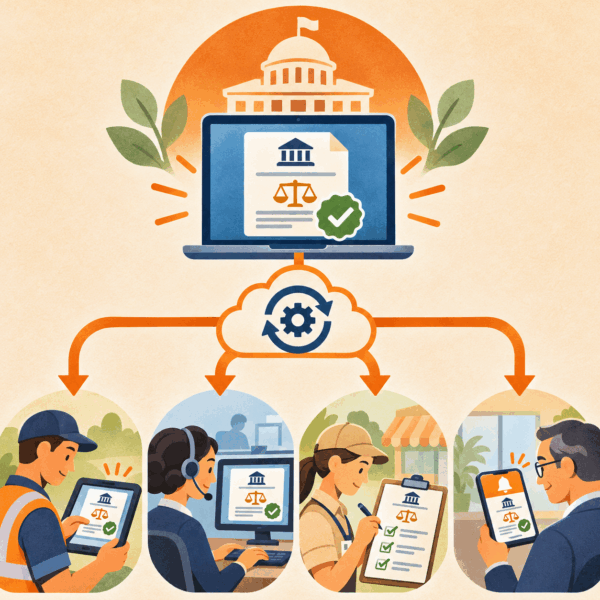 Some workers will need help even when the digital form is well designed. They may have questions about terminology, difficulty uploading documents, language needs, accessibility barriers, or uncertainty about whether they are answering a question correctly. Human assistance should be visible before frustration leads to abandonment.
Agencies can provide phone assistance, in-person options, language support, or other help appropriate to their operating model. The form should explain what type of assistance is available and whether contacting staff affects the status of an unfinished complaint. Workers should not have to search another part of the website just to find help.
Assistance channels should also be informed by the intake design. Staff need to know what workers are seeing on the screen and how the questions are structured. This allows them to provide practical guidance without giving conflicting instructions.
Use Intake Redesign to Improve Both Access and Case Quality
A worker-centered intake process does not have to sacrifice the information agencies need. In many cases, better sequencing, clearer questions, conditional logic, and stronger guidance can produce more accurate submissions than a long technical form. Workers are more likely to provide useful information when they understand what the agency is asking and why.
Improved intake can also reduce staff time spent correcting preventable errors. Clear employer information, better issue descriptions, organized documentation, and more accurate routing can make initial review more efficient. Staff can focus more attention on substantive evaluation rather than administrative cleanup.
The strongest redesign therefore benefits both sides of the system. Workers face fewer unnecessary barriers, while agencies receive information that is easier to understand and process. Treating intake as a communication and service design function can improve completion, access, and operational quality at the same time.
Design Intake for Workers With Incomplete or Uncertain Information
Many workers begin a wage claim without having every date, pay record, employer detail, or work schedule available. A rigid intake system can make that uncertainty feel like a reason to stop, especially when fields appear to require exact answers the worker does not know. Agencies should distinguish between information that must be precise at submission and information that can reasonably begin as an estimate, range, or partial description.
Forms can make this distinction explicit by allowing workers to indicate when an answer is approximate. A worker may know that unpaid work occurred throughout several months without remembering every individual date or may know the general location of a worksite without knowing the employer’s formal corporate address. Giving users a way to communicate uncertainty is more useful than forcing them to invent precision.
The agency can then clarify details during later review when necessary. This approach recognizes that intake is the beginning of fact gathering rather than the final evidentiary record. Workers are more likely to complete the process when the system allows them to report what they genuinely know.
Help Workers Describe Complicated Pay Arrangements
Not every worker receives a straightforward hourly wage, and intake systems should account for the variety of ways workers may understand their compensation. Workers may describe salary, commissions, piece-rate pay, tips, bonuses, day rates, multiple rates, or combinations of compensation without knowing the legal significance of those arrangements. A form that assumes one simple pay structure can leave users unsure how to answer.
Agencies can ask workers how they were usually paid and provide several recognizable options without requiring them to classify the arrangement legally. Follow-up questions can then gather relevant information about hours, rates, deductions, tips, or other compensation components. The agency can determine later whether the arrangement raises a particular labor standards issue.
This approach is especially important when workers believe they were misclassified or paid under an unusual arrangement. They should not have to decide whether they were legally salaried, exempt, independent contractors, or another category before they can explain what happened. Intake should collect the facts of the relationship first and allow agency expertise to determine how those facts should be evaluated.
Build Intake for Claims That Involve More Than One Wage Problem
Workers may experience several pay issues at the same time. A complaint might involve unpaid overtime, missing hours, deductions, minimum wage concerns, or unpaid work before and after a scheduled shift. If intake forces the worker to select only one issue, the agency may receive an incomplete picture of the claim.
The system should allow workers to identify multiple concerns and then organize follow-up questions around the issues selected. This keeps the initial experience manageable while still collecting useful information about each part of the complaint. Workers should not need to submit several separate forms simply because their situation does not fit one category.
Agencies should also make clear that selecting an issue does not mean the agency has already determined that a violation occurred. The categories are tools for describing the worker’s experience and organizing intake. This distinction helps prevent the form from appearing to provide a legal conclusion before staff review.
Design for Workers Who Had More Than One Employer or Worksite
Some workers move among jobsites, employers, staffing arrangements, subcontractors, or related businesses during the period covered by a complaint. They may have been supervised by one organization, paid by another, and assigned to work at a third location. Intake should accommodate these realities without requiring the worker to determine which entity is legally responsible.
Forms can allow users to enter more than one business name, location, supervisor, or paying entity when relevant. Clear prompts can ask who hired the worker, who paid them, where they performed the work, and who directed their daily activities. These factual questions give the agency information it can evaluate later.
The intake process should also allow workers to explain uncertainty about business relationships. A worker may not know whether two company names represent the same employer or whether a staffing firm and worksite company share responsibility. Allowing that uncertainty to be documented is more useful than forcing the worker to choose one entity and potentially omit important information.
Make Retaliation and Ongoing Employment Changes Easy to Add
A wage complaint may begin with a pay issue and later expand when the worker experiences changes in scheduling, discipline, assignments, or employment status. Intake systems should make it easy for workers to identify retaliation concerns during the initial complaint and to add new information after submission. Workers should not assume that the original form is the only opportunity to report what happens next.
The initial intake can include plain-language questions about whether anything changed after the worker asked about pay, raised a workplace concern, or indicated an intention to contact the agency. These questions should help identify possible issues without suggesting that retaliation has been established. More detailed review can occur through the appropriate process.
After submission, confirmation messages and case communications should explain how workers can report new developments. A worker whose hours are reduced several weeks later should know where to send that information. This creates continuity between intake and the evolving workplace situation.
Create Better Pathways for Workers Who Need Help From Another Program
Some users will begin a wage complaint only to reveal a workplace safety concern, discrimination issue, unemployment matter, workers’ compensation question, or another problem outside the wage program. A well-designed intake system should recognize these signals without forcing workers to start over unnecessarily. The agency should provide a clear referral pathway when the complaint appears to involve another function.
This can be handled through targeted guidance rather than abrupt rejection. If a worker describes a safety hazard while completing a wage form, the system can explain that another program may also be relevant and provide the correct next step. The wage complaint can continue if appropriate rather than requiring the worker to choose between issues.
Referral design should also account for overlapping concerns. A worker may have both a valid wage issue and another matter that belongs elsewhere. The intake system should help workers understand that multiple pathways may apply instead of treating jurisdiction as an all-or-nothing decision.
Reduce Abandonment Caused by Fear, Privacy, and Retaliation Concerns
Some workers will leave a complaint form not because the questions are difficult but because the process begins to feel risky. Requests for personal contact information, employer details, work history, or supporting records may trigger concerns about whether the employer will learn that the worker contacted the agency. Intake should anticipate these fears rather than waiting for the worker to search elsewhere for answers.
Agencies can place concise privacy, confidentiality, and retaliation information near the points where workers are most likely to hesitate. The guidance should explain how information is generally handled, what limitations may apply, and where workers can obtain more detailed information. The wording should remain accurate and avoid guarantees that the agency cannot make in every case.
The form should also explain why sensitive information is requested when the purpose may not be obvious. Workers are more likely to provide personal details when they understand how those details support contact, jurisdiction review, or case administration. Transparency can reduce the feeling that the system is collecting information without explanation.
Use Pre-Submission Guidance Without Overloading the Worker
Some intake systems attempt to solve confusion by placing extensive instructions before the form begins. While detailed guidance can be useful, presenting several pages of rules and definitions before a worker can start may create another form of abandonment. Agencies should distinguish between information workers need immediately and information they can access if questions arise.
A short pre-intake screen can explain what the process is for, approximately what information will be helpful, whether documentation is required at the beginning, and how long the process may take to complete. More detailed information can be available through expandable explanations, FAQs, or help links. This keeps the entry point manageable while preserving access to deeper guidance.
The strongest pre-submission communication prepares workers without asking them to study the program before seeking help. Intake should feel like a supported conversation with the agency, not an examination the worker must pass before being allowed to file.
Design Intake for Accessibility Beyond Language
Language access is essential, but workers may face other accessibility barriers that affect whether they can complete a claim. Visual, cognitive, physical, or technology-related limitations can make poorly structured forms difficult to use. Agencies should therefore incorporate broader accessibility considerations into intake design rather than treating them as separate from service access.
Forms should use clear labels, predictable navigation, readable text, accessible form controls, and error messages that can be understood by assistive technologies. Instructions should avoid relying only on color or visual position to convey meaning. Where digital access remains difficult, alternative methods of completing intake should be visible and practical.
Accessibility also benefits workers without identified disabilities. Clear navigation, simpler instructions, and well-organized questions make forms easier for everyone, particularly users completing them on small screens or under time pressure. Inclusive design can therefore improve completion across the entire claimant population.
Test Intake With Workers Before Treating the Redesign as Finished
Internal teams understand agency processes too well to experience intake the same way a first-time claimant does. Staff may know what a field means, where to find employer information, or how to interpret a wage category without realizing that the wording is confusing to the public. User testing can reveal these gaps before a redesigned system is fully implemented.
Agencies can ask workers, community partners, advocates, or other representative users to complete sample intake scenarios and describe where they hesitate. Testing can examine whether users understand instructions, know which information is required, can recover from errors, and understand what happens after submission. Observing actual behavior is often more useful than simply asking whether a form looks clear.
Testing should include workers with different levels of digital familiarity, language proficiency, employment experience, and access needs. A form that works well for an experienced professional using a desktop computer may perform very differently for a worker completing it on a phone after a shift. Broader testing helps the agency identify barriers that might otherwise remain hidden.
Connect Intake Data to Continuous Improvement
A redesigned complaint process should continue evolving after launch. Agencies can monitor completion rates, abandonment points, common errors, help requests, submission quality, and follow-up needs to understand whether the new system is performing as intended. These measures can identify both usability problems and operational consequences.
Staff experience should be included in the review. Investigators and intake personnel can identify whether the redesigned process produces clearer information, creates new gaps, or shifts work into later stages. Community partners and workers can provide a different view of whether the process feels easier to understand and complete.
The purpose of measurement is not simply to prove that the redesign worked. It is to create an intake system that can be adjusted as technology, agency processes, worker populations, and communication needs change. Continuous improvement keeps the system focused on both access and administrative quality.
Treat Completion as a Shared Communication and Operational Outcome
A worker completing a wage claim is the result of many systems working together. Clear public education must lead to the correct intake pathway, the form must be understandable, language and accessibility support must be available, technical functions must work reliably, and the worker must know what happens after submission. Failure at any one of those points can prevent a potentially important concern from reaching agency staff.
This makes intake completion a shared responsibility across communications, program operations, technology, language access, legal review, and customer service. No single team can improve the process effectively if the others continue using requirements or systems that create unnecessary friction. Agencies should therefore review intake as an end-to-end service rather than as a form owned by one program.
A successful redesign does not guarantee that every person who begins a form will submit a claim. Some users will determine that another agency is appropriate, decide not to proceed, or return later with additional information. The goal is to ensure that workers who want to continue are not prevented from doing so by avoidable complexity, unclear communication, or an intake process that demands more expertise from the worker than from the agency.
Build Governance Around Intake Design and Maintenance
A redesigned wage claim or complaint system will not remain effective if no one is responsible for maintaining it. Intake sits at the intersection of program operations, communications, legal review, technology, language access, accessibility, and customer service, which means changes in any one area can affect the worker experience. Agencies should establish clear ownership for the intake system as a whole rather than allowing each component to evolve independently.
Governance should identify who can approve changes to questions, instructions, required fields, routing logic, translations, confirmation messages, and technical features. Program staff may understand what information is substantively necessary, while communications and user-experience teams can identify where that information is being presented in a way that creates unnecessary friction. A shared review process helps preserve both operational accuracy and usability.
Agencies should also establish a regular review schedule rather than waiting for problems to become severe. Intake requirements, agency procedures, technology, and worker expectations can change over time. Periodic review makes it easier to identify where a once-reasonable question or workflow has become outdated or unnecessarily burdensome.
Create a Field-Level Review of Every Intake Question
One of the most effective ways to improve complaint intake is to examine every field individually and ask why it exists. Agencies should determine whether each question is legally required, operationally necessary, useful but optional, or primarily included because it has historically been part of the form. This exercise can reveal opportunities to remove, simplify, postpone, or combine questions.
The review should also examine who is expected to understand the question. A field may appear straightforward to agency staff while requiring knowledge that an ordinary worker is unlikely to have. If the worker must interpret a legal category, business structure, payroll concept, or internal program distinction before answering, the agency should consider whether the same information can be collected through simpler factual questions.
Each field should also have a clear consequence. If staff rarely use a piece of information or routinely collect it again later, its value at initial intake should be questioned. Reducing unnecessary fields can shorten the process while also improving data quality because workers have more attention available for the questions that truly matter.
Establish Clear Standards for Required and Optional Information
Workers should be able to tell immediately which information they must provide and which information is helpful but not essential at the initial stage. Forms that visually treat every field as equally important can create the impression that the worker needs a complete case file before submitting. Clear distinctions between required and optional information can reduce that pressure.
Agencies should be especially careful with documentation, exact dates, employer identifiers, and detailed wage calculations. Some of these may be useful for later review but difficult for workers to provide immediately. If the process permits incomplete or estimated information at intake, the form should say so plainly.
Required-field standards should also be reviewed periodically. A field that was once necessary because of a manual workflow may no longer be essential after a system change or may be obtainable from another source. Keeping requirements aligned with actual operational need helps prevent the form from becoming more complicated over time.
Standardize Plain-Language Intake Instructions
Intake instructions should follow a consistent plain-language standard across the entire process. Workers should not encounter simple introductory text followed by technical questions that use unfamiliar legal or payroll terminology. Each screen, error message, help note, and upload instruction should support the same level of clarity.
Agencies can develop a style guide specifically for complaint intake. The guide can establish preferred terminology, sentence length, explanation patterns, formatting conventions, and rules for defining technical terms. This helps ensure that new questions added later do not gradually reintroduce the complexity the redesign was meant to remove.
Consistency is particularly important when multiple programs use related forms. Workers who move between wage, retaliation, or other labor standards pathways should not encounter dramatically different communication styles. A shared intake language standard can make the agency feel more coherent even when the underlying processes differ.
Build Strong Version Control for Forms and Supporting Guidance
Complaint forms often depend on related webpages, FAQs, translated resources, call center scripts, and partner guidance. When one component changes and the others do not, workers can receive contradictory instructions. Agencies should manage these materials as one communication system rather than as separate products.
Every major intake resource should have a clear owner, review date, and current version. When a required field changes, related guidance should be reviewed at the same time. If the process for submitting documents changes, partner toolkits and front-line scripts should be updated as well.
Version control is particularly important across languages. A worker using a translated form should not receive older instructions simply because the English version was updated first. Coordinated releases help preserve equal access and reduce the risk of workers following obsolete steps.
Connect Intake Design With Call Center and Front-Line Support
Digital intake and human assistance should reinforce each other. Call center employees and front-line staff need to understand what workers are seeing on the form, which questions commonly cause confusion, and what options exist when a worker cannot complete a particular step. Without that alignment, staff may unintentionally give instructions that conflict with the digital process.
Agencies can provide staff with the same field definitions, help text, and routing guidance used in the complaint system. Training can also include common points of abandonment and the approved way to explain them. This helps workers receive consistent support regardless of whether they begin online or by phone.
Front-line staff should also have a clear way to report recurring problems. If workers repeatedly call about the same question, upload requirement, or terminology, that information should reach the team responsible for intake design. Staff experience becomes more valuable when it feeds directly into system improvement.
Coordinate Intake With Language Access and Accessibility Teams
Language access and accessibility should be embedded in intake governance rather than reviewed only after the form is complete. Translation, interpretation, screen-reader compatibility, keyboard navigation, readable formatting, and alternative assistance options can all affect whether workers finish the process. These elements should be considered during design decisions, not simply during final review.
Language-access teams can identify where terminology may be difficult to translate clearly or where the English source text itself is too technical. Accessibility specialists can identify interactions that create barriers for users with visual, motor, cognitive, or other access needs. Early involvement can prevent expensive or incomplete fixes later.
Agencies should also test whether translated and accessible versions provide the same functional experience as the primary form. Workers should be able to save progress, upload records, receive error messages, and understand confirmation steps in the same way. Equal access requires more than translating the visible text.
Build a Formal Process for Reviewing Abandonment and Error Data
Intake analytics should be reviewed regularly by both operational and communication teams. Completion rates, abandonment points, time spent on individual sections, technical errors, failed uploads, and repeated validation problems can all reveal where workers are struggling. These measures become more useful when they are connected to the actual questions and design choices causing the friction.
Agencies should avoid interpreting abandonment as a single problem. Workers may leave because they realize another program is appropriate, need to find records, encounter a technical issue, become concerned about privacy, or simply run out of time. Combining analytics with staff feedback and user research can help distinguish among these causes.
Review should lead to action. If one field consistently produces errors or a particular screen has unusually high abandonment, the agency should test whether the wording, requirement, or interaction can be improved. Intake data should function as a continuous design tool rather than a passive performance report.
Establish Quality Standards for Technical Reliability
Even a well-written intake process will fail if the technology is unreliable. Workers may abandon a complaint after encountering a frozen screen, lost data, broken upload, inaccessible confirmation, or unexpected timeout. Technical performance should therefore be treated as part of service quality.
Agencies should monitor form availability, mobile performance, load times, session failures, upload errors, and save-and-return functions. Problems should be prioritized based on their effect on a worker’s ability to complete the process, not simply on whether the system technically remains online. A feature that works inconsistently can still create a serious access barrier.
Recovery matters as much as prevention. When something goes wrong, workers should receive clear instructions about what happened and what they can do next. Preserving entered information whenever possible can prevent a temporary technical problem from becoming a permanently abandoned claim.
Create a Change Management Process for Major Intake Redesigns
A substantial intake redesign affects more than the public-facing form. Staff may need new procedures, supervisors may need updated guidance, community partners may need revised instructions, and data systems may need to accommodate information collected in a different sequence. Agencies should treat major redesign as an operational change rather than simply a website project.
Implementation planning should include staff training, partner communication, testing, transition periods, and contingency plans. Employees should understand why the form changed and how the new structure affects their work. This reduces the risk that staff create informal workarounds that recreate the complexity the redesign was intended to remove.
Agencies should also plan for workers who started under the old system. Saved drafts, paper forms, or previously distributed instructions may remain in circulation for some time. Clear transition communication can prevent confusion while the new process becomes established.
Use Pilot Testing Before Full Implementation
Agencies do not need to redesign an entire wage claim system at once. Piloting changes with one complaint type, region, language group, or portion of the form can help identify operational and communication problems before they affect every user. A controlled pilot also gives staff time to adjust to new workflows.
Pilot evaluation should include completion data, user feedback, staff experience, and case-quality indicators. A shorter form may improve completion but create additional follow-up work, while a new routing question may reduce misdirected claims but confuse some users. Looking at both worker and staff outcomes helps the agency judge whether the change is genuinely better.
Successful features can then be expanded while weaker ones are revised. This iterative approach reduces implementation risk and creates evidence for larger decisions. Intake redesign becomes an ongoing improvement process rather than a single high-stakes launch.
Define Intake Performance Through Access and Operational Quality
Agencies should establish a balanced set of measures for evaluating wage claim intake. Completion rate is important, but it should not be the only measure. Submission quality, correct routing, staff follow-up needs, language access, technical reliability, worker satisfaction, and the time required to complete intake can all provide useful information.
Measures should also be interpreted together. A significant increase in completion accompanied by large increases in unusable submissions may indicate that the system became easier but less effective. Conversely, a highly detailed form that produces excellent information from the small number of workers who finish it may still create an unacceptable access barrier.
The goal is to find the point where workers can reasonably complete intake and staff receive enough information to begin appropriate review. Balanced measurement helps agencies avoid optimizing one side of the process at the expense of the other.
Make Intake Redesign a Long-Term Service Management Responsibility
Wage claim intake should not be treated as finished once a new form launches. Worker populations, employment arrangements, technology, agency procedures, language needs, and legal requirements can all change. A form that works well today may gradually become less effective if those changes are not reflected in the system.
Leadership should assign ongoing responsibility for reviewing performance, approving updates, maintaining translations, coordinating staff guidance, and responding to user feedback. This creates accountability for the entire intake experience rather than only the technology that hosts it.
A mature intake system continuously balances worker access with administrative quality. It allows people to explain what happened without requiring them to master labor law before seeking help, while still giving the agency the information needed to perform its responsibilities. Treating intake as a permanent communication and service-design function helps prevent complexity from accumulating again after a successful redesign.
Strategic Communication Support for Wage Claim and Complaint Intake Redesign
 Wage claim and complaint intake sits at the intersection of communication, service design, technology, program administration, language access, and enforcement operations. A form can be legally accurate and operationally complete while still creating unnecessary barriers for workers if the questions are difficult to understand, documentation expectations are unclear, mobile use is frustrating, or workers do not know what will happen after submission. Improving intake therefore requires agencies to examine the entire communication experience rather than focusing only on individual form fields.
Stegmeier Consulting Group (SCG) can support labor standards agencies by reviewing intake pathways, complaint instructions, worker-facing terminology, pre-intake navigation, confirmation messages, multilingual communication, call center guidance, community partner resources, and related public information. SCG can also help agencies develop communication frameworks for progressive intake, required-versus-optional information, documentation guidance, retaliation messaging, referral pathways, and other elements that affect whether workers understand and complete the process.
External strategic communication support can be especially useful when an agency is redesigning a long-standing complaint system that has accumulated requirements across multiple programs or operational teams. A structured communication review can help identify where agency terminology is being placed on workers, where instructions create unnecessary uncertainty, and where information could be sequenced more clearly without removing what staff need. This can support a more coherent intake experience while allowing program, legal, technology, and operational teams to retain responsibility for substantive requirements.
SCG’s role remains focused on communication strategy, plain-language systems, user-facing information, stakeholder engagement, internal alignment, language-access communication, implementation support, and measurement. SCG does not provide legal advice, determine whether a wage violation occurred, establish filing requirements, make jurisdictional or enforcement decisions, adjudicate claims, or replace agency counsel, investigators, hearing officers, technology teams, or other authorized professionals. Strategic communication support helps agencies make the intake system easier to understand while preserving the agency’s responsibility for legal, procedural, technical, and case-specific determinations.
Future Trends
Digital complaint systems will continue to become more central to labor standards access, particularly as workers expect to complete government services on mobile devices and outside traditional business hours. Agencies will increasingly need intake systems that can save progress, adapt questions based on previous answers, support multiple languages, accept common document formats, and connect workers with human assistance when needed. The challenge will be to add useful functionality without turning digital intake into a more complicated version of the paper forms it replaced.
Agencies are also likely to use more guided navigation before formal intake begins. Workers may be able to describe a workplace problem in ordinary language and receive help identifying the most relevant complaint pathway before completing a full form. These systems can reduce misrouting, but they will require careful communication so workers understand that preliminary guidance is not a legal determination about jurisdiction or the merits of a claim.
Automation and AI-assisted tools may also influence how agencies provide explanations, identify incomplete fields, translate information, or help users navigate complaint systems. These tools may improve accessibility, but they will require strong governance, quality control, privacy protections, and clear limits. Workers should always understand when a digital tool is providing navigation assistance rather than making a substantive determination about their rights or case.
The broader trend will be toward treating intake performance as part of public service quality. Agencies will increasingly need to understand not only how many claims are submitted, but where workers abandon the process, which groups face greater difficulty completing it, how much staff follow-up is required, and whether redesigned systems improve both access and information quality. Intake will become less of a static administrative form and more of a continuously managed service.
Conclusion
A wage claim system cannot provide meaningful access if workers give up before their concern ever reaches the agency. Long forms, unclear terminology, rigid documentation demands, technical failures, language barriers, privacy concerns, and uncertainty about what happens next can all discourage completion. These obstacles are especially significant because workers seeking wage enforcement may already be frustrated, financially strained, or uncertain about whether government can help.
Effective redesign starts by shifting the intake burden back toward the agency. Workers should be expected to describe what happened, who was involved, when the problem occurred, and what information they have. They should not be expected to determine legal classifications, identify corporate structures, calculate every possible wage issue, or understand internal program boundaries before they are allowed to seek assistance.
The strongest intake systems also balance simplicity with operational quality. Agencies still need enough information to assess jurisdiction, route the complaint, begin review, and determine what additional evidence may be needed. Progressive questions, conditional logic, clearer documentation guidance, save-and-return functions, accessible design, language support, and effective confirmation can help agencies collect that information without creating unnecessary friction.
Redesigning intake should therefore be treated as a continuing communication and service-management responsibility. Agencies should monitor abandonment, errors, staff experience, worker feedback, language access, technical reliability, and case quality over time. When intake is continually improved around both worker needs and agency responsibilities, more people can reach the labor standards system without sacrificing the information necessary for fair and effective administration.
Stegmeier Consulting Group’s Strategic Approach to Communication Systems
Build wage claim and complaint intake systems that help workers explain what happened without requiring them to understand labor law before they can seek help.
Labor standards agencies need intake communication systems that connect clear pre-filing guidance, worker-centered questions, documentation expectations, language access, accessibility, human assistance, confirmation, and follow-up into one understandable experience. Stegmeier Consulting Group (SCG) helps agencies develop plain-language intake frameworks, worker journey maps, communication standards, multilingual guidance, staff tools, partner resources, implementation strategies, and measurement approaches that reduce avoidable friction while supporting the agency’s operational requirements.
Use the form below to connect with our team and explore how strategic communication support can strengthen wage claim and complaint intake, reduce worker abandonment, improve public-facing guidance, and create a more accessible pathway into labor standards services.