
How Courts Can Communicate About Legal Aid, Self-Help Centers, and Access to Justice Programs to the Litigants Who Need Them Most
For many litigants, the greatest barrier to using the court system is not the complete absence of help. It is not knowing what help exists, where to find it, whether they are eligible, or which resource can actually address the problem they are facing. Legal aid organizations, court self-help centers, lawyer referral programs, mediation services, interpreter resources, and other access to justice programs may all be available within the same community, yet the people who need them most may encounter those services only after they have already missed a deadline, filed the wrong document, or appeared in court without understanding the process.
Court administrators occupy an important communication position within this landscape. Courts cannot act as advocates for one side, recommend a particular legal strategy, or guarantee that an outside organization will provide representation. They can, however, make the ecosystem of available assistance easier to understand. They can explain the difference between legal information and legal representation, identify where authorized help may be available, and connect litigants to appropriate resources at the points in the process where those resources are most relevant.
The challenge is that access to justice communication often fails when it is organized around provider names rather than litigant needs. A person facing eviction, a family law matter, a debt collection case, or another legal problem may not know whether the appropriate starting point is a court self-help center, a legal aid organization, a lawyer referral service, or another program. A list of organizations may technically provide information while still leaving the user unsure what to do next.
Effective court communication should therefore help litigants interpret the assistance landscape before they are expected to navigate it. That means explaining what different resources do, who they serve, when to use them, what they cannot provide, and how to move from general court information to more specialized legal support when necessary. The objective is not merely to publish a directory. It is to build a clear pathway from need to appropriate assistance.
Explain the Difference Between Court Self-Help and Legal Representation
 One of the most important distinctions courts can communicate is the difference between self-help services and legal representation. Litigants without legal training may assume that any service connected with the court can advise them what position to take or how to win their case.
Court administrators should explain clearly that self-help centers generally provide information, forms assistance, procedural guidance, referrals, or other authorized support within the scope of the program. They do not become the litigant’s attorney and do not represent one party against another.
Legal aid organizations and attorneys may provide different forms of assistance, including advice, limited-scope help, or full representation depending on eligibility, capacity, and the organization involved. The exact services vary, so court communication should avoid promising that a referral will result in representation.
Making this distinction clear helps litigants form realistic expectations. It also protects the neutral role of the court by ensuring that users understand where court-provided procedural assistance ends and individualized legal advocacy may begin.
Organize Assistance Around the Problem the Litigant Is Trying to Solve
A long list of legal aid organizations and community programs may be difficult to use if litigants do not understand which resource matches their immediate need. Court administrators should organize assistance around recognizable problems rather than provider names alone.
A user may need help understanding court papers, finding a form, responding to a case, requesting an interpreter, preparing for a hearing, finding an attorney, or determining whether free or reduced-cost legal assistance may be available. These needs provide more intuitive entry points than a directory organized only by organization or program title.
This structure also helps courts distinguish between procedural questions and substantive legal needs. A person who needs to know where to file may be directed toward court information, while someone who needs advice about how to respond to a claim may need an outside legal resource.
Organizing information around user needs reduces the number of decisions litigants must make before reaching an appropriate service. It also makes referrals more precise and reduces the likelihood that people are sent from one resource to another without a clear reason.
Explain What Each Resource Can and Cannot Do
Every assistance resource should be described in practical terms. Litigants should know whether a service provides procedural information, legal advice, full representation, limited-scope assistance, mediation, document help, or another defined form of support.
Court administrators should also explain any important limitations, such as eligibility rules, appointment requirements, case-type restrictions, or the fact that service availability may depend on capacity.
Clear scope descriptions prevent people from arriving with expectations that the program cannot meet and help them choose the most appropriate next step.
Court Communication Strategies for State and Local Judicial Systems: Building Public Trust, Improving Access to Justice, and Explaining Court Processes
This article is part of our series on strategic communication for State and Local Courts, Judicial Systems, and Court Administration. To learn more about court communication strategies for building public trust, improving access to justice, and explaining court processes, and to see the parent article, which links to other content just like this, click the button below.
Place Access to Justice Information at the Moment It Becomes Relevant
Legal aid and self-help information is often placed on a general resources page and left for users to discover independently. Court administrators should instead connect assistance information to the procedural moments when a litigant is most likely to need it.
A notice telling someone to respond to a case can include information about self-help or legal assistance. A hearing preparation page can identify services available to people without counsel. A filing rejection notice may direct the user toward procedural support rather than simply stating that the document cannot be accepted.
This timing matters because people may not recognize that they need assistance until they encounter a specific procedural problem. Generic outreach before that moment may be forgotten or ignored.
Embedding assistance within the court user journey makes access to justice communication more actionable. The resource appears when the litigant has a concrete reason to use it.
Explain Eligibility Without Making Litigants Decode Provider Rules
Legal aid organizations and other assistance programs may have eligibility requirements related to income, case type, geography, age, or other factors. These rules can be difficult to interpret, especially when several organizations operate within the same region.
Court administrators should provide concise, accurate explanations of eligibility where reliable information is available while directing users to the provider for the final determination. The court should not make eligibility decisions on behalf of an outside organization.
Communication should also distinguish between resources available broadly and services limited to particular groups or case types. A litigant should be able to understand whether a program is potentially relevant before investing significant time in the application process.
Clear eligibility communication reduces referral frustration. It helps users focus on services that may realistically be available while preserving the provider’s authority to determine whether the person qualifies.
Explain That Legal Aid Capacity May Be Limited
One of the most difficult aspects of access to justice communication is that a relevant resource may exist without having capacity to serve every eligible person. Court administrators should communicate this reality carefully.
A court should avoid presenting legal aid as though representation is guaranteed. A person may meet eligibility requirements and still encounter limited staffing, waitlists, case priorities, or other capacity constraints.
At the same time, communication should not discourage litigants from seeking help. The stronger approach is to explain that services vary by availability and encourage users to contact the provider as early as possible.
Distinguish Legal Aid, Lawyer Referral, and Limited-Scope Assistance
Litigants may hear several forms of legal assistance described together without understanding how they differ. Court administrators can make the landscape easier to navigate by explaining these categories in plain language.
Legal aid organizations may provide free or low-cost services to eligible people. Lawyer referral programs may connect users with private attorneys, sometimes for an initial consultation or specified fee. Limited-scope services may provide help with only part of a case rather than full representation.
These categories should be described carefully because specific program structures vary by jurisdiction. The court’s role is to help users understand the general difference and reach the appropriate provider for current details.
Clear differentiation helps litigants choose more effectively and prevents the assumption that every referral will result in full representation throughout the case.
Make Self-Help Centers Visible as a Normal Part of Court Access
Some litigants may assume that self-help services are only for people who have already made a mistake or cannot afford any other form of assistance. Court administrators can communicate self-help centers as a normal part of court access for people navigating procedures without attorneys.
Public materials should explain what the center can help with, where it is located or how it can be reached, which case types it serves, and whether appointments or online services are available.
Self-help information should appear prominently in relevant notices, case-type pages, filing guides, and courthouse navigation rather than being buried within a general resource directory.
Making these services visible earlier helps litigants use them before procedural confusion becomes more difficult to correct.
Explain Access to Justice Programs Without Suggesting That the Court Favors One Side
Courts must remain neutral, and assistance communication should reflect that neutrality. Information about self-help, legal aid, mediation, or other access to justice programs should be framed as procedural access rather than support for a particular type of litigant or outcome.
Where resources are available to different categories of parties, communication should make that clear. If services have eligibility or case-type limits, those limits should be explained without suggesting that the court has chosen which party deserves assistance.
Court administrators should also avoid language implying that use of a particular program will improve the person’s chance of winning. The value of assistance lies in helping people understand and participate in the process, not in promising a substantive result.
This neutral framing allows courts to promote access to available resources while preserving confidence that the institution is not advocating for either side in a case.
Build Resource Communication Around the Litigant’s Immediate Need
Access to justice information becomes easier to use when courts organize it around the problem a litigant is trying to solve rather than around the names of organizations or programs. A person facing an unfamiliar court process may not know whether they need a self-help center, legal aid attorney, mediation program, interpreter, or lawyer referral service. They usually know only that they have received court papers, need to respond, have an upcoming hearing, or do not understand what to do next.
Court administrators should therefore create entry points based on recognizable needs. Public-facing resources can help users identify whether they need procedural information, document assistance, individualized legal advice, representation, language assistance, or another form of support. From there, the court can direct them toward the appropriate service.
This structure reduces the cognitive burden placed on people who may already be under significant stress. It also limits unnecessary referrals because users are less likely to select a resource simply because its name sounds relevant.
A needs-based system makes the broader access to justice network more understandable. It helps litigants see not only that assistance exists but also how different forms of assistance relate to the problem they are facing.
Make Referral Information Specific Enough to Be Actionable
A referral that provides only the name of an organization may not be enough. Litigants need to know how to contact the resource, whether appointments are required, what types of matters it handles, and what information they may need when reaching out.
Court administrators should provide current, practical referral information wherever possible. This may include phone numbers, service locations, online intake options, hours, eligibility information, and whether same-day assistance is available.
The court should also distinguish between programs that provide immediate procedural support and those that require a separate intake or screening process. A litigant facing a deadline should understand whether a referral is likely to provide help quickly or whether another resource may be needed in the meantime.
Actionable referral information helps prevent the resource list from functioning as a dead end. It gives users a realistic next step instead of forcing them to begin another search from the beginning.
Integrate Legal Assistance Information Into Court Notices
Court notices are one of the most important opportunities for connecting litigants with help. A person may not visit the court website or seek assistance independently, but they are likely to read a notice requiring them to appear, respond, or take some other action.
Court administrators should consider where notices can include concise information about self-help services, legal aid, or other relevant support. The placement should be tied to the procedural context rather than added as a generic block of text.
A notice involving a response deadline may point users toward assistance that can help them understand the filing process. A hearing notice may identify self-help or interpreter resources. A notice following an adverse procedural event may explain where the litigant can obtain information about next steps.
Embedding assistance into notices makes support visible at the exact moment the court is requiring action. That timing can be far more effective than relying on a separate resource page that the litigant may never discover.
Keep Assistance Information Brief but Specific
Court notices are already dense documents, so access to justice information should be concise and easy to identify.
The strongest approach is to provide a short description of the resource, who it may help, and where the user can obtain more information.
This gives litigants a clear starting point without turning the notice into an overwhelming directory.
Connect Self-Help Services to the Procedural Journey
Self-help centers are most effective when they are integrated into the places where litigants encounter procedural complexity. Court administrators should not assume that users will independently decide when to seek self-help assistance.
Public communication can identify self-help resources at common decision points such as filing a response, preparing for a hearing, correcting an incomplete submission, understanding an order, or locating the next procedural step.
The court should explain what the self-help service can provide at that stage. A litigant may be more likely to use the resource if they understand that it can assist with forms, procedural information, or another defined need.
Connecting self-help services to the procedural journey also helps reduce repetitive questions directed to general clerk counters. Users can be routed toward the resource designed to provide more focused assistance.
Make Legal Aid Information Visible Before a Deadline Becomes Urgent
Legal aid organizations may require intake, screening, or scheduling before assistance can be provided. Litigants who learn about these resources only days before a hearing or deadline may have little opportunity to obtain meaningful help.
Court administrators should place legal aid information early in the user journey where appropriate. Initial notices, case-type guidance, self-help materials, and court websites can encourage litigants to seek assistance promptly rather than waiting until a problem becomes urgent.
Early communication is particularly important when the case involves complex procedures or significant consequences. The court does not need to evaluate whether the litigant should seek representation. It can simply make the option visible and explain that availability may depend on eligibility and capacity.
Earlier awareness gives litigants more time to explore assistance and reduces the likelihood that limited provider capacity becomes a crisis immediately before a court event.
Explain Limited-Scope Assistance as a Distinct Option
Some litigants may assume that legal help is available only in two forms: full representation or no attorney assistance at all. Court administrators can help users understand that some jurisdictions and providers may offer limited-scope services.
Limited-scope assistance may involve help with a particular document, hearing, consultation, or defined portion of the case rather than representation through the entire proceeding. The specific arrangements vary, so court communication should remain general and refer users to the provider for current details.
Explaining this category can expand a litigant’s understanding of available options. A person who cannot obtain or afford full representation may still be able to access meaningful legal assistance for a particular stage.
The court should avoid recommending whether limited-scope assistance is appropriate for an individual case. Its role is to make the option understandable and visible where such services exist.
Use Plain Language to Explain Access to Justice Programs
Terms such as legal aid, pro bono services, limited-scope representation, self-help, mediation, and lawyer referral may be familiar to court professionals but unclear to many litigants.
Court administrators should explain these terms in ordinary language wherever they appear. Users should not have to understand legal service terminology before they can identify the type of assistance they need.
Plain-language definitions should focus on what the resource does. A lawyer referral service connects people with attorneys. A self-help center provides court information and authorized assistance without becoming the litigant’s attorney. Legal aid may provide free or reduced-cost legal services depending on eligibility and capacity.
Clear terminology makes the assistance ecosystem easier to navigate and reduces the likelihood that litigants confuse fundamentally different services.
Coordinate Court Referrals With Outside Providers
Court referral information is only useful if it remains accurate. Legal aid organizations, nonprofit programs, bar associations, and community partners may change hours, eligibility rules, service areas, intake methods, or case priorities over time.
Court administrators should establish a process for reviewing outside referral information periodically. A resource that no longer accepts a particular case type should not remain listed indefinitely as though it does.
Coordination can also help courts understand where referral gaps exist. If several organizations receive large numbers of court referrals they cannot serve, that pattern may indicate that public-facing information needs revision or that the available assistance landscape has changed.
Maintaining accurate referral information protects litigants from wasting time on outdated pathways and makes the court’s resource communication more credible.
Use Community Organizations to Reach People Before They Enter the Courthouse
Many litigants who need legal assistance may have stronger relationships with community organizations, libraries, schools, faith communities, social service providers, or local nonprofits than with the court itself.
Court administrators can provide these organizations with accurate information about self-help services, legal aid resources, interpreter access, and other court-related assistance so they can direct community members toward authoritative sources.
Partners should not be expected to interpret court rules or provide legal advice unless that is part of their authorized role. Their value lies in extending the reach of accurate information into communities that may not regularly use court communication channels.
This approach can help people learn about available assistance earlier, sometimes before they are required to respond to a formal court notice. That earlier connection can make access to justice resources substantially more useful.
Prevent Resource Lists From Becoming Outdated Directories
Access to justice pages often accumulate links and provider names over time until the information becomes difficult to maintain and difficult for users to navigate. Court administrators should treat resource information as an active communication system rather than a static directory.
Programs that close, move, change intake procedures, or stop accepting certain cases should be updated promptly. Duplicative or unclear listings should be reviewed, and resources should remain organized around user needs.
Courts should also indicate when an outside provider controls eligibility, scheduling, or availability so users understand that the court cannot guarantee service.
Regular maintenance keeps referral information useful. A smaller, current, well-explained resource system may serve litigants better than a large directory that requires them to verify every option independently.
Build Access to Justice Communication Around the Full Litigant Journey
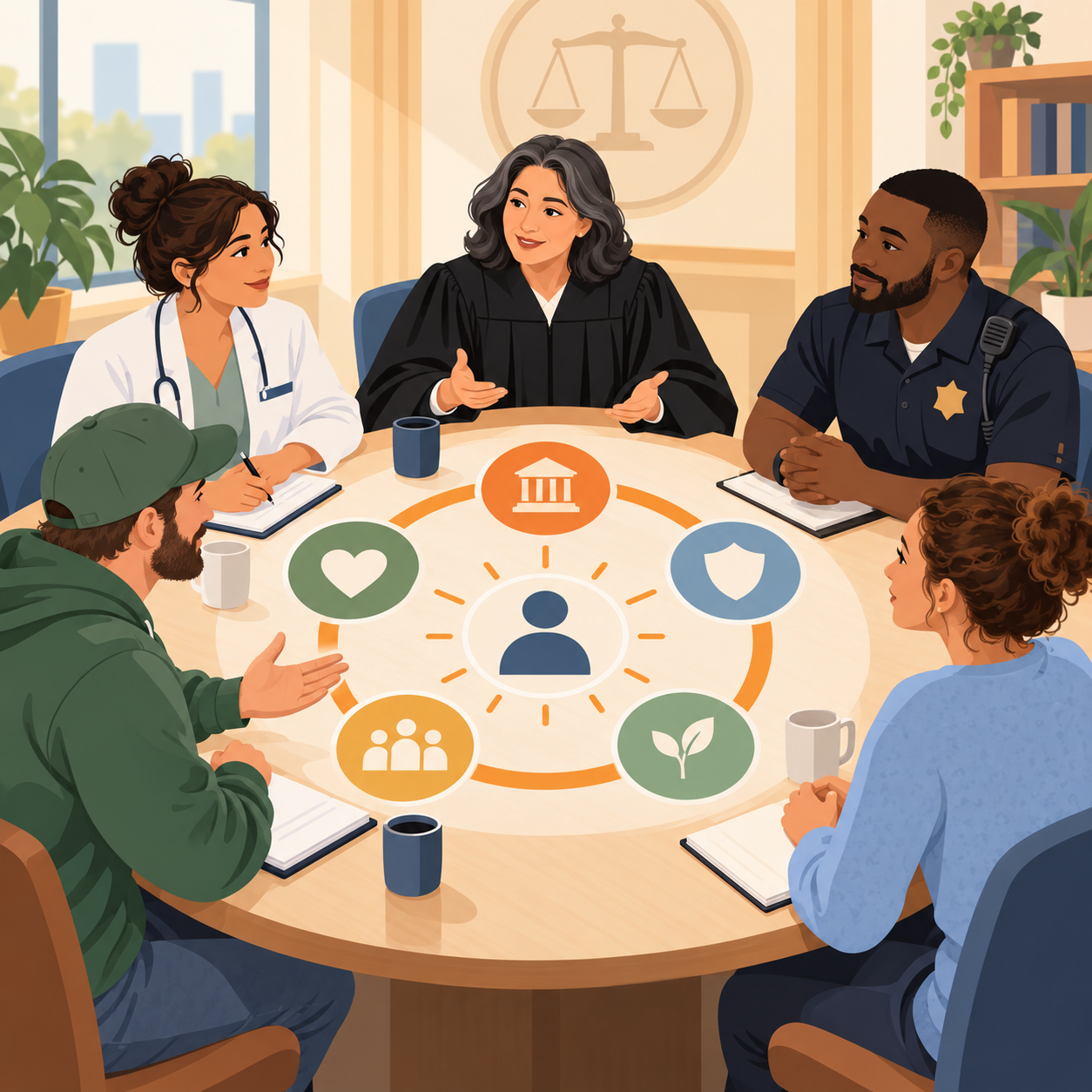 Litigants may need different forms of assistance at different stages of a case. A person may initially need help understanding a notice, later need assistance completing a form, then need individualized legal advice before a hearing. Court administrators should design resource communication around that progression rather than treating assistance as a single referral event.
A journey-based approach can identify where users are most likely to need procedural information, where self-help may be sufficient, and where the need may shift toward legal advice or representation. This creates a clearer path through the assistance landscape.
The communication should also explain that needs can change over time. A litigant who begins with self-help may later encounter a more complex issue that requires legal assistance. Conversely, someone who cannot obtain representation may still benefit from court-based procedural resources.
Designing around the full journey helps courts provide more relevant referrals and reduces the risk that users are directed toward a resource that no longer fits the stage of the case.
Make Referral Pathways Visible Across Court Touchpoints
Access to justice information should not exist only on a dedicated resource page. Court administrators should integrate referral pathways across notices, filing instructions, case-type pages, hearing preparation materials, self-help content, and courthouse signage.
This repeated visibility matters because litigants may enter the system through different channels. Some may begin with a mailed notice, others with a website search, and others by visiting the clerk’s office.
The same core assistance pathways should remain recognizable across each touchpoint. A litigant who sees a self-help center referenced in a notice should be able to find the same service easily online and at the courthouse.
Consistent visibility reduces the chance that users miss assistance simply because they entered the court process through a different channel.
Distinguish Court-Based Assistance From Outside Legal Services
Court administrators should make clear which resources are part of the court and which are independent organizations. Self-help centers, legal aid providers, bar association programs, mediation services, and private attorneys may all appear within the same resource list but operate under different authority.
This distinction is important for neutrality and expectations. A court self-help service may provide procedural information without representing the litigant. An outside legal aid organization may provide legal advice or representation depending on eligibility and capacity.
Public communication should identify these differences plainly. Users should understand when they are leaving the court’s own service system and entering an external provider’s intake process.
Clear institutional boundaries help litigants understand who is responsible for each service and reduce the assumption that the court controls the availability or decisions of outside legal providers.
Explain Referral Without Endorsement
When courts list outside resources, the communication should make clear that the referral is informational rather than an endorsement of a particular provider or a guarantee of service.
Court administrators can still make the referral useful by explaining the type of assistance the organization may provide and how to contact it.
This balance allows courts to connect litigants with potential help while preserving institutional neutrality.
Use Staff Communication to Reinforce Resource Awareness
Front-line staff often become the practical gateway to legal assistance resources. Litigants may ask clerks, self-help staff, security personnel, or other employees where to find help.
Court administrators should ensure that staff know which resources are available, what each service does, and how to refer users accurately. This knowledge should be updated when programs change.
Staff should also understand the distinction between making a referral and giving legal advice. They can explain that a resource exists and what it generally provides without telling the litigant whether they should use it as a legal strategy.
Consistent staff knowledge strengthens the court’s overall access to justice communication because users receive the same referral framework whether they find the information online or ask in person.
Build Resource Communication for Litigants With Limited Digital Access
Access to justice communication increasingly relies on websites and online intake systems, but not every litigant has reliable internet access, a computer, or the digital skills needed to use those systems easily.
Court administrators should maintain alternative ways for people to learn about legal aid, self-help, and other assistance. Printed materials, phone information, courthouse signage, kiosks, libraries, and community partners may remain essential.
Where an outside provider uses online intake, court communication should explain that process clearly and identify any available alternative for users who cannot complete it digitally.
This broader channel strategy ensures that assistance information does not become accessible only to people who are already comfortable navigating digital systems.
Integrate Language Access Into Legal Assistance Communication
Litigants with limited English proficiency may face additional difficulty understanding the differences among self-help, legal aid, lawyer referral, and other services.
Court administrators should provide multilingual explanations of major assistance categories and make interpreter or language-access information visible within referral pathways.
Translated resource information should also remain current. An outdated phone number or intake process is especially burdensome for a user who already faces a language barrier.
Language access should therefore be built into the same resource communication system rather than treated as a separate layer added afterward.
Design Resource Information for Accessibility
People with disabilities may encounter barriers in accessing both court-based and outside legal assistance programs. Court administrators should ensure that resource information is accessible across digital and physical formats.
Webpages should support assistive technologies, printed materials should use clear structure, and videos should include appropriate accessibility features. Information about accommodations should also be easy to locate.
Where a referred provider has specific accessibility procedures, the court can direct users to the provider for current information rather than making assumptions on its behalf.
Accessible communication helps ensure that legal assistance pathways are usable by the full range of litigants who may need them.
Explain How Mediation and Other Non-Representation Services Fit Into the Assistance Landscape
Access to justice programs may include more than legal representation and self-help. Mediation, settlement assistance, navigator programs, document clinics, and other services may be available depending on the jurisdiction.
Court administrators should explain these services according to what they do rather than grouping them under a generic label. A litigant should be able to distinguish a mediation service from a program that provides legal advice or representation.
The court should avoid presenting any particular service as the appropriate choice for a specific litigant unless that recommendation falls within an authorized court process. The goal is to clarify options, not select among them.
Clear descriptions expand the user’s understanding of what assistance may exist and reduce the likelihood that different programs are mistaken for one another.
Use Data and Repeated Questions to Identify Referral Gaps
Court administrators can learn a great deal from the questions litigants repeatedly ask about assistance. If users frequently ask where to find representation, whether self-help can provide legal advice, or how to reach a particular program, the current resource communication may be insufficient.
Referral data can also reveal patterns. A self-help center may receive large numbers of users who actually need legal representation, or an outside provider may report that many court referrals fall outside its eligibility criteria.
These patterns should inform revisions to public-facing materials and staff guidance. The goal is to improve routing so users reach the most relevant resource earlier.
Over time, referral analysis can help courts make the access to justice network easier to navigate without assuming responsibility for services they do not control.
Build a Coordinated Access to Justice Communication Network
Courts do not operate the entire access to justice system, but they can help make the system more coherent. Court administrators can coordinate communication with legal aid organizations, bar associations, self-help programs, libraries, community organizations, and other partners so referral information remains accurate and understandable.
This coordination should focus on roles, service descriptions, intake pathways, and current availability rather than on influencing how outside organizations provide legal services.
A coordinated network can also improve feedback. Providers can alert the court when referral information is outdated or when litigants are consistently arriving with inaccurate expectations.
The result is a more functional assistance ecosystem. Litigants encounter clearer pathways, court staff make more accurate referrals, and outside providers receive users who better understand what the service may be able to provide.
Build Governance Around Access to Justice Communication
Courts can maintain stronger referral systems when responsibility for access to justice communication is clearly assigned. Without defined ownership, resource pages, printed guides, notice language, and staff reference materials can drift apart over time.
Court administrators should identify who is responsible for maintaining information about self-help centers, legal aid providers, lawyer referral programs, mediation resources, and other assistance. That responsibility may be shared across communications staff, self-help programs, clerks, court administration, and other units, but the update process should still be coordinated.
Governance should also address how new programs are added, how outdated resources are removed, how provider changes are verified, and how internal staff are notified when referral information changes.
A clear governance structure makes the resource system more reliable and reduces the risk that litigants receive conflicting or outdated information depending on where they ask for help.
Create a Formal Review Cycle for Referral Information
Outside legal assistance programs can change quickly. Eligibility criteria, funding, intake procedures, staffing, hours, service areas, and case priorities may all shift over time.
Court administrators should establish a regular process for reviewing referral information rather than waiting for users to report that a resource no longer works.
The review process can confirm whether the organization remains active, whether contact information is current, what services it provides, and whether significant eligibility or intake changes have occurred.
Regular verification is especially important for resources that appear prominently in notices, self-help materials, or high-volume case-type pages. The more heavily a court directs litigants toward a program, the more important it is that the information remain accurate.
Standardize How Court Materials Describe Assistance Programs
Different court departments may describe the same resource in different ways. One webpage may call a program legal aid, another may describe it as free legal help, and a printed guide may use the organization’s formal name without explaining what it does.
Court administrators should develop consistent descriptions for frequently referenced services. Each description should explain the general function of the program, who may be eligible, how to contact it, and any important limits on availability.
Standardization reduces confusion and makes the court’s assistance network easier to understand. It also helps staff communicate consistently when making referrals in person or by phone.
The goal is not to oversimplify the service. It is to make the role of each program clear enough that litigants can decide whether it is relevant to their immediate need.
Build Staff Referral Tools That Support Neutrality
Court employees often need to help litigants locate resources without crossing into legal advice or appearing to recommend a particular provider. Staff reference tools can help maintain that boundary.
A referral guide can explain what types of services are available, how to describe them neutrally, which programs are court-based, and which are independent. It can also identify the appropriate response when a litigant asks a question that requires legal advice rather than procedural information.
Staff should be able to explain why a resource may be relevant without promising that the provider will accept the case or suggesting that using the resource will improve the litigant’s outcome.
Clear staff tools make referrals more useful while protecting the neutrality of the court.
Give Staff a Reliable Alternative to Saying “We Cannot Help”
When a question exceeds the court employee’s authorized role, the interaction should not necessarily end with a refusal.
Where appropriate, staff can explain the boundary and direct the litigant toward a self-help service, legal aid provider, lawyer referral program, or other authorized resource.
A well-designed referral framework turns a necessary limitation into a constructive next step.
Coordinate Resource Communication During Procedural Changes
Changes in court forms, filing systems, remote appearance procedures, scheduling practices, or case management technology can affect where litigants need assistance.
Court administrators should review access to justice communication whenever significant procedural changes are introduced. A new filing platform, for example, may create additional demand for self-help assistance or require updated instructions for outside providers.
Legal aid and community partners may also need information about major changes so they can prepare the litigants they serve.
Connecting procedural change management with assistance communication helps prevent gaps during transitions and reduces the likelihood that users receive outdated guidance from different parts of the access to justice network.
Prepare for Periods of Increased Demand
Certain events can sharply increase demand for legal aid, self-help, and related services. Changes in law, economic disruptions, natural disasters, large-scale housing issues, or changes in court operations may produce sudden increases in the number of people seeking assistance.
Court administrators should consider how resource communication will function when demand exceeds normal levels. Public information may need to clarify intake delays, alternative resources, changed service hours, or temporary assistance programs.
The court should avoid continuing to direct users toward a single overwhelmed provider when other legitimate pathways are available.
Planning for demand surges makes the assistance network more resilient and helps litigants understand what options remain available when normal service capacity is strained.
Measure Whether Referrals Are Reaching the People Who Need Them
Courts should evaluate access to justice communication based on whether litigants can find and use appropriate resources, not simply whether a resource directory exists.
Useful indicators may include self-help center usage, common referral questions, repeat visits to clerk counters, legal aid intake patterns, resource-page usage, or reports from community partners about recurring confusion.
Court administrators should also examine whether people are reaching assistance early enough for it to be useful. A referral that consistently occurs only immediately before a hearing may indicate that information needs to appear earlier in the process.
Measurement helps the court identify where communication is working and where referral pathways remain too difficult to navigate.
Use Feedback From Providers to Improve Court Communication
Legal aid organizations, bar associations, and community programs can offer valuable insight into how court referrals function in practice.
Providers may observe that users arrive without understanding eligibility requirements, expect full representation from a limited-service program, or have been directed to a service that does not handle their case type.
Court administrators can use this feedback to revise descriptions, update referral pathways, and improve staff guidance.
A structured feedback process strengthens coordination while preserving institutional boundaries. Outside organizations provide information about how referrals are working, while the court retains responsibility for how it communicates official resources.
Maintain Access to Justice Information Across Multiple Channels
Court users do not all rely on the same communication channel. Some will search online, while others will call the courthouse, read a printed notice, visit a self-help center, or ask a clerk for assistance.
Court administrators should ensure that core resource information remains aligned across these channels. Changes to a provider’s intake process should be reflected not only online but also in printed materials, staff guides, and any recurring notice language.
This alignment is especially important for high-volume services. A litigant should not receive one referral from the website and a different one from the clerk’s office unless there is a clear reason for the distinction.
Maintaining cross-channel consistency helps create a more dependable resource network and reduces the burden on users to determine which source is current.
Build an Access to Justice Communication System That Can Evolve
The assistance landscape will continue to change as new programs emerge, funding shifts, technology changes, and community needs evolve. Court administrators should build communication systems that can adapt without requiring a complete redesign each time a provider or process changes.
That means creating maintainable resource structures, defined update responsibilities, standardized service descriptions, feedback mechanisms, and strong coordination with court-based and outside programs.
The long-term objective is not to create a permanent list of organizations. It is to build a durable method for connecting litigants with appropriate assistance as the network itself changes.
When courts institutionalize that approach, access to justice communication becomes more reliable, easier to maintain, and more useful to the people who depend on it.
Strategic Communication Support for Access to Justice Programs
 Courts that want litigants to make effective use of legal aid, self-help centers, and other access to justice resources need more than a directory of services. They need a communication system that helps people identify what kind of assistance they need, understand the difference among available resources, locate those services early enough to use them, and move from one resource to another without unnecessary confusion.
Stegmeier Consulting Group (SCG) can support courts by developing access to justice communication strategies, resource pathways, self-help communication frameworks, referral language, staff reference tools, notice content, digital resource structures, community partner materials, multilingual and accessibility-focused communication, and systems for maintaining current provider information. SCG can also help courts identify where litigants most often become confused about available assistance and redesign communication around those points.
External strategic communication support can be especially valuable when resource information has accumulated across multiple webpages, departments, printed guides, and outside provider lists without a consistent structure. SCG’s role remains focused on communication strategy, information organization, stakeholder coordination, user experience, and public-facing systems. SCG does not provide legal advice, determine whether a litigant should pursue a particular legal strategy, decide eligibility for outside programs, guarantee representation, or perform the legal functions of the court or service providers.
Future Trends
Access to justice communication will increasingly be shaped by digital intake, remote assistance, online self-help, virtual legal clinics, and more integrated court service platforms. These developments can make support easier to reach, but they can also create new barriers when users are expected to understand complex service categories or navigate multiple systems before receiving help.
Courts are also likely to place greater emphasis on guided resource navigation rather than static directories. Instead of presenting a long list of organizations, future systems may help users identify whether they need procedural information, document assistance, legal advice, representation, mediation, language assistance, or another form of support before directing them toward relevant options.
Artificial intelligence and automated navigation tools may also play a larger role in helping litigants find resources. Courts will need clear safeguards around accuracy, neutrality, privacy, current provider information, and the distinction between general resource navigation and individualized legal advice.
Coordination across the access to justice network will become increasingly important as well. Courts, legal aid organizations, self-help centers, bar associations, libraries, and community organizations may need stronger communication protocols so changes in eligibility, intake, capacity, and service availability can be reflected quickly in public-facing information.
Conclusion
Legal aid, self-help centers, and access to justice programs can only improve access when litigants know that they exist and understand how to use them. For many people, the challenge is not a total absence of assistance but an assistance landscape that is difficult to interpret.
The strongest court communication systems organize resources around user needs, explain the differences among services, make eligibility and capacity limitations understandable, place referrals at relevant procedural moments, and maintain accurate information across notices, websites, staff interactions, and community channels.
They also preserve the court’s neutral role. Courts can help litigants understand where information, advice, representation, mediation, language services, and other forms of assistance may be available without recommending a legal strategy or promising a particular result.
When access to justice communication is treated as a coordinated system rather than a collection of links, litigants are more likely to reach appropriate help earlier. Courts reduce avoidable confusion, outside providers receive better-informed referrals, and the broader justice system becomes easier to navigate for people who do not already understand how its many services fit together.
Stegmeier Consulting Group’s Strategic Approach to Communication Systems
Build access to justice communication systems that help litigants understand what assistance exists, when to seek it, and where to go next.
Court administrators need communication systems that make legal aid, self-help centers, lawyer referral programs, mediation services, language resources, and other access to justice programs easier to find and understand. Stegmeier Consulting Group (SCG) helps public institutions organize complex service networks, improve plain-language resource communication, strengthen referral pathways, align digital and in-person guidance, support staff and community partner communication, and build durable systems for keeping assistance information accurate and usable.
Use the form below to connect with our team and explore how strategic communication support can strengthen access to justice resource communication for the litigants who need it most.