
Exemption Outreach That Reaches Eligible Homeowners: Communication Strategies for County Assessor Offices
Every year, in counties across the country, property owners pay property taxes they did not need to pay in full. Not because of an error in the assessment, and not because the tax system was applied incorrectly, but because those property owners did not know about an exemption they qualified for and did not know how to apply. The exemption existed. The eligibility existed. The legal authority to reduce the tax existed. What did not exist was a communication system capable of connecting the eligible homeowner to the benefit they were entitled to receive.
Property tax exemptions represent one of the most significant and most underutilized tools in the local government tax equity toolkit. Homestead exemptions reduce the taxable value of a primary residence, making homeownership more affordable for the households that occupy the properties they own. Senior citizen exemptions recognize that older homeowners on fixed incomes may struggle to keep pace with rising property taxes and provide targeted relief for this economically vulnerable population. Veterans exemptions acknowledge the service of military veterans and their families and reduce the property tax burden for a population that often faces specific economic and health challenges following service. Disability exemptions provide relief for homeowners whose disability may limit their ability to earn income while their property tax obligation continues to grow with assessed values.
These exemptions exist because legislators and communities recognized that the standard property tax calculation, applied uniformly without regard to the circumstances of the property owner, produces outcomes that are inequitable for specific populations. But the statutory existence of an exemption does not automatically produce equitable outcomes. Equitable outcomes require that the people who are eligible for the exemption know about it, understand how to apply, and have access to an application process that does not create barriers that disproportionately exclude the people the exemption was designed to help. That is a communication challenge, and county assessor offices are in the best position to meet it.
This article examines how county assessor offices can design and implement exemption outreach communication that reaches the eligible homeowners who are currently not claiming exemptions they qualify for. It addresses the specific populations that are most likely to be missing exemptions, the communication barriers that prevent eligible homeowners from applying, the channel strategies that reach people who may not be well served by standard government outreach, and the outreach design principles that make exemption communication effective rather than merely visible.
Who Is Missing Exemptions and Why
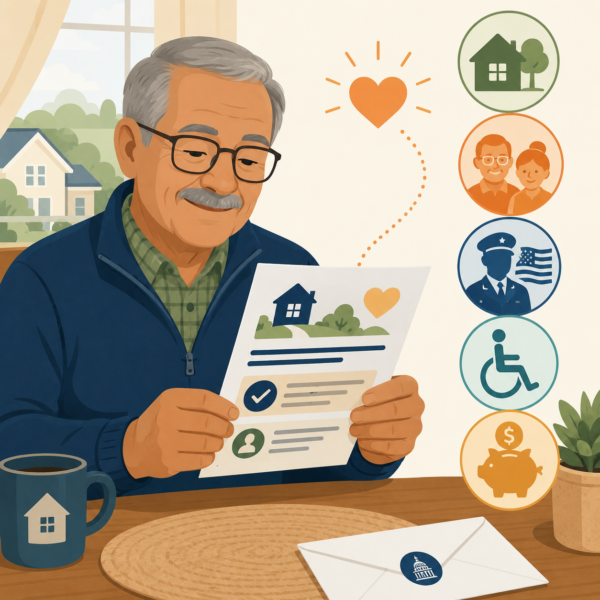 The population of homeowners who qualify for property tax exemptions but are not claiming them is not evenly distributed across the eligible population. It clusters around specific groups whose circumstances create specific barriers to exemption enrollment. Understanding who is missing exemptions and why is the foundation of an outreach strategy that can actually reach them, because different barriers require different communication responses.
New homeowners are among the most commonly unaware of exemption eligibility. A homeowner who recently purchased their first property may not know that a homestead exemption exists in their jurisdiction, may not know that the exemption requires a proactive application rather than being automatically applied at the time of purchase, and may not know that the deadline for applying for the exemption for a given tax year may have passed before they were even aware the exemption existed. In many jurisdictions, a homestead exemption requires the homeowner to apply within a specific window following purchase, and a buyer who is managing the many demands of a new home purchase and is not specifically informed about the exemption application requirement may miss that window without realizing it until they receive a tax bill that does not reflect the exemption.
Senior citizens represent another population with high exemption eligibility and significant enrollment gaps. Many senior citizen exemptions require the homeowner to apply after reaching the qualifying age, which may be 65 in most jurisdictions but may vary. A homeowner who turns 65 and becomes newly eligible for a senior exemption will not automatically receive it unless they know to apply. Some seniors who have owned their homes for many years and have been receiving a homestead exemption may not know that a separate senior exemption exists that would provide additional relief. And seniors who rely primarily on paper-based communication, who may have limited mobility that makes in-person applications difficult, or who have limited computer literacy that makes online applications inaccessible, face specific barriers to exemption enrollment that standard outreach approaches may not overcome.
Veterans and disabled homeowners are populations whose exemption eligibility may change following a specific life event, such as military discharge, a disability determination, or the death of a veteran spouse. The communication about these event-triggered exemptions is particularly important and particularly difficult because the eligible homeowner may be in the middle of a major life transition when the exemption eligibility arises and may not be in a position to simultaneously navigate a government benefits application process. A veteran who is transitioning from active duty to civilian life has many competing priorities. A homeowner who has recently received a disability determination from a medical provider or a government agency may not know that a property tax exemption is now available to them and may not think to check. A surviving spouse of a deceased veteran may not know they retain eligibility for a veteran exemption following their spouse’s death.
Low-income homeowners represent a fourth population that is disproportionately likely to miss exemptions. Exemptions that are income-conditioned, requiring the homeowner to demonstrate that their income falls below a certain threshold, may not be well understood by homeowners who are unaccustomed to filing income-based applications with government agencies, who may have variable income that makes eligibility uncertain from year to year, or who may fear that sharing income information with a government agency will affect other benefits they receive. The intersection of property tax exemption eligibility with other means-tested benefit programs is an area where communication clarity is especially important and especially rare.
The Role of Language and Literacy Barriers in Exemption Enrollment Gaps
Language barriers represent a specific and significant source of exemption enrollment gaps in jurisdictions that serve homeowner populations with substantial non-English speaking communities. A homeowner who is fluent in Spanish, Vietnamese, Mandarin, Tagalog, or another language but receives exemption information only in English is not well positioned to understand what the exemption is, whether they qualify, or how to apply. The barrier is not the homeowner’s intelligence, financial literacy, or willingness to engage with the property tax system. It is the language in which the government has chosen to communicate about a benefit the homeowner is legally entitled to receive.
Literacy barriers among English-speaking homeowners are a related issue that receives less attention but affects a meaningful portion of the adult homeowner population. Property tax exemption applications and informational materials are frequently written at a reading level that exceeds the functional literacy level of a portion of the eligible population. Homeowners who struggle with reading complex government documents may not fully understand what an exemption is, what information they need to provide, or whether their circumstances make them eligible. Outreach materials that are written at a lower reading level, that use plain language and clear visual design, and that are available through channels that include oral communication such as phone assistance and community events, serve a broader range of eligible homeowners than materials that assume a high level of reading proficiency.
Clearer Taxpayer Communication: Strategies for State and Local Assessors, Treasurers, Revenue Departments, and Finance Offices
This article is part of our series on strategic communication for State and Local Assessors, Treasurers, Revenue Departments, and Finance Offices. Clear, timely, and accessible taxpayer communication helps government agencies improve compliance, reduce confusion, strengthen public trust, and enhance the citizen experience. To learn more and to see the parent article, which links to additional resources and best practices for taxpayer outreach and engagement, click the button below.
Designing Exemption Outreach Communication That Reaches the Eligible Population
Effective exemption outreach communication starts from an understanding of where the eligible population is and how they typically receive information, rather than from an assumption that posting information on the assessor’s website and including it in the annual assessed value notice is sufficient to reach them. For the populations most likely to be missing exemptions, specifically new homeowners, seniors, veterans, disabled residents, and non-English speakers, the standard government outreach channels are frequently the least effective precisely because these populations are least likely to actively monitor government websites, read government publications in depth, or know what questions to ask when they interact with government agencies.
Proactive, targeted outreach that reaches eligible homeowners through the channels they actually use is the most effective way to close exemption enrollment gaps. For new homeowners, the most effective outreach moment is at or shortly after the time of purchase, through channels that are already engaged with the buyer during the real estate transaction. Outreach through title companies, real estate agents, lenders, and escrow companies can reach new homeowners at the moment when their attention is most focused on the property-related obligations they are taking on. A simple, plain-language one-page summary of available property tax exemptions that is included in closing documents, or that is provided to buyers by their real estate agent as part of the transaction, reaches the new homeowner at the highest-attention moment and gives them the information they need to apply before the first deadline passes.
For seniors who may be newly eligible because they have recently reached the qualifying age, proactive outreach through age-related service providers and organizations can reach the eligible population more effectively than standard government communication. Senior centers, community senior programs, Medicare assistance programs, Area Agencies on Aging, and other organizations that serve older adults interact regularly with the population that is most likely to benefit from senior property tax exemptions. Providing these organizations with accurate, current, plain-language information about the senior exemption, including the eligibility requirements, the application process, and the contact information for the assessor’s office, extends the reach of exemption outreach to a population that may not engage with standard government communication channels.
For veterans, partnerships with veterans service organizations, the county veterans affairs office, military transition assistance programs, and veteran community organizations can reach the eligible population through channels that are already trusted and regularly used by veterans and their families. A veterans service officer who is familiar with the county’s veteran property tax exemption can inform veterans about the benefit as part of the broader benefits counseling they provide. An organization that serves post-9/11 veterans can include property tax exemption information in its onboarding materials for veterans who are transitioning to civilian life in the county. These partnerships extend the reach of exemption outreach to a population that is often underserved by standard government communication.
The Application Process as a Communication and Access Challenge
An exemption outreach campaign that successfully raises awareness of an available exemption but directs interested homeowners to an application process that is confusing, inaccessible, or burdensome may not produce meaningful improvement in enrollment rates. The application process is the final communication and access challenge in the exemption enrollment pipeline, and it deserves attention as part of the outreach strategy rather than as a separate administrative matter.
Exemption applications should be written in plain language that explains clearly what information is required, why it is required, and what documentation must accompany the application. An application that requires documentation that many eligible homeowners may not have readily available, such as a copy of a military discharge record, a disability determination letter from a specific government agency, or a death certificate for a deceased veteran spouse, should also explain where the homeowner can obtain that documentation and whether the assessor’s office can accept alternative forms of documentation in cases where the standard document is unavailable. A homeowner who wants to apply but does not know how to obtain the required documentation is effectively excluded from the benefit as surely as one who never heard about the exemption.
Online application options that allow homeowners to submit applications and supporting documentation digitally expand access for homeowners who are comfortable with online transactions and who may find it difficult to visit the assessor’s office in person. But digital applications should be accompanied by paper application options for homeowners who cannot access or use online systems, and by phone assistance options for homeowners who have questions about the application or who need help completing it. An exemption program that is only accessible through an online application is not genuinely accessible to the full eligible population, particularly for the older, lower-income, and less digitally experienced homeowners who are among the most important target populations for exemption outreach.
Timing Exemption Outreach for Maximum Impact
The timing of exemption outreach communication is as important as its content. Outreach that arrives after the application deadline for a given tax year has passed is informative but not immediately actionable for the homeowners who receive it. Outreach that arrives well before the application deadline gives homeowners time to determine their eligibility, gather any required documentation, complete the application, and submit it before the cutoff. The difference between these two outreach timing scenarios, from the perspective of the eligible homeowner who is learning about the exemption for the first time, is the difference between a benefit they can access this year and one they will have to wait until next year to receive.
For each exemption type, the assessor’s office should identify the optimal outreach timing that maximizes the likelihood that eligible homeowners who receive the outreach can act on it before the deadline. For homestead exemptions, the optimal outreach timing for new homeowners is within the first few weeks of closing on the property, giving them the full application window to respond. For senior exemptions, outreach to homeowners who are approaching the qualifying age should arrive before or shortly after their birthday, not after the application deadline has passed. For veteran exemptions triggered by discharge, outreach should be available through transition assistance programs that reach veterans before they have settled into their new lives and may be less receptive to additional administrative tasks.
Multi-touch outreach sequences that include an initial awareness-building communication, a follow-up with application information, and a reminder as the deadline approaches are more effective than single-touch outreach campaigns because they account for the reality that homeowners may not act on the first communication they receive. A homeowner who receives initial information about an exemption but does not immediately apply may be prompted to do so by a follow-up reminder that includes the deadline date and a specific, accessible path to the application. This kind of sequenced outreach is more resource-intensive than a single communication, but it produces significantly higher enrollment rates for the same eligible population.
Using Assessment Data to Target Exemption Outreach
County assessor offices have access to property data that, with appropriate analysis, can identify properties that appear to have eligible owners who are not currently claiming available exemptions. Properties that are classified as owner-occupied but do not have a homestead exemption on file may have owners who qualify for the exemption but have not applied. Properties whose owners appear to be of qualifying age based on deed records but do not have a senior exemption may have owners who are newly eligible. Properties with recently recorded deeds following a prior owner death may have surviving spouses who retain veteran exemption eligibility. This kind of data-informed targeting allows the assessor’s office to direct outreach resources toward the specific properties where the probability of finding an unclaimed exemption is highest, rather than distributing general outreach to the entire property owner population.
Data-targeted outreach must be implemented with care to protect property owner privacy and to avoid erroneous targeting that sends exemption outreach to property owners who are not actually eligible. But the principle of using available data to make outreach more efficient and more effective is sound, and it is already practiced by many assessors through processes like automatically flagging properties that change ownership for homestead exemption outreach. Extending that data-informed approach to other exemption types, and developing the analytical capability to identify likely eligibility for senior, veteran, and disability exemptions based on available records, can significantly improve the efficiency and impact of exemption outreach programs without requiring a proportional increase in outreach resources.
Partner Organizations as Exemption Outreach Channels
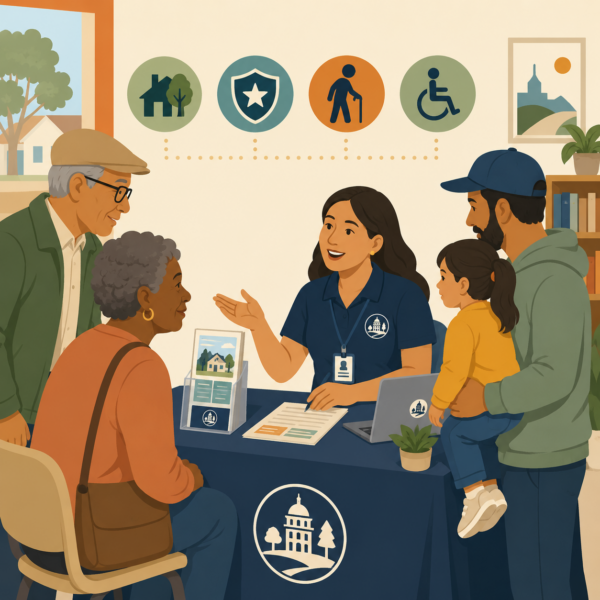
The populations most likely to be missing property tax exemptions are also among the populations that government communication systems reach least effectively through standard channels. Seniors who are less digitally active may not see information on the assessor’s website. Non-English speaking homeowners may not read materials written only in English. Veterans in the transition period following discharge may be focused on other priorities. Low-income homeowners may have limited engagement with government information sources. Reaching these populations requires outreach through the trusted intermediaries and community organizations that these populations actually engage with.
Libraries are an underutilized exemption outreach channel in many counties. Libraries serve all of the populations most likely to be missing exemptions and are trusted community institutions that provide assistance with government-related tasks including document printing, internet access, and referrals to social service programs. A library that has current, accurate exemption information available at the circulation desk, that provides assistance with exemption applications as part of its community services, and that participates in assessor’s office outreach events has the potential to reach a significant number of eligible homeowners who would not be reached through the assessor’s standard communication channels.
Faith communities and religious organizations serve as trusted information sources for many of the populations most likely to be missing property tax exemptions. A congregation with a large senior membership, a church that serves a primarily immigrant community, or a religious organization that provides services to veterans represents a concentrated population of potentially eligible homeowners who trust their religious community as an information source. Providing accurate, current exemption outreach materials to faith communities and equipping them to share that information with their members is a low-cost, high-reach strategy for exemption outreach that complements the assessor’s standard communication channels.
Healthcare providers, pharmacies, and other health-related service locations are particularly effective channels for reaching seniors and disabled homeowners who may be eligible for exemptions. Older adults who may not be active online and who may have limited mobility that makes office visits difficult are often regular visitors to healthcare settings. A doctor’s office, pharmacy, or senior health clinic that displays exemption information and provides application assistance as a community service can reach this population in a trusted, familiar setting. Partnerships with the county health department, Area Agency on Aging, or other health-focused organizations can extend this channel strategy across a broad network of healthcare contact points.
Simplifying the Language and Format of Exemption Communication
The language of exemption outreach communication is a critical determinant of whether eligible homeowners understand what they are being offered and how to access it. Exemption outreach that uses legal or administrative language, that describes eligibility criteria in terms of statutory definitions rather than plain-language descriptions of who qualifies, or that presents the application process as a formal legal proceeding rather than an accessible administrative step will reach the homeowners who are most comfortable navigating complex government processes and will lose the homeowners who are not. Since the latter group is disproportionately represented among the populations most likely to be missing exemptions, this language barrier directly undermines the equity goal that exemptions are designed to achieve.
Plain-language exemption outreach describes the benefit in terms of its practical impact, explains who qualifies in terms of specific characteristics rather than statutory references, describes the application process in a step-by-step sequence that the homeowner can follow, and identifies the documentation required in terms of what the documents are rather than their technical designations. A senior exemption outreach piece that says if you are 65 or older, own your home, and use it as your primary residence, you may qualify for a significant reduction in your property taxes is communicating the essential eligibility information in a form any homeowner can understand. A corresponding piece that says homeowners who meet the requirements of Section 196.075, Florida Statutes, as amended, including the age, residency, and ownership criteria specified therein may qualify for the senior exemption under that provision is technically accurate but communicates the same information in a form that many homeowners will not find accessible.
The format of exemption outreach materials should be designed for the populations they are intended to reach. A one-page flyer with large type, simple design, and a clear call to action is appropriate for distribution through community locations like libraries, senior centers, and pharmacies. A postcard with a brief description of the exemption and a phone number or website for more information is appropriate for mailing to a targeted list of potentially eligible homeowners. A brief, accessible video that explains the exemption and the application process in plain language is effective for sharing through community organization social media channels and for reaching homeowners who prefer audio-visual communication over text. The format should match the channel and the population, not the assessor’s standard document template.
Multilingual Exemption Outreach
Exemption outreach that is not available in the languages of the eligible homeowner population is not equitable, even if it is available through multiple channels and is well-designed in English. A homeowner who speaks primarily Spanish, Cantonese, Vietnamese, Somali, or another language and who receives exemption outreach only in English may not understand enough of the material to know whether they are eligible or how to apply. The result is that this homeowner, who may be among the most economically vulnerable in the eligible population, is systematically excluded from a benefit they are legally entitled to receive simply because the government chose to communicate about it only in a language they cannot fully access.
Multilingual exemption outreach requires translation of the core outreach materials, specifically the description of the exemption, the eligibility criteria, the documentation required, and the application instructions, into the languages most commonly spoken by the county’s homeowner population. This translation should be performed by translators who are familiar with both the linguistic and the cultural context of the target language community, not simply run through automated translation tools that may produce technically accurate but culturally tone-deaf communication. The goal is not simply to convert English words into another language but to communicate the same information in a way that makes sense to a homeowner who reads it in their own language.
Measuring Exemption Outreach Effectiveness
Exemption outreach programs that are not measured cannot be systematically improved. The most direct measure of exemption outreach effectiveness is the change in exemption enrollment among the target population following an outreach campaign. If an outreach effort targeting new homeowners results in a measurable increase in homestead exemption applications from properties that recently transferred ownership, the outreach is working. If an outreach effort targeting seniors over 65 does not produce a detectable increase in senior exemption applications among newly eligible homeowners, the outreach design, timing, or channel strategy may need to be reconsidered.
Enrollment tracking by demographic category, where data is available, can help assessor offices identify whether their outreach is reaching all segments of the eligible population equitably or whether enrollment gaps persist in specific demographic groups. If senior exemption enrollment is increasing overall but lagging among homeowners in specific geographic areas or demographic communities, the outreach channel strategy may need to be supplemented with targeted community outreach in those areas. If veteran exemption enrollment is increasing among recently discharged veterans but not among surviving spouses of deceased veterans, the outreach to that specific group may need to be strengthened.
Call volume and web traffic data related to exemption inquiries can also provide useful feedback about outreach effectiveness. A spike in calls or web visits following an outreach campaign indicates that the campaign generated awareness. If that spike in awareness does not translate into a corresponding increase in applications, the barrier may be in the application process rather than the awareness communication, which points to a different improvement strategy. Tracking both awareness indicators and enrollment outcomes gives the assessor’s office a more complete picture of where the outreach program is succeeding and where it needs adjustment.
Strategic Communication Support for County Assessor Offices
 County assessor offices that want to close exemption enrollment gaps face a communication challenge that is substantively different from the challenge of communicating compliance requirements. Compliance communication asks property owners to do something the law requires. Exemption outreach asks property owners to take advantage of something the law makes available to them. The motivational environment is different, the eligible population is not self-identified, and the communication must do the work of both creating awareness and motivating action in a population that did not know the relevant information was available to them. This is inherently more difficult than communicating with a known population about a known obligation, and it requires a more proactive, more targeted, and more channel-diverse strategy than many assessor offices currently deploy.
A structured communication assessment of an assessor’s exemption outreach program typically identifies several consistent gaps: outreach that is available on the assessor’s website but not pushed through the channels that reach the most vulnerable eligible populations, materials that are written in English only in jurisdictions with significant non-English speaking homeowner populations, application processes that create barriers for homeowners who are not comfortable with digital or paper-based government applications, and outreach timing that does not align with the application deadlines or the life events that trigger new eligibility. Each of these gaps represents an opportunity for communication improvement that can produce meaningful increases in exemption enrollment without requiring changes to the exemption programs themselves.
Stegmeier Consulting Group (SCG) helps county assessor offices design and implement exemption outreach programs that reach the eligible homeowners who are currently not claiming exemptions they qualify for. That support may include outreach strategy development, plain-language exemption communication design, targeted outreach material creation for specific eligible populations, partner organization engagement and material development, multilingual communication design, application process accessibility review, data-informed targeting strategy, and enrollment measurement frameworks that allow the assessor’s office to track and improve outreach effectiveness over time.
The goal of this work is a property tax exemption system in which the benefits that the legislature created to make property tax more equitable are actually received by the homeowners they were designed to help, not just the homeowners who happen to know about them. That goal is achievable through communication, and it is one of the most meaningful equity investments a county assessor office can make in the communities it serves.
Future Trends in Exemption Outreach Communication
The landscape of exemption outreach communication is evolving as assessor offices gain access to better data, more diverse communication channels, and more sophisticated targeting capabilities. Several trends are shaping the direction of that evolution and creating new opportunities for reaching eligible homeowners who have historically been missed by standard outreach approaches.
Automatic enrollment or automatic notification is an emerging model in some jurisdictions. Rather than requiring eligible homeowners to discover an exemption and apply for it proactively, some counties are moving toward systems that automatically identify potentially eligible homeowners based on available records, notify them of their potential eligibility, and in some cases automatically enroll them in the exemption or provide a simplified application process that requires only confirmation rather than a full new application. This approach eliminates the awareness barrier entirely and dramatically reduces the friction of the enrollment process. Communication in an automatic enrollment or simplified notification system focuses on confirming eligibility information and explaining the benefit the homeowner is receiving, rather than persuading them to seek out and apply for a benefit they do not yet know exists.
Cross-agency data sharing is enabling some counties to identify exemption eligibility using data from other government programs. A county that can access Social Security Administration age data may be able to identify homeowners who have reached the qualifying age for a senior exemption without requiring those homeowners to demonstrate their age through a separate application. A county that can access Veterans Affairs benefit records may be able to identify veteran homeowners who qualify for a veteran exemption without requiring them to submit a copy of their discharge paperwork. These data-sharing arrangements require careful attention to privacy protections and appropriate data use agreements, but they represent a significant potential improvement in the ability to reach eligible homeowners who would not have self-identified through standard outreach channels.
Social media and digital community platforms are increasingly effective channels for exemption outreach in communities where these platforms are actively used. A county assessor’s office that maintains an active presence on social media platforms used by seniors, veteran communities, and immigrant homeowner communities can reach these populations with targeted exemption outreach at lower cost than traditional print or mail campaigns. Digital platforms also allow for rapid dissemination of time-sensitive information, such as deadline reminders, and enable two-way communication that allows interested homeowners to ask questions and receive responses through a channel they are already using regularly. The key is ensuring that the content shared through these channels is accurate, plain-language, and appropriately tailored to the platform and the community it serves.
Conclusion
Property tax exemptions represent the legislature’s recognition that a uniform tax applied to all property owners regardless of their circumstances produces outcomes that are inequitable for specific populations. The homestead exemption acknowledges that owner-occupied housing deserves different treatment than investment property. The senior exemption acknowledges that older homeowners on fixed incomes face a specific vulnerability to rising property taxes. The veteran exemption acknowledges the service and sacrifice of those who have served in the military. The disability exemption acknowledges the economic challenges that disability can impose on homeowners who cannot fully participate in the labor market.
These acknowledgments are meaningful only when the people they were designed to benefit actually receive the benefit. That requires communication that reaches eligible homeowners where they are, in the language they speak, through channels they trust, at the moment when they can act. County assessor offices that invest in that communication are not performing a customer service enhancement. They are fulfilling the equity promise that the exemption programs represent, ensuring that the benefits the legislature created for vulnerable homeowners are actually received by the people who need them most. That is a governance obligation as much as a communication one, and it deserves the sustained strategic attention that its importance demands.
SCG’s Strategic Approach to Communication Systems
Align your agency’s messaging, processes, and public engagement strategies.
County assessor offices need exemption outreach communication systems that reach the eligible homeowners who are currently not claiming exemptions they qualify for. That means targeted outreach designed for specific eligible populations including new homeowners, seniors, veterans, and disabled residents. It means plain-language materials that describe eligibility and application in terms any homeowner can understand. It means multilingual outreach for jurisdictions serving non-English speaking homeowner communities. It means partner organization engagement that extends reach through trusted community channels. And it means application processes that are accessible to homeowners who are not comfortable with standard government application procedures.
SCG helps county assessor offices design and implement exemption outreach programs that close enrollment gaps, reach underserved eligible populations, and fulfill the equity promise that property tax exemptions represent. Whether your office needs outreach strategy development, plain-language communication design, partner engagement materials, multilingual communication support, application accessibility improvements, or enrollment measurement frameworks, SCG can help you build a program that gets the right information to the right homeowners at the right time.
Use the form below to connect with our team and explore how strategic exemption outreach communication can help your office close enrollment gaps, improve equity in your property tax system, and ensure that the homeowners who are entitled to relief are the ones who actually receive it.