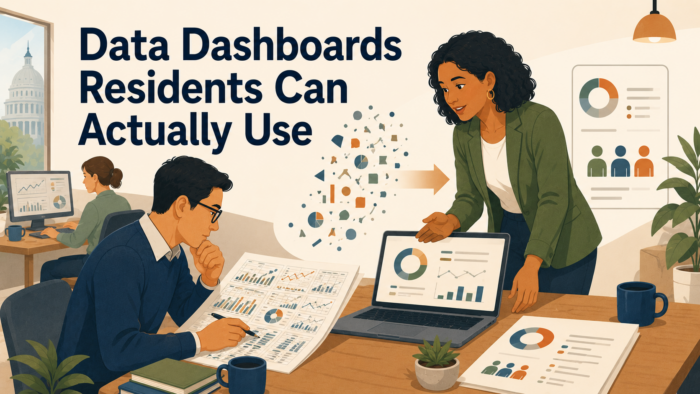
Data Dashboards Residents Can Actually Use: Responsible Transparency for Public Benefits Agencies
Public benefits agencies are increasingly expected to be transparent about performance, access, service demand, processing activity, call volume, timeliness, renewals, document backlogs, benefit issuance, and program changes. Data dashboards can help meet that expectation, but only when they are designed for the people who need to understand the information. A dashboard may be technically accurate and still fail residents if it displays internal metrics without context, uses program terminology that is difficult to interpret, or presents numbers without explaining what they mean for someone trying to apply, renew, submit documents, check status, or understand agency capacity.
For human services agencies, public benefits agencies, county social services departments, and state benefits offices, dashboards should not be treated as public versions of internal reporting tools. Internal dashboards may be built for managers, analysts, program administrators, finance teams, eligibility leadership, or executive staff. Those users may understand caseload categories, processing queues, program codes, timeliness measures, variance indicators, and operational thresholds. Residents usually approach data differently. They want to know whether the agency is processing applications, how long certain actions may take, whether call centers are overwhelmed, whether documents are being reviewed, whether offices are open, whether a program change affects them, and where they should go for current guidance.
That difference matters because transparency without usability can create more confusion than trust. A public dashboard may show application counts, pending cases, processing times, call volumes, or renewal outcomes, but residents may not know whether those numbers apply to their own situation. They may misread a backlog as evidence that their case has been lost. They may see an average processing time and assume it is a promise. They may see a statewide or countywide figure and not understand that their case may depend on program type, document status, interview completion, household circumstances, or other factors. Responsible transparency requires explanation, not only publication.
A resident-facing dashboard should therefore be designed around interpretation. It should show information that residents, community partners, elected officials, media, advocates, and staff can understand without needing agency context. It should explain what each metric means, what it does not mean, how often it is updated, which population it reflects, and where residents should go for case-specific help. The goal is not to make every operational detail public. The goal is to provide useful, accurate, and responsible information that improves understanding of the benefits system without creating false expectations or unnecessary fear.
This is especially important in public benefits because dashboards can affect resident behavior. If a dashboard shows high call volume, residents may decide whether to call now, use another channel, or wait. If a dashboard shows processing delays, residents may worry about deadlines or benefit continuity. If a dashboard shows document review activity, residents may wonder whether they should resubmit paperwork. If a dashboard shows disaster benefit updates, residents may seek eligibility information. A dashboard is not passive. It shapes decisions, questions, and perceptions.
The strongest dashboards are therefore communication tools as much as data tools. They combine accurate metrics with plain-language labels, clear definitions, careful caveats, update notes, source-of-truth links, and resident action guidance. They help people understand the agency’s work without forcing them to interpret raw data alone. When designed well, dashboards can support trust, reduce speculation, improve partner alignment, and make agency performance more legible. When designed poorly, they can turn transparency into another confusing layer of public benefits communication.
Public Dashboards Should Begin With the Resident’s Need for Meaning
 A public dashboard should begin with the question of what residents and public audiences need to understand, not with the data the agency already has available. Agencies often have many internal measures, including pending work, processing timeliness, call center activity, applications received, renewals completed, documents scanned, cases closed, cases reopened, staff workload, benefit issuance, and program-specific performance indicators. Some of that data may be useful to the public. Some may be too technical, too incomplete, too easily misread, or too disconnected from resident decisions. Publishing what is available is not the same as communicating what is useful.
Resident-facing dashboard design should focus on meaning. A metric should help residents understand service conditions, agency activity, general processing expectations, or where to find next-step guidance. It should not require residents to understand the agency’s internal workflow before they can interpret the number. If a dashboard shows pending renewals, it should explain what pending means. If it shows average processing times, it should explain that individual cases may vary. If it shows call center volume, it should connect that information to practical channel guidance. If it shows document processing activity, it should clarify that a received document may still need review before a case action is complete.
This approach also helps agencies avoid the false comfort of data visibility. A dashboard can appear transparent because it displays many numbers, but residents may still be left without a clearer understanding of what to do. A simpler dashboard that explains a few high-value measures well may be more useful than a dense dashboard filled with operational indicators. Responsible transparency is not measured by the quantity of data shown. It is measured by whether the information helps the public understand the agency’s work accurately and constructively.
More Than Just Applications: Human Services and Public Benefits Communication Strategies for State and Local Agencies
This article is part of our series on strategic communication for Human Services Agencies, Public Benefits Agencies, and Health and Human Services departments. To learn more and to see the parent article, which links to other content just like this, click the button below.
Responsible Transparency Requires Context, Definitions, and Boundaries
Public benefits data can be easily misunderstood when it appears without context. A number may look high or low without explaining the population, timeframe, program, geography, update frequency, or operational meaning behind it. A processing-time measure may depend on whether the application was complete. A renewal count may not distinguish between resident action, agency review, and final eligibility decision. A document backlog may reflect scanning, indexing, review, or case action. A call volume measure may show demand but not the complexity of the calls. Without definitions, residents and public audiences may draw conclusions the data does not support.
Responsible transparency therefore requires plain-language definitions. Each metric should explain what is being counted, what timeframe is covered, how often the data is updated, and what the measure does not show. These definitions should not be buried in technical footnotes that only analysts read. They should be close enough to the metric that a resident, community partner, reporter, or elected official can interpret the information responsibly. The dashboard should make it harder, not easier, to misread the data.
Boundaries are also important. A public dashboard should not imply that a general metric can answer a case-specific question. A resident seeing a processing estimate still needs to understand that their own case depends on the information submitted, program rules, interviews, verification, notices, and eligibility review. A dashboard should clearly direct residents to the appropriate case-specific source, such as an official notice, online account, call center, local office, or case status tool. This protects residents from relying on general data when they need individualized guidance.
Context also protects the agency. When a dashboard explains the limits of the data, it reduces the risk that numbers will be used inaccurately or treated as promises. It helps leadership and staff speak consistently about performance. It helps partners and advocates understand what the agency is showing and what remains outside the dashboard. Transparent data without boundaries can produce confusion. Transparent data with context can support more informed public understanding.
Dashboards Should Explain Service Conditions Without Creating False Certainty
Residents and community partners often want to know what service conditions look like right now. They may want to understand whether the agency is experiencing high call volume, whether document review is delayed, whether applications are taking longer than usual, whether offices are busy, or whether a program change is affecting processing. Dashboards can help provide that visibility, but agencies should be careful not to create false certainty. A general condition is not the same as a guarantee for an individual case.
For example, a dashboard may show that most applications are processed within a certain range, but a resident’s case may take longer if documents are missing, an interview is required, another agency record must be checked, or household circumstances are complex. A dashboard may show that call volume is high, but that does not mean every resident should avoid calling if they have an urgent deadline or case-specific issue. A dashboard may show document processing progress, but that does not mean every uploaded document has already been reviewed. Public information should help set expectations without replacing direct case guidance.
The best dashboards use careful language to explain service conditions. They can state that the data reflects general activity, that individual cases may differ, and that residents should follow their official notice or case-specific instructions. They can also guide behavior by linking to appropriate next steps. For example, a call volume dashboard can suggest using an online account for general status checks while still identifying when residents should contact the agency directly. A document dashboard can explain how to confirm receipt or what to do if a deadline is approaching.
This kind of communication helps residents interpret data without becoming passive or overly alarmed. It supports transparency while preserving the importance of official notices, case-specific status, and direct assistance when needed. A dashboard should make the system more understandable, not create a false sense that every resident can determine their case outcome from public metrics alone.
Resident-Facing Metrics Should Be Selected With Care
Not every internal metric belongs on a public dashboard. Some measures are too technical to be useful without extensive explanation. Others may raise privacy concerns, create misleading comparisons, or encourage inaccurate conclusions about staff performance, resident behavior, or program outcomes. Agencies should select resident-facing metrics with a clear communication purpose. The central question is whether the metric helps the public understand access, service conditions, program activity, or resident next steps in a responsible way.
Useful public metrics often relate to high-volume or high-consequence resident experiences. These may include application volume, renewal activity, general processing timeliness, call center demand, document submission trends, office traffic, language access demand, disaster benefit activity, or status of major service disruptions. The exact metrics will vary by agency, program, data quality, and communication goal. The important point is that each metric should be chosen because it helps explain something residents or public audiences need to understand.
Agencies should also consider whether a metric could unintentionally shift blame onto residents or staff. For example, a chart showing incomplete renewals may need context about notices, document requirements, system barriers, language access, contact information, and processing workflows. A backlog measure may need context about volume spikes, staffing limitations, system changes, or disaster impacts. A transparency tool should not flatten complex service conditions into numbers that invite simplistic conclusions.
Careful metric selection is part of responsible communication. It helps agencies be open about performance without turning dashboards into confusing data dumps or public scoreboards that residents cannot use. The goal is to make public benefits systems more legible, not to expose residents and staff to metrics that lack enough context to be fair or useful.
A Dashboard Should Point Residents Toward the Right Next Step
A resident-facing dashboard should not end with data. It should help people understand what to do with the information. If the dashboard shows that call volume is high, residents should know whether there are other ways to get general information or whether urgent issues should still be handled by phone. If the dashboard shows processing delays, residents should know whether they should check their account, follow their notice, avoid duplicate submissions, or contact the agency when a deadline is close. If the dashboard shows disaster benefit activity, residents should know where to find eligibility guidance and application instructions.
This next-step guidance is what separates a useful dashboard from a public data display. Residents do not need every chart to produce an action, but they do need to understand when the information should affect their behavior and when it should not. A dashboard should clarify whether residents should wait, act, verify, contact the agency, use another channel, or review official notices. Without that guidance, the data may create more questions than answers.
Next-step language also supports community partners. Partners often use public dashboards to understand agency conditions and help residents decide where to go. If the dashboard includes clear action guidance, partners can reinforce accurate information instead of interpreting charts on their own. Staff also benefit because the dashboard can reduce some of the basic explanatory burden. A dashboard that points to the right next step becomes part of the agency’s communication infrastructure, not just a reporting product.
In the end, the measure of a resident-facing dashboard is not whether it looks modern or contains many data points. The measure is whether it helps people understand the system more accurately and navigate it more effectively. Responsible transparency requires data that is clear, contextualized, and connected to action.
Dashboard Design Should Start With the Public Use Case
A resident-facing dashboard should begin with a clear understanding of how people will use the information. Public benefits data can serve many purposes, including management oversight, legislative reporting, performance improvement, public accountability, media response, partner coordination, and resident guidance. A single dashboard cannot serve all of those purposes equally well. If the agency does not define the public use case first, the dashboard may become a broad display of internal measures that looks transparent but does not help residents understand the system.
For public benefits agencies, the public use case should usually focus on interpretation and orientation. Residents and community partners may want to understand general processing conditions, service demand, program activity, or where to find next-step guidance. They may not need the same level of detail that executive leadership, analysts, or program managers need. They need enough information to understand what the agency is experiencing, what the data means, and what they should do with that understanding. The dashboard should make the system more legible without turning residents into analysts.
This distinction helps agencies make better design choices. A dashboard built for internal performance management may need granular categories, trend lines, workload details, and operational thresholds. A public dashboard may need fewer metrics, clearer labels, more explanation, stronger caveats, and direct links to action guidance. The resident-facing version should not be a simplified copy of the internal version. It should be designed intentionally for public understanding.
Residents Need Meaning Before Metrics
Residents do not usually come to a dashboard looking for raw operational data. They come looking for meaning. They may want to know whether applications are being processed, whether renewals are delayed, whether call volume is high, whether documents are moving through the system, or whether a disruption is affecting service. A chart or number should help answer that kind of practical concern.
This means dashboards should introduce metrics with plain-language context. Instead of presenting a number first and asking residents to interpret it, the dashboard should explain what the number represents and why it matters. A resident should not have to know internal workflow terms to understand whether a metric reflects incoming demand, pending work, completed actions, average time, or service availability.
Partners Need Context They Can Share Responsibly
Community partners, advocates, local officials, and service providers often use public dashboards to understand what residents may be experiencing. They may share dashboard information with clients, staff, or community networks. If the dashboard lacks context, partners may unintentionally overstate, simplify, or misinterpret what the data shows.
A responsible dashboard gives partners language they can repeat accurately. It explains what the data means, what it does not mean, and where residents should go for case-specific guidance. This helps partners support transparency without becoming unofficial interpreters of internal agency metrics.
Metric Labels Should Translate Data Into Everyday Meaning
A dashboard can become confusing when its labels reflect internal reporting language rather than public meaning. Terms such as pending, disposed, overdue, intake volume, churn, recertification, redetermination, verification, timeliness, queue, aging, or case action may be familiar inside the agency but unclear to residents. Even when the terms are technically correct, they may not explain what the number means for a person trying to understand access to benefits.
Public-facing metric labels should use language that residents can recognize. If the dashboard shows applications waiting for review, the label should say that plainly. If it shows renewals completed, the label should explain whether that means the agency finished reviewing them, residents submitted them, or benefits were continued. If it shows documents received, the dashboard should clarify whether the documents have only arrived or have also been reviewed. These distinctions matter because residents may make decisions based on the wording.
Clear labels also protect the agency from avoidable misinterpretation. A term that means one thing internally may be read differently by the public. A resident may see “documents processed” and believe their individual upload has been accepted. A partner may see “renewals completed” and assume all residents in that category retained benefits. A reporter may see “pending cases” and interpret the number without understanding what is included. Plain-language labels reduce the risk that a dashboard creates confusion while trying to provide transparency.
Define the Measure Close to the Number
Definitions should be easy to find at the moment the resident sees the metric. If a dashboard shows processing time, the definition should explain what starts the clock, what stops the clock, and whether incomplete applications are included. If the dashboard shows call wait times, it should explain the period covered and whether the number is an average. If it shows document activity, it should explain whether the count reflects receipt, scanning, review, or case action.
Definitions do not need to be long, but they do need to be close to the data. If residents have to search through a technical glossary to understand the chart, the dashboard is not doing enough communication work. Clear definitions make transparency usable.
Explain What the Metric Does Not Show
Responsible transparency includes boundaries. A metric may show general processing conditions, but it may not show the status of an individual case. It may show call volume, but not the complexity of calls. It may show documents received, but not whether a specific document was accepted. It may show application counts, but not whether applications were complete when submitted.
Explaining these limits helps residents interpret the data more accurately. It also prevents the dashboard from being treated as a substitute for official notices, case status tools, or direct agency guidance. A public dashboard should inform residents, not mislead them into thinking general data can answer case-specific questions.
Dashboard Hierarchy Should Prioritize High-Stakes Resident Questions
A resident-facing dashboard should not give every metric the same prominence. Some information is more important because it affects how residents understand deadlines, benefits, service access, or agency capacity. Processing conditions, renewal activity, document review, call center demand, office access, service disruptions, and disaster benefit updates may deserve greater visibility than less urgent operational details. The dashboard should help residents see what matters first.
This hierarchy should be guided by both volume and consequence. A high-volume issue may deserve visibility because many residents are affected. A lower-volume issue may also deserve visibility if the consequences are serious, such as benefit interruption, EBT access, disaster support, language assistance, or deadline-related actions. A responsible dashboard does not simply list what the agency tracks. It organizes information according to what residents and public audiences need to understand most.
Good hierarchy also reduces visual stress. A dashboard packed with charts, filters, maps, tables, and status indicators can feel impressive but unusable. Residents may not know where to look or which number matters. A better design leads with the most important public-facing message, then allows users to move into more detail if needed. The first view should orient people, not overwhelm them.
Processing Timeliness Needs Action Context
Processing timeliness is one of the most sensitive dashboard topics because residents may interpret it as a promise. If a dashboard shows an average processing time, residents may assume their own case will follow that timeline. If the agency is experiencing delays, residents may become anxious about whether benefits will start, continue, or stop. Timeliness data should therefore be paired with action guidance.
The dashboard should explain that individual cases may vary based on completeness, program rules, interviews, documents, notices, and eligibility review. It should also direct residents to the appropriate case-specific source. Timeliness data can set expectations, but it should not replace the resident’s official notice or account status.
Call Volume and Wait Times Should Guide Channel Choices
Call volume and wait time data can be useful when it helps residents choose the right channel. If the agency is experiencing high call demand, the dashboard can explain which tasks may be handled online, by mail, in person, or through another approved path. It can also identify situations where residents should still call, especially when a deadline, urgent benefit issue, or case-specific problem requires direct contact.
This type of guidance makes the metric practical. Residents do not only learn that the agency is busy. They learn how to decide whether to call, wait, use a self-service tool, or seek another form of support. That is the difference between displaying workload data and using data to improve public navigation.
Comparisons Should Be Used Carefully
Dashboards often rely on comparisons to make data easier to understand. Agencies may compare current performance to prior months, different offices, counties, programs, service channels, or target levels. Comparisons can be useful, but they can also be misleading when the underlying conditions differ. A county with higher application volume, a local office affected by staffing constraints, a program undergoing a rule change, or a region recovering from a disaster may not be directly comparable to another area or period.
Public dashboards should provide enough context for comparisons to be fair. If the dashboard compares programs, it should explain that program rules and workflows may differ. If it compares locations, it should avoid implying that performance differences reflect staff effort alone. If it compares current conditions to prior periods, it should identify major factors that may affect interpretation, such as seasonal demand, system changes, policy shifts, disasters, or renewal cycles. Without context, comparisons can create simplistic narratives that do not help residents understand service conditions.
Agencies should also consider whether a comparison serves a resident-facing purpose. Some comparisons may be useful for accountability but not for resident action. Others may be better suited for internal management or formal reporting. A public dashboard should not include comparisons simply because the data can be displayed. It should include them because they help explain something meaningful and responsibly interpretable.
Avoid Public Scoreboards Without Explanation
A dashboard can unintentionally become a public scoreboard if it ranks offices, programs, or regions without enough context. This may create pressure, but not necessarily understanding. Residents may see a lower-performing location and assume the office is neglecting service, when the data may reflect demand, staffing, disaster impacts, program mix, or case complexity.
Responsible transparency avoids ranking for its own sake. If comparisons are used, they should be explained carefully and connected to meaningful context. The dashboard should help the public understand service conditions, not invite unsupported conclusions.
Show Trends Before Isolated Snapshots
Single data points can be misleading when viewed without trend context. A temporary spike in pending work may look alarming if residents cannot see whether it is unusual, improving, or part of a predictable cycle. A single month of call volume may not explain whether the agency is experiencing a sustained issue or a short-term surge.
Trends can help residents and partners understand direction. They show whether conditions are improving, worsening, or stable. They also support more responsible interpretation because the public can see movement over time rather than reacting to one isolated number.
Visual Design Should Reduce Misinterpretation
Visual design is not just an aesthetic concern. It affects whether residents understand the dashboard correctly. A chart that uses confusing colors, unclear labels, small text, crowded legends, or unexplained filters can distort meaning. A map may suggest geographic precision that the data does not support. A percentage may appear more meaningful than it is if the denominator is small. A trend line may appear dramatic if the scale exaggerates the change. Design choices can either clarify data or make misunderstanding more likely.
Public benefits dashboards should use visual design to support calm interpretation. The most important information should be easy to see. Labels should be readable on mobile devices. Charts should use plain-language titles. Filters should be limited to choices residents can understand. Color should not be the only way to communicate meaning. Data should not be presented in ways that imply urgency, success, failure, or comparison without explanation. Good visual design helps the dashboard feel credible and usable.
Mobile design is especially important. Many residents may access dashboards from phones, often through a link in a text, website, social post, or partner referral. If the dashboard only works well on a large desktop screen, it may not serve the residents who need the information most. A responsible dashboard should provide a clear mobile experience, even if some detailed charts are better suited to desktop viewing.
Plain Titles Should Do More Than Name the Chart
A chart title should explain the point of the information, not simply name the dataset. “Applications Waiting for Review” is more useful than “Application Inventory.” “Average Call Wait Time This Week” is more useful than “Contact Center Metric.” A plain title helps residents understand the chart before they interpret the numbers.
Titles should also avoid overstating what the chart shows. If the data reflects only one program, one time period, or one channel, the title should make that clear. A strong title helps prevent the first misunderstanding before it starts.
Accessibility Should Be Built Into the Dashboard
Dashboard accessibility should be considered from the beginning. Residents, partners, and staff may access the dashboard with screen readers, mobile devices, translated content, low bandwidth, visual impairments, cognitive disabilities, or limited data literacy. The dashboard should not rely only on color, hover text, complex charts, or downloadable files to convey essential meaning.
Accessible dashboards use clear headings, readable text, meaningful labels, keyboard-friendly navigation, alt text or text equivalents for charts, and plain-language summaries. Accessibility is not separate from transparency. If residents cannot access or understand the data, the agency has not made the information meaningfully public.
Dashboards Should Explain Data Quality and Update Timing
 A public benefits dashboard should make clear when the data was last updated, how often it changes, and whether the information reflects real-time activity or a reporting snapshot. Residents and partners may assume that a number on a public dashboard reflects the current status of the agency at that exact moment. If the data is actually refreshed daily, weekly, monthly, or after a reporting cycle closes, that difference should be visible. Without update timing, even accurate data can create confusion.
This is especially important when the dashboard is connected to resident expectations. A processing-time metric, call volume indicator, document review count, or application status summary may influence whether someone waits, calls, resubmits documents, or seeks help from a partner. If the data is not current enough to support those decisions, the dashboard should say so plainly. Responsible transparency means helping residents understand the time frame behind the information, not only the number itself.
Data quality should also be addressed in plain language. Some measures may be preliminary, delayed, adjusted after review, or limited by system reporting constraints. Agencies do not need to overwhelm residents with technical methodology, but they should explain any limitation that affects interpretation. A short note that the dashboard reflects recently available data, may not include pending updates, or does not show individual case status can prevent residents from relying on the dashboard for purposes it was not designed to serve.
Privacy and Confidentiality Should Shape What Is Displayed
Public benefits data often involves sensitive programs, vulnerable populations, and personal circumstances. Even when dashboards use aggregate data, agencies should be careful about what they display and how narrowly they break it down. A chart that seems harmless at a statewide level may become sensitive when filtered by county, office, demographic group, benefit type, or small population. Transparency should never create a risk that individual residents or small groups can be identified or stigmatized.
Responsible dashboard design should include clear privacy rules before public release. Agencies should decide when data should be suppressed, aggregated, rounded, delayed, or excluded because the population is too small or the topic is too sensitive. They should also be cautious with maps, filters, and downloadable datasets that allow users to combine categories in ways that increase identification risk. A public dashboard should be useful, but it should not invite the public to inspect vulnerable populations at a level of detail that compromises dignity or confidentiality.
Privacy also includes how the dashboard frames residents. Metrics should not present residents as problems to be managed or failures to comply without context. For example, a chart about incomplete renewals should be explained in relation to notices, document requirements, access barriers, system constraints, and resident action pathways. A dashboard can be transparent about program activity without turning residents into data points stripped of the conditions that shape their experience.
Dashboards Should Support Accountability Without Oversimplifying Performance
Public dashboards can strengthen accountability when they show how an agency is performing, where demand is increasing, and where residents may be experiencing delays. That kind of visibility can be valuable for residents, community partners, local leaders, media, advocates, and agency staff. But public benefits performance is rarely explained by one number. Processing time, call volume, renewal completion, document review, and case closure patterns are affected by policy rules, staffing, technology, resident response, disaster conditions, program changes, and the complexity of individual cases.
A responsible dashboard should therefore avoid presenting performance as a simple good-or-bad score. A processing delay may indicate workload pressure, but it may also reflect incomplete applications, increased volume, system transitions, disaster impacts, or policy changes. A high call volume may indicate confusion, but it may also reflect outreach success, renewal periods, crisis conditions, or residents seeking confirmation after a change. Data should be paired with context that explains the conditions shaping the measure.
This does not weaken accountability. It makes accountability more useful. A dashboard that explains performance drivers helps the public understand what the agency is managing and where improvement may be needed. It also helps agencies avoid defensive communication because the dashboard is already built to provide context. Responsible transparency is not about making the agency look better. It is about helping the public interpret performance accurately enough to support meaningful trust, oversight, and improvement.
Resident Dashboards Should Not Replace Direct Case Communication
A public dashboard can explain general service conditions, but it cannot replace notices, case status tools, eligibility decisions, staff guidance, or official resident communication. This distinction should be clear throughout the dashboard. Residents may be tempted to interpret general data as evidence about their own case, especially when they are waiting for a decision, worried about a deadline, or trying to understand whether documents were received. The dashboard should help them understand the broader system while directing them to the correct case-specific source.
This is particularly important when dashboards show averages, totals, or service-wide conditions. A resident may see that most applications are processed within a certain period and assume their case should follow the same timeline. Another may see a document review count and believe their own upload has been reviewed. Another may see renewal completion data and assume their household is included. These assumptions are understandable, but they can lead to frustration or missed action if the dashboard does not explain its limits.
Agencies should include clear pathways from dashboard information to case-specific help. A processing dashboard can link to case status instructions. A document dashboard can explain how residents can confirm receipt or follow their official notice. A call center dashboard can explain when residents should still contact the agency directly. The dashboard should serve as a bridge to the right next step, not as a substitute for individual guidance.
Dashboards Should Be Designed for Community Partners as Well as Residents
Community partners often use public benefits data to understand what residents may be experiencing. Food banks, clinics, schools, legal aid organizations, housing providers, libraries, child care resource organizations, workforce programs, and community-based groups may look to agency dashboards for signals about processing delays, renewal pressure, call center demand, disaster benefit activity, or program access challenges. These partners can use dashboard information to help residents, but only if the information is clear enough to share responsibly.
A partner-usable dashboard should include plain-language summaries, definitions, and source-of-truth links. Partners should not have to interpret technical charts on their own or create their own explanations of what agency data means. If the dashboard shows delays, partners need to know what residents should do and what they should not assume. If the dashboard shows high call volume, partners need guidance on when residents should use another channel and when they should still call because the issue is urgent or case-specific.
Designing for partners also helps agencies manage public communication. Partners are often trusted messengers, and they can extend the reach of official guidance when they have accurate materials. A dashboard that includes clear context and action language reduces the risk that partners will unintentionally overstate what the data shows. It turns the dashboard into a shared communication resource instead of a technical reporting page that partners must translate on their own.
Dashboard Governance Should Be Clear Before Publication
A public dashboard should have governance behind it before it goes live. Agencies should know who owns the data, who validates the metrics, who approves public language, who updates explanations, who reviews accessibility, who responds when numbers change unexpectedly, and who decides when a metric should be revised or removed. Without governance, a dashboard can become outdated, inconsistent, or difficult to defend when residents, media, elected officials, or partners ask questions.
Governance should include both data accuracy and communication quality. A dashboard may be statistically correct but poorly explained. It may be visually polished but missing critical caveats. It may be updated regularly but not aligned with notices, call center scripts, partner guidance, or public statements. A responsible governance process brings data, program, communications, legal, accessibility, and frontline perspectives together so the dashboard is accurate, usable, and aligned with the agency’s broader communication system.
Dashboards should also have a maintenance plan. Metrics may need to change as programs evolve, systems update, service models shift, or resident questions change. A dashboard should not remain public simply because it was once useful. Agencies should review whether each metric still serves a clear purpose, whether residents understand it, whether partners use it responsibly, and whether the data continues to be reliable. Public transparency requires upkeep, not just publication.
Dashboards Should Be Connected to Notices, Portals, and Public Guidance
A resident-facing dashboard should not stand apart from the rest of the agency’s communication system. Residents may look at a dashboard after receiving a notice, checking a portal, calling the agency, visiting an office, reading a text alert, or speaking with a community partner. If the dashboard uses different terminology from those channels, it can create confusion instead of clarity. A notice may tell a resident to renew benefits, a portal may show a redetermination status, a text may say documents are due, and a dashboard may show pending cases. Unless those terms are connected through plain language, residents may not understand how the information fits together.
Public benefits agencies should align dashboard language with the words residents see elsewhere. If the dashboard shows renewal activity, it should use the same resident-facing term that appears in notices and reminder messages. If it shows documents received, it should explain how that relates to document upload instructions and confirmation language. If it shows processing time, it should link to case status guidance and explain that individual cases may vary. The dashboard should reinforce the agency’s source-of-truth communication, not introduce a separate layer of interpretation.
This alignment is also important for staff and partners. Call center representatives, front desk staff, eligibility workers, navigators, legal aid organizations, food banks, clinics, schools, and community organizations may all use dashboard information to help residents understand agency conditions. If dashboard language is not aligned with staff scripts and partner materials, those groups may have to translate the data on their own. A dashboard becomes more useful when it fits into a shared communication framework that everyone can use consistently.
Dashboards Should Help Residents Understand Delays Without Losing Trust
Processing delays, call center strain, document backlogs, portal disruptions, and renewal volume can all affect how residents experience public benefits programs. Agencies may hesitate to show these conditions publicly because they worry the information will generate criticism, anxiety, or more calls. That concern is understandable, but silence can also damage trust. When residents sense delay without explanation, they may assume their case has been ignored, their documents were lost, or the agency is withholding information. A responsible dashboard can help explain service pressure before speculation fills the gap.
The key is to present delay-related data with context and next-step guidance. If applications are taking longer than usual, the dashboard should explain what the metric means and where residents should check case-specific status. If document review is delayed, the dashboard should clarify whether residents should resubmit documents or wait for review. If call volume is high, the dashboard should identify which issues may be handled through other channels and which issues still require direct contact. The goal is not to make delays sound acceptable. The goal is to help residents understand what is happening and what action is most appropriate.
Clear delay communication can also reduce unnecessary workload. Residents who understand that a document was received but not yet reviewed may be less likely to submit duplicates. Residents who understand that call volume is high may choose a portal or office pathway for nonurgent tasks. Residents who understand that processing time is a general estimate may be less likely to treat it as a case-specific guarantee. Responsible transparency helps agencies communicate honestly while reducing avoidable confusion.
Dashboards Should Avoid Creating False Precision
Data dashboards can create a sense of precision that may exceed what the underlying data can responsibly support. A number displayed to the decimal point, a map shaded by geography, or a line chart updated frequently can appear more exact than it really is. In public benefits communication, false precision can mislead residents and public audiences. It may imply that the agency knows more than it does, that a metric applies more specifically than it does, or that an estimate is more stable than it is.
Agencies should use an appropriate level of precision for the public purpose of the dashboard. If a general range is more honest than a precise number, the dashboard should use a range. If a metric is based on a reporting snapshot, it should say so. If data is preliminary, subject to revision, or affected by reporting lag, that should be clear. A resident-facing dashboard should not create confidence through excessive detail. It should create confidence through accurate explanation.
This is especially important for processing time, wait time, and backlog measures. A precise average may not help residents understand what they should expect if the underlying cases vary widely. A dashboard may need to show a range, a trend, or a plain-language condition statement instead of a single number. Responsible transparency means choosing the form of data that best supports understanding, not simply the form that appears most technical.
Dashboards Should Include Plain-Language Summaries
Charts and numbers are not enough for many public audiences. Residents, partners, elected officials, media, and staff may need a short written summary that explains what the dashboard is showing. A summary can help people interpret the data before they focus on individual metrics. It can explain whether service conditions are stable, whether demand is increasing, whether a backlog is improving, whether a disruption is affecting residents, or whether a program change is influencing volume.
Plain-language summaries are especially useful because dashboards are often viewed quickly. A resident may not have time to compare several charts or interpret filters. A partner may need to share the key message with clients. A reporter may look for the main takeaway. A staff member may need a consistent explanation for residents asking about what they saw online. A written summary helps prevent every audience from creating its own interpretation of the data.
These summaries should be careful and disciplined. They should not overstate progress, minimize problems, or make promises the data cannot support. They should explain what is happening, what the numbers mean, and where residents should go for case-specific help. A good summary makes the dashboard more accessible and reduces the risk of misinterpretation.
Dashboards Should Be Built for Residents With Different Levels of Data Literacy
Public benefits dashboards should not assume that every user is comfortable interpreting charts, filters, percentages, averages, or trend lines. Some residents may be highly comfortable with data. Others may be looking at a dashboard only because they are worried about a case, a deadline, or a delay. They may not know how to interpret a percentage, compare time periods, understand an average, or distinguish between statewide data and local conditions. If the dashboard requires too much data literacy, it may serve technical audiences better than residents.
Agencies can support different levels of data literacy by layering information. The first view should provide a plain-language summary and a small number of high-value metrics. More detailed data can be available for users who want to explore further. Definitions, explanations, and caveats should appear close to the information they explain. Charts should avoid unnecessary complexity, and tables should be readable on mobile devices. The dashboard should help people move from general understanding to detail without forcing everyone into the same level of analysis.
This layered approach also supports equity. Residents with limited literacy, limited English proficiency, disabilities, low digital confidence, or limited time should still be able to understand the main message. Community partners should be able to use the dashboard as a reliable explanation tool. Staff should be able to reference it in conversations without needing to interpret technical analytics. A resident-facing dashboard should meet people where they are, not where analysts are.
Dashboards Should Be Reviewed for Public Interpretation Before Launch
Before a public benefits dashboard goes live, agencies should review it from the perspective of the people who will use it. Program staff may know the data. Analysts may know the methodology. Communications staff may know the public message. But residents, partners, frontline staff, and local leaders may interpret the information differently. A dashboard that seems clear internally may still produce confusion when public audiences encounter it without agency context.
Pre-launch review should focus on interpretation. Reviewers should be able to explain what each metric means, what it does not mean, how current the data is, and what action a resident should take after viewing it. If reviewers disagree about the meaning of a metric, the dashboard needs clearer language. If they assume the data can answer case-specific questions, the boundaries need to be stronger. If they cannot tell which numbers matter most, the hierarchy needs revision.
This kind of review helps agencies prevent avoidable public confusion. It also improves the agency’s readiness to answer questions after launch. Staff can be trained on the same definitions used in the dashboard. Partners can receive shareable guidance. Leadership can speak about the data without creating a separate interpretation. Responsible transparency requires anticipating how public audiences will read the dashboard, not only verifying that the numbers are correct.
Strategic Communication Support for Human Services and Public Benefits Agencies
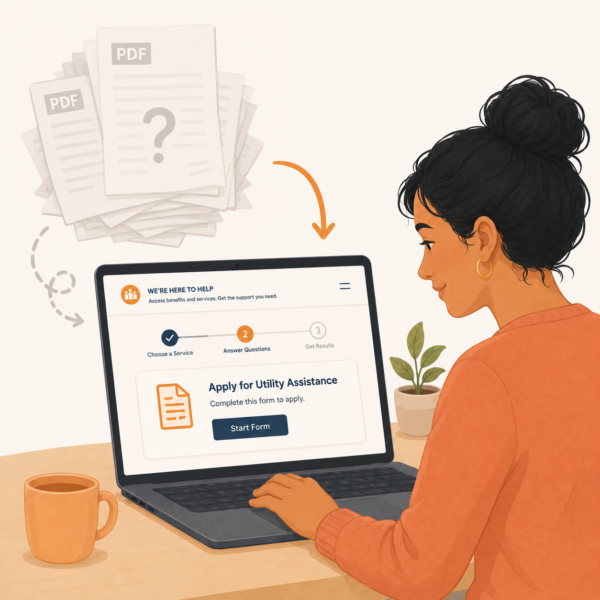 Data dashboards can strengthen transparency for human services and public benefits agencies, but only when they are designed as communication tools, not just reporting products. Residents, community partners, elected officials, media, and staff need public data that is understandable, contextualized, and connected to practical next steps. A dashboard that displays metrics without plain-language explanation may technically share information while still leaving people unsure what the data means or how it relates to applications, renewals, documents, call volume, service access, benefit changes, or agency capacity.
Because resident-facing dashboards sit at the intersection of data governance, public communication, program policy, service delivery, privacy, accessibility, and public trust, many agencies benefit from structured communication support before dashboards are released. Internal teams may understand the metrics, definitions, reporting cycles, and operational context, but public audiences need the information translated into language they can use responsibly. The dashboard should help people understand general service conditions without implying that public metrics can answer individual case questions.
Stegmeier Consulting Group (SCG) helps human services and public benefits agencies develop communication systems that make transparency more useful and responsible. That support may include dashboard communication frameworks, plain-language metric definitions, resident-facing summaries, source-of-truth alignment, public interpretation reviews, staff and partner guidance, accessibility recommendations, and message development for explaining processing trends, call volume, document review, renewal activity, disaster benefit updates, or service disruptions. The goal is not to publish more data for its own sake. The goal is to help agencies share information in a way that builds understanding, reduces confusion, and supports trust.
This kind of support is especially valuable when agencies are launching new public dashboards, responding to public concern about processing delays, improving transparency around renewals or document backlogs, strengthening partner communication, or trying to explain service conditions without creating false certainty. A well-designed dashboard can help residents and partners understand what the agency is experiencing, where to find current guidance, and when to rely on official case-specific communication.
Future Trends in Public Benefits Dashboards
Human services agencies are likely to face increasing expectations for public visibility into program performance, service demand, processing conditions, and resident access. Dashboards will become more common as agencies seek to communicate about applications, renewals, documents, call centers, service disruptions, disaster benefit activity, and digital service use. The strongest dashboards will not simply display more data. They will explain fewer, more meaningful measures in ways that residents and partners can interpret responsibly.
Another likely trend is stronger integration between dashboards and resident-facing service guidance. Public data will be more useful when it connects to notices, portals, case status tools, website pages, call center scripts, and partner materials. A dashboard showing processing conditions should help residents understand where to check individual status. A dashboard showing high call volume should guide residents toward appropriate channels. A dashboard showing document activity should clarify the difference between document receipt, review, and case action. The dashboard will increasingly need to function as part of the agency’s broader communication system.
Agencies may also place greater emphasis on dashboard governance, privacy, and accessibility. Public-facing data products require clear ownership, update schedules, definitions, review processes, suppression rules, and plain-language standards. They also need to be usable by residents with different literacy levels, language needs, disabilities, device access, and levels of comfort with data. Responsible transparency will depend not only on what agencies publish, but on how carefully they explain, maintain, and contextualize it.
Finally, dashboards will likely become more closely tied to trust-building during periods of pressure. When agencies experience backlogs, system changes, renewal surges, disaster events, or call center strain, residents and partners need a reliable way to understand what is happening. Public dashboards can help reduce speculation when they are clear, current, and connected to action guidance. They can also damage trust if they appear incomplete, unexplained, outdated, or disconnected from the resident experience. The future of public benefits dashboards will depend on communication quality as much as data availability.
Conclusion
Data dashboards can help public benefits agencies practice responsible transparency when they are designed for public understanding. Residents and partners need more than charts, counts, averages, and trend lines. They need context that explains what the data means, what it does not mean, how current it is, and where to go for case-specific guidance. Without that context, dashboards can create false certainty, unnecessary anxiety, or interpretations that the data cannot support.
A useful resident-facing dashboard begins with the public use case, uses plain-language metric labels, defines measures close to the data, explains limitations, protects privacy, and points residents toward the right next step. It supports accountability without oversimplifying performance. It helps the public understand agency conditions without turning general metrics into individual case guidance. It treats visual design, accessibility, update timing, and governance as central to communication quality.
In the end, responsible transparency is not achieved by publishing data alone. It is achieved when agencies help residents, staff, partners, and public audiences interpret information accurately and use it constructively. A dashboard residents can actually use makes the benefits system more understandable, supports trust, and strengthens the agency’s ability to communicate clearly about service conditions and public performance.
SCG’s Strategic Approach to Communication Systems
Align your agency’s messaging, processes, and public engagement strategies.
Human services and public benefits agencies need communication systems that make public information understandable, responsible, and useful. Data dashboards can support transparency, but they require plain-language definitions, clear context, privacy safeguards, accessibility, staff alignment, partner-ready guidance, and source-of-truth discipline so residents and public audiences can interpret information accurately.
SCG helps agencies create communication frameworks that connect data transparency with resident understanding. Whether your agency is launching a public dashboard, explaining processing delays, improving renewal or document reporting, aligning dashboard language with notices and portals, or preparing staff and partners to use public data responsibly, SCG can help build a communication system that supports clarity, accountability, and trust.
Use the form below to connect with our team and explore how a strategic communication system can help your agency design data dashboards residents can actually use, strengthen responsible transparency, and improve public understanding of benefits services.