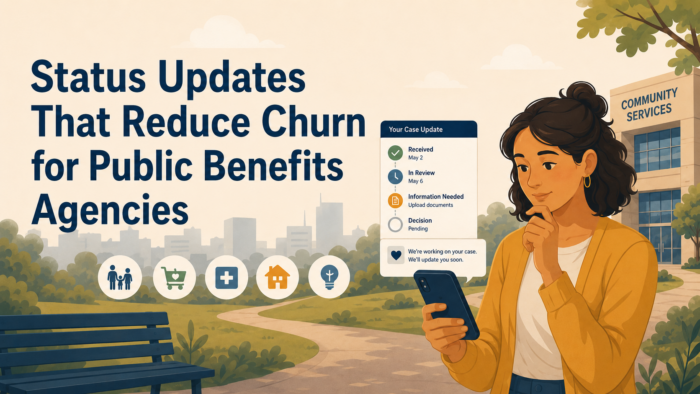
What Happened With My Case: Status Updates That Reduce Churn for Public Benefits Agencies
For residents navigating public benefits programs, one of the most stressful questions is also one of the simplest: what happened with my case? A person may have submitted a renewal form, uploaded documents, completed an interview, reported a change, called a caseworker, mailed verification, or visited an office, but still not know whether the agency received the information, whether anything else is needed, whether benefits will continue, or whether the case is at risk of closing. For human services agencies, public benefits agencies, county social services departments, and state benefits offices, that uncertainty is not just a resident experience problem. It can create avoidable churn, repeated contacts, duplicate submissions, missed deadlines, and preventable interruptions in essential support.
Status communication matters because public benefits cases often move through several steps that are visible to the agency but unclear to the resident. A case may be pending review, waiting for verification, missing a document, awaiting an interview, approved, renewed, denied, closed, reopened, or still under processing. Inside the agency, those statuses may connect to defined workflows, system codes, and program rules. Outside the agency, residents may simply see silence. When people do not know where their case stands, they often try to protect themselves by calling repeatedly, resubmitting the same document, asking community partners for help, filing complaints, starting a new application, or assuming the worst. Those actions are understandable, but they add pressure to a system that may already be managing high caseloads and tight deadlines.
Clear case status updates help reduce that pressure by turning hidden process steps into understandable information. A good status update does not need to explain every internal detail. It needs to tell the resident what the agency has received, what is still needed, what happens next, when to expect another update, and what the resident should do if something looks wrong. This kind of communication can reduce confusion because it gives residents a reason to wait, a reason to act, or a reason to seek help before the case reaches a crisis point.
This is especially important in programs such as Medicaid, SNAP, TANF, child care assistance, housing-related supports, energy assistance, and other public assistance programs where timing matters. A resident who does not know that a document is missing may miss the chance to provide it. A resident who does not know that a renewal is still being processed may call several times for reassurance. A resident who does not know that benefits were continued may spend days worrying unnecessarily. A resident who receives a closure notice without earlier status communication may believe the agency ignored their effort to comply. In each situation, the status gap can become a trust gap.
For public benefit agencies, stronger status communication should be treated as part of the larger communication system, not as a minor customer service enhancement. It connects notices, portals, call centers, eligibility workflows, text reminders, mailed letters, partner guidance, and staff scripts. When those pieces do not align, residents may hear different explanations from different places. When those pieces do align, residents are more likely to understand where their case stands and what action, if any, is required.
Reducing churn is not only about telling residents more often that something is happening. It is about telling them the right thing at the right moment in language they can use. A status update that says “pending” may be accurate but not helpful. A status update that says “We received your renewal form. We still need proof of income. Upload it online, mail a copy, or bring it to the office. If we do not receive it, your benefits may stop” gives the resident a clearer path. It turns a status into an action guide.
Why Case Status Confusion Creates Churn
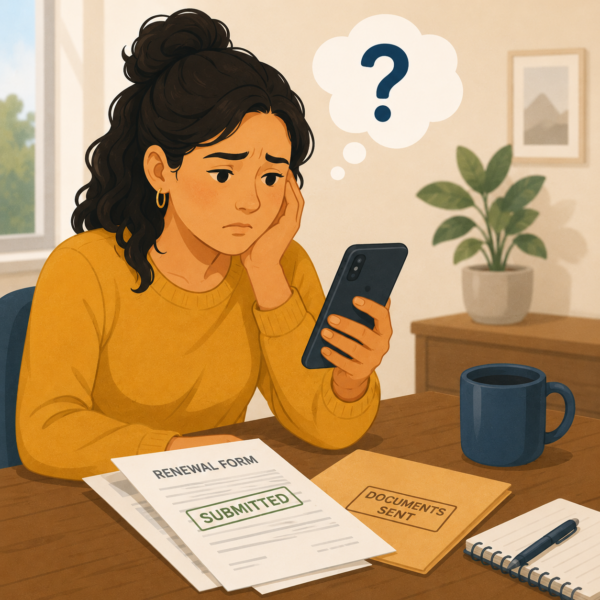 Churn often grows when residents are disconnected from the status of their own case. In public benefits administration, churn can include people cycling off and back onto benefits, submitting repeat paperwork, making repeated calls, reopening cases, reapplying after preventable closure, or losing services for procedural reasons even when they may still be eligible. Some of this churn is driven by eligibility changes, policy rules, or household circumstances. But a significant portion can be worsened by communication gaps. When residents cannot tell what has happened, what is still needed, or whether the agency is waiting on them, they may take actions that create more work for both themselves and the agency.
The problem is not that residents expect instant resolution. Many people understand that case processing takes time. The deeper issue is that they often do not know whether the process is moving, stalled, incomplete, or at risk. Silence can feel like failure. A generic message can feel like dismissal. A portal status that does not match a mailed notice can feel like a contradiction. A call center explanation that differs from the letter can make the resident wonder which source is accurate. These moments of uncertainty lead residents to seek confirmation through whatever channel they can access, which can increase call volume, lobby traffic, duplicate document submissions, and partner escalations.
For agencies, the operational effects can build quickly. Staff may spend time answering basic status questions that could have been addressed through clearer updates. Eligibility workers may receive duplicate documents that need to be sorted, reviewed, or attached to the case. Call centers may become overwhelmed by residents asking whether the agency received paperwork. Community partners may spend time interpreting unclear notices or checking whether residents should reapply. Meanwhile, residents who do not get a clear answer may miss the next required step. This is how a status communication gap becomes a churn driver.
A stronger status communication system helps interrupt that cycle. It gives residents a clearer view of the process before confusion turns into repeated contact or preventable loss. It helps staff point to consistent explanations. It helps community partners reinforce accurate guidance. Most importantly, it helps residents understand whether they need to wait, act, confirm, correct, or ask for help.
Residents Need Status Updates That Answer Practical Questions
The most useful case status updates are built around practical resident questions, not agency system codes. Residents usually do not need to know every internal processing stage. They need to know whether the agency received what they sent, whether anything is missing, whether the case is still being reviewed, whether their benefits are continuing, whether a deadline applies, and what they should do next. If the status update does not answer those questions, residents may still feel uncertain even if the agency has technically provided an update.
This distinction matters because many status terms are meaningful inside the agency but vague to the public. “Pending,” “in process,” “under review,” “verification outstanding,” “case action required,” or “redetermination incomplete” may all correspond to real workflow states. But residents may not know whether those terms mean they should wait, call, submit something, attend an interview, or prepare for a benefit change. A status update should translate the workflow into resident meaning. It should explain what the status means, what action is needed, and what will happen next.
A practical status update should also help residents avoid unnecessary action. If the agency has received the renewal and no additional documents are currently needed, the update should say that clearly. If the resident should not submit duplicate documents, the update should say that. If the agency is still reviewing the case and will send another notice by a certain date, that information can reduce anxiety and unnecessary calls. Good status communication is not always about asking residents to do more. Sometimes it is about helping them understand that the next action belongs to the agency.
The same principle applies when something is missing. A useful update does not only say that the case is incomplete. It identifies the missing item in plain language, explains the deadline, and gives realistic completion options. If residents know exactly what is needed, they are less likely to guess, send the wrong document, or delay until the case closes. The status update becomes a tool for completion rather than a vague warning.
More Than Just Applications: Human Services and Public Benefits Communication Strategies for State and Local Agencies
This article is part of our series on strategic communication for Human Services Agencies, Public Benefits Agencies, and Health and Human Services departments. To learn more and to see the parent article, which links to other content just like this, click the button below.
The Status Gap Is Often Bigger After Residents Take Action
Many agencies focus communication on the moment before residents act: the renewal notice, the verification request, the interview notice, or the warning that benefits may stop. Those messages are important, but the period after the resident responds can be just as important. A person may complete the task and then hear nothing for days or weeks. They may not know whether their form was received, whether the upload worked, whether the document was readable, whether the interview was logged, whether the caseworker needs anything else, or whether benefits are safe. That uncertainty can be extremely stressful because the resident has already tried to comply and still does not know whether the effort counted.
This post-action status gap can create a different kind of churn. Residents may resubmit documents multiple times because they are afraid the first submission was lost. They may call repeatedly to confirm receipt. They may visit an office because the portal does not show updated status. They may ask community partners to intervene. They may receive an automated warning that does not reflect a recently submitted document and assume the agency has not processed their response. In some cases, the agency may eventually process the case correctly, but the resident has already spent time and emotional energy trying to determine whether their benefits are at risk.
Human services agencies can reduce this kind of churn by designing status updates around confirmation and next-step clarity. When a resident submits something, the system should confirm what was received, when it was received, what the agency will do next, and whether the resident should take any additional action. If the submitted information still needs review, the update should say so. If a document was received but not yet accepted, that distinction should be clear. If the agency will contact the resident only if something else is needed, the update should explain that. Confirmation is not a minor courtesy. It is one of the most important ways to reduce repeat contact and prevent unnecessary worry.
This kind of communication also supports trust. Residents are more likely to believe the process is working when they can see that their action entered the system. They may still have to wait, but waiting feels different when the agency has acknowledged receipt and explained the next step. The status update becomes evidence that the case is moving, not disappearing.
Status Updates Should Reduce, Not Increase, Resident Uncertainty
A weak status update can sometimes create more confusion than silence. If the language is too vague, too technical, or inconsistent with other agency messages, residents may become more uncertain after reading it. For example, a portal might say “pending verification,” while a mailed notice says “benefits may close,” and a text reminder says “documents due.” Each message may be tied to the same case event, but the resident may read them as separate problems. When status updates are not coordinated, the agency may unintentionally multiply the number of questions residents have to answer.
The strongest status updates are specific, consistent, and tied to the resident’s action path. They use the same terms across mailed notices, portals, text reminders, call center scripts, and partner materials. They make clear whether the resident needs to act now or wait for the agency to finish reviewing the case. They avoid unexplained codes, abbreviations, or internal labels. They do not rely on generic phrases when a more specific statement would prevent confusion. Most importantly, they answer the question behind the question: what does this status mean for my benefits?
This does not mean every status update must be long. In many cases, a short update is better, as long as it is specific enough to guide behavior. “We received your documents on May 8. We are reviewing them. You do not need to send them again unless we contact you” may reduce more calls than a long explanation of processing timelines. “We still need proof of income by May 15” may be more useful than “verification incomplete.” The key is that the update should tell residents what is true, what matters, and what happens next.
When status communication works well, it becomes a stabilizing force in the benefits experience. Residents do not have to guess whether the agency received their information. Staff do not have to answer the same avoidable questions as often. Community partners can reinforce the same message. Agencies reduce churn not only by speeding up processing, but by making the process visible enough for residents to follow.
A Useful Status Update Starts With the Resident’s Question
A public benefits status update should begin with the question the resident is actually trying to answer. Most residents are not asking whether a case has moved from one internal processing category to another. They are asking whether the agency received their information, whether anything else is needed, whether their benefits are safe, whether they should call, whether they should submit documents again, or whether they need to prepare for a change. If the update does not answer those practical questions, it may still leave the resident uncertain even if the agency has technically shared a status.
For human services agencies, public benefits agencies, county social services departments, and state benefits offices, this means status communication should translate internal workflow into usable resident meaning. A case may be pending, incomplete, under review, awaiting verification, or approved in the system, but the resident needs to know what that means for their household. A better status update moves from internal label to practical interpretation. It tells the person what has happened, what is still needed, what the agency is doing next, and whether the resident needs to act. This approach reduces unnecessary calls because residents are not forced to contact the agency just to understand the meaning of the message.
Translate “Pending” Into What Happens Next
“Pending” may be accurate inside an eligibility system, but it is rarely enough for residents. A pending case may mean the agency is reviewing documents, waiting for an interview, missing verification, processing a renewal, checking another data source, or preparing a decision. Without explanation, residents may not know whether pending means they should wait or take action. That uncertainty can lead to repeat calls, duplicate uploads, and avoidable anxiety.
A stronger update explains the reason for the pending status in plain language. For example, “We received your renewal form and are reviewing it. You do not need to send it again unless we contact you” gives the resident a very different experience from “pending.” If something is missing, the update should say that directly. If nothing else is needed right now, the update should say that too. Both messages reduce churn because they help residents choose the right next behavior.
Separate “We Have It” From “We Approved It”
One common source of confusion is the difference between receipt and approval. A resident may upload a document and assume the case is complete because the system confirms that the file was received. The agency, however, may still need to review the document, determine whether it is acceptable, request clarification, or take a final eligibility action. If the confirmation message is not clear, the resident may believe no further action is possible or needed when the case is still unresolved.
Status communication should clearly distinguish between received, under review, accepted, incomplete, and approved. A message can say, “We received your document on May 8. It still needs to be reviewed. We will contact you if we need more information.” That kind of language gives residents reassurance without creating false certainty. It also helps prevent frustration later if the agency sends a follow-up request. The resident already understands that receipt was only one step in the process.
The Best Status Updates Tell Residents Whether to Act or Wait
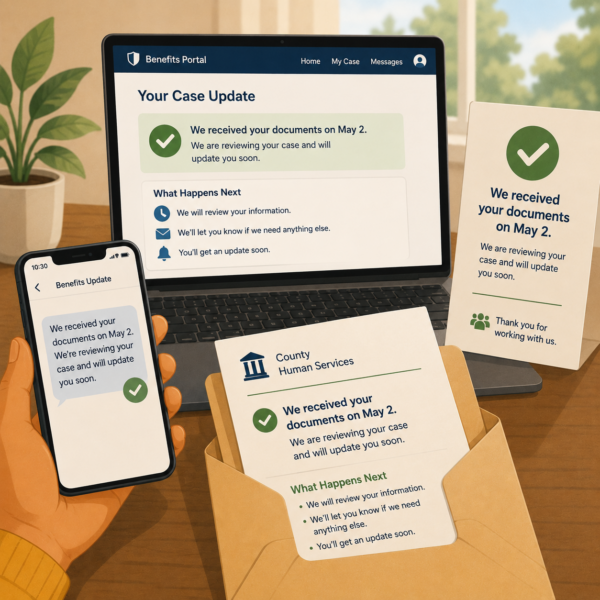 One of the most important functions of a status update is to tell residents whether the next move belongs to them or to the agency. Without that clarity, residents often assume they should do something, even when no action is needed. They may call repeatedly, upload the same documents again, submit a new application, visit an office, or ask a community partner to intervene. These actions are understandable because residents are trying to protect essential benefits, but they can create additional work for agencies and additional stress for households.
A clear status update should make the action expectation explicit. If the agency is reviewing the case, say that the agency is reviewing it and tell the resident whether they should wait for the next notice. If the resident needs to provide information, state exactly what is needed and by what date. If the resident has completed all required steps, say that no further action is needed right now. This kind of clarity reduces churn because it gives residents permission to stop guessing. It also gives staff and partners a consistent message to reinforce when residents ask for help.
Status Communication Should Be Timed Around Moments of Uncertainty
Not every case event needs a long message, but certain moments almost always create uncertainty for residents. These include after a renewal form is submitted, after documents are uploaded, after an interview is completed, after a warning notice is sent, before a deadline arrives, after a case is approved or renewed, and after benefits are changed, denied, or closed. These are the points where residents are most likely to wonder whether the agency has what it needs and whether they should do something else. If agencies can communicate clearly at these moments, they can prevent many avoidable contacts before they occur.
Timing matters because silence has meaning to residents. If someone submits documents and hears nothing, they may not interpret that silence as normal processing time. They may interpret it as lost paperwork, system failure, or a sign that benefits are about to stop. A short confirmation or next-step update can reduce that uncertainty. The update does not have to promise immediate resolution. It simply needs to acknowledge the resident’s action, describe the current status, and explain what happens next. When residents can see that the process is moving, they are less likely to churn through repeated contacts and duplicate actions.
Case Status Language Should Stay Consistent Across Channels
Residents rarely rely on only one channel during a benefits process. They may receive a mailed notice, check an online portal, receive a text message, call the agency, speak with a community partner, and later receive another letter. If each channel uses different terminology, the resident may believe that each message refers to a different problem. A mailed notice may say documents are due, the portal may say verification is incomplete, the text may say renewal action is required, and the call center may refer to recertification. Even if all of those messages relate to the same case step, the resident may experience them as conflicting instructions.
For public benefits agencies, consistent language is one of the simplest ways to reduce churn. The same case status should be described with the same resident-facing words across notices, portals, texts, emails, automated calls, staff scripts, and partner materials whenever possible. If different technical terms must appear because of system limitations or program requirements, the agency should explain the connection. For example, it can say, “Your renewal may also be called a redetermination in some messages.” The goal is to prevent residents from wondering whether they are missing multiple tasks when the agency is actually asking for one clear action.
Status Updates Should Point Back to a Source of Truth
A status update is most useful when it connects residents to a reliable place where they can confirm details. This may be an online portal, a case account, a phone line, a local office, a mailed notice, or a dedicated benefits webpage. Without a clear source of truth, residents may try to piece together information from old letters, screenshots, text messages, community posts, or secondhand explanations. That can increase confusion, especially when case details change over time.
A strong status update should tell residents where to verify the current status and what information they should have ready when they seek help. It should also help residents understand which message is most current. For example, if a later text or portal update replaces an earlier warning notice, that should be clear. Public benefits communication often becomes confusing because residents hold several messages at once and do not know which one to trust. A source-of-truth approach helps reduce that confusion by giving residents a stable place to confirm what the agency currently needs from them.
Status Updates Should Prevent Duplicate Submissions
Duplicate submissions are often a sign that residents do not know whether the agency received or accepted what they already sent. A resident may upload a pay stub, mail the same document, bring another copy to the office, and then call to confirm whether any of it was attached to the case. From the resident’s perspective, this is a rational response to uncertainty. If food assistance, health coverage, child care support, cash assistance, or another essential benefit is at risk, sending the same item again may feel safer than waiting without confirmation. From the agency’s perspective, however, duplicate submissions create extra sorting, scanning, review, and reconciliation work that can slow down the very process residents are trying to protect.
A stronger status update can reduce this cycle by clearly confirming receipt and explaining whether more action is needed. Instead of only saying that documents were uploaded, the update should tell residents what was received, when it was received, and what happens next. If the agency still needs time to review the document, the message should say that. If the resident should not send the same document again unless contacted, the update should say that too. This kind of communication gives residents a reason to pause because it confirms that their action entered the system and explains the next step.
Missing Information Updates Need to Be Specific
A message that says “missing information” may be accurate, but it is often not enough to help residents fix the problem. Residents need to know what specific item is missing, why it is needed, what forms of proof are acceptable, where to send it, and what deadline applies. If the update is too vague, residents may guess. They may send the wrong document, submit too much information, call repeatedly for clarification, or wait too long because they are afraid of making a mistake. In public benefits communication, vague missing-information language can become a direct contributor to churn.
A better status update moves from a general warning to a clear completion path. It might explain that proof of income is needed, give examples of acceptable documents, provide the deadline, and identify the submission options. The message should also make clear whether the missing item applies to one person in the household or the whole case. This matters because residents may not know whether the agency is asking for information about a parent, child, spouse, employer, landlord, caregiver, or household member who recently moved. Specificity reduces unnecessary contact and gives residents a fairer chance to complete the process correctly.
Status Updates Should Acknowledge Resident Effort
Residents often experience benefits processes as one-sided. They send information, complete forms, attend interviews, leave messages, upload documents, or visit offices, then wait for the agency to act. When there is no acknowledgment, the resident may feel that their effort disappeared. This can be especially frustrating when the resident has already taken time off work, arranged transportation, found documents, asked someone for help, or completed a difficult online process. A status update that acknowledges what the resident did can reduce anxiety and make the process feel more transparent.
This does not require overly casual or emotional language. A simple confirmation can be powerful: the agency received the renewal form, the interview was completed, documents were uploaded, or the change report was submitted. That acknowledgment helps residents understand that the process is moving. It also supports trust because the resident can see that the agency recognizes their action. Even when a final decision has not been made, acknowledgement gives the resident a clearer sense of where things stand and reduces the perceived need to restart the process through another channel.
Status Updates Should Clarify When Benefits Continue During Review
One of the most stressful uncertainties for residents is whether benefits will continue while the agency reviews their case. A person may know that a renewal, document request, or eligibility review is underway, but not know whether benefits will remain active during processing. This uncertainty can affect household planning, medical appointments, grocery decisions, child care arrangements, rent payments, and other immediate needs. If the resident cannot tell whether benefits are continuing, they may call repeatedly, seek emergency help, submit duplicate materials, or assume that support is about to stop.
When program rules allow benefits to continue during review, status communication should explain that clearly. When benefits may stop if a required action is not completed, the update should also say that plainly. The key is to avoid leaving residents to infer the consequence from technical status labels. If the case is still being reviewed and no action is needed right now, residents should know that. If the case is still being reviewed but a document is needed by a deadline to prevent closure, residents should know that too. Clear benefit-continuation language helps residents understand urgency without creating unnecessary panic.
Staff Scripts Should Match the Status Update
A status update can lose its value if staff explain the case differently when residents call. For example, a portal may say the renewal is under review, a text may say no action is needed, and a call center representative may use internal language that makes the resident think something is still missing. These inconsistencies do not usually happen because staff are careless. They often happen because the agency has not created a shared resident-facing vocabulary for common case statuses. Without that shared language, each staff member may translate system information differently.
Public benefits agencies can reduce confusion by pairing status updates with simple staff scripts. The scripts should not be rigid or overly long. They should help staff explain common statuses in the same plain language residents see in notices, portals, and reminders. For example, staff should have a consistent way to explain the difference between received and reviewed, pending and missing, continued and closed, or approved and still waiting for benefit issuance. When staff scripts match the status update, residents are more likely to trust the answer and less likely to keep seeking confirmation from multiple channels.
Portals Should Show Status in Resident-Facing Language
Online portals can reduce churn only when residents can understand what they are seeing. A portal that shows internal labels such as “pending,” “incomplete,” “verification outstanding,” “case action required,” or “processing” may reflect the agency’s workflow, but it may not tell residents what to do. If the portal does not explain whether the agency is waiting on the resident, reviewing information, preparing a decision, or confirming continued benefits, residents may still call, resubmit documents, or visit an office for clarification. A portal status should not require residents to understand eligibility system terminology before they can protect their benefits.
Public benefits agencies can improve portal status language by pairing each status with a practical explanation. “We received your renewal and are reviewing it” is more useful than “pending.” “We still need proof of income by June 15” is more useful than “verification incomplete.” “No action is needed right now” is more useful than leaving residents to wonder whether silence means something is wrong. The portal should also match the wording used in mailed notices, text reminders, call center scripts, and partner materials. When residents move between channels, they should feel like the agency is giving one consistent explanation of the case.
Status Updates Should Be Designed Around High-Risk Moments
Not every case event requires a detailed message, but some moments almost always create anxiety and extra contact. These include after an application is submitted, after renewal documents are uploaded, after an interview is completed, after a missing-information notice is sent, shortly before a deadline, after benefits are approved or renewed, and after a case is denied, changed, or closed. These are the points when residents are most likely to ask, “Did you get it?” “Do I need to do anything else?” “Will my benefits stop?” or “Why did this happen?” If the agency does not answer those questions proactively, residents may try to answer them through repeated calls, duplicate submissions, or new applications.
A stronger status communication strategy identifies these high-risk moments and creates standard resident-facing messages for each one. The message does not need to be long. It needs to be clear about what happened, what happens next, and whether the resident must act. For example, after document upload, a short confirmation can explain that the document was received and still needs review. Before a deadline, a reminder can identify exactly what is missing and where to send it. After renewal approval, a confirmation can reassure the resident that benefits are continuing. These messages reduce churn because they answer predictable questions before those questions become repeated contacts.
Status Communication Should Reduce Reapplication Confusion
One common form of churn happens when residents start a new application because they cannot tell whether the existing case is still open, pending, closed, or fixable. From the resident’s perspective, starting over may feel safer than waiting for an unclear status. From the agency’s perspective, duplicate applications can create extra work, duplicate records, confusion about which action controls, and delays in processing. This problem is especially likely when residents receive a closure notice, miss a renewal deadline, submit late documents, or see a portal status that does not clearly explain whether the case can still be reopened or completed.
Status updates should help residents understand whether they should continue with the existing case or begin a new application. If a case is still open and waiting for information, the update should say what is needed and by when. If a case has closed but can still be restored within a certain window, the update should explain the path in plain language. If a new application is required, the update should say that clearly and provide the correct starting point. This kind of guidance reduces unnecessary churn because residents are not forced to guess which path is valid.
Community Partners Need Reliable Status Language Too
Community partners often become unofficial case status interpreters. Clinics, schools, legal aid organizations, food banks, libraries, shelters, housing providers, child care organizations, and other community-based groups may help residents understand notices, upload documents, call the agency, or decide whether to reapply. If partners do not have clear status language, they may have to interpret agency messages on their own. Even well-intentioned partners can unintentionally create confusion if they use different terms, rely on outdated guidance, or cannot tell whether the resident should act or wait.
Public benefits agencies can support partners by giving them simple, consistent explanations of common case statuses and action paths. Partner guidance should not disclose private case information broadly, but it can explain what common phrases mean, what residents should look for, where to confirm current status, and when to direct someone back to the agency. This helps partners reinforce the same message residents receive from the notice, portal, or call center. When partners understand the status language, they can help reduce churn rather than adding another layer of interpretation.
Measuring Churn Means Looking at the Status Communication Path
Agencies often track processing times, renewal completion, call volume, procedural closures, reopened cases, and document submission patterns, but they may not always connect those metrics to status communication. Yet these patterns can reveal where residents are losing track of the process. If residents call repeatedly after submitting documents, receipt confirmation may be weak. If duplicate documents are common, residents may not know whether the agency received or accepted what they sent. If reapplications rise after closures, closure and reinstatement messages may not explain the next valid path. If partners repeatedly ask the same questions, status language may not be clear enough across channels.
Status communication should therefore be measured as part of churn reduction. The agency can look at which messages trigger the most calls, where residents abandon portal tasks, which statuses generate duplicate submissions, and whether reminders actually reduce missed deadlines. These signals can help agencies refine language, timing, portal labels, staff scripts, and partner guidance. The goal is not simply to produce more updates. The goal is to create updates that help residents understand the case well enough to take the right action, or confidently wait when no action is needed.
Strategic Communication Support for Human Services and Public Benefits Agencies
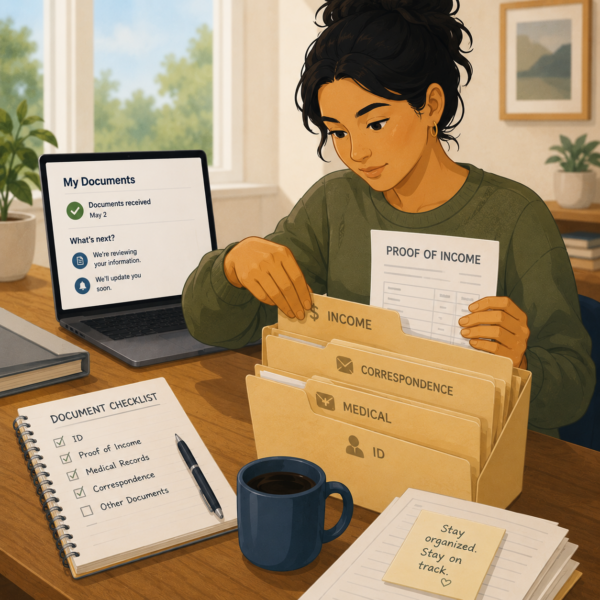 Case status communication is not just a convenience feature. It is part of how public benefits agencies reduce churn, protect resident access, and manage workload. For human services agencies, county social services departments, state benefits offices, and public assistance programs, residents often move through processes that are visible inside the agency but unclear from the outside. A case may be received, pending, incomplete, under review, approved, renewed, closed, reopened, or waiting for another action. If residents cannot understand what those statuses mean, they may call repeatedly, resubmit documents, start a new application, miss a deadline, or lose benefits for reasons that could have been prevented with clearer communication.
Because status communication touches notices, portals, call centers, text reminders, eligibility workflows, staff scripts, and partner guidance, many agencies benefit from external communication support when trying to improve it. Internal teams understand program rules and systems deeply, but that familiarity can make it harder to see where residents are likely to become confused. An outside partner can help identify the points where status language is too vague, where channels contradict one another, where residents are unsure whether to act or wait, and where the agency can reduce churn by making the process more visible.
Stegmeier Consulting Group (SCG) helps human services and public benefits agencies create communication systems that make case status easier for residents, staff, and community partners to understand. That support may include reviewing notices and portal language, developing plain-language status categories, aligning call center scripts with resident-facing updates, creating reminder message frameworks, strengthening source-of-truth guidance, and mapping the resident journey from submission to decision. The goal is not to expose every internal processing detail. The goal is to help residents understand what has happened, what is still needed, what the agency is doing next, and what action, if any, belongs to them.
This kind of support can also help agencies reduce avoidable workload. When residents understand that documents were received, that no additional action is needed, that a case is still under review, or that one specific item is missing, they are less likely to create duplicate contacts. Staff can focus more time on case-specific issues and less time answering basic status questions. Community partners can reinforce the same message instead of interpreting unclear notices on their own. Stronger status communication gives everyone a clearer view of the process.
Future Trends in Public Benefits Status Communication
Public benefits agencies are likely to place greater emphasis on proactive case status communication as they continue to manage high caseloads, digital portals, renewal cycles, document submission tools, and multi-channel resident support. Residents increasingly expect to know whether an agency has received their information, whether something is still missing, and what happens next. Agencies that provide clearer status updates will be better positioned to reduce repeat calls, duplicate uploads, unnecessary reapplications, and preventable benefit interruptions.
Another likely trend is greater alignment between portal language and mailed notices. Many residents move between paper and digital channels during the same case process, so inconsistent terminology will become harder to defend. If a portal says “pending verification,” a notice says “documents due,” and a text says “renewal action required,” residents may not know whether those messages refer to the same issue. More agencies will need shared resident-facing language that connects all channels into one understandable action path.
Agencies may also use churn data more intentionally to improve status communication. Patterns such as repeat calls after document upload, duplicate submissions, late renewals, preventable closures, reopened cases, and unnecessary reapplications can show where residents are losing track of the process. Instead of treating those patterns only as workload problems, agencies can use them to refine timing, language, reminders, portal labels, and staff scripts. Status communication will increasingly become part of operational improvement, not just resident service.
Conclusion
Residents should not have to interpret unclear case movement on their own. When public benefits of communication leaves people uncertain, they often take protective actions that create more work for themselves, agencies, and community partners. They call again, submit the same document again, start a new application, ask multiple people for help, or wait too long because they do not know that something is missing. These behaviors are not signs that residents are careless. They are often signs that the case status communication system is not clear enough.
Status updates that reduce churn provide clear, practical information about receipt, missing items, benefit continuation, required action, next steps, and official verification channels. They help residents understand whether the agency is waiting for them, whether the agency is still reviewing the case, or whether the case has moved to a decision point. When agencies communicate those details clearly and consistently, residents are more likely to follow the correct path and less likely to create avoidable repeat contacts.
In the end, better status communication makes the benefits process more understandable. It helps residents see that their action counted, helps staff provide consistent guidance, helps partners support residents accurately, and helps agencies reduce churn before it becomes a larger operational problem. A clear status update may seem small, but for a resident waiting on health coverage, food assistance, child care support, or another essential benefit, it can be the difference between uncertainty and action.
SCG’s Strategic Approach to Communication Systems
Align your agency’s messaging, processes, and public engagement strategies.
Human services and public benefits agencies need communication systems that help residents understand where their case stands, what action is required, and where to get help before confusion leads to repeated contact or avoidable benefit loss. Whether your agency is improving case status updates, aligning portal language with notices, strengthening call center scripts, reducing duplicate submissions, or creating clearer source-of-truth guidance for residents and partners, SCG can help you build a communication framework that supports clarity, access, consistency, and trust. Use the form below to connect with our team and explore how a strategic communication system can strengthen status communication and reduce avoidable churn.