Business Retention Visit Communication for County and Regional Economic Development Agencies
A business retention visit is the moment in economic development practice where the agency’s communication capability is most directly tested, because there is no document, no program page, and no press release between the representative and the employer. There is a conversation, and the quality of what the agency learns from that conversation, the quality of what the employer takes away from it, and the quality of what actually happens afterward, are all determined by whether the agency has built the visit as a communication system rather than as a social courtesy.
The distinction matters because business retention and expansion programs, commonly known as BRE programs, are among the most resource-intensive activities county and regional economic development agencies undertake. Visit programs require staff time, travel, coordination with partners, and follow-through that can extend for months after the conversation itself. When these programs function as a communication system, they return intelligence that informs regional economic strategy, they surface threats early enough to intervene, they connect established employers to programs and resources they would not have found otherwise, and they build a relationship with the existing employment base that is the most defensible competitive advantage any regional economy possesses. When they function as a relationship gesture, they return warm impressions and little else, and their value to the agency is roughly what their value to the employer was: pleasant but unmemorable.
The shift from relationship gesture to communication system requires deliberate design across the full arc of the visit, from pre-visit preparation that makes the conversation immediately credible, through structured in-visit intelligence gathering that captures what matters without making the meeting feel like an interrogation, to follow-through systems that convert what was learned into what actually happened, and to relationship maintenance between formal visits that signals to employers that the agency’s interest outlasts the calendar appointment. This article examines each of these stages, treating the business retention visit not as a program activity to be counted but as a communication discipline to be built.
What Business Retention Visits Are Actually Trying to Accomplish
 Clarity about the goals of a business retention visit program shapes every design decision that follows, and the clearest version of those goals has three components that must be held simultaneously rather than sequenced. The first is intelligence: the agency learns, through structured conversation, about the operating conditions, challenges, workforce experience, facility needs, and expansion or contraction signals of established employers, building a real-time picture of the regional economy that no survey or dataset produces as efficiently. The second is connection: the employer learns, through the visit, about programs, resources, incentives, workforce partnerships, and problem-solving capabilities the agency offers that the employer would not have discovered independently, because most established businesses do not actively monitor economic development program changes. The third is relationship: both parties leave the conversation with a more specific and trusted understanding of the other, which lowers the threshold for future contact and increases the likelihood that the employer calls the agency before making a decision that affects employment rather than after.
Programs that pursue only the third goal, relationship, without structured attention to the first two, tend to generate exactly what their design produces: pleasant relationships and sparse intelligence. The employer appreciates the visit, may even remember it fondly, and still does not call when they decide to consolidate operations or consider an expansion, because the visit never established the agency as a problem-solving resource. Programs that pursue only the first goal, intelligence extraction, without genuine attention to connection and relationship, produce different problems: employers who feel surveilled rather than supported, who begin declining visits, and whose honest assessment of the agency is that it shows up to gather information but not to help.
The successful visit program is designed around all three goals at once, through a conversation format that gathers intelligence through listening rather than through interrogation, that weaves resource connection into the natural flow of the conversation rather than delivering a program pitch at the end, and that demonstrates genuine interest in the employer’s success rather than in their data. This integration is the design challenge that most visit programs have not solved, and solving it is primarily a communication design task rather than a staffing or scheduling one.
Who Deserves a Visit and How to Prioritize the Portfolio
A county or regional agency cannot visit every employer in its jurisdiction on any meaningful cycle, and the segmentation decisions that determine which employers receive visit priority are themselves communication decisions with strategic consequences. Employers who receive visits form a different impression of the agency than employers who do not, and the agency’s choice of who to visit communicates something about whose relationship the agency values.
Most effective BRE programs apply layered prioritization: anchor employers whose size and interconnection with the regional economy create disproportionate strategic stakes, employers in sectors the agency has identified as regional growth priorities or retention vulnerabilities, employers who have recently signaled change through hiring shifts, permit activity, or market developments, and employers who have had no agency contact in a threshold period regardless of other criteria. This layered approach ensures that the program maintains its strategic coverage of the highest-stakes relationships while systematically reaching employers who would otherwise fall entirely outside the agency’s direct relationship network. The communication implication is that every employer who is not on the visit schedule represents a gap in the agency’s intelligence picture and a relationship the agency is not building.
Growing Places: Communication Strategies for Economic Development and Public Finance Agencies
This article is part of our series on strategic communication for Economic Development organizations, including state and local economic development agencies, regional partnerships, and business attraction initiatives. To learn more and to see the parent article, which links to other content just like this, click the button below.
Pre-Visit Preparation as the Foundation of Credibility
The quality of the intelligence gathered in a business retention visit, and the employer’s experience of the visit itself, are both substantially determined by preparation that happens before the representative walks in the door. An unprepared visitor asking basic questions about the company’s industry, workforce size, or primary products signals that the agency’s interest in the employer extends no further than the appointment calendar. A prepared visitor who arrives demonstrating genuine knowledge of the company’s recent history, its industry context, and the specific regional issues most likely to be relevant to its situation signals something entirely different: that the agency considers this employer worth knowing about before showing up.
Pre-visit research should cover the company’s core business, primary products or services, estimated workforce size, key customers or markets, recent news including hiring announcements, expansions, leadership changes, and any available indication of the company’s competitive or financial position. This research should be supplemented by an agency-internal review of any prior visit records, outstanding commitments or referrals, and programs the employer may be eligible for that the agency wants to introduce. The goal is not a comprehensive intelligence briefing but a set of informed starting points that allow the conversation to begin at a level that respects the employer’s time and establishes the representative as someone who did their homework.
Logistics preparation matters as much as content preparation, because an awkward visit start or a confused coordination sequence undermines credibility before a word is exchanged. The visit should be confirmed in advance at the correct level of seniority on both sides, with enough lead time that the employer can ensure the right people are in the room. The representative should know who they are meeting, what those individuals’ roles are, and what relationship, if any, the agency has had with them previously. And the representative should arrive having thought through the specific program connections most likely to be relevant based on what pre-visit research suggests about the employer’s current situation, because a resource referral that emerges naturally from the conversation is dramatically more valuable than one delivered as a programmatic checklist at the meeting’s end.
Structuring the Conversation to Gather Intelligence Without Interrogating
The in-visit conversation is the core of the business retention visit, and its structure determines whether the program achieves its intelligence and connection goals simultaneously. A conversation organized primarily around the agency’s questions, moving through a survey instrument in sequence, tends to feel transactional to the employer and produces data organized around the agency’s categories rather than the employer’s actual concerns. A conversation organized entirely around what the employer volunteers, without any structure, produces a pleasant interaction that may capture nothing the agency most needs to know. The effective structure sits between these poles: a framework of key topics that the representative uses to guide coverage without visibly constraining the conversation.
The key intelligence topics that a well-designed BRE conversation should cover include current workforce conditions and challenges, specifically what the employer is finding in the labor market, what occupations are hardest to fill, and what their experience has been with training programs and workforce pipelines. They include facility and infrastructure conditions, with attention to any constraints the current facility imposes on operations or expansion and any infrastructure gaps that affect competitiveness. They include business conditions, exploring how the company’s market is performing, what competitive pressures it faces, and whether its regional customer or supplier relationships are stable. They include the employer’s assessment of the region as an operating environment, covering what works, what does not, and what the employer would change if they could. And they include forward-looking signals, the representative’s most careful listening territory, for any indication of planned changes to employment, facilities, operations, or location strategy.
These topics can be covered entirely through open-ended questions and active listening rather than through a survey sequence, which produces richer responses and a conversation that feels collaborative. Starting with the employer’s own current priorities rather than the agency’s checklist, following the employer’s responses to where they naturally lead, and returning to uncovered topics through organic transitions rather than mechanical sequencing, all contribute to a conversation that the employer experiences as genuinely interested engagement rather than data collection. The representative’s role in this structure is to listen well, to ask follow-up questions that deepen rather than redirect, and to ensure that by the end of the conversation the agency has covered what it needed to cover without the employer noticing that coverage was the objective.
Weaving Resource Connection Into the Conversation Naturally
The most common failure mode in business retention visits is the program pitch: a section near the end of the visit where the representative delivers a list of available programs, often from a printed materials packet, and the employer nods politely without genuinely registering any of it. This format fails because it presents resources as general information rather than as specific solutions to the employer’s actual situation, which was described earlier in the same conversation but was not used to filter the resources being presented.
The alternative is to connect programs to problems as the problems emerge in conversation, not as a closing segment. When an employer describes difficulty finding welders, the representative whose response is that is something the regional workforce board has been working on specifically with a sector partnership, and I would like to connect you to their work before I leave today, is doing two things simultaneously: demonstrating that the agency listened, and making the program relevant to the employer’s immediate experience. This requires the representative to arrive prepared with enough program knowledge to make these connections spontaneously rather than from a list, and it requires the agency to have built the internal partnerships that make the referral credible and the follow-through reliable.
Not every conversation will produce a natural connection opportunity, and representatives should resist the pressure to manufacture one. An employer who has no current unmet needs that an agency program addresses is an employer who deserves to know that the agency visited, learned their situation, found no immediate gap to fill, and will be back. That is a more honest and ultimately more trust-building interaction than a forced program pitch that serves the agency’s activity metrics rather than the employer’s interests.
Capturing and Using the Intelligence the Visit Produces
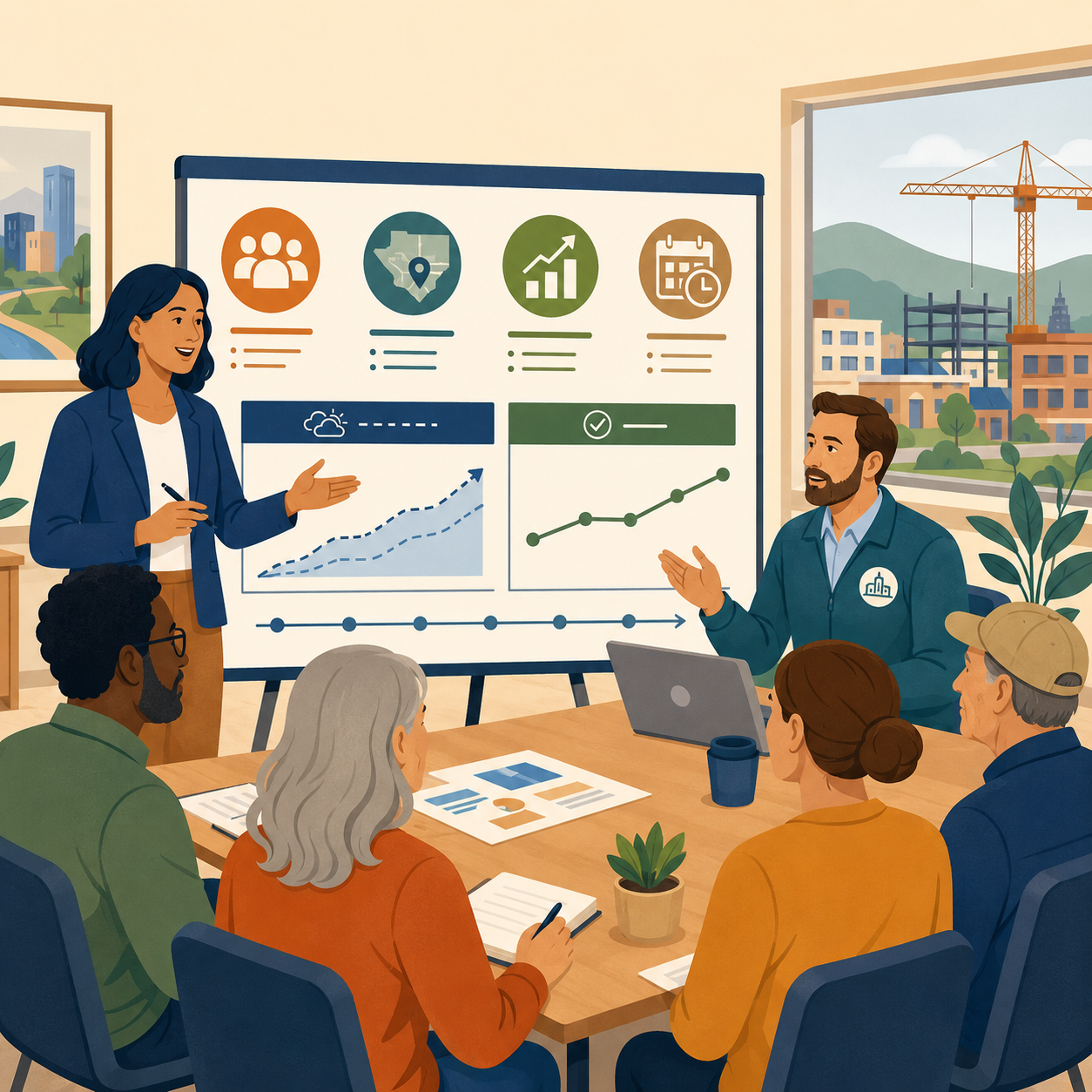 A business retention visit that generates rich intelligence but no mechanism for capturing, routing, and acting on it is a communication investment that returns nothing to the regional economy. The intelligence value of a BRE program is realized not through the conversations themselves but through what the agency does with what it learns, and this requires documentation, routing, and response systems that most visit programs have not built with the discipline the goal demands.
Documentation should happen immediately after the visit, while the specifics are fresh, through a structured record that captures the key intelligence topics covered, the employer’s responses in enough detail to be useful rather than merely quotable, any program connections made or referrals committed, any concerns or signals that warrant follow-up from a retention or expansion perspective, and any commitments the representative made during the visit. The format of this record matters: it should be searchable, should feed into whatever platform the agency uses for employer relationship management, and should be accessible to the colleagues who will own the follow-through actions rather than buried in the visiting representative’s personal files.
Routing the intelligence gathered is where most programs break down. A manufacturer who described grid reliability concerns should have that information reach the utility’s economic development team. An employer who mentioned difficulty navigating the permitting process for a planned expansion should trigger a conversation with the relevant municipal or county contact. An employer who signaled that a competitor has been approaching them about consolidation warrants internal escalation to the agency’s leadership and potentially to the regional strategy function. None of this happens automatically, and it does not happen through goodwill alone. It requires explicit routing protocols that specify which categories of intelligence go to which partners, and explicit follow-up standards that specify when and how the agency and its partners respond.
The aggregated intelligence from a visit program, synthesized across all employers visited in a cycle, is the program’s most valuable but least frequently used output. Individual employer intelligence drives individual follow-through; aggregated intelligence drives regional economic strategy. Which sectors are reporting common challenges? Which workforce issues are consistent across multiple employers? Which infrastructure gaps appear repeatedly? Which employers are signaling expansion while others in the same sector signal contraction? Answering these questions systematically through visit data requires the agency to treat its visit records as an intelligence database rather than as an activity log, which is a different data discipline and a more powerful one.
Follow-Through as the Core Credibility Test
The business retention visit’s effect on the employer’s trust in the agency is determined less by the visit itself than by what happens afterward, and follow-through is the element of the visit program that most directly determines whether employers grant subsequent visits. An employer who was visited, had an immediate need, received a referral, and then heard nothing for three months has not had a retention experience. They have had a pleasant conversation followed by a demonstration that the agency’s interest was transactional.
Follow-through should be structured and tracked, not left to the representative’s memory and goodwill. Every commitment made during a visit, whether a specific referral, a document to be shared, a connection to be made, or a question to be answered, should be documented and assigned an owner and a timeline at the moment it is made. The agency should operate explicit standards for follow-through speed, with the follow-up communication reaching the employer within a defined period after the visit and the committed action completed within a defined subsequent period. These standards should be tracked against actual performance, because a program that consistently misses its follow-through commitments is actively eroding the trust that the visit was intended to build.
Follow-through communication should be substantive rather than perfunctory. A follow-up email that says it was great to meet you and we will be in touch does not constitute follow-through. A follow-up that says I wanted to share the contact information for the workforce board’s sector partnership as I mentioned, along with a brief summary of what they offer and the best way to initiate a conversation with them, is a follow-through that delivers value. The difference in the employer’s experience of these two follow-ups is the difference between feeling remembered and feeling managed.
Between Visits: Maintaining the Relationship Without Requiring a Formal Appointment
Formal business retention visits, however well executed, cannot be the agency’s only mode of contact with the employers in its portfolio if the relationship goal is to be achieved. Employers who hear from the agency only during scheduled visits experience the relationship as a program rather than as a connection, and they do not call the agency between visits because they have been trained to wait for the agency to call them. Changing this dynamic requires the agency to maintain contact between visits through a variety of touchpoints that require little time but signal ongoing attention.
These between-visit contacts might include a brief note when something in the agency’s awareness is directly relevant to the employer’s business, a program announcement that the representative has reason to believe the specific employer would want to know about, an invitation to a sector roundtable or workforce event the employer’s attendance would make more valuable, or simply a message acknowledging a positive development, an anniversary, an award, or a community contribution, that the agency noticed. Each of these touches is small in itself, but collectively they communicate that the relationship is real and ongoing rather than periodic and transactional. Employers who receive this kind of attention are the ones who call before they decide, which is the signal that the BRE program exists to capture.
Program and Resource Knowledge as the Representative’s Core Competency
Business retention visit representatives are only as useful as the resources they can credibly connect employers to, which means the agency’s investment in training its representatives on available programs, workforce partnerships, financing tools, regulatory processes, and partner capabilities is directly an investment in the visit program’s value. A representative who can only describe the agency’s own programs, or who describes partner programs at the level of they exist and here is their phone number, is not meaningfully extending the employer’s awareness of the full ecosystem of support available to them. A representative who can describe, in terms specific to the employer’s situation, what the regional workforce board’s sector partnership actually does, what a state manufacturing extension partnership visit involves, what the small business development center can help with, and what a community development financial institution lends for, is a representative who genuinely adds value in every visit regardless of whether the agency’s own programs are relevant.
Building this program knowledge requires deliberate training investment, ongoing relationship maintenance with partner organizations, and a culture within the agency that treats cross-sector competency as a professional standard rather than a bonus. The representative who goes to a manufacturing employer, hears about a regulatory challenge with environmental compliance, and says that is a regulatory question I cannot help with directly but the state’s small business environmental assistance program exists specifically for this, and I will connect you with their technical assistance team today, is doing exactly what the visit program is supposed to do: using the relationship the visit creates to connect an existing employer to a resource they need.
Strategic Communication Support for County and Regional Economic Development Agencies
 Business retention visit programs in most county and regional agencies are built on good intentions and thin systems. The intentions are genuine: relationships with established employers matter, intelligence about the regional economy is valuable, and connecting businesses to available resources is exactly what economic development agencies exist to do. But the systems that would convert those intentions into consistent outcomes, the pre-visit research protocols, the structured conversation frameworks, the documentation and routing disciplines, the follow-through standards, and the between-visit relationship maintenance practices, are absent or underbuilt in a significant share of programs.
The result is predictable: visit counts that look impressive in annual reports, intelligence that lives in individual representatives’ heads and leaves when they do, follow-through commitments that are honored inconsistently, employers who receive a visit and then hear nothing for eighteen months, and a program that cannot demonstrate its value in any terms more specific than the number of visits conducted and the qualitative observation that employers appreciate the attention. These outcomes are not the result of insufficient effort. They are the result of insufficient design, and design is the investment the program needs.
Stegmeier Consulting Group (SCG) helps county and regional economic development agencies build business retention visit programs that function as the communication systems they are supposed to be. That support may include visit program design and conversation framework development, pre-visit research and preparation protocols, intelligence capture and routing system design, follow-through standard setting and tracking framework development, representative training on program knowledge and resource connection, between-visit relationship maintenance strategy, and program evaluation frameworks that measure intelligence quality, employer engagement, and follow-through completion rather than only visit counts.
The goal of this work is a visit program whose conversations produce actionable intelligence that actually informs regional strategy, whose employer connections actually result in program engagement, and whose follow-through actually happens at the speed and quality that makes employers call the agency before they decide. That is a business retention program that does what it was designed to do.
Future Trends in Business Retention Visit Communication
The practice of business retention and expansion is evolving in response to economic conditions, technology, and changing employer expectations, and agencies whose visit programs are static will find them increasingly out of step with the environment they are designed to serve.
Supply chain disruption and reshoring trends have elevated the strategic importance of existing manufacturers in many regions, making business retention visits with industrial employers more consequential than they have been in decades. Employers who are reconsidering their supply chain configurations, evaluating domestic production expansion, or facing workforce challenges driven by growth rather than contraction represent exactly the intelligence and connection opportunity that a well-designed visit program exists to capture. Agencies that have maintained relationships with their manufacturing base are positioned to learn about and influence these decisions before they become announcements.
Digital tools for employer relationship management have improved substantially, and agencies that invest in maintaining current, structured employer records through a dedicated relationship management system, rather than through spreadsheets and email, have a significant advantage in the continuity and quality of their employer engagement. When a representative departs, an agency with well-maintained employer records retains the institutional knowledge of the relationship. An agency without those records loses it and starts rebuilding from scratch, which compounds the challenge of maintaining visit programs through staff transitions.
Employer expectations for the visit experience are also rising, shaped by the same digital-first environment that shapes all professional service expectations. Employers who experience highly personalized, well-prepared, and promptly followed-up engagement in other professional contexts bring those expectations to the business retention visit. An agency that shows up visibly unprepared, delivers a generic program overview, and then goes quiet is not just performing below its potential. It is performing below the standard that the employer’s other professional relationships have established, which means it is actively damaging its position in the employer’s hierarchy of trusted advisors.
Sector-based visit programming is gaining traction as a refinement of traditional employer-by-employer visit cycles, with agencies organizing periodic roundtables, forums, or facilitated conversations that bring together employers from a common sector to surface shared challenges, build peer relationships, and allow the agency to demonstrate sector-specific knowledge and program alignment. These sector conversations produce intelligence and connection at a density that individual visits cannot match, and they position the agency as a genuine sector convener rather than merely a drop-in visitor, which is a fundamentally stronger basis for the relationship goal the visit program is pursuing.
Conclusion
A business retention visit is a conversation, and like all consequential conversations, its value is determined not by the fact of its occurrence but by how it was prepared for, how it was conducted, what was learned, and what actually happened as a result. The agencies that run effective retention programs have not discovered a secret about employers; they have made deliberate design choices about preparation, conversation structure, intelligence capture, follow-through, and relationship maintenance that convert a recurring appointment into a functioning intelligence and support system.
Those design choices are available to every county and regional economic development agency, regardless of staff size or budget. They require clarity about what the visit program is for, discipline about how visits are conducted and documented, investment in the program knowledge that makes representatives genuinely useful to employers, and follow-through systems that honor the commitments made in the room. Agencies that build these elements have visit programs that produce real competitive advantage: earlier warning of employer vulnerability, faster connection of growing employers to the support that accelerates their growth, and a relationship with the existing employment base that no new business attraction campaign can replicate.
SCG’s Strategic Approach to Communication Systems
Align your agency’s messaging, processes, and public engagement strategies.
County and regional economic development agencies need business retention visit programs built as communication systems, not as relationship gestures. That means pre-visit research protocols that establish immediate credibility, structured conversation frameworks that gather intelligence naturally without interrogating, documentation and routing systems that convert what is learned into what actually happens, follow-through standards that honor commitments at the speed employers experience as responsive, representative training that builds the cross-program knowledge that makes visits genuinely useful, and between-visit relationship maintenance that signals ongoing interest rather than periodic compliance with a program calendar.
SCG helps county and regional economic development agencies build business retention visit programs that produce the intelligence, connection, and relationship outcomes these programs were designed to deliver. Whether your agency needs visit program design, conversation framework development, intelligence capture systems, follow-through standard setting, or representative training, SCG can help you build a program that makes your existing employer relationships your strongest economic development asset.
Use the form below to connect with our team and explore how strategic business retention visit communication can help your agency know more, connect faster, and build the employer relationships that protect and grow your regional economy.