
How Workforce Agencies Can Promote Registered Apprenticeship and Earn-and-Learn Programs
Ask a group of residents what an apprentice is, and many will reach for images from history books: a young person bound to a blacksmith, a cobbler, or a printer, learning a craft over years in exchange for room and board. Others will picture a construction site and a union hall. Few will picture a hospital pharmacy technician, a cybersecurity analyst, a certified nursing assistant, an early childhood educator, a utility line worker, or a software developer, even though registered apprenticeship programs exist in all of these fields. The word apprentice carries centuries of meaning, and much of that meaning works against the modern programs that use it.
This is the paradox workforce agencies face when they promote registered apprenticeship. The model itself is remarkably well suited to the needs of both jobseekers and employers. Apprentices are hired and paid from the first day, earn wage increases as their skills grow, learn on the job under experienced mentors, complete related classroom or online instruction, and finish with a nationally recognized credential, often with little or no education debt. Employers build a pipeline of workers trained to their standards, improve retention, and develop the next generation of skilled employees. Public agencies have promoted apprenticeship for decades, and federal policy has repeatedly emphasized expanding it. Yet apprenticeship remains a small share of the training landscape in many communities, and many jobseekers and employers who would benefit from it either misunderstand it or have never seriously considered it.
The gap is substantially a communication gap. Jobseekers who would thrive in an earn-and-learn model may not know that apprenticeships exist in their field of interest, may assume they are only for young people or only for construction, or may not understand how to find and apply for openings. Employers who could benefit may assume apprenticeship is bureaucratic, expensive, unionized by definition, or irrelevant to their industry, and may not know that intermediaries and public agencies can help them build programs. Parents, school counselors, and other influencers may steer young people toward four-year degrees without presenting apprenticeship as a serious alternative. Each of these misunderstandings can be addressed through communication, but only if workforce agencies understand the distinct audiences and decisions involved.
This article examines how workforce agencies can promote registered apprenticeship and other earn-and-learn programs. Its central argument is that effective apprenticeship promotion requires speaking to two different decision-makers, jobseekers and employers, with messages designed around their distinct concerns, while correcting the perceptions that the word apprentice carries and remaining honest about what apprenticeship actually involves. It addresses the perception problem, plain-language explanations of earn-and-learn models, communication with jobseekers, employers, and influencers, expansion beyond traditional trades, equity and inclusion, coordination with apprenticeship agencies and partners, the role of workforce funds, honest communication about realities, and the stories and evidence that make apprenticeship real to people who have never encountered it.
The Perception Problem Apprenticeship Faces
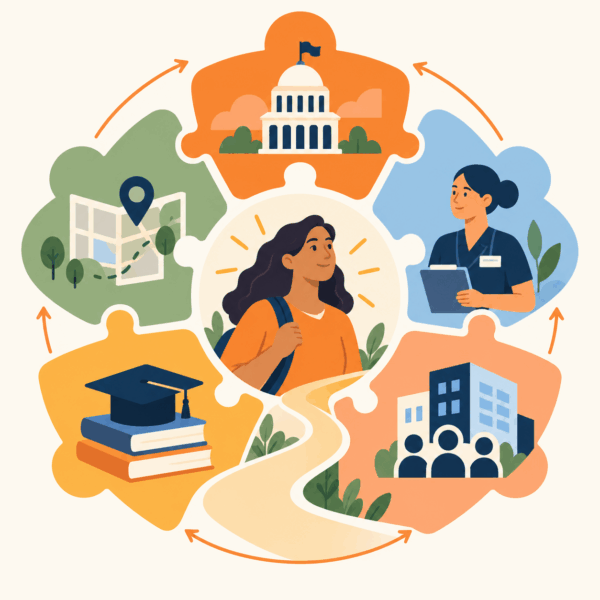 Perceptions shape whether people consider an option at all. Before a jobseeker evaluates the details of an apprenticeship, she has already formed an impression of what apprenticeship is and whether it is for someone like her. Before an employer explores registering a program, it has already formed a view of whether apprenticeship fits its industry and is worth the effort. For many jobseekers and employers, these impressions are inaccurate in ways that rule apprenticeship out before any conversation begins. Workforce agencies that want to promote apprenticeship must address these perceptions directly.
The most widespread perception among jobseekers is that apprenticeship is limited to the building trades. Construction trades have long been the backbone of registered apprenticeship, and union apprenticeship programs in electrical work, plumbing, carpentry, and similar trades remain highly visible and valued. But registered apprenticeship now spans many industries, including healthcare, information technology, advanced manufacturing, transportation, energy, education, hospitality, and public service. Jobseekers interested in these fields may never consider apprenticeship because they do not know it exists there.
A second perception is that apprenticeship is for young people. Many residents associate apprenticeship with teenagers or recent high school graduates. In practice, apprentices include career changers, adults returning to the workforce, veterans, and incumbent workers advancing in their companies. Adults who believe they are too old for apprenticeship may overlook an option well suited to their circumstances, particularly because it pays a wage while they learn.
A third perception is that apprenticeship is a lesser path than college. Cultural expectations in many communities emphasize the four-year degree as the route to success, and apprenticeship may be seen as a fallback for those who cannot attend college. This perception overlooks the credentials, wages, and career advancement many apprenticeships provide, as well as the fact that some apprenticeships include college credit or lead to degrees. It also overlooks the significant advantage of earning wages and avoiding education debt while training.
Among employers, the most common perceptions are that apprenticeship is bureaucratic and complicated, that it is expensive, that it requires a union, and that it is only relevant to construction or manufacturing. Some employers have heard that registering a program involves extensive paperwork and oversight. Others assume they must provide all training themselves or commit to obligations they cannot sustain. Many have never been approached by anyone explaining how apprenticeship could work in their context.
There is also a perception problem within the workforce system itself. Some career center staff are unfamiliar with apprenticeship, see it as the domain of a separate agency, or are unsure how it relates to training funds and career services. When staff do not understand or promote apprenticeship, jobseekers who would benefit never hear about it.
These perceptions are not simply errors to be corrected with facts. They are rooted in history, culture, and personal experience, and they persist because they are reinforced by what people see around them. Effective promotion must therefore do more than state that apprenticeship is available in many fields and for people of all ages. It must make the modern reality of apprenticeship visible through concrete examples, real stories, local employers, and accessible explanations, so that new impressions can replace old ones. The rest of this article describes how.
Skilled & Connected: Communication Strategies for Workforce Development Agencies, Career Centers, and Local Employment Services
This article is part of our series on strategic communication for Workforce Development Agencies, Career Centers, and Local Employment Services. To learn more and to see the parent article, which links to other content just like this, click the button below.
Registered Apprenticeship and Earn-and-Learn Models in Plain Terms
Promoting apprenticeship requires a clear, accurate description that workforce staff, partners, jobseekers, and employers can all understand. The description should distinguish registered apprenticeship from other earn-and-learn models without burying audiences in technical detail. The summaries below provide a plain-language foundation; details vary by state and program.
Registered Apprenticeship
Registered apprenticeship is a training model in which an employer, or a group of employers or other sponsor, hires an apprentice and provides structured on-the-job learning under the guidance of experienced workers, combined with related instruction delivered in a classroom, online, or through a training provider. Apprentices are paid from the start, and their wages typically increase according to a schedule as they gain skills. Programs are registered with the U.S. Department of Labor’s Office of Apprenticeship or with a State Apprenticeship Agency recognized by the Department, which reviews the program against standards. Apprentices who complete the program receive a nationally recognized certificate of completion. In plain terms, registered apprenticeship is a job with training built in: apprentices earn a paycheck, learn on the job, take related classes, receive raises as they progress, and finish with a recognized credential.
The registration process matters because it provides quality standards and recognition. For jobseekers, registration means the program meets defined requirements for training, wages, and safety, and the credential is recognized nationally. For employers, registration provides a structure for training and may open access to certain resources and incentives that vary by state.
Pre-Apprenticeship
Pre-apprenticeship programs prepare individuals to enter and succeed in registered apprenticeship. They typically provide basic skills, industry orientation, introductory technical training, and support, and many have relationships with registered apprenticeship programs that facilitate entry. In plain terms, pre-apprenticeship helps people get ready to apply for and succeed in an apprenticeship. Pre-apprenticeship can be especially valuable for jobseekers who need to build skills or meet entry requirements before applying.
Youth Apprenticeship
Some states and localities operate youth apprenticeship programs that allow high school students to begin apprenticeships while completing school, often leading to continued registered apprenticeship after graduation. These programs vary widely and are typically developed in partnership with schools and employers.
Other Earn-and-Learn Models
Beyond registered apprenticeship, workforce agencies support other models that combine paid work and learning. On-the-job training under WIOA allows an employer to hire a participant and receive reimbursement for a portion of the participant’s wages to offset the cost of training, typically for a defined period. Customized training is designed for a specific employer or group of employers that commits to employing successful participants. Incumbent worker training helps employers upgrade the skills of current workers. Paid work experience, internships, and transitional jobs offer short-term earn-and-learn opportunities, particularly for youth and jobseekers with limited work history. These models share the core idea of learning while earning but differ in structure, duration, and credential.
In communication, it helps to use earn and learn as an umbrella phrase for the general concept while being precise when describing specific programs. Jobseekers and employers should understand that registered apprenticeship is a particular, structured model with specific features, while other earn-and-learn options may be shorter, more flexible, or tied to specific employers. Blurring these distinctions can lead to misunderstandings, such as a jobseeker expecting a nationally recognized credential from an on-the-job training placement that does not provide one.
A shared plain-language description of these models, used consistently by career center staff, business services teams, and partners, ensures that jobseekers and employers hear accurate, consistent explanations.
Two Audiences, Two Decisions
Apprenticeship promotion is unusual among workforce communication tasks because it depends on two independent decisions by two different audiences. An apprenticeship exists only when an employer decides to sponsor or participate in one, and it is filled only when a jobseeker decides to apply and is selected. A campaign that persuades many jobseekers to seek apprenticeships will fail if few employers offer them. A campaign that persuades employers to start programs will fail if they cannot find qualified, interested candidates. Effective promotion must address both decisions, and it must recognize that the two audiences have very different concerns.
Jobseekers deciding whether to pursue an apprenticeship weigh questions about income, opportunity, commitment, and fit. They want to know how much they will earn during the apprenticeship and after, how long it will take, what the work involves, whether they qualify, how competitive selection is, and what the credential will mean for their future. They compare apprenticeship with other options, such as entering the workforce directly, enrolling in college, or pursuing short-term training. Their decision is personal and often involves family considerations.
Employers deciding whether to sponsor or participate in apprenticeship weigh questions about workforce needs, cost, effort, return, and risk. They want to know whether apprenticeship will help them find and keep workers, how much it will cost in wages, mentoring time, and instruction, what administrative obligations registration involves, how long it takes to see results, and what happens if apprentices leave. They compare apprenticeship with their current hiring and training practices and with other options such as hiring experienced workers or using staffing agencies. Their decision is a business investment, often involving multiple decision-makers within the company.
Because the concerns differ, so must the messages. Messages that work for jobseekers, emphasizing earning while learning, wage progression, credentials, and avoiding debt, do not address employers’ concerns about cost and administration. Messages that work for employers, emphasizing talent pipelines, retention, and return on investment, do not speak to jobseekers’ concerns. Effective promotion develops distinct message sets for each audience, delivered through different channels and messengers, while maintaining consistency in the facts.
The two decisions are also connected, and communication can use that connection. Employers are more willing to start programs when they believe qualified candidates are available, so workforce agencies can share information about the pool of interested, prepared jobseekers, including pre-apprenticeship graduates. Jobseekers are more motivated when they see that local employers are actively hiring apprentices, so workforce agencies can share information about specific openings and participating employers. Each audience becomes part of the case made to the other.
Timing must be coordinated. Promoting apprenticeship to jobseekers before employers have openings creates frustration, as interested jobseekers find nowhere to apply. Promoting apprenticeship to employers without a plan for recruiting candidates leaves employers who start programs struggling to fill them. Workforce agencies can coordinate by building employer participation first in targeted industries, then launching jobseeker recruitment tied to specific openings, while maintaining a pipeline of interested and prepared jobseekers through pre-apprenticeship and career services.
Finally, internal coordination within the workforce agency is essential. Business services staff typically engage employers, while career advisors work with jobseekers. If these teams do not share information, business services may develop apprenticeship openings that career advisors do not know about, or career advisors may encourage jobseekers toward apprenticeships that do not exist locally. Regular communication between these teams, and shared information about apprenticeship opportunities and candidates, makes promotion to both audiences coherent.
Communicating Apprenticeship to Jobseekers
For jobseekers, apprenticeship offers a compelling proposition: a paid job that comes with training and a credential. Communicating this proposition effectively requires leading with what jobseekers care about most, correcting misperceptions, explaining how to access opportunities, and being honest about what apprenticeship requires.
Earning While Learning
The most powerful message for many jobseekers is that apprentices are paid from the first day. For jobseekers who cannot afford to stop working to attend training, this feature changes what is possible. Messages that emphasize earning a paycheck while learning a skilled trade or profession, receiving raises as skills grow, and finishing with a credential and little or no education debt speak directly to jobseekers’ financial realities. Where specific wage information is available for local apprenticeships, sharing starting wages and typical progression, accurately and as ranges where appropriate, makes the message concrete.
Showing the Range of Fields
Because many jobseekers assume apprenticeship is limited to construction, promotion should show the variety of fields in which apprenticeships exist, emphasizing those available locally. Lists of local apprenticeship occupations, featuring examples from healthcare, information technology, manufacturing, transportation, and other sectors alongside the building trades, broaden jobseekers’ sense of possibility. Images and stories of apprentices in diverse fields reinforce the message.
Explaining How to Get In
Jobseekers often do not know how to find or apply for apprenticeships. Unlike many jobs, apprenticeships may have specific application periods, entry requirements, assessments, and selection processes, and some are accessed through unions, employer associations, or pre-apprenticeship programs. Clear explanation of how to find openings, what requirements commonly apply, such as age, education, physical abilities, driver’s licenses, or aptitude tests, and how selection works helps jobseekers navigate the process. Career centers can maintain current lists of local apprenticeship opportunities and application timelines, and can help jobseekers prepare applications.
Being Honest About Competition and Commitment
Some apprenticeships, particularly in high-paying trades, are highly competitive, with many applicants for limited openings. Jobseekers should know this so they can prepare and consider multiple options. Apprenticeships also require significant commitment: programs often last one to several years, involve demanding work and study, and may require working conditions such as early hours, outdoor work, or travel to job sites. Honest communication about these realities helps jobseekers make informed decisions and prepares them for what lies ahead.
Connecting to Pre-Apprenticeship
For jobseekers who are interested but not yet ready to compete for apprenticeships, pre-apprenticeship programs offer a pathway. Communication can present pre-apprenticeship as a stepping stone that builds skills, provides industry exposure, and may improve chances of acceptance into registered programs. Where pre-apprenticeship programs have formal agreements with apprenticeship sponsors, this connection should be described accurately.
Reaching the Right Jobseekers
Apprenticeship promotion to jobseekers can be integrated into career center services, with career advisors discussing apprenticeship as an option alongside classroom training and direct job search. It can be shared through partners such as adult education programs, community colleges, youth programs, veterans’ services, and community organizations. It can reach high school students and recent graduates through schools. And it can appear in digital channels, with clear, accurate information and easy next steps.
Career advisors play a particularly important role. They can help jobseekers assess whether apprenticeship fits their goals and circumstances, explore relevant opportunities, and prepare for applications. Advisors who understand apprenticeship well and present it as a serious option, rather than an afterthought, significantly increase the number of jobseekers who consider it.
Communicating Apprenticeship to Employers
Employers are the indispensable audience for apprenticeship, because apprenticeships do not exist without employers willing to hire and train apprentices. Yet employer communication about apprenticeship is often generic, emphasizing the model’s benefits in abstract terms without addressing the specific concerns that keep employers from participating. Effective employer communication connects apprenticeship to the employer’s own workforce challenges, addresses costs and obligations honestly, demystifies the registration process, and makes clear what help is available.
Starting With the Employer’s Problem
Employers do not adopt apprenticeship because it is a good idea in general. They adopt it because it addresses a problem they face, such as difficulty finding skilled workers, high turnover, an aging workforce nearing retirement, skills gaps among current employees, or the need to develop workers trained to the company’s specific standards. Communication should begin by understanding the employer’s workforce challenges and then explain how apprenticeship might address them. Business services staff who ask about these challenges before presenting apprenticeship are far more persuasive than those who lead with a description of the program.
Explaining the Value Concretely
Employers respond to concrete value. Apprenticeship can help employers develop a pipeline of skilled workers, improve retention by investing in employees’ growth, ensure training matches their standards, develop mentoring capacity among experienced workers, and strengthen their reputation as an employer. Where reliable evidence is available, such as research on apprenticeship returns or examples from comparable local employers, sharing it helps employers see the value. Claims should be accurate and not overstated, since employers who feel oversold will be skeptical.
Addressing Costs and Obligations Honestly
Employers need an honest picture of what apprenticeship requires. Costs include apprentice wages, the time experienced workers spend mentoring, related instruction, and administrative effort. Obligations include following the registered program’s standards, maintaining records, providing wage progression, and ensuring safety and appropriate supervision. Some of these costs may be offset by public resources, such as WIOA on-the-job training reimbursements, training funds for related instruction, state incentives, or tax credits that some states offer, but availability varies. Presenting both costs and available supports, accurately, allows employers to make informed decisions and prevents disappointment.
Demystifying Registration
Many employers assume that registering an apprenticeship program is complicated. Workforce agencies can explain the process in plain terms: developing standards that describe the occupation, the on-the-job learning, the related instruction, the wage schedule, and other elements, and submitting them to the Office of Apprenticeship or State Apprenticeship Agency for approval. Agencies can explain that apprenticeship staff and intermediaries can help develop standards, that existing standards for many occupations can be adapted, and that employers can join existing programs operated by intermediaries, industry associations, colleges, or labor-management partnerships rather than creating their own.
Explaining the Role of Intermediaries
Intermediaries, such as industry associations, community colleges, workforce boards, labor organizations, and nonprofit organizations, can sponsor or administer apprenticeship programs on behalf of multiple employers, handling much of the administrative work. For small and mid-sized employers in particular, joining a program run by an intermediary can make apprenticeship feasible. Communication should make clear that this option exists and identify local intermediaries.
Using Employer Peers
Employers are often most persuaded by other employers. Local employers who have successful apprenticeship programs can share their experiences through events, case examples, and peer conversations. Their accounts of challenges as well as benefits carry credibility that public agency messages cannot match.
Following Through
Employer interest must be met with responsive support. Employers who express interest should be connected promptly with apprenticeship staff or intermediaries who can guide them through next steps. Slow or confusing follow-through can turn interest into frustration and confirm the perception that apprenticeship is bureaucratic.
Reaching Parents, Schools, and Other Influencers
Many career decisions, particularly for young people, are shaped by influencers: parents and family members, school counselors, teachers, coaches, mentors, and community leaders. These influencers often hold the perceptions about apprenticeship described earlier, and their advice can steer young people toward or away from apprenticeship before workforce agencies ever reach them. Communicating with influencers is therefore an important, and often neglected, part of apprenticeship promotion.
Parents are among the most significant influencers for young people. Many parents want their children to attend college, often because they associate a degree with security and success. Some may view apprenticeship as a lesser option or may be unfamiliar with modern apprenticeships outside construction. Communication with parents can address these concerns by explaining that apprenticeship leads to recognized credentials and skilled careers, that apprentices earn wages and often avoid education debt, that many apprenticeships offer clear paths to advancement, and that some include college credit or can lead to degrees. Hearing from other parents whose children have succeeded in apprenticeships can be particularly persuasive. Information sessions for families, materials designed for parents, and outreach through school family engagement channels can reach them.
School counselors are key influencers for high school students. Counselors often have large caseloads and may focus on college admissions, partly because of school expectations and partly because they have more information about college than about apprenticeship. Workforce agencies can help counselors by providing clear, current information about local apprenticeship opportunities, pre-apprenticeship programs, and youth apprenticeships; inviting counselors to visit apprenticeship sites; and offering professional development sessions. Counselors who understand apprenticeship can present it to students as a legitimate postsecondary pathway.
Teachers, particularly in career and technical education programs, can connect students with apprenticeship opportunities related to their coursework. Partnerships between career and technical education programs and apprenticeship sponsors can create direct pathways, and teachers can be valuable messengers. Workforce agencies can coordinate with schools to align programs and share information.
Community influencers, such as faith leaders, coaches, mentors, and leaders of community organizations, can share information about apprenticeship with young people and adults in their networks. They can be particularly important for reaching communities underrepresented in apprenticeship. Briefing these influencers and providing them with accessible materials extends the reach of promotion.
For adult jobseekers, influencers include spouses and partners, peers, and community members. Adults considering apprenticeship as a career change may weigh the decision with family members concerned about income during the transition. Information that addresses these concerns, such as explanations of apprentice wages and progression, helps families support the decision.
Effective communication with influencers shares several features. It addresses their specific concerns, such as parents’ concerns about security and status, or counselors’ concerns about advising students accurately. It provides concrete, local information rather than general claims. It uses credible messengers, such as other parents, apprentices, and employers. And it offers opportunities for direct experience, such as site visits and conversations with apprentices.
Reaching influencers takes sustained effort, because perceptions shaped over a lifetime change slowly. But because influencers shape the decisions of many young people and adults, changing their perceptions can have effects far beyond any single campaign.
Expanding Apprenticeship Beyond Traditional Trades
The expansion of registered apprenticeship into industries beyond the building trades and traditional manufacturing has been a recurring goal of federal and state policy. Healthcare, information technology, cybersecurity, finance, education, transportation, energy, hospitality, and public sector occupations have all seen apprenticeship programs developed in recent years. Yet in many communities, apprenticeship remains concentrated in traditional fields, partly because employers and jobseekers in newer industries are unfamiliar with the model. Communication plays a central role in expanding apprenticeship into these industries.
Employers in non-traditional industries often have particular reasons to doubt that apprenticeship applies to them. A hospital may assume that clinical roles require traditional academic preparation and licensing pathways incompatible with apprenticeship. A technology company may assume that apprenticeship is for manual trades rather than knowledge work. A school district may not realize that apprenticeship models exist for teaching and paraprofessional roles. Communication with these employers must address their specific doubts, explaining how apprenticeship has been adapted for occupations like theirs and how it can coexist with licensing and credentialing requirements.
Examples are essential. Employers in new industries are more persuaded by seeing how apprenticeship works for comparable organizations than by general claims. Workforce agencies can gather and share examples of registered apprenticeship programs in relevant occupations, drawing on national resources and on any local programs. Where local examples exist, connecting interested employers with employers that have established programs allows peer learning. Where local examples do not yet exist, national examples and occupational standards developed elsewhere can demonstrate feasibility.
Industry associations and sector partnerships can accelerate expansion. When an industry association or sector partnership endorses apprenticeship and helps develop program standards for its industry, member employers are more likely to participate. Workforce agencies can work with these groups to build apprenticeship into sector strategies, develop shared programs, and communicate with employers in the industry’s own language.
Communication with jobseekers about apprenticeship in new fields requires particular care to overcome the perception that apprenticeship is only for trades. Messages can emphasize specific occupations, such as pharmacy technician apprenticeship, IT support apprenticeship, or early childhood educator apprenticeship, rather than relying on the general term. Pairing the familiar occupation with the apprenticeship model helps jobseekers see the connection. Stories of apprentices in these fields make the possibility concrete.
The language used to describe apprenticeship may also need adaptation. In some industries, terms like earn-and-learn program, paid training program, or residency may resonate more than apprenticeship, at least initially, with registered apprenticeship explained as the structure behind the program. Workforce agencies should be careful, however, not to obscure the registered apprenticeship designation, because it carries meaning for credentials and quality standards. The goal is to make apprenticeship understandable in each industry’s context, not to hide what it is.
Incumbent worker apprenticeships offer another avenue. Many employers in new industries are more open to using apprenticeship to upskill current employees, such as moving entry-level workers into technical roles, than to hiring new apprentices. Communication about this use of apprenticeship can be an entry point for employers who later expand to hiring apprentices.
Expansion takes time, and communication must be sustained. Early programs in new industries serve as proof points that make later expansion easier, and workforce agencies that document and share these early successes help build momentum.
Equity and Inclusion in Apprenticeship Promotion
 Apprenticeship can be a powerful pathway to economic mobility, offering paid training and skilled careers without the cost of college. But access to apprenticeship has historically been uneven, with women, people of color, people with disabilities, and other groups underrepresented in many programs, particularly in skilled trades. Federal regulations governing registered apprenticeship include equal employment opportunity requirements for sponsors, and WIOA’s nondiscrimination provisions apply to workforce programs that promote apprenticeship. Communication is one of the most important tools for broadening access, because underrepresentation often begins with who hears about apprenticeship, who sees themselves in it, and who is encouraged to apply.
The first element of inclusive promotion is reaching underrepresented groups directly. Promotion that relies on traditional channels, such as word of mouth within existing workforces, may reach mainly people already connected to the industry. Deliberate outreach through community organizations, women’s organizations, organizations serving communities of color, disability organizations, reentry programs, veterans’ services, and adult education programs reaches people who might not otherwise hear about apprenticeship. Workforce agencies can partner with these organizations to share information and support applicants.
The second element is representation in materials. Images and stories that show apprentices of different genders, races, ages, and abilities in a range of occupations help people from underrepresented groups see apprenticeship as a possibility for themselves. Materials that depict only men in trades, or only young people, reinforce the perception that apprenticeship is for others. Representation should be authentic, featuring real local apprentices where possible, with their consent.
The third element is addressing specific concerns. Women considering male-dominated trades may worry about workplace culture, harassment, or physical demands. People with disabilities may wonder about accommodations. People with criminal records may wonder whether they are eligible. Older adults may wonder whether they will be accepted. Communication that addresses these concerns honestly, describing the support and protections available and the realities applicants may face, helps people make informed decisions. Workforce agencies should not minimize real challenges, but they can describe resources such as mentoring, support networks, and protections against discrimination and harassment.
The fourth element is preparation. Pre-apprenticeship programs designed to prepare underrepresented groups for apprenticeship, such as programs for women in trades or programs for reentry populations, can significantly increase access. Communication about these programs should be clear about how they connect to apprenticeship opportunities. Support with entry requirements, such as preparing for aptitude tests or obtaining driver’s licenses, removes barriers that disproportionately affect some groups.
The fifth element is engaging employers and sponsors on inclusion. Apprenticeship sponsors have equal employment opportunity obligations, and workforce agencies can support sponsors in recruiting diverse candidates, creating inclusive workplaces, and retaining apprentices from underrepresented groups. Communication with employers can include information about how diverse recruitment benefits their businesses and how workforce agencies can help.
The sixth element is retention. Increasing the number of underrepresented apprentices who enter programs is not enough if they leave because of hostile workplaces or lack of support. Workforce agencies can communicate with apprentices throughout their programs, connect them with support, and share concerns with sponsors where appropriate.
Finally, inclusive promotion requires measurement. Tracking who is reached by promotion, who applies, who is accepted, and who completes, across groups, reveals whether promotion is broadening access or reproducing existing patterns, and guides adjustments.
Coordinating With Apprenticeship Agencies, Sponsors, and Labor Partners
Apprenticeship involves a distinct set of institutions that operate alongside, and sometimes separately from, the WIOA workforce system. Registered apprenticeship is overseen by the Department of Labor’s Office of Apprenticeship and, in many states, by a State Apprenticeship Agency. Programs are sponsored by employers, employer associations, labor-management partnerships, community colleges, and intermediaries. Unions play a central role in many trades. Related instruction is delivered by colleges, technical schools, and training centers. Workforce boards and career centers are one participant in this landscape. Effective apprenticeship promotion requires coordination among these institutions so that jobseekers and employers receive consistent, accurate information and a clear path forward.
The first coordination need is shared information. Workforce agencies need current information about registered apprenticeship programs in their area, including occupations, sponsors, application periods, entry requirements, and openings. Apprenticeship agencies and sponsors hold much of this information. Establishing regular communication, such as shared databases, periodic updates, or joint meetings, allows career centers to give jobseekers accurate information and refer them appropriately. Without it, career center staff may be unaware of opportunities or may share outdated information.
The second need is clear roles. Jobseekers and employers can be confused by the number of organizations involved. A jobseeker may not know whether to contact the career center, the union, the employer, or the apprenticeship agency. An employer may not know whether to approach the workforce board, the apprenticeship agency, or an intermediary. Coordinated communication clarifies who does what: for example, the career center helps jobseekers explore and prepare for apprenticeship and connects them to opportunities; sponsors and unions manage applications and selection; the apprenticeship agency registers programs and provides technical assistance to employers; intermediaries help employers join or build programs. Shared descriptions of these roles, used consistently by all partners, reduce confusion.
The third need is aligned messaging. When workforce agencies, apprenticeship agencies, sponsors, and unions describe apprenticeship differently, audiences receive mixed messages. Partners can develop shared core messages about apprenticeship, consistent descriptions of local programs, and coordinated outreach calendars. Joint events, such as apprenticeship fairs that bring together sponsors, unions, employers, and the career center, present a unified picture.
The fourth need is respect for existing relationships. Labor organizations have long-standing apprenticeship programs with their own recruitment, selection, and training processes, and they hold deep expertise and the trust of their members. Workforce agencies promoting apprenticeship should work with labor partners rather than around them, recognizing their role and coordinating outreach. Some union programs may welcome referrals from career centers, particularly of candidates who have completed pre-apprenticeship, while others have established recruitment channels. Understanding each program’s preferences allows workforce agencies to support rather than complicate recruitment.
The fifth need is coordinated employer engagement. Business services staff from the workforce board, apprenticeship agency representatives, intermediaries, and community colleges may all approach the same employers about apprenticeship. Uncoordinated contact can overwhelm employers and create confusion. Coordinating employer outreach, through shared employer contact records or joint business services teams, ensures that employers experience a coherent offer.
Finally, coordination should be formalized where possible. Agreements among the workforce board, the apprenticeship agency, and key partners can define roles, information sharing, referral processes, and joint activities. State workforce plans often address apprenticeship, and local plans can describe how the local board coordinates with apprenticeship partners. Formal arrangements make coordination durable beyond individual relationships.
Explaining How Workforce Funds Support Apprenticeship
One of the most valuable things workforce agencies can communicate about apprenticeship is how public workforce funds can help make it work. Many employers and jobseekers do not know that WIOA resources can support apprenticeship, and many career center staff are unsure how. Clear, accurate communication about these supports can tip decisions in favor of apprenticeship, provided it is honest about eligibility, limits, and availability.
For jobseekers, WIOA can support apprenticeship in several ways, depending on eligibility and local policy. Career services can help jobseekers explore apprenticeship, prepare applications, and meet entry requirements. Training funds may be used to pay for related instruction, since registered apprenticeship programs that request it are generally treated as eligible for the state’s eligible training provider list while they remain registered. Supportive services, such as help with transportation, tools, work clothing, or childcare, may be available to eligible participants to help them start and continue apprenticeships. Pre-apprenticeship programs may be supported for eligible participants. Each of these depends on eligibility, local policies, and funding availability, and communication should say so.
For employers, WIOA on-the-job training can reimburse a portion of a new hire’s wages to offset the cost of training during the initial period of employment, within limits set by law and local policy. When an apprentice is hired through on-the-job training, this reimbursement can reduce the employer’s initial cost. Incumbent worker training can support apprenticeship for current employees in some circumstances. Customized training may also support employer-specific programs. Employers should understand that these supports involve agreements, documentation, and eligibility requirements, and that availability depends on funding and local priorities.
Communicating these supports requires accuracy and plain language. Employers should not be told that apprenticeship is free or that the workforce system will cover all costs. Jobseekers should not be told that training funds will pay for everything. Clear explanations of what each support can provide, who is eligible, what limits apply, and how to access it allow employers and jobseekers to plan realistically. Where state incentives or tax credits for apprenticeship exist, they can be mentioned with accurate descriptions, while directing employers to official sources for details.
Career center staff need training to explain these supports. Because apprenticeship involves different rules than classroom training funded through individual training accounts, staff may be uncertain how to combine resources. Clear internal guidance, examples of how supports have been combined in local apprenticeships, and points of contact for questions enable staff to present these options confidently.
Coordination with sponsors and apprenticeship agencies is important here too. Sponsors may not know how workforce funds can support their apprentices, and apprenticeship agencies may not know local workforce policies. Workforce agencies can brief sponsors on available supports, and joint materials can describe how apprenticeship and workforce resources fit together.
Administrative experience matters. Employers who are told that on-the-job training reimbursement is available and then encounter burdensome paperwork or slow processing may conclude that workforce programs are more trouble than they are worth. Workforce agencies should streamline processes where possible and communicate honestly about what employers will need to do. Business services staff who guide employers through the process, rather than leaving them to navigate it alone, make supports genuinely usable.
Finally, communication should emphasize that workforce supports are a means to an end. The goal is not to use WIOA funds for their own sake but to make apprenticeship feasible for employers and accessible to jobseekers who would benefit. Presenting support in that frame keeps the focus on the apprenticeship opportunity itself.
Honest Communication About Apprenticeship Realities
Apprenticeship has many genuine strengths, and promotion naturally emphasizes them. But apprenticeship also involves realities that jobseekers and employers should understand before committing. Promotion that presents only strengths risks the same problems as overpromising in any training recruitment: participants who leave when realities emerge, employers disappointed by unexpected costs, and erosion of trust. Honest communication about apprenticeship’s realities protects participants and employers and strengthens the model’s reputation.
For jobseekers, the first reality is commitment. Many registered apprenticeships last one to several years, and completion requires sustained effort through both work and related instruction. Apprentices must balance demanding jobs with coursework, often in evenings. Jobseekers should understand the duration and workload before applying.
The second reality is wages. Apprentices earn wages from the start, but starting wages are typically lower than what fully qualified workers earn, with increases as skills progress. In some occupations, starting apprentice wages may be modest. Jobseekers should understand the wage progression, including the starting point, so they can plan financially. Promotion that emphasizes eventual journeyworker wages without mentioning starting wages can mislead.
The third reality is competition and selection. Some apprenticeships, particularly in well-paying trades, receive many more applicants than they can accept. Selection may involve aptitude tests, interviews, and ranking. Jobseekers should understand that applying does not guarantee acceptance and that preparation, including pre-apprenticeship, may improve their chances.
The fourth reality is working conditions. Some apprenticeships involve physical work, outdoor conditions, early hours, travel to job sites, or shift work. Others involve work environments that may be unfamiliar or challenging. Realistic previews help jobseekers assess fit.
The fifth reality is completion. Not every apprentice completes the program. Some leave for other jobs, some are let go, and some find the work is not for them. Where completion rates for local programs are available, they can help jobseekers understand what to expect. Honest acknowledgment that apprenticeship requires persistence prepares apprentices to persevere.
For employers, the first reality is investment. Apprenticeship requires investment in wages, mentoring time, instruction, and administration before the employer realizes full returns. Employers should understand the timeframe and costs, along with available support.
The second reality is risk. Some apprentices will leave before or after completion, and employers may worry about investing in workers who are then hired by competitors. Honest discussion of retention, including how apprenticeship can improve it and what employers can do to retain apprentices, helps employers assess this risk.
The third reality is administration. Registered programs involve standards, records, and oversight. While intermediaries and apprenticeship agencies can reduce the burden, employers should understand what is required.
The fourth reality is that apprenticeship is not a quick fix. Employers facing immediate staffing shortages may need other strategies alongside apprenticeship, since apprentices take time to become fully productive.
Honest communication about these realities does not undermine promotion. Jobseekers and employers who understand both the strengths and the demands of apprenticeship are more likely to commit fully, persist through difficulties, and become advocates. Those who enter apprenticeship with unrealistic expectations are more likely to leave and to share negative experiences. Over time, honest promotion builds a reputation that makes apprenticeship more attractive, not less.
Stories, Evidence, and Visible Proof
Because perceptions of apprenticeship are so deeply rooted, abstract arguments rarely change them. What changes perceptions is visible proof: real apprentices in real local jobs, real employers describing their programs, and real evidence of outcomes. Workforce agencies that make apprenticeship visible in their communities, through stories, events, and data, do more to shift perceptions than any amount of general promotion.
Apprentice stories are particularly powerful for jobseekers and influencers. A short profile of a local pharmacy technician apprentice, an IT support apprentice, or an electrical apprentice, describing how she found the apprenticeship, what her days are like, what she is learning, how her wages have grown, and what she plans next, makes the model concrete. Stories featuring apprentices from diverse backgrounds and in diverse fields counter the perception that apprenticeship is narrow. As with all participant stories, apprentices should give informed, voluntary consent, and stories should be accurate and representative, including the challenges as well as the rewards.
Employer stories are particularly powerful for other employers. A local employer explaining why it started an apprenticeship program, what it involved, what challenges it encountered, and what results it has seen offers credibility that public agency messages cannot. These stories can be shared through business events, industry association meetings, case examples, and media. Employers who are willing to speak with peers directly are especially valuable.
Events create opportunities for direct experience. Apprenticeship open houses, site visits, and career fairs allow jobseekers, parents, counselors, and employers to see apprenticeship in action, meet apprentices and mentors, and ask questions. National Apprenticeship Week, which the Department of Labor has promoted annually, offers a recurring occasion for events and media attention, though local events can occur at any time. Events that include hands-on activities, such as trying tools or simulations, are particularly engaging for young people.
Evidence about outcomes supports both audiences. Research on apprenticeship outcomes, including earnings, completion, and employer returns, can strengthen the case, provided it is cited accurately and its relevance to local programs is explained. Local data, such as the number of active apprentices, completion rates, and post-completion wages, where available and reliable, makes the case concrete. Data should be presented honestly, with context about limitations.
Media coverage can amplify visibility. Local news stories about apprentices and employers, particularly in non-traditional fields, can reach audiences that workforce agencies cannot reach directly. Workforce agencies can help journalists find stories, ensuring that coverage is accurate and respectful of participants’ privacy.
Digital presence matters. A clear, current webpage about local apprenticeship opportunities, including occupations, sponsors, how to apply, and stories, gives jobseekers and employers a place to learn more. Short videos of apprentices at work can be shared through social media and used in presentations. National resources, such as the Department of Labor’s apprenticeship website, can supplement local information.
Finally, visible proof accumulates. Each apprentice who completes a program and advances in a career, each employer who builds a successful program, and each event that brings people into contact with apprenticeship adds to the community’s understanding. Over time, as more residents know someone who has completed an apprenticeship and more employers know a peer who sponsors one, perceptions shift, and promotion becomes easier.
An Apprenticeship Promotion Effort in Practice
The following hypothetical example illustrates how a local workforce board might promote apprenticeship. It does not describe an actual local area.
A local workforce board serving a region with a large healthcare sector and a growing technology presence has supported a small number of apprentices, mostly in construction trades sponsored by local unions. Board staff believe apprenticeship could address staffing challenges in healthcare and technology, but few employers in those sectors participate, and career center staff rarely mention apprenticeship to jobseekers outside the trades.
The board begins by convening a working group with the State Apprenticeship Agency representative, a community college workforce dean, two hospital human resources directors, a technology employer, a union training director, and career center staff. The group identifies several barriers: healthcare and technology employers do not know apprenticeship applies to them, assume it is bureaucratic, and lack examples; jobseekers associate apprenticeship with construction; career center staff are unsure how apprenticeship relates to training funds; and information about existing apprenticeship opportunities is scattered.
The board develops a two-track promotion plan. For employers, it prepares plain-language materials explaining registered apprenticeships in healthcare and technology, including examples of programs in occupations such as pharmacy technician, medical assistant, and IT support specialist drawn from national resources. It works with the community college to offer to serve as an intermediary sponsor, handling much of the administrative work for participating employers. Business services staff, briefed on the model, approach hospitals and technology employers by first asking about their workforce challenges. The board hosts an employer roundtable at which an employer from another region that has run a healthcare apprenticeship describes its experience, including challenges. Two hospitals and one technology employer agree to participate in apprenticeship programs through the college.
For jobseekers, the board waits until openings are confirmed before launching recruitment. It then develops materials featuring the specific apprenticeship occupations, emphasizing earning while learning, wage progression, credentials, and honest descriptions of the commitment and selection process. Career center staff receive training on apprenticeship, including how training funds, supportive services, and on-the-job training can support apprentices, and begin discussing apprenticeship with jobseekers as a serious option. The board partners with adult education and a community organization to offer a short pre-apprenticeship course preparing candidates for the healthcare apprenticeships. Information sessions include presentations by hospital supervisors and a visit to the college’s training lab.
The board also reaches influencers, providing information to high school counselors and hosting a family information night about apprenticeship in healthcare and technology.
Over the following year, the first cohorts of healthcare and technology apprentices begin. The board shares their stories, with consent, through local media and its website, and invites the participating employers to speak at business events. More employers express interest. The board tracks who applies and is accepted, noting that women and residents from several neighborhoods are well represented in healthcare apprenticeships, while the technology apprenticeship has drawn a narrower pool, prompting targeted outreach.
The example illustrates the core principles: addressing perceptions, developing distinct messages for employers and jobseekers, using intermediaries, sequencing employer engagement before jobseeker recruitment, coordinating with apprenticeship agencies and colleges, explaining workforce supports, reaching influencers, and building visible proof.
Measuring Apprenticeship Promotion
Apprenticeship promotion produces results over longer timeframes than many workforce activities, because building employer programs and shifting perceptions takes time. Measurement must therefore track both near-term indicators of promotion activity and longer-term indicators of apprenticeship growth and outcomes. It must also track both audiences, since success requires progress with employers and jobseekers alike.
Employer engagement is a primary area of measurement. Workforce agencies can track the number of employers contacted about apprenticeship, the number expressing interest, the number receiving technical assistance, the number joining or launching registered programs, and the number of apprentice openings created. Breaking these figures down by industry shows whether apprenticeship is expanding beyond traditional fields. Tracking how long it takes employers to move from interest to an active program, and where they drop out, reveals barriers in the process.
Jobseeker engagement is the second area. Agencies can track the number of jobseekers who learn about apprenticeship through career services and outreach, the number who express interest, the number who participate in pre-apprenticeship, the number who apply, and the number who are accepted. Tracking acceptance rates helps identify whether jobseekers referred by the career center are well prepared.
Outcomes are the third area. Apprentice retention, completion, and post-completion employment and wages indicate whether apprenticeships are succeeding. Where local data is available through apprenticeship agencies or sponsors, sharing it among partners allows joint assessment. These outcomes reflect program quality and fit as well as promotion, so they should be interpreted in context.
Perception change is the fourth area. Surveys of jobseekers, employers, parents, and counselors, conducted periodically, can assess whether perceptions of apprenticeship are shifting, for example whether more people recognize that apprenticeship exists in healthcare or technology, or whether employers view registration as manageable. Changes in perception precede changes in behavior and indicate whether promotion is having its intended effect.
Equity is the fifth area. Tracking who is reached, who applies, who is accepted, and who completes, across gender, race, ethnicity, age, disability, and other characteristics where data is available and appropriately collected, reveals whether promotion is broadening access.
Several questions help agencies keep both audiences in view:
-
How many employers have moved from interest to an active registered program, and in which industries?
-
How many apprentice openings exist, and are they being filled with candidates the workforce system helped prepare?
-
Are jobseekers who apply after career center referral or pre-apprenticeship being accepted at reasonable rates?
-
Are apprentices completing their programs, and what do they earn afterward?
-
Is participation broadening across groups historically underrepresented in apprenticeship?
Measurement should be shared with partners, including apprenticeship agencies, sponsors, unions, colleges, and employers, because apprenticeship success depends on all of them. Joint review of results supports coordinated adjustments. And measurement should inform communication: if employers in a particular industry express interest but rarely launch programs, communication about registration may need improvement; if jobseekers apply but are rarely accepted, preparation messages may need strengthening.
How Apprenticeship Promotion Compares With Other Agency Types
Promoting apprenticeship shares features with other efforts to change how people think about education and career pathways, but its two-audience structure and the weight of historical perception make it distinctive.
Career and technical education in high schools and community colleges has faced a similar perception challenge, being viewed in many communities as a lesser alternative to academic preparation for four-year degrees. Efforts to rebrand and modernize career and technical education, by emphasizing high-skill, high-wage pathways, industry credentials, and connections to postsecondary education, offer lessons for apprenticeship promotion. These efforts show that changing perceptions requires visible, high-quality programs, engagement with parents and counselors, and sustained communication over years.
Military recruitment offers another comparison. The military promotes paid training, credentials, and career advancement to young people and their families, and it invests heavily in addressing parents’ concerns and reaching influencers. Its emphasis on earning while training, clear descriptions of commitments, and recruitment through trusted community members parallels effective apprenticeship promotion.
Economic development agencies promote programs to employers, such as incentives and site selection assistance, and must address employers’ concerns about cost, administration, and return on investment. Their practice of leading with employers’ business needs, using peer testimony, and providing hands-on assistance through the process aligns with effective employer communication about apprenticeship.
Higher education institutions promote programs to students and families, often emphasizing outcomes and value. Their experience shows the influence of perceived status and the importance of financial considerations in families’ decisions. Apprenticeship promotion can draw on this understanding, particularly by emphasizing the financial advantage of earning while learning and avoiding education debt.
What distinguishes apprenticeship promotion is that success requires two independent decisions, by employers and jobseekers, that must be coordinated in time and place; that the model carries centuries of meaning that shape perceptions; that multiple institutions, including apprenticeship agencies, sponsors, unions, colleges, and workforce boards, share responsibility; and that registered apprenticeship involves formal standards that must be explained accurately. Workforce agencies promoting apprenticeship must therefore act as conveners and translators, aligning the efforts of many institutions and speaking to two very different audiences, while working against deeply rooted perceptions.
Tying It All Together
Apprenticeship promotion is not a side function of operating a workforce system. It is how a training model well suited to the needs of jobseekers and employers becomes a real option in a community rather than a historical curiosity or a niche limited to a few trades. The model’s strengths, paid training, wage progression, recognized credentials, and talent pipelines, are substantial, but they remain invisible to people whose perceptions of apprenticeship were formed long ago.
The perception problem is the starting point. Jobseekers often believe apprenticeship is limited to construction, intended for young people, or a lesser alternative to college. Employers often believe it is bureaucratic, expensive, union-only, or irrelevant to their industry. Workforce staff may be unfamiliar with it. These perceptions must be addressed through concrete examples, real stories, and accessible explanations.
Promotion depends on two decisions by two audiences. Jobseekers need messages about earning while learning, the range of fields, how to get in, and honest descriptions of competition and commitment, with pre-apprenticeship as a pathway. Employers need messages that start with their workforce problems, explain value concretely, address costs and obligations honestly, demystify registration, and highlight intermediaries and peer experience. The two efforts must be coordinated in time so that openings and candidates meet.
Influencers, including parents, counselors, teachers, and community leaders, shape many decisions and deserve deliberate communication. Expanding apprenticeship beyond traditional trades requires industry-specific examples, sector partnerships, adapted language, and patience. Equity and inclusion require direct outreach to underrepresented groups, authentic representation, honest attention to their concerns, preparation through pre-apprenticeship, engagement with sponsors on inclusion, and support for retention.
Coordination with apprenticeship agencies, sponsors, unions, and colleges ensures shared information, clear roles, aligned messages, and coordinated employer engagement. Explaining how workforce funds can support apprenticeship, accurately and with attention to administrative experience, can make apprenticeship feasible for more employers and jobseekers. Honest communication about apprenticeship realities protects participants and strengthens the model’s reputation.
Finally, visible proof through stories, events, evidence, and media shifts perceptions over time, and measurement of employer engagement, jobseeker engagement, outcomes, perceptions, and equity guides continuous improvement. Apprenticeship promotion succeeds when apprenticeship becomes familiar, credible, and accessible to the jobseekers and employers who stand to benefit from it.
Strategic Communication Support
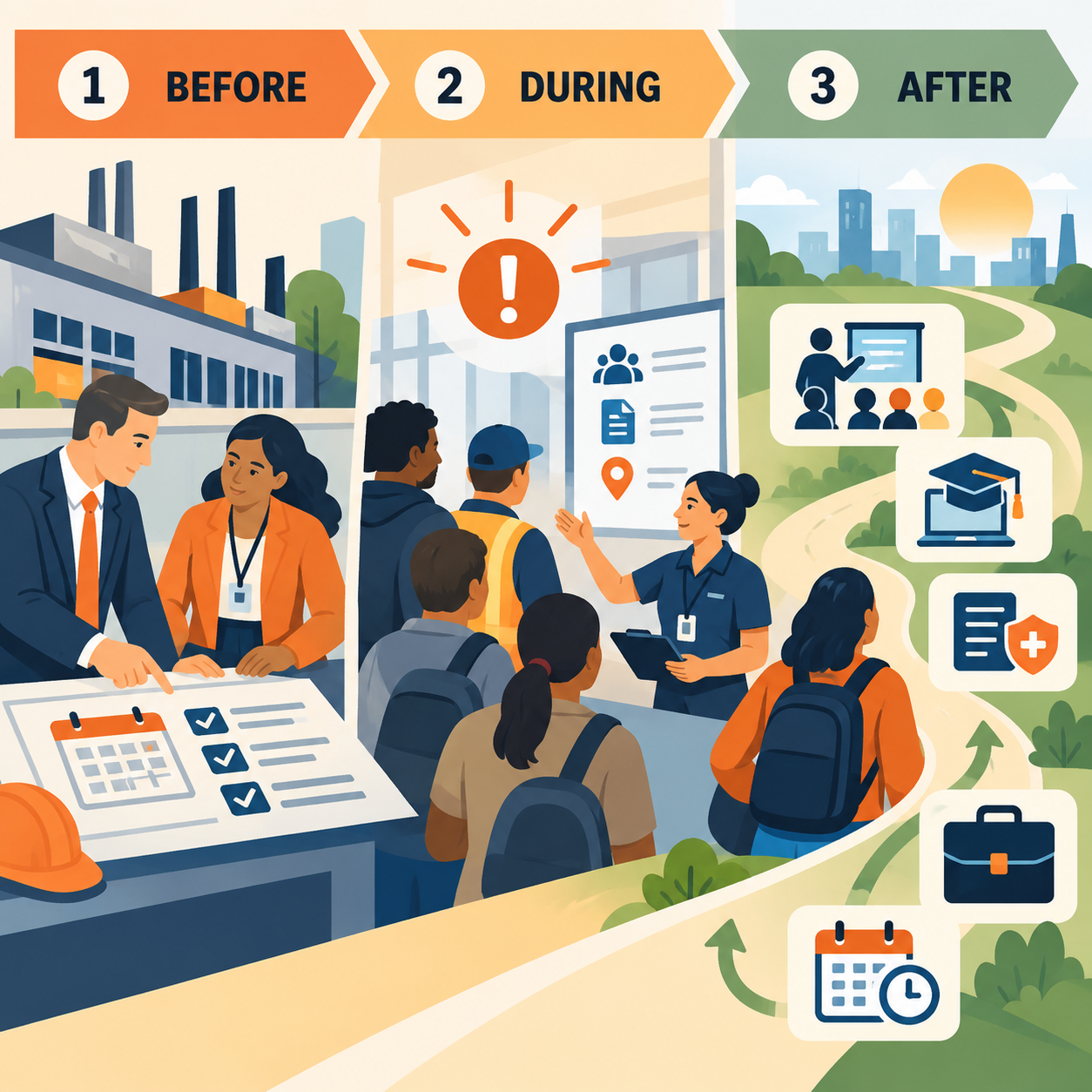 Promoting apprenticeship effectively requires research into perceptions, distinct message development for employers, jobseekers, and influencers, coordination among many institutions, staff preparation, and sustained visible proof. Workforce agencies often have strong relationships with some of these audiences but lack the time and specialized capacity to design a comprehensive promotion strategy. External support can help agencies build promotion that addresses perceptions, coordinates partners, and grows apprenticeship over time.
Stegmeier Consulting Group (SCG) helps public agencies communicate with multiple audiences whose decisions depend on each other. For workforce agencies promoting apprenticeship, that work can begin with research into how employers, jobseekers, parents, counselors, and workforce staff currently perceive apprenticeship, through surveys, interviews, and focus groups. This research identifies the specific perceptions and concerns that keep each audience from considering apprenticeship, and the messages and messengers most likely to change them.
From that foundation, SCG can help agencies develop distinct message sets for employers and jobseekers, plain-language explanations of registered apprenticeship and other earn-and-learn models, and materials for parents and counselors. SCG can help design employer roundtables, information sessions, and family events, and can help develop processes and consent practices for gathering and sharing apprentice and employer stories. SCG can facilitate coordination among workforce boards, apprenticeship agencies, sponsors, unions, and colleges to align messages, clarify roles, and plan joint outreach.
Implementation support can include training for career advisors and business services staff on apprenticeship, including how workforce funds can support it and how to discuss realities honestly, and leadership toolkits that help managers integrate apprenticeship into everyday service delivery. SCG can also help develop inclusive outreach strategies to broaden access for underrepresented groups.
Evaluation support helps agencies track employer and jobseeker engagement, outcomes, perception change, and equity, and use findings to refine promotion. The aim is apprenticeship promotion that steadily makes earn-and-learn pathways familiar, credible, and accessible across the community.
Future Trends
Several established developments are shaping apprenticeship promotion. Federal policy has repeatedly emphasized expanding registered apprenticeship across administrations, and federal attention to apprenticeship expansion continued in 2025. The specific initiatives, funding opportunities, and administrative changes associated with this emphasis evolve over time, and workforce agencies should follow federal and state announcements to understand what resources and requirements apply. Sustained policy attention generally increases the resources and visibility available for apprenticeship, which can support local promotion.
The diversification of apprenticeship into new industries continues. Healthcare, information technology, cybersecurity, education, and other sectors have seen growth in registered programs, and occupational standards developed in these fields can be adapted by local employers. This trend makes it increasingly possible for workforce agencies to point to concrete examples in industries that were once considered outside apprenticeship’s reach.
Connections between apprenticeship and higher education are growing. Some apprenticeships offer college credit for related instruction, and some lead to associate or bachelor’s degrees. These connections address the perception that apprenticeship is an alternative to college rather than a pathway that can include it. Communicating these connections can be particularly persuasive for parents and for jobseekers who value degrees.
Youth apprenticeship continues to develop in various states and localities, often in partnership with high schools and career and technical education programs. Youth apprenticeship models vary widely, and their growth may increase opportunities to reach young people and their families before they make postsecondary decisions.
The extension of Pell Grant eligibility to certain short-term workforce programs, under federal legislation enacted in 2025 and beginning with the 2026 to 2027 award year, may affect the landscape of short-term training options that compete with or complement apprenticeship. How this interacts with apprenticeship and pre-apprenticeship programs will depend on implementation details and on how institutions structure their programs, and workforce agencies should follow developments.
Emerging technologies, including automation and artificial intelligence, are a subject of discussion regarding their effects on the skills required in many occupations. Apprenticeship’s on-the-job learning model may be well suited to helping workers adapt to evolving workplace technologies, but the extent and pace of change remain uncertain and vary by industry. Workforce agencies should avoid overstating how technology will affect particular occupations while recognizing that adaptability and continuing skill development are increasingly valuable.
Finally, the structure of federal workforce funding may change. Budget proposals in recent cycles have contemplated consolidating workforce funding streams, which could affect how workforce funds support apprenticeship. Whether and how such changes occur is uncertain. Agencies that build strong coordination with apprenticeship partners and clear communication about available supports will be better able to adapt to whatever funding structures emerge.
Conclusion
Apprenticeship is older than nearly every institution that now promotes it, and that age is both its strength and its burden. The model has endured because it works: people learn skilled work best by doing it alongside experienced practitioners, while being paid and supported in related study. But the images the word apprentice calls to mind, a medieval workshop, a construction site, a young person with no other options, keep many jobseekers and employers from seeing what modern registered apprenticeship offers in hospitals, data centers, classrooms, and offices as well as on job sites.
For workforce leaders, the implication is that apprenticeship growth depends as much on communication as on program design. Agencies must speak to employers in the language of their workforce problems and to jobseekers in the language of income, credentials, and opportunity, while coordinating the two so that openings and candidates arrive together. They must reach the parents and counselors who shape young people’s choices, work alongside the apprenticeship agencies, sponsors, unions, and colleges that share responsibility for the model, and make sure that apprenticeship’s benefits reach people who have historically been left out of it. And they must tell the truth about what apprenticeship asks of everyone involved.
Agencies that take on this work will help their communities rediscover a training model that fits the economy they actually have, and will open paths to skilled careers for residents who never imagined that a paid apprenticeship could be theirs.
Stegmeier Consulting Group’s Strategic Approach to Communication Systems
SCG approaches apprenticeship promotion as a communication system that must align two audiences and many institutions around a model burdened by outdated perceptions. That approach begins with research into what employers, jobseekers, families, counselors, and staff actually believe about apprenticeship, then builds distinct, accurate messages for each audience, sequences employer engagement and jobseeker recruitment so that they meet, and coordinates the workforce board, apprenticeship agency, sponsors, unions, and colleges so that everyone tells the same story.
For workforce agencies, this means employer communication grounded in real workforce problems and honest about costs and supports, jobseeker communication that leads with earning while learning and is candid about commitment and competition, outreach to influencers who shape career decisions, inclusive promotion that broadens access, and a growing body of local stories and evidence that make modern apprenticeship visible. It means equipping staff to present apprenticeship as a serious option and measuring progress with both audiences over time.
Use the form below to connect with our team and explore how strategic communication support can help your workforce agency promote registered apprenticeship and earn-and-learn programs to employers and jobseekers alike.