
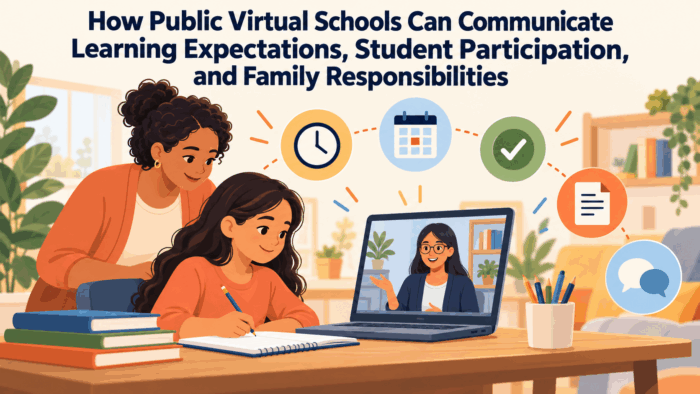
How Public Virtual Schools Can Communicate Learning Expectations, Student Participation, and Family Responsibilities
Public virtual schools give students a way to complete their education fully online while remaining enrolled in a public school. Some are operated by school districts for their own students, some are regional or statewide programs open to students across a wide area, and some are public charter schools that operate entirely online. Families choose virtual schools for many reasons. A student may have a medical condition that makes daily attendance difficult, may be an athlete or performer with a demanding training schedule, may have experienced bullying or anxiety in a traditional school, may need to work or care for family members, or may simply learn better at their own pace. Other families live far from schools that offer the courses their children want, or move frequently and value continuity. For many students, a well-run virtual school provides an education that would otherwise be difficult or impossible to obtain.
Yet virtual school is often misunderstood. Some families assume that online learning is easier than traditional school, that students can work whenever they like with little structure, or that teachers are not closely involved. Others expect that the school will provide constant live instruction similar to a classroom day, or that parents will not need to play any role. When expectations are unclear, students may fall behind quickly, families may feel overwhelmed by responsibilities they did not anticipate, and schools may struggle with low participation and high mid-year withdrawals. Because students are not physically present, warning signs that a teacher would notice in a classroom, such as a student who looks tired, disengaged, or confused, may go unseen for weeks unless communication systems are designed to surface them.
Clear communication is therefore one of the most important responsibilities a virtual school has. Families need to know before enrollment what a typical day looks like, how much time students are expected to spend on schoolwork, how attendance and participation are measured, what role a parent or other adult must play, what technology is required, what support is available, and what happens when a student falls behind. After enrollment, they need regular, two-way communication that keeps them connected to teachers and aware of their child’s progress. This article explores how public virtual schools can communicate learning expectations, student participation, and family responsibilities clearly, so that families choose virtual learning with understanding and students have the structure and support they need to succeed.
Why Clear Communication Matters for Virtual Schools
 In a traditional school, much of what students and families need to know is communicated through daily routines. Students arrive at a building, follow a bell schedule, sit in classrooms with teachers, and see expectations modeled by peers. Families can observe their child’s school day through drop-off, pick-up, events, and casual conversations with staff. In a virtual school, nearly all of this structure must be created and communicated deliberately. There is no building to arrive at, no bell to signal the start of class, and often no peers sitting nearby. Expectations that would be obvious in a classroom must be explained explicitly, repeated often, and reinforced through every channel the school uses.
Communication is also the primary way a virtual school builds relationships. Teachers cannot greet students at the door or notice a change in mood across the room. Instead, relationships form through live sessions, messages, feedback on assignments, phone calls, and video conferences. Families form their impressions of the school through the clarity of its emails, the responsiveness of its staff, and the ease of finding information in its learning platform. When communication is thoughtful, consistent, and personal, students and families feel connected and supported. When it is sporadic, generic, or confusing, students can feel isolated and families can feel left to manage on their own.
What Families Often Misunderstand About Virtual Learning
Many families approach virtual school with assumptions shaped by limited experience. Some recall emergency remote learning, when schools moved online quickly with little preparation, and expect a similar experience. Others imagine that online learning means watching videos and completing quizzes with little teacher involvement. Some believe that students can complete a semester of work in a few weeks if they move quickly, while others assume that every hour of the school day will be filled with live video classes. Each of these assumptions can lead to frustration if it does not match the school’s actual model.
A common misunderstanding is that virtual school requires less time than traditional school. In reality, most full-time virtual schools expect students to spend a full school day’s worth of time on learning, often five to six hours for secondary students and somewhat less for younger students, across live sessions, independent coursework, reading, projects, and assessments. Students who treat virtual school as a part-time commitment often fall behind within weeks. Another misunderstanding is that students can work entirely on their own. Many students, especially younger children and students who are new to online learning, need significant structure and adult support to stay organized and motivated.
Virtual schools can address these misunderstandings by stating plainly what virtual learning is and is not. A short section on the website and in enrollment materials, titled something like what to expect from virtual school, can explain how much time students spend on schoolwork, how much of that time is live instruction versus independent work, how teachers support students, what role families play, and what kinds of students tend to thrive. Testimonials from current families and students, shared with permission, can make these expectations concrete. Honest descriptions of challenges, such as the self-discipline required and the importance of a quiet workspace, help families decide whether virtual learning is the right fit.
Different Models, Different Expectations
Virtual schools vary widely in how they deliver instruction. Some emphasize synchronous learning, with students attending scheduled live classes for much of the day. Others emphasize asynchronous learning, with students completing lessons on their own schedule within weekly deadlines. Many use a blended approach, combining a few required live sessions each week with self-paced coursework. Some offer in-person components, such as optional learning centers, field trips, testing sites, or social events. Each model creates different expectations for students and families, and communication must describe the school’s specific model rather than virtual learning in general.
Families need to know exactly which elements are required and which are optional. If students must attend live sessions at specific times, families need the schedule well in advance, especially if they are coordinating work or other children’s schedules. If coursework is self-paced, families need to understand weekly deadlines, pacing guides, and how teachers monitor progress. If in-person testing or orientation is required, families need to know where and when it will take place and how transportation will work. A simple weekly schedule example for each grade band, showing live sessions, independent work time, and teacher office hours, helps families picture how their child’s week will be structured.
Schools should also explain how their model differs from other options in the area, including district hybrid programs, independent study programs, and homeschooling. Families sometimes confuse public virtual schools with homeschooling, not realizing that virtual school students are enrolled in a public school, taught by certified teachers, required to meet attendance and testing requirements, and graded by the school. Clarifying these differences helps families choose the option that matches their goals and avoid surprises about requirements after enrollment.
Learning Together: Communication Strategies for K-12 School Districts and Public Education Agencies
This article is part of our series on strategic communication for K-12 School Districts and Public Education Agencies. To learn more and to see the parent article, which links to other content just like this, click the button below.
Explaining Learning Expectations Before Enrollment
The enrollment period is the most important opportunity a virtual school has to set clear expectations. Families who understand the demands of virtual learning before they enroll are far more likely to prepare their homes, schedules, and children for success. Families who enroll with mistaken expectations are more likely to struggle in the first weeks and withdraw before the end of the first semester. Enrollment communication should therefore go beyond describing the school’s benefits and include clear, specific information about what students and families will be expected to do.
Many virtual schools now include a readiness step in their enrollment process, such as an orientation course, an information session, or a conversation with an enrollment counselor. These steps are most effective when they are framed as preparation rather than screening. Public virtual schools must enroll eligible students fairly, and readiness activities should help families understand expectations and plan for success, not discourage particular students from enrolling. Explaining this purpose clearly, and offering support to families who identify challenges during readiness activities, demonstrates that the school wants every student to succeed.
Enrollment counselors play a central role in this process. A counselor who talks with a family by phone or video can ask about the student’s reasons for choosing virtual school, the family’s work schedule, the student’s past experience with online learning, and any needs related to disabilities, health, or language. Based on these conversations, the counselor can explain which parts of the model will fit easily and which will require planning, such as arranging supervision for a younger child or setting up a quiet workspace for a teenager who shares a room. Counselors can also connect families with supports before the first day, such as a device loan, a learning center placement, or a meeting with the special education team. These conversations turn enrollment into the beginning of a relationship rather than a form submission, and families who have them tend to start the year better prepared.
Daily Schedules, Live Sessions, and Independent Work
Families need a clear picture of the daily and weekly rhythm of virtual school. Enrollment materials should describe how many live sessions students attend each week, how long they last, what happens during them, and whether attendance is required. They should explain how much independent work students complete, how lessons are organized in the learning platform, and how deadlines work. A sample daily schedule for an elementary student might show a morning live session with the class, a block of reading and mathematics lessons completed with a learning coach, a short break, a small group session with the teacher, and an afternoon of science, art, or physical activity. A sample schedule for a high school student might show several scheduled class sessions, independent work periods, teacher office hours, and time for elective courses.
These examples should be realistic. If students typically need more time than the official schedule suggests, especially in the first weeks while they learn the platform, families should know. If some courses, such as advanced placement or laboratory sciences, require additional time or in-person components, these requirements should be stated. Families who know what to expect can set up routines, workspaces, and support systems from the start.
Schools should also explain how flexibility works. Many families value virtual school for its flexibility, but flexibility usually has limits. Students may be able to complete independent work at different times of day, but they may still need to attend live sessions, meet weekly deadlines, and respond to teacher messages within a certain timeframe. Clearly describing what is flexible and what is fixed prevents misunderstandings. For example, a school might explain that students can complete lessons at any time during the week but must submit assignments by Friday evening, attend two live sessions per course each week, and log in at least once each school day.
Academic Rigor, Grading, and Testing Requirements
Families should understand that virtual school is a full academic program with the same standards as other public schools. Enrollment materials should explain that courses are aligned with state standards, taught by certified teachers, and graded according to clear policies. They should describe how grades are calculated, how often grades are updated, how families can view grades in the learning platform, and what happens if a student does not complete work. Clear grading policies help families monitor progress and recognize problems early.
State testing requirements are often a surprise for virtual school families. Most public virtual school students must participate in the same state assessments as other public school students, and these assessments are often administered in person at designated testing sites. Families need to know when testing occurs, where students must go, how long testing sessions last, how transportation works, and what accommodations are available. Providing this information at enrollment, and repeating it well before testing windows, allows families to plan travel and time away from work.
Schools should also explain academic integrity expectations. Online learning creates new questions about what kind of help is appropriate, how students should cite sources, and how the use of online tools, including artificial intelligence, is handled. Families who serve as learning coaches may be unsure how much help they can give on assignments or tests. Clear guidance, written in plain language, can explain the difference between supporting a student’s learning and completing work for them, and it can describe how teachers verify that students understand material, such as through live discussions, oral assessments, or proctored tests.
Communicating Student Participation and Attendance
Attendance and participation are measured differently in virtual schools than in traditional schools, and families often do not understand how. In many states, virtual school attendance is based on a combination of factors, such as daily logins, time spent in coursework, completion of assignments, attendance at live sessions, and regular contact with teachers. Some states define attendance by the number of hours students engage in learning, while others focus on progress through coursework. Because these definitions vary, virtual schools must explain their specific policies clearly and connect them to state requirements.
Clear participation communication matters for two reasons. First, attendance policies have real consequences. Students who do not meet participation requirements may be marked truant, referred to attendance intervention processes, or withdrawn from the school, and families need to understand these consequences before problems occur. Second, participation is the best early warning signal a virtual school has. When a student stops logging in, misses live sessions, or falls behind on assignments, that pattern often indicates a problem at home, a struggle with the coursework, a technology barrier, or declining motivation. Communicating quickly and supportively when participation drops can prevent a small problem from becoming a crisis.
How Attendance Is Measured Online
Families should receive a clear, plain language explanation of how attendance and participation are measured. This explanation might describe what counts as attendance each day, how many hours of engagement are expected each week, which activities count toward participation, how the school tracks engagement, and how families can see attendance records. Visual aids, such as a weekly participation checklist or a screenshot showing where attendance appears in the learning platform, help families understand what the school sees.
The explanation should also address common situations. What happens if a student is sick? How should families report absences? Does work completed on a weekend count toward attendance? What if a student’s internet connection fails during a live session? What if a family travels? Answering these questions in advance, in a frequently asked questions section and in the family handbook, reduces confusion and helps families comply with expectations.
Schools should explain the consequences of low participation honestly but supportively. Families should know at what point the school will contact them, what intervention steps may follow, and when state rules may require referral or withdrawal. This information should be presented as part of the school’s commitment to keeping students on track, not as a threat. Families who understand the process are more likely to respond quickly when the school reaches out.
Early Outreach When Participation Drops
Virtual schools should establish clear, tiered outreach processes for students whose participation declines. The first step might be an automated or teacher-sent message after a student misses a live session or a day of logins, asking whether everything is okay and offering help. If participation remains low, a phone call from the teacher or an advisor can explore what is happening and identify supports. If problems continue, a meeting with the family, counselor, and teachers can develop a plan to help the student re-engage. Each step should be documented, and families should know who to contact for help.
The tone of outreach matters. Messages that begin with warnings about truancy can make families defensive, while messages that express concern and offer help invite partnership. A teacher might write that they noticed a student has not logged in for two days, that they want to make sure everything is okay, and that they are available to help the student catch up. Calls should begin by listening, since families may be dealing with illness, job changes, housing instability, mental health challenges, or technology problems. Offering concrete solutions, such as a revised pacing plan, tutoring, a replacement device, or a referral to a counselor, shows the family that the school is a partner.
Schools should also communicate positively about participation. Recognizing students who maintain strong engagement, celebrating progress after a student re-engages, and sharing participation data with families in a way that highlights improvement can motivate students. Weekly progress summaries sent to families, showing completed work, upcoming deadlines, and grades, help families stay informed without having to search the learning platform.
The first weeks of the school year deserve particular attention. Participation patterns often form quickly, and students who struggle to establish routines in the first two or three weeks are at much higher risk of falling behind for the rest of the semester. Virtual schools can use this period to communicate more frequently, with daily check-ins from teachers or advisors, short welcome calls to every family, reminders about live session times, and quick help for students who have trouble logging in or submitting work. Some schools assign each new student a mentor or peer ambassador who can answer questions informally. Communicating intensively at the start of the year, then gradually shifting to a regular rhythm, helps students build habits that carry them through the months ahead.
Defining Family Responsibilities
 Families play a larger and more direct role in virtual school than in most traditional schools. For younger students, a parent or other adult often serves as a learning coach, helping the child log in, follow the schedule, complete lessons, and stay focused. For older students, families may play a supervisory role, monitoring progress, ensuring that students attend live sessions, and communicating with teachers when concerns arise. These responsibilities can be significant, and families need to understand them clearly before enrollment so they can plan realistically.
Communicating family responsibilities requires sensitivity. Families have different work schedules, education levels, languages, technology skills, and household circumstances. Some parents can be at home throughout the school day, while others work full time outside the home and rely on other relatives or caregivers. Virtual schools must be honest about what support students need while also helping families find ways to meet those needs that fit their circumstances.
The Learning Coach Role
Many virtual schools use the term learning coach to describe the adult who supports a student at home. Schools should explain clearly what the learning coach does, how much time the role typically requires at each grade level, and how the role changes as students grow older. For example, a school might explain that learning coaches for kindergarten through second grade often spend four to five hours each day working directly with their child, that learning coaches for upper elementary students often spend two to three hours each day guiding and checking work, and that learning coaches for middle and high school students typically spend less time but check progress daily and communicate regularly with teachers.
Schools should describe specific learning coach tasks, such as helping students log in, reviewing the day’s schedule, supporting lessons in early grades, checking that assignments are completed, monitoring grades, attending conferences, and contacting teachers with questions. They should also explain what learning coaches are not expected to do, such as teach new content independently or grade assignments. Clarifying these boundaries helps learning coaches feel confident and prevents them from feeling responsible for everything.
Learning coaches need their own orientation and ongoing support. Schools can offer learning coach orientation sessions, short video tutorials on the learning platform, weekly tips, and opportunities to connect with other learning coaches. A dedicated learning coach section of the school website or platform, with guides, schedules, and contact information, gives families a central place to find help. When learning coaches feel supported, they are more likely to stay engaged throughout the year.
Supporting Families With Different Capacities
Not every family can provide the same level of support, and virtual schools must communicate in ways that recognize this reality. Families who work outside the home may need help arranging alternative supervision, such as a grandparent, older sibling, or community program. Families who speak languages other than English may need learning coach materials, orientation sessions, and teacher communication in their languages. Families with limited technology experience may need extra training on the learning platform. Families caring for students with disabilities may need guidance on how to support accommodations at home.
Schools should invite families to share their circumstances during enrollment and orientation so that staff can recommend appropriate supports. Some virtual schools offer in-person learning centers where students can work with staff supervision, flexible schedules for live sessions, recorded lessons for families who cannot attend live, or additional tutoring for students without full-time learning coaches. Explaining these options clearly helps families build workable plans rather than assuming virtual school is impossible for them.
Schools should also communicate regularly with families about changing circumstances. A family’s ability to support virtual learning may change during the year because of a new job, a new baby, an illness, or other events. Regular check-ins, such as monthly conversations with an advisor, give families opportunities to share changes and adjust plans. When a family’s circumstances make virtual learning unworkable, schools should help them explore other options respectfully, including transition back to a brick-and-mortar school, without making the family feel they have failed.
Technology, Accessibility, and Support Services
Technology is the foundation of virtual school, and families need clear information about what is required and what support is available. Students need reliable devices, internet connections, software, and sometimes specific equipment such as headsets, webcams, or printers. Families need to know whether the school provides these items, how to request them, and what happens if something stops working. Technology problems are one of the most common reasons students fall behind in virtual school, so clear technology communication directly supports participation.
Virtual schools must also communicate clearly about support services. Students with disabilities, multilingual learners, students who need counseling, and students facing academic challenges are entitled to support in virtual school just as in any public school. Families should understand how these services are delivered online, how to request them, and how the school will coordinate with them.
Devices, Connectivity, and Technical Help
Enrollment materials should list the technology required for virtual learning and explain what the school provides. If the school loans laptops, families should know how to request one, when it will arrive, what they are responsible for, and how to return it. If the school provides internet hotspots or connectivity stipends, families should know how to apply. If families must provide their own equipment, the school should list minimum specifications in plain language and suggest affordable options. Families without reliable internet should be told explicitly what help is available, since many assume virtual school is impossible for them.
Technical support should be easy to reach and clearly described. Families should know how to contact the help desk, what hours it operates, how quickly they can expect a response, and what to do if a problem prevents a student from attending a live session or submitting work. Short guides and videos showing how to log in, join live sessions, submit assignments, and troubleshoot common problems help families resolve issues on their own. Schools should also explain how teachers will handle missed work caused by technology problems, so students do not fall behind unfairly.
Platform training is essential, especially at the start of the year. Orientation sessions for students and learning coaches can walk through the learning platform, the communication tools, and the gradebook. Schools can offer a practice week or orientation course before regular instruction begins, giving students time to become comfortable with the technology. Families who learn the platform before classes start are far less likely to feel overwhelmed in the first weeks.
Special Education, Multilingual Learners, and Student Wellbeing
Students with disabilities in virtual schools are entitled to a free appropriate public education, individualized education programs or Section 504 plans, and services delivered in ways that meet their needs. Virtual schools should explain clearly how special education services are provided online, such as through live sessions with special education teachers, virtual therapy sessions, accommodations in the learning platform, and in-person services when needed. Families should know how existing plans will be reviewed and implemented when a student enrolls, how to request evaluations, and how they will participate in meetings. Because learning coaches often help implement accommodations at home, schools should provide guidance on how to do this effectively.
Multilingual learners need language support and communication in their families’ languages. Virtual schools should explain how English language development instruction is delivered, how teachers support multilingual learners in content courses, and how families can communicate with teachers in their preferred language. Learning platforms, family guides, and key messages should be available in the languages families speak, and qualified interpreters should be used for conferences and meetings.
Student wellbeing deserves particular attention in virtual schools, where isolation can be a risk. Schools should explain what counseling and mental health support is available, how students and families can request it, and how the school monitors student wellbeing. Clubs, virtual social events, in-person outings, and small advisory groups can help students build friendships and a sense of belonging. Communicating these opportunities clearly, and encouraging participation, helps students experience virtual school as a community rather than a solitary activity.
Building Connection and Measuring Results
Strong virtual schools are built on consistent, two-way communication. Families want regular updates on their child’s progress, quick responses to their questions, and opportunities to share concerns. Students want to feel known by their teachers and connected to classmates. Teachers want families to partner with them in supporting students. Communication systems that make these connections easy and routine are the foundation of a successful virtual school community.
Virtual schools also have unusually rich data about student engagement, including logins, time on task, assignment completion, and participation in live sessions. Used thoughtfully, this data can help schools identify students who need support, evaluate whether communication is working, and improve practices. Schools should measure both engagement and the quality of family communication, and use what they learn to strengthen relationships and outcomes.
Regular Two-Way Communication
Virtual schools should establish predictable communication routines. Weekly messages from teachers can summarize what students learned, highlight upcoming deadlines, and share tips for learning coaches. Regular progress reports, sent automatically or by advisors, can show grades, completed work, and participation. Monthly check-in calls or video conferences between advisors and families can address concerns and celebrate progress. When families know when and how they will hear from the school, they feel more connected and less likely to miss important information.
Responsiveness is equally important. Families should know how quickly teachers will respond to messages, typically within one school day, and whom to contact if they need an urgent answer. Teachers should be encouraged to reach out personally, not only when problems arise but also to share positive news. A short message recognizing a student’s thoughtful discussion post or improvement on a quiz can strengthen relationships and motivation.
Schools should also create opportunities for families to give feedback and participate in the school community. Family surveys, virtual town halls, parent advisory groups, and family events give families a voice in the school’s direction and help them feel part of a community. Virtual schools serving families across wide geographic areas can host regional meetups or in-person events to strengthen connections.
Measuring Engagement and Outcomes
Virtual schools can measure communication effectiveness by examining engagement data alongside family feedback. Participation patterns, such as login frequency, live session attendance, and assignment completion, can reveal whether students understand expectations and receive adequate support. Schools can analyze when and why students disengage, such as during the first weeks, after holidays, or near testing windows, and adjust communication accordingly.
Mid-year withdrawals are a critical indicator. Schools should ask families who withdraw why they are leaving and look for patterns. If many families cite unexpected time demands, difficulty with the learning coach role, technology problems, or isolation, these patterns suggest that enrollment communication or support systems need improvement. Addressing these issues can reduce withdrawals and improve outcomes for students who stay.
Family surveys conducted early in the year and again in the spring can ask whether expectations were clear at enrollment, whether families feel supported, whether teachers communicate well, and what could improve. Academic outcomes, including course completion, grades, credit accumulation, and assessment results, show whether students are succeeding. Sharing findings and improvement plans with families and governing boards demonstrates accountability and reinforces the school’s commitment to helping every student thrive in virtual learning.
How Virtual School Communication Compares With Other Agency Types
Traditional brick-and-mortar schools communicate many expectations through daily routines, physical presence, and face-to-face relationships. Families observe the school day, students learn norms from peers, and teachers notice problems in person. Virtual schools must replace these implicit forms of communication with explicit, deliberate communication delivered through digital channels. They must explain schedules, participation expectations, and family responsibilities that a traditional school might never need to state. They also rely more heavily on families as active partners in daily learning, which means family communication is not only informational but operational. In a virtual school, a family that does not understand the learning coach role or the participation policy can directly affect whether a student learns at all.
Other public services delivered primarily online offer useful comparisons. State agencies that provide online benefit applications, motor vehicle services, and tax filing have learned that digital services require clear instructions, accessible design, responsive help channels, and options for people with limited technology access. Public universities and community colleges offering online degree programs communicate time commitments, technology requirements, and student support services to prospective students, and the most effective programs use orientation courses and early alerts to improve persistence. Virtual schools can learn from these practices. Yet virtual schools face a distinctive challenge: they serve children and adolescents whose learning, development, and wellbeing depend on consistent adult support and human connection. This makes communication with families and students especially important, and it requires virtual schools to build relationships and community through every message they send.
Tying It All Together
Virtual school communication is not a side function. It determines whether families understand what full-time online learning requires before they enroll, whether students know how participation is measured and what is expected of them each day, whether learning coaches understand and can fulfill their role, and whether problems are noticed and addressed before students fall too far behind. In a school without a building, communication is the structure that holds learning together.
Effective virtual schools address common misunderstandings directly, explaining that virtual learning requires a full school day’s worth of time, significant structure, and adult support. They describe their specific instructional model, distinguishing required live sessions from independent work and explaining how virtual school differs from homeschooling and other options. They use enrollment and readiness activities to prepare families rather than screen students, and they provide realistic sample schedules for each grade band.
They explain academic expectations clearly, including grading, state testing requirements, testing locations, and academic integrity guidance for students and learning coaches. They describe how attendance and participation are measured, answer common questions in advance, and explain consequences honestly but supportively. They establish tiered, caring outreach processes when participation drops, and they recognize and celebrate engagement and progress.
They define family responsibilities thoughtfully, explaining the learning coach role at each grade level, clarifying what learning coaches are and are not expected to do, and providing orientation and ongoing support. They recognize that families have different capacities and offer options such as learning centers, flexible schedules, recorded lessons, and tutoring. They communicate clearly about devices, connectivity, technical help, platform training, special education, multilingual learner support, and student wellbeing.
They build connection through predictable two-way communication, responsive teachers, positive outreach, and community activities. They use engagement data, withdrawal reasons, family surveys, and academic outcomes to measure whether communication is working and to improve it.
Taken together, these practices help families choose virtual learning with understanding, help students build the habits and relationships they need to succeed online, and help virtual schools become supportive communities where every student can learn, regardless of where they log in.
Strategic Communication Support for Virtual School Communication
 Virtual school communication determines whether families understand what full-time online learning requires, how participation is measured, and what role they will play before and after their child enrolls. When expectations are unclear, students may fall behind within weeks, learning coaches may feel overwhelmed, and schools may face low participation and high mid-year withdrawals. Because effective virtual school communication requires coordination across school leaders, enrollment staff, teachers, advisors, special education and multilingual program staff, technology support teams, and governing boards, virtual schools often partner with Stegmeier Consulting Group (SCG) to build a more structured and supportive approach. SCG helps virtual schools treat communication as the daily infrastructure of online learning rather than a set of announcements.
SCG supports virtual schools in assessing how families and students experience communication from first inquiry through the first months of enrollment. This can include reviewing enrollment materials, readiness activities, orientation courses, family handbooks, attendance policies, learning platform layout, outreach procedures, and technology support practices, along with gathering feedback from families who stayed and families who withdrew. These findings help schools identify unclear expectations and points where students commonly disengage. Plain language guides to the school’s model, realistic sample schedules, participation explanations, and learning coach role descriptions then help families plan with confidence.
Sustained progress depends on the teachers, advisors, and staff who communicate with families every day. Without shared expectations, outreach may vary widely in timing, tone, and follow-through. SCG helps virtual schools develop tiered outreach protocols for declining participation, message templates that express concern and offer help, guidance for difficult conversations, and response time standards. Learning coach orientation materials, multilingual family guides, and clear explanations of special education and support services help every family understand how to partner with the school.
Rapid enrollment growth, high withdrawal rates, changes in state attendance rules, new learning platforms, and authorizer or state reviews can make this work especially urgent. SCG helps virtual schools plan communication around enrollment cycles, testing windows, platform transitions, and policy changes, and prepare staff to explain new requirements consistently. By planning communication before these moments arrive, schools can reduce confusion and keep students engaged through periods of change.
SCG also helps virtual schools evaluate whether communication is helping students participate and succeed. Engagement data, outreach response rates, withdrawal reasons, family surveys, learning coach feedback, and academic outcomes can reveal where communication is working and where students and families need more support. By incorporating these findings into regular program reviews, virtual schools can make clear, caring communication an ongoing practice that strengthens connection and achievement for every student.
Future Trends
Virtual school enrollment remains significant in many states, and more districts are launching their own virtual programs to serve students who prefer online learning. As options multiply, clear communication about each program’s model, expectations, and support will be essential for helping families choose wisely.
States are refining attendance and participation rules for virtual schools, often moving toward engagement-based definitions that consider coursework progress and teacher contact. Virtual schools will need to communicate these rules clearly and adjust family guidance as policies evolve.
Learning platforms are adding features such as automated progress summaries, early warning dashboards, and integrated messaging. Schools that use these tools thoughtfully, while preserving personal teacher outreach, can strengthen communication with families and identify struggling students sooner.
Hybrid models that combine virtual coursework with in-person learning centers, clubs, and activities are growing. These models can reduce isolation and support families who cannot provide full-time supervision, but they require clear communication about schedules, locations, and expectations.
Finally, attention to student wellbeing in virtual settings is increasing, with schools expanding virtual counseling, social opportunities, and advisory structures. Communicating these supports clearly will help families and students see virtual school as a connected community.
Conclusion
Public virtual schools can offer students flexible, high-quality education that fits their lives, but only when families and students understand what online learning requires. Clear communication turns that flexibility into a structure students can succeed within.
By explaining learning expectations before enrollment, describing how participation is measured, reaching out quickly and supportively when students disengage, defining family responsibilities realistically, communicating clearly about technology and support services, and building regular two-way relationships, virtual schools can help every student thrive.
When families know what to expect and feel supported as partners, virtual school becomes not an isolated experience but a connected learning community built through clear, consistent communication.
Stegmeier Consulting Group’s Strategic Approach to Communication Systems
Give every virtual learner and family a clear structure for success.
Stegmeier Consulting Group helps public virtual schools communicate learning expectations, student participation, and family responsibilities. We begin by reviewing how families and students experience your communication today, from inquiry and enrollment through orientation, daily learning, outreach, and the first months of the school year.
Our team works alongside school leaders, teachers, advisors, and technology staff to develop plain language guides to your instructional model, realistic sample schedules, participation and attendance explanations, learning coach resources, tiered outreach protocols, multilingual family materials, and technology and support service guides.
We treat virtual school communication as the structure that holds online learning together. That means setting clear expectations before enrollment, building consistent two-way communication, and measuring whether communication helps students participate and succeed.
Use the form below to connect with our team and explore how strategic virtual school communication can help your school set clear expectations before enrollment, keep students engaged and supported throughout the year, and build strong partnerships with every family you serve.