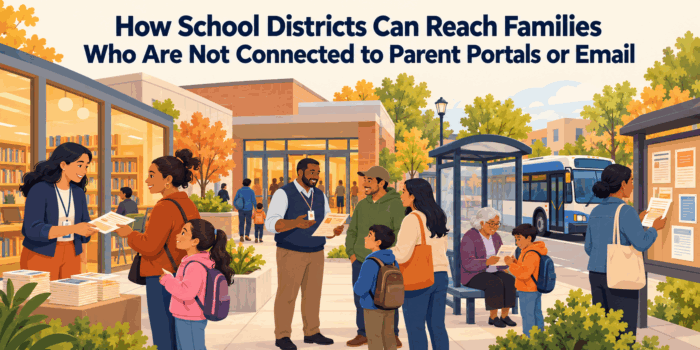
How School Districts Can Reach Families Who Are Not Connected to Parent Portals or Email
Over the past decade, school districts have moved most of their family communication into digital channels. Parent portals hold grades, attendance, and announcements. Email carries newsletters and notices. Mobile apps deliver alerts. Learning platforms host assignments and teacher messages. For many families, this shift has made school information more accessible than ever before.
For a meaningful share of families, however, the shift has had the opposite effect. Families who do not have reliable internet access, who share a single phone among several people, who change phone numbers frequently, who are not comfortable with online accounts, who read limited English, or who simply never completed portal registration can find themselves effectively cut off from school communication. They miss deadlines, events, report cards, and urgent notices, not because they are uninterested but because the information never reaches them in a form they can use.
These families are often the ones schools most need to reach. They include families experiencing poverty or housing instability, recently arrived immigrant families, grandparents and other relatives raising children, families in rural areas with limited broadband, and families of students who are already struggling with attendance or achievement. When digital channels become the default for everything, the communication gap reinforces other gaps.
This article explores how school districts can identify families who are not connected to digital channels, understand why, and build communication systems that reach them. It covers data practices, offline and low-tech channels, the role of staff and trusted messengers, onboarding support for families who want to connect, and ways to measure whether the district is truly reaching every household. The goal is not to abandon digital tools but to make sure no family depends on them alone.
Understanding the Digital Communication Gap
 The first step in reaching unconnected families is recognizing that the gap exists and understanding its shape. Many districts assume that because most families use the portal or open emails, communication is working. Aggregate numbers hide the families who are missing, and those families are rarely distributed evenly across schools or communities.
Who Is Most Likely to Be Disconnected
Families can be disconnected from digital school communication for many reasons, and those reasons often overlap. Some households lack home internet or rely on limited mobile data plans. Some share a single device that is used primarily for work. Some have phone numbers that change frequently because of prepaid plans or financial pressure. Some caregivers are not comfortable creating accounts or remembering passwords. Some have email addresses they rarely check because email is not part of their daily routine.
Language is another major factor. Portals and apps may offer translation, but setup instructions, password resets, and support are often available only in English. Older caregivers, including grandparents raising grandchildren, may be less familiar with apps and portals. Families experiencing homelessness may lose devices or contact information during moves.
Disconnection Is Often Partial
Disconnection is not always complete. Many families are connected through one channel but not others. A family may receive text messages but never open email. A parent may have a portal account but never have enabled notifications. A household may have one caregiver connected while the caregiver who manages school matters is not. Understanding these partial patterns is essential, because the solution is often to strengthen the channel families already use rather than to introduce a new one.
Partial disconnection also changes over time. A family that was fully connected in the fall may lose access after a move, a job change, or a lost phone. Communication systems need to detect and respond to these changes rather than assuming that contact information collected at enrollment remains accurate all year.
Why the Gap Matters
The consequences of the digital gap fall heaviest on students. When families miss information about attendance concerns, academic progress, conferences, meal programs, or support services, students lose the benefit of family involvement and timely intervention. Families who repeatedly miss communication may also come to feel that the school does not value them, which further weakens engagement.
For districts, the gap creates operational and legal risk. Important notices about special education meetings, discipline, safety, and enrollment may not reach families who are entitled to receive them. Equity goals are harder to meet when the families most in need of support are the hardest to reach.
Using Data to Identify Unreached Families
Districts usually have more information about who is not connected than they realize. Communication platforms, student information systems, and school records can reveal patterns that point directly to unreached families. The challenge is assembling and using that information systematically.
Indicators of Disconnection
Useful indicators include families without portal accounts, portal accounts that have never been accessed or have not been used in months, email addresses that bounce, phone numbers that are disconnected or fail to receive texts, families who have opted out of messages, and families whose preferred language does not match the language in which messages are sent. Missing or incomplete contact information is itself a strong signal.
These indicators can be combined into a simple communication reach report for each school, showing the share of families reachable through each channel and the number of families with no confirmed working channel at all.
Turning Data Into Outreach Lists
A reach report becomes useful when it produces action. Schools can use it to generate lists of families who need personal outreach to update contact information, set up preferred channels, or receive important notices by alternative means. These lists should be reviewed regularly, particularly before major communication periods such as the start of the year, conference season, and enrollment windows.
Data use should respect privacy. Lists should be shared only with staff who need them for outreach, and outreach should be framed as support rather than as a sign that the family has done something wrong.
Keeping Contact Information Current
Contact information decays quickly. Districts should create regular opportunities for families to update information, including during enrollment, at conferences, through school events, and whenever a message bounces. Front office staff should confirm contact details whenever a family calls or visits. Some districts send periodic text or mail prompts asking families to confirm their information, with simple ways to respond.
Making it easy to update contact information, in any language and through any channel, is one of the simplest and most effective ways to reduce disconnection.
Strengthening Text Messaging as a Primary Channel
For many families who are not connected to portals or email, text messaging is the most reliable digital channel. Text messages arrive on basic phones as well as smartphones, do not require accounts or passwords, and are read quickly. Districts that treat text messaging as a primary channel rather than an occasional alert system can reach a much larger share of families.
Designing Text Messages for Action
Effective school text messages are short, specific, and actionable. They identify the school, state the key information or action, include a date or deadline if relevant, and provide a way to get help. Long messages split into multiple texts or messages that rely on links to web pages may not work for families with limited data or basic phones.
Where links are necessary, the linked content should load quickly and work on small screens. Messages should also offer an alternative, such as a phone number to call for the same information.
Enabling Two-Way Texting
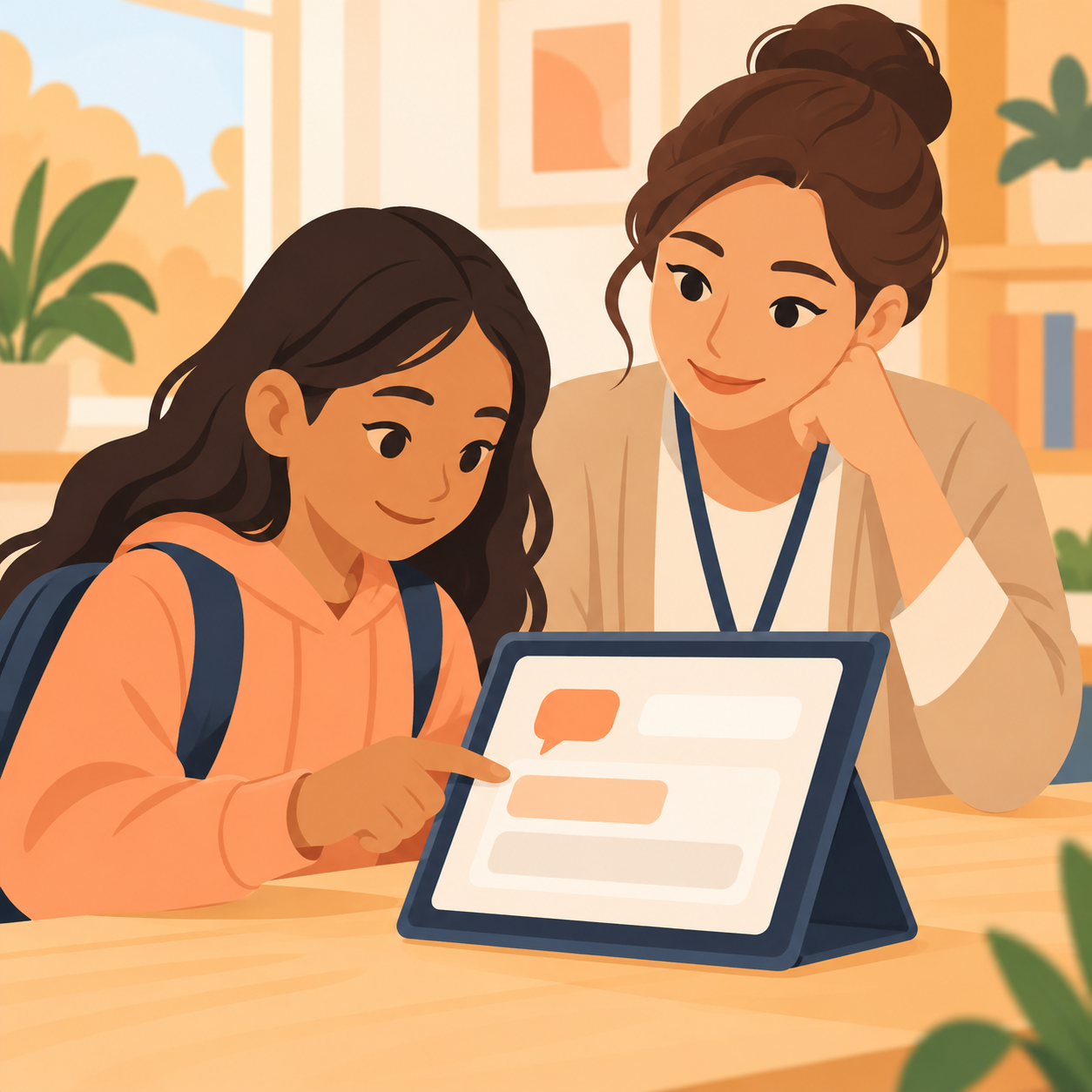
One-way text alerts are useful, but two-way texting is far more powerful for disconnected families. When families can reply to a message with a question and receive a response from a staff member, texting becomes a real communication channel rather than a broadcast tool. Two-way texting platforms that include automatic translation allow staff and families who speak different languages to communicate directly.
Two-way texting requires clear expectations for staff, including response times, appropriate topics, and privacy guidelines. With those in place, it can become the primary relationship channel for many families.
Managing Message Volume
Because texting is so effective, there is a temptation to use it for everything. Too many texts lead families to ignore them or opt out entirely. Districts should establish guidelines for which messages warrant a text, coordinate texts between district and school senders, and avoid sending routine information through a channel families rely on for urgent news. Protecting the value of text messaging protects the channel that disconnected families depend on most.
A practical approach is to define tiers of messages. Urgent safety and closure information, required actions with deadlines, and personal messages about a specific student justify a text. General newsletters, event promotions, and routine reminders can go through other channels, with only a brief text pointing to them when necessary. Publishing these guidelines internally helps school and department senders make consistent choices and keeps the overall volume reasonable for families.
Using Voice Calls and Phone-Based Communication
Voice communication remains essential for many families. Automated voice calls reach households with landlines and basic phones. Personal phone calls from school staff remain among the most effective ways to build relationships, resolve problems, and ensure important information is understood.
Making Automated Calls Effective
Automated calls work best for urgent or time-sensitive information, such as school closures, safety notices, and attendance alerts. Messages should be brief, spoken clearly, and recorded in the languages families speak. Each message should state the school, the key information, and a number to call for questions. Repeating the most important detail at the end of the message helps families who were not listening closely at the start.
Prioritizing Personal Calls
Personal phone calls from teachers, counselors, liaisons, or office staff carry a weight that automated messages cannot. For families who are not connected digitally, a personal call may be their main way of hearing from school. Schools can identify families who have not been reached through other channels and ensure they receive a personal call at key moments, such as the start of the year, before conferences, and when concerns arise.
Personal calls should not be reserved for problems. Positive calls, sharing good news about a student, build trust and make families more receptive when a difficult conversation is needed later.
Supporting Staff With Interpretation
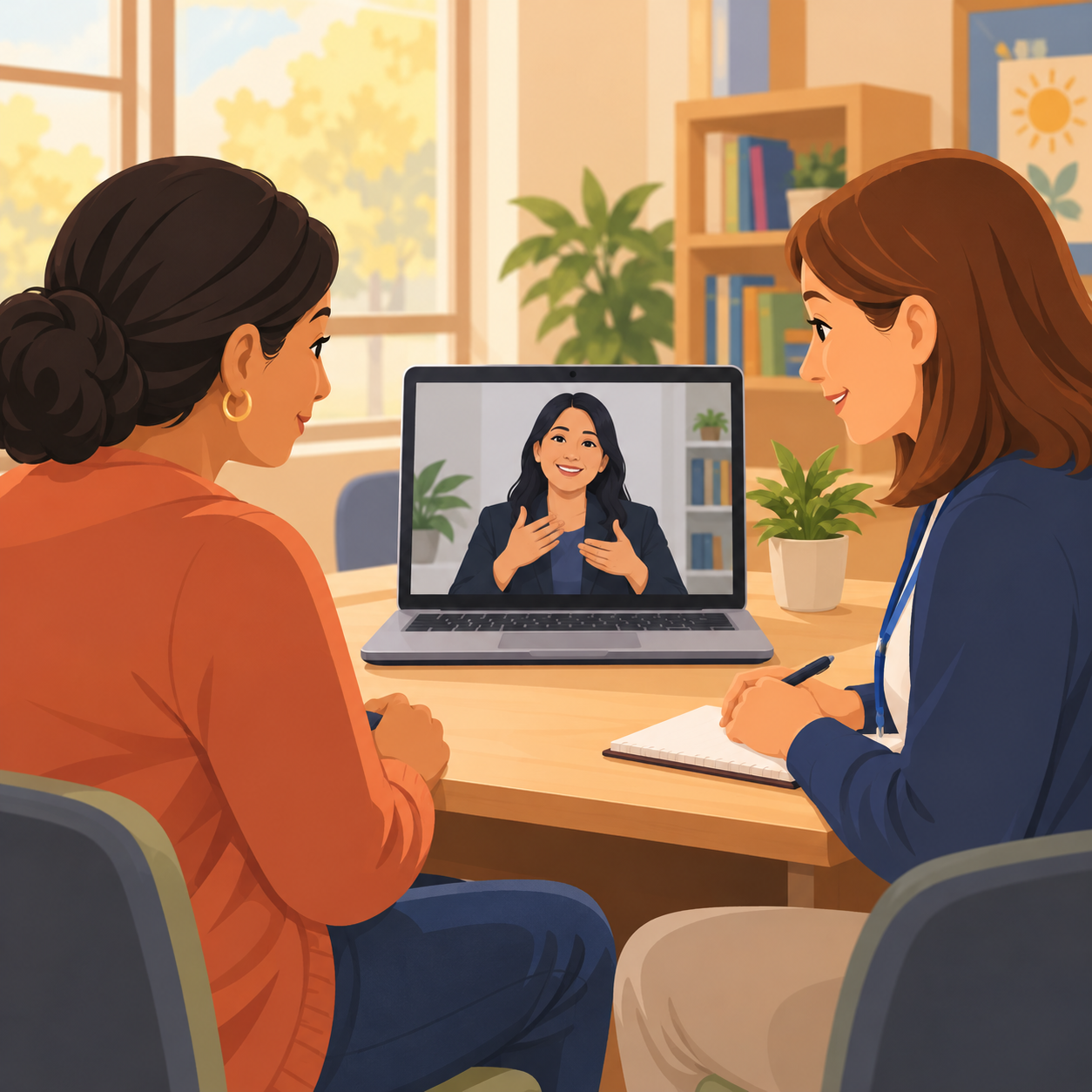
Staff making personal calls need access to interpretation. Telephone interpretation services, bilingual staff, and community liaisons all help. Districts should make sure staff know how to access interpretation quickly and are encouraged to use it rather than relying on students or children to interpret for their families.
Relying on children to interpret places them in an inappropriate position, particularly when conversations involve their own behavior, grades, or sensitive family matters, and it often results in incomplete or inaccurate communication. Clear guidance, quick-reference cards with interpretation line instructions, and regular reminders help make professional interpretation the routine choice rather than the exception.
Using Print and Physical Channels Strategically
Print communication has fallen out of favor in many districts because of cost and the assumption that families prefer digital information. For families without reliable digital access, however, print remains important. Used strategically rather than for everything, print can reach families who would otherwise miss critical information.
Mailed Communication for Critical Notices
Certain notices, such as report cards, special education meeting notices, enrollment information, and changes in school assignment, are important enough to warrant mailed copies for families without confirmed digital access. Mailed notices should be in the family’s preferred language, written in plain language, and include contact information for questions.
Districts can use their reach data to send mailed notices only to families who need them, controlling costs while ensuring coverage.
Take-Home Materials
Take-home folders and printed notices sent with students remain useful, particularly in elementary grades. Their reliability declines as students get older, so they work best as one channel among several. Schools can improve their effectiveness by using consistent formats, highlighting required actions, and asking families to return a signed acknowledgment for the most important items.
Community Posting and Physical Displays
Posting key information in places families visit, such as laundromats, grocery stores, community centers, libraries, clinics, places of worship, and apartment complexes, extends reach beyond the school building. Posters and flyers should be simple, visual, translated, and focused on a single message, such as an enrollment deadline or a community event. Including a phone number and a text option makes it easy for families to follow up.
Physical postings are most effective when they are refreshed regularly and coordinated with other channels. A flyer at a laundromat announcing an enrollment deadline reinforces the same message families may hear from a community partner or a teacher, and that repetition across different settings helps information stick. Schools can assign staff or volunteers to maintain a short list of posting locations in each neighborhood so the effort becomes routine rather than occasional.
Partnering With Trusted Messengers and Community Organizations
Families who are disconnected from school communication are often well connected to other networks. They may rely on faith communities, cultural associations, neighborhood groups, family resource centers, health clinics, housing providers, or informal community leaders for information. Partnering with these trusted messengers allows districts to reach families through channels families already trust.
Identifying Trusted Messengers
Schools and district staff, especially family liaisons and community engagement staff, often know which organizations and individuals families turn to. Families themselves can be asked where they get information about community resources. Mapping these networks for each school community helps districts identify partners who can share school information effectively.
Trusted messengers are not always formal organizations. A respected parent who knows many families in an apartment complex, a store owner who serves a particular community, or a coach who works with neighborhood youth can be equally effective. Parent ambassador programs formalize these relationships by training and supporting family members who volunteer to share school information within their own networks, often in their own languages.
Equipping Partners With Clear Information
Partners need information that is easy to share. Districts can provide partners with short, translated message kits for key communication periods, including simple text they can share by word of mouth, social media posts, flyers, and contact information for questions. Partners should also know who to contact at the district when families raise concerns.
Regular communication with partners, such as a monthly update or a seasonal briefing, keeps them informed and makes them more effective messengers.
Building Reciprocal Relationships
Partnerships work best when they are reciprocal. Districts can support partners by sharing information about school resources that benefit the families partners serve, inviting partners to school events, and listening to partners’ insights about family needs. Relationships built over time are far more effective than requests made only when the district needs help spreading a message.
Using Family Liaisons and School Staff as Connectors
Family liaisons, community engagement specialists, social workers, and bilingual staff play a central role in reaching disconnected families. They often have the relationships, language skills, and cultural knowledge needed to communicate effectively with families that digital channels miss.
Defining the Liaison Role in Communication
Liaison roles vary widely across districts. Some focus on interpretation, others on community outreach, attendance, or connecting families to services. Districts should define the communication responsibilities of liaisons clearly, including their role in reaching families without digital access, updating contact information, and following up on important notices.
Clarity about the role also helps other staff know when to involve a liaison and prevents liaisons from becoming the default for every task that involves a family who speaks another language.
Equipping Staff With Tools and Time
Liaisons and staff need tools such as two-way texting platforms, translation support, and access to reach data to identify families who need outreach. They also need time. When liaisons are stretched across many schools or burdened with unrelated duties, outreach suffers. Protecting time for relationship building and outreach is an investment in reaching the families most at risk of being left out.
Engaging Teachers in Outreach
Teachers are often the school staff members families know best. Encouraging teachers to establish early contact with every family, by whatever channel works, and to note when a family is difficult to reach helps schools identify disconnection early. Teachers should know how to refer families to liaisons or office staff for support with communication access.
A simple early-year routine, in which every teacher confirms at least one successful two-way contact with every family by a set date, gives schools an early map of who is reachable. Families the teacher could not reach can then be flagged for liaison outreach before important communication periods begin.
Reaching the Right Caregiver in Complex Households
Contact records often list one or two adults for each student, usually the people who completed enrollment. In many households, however, the person who actually manages school matters day to day is someone else: a grandparent, an aunt, an older sibling, a family friend, or a parent who lives in another home. When school communication goes only to the adult listed first, it may never reach the person who needs it.
Asking Who Should Receive Information
Districts can improve reach by asking families directly who should receive which types of communication. A simple question at enrollment and at the start of each year, such as “Who in your household should we contact about attendance, grades, and events?”, allows families to name the caregivers who are most involved, within the limits of legal custody and privacy rules. Contact preferences should be easy to update when household arrangements change.
For families with shared custody or caregivers in separate households, communication systems should support sending messages to more than one home when appropriate. Many disputes and missed messages arise simply because only one household was listed in the system.
Supporting Kinship and Informal Caregivers
Grandparents and other relatives raising children often face particular barriers. They may not have access to the portal account created by a parent, may be less familiar with digital tools, and may be unsure what information they are entitled to receive. Schools can support these caregivers by explaining clearly what documentation, if any, is needed for them to receive school communication, helping them set up their own access, and offering phone or print alternatives.
Recognizing kinship caregivers in school communication, for example by addressing messages to “families and caregivers” rather than only to “parents,” also signals that the school welcomes their involvement.
Using Home Visits and In-Person Touchpoints
 For families who are hardest to reach through any remote channel, in-person contact is often the only reliable way to build a connection. Home visits, neighborhood office hours, and informal contact at drop-off and pickup give staff opportunities to meet families where they are. These touchpoints are labor intensive, but they frequently resolve communication problems that months of messages could not.
In-person contact also communicates something that no message can: that the school cares enough to show up. For families who have had difficult experiences with institutions, that gesture can change the tone of the entire relationship.
Relationship-Centered Home Visits
Home visit programs that focus on getting to know families, rather than delivering bad news, have shown strong results in building trust and engagement. Visits are typically voluntary, scheduled at the family’s convenience, and conducted by trained staff in pairs. The conversation centers on the family’s hopes for their child and how the school can support them.
Communication goals can be built naturally into these visits. Staff can confirm contact information, ask how the family prefers to hear from school, explain how to reach the teacher, and offer help connecting to any digital tools the family wants to use. A single visit can establish a working communication channel that lasts the entire year.
Making the Most of Arrival and Dismissal
Arrival and dismissal are the moments when many families are physically present at school. Principals, liaisons, and teachers who are visible and approachable during these times can share quick updates, answer questions, and identify families who seem unaware of important information. Some schools set up a simple information table at pickup during key periods, such as before conferences or enrollment deadlines.
For families who walk or drive their children to school daily but never open a school message, these brief encounters can become the primary communication channel. Staff should be encouraged to treat them that way, with simple tools for noting follow-up needs.
Neighborhood Office Hours
Holding regular office hours in community locations, such as a library branch, apartment community room, or community center, brings school staff closer to families who find it difficult to visit the school. Office hours can offer help with enrollment updates, portal setup, meal applications, and general questions. Consistent days and locations allow families to plan around them, and promotion through partners and printed postings ensures that families who are not online learn about them.
Delivering Critical and Legally Required Notices
Some school communication carries legal weight. Notices about special education evaluations and meetings, discipline proceedings, enrollment decisions, attendance interventions, and rights under various programs must reach families in a form they can understand. When these notices go only to a portal inbox or email address that a family never checks, the district may fail to meet its obligations, and families may lose rights they did not know they had.
Identifying Notices That Require Confirmed Delivery
Districts should identify the categories of communication for which delivery must be confirmed, not merely attempted. For these notices, sending a message through a single digital channel should not be considered sufficient when the family has no record of using that channel. Instead, the district should use the channel the family is known to use, follow up with a phone call or mailed copy, and document the attempts.
A simple protocol that lists these notice types, the required delivery steps, and the documentation expected helps school staff apply consistent practices and reduces risk for the district.
Making Required Notices Understandable
Legally required notices are often the hardest communication for families to read. They tend to be long, formal, and full of technical terms. Districts can improve understanding by adding a plain language summary at the top of each notice, explaining what it is about, what the family needs to do, by when, and who to call. Translated versions should include the same summary.
For particularly important matters, such as special education meetings or discipline hearings, a personal call to explain the notice and answer questions is often the most effective way to ensure the family understands and can participate.
Documenting Communication Attempts
Documentation protects both families and districts. Staff should record when and how notices were sent, any follow-up attempts, and any confirmation of receipt. Communication logs within the student information system or communication platform make this documentation consistent and easy to retrieve. When patterns show repeated difficulty reaching a family, the documentation can trigger additional outreach through liaisons or community partners.
Reaching Unconnected Families During Emergencies
Emergencies expose communication gaps more sharply than any other situation. When a school must close for weather, respond to a safety threat, release students early, or relocate classes, families need information immediately. Families who rely on channels the district does not use, or whose contact information is outdated, may not learn what is happening until they arrive at school or hear from other parents.
Planning Emergency Communication for Every Family
Emergency communication plans should include specific provisions for families who are not reachable through standard digital channels. This may mean sending voice calls and texts simultaneously, using multiple languages in every emergency message, and assigning staff to make follow-up calls to families with no confirmed channel. Districts should test these plans during drills and review which families were not reached.
Before an emergency occurs, schools should make sure families know where emergency information will be posted and how they will be contacted. A short, translated card or magnet with emergency contact information and channels can be sent home at the start of the year.
Using Community Channels in Emergencies
Local radio, including stations that broadcast in languages other than English, community organizations, faith leaders, and neighborhood networks can amplify emergency information quickly. Districts should establish relationships with these channels before emergencies occur and agree on how information will be shared. Pre-written message templates in multiple languages allow partners to share accurate information without delay.
Reunification and Follow-Up
When emergencies involve early release or reunification, families who did not receive timely information may arrive at the wrong location or at the wrong time. Plans should include staff and signage at the usual school location to redirect families, interpreters on site, and follow-up communication after the event explaining what happened and how families can stay informed in the future.
Going Beyond Translation for Multilingual Families
Language access is often treated as a translation task: convert messages into other languages and send them through the same channels. For many multilingual families, especially those who have recently arrived, translation alone does not close the communication gap. Families may be unfamiliar with how schools in this country operate, may use different communication channels, and may have different expectations about family involvement.
Explaining the School System, Not Only the Message
A translated message about parent conferences is only useful if the family understands what a conference is, why it matters, and what will happen there. Districts can support newcomer families with orientation sessions and simple guides that explain how schools work, from grading and attendance expectations to how to communicate with teachers. These resources give context that makes everyday messages meaningful.
Using Channels Communities Already Trust
Many communities rely on particular messaging apps, radio programs, or community leaders for information. Districts can work with family liaisons and partners to understand these preferences and, where appropriate, share information through them. This approach requires attention to privacy and record keeping policies, but it can dramatically increase reach among families who rarely use district platforms.
Supporting Low-Literacy Families
Some families have limited literacy in any language. For these families, written translation does not help. Voice messages in the family’s language, short videos, pictorial materials, and personal conversations are far more effective. Districts should ask families about their communication preferences in ways that do not embarrass them, such as offering a choice between written and spoken communication for everyone.
Helping Families Connect When They Want To
Many disconnected families would use portals, apps, or email if setup were easier. Onboarding support helps these families connect on their own terms, while recognizing that not every family will choose digital channels.
In-Person Setup Assistance
Setup help at enrollment, back-to-school events, conferences, and family nights allows staff to help families create accounts, download apps, set notification preferences, and choose a language. Hands-on help is often more effective than written instructions, particularly for families with limited experience using online accounts.
Setup sessions work best when staff take a few extra minutes to show families what they will actually find in the portal or app and how to use it for the things they care about most, such as checking attendance or messaging a teacher. Families who see immediate value are far more likely to keep using the tool than families who simply leave with an account they do not understand.
Simple, Translated Instructions
Written and video instructions for setting up portals and apps should be available in the languages families speak and designed for mobile devices. Instructions should cover common problems, such as forgotten passwords and changed phone numbers, and explain how to get help.
Addressing Connectivity Barriers
Districts can help families connect by sharing information about low-cost internet programs, lending hotspots, and providing access at schools and libraries. These efforts should be communicated through offline channels, since the families who need them most are least likely to see digital announcements.
Measuring Whether Every Family Is Reached
Reaching every family requires measurement that looks beyond averages to see who is being missed. Districts should evaluate communication reach by school, language, and student group, and track progress over time.
Reach Indicators
Key indicators include the share of families with at least one confirmed working channel, the share reachable through each channel, the number of families with no confirmed channel, and changes in these figures over the year. For critical communications, districts can track confirmation of receipt, such as signed acknowledgments or responses to texts.
Family Feedback
Asking families how they prefer to receive information, and whether they are getting what they need, provides insight that platform data cannot. Surveys should be offered through multiple channels, including paper and phone, so that disconnected families can respond. Conversations with liaisons and community partners also reveal gaps.
Districts should share what they learn and what they plan to change, closing the loop with families and partners.
Setting Goals and Reviewing Progress
Measurement becomes meaningful when it is tied to goals. Districts can set targets such as ensuring that every family has at least one confirmed working channel by the end of the first month of school, or reducing the number of unreachable families at each school by a set percentage each year. Principals and liaisons can review reach reports monthly and plan targeted outreach for families who remain unconnected.
Progress should be reported to district leadership alongside other indicators of family engagement and attendance. When communication reach is treated as a core measure of school performance rather than a technical detail, it receives the attention and resources needed to improve steadily over time.
How Reaching Disconnected Families Compares With Other Agency Types
Many public agencies face the challenge of reaching people who are not connected to digital channels. Public health agencies must reach residents during emergencies. Benefits agencies must notify recipients of renewals and changes. Utilities must communicate with customers about outages and assistance programs. Each has learned that digital channels alone leave significant populations unreached.
School districts can learn from public health agencies’ use of trusted messengers and community health workers, and from benefits agencies’ use of multiple notification channels for critical deadlines. These approaches translate directly to school settings.
What distinguishes school districts is the frequency and intimacy of communication. Districts communicate with families many times each week about matters that directly affect children’s daily lives. The volume and personal nature of school communication make reliable reach especially important.
Schools also have an advantage other agencies lack: daily contact with students and regular contact with families through teachers and staff. This gives districts more opportunities to identify and reach disconnected families than most agencies have.
Finally, school districts have legal obligations to communicate certain information to families in ways they can understand, particularly regarding special education, multilingual learners, and discipline. Reaching disconnected families is therefore not only good practice but a compliance requirement.
Tying It All Together
Multichannel family communication is not a side function. It determines whether every family can participate in their child’s education, receive critical information, and build a relationship with their school. When districts rely on digital channels alone, they leave behind the families who often most need support.
Effective districts begin by understanding the digital communication gap and using their own data to identify unreached families. They keep contact information current and turn reach data into outreach.
They strengthen text messaging as a primary channel, including two-way texting with translation, and they protect its value by managing volume. They use automated and personal voice calls effectively, supported by interpretation.
They use print strategically for critical notices and community posting, and they partner with trusted messengers and community organizations that families already rely on. They empower family liaisons, teachers, and staff to act as connectors.
They help families connect to digital channels when families want to, while respecting that not every family will. And they measure reach by school, language, and student group to ensure no one is overlooked.
Taken together, these practices create a communication system that reaches every household. That reach is the foundation for meaningful family engagement and for the equitable support every student deserves.
Strategic Communication Support for Reaching Disconnected Families
 Connecting with families who rarely receive, access, or respond to school communications requires districts to look beyond the messages they publish and examine how information reaches people in practice. Contact information may be outdated, preferred communication channels may vary, and families may face language, technology, or accessibility barriers that prevent them from receiving essential updates. Because identifying and addressing these gaps requires sustained coordination, data analysis, and community engagement beyond routine communication duties, districts often partner with Strategic Communication Support (SCG) to develop a more systematic approach to reaching families who might otherwise be overlooked. SCG helps districts build communication strategies that account for different family circumstances and create more reliable pathways for connection.
SCG supports districts in examining existing communication practices to determine where messages are being delivered successfully and where contact may be breaking down. This includes reviewing channel usage, assessing the accessibility of existing materials, and identifying patterns in unanswered outreach or recurring communication difficulties. These findings help districts distinguish between families who have received information but have not responded and those who may never have had a meaningful opportunity to access it.
Reaching disconnected families also requires communication methods that reflect how people actually receive information. SCG helps districts coordinate channels such as text messages, phone calls, email, school communication platforms, printed materials, and in-person outreach. It can also help develop message templates, partner communication kits, and practical guidance for family liaisons and school staff. When community organizations help share district information, clear messaging and defined responsibilities can extend outreach through relationships families already trust.
Changes in technology, student attendance patterns, and community demographics can create additional challenges for family engagement. SCG helps districts adapt communication plans when introducing new platforms, responding to persistent absenteeism, or serving populations whose needs and communication preferences are changing. By coordinating outreach with student services and family engagement teams, districts can connect communication efforts to appropriate support rather than relying on repeated reminders alone.
To maintain progress, SCG helps districts establish ways to monitor communication reach and identify emerging gaps. Delivery records, response patterns, participation in family engagement activities, and feedback from school staff can help reveal whether outreach methods are working as intended. Reviewing these indicators regularly allows districts to adjust their approach, direct resources toward underserved families, and strengthen the consistency of communication over time.
Future Trends
Two-way messaging with automatic translation is becoming standard, allowing staff and families to communicate across languages in real time. This trend is particularly promising for families who are not connected to portals or email but use text messaging daily.
Districts are increasingly integrating communication data with student information systems, making it easier to identify unreached families and coordinate outreach. Expect more schools to monitor communication reach as routinely as attendance.
Messaging apps popular in particular communities are also becoming important channels, and some districts are experimenting with reaching families where they already communicate. These approaches require careful attention to privacy and record keeping.
Investment in family liaisons and community engagement staff is growing in many districts, reflecting recognition that human connection remains essential for reaching every family.
Finally, broadband expansion efforts may reduce some connectivity barriers over time, but other sources of disconnection, such as language, comfort with technology, and changing phone numbers, will persist. Multichannel communication will remain necessary.
Conclusion
Digital communication has made school information more accessible for many families, but it has also created new gaps for others. Districts that recognize these gaps and design for them can ensure that every family stays connected.
The work involves using data to identify unreached families, strengthening the channels they use, deploying staff and partners as connectors, and measuring reach honestly. None of these steps requires abandoning digital tools. They require making sure digital tools are not the only path.
When every family can receive and respond to school communication, every student benefits from the partnership between home and school. That partnership begins with a simple commitment: no family should have to log in to be included.
Stegmeier Consulting Group’s Strategic Approach to Communication Systems
Reach every household, not just the ones your portal can see.
Stegmeier Consulting Group helps school districts design communication systems that reach every family, including those who are not connected to portals or email. We begin by assessing communication reach across schools, languages, and student groups, identifying where families are being missed and why.
Our team works with communication staff, family engagement teams, technology departments, and school sites to strengthen text and voice communication, design strategic print outreach, and build partnerships with trusted community messengers. We develop guidelines, message kits, and training that equip liaisons and staff to connect with families effectively.
We treat communication access as a system that can be measured and improved. That includes building reach indicators, gathering feedback from families through multiple channels, and translating findings into practical changes that close gaps over time.
Use the form below to connect with our team and explore how strategic outreach communication can help your district reach families who are not connected to portals or email, strengthen two-way contact with every household, and make sure no family misses what matters.