
How Regional Councils Can Build Digital Communication Programs That Serve Multiple Jurisdictions and Multiple Audiences Simultaneously
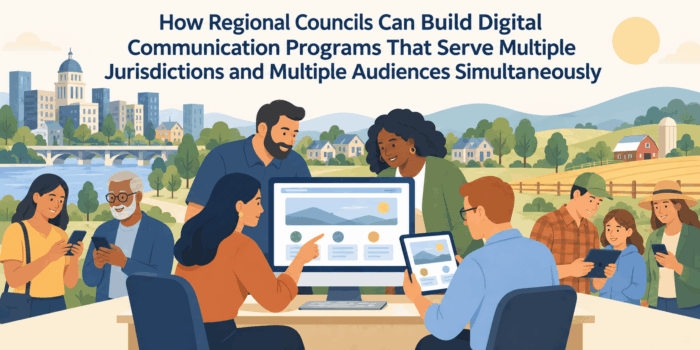
Digital communication offers regional collaborative agencies something that no other communication channel can provide: the ability to serve multiple jurisdictions and multiple audiences simultaneously with information that is relevant, accessible, and appropriately specific for each, through a single communication infrastructure that can be maintained at a fraction of the cost of the separate, jurisdiction-specific communication programs that achieving the same reach through non-digital channels would require. A regional council that has built an effective digital communication program can reach a suburban commuter with transit ridership data for their specific corridor, a rural county administrator with grant program information relevant to their jurisdiction’s eligibility, a tribal transportation planner with federal compliance guidance specific to tribal transportation programs, and a general public audience member with a plain-language explanation of why regional coordination matters, all through the same digital infrastructure.
Most regional collaborative agencies have digital communication programs that fall well short of this potential. They have websites that are organized for the convenience of planning staff rather than for the navigational needs of diverse audiences. They have social media accounts that produce irregular, inconsistently formatted content that does not serve any specific audience effectively. They have email lists that are not segmented by audience type or interest, sending the same content to planning professionals, local officials, community advocates, and general public subscribers simultaneously. And they have digital analytics that they collect without using systematically to understand which digital content is serving which audiences and which is failing to reach the audiences it is designed for.
Building a digital communication program that genuinely serves multiple jurisdictions and multiple audiences simultaneously requires the same audience-centered design discipline that effective communication in any channel requires, combined with the technical infrastructure, the content architecture, and the organizational systems that make digital communication sustainable as a continuous program rather than as a collection of digital tools that were acquired without a coherent digital communication strategy. This article examines the specific design principles, technical infrastructure requirements, content architecture decisions, and organizational practices that allow regional councils to build digital communication programs that genuinely serve their full range of jurisdictional and audience diversity.
Audience Architecture for Multi-Audience Digital Programs
 The first design decision in building a digital communication program that serves multiple audiences is defining the distinct audience types that the program must serve and understanding the specific information needs, the specific digital engagement preferences, and the specific communication goals that each audience type represents. Most regional agencies communicate to a single undifferentiated digital audience, producing content that attempts to serve planning professionals, local government officials, community advocates, and general public audiences simultaneously without adequately serving any of them. A digital program designed for multiple distinct audience types, with content and functionality specifically tailored for each, is more demanding to build and maintain but produces dramatically better service for each audience than the single-audience approach that most regional agencies default to.
Primary audience definition for regional council digital communication typically includes at least five distinct types: member government staff and officials who need technical program information, governance updates, and intergovernmental coordination tools; planning professionals and technical stakeholders who need data access, technical documentation, and professional development resources; community advocates and civic leaders who need accessible planning information, participation opportunities, and accountability data; the general public who need plain-language explanation of regional planning’s relevance to their daily lives; and media who need press materials, factual information, and regional planning context for their coverage. Each of these audience types has distinct content needs, distinct digital engagement patterns, and distinct navigation requirements that a multi-audience digital architecture must address.
Audience-segmented content delivery that presents different content to different audience types based on their stated preferences, their navigation history, or their registered audience profile, allows a single digital platform to serve multiple audiences with contextually appropriate content without requiring users to navigate through content designed for other audiences to find what is relevant to them. A regional council website that allows users to indicate their audience type during registration or first visit, and that subsequently presents a customized homepage and navigation structure that prioritizes the content most relevant to that audience type, is providing the audience-specific digital service that most regional websites fail to achieve through their single-architecture approach.
From Fragmentation to Coordination: Communication Strategies for Councils of Governments, Metropolitan Planning Organizations, and Regional Planning Agencies
This article is part of our series on strategic communication for Councils of Governments, Metropolitan Planning Organizations, and Regional Planning Agencies. To learn more and to see the parent article, which links to other content just like this, click the button below.
Jurisdictional Relevance in Multi-Jurisdiction Digital Programs
Geographic Personalization
One of the most powerful capabilities that digital communication provides for regional agencies with multi-jurisdictional service areas is geographic personalization, which allows the same digital platform to present information that is specifically relevant to each user’s geographic location within the service area. A regional transportation authority website that presents transit route information, service alerts, capital program project status, and community engagement opportunities specifically for the transit zone or the county in which each visitor is located, is providing geographic personalization that makes regional digital communication locally relevant for every visitor regardless of which part of the service area they are in.
Geographic personalization requires both the technical infrastructure to detect or store user location information and the content architecture to organize regional information by geographic area so that the appropriate geographically specific content can be served to each user. Both of these requirements are achievable with current digital infrastructure, but most regional agencies have not made the investment in either the technical architecture or the content organization that geographic personalization requires. Building geographic personalization into regional digital communication programs from the start is more efficient than retrofitting it onto existing digital infrastructure that was not designed with geographic specificity in mind.
Jurisdictional content portals that provide each member government with a dedicated digital space on the regional agency’s platform, where member government staff and officials can access the regional program information, the regional data, and the regional compliance documentation most relevant to their specific jurisdiction, provide the jurisdiction-specific digital service that most regional agency websites do not offer. A regional council website that maintains a dedicated portal for each member government, accessible through the member government’s administrative credentials, that aggregates the regional program participation status, the regional data relevant to that jurisdiction, and the upcoming regional governance events most relevant to that government’s participation, is providing digital member government service at a level of specificity that most regional agencies currently offer only through direct staff contact.
Multi-Language Digital Accessibility
Digital communication in multiple languages is simultaneously more feasible and more demanding than non-digital multi-language communication. It is more feasible because digital platforms can maintain translated content alongside original-language content at a fraction of the cost of separately printing translated materials for each communication piece. It is more demanding because digital multi-language communication requires maintaining the translation currency as content is updated, ensuring that translated content is actually accessible to and used by target language communities, and providing the multilingual customer service support that users who encounter difficulties in translated digital content need to resolve those difficulties.
Machine translation has improved dramatically in recent years and provides a useful first-draft translation capability that significantly reduces the cost of maintaining translated digital content. But machine translation quality is uneven across language pairs and across content types, and machine-translated planning and regulatory content frequently contains errors that undermine the accuracy and the credibility of the translation for the non-English-speaking audiences it is designed to serve. Building a workflow that uses machine translation as a first draft and native speaker review as a quality assurance step, rather than relying on machine translation alone, is the translation quality standard that genuine digital multilingual accessibility requires.
Digital accessibility for non-English-speaking audiences requires more than translation of text content. It requires the user experience design that makes translated content navigable for users who approach the digital platform with different literacy levels, different digital engagement norms, and different cultural expectations about information organization than the English-speaking audience for whom most regional agency digital platforms are primarily designed. User testing of translated digital content with actual members of target language communities is the quality assurance investment that most regional agencies have not made for their multilingual digital content, and it is the investment that most often reveals the specific navigation and comprehension barriers that translation alone does not address.
Content Architecture for Multi-Audience Regional Platforms
The content architecture of a regional council’s digital platform, including how content is organized, how it is labeled, how it is navigated, and how different pieces of content relate to each other, is the structural foundation that determines whether the platform genuinely serves multiple audiences or whether it is organized for one audience’s convenience while presenting an accessibility challenge for all others. Most regional agency websites are organized around the agency’s internal program structure, which is the most natural organization for the planning professionals who produce the content but the least useful organization for the diverse external audiences who need to navigate the platform to find information relevant to their specific needs.
Topic-based navigation that organizes digital content around the regional planning topics that audiences are interested in, such as transportation, housing, environment, economy, and governance, rather than around the agency’s internal program structure, provides the audience-centered navigation that makes regional digital platforms accessible to non-specialist users who do not understand the agency’s organizational architecture. A regional council website whose navigation menu leads with topics like transportation and mobility, housing affordability, environmental quality, and economic opportunity, rather than with program offices, planning divisions, and committee structures, is organized for its audience’s information-seeking patterns rather than for its staff’s organizational convenience.
Progressive disclosure content architecture that provides high-level accessible summaries of regional planning topics at the top level of navigation, with increasingly detailed technical content available through progressive navigation for users who need more depth, serves the full range of audience sophistication levels without overwhelming non-specialist users with technical detail or frustrating specialist users who need that detail. The general public member who visits a regional transportation planning page needs a plain-language explanation of what regional transportation planning is and why it matters, followed by the option to learn more about specific topics of interest. The local government transportation planner who visits the same page needs access to the technical data products, the program guidance documents, and the federal compliance documentation that their professional role requires. A progressive disclosure architecture serves both users without either overwhelming the first or frustrating the second.
Digital Communication Calendar and Content Management
Sustaining a digital communication program that serves multiple audiences across multiple jurisdictions requires the organizational infrastructure to produce, publish, update, and maintain digital content at the volume and the frequency that a multi-audience digital program requires. Most regional agencies underestimate the content production and content maintenance demands of effective digital communication programs, building digital platforms that initially contain adequate content but that quickly become outdated as the planning and program environment changes faster than the content maintenance capacity of the communications team can keep pace with.
Digital content calendar management that schedules the production, review, and publication of digital content around the planning cycle, the regulatory compliance, and the governance event calendar of the regional agency, ensures that digital content is current and relevant at the moments when different audience types most need specific types of information. A digital content calendar that schedules the publication of TIP cycle information before the TIP development process begins, the publication of performance management data when federal reporting periods close, and the publication of community engagement materials in advance of major plan public comment periods, is organized around the audience’s information needs rather than around the communications team’s production convenience.
Content governance systems that assign ownership and maintenance responsibility for specific digital content sections to specific staff members, that establish review and update schedules for each content section, and that create accountability for content currency that prevents the gradual obsolescence that afflicts most regional agency websites, are the organizational infrastructure that makes digital content maintenance sustainable as a continuous organizational practice rather than as an occasional website redesign project. A regional council that maintains a content governance matrix showing which staff member owns each section of its digital platform, when each section was last updated, and when it is next due for review, is managing digital content as an organizational asset rather than as a static publication.
User feedback systems that allow digital platform visitors to report outdated content, broken links, and navigation difficulties, provide the distributed quality assurance that no internal review process can match for a digital platform serving thousands of users with thousands of different information needs. A regional council website that includes a simple feedback mechanism on every page, allowing users to report specific page problems with a minimum of user effort, creates a real-time content quality monitoring system that extends far beyond what internal staff review can sustain.
Analytics-Driven Digital Program Improvement
Digital communication programs are distinguished from other communication channels by the quality and the quantity of the behavioral data they generate about how audiences engage with the communication. Website analytics, email analytics, social media analytics, and document download data all provide behavioral evidence of which digital content is reaching which audiences, which content is being engaged with and which is being ignored, and where in the user journey audiences are encountering barriers that prevent them from finding or using the information they came to the platform to access. Most regional agencies collect this analytics data without using it systematically to improve their digital communication programs.
Regular analytics review cycles that examine digital engagement data across all digital channels, identify the content that is performing well and the content that is underperforming, and generate specific content improvement and navigation improvement recommendations, are the continuous improvement practices that transform digital analytics from a reporting function into a program improvement function. A monthly digital analytics review that identifies the five most-visited pages and the five pages with the highest exit rates, that asks why the high-exit pages are failing to retain visitor engagement, and that assigns specific staff responsibility for addressing the navigation and content quality issues that the high exit rates reveal, is a continuous improvement practice that most regional agencies have not built into their digital communication management.
Search analytics that reveal what users are searching for on the regional agency’s website, and whether those searches are successfully connecting users to relevant content, provide the most direct evidence available of the gap between what users need from the digital platform and what the platform is providing. A regional council website that receives high search volumes for terms related to grant program eligibility, meeting schedules, and public comment submission processes, but that generates high exit rates for users who search those terms and cannot find adequate answers in the search results, has specific content gaps that search analytics have identified and that content development can address. Acting on search analytics findings is one of the most cost-effective digital communication improvement investments available because it addresses the specific information needs that users have already demonstrated through their search behavior.
Digital Equity in Multi-Jurisdictional Programs
Digital communication programs that assume uniform digital access and digital literacy across a multi-jurisdictional service area will systematically underserve the communities with lower broadband connectivity, lower device access, lower digital literacy, or lower trust in digital institutional communication than the communities for whom most digital communication programs are implicitly designed. Building digital equity into the design of regional council digital communication programs requires explicit attention to the digital access conditions of different communities across the service area, and the provision of alternative communication channels and support for the communities whose digital access is most limited.
Mobile-first design for regional council digital platforms acknowledges that many residents in regional planning service areas access digital information primarily through smartphones rather than through desktop computers, and that mobile users may have more limited broadband access than desktop users. A regional council website that is designed primarily for desktop viewing, with complex navigation, large file downloads, and content formats that do not render well on small screens, is a website that systematically underserves mobile-primary users who may constitute a majority of its potential audience in some communities. Mobile-first design that prioritizes the mobile user experience, with simplified navigation, mobile-optimized content formats, and limited file sizes, is the digital equity design standard that serves the broadest range of digital access conditions.
Digital access support programs that provide community residents with the device access, the connectivity support, and the digital literacy assistance they need to use regional council digital resources, go beyond digital design to address the infrastructure and capacity barriers that prevent digital equity from being achieved through design alone. A regional council that partners with libraries, community centers, and community organizations to provide digital access support for residents who cannot independently access its digital resources, is taking a digital equity approach that most regional agencies have not extended to their digital communication programs even when they have addressed digital equity in other program areas.
How Multi-Audience Digital Communication Compares With Single-Channel Programs
 Building digital communication programs that serve multiple jurisdictions and multiple audiences simultaneously is qualitatively more demanding than building single-channel communication programs for single audiences, because it requires the audience architecture, the geographic personalization, the multi-language accessibility, and the content governance that single-audience programs do not need. But it is also qualitatively more valuable, because a digital program that genuinely serves the full diversity of a regional council’s audience types and jurisdictional contexts produces the cumulative public understanding, the intergovernmental relationship quality, and the civic engagement that no single-channel or single-audience program can achieve at the same scale.
The comparison with successful commercial digital communication programs that serve diverse audiences at scale, including the large public information websites that provide tax information, healthcare enrollment guidance, and government benefit information to highly diverse audiences with varying literacy levels, language backgrounds, and digital access conditions, reveals the audience-centered design principles and the content architecture standards that regional council digital programs can adopt with adaptation. These commercial and government digital communication models have developed the progressive disclosure architecture, the geographic personalization systems, the multilingual content management, and the analytics-driven improvement practices that regional council digital programs need but have not yet systematically implemented.
Email Communication Architecture for Multi-Audience Programs
Email communication is among the most cost-effective digital communication channels available to resource-constrained regional councils, because it allows direct communication with registered audience members at minimal per-message cost while providing the open rate and click-through analytics that allow continuous improvement of email content and email targeting. But email communication for multi-audience, multi-jurisdictional regional agencies requires the audience segmentation, the content personalization, and the list management discipline that most regional agencies have not developed, producing email programs that send the same content to planning professionals, local officials, community advocates, and general public subscribers simultaneously without serving any of those audiences as well as audience-segmented communication would.
Email list segmentation that maintains separate subscriber lists for each major audience type, or that uses a single list with audience-type tagging that allows content to be targeted to specific audience segments, enables the audience-specific content that makes email communication genuinely useful to each audience rather than marginally relevant to all simultaneously. A regional council email program that sends technical program updates to the planning professional and local government staff segments while sending plain-language planning summaries and participation opportunities to the community advocate and general public segments, is providing each audience segment with the email content that serves their specific information needs rather than requiring each audience segment to sift through content designed for other audiences.
Email engagement analytics that track open rates, click-through rates, and unsubscribe rates by audience segment, content type, and geographic area of subscriber origin, provide the audience-specific email performance data that allows continuous improvement of email content and email targeting. A regional council email program that discovers through segment-specific analytics that its local government staff segment has high open rates for governance update content but low engagement with program technical detail, while its community advocate segment has the opposite pattern, has specific evidence for differentiating content between segments that will improve engagement for both. Acting on this segment-specific analytics finding is the email program improvement that most regional agencies are not currently making.
Email accessibility for non-English-speaking subscribers, including translated versions of key email communications for the major language communities in the service area, and text-based email format alternatives for subscribers whose email clients do not render HTML email properly, ensures that the email communication program serves the full language and access diversity of the agency’s subscriber population rather than only the English-literate, HTML-compatible majority. Email accessibility is a dimension of digital communication equity that most regional agencies have not specifically addressed in their email program design.
Website Accessibility and Universal Design
Regional council websites that are designed without specific attention to web accessibility standards will systematically exclude users with visual disabilities, hearing disabilities, motor disabilities, and cognitive processing differences from accessing the regional planning information that those websites are supposed to provide. Web Content Accessibility Guidelines compliance, which specifies the technical standards for making digital content accessible to users with a range of disabilities, is both a legal requirement for public agency websites and a fundamental equity obligation that extends the democratic right to regional planning information to the full range of regional residents regardless of disability status.
Screen reader compatibility, which ensures that website content is navigable and readable by the screen reader software that users with visual disabilities use to access digital content, requires specific attention to HTML structure, image alt text, form labeling, and navigation design that most regional agency websites have not been built to provide consistently. A regional council website that has not been tested with common screen reader software will have specific accessibility failures that prevent visually disabled users from accessing specific content sections or completing specific navigation tasks, even when those failures are invisible to sighted users who test the website with standard browsers.
Cognitive accessibility design that makes website content navigable and comprehensible for users with cognitive processing differences, including simplified navigation structures, consistent page layouts, plain-language content standards, and progress indicators that help users track their position in multi-step processes, extends web accessibility beyond the technical standards for sensory disability accommodation to the broader accessibility standard that serves users with the full range of cognitive and learning differences. Cognitive accessibility testing with users who have cognitive processing differences, including people with learning disabilities, attention disorders, and cognitive processing challenges, provides the user experience feedback that automated accessibility testing tools cannot supply.
Mobile accessibility that ensures regional council websites are fully functional and fully accessible on the mobile devices that an increasing share of regional planning website visitors use as their primary or only digital access device, is a web accessibility dimension that goes beyond disability accommodation to serve the general population of mobile-primary users whose experience of poorly mobile-optimized websites is a functional accessibility barrier even when no disability is involved. A regional council website that requires users to zoom, scroll horizontally, or navigate complex dropdown menus to access basic information on a mobile device, is a website that creates access barriers for mobile users that undermine the democratic communication function the website is supposed to serve.
Interactive Digital Tools for Regional Planning Engagement
Interactive digital tools that allow regional planning audiences to engage with regional planning data, regional planning scenarios, and regional planning participation opportunities through digital interfaces that require no specialized planning knowledge, are among the most powerful public engagement tools that digital communication offers to regional councils. An interactive commute time calculator that allows any regional resident to enter their home and work locations and see how different regional transportation investment scenarios would affect their specific commute, is a digital engagement tool that makes regional transportation planning personally relevant to any commuter who uses it, without requiring that commuter to understand regional transportation modeling, federal transportation planning requirements, or long-range planning processes.
Participatory mapping tools that allow community members to identify specific locations where they experience transportation problems, environmental concerns, or community conditions that they want regional planning to address, provide the geographically specific community input that regional planning needs to understand local conditions across the service area. These tools extend participation beyond the community members who attend public meetings to the broader community that will provide geographic input through a digital interface if that interface is accessible and engaging but that will not travel to a planning meeting to provide the same input.
Budget simulation tools that allow community members to allocate a fixed regional planning budget across competing investment alternatives, seeing how different allocation choices affect the regional indicators that measure regional planning performance, provide the planning trade-off education that most public participation programs do not achieve. A community member who has worked through a regional transportation budget simulation, making choices about how to allocate finite regional transportation resources between highway maintenance, transit expansion, active transportation infrastructure, and safety improvements, understands regional transportation planning trade-offs in a viscerally personal way that no planning document or public presentation can match.
Scenario exploration tools that allow community members to see how different regional development scenarios, including compact transit-oriented development, continued suburban sprawl, and rural preservation, would affect regional transportation conditions, regional environmental quality, regional housing costs, and regional carbon emissions, make the regional planning choice consequences visible and evaluable for community members who approach regional planning without specialist knowledge. These scenario tools are the most sophisticated digital engagement investment available to regional councils and the investment that produces the deepest community understanding of regional planning trade-offs.
Digital Communication Governance
Digital communication programs that operate without governance structures, without defined ownership of specific digital content, without established content standards, and without accountability for digital communication quality, will inevitably produce the inconsistent, outdated, and inaccessible digital communication that most regional agency websites currently provide. Digital communication governance that assigns clear ownership and accountability for every dimension of the digital communication program, that establishes content and quality standards against which digital communication can be assessed, and that creates the organizational processes that sustain digital communication quality as a continuous operational practice, is the organizational infrastructure that transforms a collection of digital tools into a genuine digital communication program.
Governing board engagement with digital communication program quality, including regular board reporting on key digital communication metrics such as website visitor trends, email engagement rates, and social media reach across the service area, gives governing boards the visibility into digital communication program performance that makes board members effective advocates for the digital communication investment that genuine multi-audience, multi-jurisdictional digital communication requires. A governing board that knows how well its agency’s digital communication is reaching different audience types and different geographic areas of the service area, and that understands the specific digital communication investment that would address identified reach and engagement gaps, is a governing board that can make informed decisions about communication investment alongside the technical program investments that receive most board attention.
Digital communication program audits that periodically assess the full range of the agency’s digital communication properties, including website content currency and quality, social media engagement and audience reach, email program performance and list health, and digital tool utilization and efficiency, provide the organizational accountability for digital communication quality that most regional agencies do not maintain systematically. An agency that conducts an annual digital communication audit, that uses the audit findings to identify and prioritize digital communication improvement investments, and that reports audit findings and improvement plans to its governing board, is managing digital communication as an accountable governance function rather than as an administrative overhead.
Communication Systems Across the Full Hub
The twenty-five articles in this hub address the full range of communication challenges that regional collaborative agencies, councils of governments, and metropolitan planning organizations navigate in serving their multi-jurisdictional, multi-audience governance mandates. The communication disciplines explored across these articles, from building communication calendars around planning cycles to measuring effectiveness across multi-jurisdictional audiences, from engaging underserved communities to managing intergovernmental conflict, from communicating environmental sustainability to building capacity with limited resources, are together the communication system that regional planning governance requires to fulfill its democratic mandate.
No single regional collaborative agency excels at every dimension of communication described in these articles. Communication excellence is built incrementally, through the sustained investment in communication quality that builds on each improvement to support the next. The agency that has built excellent member government communication relationships, and that uses that relationship foundation to introduce more systematic communication calendar management, is better positioned to achieve calendar management excellence than an agency starting from scratch on both dimensions simultaneously. The communication system framework is a map of the destination, not a prescription for the sequence in which every destination must be reached.
What regional collaborative agencies share is the governance mandate to coordinate regional resources, regional infrastructure, and regional planning across multiple jurisdictions in ways that serve the full diversity of their regional communities. That mandate can only be fulfilled through the communication that makes regional coordination visible, comprehensible, and accountable to the communities it is designed to serve. The communication investment that supports that mandate is not a supplement to regional planning governance. It is a core dimension of regional planning governance, as essential to the democratic legitimacy of regional coordination as the technical planning quality that most regional agencies have historically prioritized. Stegmeier Consulting Group works with regional collaborative agencies to build communication systems that serve this governance mandate with the quality and the integrity that it requires.
Tying It All Together
A digital communication program that genuinely serves multiple jurisdictions and multiple audiences simultaneously is not simply a collection of digital tools and digital channels. It is an integrated communication infrastructure, designed from the audience’s perspective, built on a content architecture that serves the full range of audience types and jurisdictional contexts, maintained through the organizational systems that keep content current and relevant, and continuously improved through the analytics-driven feedback that makes digital communication a learning program rather than a static publication. Building this infrastructure requires organizational commitment, design discipline, and sustained investment that most regional councils have not brought to their digital communication programs.
The governance returns on this investment accumulate across the full range of audiences the digital program serves: member government staff who have better access to the regional program information they need to do their jobs effectively, planning professionals who have better access to the regional data and technical documentation they need for their work, community advocates who have better access to the regional planning participation opportunities and accountability information that civic engagement requires, general public audiences who have better access to the plain-language regional planning explanation that public understanding requires, and media who have better access to the press materials, the factual background, and the local impact information that accurate regional coverage requires. That cumulative improvement in communication quality across all audiences is the return on digital communication infrastructure investment that most regional councils have not yet achieved.
Strategic Communication Support for Digital Programs
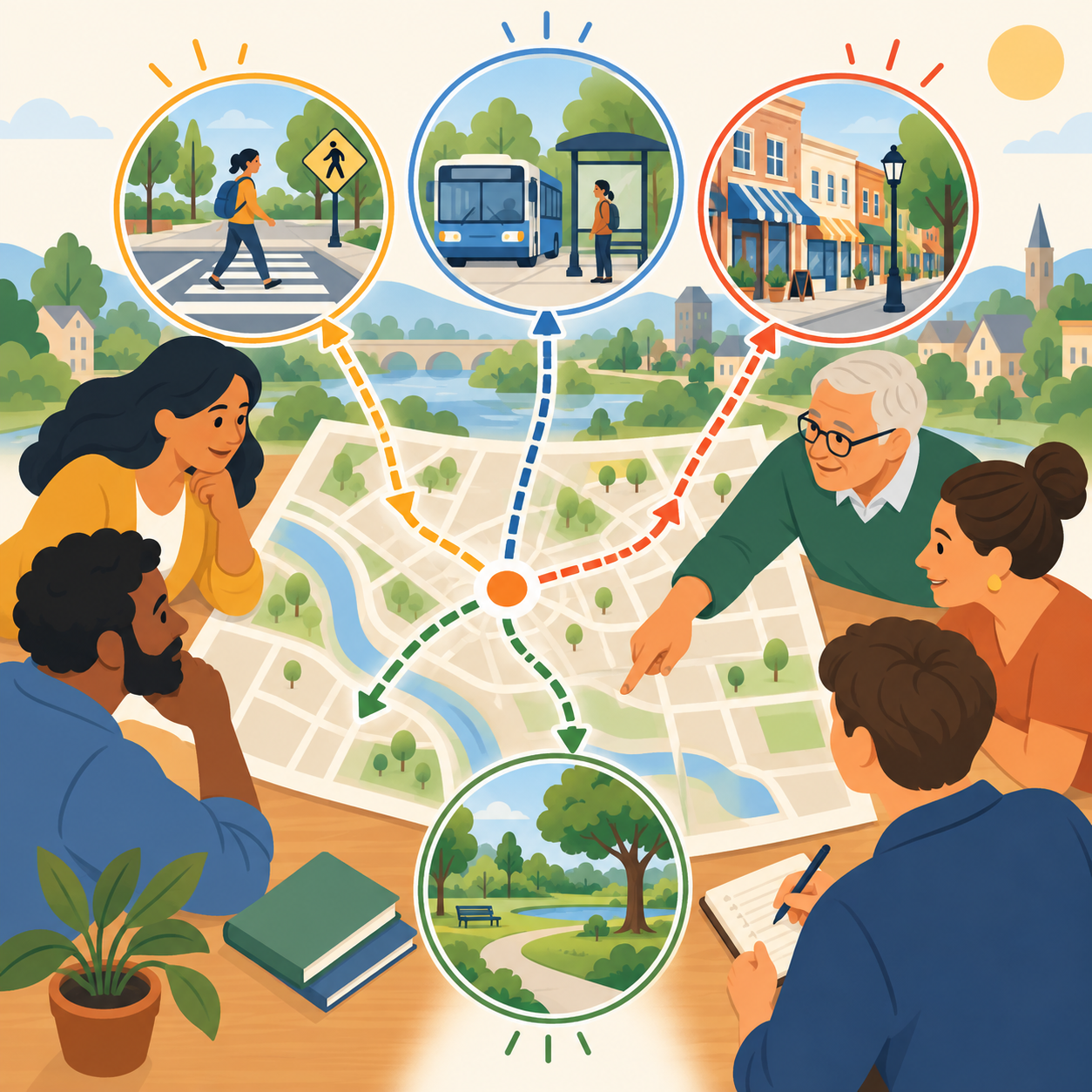 Developing the audience architecture, geographic personalization systems, multi-language accessibility standards, content architecture, content governance systems, analytics improvement practices, and digital equity provisions that effective multi-audience, multi-jurisdictional digital communication requires is work that most regional council communications teams have not been resourced or structured to accomplish as a comprehensive digital strategy rather than as a collection of separately managed digital tools.
Stegmeier Consulting Group (SCG) works with regional councils to develop comprehensive digital communication programs that are built around the specific audience diversity, jurisdictional complexity, and digital access conditions of each agency’s service area. SCG’s engagement begins with a digital communication audit that evaluates the current digital platform architecture, the current content quality and currency, the current analytics utilization, and the current gaps between what different audience types need from the regional council’s digital presence and what they are currently finding.
From that audit, SCG develops the specific audience architecture, navigation design, content governance system, multilingual content management program, geographic personalization strategy, and analytics improvement cycle that address identified gaps. These program elements are designed for the specific audience diversity, jurisdictional structure, and communication resource constraints of each agency’s service area, because digital communication architectures that serve one regional council’s audience mix and jurisdictional structure will require significant adaptation to serve another council’s different audience and jurisdictional context.
SCG works with regional council communications and technical staff to build the organizational systems and the staff capacities that make the digital communication program sustainable as a continuous program rather than as a website redesign project, including content governance protocols, analytics review cycles, multilingual content maintenance workflows, and digital accessibility testing practices.
Future Trends in Regional Council Digital Communication
Artificial intelligence tools for content personalization and content generation are beginning to make the multi-audience, multi-jurisdictional digital communication capabilities that this article describes more achievable for regional agencies with limited communications staff than they have previously been. AI-powered personalization systems that can serve geographically and audience-specifically customized content to different users without requiring separate manual content production for each variant, AI-assisted translation that reduces the cost of maintaining multilingual digital content, and AI-powered analytics interpretation that identifies content quality improvement opportunities without requiring statistical expertise from communications staff, are all capabilities that will make the aspirational digital communication program described in this article progressively more accessible to regional agencies of different sizes and communication resource levels.
Accessibility technology improvements, including improved screen reader compatibility, improved voice interface integration for visual disability users, and improved cognitive accessibility tools for users with cognitive processing differences, are making the digital accessibility standard for public agency digital communication progressively more demanding and progressively more achievable simultaneously. Regional councils that build their digital programs around the current accessibility technology standard, and that maintain those standards through regular accessibility testing and update cycles, will be better positioned to meet the evolving digital accessibility standards that federal, state, and community expectations are raising.
Integrated regional data platforms that connect regional planning data directly to regional council digital communication platforms, allowing real-time regional performance data to populate the regional indicators dashboards, the project status trackers, and the program performance reports that regional council digital communication programs need to provide, are beginning to make the continuous digital accountability communication that this article describes more technically achievable for regional agencies that have invested in the regional data infrastructure that feeds those platforms.
Conclusion
Regional council digital communication programs that genuinely serve multiple jurisdictions and multiple audiences simultaneously are among the most valuable governance communication investments that regional councils can make, because they are the infrastructure that delivers regional planning communication to the full diversity of the audiences whose understanding, engagement, and trust regional planning governance requires. The digital program that provides locally relevant information to every community in the service area, that serves planning professionals with technical depth alongside general public audiences with accessible plain language, and that maintains those services continuously rather than only when specific planning events generate the need for specific communications, is the digital program that fulfills the democratic communication obligation of regional governance.
Building that program requires the organizational commitment to treat digital communication as a strategic governance investment rather than as a technical infrastructure project, and the design, content, organizational, and analytical disciplines that make a digital communication program genuinely serve its audiences rather than simply provide a digital presence that demonstrates the regional council’s awareness of the importance of digital communication. The regional councils that make this investment find that their digital programs are among the most effective communication assets they have for building the public understanding, the civic engagement, and the intergovernmental relationship quality that regional planning governance requires.
Stegmeier Consulting Group’s Strategic Approach to Communication Systems
Build regional council digital communication around audience-centered architecture that serves each audience type specifically, geographic personalization that makes regional information locally relevant, and the content governance and analytics disciplines that sustain digital program quality continuously rather than episodically.
Regional councils need digital communication that serves diverse audiences across jurisdictions through accessible, multilingual, geographically relevant, and easy-to-navigate platforms. Stegmeier Consulting Group (SCG) helps councils develop digital communication programs tailored to their audience diversity, jurisdictional structure, and digital access conditions. SCG audits current platform architecture, content quality, analytics, and audience needs to identify gaps that limit the effectiveness of the digital program.
Based on this assessment, SCG develops audience-centered navigation, content governance systems, multilingual content management, geographic personalization, and analytics-driven improvement processes. SCG also supports accessibility testing, content maintenance, and regular analytics reviews that keep digital communication effective and sustainable. The objective is a digital communication program that remains accessible, relevant, and useful across the full diversity of the council’s audiences and jurisdictions.
Use the form below to connect with our team and explore how strategic communication support can strengthen your council’s digital communication program.