How Solid Waste, Recycling, and Garbage Collection Agencies Can Communicate Hazardous Waste Disposal Programs to Residential and Commercial Customers
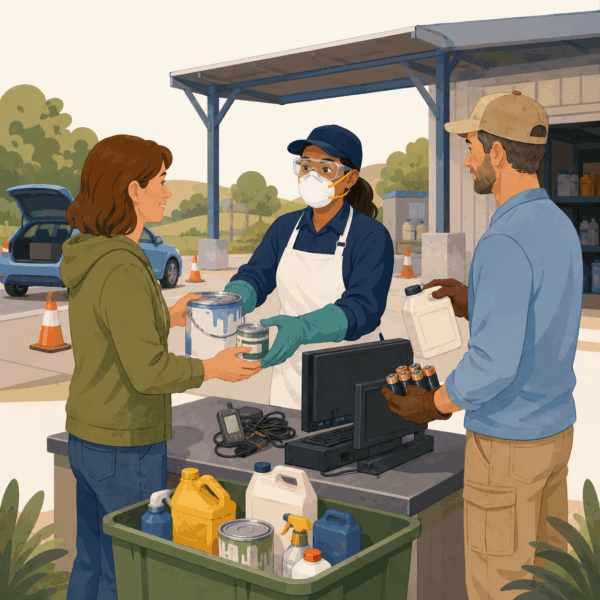
Hazardous waste disposal programs are among the most safety-critical services that solid waste agencies provide, and among the most consistently underutilized. The gap between program availability and program participation is wider for household hazardous waste than for almost any other solid waste program, and the consequences of that gap are more serious: chemicals improperly disposed of in household garbage end up in landfills where they may contaminate groundwater; chemicals poured down drains enter wastewater systems not designed to handle them; old pesticides and motor oil set out with regular garbage create safety risks for collection workers. The underutilization of hazardous waste programs is not a matter of resident indifference to safety. It is almost entirely a product of inadequate communication about what the program accepts, where it is, and how to use it.
The specific communication failures that produce hazardous waste program underutilization follow a pattern that is consistent across jurisdictions: most residents do not know the program exists, residents who are vaguely aware of it do not understand what qualifies as hazardous waste, and residents who understand both of these things encounter collection locations and schedules that are difficult to find or to access. Each of these failures represents a distinct communication problem that requires a distinct communication response, and agencies that address all three simultaneously produce participation rates that agencies addressing only one or two of them cannot achieve.
Commercial small-quantity generators, including automotive businesses, healthcare facilities, hair salons, photo processors, cleaning services, and other small businesses that generate regulated hazardous wastes as part of their operations, represent a separate and often more significant communication challenge than residential hazardous waste. These generators are subject to regulatory requirements that most are not fully aware of, and their operations may be placing them in violation without their knowledge. Communicating with commercial generators requires reaching business owners and operators through business channels, in regulatory language that is honest about compliance obligations while remaining accessible to business owners without legal or environmental compliance backgrounds.
This article examines how solid waste agencies can communicate hazardous waste disposal programs in ways that generate meaningful residential participation, reach the commercial generators who pose the highest disposal risk, communicate the consequences of improper disposal honestly without generating the alarm that discourages participation, and design event-based collection programs that serve communities where permanent facilities are not accessible enough to sustain adequate participation.
Understanding What Residents Mean by Hazardous Waste
When solid waste agency communication refers to household hazardous waste, it is using a regulatory category that most residents do not recognize as describing materials they have at home. The term hazardous waste carries connotations of industrial chemicals, toxic spills, and specialized handling that bear little resemblance to the half-used can of paint in the garage, the old batteries in the junk drawer, or the expired medications in the medicine cabinet. Residents who do not recognize their own materials as hazardous waste will not seek out a hazardous waste disposal program for those materials, regardless of how well the program is communicated.
The most effective hazardous waste communication begins not with the program but with the materials. It lists specific, familiar items that residents are likely to have at home and identifies them as hazardous waste that requires special disposal. A communication that asks residents whether they have old paint, used motor oil, pesticides, fluorescent light bulbs, rechargeable batteries, or cleaning products they no longer want, and then explains that these are household hazardous waste that should not go in the regular garbage, is communicating in terms that connect the program to materials residents actually have. That connection is the awareness foundation that program participation requires.
The category of materials that qualify as hazardous waste is broader than most residents understand, and agencies that communicate only about the most obvious categories will leave residents uncertain about materials that fall in less obvious ones. Medications, electronics, propane tanks, fire extinguishers, pool chemicals, and automotive fluids are all materials that many residents dispose of incorrectly not because they lack environmental concern but because they do not know that these materials require special disposal or that a program exists to accept them. Expanding the communication about accepted materials to include the less obvious categories both increases program participation for those specific materials and builds resident understanding that the program’s scope is broader than they may have assumed.
Wishful recycling has a household hazardous waste analog: wishful disposal. A resident who is uncertain whether a material is hazardous will, in the absence of specific guidance, place it in the regular garbage because that option is immediately available and the consequences of the choice are not personally visible. Communication that gives residents a clear, easy-to-apply decision rule for uncertain materials, and that makes correct disposal as accessible as possible, addresses the behavioral mechanism that produces improper disposal at scale. The rule needs to be specific enough to apply to real household items and simple enough to remember without consulting a reference guide.
From Pipelines to Public Trust: How Municipal Utilities Can Make Communication Central to Ratepayer Trust, Infrastructure Investment, and Long-Term Service Reliability
This article is part of our series on strategic communication for Public Utilities, Infrastructure Agencies, Municipal Utilities, and Public Works departments. To learn more and to see the parent article, which links to other content just like this, click the button below.
Communicating Program Availability and Access
Permanent Facility Communication
Permanent household hazardous waste collection facilities, where residents can drop off materials year-round during defined hours, represent the most accessible disposal option for residents who have hazardous waste to dispose of. The communication challenge for permanent facilities is ensuring that residents know they exist, know where they are located, know what hours they operate, and know what materials they accept before the moment when a resident has a specific material they want to dispose of. Awareness built before that moment allows the resident to plan the disposal trip conveniently. Awareness sought for the first time when the resident has an immediate disposal need is often unsuccessful if the facility location or hours do not align with the resident’s immediate circumstances.
Facility location communication should be specific and accessible through multiple channels. The physical address, the nearest major intersection or landmark, directions from the most common approach routes, and a map link that generates navigation directions are all elements that make facility location information actionable for a resident who has decided to make a drop-off trip. A website page that provides the facility’s address without a map link, or that requires a resident to navigate multiple pages to find the hours and accepted materials list, is a location communication that creates friction at every step between a resident’s decision to participate and the information they need to act on that decision.
Hours and days of operation deserve prominent communication because they determine whether the facility is actually accessible to the residents it serves. A facility that is open only on weekdays between 9 AM and 3 PM is not accessible to working residents who can only drop off materials on weekends or evenings. Communication about facility hours should be honest about the access limitations those hours create and, where possible, should identify any extended hours or weekend operations that provide access for residents who cannot use standard operating hours.
Event-Based Collection Communication
Event-based collection programs that operate at defined times and locations throughout the year serve communities where permanent facilities are not accessible enough to sustain adequate participation. Communication for collection events must accomplish a different task than permanent facility communication: it must reach residents who have materials to dispose of and motivate them to participate in this specific event at this specific time, rather than building general awareness for a facility they can visit at any time.
Event communication timelines matter significantly for participation rates. An event announced two weeks in advance gives residents limited time to identify materials they want to dispose of, sort through their storage areas, and plan the trip. An event announced six to eight weeks in advance, with reminder communications in the two weeks before the event, gives residents time to become aware, to check their homes for materials that qualify, and to schedule the visit. Agencies that track participation by communication lead time will consistently find that events with longer advance notice and multiple reminders outperform those with shorter notice and single announcements.
Pre-event materials identification guidance, which helps residents identify the hazardous waste they may have at home before the event arrives, reduces the distance between event awareness and event participation. A communication sent four to six weeks before an event that asks residents to check their garage, storage areas, and home for the specific items on the accepted materials list, and that provides a simple checklist for recording what they find, converts the abstract awareness of an upcoming event into a concrete household inventory activity that prepares residents for participation. Residents who have already identified specific materials they want to dispose of are more likely to follow through on event participation than those who have only a general awareness that a collection event is happening.
Logistical communication that removes practical uncertainty about event participation is a participation driver that most agencies underinvest in. Questions that residents commonly have before a hazardous waste event, including whether they need to make an appointment, how long they can expect to wait, whether they need to separate or label materials before arriving, what container types are acceptable, and whether there is a limit on the amount of material they can bring, are questions that generate participation barriers when they go unanswered. Event communication that proactively addresses these questions removes the uncertainty that causes residents to defer participation.
Communicating the Consequences of Improper Disposal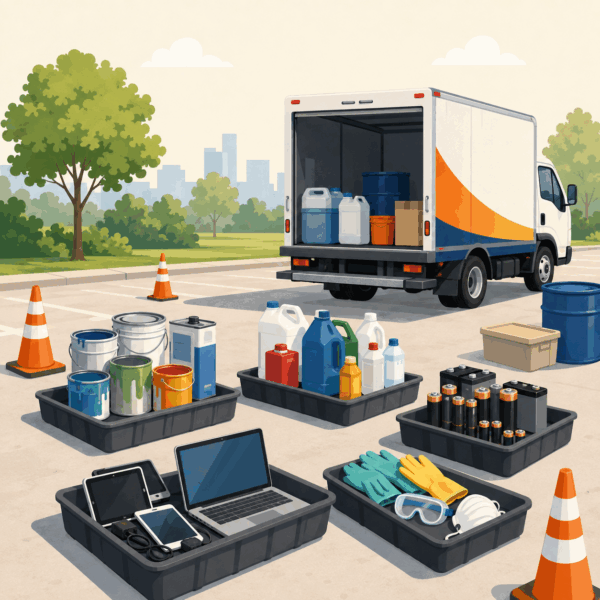
The consequences of improper hazardous waste disposal are the strongest motivational argument for program participation, and they are consistently underused in hazardous waste communication because agencies are reluctant to communicate in ways that might generate alarm or make residents feel accused of causing harm they did not know they were causing. This reluctance is understandable but counterproductive. Residents who do not understand why hazardous waste requires special disposal do not have the motivational foundation for consistent program participation.
Honest consequence communication for hazardous waste is not the same as alarmist communication. The goal is not to frighten residents into participation through exaggerated descriptions of harm but to provide accurate information about the pathways through which improperly disposed hazardous waste affects the environment and community health. A communication that explains that paint poured down storm drains reaches local waterways where it reduces oxygen levels and harms aquatic life, that motor oil dumped in garbage enters landfills where it can leach into groundwater, and that medications flushed down toilets are not fully removed by wastewater treatment and accumulate in water bodies, is providing accurate environmental information in terms that residents can understand and evaluate.
The connection between improper disposal and community health outcomes that residents care about, including drinking water quality, local waterway health, and the safety of household waste collection workers, is a consequence communication that motivates participation without requiring residents to be primarily motivated by abstract environmental values. A resident who understands that motor oil dumped at the curb with regular garbage exposes collection workers to hazardous chemical contact has a community-oriented reason to use the proper disposal program that appeals to values of community regard rather than only environmental concern. Multiple consequence framings that connect to different resident value sets produce broader motivational reach than any single consequence argument.
Consequence communication should be proportionate and honest. Overstating the risk of a specific material undermines credibility when residents can verify the claim independently. Understating it misses the motivational opportunity that honest consequence information provides. The standard is accuracy in plain language, which means communicating what improperly disposed materials actually do and where they actually go, without the institutional caution that produces vague and unconvincing warnings about the general importance of proper disposal.
Communicating With Commercial Small-Quantity Generators
Commercial small-quantity generators occupy a regulatory middle ground between fully regulated large quantity generators, who are subject to comprehensive hazardous waste management regulations and typically have professional environmental compliance support, and households, which are exempt from most regulatory requirements. Small-quantity generators, which include a wide range of small businesses whose operations generate regulated amounts of hazardous waste, are subject to specific regulatory requirements that many of them are not aware of and that their operations may be violating without their knowledge.
Communication to commercial generators must be honest about regulatory obligations in a way that motivates compliance rather than producing anxiety that leads to avoidance. A communication that leads with the penalties for non-compliance without providing clear guidance about how to achieve compliance will generate more regulatory avoidance than the agency intends. A communication that leads with the compliance pathway, explaining specifically what the business needs to do to manage its hazardous waste correctly and pointing to the resources available to help with that compliance, motivates the behavior the agency is trying to produce.
Business-sector-specific communication is significantly more effective than generic small business communication for hazardous waste programs. An auto repair shop generates a specific set of hazardous wastes, including used oil, antifreeze, brake fluid, and batteries, and faces specific regulatory requirements for each. A hair salon generates a different set, including chemical waste from hair coloring and permanent wave products. A dental office generates yet another, including amalgam waste and chemical developer solutions. Communication that identifies the specific hazardous wastes generated by the business type being addressed, explains the specific regulatory requirements that apply to those wastes, and identifies the specific disposal options available for each, reaches business owners in the context of their actual operations rather than as a generic regulatory audience.
Trade association partnerships are among the most effective channels for reaching small-quantity generators in specific business sectors. Industry associations, chambers of commerce, and business sector organizations have established relationships with the businesses that agencies need to reach and provide communication channels that agencies cannot replicate through direct outreach alone. An agency that partners with the local automotive dealers association to distribute hazardous waste management guidance to member businesses, that works with the beauty industry trade association to provide compliant disposal information to member salons, or that coordinates with the healthcare business association to reach medical and dental offices, is using community organizations as communication intermediaries in the business context exactly as it would use them in the residential context.
Medication and Pharmaceutical Disposal Communication
Medication disposal is among the most underserved categories of household hazardous waste communication, despite the significant environmental and public health consequences of improper medication disposal. Medications flushed down toilets or drains are not fully removed by wastewater treatment and accumulate in water bodies where they affect aquatic organisms and enter drinking water supplies. Medications disposed of in household garbage may be accessible to vulnerable individuals or may leach from landfills in ways that solid waste management systems are not designed to prevent. And unused medications remaining in households represent an ongoing risk of accidental ingestion, misuse, or diversion that proper disposal eliminates.
Take-back programs at pharmacies and law enforcement locations provide the most accessible year-round medication disposal option for most households, and communicating the locations, hours, and accepted medications for these programs is among the highest-value medication disposal communication an agency can produce. A communication that provides a searchable, up-to-date directory of local medication take-back locations, organized by proximity to the resident’s address, gives residents the specific access information they need to act on their disposal motivation. Communication that only announces the existence of take-back programs without providing specific location information requires an additional research step that many residents will not complete.
Drug take-back events provide a supplemental disposal option for residents who have accumulated a larger volume of medications than they would typically bring to a pharmacy drop-box. Communication for drug take-back events follows the same timing and logistics communication principles that apply to household hazardous waste events generally, with additional attention to the specific medications accepted and any restrictions that apply to controlled substances, which require DEA-authorized disposal methods. Agencies that co-organize drug take-back events with law enforcement partners can communicate the law enforcement partnership as a credibility and safety signal that motivates participation from residents who might otherwise be uncertain about the proper handling of controlled substances.
The communication case for medication disposal should address the accumulation habit that is among the most common barriers to participation. Many residents keep unused medications because they believe they might need them in the future, because they are unsure how to dispose of them, or because the effort of finding a disposal option exceeds the motivation to act. Communication that acknowledges this directly, that explains why keeping unused medications creates household risk, and that makes the disposal pathway so clear and accessible that disposal is easier than retention, addresses the behavioral barrier of medication accumulation more effectively than general program awareness communication.
Electronic Waste and Battery Disposal
Electronic waste, including old computers, televisions, phones, batteries, and other consumer electronics, represents a fast-growing category of household hazardous waste that contains toxic materials including lead, mercury, cadmium, and flame retardants. Most residents do not know that electronics require special disposal, do not know where to dispose of them, and may be storing old electronics in closets and garages for years because they have no clear disposal pathway. Communication that makes electronics disposal as accessible and familiar as recycling is a communication investment that addresses a growing environmental challenge while providing the specific, actionable guidance that residents need to close the gap between electronics accumulation and electronics disposal.
Retailer take-back programs for electronics, through which major electronics retailers accept old devices for responsible recycling, provide a disposal channel that is accessible to most residents through existing shopping relationships. Communication that identifies specific retailer take-back programs, what they accept, whether they charge fees, and how to find the nearest participating location, gives residents the specific access information they need to dispose of electronics without a special trip to a designated drop-off facility. Partnering with retailers to display this information at the point of purchase, reaching residents at the moment when they are making electronics purchasing decisions that will eventually generate disposal needs, is a channel integration that creates timely awareness.
Battery disposal deserves specific communication attention because batteries are both widespread in households and commonly disposed of incorrectly. Alkaline batteries, which can be disposed of in household garbage in most jurisdictions, are commonly confused with rechargeable batteries, which do contain hazardous materials and require special disposal. Communication that clearly distinguishes between alkaline and rechargeable batteries, explains the disposal requirements for each, and identifies where rechargeable batteries can be dropped off, addresses one of the most common sources of incorrect battery disposal without requiring residents to understand the underlying regulatory distinctions.
Measuring Program Participation and Communication Effectiveness
Participation rate measurement for household hazardous waste programs requires tracking the number of households that use disposal facilities or attend collection events against the total number of households that are eligible to participate. Most agencies track event attendance and facility visit counts, but few track those figures as a percentage of eligible households, which is the metric that most directly measures communication effectiveness. An event that serves five hundred households is a success or a failure depending on whether the service area contains five thousand or fifty thousand eligible households, and without the denominator the numerator is not interpretable as a communication performance measure.
Geographic participation analysis is particularly important for hazardous waste programs because access barriers, including distance to permanent facilities and limited event site coverage, often produce geographically concentrated participation gaps. An agency that maps the addresses of household hazardous waste event participants against the geographic distribution of the eligible household population will typically find that participation rates are significantly lower in areas farther from collection sites and in communities with lower vehicle access rates. These geographic patterns identify both communication gaps and access gaps, and they point to the specific interventions that would most effectively increase participation equity.
Pre- and post-campaign awareness surveys for specific hazardous waste material categories allow agencies to measure the communication return on specific education investments. A targeted campaign about medication disposal that surveys residents before and after the campaign about their awareness of local take-back options, and that tracks medication take-back event participation in the same period, connects the communication investment to both the awareness outcome and the behavioral outcome it was designed to produce. This measurement chain is the most rigorous form of hazardous waste communication program evaluation available, and agencies that apply it consistently build the evidence base for communicating program value to funders and decision-makers who control program budgets.
How Hazardous Waste Communication Compares With Other Solid Waste Communication
Hazardous waste communication is the solid waste program communication with the highest safety stakes and the widest gap between program availability and actual resident participation. Unlike recycling education, which seeks to improve the quality of existing participation, hazardous waste communication must first generate participation from residents who have no current engagement with the program. And unlike service change communication, which notifies residents of changes to a service they already use, hazardous waste communication is building awareness of a program that most residents have never used and may not know exists.
The consequence communication that hazardous waste programs can legitimately deploy is stronger than that available to most other solid waste programs. Improper disposal of hazardous materials has environmental and public health consequences that missed recycling participation or incorrect sorting does not, and communication that honestly describes those consequences provides motivational context that most other solid waste programs cannot access. Agencies that use consequence communication effectively, making it honest and specific rather than alarmist or vague, build the motivational foundation for participation habits that awareness communication alone cannot produce.
The comparison with recycling education also reveals a timing difference that has significant implications for communication design. Recycling decisions happen multiple times weekly in every household, providing frequent opportunities for habit reinforcement and behavior correction. Hazardous waste disposal decisions happen infrequently and are triggered by specific household circumstances, including the accumulation of specific materials or the availability of specific collection events. Communication for an infrequent behavior must be more intense at the moment of the disposal decision, and more specifically connected to the materials and circumstances that trigger disposal motivation, than communication for a weekly behavior that residents can build into their routine.
Integrating Hazardous Waste Communication With the Collection Calendar
Hazardous waste program communication that is integrated with the solid waste collection calendar, rather than treated as a separate specialty program promoted through dedicated channels, reaches residents in the communication context they already engage with. A resident who reads their annual collection calendar and sees household hazardous waste collection event dates alongside their regular garbage and recycling schedule is encountering hazardous waste program information as part of their routine service awareness rather than as a separate program they need to seek out. This integration is among the simplest and most effective awareness tools available to agencies that maintain physical or digital collection calendars.
Seasonal communication that connects household hazardous waste program opportunities to the times of year when residents most commonly encounter qualifying materials increases the relevance of program awareness at the moments when disposal motivation is highest. Spring cleaning is a natural hazardous waste awareness moment, when residents are sorting through garages and storage areas and are likely to encounter old paint, chemicals, and electronics they no longer use. Fall yard preparation is a natural pesticide and herbicide disposal moment. End-of-year home cleanouts are natural medication and electronics disposal moments. Agencies that time their hazardous waste program reminders to align with these seasonal patterns are communicating when the connection between the program and the resident’s immediate situation is most direct.
The annual collection calendar is also a natural vehicle for communicating program changes, including new accepted materials, new collection locations, changes to event schedules, and new partnership programs with retailers or other disposal channels. A calendar that reflects the current state of the program, including all available disposal options, reduces the gap between what residents know about the program and what the program currently offers. Agencies that produce annual calendars but do not update them to reflect program changes are allowing outdated information to persist in a communication vehicle that residents may consult throughout the year.
Commercial Generator Compliance Assistance
Commercial small-quantity generators who are not in compliance with hazardous waste regulations are most commonly in that situation because they do not know what the regulations require, not because they have made a deliberate decision to avoid compliance. The communication approach that most effectively addresses this gap is not enforcement-focused communication that emphasizes penalties but compliance assistance communication that explains what the business needs to do to be in compliance and makes the compliance pathway as accessible as the non-compliance default.
Compliance assistance visits, in which agency staff or trained community partners visit small-quantity generator businesses to walk through their waste streams, identify hazardous materials that require special management, explain the applicable regulatory requirements, and connect the business with compliant disposal options, are among the most effective commercial generator outreach tools because they address the specific compliance situation of each business rather than providing generic guidance that may not fit the business’s actual waste generation profile. These visits are resource-intensive but produce compliance improvements that general commercial outreach cannot achieve.
Online compliance tools for small-quantity generators, including interactive waste stream assessors that help businesses identify whether they generate regulated quantities of specific hazardous wastes and what requirements apply to their specific generation level, reduce the information barrier to compliance without requiring one-on-one agency assistance. A business owner who can answer a series of questions about the types and quantities of hazardous materials their business uses and receives a clear summary of their compliance obligations and the disposal options available to them has received compliance assistance that is accessible at any time, in any language the tool supports, and at the pace the business owner can manage.
Annual compliance acknowledgment programs that provide participating small-quantity generators with a certification that they have reviewed their hazardous waste management practices and confirmed compliance with applicable requirements create an ongoing touchpoint between the agency and the commercial generator community that sustains awareness of regulatory requirements over time. These programs also create a business incentive for compliance that enforcement alone does not provide: the ability to demonstrate to customers, partners, and regulators that the business is committed to responsible hazardous waste management.
Measuring and Improving Commercial Generator Outreach
Commercial generator outreach programs that are not measured against compliance outcomes will not demonstrate their value and will not improve systematically over time. The appropriate outcome measure for commercial generator communication is not the number of businesses reached but the compliance rate among the businesses in each sector, measured through permit records, inspection findings, or self-reported compliance assessments. An outreach program that reaches all auto repair shops in the service area but does not produce measurable improvement in used oil management compliance in that sector has not produced the outcome it was designed to achieve, regardless of its outreach reach statistics.
Inspection data from regulatory programs provides the most direct measure of commercial generator compliance outcomes, but it is available only for businesses that have been inspected, which represents a small fraction of the small-quantity generator universe in most jurisdictions. Supplementary measurement approaches, including self-reported compliance surveys, participation rates in compliant disposal programs, and tracking of the volume of hazardous materials collected from commercial generators through agency-sponsored disposal channels, provide broader measurement of compliance outcomes than inspection data alone can deliver.
Feedback from commercial generators about what barriers they face in achieving compliance, gathered through trade association surveys, direct outreach follow-up, or participation in compliance assistance program evaluations, provides the qualitative intelligence that compliance data alone cannot supply. A sector that consistently reports that the primary barrier to used oil compliance is the cost of compliant disposal rather than lack of knowledge about requirements is telling the agency that its communication program is addressing the wrong barrier. Acting on that feedback by addressing the cost barrier, through subsidized disposal programs, consolidated collection arrangements, or advocacy for producer responsibility, produces compliance improvements that communication-only approaches cannot achieve for that specific sector.
Building Internal Hazardous Waste Communication Capacity
Household hazardous waste program communication requires knowledge that spans environmental science, regulatory compliance, public health, and communication design in ways that few agencies build as a single staff competency. The staff member responsible for communicating about paint disposal needs to understand the difference between latex paint, which dries out and can be disposed of in regular garbage in most jurisdictions, and oil-based paint, which is hazardous and requires special disposal, as well as how to communicate that distinction in plain language to residents who do not know what oil-based paint is. Developing this kind of combined technical and communication expertise requires investment in staff training that most agencies have not prioritized.
Cross-departmental coordination for hazardous waste communication is often necessary because the materials in scope span the regulatory territories of multiple agencies. Medications require coordination with public health agencies and pharmacies. Electronics require coordination with retailers and product stewardship programs. Motor oil requires coordination with automotive businesses and oil recyclers. Building the interagency and inter-sector relationships that make this coordination possible is an investment in the program network that effective hazardous waste communication requires, and it is an investment that pays dividends across multiple communication campaigns rather than only the one that prompted the initial coordination.
Documentation of hazardous waste program communication approaches, including materials that produced strong participation results, event communication timelines that generated high attendance, commercial generator outreach strategies that produced compliance improvements, and partnership approaches with community organizations that extended program reach into underserved populations, creates the institutional knowledge that improves each successive hazardous waste communication cycle. Agencies that document what works and build those approaches into their standard program communication processes are learning organizations that improve their hazardous waste communication performance over time rather than repeating the same approaches regardless of the results they produce.
Extended Producer Responsibility and the Changing Landscape
Extended producer responsibility programs are shifting the structure of household hazardous waste communication as industry-funded stewardship organizations take on primary responsibility for communicating disposal options for specific product categories. Paint stewardship programs that operate drop-off sites at retail locations, battery stewardship programs that fund collection through retailers and municipal facilities, and electronics stewardship programs that support take-back events and drop-off locations are all creating communication relationships between producers, retailers, and consumers that supplement or partially substitute for government agency hazardous waste program communication. Agencies that understand how these programs work, what they accept, and where their drop-off locations are can incorporate them into their own hazardous waste communication as additional disposal pathways rather than competing programs.
The communication challenge that extended producer responsibility programs create for solid waste agencies is consistency. A resident who receives information about paint disposal from a state agency program, from a stewardship organization website, and from a home improvement retailer participating in the stewardship program may encounter three different descriptions of what is accepted, where to bring it, and what the process involves. Agencies that coordinate their hazardous waste communication with stewardship organization messaging, that link to current stewardship program information rather than maintaining potentially outdated agency descriptions of stewardship programs, and that communicate clearly about the distinction between agency programs and stewardship programs, help residents navigate a more complex disposal landscape without creating confusion that reduces participation.
As extended producer responsibility programs expand to cover additional product categories, the solid waste agency’s communication role may increasingly focus on raising general awareness of the availability of special disposal options for a broad range of household materials, and directing residents to the specific program, stewardship organization, or retailer that handles each material category, rather than operating comprehensive disposal programs for every hazardous material category. This shift in role requires a corresponding shift in communication approach, from program promotion to navigation assistance, that positions the agency as a reliable guide to the full landscape of hazardous material disposal options available to residents in the service area.
Tying It All Together
Household hazardous waste programs exist because the alternative, mixing toxic materials into regular garbage, stormwater systems, and residential drains, creates environmental and public health consequences that solid waste systems were not designed to manage. The program’s purpose is safety, and its underutilization is a safety failure. Communication that closes the participation gap between program availability and actual resident participation is therefore a safety communication function as well as a solid waste management function, and it deserves the intensity and specificity that safety-critical communication requires.
Agencies that treat hazardous waste communication as a safety priority rather than a program promotion function design it differently. They invest in the materials-level awareness building that helps residents recognize their own hazardous waste before they encounter the program. They communicate event logistics with the thoroughness that removes participation barriers. They reach commercial generators with the sector-specific, compliance-oriented communication that motivates regulatory adherence. And they communicate the consequences of improper disposal with the honesty that motivates the habit formation that occasional event attendance cannot produce.
The residents who are not participating in hazardous waste disposal programs because they do not know they exist, do not understand what qualifies, or cannot find accessible disposal options, are not indifferent to environmental safety. They are underserved by communication that has not met them where they are with the specific, accessible information they need to participate. Closing that gap is the communication obligation that the safety mission of hazardous waste programs requires, and it is among the highest-value investments a solid waste agency can make in the environmental health of its service community.
 Strategic Communication Support for Hazardous Waste Programs
Household hazardous waste program communication requires expertise that spans environmental science, regulatory compliance, public health communication, and behavioral outreach in ways that few agency communication teams build as a standing competency. The combination of materials-level awareness campaigns, event logistics communication, commercial generator outreach, sector-specific business partnerships, and program participation measurement makes external communication support a practical investment rather than a discretionary one for agencies seeking to systematically improve their hazardous waste disposal program outcomes.
Stegmeier Consulting Group (SCG) works with solid waste agencies to develop hazardous waste disposal program communication that bridges the awareness-to-participation gap for both residential and commercial audiences. This includes developing materials-level awareness campaigns that help residents identify qualifying items before collection events, designing event communication timelines and logistics guides that remove participation barriers, creating sector-specific commercial generator outreach programs, establishing trade association and business community partnerships, and building the measurement systems that track participation rates and identify the communication improvements that drive them higher.
SCG’s approach to hazardous waste communication is grounded in the understanding that participation gaps are primarily communication design failures rather than program design failures. Where programs are available and accessible but underutilized, the communication has not connected the program to the resident’s specific situation at the moment when disposal motivation is highest. Designing that connection, for each material category and each resident population segment, is the specialized communication work that hazardous waste program participation requires.
Future Trends in Hazardous Waste Communication
Extended producer responsibility programs for specific product categories, including paint, electronics, and batteries, are shifting some of the communication responsibility for disposal options from government agencies to the producers of those products. As these programs expand, the communication about disposal options will increasingly come from industry-funded stewardship organizations rather than government agencies, and the agency’s communication role shifts from primary program communicator to community awareness builder and referral to stewardship program resources.
Digital waste identification tools, including mobile applications that allow residents to photograph or search for specific items and receive immediate guidance about disposal requirements and local options, are making point-of-decision hazardous waste guidance increasingly accessible. An agency that has invested in or partnered with a digital waste identification platform can provide residents with the immediate, item-specific guidance that replaces the visit to the agency’s website or the call to customer service that current disposal guidance requires. These tools reduce the information friction that prevents residents from disposing of hazardous materials correctly at the moment when they have the item in hand and the disposal motivation is highest.
Climate communication connections are creating new motivational contexts for hazardous waste disposal. As awareness of the climate impact of electronic waste production and disposal grows, communication that connects electronics and battery disposal to climate outcomes, including the energy and emissions savings from material recovery and the carbon footprint of new electronics production, creates an additional motivational frame for disposal participation that goes beyond the local environmental concerns that have traditionally anchored hazardous waste communication.
Automatic enrollment approaches, in which agencies pre-identify likely hazardous waste generators through product purchase data, business license categories, or other proxy indicators, are beginning to enable more targeted and proactive hazardous waste outreach than the broadcast awareness campaigns that most agencies currently rely on. A hardware store that sells paint is a channel for reaching paint disposal candidates at the moment of purchase. A business license database that identifies auto repair shops, hair salons, and dental offices in the service area is a starting point for commercial generator outreach that does not require the generator to self-identify before being reached.
Conclusion
The safety mission of household hazardous waste programs is strong enough to justify communication investment that goes well beyond what most agencies currently provide. The residents and businesses that are not participating in hazardous waste disposal programs are not doing so because they disregard environmental safety. They are doing so because the communication that would connect them to the program has not reached them, has not been specific enough to be actionable, or has not made participation as easy as the convenient but incorrect alternatives.
Programs that invest in materials-level awareness, specific access communication, honest consequence framing, sector-specific commercial outreach, and sustained measurement of participation outcomes produce the safety and environmental results that justify the programs’ existence. Those that invest only in periodic event announcements and general awareness campaigns accept participation rates that leave the majority of eligible households and businesses managing their hazardous waste incorrectly, with consequences for environmental quality, worker safety, and public health that the programs were designed to prevent.
The communication standard that hazardous waste programs deserve is the communication standard that safety requires: specific enough to be actionable, accessible enough to reach every eligible participant, and sustained enough to build the habits that protect the environment and the communities that depend on it.
Stegmeier Consulting Group’s Strategic Approach to Communication Systems
Build hazardous waste program communication around materials-level awareness, accessible program information, and the honest consequence framing that motivates participation at scale.
Solid waste agencies that communicate household hazardous waste programs with the specificity and accessibility that safety-critical communication requires produce the participation rates that protect environmental quality and community health. Stegmeier Consulting Group (SCG) helps agencies develop the awareness campaigns, event communication systems, commercial generator outreach programs, and participation measurement frameworks that transform hazardous waste communication from periodic event promotion into a sustained safety communication discipline.
Use the form below to connect with our team and explore how strategic communication support can strengthen your agency’s hazardous waste program reach and impact.