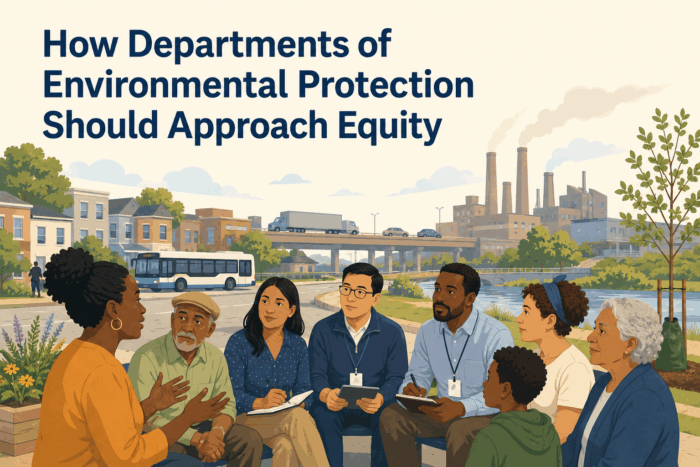
Communicating Environmental Risk to Overburdened Communities: How Departments of Environmental Protection Should Approach Equity
Environmental risk communication becomes especially consequential in communities that have experienced repeated pollution exposure, concentrated industrial activity, infrastructure burdens, historic underinvestment, or multiple environmental stressors over time. In these settings, residents may not encounter a new permit, contamination finding, cleanup announcement, enforcement action, or monitoring result as an isolated event. They may interpret it within a longer history of decisions that have shaped environmental conditions, institutional relationships, and expectations about whether the government will respond consistently.
Departments of Environmental Protection therefore need a communication approach that recognizes both the immediate environmental issue and the broader context in which the information will be received. Equity-focused communication does not mean changing technical findings to match community concerns or implying conclusions that the evidence does not support. It means understanding that the same regulatory message can carry different implications depending on a community’s prior experience, current exposure concerns, access to information, language needs, and ability to participate in regulatory processes.
This distinction matters because conventional environmental communication can unintentionally place the burden of interpretation on the people most affected by the decision. Residents may receive a technical notice, lengthy report, or risk estimate without clear explanation of what changed, what the agency knows, what remains uncertain, which protective actions are appropriate, and what the agency will do next. Communities with fewer institutional resources may have less capacity to translate those materials independently, monitor multiple agency websites, attend repeated meetings, or hire technical experts to interpret the record.
An equitable communication strategy should reduce those barriers without reducing scientific rigor. Departments of Environmental Protection should explain risk in understandable terms, distinguish confirmed findings from uncertainty, make cumulative context visible where relevant, provide meaningful language access, and create participation pathways that do not assume every community begins with the same level of regulatory knowledge or institutional trust. The objective is not to produce a different scientific standard for different communities. It is to ensure that the public can understand and use the information needed to participate in decisions that affect environmental conditions where they live.
Define Equity as Fair Access to Environmental Information and Participation
 Environmental equity can become vague when agencies use the term without explaining how it changes communication practice. Departments of Environmental Protection should define equity operationally. In a communication context, that means ensuring that people affected by environmental decisions can access the information, understand the issue, participate in the process, and identify what actions or protections are available without facing unnecessary barriers.
This does not require every audience to receive identical communication. Equal distribution of the same technical document may satisfy a basic access function while still leaving significant disparities in understanding. A community unfamiliar with permitting language, facing limited English proficiency, or dealing with several overlapping environmental concerns may need different explanatory tools from a regulated facility or technical advocacy organization.
Equity-focused communication should therefore consider what people need in order to engage effectively with the same underlying regulatory process. That may include plain-language summaries, translated materials, interpretation, accessible meeting formats, local distribution channels, issue-specific explainers, or additional context about agency authority and next steps. These tools should remain aligned with the formal technical record rather than create a separate version of the facts.
Defining equity this way also helps agencies avoid treating it as a symbolic communication theme. The practical question becomes whether affected communities can understand the environmental information and participate meaningfully in the decisions that concern them.
Explain the Immediate Risk Without Ignoring the Community’s Broader Environmental Context
Departments of Environmental Protection often need to communicate about one specific permit, contamination event, cleanup site, enforcement action, or monitoring result. The agency’s formal analysis may focus narrowly on that matter, while residents interpret it against a broader experience of nearby facilities, transportation corridors, legacy pollution, odors, noise, poor infrastructure, or repeated environmental concerns.
Agency communication should acknowledge that context without attributing every existing burden to the current source or decision. If the technical review evaluates one facility’s emissions, one contaminated property, or one discharge, the department should state that scope precisely. At the same time, it should avoid implying that broader environmental conditions are irrelevant simply because they fall outside the immediate analysis.
This balance is essential to credibility. Residents may reasonably ask why an additional source or regulatory action matters differently in a community already experiencing several environmental pressures. The agency should explain what the current evidence shows about the specific issue and identify which broader concerns are addressed through other programs, regulatory processes, or agencies where applicable.
A narrow technical finding and a broader community concern can both be legitimate without being the same conclusion. Equity-focused communication helps people understand that distinction rather than forcing them to choose between the regulatory record and their lived environmental context.
Separate Cumulative Community Concern From Source-Specific Regulatory Findings
Communities may describe risk cumulatively because that is how environmental conditions are experienced. Residents do not encounter pollution according to separate permit files or agency programs. They experience the combined environment around their homes, schools, workplaces, and public spaces.
Departments of Environmental Protection should explain when the current regulatory process evaluates a particular source or pathway and when broader cumulative analysis is part of a different framework. The agency should not imply that one source is responsible for the entire burden unless the evidence supports that conclusion.
At the same time, source-specific analysis should not be communicated as though it answers every cumulative question. Maintaining that boundary allows the department to remain scientifically and legally precise while still recognizing why residents may view the issue through a broader environmental lens.
How Environmental Protection Agencies Can Make Communication Central to Regulatory Effectiveness, Public Trust, and Community Health
This article is part of our series on strategic communication for Environmental Protection Agencies, Environmental Compliance Agencies, and state and local environmental departments. To learn more and to see the parent article, which links to other content just like this, click the button below.
Explain Risk in Terms of What Is Known, What Is Estimated, and What Remains Uncertain
Environmental risk information often combines measured conditions, modeled estimates, screening values, toxicity information, exposure assumptions, regulatory thresholds, and professional judgment. When these elements are compressed into a single statement that risk is “acceptable” or “low,” residents may not understand what the agency actually evaluated or how much uncertainty remains.
Departments of Environmental Protection should separate observed information from estimated information. If contamination was measured, the agency should explain what was detected and where. If future exposure is modeled, the communication should identify that the result is an estimate based on defined assumptions. If the source, duration, or extent of contamination remains under investigation, those uncertainties should remain visible.
This approach is particularly important in communities where institutional trust is already strained. Overly reassuring language can create significant credibility problems if later investigation identifies additional information. A more durable strategy is to explain what is confirmed, what the agency believes based on current evidence, and what questions still require investigation.
Uncertainty should not be used as a reason to avoid useful communication. The department can still explain what protective actions are appropriate, what regulatory steps are underway, and when additional information will become available. Transparency about uncertainty helps residents understand the difference between an incomplete investigation and an inactive agency response.
Avoid Using Regulatory Thresholds as the Entire Risk Explanation
Environmental agencies frequently rely on standards, screening levels, action levels, cleanup criteria, permit thresholds, or other benchmarks to evaluate environmental conditions. These tools are essential to regulatory work, but they can become misleading when public communication reduces risk to whether a value falls above or below one number.
Departments of Environmental Protection should explain what the threshold is designed to do. A screening value may identify when additional evaluation is needed. A cleanup level may guide remediation. A regulatory standard may establish a compliance requirement. These benchmarks do not necessarily answer identical questions about individual health outcomes, cumulative exposure, or broader community conditions.
Communication should also avoid translating “below the threshold” into “no risk” unless the evidence supports that conclusion. A value below an applicable criterion may mean that the specific regulatory trigger was not exceeded, not that exposure is nonexistent or that every community concern has been resolved. Precision is especially important in areas where residents are already comparing several environmental sources or risk pathways.
The same caution applies when a threshold is exceeded. An exceedance should be explained in terms of what regulatory or investigative consequence follows rather than automatically described as proof of certain harm. Risk communication is more useful when residents understand both the number and what the agency does because of it.
Build Language Access Into the Core Risk Communication Strategy
Language access should not be treated as a final translation step added after technical and public-facing materials have already been developed. Departments of Environmental Protection should identify language needs early enough that multilingual audiences receive the same essential information about environmental conditions, uncertainty, protective actions, public participation, and next steps.
The quality of the source material matters. Translating dense regulatory English into another language can reproduce the same barriers in a different form. Agencies should first develop clear, well-structured explanations in the source language and then translate those materials consistently, using terminology that remains stable across notices, meetings, websites, and follow-up communication.
Language access should also extend beyond written documents. Interpretation at public meetings, multilingual hotlines or contact pathways, accessible digital information, and translated updates may be necessary depending on the community and the significance of the issue. Residents should not have to rely on family members, neighbors, or community organizations to interpret critical environmental information when the agency can reasonably provide direct access.
Consistent language access supports both equity and accuracy. When residents receive information directly from the responsible agency in a language they can use, the department reduces the risk that complex environmental findings are filtered through incomplete or conflicting third-party explanations.
Explain the Agency’s Authority Without Making Jurisdiction Another Barrier
Overburdened communities may interact with several environmental, health, land-use, utility, and local government agencies at once. Residents may raise concerns about air pollution, contaminated soil, drinking water, transportation, industrial operations, health effects, and zoning in the same conversation because those issues are interconnected in their daily experience. Departments of Environmental Protection should be prepared to explain which concerns they can address and where other authorities are responsible.
Jurisdictional boundaries should be communicated as navigation, not dismissal. Rather than responding only that an issue falls outside the department’s authority, staff should identify the part of the concern they can address and, where possible, provide a practical referral for the remaining issue. This is particularly important when the governmental structure itself is one of the barriers communities face.
The department should also make overlapping responsibilities visible. If another agency is conducting health assessment, managing drinking water, overseeing land use, or regulating a separate environmental pathway, public communication should explain how those roles relate to the current issue without implying that one agency controls the others.
Clear jurisdictional communication strengthens equity because it reduces the burden placed on residents to decode government independently. Communities may still need to engage with several institutions, but they should not have to determine the entire regulatory structure before they can reach the agency capable of addressing a specific concern.
Explain Exposure Pathways Before Asking Communities to Interpret Risk
Environmental risk becomes easier to understand when people can see how a pollutant or hazard could actually reach them. Departments of Environmental Protection should explain whether the concern involves air, soil, groundwater, drinking water, surface water, food pathways, direct contact, or another exposure route rather than beginning with an abstract risk number.
The agency should distinguish the presence of a contaminant from the likelihood of exposure. A chemical may be detected at a site without every nearby resident experiencing the same exposure. Distance, duration, environmental movement, land use, physical barriers, and human behavior can all affect whether contact occurs. These distinctions should be explained without minimizing community concern.
Public communication should also clarify whether the pathway is confirmed, suspected, or still under investigation. If the department knows contamination is present but has not yet established how people may be exposed, that uncertainty should remain visible. Conversely, if a pathway has been ruled out through sufficient evidence, the agency should explain the basis rather than simply stating that there is no exposure.
This pathway-based approach helps residents understand how monitoring, cleanup, restrictions, health guidance, and further investigation connect to one another. Risk becomes more concrete because the public can see what the agency is evaluating and why specific protective actions are being considered.
Distinguish Community-Level Risk From Individual Health Predictions
Environmental risk assessments are generally designed to evaluate potential exposure and risk across populations or defined scenarios, not to predict what will happen to a particular individual. Residents may nevertheless interpret modeled risk values as personal diagnoses or guarantees. Departments of Environmental Protection should explain this distinction carefully.
Public-facing materials should describe what the risk estimate represents, including the population, exposure assumptions, duration, and scenario used where those factors materially affect interpretation. If a modeled result reflects a conservative or screening-level assumption, the agency should explain that purpose without suggesting the number is therefore irrelevant.
The department should also avoid translating statistical or modeled risk into language that sounds certain at the individual level. A risk estimate can support regulatory action and public health protection without predicting that a specific person will or will not experience a health effect.
This distinction is especially important in communities where residents may already know people with illnesses they believe are connected to environmental conditions. Agencies should acknowledge those concerns while being clear about what the environmental analysis can establish and what requires separate clinical or epidemiological evaluation.
Communicate Protective Actions Without Shifting Responsibility Onto Residents
When environmental risks are identified or suspected, agencies may advise residents to avoid certain activities, use alternative water, limit contact with soil, reduce outdoor exposure, or follow other protective guidance. These recommendations can be necessary, but communication should not create the impression that residents are primarily responsible for managing a problem created by broader environmental conditions.
Departments of Environmental Protection should explain why the protective action is recommended, how long it is expected to remain relevant, and what government or regulated parties are doing to address the underlying source. Residents should be able to distinguish short-term precautions from long-term remediation or regulatory response.
The agency should also consider whether the recommended action is realistically available to all affected households. Advice to use filtered air, avoid a local outdoor space, purchase alternative water, or change daily routines can impose financial and practical burdens. Where other agencies or programs provide resources, the department should identify those supports rather than assume residents can implement every recommendation independently.
Equity-focused communication makes both individual and institutional responsibilities visible. Residents receive clear guidance for reducing exposure while also seeing what agencies and responsible parties are doing to reduce or eliminate the source of risk.
Explain Monitoring Plans in Terms of What Communities Will Learn From Them
Monitoring is often presented as reassurance that an agency is taking an environmental concern seriously, but communities may not understand what the monitoring is intended to determine. Departments of Environmental Protection should explain the questions the monitoring program is designed to answer before describing sampling frequency or technical methods.
A monitoring plan may be intended to define the extent of contamination, identify trends, evaluate cleanup effectiveness, detect off-site movement, assess exposure pathways, or determine whether additional regulatory action is needed. Making the purpose visible helps residents understand why particular locations, pollutants, or time periods are being studied.
The department should also explain what the monitoring cannot establish. A limited sampling program may not represent every property, every hour, or every possible pathway. If additional investigation would be required to answer those broader questions, that limitation should be communicated directly.
Communities are more likely to trust monitoring when they understand how the results will affect decisions. The agency should explain what kinds of findings could trigger additional sampling, revised cleanup actions, enforcement, health coordination, or other next steps rather than presenting data collection as an end in itself.
Explain Why Monitoring Locations May Not Match the Places Residents Would Choose
Residents may question why monitoring is occurring at particular locations while other places they consider important are not being sampled. Departments of Environmental Protection should explain the technical and regulatory rationale for site selection without treating community questions as uninformed.
Monitoring locations may be chosen to capture likely source areas, downwind or downgradient conditions, background conditions, sensitive receptors, transport pathways, or other defined purposes. Those objectives should be understandable to the public.
Community input can also reveal locations or patterns that technical teams may not initially recognize. The agency should explain how additional observations can be considered while remaining clear that not every requested location can necessarily become part of the formal monitoring design.
Explain Cleanup Goals Without Promising That All Risk Will Disappear Immediately
Cleanup communication can create unrealistic expectations when agencies use phrases such as “the site will be safe” without explaining the standards, land uses, exposure assumptions, or long-term controls associated with the remedy. Departments of Environmental Protection should describe cleanup goals in relation to the regulatory framework and the conditions the remedy is intended to achieve.
Public communication should explain whether cleanup is intended to remove contamination, contain it, treat it, reduce exposure, restrict certain land uses, monitor conditions over time, or combine several approaches. Different remedies can protect communities in different ways, and the agency should avoid implying that every cleanup results in complete physical removal of all contamination.
The department should also explain when institutional controls, land-use restrictions, monitoring, maintenance, or other long-term obligations remain after active cleanup. Residents should understand what continuing protections are necessary and who is responsible for maintaining them.
Clear cleanup communication supports equity because communities can evaluate the actual protection strategy rather than relying on broad assurances. It also gives residents a basis for understanding why long-term oversight may continue even after the most visible remediation work has ended.
Explain Timelines Without Making Long Processes Feel Like Inaction
Environmental investigations and cleanups can take years, especially when contamination is complex, multiple responsible parties are involved, technical studies are extensive, or regulatory decisions require several stages. For overburdened communities, long timelines can reinforce a belief that government accepts conditions that would be resolved more quickly elsewhere.
Departments of Environmental Protection should communicate timelines through milestones rather than distant completion dates alone. Residents should know what is happening now, what work has been completed, what the next technical or regulatory step is, and what decisions depend on that work.
The agency should also explain what can accelerate or delay progress. Laboratory analysis, property access, design work, contracting, regulatory review, seasonal conditions, responsible-party negotiations, or other factors may affect timing. These explanations should provide context without becoming excuses for avoidable delay.
Where the timeline changes, the department should update communities directly and explain the consequence. Long-term environmental work is easier to follow when the public can see continuous movement through defined stages rather than encountering long periods of silence punctuated by occasional formal notices.
Build Communication Channels That Do Not Depend on Residents Finding the Agency First
Equitable environmental communication should not assume that affected residents will regularly check agency websites, subscribe to regulatory notices, or know which government body controls the issue. Departments of Environmental Protection should identify the channels communities already use and make important information available through more than one pathway.
Depending on the community, this may include direct mail, email or text notifications, local government channels, schools, libraries, community organizations, neighborhood meetings, multilingual media, or other trusted distribution networks. The appropriate mix should reflect the issue and community rather than become a standardized outreach checklist.
The department should still preserve an authoritative agency source where current documents, updates, contacts, and technical information can be found. Community partners can extend reach, but they should not become responsible for maintaining the official record or interpreting evolving technical conclusions on the agency’s behalf.
This approach reduces information disparities. Residents are more likely to receive significant updates even if they are unfamiliar with environmental regulatory systems, while the department retains responsibility for ensuring that the underlying information remains accurate and current.
Organize Risk Communication Around the Questions Communities Need Answered
Environmental agencies often organize information according to internal program structures, technical disciplines, or regulatory documents. Residents, however, usually approach environmental risk through more immediate questions: What was found? Could people be exposed? Who may be affected? What should residents do now? What is the agency doing about the source? What happens if additional contamination is discovered? Departments of Environmental Protection should structure public-facing communication around these practical questions while preserving access to the full technical record.
This approach is especially important when several environmental concerns overlap. A community may be following contaminated soil, groundwater, industrial emissions, truck traffic, odors, and other conditions at the same time. The agency should explain which questions the current investigation or regulatory action can answer and which require separate analysis, rather than expecting residents to reconstruct those distinctions across several reports.
Question-based communication should also make the sequence of agency action visible. Residents should be able to move from the environmental finding to the exposure assessment, protective actions, investigation, regulatory response, and follow-up without having to understand how different internal programs divide responsibility. The underlying technical work can remain complex, but the public pathway through that information should be coherent.
The goal is not to simplify environmental risk into a few reassuring statements. It is to organize complexity in a way that helps people identify what matters to them, understand the limits of current evidence, and see what the department is doing next.
Explain Differential Exposure Without Generalizing About Entire Communities
Overburdened communities are not environmentally uniform. Exposure can vary substantially within the same neighborhood depending on proximity to a source, housing conditions, work patterns, transportation corridors, elevation, prevailing winds, drinking water sources, property use, and other factors. Departments of Environmental Protection should avoid communicating risk as though every resident experiences the same conditions simply because they live within a broadly defined affected area.
Public communication should explain where available evidence indicates greater or lesser potential exposure and what factors contribute to those differences. Maps and geographic descriptions can help residents understand monitoring areas, contamination boundaries, investigation zones, or exposure pathways when those tools are based on appropriate evidence.
Agencies should also be cautious with labels that imply a community is universally exposed or universally protected. A neighborhood-level risk designation may be useful for planning or screening, but it does not necessarily describe the experience of every household or individual within that area. Conversely, a lower modeled exposure at one location should not be treated as proof that broader community concerns are unfounded.
This precision supports equity because it helps direct information and protective action toward the people and locations most relevant to the identified risk. It also prevents broad community categories from replacing the site-specific and pathway-specific analysis needed for accurate environmental communication.
Explain Cumulative Environmental Burden Without Claiming More Than the Evidence Supports
Residents in overburdened communities may evaluate each new environmental decision against a history of multiple facilities, transportation sources, contaminated sites, infrastructure burdens, or repeated regulatory actions. Departments of Environmental Protection should acknowledge this cumulative perspective where it is relevant, even when the immediate regulatory process evaluates only one source or environmental pathway.
The agency should explain what cumulative information is available and how it relates to the current decision. Where the applicable regulatory framework includes cumulative impact, community burden, or environmental justice considerations, those requirements should be described directly. Where broader cumulative conditions are tracked through separate screening tools, planning programs, or policy frameworks, the department should distinguish those functions from source-specific compliance findings.
Communication should not imply that every observed community burden can be attributed to the source currently under review. Nor should it use the limits of source attribution to dismiss the broader environmental context. These are different analytical questions, and the public should understand which one the agency is answering at each stage.
This distinction is particularly important when communities ask why an additional permitted activity or regulatory decision is being considered in an area already experiencing significant environmental stress. Even when the current process does not allow the department to resolve every cumulative concern, communication should explain how the broader context is recognized, what authority applies, and where other policy or regulatory pathways may address it.
Distinguish Community Burden Indicators From Individual Risk Estimates
Environmental justice screening tools and community-level indicators can help identify areas experiencing multiple environmental and socioeconomic stressors, but they do not necessarily function as individual health risk assessments. Departments of Environmental Protection should explain this distinction whenever both types of information appear in the same public discussion.
A community indicator may show relative burden, vulnerability, or the presence of several environmental stressors. An individual or site-specific risk assessment may evaluate different evidence, pathways, and assumptions. Neither should be substituted casually for the other.
Clear explanation helps residents understand why a community can rank highly on a burden indicator even when one site-specific assessment produces a comparatively limited risk estimate. The two tools may be answering different questions rather than contradicting each other.
Explain How Community Knowledge Can Inform Environmental Investigation
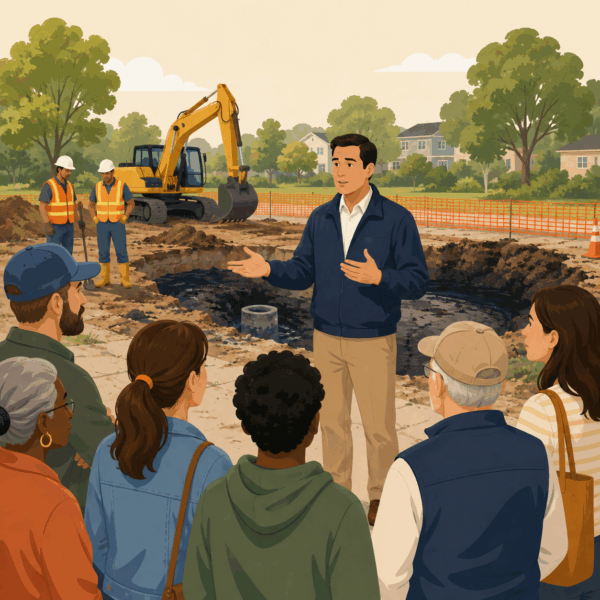 Residents often possess information that does not appear in agency databases or formal technical studies. They may know when odors occur, where dust settles, which drainage routes flood, when trucks idle near homes, how frequently visible emissions appear, or where historical activities occurred. Departments of Environmental Protection should explain how this community knowledge can contribute to investigation without promising that every observation will lead to a specific regulatory conclusion.
The agency can identify the kinds of information that are most useful, such as location, timing, duration, photographs, repeated patterns, observed conditions, or historical context. This allows residents to contribute evidence in a form that technical staff can evaluate while preserving the value of observations that may not initially fit established datasets.
Community knowledge should not be treated as a substitute for validated monitoring, laboratory analysis, source testing, or other technical methods when those forms of evidence are necessary. It can, however, help agencies identify where additional investigation may be warranted, refine sampling strategies, or understand patterns that formal monitoring alone may miss.
Communicating this role clearly can strengthen participation because residents understand how their observations enter the agency’s work. It also reduces frustration when an individual report cannot independently establish causation or noncompliance but still contributes to the broader evidentiary picture.
Communicate Agency Action in Proportion to the Level of Risk and Uncertainty
Communities often judge the seriousness of an environmental finding partly by what the agency does after discovering it. If the department communicates concern but takes no visible action, residents may question whether the risk is being minimized. If the agency takes precautionary action without explaining why, the response may be interpreted as evidence that conditions are more dangerous than publicly acknowledged.
Departments of Environmental Protection should connect agency actions to the information available at the time. Additional sampling, access restrictions, temporary protective measures, enforcement, cleanup requirements, health referrals, or continued monitoring should be explained in terms of the condition or uncertainty they are intended to address.
The department should distinguish precautionary action from a final risk determination. An agency may reasonably take protective steps before every technical question is resolved. Public communication should explain that the action reflects the need to reduce potential exposure while investigation continues rather than implying that the worst-case interpretation has already been confirmed.
This proportional approach helps residents understand why the response may change over time. As new evidence becomes available, protective measures can be expanded, modified, or removed according to the applicable findings. Making that relationship visible demonstrates that agency action is tied to evidence rather than to public pressure alone.
Coordinate Risk Communication Across Environmental and Public Health Agencies
Environmental risk often crosses the boundary between regulatory and health communication. Departments of Environmental Protection may determine where contamination exists, identify responsible parties, oversee cleanup, or evaluate environmental conditions, while public health departments or other health authorities may provide guidance about exposure, symptoms, medical questions, or protective actions.
Agencies should coordinate these roles before communicating about significant risk. Residents need to understand which institution is explaining the environmental condition and which is providing health guidance. Conflicting terminology or inconsistent thresholds can create confusion even when the agencies are addressing different questions.
Joint communication should preserve each agency’s expertise. The environmental department should not make clinical claims beyond its authority, while health agencies should receive enough environmental context to explain precautions accurately. Where uncertainty remains, both agencies should use compatible language about what is known and what additional information is needed.
This coordination is especially important when communities have already received information from several government sources. A unified factual foundation, paired with clear role-specific guidance, reduces the burden on residents to reconcile technical and health messages independently.
Correct Inaccurate Claims Without Dismissing Community Distrust
Environmental risk controversies can produce factual errors, incomplete interpretations, and legitimate distrust at the same time. Departments of Environmental Protection should distinguish among those categories rather than treating every challenge to agency communication as misinformation.
When the record supports a factual correction, the department should provide it directly. This may involve correcting a sampling location, concentration, regulatory status, cleanup timeline, source attribution claim, or statement about agency authority. The correction should be supported by accessible evidence and should avoid characterizing the motives of the person or organization that shared the inaccurate information.
Distrust requires a different response. A community may accurately understand the technical finding and still question whether the agency is acting quickly enough, whether monitoring is sufficient, or whether enforcement will be consistent. Those concerns are not resolved simply by repeating the technical conclusion.
Departments strengthen credibility when they can correct factual errors while also explaining the actions, evidence, and accountability mechanisms that address the underlying concern. Equity-focused risk communication should defend the integrity of the record without treating skepticism as a failure of community understanding.
Make Follow-Up Communication as Visible as the Initial Risk Announcement
Environmental agencies often communicate most intensely when a contamination finding, monitoring result, or enforcement action first becomes public. Attention may decline as technical work continues, leaving communities uncertain about whether the investigation, cleanup, or regulatory response is still active.
Departments of Environmental Protection should establish a follow-up communication rhythm that reflects the pace of the work. Updates can explain completed sampling, pending analysis, cleanup milestones, changes in protective guidance, enforcement developments, or upcoming decision points. When no major conclusion has changed, the agency can still confirm what work remains underway.
This continuity is especially important in overburdened communities where residents may have experienced repeated short bursts of government attention followed by long periods of silence. Predictable updates demonstrate that communication is part of the response rather than an activity limited to moments of public scrutiny.
Follow-up should also explain when the communication responsibility changes. If a remediation program, local government, health agency, or another authority becomes the primary source for later stages, the handoff should be explicit. Communities should be able to follow the environmental issue from initial finding through investigation and long-term resolution without having to rediscover the responsible agency at every stage.
Build Equity Into Risk Communication Planning Before an Issue Escalates
Equity-focused environmental communication is most effective when it is designed before a major contamination finding, permit controversy, enforcement action, or monitoring event becomes urgent. Departments of Environmental Protection should identify communities with likely communication barriers, determine which languages and access needs are relevant, and establish how risk information will be distributed before public concern intensifies.
Planning should also identify which types of information require additional explanation. Technical findings, health-related implications, regulatory thresholds, cleanup milestones, and jurisdictional responsibilities may all need different communication approaches depending on the audience. Building those needs into project planning allows technical, legal, public information, and community engagement staff to prepare materials together rather than translating complex information at the last minute.
Departments should also identify likely communication triggers. A new sampling result, changed exposure pathway, revised cleanup plan, additional enforcement action, or updated health recommendation may materially alter what residents need to know. When those triggers are built into the communication plan, agencies are less likely to leave outdated information in circulation while the technical record changes.
This approach makes equity operational. Instead of treating inclusive communication as an additional outreach task, the department builds access, clarity, and community context into the same workflow used to manage the environmental issue itself.
Coordinate Internal Teams Around One Risk Communication Framework
Environmental risk information may move through toxicologists, engineers, remediation staff, inspectors, enforcement teams, legal counsel, public information officers, and community engagement staff before it reaches residents. Without coordination, each group may explain the same condition differently or emphasize different levels of uncertainty.
Departments of Environmental Protection should establish a shared framework that identifies the confirmed facts, current risk interpretation, relevant thresholds, major uncertainties, protective actions, agency responsibilities, and next steps. The framework should also distinguish what is technically known from what remains under investigation so that staff do not communicate different levels of certainty.
This does not mean every employee should use identical wording. Technical specialists may need more detailed explanations, while community-facing staff may focus on practical implications. The underlying meaning, however, should remain consistent across meetings, webpages, fact sheets, media responses, and direct conversations with residents.
A shared framework also helps the agency respond more quickly when conditions change. Staff can update one agreed factual foundation rather than trying to reconcile several separate explanations after conflicting information has already reached the public.
Create a Single Authoritative Public Source for Current Risk Information
Communities should not have to search multiple agency webpages, technical repositories, meeting packets, and news releases to determine what the department currently believes about an environmental risk. Departments of Environmental Protection should maintain one authoritative source that clearly presents the latest status, relevant documents, protective guidance, contacts, and upcoming milestones.
That source should distinguish current information from historical material. Older sampling results, preliminary findings, superseded cleanup plans, or outdated recommendations may remain important for transparency, but they should be labeled so residents can tell what still applies. A prominent status summary can help users understand the present condition before they move into the detailed record.
The public-facing source should also connect plain-language explanations to supporting technical information. Residents who want deeper detail should be able to move from a risk summary to sampling data, investigation reports, maps, cleanup documents, or regulatory actions without losing track of which materials are current.
A reliable source reduces information inequality because residents do not need specialized knowledge to reconstruct the agency’s position. It also gives community organizations, media outlets, elected officials, and partner agencies a consistent reference point for their own communication.
Make Updates Easy to Recognize
When risk information changes, residents should be able to see what is new without rereading the entire project record. Departments of Environmental Protection should identify the date of the latest update and summarize material changes clearly.
A new sampling result, changed protective recommendation, revised cleanup schedule, or newly identified exposure pathway should be distinguished from routine administrative updates. This helps communities focus on developments that actually affect their understanding or behavior.
Visible update practices also reduce the risk that outdated screenshots, fact sheets, or third-party summaries continue circulating after the agency’s interpretation has changed.
Coordinate Risk Communication Across Environmental and Public Health Agencies
Environmental risk often crosses the boundary between regulatory and health communication. Departments of Environmental Protection may determine where contamination exists, identify responsible parties, oversee cleanup, or evaluate environmental conditions, while public health departments or other health authorities may provide guidance about exposure, symptoms, medical questions, or protective actions.
Agencies should coordinate these roles before communicating about significant risk. Residents need to understand which institution is explaining the environmental condition and which is providing health guidance. Conflicting terminology or inconsistent thresholds can create confusion even when the agencies are addressing different questions.
Joint communication should preserve each agency’s expertise. The environmental department should not make clinical claims beyond its authority, while health agencies should receive enough environmental context to explain precautions accurately. Where uncertainty remains, both agencies should use compatible language about what is known and what additional information is needed.
This coordination is especially important when communities have already received information from several government sources. A unified factual foundation, paired with clear role-specific guidance, reduces the burden on residents to reconcile technical and health messages independently.
Correct Inaccurate Claims Without Dismissing Community Distrust
Environmental risk controversies can produce factual errors, incomplete interpretations, and legitimate distrust at the same time. Departments of Environmental Protection should distinguish among those categories rather than treating every challenge to agency communication as misinformation.
When the record supports a factual correction, the department should provide it directly. This may involve correcting a sampling location, concentration, regulatory status, cleanup timeline, source attribution claim, or statement about agency authority. The correction should be supported by accessible evidence and should avoid characterizing the motives of the person or organization that shared the inaccurate information.
Distrust requires a different response. A community may accurately understand the technical finding and still question whether the agency is acting quickly enough, whether monitoring is sufficient, or whether enforcement will be consistent. Those concerns are not resolved simply by repeating the technical conclusion.
Departments strengthen credibility when they can correct factual errors while also explaining the actions, evidence, and accountability mechanisms that address the underlying concern. Equity-focused risk communication should defend the integrity of the record without treating skepticism as a failure of community understanding.
Make Follow-Up Communication as Visible as the Initial Risk Announcement
Environmental agencies often communicate most intensely when a contamination finding, monitoring result, or enforcement action first becomes public. Attention may decline as technical work continues, leaving communities uncertain about whether the investigation, cleanup, or regulatory response is still active.
Departments of Environmental Protection should establish a follow-up communication rhythm that reflects the pace of the work. Updates can explain completed sampling, pending analysis, cleanup milestones, changes in protective guidance, enforcement developments, or upcoming decision points. When no major conclusion has changed, the agency can still confirm what work remains underway.
This continuity is especially important in overburdened communities where residents may have experienced repeated short bursts of government attention followed by long periods of silence. Predictable updates demonstrate that communication is part of the response rather than an activity limited to moments of public scrutiny.
Follow-up should also explain when the communication responsibility changes. If a remediation program, local government, health agency, or another authority becomes the primary source for later stages, the handoff should be explicit. Communities should be able to follow the environmental issue from initial finding through investigation and long-term resolution without having to rediscover the responsible agency at every stage.
Build Equity Into Risk Communication Planning Before an Issue Escalates
Equity-focused environmental communication is most effective when it is designed before a major contamination finding, permit controversy, enforcement action, or monitoring event becomes urgent. Departments of Environmental Protection should identify communities with likely communication barriers, determine which languages and access needs are relevant, and establish how risk information will be distributed before public concern intensifies.
Planning should also identify which types of information require additional explanation. Technical findings, health-related implications, regulatory thresholds, cleanup milestones, and jurisdictional responsibilities may all need different communication approaches depending on the audience. Building those needs into project planning allows technical, legal, public information, and community engagement staff to prepare materials together rather than translating complex information at the last minute.
Departments should also identify likely communication triggers. A new sampling result, changed exposure pathway, revised cleanup plan, additional enforcement action, or updated health recommendation may materially alter what residents need to know. When those triggers are built into the communication plan, agencies are less likely to leave outdated information in circulation while the technical record changes.
This approach makes equity operational. Instead of treating inclusive communication as an additional outreach task, the department builds access, clarity, and community context into the same workflow used to manage the environmental issue itself.
Coordinate Internal Teams Around One Risk Communication Framework
Environmental risk information may move through toxicologists, engineers, remediation staff, inspectors, enforcement teams, legal counsel, public information officers, and community engagement staff before it reaches residents. Without coordination, each group may explain the same condition differently or emphasize different levels of uncertainty.
Departments of Environmental Protection should establish a shared framework that identifies the confirmed facts, current risk interpretation, relevant thresholds, major uncertainties, protective actions, agency responsibilities, and next steps. The framework should also distinguish what is technically known from what remains under investigation so that staff do not communicate different levels of certainty.
This does not mean every employee should use identical wording. Technical specialists may need more detailed explanations, while community-facing staff may focus on practical implications. The underlying meaning, however, should remain consistent across meetings, webpages, fact sheets, media responses, and direct conversations with residents.
A shared framework also helps the agency respond more quickly when conditions change. Staff can update one agreed factual foundation rather than trying to reconcile several separate explanations after conflicting information has already reached the public.
Create a Single Authoritative Public Source for Current Risk Information
Communities should not have to search multiple agency webpages, technical repositories, meeting packets, and news releases to determine what the department currently believes about an environmental risk. Departments of Environmental Protection should maintain one authoritative source that clearly presents the latest status, relevant documents, protective guidance, contacts, and upcoming milestones.
That source should distinguish current information from historical material. Older sampling results, preliminary findings, superseded cleanup plans, or outdated recommendations may remain important for transparency, but they should be labeled so residents can tell what still applies. A prominent status summary can help users understand the present condition before they move into the detailed record.
The public-facing source should also connect plain-language explanations to supporting technical information. Residents who want deeper detail should be able to move from a risk summary to sampling data, investigation reports, maps, cleanup documents, or regulatory actions without losing track of which materials are current.
A reliable source reduces information inequality because residents do not need specialized knowledge to reconstruct the agency’s position. It also gives community organizations, media outlets, elected officials, and partner agencies a consistent reference point for their own communication.
Make Updates Easy to Recognize
When risk information changes, residents should be able to see what is new without rereading the entire project record. Departments of Environmental Protection should identify the date of the latest update and summarize material changes clearly.
A new sampling result, changed protective recommendation, revised cleanup schedule, or newly identified exposure pathway should be distinguished from routine administrative updates. This helps communities focus on developments that actually affect their understanding or behavior.
Visible update practices also reduce the risk that outdated screenshots, fact sheets, or third-party summaries continue circulating after the agency’s interpretation has changed.
Build Community Engagement Into Technical Decision Points
Community engagement is most useful when it occurs before technical and regulatory decisions become effectively fixed. Departments of Environmental Protection should identify where local knowledge, participation, and stakeholder concerns can inform investigation design, sampling priorities, communication methods, cleanup planning, or other decisions within the agency’s authority.
Engagement should be connected to real decision points. Residents should understand whether they are being asked to provide observations, comment on a proposed plan, identify access barriers, review a monitoring approach, or participate in another defined process. Vague invitations to “share concerns” can create frustration when people later discover that the agency had already finalized the relevant decision.
The agency should also explain which parts of the process are constrained by law, science, or regulatory requirements. Equity does not require pretending that every aspect of a technical response is open to negotiation. It requires clarity about where community information can influence the process and where established standards govern the outcome.
Connecting engagement to actual decisions strengthens trust because residents can see how participation fits into agency action. Even when the final outcome differs from what some stakeholders wanted, the process is easier to evaluate when the role of community input was visible from the beginning.
Coordinate Risk Communication With Trusted Community Partners Without Outsourcing Agency Responsibility
Community-based organizations, schools, faith institutions, local governments, neighborhood groups, tribal governments, and other trusted partners can help agencies reach residents who may not regularly interact with environmental regulators. Departments of Environmental Protection should use these relationships to extend access while retaining responsibility for the accuracy and completeness of official information.
The department can provide partners with current summaries, translated materials, meeting information, contact pathways, and clear explanations of the technical issue. Partners can help identify community questions, preferred communication channels, and barriers that agency staff may not recognize from within formal regulatory processes.
Agencies should not rely on partners to interpret uncertain technical findings independently or to carry the burden of explaining why government has taken a particular regulatory action. The department remains responsible for the authoritative explanation and should be available to answer difficult questions directly.
This balance strengthens equity because community networks expand reach without becoming substitutes for government accountability. Partners help connect the agency with residents, while the department retains ownership of the environmental information and response.
Prepare Communication Systems for High-Concern Risk Events
Some environmental findings will generate intense public concern because they involve sensitive locations, highly visible contamination, potential health implications, or communities with a long history of environmental burden. Departments of Environmental Protection should prepare communication protocols before these situations arise.
Preparation can include designated spokespersons, rapid technical review, multilingual communication, public health coordination, community notification pathways, issue-specific FAQs, maps, meeting plans, and procedures for updating information as the investigation develops. The goal is not to prewrite conclusions, but to make sure the agency can communicate quickly without sacrificing scientific accuracy.
High-concern events also require careful sequencing. The first update may confirm the finding and identify immediate protective guidance, while later updates explain source investigation, exposure assessment, enforcement, cleanup, or long-term monitoring. Trying to answer every question in the first communication can lead to overstatement or confusion.
A prepared system allows the department to remain visible and responsive under pressure. It reduces the likelihood that residents receive fragmented or conflicting information during the period when uncertainty and concern are highest.
Measure Whether Equity-Focused Communication Is Reducing Access and Understanding Gaps
Departments of Environmental Protection should evaluate whether affected communities can actually access and use environmental risk information, not simply whether outreach materials were produced. The number of translated notices, meetings, webpages, or mailers does not by itself demonstrate that communication barriers have been reduced.
Useful indicators may include recurring questions about the same risk concept, low participation from affected populations, limited use of translated materials, confusion about agency authority, difficulty locating current information, or repeated misunderstanding of protective actions. These patterns can show where communication remains too technical, too fragmented, or poorly matched to community needs.
Departments should also look for differences in how information reaches different groups. If technically sophisticated stakeholders consistently receive and interpret updates earlier than nearby residents, the communication system may still be producing inequitable access even when the information is technically public.
The purpose of measurement is improvement rather than proof of success. Agencies can use what they learn to revise language access, digital tools, meeting formats, outreach channels, partner coordination, and risk explanations across future environmental matters.
Build Institutional Knowledge That Carries Equity Practices Across Programs
Equitable risk communication should not depend entirely on individual staff members who have strong community relationships or specialized experience. Departments of Environmental Protection should preserve successful practices so they can be used across remediation, permitting, monitoring, enforcement, emergency response, and other programs.
Institutional resources can include community communication profiles, language access protocols, risk explanation templates, partner contact structures, public health coordination procedures, accessibility guidance, update formats, and lessons from previous high-interest environmental matters. These tools should support consistency while remaining flexible enough for different communities and technical issues.
Agencies should also document recurring concerns and communication barriers in places that experience repeated environmental activity. New staff should not have to rediscover the same history of distrust, language needs, or previous agency commitments each time a new project begins.
Strong institutional knowledge helps equity become a durable communication practice rather than a project-specific initiative. It allows departments to approach future environmental risk communication with a better understanding of both the technical responsibilities and the community conditions that shape how information will be received.
Strategic Communication Support for Equity-Focused Environmental Risk Communication
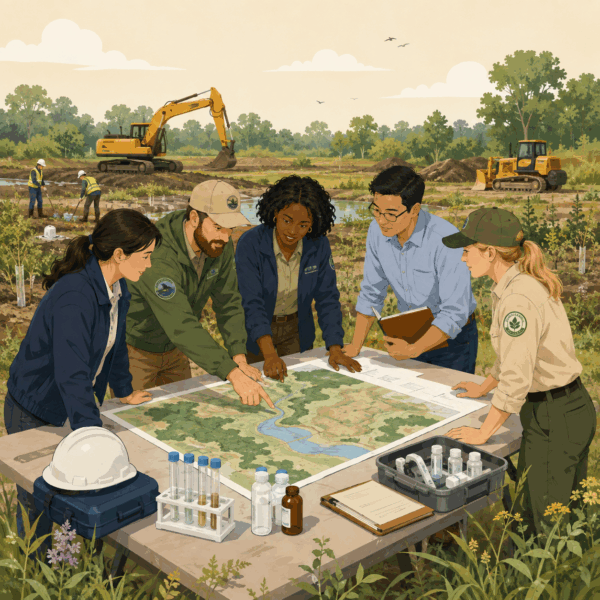 Communicating environmental risk in overburdened communities requires more than technically accurate notices and public meetings. Departments of Environmental Protection may need to explain complex exposure pathways, uncertainty, cumulative burden, cleanup decisions, health coordination, and regulatory authority while also addressing language access, historical distrust, and unequal access to technical information. Internal teams may not always have the capacity to organize these elements into one coherent communication system, particularly during high-interest investigations, remediation projects, or enforcement matters.
Stegmeier Consulting Group (SCG) can support Departments of Environmental Protection by developing plain-language risk communication frameworks, community-facing summaries, multilingual materials, public meeting content, agency role explanations, project webpages, issue-specific FAQs, stakeholder engagement plans, update protocols, and communication tools that connect technical findings with practical public questions. SCG can also help departments align messaging across technical staff, public information teams, public health partners, local governments, and community organizations so that residents receive consistent information about what is known, what remains uncertain, and what the agency is doing next.
External support can be especially valuable when internal capacity is limited, when a community has experienced repeated environmental concerns, or when an objective outside perspective can identify where technically correct materials are still creating barriers to understanding or participation. SCG’s role remains focused on communication strategy, information organization, accessibility, stakeholder engagement, and public-facing systems. SCG does not conduct environmental risk assessments, make regulatory findings, provide medical guidance, establish cleanup standards, determine compliance, or make enforcement decisions on behalf of the department.
Future Trends
Environmental risk communication will increasingly need to account for communities that experience multiple overlapping environmental and social stressors rather than treating each permit, contamination event, or cleanup site as an isolated communication problem. Departments of Environmental Protection will face stronger expectations to explain how source-specific findings relate to broader community conditions without overstating what individual regulatory processes can determine.
Digital access will also become more important. Communities will increasingly expect current risk information, monitoring results, maps, cleanup updates, public health guidance, and regulatory documents to be connected through accessible online systems. Agencies will need to make those tools usable on mobile devices, understandable without technical expertise, and available in the languages most relevant to affected residents.
Expectations for transparency will extend beyond initial risk disclosure. Communities will increasingly want to follow how environmental findings influence investigation, enforcement, remediation, protective actions, monitoring, and long-term oversight. Departments that maintain visible continuity across these stages will be better positioned to demonstrate that public communication is tied to ongoing agency action rather than limited to moments of controversy.
Technology can assist with translation, document navigation, mapping, notification systems, and public access, but it will not replace the need for careful technical and ethical judgment. Departments will still need to determine how uncertainty is explained, when community-level burden indicators are relevant, which findings support protective action, and how to communicate risk without either minimizing concern or implying conclusions beyond the evidence.
Conclusion
Communicating environmental risk to overburdened communities requires Departments of Environmental Protection to combine scientific precision with practical accessibility. Residents need to understand what was detected, how exposure may occur, what the agency knows, what remains uncertain, what protective actions are appropriate, and what government is doing to address the underlying environmental condition.
Equity requires more than providing the same technical information to every audience. Communities may differ in language access, regulatory familiarity, digital access, prior environmental experience, and ability to participate in lengthy public processes. A fair communication system recognizes those differences while preserving one consistent technical record and one standard of regulatory accountability.
The strongest risk communication strategies also recognize context without overstating causation. Departments can acknowledge cumulative burden, historical experience, and community knowledge while remaining precise about the source-specific findings within the current regulatory process. They can explain uncertainty without using it to delay communication and explain thresholds without reducing complex risk questions to a single number.
Environmental disagreement and distrust may remain even when communication is strong. The goal is not to eliminate every concern through messaging. It is to ensure that affected communities can access the information, understand the evidence and limitations, participate meaningfully, and follow the agency’s response from initial finding through investigation, remediation, and long-term oversight.
Stegmeier Consulting Group’s Strategic Approach to Communication Systems
Build environmental risk communication systems that connect technical evidence, community context, accessibility, and agency action.
Departments of Environmental Protection need communication systems that help overburdened communities understand environmental findings, exposure pathways, uncertainty, protective actions, cleanup progress, and regulatory responsibilities without requiring residents to navigate technical systems on their own. Stegmeier Consulting Group (SCG) helps agencies organize complex risk information, strengthen plain-language and multilingual communication, align technical and public-facing messaging, improve community engagement, and build durable communication frameworks that make environmental information easier to access and act on.
Use the form below to connect with our team and explore how strategic communication support can strengthen equitable environmental risk communication and public understanding.