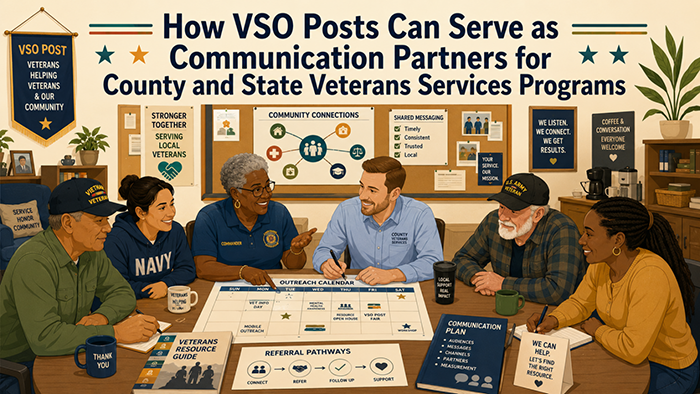
How VSO Posts Can Serve as Communication Partners for County and State Veterans Services Program
Veterans Service Organization posts occupy a unique position in the veteran community ecosystem. They are not government agencies, and they do not have the administrative authority or the institutional resources of a county veterans services office or a state Department of Military and Veterans Affairs. But they have something that government agencies spend years and significant resources trying to build and that many never fully achieve: genuine, embedded, trust-based relationships with the veteran community members who are the hardest to reach through institutional outreach. VSO posts are where veterans gather voluntarily, in spaces that feel like theirs rather than like government offices, for reasons that are social and cultural rather than administrative. They are among the most credible communication channels available in the veterans services landscape, and they are significantly underutilized as systematic communication partners by the county and state agencies whose programs would benefit most from being carried through those channels.
The typical relationship between county and state veterans services agencies and VSO posts is episodic and transactional. The agency reaches out to VSO posts when a specific outreach event is being planned and asks post commanders to encourage their members to attend. The post commander puts a notice in the post newsletter or makes an announcement at the monthly meeting. Members who are interested show up; members who are not do not. After the event, the relationship returns to its default state of minimal contact until the next outreach event is being planned. This episodic transactional model produces some outreach outcomes, but it leaves the vast majority of the VSO post’s communication potential unrealized, because the post is functioning as a bulletin board for agency announcements rather than as a genuine communication partner whose members are equipped to carry benefit information into the conversations they have every day with fellow veterans.
The distinction between a VSO post as a bulletin board and a VSO post as a communication partner is the distinction this article develops. A bulletin board posts information. A communication partner carries information through relationships. The difference in access outcomes produced by these two functions is significant: a post commander who reads an agency announcement at a monthly meeting and a post member who tells a fellow veteran in a personal conversation that their friend recently got a significant property tax exemption through a program they probably qualify for are delivering the same information through communications with fundamentally different credibility and penetration. The second communication is peer-to-peer, specific, and delivered through a trusted personal relationship. It is the communication that is most likely to produce behavior change, and building the VSO post network as a systematic communication partner means investing in making it possible.
This article provides a comprehensive framework for county and state veterans services agencies to build VSO posts into a systematic outreach infrastructure rather than an ad hoc referral source. It covers the organizational model for VSO post communication partnerships, the briefing and equipping processes that give post commanders and members the accurate information and communication tools they need to serve as effective partners, the communication flows that keep post partners current as programs change, the relationship investment that sustains partnerships over time, the measurement approaches that demonstrate the value of the VSO communication network, and the organizational practices that make the VSO partnership infrastructure a durable component of the agency’s communication system rather than a relationship that depends on individual connections between specific staff members and specific post commanders.
The investment required to build VSO posts into systematic communication partners is primarily an investment of sustained attention rather than financial resources. The most important inputs are relationship maintenance, accurate and current information provision, and the organizational commitment to treating the VSO network as a strategic communication asset rather than an incidental outreach resource. Agencies that make this investment build community-level communication capacity that extends their reach far beyond what their own staff can achieve through direct outreach alone, and they do so through the most trusted communication channel available in the veteran community.
Understanding What VSO Posts Can and Cannot Do as Communication Partners
 Setting realistic expectations about the VSO post communication partnership function is essential for both sides of the relationship. Post commanders and members who are asked to serve as communication partners for county and state veterans services programs need to understand clearly what they are being asked to do and what they are not being asked to do. Agency staff who are building VSO partnerships need to design the partnership around what post commanders and members can realistically provide rather than around an idealized communication function that the volunteer post structure cannot sustain.
What VSO post members can do as communication partners is significant and genuinely valuable. They can share accurate information about the existence and general availability of specific programs with fellow veterans they interact with in post settings and in the broader community. They can mention that a specific program exists when they learn that a fellow veteran has a situation that sounds relevant to that program. They can refer veterans to the CVSO office or to the agency’s website or phone line for specific eligibility information and application assistance. They can attend agency briefings and carry the information from those briefings back to their post membership. And they can provide the organizing agency with feedback about what their members are asking about, what they are confused about, and what they are saying about existing programs, serving as a voice of the veteran community to the agency as well as a channel of agency information to the community.
What VSO post members cannot realistically do as communication partners is provide detailed benefits counseling, make specific eligibility determinations, assist with claims preparation, or substitute for the professional benefits assistance that CVSO staff are trained and accredited to provide. The line between the information-sharing and referral function appropriate to post members and the professional benefits assistance appropriate to credentialed CVSO staff must be clearly established and clearly communicated in the partner briefing process. Post members who attempt to provide benefits counseling beyond their knowledge and authority do so at risk of providing inaccurate information that harms the veterans they are trying to help. Post members who are clear about the boundaries of their communication role and who refer veterans to CVSO staff for detailed assistance are providing a service that is genuinely valuable without attempting to substitute for professional competencies they do not have.
The realistic scope of the VSO post communication partner function is: awareness creation and warm referral. Post members who make veterans in their networks aware that specific programs exist, who briefly describe the general nature of the programs in terms that allow veterans to assess relevance, and who connect interested veterans with the CVSO contact who can provide specific assistance, are performing the communication function that the post network is best positioned to provide. This function is less technically demanding than professional benefits counseling but is not less valuable in the veteran access equation, because the awareness and referral function is often the barrier that prevents otherwise eligible veterans from initiating the CVSO contact that leads to benefit access.
The Trust Differential Between Post Member and Agency Representative
The specific value that VSO post members provide as communication partners, beyond what agency outreach communications can provide, is rooted in the trust differential between a peer community member and an institutional representative. This trust differential is not a function of the quality or accuracy of the information each communicator delivers. It is a function of the relationship context in which the communication occurs. A fellow post member who mentions a program is delivering a peer recommendation. An agency representative who describes the same program is delivering an institutional message. The peer recommendation is received through a trust relationship that the institutional message does not have access to.
This trust differential has several specific communication implications. Veterans who are skeptical of government communications are often not skeptical of peer communications about the same programs, because they trust the peer’s motivations and judgment in a way they do not trust institutional motivations. Veterans who have had negative prior experiences with VA or county veterans services agencies and who are consequently resistant to direct agency outreach may be more receptive to the same information delivered by a trusted fellow veteran. Veterans who feel that government benefit programs are designed for other veterans rather than for people like them may be more likely to investigate their eligibility when a peer whose identity and experience they recognize suggests that the program might be relevant to them.
Building VSO posts into systematic communication partners is an investment in accessing this trust differential at scale. Each post member who is equipped with accurate, current information about county and state veterans programs and who is actively sharing that information in their peer relationships is a communication channel that reaches veterans through the most credible available channel at no incremental cost to the agency. The investment in equipping and sustaining post members as communication partners is the cost of accessing a trust differential that the agency’s own institutional communications cannot generate.
Serving Those Who Served: Communication Strategies for Veterans Agencies
This article is part of our series on strategic communication for Veterans Services Agencies, County Veterans Services Offices, State Departments of Veterans Affairs, and community-based veteran support organizations. To learn more and to see the parent article, which links to other content just like this, click the button below.
The Briefing and Equipping Process
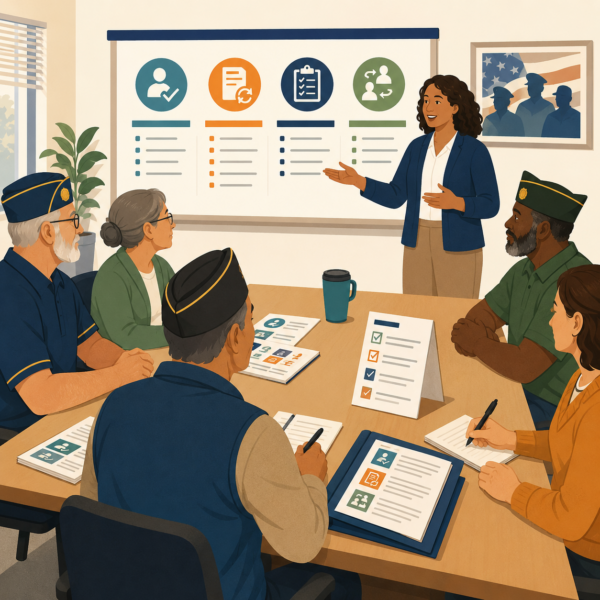
Equipping VSO post commanders and members to serve as effective communication partners requires a briefing process that is substantively different from the informational briefings that agencies sometimes provide to post commanders before specific outreach events. An event briefing tells post commanders about an upcoming event and asks them to promote it. A communication partnership briefing equips post commanders and members with the durable knowledge, tools, and relationships they need to carry benefit information in their ongoing community interactions rather than only during specific event promotion windows.
The foundational component of the communication partnership briefing is a clear, accessible, and non-technical overview of the programs that county and state veterans services agencies want to communicate through the VSO network. This overview should be organized around the types of benefits and situations most relevant to post members, rather than around program categories that require specialized knowledge to interpret. A briefing organized around the questions that post members’ fellow veterans are most likely to have, including questions about disability compensation eligibility, property tax exemptions, healthcare enrollment, and state-specific benefits, gives post members the specific information they need to recognize when a fellow veteran’s situation is relevant to a specific program and to share the basic information about that program accurately.
The briefing should include specific, simple talking points for each major program area that post members can use in informal peer conversations. Talking points that are brief, specific, and framed in non-technical language, rather than the technical language of the program’s eligibility criteria, are more useful to post members than detailed program descriptions that require specialized knowledge to translate into peer conversation. A talking point like ‘If you were discharged under honorable conditions and you were in the service for at least a couple of years, you should check whether you qualify for VA healthcare, because a lot of veterans who don’t think they qualify actually do,’ is more useful in a peer conversation context than a description of the statutory eligibility requirements for VA healthcare enrollment.
Reference materials given to post commanders and members after the briefing serve as durable reference resources for the information covered in the briefing. These materials should be brief enough to be consulted quickly, organized around the same question-based structure as the briefing, and include specific referral information for each program: the CVSO office phone number, the agency website address, and the name and direct contact information for the CVSO staff member who is the designated point of contact for the VSO partnership relationship. The referral information is as important as the program information in these materials, because the post member’s primary job is to motivate contact with the agency rather than to provide detailed program assistance themselves.
Frequency and Format of Partner Briefings
The frequency and format of briefings for VSO post communication partners should be calibrated to the pace at which program information changes and to the time constraints of the volunteer post structure. Annual comprehensive briefings that cover the full range of county and state veterans programs, combined with shorter update briefings whenever significant program changes occur, provide a sustainable briefing cadence that keeps post members’ information current without making briefing attendance so frequent that it becomes a burden.
The format of briefings for VSO posts should accommodate the realities of the post meeting structure. Post meetings typically have a full agenda of post business and social activities, and a request for an extended agency presentation at a monthly meeting may not be well received. A twenty-minute presentation at a post meeting that covers the most important current program information, accompanied by leave-behind materials that contain more detail for members who want it, is more likely to be welcomed and to produce sustained partnership engagement than a longer presentation that requires significant meeting time.
Briefings delivered by CVSO staff or agency representatives rather than through written materials alone carry significantly more relationship weight than written updates. The personal presence of agency staff at post briefings builds the human relationship between the agency and the post that is the foundation of genuine communication partnership. Post commanders who know the CVSO staff member who briefed their post by name, who have exchanged contact information, and who have experienced the agency representative as a person rather than an institution, are more likely to share benefit information with their members and to make specific referrals to the agency than commanders whose relationship with the agency is entirely impersonal.
Post commander-specific briefings, separate from general post member briefings, acknowledge the specific communication leadership role that post commanders play and provide them with additional context and relationship building that the member briefing format may not accommodate. A direct conversation between a CVSO staff member and a post commander, covering the agency’s specific goals for the partnership, what the post commander can expect from the agency in terms of information updates and responsiveness, and what the agency is asking the commander to do in their post leadership role, establishes the specific partnership expectations that make the relationship operational rather than ceremonial.
Keeping Post Partners Current as Programs Change
The most significant operational challenge in maintaining VSO post communication partnerships is keeping post members current as programs change. Veterans benefit programs change through legislation, regulation, and administrative policy updates in ways that make information accurate at one point in time inaccurate six months later. Post members who are carrying outdated information about program eligibility or benefit amounts into peer conversations are providing a service that is potentially harmful rather than helpful, because veterans who make decisions based on inaccurate information from a trusted peer may experience consequences, including missed deadlines or incorrect expectations, that are more significant than if they had received no information at all.
The information currency problem is not unique to VSO post communication partnerships. It affects all print and digital communications the agency produces. But it is more acute in the VSO partnership context because post members’ information does not update automatically when the agency’s website or brochures are revised. Post members update their information when they receive a briefing, read a notice from the agency, or hear about a program change through another channel. Without a systematic mechanism for communicating program updates to post partners, the information they are carrying in their peer conversations will drift increasingly out of date over time.
The most effective mechanism for keeping post partners current is a regular communication from the organizing agency to all VSO post partners that provides brief, specific updates on program changes relevant to the programs the partners are communicating about. This communication should be brief enough to be read and absorbed quickly, specific about what has changed and what the practical implication for veterans is, and delivered through channels that post commanders actually check, including email for commanders who are digitally accessible and direct mail or phone calls for those who are not.
A designated update cycle, in which the agency commits to sending program updates to post partners on a regular schedule regardless of whether significant changes have occurred, provides post partners with predictable communication that they can look for rather than requiring them to monitor for updates independently. Monthly updates that include brief information about any program changes in the past month, combined with a general benefits reminder even in months when no changes have occurred, maintain the communication relationship without placing an excessive burden on either the agency or the post partners.
In addition to the regular update cycle, specific urgent updates should be sent to post partners whenever significant program changes occur that could affect the accuracy of information partners are actively sharing. The PACT Act’s expansion of disability compensation eligibility, for example, should have prompted an immediate urgent update to all VSO post communication partners explaining what had changed and what it meant for the veterans their members were talking to. The post member who tells a fellow veteran that Guard and Reserve members do not qualify for VA healthcare, because that was accurate when they learned it, is providing inaccurate information that an urgent update could have corrected.
Building a VSO Communication Partner Registry
Managing a VSO post communication partner network requires a registry that tracks which posts are formal partners, the contact information for each post’s primary communication contact, the briefing history for each post including when they were last briefed and on what topics, the update communication history for each post, and any feedback the post has provided about veteran questions and community information needs. This registry is the operational infrastructure of the partnership network, and without it the network will function as an informal collection of individual relationships rather than as a systematic communication infrastructure.
The registry should be maintained by a designated staff member whose responsibilities include managing the VSO partnership network, tracking the briefing and update communication schedule, following up with posts that have not been reached through recent communications, and ensuring that the partnership relationship is maintained with every registered post rather than drifting toward concentration among the posts where individual staff members have personal connections. The designation of a specific staff responsibility for network management is what converts the VSO partnership from a relationship asset that depends on individual staff connections into an organizational asset that is maintained regardless of staff turnover.
The registry should also track post-level feedback from the partnership network, including the questions that post commanders report their members are asking, the program areas where post members indicate confusion or lack of awareness, and any specific feedback about agency communications that post commanders have shared. This feedback data, aggregated across the partnership network, provides intelligence about community information needs that can inform the agency’s broader communication improvement efforts and that gives the partnership relationship a bidirectional character that sustains post commander engagement more effectively than a purely outbound information distribution relationship.
Building Systematic Outreach Infrastructure Through VSO Networks
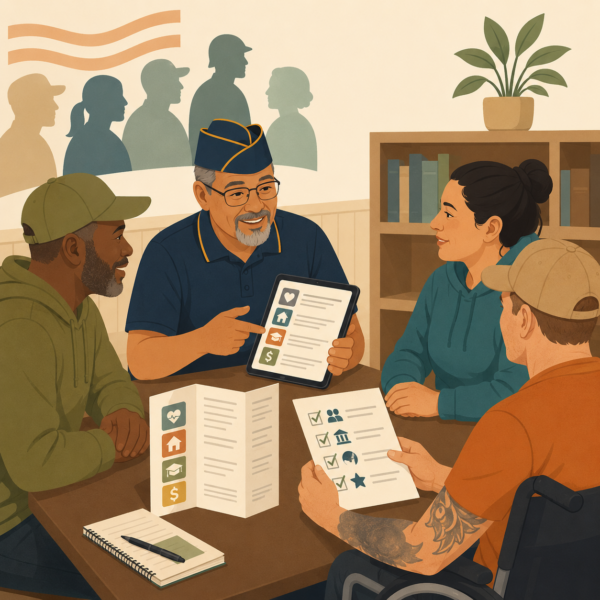 Treating VSO posts as systematic outreach infrastructure rather than an ad hoc referral source requires building organizational processes that are repeatable, accountable, and independent of individual staff relationships. The systematic infrastructure includes the registry described above, the briefing and update communication cadence, the referral tracking system that monitors how many veteran contacts the VSO network produces and what happens to those contacts in the agency’s service pipeline, and the partnership evaluation process that regularly assesses the health and productivity of the network and identifies posts where additional relationship investment is needed.
Referral tracking is an essential component of the systematic infrastructure because it is the mechanism through which the agency can assess the communication value the VSO partnership network is producing. When veterans contact the CVSO and indicate that they heard about the agency’s services from a VSO post member, that referral should be recorded in the agency’s case management system in a way that allows it to be attributed to the VSO network. Aggregate referral data, tracking the number of veteran contacts produced by the VSO network over time, demonstrates the access value of the partnership investment and provides the evidence needed to justify continued investment in partnership relationship maintenance.
The referral tracking system also allows the agency to identify the specific posts that are producing the most referrals and the posts that are producing few or none. Posts with high referral rates are posts where the partnership is functioning as intended, with post members actively carrying benefit information into their community interactions and generating veteran contacts with the agency. Posts with low referral rates may have post commanders who have not been adequately briefed, post memberships that do not include veterans in the demographic groups most likely to have unmet benefit needs, or post communication cultures that do not prioritize sharing benefit information with members. Each of these diagnoses suggests a different response from the agency: additional briefing for under-briefed commanders, targeted outreach to the demographic groups not represented in current partnership posts, or engagement with post leadership about how to make benefit information sharing a more active part of post culture.
Creating a VSO Ambassador Program
A VSO Ambassador Program is a structured recognition and development program for VSO post members who are particularly active and effective as communication partners for county and state veterans programs. Ambassadors are post members who have demonstrated sustained commitment to sharing benefit information with fellow veterans, who have produced significant referrals to the agency, and who are willing to take on a more formal role in the partnership network in exchange for additional training, recognition, and direct relationship with agency staff.
The Ambassador Program provides several benefits to the partnership network. It identifies and cultivates the most effective post-level communicators, providing them with the additional information and skills that make their peer communication more effective. It creates a designated group of post members who can be activated for specific outreach purposes, such as the rollout of a new program or the promotion of a community event, through a more direct and rapid communication pathway than the full post network provides. And it provides the agency with a cohort of community-embedded voices who can serve as testimonial contributors for agency communications, as advisory voices for communication design, and as peer presenters at community events and briefings.
Ambassador recognition should be meaningful within the veteran community context. Recognition at agency events, acknowledgment in agency communications, certificates of partnership that post members can display in their post spaces, and direct relationship with agency leadership through ambassador briefings and advisory conversations, are forms of recognition that acknowledge the value of the ambassador’s contribution without requiring financial compensation that the agency may not be able to provide. The relationship investment from the agency, expressed through the additional attention, briefings, and direct contact that ambassadors receive, is itself a significant form of recognition that sustains ambassador engagement.
Addressing Common Partnership Challenges
VSO post communication partnerships face several recurring challenges that agencies should anticipate and address proactively rather than encountering them as surprises that derail partnership relationships. The most common challenges involve post commander turnover, uneven post membership engagement, accuracy concerns about information partners are sharing, and the potential for post communication culture to conflict with the agency’s communication goals in specific instances.
Post commander turnover is among the most significant operational challenges in maintaining VSO partnership networks because commander-level relationships are often the foundation of the partnership, and when a commander leaves their role, the partnership relationship may leave with them unless the organizational systems are in place to transfer it to the incoming commander. The registry and the briefing processes described earlier are the primary organizational defenses against relationship loss through turnover, but they require supplementation by a specific protocol for onboarding new post commanders as communication partners. A new commander briefing that introduces the commander to the partnership program, provides them with the same information and materials provided to all partners, and establishes a direct relationship with the designated agency partnership staff member, should occur within the first two months of any commander transition.
Uneven membership engagement within a post presents the challenge that some post members are significantly more active than others as community communicators, and that the partnership’s communication impact depends on the engagement of the active minority rather than the passive majority. The agency should calibrate its partnership expectations to the realistic engagement patterns of VSO post membership, focusing on equipping and activating the active communicators within each post rather than expecting the full membership to serve equally as benefit information distributors. The active communicators will carry the communication function more reliably than the full membership, and supporting their effectiveness is a more productive investment than attempting to broadly activate a membership that includes significant proportions of members who are not oriented toward active community information sharing.
Accuracy concerns about information post members are sharing require ongoing attention because the information currency challenge described earlier is always present, and the consequences of inaccurate peer communications can be more significant than the consequences of inaccurate written communications because peer communications are not readily correctable after they have been delivered. The agency’s primary tool for managing accuracy is the regular update communication described earlier, supplemented by a clear channel through which post members can check the accuracy of information they are uncertain about before sharing it. A specific contact at the agency, designated for post partner accuracy verification inquiries and committed to responding within a short turnaround, gives post members the confidence to share information when they know they have a reliable accuracy check available.
Communicating Agency Program Changes Through VSO Networks
The VSO post network provides a particularly valuable channel for communicating significant program changes that require rapid, broad community reach. When a major legislative change like the PACT Act significantly expands disability compensation eligibility, when a state legislature enacts a new veterans benefit program, or when the VA announces significant changes to healthcare enrollment eligibility, the speed with which this information reaches the veteran community can significantly affect how many veterans benefit from the change. The VSO network, when properly maintained, can carry this information to the community faster and with more credibility than any institutional communication channel.
Rapid program change communication through the VSO network requires a different communication approach than the regular information-sharing function that partnership posts perform during steady state. A program change communication should be transmitted to post commanders through the most rapid available channel, including phone calls for the most significant changes rather than relying on email that may not be checked promptly. It should be brief, specific, and action-oriented: this is what changed, this is who it affects, and this is what post members should tell their fellow veterans right now. It should provide a specific referral action that post members can take immediately, such as telling fellow veterans to call the CVSO within the next thirty days to have their eligibility assessed under the new rules.
The PACT Act rollout provides a model for what effective program change communication through the VSO network should look like and what the consequences of inadequate VSO network activation for program change communication are. Communities where county veterans services agencies maintained active VSO post communication partnerships and activated those partnerships with rapid, specific PACT Act communication saw faster increases in PACT Act claim filing rates than communities where the VSO network was not actively engaged in the communication rollout. The difference was not primarily in awareness of the PACT Act through media coverage, which was broad in both types of communities. The difference was in the trusted peer referral that told specific veterans that this new law was relevant to their specific situation and that they should contact a specific CVSO contact to find out what it meant for them.
VSO Posts as Communication Feedback Channels
VSO post commanders and members who are in regular contact with the veteran community are a valuable source of feedback about what veterans are saying about agency programs, what questions they are asking, and what information gaps are producing the most significant access barriers in the community. This feedback function complements the outbound communication function described throughout this article and makes the VSO partnership relationship genuinely bidirectional rather than purely outbound.
Building the feedback function into the partnership relationship requires that agency staff create a comfortable and efficient channel for post commanders to share community intelligence without requiring them to produce formal reports or to engage with administrative systems that are burdensome for volunteer post leadership. An informal check-in call between agency staff and post commanders every quarter, organized around the question of what commanders are hearing from their members about veterans benefit questions and concerns, produces richer and more actionable feedback than a formal reporting requirement while requiring minimal additional burden from post commanders who are already investing their time in the partnership.
The feedback received through VSO post relationships should be integrated into the agency’s broader communication intelligence system alongside the event feedback described in the previous article and the intake pattern analysis from CVSO case management systems. Post commander feedback often surfaces community-level information needs that are not visible in other data sources because they reflect the conversations happening in informal community spaces that are not captured in formal inquiry data. A post commander who reports that multiple members have recently asked about whether their spouses qualify for VA healthcare coverage is sharing information about a community-level awareness gap that the agency should address through targeted communication, and that information would not have reached the agency through any other channel.
Measuring the Value of the VSO Communication Network
Demonstrating the communication value of the VSO post partnership network requires measurement approaches that capture the network’s specific contribution to veteran access outcomes rather than relying on indirect indicators like the number of posts briefed or the number of communications sent to post commanders. The specific measurements that most directly reflect VSO network communication value are veteran referral volume attributed to VSO contacts, the benefit access outcomes of veterans who entered the agency’s service pipeline through VSO referrals, and the breadth of community reach that the VSO network provides beyond the agency’s direct communication channels.
Referral attribution requires systematic tracking of how veterans who contact the CVSO learned about the agency’s services, with VSO post referral as a specific tracked category. This tracking should be a standard component of intake data collection rather than a special research project, because it needs to produce consistent longitudinal data rather than point-in-time snapshots. Over time, this data reveals the proportion of veteran contacts attributable to the VSO network, the trend in VSO-attributed contacts as the partnership network is built and maintained, and the distribution of VSO-attributed contacts across different posts and different program areas.
The benefit access outcomes of VSO-attributed contacts, compared to contacts entering through other channels, provide evidence about whether the VSO network is reaching veterans who would not have accessed services through other channels or whether it is primarily reaching veterans who would have found the agency eventually regardless. If VSO-attributed contacts show systematically lower prior benefit access and higher unmet benefit needs than contacts entering through other channels, the VSO network is functioning as an access equity tool that is reaching underserved veterans rather than primarily serving already-connected ones. This evidence is particularly valuable for justifying continued investment in the partnership network as a strategic access equity mechanism.
Strategic Communication Support for Veterans Services Agencies
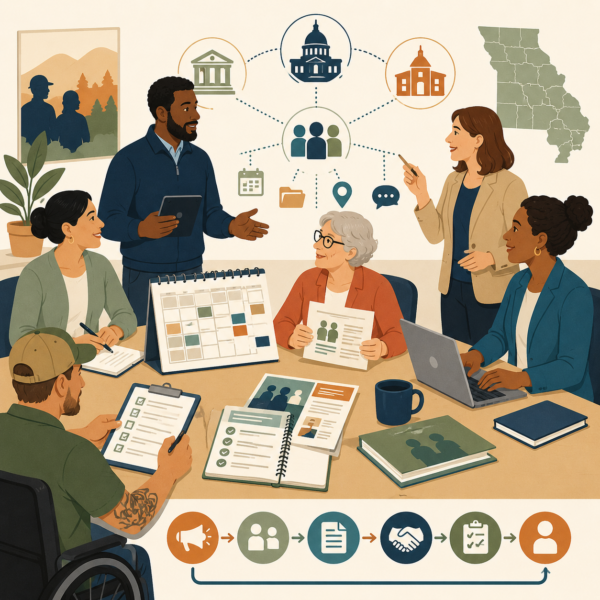 Veteran Service Organizations (VSOs) represent one of the most trusted communication networks available to veterans services agencies. Building effective partnerships with these organizations requires more than maintaining a contact list or requesting occasional referrals. It requires a communication strategy that equips VSO leaders with timely, accurate, and actionable information they can confidently share with the veterans they serve while establishing consistent collaboration between agencies and their community partners.
Successful VSO communication networks are built through relationship development, structured information sharing, coordinated messaging, partner engagement, referral collaboration, and ongoing evaluation. Because veterans often seek guidance first from trusted VSO representatives before contacting a government agency, communication systems should ensure those representatives have current information about benefits, eligibility changes, programs, and available resources. A coordinated partnership network enables agencies to extend their communication reach through organizations that veterans already know and trust.
Developing this type of communication system requires specialized expertise in partnership strategy, communication planning, stakeholder engagement, message development, governance, and communication evaluation. Many veterans services agencies choose to partner with external communication specialists such as Stegmeier Consulting Group (SCG) because these capabilities complement the agency’s expertise in veterans services while providing the strategic communication knowledge needed to build sustainable partner communication systems that strengthen community outreach and improve veteran access to information.
Working alongside veterans services agencies, SCG develops communication strategies that transform individual VSO relationships into coordinated communication networks. Support may include establishing VSO partnership frameworks, creating partner registries and communication protocols, developing recurring briefing materials and update schedules, designing referral communication processes, coordinating messaging across participating organizations, and implementing measurement systems that evaluate partner engagement, referral activity, and communication effectiveness throughout the network.
As community partnerships expand and veteran needs continue to evolve, communication systems must support long-term collaboration rather than relying on individual relationships. SCG helps agencies establish repeatable partnership processes, governance practices, and performance measurement frameworks that enable VSO networks to remain coordinated, responsive, and sustainable while strengthening communication across agencies, community organizations, and the veterans they collectively serve.
The objective is to create a communication environment in which Veteran Service Organizations function as trusted communication partners that consistently help veterans discover, understand, and access the benefits and services available to them. By strengthening communication systems that support VSO partnerships, agencies are better positioned to expand community outreach, improve referral quality, and connect more veterans with the assistance they have earned.
Future Trends in VSO Post Partnership
The VSO post landscape is evolving in ways that will shape the VSO communication partnership opportunity for county and state agencies over the coming years. VSO post membership demographics are changing as the veteran population evolves, with post memberships in many communities becoming more diverse in terms of age, service era, and demographic background. This diversification of post membership creates opportunities for VSO post networks to reach a broader range of veteran community segments than they historically served, and agencies that build partnerships with posts whose memberships reflect the full diversity of the local veteran community will build communication networks that are more equitable in their reach.
Digital communication tools are changing how VSO posts communicate internally with their members, creating new channels for agency communication updates to reach post members more directly than the traditional route through post commanders. Some VSO posts maintain active Facebook groups, group text message threads, and email lists through which agencies could distribute program updates more rapidly and more broadly than through commander-mediated communication alone. Building relationships with the digital communication infrastructure of VSO posts, where it exists and where post leadership is open to agency participation, extends the update communication reach within the post beyond what commander-only channels provide.
The younger generation of VSO members, who are increasingly joining VSO posts as post-9/11 veterans become the dominant segment of the eligible membership population, brings different communication preferences, different community networks, and different levels of digital connectivity that agencies should account for in designing VSO partnership communications. Digital update communications that are calibrated to the communication preferences of younger post members, peer voice content that reflects the experiences of post-9/11 veterans rather than only earlier service era veterans, and partnership activities that accommodate the scheduling constraints of working-age post members with family responsibilities, are investments in making the VSO partnership network relevant and functional as the demographic character of VSO post membership evolves.
Conclusion
VSO posts are where veterans gather because they trust each other and want to be in community with each other. That trust and that community are the most valuable communication assets in the veterans services landscape, and they are available to county and state agencies that invest in building genuine partnership relationships with the posts in their communities. The investment required is modest relative to the communication reach it produces: regular briefings, reliable information updates, a designated partnership contact at the agency, and the organizational systems that make the partnership relationship durable and independent of individual staff connections. The return on that investment is a communication network that reaches veterans through their most trusted relationships, carries benefit information into the conversations that veterans are already having with each other, and produces the peer referrals that move eligible veterans from unawareness to service engagement.
The VSO post that knows what county and state programs are available, whose commander is equipped to share that information accurately with members, and whose members feel comfortable mentioning available programs to fellow veterans who might benefit, is a communication partner whose value to the veterans services system exceeds any institutional communication channel of comparable resource investment. Building that partner relationship is not complicated. It is a matter of sustained attention, reliable information provision, and genuine respect for the community role that VSO posts occupy.
SCG’s Strategic Approach to Communication Systems
Stegmeier Consulting Group’s approach to VSO partnership development reflects the foundational insight that the most effective veteran communication is peer communication, and that building systematic infrastructure to route agency benefit information through peer channels produces better access outcomes than institutional communication alone can achieve. The VSO post network is the most readily available and most scalable peer communication infrastructure in the veterans services landscape, and agencies that build genuine systematic partnerships with that network are making a communication investment that compounds over time as the network grows, as partner post members become more knowledgeable and more comfortable sharing information, and as the trust relationship between the agency and the VSO community deepens through demonstrated reliability and genuine partnership.
Use the form below to connect with our team and explore how strategic VSO partnership communication can help your agency strengthen community collaboration, improve referrals, and connect more veterans with available benefits and services.