
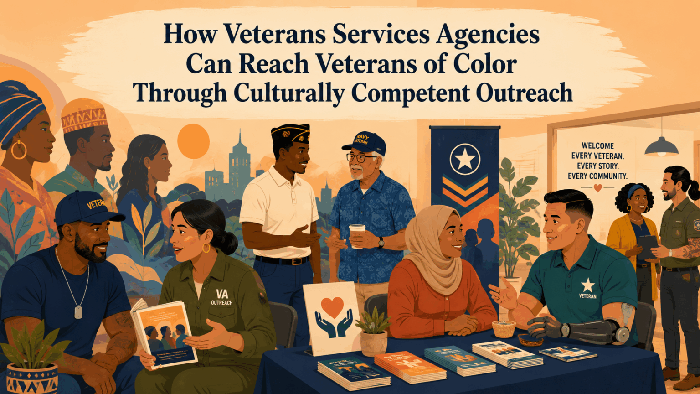
How Veterans Services Agencies Can Reach Veterans of Color Through Culturally Competent Outreach
Veterans of color, including Black, Latino, Asian American, Pacific Islander, Native American, and veterans from immigrant communities, have served in the United States military in large and growing numbers throughout the modern era. They bring to their service the same commitment, the same sacrifice, and the same exposure to the risks and consequences of military life as any other veteran. They are entitled, by law, to the same benefits and services. And they are, by nearly every available measure of benefit utilization and service access, less likely to be accessing those benefits and services than their white counterparts with equivalent eligibility. The gap is not primarily legal. It is, in significant and addressable part, communicative.
The communication failures that produce unequal benefit access among veterans of color operate at multiple levels simultaneously. At the most visible level, outreach communications that feature primarily white veterans, that use language and cultural references drawn from white American cultural contexts, and that are distributed through channels that are more concentrated in white veteran communities than in communities of color, signal to veterans of color that the agency’s primary audience is not them. This visible-level failure is the most immediately correctable, though correction requires genuine commitment rather than superficial diversity additions to existing materials.
At deeper levels, the communication failures involve more fundamental disconnects between how veterans services agencies think about their communication function and what culturally competent outreach actually requires. Culturally competent outreach is not primarily a matter of adding diverse images to existing materials or translating existing English-language content into Spanish. It is a fundamentally different approach to communication design that begins with genuine understanding of the specific communities being served, builds on that understanding to identify the trusted messengers, channels, and cultural frameworks through which those communities most effectively receive and act on information, and designs communication that is authentic to those communities’ cultures and contexts rather than adapted from communication designed for a different community.
This article provides a comprehensive framework for culturally competent outreach to Black, Latino, Asian American, Pacific Islander, Native American, and immigrant veteran communities. It covers the specific characteristics and communication needs of each major community, the trusted messenger identification that is the foundation of effective culturally competent outreach, the channel strategies that reach each community effectively, the program framing that makes veterans benefits feel relevant and accessible to veterans from communities with historical reasons to distrust government institutions, and the organizational practices that make culturally competent outreach a sustained agency function rather than a periodic initiative. The goal is a communication approach that closes the benefit access gap for veterans of color through communication that is designed for their specific communities rather than adapted from communication designed for the average veteran, who in the default mental model of most veterans services agencies is white, male, and from a cultural context that is not representative of the full diversity of the veteran population.
The urgency of this communication investment is both a matter of equity and a matter of mission. Veterans of color who are not accessing benefits they have earned are experiencing a harm that the communications system is failing to prevent. Agencies whose mission is to serve all veterans and who are systematically underserving veterans of color through communication that does not reach them effectively are failing a core dimension of their mission. Culturally competent outreach is not a diversity initiative adjacent to the agency’s core mission. It is the application of the core mission to the populations that are currently being served least well.
Understanding What Culturally Competent Outreach Actually Means
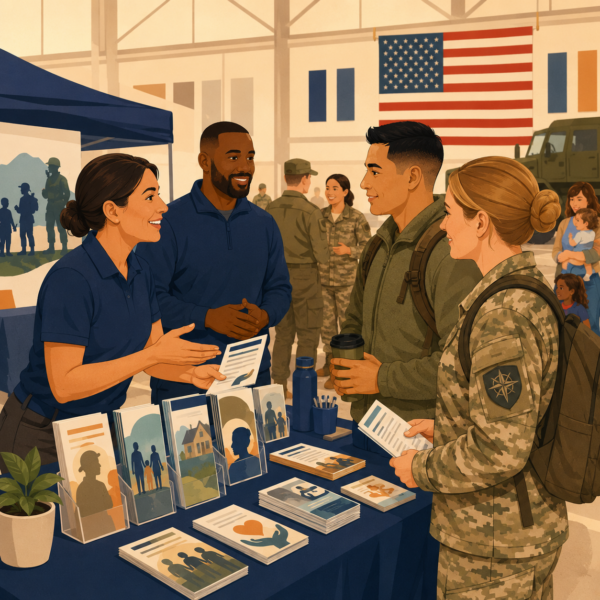 Culturally competent outreach is frequently described but infrequently defined with the specificity that makes the description actionable. Vague commitments to cultural sensitivity, multicultural outreach, and diverse communication do not produce the specific communication design decisions that distinguish genuinely culturally competent outreach from superficially inclusive outreach that does not actually reach its intended audiences more effectively than the outreach it replaces. Understanding what cultural competence means in the specific context of veterans outreach communication is the prerequisite for designing outreach that achieves the access improvements it is intended to produce.
Cultural competence in outreach communication, at its most fundamental level, means designing communication that works within the cultural frameworks of the community being served rather than expecting that community to engage with communication designed within a different cultural framework. It means knowing what values, what communication styles, what trusted institutions, what historical experiences with government, and what specific concerns about government benefit programs are characteristic of the specific community the outreach is designed to reach, and designing communication that accounts for and works with all of these factors rather than treating them as background conditions to be acknowledged and then set aside.
Cultural competence requires genuine knowledge of specific communities rather than generic multicultural awareness. The Black veteran community, the Latino veteran community, and the Native American veteran community are not versions of each other with different cultural aesthetics. They have distinct histories of military service, distinct histories of relationship with government institutions including the VA, distinct internal cultural variations based on national origin, region, religion, and generation, and distinct communication contexts and preferences that shape how outreach is most effectively designed and delivered. Treating these communities as interchangeable under a single multicultural umbrella produces communication that is culturally generic and that reaches none of the specific communities as effectively as communication designed specifically for each.
Authentic cultural competence requires community partnership rather than community-as-target thinking. Agencies that approach culturally competent outreach by designing communications for communities of color and then delivering those communications to those communities are operating in a fundamentally different mode from agencies that approach culturally competent outreach by building genuine relationships with communities of color and co-designing outreach with community members, community leaders, and community organizations whose cultural knowledge and community trust enable authentic communication in ways that agency staff working independently cannot achieve. The partnership model produces more effective outreach, more sustained community relationships, and more equitable benefit access outcomes than the target-delivery model.
The Role of Historical Distrust in Communication Reception
Every major racial and ethnic community in the United States has a specific history of relationship with government institutions, including military institutions and veterans benefits institutions, that shapes how members of those communities receive communications from government agencies today. These histories are not abstractions or ancient grievances. They are living memories in many communities, carried by community members who experienced specific government actions or inactions that shaped their communities’ circumstances and that inform the level of trust or skepticism with which community members receive contemporary government communications.
The Black veteran community carries a specific historical relationship with the VA that includes documented disparities in benefit processing outcomes, historical exclusion from programs that were nominally available to all veterans, and the broader context of federal government actions and inactions that have shaped the economic and social circumstances of Black Americans across generations. Veterans who grew up in families and communities shaped by this history approach VA communications with a well-founded skepticism that is rational rather than irrational, and communication that does not acknowledge this history, that presents government benefits programs as uncomplicated resources available to all veterans on equal terms, will be received with less openness than communication that is honest about the history while accurately describing what has changed and why the current situation may produce different outcomes.
Latino veteran communities include members with diverse histories of relationship with government institutions in the United States and in their countries of origin. Immigrant veterans and veterans from families with immigration history may have specific concerns about government systems that relate to immigration enforcement, documentation requirements, and the consequences of government engagement for themselves or family members with undocumented status. Communication that does not address these specific concerns will fail to reach veterans who are eligible for benefits but who are not seeking them because their concerns about government engagement have not been addressed. Communication that is honest and specific about what information is and is not collected in the benefits application process, and about the distinction between benefits agencies and immigration enforcement, addresses these concerns directly.
Native American veteran communities have histories of relationship with the federal government that are among the most complex and most fraught of any community in the United States, shaped by centuries of treaty violations, forced relocation, and institutional policies designed to eliminate Native cultures and languages. Native veterans who have served the country that carried out these policies against their nations carry a particular complexity of identity and institutional relationship that communication with this community must engage with honestly and respectfully. Outreach that ignores this history or that treats Native veterans as simply another minority community without distinctive cultural and historical context will not reach them effectively.
Serving Those Who Served: Communication Strategies for Veterans Agencies
This article is part of our series on strategic communication for Veterans Services Agencies, County Veterans Services Offices, State Departments of Veterans Affairs, and community-based veteran support organizations. To learn more and to see the parent article, which links to other content just like this, click the button below.
Black Veteran Community Outreach
Black veterans have served in every branch of the United States military and in every conflict from the Revolutionary War through the present day, often under conditions of explicit discrimination and institutional inequity that did not prevent their service but did shape their relationship with the military institutions that deployed them and with the government benefit systems that were supposed to serve them afterward. The historical context is essential background for understanding why communications with Black veteran communities must be specifically designed for that community rather than adapted from generic veteran outreach, and why the trusted messenger principle is particularly important in this context.
The most important communication investment for reaching Black veterans is the identification and development of trusted Black veteran messengers. Black veterans who are respected members of the Black community, who can speak with authority about the benefits they have accessed and the process of accessing them, who can acknowledge the historical grievances while describing what they found when they actually engaged with the system, and who are embedded in the community networks through which Black veterans receive trusted information, carry a form of credibility with Black veteran audiences that no institutional communication can replicate. This is not a generalization about Black veterans as a community. It is a specific observation about the communication dynamics of communities with high institutional distrust, in which peer credibility is the most powerful determinant of message reception.
Channels for reaching Black veterans include historically Black churches, HBCU alumni networks, Black professional organizations, Black-owned media including radio, print, and digital media, and the community organizations that are embedded in Black community life in each specific community the agency serves. Each of these channels carries community trust, reaches Black community members through connections they already maintain, and provides a context in which veterans services information is received as community-relevant rather than institutional. Building relationships with these channels and ensuring that they have accurate, current information to share with their audiences is a channel investment that produces significantly better reach among Black veteran communities than generic outreach through non-community-specific channels.
Program framing for Black veteran outreach should acknowledge the specific benefits that Black veterans have historically been underserved on, including disability compensation for conditions that VA processing has historically underrated in Black veterans relative to similarly situated white veterans, and should communicate about what has changed in terms of VA policies, accountability mechanisms, and equity initiatives without minimizing the history of disparate treatment. This framing is more honest and more effective than generic program promotion that does not engage with the specific history of the population being addressed.
Specific Communication Strategies for Black Veterans
Community outreach through Black churches deserves specific treatment because of the central role that the Black church has historically played as a community information hub, a social support network, and a trusted institutional presence in Black communities. Black veterans who are connected to church communities receive information through the church network with a level of trust that derives from the church’s position in the community rather than from the content of any specific communication. A veterans benefit announcement made from the pulpit, or included in a church bulletin, or delivered at a church-based community event by a pastor or deacon who has introduced the agency’s representative, carries an endorsement from one of the most trusted institutions in many Black communities.
Building relationships with Black church leadership requires the same community relationship investment described in the rural outreach section: genuine presence in the community before asking for communication partnership, understanding of the specific community the church serves and the specific concerns of that community’s veteran members, and respect for the church’s own mission and community role that goes beyond treating it as a distribution channel. Clergy who feel genuinely respected as community leaders and who understand the agency as a genuine partner in serving their veteran congregants will be more effective outreach partners than clergy who feel approached instrumentally as demographic delivery mechanisms.
Black-owned media, including local Black radio stations, Black community newspapers, and Black digital media platforms, provide outreach channels that are trusted specifically because they are Black-owned and community-oriented rather than mainstream media with secondary interest in Black community content. Content placed in these media, particularly content that is written and presented with knowledge of the specific community the media serves, reaches Black veterans through channels they actively choose to consume for community information. Paid advertising and editorial content in Black media both have value, with editorial content carrying stronger community trust than advertising due to its association with the media’s editorial judgment.
Latino Veteran Community Outreach
The Latino veteran community is among the most internally diverse of any ethnic community in the United States, spanning veterans whose families have been in the American Southwest for generations before the land became part of the United States, recent immigrants who have served in the military as a pathway to citizenship or community belonging, and every variation in between. This internal diversity means that there is no single Latino veteran communication approach: what resonates with a fourth-generation Mexican American veteran in Texas may not resonate with a first-generation Puerto Rican veteran in New York or a Guatemalan American veteran in Los Angeles, even though all three are included in the demographic category of Latino veteran.
The language dimension of Latino veteran outreach is important but must be understood with nuance. Not all Latino veterans prefer to receive information in Spanish: many are native English speakers for whom Spanish-language communication is secondary. Some Latino veterans are not fluent in Spanish. And Spanish-language communication itself is not monolithic: the Spanish spoken in Puerto Rico, Mexico, Cuba, and Central and South America has enough variation that content written in the Spanish of one community may not feel natural to veterans from a different Spanish-speaking background. Language accessibility in Latino veteran outreach means providing Spanish-language options for those who prefer them, not assuming that all Latino veterans prefer Spanish.
The immigration-related concerns that are relevant for some Latino veterans and their families require specific communication attention. Latino veterans from families with mixed immigration status, or who have concerns about how engagement with government benefit systems might affect family members with undocumented status, need accurate information about what personal and family information is required in the VA benefits application process, what information is shared with other government agencies, and specifically whether VA benefits applications trigger any immigration enforcement implications. The accurate answer, that VA benefits applications do not trigger immigration enforcement and that the information provided in VA benefits applications is subject to specific privacy protections, must be communicated specifically and clearly to reach Latino veterans who are avoiding benefits contact out of immigration-related concerns that accurate communication could address.
Trusted Messenger and Channel Strategy for Latino Veterans
Trusted messengers for Latino veteran communities include Latino veterans who are respected community members, Catholic clergy in heavily Catholic Latino communities, Latino community organizations and advocacy groups, promotoras and community health workers who serve as trusted health information intermediaries in many Latino communities, and the leadership of Latino professional and civic organizations. Each of these messenger types reaches different segments of the Latino veteran community and carries different forms of credibility based on different relationships.
Spanish-language media, including Spanish-language radio, television, newspapers, and digital media platforms, reach Latino community members who consume information primarily in Spanish and who are not reached effectively by English-language media outreach. Spanish-language radio in particular remains a significant community information channel in many Latino communities, with reach that extends to community members who may not be regular digital media consumers. Veterans services communication placed on Spanish-language radio stations, particularly through formats that feel like community service announcements or community information segments rather than advertisements, reaches Latino veterans through a channel they actively choose.
The Catholic Church is a trusted community institution in many Latino communities, and relationships with Catholic parishes whose congregations include significant proportions of Latino veterans provide outreach channels with the same community trust advantages described in the Black church section. The pastoral relationship in Catholic communities, including the roles of deacons and lay ministers in addition to priests, provides multiple community touchpoints through which veterans benefit information can be shared. Many Catholic dioceses maintain specific veteran and military ministry programs that provide a structured partnership entry point for veterans services agencies seeking to reach Catholic Latino veteran communities.
Asian American, Pacific Islander, and Native American Veteran Outreach
 Asian American and Pacific Islander veterans represent another highly diverse community that spans veterans from dozens of distinct national, cultural, and linguistic backgrounds with distinct histories of military service in the United States. Filipino American veterans, who served under specific arrangements that created decades-long benefit eligibility disputes, have a particular history with VA benefit access that shapes how Filipino American veterans receive contemporary veterans services communications. Japanese American veterans who served in the 442nd Regimental Combat Team during World War II while their families were interned represent a specific legacy of simultaneous service and exclusion that echoes in how Japanese American veteran communities relate to government institutions. Korean American, Vietnamese American, Chinese American, and other AAPI veteran communities each carry their own distinct histories and cultural contexts.
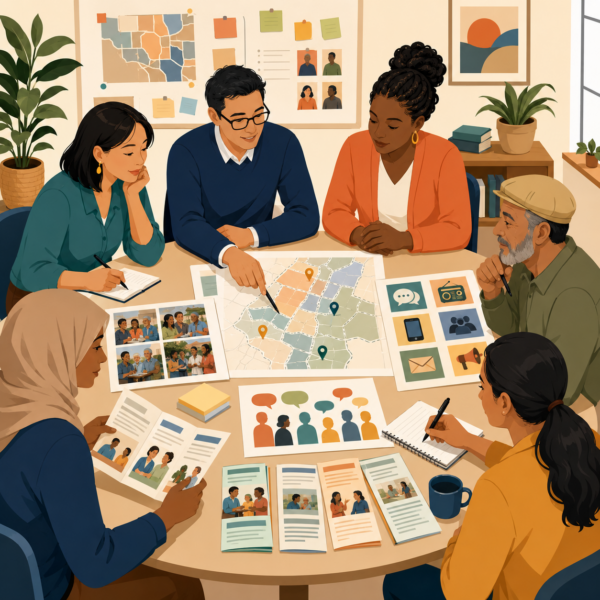
The diversity of AAPI veteran communities makes any single communication strategy for this population inadequate. Effective outreach to AAPI veterans requires community-by-community analysis that identifies the specific AAPI communities with significant veteran populations in the agency’s service area, the specific cultural characteristics and trusted institutions of each community, and the specific outreach approaches that are most effective for each community. This granularity requires local community knowledge that can only be developed through genuine relationships with community organizations in each AAPI community the agency serves.
Native American veterans serve at one of the highest per-capita rates of any ethnic group in the United States, a fact that is both a point of pride in many Native communities and a source of complex feelings given the historical relationship between Native nations and the federal government. Native American veterans who are enrolled members of tribal nations and who live in Indian Country may have access to Indian Health Service healthcare and tribal veterans services that interact with VA programs in ways that require specific communication about how these systems relate and how Native veterans can access both VA and IHS benefits without sacrificing one for the other. Tribal veterans services offices, which exist in many of the larger tribal nations, are the most important institutional outreach partners for reaching Native American veterans, and building relationships with these offices is the foundation of effective Native American veteran outreach.
Outreach in Indian Country requires specific cultural protocols that vary by tribal nation and that must be learned through relationships rather than assumed from generic knowledge of Native American cultures. The diversity of Native American nations, each with distinct governance structures, cultural practices, and community protocols, means that what is appropriate in outreach to one tribal nation may be inappropriate in outreach to another. Agency staff who are building relationships with tribal nations for veterans outreach purposes must approach each relationship with genuine humility and willingness to learn the specific cultural protocols of the specific nation, rather than applying assumed knowledge of Native cultures that may be inaccurate for the specific community.
Language Access and Cultural Communication
Language access for veterans whose primary language is not English is both a legal requirement and a communication effectiveness imperative. Veterans services agencies that are not providing meaningful access to benefits information in the languages spoken by significant populations in their service areas are both failing their legal obligations and systematically excluding linguistically isolated veterans from the benefit access that effective communication provides. Language access requires more than machine translation of existing English-language materials: it requires human translation by translators with specific knowledge of the relevant community, including the specific dialects and terminology that are most accessible to the target community.
Interpreter services for non-English-speaking veterans during CVSO appointments are an access requirement that extends beyond the initial communication of program information to the substantive benefits counseling process. A veteran who can receive information about available benefits in their language but who cannot access the individualized benefits counseling that leads to claim filing and program enrollment has been only partially served by language access. Agencies that provide both language-accessible outreach communications and interpreter services for counseling appointments are providing the complete language access that genuinely closes the language barrier to benefit access.
Cultural brokers, who are distinct from language interpreters in that they provide both linguistic and cultural interpretation, are particularly valuable for serving AAPI and immigrant veteran communities where cultural factors beyond language may affect how benefits information is received, how the benefits application process is understood, and what concerns about government engagement need to be addressed. A cultural broker who is fluent in the language and culture of a specific immigrant veteran community and who can navigate between that community’s cultural framework and the veterans benefits system’s institutional framework is providing a service that enhances both communication effectiveness and benefits navigation support in ways that translation alone cannot achieve.
Trusted Messenger Identification Across Communities
The principle that peer credibility exceeds institutional credibility applies with particular force in outreach to communities of color, where institutional trust deficits are significant and historically grounded. In these communities, the identification and development of trusted messengers from within the community is not simply a communication strategy preference. It is the fundamental condition for reaching community members with the level of trust and receptivity that produces benefit access behavior change rather than simple awareness.
Trusted messenger identification requires community-level analysis that identifies who carries credibility and influence in the specific community being served. This analysis cannot be conducted from outside the community by agency staff who are not embedded in it. It requires listening to community members, asking community organizations and leaders who the most trusted voices in the community are, observing who people turn to for information and guidance in community contexts, and learning through direct community engagement rather than through demographic assumptions about who is credible in communities the agency has not yet genuinely engaged with.
The development of identified trusted messengers into effective outreach partners requires the same preparation, training, and support infrastructure described in the peer voice communication article earlier in this series, adapted for the specific cultural context and specific community of each messenger. Trusted community members who become veterans benefit outreach messengers need accurate information about available programs, preparation for the specific communication contexts in which they will deliver information, support for their wellbeing as they take on the emotional dimensions of veterans benefit outreach, and organizational recognition of their contribution as a valued professional function rather than a volunteer extra.
Trusted messenger networks that include multiple messengers from each community, rather than a single designated community spokesperson, are more sustainable and more effective than single-spokesperson models because they distribute the outreach function across multiple community relationships and multiple communication contexts. A network of ten veterans from a specific community who are all equipped to share benefits information through their individual community relationships reaches far more people through far more trusted channels than a single designated community ambassador doing formal outreach presentations.
Building Long-Term Community Relationships
The distinction between community relationship and community outreach campaign is the distinction between sustained impact and episodic impact in working with communities of color. An outreach campaign to a specific community of color, however well designed and well executed, produces awareness gains that fade over time without the sustained community relationship infrastructure that continuously refreshes and reinforces the awareness among a community population that is not static. New community members arrive, existing community members move, and community memory of past outreach fades without reinforcement. Only a sustained community relationship produces the persistent communication presence that keeps benefit awareness current across the full community over time.
Building sustained community relationships with communities of color requires organizational commitment that goes beyond outreach program budgets to encompass the ongoing presence, the ongoing partner relationship investment, and the ongoing listening and adaptation that genuine community engagement requires. Agency staff who attend community events not only when they are presenting but also when they are simply being present as members of the community, who know community leaders by name and maintain relationships with them between formal outreach activities, who understand the current concerns and priorities of the communities they serve rather than only the demographics of those communities, are building the genuine relationships from which effective sustained communication can operate.
Community advisory councils, composed of veterans of color from the communities the agency serves, provide both an ongoing channel for community input into agency communication design and an ongoing network of community ambassadors who carry agency communication into their community relationships. Councils that are structured as genuine consultative bodies, whose input demonstrably influences agency communication decisions, maintain the engagement and investment of their members in ways that nominal advisory bodies do not. The council’s communication value is both direct, through member outreach activities, and indirect, through the organizational culture change that genuine community partnership produces.
Program Framing for Communities With Historical Government Distrust
Program framing, the conceptual context within which benefits programs are presented to potential recipients, is a critical communication variable in outreach to communities of color that carry historical reasons to distrust government institutions. The same program that is received as a straightforward government benefit by a veteran with no particular history of government distrust may be received with significant skepticism by a veteran from a community whose experience of government programs has included exploitation, exclusion, or betrayal. Framing that acknowledges this history while making an honest case for engagement with current programs is more effective than framing that ignores the history or that treats the distrust as an irrational obstacle to overcome.
The most effective framing for benefits programs in communities with government distrust is the community benefit frame: these benefits exist because your community members, who served and sacrificed, earned them, and accessing these benefits is an act of claiming what your community is owed rather than an act of dependence on or engagement with a government that may have been historically untrustworthy. This framing is honest, is culturally resonant across many communities of color whose members value community responsibility, and is more likely to motivate benefit access behavior than framing that positions government benefits as charitable assistance or institutional services to be sought through institutional channels.
Testimonial evidence from community members who have accessed benefits and found the process worthwhile is the most effective framing tool for communities with government distrust, for exactly the same reasons that peer voice is more credible than institutional voice across all resistant populations. A Black veteran who says ‘I was skeptical that the VA was going to treat me any differently than it treated my grandfather, but I filed anyway and I am now receiving compensation that has made a real difference for my family’ is providing framing through the most credible channel available, in language that addresses the specific historical concern while providing specific evidence of a different outcome.
Measuring Culturally Competent Outreach Effectiveness
The effectiveness of culturally competent outreach to veterans of color must be measured through metrics that are specific to each community rather than through aggregate veteran population metrics that may obscure community-specific outcomes. Benefit utilization rates, healthcare enrollment rates, and disability compensation filing rates tracked separately for Black, Latino, AAPI, and Native American veteran populations provide the community-specific evidence needed to assess whether the outreach is closing the equity gaps it is designed to address.
Qualitative assessment through community-specific focus groups and interviews provides evidence about how the outreach is being received in each community, what concerns remain unaddressed, what communication approaches are resonating, and what barriers persist despite current outreach investments. This qualitative evidence is particularly important in the early stages of culturally competent outreach development, when quantitative utilization measures may not yet reflect the communication changes that have been implemented, and when community members’ direct accounts of their communication experiences provide the most actionable guidance for communication design improvement.
Community partner feedback, collected regularly from the community organizations, faith leaders, media outlets, and trusted messengers who are delivering outreach communication on the agency’s behalf, provides evidence about how the communication is functioning in practice rather than how it was designed to function. Community partners who report that specific messages are not landing as intended, that specific community concerns are not being addressed by current communications, or that the agency’s materials are not reflecting the specific cultural characteristics of the community being served, are providing actionable intelligence for communication improvement that quantitative metrics alone cannot supply.
Strategic Communication Support for Veterans Services Agencies
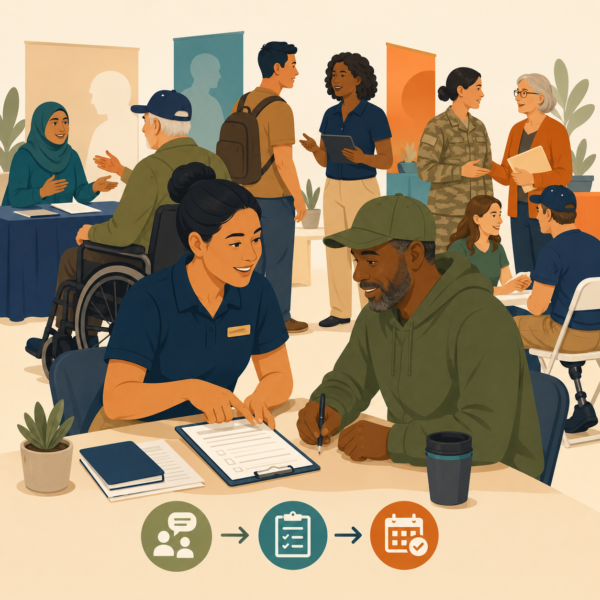 Building effective outreach to veterans of color requires more than increasing representation in communication materials. It requires a communication strategy that recognizes the unique histories, cultural contexts, trusted information sources, and lived experiences of the diverse communities an agency serves. Effective outreach helps ensure veterans of color receive relevant, accessible, and culturally responsive information that supports informed decisions about benefits, healthcare, and other available services.
Successful culturally competent outreach is built through audience research, trusted community partnerships, culturally informed messaging, representative communication practices, accessible channels, and continuous evaluation. Veterans of color are not a single audience, and communication strategies must reflect the distinct needs and perspectives of different communities. Building trust often depends on working through established community organizations, respected local leaders, and communication approaches that acknowledge historical experiences while emphasizing the value of available programs and services.
Developing this type of communication system requires specialized expertise in audience research, community engagement, message development, cultural communication strategy, partnership development, and communication evaluation. Many veterans services agencies choose to partner with external communication specialists such as Stegmeier Consulting Group (SCG) because these capabilities complement the agency’s expertise in veterans services while providing the strategic communication knowledge needed to design outreach systems that strengthen trust, improve engagement, and promote equitable access across diverse veteran populations.
Working alongside veterans services agencies, SCG develops culturally competent communication strategies tailored to the communities each agency serves. Support may include conducting community communication assessments, identifying trusted community organizations and messengers, developing culturally responsive messaging frameworks, creating outreach strategies for communities where trust in government institutions may be limited, planning language access initiatives, establishing community advisory structures, and implementing measurement systems that evaluate communication performance and equity outcomes across different populations.
As veteran communities continue to become more diverse, communication strategies must evolve to reflect changing demographics, community partnerships, and information environments. SCG helps agencies establish repeatable communication processes, governance practices, and performance measurement frameworks that enable culturally competent outreach to remain responsive, consistent, and sustainable while supporting equitable communication across all programs and service areas.
The objective is to create a communication environment in which veterans of color receive trusted, culturally responsive information, understand the benefits and services available to them, and feel represented throughout every interaction with the agency. By strengthening culturally competent communication systems, agencies are better positioned to build trust, improve program participation, and ensure more veterans receive the benefits and support they have earned.
Future Trends in Multicultural Veterans Outreach
The demographic composition of the veteran population is becoming more diverse with each passing year, as the military continues to recruit from an increasingly diverse American population and as the post-9/11 veteran cohort, which is more racially and ethnically diverse than preceding cohorts, becomes the dominant segment of the veteran population. The communication implications of this demographic evolution are straightforward: the importance of culturally competent outreach to veterans of color will grow as the proportion of veterans of color in the overall veteran population grows, and agencies that are building culturally competent outreach infrastructure now are investing in a communication capacity that will be increasingly central to their mission effectiveness over time.
The digital media landscape is evolving in ways that create both opportunities and challenges for multicultural outreach. Social media platforms where communities of color have built significant virtual community infrastructure, including platforms that are particularly popular in specific ethnic communities, provide increasingly powerful channels for community-specific outreach. At the same time, the digital divide means that digital outreach alone is insufficient for reaching all segments of communities of color, particularly older community members and communities with limited digital access, and the investment in non-digital community relationship and outreach channels remains essential alongside digital strategy development.
Growing policy attention to equity in federal program delivery, including executive orders and legislative mandates focused on equity in program access across racial and ethnic populations, is creating both accountability expectations and resource availability for culturally competent outreach that did not exist at the same level in previous periods. Agencies that have built culturally competent outreach infrastructure will be better positioned to meet these accountability expectations and to demonstrate their equity outcomes in the terms that emerging policy frameworks require. Agencies that have not built this infrastructure will face increasing pressure to develop it under conditions that are less favorable than voluntary proactive investment.
Conclusion
Veterans of color who have served with distinction and who carry the consequences of that service deserve to know what benefits they have earned and to receive communication designed to reach them through the channels they trust, in language that respects their cultures, with messaging that acknowledges their communities’ histories without using those histories as an excuse for not engaging. The agencies that provide this communication are serving all veterans equitably. The agencies that do not are serving some veterans well and others poorly, and the difference in outcomes is not a reflection of different levels of service need or different levels of sacrifice. It is a reflection of different levels of communication investment, and it is correctable.
Culturally competent outreach is not a favor that veterans services agencies do for veterans of color. It is the basic standard of communication equity that every veteran deserves and that the mission of veterans service requires every agency to deliver.
SCG’s Strategic Approach to Communication Systems
Stegmeier Consulting Group’s approach to multicultural veterans outreach is grounded in the conviction that communication equity is not achieved through superficial diversity but through genuine community knowledge, genuine community relationship, and genuine organizational commitment to designing communication that works equally well for all members of the veteran population. The communities of color within the veteran population deserve communication that is designed for them, not communication that was designed for someone else and then adapted for them as an afterthought.
SCG brings the analytical depth, community engagement methodology, and communication design expertise needed to build culturally competent outreach systems that actually close the equity gaps in benefit access across the diverse veteran populations agencies serve. The investment produces not only more equitable outcomes but stronger community relationships, greater community trust in the agency’s commitment to all veterans, and a communication infrastructure that is positioned to serve an increasingly diverse veteran population with increasing effectiveness over time.
Use the form below to connect with our team and explore how strategic culturally competent communication can help your agency strengthen community partnerships, build trust, and improve outreach to veterans of color.