
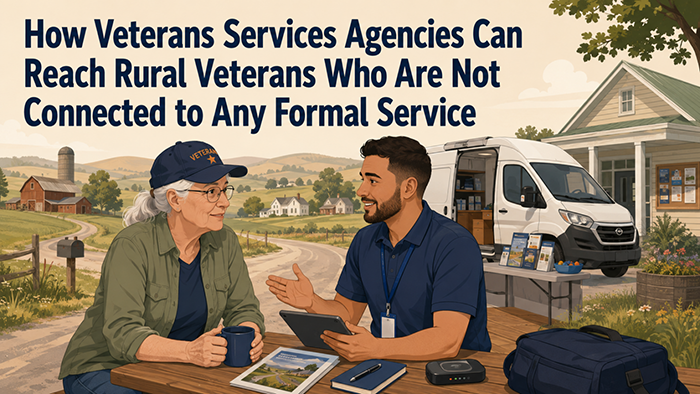
How Veterans Services Agencies Can Reach Rural Veterans Who Are Not Connected to Any Formal Service
Rural veterans represent one of the most persistently underserved populations in the veterans services landscape, and the communication challenge of reaching them is both distinct from and more demanding than the challenge of reaching veterans in urban and suburban environments. The distinctiveness lies not in the nature of the benefits and services rural veterans need, which are in most respects identical to what urban veterans need, but in the structural characteristics of rural communities that shape how information flows, who is trusted to deliver it, and what channels are functionally available for receiving it. An outreach strategy that works effectively in a metropolitan area with dense CVSO presence, accessible VA facilities, robust digital infrastructure, and a large veteran community connected through multiple formal and informal networks will fail systematically in a rural county where the nearest CVSO is two hours away, the nearest VA medical center is three hours away, broadband access is unreliable or absent in many households, and the veteran community is scattered across hundreds of square miles with limited shared institutional connection.
The rural veteran population is significant in size and disproportionate in need. Rural veterans are more likely than urban veterans to be older, to have lower incomes, to have service-connected disabilities, and to face greater barriers to healthcare access. They are more likely to have served in the Army and Marine Corps, more likely to have had combat deployments, and more likely to be dealing with the long-term consequences of combat exposure, including physical injuries, traumatic brain injury, and PTSD, in communities where specialized healthcare resources are scarce and where mental health stigma may be more pronounced than in urban environments. They are also, by the metrics that measure veteran program engagement, less likely to be accessing the benefits and services available to them. The utilization gap for rural veterans, relative to their urban counterparts with equivalent eligibility, reflects an access deficit that is in large part a communication deficit: rural veterans who do not know about available programs, or who do not know how to access them from where they live, cannot close the utilization gap on their own.
The distinctive feature of rural outreach communication is that it cannot be primarily institutional in its delivery. The formal communication channels through which veterans services agencies typically reach veterans, office-based intake appointments, agency websites, email newsletters, VSO post meetings, and VA facility-based outreach, are significantly less effective in rural areas because rural veterans are significantly less connected to these formal institutional channels. Veterans who live in a county without a CVSO office, who do not attend VA-connected events because there are none within a reasonable driving distance, who may not have reliable internet access for digital outreach, and who have limited or no prior connection to any formal veterans service system, are not reachable through channels that depend on prior institutional engagement as a prerequisite for access.
What works in rural outreach is fundamentally different in character from what works in urban outreach, and understanding this character difference is the starting point for designing rural outreach communication that actually reaches the disconnected rural veterans it is intended to serve. Rural outreach works when it routes through the trusted community institutions that rural residents already engage with regularly, when it uses trusted local voices rather than institutional voices, when it meets veterans face-to-face in the community spaces where they are already present, when it is patient enough to build the trust relationships that are the prerequisite for communication effectiveness in close-knit rural communities, and when it acknowledges and accommodates the specific practical barriers, including distance, broadband access, and transportation, that shape rural veterans’ ability to access services even when they are aware of their availability.
This article provides a comprehensive framework for rural veteran outreach communication that is grounded in the specific characteristics of rural community information environments rather than adapted from urban outreach models. It covers the role of trusted local institutions in routing outreach messages, face-to-face engagement strategies that build the relationships through which rural communication is most effective, agricultural and cooperative networks that reach veterans embedded in farming and rural economic communities, telehealth communication as a critical bridge between awareness and access for rural veterans with geographic barriers to in-person services, and the organizational practices that make sustained rural outreach communication possible rather than episodic.
Understanding Rural Community Information Environments
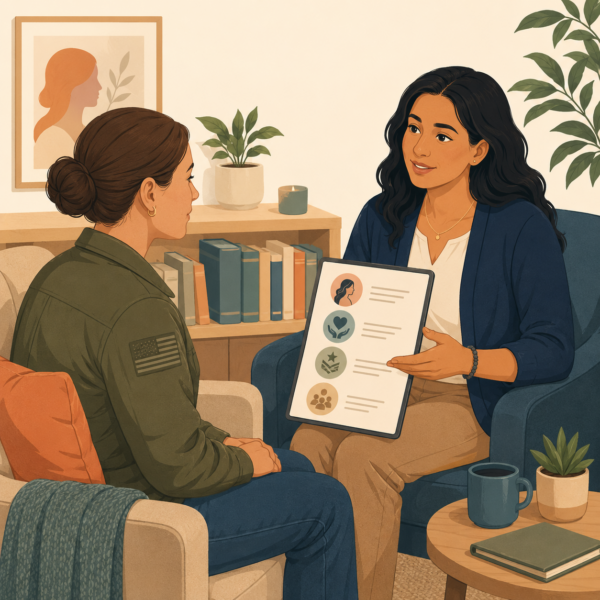 Rural community information environments are fundamentally different from urban information environments in ways that have direct implications for communication strategy. Understanding these differences in their specificity, rather than treating rural communities as simply less densely populated urban communities, is the prerequisite for designing communication that is effective in rural contexts rather than simply scaled down from urban approaches.
The first distinctive feature of rural information environments is the centrality of face-to-face relationships as the primary channel for information transmission. In rural communities where residents have known each other and each other’s families for generations, information about available resources, new programs, and community events flows primarily through direct personal conversation rather than through institutional communications or mass media. A rural veteran who learns about a VA benefit program from a neighbor they have known for thirty years is receiving information through the highest-credibility channel available in their information environment, and that information will be acted upon at a higher rate than the same information received through an agency newsletter, a direct mail piece, or a website that the veteran may never have visited.
The second distinctive feature is the structure of institutional trust in rural communities. Rural residents often have complex and historically grounded relationships with institutions that shape how they receive communications from those institutions. Some institutions, typically those that have been present in the community for generations and that are perceived as genuinely serving community interests, carry very high trust. Others, particularly newer institutional presences or those perceived as associated with government or urban centers, may carry significant skepticism that makes their communications harder to receive neutrally. Veterans services agencies, particularly those that are physically distant and infrequently present in rural communities, typically need to build trust relationships before their communications can be received with the openness required for effective outreach.
The third distinctive feature is the scarcity and variability of digital access. Rural broadband access has improved significantly in recent years through federal and state infrastructure investments, but coverage remains uneven and reliability varies substantially across and within rural areas. Veterans who live in areas with reliable broadband access have similar digital communication opportunities to urban veterans. Veterans in areas with no broadband access are entirely dependent on non-digital communication channels, and veterans in areas with unreliable access face the specific challenge of digital channels that are available sometimes but not reliably enough to be counted on for consistent information delivery. Rural outreach communication strategies must accommodate the full range of this digital access variation rather than assuming that digital channels are universally available to rural veterans.
The fourth distinctive feature is the role of a small number of trusted institutions in serving as community information hubs. Rural communities typically have a handful of institutions that serve as gathering points, information exchange hubs, and trusted community resources simultaneously: local churches, feed stores, grain elevators, community banks, local healthcare facilities, farmers’ co-operatives, and in many communities the local diner or gathering place where news is exchanged and community decisions are discussed. Information that enters the community through these hubs reaches residents quickly and with the endorsement of the hub institution’s trusted status. Information that bypasses these hubs and attempts to reach rural residents directly through institutional channels may reach some residents but will consistently underperform the hub-routed approach in both reach and credibility.
The Distance Factor and Its Communication Implications
Geographic distance is the most immediately apparent feature of rural veterans’ relationship to veterans services, and it has communication implications that go beyond simply making physical access to services difficult. Distance also shapes how rural veterans conceptualize their relationship to the veterans services system, how they think about the feasibility of accessing benefits, and how they respond to outreach communications that invite them to engage with services that are far away.
A rural veteran who lives two hours from the nearest CVSO office has a fundamentally different calculation to make about whether engaging with veterans services is worth it than an urban veteran who can access the same services in twenty minutes. Even if the rural veteran is aware of available benefits and motivated to access them, the time and transportation cost of a round trip to a distant CVSO represents a meaningful barrier that is not present for urban veterans. Communication that does not acknowledge this barrier and that does not provide specific information about how to access services without a long trip, including telehealth options, mobile outreach events in the local community, phone and email consultations with CVSO staff, and any other mechanisms that reduce the distance barrier, is providing incomplete information that may generate awareness without generating access.
The distance factor also affects how rural veterans perceive the responsiveness and relevance of the veterans services system to their needs. Veterans who live far from service facilities and who have had limited or no contact with veterans services agencies often develop a mental model of the VA and veterans services system as something that exists for veterans who live closer to the infrastructure, not for people in communities like theirs. This mental model is a communication barrier that precedes any specific outreach message, and it must be addressed before the specific content of the message can be effective. Communication that explicitly acknowledges the distance challenge, demonstrates that the agency is aware of it and has developed specific approaches to address it, and provides specific mechanisms for accessing services without travel, is more effective than communication that proceeds as though the distance barrier does not exist.
Transportation and Economic Barriers in Rural Veterans Communities
Transportation and economic barriers are closely linked with geographic distance in rural veterans’ experience of service access, and they shape the communication environment in specific ways that effective outreach must address. Rural veterans who do not have reliable personal transportation, who cannot afford the fuel and time cost of long-distance travel to service facilities, or who have service-connected physical conditions that make extended driving impossible or unsafe, face barriers to in-person service access that are not resolved by awareness of available programs. For these veterans, communication that provides awareness without access solutions is not only incomplete but potentially counterproductive, raising expectations of benefit access that cannot be fulfilled given the veteran’s actual transportation situation.
Economic barriers in rural veterans communities also affect how information is received and acted upon. Rural veterans with limited financial resources may be skeptical about the value of investing time in navigating benefit systems that seem complex and uncertain, particularly when the opportunity cost of that time is high in agricultural and other rural economic contexts where seasonal demands require sustained focus on immediate economic activities. Communication that is specific about the financial value of available benefits, that quantifies what disability compensation, property tax exemptions, and other programs would mean in concrete dollar terms for eligible veterans, and that provides a clear and simple access pathway, is more effective for economically constrained rural veterans than communication that describes benefits in abstract or general terms without the specific financial information that allows the veteran to assess whether the access effort is worth making.
Serving Those Who Served: Communication Strategies for Veterans Agencies
This article is part of our series on strategic communication for Veterans Services Agencies, County Veterans Services Offices, State Departments of Veterans Affairs, and community-based veteran support organizations. To learn more and to see the parent article, which links to other content just like this, click the button below.
Trusted Local Institutions as Communication Routes
The most effective rural outreach communication strategy routes messages through the trusted local institutions that serve as community information hubs rather than delivering them directly from the agency through institutional channels. This routing strategy is not a workaround for the limitations of institutional communication in rural contexts. It is the primary communication strategy for rural outreach, reflecting the fundamental character of rural information environments in which trusted community institutions are the channels through which consequential information reliably flows.
Identifying the specific trusted institutions in each rural community requires local knowledge that cannot be generated from centralized agency analysis. The institutions that function as information hubs vary by community, reflecting local history, demographics, economic structure, and the specific individuals whose relationships and reputations have made them trusted voices. In farming communities, the local feed store or grain elevator may be the most important information hub, a place where farmers gather regularly and where community news is exchanged as a routine part of economic activity. In communities with strong church attendance, the local church may be the most important gathering and information hub. In communities where the local diner or general store serves as a social hub, that establishment may be the most important point of entry for community information.
Building relationships with these trusted institutions requires that agency staff or community partners invest time in the community before they begin delivering outreach communications. The staff member who appears in a rural community to deliver an outreach presentation without having established any prior community presence will encounter the institutional skepticism that rural communities maintain toward outside representatives who appear without introduction. The same staff member who has been present in the community for months, who has attended community events, who is known to the key local figures who anchor community trust, and who is introduced to the outreach audience by one of those trusted figures, is delivering the same content through a completely different communication context and will achieve a completely different level of receptivity.
The specific relationships agencies should build with trusted rural institutions include relationships with local faith community leaders, with local healthcare providers, with agricultural cooperative leadership, with rural electric cooperative boards, with local library directors, with community bank managers who serve local agricultural communities, with school district leadership in communities where the school is the primary community institution, and with the individual community figures, often described as community connectors, who are known by everyone and whose endorsement of any communication significantly increases its credibility and reach. Each of these institutional relationships requires ongoing investment rather than one-time contact, because rural community trust is built through demonstrated continuity of presence rather than through single-encounter impressions.
Faith Communities as Rural Outreach Partners
Faith communities occupy a distinctive position in rural outreach communication because of the combination of factors that make them particularly effective communication partners. Rural churches often have high attendance rates relative to rural population size, serve as community gathering points beyond their strictly religious functions, have leadership figures who are trusted across the community regardless of individual religious affiliation, and maintain communication channels, including bulletins, announcements, and pastoral networks, that reach community members regularly and reliably.
Rural faith leaders who are equipped with accurate information about veteran benefit programs and who are willing to mention this information in pastoral contexts, recommend that veteran congregants seek additional information from the agency, and make referrals to agency contacts when they encounter veterans who appear to be struggling with service-connected challenges, are functioning as community-level outreach agents whose reach and credibility far exceed what institutional communications could achieve independently. The investment required to equip and support rural faith leaders for this role is modest: accurate, brief, accessible information about available programs; specific contact information for the agency or CVSO office serving the area; and the specific training in how to raise benefit awareness in pastoral contexts without overstepping into territory that requires specialized benefits knowledge the faith leader does not have.
Faith community outreach also provides access to veterans from populations that may have additional barriers to institutional engagement, including veterans from communities with historical reasons to distrust government institutions, veterans who are experiencing economic hardship or housing instability, and veterans who have been disconnected from all formal support systems including veterans services. In these cases, the faith community relationship may be the last remaining institutional connection the veteran maintains, and routing veterans benefit communication through that connection reaches a population that would be unreachable through any other channel.
Agricultural Networks and Cooperative Organizations
Agricultural networks, including farm bureaus, grain elevator cooperatives, rural electric cooperatives, and county extension services, are among the most underutilized outreach partners for rural veteran communication. These organizations have established relationships with rural residents who are embedded in agricultural and rural economic communities, and they maintain communication channels, including newsletters, email lists, in-person meetings, and field staff networks, that reach rural residents who may not be connected to any veterans-specific communication channel.
The connection between agricultural communities and the veteran population is significant and often underappreciated. Rural communities historically have had high rates of military service, and the agricultural workforce includes a substantial proportion of veterans who transitioned from military service to farming, ranching, or agricultural employment. These veterans may identify more strongly with their agricultural community identity than with their veteran identity, making them difficult to reach through veterans-specific outreach channels but accessible through the agricultural networks they are embedded in.
County extension services, which provide agricultural, financial, and community education services in rural counties, are particularly valuable outreach partners because of their established presence in rural communities, their trusted educational role, and their existing communication infrastructure. Extension agents who are informed about veteran benefit programs can incorporate veteran benefit awareness into their routine educational work with rural community members, reaching veterans through an educational channel they already trust without requiring those veterans to seek out veterans-specific outreach.
Rural electric cooperatives deserve specific attention as outreach partners because of their unique community presence and communication reach. Rural electric cooperatives serve as quasi-public utilities in many rural areas, with broad community membership and regular communication with all member households through billing statements, newsletters, and community meetings. A veteran benefit insert in a rural electric cooperative billing statement, or a feature about veteran benefits in the cooperative’s community newsletter, reaches every member household in the cooperative’s service area, providing broad community saturation that no veterans-specific communication channel can match in rural areas.
Face-to-Face Engagement Strategies for Rural Outreach
Face-to-face engagement is not simply one option among many for rural veteran outreach. It is the primary communication modality that is effective in the rural community information environment, where personal relationship and direct human connection carry a weight that mediated communications, whether print, digital, or broadcast, rarely achieve. Agencies that invest seriously in rural veteran outreach invest in the staff time, the travel resources, and the community presence-building that make face-to-face rural outreach possible at the scale needed to produce meaningful community penetration.
Mobile outreach events, in which agency staff travel to rural communities and set up accessible information and intake sessions at local gathering points, are the most direct mechanism for face-to-face rural outreach. The key word in this description is travel: the agency must come to the community rather than expecting the community to come to the agency. Mobile outreach events held at the local community center, the faith community fellowship hall, the agricultural cooperative building, or the local library bring the agency into a space that is already familiar and trusted by the community members the outreach is intended to reach.
The effectiveness of mobile outreach events depends critically on their promotion through the trusted community channels described in the previous sections. A mobile outreach event that is announced only through the agency’s own communication channels, such as the agency website and email newsletter, will primarily reach veterans who are already connected to those channels, which is not the disconnected rural veteran population the event is intended to serve. A mobile outreach event that is promoted through local faith community announcements, agricultural cooperative newsletters, local radio stations, county extension service communications, and personal outreach by trusted community connectors reaches veterans who are not connected to agency channels and who would not otherwise encounter the outreach opportunity.
The format of mobile outreach events should be calibrated to the social norms of the specific community. Rural communities often have strong preferences for informal, conversational engagement over formal presentations, and outreach events that are structured as drop-in information sessions with one-on-one conversations available throughout the event may be more effective than structured presentations followed by Q-and-A sessions. The presence of a trusted community figure, such as a faith leader, a cooperative director, or a community connector, who opens the event and introduces the agency staff to the assembled community members, provides the social endorsement that establishes agency credibility in communities where that credibility must be earned through community introduction rather than assumed on the basis of institutional authority.
Community Events Integration
Community events that already draw significant rural community attendance, including county fairs, agricultural shows, rodeos, community festivals, civic organization meetings, and seasonal community gatherings, provide outreach opportunities that are more efficient than standalone outreach events because the audience is already assembled and already engaged in a community activity that establishes a receptive social context. Agency presence at these events, whether through a booth, a table, or simply through the informed presence of agency staff or community partners who are available for conversations, reaches veterans in a community context that does not require them to specifically seek out veterans services information.
The approach to community event outreach must be adapted to the informality and the social character of the event. A rural county fair booth that presents the agency’s information in the format of a formal government exhibit, with printed materials that look like government publications and staff who are in business attire and seated behind a table, is communicating a social signal of institutional formality that is incongruent with the informal community character of the event and that may reduce the receptivity of rural community members who would otherwise engage with the information. A booth that presents the same information in a format that is accessible, informal, and consistent with the character of the event, with staff who are dressed appropriately for the community context, who are engaging with passing attendees rather than waiting for them to approach, and who are introduced to the community through the event’s organizational network, will reach the same veteran population more effectively.
Integration with agricultural and farm-focused community events deserves specific attention because these events draw precisely the rural community demographic most likely to include underserved veterans. Farm equipment shows, agricultural fairs, ranching events, and rural community celebrations centered on agricultural themes draw audiences that include significant proportions of veterans who have transitioned from military service to agricultural work and who may not have connected with veterans services because their agricultural community identity is more salient than their veteran identity in the contexts where they receive information about available resources.
Telehealth Communication as a Rural Access Bridge
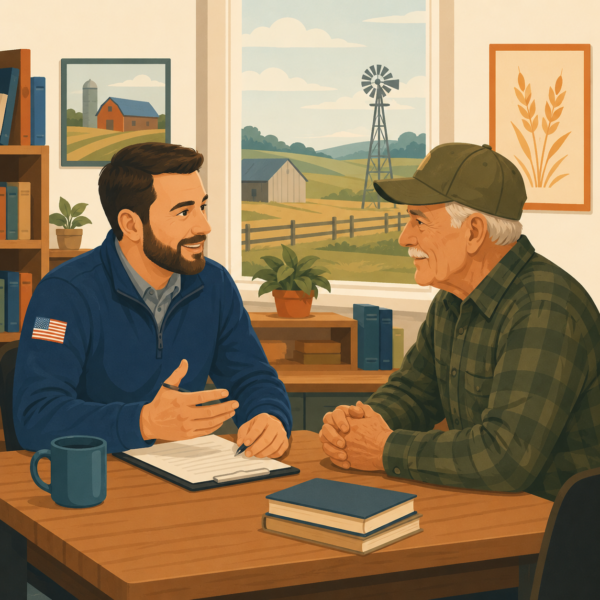 For rural veterans who cannot access in-person veterans services due to distance, transportation, or disability-related barriers, telehealth represents the most significant access improvement in the rural veterans services landscape in recent history. VA telehealth mental health services, telehealth primary care coordination, telehealth disability examination options, and telehealth-based benefits counseling all exist or are developing in ways that can substantially close the rural access gap for veterans who have reliable digital connectivity. But these telehealth options are only useful to veterans who know about them and who understand how to access them, and communication about telehealth for rural veterans requires specific attention to the access barriers and information needs that characterize this population.
Rural veteran telehealth communication must begin by addressing the broadband access question honestly and specifically, because the value of telehealth information to any individual rural veteran depends entirely on whether that veteran has the connectivity required to use it. Communication that promotes video telehealth without acknowledging that some rural veterans do not have reliable broadband is providing relevant information to some rural veterans and irrelevant information to others. A communication framework that presents the full range of telehealth access options, including video-based telehealth for veterans with reliable broadband, telephone-based options for veterans without video capability, and community access points such as libraries and rural clinic telehealth kiosks for veterans who need a location-based solution, is providing information that is useful across the full range of rural veterans’ connectivity situations.
The specific communication value of telehealth for rural veterans is the elimination of the distance barrier that is the primary structural obstacle to rural veterans’ access to VA mental health services, specialty medical care, and benefits counseling. Communication that makes this specific value concrete, describing explicitly what a rural veteran can access through telehealth without the two- or three-hour drive that in-person access would require, is more effective than communication that describes telehealth in abstract terms of convenience and accessibility. The rural veteran who understands that they can have a therapy session with a VA mental health provider from their home office or their truck in the farm driveway, that they can discuss their disability claim with a benefits counselor by phone without taking a day off work, and that they can access follow-up care for a service-connected condition without the fuel cost and physical burden of a long drive to a VA medical center, has received information that translates the abstract concept of telehealth into a concrete description of how it addresses their specific barriers.
Communicating Telehealth to Veterans With Technology Hesitancy
Rural veterans, who skew older on average than urban veterans, include a significant proportion of veterans who are hesitant about technology and who may perceive video telehealth as requiring technical skills they do not have. Communication for this population must address the technology hesitancy barrier directly, using the specific and reassuring approach described in the telehealth communication article earlier in this series. For rural veterans with technology hesitancy, the additional communication element is the option of telephone-based services that do not require any technical skill beyond making a phone call, combined with the acknowledgment that technical assistance is available before a first telehealth session for veterans who choose to try the video format.
Community-based technical assistance is a particularly valuable support infrastructure for rural veterans approaching telehealth for the first time. Libraries, community centers, and agricultural cooperative offices that provide basic technology assistance to community members serve as resources that rural veterans with technology hesitancy can access in their community before they need to use telehealth in a healthcare or benefits context. Agency communication about telehealth for rural veterans should include specific information about where technology assistance is available locally, converting the abstract concern about technical capability into a concrete and resolvable practical question.
Peer voice from rural veterans who have used telehealth is particularly effective for addressing technology hesitancy in rural communities, because peer credibility in rural communities is especially high and because the rural peer’s account of their own technology hesitancy and successful telehealth experience speaks directly to the concern that the hesitant rural veteran is experiencing. A testimonial from a rural veteran who says ‘I thought there was no way I was going to figure out how to get on the computer for a doctor’s appointment, but my granddaughter helped me get it set up and now I talk to my VA doctor every month without driving’ addresses the technology hesitancy concern through exactly the kind of community peer voice that is most credible in rural information environments.
Routing Messages Through Community Leaders
The principle of routing messages through trusted community leaders rather than delivering them directly from the agency is the organizing principle of effective rural outreach communication, and it deserves extended treatment because its implementation is more complex and more demanding than the principle itself suggests. Identifying and working with community leaders requires local knowledge, relationship investment, and patience that institutional communications programs are not always structured to provide. Building this capacity systematically is a precondition for rural outreach communication that achieves meaningful community penetration.
Community leaders in rural areas are not always the people who hold formal institutional positions. The most influential information routers in rural communities are often people whose influence derives from relationship depth and community respect rather than from formal authority: the farmer whose opinions are sought by neighbors, the local volunteer fire chief whose commitment to community service makes their word trusted, the retired schoolteacher who has maintained relationships with generations of community members, the faith leader whose pastoral presence has made them a trusted advisor to families across the community. Identifying these informal community leaders requires listening and observation, spending time in the community and paying attention to whose names come up repeatedly in conversations about who people trust and who people go to when they need guidance.
The process of engaging community leaders as outreach partners begins with introduction and relationship building rather than with an immediate ask for their help in distributing messages. A community leader who is approached by an agency representative they have never met and immediately asked to help promote veterans services will receive the request as an institutional transaction rather than as an invitation to partnership, and will respond to it with the same skepticism they would apply to any institutional solicitation. A community leader who has been introduced through a mutual contact, who has had informal conversations with the agency representative over several months, who has seen the agency representative present at community events, and who understands the agency’s genuine commitment to serving rural veterans, is a fundamentally different partner for outreach communication.
The specific communication that community leaders deliver on the agency’s behalf should be in their own words rather than scripted by the agency. A community leader who endorses veterans services with their own voice and their own authority is delivering a more credible communication than one who reads from an agency-prepared script, because authenticity is the primary source of community leader credibility and scripted communication undermines it. The agency’s role is to give community leaders accurate information, to make it easy for them to share that information with community members who may benefit from it, and to ensure that the referral pathway from community leader to agency services is frictionless and specific. The community leader handles the relationship; the agency handles the follow-through.
Local Media and Community Communication Channels
Rural communities often have local media, including weekly newspapers, community radio stations, and increasingly local Facebook groups, that function as primary community information sources and that are trusted specifically because they are local rather than outside. These local media channels are not equivalent to major market media in their reach, but they are not intended to be: they reach the specific local community, with local credibility, and they reach community members who have opted into receiving local information precisely because they want to know what is happening in their specific community rather than in the broader world.
Rural weekly newspapers, which still exist and still hold significant reader trust in many rural communities despite the broader decline of print media, provide outreach opportunities that are highly specific to the communities they serve and that carry the credibility of a locally trusted information source. A veterans benefit article in a rural weekly newspaper, written in language that is accessible and specific to the local veteran community, reaches readers who may never visit an agency website or encounter a social media advertisement but who read the local paper as a community information ritual. Building relationships with rural newspaper editors and providing them with accurate, locally relevant veterans benefit content serves both the agency’s outreach goals and the newspaper’s community service mission.
Community radio stations, which remain significant in some rural areas as local information sources, provide a channel for outreach messages that reaches community members during the activities, driving, working, and home routines, when they are not seeking information actively but are receptive to local community news. A brief veterans benefit announcement on a community radio station, delivered in the station’s community bulletin format rather than as an institutional advertisement, is heard as community information rather than institutional promotion and reaches the audience with a corresponding level of trust and receptivity.
Building a Sustainable Rural Outreach Communication System
Rural outreach communication that produces meaningful results requires organizational systems that support sustained community presence rather than episodic outreach campaigns. A veterans services agency that deploys intensive rural outreach for a six-month period and then withdraws to focus on other priorities will see the community relationships built during that period deteriorate and the awareness gains fade as the community memory of the outreach fades without reinforcement. Rural community trust is built through demonstrated consistency of presence and commitment, and it is lost through demonstrated inconsistency that signals to community members that the agency’s interest in their community is periodic rather than genuine.
Staff dedicated to rural outreach, or at minimum staff whose rural outreach responsibilities are formally incorporated into their role definition and protected from being crowded out by other agency demands, is the organizational foundation of sustainable rural outreach communication. Without dedicated staff resources, rural outreach will consistently be the lowest priority in agencies where urban caseloads are larger and urban veteran needs are more immediately visible to agency leadership. Formalizing rural outreach as a defined staff responsibility with specific rural community targets and regular reporting requirements converts it from a good intention to an operational commitment.
Mobile outreach schedules that are published and consistent, so that rural community members know when and where the agency will be present in their community, are more effective than ad-hoc mobile events because they allow community members to plan around the agency’s presence rather than encountering it by chance. A published quarterly mobile outreach schedule, shared through rural community partner channels well in advance of each event, allows rural veterans who have not yet connected with the agency to identify the outreach event as a specific opportunity they can plan to attend.
Rural community partner networks that are maintained through regular communication and relationship investment, rather than activated only when an outreach event is scheduled, sustain the community presence infrastructure that makes rural outreach effective over time. Partners who hear from the agency regularly, who receive current information about program changes, who are invited to participate in agency activities and advisory processes, and who feel that the agency values their community knowledge and their community relationships, will maintain their engagement with the agency’s outreach mission between formal events in ways that partners who are contacted only when needed will not.
Strategic Communication Support for Veterans Services Agencies
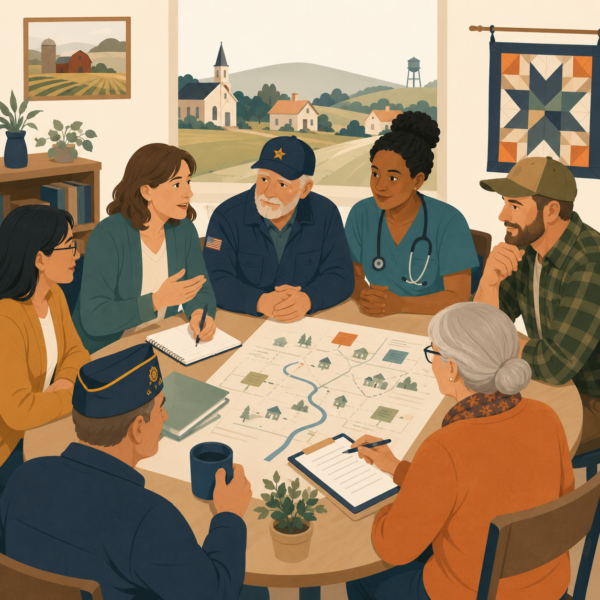 Reaching rural veterans requires more than expanding traditional outreach efforts into new geographic areas. Rural communities often have different information networks, trusted local institutions, communication preferences, and access barriers than urban and suburban populations. Effective rural outreach begins with understanding these community dynamics and developing communication strategies that connect with veterans through the people, organizations, and channels they already know and trust.
Successful rural veteran outreach combines local relationship building, trusted messenger networks, community partnerships, accessible communication channels, and ongoing evaluation. Veterans living in rural areas may face transportation challenges, limited broadband connectivity, fewer nearby VA facilities, and fewer opportunities to encounter veterans services information through conventional communication channels. Addressing these barriers requires communication strategies that are designed specifically for rural information environments rather than adaptations of urban outreach models.
Developing this type of communication system requires specialized expertise in audience research, community-based communication strategy, trusted messenger development, outreach planning, channel selection, and communication evaluation. Many veterans services agencies choose to partner with external communication specialists such as Stegmeier Consulting Group (SCG) because these capabilities complement the agency’s expertise in serving veterans while providing the strategic communication knowledge needed to build sustainable outreach systems that consistently reach underserved rural communities.
Working alongside veterans services agencies, SCG develops rural outreach communication strategies that reflect the realities of the communities agencies serve. Support may include identifying trusted community organizations and local leaders, designing outreach strategies that leverage existing community networks, developing communication approaches that address rural access barriers such as transportation and broadband limitations, strengthening telehealth communication for rural veterans, creating long-term partnership frameworks, and implementing measurement systems that evaluate whether outreach efforts are reaching veterans who have traditionally remained disconnected from available services.
As rural communities continue to evolve, outreach strategies must adapt to changing demographics, communication technologies, and community partnerships. SCG helps agencies establish repeatable outreach processes, governance practices, and performance measurement frameworks that enable rural communication efforts to remain effective while supporting long-term relationships across multiple communities and ensuring consistent communication throughout the outreach network.
The objective is to create a communication environment in which rural veterans receive timely, relevant, and trusted information about the benefits and services available to them regardless of where they live. By strengthening rural outreach communication systems, agencies are better positioned to reduce geographic disparities in awareness, improve access to care and benefits, and ensure more rural veterans receive the support they have earned.
Future Trends in Rural Veteran Outreach Communication
The rural outreach communication landscape is changing in several ways that will shape the strategies agencies need to employ in coming years. Broadband infrastructure expansion through federal programs including the Bipartisan Infrastructure Law’s broadband funding is gradually expanding reliable internet access to rural areas that have historically been without it, which will progressively make digital outreach channels more viable in rural communities that are currently underserved by digital connectivity. As this infrastructure development proceeds, rural outreach communication strategies will need to evolve to incorporate digital channels alongside the face-to-face and community institution-based approaches that have been primary in rural contexts.
Telehealth expansion within the VA system is continuing to develop new modalities and expand coverage for rural veterans, and the communication implications of this expansion are significant. As more services become available through telehealth formats, the communication case for rural veterans to connect with veterans services strengthens, because the access barrier that has historically been the primary reason for rural veterans’ non-engagement with formal services is progressively reduced. Communication strategies that stay current with what is available through telehealth and that effectively convey the expanding telehealth option set to rural veterans will capitalize on this infrastructure development in ways that static communication strategies will not.
The demographic evolution of the rural veteran population, including the aging of Vietnam-era veterans who are entering or approaching the life stages where long-term care, pension, and caregiving support are most relevant, and the emergence of post-9/11 veterans who are settling in rural areas after service, is creating new communication priorities for rural outreach. Aging rural veterans and their families need communication about VA pension, state veterans home options, and caregiver support programs that are delivered through the community channels that are most accessible to aging rural residents. Post-9/11 veterans settling in rural areas are a growing rural veteran cohort that brings different service experiences, different benefit profiles, and potentially different information consumption patterns than the older rural veteran population, and rural outreach communication strategies will need to address this demographic diversity rather than designing for a single rural veteran profile.
Conclusion
The rural veteran who has served honorably, who carries service-connected conditions that significantly affect their daily functioning, and who has never filed a disability claim because the VA feels too far away and too complicated from where they live, is not failing to access benefits they have earned. The communication system is failing to reach them in the community where they live, through the channels they trust, with the specific information about access pathways that would make the benefits system feel navigable from where they are. That failure is correctable, and correcting it is the work of rural outreach communication done with the seriousness, the patience, and the community embeddedness it requires.
Rural veterans deserve communication that comes to them rather than expecting them to come to it, that speaks through the voices they trust rather than through institutional channels they may never encounter, and that acknowledges the specific practical barriers of rural life while providing specific solutions rather than generic encouragement. The agencies that build this communication approach are serving rural veterans. The agencies that rely on generic outreach assuming rural veterans will find their way to available services are assuming something that is demonstrably not true.
SCG’s Strategic Approach to Communication Systems
Stegmeier Consulting Group’s rural veteran outreach work is grounded in the recognition that rural communication requires a fundamentally different approach from urban communication, not a scaled-down or geographically adjusted version of the same approach. The trusted institution partnerships, the face-to-face community engagement strategies, the community leader routing approaches, and the telehealth access communication that characterize effective rural outreach are not variations on urban outreach methods. They are distinct communication approaches appropriate to the distinct communication environment of rural communities.
SCG helps agencies develop rural outreach communication systems that are designed for the rural community environment from the ground up, with the community analysis, relationship development frameworks, trusted institution partnership structures, mobile outreach protocols, and telehealth communication approaches that produce actual community penetration among disconnected rural veterans rather than outreach activity that reaches only the veterans who are already connected to formal services. The investment in this work is an investment in the rural veterans who have been consistently underserved by communication strategies designed for a different environment, and it is an investment that the mission of veterans service requires agencies to make.
Use the form below to connect with our team and explore how strategic rural outreach communication can help your agency strengthen community partnerships, improve rural veteran engagement, and connect more underserved veterans with available benefits and services.