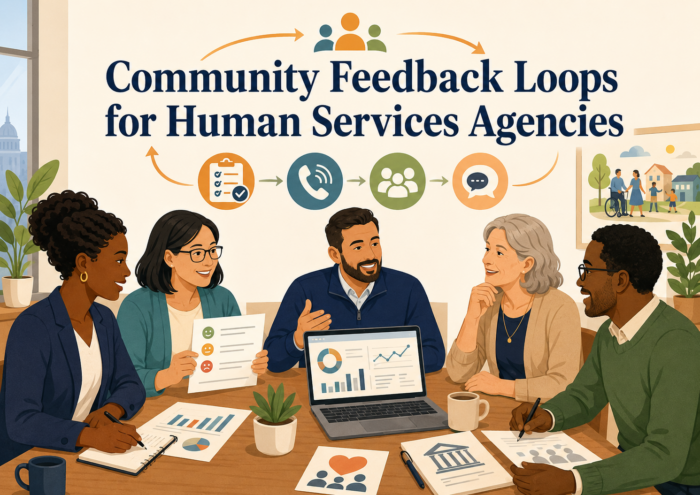
Community Feedback Loops for Human Services Agencies: Using Surveys, Call Trends, and Partner Input to Improve Communication
Human services agencies communicate with residents through notices, websites, portals, text alerts, call centers, lobby interactions, community partners, and frontline staff conversations. Each of those channels carries important information about applications, renewals, document requests, case status, benefit changes, interviews, EBT issues, language access, and appeal pathways. But agencies should not judge communication quality only by whether the message was sent or whether the required information was included. The stronger measure is whether residents understood the message well enough to take the right next step.
Community feedback loops help agencies answer that deeper question. A resident survey can show whether people understand notices or know where to get help. Call trend data can reveal which messages generate confusion. Partner input can show what residents are asking outside agency-controlled channels. Lobby questions can point to unclear signage or front desk instructions. Portal abandonment can show where digital instructions break down. Document submission patterns can reveal whether verification requests are specific enough. Together, these signals help agencies understand where communication is working and where it is creating avoidable friction.
For human services agencies, public benefits agencies, county social services departments, and state benefits offices, feedback loops should be treated as part of the communication system, not as occasional satisfaction research. Public benefits communication affects whether residents apply, renew, send documents, report changes, attend interviews, protect EBT cards, check case status, and maintain access to essential support. When communication is unclear, the result may appear as call volume, missed deadlines, duplicate submissions, wrong documents, preventable closures, partner escalations, or resident complaints. Those are not only operational issues. They are communication signals.
This is especially important because residents often encounter agency communication under stress. A person may be trying to understand why benefits changed, whether a renewal was received, what document is missing, or whether a case is at risk of closing. If the message is confusing, the resident may not have the time, confidence, language access, technology access, or emotional bandwidth to interpret it correctly. Feedback from residents and partners can help agencies see where the burden of interpretation has shifted too heavily onto the public.
A strong feedback loop does not require agencies to treat every comment as a mandate or redesign every notice after one complaint. It requires a disciplined process for identifying patterns. One resident’s confusion may be isolated. Fifty calls about the same phrase in a notice are evidence. A few partner questions may be anecdotal. Repeated partner reports that residents misunderstand a renewal text are a signal. A single abandoned portal session may not mean much. A consistent drop-off point across hundreds of users suggests the instruction or workflow may need attention.
The goal is not simply to collect feedback. The goal is to use feedback to improve communication before confusion becomes a larger access, workload, or trust problem. Agencies that build feedback loops into their communication practice can revise messages more strategically, support staff more effectively, equip partners more accurately, and help residents navigate public benefits with less unnecessary uncertainty.
Communication Problems Often Appear First as Workload
Many communication problems do not announce themselves as communication problems. They appear as workload. A call center receives repeated questions about the same notice. Eligibility workers receive duplicate documents because residents do not know whether the first submission was received. A lobby sees long lines of residents asking whether action is required. Community partners report that families cannot understand a renewal packet. A portal receives uploads in the wrong category because the document request and digital label do not match. At first glance, these may seem like separate operational pressures. In many cases, they point back to unclear communication.
This distinction matters because agencies may try to solve workload only by adding capacity, adjusting routing, or reminding residents to follow instructions. Capacity and workflow improvements may be necessary, but they may not address the root problem if the instructions themselves are unclear. When residents call because they cannot interpret a notice, the call is not only a service demand. It is feedback on the notice. When residents resubmit the same document, the duplicate upload is not only a processing burden. It is feedback on confirmation language and case status visibility.
Human services agencies can strengthen operations by treating repeated workload patterns as communication evidence. The question is not only how many calls arrived, how many documents were uploaded, or how many residents visited the lobby. The question is why residents needed that extra contact. If the same question appears again and again, the agency may need clearer notice language, a better source-of-truth page, stronger text alert wording, improved portal labels, or more consistent staff scripts.
This approach does not blame residents for seeking help. Residents contact the agency because benefits matter and because uncertainty has consequences. A feedback loop helps agencies honor that reality by using resident behavior to improve the system. When the agency reduces preventable confusion, it reduces workload while also making the process more respectful and usable.
Surveys Can Reveal Whether Residents Understand the Process
 Surveys are most useful when they measure understanding, not only satisfaction. A resident may be dissatisfied because a decision was unfavorable, but still understand the reason and next step. Another resident may report a neutral experience but still be unsure what to do after receiving a document request. For communication improvement, agencies need survey questions that reveal whether residents understood the message, knew where to go, recognized the deadline, and felt able to complete the required action.
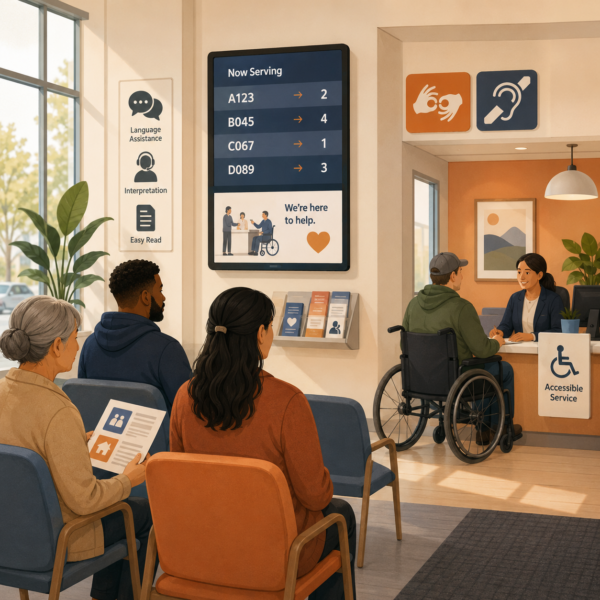
A strong survey strategy can focus on specific communication moments. After a renewal cycle, the agency can ask whether residents understood what needed to be completed, how to submit documents, and where to get help. After a portal update, the agency can ask whether residents could find the task they needed. After a text reminder campaign, the agency can ask whether the message made the required action clear. After a lobby visit, the agency can ask whether signs and staff instructions helped residents know where to go.
Surveys should be designed with access in mind. Residents may need short questions, plain language, multiple languages, mobile-friendly formats, and non-digital options. The survey should not become another confusing agency interaction. It should be easy to complete and focused on questions the agency can actually use. Long surveys that ask broad satisfaction questions may generate data, but they may not identify the specific communication changes needed.
Survey results should also be paired with other evidence. Residents who respond to surveys may not represent everyone affected by a communication issue. Call trends, partner feedback, staff observations, website analytics, and document submission patterns can help agencies interpret survey findings more accurately. Surveys are one feedback channel, not the whole feedback system.
Call Trends Show Where Messages Are Not Doing Enough Work
Call centers are often the clearest early warning system for communication problems. When residents call with the same question after a notice, text alert, portal update, or policy change, the agency can see where the public message is not answering the resident’s practical need. Calls can reveal whether residents understand deadlines, status labels, document requests, renewal steps, appointment instructions, benefit changes, and the difference between agency review and resident action.
The key is to capture call trends in a way that supports communication improvement. Broad categories such as “case status” or “documents” may be useful operationally, but they may not be specific enough to improve messaging. Agencies benefit from knowing the actual resident question. Are residents asking whether documents were received, whether benefits will continue, which document is missing, whether they need to renew, whether a text is legitimate, or why one benefit changed while another did not? Each question points to a different communication need.
Call trend review should be regular, not occasional. Communication issues can emerge quickly during renewal periods, portal changes, EBT concerns, backlog periods, or major notice updates. If call themes are reviewed only after a crisis, agencies may miss the chance to correct confusion early. A routine review of call themes can help communications, operations, training, and program teams adjust language before confusion spreads across other channels.
Call data also supports staff. When the agency identifies recurring questions, it can create better scripts, job aids, website updates, text messages, and partner guidance. Staff should not have to answer the same preventable question hundreds of times because the original message was unclear. Call trends help agencies move the answer upstream into the communication materials residents see first.
More Than Just Applications: Human Services and Public Benefits Communication Strategies for State and Local Agencies
This article is part of our series on strategic communication for Human Services Agencies, Public Benefits Agencies, and Health and Human Services departments. To learn more and to see the parent article, which links to other content just like this, click the button below.
Partner Input Shows What Residents Ask Outside the Agency
Community partners often hear resident confusion in a different form than agencies do. Schools, clinics, food banks, libraries, legal aid organizations, housing providers, child care resource organizations, faith-based groups, immigrant-serving organizations, and other partners may hear questions that residents do not bring directly to the agency. Residents may trust partners, seek help from them first, or ask them to interpret agency materials after trying unsuccessfully to understand the official message.
Partner input can reveal where agency communication is not landing in the community. A clinic may hear that patients are confused about Medicaid renewal. A food bank may hear that residents do not understand EBT theft guidance. A library may see repeated confusion about portal login or document upload. A school may hear that parents do not know whether a child care assistance notice requires action. Legal aid may see patterns in appeal questions or closure notices. These observations help agencies see how communication works beyond agency-controlled channels.
This input is especially valuable because partners often understand context. They may know whether a phrase sounds too formal, whether a translated term is not commonly used, whether residents are relying on outdated information, or whether a notice is being misunderstood in a specific community. Agencies should not treat partner input as merely anecdotal. When several partners report the same confusion, that is a meaningful signal that the agency’s communication may need revision.
A strong feedback loop gives partners a simple way to share what they are hearing. The process should not be burdensome. A periodic partner meeting, short feedback form, dedicated email address, or standing agenda item can help agencies collect recurring themes. The agency should also close the loop by telling partners when feedback leads to improved guidance, revised language, updated toolkits, or clearer source-of-truth pages. This builds trust and encourages partners to keep sharing what they see.
Feedback Loops Should Lead to Communication Changes Residents Can See
Collecting feedback has limited value if residents never see improvements. Human services agencies should build a process for translating feedback into visible communication changes. A pattern of calls about a confusing renewal notice should lead to revised notice language, a clearer web page, or a better text reminder. Partner reports about document confusion should lead to improved document examples and submission instructions. Survey results showing that residents do not understand case status should lead to clearer portal labels and staff scripts.
This does not mean every improvement must be large. Small changes can reduce significant confusion. A revised heading, clearer deadline line, better document example, updated source-of-truth page, stronger confirmation message, or improved referral script can make a meaningful difference when used across high-volume communication. The strongest agencies look for practical changes that address recurring confusion at the point where residents encounter it.
Feedback loops should also be transparent internally. Staff need to know when communication changes are made and why. Partners need updated materials when guidance changes. Supervisors need coaching points when scripts are revised. Website and portal teams need to know when resident behavior suggests a navigation issue. Communication improvement is not only a writing task. It is a coordination process across the agency’s resident-facing system.
In the end, the value of feedback is action. Residents should experience clearer messages because the agency learned from their questions. Staff should receive better tools because the agency recognized repeated confusion. Partners should see that their input shapes official guidance. When feedback leads to visible improvement, the agency strengthens both communication quality and public trust.
Feedback Should Be Organized Around Communication Decisions
Feedback becomes more useful when agencies connect it to specific communication decisions. A survey result, call trend, partner comment, or staff observation should not sit apart from the messages residents actually receive. The agency should be able to connect the feedback to a notice, web page, portal status, text alert, lobby sign, call script, partner toolkit, or staff explanation. Without that connection, feedback may confirm that residents are confused without showing where the communication system needs to change.
Human services agencies can strengthen feedback loops by asking what decision the feedback should inform. If residents are calling about document requests, the decision may involve revising verification language or adding examples of acceptable proof. If partners are hearing confusion about renewals, the decision may involve updating task pages, reminder messages, and partner talking points. If residents say they do not understand case status, the decision may involve portal labels, call center scripts, and confirmation language. Feedback has more value when it leads directly to a communication improvement.
This approach also helps agencies avoid collecting feedback without a clear use. Residents and partners may become less willing to share input if they never see change. Staff may stop flagging patterns if those patterns do not lead to better materials. A decision-oriented feedback loop makes the purpose clear. The agency is not simply gathering opinions. It is identifying where communication can better support action, compliance, access, and trust.
Start With the Message That Caused the Question
When residents repeatedly ask the same question, agencies should identify the original message that may have prompted it. A call about a missing document may connect to a verification notice. A question about a deadline may connect to a renewal packet. A complaint about confusion may connect to a text reminder, portal status, or lobby instruction. The feedback should be traced back to the communication moment that shaped the resident’s understanding.
This tracing process helps agencies avoid solving the wrong problem. If residents call after receiving a notice, the answer may not be more call center staffing alone. The answer may be a clearer notice, a better deadline line, or a more useful document example. Understanding the source message helps move the fix upstream.
Treat Repeated Confusion as Design Evidence
Repeated confusion is evidence that the communication design may need attention. It does not mean residents are careless or staff are failing. It often means the message, channel, sequence, or terminology is not doing enough work. Agencies should look for patterns that show where residents are being asked to interpret too much.
This mindset changes the tone of improvement work. Instead of asking why residents keep calling, the agency asks what information residents are missing before they call. Instead of asking why partners keep misunderstanding guidance, the agency asks whether the official materials are shareable and clear. Repeated confusion becomes a signal for redesign, not a reason for frustration.
Surveys Should Ask Whether Residents Could Act
Surveys should measure whether residents could understand and act on agency communication. A broad satisfaction question may be useful, but it may not reveal whether the resident knew what document to submit, which deadline applied, how to renew, where to check status, or what to do after receiving a notice. Communication-focused surveys should ask about comprehension, confidence, and next-step clarity.
A stronger survey might ask whether the resident understood what action was required, whether the deadline was clear, whether they knew where to get help, whether the message used words they understood, and whether they were able to complete the task. These questions give agencies more actionable information than a general rating alone. They help show whether the communication supported the resident’s ability to move through the process.
Surveys should also be tied to specific communication moments. A survey after a renewal reminder can ask whether the reminder made the renewal step clear. A survey after a lobby visit can ask whether residents knew where to go and what to expect. A survey after a portal interaction can ask whether residents could find the task they needed. Focused surveys help agencies improve the exact channels residents use.
Short Surveys Often Produce More Useful Signals
Residents may not have time or interest in completing long surveys, especially after navigating a benefits issue. A short survey with a few well-designed questions can produce clearer results than a long survey that asks about too many topics at once. The goal should be to learn whether the communication helped the resident understand and complete the task.
Short surveys are also easier to repeat over time. Agencies can use them after high-volume interactions, renewal periods, portal updates, document campaigns, or lobby service changes. Repeated short surveys can show whether communication improvements are making a difference.
Survey Language Should Reflect Plain-Language Standards
A survey about communication should not be difficult to understand. Questions should use plain language, avoid agency jargon, and be available in the languages and formats residents use. If the survey asks residents whether a “redetermination notice” was understandable, but residents know the task as renewing benefits, the survey may miss the real issue.
Survey design should model the same communication standards the agency wants to improve. The questions should be clear, direct, and easy to answer. Residents should not need program knowledge to provide useful feedback about their experience.
Call Trends Should Be Reviewed by Question, Not Only by Category
Call centers often categorize contacts by topic, but broad categories may hide the communication issue. A category such as “documents” could include residents asking what document is needed, whether a document was received, why a document was rejected, how to upload a file, whether a photo is acceptable, or whether a deadline still applies. Each of those questions points to a different communication improvement. Agencies need enough detail to understand the resident’s actual confusion.
Reviewing call trends by question helps agencies identify where communication is not specific enough. If residents ask which document counts as income proof, verification notices may need stronger examples. If residents ask whether the agency received a document, confirmation language may need improvement. If residents ask why they received another request after uploading proof, status language may need to distinguish receipt from review. The call trend becomes a map of where the communication pathway is breaking down.
This type of review should include staff insight. Call center representatives and frontline staff often know which questions are recurring before those questions show up clearly in reports. They can explain what residents are saying in their own words, which phrases are causing confusion, and where staff have to translate agency language repeatedly. That insight should inform notice revisions, scripts, website updates, text alerts, and partner guidance.
Call Reasons Should Capture the Resident’s Words
Agencies can learn a great deal from the way residents describe their own confusion. A resident may not say “verification issue.” They may say, “I already sent my papers,” “I do not know what proof means,” or “the portal says pending.” Capturing those words helps agencies understand the gap between internal terminology and resident language.
Resident phrasing can improve page titles, text alerts, scripts, FAQs, and task-based website navigation. The words people use when they ask for help are often the words they search for online and look for in notices. Call trends should therefore inform the agency’s plain-language vocabulary.
Call Spikes Should Trigger Message Review
A sudden increase in calls after a notice, text campaign, portal change, or public update should trigger communication review. The agency should examine whether the message was unclear, incomplete, too broad, too urgent, or inconsistent with other channels. A call spike may show that the message got attention but did not give residents enough guidance.
This review should happen quickly enough to support correction. Agencies may be able to update a source-of-truth page, clarify a text reminder, issue staff guidance, adjust partner materials, or revise a future message before confusion spreads further. Call spikes are not only service pressure. They are early warnings.
Partner Input Should Be Structured Enough to Use
Partner input is valuable, but it becomes more actionable when agencies ask for it in a structured way. Community partners may hear many types of concerns, and those concerns can be difficult to compare if they are shared only informally. Agencies should give partners a simple way to report what residents are asking, which materials are confusing, which links are not working, which languages or formats are needed, and which rumors or outdated messages are circulating.
The structure should be practical. Partners do not need a burdensome reporting system. A short feedback form, dedicated email address, recurring partner check-in, or standing meeting prompt can be enough. The key is to collect patterns in a way that can be reviewed and acted on. Agencies should ask partners to identify the resident question, the material or topic involved, and the recommended clarification when partners have one.
Structured partner input also strengthens relationships. Partners are more likely to share useful feedback when they see that the agency values their observations and uses them to improve communication. The agency should close the loop by sharing when a notice was clarified, a web page was updated, a toolkit was revised, or new guidance was created based on partner input. This turns feedback into collaboration.
Partners Can Identify Confusion Before It Becomes a Complaint
Residents may bring confusion to partners before they file a complaint or contact the agency repeatedly. A food bank may hear that residents do not understand EBT guidance. A clinic may hear that patients are worried about Medicaid renewal. A school may hear that parents are unsure about child care assistance. A library may see repeated portal access issues. These early signals can help agencies correct communication before the problem grows.
Partner feedback is especially useful because it often includes context. Partners may know whether residents are confused by language, technology, timing, trust, or competing information. That context helps agencies design better communication responses.
Feedback Requests Should Respect Partner Capacity
Partners often operate with limited time and staff. Feedback systems should not ask them to produce long reports or track complex data unless that is part of a formal partnership agreement. The process should make it easy for partners to share recurring themes and urgent concerns.
Respecting partner capacity also means providing updates in return. Partners should know when their input led to a change or when the agency is still reviewing an issue. Feedback loops are stronger when they feel reciprocal rather than extractive.
Feedback Loops Should Include Staff Who Explain the Message Every Day
Frontline staff are a critical part of any communication feedback loop. Eligibility workers, caseworkers, call center representatives, lobby staff, reception teams, navigators, and supervisors hear how residents interpret agency language in real time. They know which notice phrases generate confusion, which portal labels require repeated explanation, which document examples are not specific enough, and which scripts help calm difficult conversations.
Agencies should create regular opportunities for staff to share these observations. A short team huddle, supervisor summary, shared tracking form, or monthly communication review can help identify recurring issues. Staff feedback should not be treated as a complaint. It is operational intelligence. The people who explain the message every day are often best positioned to identify where the message needs to improve.
Staff feedback also helps agencies determine whether communication materials are usable internally. A notice may be difficult for residents, but it may also be difficult for staff to explain. A script may be accurate but not natural to use. A web page may be clear to communications staff but not aligned with how eligibility workers describe the process. Including staff in feedback loops makes improvements more practical and more likely to be used.
Staff Should Be Able to Flag Confusing Materials Quickly
Staff should have a simple way to flag notices, scripts, portal messages, text alerts, or website pages that residents consistently misunderstand. The process should not require a lengthy memo. A short description of the problem and a few examples of resident questions may be enough to trigger review.
Quick staff feedback helps agencies respond before a communication issue becomes embedded in daily workload. It also helps staff feel supported because they can see that repeated confusion is being addressed at the source.
Staff Feedback Should Inform Training and Job Aids
When staff repeatedly struggle to explain the same issue, the agency may need more than a revised notice. It may need a job aid, script, training scenario, or supervisor coaching point. Staff feedback should therefore inform both public communication and internal support materials.
This connection is important because residents experience the agency through both written messages and human explanations. Improving one without the other can leave gaps. Feedback loops should strengthen the full communication system.
Feedback Should Be Connected to Specific Resident Journeys
 Human services agencies can learn more from feedback when it is connected to the resident journey that produced it. A resident who is confused after receiving a renewal notice may have a different communication problem than a resident who abandons a portal upload or calls after a document submission. If the agency treats all confusion as one broad category, it may miss the precise point where the communication failed. The feedback loop should identify where the resident was in the process, what message they encountered, what they understood, and what action they took or did not take afterward.
Resident journeys often cross several channels. A person may receive a mailed notice, get a text reminder, open a portal, call the agency, visit a lobby, and then ask a community partner for help. Feedback should help agencies understand how those touchpoints work together. If the notice says one thing, the portal uses different language, and the call center script explains the issue another way, the resident may experience the process as inconsistent even if each channel is technically accurate on its own. Journey-based feedback reveals those gaps.
This approach is especially useful for high-consequence processes such as renewals, verification requests, case closures, benefit changes, EBT issues, and language access. Agencies should look at the full path residents follow before they miss a deadline, submit the wrong document, or call repeatedly. The goal is not only to improve one message. The goal is to understand how the communication system either supports or disrupts the resident’s ability to complete the required step.
Feedback Loops Should Distinguish Confusion From Disagreement
Not every negative response means the communication was unclear. Residents may understand a decision and still disagree with it. They may understand a deadline and still be frustrated by the consequences. They may understand a document request and still find it difficult to obtain the required proof. Agencies should distinguish between communication confusion and dissatisfaction with the underlying policy, decision, or process. Both matter, but they require different responses.
Confusion means the resident does not understand what happened, what is required, what deadline applies, what the agency needs, or where to go next. Disagreement means the resident may understand the message but object to the outcome, rule, or requirement. If agencies treat all dissatisfaction as a communication problem, they may overcorrect the wrong materials. If they treat all frustration as disagreement, they may miss real clarity problems that are creating preventable churn.
A strong feedback loop captures both. It can identify where residents need clearer explanations and where they need better support navigating a difficult but clear requirement. For example, an appeal-related complaint may reveal that residents understand the denial but do not understand their appeal rights. A document-related complaint may show that residents understand the request but need clearer examples of acceptable proof. This distinction helps agencies improve communication without confusing message quality with policy agreement.
Feedback Should Be Reviewed Across Programs, Not Only Within Silos
Public benefits communication often crosses program boundaries. A resident may receive SNAP, Medicaid, cash assistance, child care assistance, and other support at the same time. A confusing income request may affect several benefits. A renewal reminder may be understood as applying to one program when it actually applies to another. A case status question may involve one program being active while another is under review. If feedback is reviewed only within program silos, the agency may miss cross-program confusion that residents experience as one household problem.
Human services agencies should review communication feedback across programs when resident-facing messages overlap. Call trends, partner input, survey findings, and staff observations may reveal that residents do not understand which benefit a notice affects, whether one document can support multiple programs, or whether one action completes all requirements. These issues are often difficult to see when each program evaluates its own communication separately.
Cross-program review can help agencies build shared terminology and clearer task-based guidance. Instead of each program developing separate explanations for renewal, verification, change reporting, status, and document submission, the agency can create a common resident-facing framework with program-specific details where needed. This helps residents understand both connection and difference. It also helps staff and partners reinforce one coherent explanation rather than several competing program narratives.
Feedback Data Should Be Paired With Plain-Language Review
Data can show where residents are struggling, but it does not automatically explain how to fix the language. Agencies may see that calls increased after a notice was mailed, but the improvement still requires careful review of the notice itself. The agency needs to examine the heading, first paragraph, deadline language, document examples, program labels, contact information, consequence statements, and source-of-truth links. Feedback points to the problem. Plain-language review helps solve it.
This review should focus on whether the message supports action. A notice may include all required information but bury the resident’s next step. A web page may be accurate but organized around agency divisions rather than tasks. A text alert may be short but too vague. A portal status may be technically correct but not meaningful to residents. The plain-language review should ask whether a resident can quickly understand what happened, what action is required, whether a deadline applies, and where to get help.
Plain-language review should also consider tone. Feedback may reveal that residents experience a message as accusatory, final, or dismissive. A phrase that is routine inside the agency may sound punitive to someone trying to protect benefits. Revising tone does not mean weakening the requirement. It means explaining the requirement in a way that preserves dignity and keeps the resident focused on the next step. Feedback loops become stronger when data analysis and message quality review work together.
Feedback Loops Should Include Equity and Access Signals
Communication problems do not affect all residents equally. A confusing notice, unclear portal label, vague text alert, or difficult phone menu may create greater barriers for residents with limited English proficiency, disabilities, low literacy, unstable housing, limited digital access, transportation barriers, or inflexible work schedules. Feedback loops should therefore include equity and access signals, not only aggregate satisfaction or volume data.
Agencies can look for patterns across language preferences, channels used, service locations, program types, partner reports, device access, and common points of failure. If residents using translated materials still call with the same question, the source language or translated terminology may need review. If residents relying on mobile devices abandon a portal task, the issue may be digital design rather than lack of effort. If residents in certain communities rely heavily on partner organizations to understand notices, the agency may need stronger partner-ready materials and language access pathways.
This does not require agencies to overinterpret every data point. It requires attention to patterns that show where communication may be placing a disproportionate burden on certain residents. A feedback loop that includes equity and access helps agencies improve communication where misunderstanding can cause the greatest harm. It also supports more effective operations because the agency can target improvements to the channels, tasks, and communities where confusion is most likely to become missed action.
Feedback Should Lead to a Clear Improvement Cycle
A feedback loop is only complete when the agency has a defined process for acting on what it learns. Collecting surveys, call themes, partner observations, staff comments, and analytics is not enough. Agencies need a routine way to review the feedback, identify priority issues, decide what communication changes are needed, assign responsibility, update materials, inform staff and partners, and monitor whether the change improved resident understanding.
This cycle does not need to be overly complicated. A practical process might include a monthly review of high-volume confusion themes, a quarterly review of resident survey results, regular partner check-ins, and a rapid review process for urgent issues such as confusing text alerts, portal changes, EBT concerns, or backlog messages. The key is that feedback should move toward action. Without ownership and follow-through, feedback becomes information without improvement.
The improvement cycle should also be visible internally. Staff should know when a notice was revised because of repeated resident questions. Partners should know when their feedback led to a new resource. Program teams should see how communication changes reduce preventable workload. When people see that feedback leads to better materials, they are more likely to keep participating in the loop. Over time, the agency builds a culture where communication is not static. It is maintained, tested, and improved based on how residents actually experience it.
Communication Feedback Should Be Owned by a Cross-Functional Group
Community feedback loops work best when they are not owned by one team alone. Resident communication touches program policy, eligibility operations, call centers, digital services, lobby service, language access, training, community partnerships, and executive messaging. If feedback is collected by one unit but never reaches the people who control notices, portals, scripts, or workflows, the agency may understand the problem without being able to fix it. A stronger approach gives communication feedback a cross-functional home.
This does not require a large committee or complicated governance structure. It requires a regular space where the right perspectives can review recurring confusion and decide what needs to change. Program staff can explain policy requirements. Call center and frontline staff can share what residents are asking. Communications staff can assess plain language and tone. Digital teams can evaluate portal or website issues. Partner liaisons can bring community feedback. Training staff can identify where scripts or job aids need revision. Together, these perspectives help the agency distinguish between a message problem, a process problem, a system problem, or a training problem.
Cross-functional ownership also helps prevent fragmented fixes. If the communications team rewrites a notice but the portal still uses old terminology, residents may remain confused. If a call center script changes but partners continue sharing outdated guidance, the resident experience may still feel inconsistent. If a website page is updated but lobby staff do not know the change occurred, the improvement may not reach residents who come in person. A cross-functional feedback process helps the agency make connected changes across the full communication system.
Agencies Should Prioritize Feedback by Impact and Frequency
Not every feedback item can or should receive the same level of attention. Human services agencies receive many comments, complaints, questions, and suggestions. Some reflect isolated circumstances. Others reveal repeated confusion about high-consequence processes. A strong feedback loop helps agencies prioritize where communication improvement will have the greatest effect. The most urgent issues are often those that are both frequent and consequential.
Frequency matters because repeated confusion creates workload and suggests the message is not functioning well for a meaningful number of residents. If many people call about the same document request, search for the same portal task, or ask partners the same question, the agency has evidence that the communication should be reviewed. High-volume confusion often points to an opportunity for a relatively small improvement, such as clearer wording, a stronger headline, a better text reminder, or a more visible source-of-truth page.
Impact matters because some communication failures carry greater risk than others. Confusion about a renewal deadline, appeal right, closure notice, document requirement, EBT theft report, or urgent coverage issue may lead to benefit interruption, missed rights, or avoidable hardship. Even if the volume is lower, these topics may deserve priority because the consequence of misunderstanding is significant. Agencies should evaluate feedback through both lenses: how often the issue occurs and what happens if residents misunderstand it.
Prioritization also helps agencies communicate internally about why changes are being made. Staff and leaders are more likely to support revisions when they can see the connection between feedback, workload, resident outcomes, and trust. A notice revision is not just a writing preference. A portal label change is not just a design adjustment. A partner toolkit update is not just outreach maintenance. Each change responds to a pattern that affects residents and agency operations.
Feedback Loops Should Produce Standardized Communication Improvements
When feedback identifies a problem, agencies should look for improvements that can be standardized across channels. A recurring question about renewal deadlines should not be answered only through a one-time call center clarification. It may require an updated notice template, revised text reminder, improved website task page, call center script, partner message, and supervisor coaching point. Standardized improvements help ensure that residents receive the same clearer explanation wherever they turn.
This is especially important in public benefits communication because residents often move between channels. A person may read a notice, call the agency, check a portal, ask a partner, and visit a lobby during the same process. If only one channel is improved, the resident may still encounter conflicting language elsewhere. Feedback should therefore trigger a review of all major touchpoints connected to the issue. The agency should ask where the same message appears and whether each version needs adjustment.
Standardization also reduces staff burden. When the agency creates a shared explanation, staff do not have to improvise their own response to repeated confusion. A clear script, source-of-truth page, notice revision, and partner message can work together. Staff can reinforce the official language instead of translating unclear materials in real time. This improves consistency and makes communication improvement more sustainable.
The goal is not to make every channel identical. A text alert will be shorter than a web page. A call script will allow more context than a lobby sign. A partner handout will need clearer boundaries than an internal job aid. But the core meaning should match. Feedback loops should produce communication improvements that are adapted to each channel while preserving one coherent resident-facing explanation.
Agencies Should Close the Loop With Residents, Staff, and Partners
A feedback loop is stronger when people can see that their input mattered. Residents, staff, and partners may become less willing to share feedback if the agency appears to collect information without acting on it. Closing the loop does not require a detailed response to every comment. It does require communicating when patterns have been heard, when materials have been improved, and when new guidance is available.
For residents, closing the loop may mean clearer notices, updated website language, more useful text alerts, improved portal status messages, or public explanations that directly address common questions. Residents do not always need to know the internal story of the revision. They need to experience communication that is easier to understand because the agency listened to recurring confusion. In some cases, a public update can also state that guidance has been clarified based on resident questions.
For staff, closing the loop means showing how frontline observations led to better tools. If call center staff report that residents misunderstand a phrase and the notice is revised, staff should know that their feedback contributed to the change. If lobby staff identify repeated wayfinding confusion and signage is updated, they should see the connection. This reinforces the value of staff feedback and helps staff use the new materials with confidence.
For partners, closing the loop builds trust and encourages continued collaboration. If partners report that residents are confused about renewal notices, the agency can share the revised partner language or updated source-of-truth page. If partners flag a broken link, missing translation, or rumor circulating in the community, the agency can respond with corrected guidance. When partners see their input reflected in official materials, they are more likely to keep acting as reliable communication bridges.
Feedback Should Inform Training, Not Only Public Materials
Community feedback often reveals training needs as well as public communication needs. If residents repeatedly hear different answers from different staff, the issue may not be the notice alone. If partners report that agency staff use terminology that does not match public guidance, the issue may be staff alignment. If call data shows that residents call after receiving a text alert, staff may need a script that explains the alert in the same language residents saw. Feedback should therefore inform training, coaching, and job aids, not only written materials.
Training updates should be practical and connected to real resident questions. Staff do not need abstract reminders that communication matters. They need examples of the specific confusion residents are experiencing and the language the agency wants staff to use going forward. A short refresher on how to explain pending status, document review, renewal completion, appeal deadlines, or portal confirmation may reduce confusion more effectively than a broad customer service module.
Supervisors also need feedback-based coaching tools. When communication issues are identified, supervisors can reinforce updated language during team meetings, call reviews, lobby observations, or case discussions. They can help staff understand the reason for the change and practice the new explanation. This is especially important when the agency is trying to shift away from internal terminology or inconsistent phrasing that staff have used for years.
Training should also include partners where appropriate. If a communication issue is showing up in schools, clinics, food banks, libraries, or legal aid settings, partner toolkits and briefings should be updated. Partners should understand the revised guidance and the boundaries around what they can say. Feedback-informed training helps the entire communication network move together.
Feedback Systems Should Be Simple Enough to Sustain
A feedback loop that is too complicated will not last. Agencies already manage heavy workloads, complex programs, resident urgency, staff capacity limits, and competing priorities. The feedback system should be structured enough to identify patterns, but simple enough to maintain. If the process requires too many meetings, too much manual tracking, or overly detailed reporting, staff and partners may stop using it.
A sustainable feedback system can begin with a few core inputs: call themes, resident survey results, staff observations, partner feedback, website or portal analytics, and complaint patterns. The agency can review these inputs on a regular schedule, identify the highest-priority communication issues, assign owners, make targeted improvements, and monitor whether the issue improves. The process should be disciplined but not burdensome.
Simplicity also helps agencies act more quickly. A confusing text alert, broken link, unclear deadline line, or recurring document question should not require months of review before any improvement is made. Some issues will require policy, legal, system, or leadership review. Others can be addressed through clearer wording, a short source-of-truth update, a staff script, or partner clarification. A sustainable feedback system helps agencies distinguish between changes that need deeper review and changes that can be made quickly.
Over time, the value of the feedback loop comes from repetition. The agency listens, identifies patterns, improves communication, informs staff and partners, and watches for results. This cycle makes communication more adaptive and less reactive. Residents benefit because messages become clearer. Staff benefit because preventable confusion decreases. Partners benefit because official guidance becomes easier to share. The agency benefits because communication improvement becomes part of normal operations, not only a response to a crisis.
Strategic Communication Support for Human Services and Public Benefits Agencies
 Community feedback loops are not simply research activities or resident satisfaction exercises. They are part of how human services and public benefits agencies maintain communication systems that remain clear, current, and responsive to the people who use them. Residents interact with agencies through notices, websites, portals, text alerts, call centers, lobby visits, staff conversations, and community partners. Each of those channels creates evidence about whether the agency’s message is understandable enough to support action.
Because feedback touches so many parts of the resident journey, many agencies benefit from structured communication support. Internal teams may see call volume, survey results, partner comments, portal abandonment, document errors, and complaint themes as separate issues. A communication systems approach helps connect those signals to the messages, processes, and channels that may be creating confusion. The goal is not to collect more data for its own sake. The goal is to identify where residents are struggling, improve the communication they receive, and reduce avoidable workload before confusion becomes a larger access or trust problem.
Stegmeier Consulting Group (SCG) helps human services and public benefits agencies build feedback-informed communication systems. That support may include resident survey design, call trend analysis frameworks, partner feedback processes, staff feedback loops, communication audits, notice and website improvements, source-of-truth page development, frontline scripts, partner toolkit updates, and plain-language message frameworks. SCG can also help agencies turn recurring resident questions into practical improvements across notices, portals, text alerts, websites, lobby materials, staff scripts, and community outreach.
This type of support is especially valuable when agencies are managing high-volume renewals, benefit delays, portal changes, document submission problems, language access concerns, partner confusion, or repeated resident questions about the same process. Strong feedback loops help agencies move from reactive problem-solving to continuous communication improvement. They give residents clearer guidance, staff better tools, partners more accurate materials, and leadership a more reliable understanding of where communication is affecting service delivery.
Future Trends in Community Feedback and Human Services Communication
Human services agencies are likely to place greater emphasis on feedback-informed communication as resident interactions become more digital, multi-channel, and partner-supported. Residents no longer experience agency communication through one notice or one office visit. They may receive a text reminder, check a portal, search a website, call a center, ask a partner, and visit a lobby during the same process. Agencies will need feedback systems that can identify where those channels are aligned and where they are creating conflicting or incomplete guidance.
Another likely trend is stronger use of operational data as communication evidence. Call reasons, portal drop-off points, duplicate document submissions, website search terms, text alert response patterns, lobby questions, and partner feedback can all show where residents are struggling to understand what the agency needs. Agencies that treat these signals as communication intelligence will be better positioned to revise messages before confusion turns into missed deadlines, repeat contacts, or procedural benefit loss.
Agencies may also develop more formal partner feedback structures. Schools, clinics, food banks, libraries, legal aid organizations, housing providers, and community-based organizations often hear resident confusion before it appears in formal agency channels. As partner toolkits and community outreach become more important, agencies will need simple ways to gather partner observations, update materials, correct misinformation, and close the loop when feedback leads to improved guidance.
Finally, feedback loops will likely become more closely tied to equity and access strategies. Agencies will need to understand not only whether residents are generally satisfied, but whether different communities can understand and act on agency communication. Language access, disability access, digital access, literacy, transportation, and trust all shape whether a message works. Feedback systems that capture those access signals can help agencies improve communication where misunderstanding creates the greatest risk.
Conclusion
Community feedback loops help human services agencies understand whether their communication is actually working. A notice, text alert, portal status, website page, script, or partner toolkit may be accurate and still leave residents unsure what to do. Surveys, call trends, staff observations, partner input, website analytics, and resident behavior can reveal where messages are not clear enough to support action.
The strongest feedback systems connect evidence to improvement. They identify recurring confusion, trace it back to the message or channel that may be causing it, prioritize issues by frequency and impact, assign responsibility, update materials, and monitor whether the change helps. Feedback should not remain a report that sits apart from operations. It should lead to clearer notices, better scripts, stronger source-of-truth pages, more useful partner guidance, and communication that residents can understand before problems escalate.
In the end, feedback loops make public benefits communication more responsive and more trustworthy. They help agencies learn from residents, staff, and partners while maintaining clear ownership of official guidance. When agencies use feedback to improve communication continuously, they reduce avoidable confusion, support better compliance, strengthen access, and make the benefits system easier to navigate.
SCG’s Strategic Approach to Communication Systems
Align your agency’s messaging, processes, and public engagement strategies.
Human services and public benefits agencies need communication systems that improve based on what residents, staff, and partners are actually experiencing. Surveys, call trends, partner input, staff observations, and digital behavior should help agencies identify where communication is unclear and where residents need stronger guidance.
SCG helps agencies create feedback-informed communication frameworks that support clarity, consistency, access, and trust. Whether your agency is designing resident surveys, reviewing call trends, building partner feedback loops, improving source-of-truth pages, updating scripts, or turning recurring resident confusion into stronger public guidance, SCG can help build a communication system that learns and improves over time. Use the form below to connect with our team and explore how a strategic communication system can help your agency use feedback loops to improve public benefits communication.