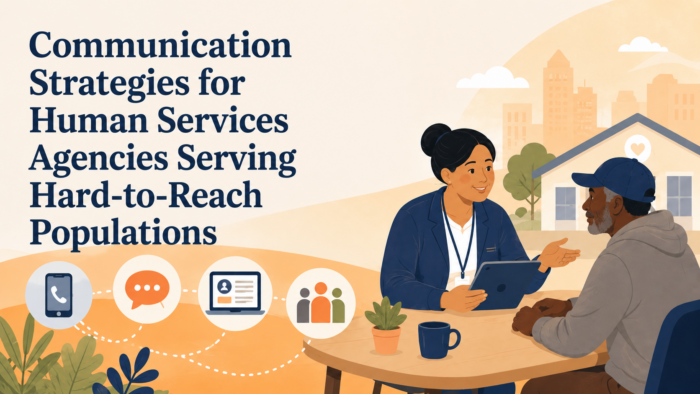
Reaching Residents Who Are Often Missed: Communication Strategies for Human Services Agencies Serving Hard-to-Reach Populations
Human services agencies often describe certain residents as hard to reach, but the phrase can obscure an important reality. Residents are not usually difficult to reach because they are indifferent to benefits, unwilling to respond, or uninterested in agency communication. They are often missed because the communication system does not align with their daily lives, trusted channels, language needs, technology access, housing stability, work schedules, caregiving responsibilities, disability-related needs, or prior experiences with public systems. For agencies serving people through SNAP, Medicaid, cash assistance, child care assistance, housing-related support, energy assistance, and other public benefits, reaching residents who are often missed requires more than sending one more notice or posting one more web update.
The residents most likely to be missed are often the residents most affected by communication breakdowns. A person without stable housing may not receive mailed notices reliably. A resident with limited digital access may miss portal updates or text reminders. A parent working irregular hours may not be able to call during business hours. A person with limited English proficiency may receive technically translated materials that still do not explain what action is required. A resident with a disability may encounter forms, websites, or office pathways that are difficult to use. A household with prior negative experiences may distrust official messages, especially if they sound punitive or unclear.
These barriers are not peripheral to public benefits administration. They shape whether residents apply, renew, respond to document requests, report changes, attend interviews, understand benefit delays, use portals, or ask for help before a deadline passes. When communication does not reach people in usable ways, eligible residents may lose benefits for procedural reasons, submit the wrong information, rely on unofficial advice, or disengage from the process entirely. The agency may then experience higher call volume, more incomplete submissions, avoidable reapplications, preventable case closures, and increased pressure on frontline staff and community partners.
A strong communication strategy begins by reframing the problem. The goal is not to persuade residents to fit the agency’s preferred channels. The goal is to design communication pathways that account for the conditions under which residents actually receive, interpret, and act on information. That means using multiple channels intentionally, making messages plain and action-oriented, supporting trusted messengers, maintaining accessible source-of-truth guidance, and designing outreach around resident tasks rather than agency divisions.
This work also requires humility. Agencies cannot assume that a message has reached people simply because it was mailed, posted, texted, or translated. Reach is not the same as comprehension, and comprehension is not the same as action. A resident may receive a notice and still not understand whether it requires a response. They may receive a text and worry that it is a scam. They may visit a website but not find the task page. They may hear about a benefit through a community partner but not know where to verify eligibility. Communication must be evaluated by whether residents can use it to take the right next step.
For human services agencies, reaching residents who are often missed should be treated as a core access, equity, and trust function. It belongs in renewal strategy, notice design, text alert planning, partner toolkits, language access, website structure, lobby communication, frontline scripts, and leadership messaging. The question is not only how to reach more residents. It is how to reach residents in ways that are understandable, credible, respectful, and connected to action.
“Hard to Reach” Often Means the Agency’s Channels Are Too Narrow
 Many public benefits communication systems rely heavily on a small set of channels: mailed notices, agency websites, portals, call centers, and office visits. These channels are important, but they do not work equally well for every resident. A mailed notice may not reach someone whose address changes frequently. A website may not help someone who relies on a phone with limited data. A portal may not help someone who forgot login credentials or cannot upload documents. A call center may not work for someone who cannot wait on hold during a work shift. An office visit may be unrealistic for someone without transportation, child care, or mobility support.
When agencies rely too heavily on one channel, they may mistake nonresponse for lack of interest. A resident who did not respond to a notice may never have received it or may not have understood it. A resident who did not log into a portal may not know the portal contains an urgent task. A resident who did not call may have tried before and given up after long waits. A resident who did not attend an interview may not have understood the appointment notice, may not have had language support, or may have been unable to call to reschedule.
A broader communication strategy does not mean every message must be delivered through every possible channel. It means agencies should match channels to resident needs and task urgency. A renewal reminder may need mailed notice, text alert, portal message, partner amplification, and call center alignment. A document request may need plain-language examples, upload instructions, alternative submission options, and front desk scripts. A benefits delay update may need a source-of-truth page, staff talking points, and partner guidance. The right channel mix depends on the action the resident needs to complete.
Agencies should also recognize that trusted channels often sit outside the agency. Schools, clinics, libraries, food banks, housing providers, legal aid organizations, senior centers, community-based organizations, and faith-based groups may already serve residents the agency struggles to reach. These partners cannot replace official agency communication, but they can help residents find and trust it when they are equipped with accurate, bounded, easy-to-share guidance.
More Than Just Applications: Human Services and Public Benefits Communication Strategies for State and Local Agencies
This article is part of our series on strategic communication for Human Services Agencies, Public Benefits Agencies, and Health and Human Services departments. To learn more and to see the parent article, which links to other content just like this, click the button below.
Missed Residents Are Often Managing Several Barriers at Once
Residents who are often missed rarely face only one communication barrier. A person may have limited English proficiency and unstable housing. A parent may have low digital access and an unpredictable work schedule. A resident may have a disability and rely on a caregiver for paperwork. A household may receive multiple benefits and struggle to understand which notice applies to which program. These overlapping barriers can make a standard communication process much harder to navigate.
This is why agencies should avoid designing outreach around a single assumption about the resident. A text alert may help some residents act quickly, but it may not help residents who changed phone numbers, share devices, or distrust links. A translated notice may help some residents, but it may not help if the notice is dense or the resident relies on spoken explanation. A portal may help some residents complete tasks outside office hours, but it may not help residents who cannot upload documents or remember account credentials. Communication strategies should anticipate varied access conditions rather than treating one solution as universal.
Overlapping barriers also increase the consequences of unclear communication. A resident who misses one notice may miss a renewal. A resident who cannot access the portal may miss a document request. A resident who does not understand a text alert may miss a deadline. A resident who cannot get through by phone may wait until the case closes. Each barrier can compound the next. The agency may see only the final procedural issue, but the resident experienced a sequence of communication failures.
A more effective approach uses redundancy with purpose. Critical messages should be reinforced through channels that residents actually use, and each channel should point to the same action. Redundancy should not mean repeating vague information. It should mean giving residents several reliable ways to understand the same next step. When a mailed notice, text alert, partner message, website page, and staff script all reinforce the same plain-language action, residents are more likely to complete the process before a barrier becomes a benefit interruption.
Communication Should Be Built Around Resident Tasks, Not Outreach Categories
Agencies often organize outreach around categories such as seniors, families, immigrants, people with disabilities, rural residents, unhoused residents, or residents with limited English proficiency. These categories can help agencies understand needs, but communication should still be built around tasks residents must complete. A resident may not identify with an outreach category, but they still need to apply, renew, send documents, report a change, check status, replace a card, understand a notice, or request help.
Task-based communication is especially important for residents who are often missed because it reduces the amount of interpretation required. A resident does not need to understand the agency’s organizational structure before finding the renewal path. A partner does not need to read a long program manual before helping someone locate official document submission instructions. A front desk worker does not need to improvise a complex explanation when the agency has already created clear language for common tasks. Task-based communication gives everyone a shared structure.
This approach also helps agencies avoid fragmented outreach. A message designed only for a demographic group may raise awareness but fail to produce action. A message designed around a task can be adapted for different audiences, languages, channels, and community partners while preserving the same core meaning. The agency can explain the renewal process in plain English, translate it clearly, provide partner-ready language, create a text reminder, align portal labels, and train staff to use the same terms. The audience may vary, but the action path remains consistent.
For residents who are often missed, task clarity is a form of access. It helps people understand what the agency is asking before the process becomes urgent. It reduces the risk that residents will receive awareness without instruction. It also supports equity because it does not assume residents already know program names, agency divisions, eligibility terminology, or the correct channel to use. The message begins with the resident’s need and guides them toward the next step.
Trusted Messengers Extend Reach When They Are Properly Equipped
Residents who do not respond to agency communication may still respond to trusted messengers. A school may reach a parent who does not open agency mail. A clinic may reach a patient worried about coverage. A food bank may reach a household with SNAP or EBT questions. A library may reach residents who need digital access or help printing documents. A community organization may reach residents who need language assistance, reassurance, or help understanding whether a message is official.
Trusted messengers can be powerful because they already have relationships with residents. But trust alone is not enough. Partners need accurate, current, and bounded guidance so they can support residents without unintentionally providing case-specific advice, outdated information, or promises the agency cannot keep. A partner who wants to help may accidentally create confusion if the agency has not provided clear language, source-of-truth links, and referral pathways.
Agencies should equip trusted messengers with practical materials that match real conversations. Partner toolkits should include short message blocks, task-based guides, referral scripts, language access information, source-of-truth links, and scenario guidance for common questions. Partners should know what they can safely say, what must be referred back to the agency, and how to direct residents to official guidance. The goal is to make partners part of the communication system without shifting agency responsibility onto them.
When partners are properly equipped, they help close the gap between official information and resident action. They can reinforce deadlines, explain where to verify status, help residents prepare questions, guide residents toward language assistance, and reduce reliance on rumor or outdated information. For residents who are often missed by traditional channels, trusted messengers can make agency communication more visible, credible, and usable.
Outreach Should Be Designed Around the Barriers That Prevent Action
Reaching residents who are often missed requires agencies to identify the specific barriers that keep people from acting, not simply the broad category a resident may fall into. A resident may miss a renewal because the notice went to an old address. Another may receive the notice but not understand the deadline. Another may understand the deadline but be unable to upload documents. Another may upload documents but never receive confirmation. These are different communication problems, and each requires a different response.
Human services agencies should look closely at where residents are falling out of the process. Missed renewals, incomplete document submissions, repeat calls, wrong-program questions, undeliverable mail, abandoned portal sessions, missed interviews, and partner escalations can all reveal where communication is not reaching residents in a usable way. These patterns should be treated as evidence for improving outreach, not simply as signs that residents are difficult to contact.
A barrier-based approach also helps agencies use channels more strategically. If mail is unreliable, text alerts and partner outreach may be important. If digital access is limited, office support, libraries, printed guides, and phone pathways may matter more. If language is the barrier, translation alone may not be enough unless the source message is plain and the help pathway is visible. If trust is the barrier, community messengers may be essential. The strategy should match the reason residents are being missed.
Missed Mail Requires More Than Another Letter
Mail remains an important communication channel, but it is fragile for residents with unstable housing, frequent moves, shared addresses, shelter stays, or unreliable access to a mailbox. When the agency sends another letter to the same address without additional support, the communication may repeat the original failure. This is especially serious when the letter involves a renewal, document deadline, interview, benefit change, or case closure.
Agencies can reduce this risk by reinforcing high-consequence mail with other channels where appropriate. Text alerts, portal messages, call center scripts, community partner guidance, and source-of-truth pages can help residents understand that action is needed even if a mailed notice is delayed or missed. The agency should also make address updates easy to understand and complete, because accurate contact information is often the foundation for reaching residents at all.
Digital Barriers Require Practical Alternatives
Digital tools can help residents complete tasks quickly, but they do not work equally for everyone. A resident may lack reliable internet, have limited data, share a phone, forget login credentials, struggle with identity verification, or be unable to upload readable documents. If the agency communicates as though the portal is the only realistic path, residents who cannot use it may delay or give up.
A stronger strategy explains the digital option clearly while also naming other valid pathways when they exist. Residents should know whether they can mail documents, visit an office, use a drop box, call for help, work with an authorized representative, or seek support from a trusted community partner. Digital access should expand the path to benefits, not narrow it.
Agencies Should Use Redundancy Without Creating Noise
Residents who are often missed may need more than one communication touchpoint, but more messages do not automatically create better understanding. A mailed notice, text alert, portal message, flyer, partner post, phone script, and lobby sign can still fail if each channel uses different language or points to a different action. Redundancy works only when every channel reinforces the same clear next step.
A strong outreach strategy uses repeated communication with discipline. The agency should decide what action the resident needs to take, what language will describe that action, which channels are most likely to reach the resident, and where the resident can verify the full instruction. A text alert might prompt immediate attention. A mailed notice might provide formal detail. A website page might serve as the source of truth. A partner message might build trust and visibility. Each channel should do a different job while preserving the same meaning.
Agencies should also avoid overwhelming residents with vague reminders. A resident who receives several messages saying only that action is needed may feel anxious but still not know what to do. Better redundancy is specific. It tells residents whether they need to renew, send documents, check a notice, report a change, attend an interview, or contact the agency. The message should become clearer as the deadline or consequence becomes more immediate.
Repetition Should Reinforce the Same Action
Repeated messages are most useful when they point to the same resident action. If a renewal notice says “renew your benefits,” the text alert, website page, partner message, and call center script should use the same plain-language phrase. If a formal term is required, it should be connected to the action so residents understand that the messages refer to the same task.
This consistency reduces the risk that residents will interpret each message as a separate requirement. It also helps partners and staff explain the process more confidently. Residents are more likely to act when every channel confirms the same next step.
Reminders Should Change When the Resident Acts
A communication system loses credibility when residents keep receiving urgent reminders after they have already acted. A person who submitted documents should not continue receiving messages that sound as though nothing was received. A resident whose renewal is under review should not receive reminders that imply the renewal was never submitted. These mismatches can trigger duplicate submissions and repeated calls.
Agencies should design reminder sequences to shift when the resident’s status changes. After submission, the message should confirm receipt or explain review status. If something remains missing, the message should identify the remaining item when possible. If no action is needed, the message should say so. Responsive communication builds trust because it shows that the agency recognizes what the resident has already done.
Trusted Messengers Need Guidance That Is Accurate and Bounded
Community partners can help agencies reach residents who may not respond to traditional government channels. Schools, clinics, food banks, libraries, legal aid organizations, housing providers, faith-based groups, immigrant-serving organizations, senior centers, and other trusted local organizations often have relationships that agencies cannot quickly replicate. Residents may ask these organizations for help before they call the agency, open a notice, or use a portal.
But trusted messengers need support to share information accurately. Partners should not be expected to interpret eligibility rules, decide whether a document will be accepted, promise benefit outcomes, or explain case-specific status. They need clear, bounded guidance that helps them direct residents to official sources and appropriate agency channels. This allows partners to reinforce the message without taking on responsibilities that belong to the agency.
A strong partner strategy gives organizations ready-to-use language, source-of-truth links, referral scripts, multilingual materials, and scenario guidance for common resident questions. The guidance should be practical enough for short conversations and accurate enough to protect resident trust. Partners should be able to say what the next step is, where to verify it, and when the resident must return to the agency for case-specific help.
Partner Messages Should Be Short Enough to Use
Partners often communicate in brief moments. A parent may ask a school staff member a question during pickup. A patient may ask a clinic navigator before an appointment. A resident may ask a food bank volunteer while receiving groceries. In those settings, long policy explanations are not useful.
Agencies should provide short, ready-to-share messages that partners can use without rewriting. These messages should name the task, identify the official pathway, and avoid promises about case outcomes. The more usable the language is, the more likely partners are to repeat it accurately.
Partners Should Know When to Refer Back
Partners are most effective when they know the limits of their role. They can help residents understand general steps, locate official resources, gather questions, and connect to the agency. They should refer residents back for eligibility decisions, case-specific status, document acceptance, appeals, benefit amounts, and privacy-protected information.
Clear referral language protects residents from false expectations and protects partners from being placed in roles they cannot responsibly fill. It also preserves the agency’s authority as the official source of case-specific information.
Outreach Should Account for Trust, Not Only Contact Information
A resident may receive a message and still not trust it. They may worry that a text is a scam, that a notice is final even when action is still possible, that calling the agency will not help, or that asking questions could create problems. Residents who have had difficult experiences with government systems may interpret official communication through that history. Reaching them requires more than accurate contact data. It requires credibility.
Trust is built through consistency, tone, transparency, and visible pathways to help. Messages should sound respectful and action-oriented. They should explain what the agency needs, why it matters, and where to verify the information. They should avoid unnecessary blame, unexplained technical terms, and instructions that seem to shift the burden entirely onto the resident. When communication treats residents with dignity, they are more likely to engage.
Trusted messengers can also help bridge trust gaps, but only when agency guidance is clear and reliable. If a resident hears one thing from a partner and another from a call center, trust weakens. If the partner’s message matches the notice, website, portal, and staff script, the resident is more likely to believe the process is navigable. Trust is strongest when every channel points toward the same clear action.
Scam Concerns Can Make Residents Ignore Real Messages
Residents are increasingly cautious about unexpected texts, calls, emails, and links. That caution is reasonable, especially when benefits, EBT cards, personal information, or account access are involved. If agency messages look unfamiliar or ask residents to act without verification, residents may ignore legitimate communication.
Agencies should make official messages recognizable and verifiable. Text alerts should avoid asking residents to provide sensitive information by reply. Websites and partner materials should explain how to confirm official contact channels. Staff scripts should reinforce safe verification practices. Residents should not have to choose between protecting themselves from scams and responding to a real benefit requirement.
Respectful Tone Supports Re-Engagement
Residents who have missed a step may be more likely to re-engage when the message points toward action rather than blame. A notice or reminder that says the agency still needs information can feel more navigable than one that focuses only on failure. Tone matters because missed residents may already feel overwhelmed, embarrassed, or uncertain about whether the process is still open.
Respectful communication does not remove consequences or deadlines. It explains them in a way that helps residents understand what can still be done. That distinction can make the difference between avoidance and action.
Communication Should Be Designed for Residents With Unstable Contact Information
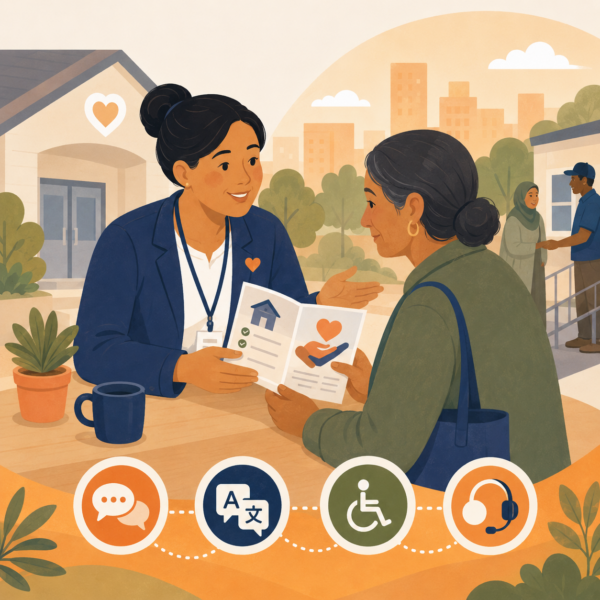 Many residents who are often missed are not disconnected from the benefits process by choice. They may have unstable housing, shared mailing addresses, temporary phone access, changing phone numbers, limited email use, or difficulty keeping contact information current across multiple systems. A notice may be mailed correctly according to the agency’s record but still not reach the person in time. A text may be sent to the last known number but never be seen. An email may go to an account the resident rarely checks. When agencies rely on one contact method as proof that communication occurred, residents with unstable contact pathways are more likely to fall out of the process.
Human services agencies should make contact information updates easier to understand and easier to complete. Residents should know why current contact information matters, which programs may be affected, how to update an address or phone number, and whether one update applies across SNAP, Medicaid, cash assistance, child care assistance, or other benefits. If updates must be made separately for certain programs or systems, that distinction should be clear. A resident should not have to discover after a missed notice that one update did not reach every part of the agency.
Agencies should also reinforce high-consequence messages through more than one channel when possible. A renewal notice, document request, interview reminder, or closure warning may need a mailed notice, portal message, text alert, call center script, and partner amplification to reach residents with unstable contact pathways. The goal is not to overwhelm residents with duplicate messages. The goal is to make sure the message has more than one credible path to reach the person before the consequence occurs.
Outreach Should Meet Residents Where They Already Seek Help
Residents who are often missed by agency channels may still be highly connected to other support networks. They may visit food banks, clinics, schools, libraries, shelters, senior centers, workforce programs, community centers, child care providers, faith-based organizations, legal aid offices, or neighborhood groups. These places may not administer public benefits, but they often become practical access points for residents who need help understanding notices, completing digital tasks, printing forms, gathering documents, or finding official information.
Human services agencies can strengthen outreach by identifying where residents already seek help and equipping those locations with accurate guidance. A library may need simple portal support instructions and privacy-aware document upload guidance. A clinic may need Medicaid renewal language and referral pathways. A food bank may need SNAP, EBT, and benefits delay guidance. A school may need family-facing information about child care assistance, food support, and language access. Outreach becomes more effective when it is tailored to the real setting in which residents ask for help.
This approach also reduces the pressure on residents to find the agency first. A resident who is unsure where to start may be more likely to ask someone they already trust. If that trusted person has clear, current, and bounded guidance, the resident is more likely to reach the official pathway before a deadline is missed. Community outreach should not replace agency communication, but it can make official communication easier to find and believe.
Messages Should Be Built for Low-Time and High-Stress Conditions
Many public benefits messages are written as if residents have time, privacy, focus, and confidence when they receive them. In reality, a resident may read a text between work shifts, open a notice after children are asleep, check a portal on a phone with limited battery, or try to understand a deadline while worried about food, medical care, child care, rent, or transportation. Residents who are often missed may not have the conditions needed to interpret dense instructions or search through several channels for the correct next step.
Communication for these residents should be direct, visible, and action-oriented. The message should identify the task, the deadline, the consequence, the help pathway, and the official place to verify details. It should not require residents to read several paragraphs before learning whether action is required. It should not rely on internal terms that must be decoded. It should not send residents to a broad homepage or portal without explaining what they should do when they arrive.
This does not mean every message must be oversimplified. It means the hierarchy must respect the conditions under which residents act. Detailed information can still be available, but the first layer of communication should make the immediate action clear. For hard-to-reach populations, clarity is not only a writing preference. It is a practical access strategy.
Language Access Should Reflect Real Communication Contexts
Residents who speak languages other than English may be missed even when translated materials exist. Translation is essential, but it may not be enough if the source message is confusing, if translated materials are hard to find, if text alerts are sent in a different language from notices, if portal labels are not aligned, or if community partners do not have accurate multilingual guidance. Language access must support the full path from awareness to action.
Human services agencies should build multilingual communication around the tasks residents need to complete. Applying, renewing, submitting documents, reporting changes, checking case status, requesting interpretation, and understanding notices should all be explained in plain language across the channels residents use. If a resident receives a translated notice but cannot navigate the portal, call center, or lobby in the same language framework, the communication path remains incomplete.
Agencies should also recognize that residents may use informal or community-specific language for benefits. They may refer to food help, medical coverage, child care help, a benefits card, county papers, or a letter from the agency rather than formal program names. Public-facing language can bridge those terms to official programs without losing accuracy. The strongest language access strategies help residents connect the words they use in daily life to the official actions required by the agency.
Outreach Should Be Measured by Action, Not Just Contact
Agencies often measure outreach by whether messages were sent, flyers were distributed, texts were delivered, events were held, or partner materials were shared. Those measures are useful, but they do not fully show whether residents understood the message or completed the required step. A resident may receive a message and still not act because the action was unclear, the channel was not trusted, the deadline was buried, the portal was difficult to use, or the resident did not know where to get help.
A stronger measurement approach looks at action and confusion signals. Agencies can examine renewal completion, document submission quality, missed interviews, returned mail, portal abandonment, call reasons, duplicate submissions, partner questions, office visits, language assistance requests, and procedural closures. These patterns can show where residents are being missed even after communication was technically delivered. They can also show which channels are helping residents complete tasks and which are creating more confusion.
Measurement should then feed back into strategy. If residents are not completing renewals after receiving text alerts, the message may need clearer action language or better timing. If partner organizations report repeated confusion about document requests, the agency may need better partner guidance and plain-language notices. If residents with unstable housing are missing mailed deadlines, the agency may need stronger partner pathways and contact update support. Reaching residents who are often missed requires continuous learning from resident behavior, not only broader distribution of the same message.
Staff Scripts Should Support Outreach to Residents Who May Re-Engage Late
Residents who are often missed may return to the agency after a deadline has passed, after benefits have stopped, after mail was missed, after a portal attempt failed, or after a community partner encouraged them to seek help. The first staff response in that moment matters. If the interaction begins with blame, residents may disengage again. If the interaction begins with a clear explanation of what happened and what path remains available, residents are more likely to understand the situation and take the next step.
Human services agencies should give staff scripts for late re-engagement situations. Staff need language for explaining missed renewals, incomplete document requests, closed cases, missed interviews, returned mail, inactive phone numbers, and duplicate applications without making residents feel that the process is hopeless. The script should clarify what the agency can see, what action was missed or remains unresolved, whether any corrective path exists, and where the resident should start. It should also help staff avoid promising outcomes that still require eligibility review.
This kind of script supports both dignity and operational clarity. A resident who missed a step still needs accurate information about consequences, deadlines, and available options. But the tone should keep the conversation focused on the current path forward. Residents who are often missed may already feel embarrassed, frustrated, or distrustful. Clear re-engagement language can prevent one missed step from becoming permanent disengagement.
Outreach Should Be Built Into Renewal and Verification Strategy
Residents are often missed at the exact moments when agencies most need their response. Renewals, verification requests, interviews, and reported changes require residents to understand what is needed and act within a certain timeframe. If outreach is not built into those processes from the beginning, agencies may wait until cases are already at risk before trying to reconnect. By that point, residents may have less time to gather documents, get help, or correct misunderstandings.
A stronger strategy identifies high-risk points in the benefits cycle and plans communication around them. Renewal outreach can begin before the deadline becomes urgent. Verification reminders can explain the specific document needed and where to send it. Interview reminders can clarify what the resident should expect and how to request language assistance or rescheduling support when allowed. Case status messages can explain whether the agency is waiting for the resident or still reviewing information.
This approach treats outreach as part of process design, not as a separate campaign. The agency should know which residents are most likely to miss each step, which barriers are most common, which channels are most effective, and which partners can help reinforce the message. When outreach is embedded in renewal and verification strategy, the agency is not only reacting to missed contact. It is reducing the chances that residents will be missed in the first place.
Communication Should Make Help Visible Before the Deadline
Residents who are often missed may wait too long to ask for help because they do not know help is available, do not trust the channel, or do not understand that action is still possible. A notice may say documents are required, but not explain what to do if the resident cannot get them in time. A text may say action is needed, but not identify where to ask questions. A portal may show a pending task, but not provide a clear help pathway. When help is not visible, residents may delay until the problem becomes harder to fix.
Human services agencies should make help pathways visible before deadlines pass. Renewal notices, document requests, text alerts, portal messages, partner materials, and lobby signs should all explain where residents can get help understanding the requirement. This includes language assistance, disability-related support, help with digital tools, document submission questions, and case-specific agency channels. The message should make clear that residents should contact the agency before the deadline if they cannot complete a required step or do not understand what is needed.
Visible help does not mean every issue can be resolved in the resident’s preferred way. It means the agency communicates the correct path early enough for the resident to use it. This reduces last-minute crises, unnecessary escalations, and procedural closures that could have been prevented through earlier clarification. For residents who are often missed, the help pathway should be as visible as the requirement itself.
Outreach Should Avoid Treating One Missed Contact as Resident Disengagement
A resident who misses one notice, call, text, appointment, or portal message should not automatically be viewed as unreachable. Many residents who are often missed are reachable through a different pathway, at a different time, through a trusted partner, or with a clearer message. Treating one missed contact as disengagement can lead agencies to underinvest in follow-up strategies that may prevent unnecessary benefit loss.
Agencies should analyze missed contact patterns more carefully. Returned mail may indicate address instability. Missed calls may indicate work schedules or unfamiliar numbers. Unopened portal messages may indicate account access barriers. Missed appointments may indicate transportation, child care, language, disability, or notice comprehension barriers. Each pattern suggests a different communication improvement. The response should not simply be to repeat the same outreach method.
A more resilient communication system assumes that residents may need multiple pathways to reconnect. This may include reminder sequences, updated contact prompts, partner referrals, lobby support, call center scripts, language access cues, and source-of-truth pages that make the next step easier to find. The goal is not to remove responsibility from residents. It is to recognize that communication systems should be strong enough to account for predictable barriers before they become permanent case disruptions.
Outreach Materials Should Be Designed for Sharing and Reuse
Residents who are often missed may receive agency information indirectly. A family member may forward a message. A case manager may print a flyer. A school may include a reminder in a family newsletter. A clinic may post renewal guidance. A food bank may share EBT information. A library may keep a portal help sheet near public computers. If agency outreach materials are difficult to reuse, partners and informal helpers may rewrite them, shorten them, or explain them in their own words. That can weaken accuracy.
Human services agencies should create outreach materials that are easy to share without changing the meaning. Short message blocks, plain-language task guides, multilingual summaries, printable one-page resources, QR codes to source-of-truth pages, and partner-ready referral language can help extend reach while preserving consistency. The materials should clearly identify the resident action, the official pathway, and the limits of general guidance.
Shareable materials should also be kept current. A flyer or partner post can remain in circulation long after a process changes. Agencies should use version dates, maintained links, and clear update practices so partners know when materials should be replaced. Reaching missed residents requires broad distribution, but broad distribution is only helpful when the message remains accurate.
Strategies Should Be Reviewed With the Communities the Agency Is Trying to Reach
Agencies cannot fully understand why residents are being missed by looking only from the inside. Staff data, call center themes, portal analytics, and returned mail are important, but they should be paired with insight from the residents and communities affected. Community partners, frontline staff, interpreters, navigators, resident advisory groups, clinics, schools, food banks, libraries, and legal aid organizations can help agencies understand why certain messages are not reaching people or why residents are not acting on them.
This review should be practical rather than symbolic. Agencies can ask whether messages are clear, whether the channel is trusted, whether the action is visible, whether the language feels respectful, whether residents know where to get help, and whether the timing gives people enough opportunity to respond. Feedback should be used to revise outreach materials, improve source-of-truth pages, adjust reminder sequences, strengthen partner toolkits, and refine staff scripts.
Community review also helps agencies avoid assumptions. A channel that seems obvious internally may not be the one residents use. A phrase that seems plain to staff may not match how residents describe the issue. A trusted partner may know that residents avoid certain messages because they look like scams or sound final. When agencies use community insight to improve communication, outreach becomes more credible, more targeted, and more likely to produce action.
Strategic Communication Support for Human Services and Public Benefits Agencies
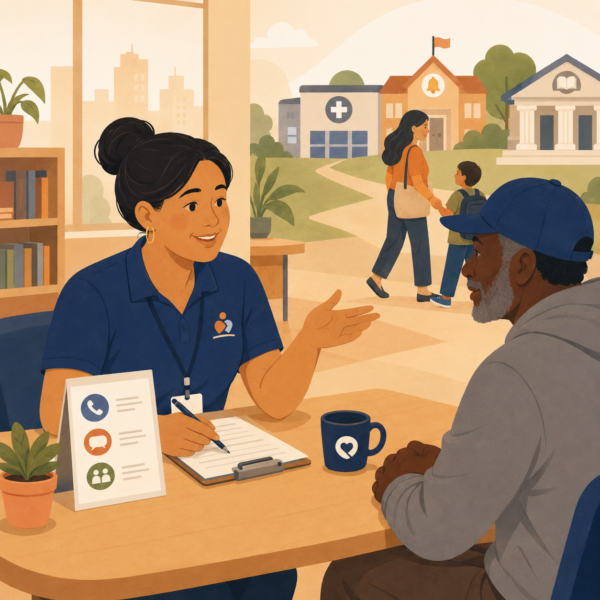 Reaching residents who are often missed is not simply an outreach challenge. It is a communication systems challenge that affects access, equity, compliance, workload, and trust. Residents may be missed because mail is unstable, digital access is limited, language assistance is not visible, portal instructions are unclear, trusted messengers are not equipped, or agency messages do not reach people in the contexts where they actually make decisions. When those barriers are not addressed, residents may miss renewals, fail to submit documents, lose benefits for procedural reasons, or return to the agency only after the issue has become harder to resolve.
Because hard-to-reach communication sits at the intersection of notices, text alerts, portals, websites, call centers, lobby service, partner outreach, language access, and community trust, many agencies benefit from structured communication support. Internal teams may know the programs and rules deeply, but that does not always reveal why certain residents are not receiving, understanding, trusting, or acting on agency messages. A resident-centered communication review can help identify where the system is too narrow, where messages are too vague, where partners need better tools, and where residents need more practical pathways to reconnect.
Stegmeier Consulting Group (SCG) helps human services and public benefits agencies create communication systems that reach residents through clearer, more credible, and more usable pathways. That support may include outreach strategy, plain-language message frameworks, partner toolkit development, source-of-truth page design, multilingual communication planning, text reminder alignment, staff scripts, resident journey mapping, and communication support for high-risk renewal, verification, and case status moments. The goal is not to send more messages without strategy. The goal is to make every message more likely to reach the right resident, through the right channel, with a clear path to action.
This type of support is especially valuable when agencies are trying to reduce procedural benefit loss, reconnect residents after missed notices, improve renewal completion, strengthen language access, support residents with unstable contact information, or work more effectively with trusted community partners. Strong outreach communication helps residents understand what is happening, what action is required, where to get help, and how to verify official guidance before confusion becomes a benefit interruption.
Future Trends in Communication for Hard-to-Reach Populations
Human services agencies are likely to place greater emphasis on multi-channel outreach strategies that reflect how residents actually receive and act on information. Mailed notices will remain important, but they will increasingly need to be supported by text alerts, portals, source-of-truth pages, call center alignment, lobby guidance, community partners, and multilingual materials. The strongest agencies will not rely on one channel to carry a high-consequence message when residents face varied access barriers.
Another likely trend is more task-based outreach. Instead of broad awareness messages that tell residents a program exists, agencies will need communication that helps residents complete specific actions such as renewing benefits, sending documents, reporting changes, updating contact information, checking case status, requesting language assistance, or responding to an interview notice. Task-based outreach is more useful because it connects communication directly to the action that protects access.
Agencies may also use data and community feedback more intentionally to identify where residents are being missed. Returned mail, missed interviews, portal abandonment, duplicate submissions, partner questions, language assistance requests, call center themes, and procedural closures can all show where communication pathways are failing. These signals can help agencies adjust channel strategy, message timing, partner guidance, and staff scripts before the same barriers affect more residents.
Finally, communication strategies for residents who are often missed will likely become more closely tied to trust and dignity. Residents who have been disconnected from benefits processes may need messages that are not only clear, but also respectful, verifiable, and oriented toward re-engagement. Agencies that communicate with practical clarity and without blame will be better positioned to bring residents back into the process before a missed step becomes a lasting loss of support.
Conclusion
Residents are often missed when agency communication does not match the realities of their lives. Unstable contact information, limited digital access, language barriers, disability-related needs, distrust of official messages, work schedules, caregiving responsibilities, transportation limits, and prior frustration with public systems can all affect whether a resident receives and acts on information. These barriers should be understood as communication design challenges, not as resident deficits.
Human services agencies can reach more residents by widening communication pathways, using trusted messengers, reinforcing high-consequence messages, making help visible before deadlines, designing outreach around resident tasks, and measuring whether communication leads to action. The most effective strategies do not simply send more reminders. They make messages clearer, more consistent, more credible, and easier to use.
In the end, reaching residents who are often missed is part of building a more accessible public benefits system. When agencies communicate through the channels residents use, in language residents understand, with clear source-of-truth guidance and trusted partner support, they reduce avoidable benefit loss and strengthen public trust. The work is not only about reaching people. It is about reaching them in ways that help them act.
SCG’s Strategic Approach to Communication Systems
Align your agency’s messaging, processes, and public engagement strategies.
Human services and public benefits agencies need communication systems that reach residents who may not respond to standard notices, portals, phone calls, or office-based service pathways. Outreach to often-missed populations requires plain-language messaging, trusted partner alignment, multilingual support, source-of-truth discipline, accessible digital and non-digital options, and staff scripts that help residents reconnect without unnecessary blame.
SCG helps agencies create communication frameworks that make outreach more targeted, credible, and actionable. Whether your agency is improving renewal outreach, strengthening partner communication, reaching residents with unstable contact information, supporting language access, redesigning text reminders, or building source-of-truth guidance for high-risk benefit actions, SCG can help develop a communication system that supports clarity, access, consistency, and trust. Use the form below to connect with our team and explore how a strategic communication system can help your agency reach residents who are often missed and improve the resident experience.