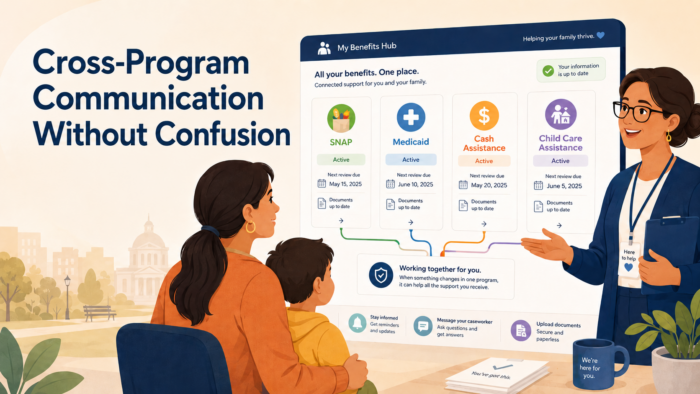
Cross-Program Communication Without Confusion: How Human Services Agencies Can Explain SNAP, Medicaid, Cash Assistance, and Child Care Together
Human services agencies rarely serve residents through one program alone. A family may apply for SNAP, renew Medicaid, report income for cash assistance, update child care eligibility, respond to a document request, and ask about another support program during the same period. Inside the agency, these programs may sit in different units, use different systems, follow different rules, and operate under different federal or state requirements. For residents, however, the experience often feels like one relationship with the government. They are not usually thinking in program silos. They are trying to understand what support is available, what they qualify for, what action is required, and how to keep essential help from being interrupted.
That difference between agency structure and resident experience is where cross-program communication can become confusing. A notice may refer to SNAP recertification, a portal may show Medicaid renewal, a caseworker may ask about income verification for cash assistance, and a child care program may require a separate schedule or employment update. Each request may be valid, but the household may struggle to understand which action belongs to which program, which deadline matters first, and whether information sent for one program also counts for another. When communication is not coordinated, residents can feel as though they are being asked to solve four separate puzzles at once.
For human services agencies, public benefits agencies, county social services departments, and state benefits offices, cross-program communication is not simply a public education issue. It affects access, compliance, workload, equity, and trust. Residents who misunderstand cross-program requirements may miss a renewal, submit the wrong document, believe one program approval means another program is covered, or fail to report a change in the right place. Staff may then face repeated calls, duplicate documents, avoidable case corrections, preventable closures, and resident frustration. Community partners may also struggle to explain the process when each program uses different language for similar steps.
A stronger approach does not require pretending that SNAP, Medicaid, cash assistance, and child care assistance are the same. They are different programs with different rules, funding sources, eligibility factors, reporting requirements, and timelines. The goal is not to erase those differences. The goal is to explain them in a way residents can follow. Human services communication should help people understand both the shared household information that may affect multiple programs and the program-specific actions that must be completed separately.
This is especially important because public benefits households often manage competing pressures. A parent may be working irregular hours, arranging child care, managing medical needs, responding to school or housing issues, and trying to keep up with agency notices. A packet or portal that assumes deep familiarity with program boundaries can unintentionally increase confusion. Residents may not know that income reported for one program may not automatically update another program. They may not know that Medicaid and SNAP renewal timelines can differ. They may not understand why child care assistance asks for work schedule details while another program asks for income documents. Cross-program communication should reduce that uncertainty by making the relationship among programs more visible.
Clear cross-program communication also helps agencies reinforce a more resident-centered service model. When residents can see how programs connect, where requirements differ, and what action is needed for each benefit, they are better able to comply. When staff have shared language for explaining those relationships, they can provide more consistent guidance. When websites, notices, call scripts, lobby materials, and partner handouts use the same structure, residents are less likely to receive conflicting explanations. The agency becomes easier to navigate because the communication reflects the way residents actually experience benefits, not only the way programs are administered internally.
Why Program Silos Create Resident Confusion
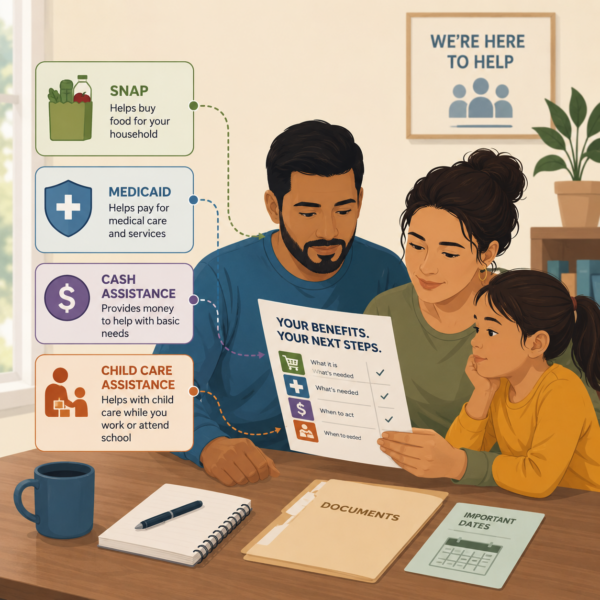 Program silos are often built into public benefits administration for understandable reasons. SNAP, Medicaid, cash assistance, and child care assistance may be governed by different rules, reviewed through different eligibility factors, administered through different systems, and overseen by different program specialists. Staff may be trained in one program more deeply than another. Notices may be generated from different templates. Portals may display separate case statuses. Deadlines may not align. From the agency’s perspective, these distinctions support accuracy, accountability, compliance, and program integrity.
Residents usually experience those distinctions differently. To them, the same agency may be asking for income information in one notice, household information in another, employment details in a third, and proof of identity or residency somewhere else. If the notices do not explain how the requests relate, the resident may not know whether the same document can satisfy more than one requirement, whether one response covers all programs, or whether separate actions are still needed. The result is not just inconvenience. It is a higher risk of missed steps, duplicate submissions, and avoidable benefit interruptions.
This confusion can be especially pronounced when programs use different words for similar actions. One program may refer to renewal, another to recertification, another to redetermination, and another to continued eligibility. A resident may see these as different events even when they are functionally related, or they may assume they are the same event when separate actions are required. Both misunderstandings can create problems. Good cross-program communication helps residents recognize the difference between shared concepts and program-specific requirements.
Silos also create challenges for staff and partners. A resident may call with a question about one notice but also mention another program, another deadline, or another document request. If staff do not have a shared explanation for how programs connect, the response may become fragmented. Community partners face the same issue. They may help residents with applications, renewals, and documents across several programs, but they need clear agency language to explain which steps are connected and which are separate. Without that structure, each helper may have to interpret the system on their own.
Residents Need One Clear View of Their Benefit Responsibilities
The most important purpose of cross-program communication is to give residents one clear view of their responsibilities. That does not mean one identical rule for every program. It means a communication structure that helps residents understand the full set of actions that may affect their household. A family should be able to see which programs are active, which programs are under review, which deadlines apply, what information is needed, and whether one action will satisfy multiple requirements or only one program.
This kind of clarity is especially important during renewals, reported changes, document requests, and case status updates. These are the moments when residents are most likely to confuse program boundaries. If a household reports new income, for example, the resident needs to understand whether that update affects SNAP, Medicaid, cash assistance, child care assistance, or all of them. If a resident submits proof of employment for child care, they may need to know whether that document also supports another program or whether a different income proof is required. Communication should not leave residents guessing about how one action affects the larger benefits picture.
A clear cross-program view also helps residents prioritize. If several deadlines are approaching, residents need to know which date is tied to which program and what consequences may follow if the step is missed. If one program will continue while another is still under review, that distinction should be clear. If one program has approved benefits and another still needs documentation, residents should not have to infer that from separate notices written in different styles. The communication system should help residents understand what is complete, what is pending, and what still requires action.
For agencies, this kind of clarity can reduce avoidable workload. Residents who understand their responsibilities are less likely to submit duplicate paperwork, call repeatedly for basic clarification, or miss program-specific steps because they assumed one action covered everything. Staff can also provide more consistent guidance because they are working from a shared cross-program framework rather than explaining each program in isolation. The result is not only a better resident experience. It is a more manageable and less error-prone communication environment.
More Than Just Applications: Human Services and Public Benefits Communication Strategies for State and Local Agencies
This article is part of our series on strategic communication for Human Services Agencies, Public Benefits Agencies, and Health and Human Services departments. To learn more and to see the parent article, which links to other content just like this, click the button below.
Cross-Program Communication Must Explain Both Connection and Difference
One of the hardest parts of human services communication is explaining that programs are connected but not identical. SNAP, Medicaid, cash assistance, and child care assistance may all rely on household information, income details, identity verification, residency, and changes in family circumstances. At the same time, each program may define eligibility differently, require different documents, follow different timelines, and apply different reporting rules. If agencies emphasize connection too much, residents may assume one action covers everything. If agencies emphasize differences too much, residents may feel overwhelmed by fragmentation.
A strong cross-program communication strategy balances both. It tells residents that some information may be used across programs when allowed, but some actions may still be required separately. It explains that a household change can affect more than one benefit, but the effect may not be the same for every program. It clarifies that receiving approval for one program does not automatically mean every other program is approved, renewed, or complete. This balance helps residents avoid two common mistakes: treating every program as totally separate or treating all programs as one combined benefit.
The language should be direct and practical. Residents do not need a technical explanation of every program rule at the start. They need a clear statement of what is shared, what is separate, and what action applies now. For example, an agency might explain that income information can affect several benefits, but the resident must still complete a separate child care schedule update or Medicaid renewal step if requested. That kind of explanation helps residents understand why the agency may ask for similar information more than once and why responding to one request may not finish every obligation.
This is also where consistent terminology matters. Agencies should decide how they will explain shared concepts such as income, household members, renewal, documents, reporting changes, and case status across programs. If terminology changes from one program to another without explanation, residents may not recognize the connection. If terminology is oversimplified in a way that hides real program differences, residents may miss separate obligations. The strongest approach uses consistent plain language for common ideas, then clearly labels program-specific exceptions.
The First Page or First Screen Should Orient the Resident
Whether communication arrives as a mailed notice, an online portal screen, an email, a text reminder, or a lobby handout, the first view should orient the resident. Cross-program communication becomes confusing when residents have to read several pages or click through several screens before understanding which programs are involved and what action is required. A first page or first screen should provide a simple orientation: which benefits are affected, what action is needed, which deadline matters, and where to get help.
This orientation is especially important when multiple programs are included in one notice or account view. If the communication references SNAP, Medicaid, cash assistance, and child care together, residents should not have to guess whether the same instruction applies to all of them. The layout should make the relationship visible. A brief summary can identify each program and its current status. A clear action section can distinguish between steps required for all programs and steps required for only one program. A deadline section can show which dates belong to which benefits.
The same principle applies when programs remain in separate notices. Even if the agency cannot combine notices because of system or legal constraints, it can still orient residents through consistent opening language and shared design patterns. Each notice can explain whether it affects one program or multiple programs, whether other benefits may be affected separately, and where residents can check the status of all programs. This helps reduce the feeling that each packet is an unrelated communication event.
A strong first page or first screen does more than summarize. It reduces the resident’s interpretation burden. It helps the person understand the larger benefits picture before program-specific details begin. For households managing several forms of assistance, that orientation can make the difference between timely completion and confusion that leads to churn.
Build the Message Around the Household, Not the Program Chart
Cross-program communication becomes clearer when it begins with the household’s experience rather than the agency’s organizational chart. A resident may not know which unit manages SNAP, which office processes Medicaid, which worker handles cash assistance, or which team reviews child care eligibility. They may only know that the agency sent several notices and that each notice appears to affect the same household. If the communication begins from internal program divisions, residents are more likely to experience the process as fragmented. If the communication begins from the household’s benefit responsibilities, residents are more likely to understand the full picture.
This does not mean agencies should hide program differences. It means the communication should first help residents understand the shared case context. A household-centered message might explain that the agency is reviewing information for several benefits, that some information may affect more than one program, and that certain steps still apply only to specific programs. This gives residents a clearer frame before the notice or portal moves into program-specific instructions. The resident can then understand why they are being asked for income, household, identity, employment, or child care schedule information without assuming that one response automatically resolves every program.
Use a Cross-Program Summary Before Detailed Instructions
A cross-program summary can help residents see the benefit landscape before they encounter detailed rules. This summary does not need to be long or highly technical. It should identify which programs are included, what the current status is for each one, and whether action is required. For example, a resident-facing summary could show that SNAP needs income verification, Medicaid is still under review, cash assistance has been renewed, and child care assistance needs an updated work schedule. That kind of structure helps residents understand which parts of the case are complete and which parts still need attention.
This type of summary also reduces the risk that residents will overgeneralize from one program to another. If a notice says one benefit has been approved, residents may assume the full case is settled. If a notice says one document is missing, residents may assume every benefit is at risk. A cross-program summary allows the agency to be more precise. It shows that one program can be complete while another is pending, one deadline can apply to SNAP while another applies to child care, and one document can support several reviews while another is program-specific. Precision helps prevent confusion without requiring the resident to understand every underlying rule.
Label Each Program Status in Plain Language
Program status labels should be easy for residents to interpret. Words such as pending, incomplete, active, closed, renewed, denied, awaiting verification, or redetermination may be meaningful inside the agency, but they need plain-language support when used with residents. A better cross-program summary pairs each status with a practical explanation. Instead of saying only that Medicaid is pending, the communication can say that Medicaid is still being reviewed and no action is needed right now, or that Medicaid is still being reviewed and proof of income is needed by a specific date.
Plain-language status labels are especially important when multiple benefits appear together. Residents should not have to compare technical terms across programs and infer the meaning. A clear status label should tell the person whether the benefit is active, under review, waiting on the resident, changed, closed, or approved. It should also explain the next action when action is required.
Separate Shared Steps From Program-Specific Steps
Residents need to know which actions may support multiple programs and which actions apply only to one program. A proof of income document, for example, may be relevant to several benefits, while a child care schedule update may apply only to child care assistance. A household change may affect SNAP, Medicaid, and cash assistance differently. If the communication does not separate shared steps from program-specific steps, residents may assume too much or too little about what one submission accomplishes.
A clear structure can reduce that risk by using separate sections for “steps that may affect more than one benefit” and “steps required for a specific benefit.” This helps residents understand why the agency may ask for similar information across programs and why some requests cannot be combined. It also supports staff and community partners because they can point residents to a consistent explanation of what one action covers and what still remains.
Align Program Language So Similar Actions Sound Related
Human services agencies often use different terms for similar actions because each program has its own policy history, forms, systems, and regulatory language. SNAP may use recertification, Medicaid may use renewal or redetermination, cash assistance may use eligibility review, and child care assistance may use continued eligibility or authorization updates. These terms may be technically correct, but they can create confusion when residents receive several communications close together. A household may not know whether these words describe the same general type of action or separate requirements that must each be completed.
A stronger approach is to use a shared resident-facing vocabulary for common concepts while preserving program-specific terms where they are required. The agency can use a plain umbrella term such as “renewal” or “eligibility review” and then explain that some programs may use different formal names. This helps residents recognize that similar actions are connected without assuming every program has identical rules. The communication can still say, for example, that a SNAP recertification and a Medicaid renewal are different program processes, but both are reviews to confirm continued eligibility. That kind of language reduces confusion because it gives residents a stable concept before introducing formal program labels.
Deadlines Need Cross-Program Context
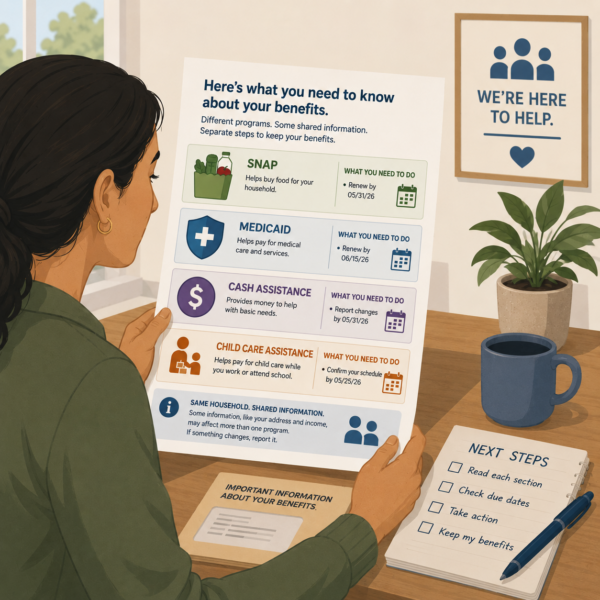 Deadlines are one of the most common sources of confusion in cross-program communication. A resident may see one due date for SNAP documents, another date for a Medicaid renewal, another date for cash assistance verification, and another date tied to child care authorization. If those dates appear in separate notices or separate portal screens, the resident may not know which deadline is most urgent, whether one deadline affects all benefits, or whether missing one step could interrupt only one program. The problem becomes more serious when a household is managing work schedules, caregiving duties, transportation limits, language access needs, or unstable housing.
A cross-program communication system should make deadlines visible and connected to the specific benefit affected. Residents should be able to see not only the date, but also what the date controls. The communication should make clear that a SNAP deadline applies to SNAP, a child care schedule deadline applies to child care assistance, and a Medicaid renewal deadline applies to health coverage. If one document deadline affects several programs, the notice should explain that as well. This type of deadline clarity helps residents prioritize action and prevents the assumption that all benefits rise or fall together based on one date.
Consistency Across Channels Matters More When Multiple Programs Are Involved
Cross-program communication becomes fragile when each channel explains the same situation differently. A mailed notice may describe a renewal, a portal may show a redetermination, a text message may refer to missing verification, and a call center representative may use another program-specific term. When only one program is involved, that inconsistency is still a problem. When several programs are involved, it can make the case feel impossible to follow. Residents may believe they have multiple unresolved issues when the agency is referring to the same action, or they may believe one action resolves every program when separate steps remain.
Agencies can reduce this confusion by creating a shared language framework for cross-program communication. The same core terms should appear in notices, portals, text reminders, emails, call center scripts, lobby signage, and partner materials whenever possible. If system constraints require different labels, the agency should explain the connection in plain language. This does not require every channel to contain the same amount of detail. It requires every channel to point residents toward the same understanding of their benefits, deadlines, documents, and next steps.
Document Requests Should Explain Which Program Needs What
Document requests are one of the clearest places where cross-program communication can either reduce confusion or intensify it. A household may be asked for proof of income, residency, identity, household members, employment, school attendance, child care schedule, medical coverage information, or other verification. Some documents may support more than one benefit, while others may apply only to SNAP, Medicaid, cash assistance, or child care assistance. If the communication does not explain that distinction, residents may send the same document several times, assume one document satisfies every request, or fail to provide a program-specific item that is still required.
Human services agencies can make document requests more usable by grouping them around resident action instead of program paperwork categories alone. A clear document request should identify the document, explain which program or programs need it, state the deadline, and describe how to submit it. When the same document may be used for multiple programs, the notice should say that in plain language. When a separate document is required for a specific program, that should also be clear. This structure helps residents understand why they are being asked for information and reduces the feeling that the agency is making duplicate or disconnected requests.
Show When One Document Supports More Than One Benefit
Residents often become frustrated when they believe they have already submitted information and then receive another request that sounds similar. Sometimes the agency truly needs a separate item. Other times, the same document may be relevant to multiple programs but still needs to be processed or reviewed in a specific way. If the communication does not explain this, residents may assume the agency lost their paperwork or is asking for the same thing unnecessarily.
A stronger document request can say which benefits the document may support. For example, proof of income may help the agency review SNAP, cash assistance, Medicaid, or child care eligibility, depending on program rules and household circumstances. Explaining that connection helps residents see the value of submitting the document and reduces the perception that each program is making an unrelated demand.
Make Program-Specific Documents Easy to Identify
Some document requests are specific to one program and should be labeled that way. Child care assistance may need a work schedule or provider information. Cash assistance may require certain participation-related information. Medicaid may involve health coverage details or renewal information that differs from SNAP. If those requests appear in one combined list without labels, residents may not understand which document belongs to which benefit.
Program-specific labeling helps residents complete the right step without overgeneralizing. A notice or portal can group documents under clear headings such as “Needed for SNAP,” “Needed for Medicaid,” “Needed for cash assistance,” and “Needed for child care assistance.” The structure should not make the packet feel more complicated. It should help residents see exactly what is needed and avoid guessing.
Reported Changes Need Cross-Program Explanation
Reported changes are another major source of cross-program confusion. Residents may report a new job, income change, address change, household member, pregnancy, school schedule, child care need, disability status, or loss of employment without knowing which programs may be affected. Inside the agency, each program may apply the change according to its own rules. From the resident’s perspective, however, the change belongs to one household. If the agency does not explain how reported changes are handled across programs, residents may assume the update automatically applies everywhere or, just as often, may not realize that one change could affect several benefits.
Cross-program communication should explain that some changes may be relevant to more than one program, but the effect may differ. A new job may affect SNAP income calculations, cash assistance eligibility, child care assistance hours or copayments, and Medicaid eligibility in different ways. An address change may affect notices, office assignment, managed care information, or local service access. A change in household composition may alter benefit amounts, renewal requirements, or documentation needs. Residents do not need every technical rule in the first message, but they do need to understand that one reported change can trigger different reviews. Clear communication helps residents report changes correctly, respond to follow-up requests, and avoid assuming that one update resolves every program issue.
Portals Should Display Cross-Program Status in a Way Residents Can Use
Online portals often reflect the way programs are administered rather than the way residents think about their household responsibilities. A resident may log in and see separate case numbers, separate program tabs, separate document requests, separate status labels, and separate notices. That may be necessary from a systems perspective, but it can be difficult to interpret. If SNAP says “active,” Medicaid says “pending,” cash assistance says “verification needed,” and child care assistance says “authorization review,” the resident may not know what is stable, what is at risk, and what needs immediate action.
A better portal experience gives residents a cross-program summary before requiring them to navigate program-specific details. The first view should make clear which benefits are active, which are under review, which require action, and which deadlines are approaching. The portal should also distinguish between “we are reviewing this” and “we need something from you.” This distinction is essential because residents may otherwise treat every status as a warning or every active benefit as proof that the full household case is complete. A usable portal turns program status into practical guidance.
Frontline Staff Need Shared Cross-Program Scripts
Even the clearest notice can break down if staff explain cross-program requirements differently. Residents often call, visit an office, or speak with a caseworker because they are trying to understand how several benefits fit together. If one staff member explains the process program by program, another explains it by household change, and another uses internal terminology, the resident may leave with more confusion than before. This is especially likely when the resident’s question begins with one program but quickly touches others.
Human services agencies can support staff by developing shared cross-program scripts for common situations. These scripts should help staff explain when one action may affect multiple benefits, when separate program steps are still required, how to describe different deadlines, and how to direct residents to the correct source of truth. The scripts do not need to remove professional judgment or case-specific explanation. They should provide a consistent plain-language foundation, so residents hear the same basic message whether they contact the call center, lobby desk, eligibility unit, or community partner liaison.
Community Partners Need Cross-Program Materials They Can Actually Use
Community partners often help residents navigate multiple benefits at the same time. Clinics, schools, libraries, food banks, legal aid organizations, housing providers, child care resource organizations, workforce programs, and community-based groups may be asked to explain notices, help upload documents, support applications, or clarify why one benefit changed while another continued. If the agency provides only program-specific materials, partners may have to build the cross-program explanation themselves. That can lead to inconsistent guidance even when partners are trying to help.
A stronger approach gives partners simple cross-program materials that explain common relationships among SNAP, Medicaid, cash assistance, and child care assistance. These materials can clarify shared documents, separate deadlines, common terminology, change-reporting expectations, and where residents should verify current case status. They should not require partners to become eligibility specialists. They should help partners reinforce accurate agency messages and direct residents back to the right channel when case-specific guidance is needed. When partners have usable materials, they become part of the agency’s communication system rather than an informal workaround for confusing program silos.
Cross-Program Communication Should Reduce Duplicate Work for Residents
Residents often experience duplicate requests as a sign that the agency is disorganized, even when each request has a legitimate program reason. A household may submit proof of income for SNAP, then receive a similar request connected to Medicaid, cash assistance, or child care assistance. They may upload a document in the portal, mail another copy, bring a third copy to the office, and still worry that the agency does not have what it needs. When communication does not explain whether a document can support more than one program, residents may feel forced to over-submit information simply to protect their benefits.
Human services agencies can reduce that burden by making document use and program boundaries clearer. If one document may support several benefit reviews, the communication should say so. If a separate document is required because one program has a different rule, that should also be explained plainly. This does not require agencies to promise that every document will satisfy every program. It requires enough transparency for residents to understand why the agency is asking, what the document will be used for, and whether additional action remains. That clarity helps reduce duplicate submissions, staff rework, and resident frustration.
Cross-Program Notices Should Avoid Making One Program Sound Like All Programs
One common source of confusion occurs when a notice about one program sounds like it applies to the household’s entire benefits case. A resident may receive a closure notice for SNAP and assume Medicaid, cash assistance, or child care assistance are also ending. Another resident may receive approval for Medicaid and assume that SNAP renewal or child care documentation is complete too. These misunderstandings are understandable because residents often think about their benefits as one connected package of support, especially when they come from the same agency or portal.
A stronger notice clearly labels which benefit is affected and whether other benefits are included or not included in the action. If the notice applies only to SNAP, it should say that clearly. If the notice affects more than one benefit, it should name those programs directly. If other benefits may have separate notices, deadlines, or requirements, the resident should be told where to verify those statuses. This kind of labeling prevents residents from overreacting to one program notice or becoming too reassured by one program approval. It also helps staff and partners explain the communication without having to reinterpret what the notice was intended to cover.
Cross-Program Communication Should Be Built Into Change Management
Many cross-program communication problems become visible when agencies change systems, update eligibility rules, redesign notices, consolidate portals, adjust renewal processes, or shift call center workflows. During these transitions, residents may see new labels, new screens, new forms, new due dates, or new instructions while still trying to understand older notices or past habits. Staff may also be learning new workflows at the same time residents are asking for help. If cross-program communication is not part of the change management plan, confusion can spread quickly across programs.
Human services agencies should treat cross-program explanation as a required part of major operational change. Before launching a new process, the agency should identify which resident messages need to be aligned across SNAP, Medicaid, cash assistance, child care assistance, and related programs. Staff should have simple language for explaining what changed, what stayed the same, which programs are affected, and where residents should verify current information. Community partners should receive the same plain-language framing before residents begin bringing them questions. A strong transition plan reduces the risk that residents mistake a system change for a benefit change or miss a program-specific step because communication did not explain the relationship among programs.
Cross-Program Communication Should Support Equity and Access
Cross-program confusion does not affect all residents equally. Residents with limited literacy, limited English proficiency, disabilities, unstable housing, limited technology access, inconsistent work schedules, transportation barriers, or prior negative experiences with government systems may face greater difficulty sorting through multiple program notices. A household managing several benefits may also be managing several risks at once, including food insecurity, medical needs, child care instability, income disruption, or housing pressure. When communication is fragmented, the burden of coordination shifts onto residents who may have the least capacity to absorb it.
A more equitable communication approach makes the structure of benefits easier to see. It uses plain language, consistent labels, multilingual support, accessible formats, and clear distinctions between shared and program-specific steps. It does not assume that residents know agency terminology or understand how one program’s rules differ from another’s. It also recognizes that residents may rely on family members, advocates, schools, clinics, legal aid organizations, or community groups to interpret information. When cross-program communication is designed for real access conditions, it reduces avoidable procedural harm and gives residents a fairer chance to complete the right steps.
Agencies Should Measure Where Cross-Program Confusion Is Showing Up
Cross-program confusion often leaves a measurable trail. Agencies may see repeated calls about whether one document covers multiple programs, duplicate document submissions, missed deadlines for one benefit after another benefit was approved, wrong-program questions at the call center, avoidable reapplications, partner escalations, or residents surprised that one program closed while another continued. These patterns should not be treated only as resident misunderstanding. They can indicate that the communication system is not explaining program relationships clearly enough.
Agencies can use these signals to improve notices, portal language, reminder messages, staff scripts, and partner materials. If residents frequently assume one approval covers all programs, notices may need clearer program labels. If residents submit the same document repeatedly, document instructions may need to explain whether the item can support multiple programs. If staff provide inconsistent explanations, cross-program scripts may need to be strengthened. Measurement helps agencies move from anecdotal frustration to targeted improvement. Over time, this allows cross-program communication to become more precise, more consistent, and more useful for residents and staff alike.
Strategic Communication Support for Human Services and Public Benefits Agencies
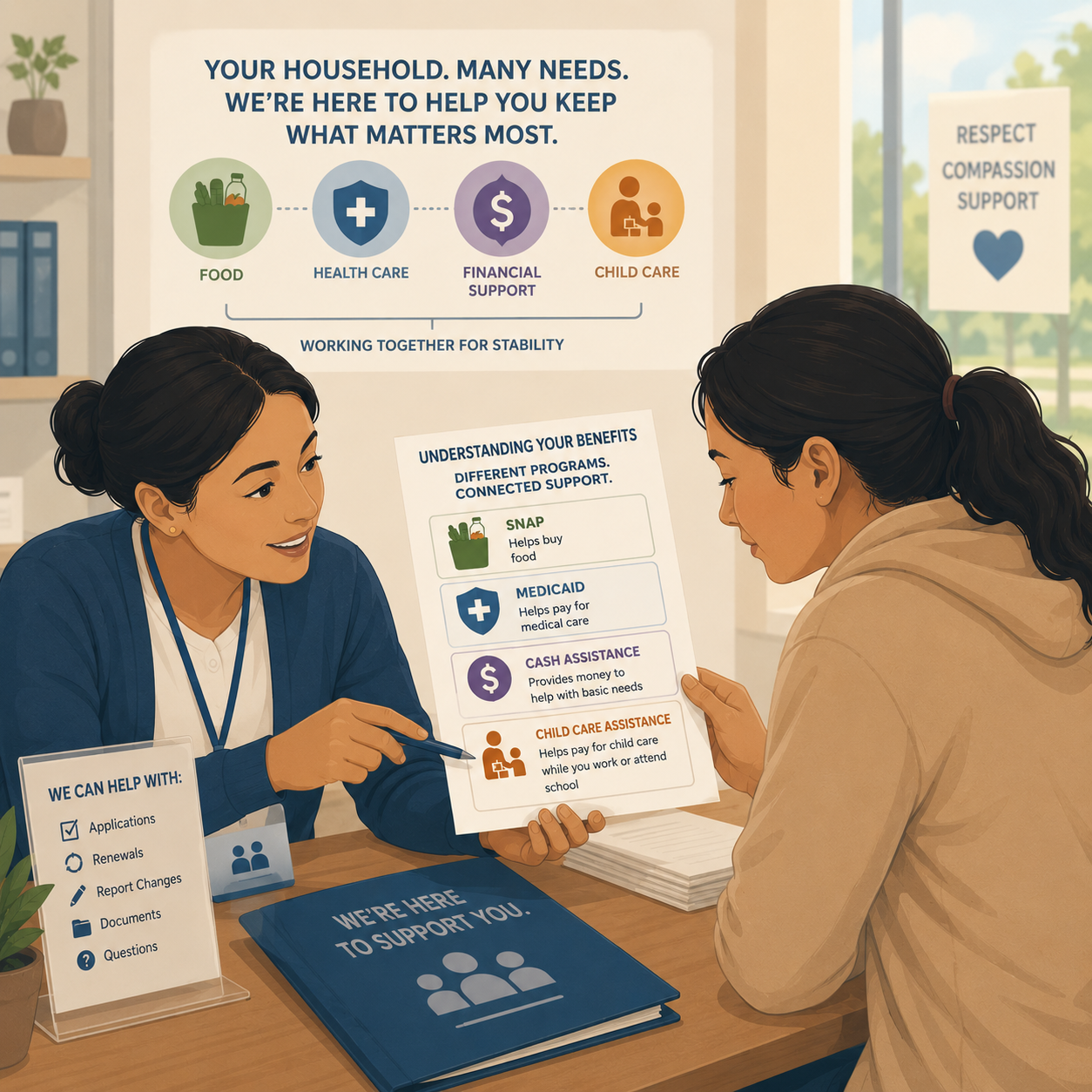 Cross-program communication is not simply a messaging challenge. It is a systems challenge that affects how residents understand their responsibilities, how staff explain program requirements, how community partners support households, and how agencies reduce avoidable confusion across SNAP, Medicaid, cash assistance, child care assistance, and related benefits. When each program communicates in isolation, residents may miss the full picture. They may assume one action applies to all benefits, overlook a program-specific deadline, submit duplicate documents, or misunderstand why one benefit changed while another continued. These communication gaps can lead to churn, missed steps, unnecessary calls, staff rework, and avoidable interruptions in support.
Because cross-program communication sits at the intersection of eligibility policy, program operations, technology systems, resident behavior, legal requirements, and frontline service delivery, many agencies benefit from outside communication support. Internal teams often understand each program deeply, but that expertise can make it difficult to see where residents experience the system as fragmented. An external partner can help identify where language, notices, portals, staff scripts, and partner materials are not aligned, then create a clearer framework that helps residents understand both shared household responsibilities and program-specific actions.
Stegmeier Consulting Group (SCG) helps human services and public benefits agencies build communication systems that make complex program relationships easier to explain. That support may include cross-program message frameworks, resident journey mapping, notice audits, source-of-truth page development, staff talking points, partner materials, plain-language templates, and alignment across mailed notices, portals, reminders, websites, call centers, and community outreach. The goal is not to make different programs appear identical. The goal is to help residents understand how programs connect, where they differ, what action is required, and where to verify current information.
This kind of support is especially useful when agencies are trying to reduce procedural benefit loss, improve resident experience, modernize portals, redesign notices, consolidate service channels, or prepare staff and partners for program changes. Strong cross-program communication helps residents act with more confidence and helps agencies communicate with more consistency. It turns a fragmented benefits experience into a clearer path that residents, staff, and partners can follow together.
Future Trends in Cross-Program Public Benefits Communication
Human services agencies are likely to place greater emphasis on integrated resident communication as households continue to interact with multiple benefits through shared portals, centralized call centers, combined notices, and coordinated eligibility workflows. Residents increasingly expect to understand their full benefits picture in one place, even when programs remain governed by separate rules. Agencies that can explain program relationships clearly will be better positioned to reduce confusion, improve compliance, and support continuity for eligible households.
Another likely trend is stronger use of cross-program dashboards, summaries, and source-of-truth pages. Instead of requiring residents to interpret several disconnected notices, agencies may move toward clearer household-level summaries that show which benefits are active, which are under review, which need action, and which deadlines apply. These tools will be most effective when they use plain language and avoid relying on internal system labels that residents cannot easily interpret.
Agencies may also invest more in shared terminology across programs. Terms such as renewal, recertification, redetermination, verification, review, and authorization can create confusion when they appear without explanation. A resident-facing vocabulary can help agencies explain similar concepts consistently while still preserving program-specific rules. This will become increasingly important as agencies continue to use text reminders, online portals, automated notices, chat tools, call centers, and partner networks to support residents across multiple benefits.
Finally, cross-program communication will likely become more closely tied to equity and access goals. Fragmented communication places the greatest burden on residents who have the least time, technology access, language access, or system familiarity. Agencies that design communication around the full resident experience will be better able to reduce avoidable procedural harm, support community partners, and strengthen trust in public benefits administration.
Conclusion
Residents should not have to decode the structure of government in order to understand their benefits. SNAP, Medicaid, cash assistance, and child care assistance may operate under different rules, systems, and timelines, but residents experience them as part of one household support picture. When communication reflects only program silos, residents are left to interpret which notices matter, which documents apply, which deadlines control each benefit, and which actions still need to be completed.
Clear cross-program communication helps agencies explain connection and difference at the same time. It shows residents when one document may support multiple benefits, when separate program steps are still required, when one benefit is active while another is under review, and when a change may affect several parts of the household’s case. This clarity supports compliance without oversimplifying program rules.
In the end, cross-program communication works best when it gives residents one understandable view of their responsibilities. That requires plain language, consistent terminology, visible deadlines, program-specific labels, staff alignment, partner support, and source-of-truth guidance. When human services agencies explain multiple benefits together in a clear and coordinated way, they reduce confusion, strengthen access, improve operations, and make the public benefits system easier for real households to navigate.
SCG’s Strategic Approach to Communication Systems
Align your agency’s messaging, processes, and public engagement strategies.
Human services and public benefits agencies need communication systems that help residents understand multiple programs without becoming overwhelmed by fragmented notices, conflicting terms, or unclear deadlines. Whether your agency is aligning SNAP, Medicaid, cash assistance, and child care communication, improving cross-program notices, strengthening portal language, preparing staff scripts, or creating clearer guidance for community partners, SCG can help you build a communication framework that supports clarity, access, consistency, and trust. Use the form below to connect with our team and explore how a strategic communication system can strengthen cross-program communication and improve the resident experience.