Building Trust Between Election Cycles: Year-Round Communication Strategies for County Clerks, Boards of Elections, and Election Offices
Public trust in election administration is often discussed as though it rises or falls only during voting periods. In practice, trust is shaped long before ballots are cast and long after results are certified. It is built in the quieter stretches between election cycles, when county clerks, boards of elections, and election offices decide whether to communicate only when something urgent happens or whether to stay visible, understandable, and steady throughout the year. Those quieter periods matter because they shape how the public interprets the office once attention rises again. An office that has been absent for months may be seen as reactive when it suddenly reappears. An office that has communicated clearly year-round is more likely to be seen as credible when pressure returns.
This is why year-round communication should not be treated as optional public education layered on top of election administration. It is part of election readiness itself. Between cycles, offices have the opportunity to explain processes before controversy attaches to them, clarify roles before misinformation fills the gap, and build familiarity before deadlines and election-day pressure narrow the public’s attention. This does not mean constant messaging for its own sake. It means using the off-cycle period to make the office’s work more legible, more predictable, and easier to trust.
That distinction matters because most members of the public do not think about election administration in continuous detail. They think about it episodically. A registration deadline, a polling place notice, a mail ballot issue, a results question, or a post-election controversy may temporarily bring the office into focus, but outside those moments many people have little contact with the systems that make elections work. If the office communicates only during spikes of urgency, voters are left to encounter the institution mainly through deadlines, corrections, disputes, and fast-moving updates. That creates a narrow and often stressed public picture of the office’s role. Year-round communication helps widen that picture. It shows that election administration is not just crisis response or election-day logistics. It is an ongoing public service built on preparation, clarity, neutrality, and lawful process.
This kind of communication also serves an operational purpose. Offices that explain key processes, timelines, and expectations earlier tend to reduce avoidable confusion later. They make it easier for voters to recognize official information, easier for community partners to reinforce accurate guidance, and easier for staff to build from an existing public understanding rather than starting from scratch each cycle. In that sense, trust between election cycles is not only reputational. It is functional. It gives the office a stronger base from which to communicate when the stakes and speed both rise.
Why Between-Cycle Communication Matters More Than Many Offices Realize
 Election offices often communicate heavily near deadlines and major elections, then scale back sharply once the immediate cycle ends. That pattern is understandable. Staff are tired, calendars shift, and urgent operational demands recede. But the public meaning of the office does not remain still during those gaps. When official communication fades, other narratives often become more influential. People continue to hear partial claims about election security, voting rules, ballot handling, certification, and institutional trust even when the office itself is quieter. In that environment, silence does not always read as neutrality. It can read as absence.
This is one reason between-cycle communication matters so much. It allows county clerks, boards of elections, and election offices to shape understanding before the next surge of public attention. It gives them space to explain ordinary processes without the pressure of immediate controversy. It also helps normalize the office’s presence as a stable source of information rather than a voice that appears only when something is urgent, disputed, or changing.
Between-cycle communication is especially valuable because it changes the public’s starting point. Instead of meeting the office for the first time through a stressful deadline or a contested issue, voters encounter it through calmer, more educational, and more structured communication. That creates a different relationship. The office becomes more familiar, its language becomes easier to recognize, and its explanations become easier to trust when more difficult moments arrive later. That kind of familiarity is not cosmetic. It can meaningfully affect how the public interprets updates, corrections, delays, and procedural safeguards during the next cycle.
Beyond the Ballot: Election Office Communication Strategies for County Clerks, Secretaries of State, and Boards of Election
This article is part of our series on strategic communication for Election Offices, Election Administration Agencies, and Boards of Elections. To learn more and to see the parent article, which links to other content just like this, click the button below.
Trust Is Built Through Visibility, Predictability, and Relevance
Trust does not usually grow because an office says it can be trusted. It grows because the office behaves in ways the public can recognize over time. Year-round communication helps do that when it makes the office visible without sounding performative, predictable without sounding repetitive, and relevant without waiting for crisis conditions. Those three qualities matter because they shape whether the office feels like a stable institution or a sporadic information source.
Visibility matters because people are more likely to trust institutions they can recognize and locate easily. Predictability matters because the public needs to know what kind of information the office provides, how it explains the process, and where official guidance can be found when needed. Relevance matters because between-cycle communication cannot just be filler. It should help the public understand something useful, such as how election timelines work, what changes between cycles, how security and review processes function, or what voters should do before the next major deadline window arrives.
Election offices that understand this tend to communicate in ways that feel steady rather than noisy. They do not try to generate attention constantly. They use the between-cycle period to reinforce the office’s role, clarify the process, and reduce future confusion. That creates a stronger foundation for public trust because it shows that communication is part of how the office serves the public year-round, not just part of how it reacts when attention becomes unavoidable.
Visibility Means the Office Is Recognizable Before Urgency Hits
Visibility between election cycles is not about constant public attention. It is about making sure the office remains recognizable as a steady and official source of election information before the next high-pressure moment arrives. When county clerks, boards of elections, and election offices communicate only during deadlines, disputes, or election-day operations, the public may experience them mainly in moments of stress. A quieter but consistent presence helps change that pattern. It gives voters more chances to recognize the office’s voice, understand where official information appears, and become familiar with the kinds of guidance the office provides.
This kind of visibility matters because trust often depends on whether people know where to turn when they need reliable information quickly. An office that has already established a steady public presence is easier to find, easier to recognize, and easier to trust when urgency returns. Visibility, in this sense, is less about volume and more about recognizability.
Predictability Helps the Public Know What to Expect
Predictability is one of the most underappreciated trust signals in election communication. Voters are more likely to trust an office when they know what kind of information it shares, where it shares it, and how it tends to explain important processes. Predictability reduces the amount of interpretation people have to do on their own. They begin to understand how the office communicates deadlines, explains procedures, announces changes, and points people toward official sources of truth.
This matters especially between cycles because it helps create continuity from quieter periods into more active ones. If the office has already established a stable communication pattern, later messages are easier to absorb because they arrive from a familiar structure. The public is not encountering a new voice each election. It is hearing a familiar institution continue to explain the process in a steady way.
Relevance Makes Year-Round Communication Worth Paying Attention To
Between-cycle communication only builds trust if it feels useful. If the office communicates in ways that are too abstract, too generic, or too detached from what voters will eventually need to know, people are less likely to pay attention. Relevance is what makes visibility and predictability meaningful. It ensures that year-round communication is not just present, but worth receiving.
Relevant communication usually helps the public understand a process, prepare for a future decision, or recognize how the office’s work connects to the next election cycle. It may explain what happens after election day, clarify where official updates appear, or highlight what voters should know before the next deadline period begins. When communication feels tied to real public needs, the office becomes easier to trust because it appears focused on helping people navigate the process rather than simply maintaining a public presence.
What Election Offices Should Communicate Between Cycles
Between-cycle communication works best when it focuses on the kinds of information that make future election participation easier to understand. The goal is not to keep the office visible for its own sake. It is to help voters recognize how the process works before time pressure returns. That usually means explaining timelines, roles, procedures, and changes in a way that feels useful even when no immediate deadline is approaching.
This can include clear explanations of how voter registration, mail ballot timelines, polling place updates, election-night reporting, canvassing, certification, audits, and recounts fit into the larger election cycle. It can also include reminders about where official information lives, how to verify voting information, and how the office communicates when rules or logistics change. These topics matter because they create a stronger public baseline. When the next election cycle begins, the office is not introducing everything at once. It is building on familiarity that already exists.
Between-cycle messaging can also help reduce future confusion by clarifying the office’s role in plain language. Many voters do not fully understand what county clerks, boards of elections, or election offices are responsible for versus what is set by state law, local administration, or court rulings. A quieter period is often the best time to explain those distinctions. That kind of communication helps the public interpret later decisions more accurately because it gives them a clearer picture of where authority and responsibility actually sit.
Process Explanations That Make the Election System Easier to Understand
Between cycles, election offices have a valuable opportunity to explain the parts of the election process that often confuse the public during high-attention moments. This can include how registration timelines work, how vote-by-mail unfolds over time, what happens on election night, and what steps follow before results become official. These topics are especially useful in quieter periods because they can be explained before controversy, urgency, or deadline pressure narrows how people hear them.
This kind of communication helps voters build a stronger baseline understanding of the election system. Instead of encountering these processes for the first time during a stressful moment, they begin to recognize the office’s explanations earlier and in a calmer context. That makes later election-cycle communication easier to absorb and easier to trust.
Role Clarity and Source-of-Truth Guidance
Many voters do not fully understand what county clerks, boards of elections, and election offices are responsible for, or where official information should be found when questions arise. Between-cycle communication is a strong time to clarify both. Offices can explain what they manage directly, what may be set by state law or other authorities, and where the public should go to verify deadlines, locations, voting options, and election updates.
This matters because public trust often weakens when people cannot tell the difference between official guidance and outside commentary. The more clearly the office explains its role and reinforces its source-of-truth channels, the easier it becomes for voters to recognize reliable information later when the pace of communication increases.
Changes, Continuities, and What Voters Should Know Before the Next Cycle
Between-cycle communication is also the right place to begin preparing voters for what may be different in the next election and what will remain the same. This might include changes to polling places, updated voting methods, new deadlines, revised procedures, or technology and accessibility improvements. It can also include reminders that many core parts of the process remain consistent from cycle to cycle.
This balance is important. If the office communicates only about change, it may make the process feel unstable. If it communicates only about continuity, voters may miss practical updates that matter later. A stronger approach helps people understand both. It shows what they can continue to rely on and what they should pay closer attention to as the next election approaches.
The Best Year-Round Topics Are Practical, Not Performative
 One of the easiest mistakes offices can make between cycles is communicating in ways that feel abstract, overly promotional, or disconnected from what voters actually need. Year-round trust does not grow from vague statements about integrity alone. It grows from practical explanation. The office should be helping people understand something real, not simply reminding them that elections exist.
This is why the strongest between-cycle topics usually answer questions the public will eventually need answered anyway. How are polling places assigned? How does vote by mail actually work over time? What happens after election day before results become official? How are ballot security and review handled? What changes from one election cycle to the next and what stays the same? These are useful subjects because they make future election communication easier to absorb. They also allow the office to explain its work before controversy narrows the conversation.
Practical topics also help the office stay neutral and grounded. They keep the communication focused on process, voter action, and public understanding rather than on image management. That matters because election offices build more trust when they sound like institutions helping the public navigate a system, not institutions trying to persuade people to admire them.
Practical Topics Answer Questions Voters Will Eventually Need Answered
Year-round communication is most useful when it helps the public understand something that will matter later in a real election context. Topics such as how vote by mail works, what happens after election day, how polling places are assigned, or where official election information appears all give voters something they are likely to need again. That makes the communication feel relevant instead of ornamental.
This matters because between-cycle trust grows more effectively when the office is helping people navigate the system, not simply reminding them that the office exists. Practical topics create a stronger foundation for later election-cycle communication because they reduce the amount of unfamiliar information voters have to absorb under pressure.
Process Clarity Builds More Trust Than Image Language
Election offices do not build trust between cycles by speaking in broad, abstract terms about integrity alone. They build trust by helping people understand how the process works in visible, ordinary ways. A message that explains certification, mail ballot timing, or official information sources is often more credible than a message that focuses only on institutional reassurance without giving people anything concrete to follow.
This is one reason practical communication performs better than performative communication. It gives the public a reason to pay attention and a clearer picture of what the office actually does. That kind of explanation makes the office easier to trust because it sounds grounded in service rather than image management.
Relevance Keeps Between-Cycle Communication From Feeling Like Filler
One of the risks of year-round communication is that it can start to feel disconnected from real voter needs if the office publishes material that is too broad, too repetitive, or too detached from the next election cycle. Practical topics help prevent that. They keep the office focused on information that voters can use, remember, or apply later.
When communication feels relevant, the public is more likely to see it as part of a helpful relationship with the office rather than as background noise. That relevance is what makes quieter communication periods worthwhile. It ensures that between-cycle outreach is building understanding and familiarity, not just maintaining visibility.
Matching the Message to the Between-Cycle Moment
Year-round communication should not sound the same in every month. The office does not need constant high-volume outreach, but it does benefit from matching the message to where the public is in relation to the next election. Early in the off-cycle, communication may focus more on explanation, process education, and post-election understanding. As the next cycle gets closer, the emphasis can shift toward preparation, timeline awareness, and early action guidance.
This kind of sequencing matters because it makes the office’s communication feel timely without becoming reactive. In one period, the most useful message may be about what canvassing or certification means. In another, it may be about upcoming registration opportunities, polling place confirmation, or mail ballot planning. The office is still building trust throughout, but it is doing so in a way that reflects the practical decisions voters will face next.
A steadier sequence also helps the office avoid two common problems. One is disappearing completely between elections. The other is communicating in ways that feel random or disconnected from the public’s actual needs. When year-round messaging follows the election calendar in a thoughtful way, the office appears more organized and more intentional. That strengthens trust because people can see that communication is part of the office’s regular public service, not just something activated under pressure.
Choosing the Right Channels for Between-Cycle Trust Building
Election offices do not need every channel to carry the same weight between cycles. The stronger approach is usually to decide what each channel does best and then use it consistently enough that the public begins to recognize where official information will appear and what kind of guidance to expect there. A website can serve as the most stable source of truth. Email can support periodic reminders and process explanation. Social media can reinforce visibility and point people back to fuller official guidance. Public meetings and community presentations can help explain more complex topics in a more human and conversational way. Community relationships can extend reach into networks that may not closely follow official channels on their own.
This kind of channel clarity matters because year-round trust is easier to build when the office’s communication feels structured rather than sporadic. If the website holds the clearest explanations, social channels reinforce the same meaning, and community-facing communication points back to the same official source, the office starts to feel more dependable over time. That dependability matters later when attention rises. Voters are more likely to know where to look, what voice to trust, and how to recognize official information quickly.
Channel choice also affects tone. A public meeting may allow more explanation and context than a short social post. An email may support clearer sequencing than a quick reminder graphic. The office does not need every channel to do every job. It needs the channels together to create one coherent information environment. That is what makes between-cycle communication feel less like scattered outreach and more like steady public service.
Using Tone That Builds Trust Without Creating Fatigue
Year-round communication works best when it sounds steady, practical, and useful. Election offices do not need to speak in a heightened tone all year in order to remain visible. In fact, that can work against trust. If every message sounds urgent, people begin to tune out. If every message sounds overly formal, people may stop reading. A stronger tone is one that feels calm, clear, and genuinely helpful.
This matters because between-cycle communication is not usually competing with the same level of public urgency that exists close to an election. The office has more room to explain, but it also has to earn attention differently. The public is more likely to stay engaged when the message feels relevant and readable rather than abstract or repetitive. A short explanation of how certification works, a practical reminder about where official updates are posted, or a plain-language overview of what changes before the next election can all build trust without exhausting the audience.
A useful rule between cycles is that communication should feel worth receiving. That usually means it should help people understand something they are likely to need later, answer a recurring question, or make the office’s role easier to follow. When the tone stays grounded in that kind of usefulness, the office can remain visible without sounding noisy or self-promotional.
Different Audiences Still Need Different Entry Points
Between-cycle communication may be quieter than election-season communication, but audience differences still matter. Not every voter is looking for the same kind of information or using the same channels. Some may want a practical explanation. Others may need reassurance about accessibility, language support, or voting options. Community partners, media, and civic organizations may need a different level of detail from ordinary voters. Offices that ignore these differences often default to messages that are broadly accurate but too generic to be especially useful.
This does not mean the office needs a separate campaign for every audience. It means the office should think carefully about who needs what kind of explanation and where that explanation is most likely to land well. A process explainer on the website may serve one purpose. A shorter social post pointing to that explainer may serve another. A briefing with community organizations may help trusted local networks reinforce the same official guidance in more accessible ways. The content can remain consistent while the entry point changes.
That kind of audience awareness is especially valuable between cycles because it allows the office to build familiarity without waiting for crisis conditions. People begin to see that the office understands how different members of the public actually encounter election information. That strengthens trust because communication feels designed for use, not just for publication.
Community Presence Without Constant Volume
Election offices do not need a constant stream of content to build trust between cycles. In many cases, trust is strengthened more by predictable presence than by high volume. A steady rhythm of useful updates, process explainers, community-facing reminders, and timely clarifications will often do more than frequent but low-value posting. The office’s aim should be recognizability and reliability, not sheer output.
This is where community presence matters. Offices can stay visible through recurring but measured communication, participation in civic or public-service settings, and partnerships that help reinforce official guidance. The point is not to dominate attention. It is to remain available and understandable enough that the public does not experience the office as disappearing between elections and then returning only when pressure is high.
A steady presence also helps the office avoid having to rebuild trust from zero each cycle. When voters have already seen the office explain the process clearly in calmer periods, later deadline messages, election-night updates, and post-election explanations have a stronger foundation to stand on. That is one of the most practical benefits of year-round communication. It makes the office easier to trust when trust matters most.
Planning Year-Round Communication Around the Election Calendar
Year-round trust building works best when it is tied to the real rhythm of election administration rather than treated as a separate outreach stream. Election offices do not need an abstract communications calendar filled with disconnected awareness moments. They need a communication plan that follows the logic of the election cycle. After one election ends, the office can explain what happens next and what post-election review means. As the next cycle approaches, the office can shift toward preparation, timeline awareness, and early voter action. This keeps year-round communication grounded in real public need.
This kind of planning matters because trust is easier to build when the office sounds timely without sounding reactive. A communication calendar helps the office decide what topics belong in quieter periods, when to begin reinforcing key process explanations, and how to transition into more action-oriented voter guidance as deadlines come closer. It also prevents the common problem of communicating heavily only when urgency peaks and then going silent once the immediate election passes.
A calendar-based approach makes year-round communication more manageable as well. Offices do not have to invent topics on the fly. They can identify a small number of recurring themes tied to the cycle, such as post-election review, voter information sources, registration and voting options, accessibility support, or what changes before the next election. This structure helps the office stay visible in a way that feels deliberate and useful.
Keeping Year-Round Communication Connected to Real Operations
Trust-building communication between cycles is strongest when it reflects the office’s actual work. If messages become too detached from real operations, they can start to feel generic or performative. The public is more likely to trust communication that clearly connects to what the office is doing, preparing for, reviewing, or helping voters understand. This is one reason practical process explanation tends to perform better than broad image-based messaging.
For example, an office may explain how post-election review works while staff are actually moving through those steps. It may clarify how voter records are maintained or how polling places are planned as the next cycle is taking shape. It may explain what voters should check before the next deadline window opens. These messages feel more credible because they are linked to real institutional work, not just abstract trust language.
This connection also helps internally. When communication is tied to operations, staff are more likely to understand why year-round outreach matters and how it supports the office’s larger mission. That reduces the chance that between-cycle communication will be treated as extra work detached from election administration. Instead, it becomes part of how the office helps the public understand the process before confusion has a chance to build.
Internal Alignment Matters Between Cycles Too
Election offices often think about internal communication alignment mainly during election periods, but the between-cycle period matters as well. If the office wants to build trust through steady public explanation, its own staff, leaders, and public-facing personnel need to understand the same core process language and the same reasons for the communication plan. Otherwise, year-round outreach may sound consistent on the website but uneven in meetings, public remarks, partner conversations, or frontline explanations.
This is especially important because between-cycle messaging often includes process education, clarification of roles, and explanations of less familiar topics such as canvassing, certification, audits, or election security safeguards. These subjects can easily sound too technical, too broad, or too inconsistent if the office has not aligned internally on how it wants to explain them. A steadier internal framework helps the office sound more credible externally.
Internal alignment also helps offices maintain continuity from one cycle to the next. Staff are better able to connect quieter public education efforts with the more urgent communication that will follow later. That continuity matters because trust is not built only by what the office says in a given month. It is built by whether the office sounds like the same institution across many months and many different public moments.
Measuring Whether Year-Round Communication Is Actually Building Trust
Between-cycle communication should not be assumed to be working simply because the office is producing it. Election offices benefit from asking whether the communication is actually helping the public understand processes more clearly and whether it is reducing confusion later when election activity increases. This does not require complicated trust surveys every month. It does require some practical way to observe whether year-round communication is improving public readiness and public interpretation over time.
Useful signals may include repeated public questions, staff feedback, website search behavior, turnout in informational events, source-of-truth page traffic, or fewer recurring misunderstandings when the next election cycle begins. The office can also look at whether familiar process explanations are landing more smoothly in later high-attention moments. If the public seems less surprised by post-election review, results timing, deadline sequencing, or voting options, that may indicate that quieter educational communication did meaningful work between cycles.
This kind of review helps offices refine what they communicate year-round and what may not be worth sustaining. The goal is not to measure visibility for its own sake. It is to understand whether the office is making future election communication easier to hear, easier to follow, and easier to trust.
Strategic Communication Support for Election Offices
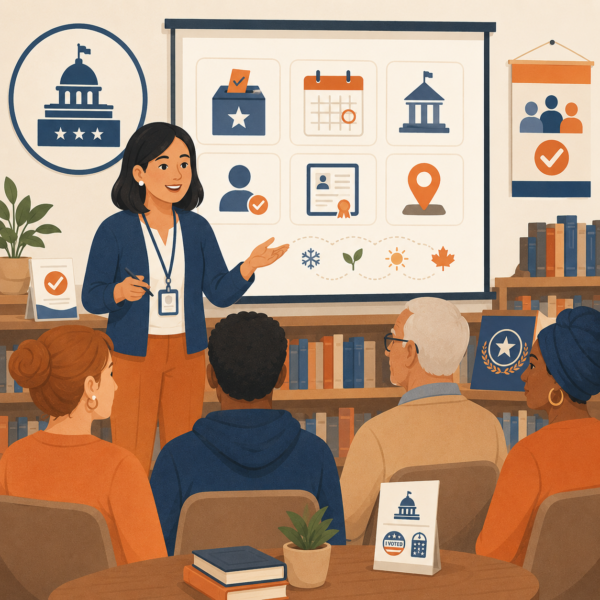 Year-round communication is often treated as a secondary outreach function, but in practice it is also a public-trust issue. When county clerks, boards of elections, and election offices communicate clearly between cycles, they make future election information easier to recognize, easier to understand, and easier to trust. When communication disappears between major elections, the office may be left to rebuild familiarity and credibility at the exact moment public pressure returns.
Because of these stakes, many election offices find that year-round communication can stretch beyond internal capacity or specialized expertise. Teams are often balancing election preparation, post-election review, public records demands, policy changes, accessibility, and routine administration at the same time. In that environment, agencies may choose to work with an external partner because they need focused communication planning, specialized expertise, an objective outside perspective, and support in a part of election communication that carries both long-term trust implications and real operational risk.
Stegmeier Consulting Group (SCG) helps election offices approach between-cycle communication as part of a larger communication system. That includes identifying the most useful year-round topics, aligning messaging to the election calendar, strengthening source-of-truth communication, and making sure quieter public education efforts still connect clearly to future voter action and process understanding. This helps offices stay visible, practical, and steady without sounding performative or overextended.
This support is especially valuable because year-round communication has to do several things at once. It must remain relevant, disciplined, and manageable while also helping the office build familiarity before the next high-pressure moment arrives. In that sense, strong between-cycle communication is not separate from election readiness. It is one of the clearest ways readiness becomes visible before the next election cycle is underway.
Future Trends in Year-Round Election Communication
Election offices are likely to place greater emphasis on between-cycle communication as a normal part of public service rather than as optional outreach. More offices will likely recognize that trust is easier to sustain when voters hear from the office in calmer periods, not only during deadlines, disputes, and election-day operations.
Another likely trend is stronger use of process-based education between cycles. Offices will increasingly benefit from explaining subjects like post-election review, voting options, source-of-truth channels, and timeline planning before public urgency rises. That kind of communication can make later election-cycle messaging easier to absorb because the public is building from existing familiarity rather than starting from zero.
Election offices may also connect year-round communication more closely to channel discipline and community presence. Instead of relying on sporadic updates, more offices will likely use a steadier model that combines website explanation, selective email or social reminders, community-facing outreach, and repeatable message patterns tied to the election calendar. That shift will matter because trust often grows through recognizability and consistency over time.
Conclusion
Building trust between election cycles is not about staying visible for its own sake. It is about helping the public understand the office, the process, and the source of official information before the next election period arrives. When offices communicate only during high-pressure moments, they leave too much of the public’s understanding to urgency, assumption, or outside interpretation.
This is why year-round communication should be treated as part of election administration itself. Practical explanation, predictable presence, and useful process guidance help voters recognize the office as a steady institution rather than as a voice that appears only when something is urgent. That kind of familiarity makes later communication easier to hear and easier to trust.
In the end, strong between-cycle communication helps election offices do something simple but important. It helps the public meet the next election cycle with more context, less confusion, and a clearer sense of where official guidance begins.
SCG’s Strategic Approach to Communication Systems
Align your agency’s messaging, processes, and public engagement strategies
Election offices need communication systems that build trust not just during election season, but throughout the full cycle of public service and preparation. Whether your office is strengthening year-round public education, improving source-of-truth visibility, aligning communication to the election calendar, or building a steadier between-cycle presence, SCG can help you create a communication framework that supports clarity, consistency, and public trust. Use the form below to connect with our team and explore how a strategic communication system can strengthen election readiness and long-term public confidence.