
Poll Worker Talking Points That Reduce Confusion, Conflict, and Complaints for Election Offices
Election administration is often judged by visible outcomes such as line length, equipment performance, ballot accuracy, and timely reporting. Yet many of the public’s most memorable election-day experiences are shaped by something less structural and more immediate. They are shaped by what poll workers say, how they say it, and whether that guidance helps voters move through uncertainty without feeling dismissed, confused, or challenged. A voter who hears a calm, clear explanation at the right moment is far more likely to remain confident in the process, even when something is inconvenient or unfamiliar. A voter who hears inconsistent, vague, or defensive language may leave with the opposite impression, even if the underlying procedure was lawful and correctly followed.
That is why poll worker talking points deserve to be understood as a strategic communication tool rather than a minor training detail. They are not simply phrases to memorize for customer service purposes. They are part of the public-facing operating system of the election office. They help translate policy into understandable action. They help voters interpret what is happening around them. They help staff remain consistent under pressure. Most importantly, they help reduce the kinds of confusion that often escalate into complaints, social media frustration, or accusations that the office failed to communicate fairly.
This matters because election environments compress time, emotion, and public scrutiny into a narrow window. Poll workers are asked to explain procedures to first-time voters, longtime voters, anxious voters, frustrated voters, and voters who may already mistrust institutions. They must do this while lines move, questions repeat, conditions change, and legal requirements remain nonnegotiable. In that setting, even a correct answer can fail if it is delivered in a way that sounds abrupt, overly technical, uncertain, or inconsistent with what another worker said five minutes earlier. The procedural backbone of election administration may be strong, but the voter experiences that backbone through human language.
Talking points reduce that gap between internal procedure and public understanding. At their best, they create a stable verbal framework for high-frequency, high-risk moments. They help poll workers explain identification requirements without sounding accusatory. They help staff direct voters to the correct line or precinct without creating embarrassment. They help workers respond to long waits, provisional ballots, registration issues, accessibility questions, curbside voting requests, and ballot questions in a way that preserves dignity while also protecting the integrity of the process. In other words, they do more than standardize speech. They shape the emotional and civic experience of the polling place.
This is especially important because confusion rarely stays small in election settings. A voter who does not understand why they were redirected, why they need to complete an extra step, or why they were offered a provisional ballot may not simply feel momentary frustration. They may interpret the experience as evidence that the process is disorganized, unfair, or intentionally difficult. Those interpretations can spread quickly, particularly in an environment where election distrust already circulates easily. One unclear explanation at a check-in table can become a broader story about exclusion or incompetence. One dismissive response can travel farther than an otherwise smooth day of operations. Talking points help election offices manage that risk by giving front-line staff language that is not only accurate, but emotionally and contextually sound.
There is also an ethical dimension here. Election offices do not serve a neutral public made up of equally prepared, equally calm, equally informed voters. They serve people arriving with different levels of confidence, different literacy levels, different language needs, different accessibility needs, different prior experiences, and different assumptions about government. Some voters may already expect the process to go smoothly. Others may arrive ready for friction because they have experienced past problems, heard alarming claims, or do not fully understand the rules. Talking points matter because they can either lower that tension or intensify it. A well-prepared phrase can help a voter feel guided rather than managed. A poor one can make the office sound cold, defensive, or arbitrary even when staff are trying to help.
For election offices, the implication is clear. Talking points should not be treated as optional polish added after operations are finalized. They should be treated as part of election readiness itself. If an office expects poll workers to answer recurring voter questions, explain unfamiliar procedures, and absorb stress without escalating it, then the office has a responsibility to equip them with language designed for exactly those moments. Training people on rules without training them on how to explain those rules leaves too much to improvisation. Improvisation may work well with experienced staff in low-pressure moments. It is far less reliable across dozens or hundreds of locations, especially when public trust depends on consistency.
The strongest election offices usually understand that operational excellence and communication excellence are inseparable. Poll workers are not only implementing process. They are representing institutional confidence in real time. Their words signal whether the office anticipated voter concerns, whether it respects the public, and whether the process can be trusted when something does not go exactly as expected. Talking points therefore belong inside the broader communication system of the office. They are the spoken layer of voter guidance, just as signage, website content, mailed notices, and public announcements are the written and visual layers. When those layers align, the voting experience feels more coherent. When they do not, confusion expands quickly.
Why Poll Worker Language Shapes the Voter’s Interpretation of the Entire Process
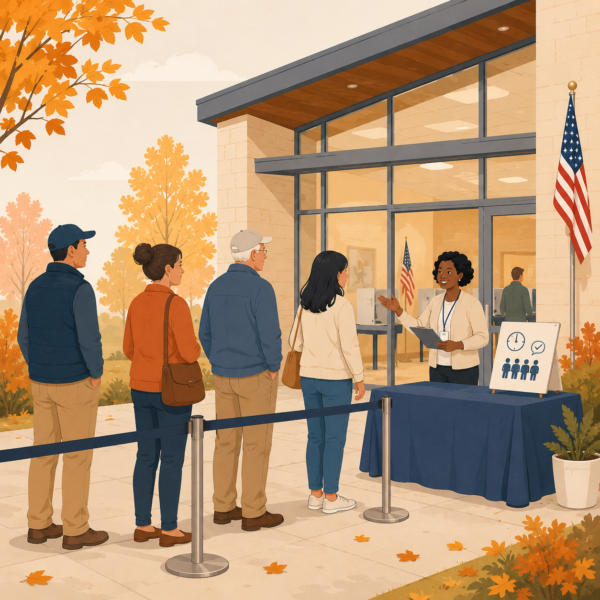 Most voters do not separate procedure from communication. They experience them together. If a process is legally sound but poorly explained, many voters will not experience it as sound at all. They will experience it as confusing. If a delay has a valid operational cause but no one explains it clearly, the delay may feel suspicious rather than routine. If a voter is sent to another table, another entrance, or another location without a concise, respectful explanation, the redirection may feel like a rejection. This is why poll worker language carries more weight than many election offices initially assume. It does not merely accompany the process. It determines how the process is interpreted.
This is particularly true in moments where the voter cannot easily verify what is happening independently. A person who is told that their name is not appearing as expected, that they need to vote provisionally, that they are at the wrong precinct, or that a specific document is required is likely to rely heavily on the poll worker’s explanation to judge whether the situation is normal, fixable, and fair. In these moments, tone and sequencing matter enormously. The poll worker who begins with a calm explanation of what the voter can do next is providing more than information. They are restoring agency. The worker who begins with jargon or a flat recitation of rules may leave the voter feeling blocked, even if the same technical outcome applies.
Election offices sometimes focus correctly on accuracy while underestimating interpretive clarity. Accuracy is essential, but it is not the whole task. A technically correct explanation can still fail if it places the burden of understanding entirely on the voter. For example, telling a voter that they must cast a provisional ballot because their eligibility cannot be confirmed at check-in may be accurate. But if that statement is not paired with a clear explanation of what the provisional ballot means, why it exists, and what happens next, the voter may hear only uncertainty and exclusion. By contrast, a more complete talking point can frame the same situation as a protected path within the process. It can communicate that the office has a procedure specifically designed to ensure the voter still has a way to participate while the issue is reviewed. That difference in framing can significantly alter the emotional outcome.
The same principle applies to routine traffic flow issues that offices sometimes treat as too minor for scripted language. A long line, a temporary pause, an equipment reset, a redirected queue, a request to wait for an accessible station, or an explanation of where to stand may all sound operationally small. Yet for voters, especially those already under time pressure or stress, these moments become indicators of whether the site is controlled and credible. A poll worker who says “You need to wait over there” may intend efficiency, but the phrasing can sound abrupt or arbitrary. A worker who says “This line is for check-in, and this next area is where you’ll go once a station opens” gives the voter context, sequence, and confidence. The difference is not cosmetic. It changes whether the voter feels processed or guided.
This interpretive function becomes even more important in a polarized environment where ordinary election procedures are sometimes viewed through a lens of suspicion. Election offices do not control every narrative surrounding voting, but they do control the quality of the explanations delivered inside their own sites. Strong talking points help poll workers anchor the voter in what is actually happening rather than allowing confusion to fill the gap. They reduce the risk that routine procedures will sound improvised, contradictory, or discretionary. They also make it easier for workers to communicate with composure because they are not inventing language at the moment while under scrutiny.
There is an internal benefit here as well. Poll workers themselves often feel more confident when they know how to explain a difficult situation clearly. Without prepared language, staff may become terse, overexplain, contradict one another, or fall back on phrases that sound bureaucratic. This does not usually happen because they do not care. It happens because they are juggling tasks, worried about getting the rule exactly right, and trying to move quickly. Talking points reduce that cognitive burden. They give staff a dependable verbal path through recurring interactions, which helps them remain calm and consistent even when the day becomes demanding.
In that sense, talking points are not only for voters. They are also a form of staff support. They help translate office policy into real-world public communication that can hold up under repetition. They make it easier for inexperienced workers to sound prepared. They make it easier for experienced workers to stay aligned with the office’s preferred language. They reduce avoidable variations that can make one polling place sound polished and another sound improvised. For election offices managing multiple sites, this consistency is not just useful. It is a core part of how fairness is perceived.
When poll worker language is treated seriously, the office begins to communicate more effectively at the exact point where trust is most fragile. The voter does not need a speech. The voter needs a short explanation that makes the process legible and the next step clear. That is the function of a good talking point. It converts procedure into usable guidance without sounding robotic or defensive. It helps the voter understand not only what is happening, but why the process is still orderly and navigable. In an election setting, that is a powerful form of reassurance.
Beyond the Ballot: Election Office Communication Strategies for County Clerks, Secretaries of State, and Boards of Election
This article is part of our series on strategic communication for Election Offices, Election Administration Agencies, and Boards of Elections. To learn more and to see the parent article, which links to other content just like this, click the button below.
Talking Points as Front-Line Conflict Prevention
Conflict at polling places is often described as a behavioral problem, but many election-day conflicts begin as communication failures. A voter feels surprised by a requirement they did not expect. A line moves differently than they assumed it would. A ballot process is explained too late or too vaguely. A redirection sounds dismissive. A wait feels unexplained. In each of these cases, frustration may appear suddenly, but it usually has a build-up. That build-up often begins when the voter does not understand what is happening and no one has yet provided a clear explanation that restores orientation. Talking points matter because they interrupt that escalation early.
This is one of the most practical reasons election offices should invest in them. Conflict prevention is not only about security presence or escalation protocols. It is also about whether front-line staff have language that reduces ambiguity before ambiguity hardens into confrontation. Many voters do not need a long answer. They need an answer that sounds prepared, respectful, and actionable. They need to know what is happening, what it means for them, and what they should do next. When those elements are missing, people often fill the gap with their own interpretations, and those interpretations are not always generous.
Poll workers are especially vulnerable to communication-based conflict because they stand at the intersection of policy and emotion. They must apply rules consistently, but they do so face to face with people who may feel inconvenienced, embarrassed, rushed, skeptical, or angry. Without structured talking points, workers may rely too heavily on bare rule statements. They may say what cannot be done before explaining what can. They may unintentionally sound personal when the issue is procedural. They may repeat a rule without giving the voter enough context to accept it. These patterns do not merely fail to calm the interaction. They often intensify it.
A well-designed talking point changes the dynamic by acknowledging the voter’s position while preserving the integrity of the process. It does not apologize for lawful procedure or invite exceptions where none exist. Instead, it frames the procedure in a way that is easier to absorb. It makes clear that the office has a process for this situation, that the voter is not being singled out, and that there is a defined path forward. This is particularly important for moments that regularly generate complaints, such as identification issues, provisional ballots, polling place changes, registration discrepancies, line management, and requests that staff cannot grant. In these moments, the talking point is doing two things at once. It is conveying the rule, and it is preserving the voter’s sense that the process is still structured and fair.
Conflict prevention also depends on consistency across staff. A voter who hears one explanation from a greeter, another from a check-in worker, and a third from a supervisor is far more likely to feel that the site is disorganized or arbitrary. Even if all three explanations are technically defensible, inconsistency itself can generate distrust. Talking points help reduce that risk by giving staff shared language for common scenarios. This does not mean every worker sounds identical. It means the core explanation remains stable enough that the voter hears one process rather than several competing versions of it.
Election offices that treat talking points as part of de-escalation planning usually discover another benefit. The talking points improve not only difficult interactions, but ordinary ones. The same language that prevents conflict also improves flow, reduces repeated questions, and makes the polling place easier to navigate. In other words, the value is not limited to the small number of high-friction moments. It improves the entire communication climate of the site.
What Makes a Poll Worker Talking Point Actually Work
Not every prepared phrase improves communication. Some scripts fail because they are too stiff. Others fail because they are too vague, too legalistic, too long, or too detached from the actual emotional conditions of the polling place. A useful talking point does something more demanding. It has to remain legally accurate, easy to remember, short enough to deliver under pressure, and clear enough to help the voter understand both the situation and the next step. That combination is what makes talking-point design a real communication discipline rather than a simple drafting exercise.
The strongest talking points are built around function, not formality. Their purpose is not to make the office sound polished for its own sake. Their purpose is to help poll workers move a voter from uncertainty to understanding without adding friction. That means the best phrases are usually organized around the voter’s immediate need. What is happening? Why is it happening? What the voter can do next. Where the process goes from here. When those elements appear in a stable order, the explanation becomes easier to follow, easier to repeat consistently, and less likely to sound improvised or defensive.
This sequence matters because voters rarely absorb information well when they feel surprised or stressed. A person who has just learned they are in the wrong precinct or need to complete a provisional ballot may not be ready to process a long procedural explanation. They first need orientation. They need to understand whether the situation is normal, whether there is still a path forward, and whether the office has a clear process for handling it. Talking points work best when they establish that grounding early. They should not open with bureaucracy when reassurance and direction are needed first.
That does not mean poll workers should soften every message into something overly comforting or imprecise. Elections require procedural discipline, and some rules are firm. But firmness and clarity are not the same as bluntness. A talking point can communicate a requirement without sounding accusatory. It can explain a limitation without sounding dismissive. It can redirect a voter without making the voter feel personally at fault. The distinction often lies in whether the language presents the rule as an orderly part of the process rather than as a verbal barrier dropped in front of the voter.
This is why shortness alone is not enough. Election offices sometimes try to solve communication problems by reducing everything to the briefest possible phrase. Brevity helps, but only when the content still carries enough meaning to be useful. “You need to go over there” is short but not clear. “This table is for check-in, and the ballot stations are in the next room once your check-in is complete” is longer, but it gives the voter orientation. The same principle applies to more sensitive moments. “You have to vote provisionally” may be technically direct, but it does not explain the purpose of the step or what the voter should expect. A better talking point helps the voter understand that the process exists to protect their ability to participate while a question is reviewed. That explanation changes how the procedure is heard.
Talking points also work better when they sound like real speech rather than written policy lifted into training material. Poll workers need phrases they can actually say under pressure. If the language feels unnatural in the mouth, staff are likely to abandon it, shorten it awkwardly, or replace it with whatever comes to mind at the moment. That is one reason overly formal scripting often underperforms. It may look complete on paper, but it does not survive real conditions. The strongest offices draft talking points that are conversational in rhythm while still disciplined in substance. They recognize that public trust is supported not by theatrical professionalism, but by calm, natural clarity.
Another important design principle is emotional neutrality paired with procedural confidence. Poll workers should not sound defensive, irritated, apologetic for lawful procedure, or uncertain about what comes next. Each of those tones can create problems. Defensiveness invites argument. Irritation signals disrespect. Excessive apology can make the procedure sound questionable. Uncertainty undermines trust. A good talking point instead sounds steady. It communicates that the worker understands the situation, that the office has a process for it, and that the voter can still move through that process with clear next steps. That tone is one of the most underrated elements of election communication because it shapes whether a voter perceives the site as controlled and fair.
Talking points also need to reflect real election environments rather than idealized training-room conditions. The polling place is noisy. Questions repeat. Voters interrupt. Lines form. Workers get tired. Under those conditions, a talking point that depends on perfect concentration or long explanation will often collapse. The best phrases are modular. They can stand on their own in short form, but they can also be expanded if the voter needs more explanation. That flexibility helps staff communicate clearly without sounding mechanical. It also allows experienced workers to remain natural while keeping the office’s core message intact.
In practice, this means election offices should design talking points with layered use in mind. The first line should provide the essential orientation. The second line can add context. The third can explain what happens next if the voter wants or needs more detail. This structure helps staff avoid front-loading every explanation with too much information while still preserving accuracy. It also keeps the conversation from becoming abstract. The voter hears the action path first rather than getting lost in policy language.
The offices that do this well usually treat talking points as applied communication architecture. They are not random scripts for isolated moments. They are recurring verbal tools designed to reduce friction at predictable stress points. That mindset changes drafting quality. It leads offices to ask better questions. What is the voter likely feeling at this moment? What misunderstanding is most likely to occur? What language would reduce it? What exact phrasing helps the worker sound calm and prepared? What core explanation must stay consistent across every site? Those questions produce better scripts because they begin with the public experience rather than internal convenience alone.
Tone, Sequence, and Why Some Explanations Calm People While Others Escalate Them
Election offices often assume that voter frustration is driven mainly by the substance of the message. In reality, frustration is often shaped just as much by how the message unfolds. Two poll workers can communicate the same rule and produce very different outcomes depending on the order of information, the framing of the explanation, and the tone they use in the first few seconds. This is why sequence is so important. A voter does not merely hear content. The voter experiences the communication as an interaction, and that interaction either lowers tension or sharpens it.
The most effective talking points typically begin by creating orientation before they deliver constraint. In other words, they help the voter understand the situation before they emphasize what cannot happen. This matters because many election-day tensions begin when a voter feels abruptly blocked. If the first thing they hear is “you can’t” or “that’s not allowed” or “you’re in the wrong place,” the exchange can immediately feel adversarial. Even when the statement is accurate, the interaction begins from a position of denial rather than guidance. By contrast, when the explanation begins with process, context, or next step, the same rule can be easier to accept. The voter hears a path, not just a barrier.
This is especially important in high-friction scenarios. Consider the difference between a poll worker who says, “You’re not on the list, so you’ll have to step aside,” and one who says, “I’m not seeing your record in this check-in list yet, so let’s use the next step we have for sorting that out.” The second explanation still communicates that there is a problem to solve, but it does so in a way that preserves order and dignity. It makes the issue sound procedural rather than personal. It also makes clear that the office anticipated this possibility and has a process for it. That is often enough to prevent the voter from feeling singled out or dismissed.
Tone reinforces that sequencing. A calm tone does not mean a weak tone. It means a tone that does not inject unnecessary heat into a moment that may already carry stress. Poll workers do not need to sound overly cheerful, scripted, or apologetic. They need to sound clear, grounded, and steady. Voters usually respond better when they sense that the worker knows what is happening and is guiding them through it. That sense of steadiness can calm even difficult interactions because it signals that the process is not breaking down.
One reason the tone is so influential is that many voters are not evaluating only the specific answer. They are evaluating whether the office appears fair. If a worker sounds curt, uncertain, or irritated, the voter may interpret the entire process through that tone. The issue quickly becomes larger than the individual exchange. A small procedural hurdle starts to feel like evidence of broader disrespect or confusion. Election offices cannot eliminate every difficult interaction, but they can reduce the number of interactions that acquire this larger meaning simply because the spoken explanation was poorly framed.
The sequence of a strong talking point usually follows an intuitive emotional pattern. First, it names or stabilizes the situation. Second, it explains the process. Third, it directs the voter to the next step. Fourth, if necessary, it provides additional clarification. That order mirrors how people tend to process unexpected information under stress. They need grounding before detail. They need a path before a lecture. They need to know that the process is still moving. When offices reverse that order and begin with technical explanation, voters often stop listening before the useful part arrives.
This becomes even more important when workers are dealing with repeated questions throughout a long day. Fatigue tends to flatten tone and shorten patience. Without good talking points, staff may begin to sound sharper or more mechanical as the day progresses. That is not simply a training problem. It is a systems problem. If the office expects repeated high-stakes explanations but gives workers only rules and no communication framework, then tone deterioration is predictable. Talking points act as a stabilizer. They make it easier for staff to remain consistent even after the fiftieth repetition of the same question.
Good sequence also helps workers avoid overexplaining. Inexperienced poll workers often make one of two mistakes. They either say too little and leave the voter confused, or they say too much and bury the useful action under a flood of detail. A well-designed talking point protects against both extremes. It offers a clear first sentence that does the core work, then leaves room to add only what is needed. This keeps the interaction more manageable for both parties. It also makes the worker sound more confident because the explanation has a clear structure instead of wandering through policy language.
Election offices that pay attention to these communication mechanics often discover that strong talking points improve not only voter experience, but also poll worker morale. Staff feel less exposed when they know how to begin a difficult explanation. They feel less likely to be trapped in confrontational exchanges they are not sure how to navigate. They can focus more on guiding the voter and less on searching for words that sound both lawful and humane. That confidence is valuable because voters can hear it. A prepared office sounds different from an improvising one.
In the end, tone and sequence determine whether a talking point performs as guidance or as friction. The wording may be technically similar, but the effect on the voter can differ dramatically. That is why election offices should design these phrases as communication tools with emotional, operational, and reputational consequences. When the first words a voter hears in a difficult moment are steady, clear, and well ordered, the entire process becomes easier to trust.
The Moments Where Talking Points Matter Most
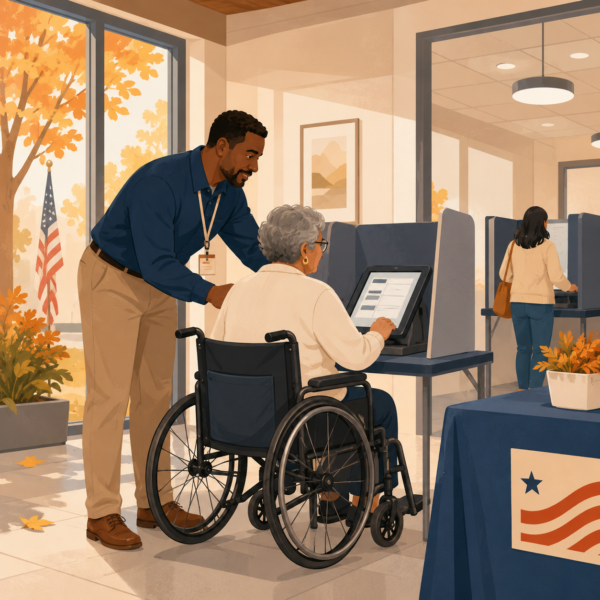 Election offices do not need talking points for every sentence spoken in a polling place. They need them for the moments where confusion tends to repeat, where emotions tend to rise, and where a weak explanation can quickly become a complaint or conflict. These moments are often predictable. They occur at check-in when a record does not appear as expected. They occur when a voter is redirected to another precinct or another line. They occur when someone is told they need identification, must use a provisional ballot, or cannot complete the process in the way they assumed they would. They also occur in less dramatic but highly consequential situations such as long waits, equipment pauses, curbside requests, and questions about accessibility. In each case, the office has an operational process. What determines whether the voter experiences that process as orderly or frustrating is often the quality of the explanation.
This is why election offices benefit from identifying not just their most common voter questions, but their most communication-sensitive moments. A talking point is especially valuable when the procedure is unfamiliar to the voter, emotionally loaded, or easy to misinterpret. Many voters do not come to the polling place with a working knowledge of provisional ballot rules, precinct assignment logic, check-in system issues, or queue management choices. They arrive expecting to vote. When something disrupts that expectation, even briefly, the explanation has to do real work. It has to restore orientation, preserve dignity, and make the next step feel visible. Without that, the voter often experiences the moment as arbitrary.
One recurring example is the mismatch between what voters think should happen and what the process actually requires. A voter may believe that being in the right building is enough, even if they are at the wrong precinct table. Another may assume that an address change should already appear in the system. Another may arrive confident that a previously used form of identification will still be accepted. In these moments, the poll worker is not merely enforcing a rule. The worker is translating the gap between expectation and procedure. That translation must be handled carefully because it is often where confusion turns into perceived unfairness.
Strong talking points are especially important because many high-friction moments are interpretive before they become confrontational. The voter is trying to decide what this experience means. Does this mean I am being turned away? Does this mean my vote will not count? Does this mean the office is disorganized? Does this mean the rules changed without warning? Does this mean I am in the wrong place after all? A prepared talking point helps answer those unspoken questions before frustration hardens. It frames the procedure in a way that keeps the voter connected to the process instead of feeling pushed outside it.
The most effective offices usually identify these moments in advance and group them by risk level. Some questions are routine and low tension, such as where a voter should stand next or when a line is expected to move. Others carry much greater reputational and emotional risk, such as explaining why a person must vote provisionally or why their registration record is not appearing. The higher the risk of misunderstanding, the more valuable it becomes to give poll workers language that is both consistent and human. This is not about scripting every interaction rigidly. It is about protecting the office from avoidable communication failures in the exact places where they are most likely to occur.
Provisional Ballots and Other Explanations That Must Preserve Confidence
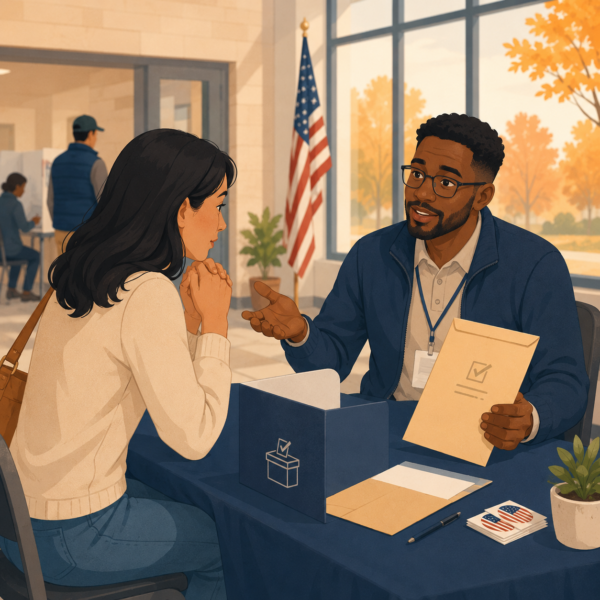
Few election-day explanations carry more emotional weight than the provisional ballot conversation. For many voters, the phrase itself sounds uncertain or second-tier. If poll workers introduce it poorly, the voter may hear that their vote is being downgraded, delayed unfairly, or possibly discarded. That is why this moment demands careful talking-point design. The office needs language that explains the purpose of the provisional ballot in a way that preserves trust in the process rather than making the voter feel excluded from it.
A weak explanation often begins and ends with the requirement. The worker says that the voter must use a provisional ballot because of an issue with registration, precinct assignment, identification, or status verification. That answer may be factually correct, but by itself it leaves too much interpretive space. The voter may not understand why this pathway exists, whether it is normal, whether it protects their rights, or what happens after the ballot is cast. A stronger explanation frames the provisional ballot as the process the office uses when a question needs review but the voter still needs a way to participate. That framing communicates order. It tells the voter that the office anticipated this situation and built a structured response for it.
This distinction matters because the provisional ballot interaction is often one of the few times a voter directly encounters the procedural safeguards of election administration. The talking point should make that safeguard visible. It should explain that the ballot allows the voter to cast their vote while the office reviews the issue according to the rules. It should also set expectations clearly about what happens next. Voters are much more likely to accept a difficult process when they understand its purpose and timeline. They are much less likely to accept it when it sounds like a vague secondary option being imposed without explanation.
The same principle applies to other sensitive explanations involving registration status, missing records, or unusual check-in outcomes. Poll workers should not sound as though they are announcing failure. They should sound as though they are guiding the voter through the office’s next established step. That does not mean minimizing the issue. It means framing it within a process that remains understandable and fair. A well-designed talking point makes the procedure legible and helps the voter see that they are still inside the system, not outside it.
Wrong-Precinct Redirection and the Language of Dignity
Being told that you are in the wrong place is one of the fastest ways for an election interaction to become tense. Even when the issue is minor and solvable, the voter may hear the redirection as a personal error, an accusation, or a sign that the office’s location guidance failed. The emotional charge can be even greater for voters who already waited in line, arranged transportation, took time off work, or navigated accessibility barriers to get there. In that context, the talking point cannot simply convey redirection. It must preserve dignity while making the next step unmistakably clear.
This is where sequence matters again. A poor response often begins with blunt correction. The worker says the voter is in the wrong precinct, wrong line, or wrong location, and only later explains how to fix it. That order tends to sharpen embarrassment or defensiveness. A better response begins by locating the voter within a process. It explains that the worker is checking to make sure the person votes in the correct place, then describes the next step clearly. The redirection becomes part of the office’s effort to guide the voter correctly rather than a flat announcement that the voter got something wrong.
Poll workers also need language that avoids unnecessary ambiguity. Telling someone to go to another table or another site is not enough. The explanation should clarify where that location is, why that is the correct step, and what the voter should expect once they arrive. The more precise the explanation, the less likely the voter is to feel passed around. This is especially important in larger polling places or consolidated voting centers where multiple lines, entrances, or jurisdictional boundaries may already feel confusing.
Wrong-precinct moments can also reveal whether the office’s broader communication system is aligned. If website instructions, mailed notices, signs, and poll worker explanations use different labels for the same location or process, the voter will likely interpret the redirection as office confusion. That is why talking points must match the language used elsewhere. The office should sound like one institution, not a cluster of separate voices. Consistency in these moments is part of how fairness is perceived.
Long Lines, Delays, and the Importance of Explaining Waits Before Frustration Builds
Long waits do not automatically destroy voter confidence. Unexplained waits often do. Most voters can tolerate delay better than uncertainty. What creates frustration is not simply the passage of time, but the feeling that no one is explaining what is happening, how the line is moving, or whether the delay is normal. In these moments, poll worker talking points serve a preventive role. They keep silence from becoming speculation.
This does not require elaborate announcements. In fact, simple explanations often work best. Voters need to know whether the line is moving, what stage of the process is creating the slowdown, and what they should do while waiting. The key is that the office sounds aware and in control. A worker who communicates that the line is moving steadily and that check-in or ballot marking is the current bottleneck helps voters interpret the wait as managed rather than chaotic. That framing has real emotional value because it replaces passive frustration with a clearer understanding of what is happening.
Talking points also help workers avoid the two tone problems that often emerge during delays. One is false reassurance, where staff understate an obvious slowdown in ways that make voters feel dismissed. The other is visible irritation or helplessness, where staff sound as though the wait is simply an unfortunate burden they cannot explain. Neither response builds trust. Voters respond better when the office acknowledges the delay plainly, explains what it can, and continues giving practical guidance. The goal is not to erase inconvenience. It is to prevent inconvenience from being interpreted as disorder or indifference.
This is especially important because complaints about elections often attach themselves to visible, memorable moments. A voter may not remember that most of the process ran smoothly. They may remember that no one told them why the line stopped moving for twenty minutes. Good talking points reduce the chance that a manageable operational pause becomes the defining story of the visit.
Identification, Accessibility, and Other High-Sensitivity Interactions
Some election-day conversations are especially sensitive because they intersect directly with voter identity, autonomy, or vulnerability. Identification requirements are a prime example. If handled poorly, they can sound accusatory even when the worker is simply following procedure. Accessibility requests create a different but equally important challenge. If handled clumsily, they can make a voter feel conspicuous, burdensome, or unsure whether the office is prepared to help. These interactions require language that is especially careful, because the stakes are not only procedural. They are personal.
In identification conversations, the office benefits from language that treats the requirement as part of the process rather than as a judgment about the voter. The worker should sound procedural, not suspicious. The explanation should focus on what the process requires and what options the voter has next. If a document is missing or does not satisfy the requirement, the worker should not leave the voter with a dead end if another lawful path exists. The strongest talking points preserve clarity while avoiding blame. They make it easier for the voter to hear the rule without feeling targeted by it.
Accessibility conversations demand a different but related discipline. Poll workers need language that offers help without making assumptions. They should be prepared to explain curbside voting, accessible equipment, seating options, or alternative pathways in ways that are direct and respectful. A voter asking about access should not have to navigate awkwardness, vague gestures, or improvised answers. Talking points are especially valuable here because they help the office communicate readiness. They show that accessibility is not an unusual interruption, but an anticipated part of service.
This is where the broader communication system matters again. If the office has already described accessible options online, in mailed materials, and in signage, the poll worker’s language should reinforce that same structure. The voter should hear continuity, not a new and uncertain explanation invented on the spot. That continuity helps reduce anxiety because it tells the voter that the office expected this need and prepared accordingly.
In all of these high-sensitivity moments, the talking point is doing more than delivering information. It is shaping whether the voter feels respected within the process. That feeling has lasting consequences. It influences whether a person sees the office as professional, whether they share a complaint afterward, and whether they trust that future voting interactions will be navigable. This is why election offices should pay so much attention to these conversations. They may last only seconds, but they often carry the emotional weight of the entire day.
Building Talking Points as an Operational Communication System
Poll worker talking points are most effective when they are built as part of election operations rather than attached to training as a last-minute script sheet. Many offices understand that workers need consistent language, but consistency rarely comes from handing out a list of sample phrases on the eve of an election. It comes from designing those phrases around the real decision points, stress points, and public-facing explanations that define the voting experience. In that sense, talking points are not just training content. They are part of the communication architecture of the election itself.
This distinction matters because poll workers do not operate in isolation. They are responding to procedures, signage, check-in systems, supervisor guidance, accessibility processes, line management decisions, and contingency plans. If the talking points are not aligned with those operational realities, they will sound artificial or incomplete. A worker may memorize a phrase about provisional ballots, but still struggle if the office has not clarified how much detail should be provided at check-in, when the supervisor should step in, or how the explanation should connect to written instructions given to the voter. The talking point must fit the workflow. Otherwise, even well-written language may collapse in use.
The strongest offices begin by mapping the moments where public interpretation matters most. They identify where voters tend to become confused, where questions are likely to repeat, where tension can escalate quickly, and where inconsistent phrasing has the highest reputational risk. That analysis should include not only legal or procedural risk, but communication risk. Some election-day moments are procedurally simple but emotionally volatile. Others are administratively complex but rarely contested if explained clearly. Talking points should be concentrated where communication quality has the greatest effect on voter confidence.
This planning process also improves internal alignment. It forces the office to ask practical questions that are often left unresolved until too late. What exact language should be used when a voter is redirected. How should workers explain waits without overpromising. What phrasing preserves dignity during accessibility conversations. When should a worker stop explaining and involve a supervisor. How should the spoken explanation connect to posted signs, printed notices, or website language. These are not minor wording questions. They are operational choices about how the office wants the public to experience the process.
Once that alignment work begins, offices often discover that some communication problems originate upstream. A confusing talking point may reflect a confusing procedure. A recurring voter complaint may point to inconsistent signage or a mismatch between public-facing instructions and in-room workflow. A phrase that feels too long or awkward may reveal that the office has not sufficiently clarified the actual next step. This is one reason talking-point development can be so valuable beyond the immediate scripts themselves. It reveals where election operations and voter communication are out of sync.
Talking points also need to be tiered. Not every poll worker needs the same depth of explanation for every scenario, but everyone does need the same core message. A greeter may need a short orientation line. A check-in worker may need the next sentence that explains the process. A supervisor may need the full version used when a voter has more questions or a situation becomes delicate. This layered structure helps maintain consistency without requiring every worker to deliver the exact same extended explanation. It also reflects the reality of polling-place communication, where different roles encounter different stages of the same voter experience.
Election offices benefit when they build these layers deliberately rather than leaving them to chance. A short front-line phrase should never conflict with the fuller supervisor explanation. The shorter version should serve as the entry point into the same institutional voice. That is how an office begins to sound coherent across the site. The voter hears one process, one logic, and one tone even when interacting with multiple staff members. That coherence is a major trust signal, especially in moments where the voter is already uncertain.
Training Poll Workers to Use Talking Points Naturally Under Pressure
Writing good talking points is only half the task. Poll workers must also be able to use them in live conditions without sounding robotic, defensive, or uncertain. That requires a different kind of training from ordinary procedural review. Workers do not just need to know the words. They need to understand why those words are structured the way they are, when to use the short version, when to add context, and how to stay calm when the voter is frustrated, rushed, or skeptical. If offices skip that layer of preparation, even strong scripts can become brittle.
One common mistake is to train talking points as though they were lines in a presentation. Polling places are not controlled presentation environments. They are noisy, repetitive, interrupted, and emotionally variable. Workers may need to explain the same issue dozens of times in one day, often while switching between tasks or dealing with multiple people at once. Under those conditions, a script that has not been practiced out loud will often flatten into something clipped or unnatural. Workers need verbal fluency, not just visual familiarity.
That is why scenario-based practice matters so much. Poll workers benefit from hearing a strong explanation, speaking it themselves, and then using it in short role-play situations that reflect real election-day pressure. A training session that says “here is the approved language for provisional ballots” is useful, but it is far more effective if workers also practice what that explanation sounds like when the voter is upset, confused, in a hurry, or worried about whether their vote will count. Practice helps workers learn how to keep the structure intact while still sounding like a person rather than a script reader.
This type of rehearsal is especially important for tone. Tone is difficult to correct on the spot because workers often do not realize how they sound under stress. A phrase that seems neutral in a handbook can sound dismissive when spoken too quickly. A short explanation can sound abrupt if the worker has not practiced the pacing. A rule-based sentence can sound argumentative if delivered with visible strain. Role-based practice helps supervisors catch these issues before election day and helps workers hear the difference between accurate language and effective language.
Training should also make room for judgment. Poll workers should know that the point of a talking point is not to shut down human interaction. It is to give them a dependable structure for explaining sensitive situations clearly. Some voters will need only one sentence. Others will need a little more context. Still others will need a supervisor. Workers should be taught how to recognize those differences without abandoning the office’s core language. The goal is disciplined flexibility. The explanation should remain consistent enough to protect fairness, but natural enough to preserve trust.
This is particularly important for newer poll workers, who may know the rules but still feel nervous about delivering them. Anxiety often leads staff to overtalk, underspecify, or sound uncertain. A well-trained talking-point system gives those workers something more than a script. It gives them a way to begin. That first sentence matters disproportionately because it shapes whether the interaction starts from clarity or confusion. When workers trust their opening explanation, they are less likely to panic, contradict themselves, or sound defensive.
Supervisors play a critical role here. They should not be seen only as the people who step in when a conversation goes badly. They should also be trained to reinforce the communication model before problems arise. That means listening for phrasing drift, helping workers simplify overlong explanations, and modeling how to keep the voter oriented when tension rises. In many offices, communication quality improves dramatically when supervisors understand that they are coaching the public-facing voice of the polling place, not just resolving exceptions.
Another training principle is repetition across formats. Poll workers are more likely to retain talking points when those phrases appear consistently in manuals, quick-reference cards, tabletop signage, supervisor notes, and live instruction. If the office uses one phrase in the training deck, another in the handbook, and another in the field guide, confusion will follow. Workers under pressure usually default to what they remember most clearly. That memory should point back to one stable communication framework.
The best training programs also acknowledge fatigue. Communication quality often declines not because the office trained poorly, but because the day is long and repetition erodes precision. Workers begin to shorten phrases, drop context, or sharpen tone without intending to. Offices that anticipate this can build support into the day. Quick refresher cards, supervisor check-ins, concise reminder sheets for high-risk scenarios, and brief regrouping conversations can all help stabilize language before drift becomes visible to voters. This is not excessive polish. It is recognition that communication is part of performance, and performance changes over time.
Testing Talking Points Against Real Disruptions
Election offices often evaluate talking points under normal conditions, but some of the most important explanations are needed when conditions are no longer normal. A scanner goes down. A check-in line stalls. Weather changes pedestrian flow. A polling place entrance becomes harder to use. A surge of first-time voters arrives at once. A rumor begins circulating in line. These are the moments when staff are most likely to improvise and when the public is most likely to scrutinize what they hear. Talking points therefore need to be tested not only against routine questions, but against disruption.
This does not require elaborate simulation every time. It does require honesty about which disruptions are plausible and which explanations are likely to matter. Offices should ask what workers would actually say if the line stopped moving for fifteen minutes, if a voter questioned whether a process was valid, if accessibility routing had to shift, or if multiple staff gave slightly different instructions about where to go next. These situations reveal whether the office’s core phrases are resilient. A talking point that works only in a quiet training room is not yet ready for the field.
Testing also helps offices identify where communication authority needs to be clearer. Some disruptions require a tightly controlled message, especially when public trust could be affected quickly. Others allow more localized explanations. Workers need to know the difference. If they do not, some will overexplain, some will speculate, and some will retreat into vague language that increases frustration. A tested talking-point framework clarifies which messages belong to the whole office and which can be adapted to site conditions.
The value of this testing is not just defensive. It also improves ordinary operations. When an office knows how it wants staff to communicate during strain, everyday explanations usually become cleaner as well. The organization develops a stronger instinct for message discipline, sequencing, and tone. Over time, that discipline becomes part of the office culture. Workers begin to understand that clear explanation is not an optional courtesy layered on top of election administration. It is part of how the office demonstrates control, fairness, and respect.
Why Consistency Across Locations Matters So Much
For voters, fairness is judged not only by what happens at one table, but by whether the process seems stable from one interaction to the next. For election offices, that standard extends across all polling places. A strong explanation at one location does not fully protect the office if another location sounds improvised, contradictory, or dismissive. When voters compare experiences across sites, inconsistencies in language can quickly become stories about inconsistent rules, even when the actual rules never changed.
This is one reason talking points should be designed as a network-wide communication tool. Large jurisdictions, multi-site operations, and consolidated voting models are especially vulnerable to variation because staff experience, site conditions, and local management styles differ. Without a shared verbal framework, the office may inadvertently create different public experiences under the same legal process. One site sounds calm and confident. Another sounds hurried and uncertain. One explains a provisional ballot as a standard review path. Another makes it sound like a problem unique to that voter. These differences shape public perception far more than offices sometimes realize.
Consistency does not require flattening every interaction into identical speech. It requires stabilizing the core explanation so that voters hear the same institutional logic wherever they go. That stability is part of perceived fairness. It tells the public that the office has thought through how the process should be explained and has prepared its staff to communicate with discipline. In election settings, that kind of coherence is not merely helpful. It is one of the quiet foundations of legitimacy.
Strategic Communication Support for Election Offices
 Poll worker talking points are often treated as a small training asset, but their true value is much larger. They sit at the point where election operations become public experience. Every explanation about identification, lines, provisional ballots, precinct assignment, accessibility, curbside voting, or routine delay shapes how voters understand the office’s competence and fairness. When those explanations are clear, steady, and consistent, the office appears prepared. When they are fragmented, improvised, or uneven across locations, the office may appear disorganized even when its procedures are sound. This is why talking points deserve strategic attention rather than informal treatment.
For many election offices, the challenge is not recognizing that communication matters. The challenge is building a repeatable system that connects training, operations, signage, digital information, supervisor guidance, and public trust. Talking points do not work in isolation. They work when they are aligned with the office’s broader communication environment. A poll worker explanation about a polling place change should reinforce the wording used online. A provisional ballot explanation should match the office’s written guidance. A line-management script should sound like it belongs to the same institution that produced the public notices and voter education materials. This level of alignment is difficult to achieve without a deliberate communication framework.
Stegmeier Consulting Group (SCG) helps election offices strengthen that framework. Rather than treating front-line language as an afterthought, SCG helps agencies examine how operational processes are interpreted by the public and where communication breakdowns are most likely to occur. That includes identifying high-friction voter moments, clarifying message hierarchy, improving the structure and tone of poll worker explanations, and aligning verbal guidance with the office’s broader voter communication system. The result is not simply cleaner phrasing. It is a stronger public-facing process.
This kind of support is especially valuable because election offices often face layered constraints. Rules must be followed precisely. Timelines are tight. Poll worker experience levels vary. Public scrutiny is intense. In that environment, communication problems rarely remain small. A vague answer can become a complaint. An inconsistent explanation can become a rumor. A poorly framed interaction can become a broader story about institutional unfairness. Strategic communication support helps offices reduce those risks by strengthening the quality and consistency of the language voters hear when it matters most.
SCG also helps agencies think beyond election day itself. Talking points are part of a larger trust system that includes how offices prepare voters before they arrive, how they reinforce procedures on site, how they respond to confusion under pressure, and how they ensure one location does not sound fundamentally different from another. When these elements are brought into alignment, election communication becomes more than reactive troubleshooting. It becomes a disciplined part of election administration.
Future Trends in Poll Worker Communication for Election Offices
The future of poll worker communication is likely to become more structured, more scenario-based, and more closely tied to public trust. Election offices are facing an environment in which routine procedural explanations can quickly become politically charged or publicly amplified. That means front-line language will matter even more than it already does. Offices will increasingly need talking points that are not only accurate, but resilient under scrutiny, adaptable during disruptions, and consistent across multiple channels and locations.
One important trend is the growing expectation that election communication should function as a whole system rather than as a set of disconnected materials. Poll worker talking points will likely become more closely aligned with website language, signage systems, absentee guidance, social media messaging, and public statements from election leadership. This shift reflects a larger reality. Voters do not experience the office in separate communication categories. They experience one institution. The more those layers reinforce one another, the more credible and understandable the process becomes.
Another trend is the increased use of scenario-based training. Offices are recognizing that workers need more than procedural knowledge. They need practice handling stress, repeated questions, skeptical voters, accessibility requests, and operational disruptions without losing clarity or composure. This will likely lead to more training models built around real interaction patterns rather than static script memorization alone. The emphasis will move toward verbal fluency, emotional steadiness, and consistent message sequencing in live conditions.
Election offices may also begin using digital tools to support poll worker communication more actively. Quick-reference systems, mobile guidance tools, structured supervisor prompts, and just-in-time messaging aids may help workers maintain consistency during long days and changing conditions. These tools could be useful, but they will still require careful governance. If the underlying language is weak, the technology will simply spread weak explanations faster. The real opportunity lies in using tools to reinforce a well-designed communication strategy rather than substitute for one.
There is also likely to be greater attention to communication equity. Offices are increasingly aware that the quality of poll worker explanations affects not only general voter satisfaction, but also whether first-time voters, voters with disabilities, voters with limited English proficiency, and voters arriving with mistrust feel supported or alienated. Future-ready offices will likely place more emphasis on respectful phrasing, plain language, accessibility-sensitive explanations, and message consistency across diverse voter experiences. This is not a cosmetic improvement. It is part of making the public process more legible and more trustworthy.
Finally, the future of poll worker communication will probably be shaped by the broader demand for visible preparedness. Voters want to know that the office has anticipated predictable problems and equipped staff to handle them well. Strong talking points signal exactly that. They suggest that the office has thought beyond the rules and considered how those rules will be understood by real people in real time. As public scrutiny continues to intensify, that kind of preparedness will become an even more important part of election credibility.
Conclusion
Poll worker talking points may seem modest compared with larger election systems, but they play an outsized role in how voters interpret the process. They shape whether routine procedures sound orderly or arbitrary, whether delays feel managed or suspicious, whether redirection feels respectful or dismissive, and whether sensitive moments preserve dignity or create friction. In a polling place, language is never just language. It is one of the main ways the office communicates fairness, control, and public readiness.
This is why talking points should be treated as part of election operations, not as optional customer-service polish. They help poll workers explain procedures consistently, reduce unnecessary variation across sites, and lower the chance that confusion will expand into conflict or complaint. They also support staff themselves by reducing the burden of improvisation in high-pressure environments. When poll workers know how to begin, how to frame the process, and how to guide the voter toward the next step, they are more likely to sound calm, clear, and confident.
The strongest election offices understand that public trust is built through repeated moments of interpretation. Voters are constantly reading signals from the system. They notice whether the office sounds prepared, whether the explanations make sense, whether the tone feels respectful, and whether different workers seem to be operating from the same understanding. Talking points help stabilize those signals. They turn front-line communication into a more reliable part of the voter experience.
In the end, strong poll worker language does not merely prevent problems. It strengthens legitimacy. It helps voters feel that the process is understandable, navigable, and fair even when something unexpected occurs. That is a powerful outcome for something as brief as a spoken explanation, and it is exactly why election offices should design these moments with far more intention than they often receive.
SCG’s Strategic Approach to Communication Systems
Align your agency’s messaging, processes, and public engagement strategies
Election offices need communication systems that hold up under pressure. Whether your agency is refining poll worker scripts, improving election-day messaging, standardizing voter guidance across locations, or strengthening the connection between operations and public-facing communication, SCG can help you build a communication framework that reduces confusion, supports consistency, and strengthens trust in the voting process. Use the form below to connect with our team and explore how a strategic communication system can improve both voter experience and organizational performance.