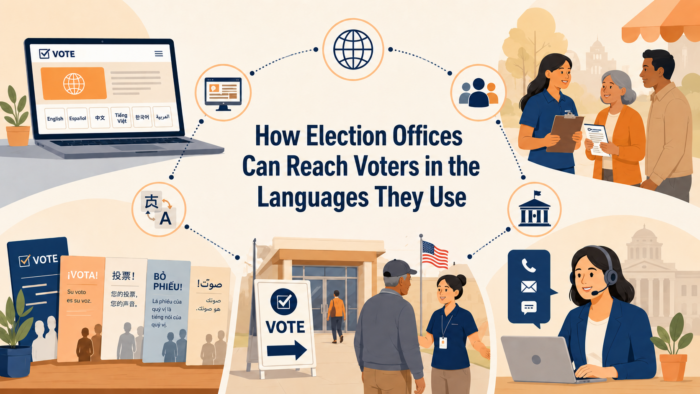
Multilingual Election Communication Beyond Compliance: How Election Offices Can Reach Voters in the Languages They Use
Multilingual election communication often breaks down when the office treats translation as the finish line instead of the starting point. A translated flyer, notice, or webpage may technically exist, but that does not automatically mean voters can find it, trust it, understand it quickly, or use it at the moment they need to act. The U.S. Election Assistance Commission’s language access resources note that the Voting Rights Act requires certain jurisdictions to provide language assistance for certain language minority groups, and the Department of Justice explains that federal law protects the voting rights of citizens who rely heavily on languages other than English so they can participate effectively in democracy.
That is why multilingual communication has to be treated as a voter-use issue, not only as a legal-coverage issue. The Election Assistance Commission’s voter education design guidance says election materials should be grounded in plain language and information design, and it specifically encourages officials to understand their audience’s abilities, including language proficiency, so they can engage voters more effectively. When election offices build language access around actual voter tasks, not just around document production, multilingual outreach becomes more useful and more trusted.
Election offices also need to recognize that language access affects more than translation accuracy. It affects whether voters know which information is official, whether they can act before a deadline, whether they understand what to bring or where to go, and whether they feel the office is speaking to them rather than merely posting a requirement somewhere online. The Department of Justice states that citizens with limited English proficiency need information in languages other than English to be informed voters and participate effectively, which makes multilingual communication a practical participation issue as well as a compliance issue.
This article provides an evergreen communication framework for election offices that want multilingual election communication to do more than satisfy minimum obligations. It focuses on how to reach voters in the languages they actually use, how to make translated information easier to find and act on, and how to build multilingual communication systems that support confidence, turnout, and voter understanding.
Language Access Fails When Voters Have to Do the Translation Work Themselves
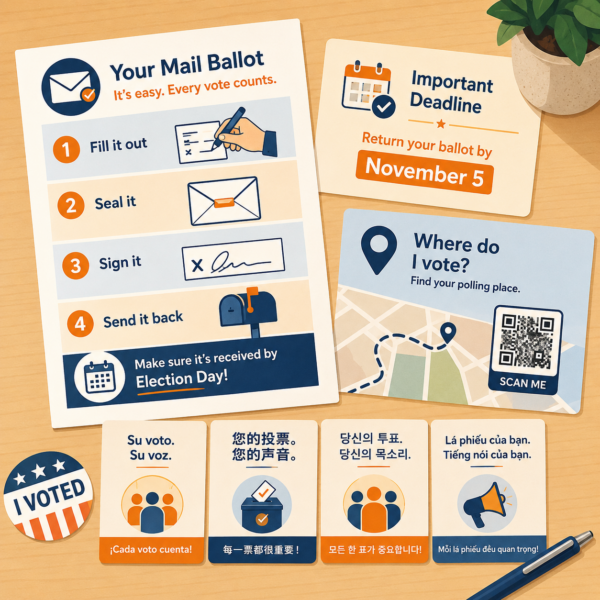 A multilingual election program underperforms when voters still have to interpret the office’s system on their own. That happens when translated content exists but is buried, when the key deadline or action is hard to find, when the translated version sounds too formal or indirect, or when the office translates a document but not the surrounding wayfinding, navigation, or help path. The result is that the office has translated words while the voter is still left to translate the experience. The Election Assistance Commission’s design guidance emphasizes that communication materials should be usable, understandable, and accessible, which supports the idea that language access must include structure and usability, not just word substitution.
This is especially important because voters usually arrive with a task, not with time to study the office’s language access program. They may need to register, confirm a polling place, understand mail ballot instructions, check voter ID requirements, or respond to a cure notice. If the translated content does not quickly answer that practical need, the voter still experiences the system as difficult to use. The Department of Justice’s language minority voting resources make clear that federal law protects the right of eligible citizens to receive the information they need to register and vote even if they do not read or speak English very well.
A second problem is that multilingual communication is often treated as a side project instead of as part of the office’s main voter communication system. When English-language reminders are timely, visible, and repeated across channels, but translated materials are delayed, harder to find, or missing from the main public flow, the office signals that some voters are getting the real communication system and others are getting an afterthought. The Election Assistance Commission’s language access resources and voter education materials both point toward a more integrated model in which language access is part of how officials communicate with the public, not a separate box checked after the main message is built.
Beyond the Ballot: Election Office Communication Strategies for County Clerks, Secretaries of State, and Boards of Election
This article is part of our series on strategic communication for Election Offices, Election Administration Agencies, and Boards of Elections. To learn more and to see the parent article, which links to other content just like this, click the button below.
Define Multilingual Election Communication as Access, Navigation, and Action Support
Election offices communicate more effectively across languages when they define the job in three parts. Multilingual communication should provide access, navigation, and action support. Access means voters can obtain the information in the language they use. Navigation means they can find the right page, document, or instruction without unnecessary searching. Action support means the communication tells them clearly what to do next. The Election Assistance Commission’s design guidance supports this structure by emphasizing plain language, hierarchy, and audience-centered communication, while the Department of Justice explains that language protections exist so citizens can participate effectively, not merely receive symbolic outreach.
Access alone is not enough if the voter cannot locate the translated material at the right moment. A translated voter guide that exists somewhere deep in the site is less useful than a clearly marked language path attached to the office’s highest-demand voter tasks. Navigation therefore becomes a core language-access issue. The Election Assistance Commission’s design materials emphasize information structure and usability, which applies just as much to multilingual pathways as it does to English-language content.
Action support is what turns language access into participation support. The voter needs direct, plain-language guidance on what to do, when to do it, what to bring, and where to go for help. This is especially important for election communications involving deadlines, ballot return, polling place changes, or documentation requirements. The Department of Justice’s Section 203 guidance and voter protection materials both stress that language minority citizens need this information in usable form to participate effectively.
Start With the Voter’s Task, Not With the Office’s Translation Inventory
Many offices begin multilingual planning by asking which documents will be translated. A more useful starting point is to ask which voter tasks most urgently require multilingual support. Registration, polling place lookup, mail ballot instructions, early voting information, voter ID requirements, and real-time election updates often matter more to voter success than a broad but undifferentiated library of translated documents. The Election Assistance Commission’s design guidance specifically recommends understanding the audience’s abilities and needs, including language proficiency, before deciding how to communicate.
This task-first approach helps offices prioritize the information that most directly affects whether a voter can act correctly and on time. It also makes multilingual outreach easier to integrate with websites, signs, social posts, partner communications, and staff scripts, because the office is built around voter decisions instead of around internal document categories. That is much closer to the participation-focused logic reflected in federal language-access protections.
Build for the Languages Voters Actually Use in Real Life
An effective multilingual strategy should reflect the languages voters actually use when they seek help, ask questions, and make voting decisions. The Election Assistance Commission’s language access resources and design guidance both point officials toward understanding their communities and audience needs, while the Department of Justice explains that federal language protections exist because many citizens rely heavily on languages other than English. A communication system built around real language use is more likely to reach voters early enough to matter.
This also means the office should think beyond static translation. If voters use one language for formal reading, another for spoken assistance, and another for community-based reminders, the office should account for that communication reality when designing help paths and outreach. Multilingual communication becomes much more effective when it reflects how people actually receive and use election information rather than how the office prefers to publish it
Prioritize the Content Voters Need to Use First
Election offices strengthen multilingual communication when they translate in the order voters are most likely to need information, not in the order the office happens to publish documents. The Election Assistance Commission’s language access resources frame language assistance as part of helping voters participate in elections, and its voter education design guidance emphasizes understanding audience needs, including language proficiency, before deciding how to communicate.
That means the highest-priority multilingual content is usually the content tied to immediate voter action. Registration instructions, registration status checks, polling place lookup, early voting details, mail ballot instructions, voter ID rules where applicable, election dates, cure notices, and real-time voting updates typically matter more to voter success than broad background pages or low-demand administrative content. The Department of Justice explains that minority citizens need election information in languages other than English in order to be informed voters and participate effectively, which supports prioritizing the information that most directly affects whether a voter can act correctly and on time.
A task-first translation strategy also helps offices use limited capacity more effectively. Instead of spreading effort thinly across every public document, the office can focus first on the pages and materials that answer the most urgent voter needs. The Election Assistance Commission’s design resource says that election communication should be clear, understandable, accessible, and usable, and that even a few design improvements can make a meaningful difference. That same logic applies to multilingual planning. The first translated materials should be the ones that most reduce friction for actual voters.
This prioritization should also guide non-web materials. A translated poster at a vote center, a translated mail ballot instruction insert, a translated cure notice, or a translated reminder shared through trusted community partners may matter more in practice than a large archive of translated PDFs that voters never find. The Election Assistance Commission’s language access resources and design guidance both support the idea that communication materials should be designed for real public use, not just formal availability.
Translate the Decision Points, Not Just the Background Pages
Many multilingual programs invest in explanatory content but underinvest in the exact places where voters must make a decision. A voter needs to know where to click, what to bring, which line to join, how to return a ballot, or what deadline applies. If those decision points remain hard to find or hard to understand in the voter’s language, the office has translated information without fully supporting action. The Election Assistance Commission’s design guidance emphasizes hierarchy and structure because those choices help people understand and use information at the moment they need it.
A stronger approach is to identify the key moments where a voter has to do something and make sure those moments are supported in the relevant languages. That includes page titles, buttons, lookup instructions, deadline notices, task steps, and help paths. The Department of Justice’s language minority voting guidance is grounded in effective participation, which means the office’s communication system should make the action path visible, not merely make general information available.
Keep the High-Demand Content Current Across Languages
Translated information loses value quickly when the English version is updated faster than the other language versions. A voter who finds the right page but encounters stale dates, outdated hours, or older instructions in a translated version is likely to lose confidence in the whole system. The Election Assistance Commission’s design and language access resources both point toward a more integrated communication model, where multilingual materials are part of the main voter information system rather than an isolated add-on.
This makes update discipline a language-access issue, not just a content-management issue. If the office changes a polling place, adjusts a deadline reminder, posts a new early voting window, or updates mail ballot instructions, the multilingual pathways that support those same tasks should be updated with comparable urgency. Otherwise, the voters who most need clear official guidance are the ones most likely to receive slower or less reliable information.
Make Multilingual Paths Easy to Find and Easy to Use
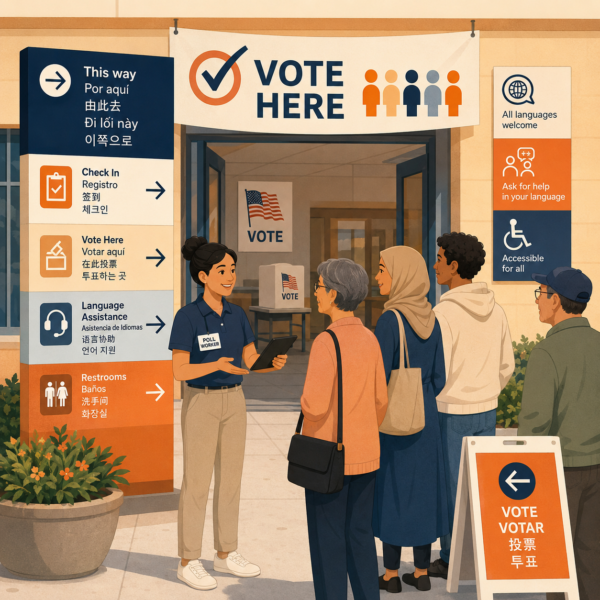 Multilingual communication does not work well when the voter has to search through an English-language site just to discover whether help exists in another language. The path into translated content should be visible, consistent, and attached to the office’s highest-value voter tasks. The Election Assistance Commission’s design guidance treats online voter information materials as a core design category and emphasizes usability, hierarchy, and clarity, which strongly supports visible multilingual pathways instead of buried language options.
A useful multilingual website path should help the voter do three things quickly. It should help the voter identify the available language, reach the right voter task in that language, and confirm that the information is official and current. If the office provides a translated homepage but leaves the most important voter actions in English-only sections, the system still asks the voter to bridge the gap alone. The Department of Justice’s language minority guidance centers effective participation, and that principle is much better served when the office treats language access as part of the navigation system itself.
Translated materials can also fail even when they are technically accurate. A direct translation may preserve legal meaning but still sound too formal, too literal, or too dense for quick public use. The Election Assistance Commission’s voter education design guidance stresses plain language and audience awareness, which means translated content should be reviewed for usability, not only for textual accuracy. A voter should be able to read the translated page and know what to do next without having to interpret the office’s language choices.
This is especially important for deadline-driven content. A translated notice about early voting, registration, mail ballot return, or polling place changes must be easy to scan and easy to act on. If the translated version is grammatically correct but still hard to navigate, the communication system has not yet done its job. The Election Assistance Commission’s design resource explicitly connects communication success to usability and clarity, which applies just as strongly to multilingual content as it does to English-language content.
Coordinate Websites, Signs, Social Posts, and Staff Support as One Multilingual System
Multilingual election communication becomes much more effective when the voter encounters the same core message across the website, printed materials, social posts, polling place signs, and staff support. Section 203 of the Voting Rights Act requires covered jurisdictions to provide registration or voting notices, forms, instructions, assistance, and other election-related materials or information in the covered minority language as well as in English, and the Election Assistance Commission’s language access resources are built to help officials provide that support across the election process.
This matters because voters do not experience language access one channel at a time. A voter may first see a social reminder, then visit the website, then read a mailed notice, then arrive at a polling place and rely on signs or staff guidance. If multilingual support appears in one place but disappears in the next, the office is effectively telling the voter that language access is partial rather than reliable. The Election Assistance Commission’s 2026 design resource says election communication materials, including online voter information and polling place materials, should be clear, understandable, accessible, and usable, which supports treating multilingual communication as a coordinated system rather than a series of isolated translations.
A stronger approach begins with the office’s highest-value public messages. Election dates, registration deadlines, polling place or vote center information, early voting hours, mail ballot return instructions, voter ID guidance where applicable, and problem-solving help paths should all appear in the relevant languages wherever voters are most likely to encounter them. The Election Assistance Commission’s design guidance emphasizes hierarchy and structure, and its voter education toolkit is specifically designed to help officials create communication materials that are relevant, timely, and accessible.
This coordination also protects trust. If the English-language social feed carries timely updates but the translated website pages lag behind, or if the website offers translated voter guidance but the polling place signs and staff interactions revert to English-first communication, the voter receives a fractured experience. The Department of Justice explains that language minority citizens need election information in minority languages to be informed voters and participate effectively, which means the system must remain usable at every critical step rather than only at the first point of contact.
Make the Main Public Path Multilingual, Not Just the Supporting Documents
Many election offices translate selected PDFs or notices but leave the main user path in English. That creates a hidden burden on voters because they may be able to read a translated flyer but still have to navigate the website, locate a polling place, or interpret voting instructions through English-only menus and labels. The Election Assistance Commission’s design guidance explicitly includes online voter information materials and polling place materials in its framework for clear and usable election communication, which supports making the main path itself multilingual rather than leaving language access at the document level only.
A multilingual main path usually means that the voter can identify the available language quickly, reach the relevant task in that language, and stay in that language through the core action. The EAC’s voter education toolkit is organized around designing materials that are relevant, timely, and accessible, and its topic breakdowns focus on voter registration, voting options, voting process, and specific voter circumstances. That structure reinforces the importance of building multilingual support around actual voter tasks rather than around isolated translated assets.
Give Polling Place Signs and Spoken Help the Same Priority as Web Content
A multilingual website alone does not solve the voter experience if the in-person environment remains difficult to navigate. Voters who receive translated online information still need consistent support when they arrive at the polling place, vote center, or election office. The EAC’s design framework treats polling place materials as a major category of election communication, and the Department of Justice’s Section 203 guidance makes clear that assistance and other election-related information must be provided in the covered language as well as in English in covered jurisdictions.
That means directional signs, check-in cues, help-language prompts, and staff assistance pathways should be part of the multilingual communication plan, not secondary details handled later. The EAC’s language access checklist also advises jurisdictions to conduct a comprehensive review of election materials that must be translated, ensure accurate translation, involve community organizations in review, and recognize when some languages require oral assistance and publicity rather than only written materials.
Avoid Giving Voters a Translated Message in One Place and an English-First Experience Everywhere Else
One of the most common multilingual communication failures is inconsistency across the voter journey. A voter may receive a translated outreach message or notice, but once the voter clicks through, calls the office, or appears in person, the rest of the system becomes much harder to use. This kind of mismatch can make the office appear less trustworthy even when translation technically exists. The Department of Justice states that Section 203 applies not only to ballots, but also to notices, forms, instructions, assistance, and other materials or information relating to the electoral process, which underscores that language access must extend across the experience rather than stop with a single translated item.
The practical fix is to think in journeys instead of documents. If the office translates an early voting reminder, the linked page, location guidance, and help contact should also be usable in that language. If the office translates mail ballot instructions, the cure or follow-up path should not force the voter back into English-only guidance. If the office publishes translated polling place information, the sign system and staff help path should reinforce the same access at the site. The EAC’s design resource emphasizes that clarity, usability, and accuracy can be the difference between successful communication and confusion, which is especially true when voters cross from one channel to another.
This is also where oral assistance and community-facing outreach matter. The EAC’s language access checklist notes that unwritten languages require oral assistance and publicity, and it recommends using demographic data to monitor language needs, anticipating those needs proactively, and involving community organizations in review processes. Those recommendations support a broader model in which multilingual communication includes spoken help, community validation, and outreach pathways, not just translated text.
A consistent multilingual system should therefore answer three practical needs at once. It should help voters find the information in the right language, act on it without switching back into English halfway through, and get human help in that language or through an effective support path when needed. The EAC’s voter education toolkit is built around creating materials that are relevant, timely, and accessible, and the DOJ’s language minority guidance frames these protections around effective participation, not symbolic availability.
Promoting Long-Term Election and Voter Confidence Through Stronger Multilingual Communication
Strong multilingual election communication does more than satisfy a legal requirement for one election cycle. It helps voters build a repeatable habit of turning to the election office for usable, official information in the language they rely on. The Election Assistance Commission maintains dedicated language access resources for election officials, and the Department of Justice explains that federal law protects the voting rights of citizens who rely heavily on languages other than English so they can participate effectively in democracy.
That long-term effect matters because many language-access failures are repetitive. Voters do not only struggle when a document is untranslated. They also struggle when the translated version is difficult to find, when the key action steps are harder to follow in one language than in another, or when the website, signs, and staff support do not stay aligned. The Election Assistance Commission’s voter education design toolkit and design guidance both emphasize plain language, hierarchy, and usability, which means multilingual content should be designed for understanding and action, not just publication.
Operationally, a stronger multilingual system can reduce repeat confusion and lower avoidable staff burden. When voters can find high-demand information in the relevant language, understand what to do next, and reach a clear help path, the office receives fewer preventable questions caused by navigation failures or unclear translated materials. The Election Assistance Commission’s language access checklist specifically urges jurisdictions to review which election materials must be translated, ensure translation quality, and anticipate language needs proactively rather than react only after confusion appears.
There is also a trust benefit that extends beyond translation itself. A voter who sees the same official message carried across the website, notices, assistance paths, and in-person support is more likely to experience the office as prepared and reliable. The Department of Justice’s language-minority voting guidance makes clear that the goal of these protections is effective participation, not symbolic availability, and the Election Assistance Commission’s design resources frame election communication materials as tools that must be clear, understandable, accessible, and usable.
Over time, multilingual communication also becomes part of the office’s broader misinformation-resistance system. When official information is easier to find and easier to understand in the languages voters actually use, unofficial explanations have less room to dominate. The Election Assistance Commission’s communication resources emphasize official channels and usable voter education, and the Department of Justice’s guidance underscores that language access is central to informed participation. That combination makes multilingual communication a confidence strategy as well as an access strategy.
Strategic Communication Support for Election Offices and Voter-Facing Agencies
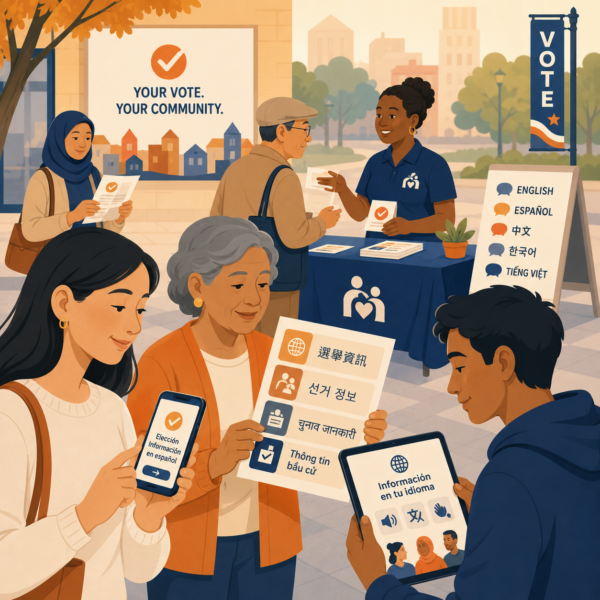 Election offices often have translated materials available, but that does not always mean the multilingual voter journey is working well. A voter may find a translated page yet still struggle to locate the right action, follow the main task path, or get consistent support across digital, printed, and in-person touchpoints. The Election Assistance Commission’s design guidance and language access resources point toward a broader model in which multilingual communication is part of the core voter information system rather than a separate archive of translated documents.
That is why agencies often choose to partner with an external resource like Stegmeier Consulting Group (SCG) to strengthen communication systems. SCG supports election offices, boards of elections, clerks, and voter-facing public organizations by helping them prioritize the most important multilingual voter tasks, build clearer language-entry paths on websites, improve translated voter instructions, align signs and source-of-truth pages, and connect multilingual outreach with real help channels and staff support.
SCG can also help offices identify where voters are most likely to lose the trail between translated outreach and actual action, then redesign the communication system so multilingual access remains visible and usable from first contact through final task completion. These practices help reduce repeat confusion, improve trust in official information, and make multilingual election communication feel like a real public service rather than a compliance layer.
Conclusion
Multilingual election communication works best when it helps voters do more than read translated text. It should help them find the right information quickly, understand the next step clearly, and stay in a usable language path from first contact through final action. Federal law recognizes that many voters rely on languages other than English to participate effectively, and the Election Assistance Commission’s language-access and design resources frame election communication as something that must be clear, understandable, accessible, and usable.
That means strong multilingual systems do not stop at translating a notice or posting a PDF. They prioritize the highest-value voter tasks, keep core information current across languages, coordinate websites and polling place materials, and support voters through staff help and community-facing pathways where needed. The Election Assistance Commission’s checklist and toolkit materials emphasize proactive planning, review of materials that need translation, usability, and audience-centered communication rather than simple one-time document production.
The goal is not simply to meet a minimum threshold. The goal is to make official election information easier to find, easier to trust, and easier to act on in the languages voters actually use. Election offices that do this well reduce repeat confusion, strengthen confidence in official information, and make multilingual communication feel like a real public service rather than a separate compliance layer.
SCG’s Strategic Approach to Communication Systems
Align your agency’s messaging, processes, and public engagement strategies
Stegmeier Consulting Group (SCG) helps election offices build communication systems that make multilingual voter information more usable across the full voter journey. That can include prioritizing the most important multilingual voter tasks, improving language-entry paths on websites, strengthening translated instructions and source-of-truth pages, aligning signs and staff support, and connecting multilingual outreach to real voter action points.
SCG also supports governance and operational coordination so websites, notices, social posts, polling place materials, partner outreach, and help channels work together as one coherent public information system. Use the form below to connect with our team and explore how a strategic communication framework can elevate your agency’s impact.