When Wildlife Encounters Go Viral: Preparing Crisis Communication Plans for Parks
 Lessons for handling unexpected public attention when incidents are shared online
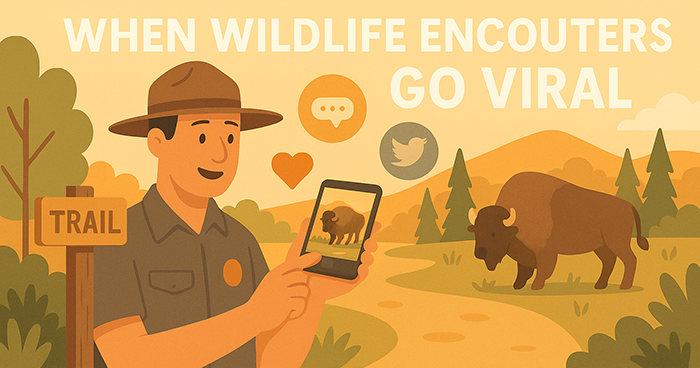
Within hours of a visitor recording a close encounter between tourists and a bison at Yellowstone National Park, the video had been shared thousands of times across social media platforms. News outlets picked up the story, wildlife experts offered commentary, and public opinion quickly divided between those condemning visitor behavior and those questioning park management practices. Park officials found themselves responding not just to a single incident, but to a complex web of public discourse that included accurate information, misconceptions, emotional reactions, and calls for policy changes.
This scenario has become increasingly common as smartphone cameras, social media platforms, and 24-hour news cycles transform isolated wildlife encounters into global conversations within minutes. For Parks, Recreation, Outdoors, and Wildlife agencies, these viral moments represent both significant challenges and important opportunities for public education and building community support for conservation missions.
The traditional crisis communication playbook, designed for controlled information release through established media channels, often proves inadequate when dealing with user-generated content that spreads faster than official responses can be formulated. Modern crisis communication planning must account for the reality that the first and most widely shared information about wildlife incidents often comes from witnesses with smartphones rather than trained agency personnel.
Understanding the Modern Information Ecosystem Around Wildlife Incidents
The digital transformation of how information spreads has fundamentally altered the context in which Parks, Recreation, Outdoors, and Wildlife agencies must respond to unexpected events. Traditional media cycles operated on predictable timelines that allowed agencies time to gather facts, consult with experts, and prepare measured responses before public attention peaked. Today’s information environment operates continuously, with initial reports spreading through social networks before official agencies may even be aware that an incident has occurred.
User-generated content about wildlife encounters often lacks the context that trained professionals would provide, leading to misunderstandings about animal behavior, visitor responsibilities, and agency policies. A video showing a bear approaching visitors may not capture the full sequence of events that led to the encounter, the specific location where it occurred, or the actions taken by park staff to resolve the situation safely. Without this context, viewers may draw incorrect conclusions about both wildlife behavior and management practices.
The emotional impact of wildlife encounter videos creates particularly volatile communication situations. Images or videos showing animals in apparent distress, visitors in potential danger, or dramatic interactions between humans and wildlife trigger strong emotional responses that can overshadow factual information about wildlife biology, safety protocols, or legal requirements. These emotional reactions often drive sharing behavior more powerfully than accurate information, meaning that the most emotionally compelling version of events may become the dominant narrative regardless of its accuracy.
Social media algorithms amplify content that generates high engagement, including controversy, strong emotional reactions, and divisive opinions. This means that wildlife incident content often reaches much larger audiences than typical park communication, but within a context that prioritizes engagement over accuracy or educational value. Comments sections become venues for heated debates about wildlife management, government authority, and individual responsibility that can quickly evolve beyond the original incident.
The democratization of wildlife photography and videography through smartphone technology means that millions of park visitors now carry high-quality recording equipment capable of capturing and instantly sharing wildlife encounters. While this creates opportunities for valuable documentation and public education, it also increases the likelihood that incidents will be recorded and shared without appropriate context or expert interpretation.
Professional media outlets increasingly source content from social media platforms, meaning that user-generated videos and posts about wildlife encounters often become the foundation for news stories that reach even broader audiences. This creates a cascading effect where initial social media posts influence traditional media coverage, which in turn drives additional social media discussion and potential policy debates.
The Unique Challenges Parks, Recreation, Outdoors, and Wildlife Agencies Face During Viral Incidents
Parks, Recreation, Outdoors, and Wildlife agencies operate within complex regulatory environments that require careful balance between public access, safety considerations, and conservation objectives. When wildlife encounters go viral, these organizations face intense scrutiny of their policies and practices from audiences who may have limited understanding of wildlife biology, legal constraints, or resource management principles.
Public expectations for immediate agency responses often conflict with the need for thorough investigation and careful fact-gathering that responsible crisis communication requires. Social media users expect rapid responses to viral content, but wildlife incidents may require consultation with biologists, law enforcement personnel, legal advisors, and senior management before appropriate responses can be formulated. The tension between speed and accuracy becomes particularly acute when incorrect information is spreading rapidly and demanding immediate correction.
Balancing Diverse Stakeholder Perspectives
Diverse stakeholder groups affected by wildlife incidents often have conflicting perspectives and priorities that must be addressed simultaneously during crisis communication. Local communities living near parks may have different concerns than visiting tourists, conservation organizations, hunting groups, livestock producers, or urban residents who experience wildlife primarily through media coverage. Each group brings different knowledge bases, values, and expectations that influence how they interpret wildlife incidents and evaluate agency responses.
This is where effective stakeholder mapping becomes crucial. Parks, Recreation, Outdoors, and Wildlife agencies must identify all groups that may be affected by or interested in wildlife incidents, including their communication preferences, key concerns, trusted information sources, and potential roles in either supporting or criticizing agency responses. This mapping should include traditional stakeholders like conservation groups and hunting organizations as well as newer influencers such as social media personalities, wildlife photographers, and online communities focused on specific parks or wildlife species.
Legal and Scientific Communication Challenges
Legal considerations surrounding wildlife incidents add complexity to crisis communication that private organizations rarely face. Agencies must balance transparency and public education goals with ongoing investigations, potential litigation, privacy rights of individuals involved in incidents, and regulatory requirements that may limit what information can be shared publicly and when. These legal constraints often prevent agencies from sharing information that might help contextualize viral content or correct misconceptions.
Scientific accuracy requirements create additional challenges when responding to viral wildlife content, as accurate explanations of animal behavior, ecosystem dynamics, or management practices may be more complex and less emotionally satisfying than simplified narratives that dominate social media discussions. Agencies must find ways to communicate complex scientific concepts to general audiences while maintaining accuracy and avoiding oversimplification that could create new misconceptions—much like translating technical wildlife biology into language accessible to diverse audiences across different cultural backgrounds and education levels.
Resource and Coordination Constraints
Resource limitations affect agency ability to respond effectively to viral wildlife incidents, as most Parks, Recreation, Outdoors, and Wildlife organizations operate with limited communication staff and budgets that may not adequately support intensive crisis communication efforts. Small agencies may lack dedicated social media expertise, media relations capabilities, or surge capacity needed to manage high-volume public attention while maintaining normal operations.
Inter-agency coordination becomes crucial when wildlife incidents involve multiple jurisdictions, as viral content rarely respects organizational boundaries or jurisdictional responsibilities. A wildlife encounter in a state park may involve county emergency services, state wildlife agencies, federal land management organizations, and local tourism promotion groups, all of whom may need to coordinate messaging while serving different constituencies with different communication styles and priorities.
Developing Proactive Crisis Communication Frameworks
Effective crisis communication for wildlife incidents requires comprehensive advance planning that anticipates various scenarios, establishes clear response protocols, and creates systems for rapid information gathering and verification. This planning must account for the unique characteristics of different types of wildlife encounters while remaining flexible enough to address unexpected situations and emerging communication challenges.
Scenario Planning and Message Development
Scenario planning should include detailed consideration of high-probability wildlife incident types based on local species, seasonal patterns, visitor demographics, and historical data about previous encounters. Each scenario requires specific communication considerations, stakeholder identification, and response protocols that account for different levels of public interest, safety concerns, and policy implications. Bear encounters require different communication approaches than bird flu outbreaks, invasive species discoveries, or wildlife vehicle collisions.
Message development should begin well before incidents occur, with pre-approved key messages about wildlife safety, agency responsibilities, legal requirements, and management philosophies that can be quickly adapted to specific situations. These core messages provide consistency and accuracy foundations that help prevent ad hoc responses that may contradict established policies or create unintended commitments during high-pressure situations. This aligns with the principle of developing clear, strategic communication plans with defined messages and audiences—a foundational practice for all effective public sector communication.
 Conclusion: Building Stronger Wildlife Communication for the Digital Age
The reality of viral wildlife incidents represents both a significant challenge and important opportunity for Parks, Recreation, Outdoors, and Wildlife agencies committed to conservation, public safety, and transparent governance. While the speed and intensity of modern information environments create unprecedented communication challenges, they also offer opportunities to reach larger audiences with conservation messages and build broader public support for wildlife management and protection.
Success in managing viral wildlife incidents requires fundamental shifts in how agencies approach crisis communication, moving from reactive information control strategies to proactive engagement approaches that acknowledge and work within modern information ecosystems. This includes developing rapid response capabilities, building stakeholder relationships before crises arise, and creating systematic approaches to learning from experience.
The investment required for effective crisis communication capabilities—including staff training, technology infrastructure, coordination systems, and ongoing public education—represents a significant commitment for agencies already facing resource constraints and competing priorities. However, the potential consequences of inadequate crisis communication—including reputational damage, policy setbacks, and reduced public support for conservation—make this investment essential for long-term organizational effectiveness.
Collaboration between agencies, sharing of resources and expertise, and collective learning from crisis experiences can help build communication capabilities more efficiently while improving overall professional practice in wildlife communication. Professional organizations, training programs, and peer networks provide valuable resources for agencies seeking to develop crisis communication capabilities.
Ultimately, the goal of crisis communication during viral wildlife incidents extends beyond managing immediate public attention to building long-term understanding, support, and engagement with conservation missions that benefit both wildlife and human communities. Every crisis situation handled effectively contributes to broader public education and conservation awareness that supports the future of wildlife management and protection.
The agencies that successfully adapt to digital communication realities while maintaining their commitment to scientific accuracy, public service, and conservation excellence will be best positioned to fulfill their missions in an era of unprecedented challenges and opportunities. Their success in handling viral wildlife incidents will contribute not only to their own effectiveness but to the broader conservation movement that depends on public understanding and support for its continued success.
For Parks, Recreation, Outdoors, and Wildlife agencies looking to strengthen their crisis communication capabilities and overall public engagement strategies, expert support can provide valuable perspective, additional bandwidth, and specialized skills. Whether developing proactive communication frameworks, training staff for high-pressure situations, or refining messaging during actual incidents, the right partnerships can complement internal strengths and help agencies build lasting capacity for effective public communication in the digital age.
Ready to Strengthen Public Communication for Your Parks, Recreation, Outdoors, and Wildlife Agency?
From managing seasonal park access and launching new recreation programs to protecting fragile habitats and engaging outdoor enthusiasts, we understand the communication challenges your agency faces: limited staff capacity, changing public expectations, and the need to promote your mission while staying responsive and inclusive.
At Stegmeier Consulting Group, we help public sector agencies like yours develop clear, effective communication strategies—internally and externally. Whether you’re announcing a habitat closure, promoting new amenities, or collecting feedback on park use or trail conditions, we’ll help you:
- Clarify your message for different audiences—residents, visitors, volunteers, and policymakers
- Design campaigns that inform, inspire action, and build community support
- Streamline outreach across signs, websites, social media, and QR-code-enabled materials
- Gather public input through simple, mobile-friendly survey tools that inform future decisions
- Train internal teams to communicate consistently and confidently in alignment with your mission
- Highlight your impact with clear storytelling and performance reporting for funders and the public
Whether you manage a regional trail system, lead a recreation and parks department, or steward wildlife areas, our work is grounded in the same mission as yours: strengthening the public’s connection to nature, health, and community.
Reach out today for a consultation—we’d love to explore how we can help you tell your story, engage your stakeholders, and increase the visibility and value of the work you do.