Taking it to the Streets: Milwaukee Fire Department’s Traveling RV ‘Burning House Simulator’ Campaign
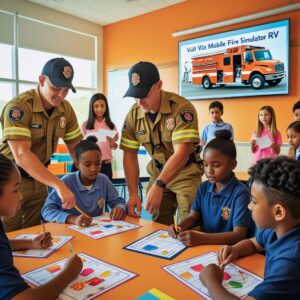 In a city where fire-related injuries disproportionately affect underserved communities, the Milwaukee Fire Department (MFD) recognized that prevention must be as mobile and accessible as emergency response itself. In April 2019, the department unveiled a bold solution: the Mobile Survive Alive House—a fully functional fire safety simulation trailer built as a custom RV unit. Designed to bring fire prevention training directly to where people live, learn, and gather, it marked a major shift in how public safety education is delivered.
This first-of-its-kind mobile unit transformed a long-standing classroom-based program into a traveling, immersive experience, allowing children and families to rehearse fire escape techniques inside a lifelike, controlled environment. Targeting 2nd and 5th graders but open to all ages at public events, the mobile campaign aimed to deepen retention, expand geographic reach, and spark lifelong habits through hands-on learning and local visibility.
This case study explores how the Milwaukee Fire Department leveraged experiential design, strategic deployment, and powerful media storytelling to make fire prevention education more inclusive, effective, and measurable—ultimately building safer households one simulation at a time.
The Initiative: Mobile Fire Safety Comes to the Community
Program Structure and Oversight
Prior to going mobile, MFD operated a stationary Survive Alive House that reached approximately 13,000 students annually. While effective, this format was dependent on school transportation, district partnerships, and site-based attendance—barriers that often left high-risk neighborhoods underserved. The mobile version eliminated those obstacles. Constructed in the form of a fire-themed RV trailer and fully staffed by trained firefighters and educators, the unit operated between May and September and traveled to schools, block parties, county fairs, and community centers.
The program integrated a three-part structure:
- Pre-visit classroom instruction, often facilitated by Milwaukee Recreation staff
- On-site hands-on simulation within the trailer
- Take-home materials and debriefs for teachers, families, and caregivers
Oversight was a joint operation between the Milwaukee Fire Department and Milwaukee Recreation (a division of Milwaukee Public Schools), with additional funding from community grants and public-private donations.
Communication Strategy
1. Experiential Storytelling in a Controlled Environment
The campaign’s central communication tool was the unit itself—a striking visual presence with bold graphics, fire-themed design, and realistic interior rooms. Inside, children walked through smoke-filled hallways (fog machines), simulated bedroom fires, and staged kitchen hazards while practicing emergency protocols: checking doors for heat, crawling under smoke, and choosing safe exits. Firefighters guided each scenario, reinforcing escape strategies while calming fears and answering questions.
This immersive design turned abstract lessons into tangible memories. The mobile unit’s interior was purposefully built to resemble real-life rooms, reinforcing that fires don’t just happen “somewhere else”—they happen in homes like theirs.
Why It Worked: Experiential learning has long been proven to increase message retention, especially among young learners. By simulating a real emergency in a safe, supervised environment, MFD allowed students to “practice to remember” rather than simply “learn to know.” The emotional weight of crawling under smoke or hearing a fire alarm in a small space made safety messages stick, empowering students to act automatically if a real emergency arose.
2. Strategic Deployment to Reach Underserved Communities
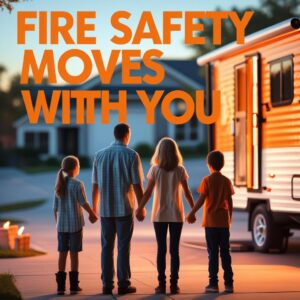
Rather than wait for families to come to the fire station or hope schools could arrange field trips, MFD flipped the model: the education came to the people. The mobile unit was booked for weeks at a time and intentionally routed into neighborhoods that had historically seen lower attendance at safety events or limited access to fire education resources.
The unit’s presence at neighborhood festivals, summer park events, and after-school programs positioned fire prevention education as a routine part of community life, not a special or one-time lesson. Its compact footprint allowed it to park at playgrounds, rec centers, and even library lots—minimizing disruption while maximizing foot traffic.
Why It Worked: This strategy addressed access gaps head-on. Families facing transportation, work, or scheduling barriers could now access safety education without leaving their own neighborhoods. It also normalized fire safety discussions in informal settings, lowering resistance and increasing participation. Just as important, it signaled that public safety agencies were willing to meet communities on their terms—literally and symbolically.
3. School and Agency Collaboration for Curriculum Continuity
The success of the mobile unit was reinforced by strong collaboration between MFD and Milwaukee Recreation. Schools were given structured prep materials to introduce core concepts before the unit’s arrival, and students completed reflection exercises afterward. Firefighters tailored their delivery to align with grade-level comprehension, while educators helped translate technical safety language into age-appropriate dialogue.
By positioning fire safety as part of the broader educational mission—not just emergency preparedness—MFD helped teachers reinforce civic responsibility, health, and science standards through applied learning.
Why It Worked: Cross-agency integration gave the program structure, legitimacy, and depth. Educators brought pedagogical expertise, while firefighters brought real-world authority. Together, they reinforced fire safety across cognitive and emotional dimensions. This partnership also ensured continuity: children weren’t just reacting to a single event—they were participating in a full learning cycle.
4. Media Coverage and Political Messaging
MFD ensured that the debut of the mobile unit had public visibility. The April 2019 launch featured Milwaukee’s Mayor and MFD leadership and received extensive coverage from FOX6 News and other local outlets. The campaign emphasized that this was not just a new tool—it was a new philosophy: proactive, equitable, and community-rooted. Media visuals showed children exiting through simulated smoke, smiling firefighters kneeling beside students, and brightly wrapped trailers parked at schools.
Follow-up stories covered deployment events throughout the summer and highlighted the broader legacy of the Survive Alive program, which has reached over 450,000 students since 1992.
Why It Worked: Framing the campaign as both innovative and inclusive gave it political and emotional appeal. Residents saw tax dollars and grant funds going toward something concrete, visual, and child-focused. News coverage made the initiative feel big and credible, while personal footage and photos at events made it feel local and relatable. That balance boosted buy-in across political, racial, and socioeconomic lines.
 Outcomes and Impact
The launch of the mobile Survive Alive House marked a significant evolution in how fire safety education is delivered in Milwaukee. In just its first year, the mobile unit expanded the program’s reach beyond the 13,000 students typically served by the stationary house, bringing simulated training to thousands more across the county.
Community feedback indicated that the trailer was especially effective at:
- Reaching families that had never participated in fire safety programming before
- Engaging children who struggle in traditional classroom settings
- Encouraging parents to revisit fire escape plans at home
Perhaps most significantly, preliminary public health data suggested a continued decline in fire-related fatalities among school-age children—a downward trend that local officials credited in part to the renewed engagement model. The program also enhanced MFD’s relationship with community partners, strengthening trust and demonstrating a visible commitment to prevention, not just emergency response.
Takeaway and Conclusion
The Mobile Survive Alive House stands as a model of how communication, education, and design can converge to save lives. More than a clever vehicle, it represented a shift in philosophy—one that valued showing over telling, access over expectation, and prevention over reaction. By taking fire safety lessons directly into Milwaukee neighborhoods and pairing simulation with structured learning, the initiative became more than a campaign; it became a community asset.
What set this program apart was its emphasis on immersion. By recreating the sensory experiences of a real fire within a safe space, the mobile unit helped students and families emotionally internalize critical survival techniques. These are lessons they may never forget—and, in some cases, may one day rely on to stay alive.
The program also exemplifies how public safety agencies can adapt to modern realities—competing for attention, navigating community skepticism, and building trust beyond the firehouse walls. Its success came not just from technology or novelty, but from a sincere desire to connect with residents where they are.
As cities across the U.S. look for ways to increase civic engagement, reduce preventable deaths, and build public trust, Milwaukee’s Mobile Survive Alive House offers a powerful example: Make safety personal. Make learning physical. And most of all—make sure the message moves.
Ready to Elevate Your Agency’s Public Communication?
We understand the unique challenges state and local government agencies face—from complex issues to diverse community needs. Our comprehensive approach can help you transform the way you connect with constituents, improve transparency, and highlight the valuable work your agency does every day.
Interested in learning more? Reach out to us today for a consultation. We’d love to discuss how our services can support your goals and help you build lasting trust with the communities you serve.