Storm-Ready Communities: How Shelby County, Tennessee uses Crisis Communication to Prepare Residents for Tornado Season
 In the heart of Tornado Alley, Shelby County, Tennessee—home to Memphis and a dense patchwork of urban, suburban, and rural neighborhoods—faces recurring threats from severe storms. Tornadoes, high winds, and flash flooding pose risks not only to infrastructure, but also to public safety and emergency response coordination.
To proactively address these risks, the Shelby County Office of Emergency Management & Homeland Security (OEMHS) launched a comprehensive public safety initiative anchored in three elements:
- County-wide Tornado Drills
- Community-led “Tornado Town Halls”
- Mobile Alert Systems via StaySafeShelby
This case study explores how the County’s approach—blending drills, partnerships with broadcasters and churches, and text-based opt-in alerts—has created a culture of preparedness rooted in trust, access, and local engagement.
Communication Strategy
1. Narrative Framing and Message Development
The campaign’s core message—“Shelter. Connect. StaySafeShelby.”—frames severe weather preparedness as both a personal and collective responsibility. Messaging urges residents not to wait until a tornado siren blares, but to plan, practice, and connect with local safety networks before a storm hits.
At its foundation is a compelling narrative: every home is a potential storm shelter, but not every home is safe—so Shelby County provides maps, tools, and guidance to help people find or prepare shelter in advance.
This message is amplified during National Preparedness Month each September, with the County designating a Tornado Drill Day and promoting it through TV, radio, and community forums.
Why It Worked
- Proactive Framing: The message doesn’t dwell on fear—it focuses on empowerment and readiness.
- Localized Impact: Encouraging every household to “find your safe place” personalizes the call to action.
- Trusted Language: Messaging avoids technical jargon and centers around protective action language (e.g., “Go low, stay put”).
2. Multi-Channel Communication Execution
Shelby County uses an integrated approach to ensure residents receive timely and relevant information during all phases of a weather event:
- County-wide Tornado Drill: Conducted annually with coordinated siren tests, media alerts, and school participation at 9:25 AM.
- TV & Radio Broadcast Integration: Local news partners simulate emergency conditions, allowing families to rehearse what would happen during a real alert.
- StaySafeShelby Alerts: Residents can text a short code to opt-in for real-time warnings and shelter updates via SMS.
- Pre-Filled Shelter Maps: Links to neighborhood-specific shelter maps are shared via text, flyers, and websites.
- Social Media Updates: OEMHS posts live updates on Facebook, Twitter/X, and Nextdoor throughout each weather event.
Why It Worked
- Realistic Practice: Simultaneous sirens and broadcaster announcements mirror true storm conditions, improving muscle memory.
- Mobile-Centric Strategy: Text alerts are accessible even without apps or Wi-Fi, reaching more households.
- Resource Visibility: Digital and printed shelter maps ensure families know where to go—especially if cell signals drop.
3. Audience Segmentation and Targeting
The communication plan smartly differentiates messages for key audience groups:
- Families and Caregivers: Schools are enlisted to send home shelter information and coloring sheets for kids.
- Elderly and Immobile Residents: Churches and community centers provide printed resources and hotline numbers.
- Immigrant Communities: Town hall sessions include multilingual presentations (Spanish, Vietnamese, Arabic) and translated safety guides.
- Businesses and Facilities Managers: The OEMHS provides checklists for creating on-site shelter plans and communicating with employees.
Why It Worked
- Equitable Access: Multilingual and print materials ensured non-digital and underserved populations were included.
- Household-Centered Strategy: Schools and churches became trusted entry points for families to receive preparedness info.
- Segment-Specific Action Plans: Instead of generic advice, each group received steps tailored to their environment.
4. Visual Identity and Brand Integration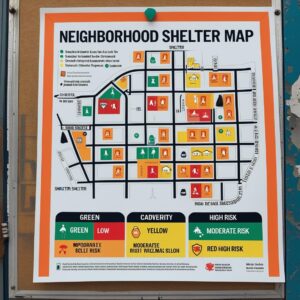
The campaign maintains a strong, consistent visual system:
- StaySafeShelby Logo: Present on all alerts, signage, and outreach materials for instant recognition.
- Color-coded Alert System: Green, Yellow, and Red icons accompany text messages and printed guides to denote severity.
- Infographic Shelter Maps: Simple, landmark-based maps show local safe zones with bold icons and bilingual legends.
- Tornado Town Hall Materials: Slide decks, printed booklets, and posters use a uniform visual style, enhancing recall.
Why It Worked
- Instant Credibility: Recognizable branding reinforces that alerts are official and reliable.
- Clarity Under Pressure: Color-coded visuals help users act fast without reading through paragraphs of instructions.
- Cross-Platform Consistency: Whether online, on TV, or in print, the campaign “looked and felt” coordinated.
5. Community Engagement Tactics
A defining feature of Shelby County’s approach is its in-person connection to residents:
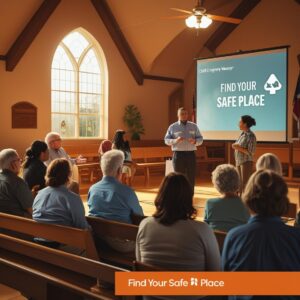
- Tornado Town Halls: Held at churches and community centers, these interactive events include weather briefings, myth-busting (e.g., “You can’t outrun a tornado”), and Q&A with emergency managers and meteorologists.
- Faith-Based Partnerships: Local pastors help distribute materials and encourage participation, especially in underserved communities.
- Tabletop Drills and Shelter Tours: During Preparedness Month, schools and civic groups conduct guided drills using actual alert tones and messages.
- “Shelter Selfies” Campaign: Residents are encouraged to post photos of their household’s safe space, building visibility and social momentum.
Why It Worked
- Relationship-Centered: Trusted messengers—pastors, school leaders—help bridge gaps in institutional trust.
- Cultural Relevance: Events are hosted where people already gather, reducing barriers to engagement.
- Peer Normalization: Public drills and social media participation help make preparedness feel like a community norm.
Outcomes
The success of Shelby County’s severe weather communication strategy is evident not only in participation metrics, but also in the depth of behavioral change and infrastructure coordination it has fostered. The outcomes below illustrate the tangible impact of this multifaceted campaign:
1. Strong County-Wide Participation in Preparedness Activities
Over the past three years, tens of thousands of residents have actively participated in the annual Tornado Drill Day. This includes families conducting shelter-in-place practice at home, schools running coordinated hallway or basement drills, and businesses pausing operations for employee briefings. Participation has steadily increased year-over-year, aided by growing media involvement and pre-scheduled community reminders. Importantly, repetition has normalized preparedness, making it part of the public routine—not a one-time event.
2. Deepened Engagement from Local Institutions
More than 50 schools, 20 churches, and 30 community organizations now actively participate in either Tornado Town Halls, drill facilitation, or shelter plan distribution. Schools have incorporated severe weather planning into safety curriculum, while churches have helped reach low-income and immigrant populations that might otherwise be disconnected from government communication channels. These partners now act as multipliers, helping extend OEMHS’s reach far beyond its official staff or digital platforms.
3. Growth in Real-Time Alert Subscriptions
Shelby County’s StaySafeShelby text alert system has seen a steady rise in subscribers—particularly following drills and town hall events. Community engagement efforts led to an increase of 15–20% in opt-in enrollment annually, with sharp surges immediately after community events. Notably, many new signups have come from senior citizens and low-income neighborhoods, groups that often have limited access to app-based alert systems. This demonstrates the campaign’s success in making safety tools both visible and accessible.
4. Improved Resident Behavior During Actual Weather Events
During recent real tornado warnings, OEMHS observed increased shelter-seeking behavior and higher public awareness. Feedback gathered through post-event surveys and partner organizations revealed that more residents knew where their closest safe space was, had practiced accessing it, and were familiar with alert tones and warning language. Local emergency services reported a reduction in confusion and misinformation, attributing this to the consistent framing and pre-distributed materials.
5. Strengthened Government-Community Trust
Perhaps most meaningfully, Shelby County has made emergency communication feel human and local. By engaging trusted messengers—like pastors, teachers, and TV weather anchors—and creating opportunities for two-way dialogue through town halls and Q&A sessions, the campaign has fostered stronger civic trust. Residents no longer perceive severe weather alerts as abstract government broadcasts, but as community-endorsed guidance tied to personal safety and shared responsibility.
 Communication Lessons from Shelby County
1. Turn Awareness into Practice
Annual tornado drills transform abstract knowledge into lived experience. Practice builds speed and calm—two critical traits in a real emergency.
2. Speak Through the Messengers People Trust
OEMHS strategically chose pastors, local meteorologists, and school administrators to carry the message—not just government spokespeople. This helped overcome skepticism and cultural barriers.
3. Don’t Assume Digital Access Is Universal
Text messages, printed maps, and in-person meetings ensured preparedness reached those without smartphones, data plans, or reliable internet.
4. Go Where the People Already Are
Tornado Town Halls at churches, PTA meetings, and community dinners didn’t require residents to come to government buildings. This lowered participation friction.
5. Use Simulated Alerts to Train Real Reactions
Broadcasted drills conditioned people to associate certain sirens or alerts with specific actions—“Go to shelter now,” not “check the news.”
Conclusion: Preparedness is a Community Practice, Not a Solo Act
Shelby County’s severe weather communication strategy demonstrates that community resilience starts before the clouds gather. By combining government coordination with neighborhood-level trust, the county has built a system where every siren, every drill, and every Town Hall helps save lives.
It’s not just about weather alerts—it’s about making sure that when the sky darkens, people know where to go, who to call, and how to help each other stay safe.
Ready to Elevate Your Agency’s Public Communication?
We understand the unique challenges state and local government agencies face—from complex issues to diverse community needs. Our comprehensive approach can help you transform the way you connect with constituents, improve transparency, and highlight the valuable work your agency does every day.
Interested in learning more? Reach out to us today for a consultation. We’d love to discuss how our services can support your goals and help you build lasting trust with the communities you serve.